
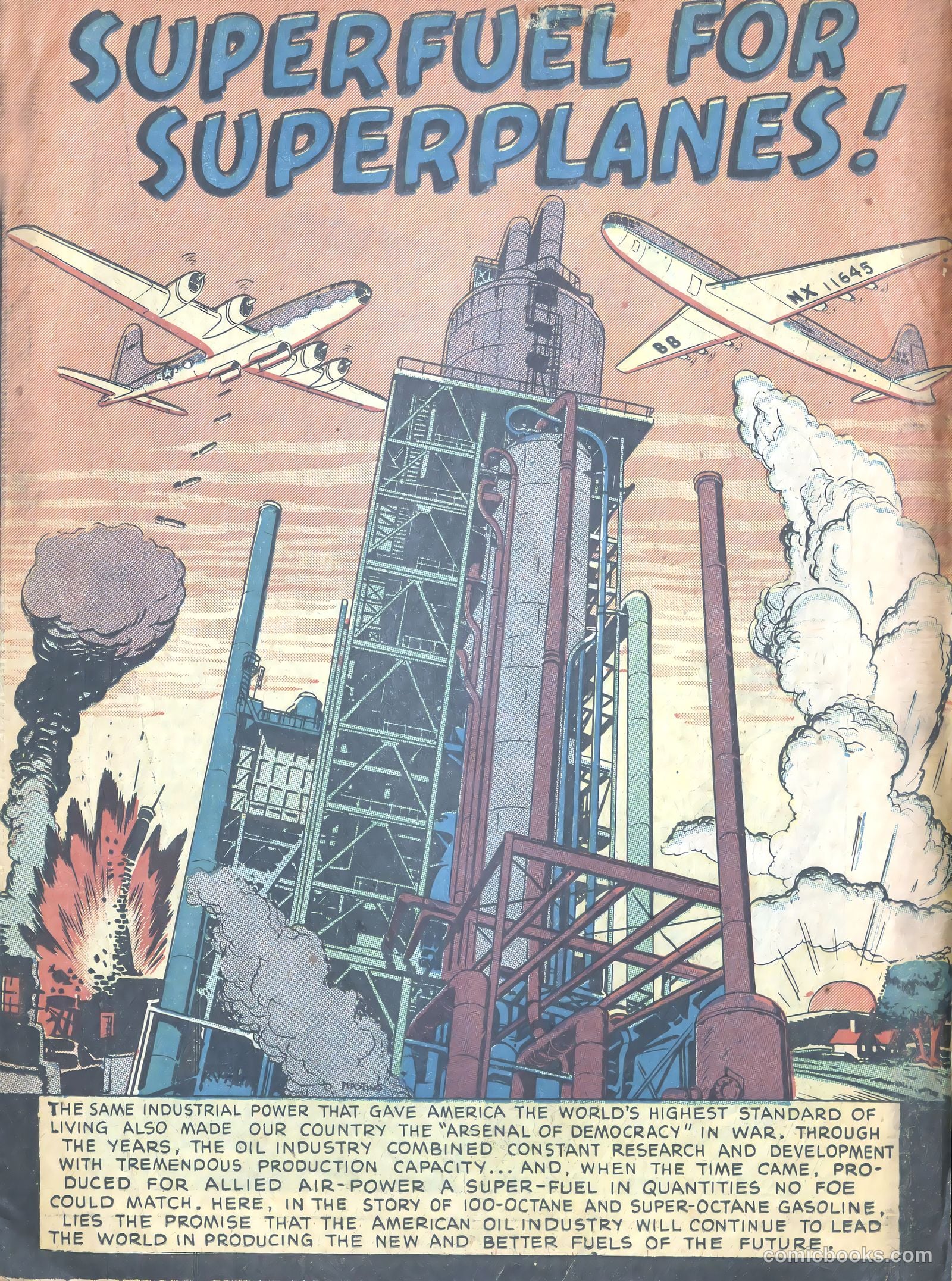
Superfuel for Superplanes! #nn
☆ Be the first to review + Add to your collection — Join freeThis educational story explains the development of high-octane aviation fuel for World War II aircraft. Test pilot Doug Kirk narrates how gasoline engines require compression to function, and demonstrates through humorous analogies how increasing compression ratios improve engine performance. The narrative details how the American oil industry, building on research using tetra-ethyl lead additives, developed 87-octane and then 100-octane "super-fuel" that gave Allied planes significant advantages in speed, climb rate, and ceiling over enemy aircraft. The story concludes by explaining the discovery of catalytic cracking technology, which allowed the industry to produce the high-octane fuels at scale by 1942, enabling the production of maximum-output 100-octane gasoline for the war effort.
Find on ebay
Read it digitally
Sell my copy
Have this issue — or a whole collection? Get a fair offer from us, skip the marketplace fees and the hassle.
We Buy Collections ▸Reviews
Reader reviews
No reader reviews yet.