
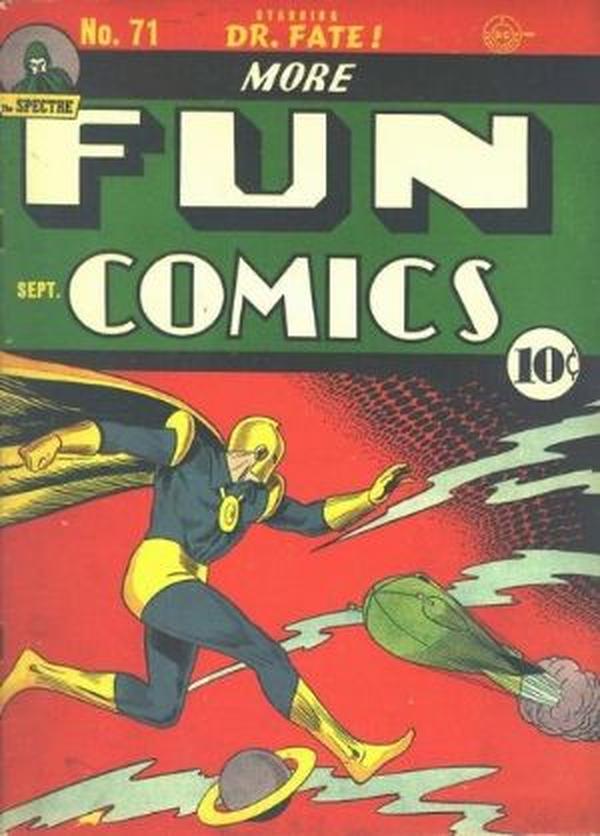
More Fun Comics #71
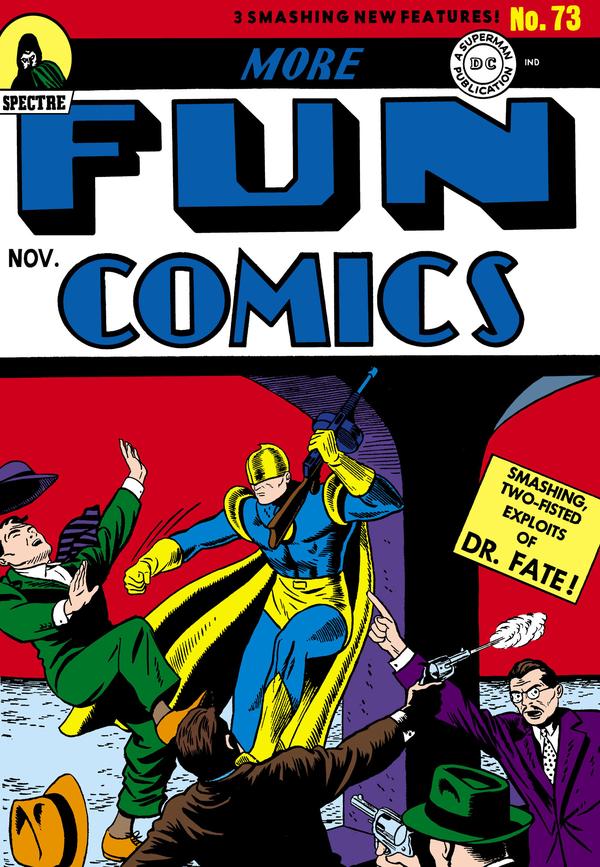
☆ Be the first to review + Add to your collection — Join freeMore Fun Comics #71 (September 1941) is the debut issue of Johnny Quick, DC's original mathematical speedster, whose origin and first adventure appear here, making it the only Golden Age comic to introduce a new speed-powered superhero independent of the Flash franchise. The issue also marks the last time Doctor Fate appeared in his iconic full-face helmet — a quiet but historically significant costume transition that fundamentally reshaped one of the Justice Society's most visually distinctive characters. Published just two issues before the landmark More Fun Comics #73 (which debuted both Green Arrow and Aquaman), this issue shows DC's More Fun Comics anthology at full creative velocity, launching a character whose solo strip would actually outlast Jay Garrick's original Flash series in print. More Fun Comics as a whole holds the distinction of being the first American comic book to consist entirely of original material, making even supporting issues like this one part of the medium's foundational history.
In "The Reluctant Bridegroom," a 1941 tale from More Fun Comics #71, Joe Shuster’s distinctive art brings to life a story of unexpected romance and quiet courage, set against the backdrop of a nation buzzing with the latest in entertainment. The issue’s striking cover by Howard Sherman captures the mood of the era, reflecting the cultural moment when Superman’s voice echoed across the airwaves—from 31 U.S. stations and 25 in Canada, sponsored by Ogilvie Flour Mills Co., Ltd.
ComicBooks.com Value
Show all 21 grades ▾
This exact issue on ebay
Raw / ungraded ▾ $59.99–$89 2 listings
Read it digitally
Sell my copy
Have this issue — or a whole collection? Get a fair offer from us, skip the marketplace fees and the hassle.
We Buy Collections ▸History
Mort Weisinger, who had only recently joined National Periodical Publications (the future DC Comics) in March 1941 after a career editing science-fiction pulps, wrote the Johnny Quick debut story as part of an early assignment to develop new characters for the More Fun anthology. The conceptual DNA of Johnny Quick is transparent — he was created partly to give the National side of the DC/All-American publishing arrangement its own answer to the Flash, who belonged to the All-American wing — but Weisinger distinguished his speedster with the memorable pseudo-mathematical activation formula '3X2(9YZ)4A,' which Johnny Chambers recites aloud to trigger his powers. The identity of the pencil artist for the debut Johnny Quick story has never been conclusively settled: Grand Comics Database and multiple historians tentatively credit Chad Grothkopf, but the attribution carries an explicit caveat of uncertainty. Mort Meskin, who would become closely identified with the strip and whose dynamic multi-panel speed sequences influenced later artists including Kirby, Ditko, and Toth, did not take over the art duties until shortly after this debut issue.
Trivia · 8 facts
- First appearance and origin of Johnny Quick (secret identity: Johnny Chambers, a newsreel photographer), created by writer Mort Weisinger; his debut story is titled 'The Riddle of the Crying Clown.'
- Johnny Quick's super-speed is activated by reciting the formula '3X2(9YZ)4A' — a deliberate distinguishing quirk that separates him from the Flash — and he must recite a second formula, Z25Y(2AB)6, to decelerate or land.
- This issue contains the last Doctor Fate story in which the character wears his classic full helmet; from the very next appearance the half-helmet design was adopted, permanently altering one of the JSA's most recognizable visual identities.
- The Doctor Fate story, 'The Great Drought,' is written by Gardner Fox and was later reprinted in Golden Age Doctor Fate Archives Vol. 1 (DC, 2007).
- The Spectre story, 'The Reluctant Bridegroom,' is written by Jerry Siegel (Superman's co-creator) with art by Bernard Baily; the cover, widely attributed to Howard Sherman, features Doctor Fate.
- The issue also carries a Radio Squad story starring Larry Trent and Sandy Keene, a long-running procedural feature in the anthology; Radio Squad had been a fixture of More Fun since the series' early issues.
- Mort Weisinger is credited by multiple sources as the actual editor of More Fun Comics at this time, having joined National Periodical Publications in early 1941; he would go on to co-create Green Arrow, Aquaman, and the Vigilante within the same year.
- The on-sale date recorded in copyright registration was July 23, 1941, with a September 1941 cover date; the issue ran 64 pages at a cover price of ten cents.
Cast · 4 characters
Full credits
Reprints
Reprinted in Golden Age Doctor Fate Archives #1 (2007)
Key issues in More Fun Comics
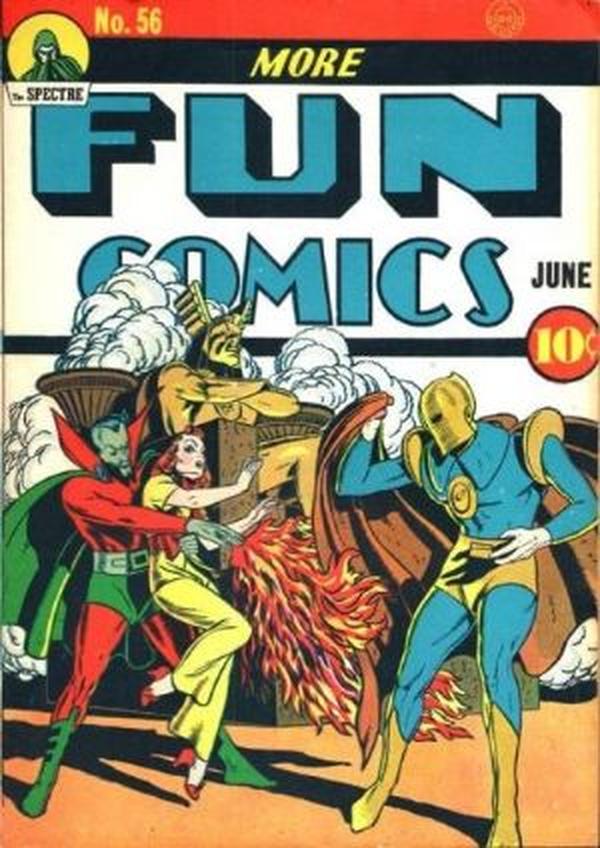
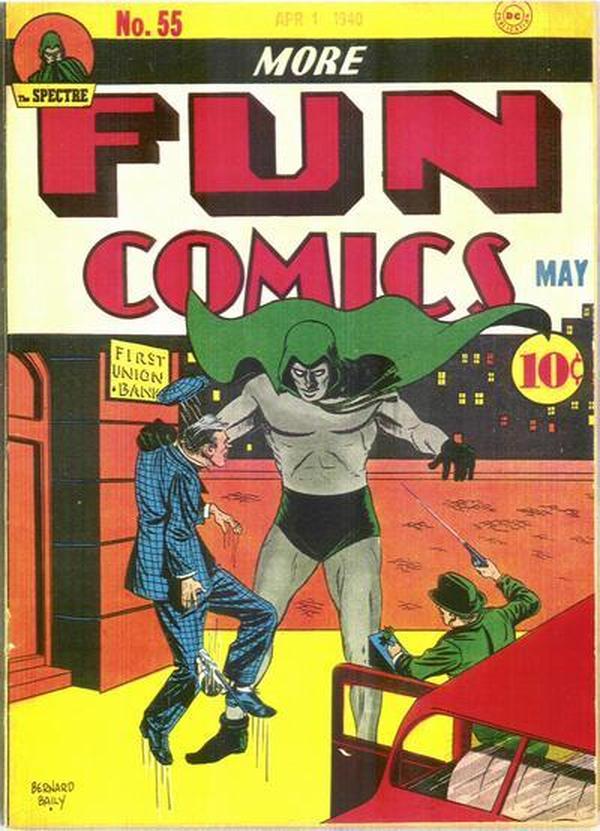
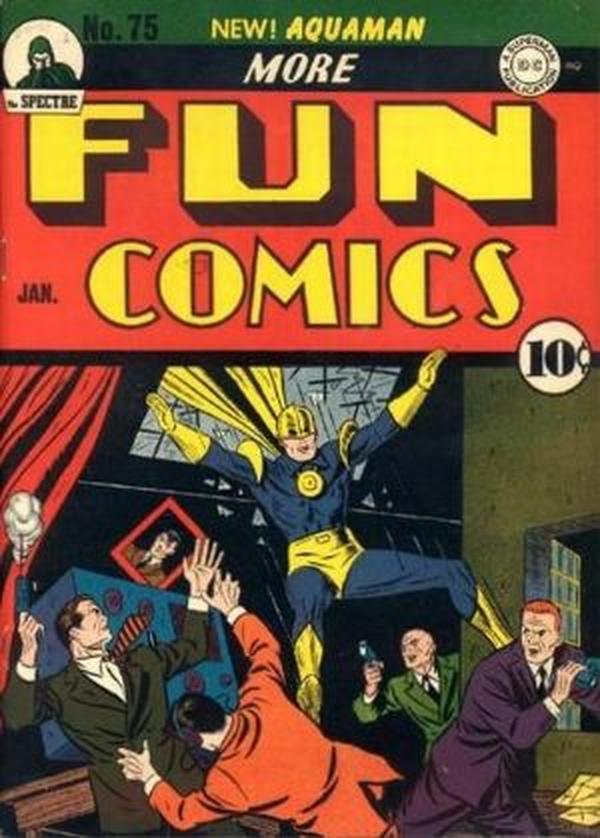
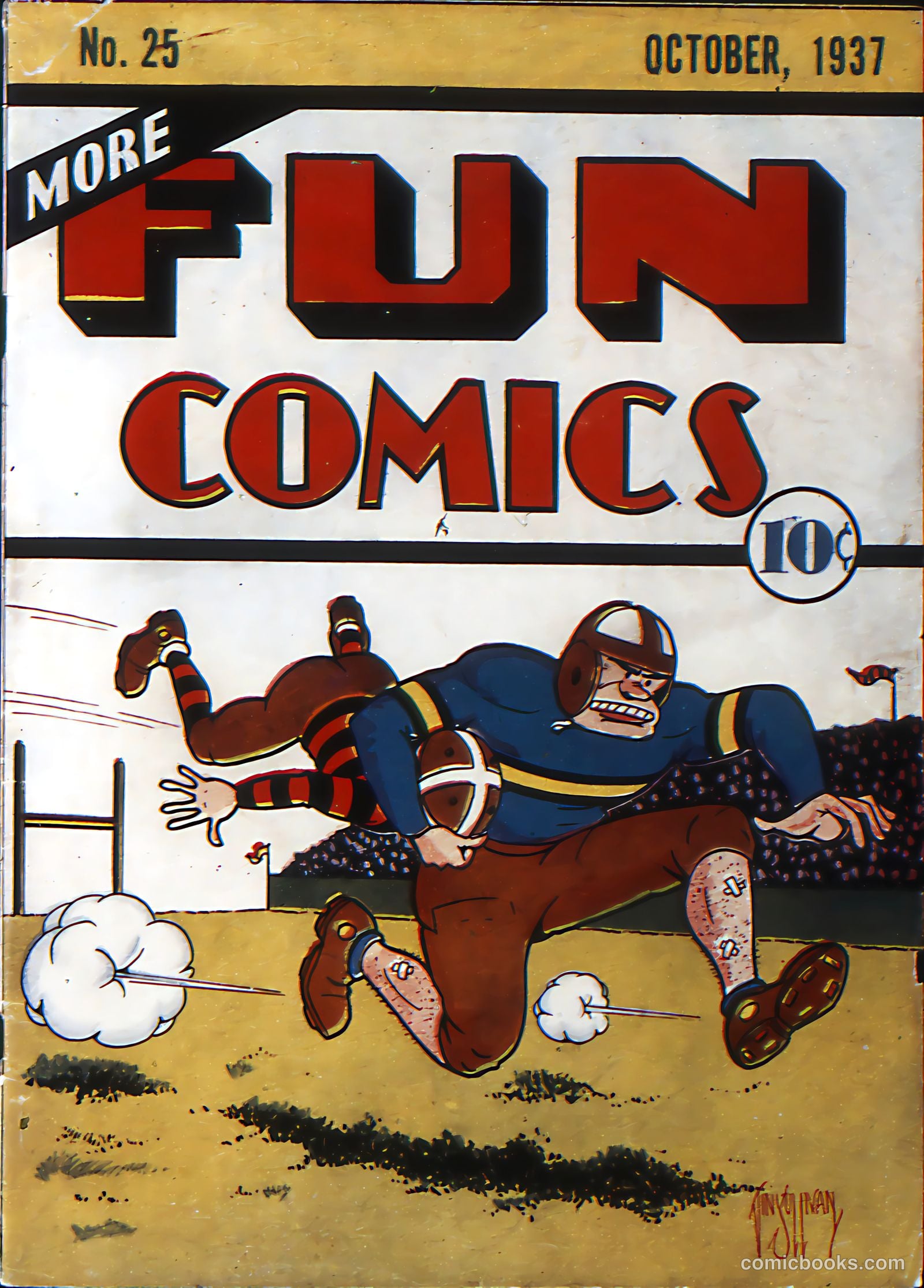
Reviews
Reader reviews
No reader reviews yet.