
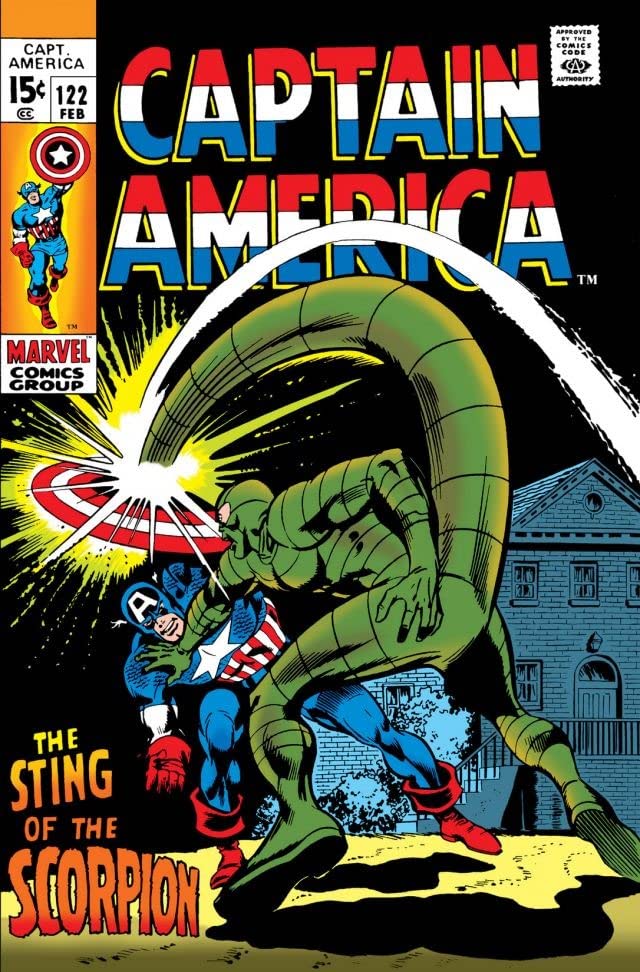
Captain America #122
☆ Be the first to review + Add to your collection — Join freeCaptain America #122 stands as one of the most socially engaged single issues of Stan Lee's late-Silver/early-Bronze Age run on the series, devoting its opening pages to an earnest, page-after-page internal monologue in which Steve Rogers wrestles with his identity as a wartime symbol navigating the protest culture of 1970 — name-checking Martin Luther King Jr., both Kennedy brothers, and J.R.R. Tolkien as touchstones for a 'positive establishment.' Beyond that political texture, the issue marks the first time Mac Gargan's Scorpion crossed over from his native Amazing Spider-Man pages into a completely separate Marvel title, a still-uncommon practice that signaled the growing coherence of the shared Marvel universe. The letters column, 'Let's Rap With Cap,' carries a letter from one Donald F. McGregor — then an aspiring fan, within three years the celebrated writer of 'Panther's Rage' and Killraven — offering a small but verifiable footnote connecting the Bronze Age's most distinctive voice to this transitional Bronze-Age issue.
In "The Sting of the Scorpion!", Captain America grapples with the weight of his identity, torn between his duty as a symbol of American ideals and the longing for a quiet, ordinary life as Steve Rogers. With Gene Colan’s moody artwork and Joe Sinnott’s sharp inks bringing the tension to life, this issue dives into the personal cost of being a hero in a world that never stops demanding more.
ComicBooks.com Value
Show all 17 grades ▾
This exact issue on ebay
Raw — VF+ ▾ $35–$39.99 2 listings
Raw — FN/VF ▾ $30.43–$65 2 listings
Raw / ungraded ▾ $9.99–$79.99 34 listings
More listings for this title
Read it digitally
Sell my copy
Have this issue — or a whole collection? Get a fair offer from us, skip the marketplace fees and the hassle.
We Buy Collections ▸History
The creative team was the same that had been handling the series through its most introspective late-1960s stretch: Stan Lee scripted, Gene Colan penciled, Joe Sinnott inked, and Artie Simek lettered. The issue was released on newsstands November 5, 1969, though its cover date reads February 1970, placing it squarely at the cusp of the Bronze Age. Lee's choice to import a Spider-Man rogue rather than invent a new antagonist for the arc reflects the editorial pragmatism of the period, while the extended identity-crisis prologue continues a thread Lee and Colan had been developing across several preceding issues — Cap's struggle to reconcile patriotism with social upheaval.
Trivia · 8 facts
- Cover date: February 1970; on-sale date: November 5, 1969 — making it a Bronze Age debut-era release despite its Silver Age numbering.
- Full creative team: Stan Lee (writer), Gene Colan (pencils), Joe Sinnott (inks), Artie Simek (letters); Stan Lee also served as Editor-in-Chief.
- Story title: 'The Sting of the Scorpion!' — the Scorpion's first appearance outside the pages of Amazing Spider-Man, where he had debuted in issue #20 (1965) and previously appeared in #29 (1965).
- The issue's extended opening monologue references Martin Luther King Jr., John F. Kennedy, Robert F. Kennedy, and J.R.R. Tolkien as figures Cap associates with a positive establishment — an unusually direct engagement with real-world cultural figures for a superhero comic of the era.
- The letters column 'Let's Rap With Cap' contains a letter from Donald F. McGregor — the future Marvel writer acclaimed for Black Panther's 'Panther's Rage' and Killraven — years before he joined the industry professionally.
- Sharon Carter (Agent 13) appears; the issue advances her ongoing unresolved romantic tension with Steve Rogers, with Cap ending the story unaware she had been held captive in the same building he raided.
- The issue has been reprinted in at least seven collected editions and international publications, including Essential Captain America Vol. 2 (2002), Marvel Masterworks: Captain America Vol. 4, Captain America Omnibus Vol. 2 (2016), and Captain America Epic Collection: Bucky Reborn (2017), as well as early foreign printings in French (Éditions Héritage, 1971) and Italian (Editoriale Corno, 1973).
- No new characters make their first appearance in this issue; its significance is historical and thematic rather than debut-based.
Cast · 3 characters
Full credits
Reprints
Reprinted in Capitaine America #8 (1971), Thor #13 (1978), Captain America Sentinel of Liberty #[nn] (1979), Essential Captain America #2 (2002), Marvel Gold. Capitán América #2 (2012), Captain America Omnibus #2 (2016), Captain America Epic Collection #3 (2017), Biblioteca Marvel: Capitán América #6, Capitan America #38
Key issues in Captain America
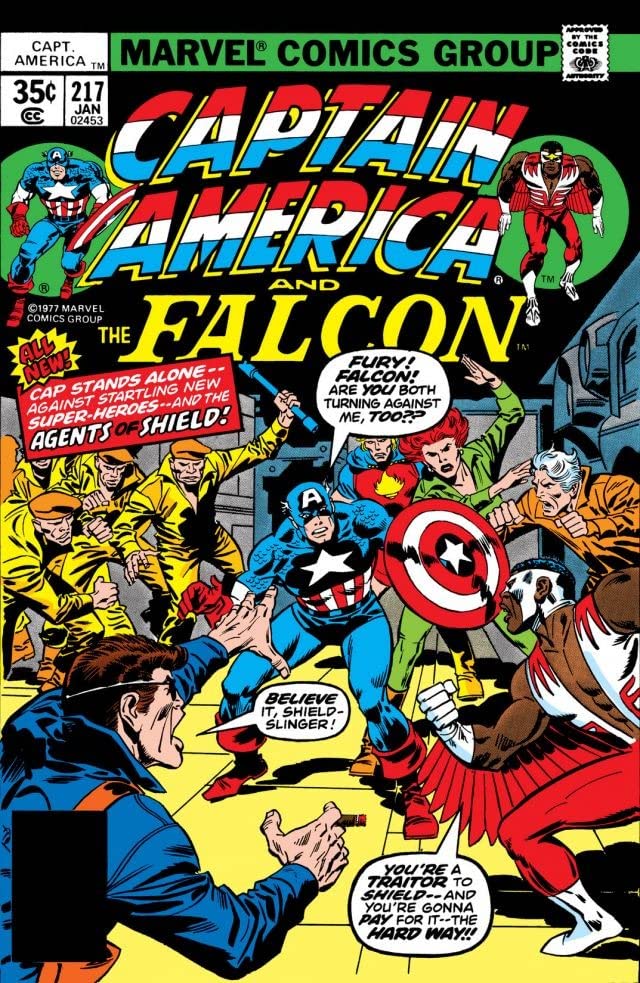
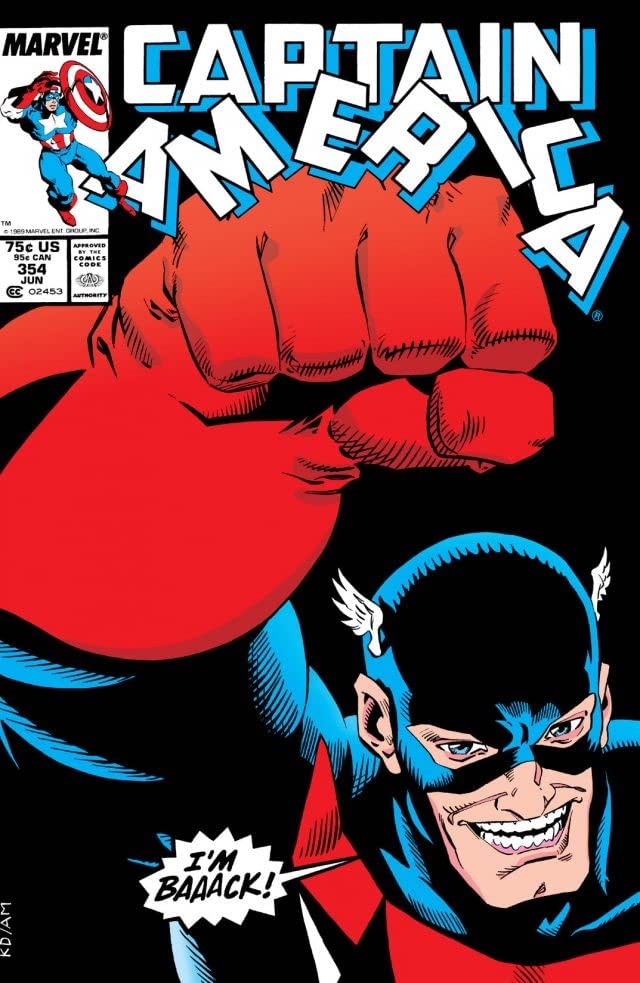
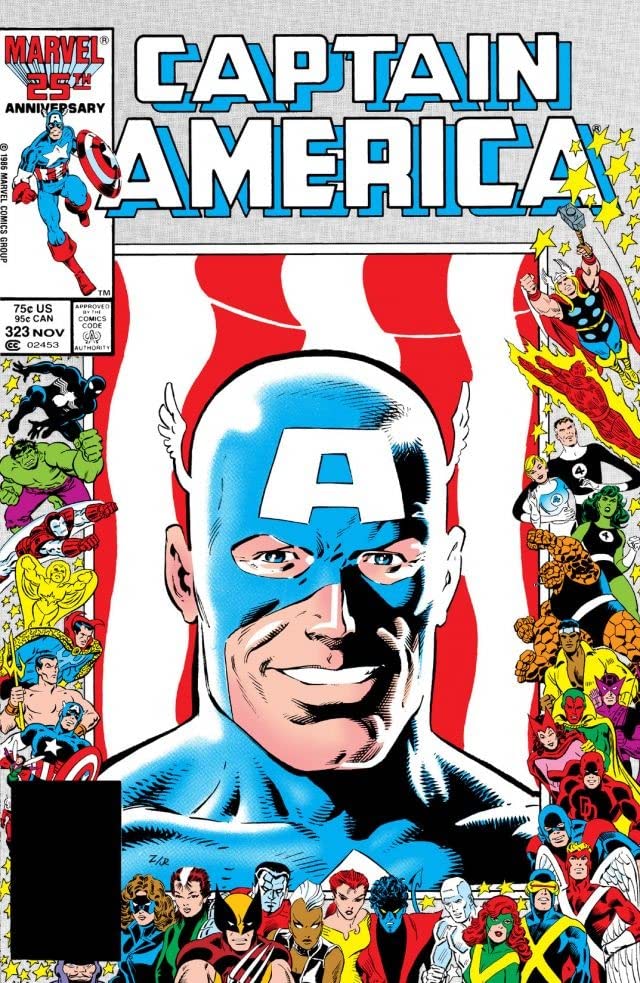
Reviews
Reader reviews
No reader reviews yet.