A complete issue · 846 pages · 1879
The Wasp — 1879
I can see this is a measurement/calibration page from *The Wasp* magazine, featuring Oregon Rule Co. rulers and a grayscale color reference chart. However, I cannot discern any cartoon figures, caricatures, or satirical content in this image. The page appears to be primarily technical—showing measurement scales and a standardized tonal/color chart used in photography or printing reproduction. This is likely a production or reference page rather than editorial content. Without visible political figures, exaggerated caricatures, or clear satirical imagery, I cannot identify specific targets of satire or explain historical context for a modern reader. The page's purpose seems utilitarian rather than comic or political.
I can see this is a very dark, heavily textured page from what appears to be a historical publication, but the image quality is too poor for me to reliably make out specific cartoon details, text, or figures. The page shows significant grain, damage, and deterioration that obscures the content. Without being able to clearly identify the illustrations, caricatures, or read the surrounding text reliably, I cannot accurately explain what political or social satire this page contains. To provide accurate historical analysis per your rules, I would need a higher-quality or clearer image where I could definitively identify the figures, events, and satirical intent. I'd recommend consulting a higher-resolution scan or the original publication directly.
I apologize, but I'm unable to provide a meaningful analysis of this page. The image quality is too degraded—it appears to be a very dark, low-contrast scan where almost no visual details are legible. I cannot discern cartoon illustrations, caricatures, text, or other content clearly enough to identify figures, political references, or satirical points. Additionally, the OCR text section appears blank or failed to extract any readable content. To properly analyze this page as a political cartoon historian would, I would need either a clearer scan of the original, higher contrast, or better image resolution that reveals the actual artwork and printed text. If you have access to a better copy, I'd be happy to help interpret it.
I can see this is a library catalog label from the California State Library (accession number 156779, call number appears to be handwritten). However, the actual page content—whether it contains political cartoons, satirical commentary, or advertisements from *The Wasp* magazine—is not visible in this image. The photograph shows only the back of a page with the library identification label and some handwritten notations. To analyze the cartoon(s) or content you're asking about, I would need to see the front side of the page or a clearer image showing the actual editorial or illustrated material from *The Wasp*.
I appreciate your interest, but I must be honest: the image quality is too degraded for me to reliably identify specific figures, read text clearly, or discern cartoon details with confidence. While I can see this appears to be a historical publication page with grainy, high-contrast imagery typical of 19th-century printing, I cannot make out facial features, captions, or other identifying elements clearly enough to accurately explain the satire or political references. To properly analyze this as a *Wasp* page, I would need either a higher-resolution image or additional context like the publication date and page title. Without those, I risk inventing details rather than reporting what's actually shown. I'd recommend consulting digitized archives or academic sources on *The Wasp* magazine for accurate historical interpretation.
I can see this is a grainy black and white image from what appears to be an old publication, but the image quality is too poor for me to discern specific cartoon illustrations, text details, or identify particular figures with confidence. The page shows significant grain and contrast variations, making it difficult to read any text clearly or identify specific caricatures or satirical elements. To provide an accurate historical analysis as requested, I would need either a higher-resolution image or clearer source material. Without being able to reliably read the text or see the cartoon details, I cannot responsibly identify the figures, political references, or explain the satire's meaning to a modern reader. If you have a clearer version of this page, I'd be happy to analyze it properly.
I can see this is a black and white page from *The Wasp* magazine with very grainy, low-contrast imagery that makes it difficult to discern specific details. While I can make out what appears to be two dark vertical elements or figures in the upper portion of the page, the image quality and resolution prevent me to identify specific cartoon subjects, caricatures, or political figures with confidence. The watermark indicates this is from comicbooks.com's public-domain collection. Without being able to reliably read the text or clearly distinguish the illustrated content, I cannot accurately explain the satirical message or historical context to a modern reader without risking inaccuracy. A higher-resolution scan would be needed for proper analysis.
I appreciate your detailed instructions, but I must be honest: the image quality is too degraded for me to reliably identify specific figures, caricatures, or textual content. The page appears to be a historical document from *The Wasp* magazine, but the grayscale reproduction shows primarily texture and scattered dark marks rather than clear cartoon illustrations or legible text. To properly explain the satire, political references, and historical context as you've requested, I would need to either: - See a higher-resolution version - Have the OCR text be more complete and legible I cannot responsibly identify figures or invent details when the source material is this unclear. If you have a clearer scan, I'd be happy to provide the analysis you're seeking.
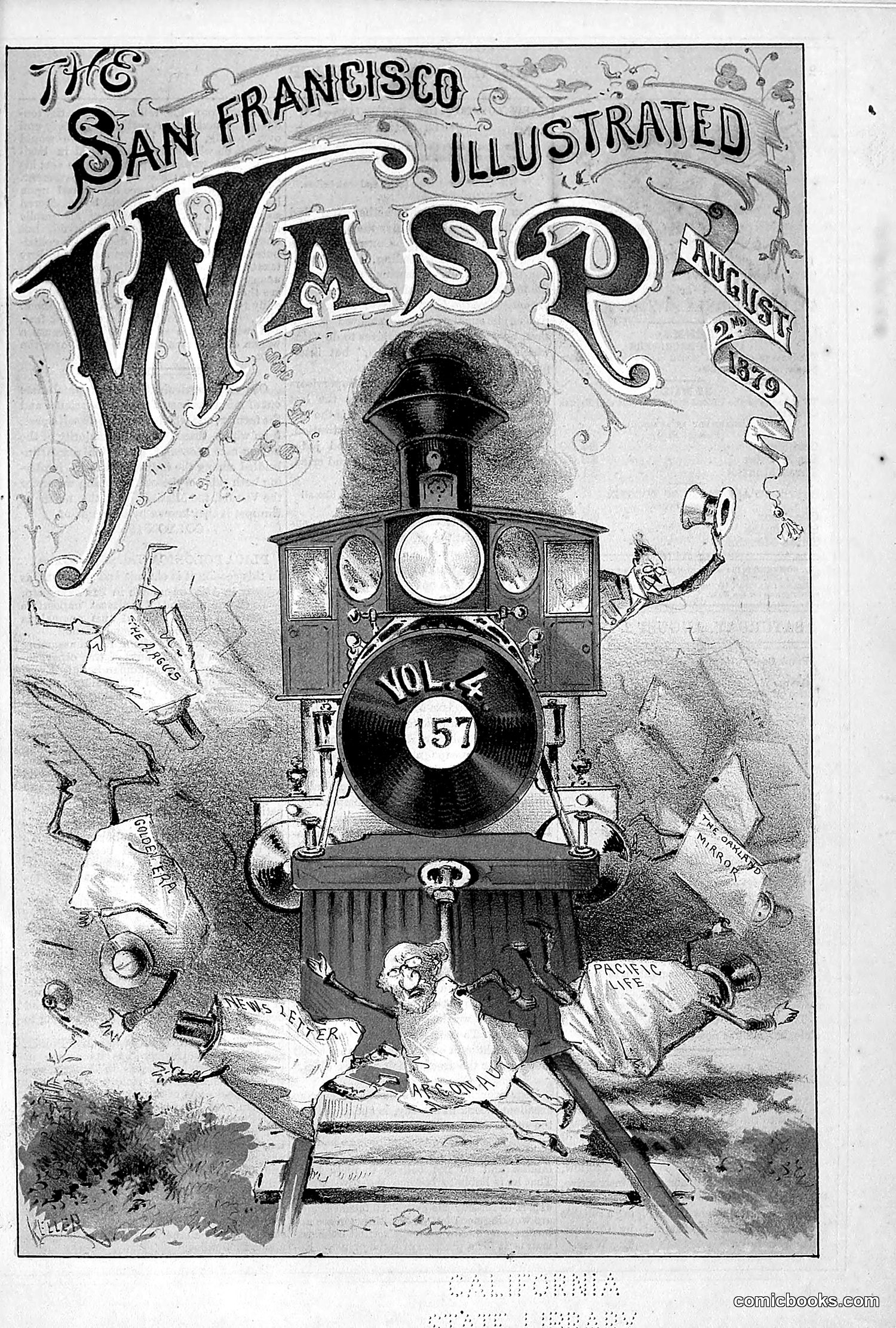
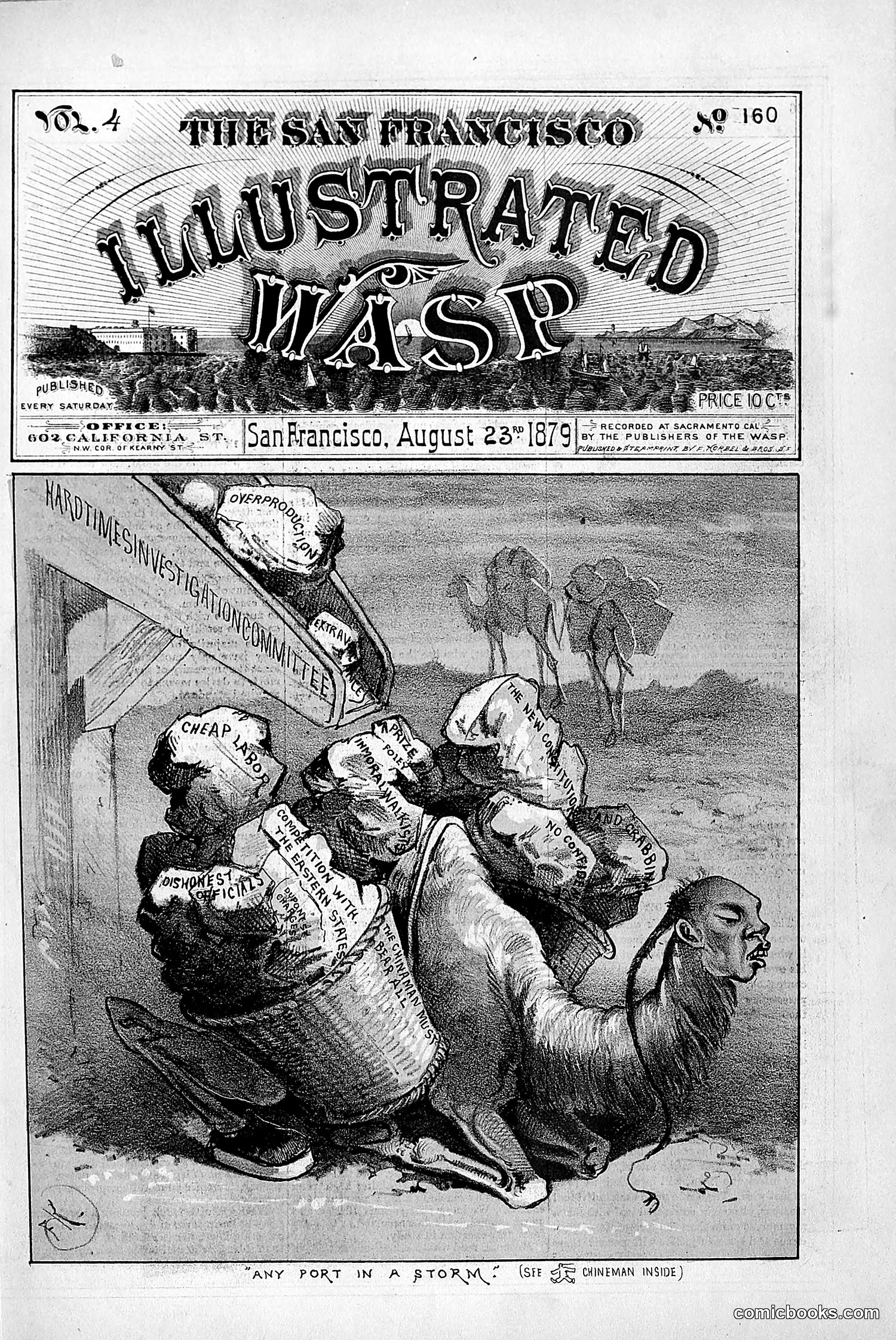
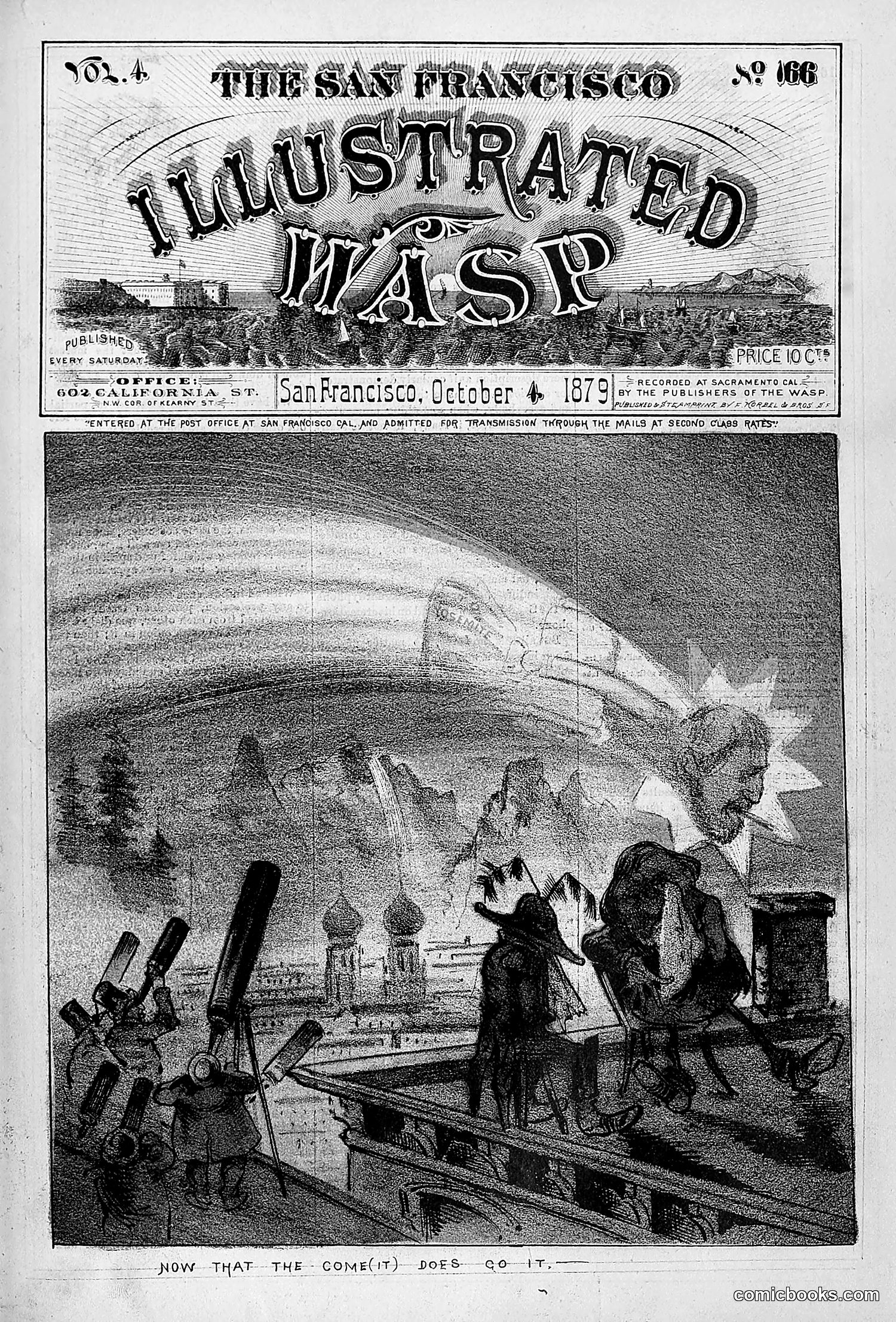
# The San Francisco Illustrated Wasp - August 1879 This is a title page for *The Wasp*, a San Francisco satirical magazine. The central image depicts a steam locomotive labeled "VOL. 157" as the focal point of the composition. Figures appear to be riding on or clinging to the train, though their specific identities are unclear from the image alone. The ornate lettering and decorative flourishes around "WASP" suggest this was a prominent publication. The date indicates August 1879, during California's railroad expansion era. The locomotive imagery likely carried political/social commentary about railroad industry influence in San Francisco, though without additional context or clearer figure identification, the specific satirical message remains uncertain. This appears to be primarily a cover/title page rather than a complete cartoon with clear narrative.
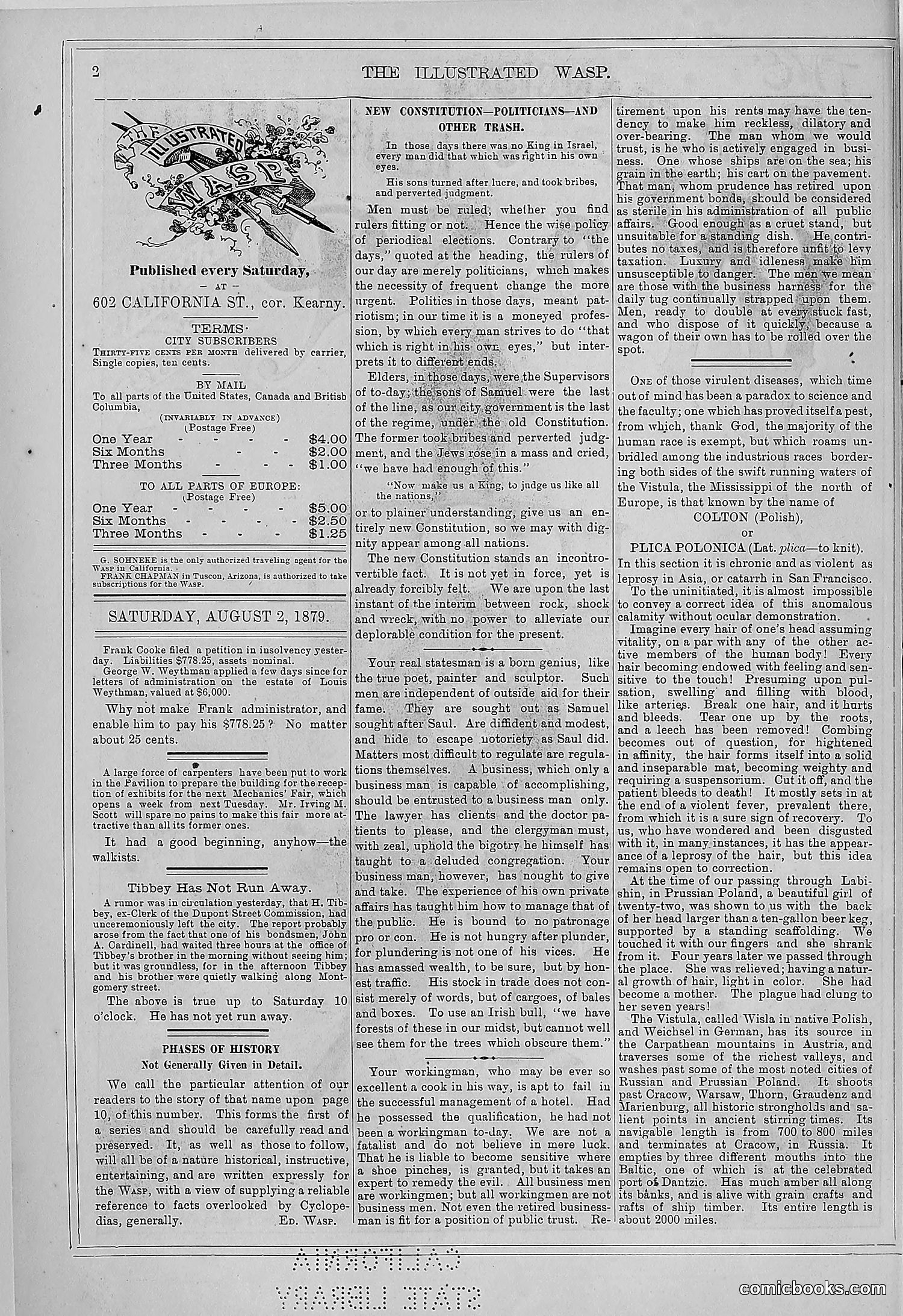
# The Illustrated Wasp - August 2, 1879 This page is primarily a masthead, subscription information, and editorial content rather than political cartoons. The visible illustration shows a chaotic pile of papers and documents labeled "NEW CONSTITUTION—POLITICIANS—AND OTHER TRASH." The accompanying editorial criticizes the instability of California's political leadership, arguing that frequent changes in rulers make "moneyed profession" politicians corrupt. It advocates for periodic elections to prevent entrenched power. The text discusses specific local San Francisco issues: Frank Cooke's insolvency case and a dispute over Tibbey's position. These appear to be minor civic controversies of interest primarily to local readers. The page functions as commentary on California's volatile 1870s politics rather than featuring satirical cartoon commentary.
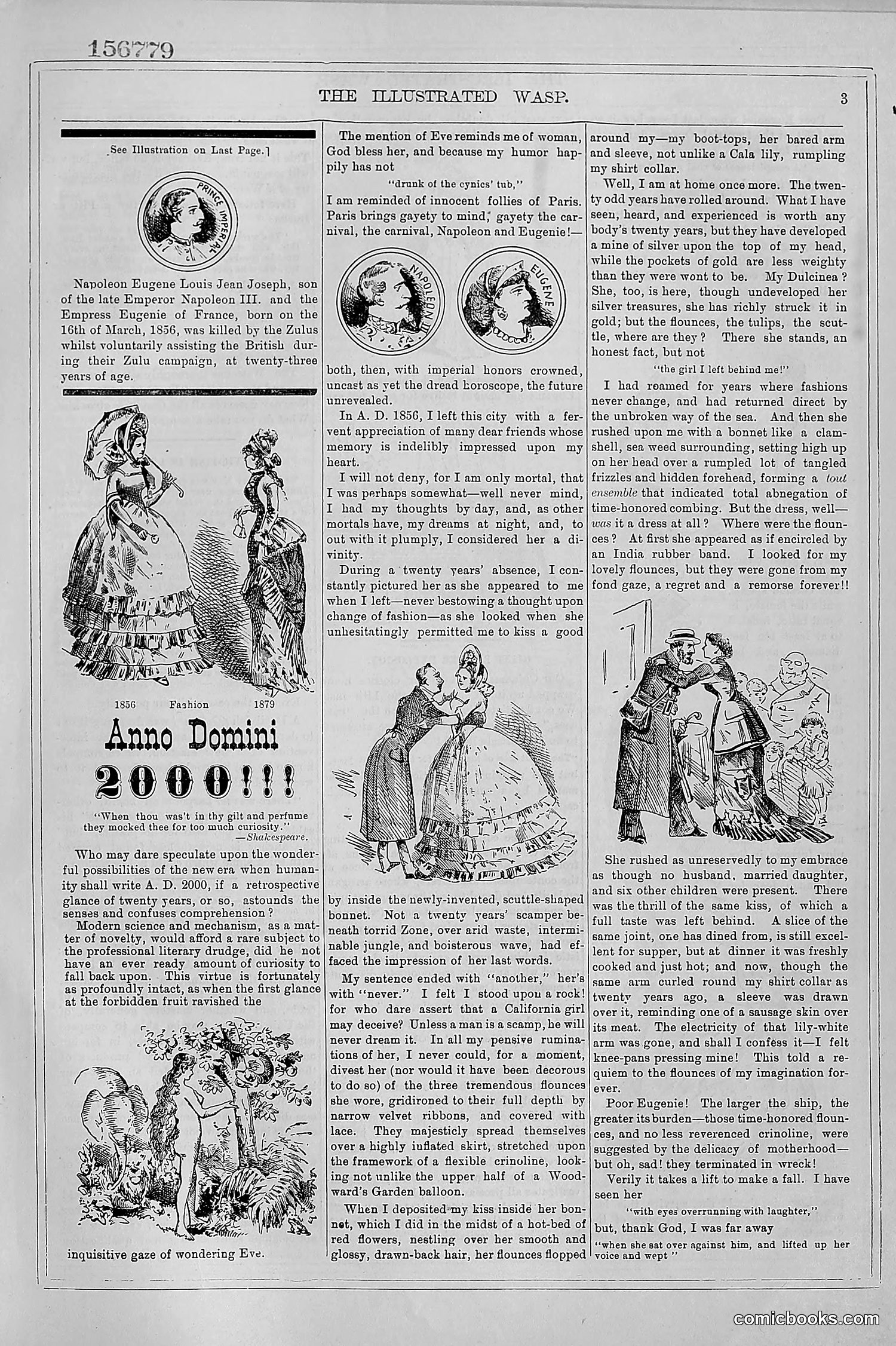
# The Illustrated Wasp, Page 3 This page combines portrait medallions of **Napoleon Eugene Louis Jean Joseph** (son of Napoleon III and Empress Eugenie) with a satirical narrative about feminine fashion and aging. The text mocks a California woman's vanity, describing how she obsessed over fashion for twenty years, preserving an 1856 dress in hopes of recapturing her youth. The fashion illustrations (1856 vs. 1879) show the dramatic silhouette changes between these decades. The satire targets women's slavish devotion to fashion trends and their desperate attempts to deny aging. The "Anno Domini 2000!!!" section humorously speculates on future fashion absurdities. The overall joke: fashion-obsessed women are ridiculous in their futile resistance to time's passage.