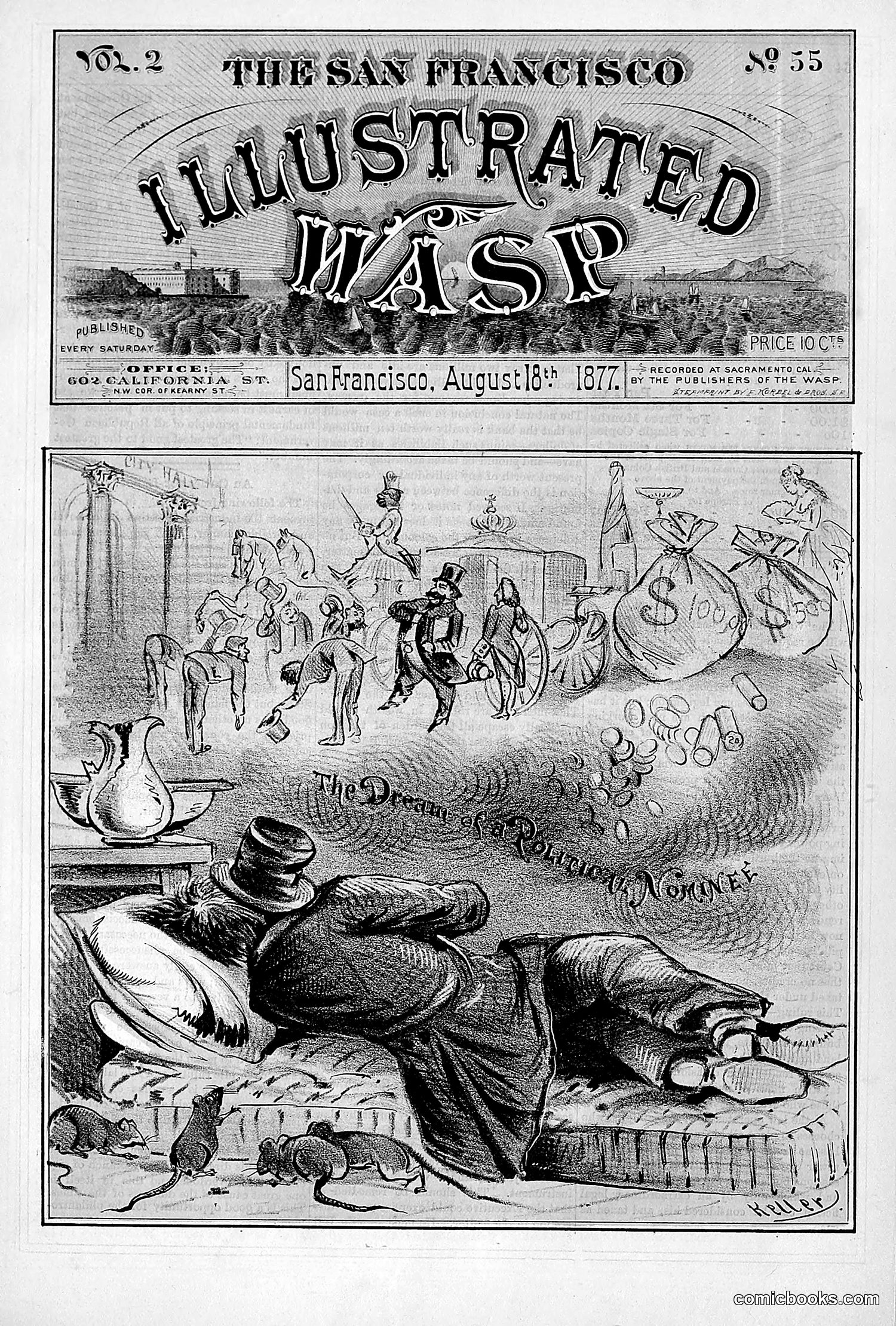
A complete issue · 372 pages · 1877
The Wasp — 1877
I can see this is a test page or calibration sheet from what appears to be a microfilm or document reproduction process, not an actual page from *The Wasp* magazine with cartoon content. The image shows: - An Oregon Rule Co. ruler/scale (vertical) - A horizontal measurement scale at bottom - A grayscale reference chart (the grid of squares in varying tones) - Measurement markings These are standard tools used in archival photography and document digitization to ensure accurate reproduction and color/tone calibration. There is no satirical cartoon, political commentary, or editorial content visible on this particular image to analyze.
I appreciate your detailed instructions, but I must be honest: this image is too dark and degraded for me to reliably make out specific cartoon content, figures, or text details beyond what you've provided in the OCR. The page appears heavily damaged or poorly scanned, with most visual elements obscured in darkness. Without being able to clearly see the caricatures, illustrations, or sufficient accompanying text, I cannot responsibly identify specific political figures, historical events, or explain the satire with the accuracy you've requested. To provide a proper analysis following your rules—asserting only what I can verify—I'd need either a clearer image or additional context about the publication date and issue. I'd rather acknowledge these limitations than risk inaccurate interpretation.
I can see this is a library catalog label from the California State Library, but the actual cartoon or editorial content that would appear on this page is not visible in the image provided. The image shows only a blank or mostly blank page with a library accession label (barcode 0 2007 0544733 4) and handwritten call number notations. Without being able to see the actual cartoon, illustration, or text content from The Wasp magazine, I cannot identify the figures, political references, or satirical points. To analyze this page properly, I would need an image showing the magazine's actual editorial or cartoon content rather than just the library processing label.
I appreciate your detailed instructions, but I must be honest: the image quality is too degraded for me to reliably read the OCR text you've provided or identify specific figures, captions, or cartoon content with confidence. The page appears to be a historical scan with significant grain and wear, making details difficult to discern. Without being able to clearly see the text, caricatures, or their labels, I cannot safely identify the political figures, events, or satirical references this page references—and your rules correctly prioritize accuracy over completeness. To properly analyze this *Wasp* page, I would need either: - A higher-resolution image - The complete, verified OCR text - Publication date context I apologize I cannot provide the analysis you've requested.
I appreciate your detailed request, but I must be honest: the image quality is too degraded for me to reliably read the OCR text or identify specific cartoon content, figures, or captions with confidence. The page appears to be a historical document with significant grain, wear, and fading that obscures both visual details and text clarity. To provide accurate historical analysis following your rules—asserting only what I can verify—I cannot responsibly identify specific political figures, references, or satirical points without being able to read the actual content clearly or see the illustrations distinctly. If you have a clearer scan or can provide the legible OCR text separately, I'd be happy to offer the historical analysis you're seeking.
I can see this is a cover page from *The Wasp* magazine, digitized by the Internet Archive in 2012. The image shows a classical building with four columns (resembling a bank, courthouse, or government institution) with the archive URL below. However, I cannot discern any cartoon figures, caricatures, or satirical content clearly enough from this image to identify specific political or social references. The page appears to be primarily a title/cover page rather than containing the actual satirical content. Without being able to read legible text or identify specific figures, I cannot reliably explain what satirical point this particular page makes. To properly analyze *The Wasp's* satire, I would need an image showing clearer cartoon artwork or readable text content.
I can see this is a grayscale image with a textured, noisy appearance typical of aged newsprint, but the image quality is too degraded for me to reliably identify specific cartoon illustrations, figures, or text content beyond the watermark "comicbooks.com" visible in the corner. To properly analyze this page from *The Wasp* magazine—identifying caricatures, political references, and satirical intent—I would need a clearer image where the illustrations and text are legible. The current image appears either heavily damaged, poorly scanned, or reproduced at insufficient resolution. If you have a higher-quality version of this page, I'd be happy to provide the historical and contextual analysis you're seeking.
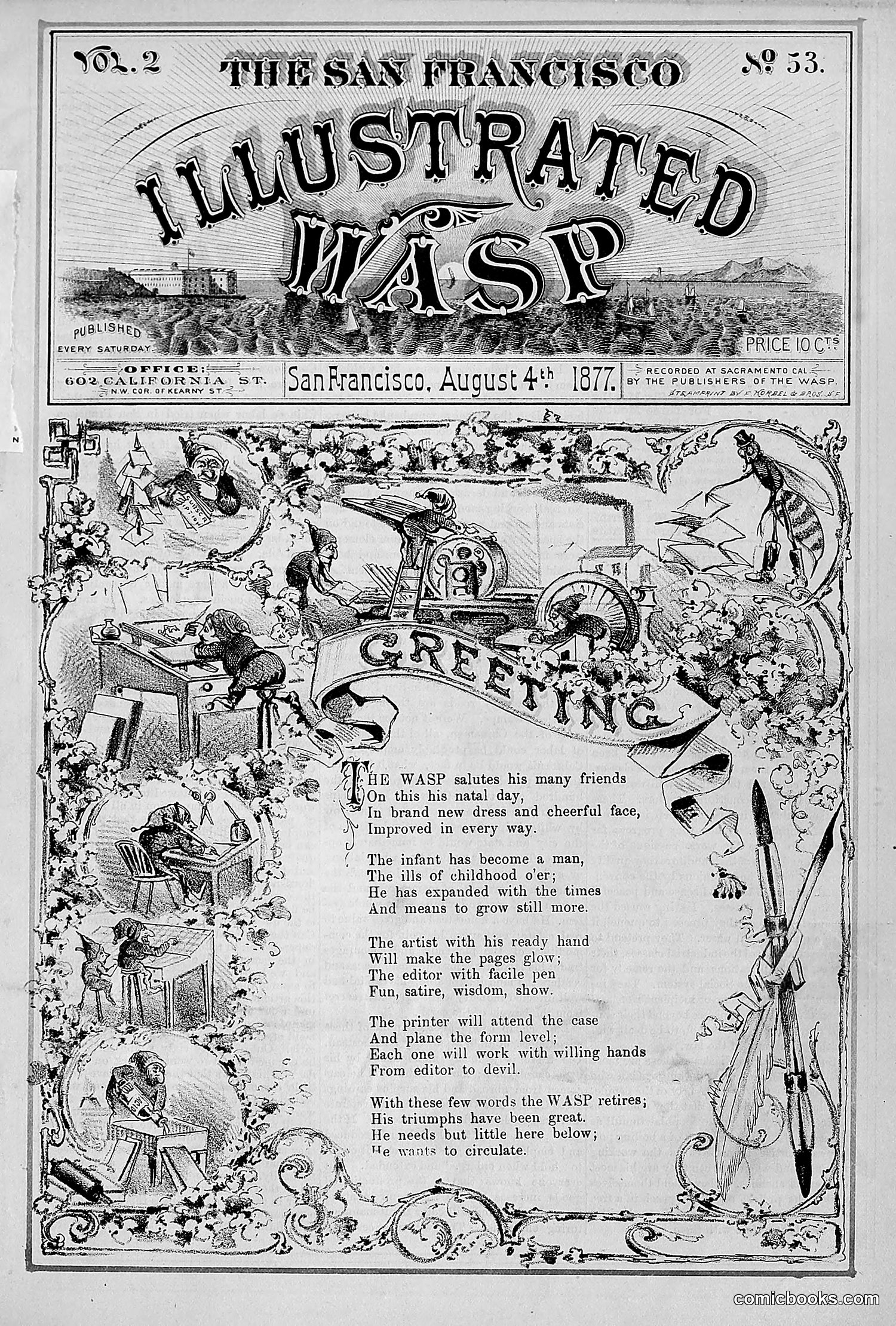
# The Wasp Magazine - August 4, 1877 This is a **title/greeting page** rather than a political cartoon. The San Francisco *Wasp* magazine celebrates its publication anniversary with an ornamental illustration and accompanying poem. The text reveals the magazine's self-described mission: the "WASP" (likely standing for a satirical publication) addresses its "many friends" on its "natal day," presenting itself in "brand new dress." The poem describes the publication's evolution from "infant" to "man," celebrating its growth and expanded ambitions. It highlights the collaborative roles of artist, editor, printer, and writer—each contributing "fun, satire, wisdom, show." The decorative border depicts various scenes of labor and creativity, reflecting the magazine's self-identification as a vehicle for artistic and editorial expression in San Francisco's publishing landscape.
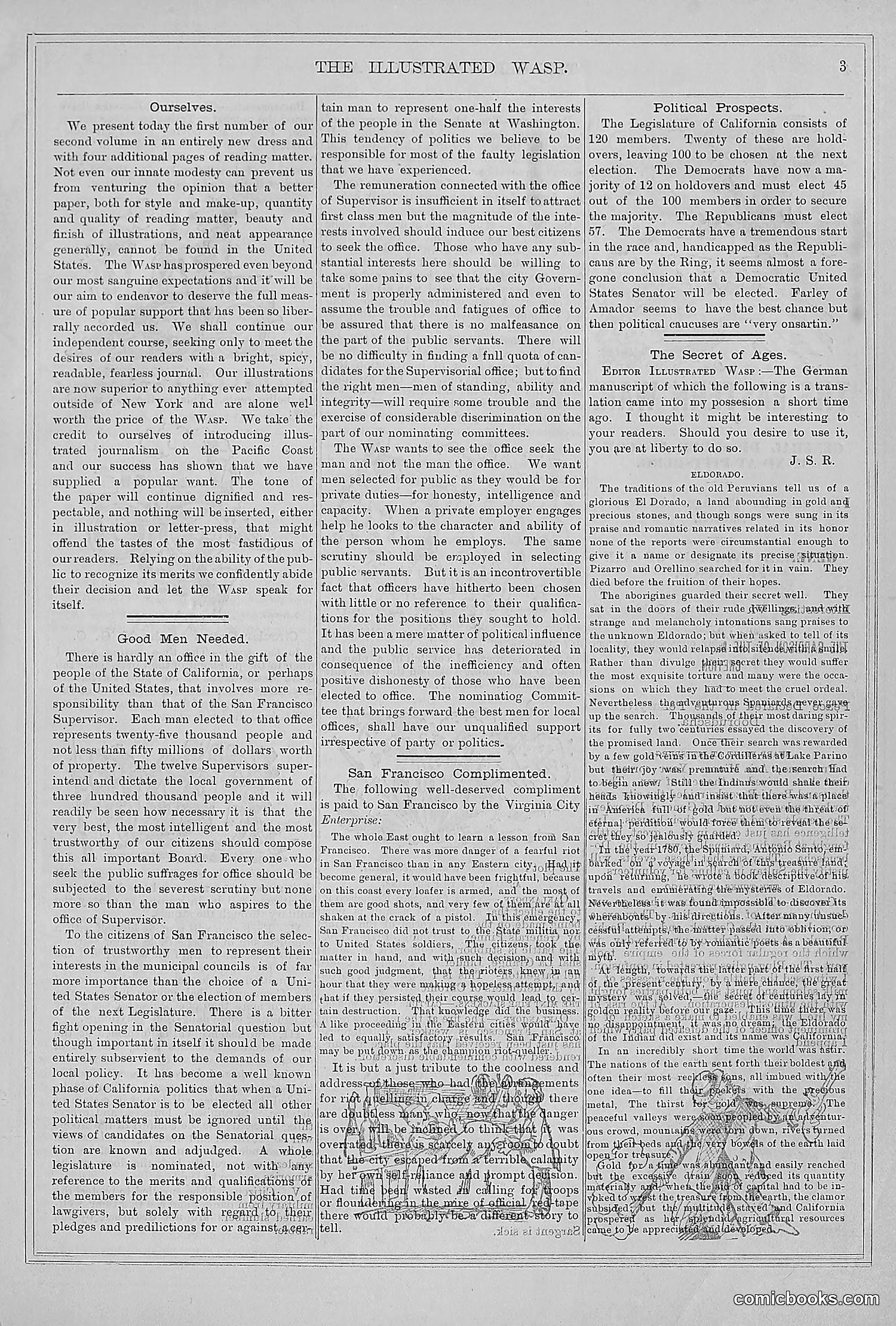
# Analysis of The Wasp Page 3 This page contains three opinion columns with no visible illustrations or cartoons. The content addresses California politics circa the 1880s-1890s (based on references to the state Legislature and Senate composition). Key topics include: 1. **"Ourselves"** - Defending the magazine's editorial independence and journalistic integrity on the Pacific Coast. 2. **"Good Men Needed"** - Criticizing the San Francisco Supervisors for their corruption and incompetence, arguing that trustworthy citizens should fill these positions rather than political operatives. 3. **"San Francisco Complimented"** and **"The Secret of Ages"** - Brief editorial notes praising the Bulletin newspaper and referencing local historical matters. The page represents typical satirical magazine content: political commentary attacking local officials and institutional failure.
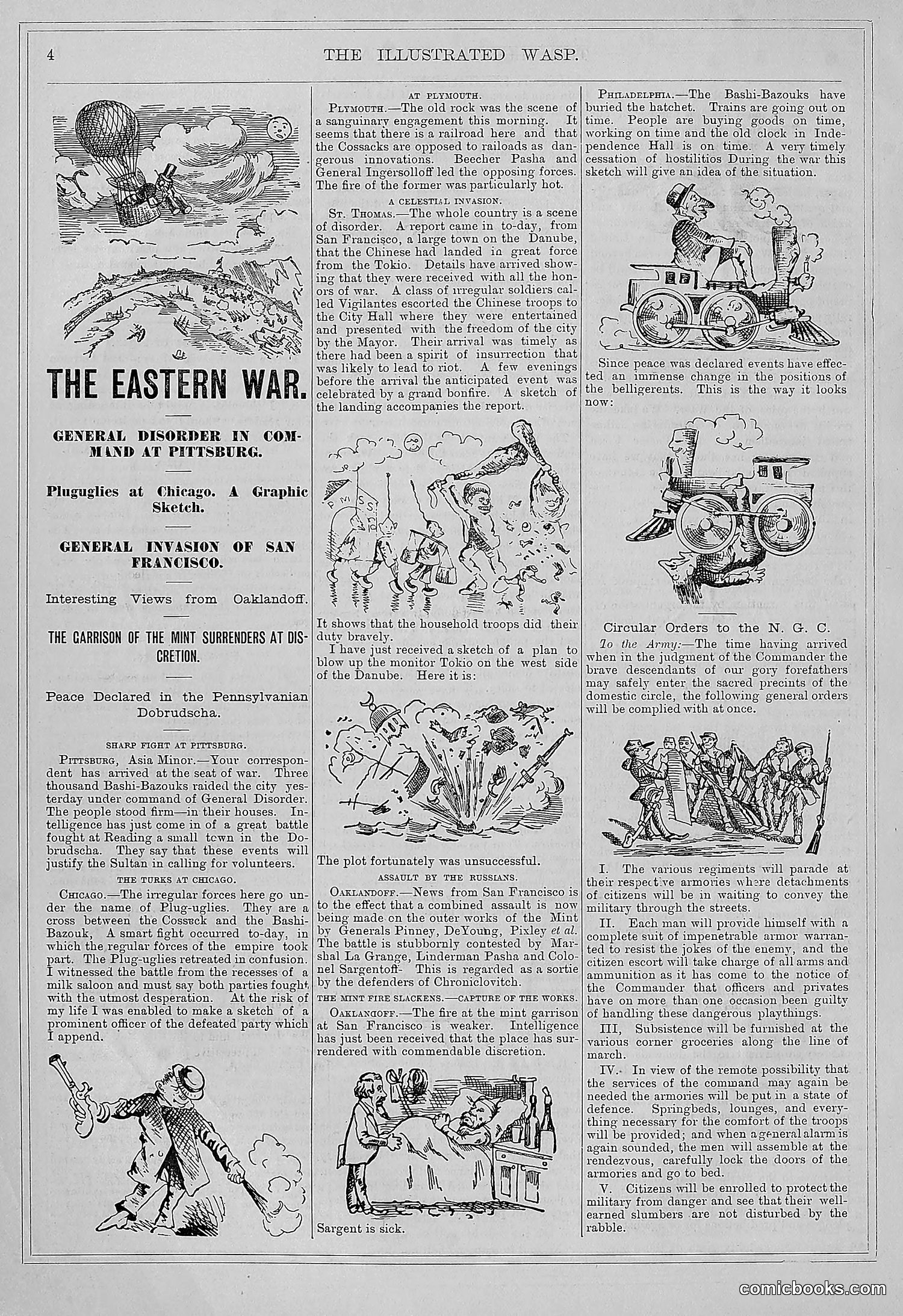
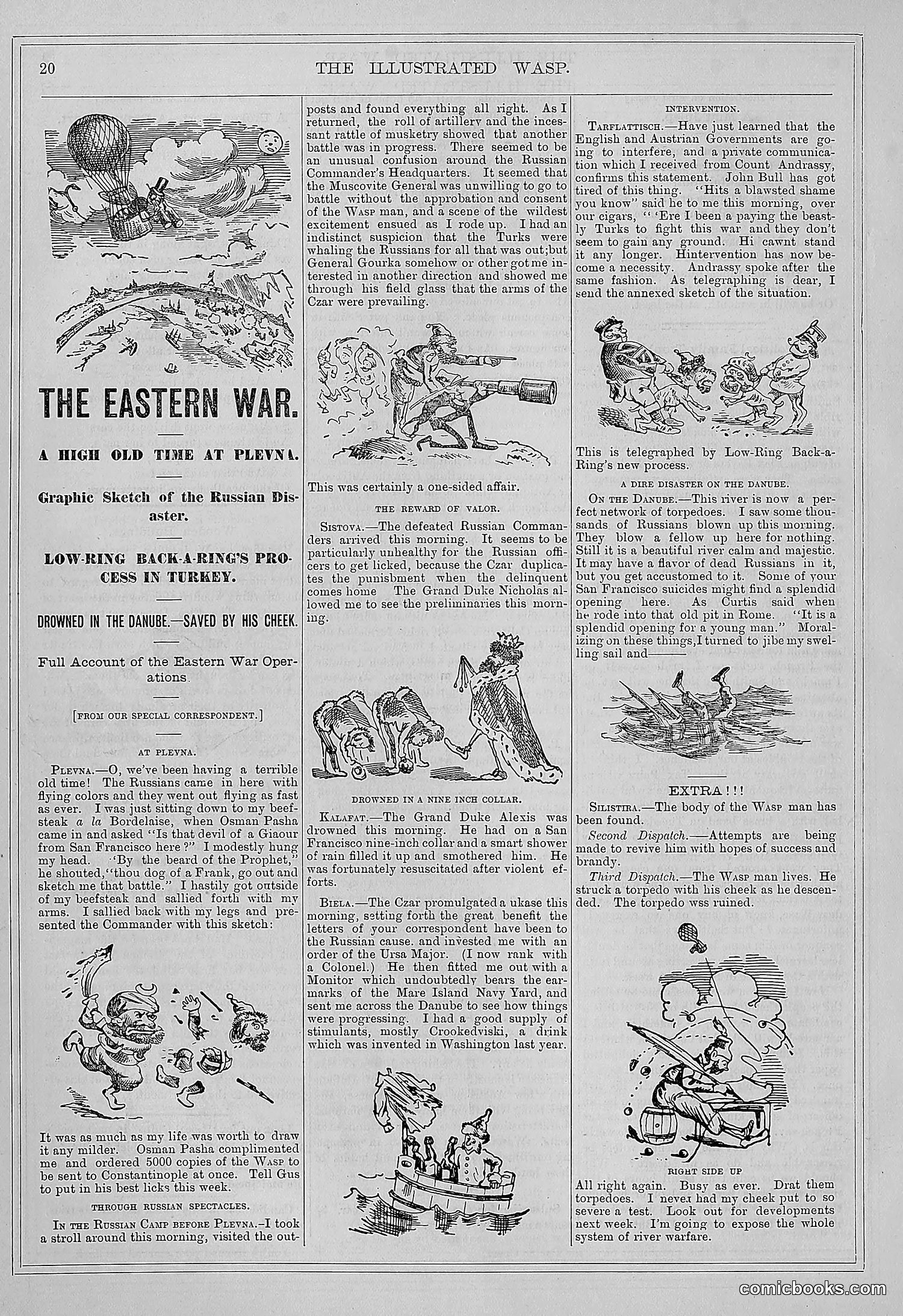
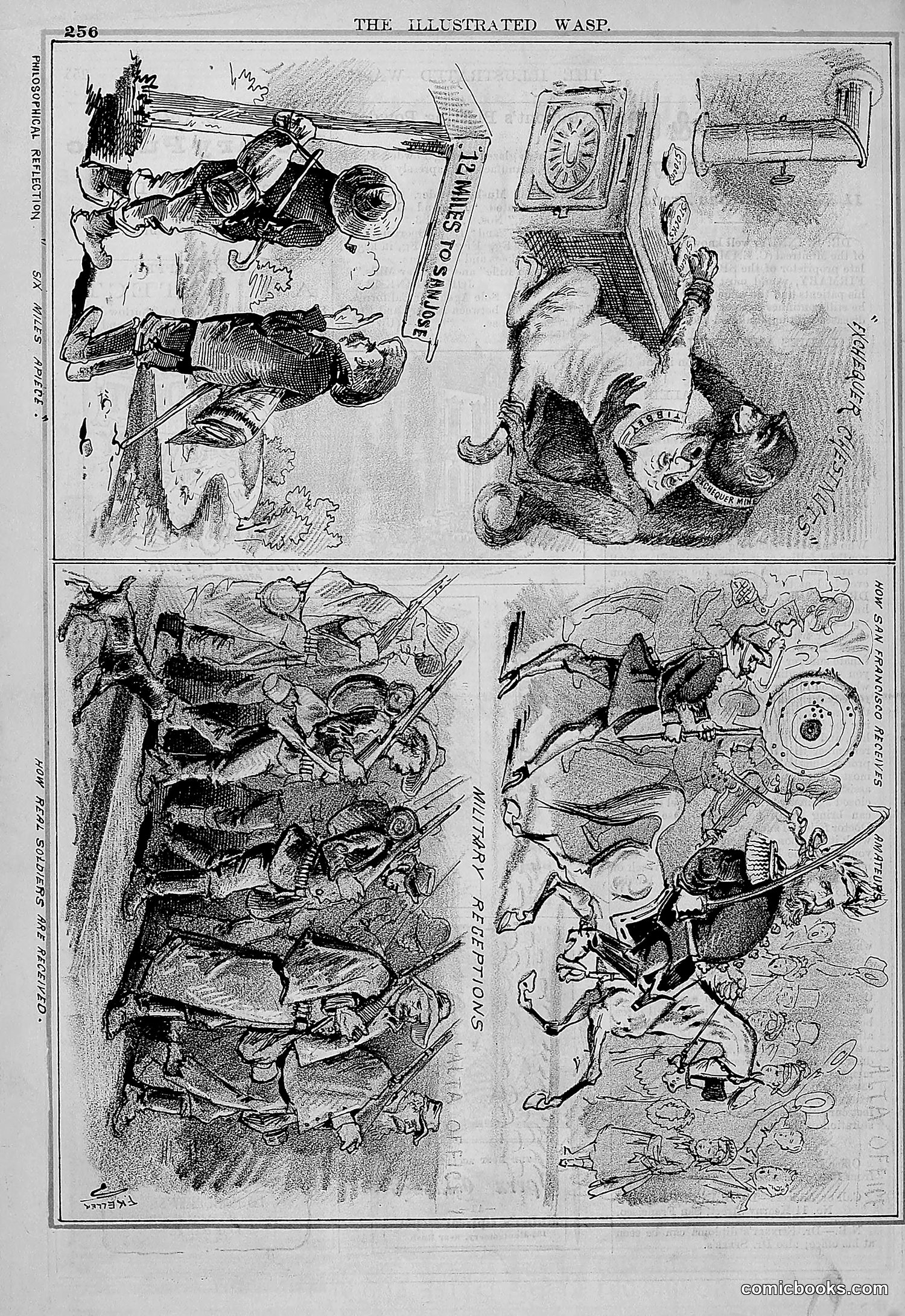
# The Eastern War - Satirical Commentary on 1880s Military Conflicts This page from *The Wasp* satirizes multiple contemporary military crises. The main headline "THE EASTERN WAR" references conflicts in Asia—specifically mentions of San Francisco, Pittsburgh, and Chicago suggest American anxieties about foreign invasion or domestic military disorder. The cartoons use absurdist humor: soldiers on bicycles, household troops engaged in confused combat, and a "Sergeant is sick" caption mock military preparedness. The detailed circular orders about regiments parading and securing armories appear to satirize bureaucratic overreach in response to perceived threats. The caricatured Chinese figures and references to "Bashi-Bazouks" (Ottoman soldiers) reflect period xenophobia. Overall, the satire mocks American military panic about Eastern conflicts and domestic order, presenting military hierarchy and invasion fears as comically overwrought.
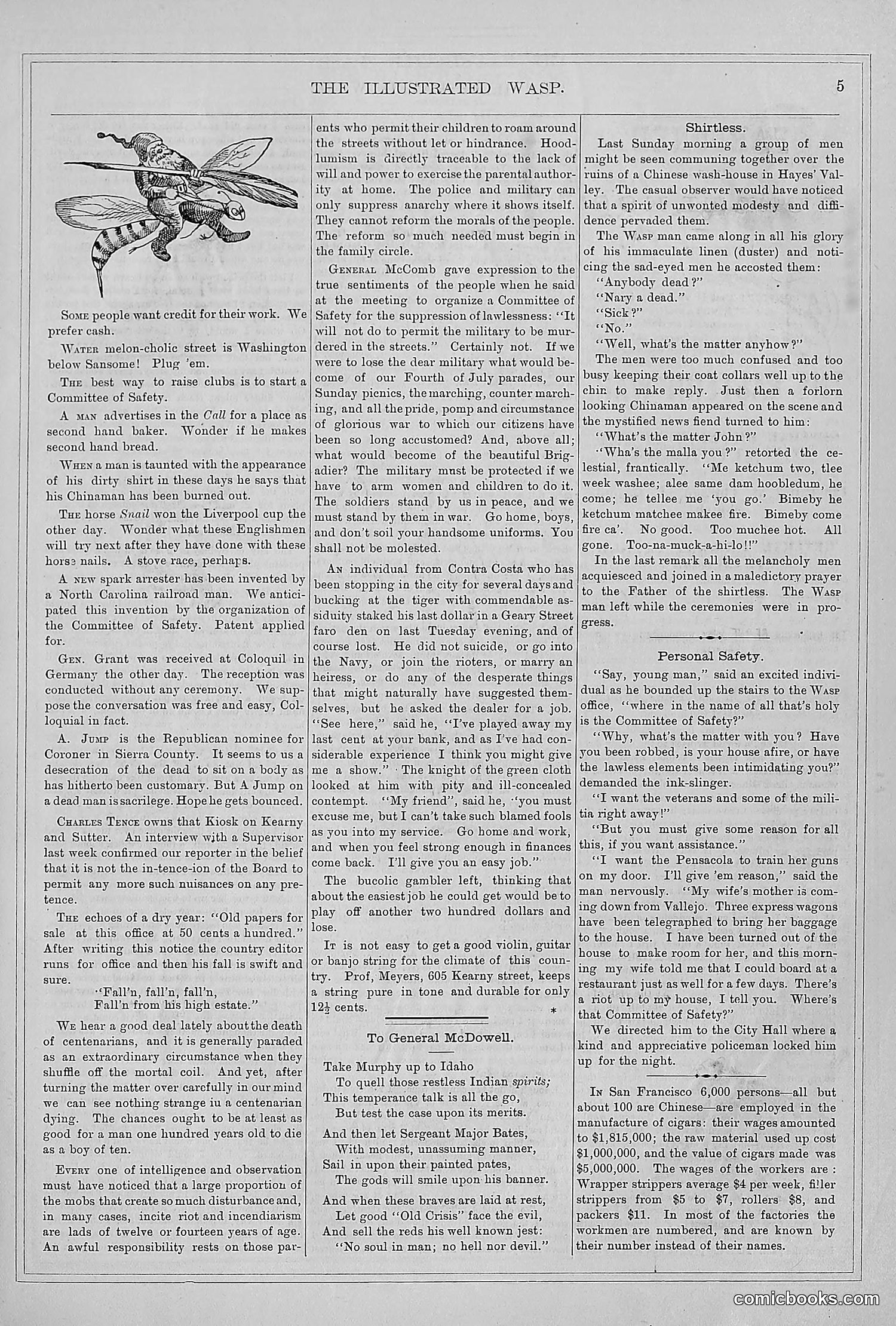
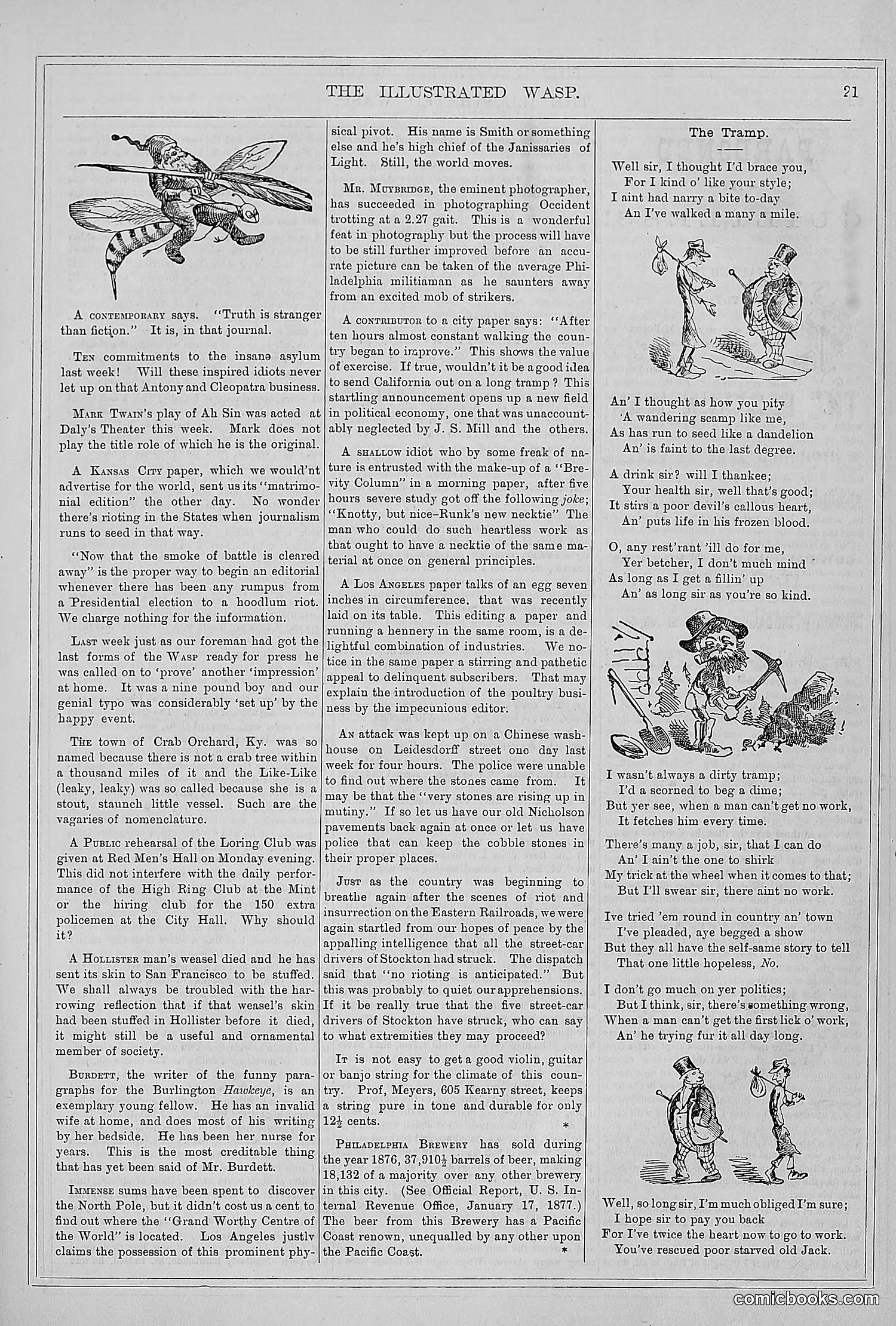
# The Illustrated Wasp - Page 5 Analysis The page features an illustration of a wasp attacking what appears to be multiple insects or figures in a confrontational pose at the top left. The bulk of the page consists of satirical commentary and social criticism rather than a single unified political cartoon. The text addresses various social issues of the era: parental discipline, military preparedness, labor conditions (including a North Carolina railroad worker's invention), and urban safety concerns. There's commentary on homelessness ("hoodlums"), women's rights, and working conditions for cigar factory workers in San Francisco. The content suggests *The Wasp* functioned as a general-interest satirical magazine tackling multiple contemporary social problems rather than focusing on single political figures or events.