
A complete issue · 18 pages · 1880
The Wasp — June 5, 1880

I can see this is a measurement/calibration page from what appears to be a historical document or publication, showing an Oregon Rule Co. ruler for scale reference. However, the image quality and contrast make it impossible for me to discern any actual cartoon content, satirical illustrations, or legible text that would allow me to identify figures, political references, or satirical points. The page appears to be either a blank page, a test/reference sheet, or a heavily degraded scan where the actual content is not visible to me. Without being able to read the OCR text clearly or see distinct cartoon imagery, I cannot provide the historical and contextual analysis you've requested. If you could provide a clearer image or the OCR text, I'd be better able to help.
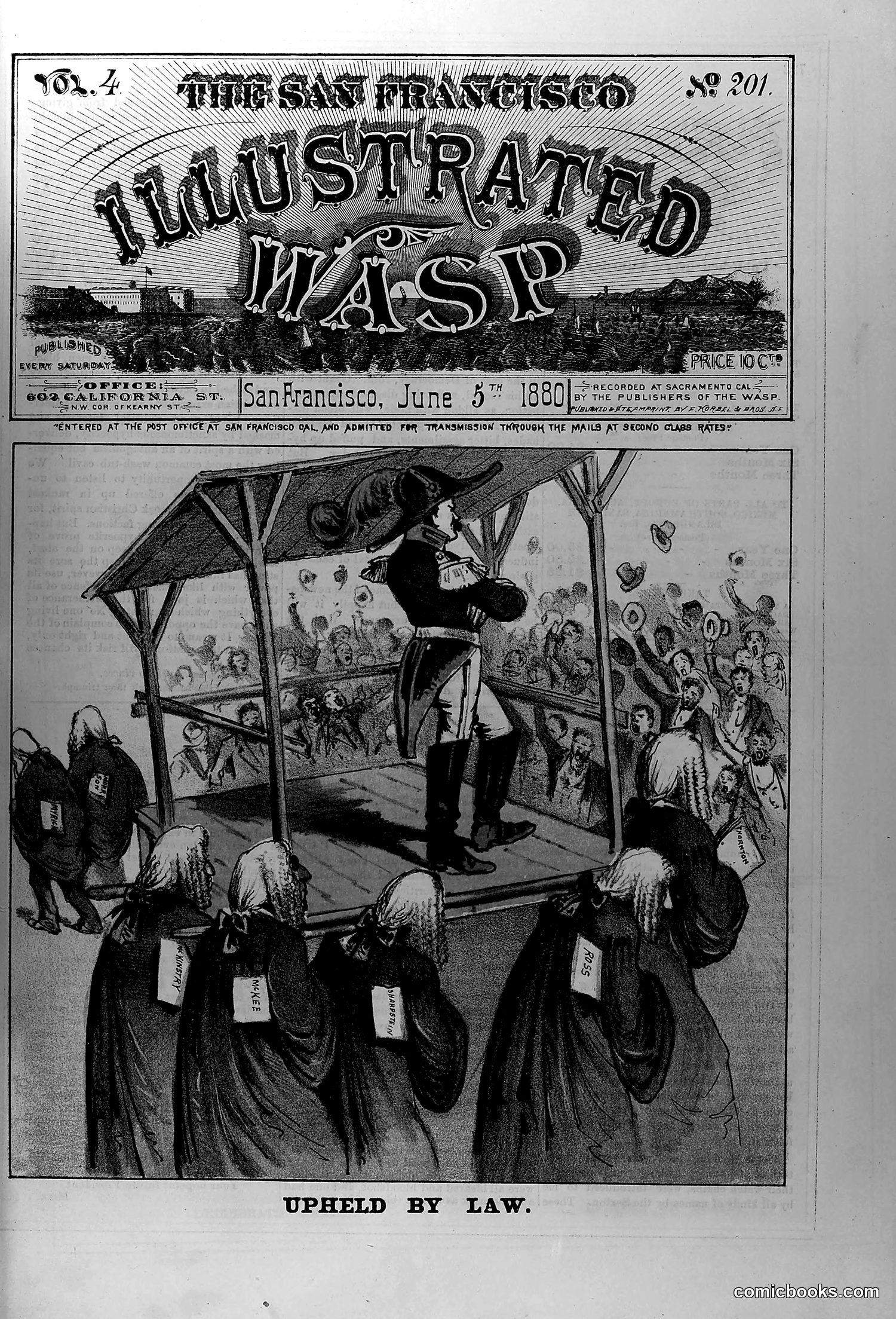
This cartoon depicts a military or judicial figure standing on an elevated platform, addressing a crowd while women in dark robes (appearing to represent widows or mourners, labeled with tags) stand prominently in the foreground. The caption "Upheld by Law" suggests satire about legal authority. Without clearer identification of the specific historical event, figures, or legislation referenced, the precise target remains uncertain. However, the visual composition—emphasizing a powerful male authority figure elevated above grieving or affected women—suggests criticism of how law or governance impacts women, possibly regarding legal rights, court decisions, or wartime consequences. The Wasp was known for sharp social and political commentary in 1880s San Francisco.
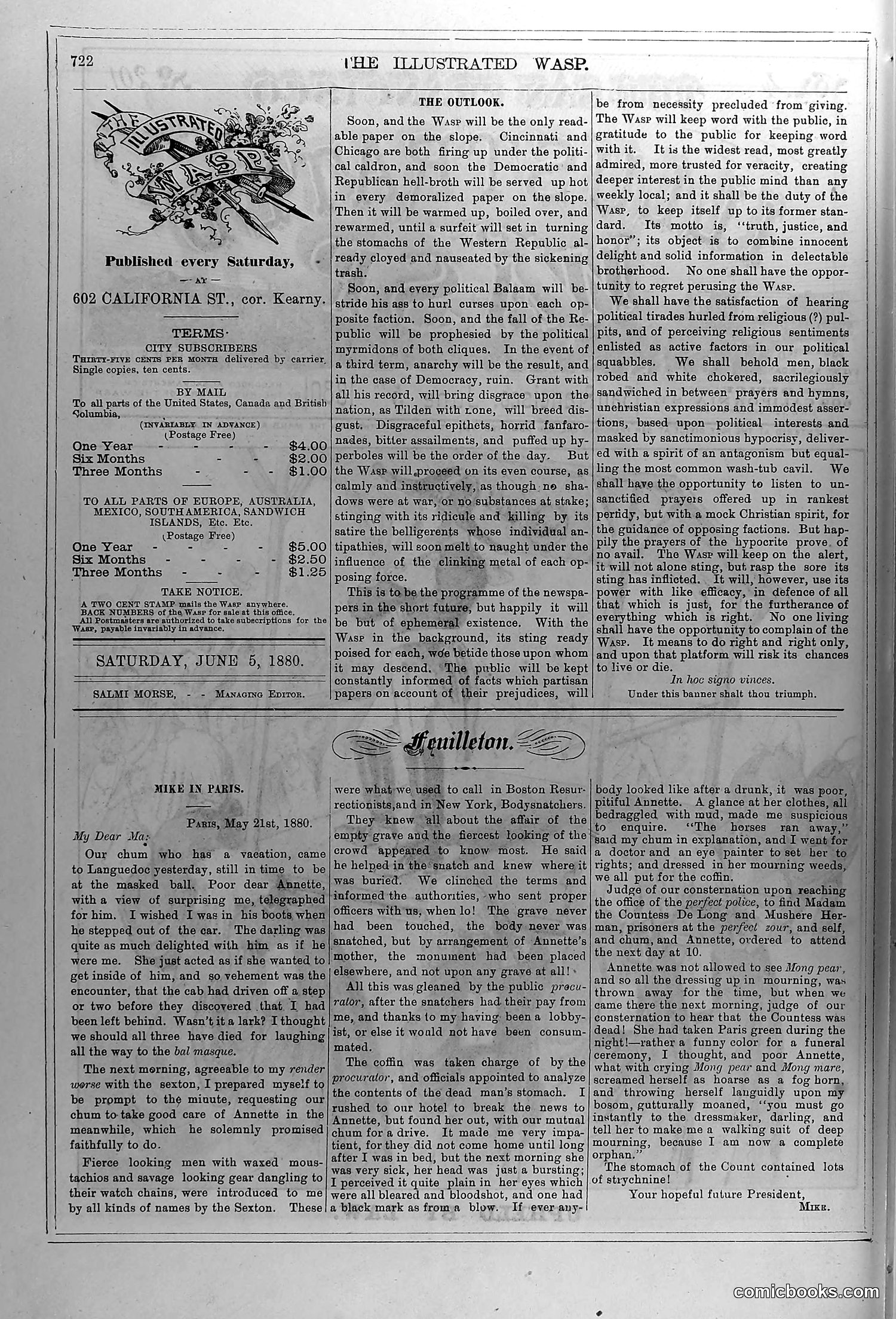
The masthead illustration shows a wasp attacking what appears to be political figures or symbols—likely representing the magazine's satirical mission to sting political opponents. "The Outlook" section announces the Wasp's editorial stance during an election year (1880), promising to expose political corruption and hypocrisy regardless of party. The text references the upcoming presidential race, mentioning Republican and Democratic campaigns, and pledges to attack political "humbuggery" and "cliques." The "Feuilleton" section contains a humorous letter from Paris describing trivial social mishaps—a common satirical format of the era used for mocking both American pretensions and European society. The page combines political commentary with lighthearted social satire, typical of 1880s American humor magazines.
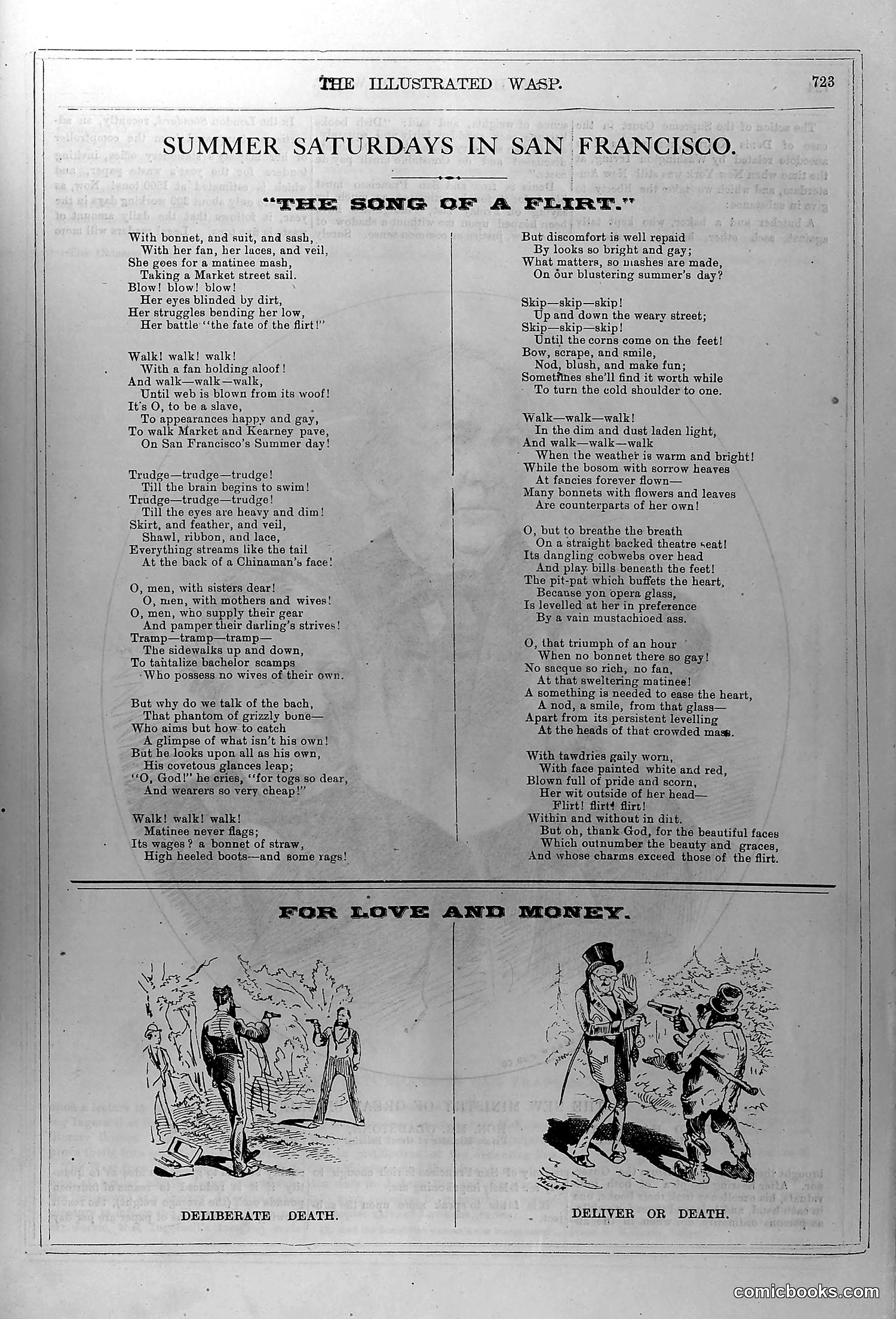
This page contains a lengthy satirical poem titled "The Song of a Flirt" about summer Saturdays in San Francisco. The poem mocks women who frequent Market Street and nearby areas, depicting them as vain, flirtatious, and primarily motivated by romantic conquest and material gain. The verse critiques their clothing, behavior, and social pretensions with biting humor. Below the poem are two illustrated cartoons labeled "For Love and Money," titled "Deliberate Death" and "Deliver or Death." These appear to depict romantic or financial desperation scenarios, though specific historical references are unclear from the image alone. The overall content reflects late-19th or early-20th century San Francisco's satirical commentary on urban social life and gender relations.
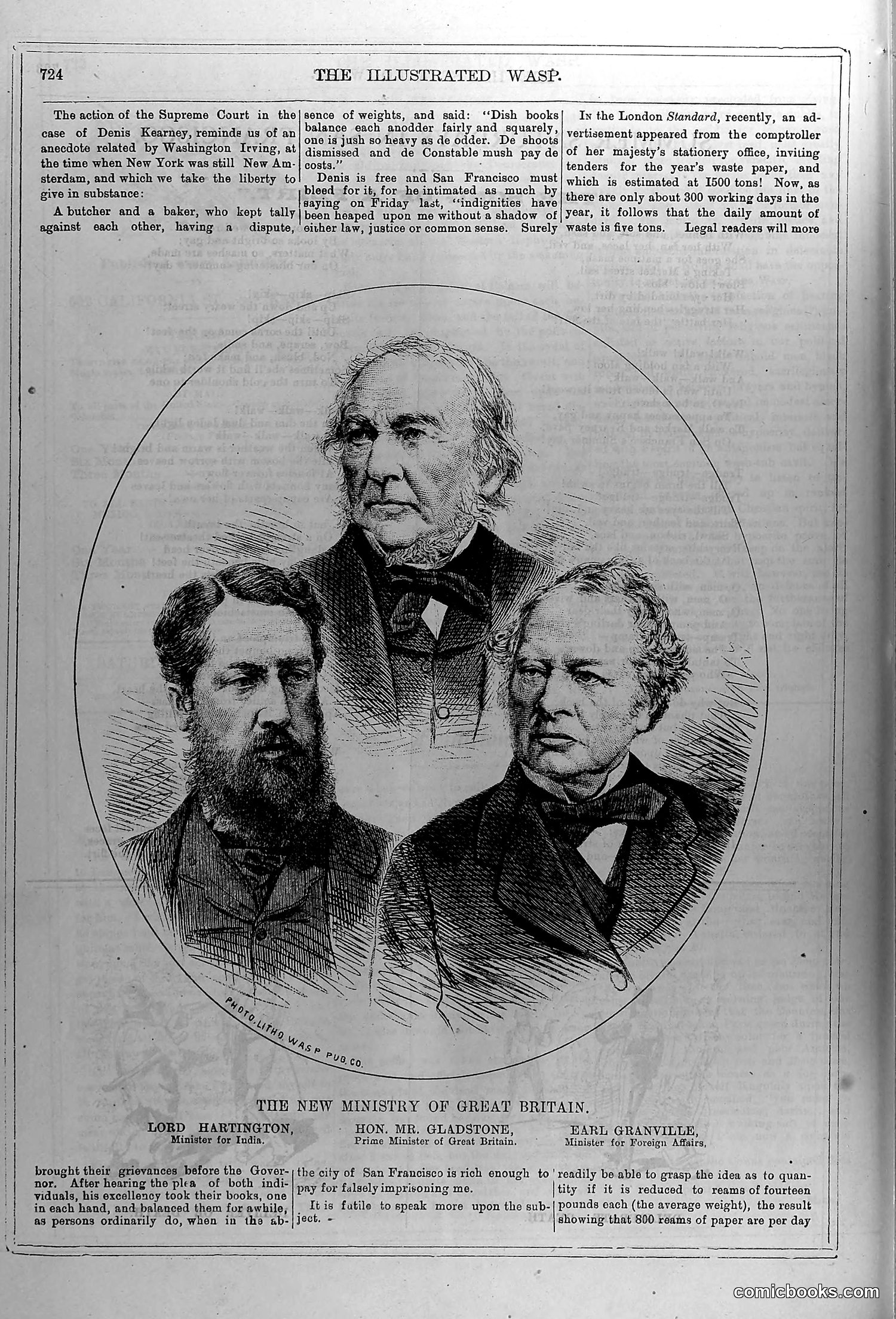
This page satirizes the British government leadership, identifying three figures: **Lord Hartington** (Minister for India), **Hon. Mr. Gladstone** (Prime Minister), and **Earl Granville** (Minister for Foreign Affairs). The caption references a dispute between a baker and butcher brought before a governor, who listened to both sides' grievances, then balanced their account books while treating them fairly—a metaphor for impartial governance. The satirical point appears to criticize these three ministers' ability (or inability) to govern fairly and manage competing interests. A separate text excerpt mocks San Francisco's waste management—discussing Denis being free and indignations about paper disposal—suggesting broader commentary on governmental competence and resource management. The engraving style and formal presentation indicate this is serious political satire targeting mid-to-late 19th-century British leadership.
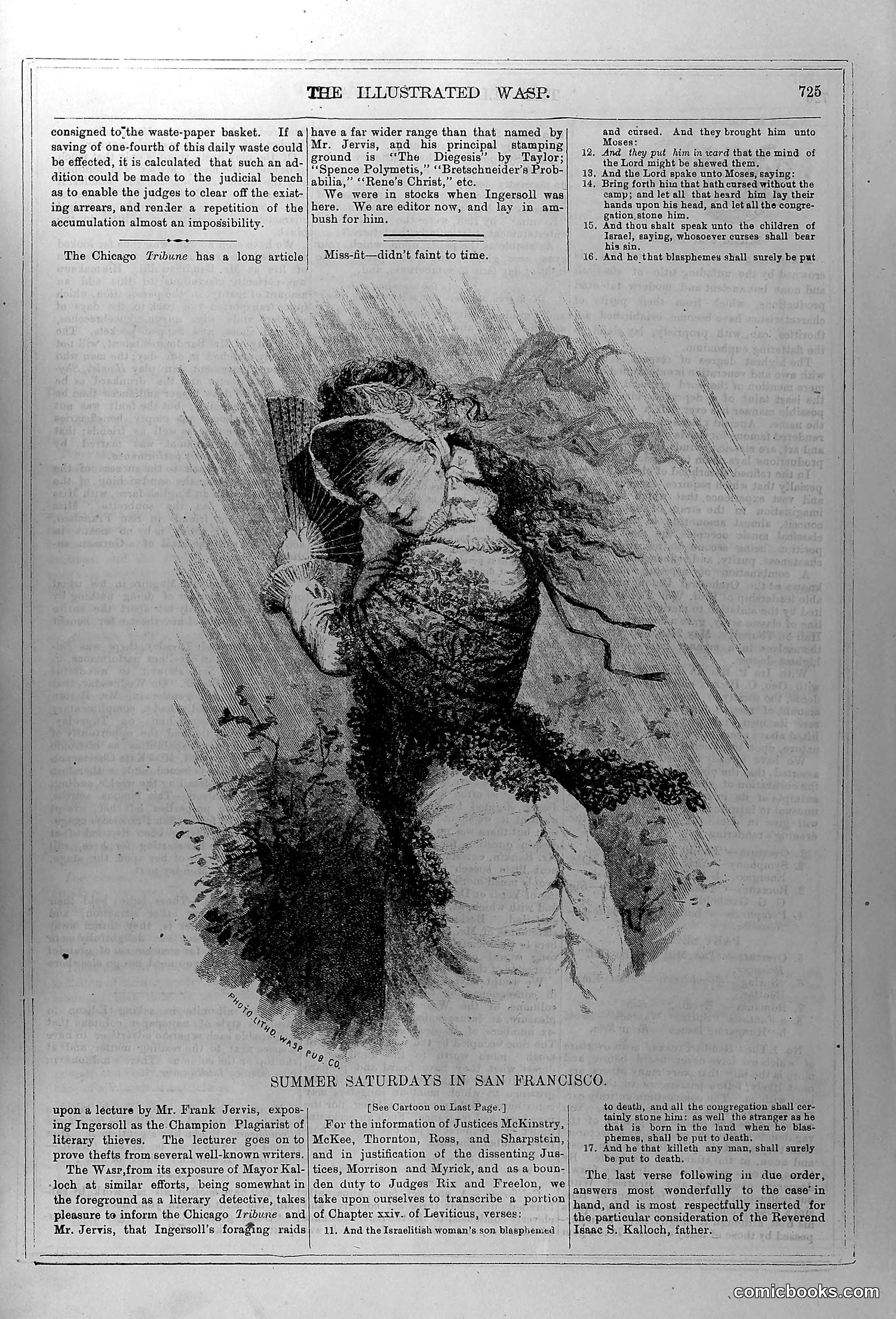
This page's main illustration depicts a woman in Victorian dress appearing to be caught in or composed of wind and rain—perhaps representing stormy weather or tumultuous conditions. The text discusses a lecture by Frank Jervis exposing Robert Ingersoll as a "Champion Plagiarist of literary theories." The Wasp announces it will prove Ingersoll committed theft from well-known writers. This appears to be a satirical attack on Ingersoll, a prominent 19th-century agnostic lecturer and author. The bottom section quotes biblical passages about blasphemy, suggesting the Wasp is using religious condemnation against Ingersoll's secular philosophy. The cartoon's precise meaning remains unclear without additional context about the specific controversy referenced.
This page is primarily **text-based editorial and theater criticism**, not a political cartoon. The header illustration shows a classical lyre or musical emblem. The main content discusses San Francisco theater productions, particularly praising Mr. Bandman's performance as Hamlet. The text critiques the "Occidental Union" theatrical society's management and programming choices, suggesting they've strayed from classical productions toward lighter entertainment. The piece includes satirical commentary on theatrical ambitions versus execution, noting that amateur theatrical societies often overreach. There's also discussion of benefit performances and various theatrical engagements in San Francisco during this period. The page concludes with brief theatrical notices and advertisements. The satire targets local theater management and artistic pretensions rather than political figures.
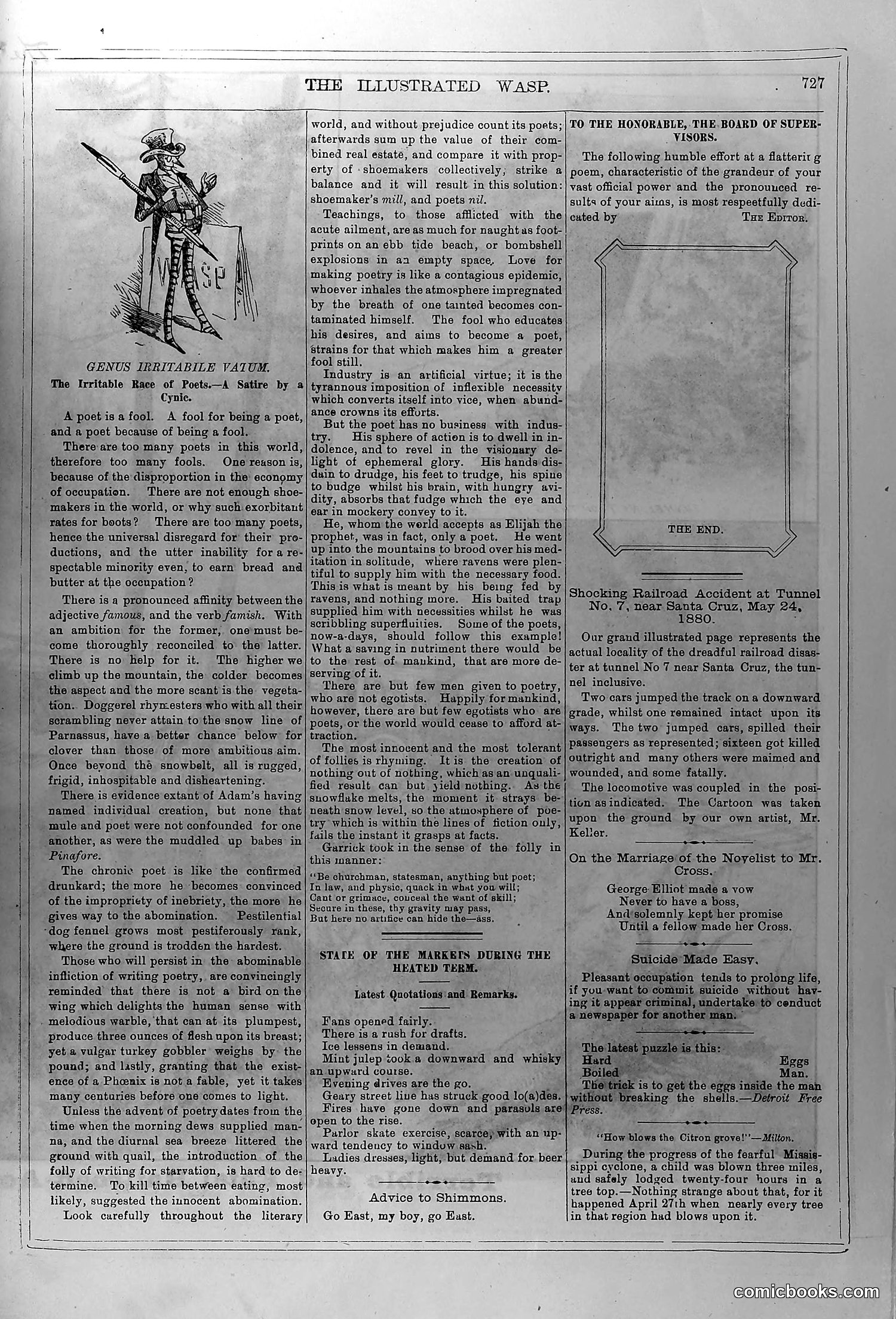
This page is primarily **text-based satirical content** rather than a political cartoon. The main illustration shows a figure labeled "GENUS IRRITABILE VATUM" (Latin for "the irritable race of poets"), depicted as a sword-wielding, elaborately dressed character—a satirical jab at poets' pretensions. The accompanying essay mocks poets and poetry, arguing poets are economically useless yet "unexorably" respected. It criticizes the "pronounced affinity" between being a fool and being a poet, suggesting poets lack practical value while claiming intellectual superiority. The remainder of the page contains miscellaneous short items: news snippets, puzzles, and advertisements, typical of 19th-century satirical magazines. The humor targets artistic pretension and the cultural status poets enjoyed despite their lack of productive contribution to society.
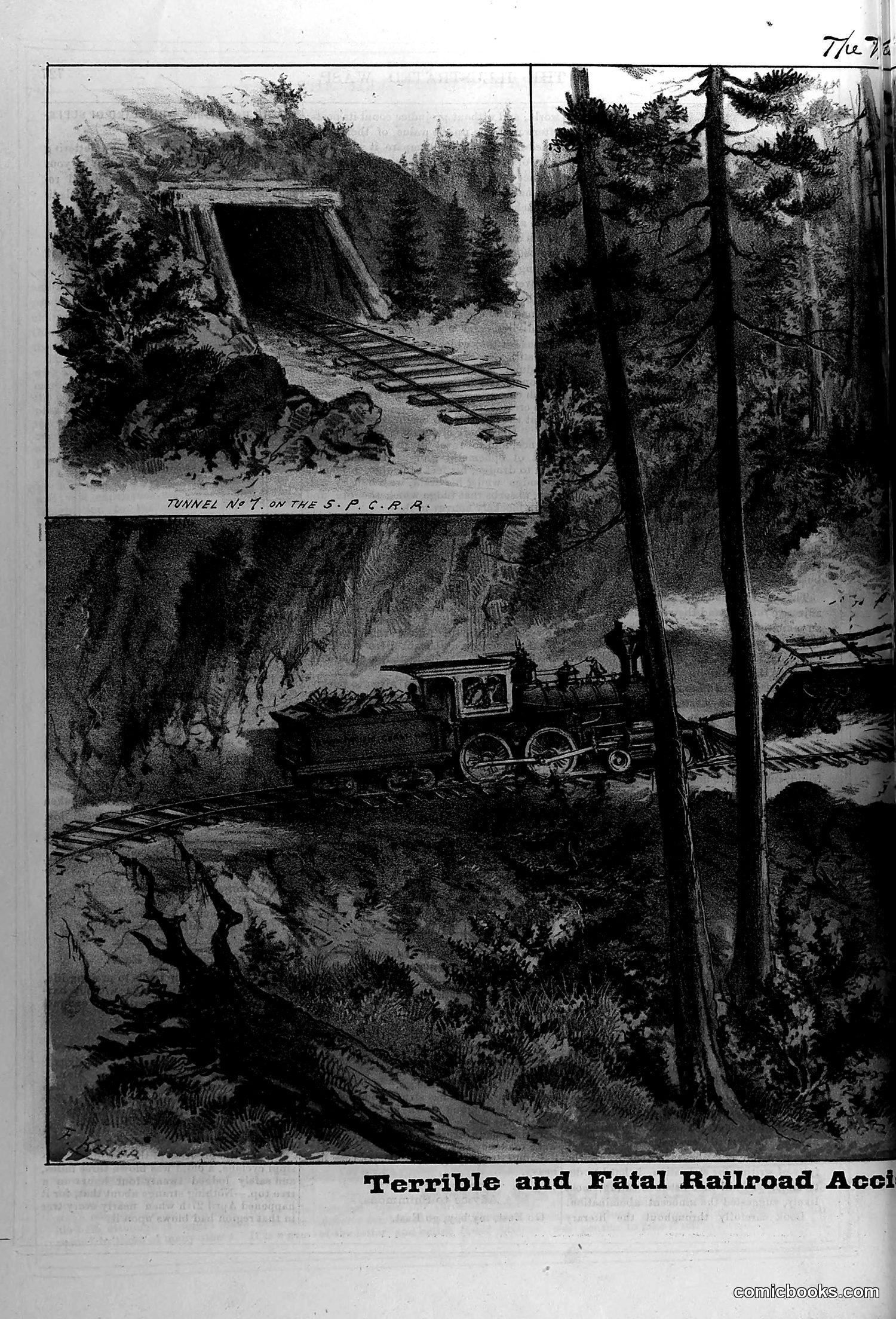
This page depicts railroad disasters, likely from the late 19th century when such accidents were common and frequently illustrated in satirical publications. The top image shows "Tunnel No. 1, on the S.P.C.R.A." (Southern Pacific or similar railroad) with a collapsed tunnel entrance and scattered railroad tracks. The bottom image shows a steam locomotive near a steep cliff with tall trees, suggesting dangerous mountain terrain. The title references "Terrible and Fatal Railroad Accidents," indicating these are cautionary illustrations about the hazards of early railroad expansion. Without additional context, the specific satirical point is unclear—whether this critiques railroad safety negligence, corporate practices, or simply illustrates newsworthy disasters meant to sensationalize reader interest. The Wasp typically mocked social and political issues through such imagery.
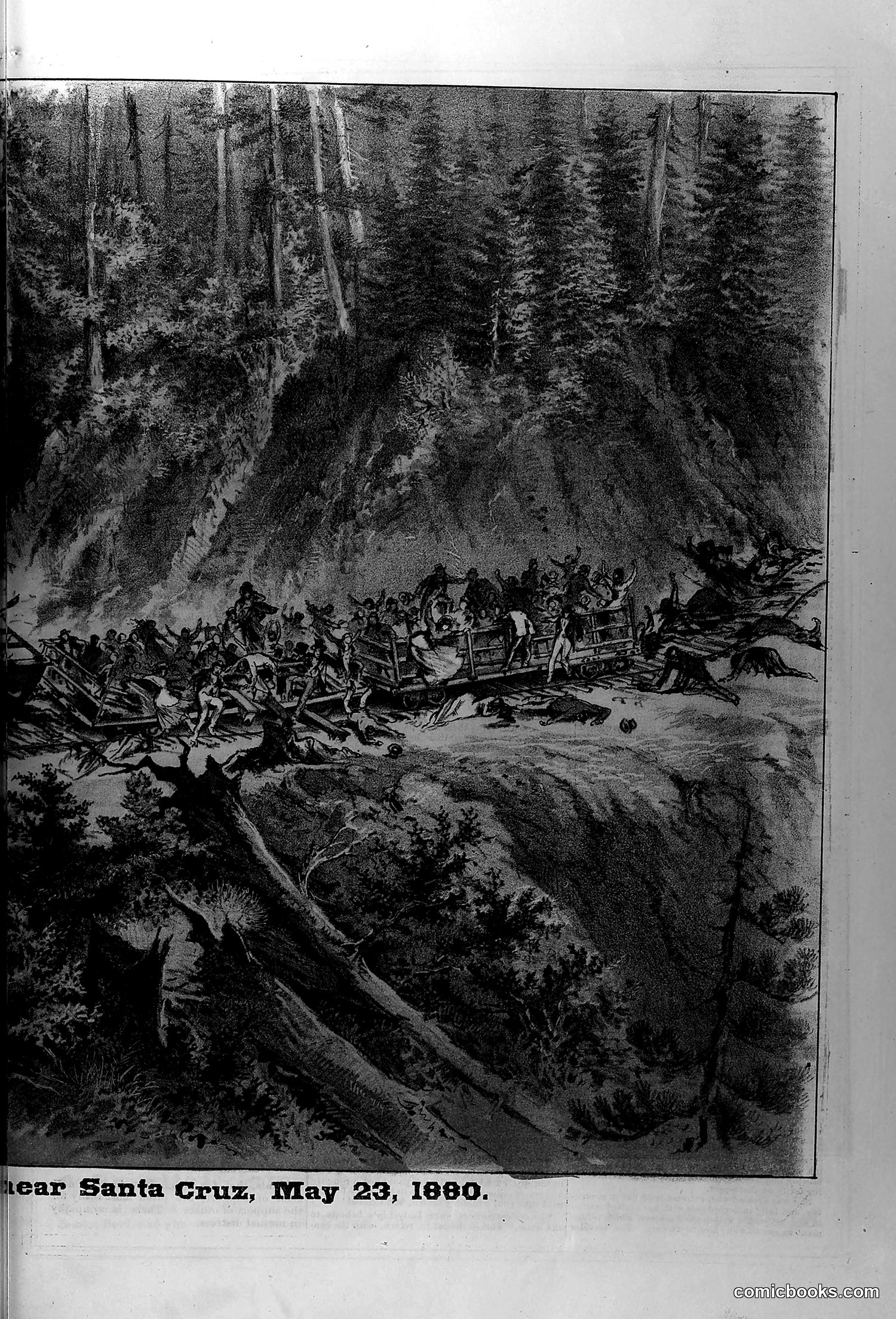
This engraving depicts a historical disaster: a massive train wreck near Santa Cruz from May 23, 1880. The image shows a derailed train with cars overturned and scattered among forest terrain, with numerous figures amid the wreckage. Given *The Wasp's* satirical nature, this likely contained social commentary about railroad safety, corporate negligence, or mismanagement—common targets of 1880s American satire. The railroad industry faced intense criticism during this era for poor safety standards and worker treatment. However, without visible captions, text identifying specific railroad officials, or accompanying article text on this page, I cannot definitively state the cartoon's satirical target or intended political message.
This page is primarily **text-based content**, not a cartoon. It's titled "Phases of History: Not Generally given in Detail," written by Mr. Salmi Morse for *The Wasp*. The content is **Part XXX** of a serialized story involving characters named Lady Carrolton, Mr. Cribbs, and Lord Carrolton. It appears to be a satirical narrative about upper-class British society life—depicting domestic scenes, social pretensions, and interpersonal drama among the wealthy. The text includes dialogue about business matters, family relationships, and social conventions. Without accompanying illustrations visible in this portion, the satire relies on Morse's written narrative mockery of aristocratic behavior and genteel society customs rather than visual caricature. The page functions as **serialized satirical fiction** rather than editorial cartooning.
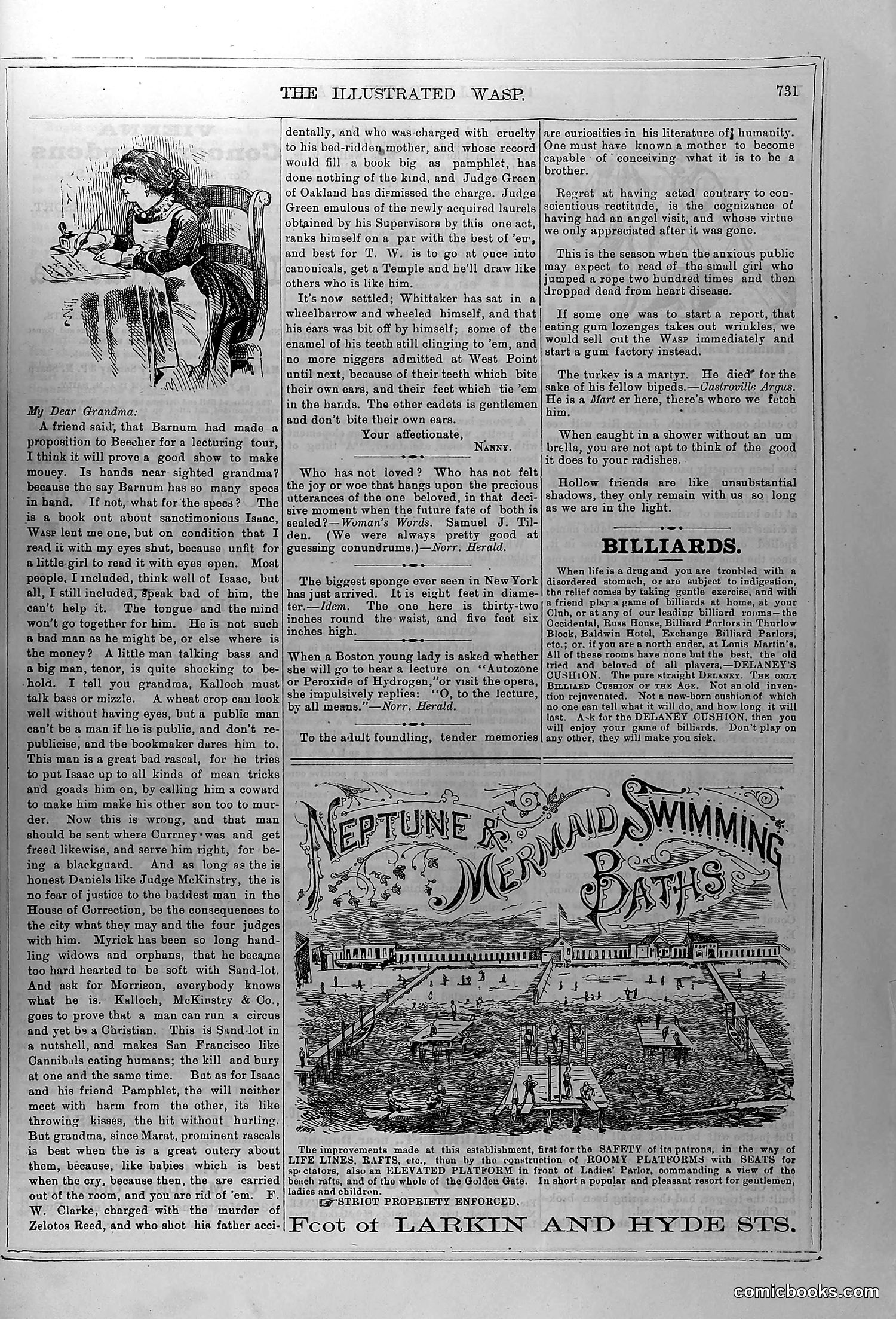
This page contains satirical commentary rather than traditional political cartoons. The main text discusses several figures: **Judge Green** of Oakland, criticized for cruelty to his mother and lack of judicial integrity; **Barnum** (likely P.T. Barnum), mocked for his circus exploits; and various San Francisco officials accused of corruption and moral failings. The illustrations show a woman writing (captioned "My Dear Grandma") and an elaborate advertisement for "Neptune Mermaid Swimming Baths," a leisure establishment. The satire targets California's legal and civic corruption—judges, prominent businessmen, and city authorities are ridiculed for hypocrisy, financial misconduct, and abuse of power. The tone is scathing personal attack masquerading as public-interest journalism.
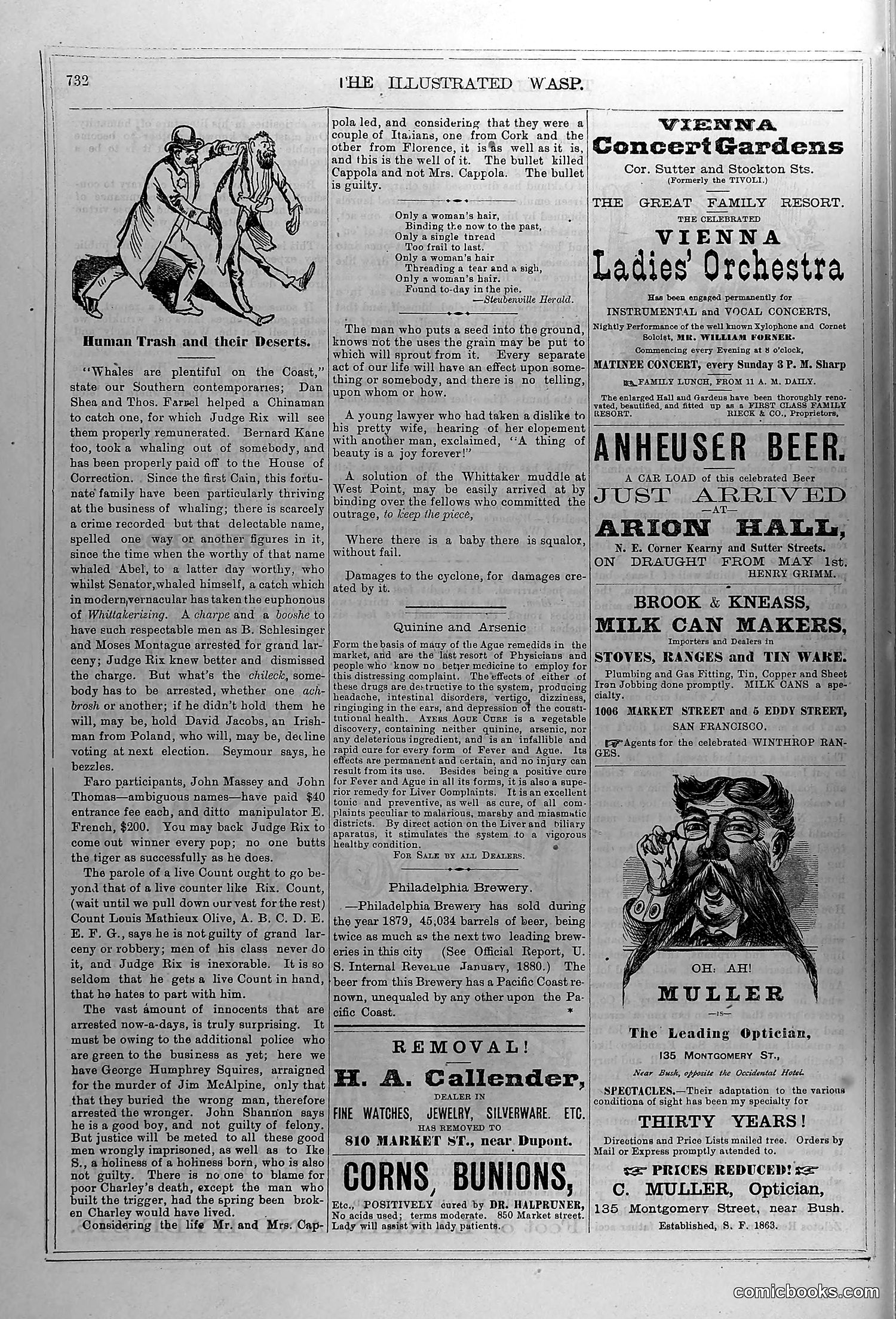
This page is primarily **advertising** with one illustrated cartoon. The main cartoon depicts two figures in exaggerated physical distress—appearing disheveled and contorted. The caption reads "Human Trash and their Deserts," suggesting social commentary on poverty or moral degradation. The accompanying article discusses crime and punishment, referencing specific individuals involved in court cases. It mentions "Judge Rix," various defendants, and legal outcomes, indicating the cartoon likely satirizes criminals receiving their "just deserts" (punishments). The satirical point appears to be mocking both criminal defendants and the justice system's handling of them, though without clearer identification of the specific figures or cases referenced, the precise social critique remains **unclear to modern readers**.
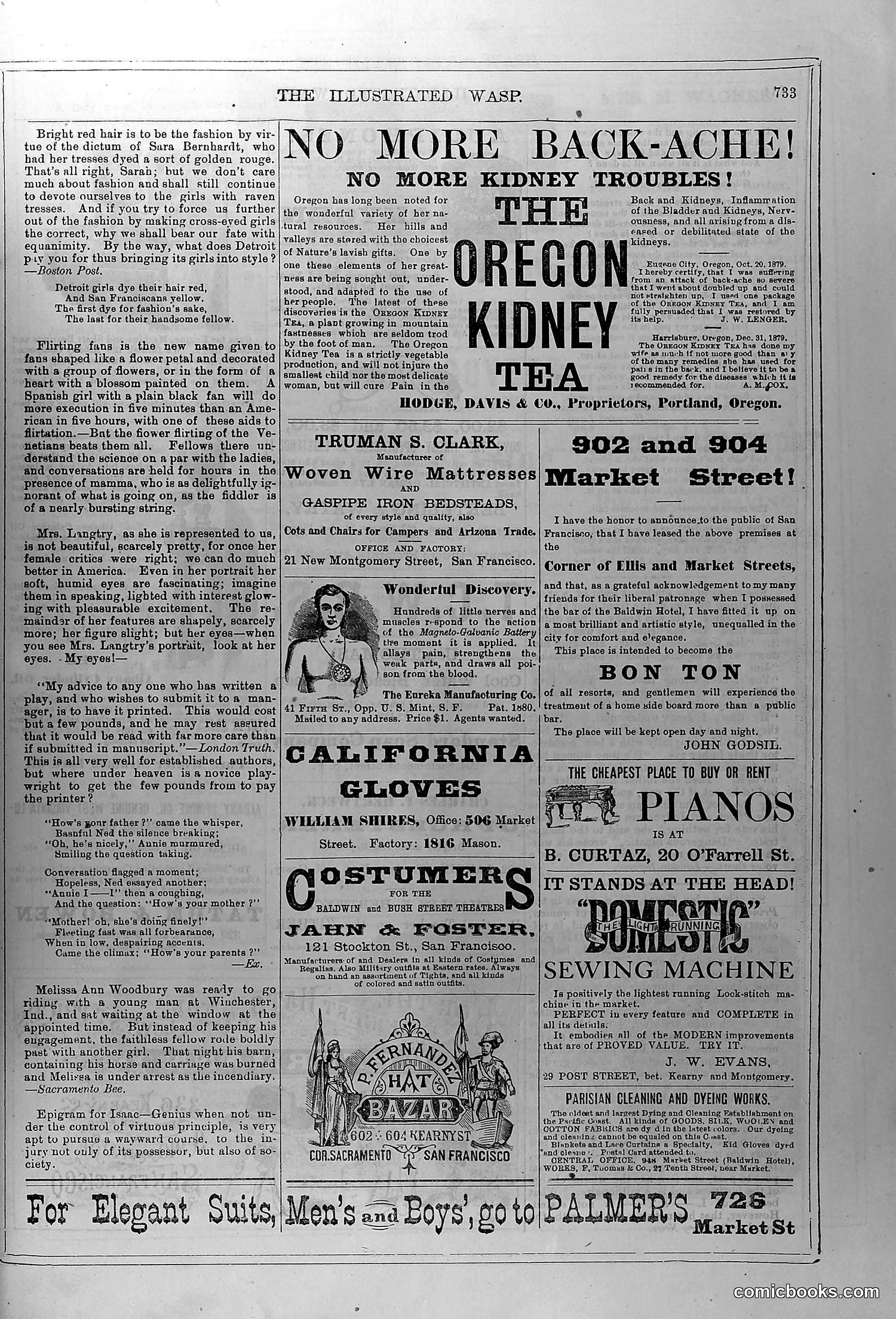
This page is **primarily advertisements** with minimal satirical content. The main items advertised include: - **Oregon Kidney Tea** (large central ad) - a patent medicine claiming to cure back pain and kidney troubles - **Woven Wire Mattresses** by Truman S. Clark - **California Gloves** by William Shires - **Costumes** from Jahn & Foster - **Pianos** for rent - **Sewing machines** (claimed as "the lightest running") - Various other goods and services The page also contains brief **fashion commentary** about hair color trends and **social advice columns** discussing proper etiquette. There are no identifiable political cartoons or satirical figures. The Wasp appears here as a vehicle for commercial advertising rather than political satire, typical of 19th-century magazine economics.
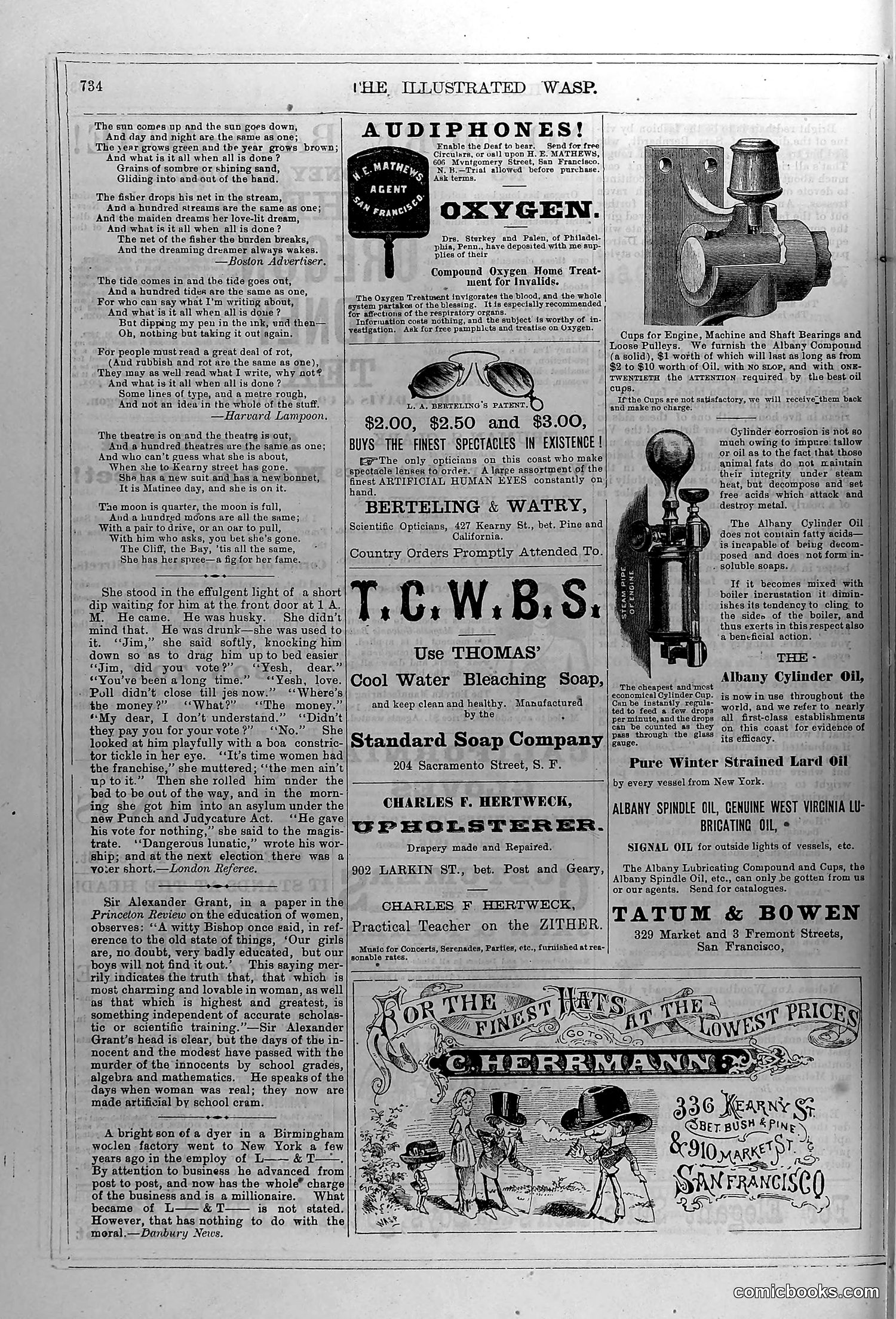
This page is predominantly **advertising content** rather than political satire. It contains commercial advertisements for various products popular in late 19th-century San Francisco, including: - Audiphones (hearing aids) - Oxygen treatments for invalids - Cylinder oils and lubricants - Soap products - Upholstering services - Hat retailers (C. Herrmann) There is **no clear political cartoon** visible. The page includes some poetry/literary excerpts at the top and scattered anecdotes, but these appear to be filler content between advertisements rather than satirical commentary. The only illustration with possible satirical intent is at the bottom—a scene of well-dressed figures, likely mocking fashionable society—but without clearer context, its specific meaning remains **unclear**.
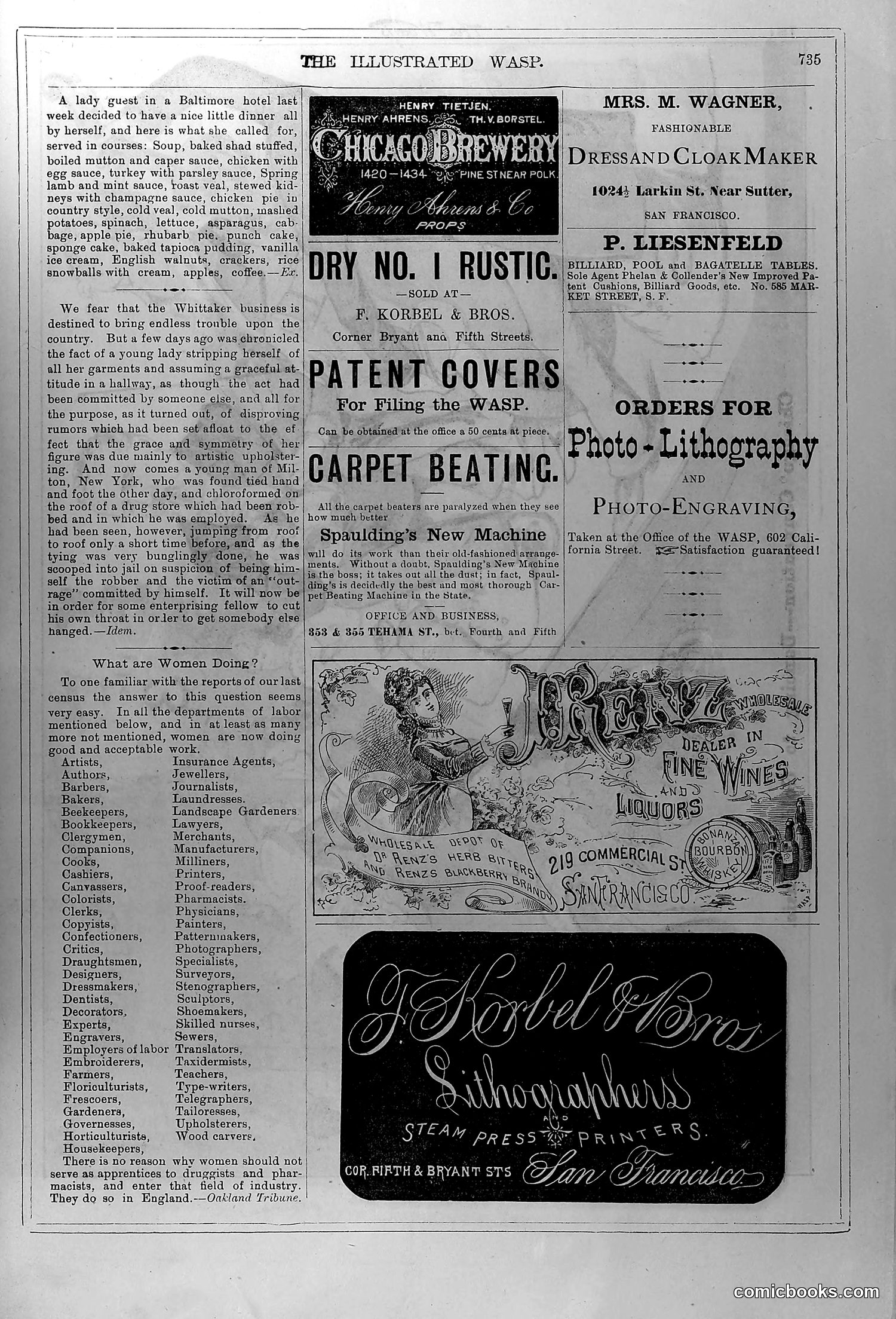
This page is primarily **advertising and directory content** from *The Illustrated Wasp* magazine (page 735). It contains: - Commercial ads for local San Francisco businesses (breweries, furniture makers, wine dealers, lithographers) - A column titled "What are Women Doing?" listing occupations where women work—artists, journalists, teachers, dressmakers, etc. - A brief editorial note questioning why women should not enter professions and industry, referencing the *Oakland Tribune* **No political cartoon appears on this page.** The "What are Women Doing?" section is a straightforward occupational list rather than satire. The editorial comment is earnest advocacy for women's professional opportunities, not satirical commentary. The page functions primarily as a commercial directory with some light social commentary about women's labor participation.
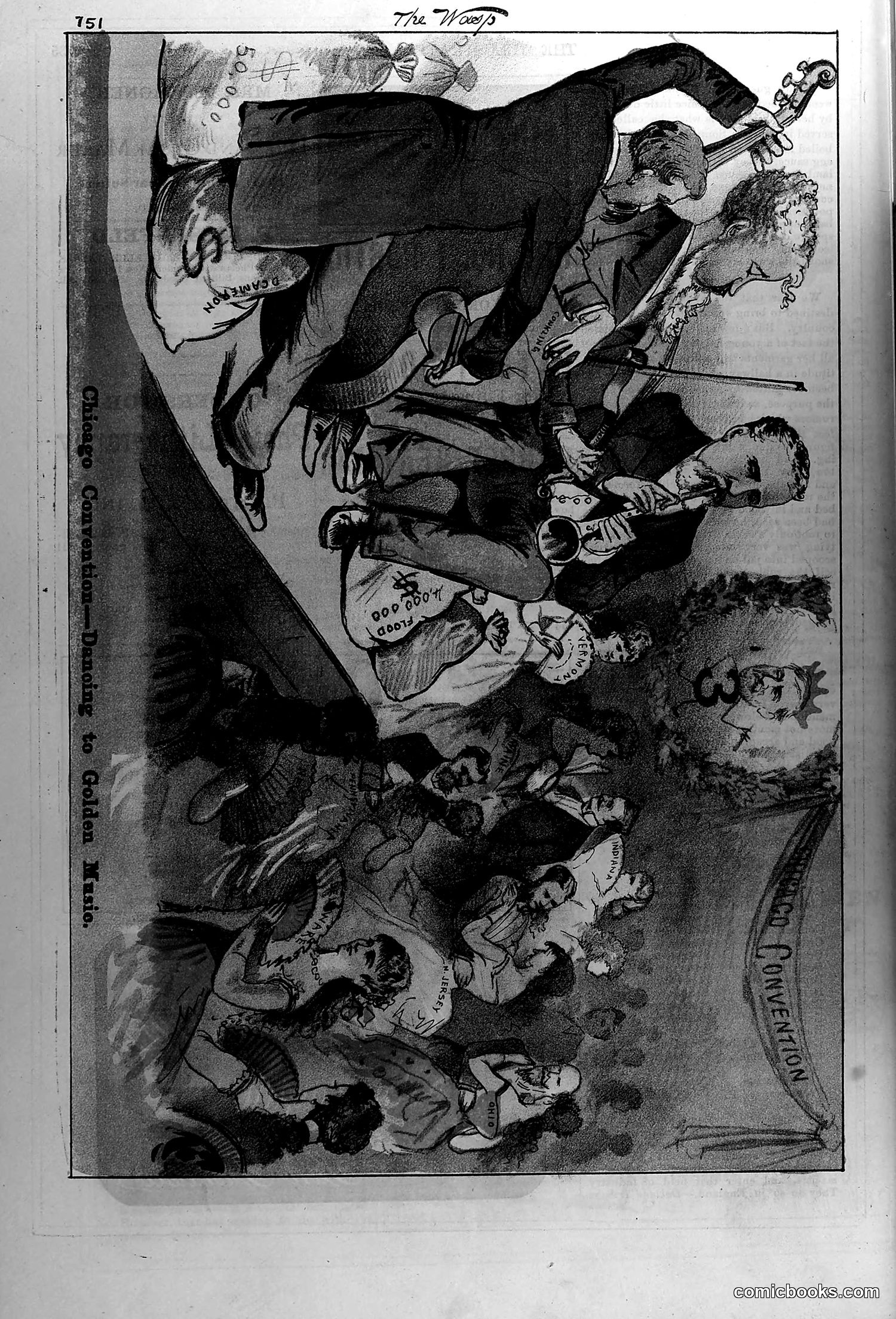
This page from *The Wasp* contains a political cartoon printed upside-down (requiring rotation to read properly). The image depicts a large figure in formal dress being carried or supported by smaller figures below, who appear distressed or struggling. The text references "Chicago Corruption" and what appears to be "Golden Kiddies," suggesting commentary on Chicago politics and likely corrupt politicians or political machines of the era. The caricatured style and exaggerated features are typical of late 19th/early 20th-century American satirical magazines. However, **without clearer identification of specific individuals or dates visible on the page, I cannot definitively name the figures or pinpoint the exact political scandal being mocked.** The general thrust appears critical of political corruption being propped up by subordinates or constituents.

I can see this is a test or calibration page rather than editorial content from The Wasp magazine. The image shows a grayscale reference chart on a black background with a ruler/scale marked from approximately 6-11 inches, alongside what appears to be a tone scale or color reference grid on the left side (showing various shades from dark to light). This type of page was commonly included in printed materials for photographic reproduction purposes—to help ensure accurate tonal values and color balance during printing processes. It's not a cartoon or satirical content, but rather a technical/production element used in magazine publishing to maintain print quality standards.