
A complete issue · 18 pages · 1880
The Wasp — April 17, 1880

I can see this is a page from *The Wasp* magazine with an Oregon Rule Co. ruler used as a scale reference, but the actual cartoon content on the page is not legible enough in this image for me to read the text or clearly identify specific figures, caricatures, or satirical subjects with confidence. The image shows what appears to be a black rectangle (possibly the cartoon or advertisement area) with a measurement scale, but the resolution and contrast make it impossible to discern the specific political or social commentary, identify any figures depicted, or explain the satire intended. To provide accurate historical analysis as requested, I would need a clearer, higher-resolution scan of the actual cartoon content and accompanying text.
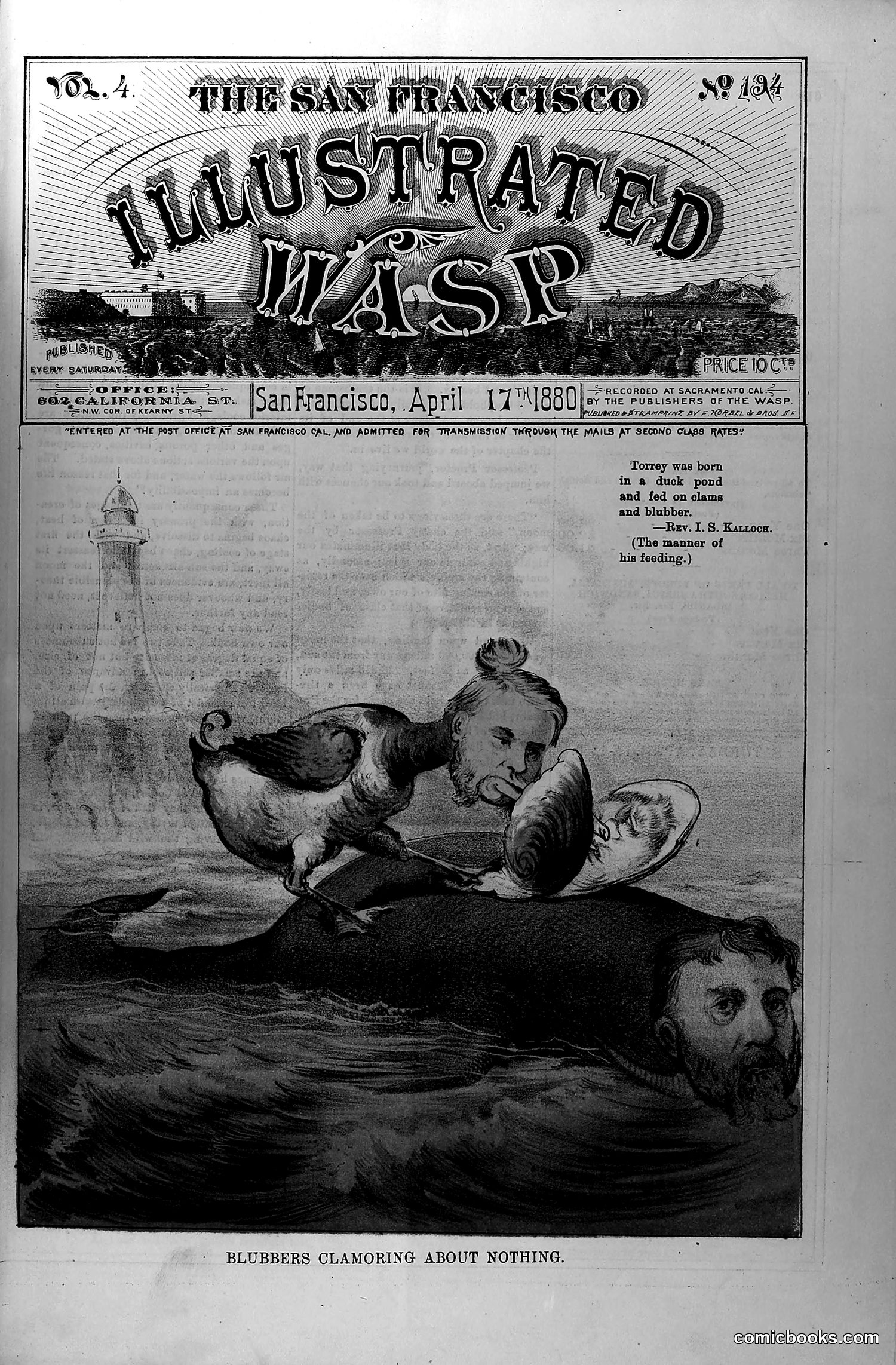
This satirical illustration depicts men in water with distressed expressions, labeled "BLUBBERS CLAMORING ABOUT NOTHING." The accompanying text mentions "Torrey was born in a duck pond and fed on slime and blubber"—attributed to Rev. J.S. Kalloch, describing "the manner of his feeding." The cartoon appears to be political mockery, likely targeting specific San Francisco figures involved in a contemporary controversy. The "blubber" metaphor suggests the subjects are portrayed as fat, stupid, or morally corrupt. The aquatic setting and desperate poses ridicule them as helpless or pathetic. Without clearer identification of Torrey and the specific 1880 incident referenced, the precise political target remains unclear, though the satire is unmistakably harsh and personal.
This page is primarily **editorial and advertising content** rather than political satire. The masthead shows "The Illustrated Wasp" logo, and the page contains subscription information, publishing details, and a lengthy article titled "To the Moon and Return by Daylight" by Saiim Morse (Managing Editor). The article discusses scientific theories about the moon's composition and distance from Earth, referencing Professor Proctor's astronomical observations. It debates whether the moon is inhabited and compares lunar and terrestrial scales. The text is satirical in tone—mocking both scientific speculation and popular misconceptions about space—but targets **ideas rather than specific political figures**. No identifiable caricatures or political references appear on this page.
This page contains two distinct sections: **Upper section:** A satirical dialogue titled "SENATOR KANE IN PROPER COMPANY—WHAT A FALL WAS THERE!" mocking Senator Kane. The conversation reveals Kane allegedly refused to provide his name to a Committee investigating a cadet appointment, then later offered money to influence the matter. The satire attacks Kane's hypocrisy—he claims moral superiority while engaging in exactly the corrupt behavior he denounces. References to "Irish-man" and "Scotchman" suggest ethnic stereotyping typical of 1880s-90s satire. **Lower section:** "THE PRISONER FOR BLASPHEMY," a parody poem mocking harsh laws against speech deemed blasphemous or seditious. It ridicules criminalizing expressions like "Chinese must fly!" and attacking "law and order," portraying such prosecutions as absurd oppression of liberty. Both pieces critique government hypocrisy and overreach.
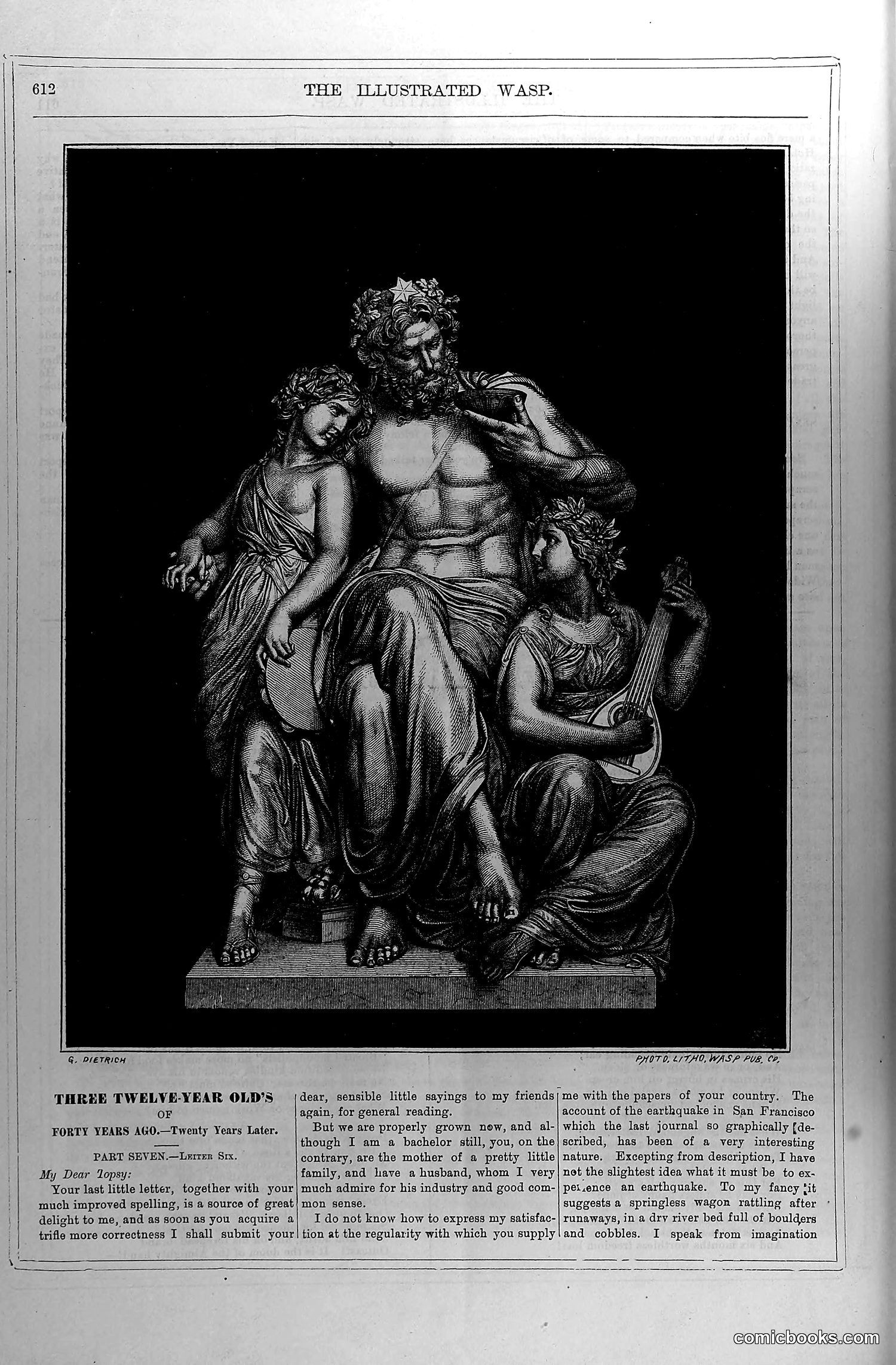
This page from *The Wasp* presents a classical engraving (credited to G. Dietrich) depicting a bearded man with children, rather than a political cartoon. The accompanying text is a letter responding to reader criticism about spelling and writing quality in previous issues. The sender defends improved standards while remaining humble, promising continued effort. They reference a "pretty little wife" and "husband" in their household, suggesting domestic contentment. The classical artwork appears decorative rather than satirical—possibly illustrating classical mythology or virtue. Without clearer political context or caricature, the satire's specific target remains unclear. The page seems primarily focused on editorial correspondence rather than sharp political commentary typical of *The Wasp*'s satirical mission.
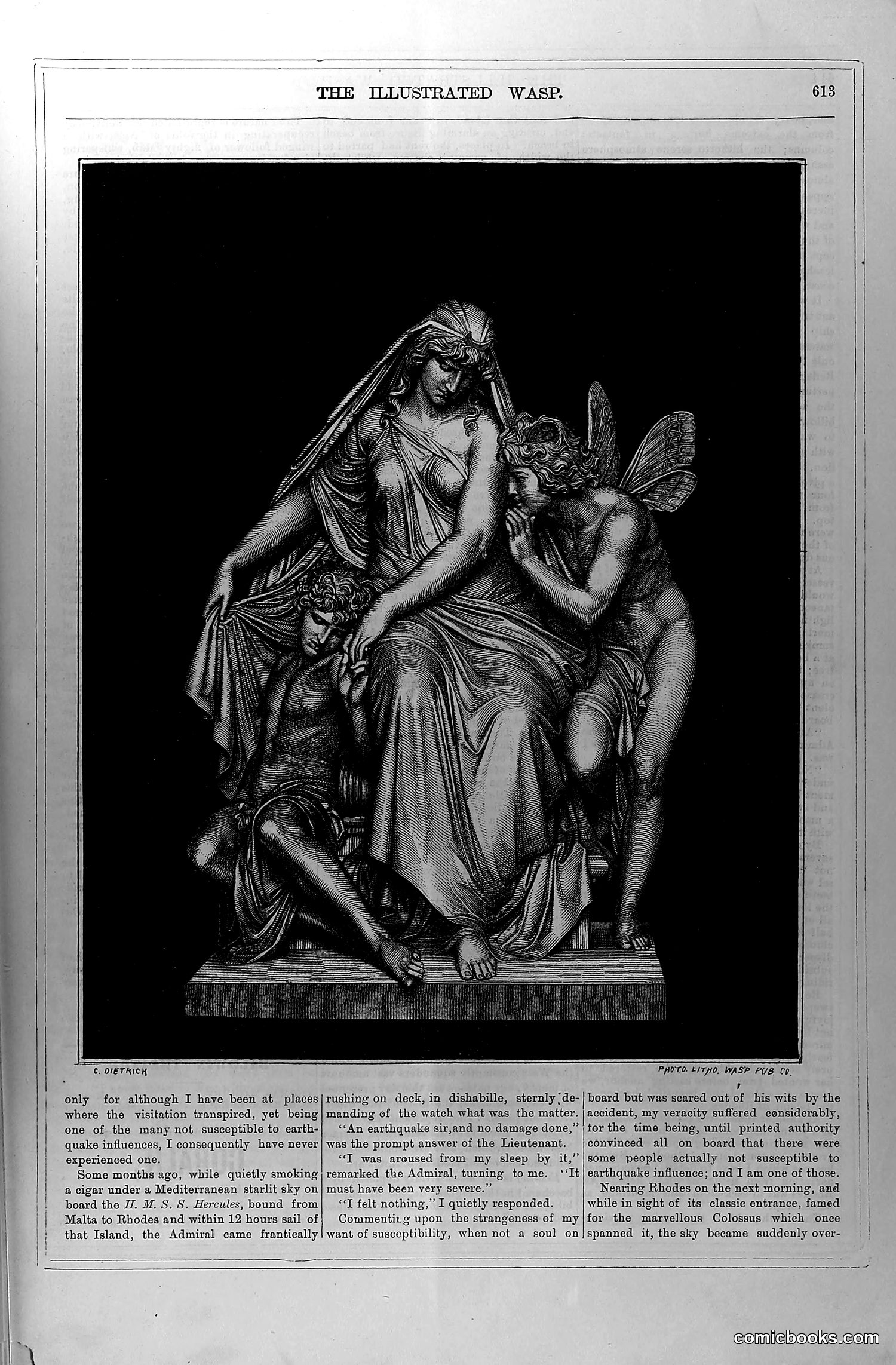
This page features an engraved illustration titled "The Illustrated Wasp" (credited to C. Dietrich, with photolithography by Wasp Pub. Co.). The image depicts a classical allegorical scene: a draped female figure with a male cherub or putto, alongside a kneeling male figure. The accompanying text discusses an earthquake experience aboard the H.M.S. *Heracles*, describing the author's voyage from Malta to Rhodes. The narrator describes an "earthquake sir, and no damage done," recounting conversations with an Admiral about the ship's susceptibility to earthquakes and the crew's reactions. Without additional historical context about The Wasp's publication date or specific satirical targets, the exact political commentary remains unclear, though the classical imagery and narrative appear to comment on naval experiences or colonial maritime affairs.
This page is primarily **text-heavy editorial content**, not a political cartoon. The main article describes a devastating earthquake and resulting fires that destroyed a city, with vivid accounts of the disaster's chaos—collapsed buildings, powder magazine explosions, and heroic rescue efforts. The page includes a small **decorative illustration** (appears to be a classical ornamental vignette) rather than satirical cartoon artwork. At the bottom, there's an advertisement for "**Coralie**," a theatrical drama presented at Baldwin Theatre. The earthquake account appears to reference a specific historical disaster, but the OCR text and visible image don't clarify the exact location or date. The satirical commentary, if present, isn't visually apparent in this particular page layout. This reads more as reporting than satire.
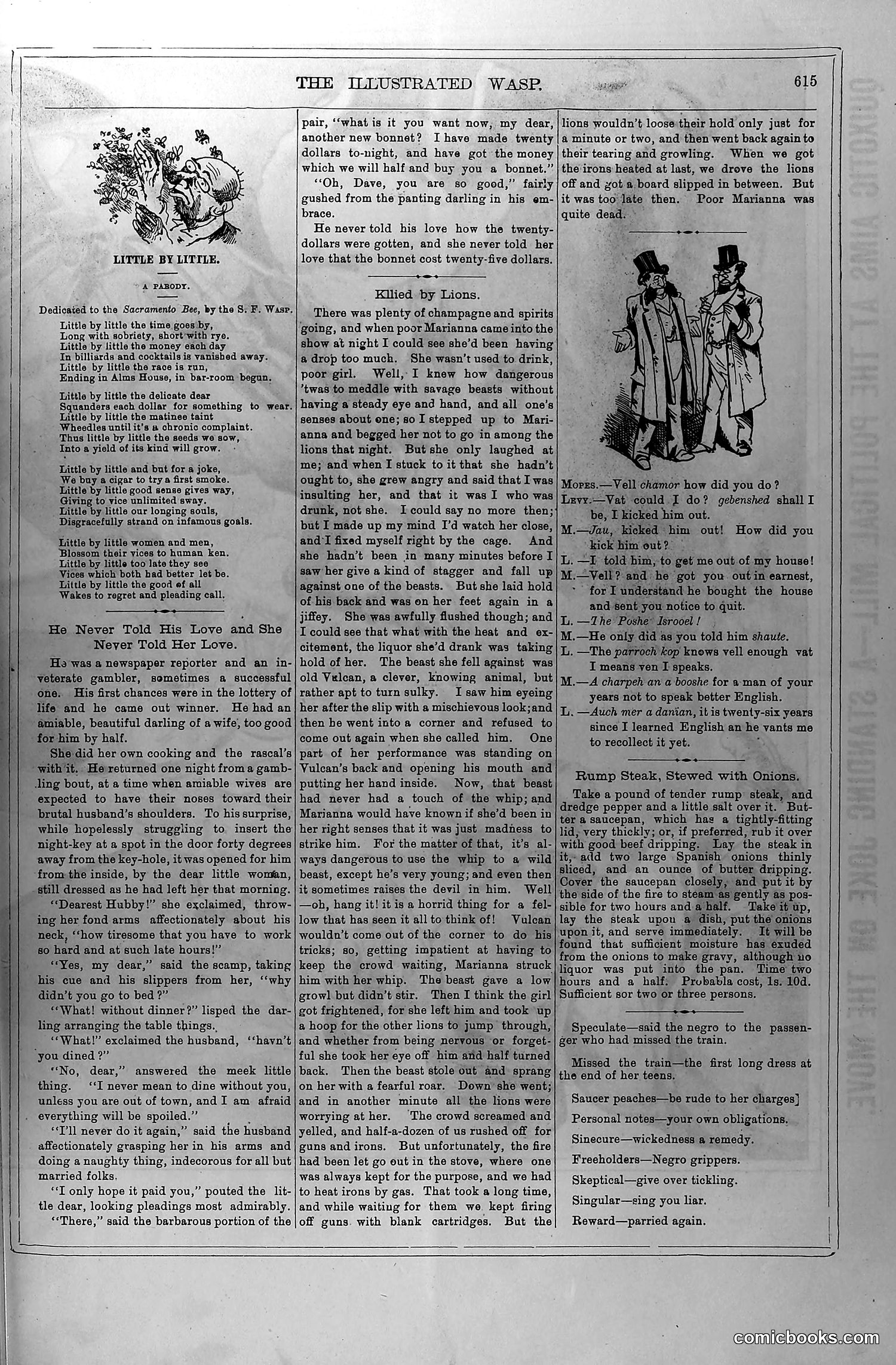
This page contains two satirical pieces: **"Little by Little" (top left):** A parody poem dedicated to the Sacramento Bee, mocking someone's gradual financial decline through small expenses—likely critiquing wasteful spending habits or financial mismanagement in California politics or society. **"He Never Told His Love and She Never Told Her Love" (center):** A lengthy narrative about a riverboat gambler and a woman named Marianna. The story satirizes frontier life, romantic deception, and danger—she disguises herself to avoid a man's romantic pursuit, ultimately being killed by lions while traveling. The piece appears to mock sentimental Victorian romance literature through exaggeration and absurd tragedy. **Right column:** Advertisement-style entries including recipes and classified notices, typical of Wasp's satirical format mixing editorial content with mock-serious miscellany. The overall tone is cynical, mocking both financial foolishness and romantic melodrama.
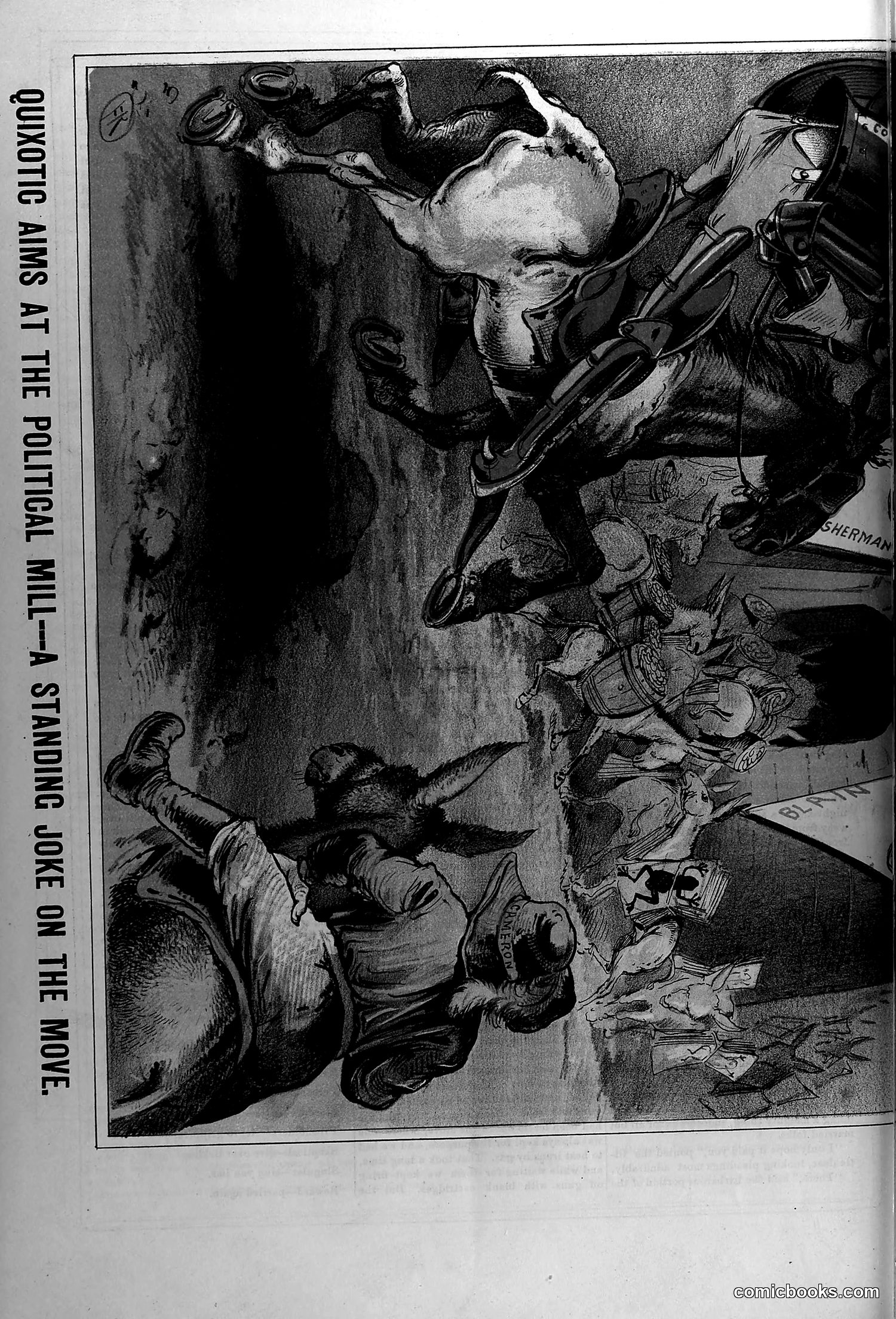
This appears to be a political cartoon from *The Wasp*, a 19th-century American satirical magazine. The image depicts a confrontation scene with multiple figures, though the specific identities and historical context are difficult to determine with certainty from the image alone. The text caption reads "DOING ALL THE POLITICAL MILL—A SLANDORING JOKE ON THE MOVE," suggesting the cartoon satirizes political maneuvering or scandalmongering during some campaign or political conflict. Without clearer visibility of identifying marks, dates, or additional context clues, I cannot confidently identify the specific political figures or events referenced. The artistic style and production quality suggest late 19th-century origin, but determining the precise satirical target would require additional historical documentation beyond what's visible here.
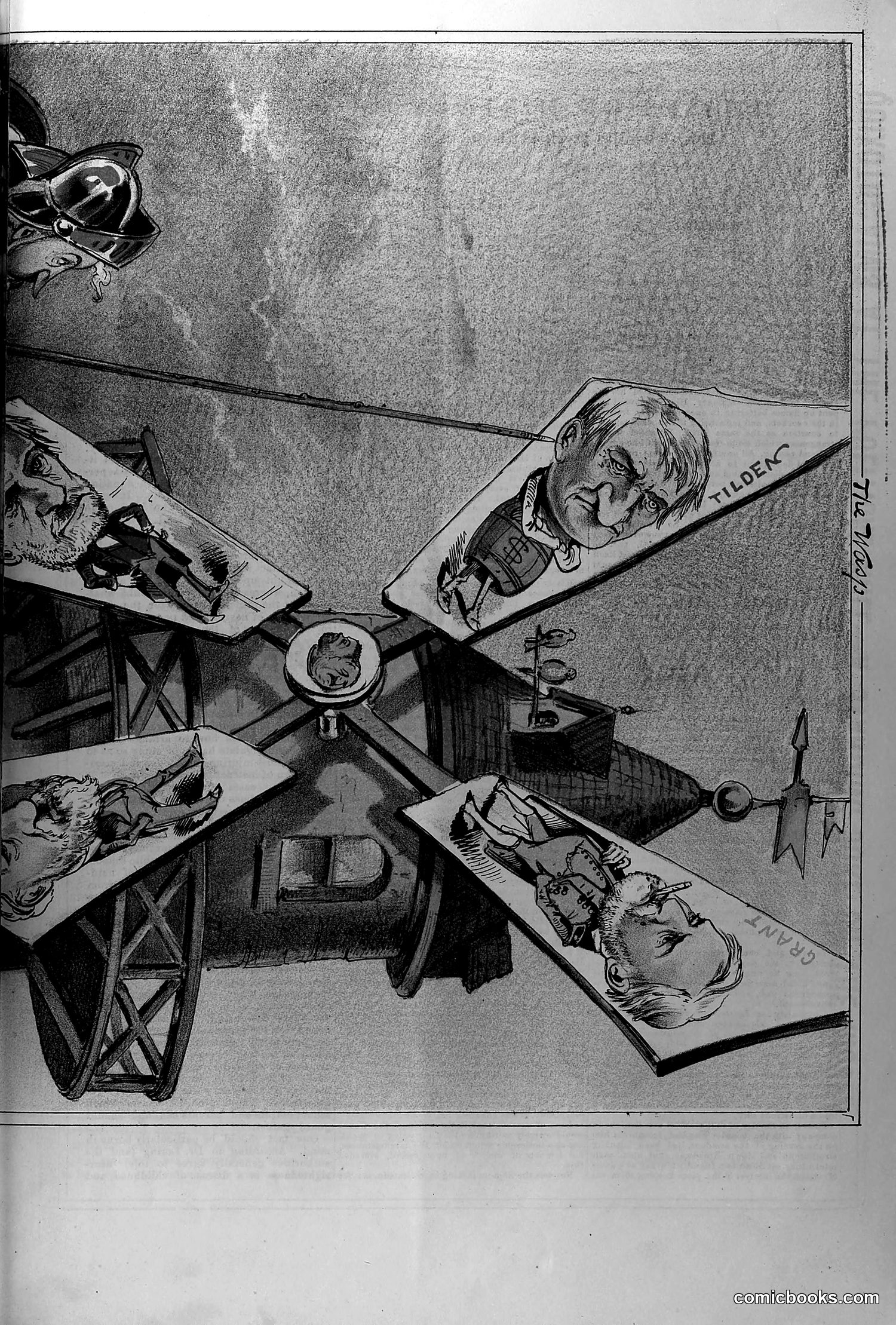
This appears to be a political cartoon satirizing a figure seated at a central desk or table, surrounded by various illustrated portraits or caricatures on papers/placards. The central figure appears to be evaluating or judging multiple candidates or personalities, suggested by the scale or weighing mechanism visible. The style suggests late 19th or early 20th century American political satire. Without clearer OCR text or visible labels identifying the specific figures, I cannot definitively state which political figure is central or which personalities are being caricatured. The cartoon's point seems to involve critique of selection, judgment, or evaluation of political candidates or public figures, but the specific historical context and identities remain unclear from the image alone.
This page contains no political cartoon. Instead, it features two distinct text articles: 1. **"Phases of History Not Generally Given in Detail"** — a satirical narrative (Part XXIII) describing a theatrical panic scene, likely mocking sensationalist accounts of a real historical incident involving the Signorina family. 2. **"The Eyes of Our Youngsters"** — an editorial piece advocating for public health awareness, specifically addressing myopia (nearsightedness) in schoolchildren. The author argues that poor eyesight results from inadequate school lighting and lack of outdoor exercise rather than heredity alone, and calls for better health standards in educational settings. Both articles reflect late-19th-century American concerns about public welfare and educational reform.
This page contains three distinct sections rather than political cartoons: 1. **"Lockjaw"** - A medical advice column addressing eye strain in schoolchildren, recommending preventive measures and proper instruction in reading/writing posture. 2. **"The Antidote to Bachelor's Fare"** - Poetry about bachelor life and domestic companionship, humorously contrasting solitary living with marriage. 3. **"Sacramento" and "Feuilleton"** - A satirical letter section mocking California politics. The "Sacramento" piece ridicules what appear to be local political scandals, particularly regarding bribery accusations and political maneuvering. Names like "Braunhart" and "Kane" are mentioned in contexts suggesting corruption or questionable conduct. The page is primarily **satirical journalism** targeting specific California political figures and situations, rather than visual cartooning. Without clearer historical context, the specific figures and incidents remain difficult to identify with certainty.
This page is primarily **advertising and advice columns** rather than political satire. The main content is a letter column titled "My Dear Grandma" featuring reader correspondence about social issues—including references to Senator Kane, the "Passion Play," and Judge Silent of Arizona. The left illustration depicts **a grandmother with a child**, accompanying domestic advice. The right side contains multiple **product advertisements** for mechanical devices (cylinder oil, spectacles) and services. The satirical content is minimal and scattered—brief reader comments mock political figures and local institutions, but lack the focused punch typical of The Wasp's political cartoons. This appears to be a lighter issue emphasizing commercial content and reader engagement over hard-hitting editorial satire.
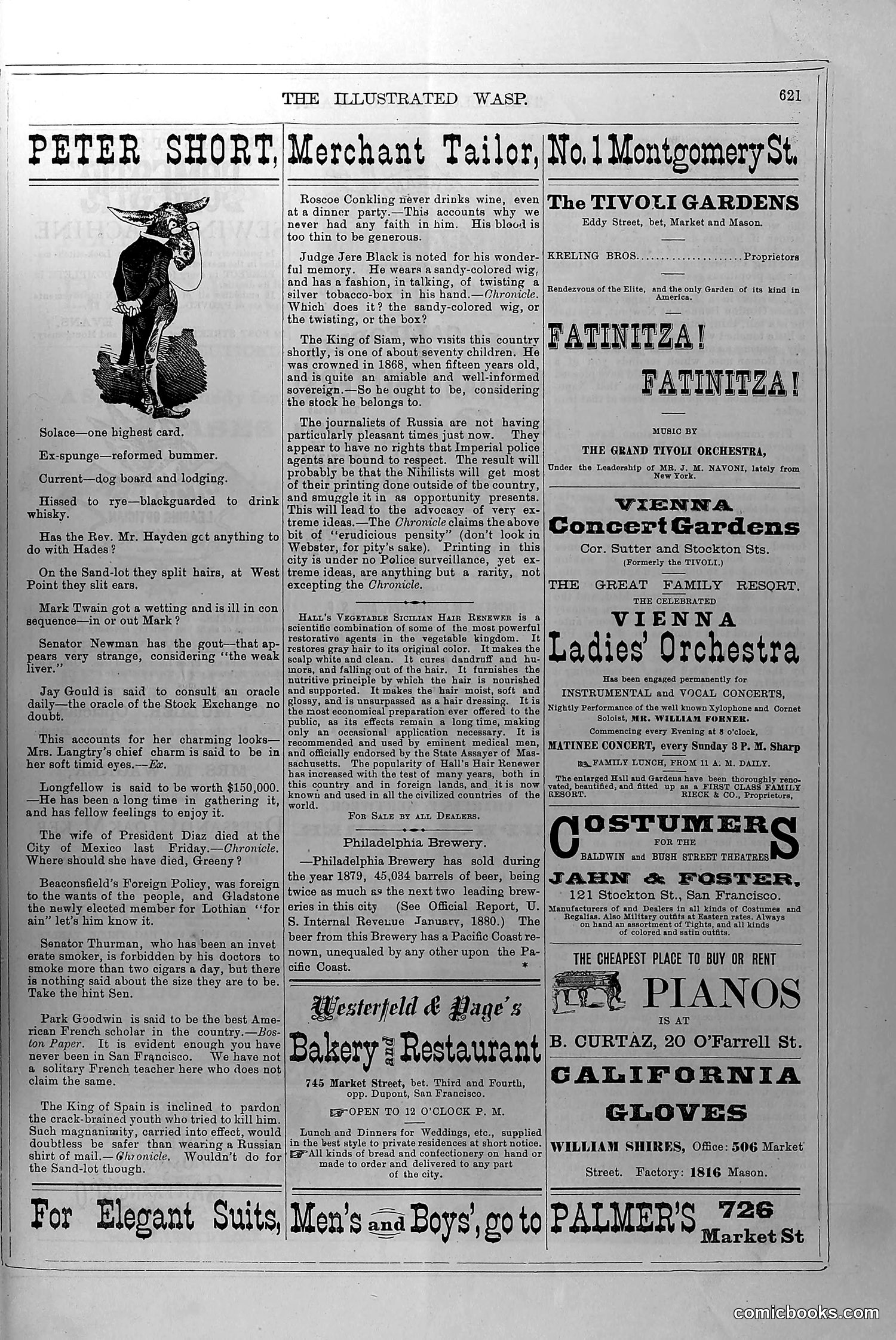
This page is primarily **advertising and gossip content** rather than political satire. The main illustrated element is a small cartoon labeled "Solace—one highest card" showing a goat-like figure in formal dress, appearing to reference someone's consolation or comfort. The text includes brief satirical notes about local San Francisco figures: Judge Jere Black's fashion choices (sandy-colored wig and box), observations about the King of Siam's visit, and commentary on Russian journalists' press freedoms. However, these are lightweight social jabs rather than sharp political commentary. The page is dominated by advertisements for restaurants, orchestras, costumes, pianos, and clothing—typical of The Wasp's revenue model mixing entertainment commentary with commercial notices.
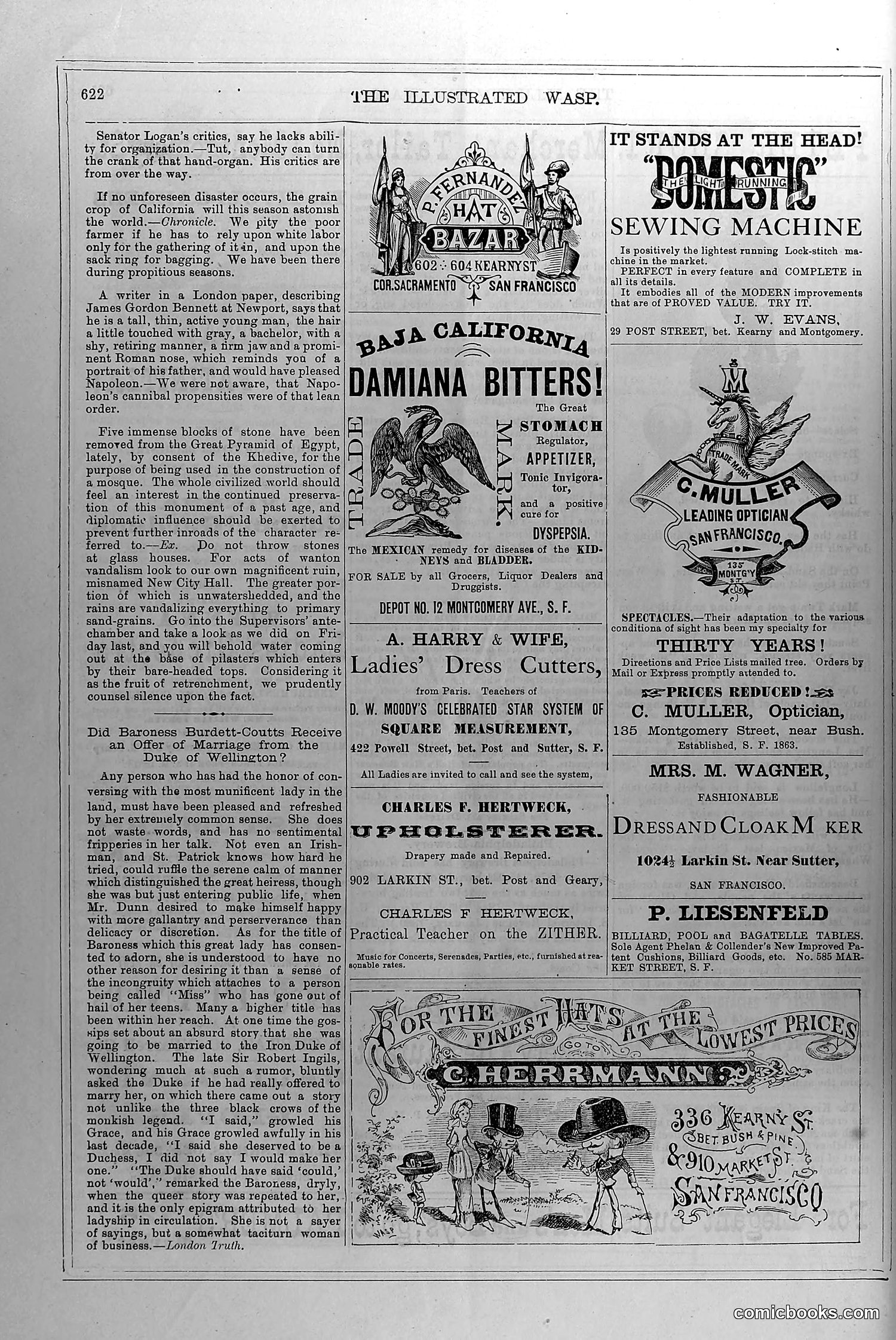
This page is primarily **advertising**, not political satire. The dominant content includes commercial notices for San Francisco businesses: Damiana Bitters (a patent medicine), a sewing machine, an optician, dress makers, a zither instructor, and a hat shop. The only editorial content appears to be brief text columns discussing Senator Logan's organizational abilities, a physical description of James Gordon Bennett (a prominent newspaper editor), and a anecdote about Baroness Burdett-Coutts. The page reflects **1880s-90s San Francisco commercial culture** rather than political commentary. The advertisements' prominence over editorial content was typical for 19th-century satirical magazines, which relied heavily on advertising revenue to sustain publication.
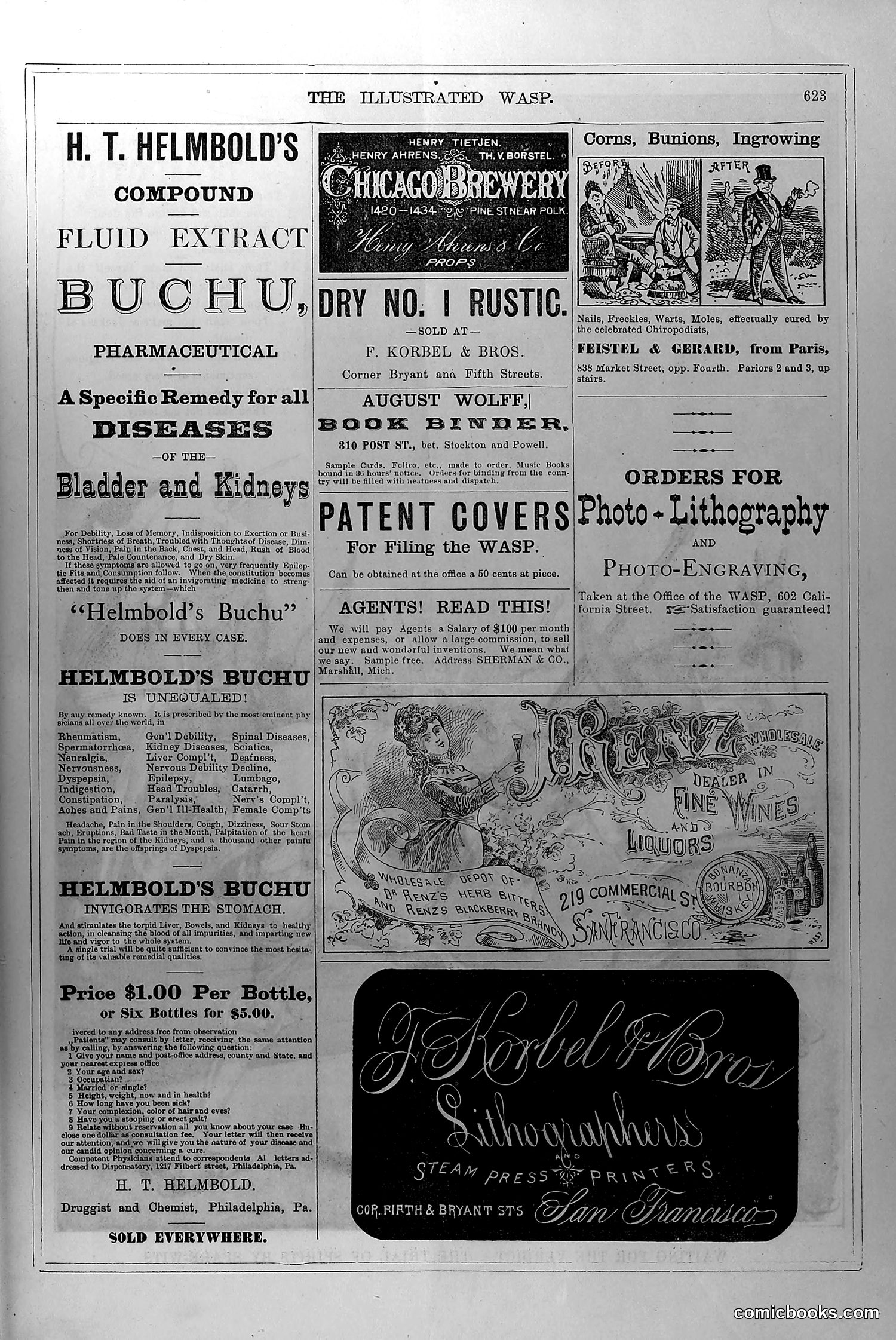
This is primarily an **advertising page** from *The Wasp* magazine (page 623), not a political cartoon or satire. The page is dominated by advertisements for patent medicines and commercial services typical of the era: - **H.T. Helmbold's Compound Fluid Extract Buchu**: A pharmaceutical remedy claiming to cure bladder and kidney diseases - **Chicago Brewery**: Beer advertisement - **August Wolff Book Binder**: Bookbinding services - **Patent covers for filing**: Office supplies - **F. Hertel & Geraid**: Medical services from Paris - **Photo-lithography and photo-engraving**: Printing services - **Herz Brothers**: Wine and liquor merchant in San Francisco The only illustration is a decorative Victorian-era engraving for the wine merchant. This represents typical *Wasp* revenue—advertisements for dubious patent medicines were common in 19th-century publications.
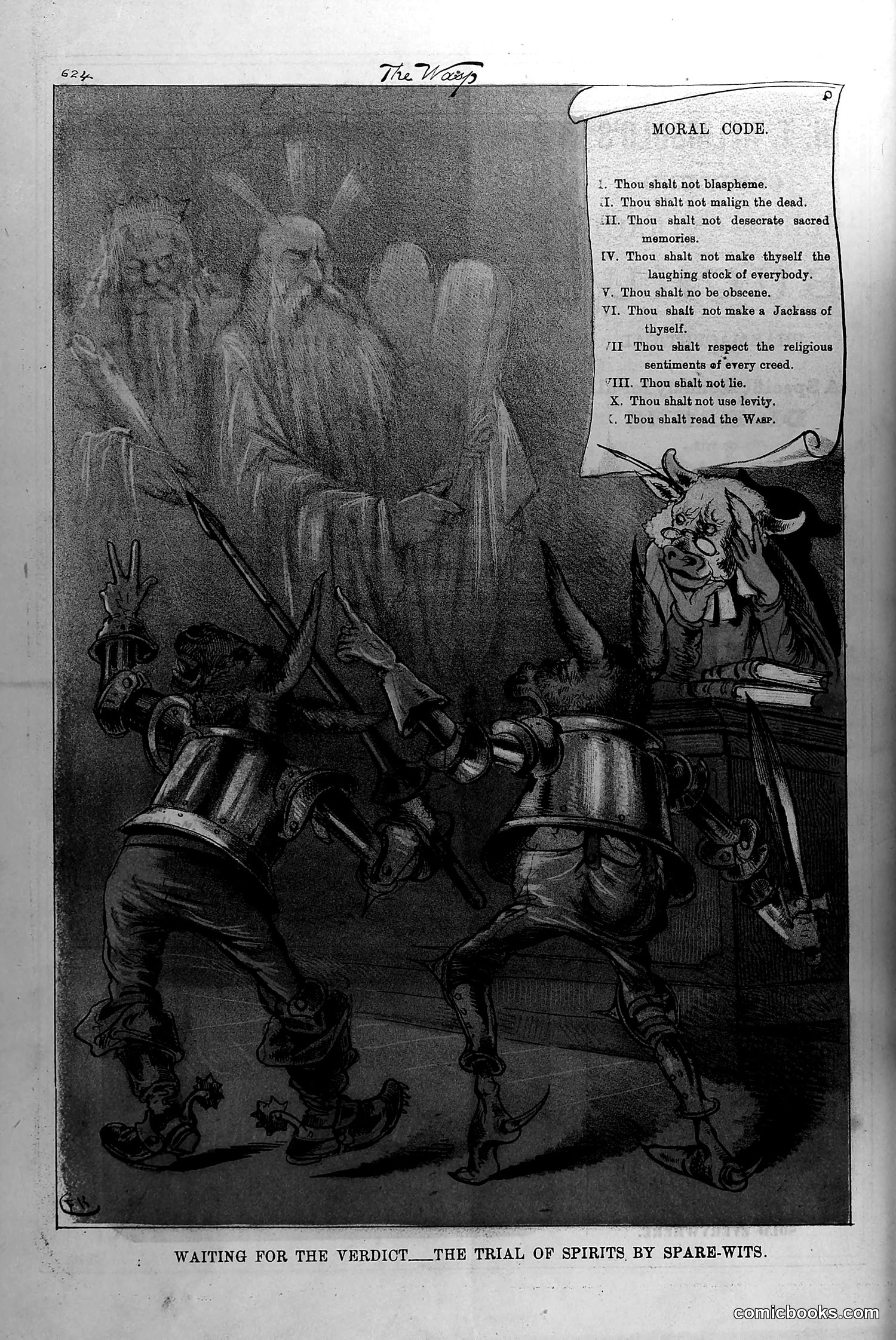
This satirical cartoon, titled "Waiting for the Verdict—The Trial of Spirits by Spare-Wits," depicts demonic or grotesque figures in what appears to be a courtroom or trial setting. The "Moral Code" sidebar lists ten commandments-style rules, likely mocking contemporary moral standards or a specific group's claimed ethics. The cartoon satirizes hypocrisy: the demons appear to be judging or being judged by their own moral code, suggesting the actual perpetrators lack the moral authority they claim. The grotesque caricatures and their "trial" likely critique specific public figures, politicians, or a social movement of the era, though without additional historical context, the precise targets remain unclear. The tone is darkly comedic, employing visual exaggeration typical of 19th-century American satire.

This page appears to be a **test pattern or calibration chart** rather than actual satirical cartoon content. The image shows a grayscale reference chart with numbered squares (ranging in tone from dark to light) positioned next to measurement rulers—a standard tool used in photography and printing to ensure accurate color reproduction and exposure. The rulers and systematic arrangement of tonal squares are typical of technical documentation used by printers and photographers to verify image quality. This is likely a **production page** from *The Wasp* magazine rather than editorial content meant for readers. Without visible cartoon artwork, political figures, or satirical text, no historical commentary can be assessed from this particular page.