
A complete issue · 18 pages · 1880
The Wasp — January 10, 1880

I can see this is a historical page with an Oregon Rule Company ruler visible in the image, but the actual cartoon content and OCR'd text you mentioned are not clearly legible to me in this reproduction. The image shows what appears to be a black and white page with measurement scales, but the satirical content, any figures, captions, or detailed text are too faint or small for me to read with confidence. To properly explain the satire, political references, and humor to a modern reader, I would need either a clearer image or confirmation of what the OCR text actually says. I cannot reliably identify figures or explain the cartoon's meaning without being able to read the content clearly.
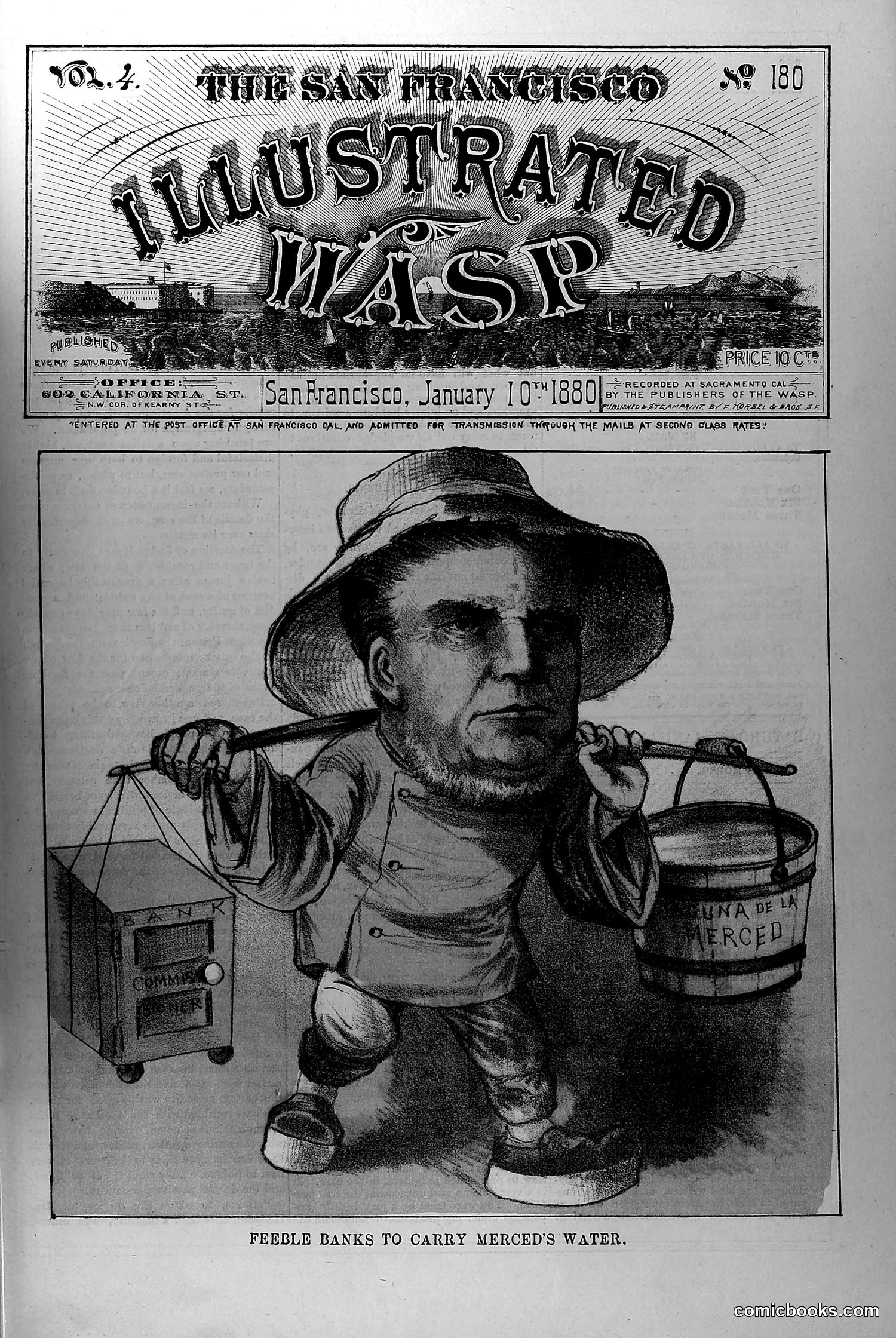
This satirical illustration depicts a caricatured Chinese laborer carrying commerce-related items on a balance pole. The caption reads "FEEBLE BANKS TO CARRY MERCED'S WATER." The cartoon appears to critique California's water management or commercial distribution systems of the era, likely referencing disputes over water rights in Merced (a Central Valley region). The Chinese figure—a common stereotype in 1880s California satire—represents cheap labor or immigrant workers. The "feeble banks" reference suggests criticism of inadequate infrastructure or banking institutions unable to support local water distribution needs. The cartoon reflects anti-Chinese sentiment prevalent in late-19th-century California while simultaneously mocking local governance and commercial weakness. Without additional historical context about specific Merced water conflicts, the precise political target remains somewhat unclear.
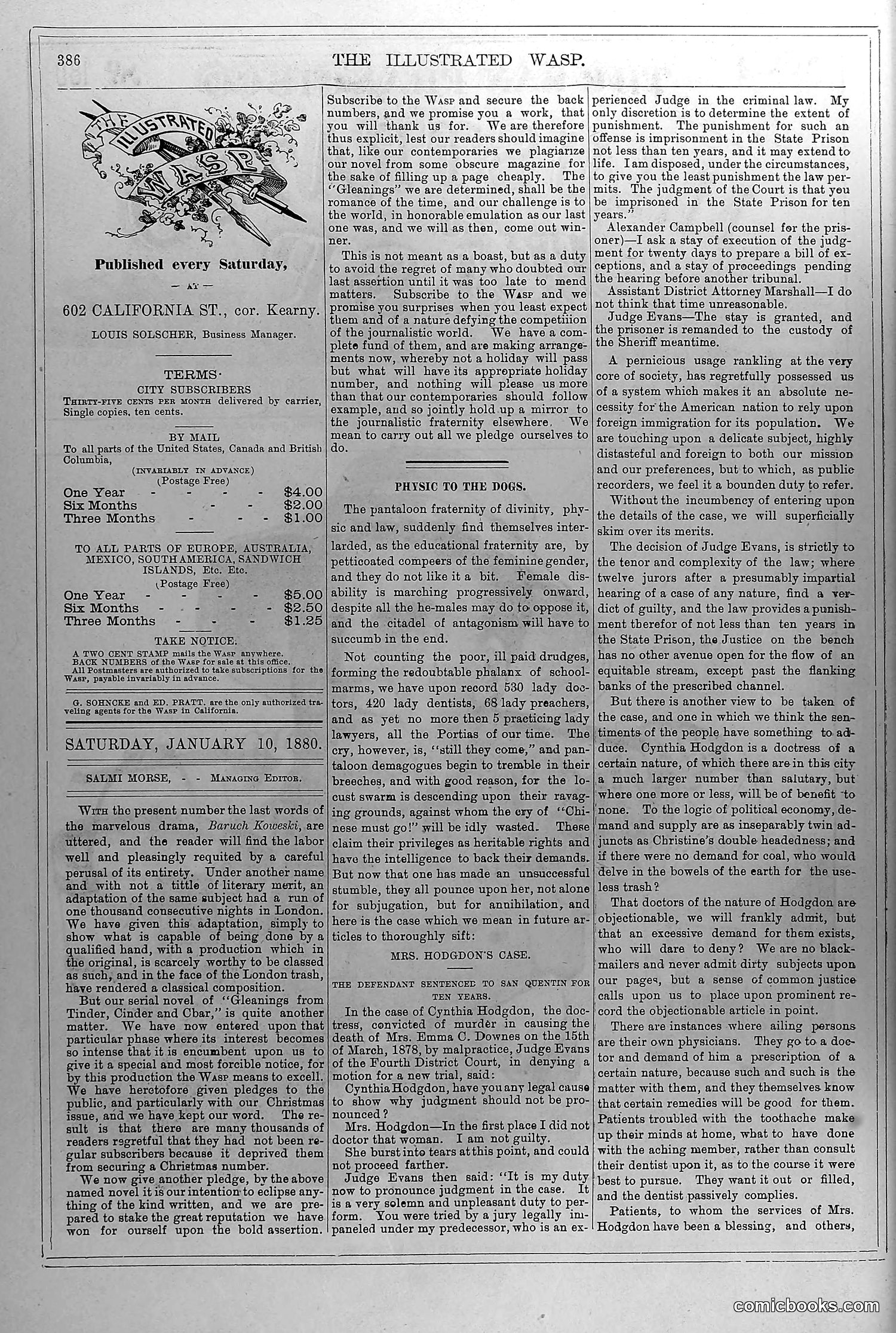
The masthead cartoon depicts a wasp attacking or stinging a figure—likely representing editorial criticism or satirical commentary on a contemporary target, though the specific subject isn't clear from the image alone. The page is primarily devoted to publication information, subscription rates, and editorial content rather than political cartoons. Articles address legal cases (Judge Evans, Mrs. Hodgdon's murder trial) and medical/social issues ("Physic to the Dogs"). The editorial voice is combative and reform-minded, promising to expose societal problems and challenge authorities. Without clearer identification of the attacked figure in the masthead, the precise satirical target remains unclear, but the overall tone suggests aggressive critique of corruption or injustice in contemporary San Francisco society.
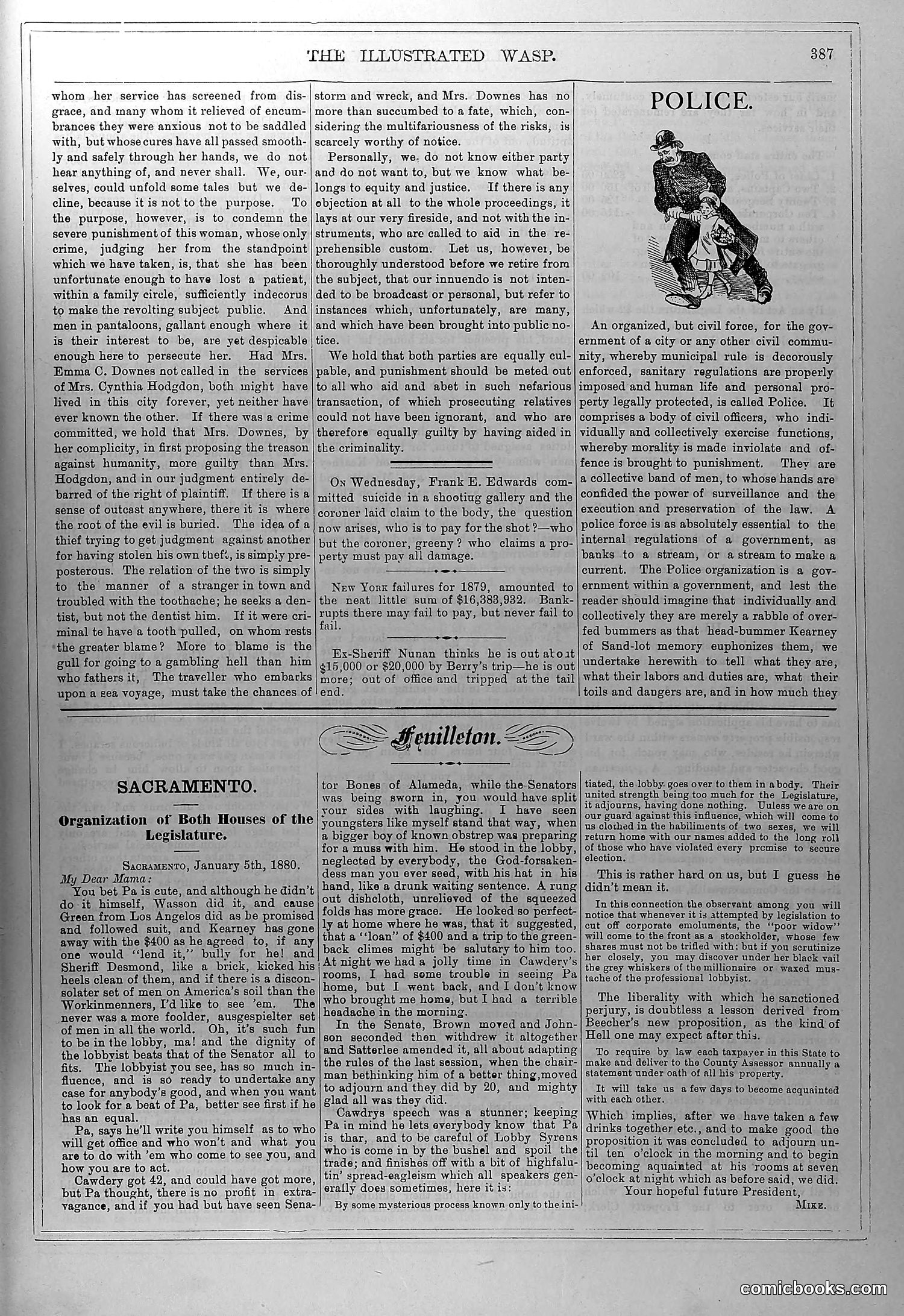
The page contains two distinct sections: **"POLICE" Section (Right Column):** An illustration depicts a police officer in period uniform. The accompanying text defines police as "an organized, but civil force, for the government of a city or any other civil community" and discusses proper enforcement of sanitary regulations and legal protections. This appears to be satirical commentary on actual police practices—the text's emphasis on what police *should* be suggests contemporary criticism of corruption or abuse. **"GENUILETON" Section (Left Column):** This consists of a humorous letter dated January 5th, 1880, discussing Sacramento's legislature. The correspondent humorously complains about political maneuvering, lobbying influence, and legislative inefficiency, suggesting satire of California state politics and the persuasive power of wealthy interests over elected officials. Both sections employ satirical irony to critique government institutions and political corruption of the 1880 era.
This page is primarily textual rather than a satirical cartoon. It's an informational article titled "THE ILLUSTRATED WASP" describing San Francisco's police department organization and structure circa the 1880s-1890s. The content details: - Police staff composition and salaries - The city prison door-keepers - Watch divisions and patrol duties - Detective Force capabilities - Harbor Police operations - Requirements for officers (height, age, character) The satirical element appears subtle—the text humorously describes police inefficiencies and corruption (bribes, selective enforcement) through ostensibly straightforward descriptions. For example, it notes widows receive "$100 for funeral expenses" and mentions various "societies" supporting the force, implying financial irregularities. This represents *Wasp's* muckraking journalism approach: delivering social criticism through detailed institutional critique rather than visual caricature.
This page contains theatrical reviews and entertainment commentary rather than political cartoons. The decorative header features classical theatrical imagery (masks and ornaments). The content critiques San Francisco's performing arts scene, discussing productions of *Pygmalion and Galatea*, *The Palace of Truth*, and *The Bohemian Gypsy*. Reviews praise the California troupe at the Grand Opera House, though the writer notes the company performs competently but without exceptional distinction compared to other theatrical groups. The text mocks the pretensions of theater criticism itself—suggesting that overly detailed musical analysis wastes readers' time and produces incomprehensible judgments that alienate general audiences. A brief note mentions De Alma snubbing President Hayes during a New Year's reception for failing to secure a California collectorship appointment, demonstrating the magazine's political-social gossip coverage.
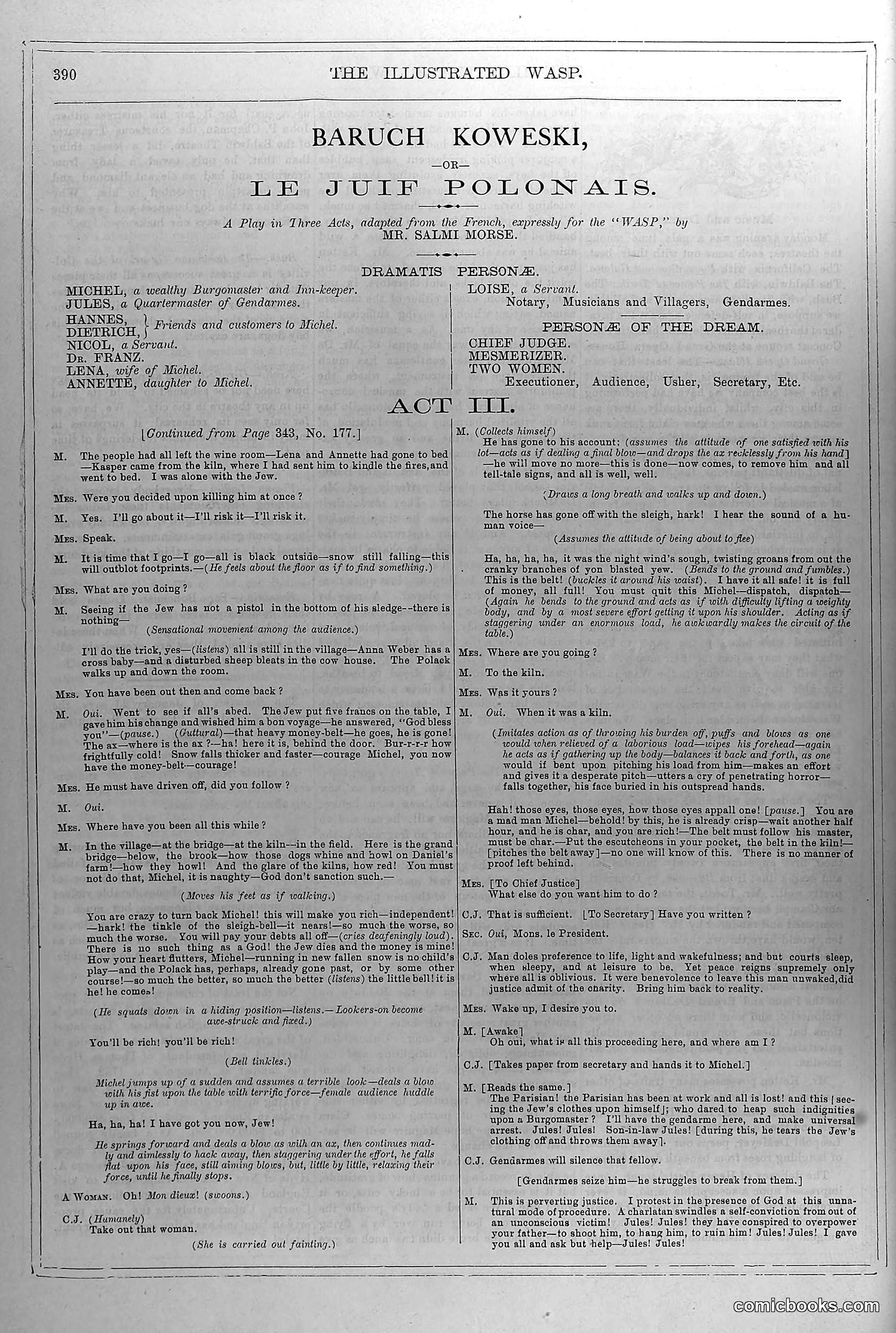
This page is primarily **textual content from a theatrical play**, not a political cartoon. It presents Act III of "Baruch Kowski, or Le Juif Polonais" (The Polish Jew), adapted from French for *The Wasp* magazine by Salmi Morse. The page lists dramatis personae and reproduces dialogue featuring characters including Michel (a wealthy innkeeper), Lena, Annette, and various others. The theatrical script contains stage directions and dramatic monologues about financial distress, a missing horse, and apparent criminal activity. Without seeing accompanying illustrations or knowing the original French play's satirical intent, the specific political or social satire remains **unclear from this excerpt alone**. This appears to be a serialized drama rather than editorial cartoon content.
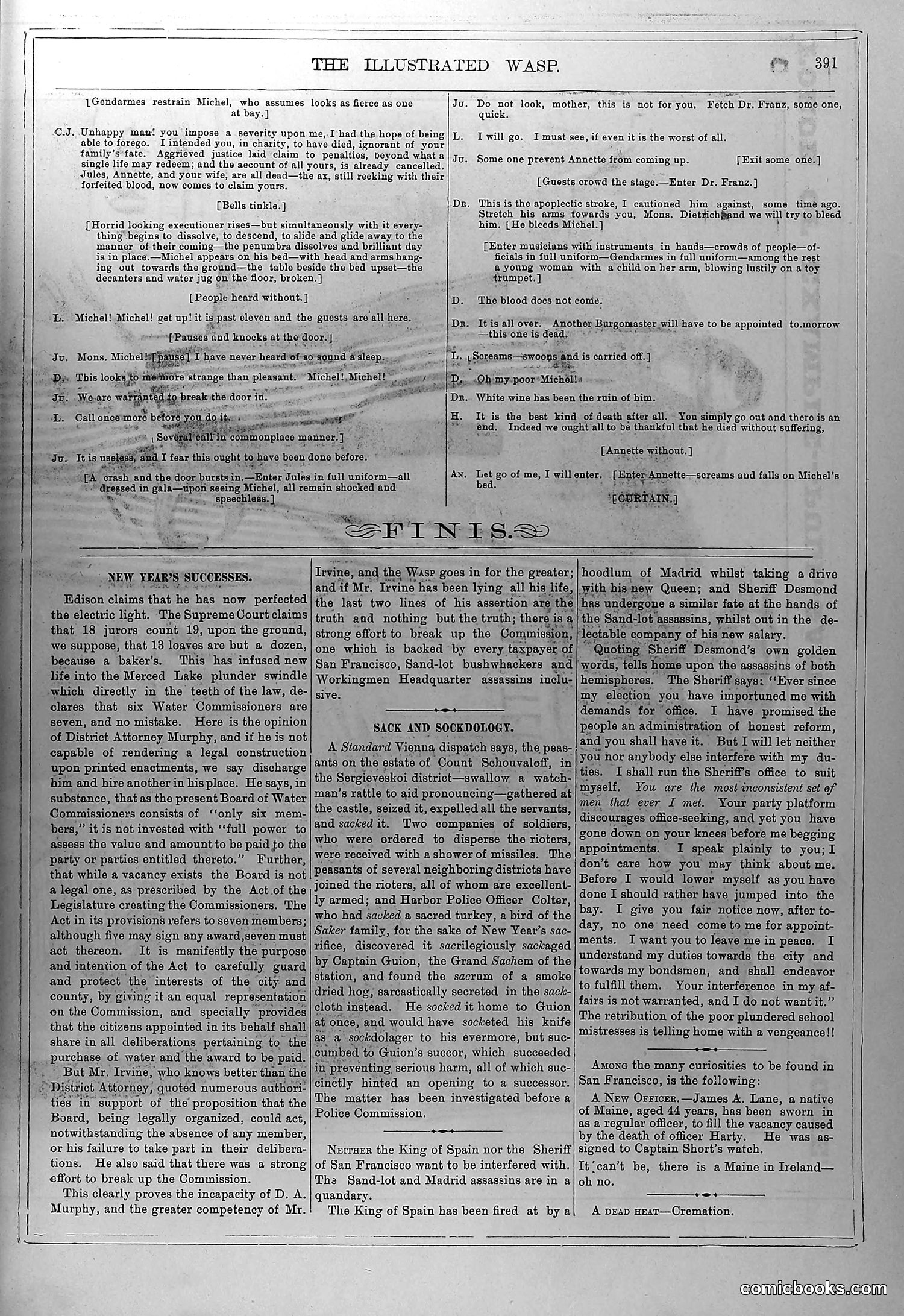
This page concludes a dramatic theatrical scene titled "The Illustrated Wasp." The dialogue shows characters named Gendarmes, C.J. Unhappy, Jules, Annette, and Dr. Franz engaged in what appears to be a melodramatic confrontation involving death, bleeding, and medical crisis. The right column contains three distinct news commentary sections addressing San Francisco politics and administration: "New Year's Successes" (praising Edison's electric light and criticizing water commissioners), "Sack and Sockology" (discussing Standard Vienna's dispatches about military matters), and brief items about a new police officer and the King of Spain. The content reflects late 19th-century California political concerns rather than visual satire, making this primarily a text-based satirical news page rather than a cartoon-focused publication.
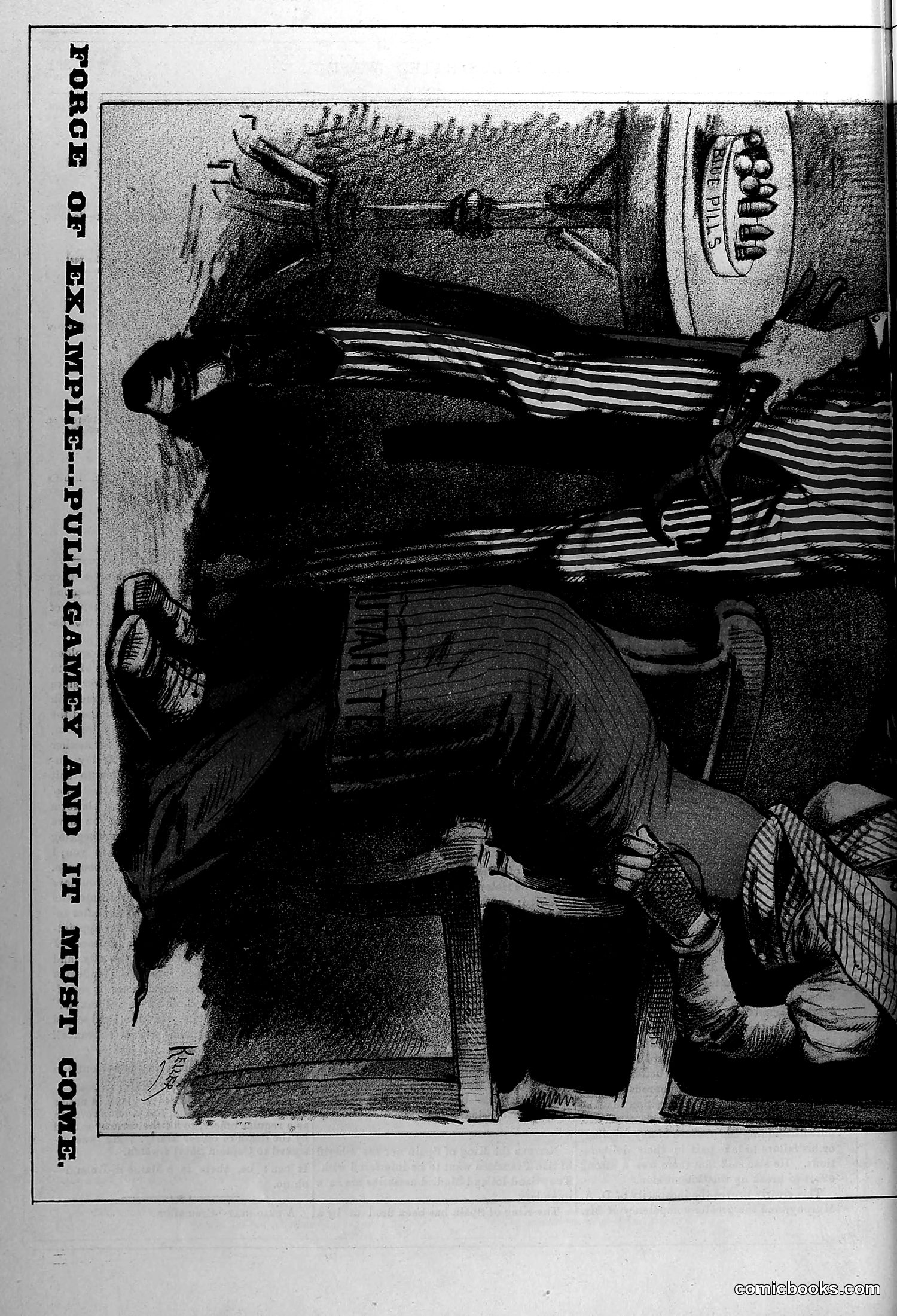
This page features a political cartoon titled "FORGE OF EXAMPLE—PUBLIC GAMBLING AND IT MUST COME" (text reads vertically on left margin). The cartoon depicts a figure at a forge/anvil, appearing to hammer or shape something. The imagery suggests the "forge" as a metaphor for creating or shaping society through example. The reference to "public gambling" indicates this satirizes how public figures or institutions engaged in gambling were setting a dangerous moral example for citizens, particularly young people. The cartoon likely critiques either a specific politician, wealthy businessman, or government body whose gambling habits were seen as hypocritical—preaching virtue while practicing vice. The "forge" metaphor emphasizes how such public behavior fundamentally shapes societal morals, creating a harmful precedent that ordinary citizens would follow. The exact figures remain unclear without additional context about The Wasp's publication date and contemporary scandals.
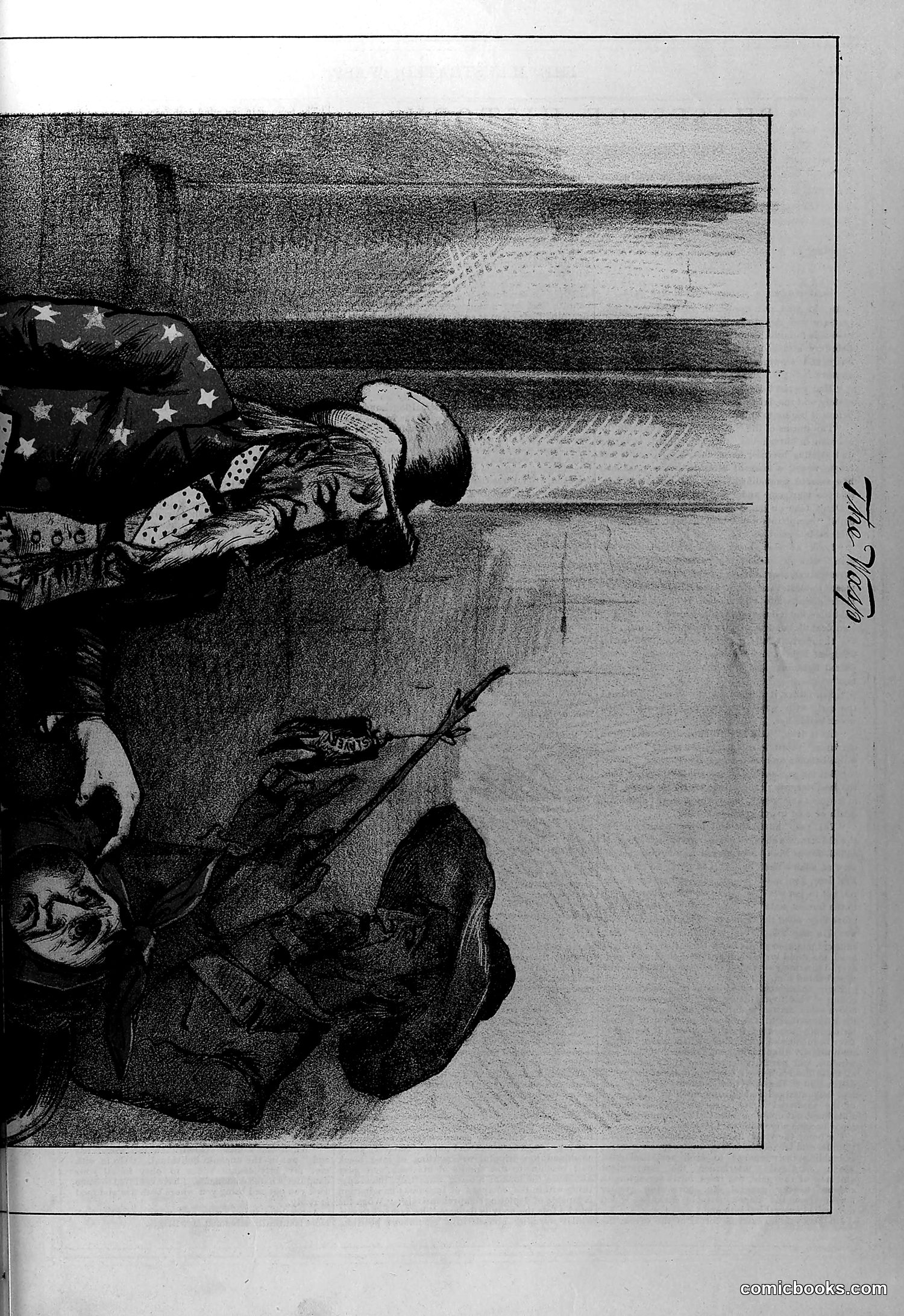
This appears to be a page from *The Wasp*, a satirical publication. The image shows a figure in star-patterned clothing (suggesting American patriotism) bent over examining or reaching toward what appears to be a beach or shoreline scene. The figure's posture and detailed clothing suggest this is political caricature commentary. However, without clearer OCR text or visible caption/title on this page, I cannot definitively identify which specific political figure or event this satirizes. The beach setting and patriotic imagery suggest commentary on American foreign policy, trade, or diplomatic matters, but I cannot specify the exact historical reference or intended target without more context. The quality and style suggest late 19th or early 20th century American political satire.
This page is primarily text rather than illustration—specifically a serialized story titled "Phases of History: Not Generally given in Detail," written by Mr. Salmi Morse for The Wasp. The narrative describes an old man and seventeen-year-old girl encountering violent weather near a fountain. It's a Gothic-tinged dramatic piece featuring dialogue about storms, death, and suffering, with descriptions of the old man's haggard appearance and the girl's distress. The story appears designed as entertainment literature rather than political satire. The right column includes quoted dialogue exploring themes of hardship and despair. Without visible cartoons or caricatures, this page functions as the magazine's literary content rather than its satirical commentary section.
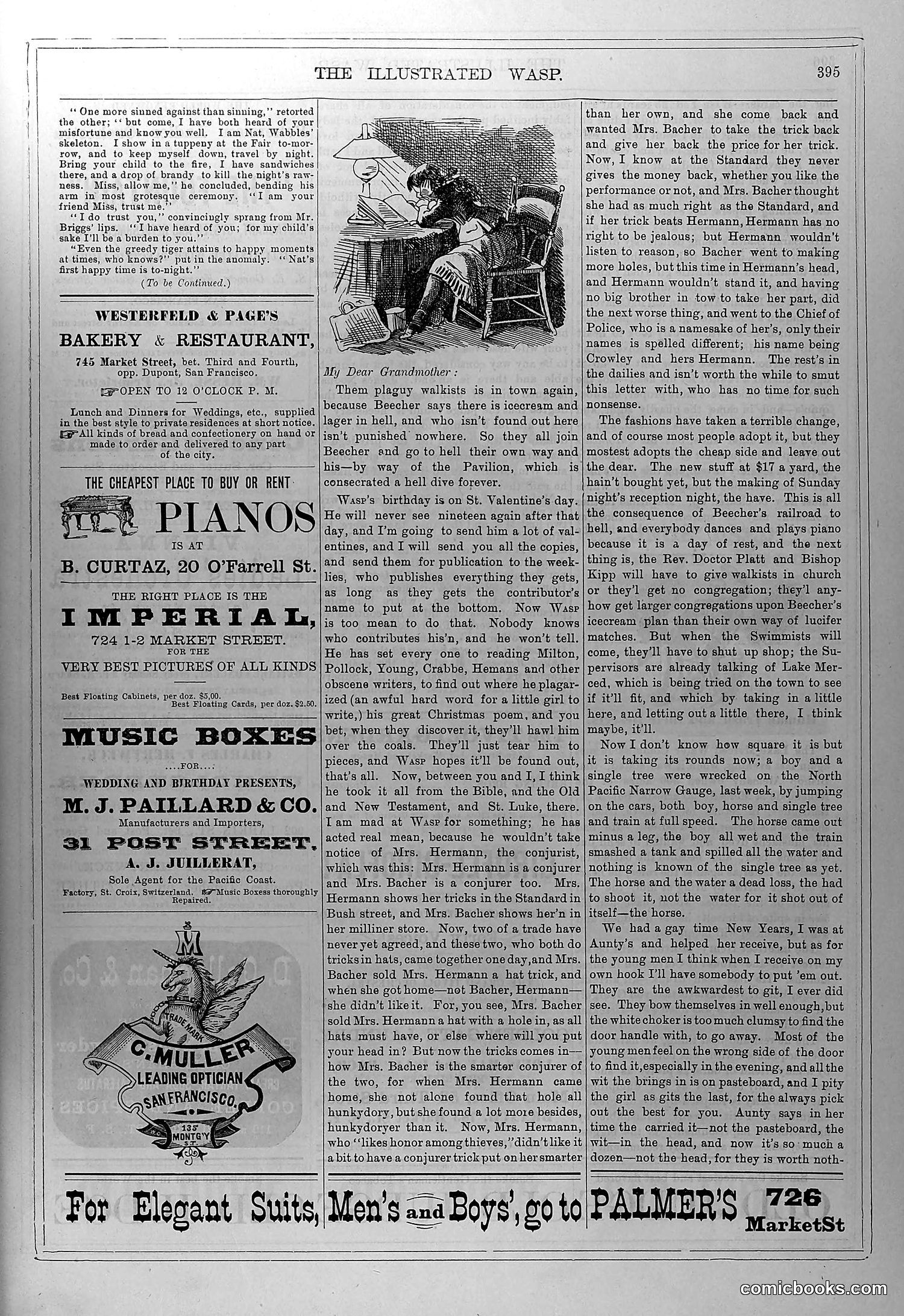
This page is primarily **advertising and serialized fiction** rather than political satire. The main illustrated feature shows a domestic scene titled "My Dear Grandmother," depicting what appears to be a woman in a chair speaking to someone (likely her grandchild). The accompanying text continues a story about family conflict involving characters named Mrs. Bacher and Hermann regarding hat tricks and conjuring. The page is dominated by advertisements for local San Francisco businesses: pianos at B. Curtaz, music boxes, bakery services, and optical goods. At the bottom is an ad for Palmer's clothing store. **The political or satirical content is minimal**—this appears to be a typical late-19th-century magazine page mixing entertainment serialization with commercial advertising rather than focused satirical commentary.
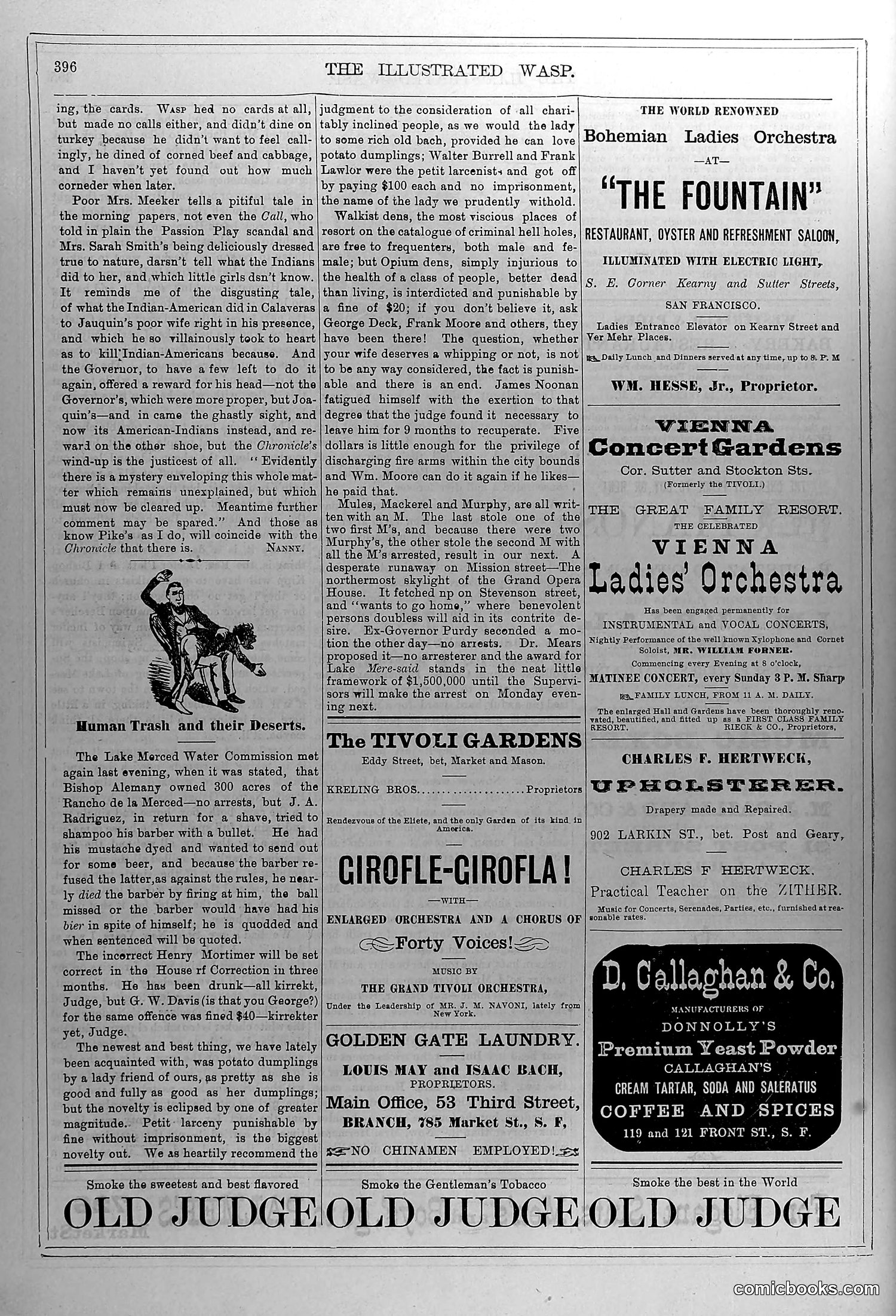
This page is primarily **advertising and commercial content** for San Francisco businesses (circa late 1800s), with minimal political satire. The advertisements promote: - **The Fountain** restaurant and saloon - **Vienna Concert Gardens** and **Vienna Ladies' Orchestra** (musical venues) - **Tivoli Gardens** (entertainment establishment) - **D. Callaghan & Co.** (yeast powder and spices) - **Old Judge** tobacco (three separate ads) The only illustrative element is a small cartoon labeled **"Human Trash and their Deserts"** depicting what appears to be a caricatured figure, accompanied by text about the Lake Merced Water Commission and disputes over land ownership involving Bishop Alemany and a barber named Rodriguez. The page functions primarily as a revenue-generating advertising section rather than satirical editorial content.
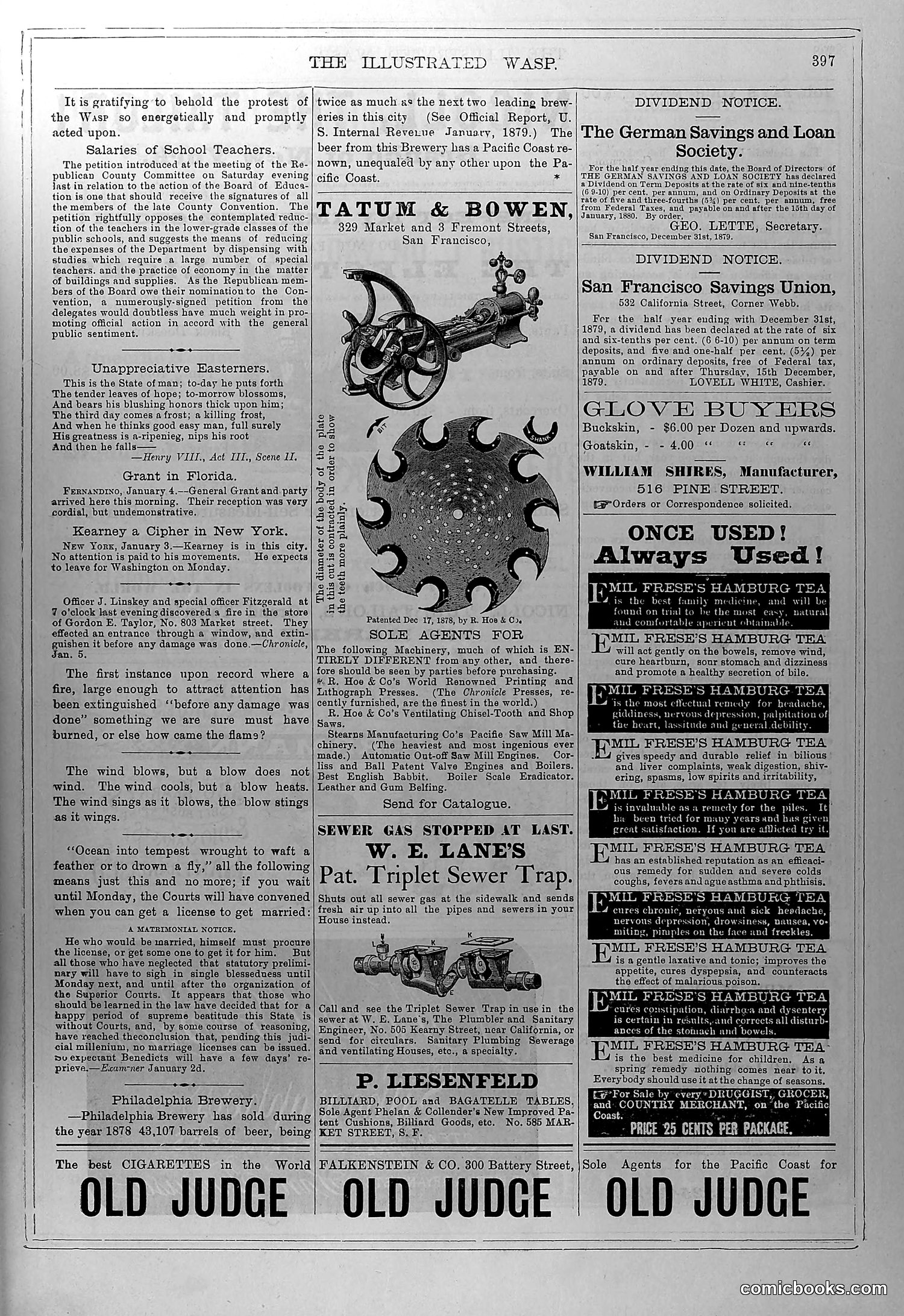
This page is primarily **advertising and notices** rather than political satire. The dominant content includes: - **Dividend notices** for financial institutions (German Savings and Loan Society, San Francisco Savings Union) - **Commercial advertisements** for glove buyers, tea products (Emil Fresse's Hamburg Tea), sewer traps, billiard tables, and cigarettes (Old Judge brand) - **Brief news items** about school teacher salaries, Florida land grants, and a brewing industry dispute The two illustrated items appear to be **patent drawings**: one showing an ornate decorative object (possibly mechanical) and another depicting W.E. Lane's "Triplet Sewer Trap." These are technical/commercial illustrations rather than political cartoons. The page reflects 1870s San Francisco commercial and civic concerns rather than satirical commentary.
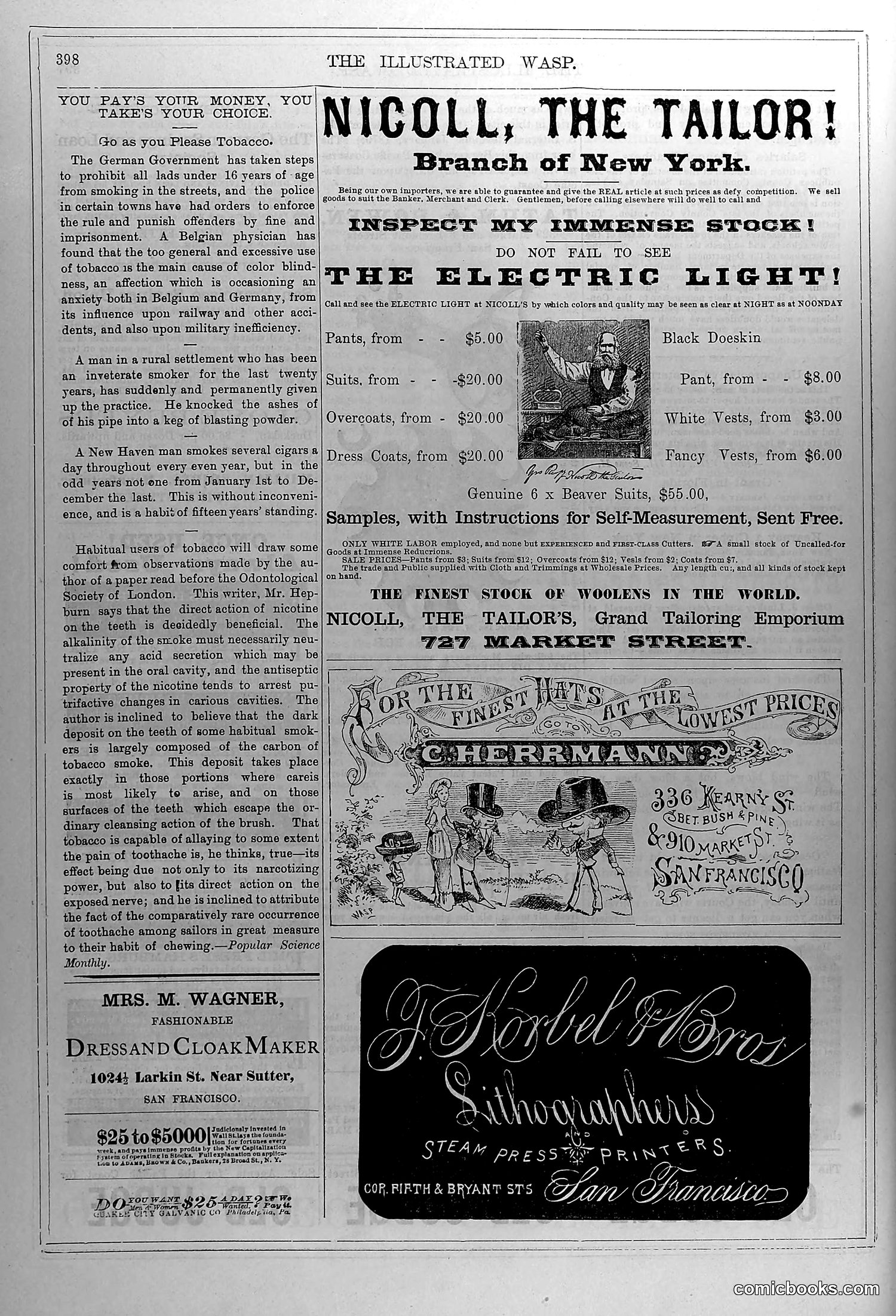
This is primarily an **advertising page** from *The Illustrated Wasp* magazine (page 398). The main content consists of commercial advertisements rather than political satire or editorial cartoons. The largest advertisement promotes **Nicoll, the Tailor** of New York, featuring a woodcut illustration of a well-dressed man and listing clothing prices (pants from $5, suits from $20, etc.). Below that is an ad for **C. Herrmann & Co.**, a hat retailer in San Francisco, with a decorative vignette showing figures. The page also includes smaller ads for a dressmaker (Mrs. M. Wagner), a printing company (J. Borbel Bros.), and on the left side, an article about tobacco use discussing health effects. No significant political cartoons or satire are present on this particular page.
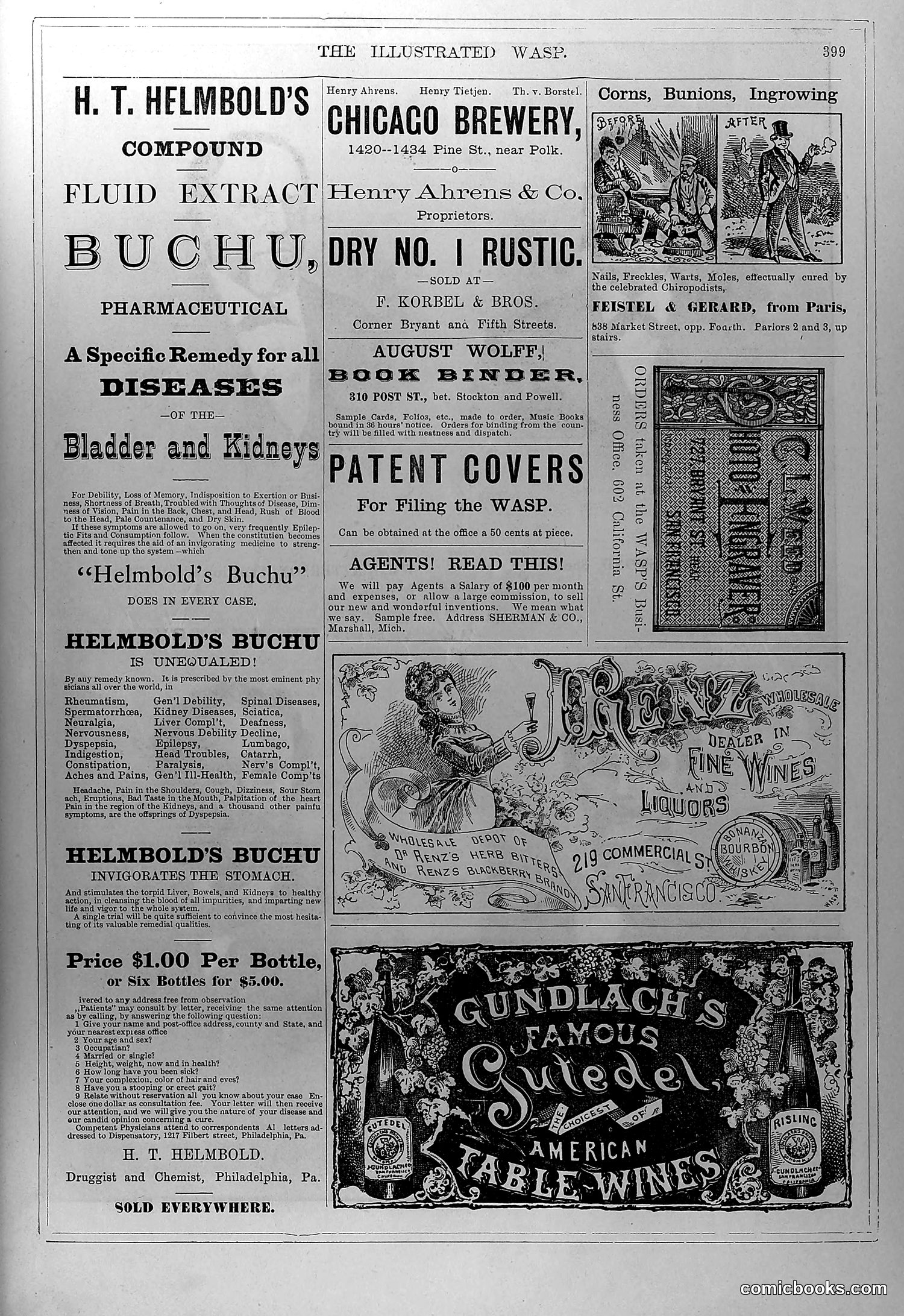
This page is primarily **advertising content** from The Wasp magazine (page 399). It contains multiple commercial advertisements rather than political cartoons or satire. The main ads include: - **H.T. Helmbold's Compound Fluid Extract Buchu** — a patent medicine claiming to cure bladder and kidney diseases, sold for $1.00 per bottle - **Chicago Brewery** advertisement - **August Wolff Book Binder** services - **Patent Covers for Filing the Wasp** (the magazine itself) - **Gundlach's Celebrated Sauterne** wine advertisement - A **fine wines and liquors dealer** from San Francisco There are small illustrative vignettes accompanying some ads (showing before/after scenarios), but **no political cartoons or satire** appear on this page. This represents typical late 19th-century magazine advertising mixed with editorial content.
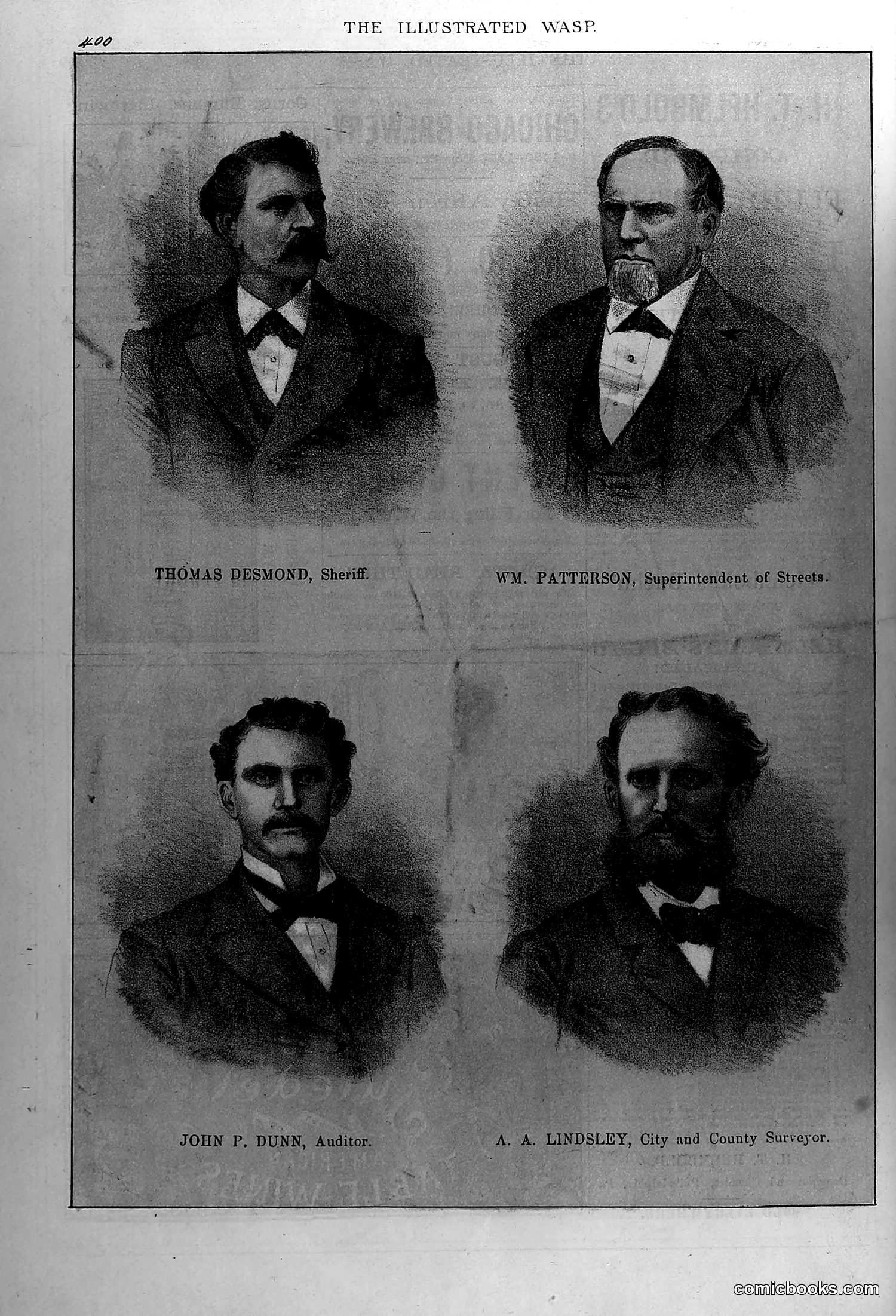
This page from *The Wasp* presents portrait engravings of four San Francisco officials: - **Thomas Desmond**, Sheriff - **Wm. Patterson**, Superintendent of Streets - **John P. Dunn**, Auditor - **A. A. Lindsley**, City and County Surveyor The page appears to be a straightforward civic documentation rather than satirical commentary. All four men are depicted in formal attire with period facial hair (1880s-1890s style), presented as respectable municipal administrators. Without accompanying text or caricature distortion, the satire—if present—is unclear from the image alone. *The Wasp* was known for biting political humor, but this particular page seems to function as official portraiture of city government officials, possibly for informational or archival purposes.

I can see this is a test page or calibration sheet from *The Wasp* magazine, containing a color checker chart with grayscale squares of varying tones on the left side, and a measurement ruler on the right side. This appears to be a technical/production element rather than actual editorial or advertising content—likely used during the printing or reproduction process to ensure proper exposure and color balance when photographing or scanning pages for publication. This is not a cartoon or satirical content page, but rather archival documentation of the magazine's production materials.