
A complete issue · 18 pages · 1879
The Wasp — November 8, 1879

I can see this is a measurement/calibration page from what appears to be a historical document or archive, featuring Oregon Rule Co. rulers and a grayscale reference chart with varying tones from light to dark. However, this does not appear to be a page from *The Wasp* satirical magazine with political cartoons or comics content. Instead, it looks like a technical documentation page—possibly a photographic test card or calibration sheet used for archival purposes, with rulers for scale reference and a tone scale for ensuring accurate reproduction of images. Without actual cartoon imagery or satirical content visible, I cannot identify figures, political references, or explain satirical intent. If you have a different page from *The Wasp* magazine, I'd be happy to analyze that instead.
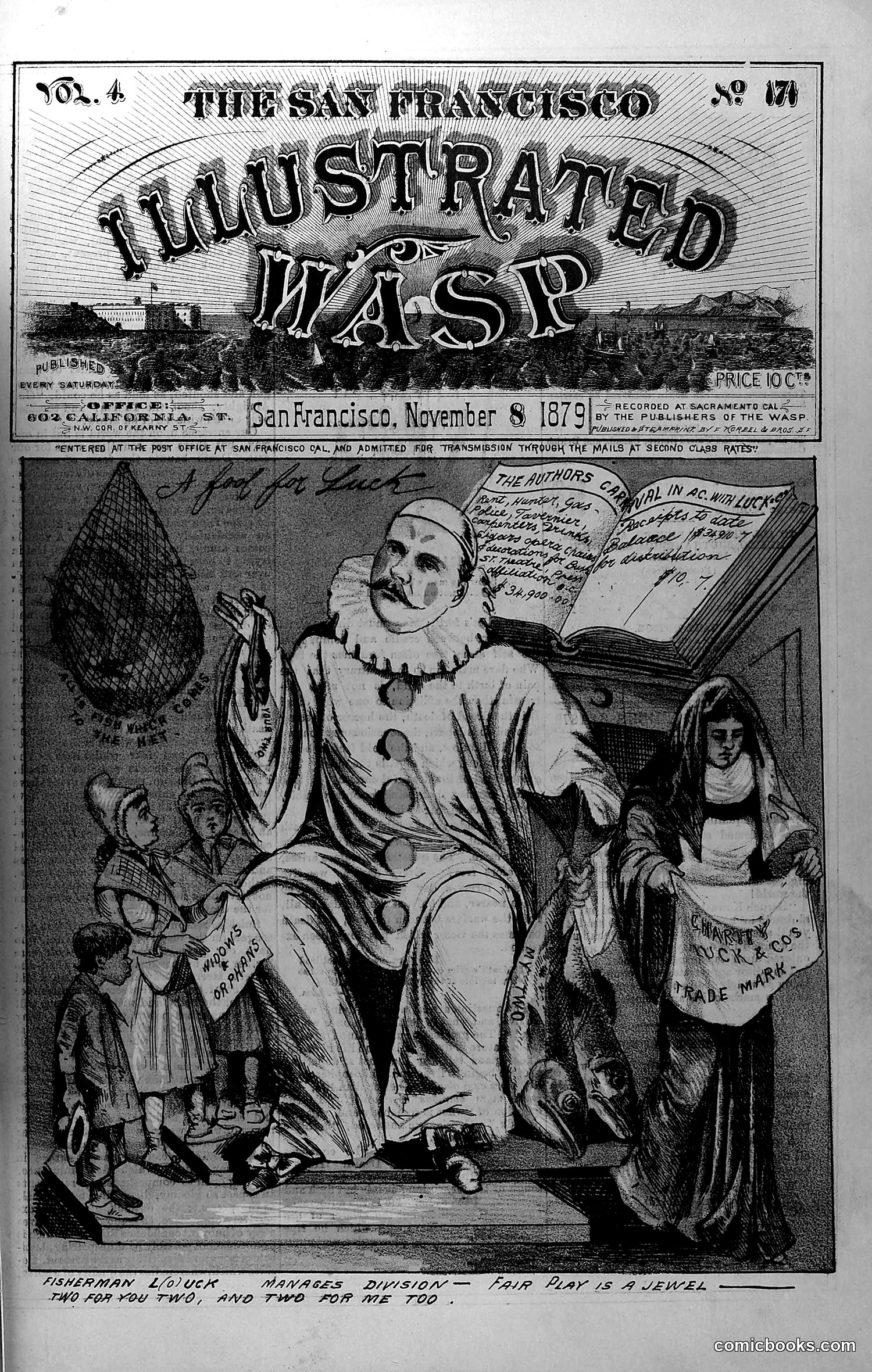
This satirical cartoon depicts a large Jester or fool-like figure surrounded by smaller figures. The caption "Fisherman Luck Manages Division—Two For You Two, And Two For Me Too—Fair Play Is A Jewel" suggests commentary on unfair resource distribution or political favoritism. The central figure's exaggerated costume and prominent mustache, combined with the reference to "division" and unequal allocation, appears to critique a political or business leader engaged in corrupt dealings. The smaller figures around him—possibly representing different constituencies or interest groups—receive unequal portions while the central authority figure takes the larger share. The exact identities remain unclear without additional historical context, but the satire clearly targets hypocrisy around fair dealing and honest governance.
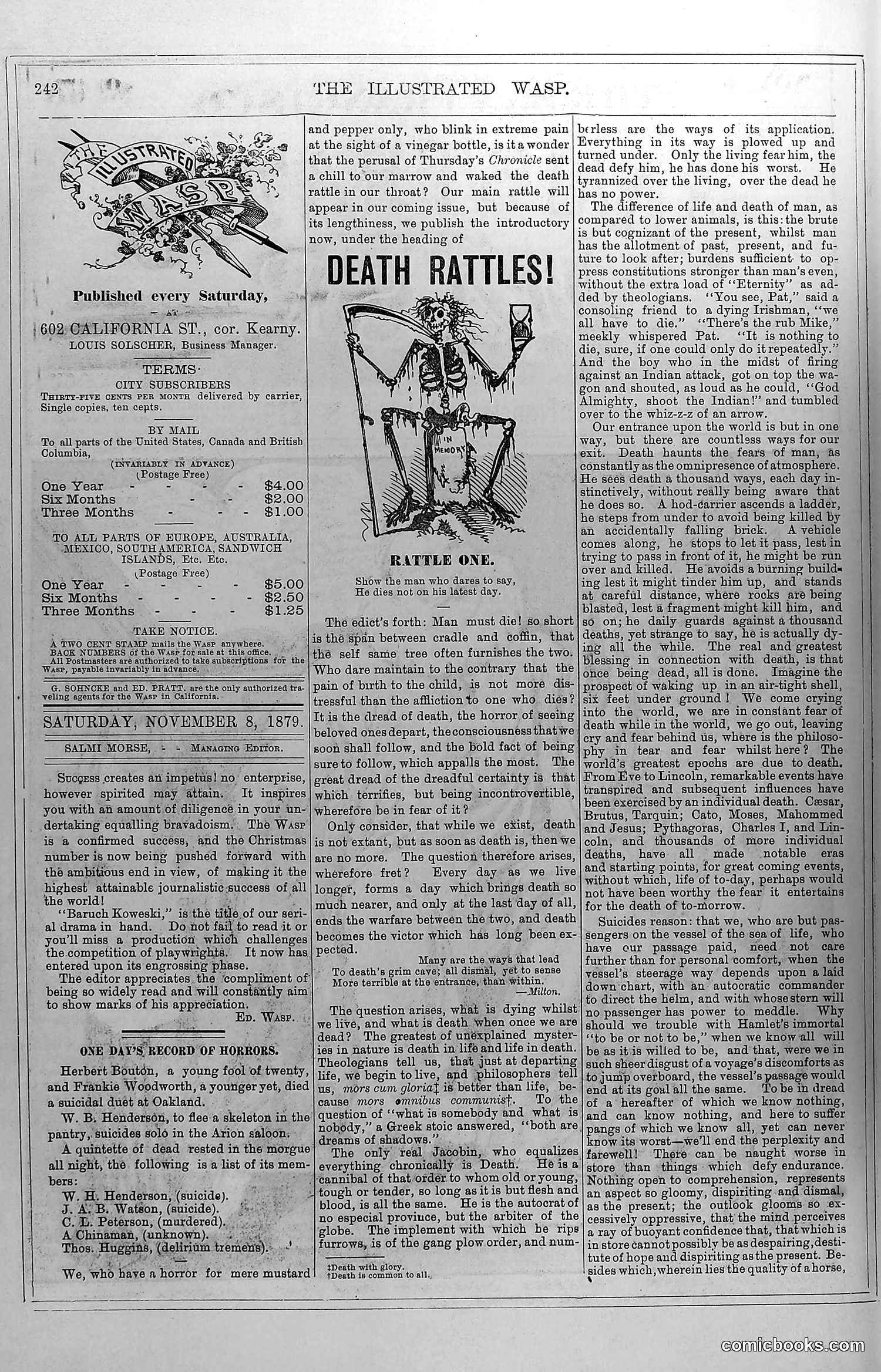
The page features "Death Battles!" — a skeletal figure holding a bottle and what appears to be a scythe or similar implement, labeled "Rattle One." The accompanying text discusses death's inevitability and various philosophical perspectives on mortality. Below this is "One Day's Record of Horrors," listing recent deaths including suicides (Herbert Bouton, W.B. Henderson, J.A.B. Watson) and deaths from various causes. The section presents tragic incidents as dark humor typical of The Wasp's satirical approach. The content reflects 19th-century American satirical journalism's tendency to juxtapose death notices with philosophical musings, using macabre imagery and dark wit to comment on mortality and human suffering during this period.
This page contains no political cartoon. Instead, it features a lengthy serialized letter titled "THREE TWELVE-YEAR-OLD'S OF FORTY YEARS AGO" (Part Second). The letter describes a tourist journey to Niagara Falls, detailing travel by rail and experiences viewing the Falls, including encounters with Native Americans and descriptions of rope equipment used for descending near the waterfall. The content is travel narrative rather than satire. It appears to be personal correspondence published as entertainment, reflecting late 19th-century tourism practices and attitudes toward natural wonders and indigenous peoples. The page demonstrates *The Wasp's* mix of satirical commentary with feature content.
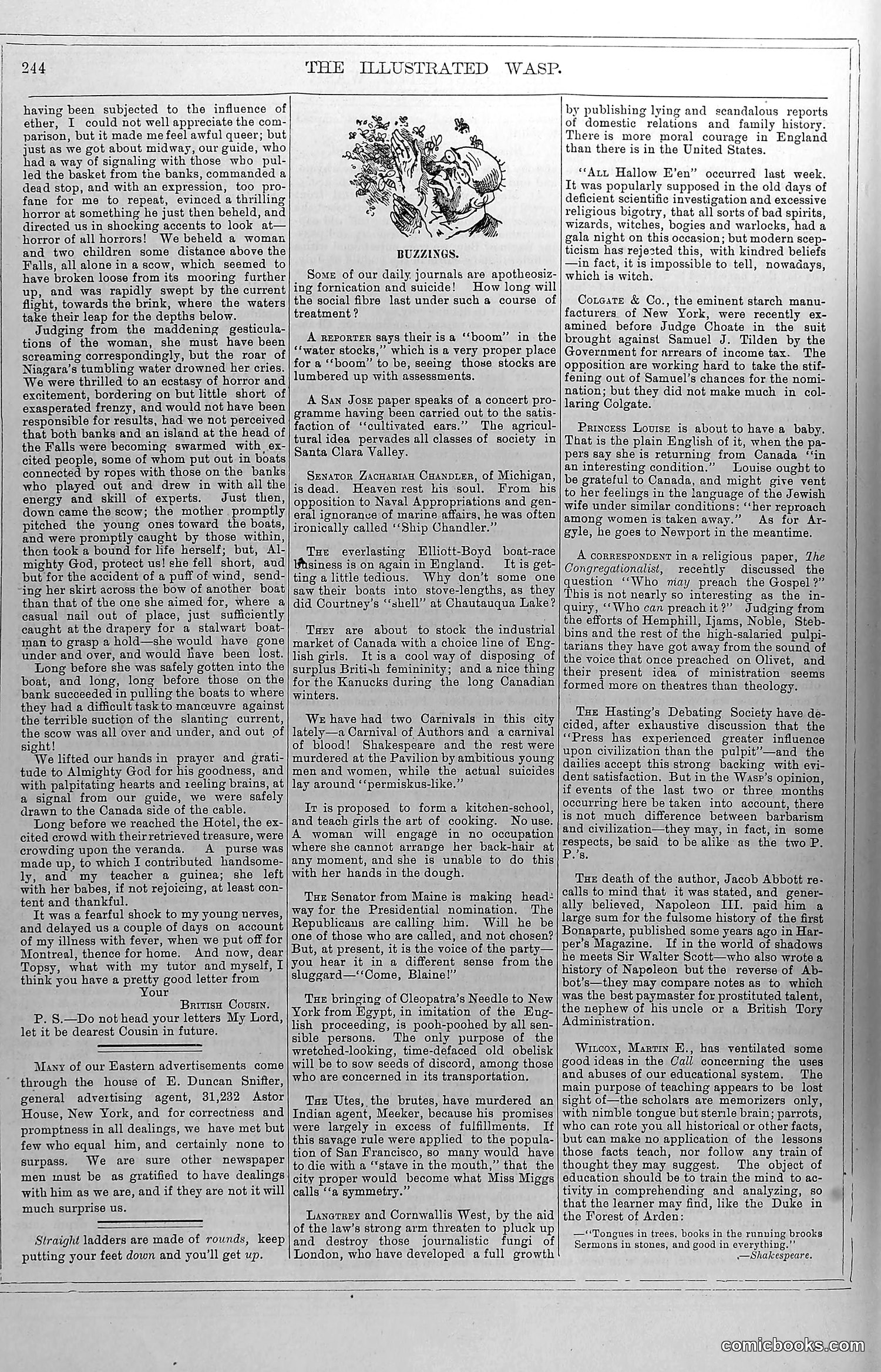
The page contains a sketch titled "BUZZINGS" showing what appears to be an anthropomorphized insect or creature with exaggerated features. Based on the surrounding text discussing various social and political matters of the era, this appears to be satirical commentary on contemporary issues. The text references multiple topics: "All Hallow E'en" supernatural scandals, scientific investigations, disputes over starch manufacturing (Colgate & Co.), Princess Louise's pregnancy, industrial development in Canada, and educational reform debates. The scattered commentary suggests this section compiled brief satirical observations on current events and public figures. However, without clearer visual identification of specific caricatured individuals or events, I cannot definitively explain the particular political targets or jokes intended by the main cartoon illustration itself.
This page is primarily an essay rather than a cartoon, occupying the full page with dense text. The piece argues that politeness is fundamentally dishonest—a mask obscuring reality. The author contends that society values artificial courtesy over truth-telling, creating a false veneer of civilization. The essay includes several period anecdotes mocking excessive politeness: euphemistic phrases used to avoid blunt speech, the absurdity of formal courtesies, and examples of how politeness enables deception. The satirical tone suggests *The Wasp* is criticizing Victorian social conventions as hypocritical and suffocating. The piece advocates for honest directness over refined artificiality, positioning this as a challenge to established social norms of the era.
This page from *The Wasp* is primarily **text-based content rather than political satire or editorial cartoons**. It consists of art criticism and venue reviews, not comic illustrations targeting specific figures or events. The main content includes: - **"Art Critic"** section discussing various San Francisco galleries and exhibitions - Reviews of entertainment venues like **Tivoli, Emma Luden, Fountain, Hush, and Pinafore** - Social commentary on performers and audiences - A section titled **"A Peculiar People"** discussing indigenous populations The small decorative header illustration appears to be generic ornamental artwork, not political caricature. There are no identifiable political figures being satirized on this page. The satire, if present, is mild social commentary on theater culture and audience behavior rather than pointed political critique.
This page is **not a political cartoon** but rather a **playscript** — specifically Act II of "Baruch Kowski, or Le Juif Polonais" (The Polish Jew), a three-act theatrical play adapted from French for *The Wasp* magazine by Mr. Salmi Morse. The script features characters including Michel (a wealthy Burgomaster), Jules (a Quartermaster), and various supporting roles. The dialogue concerns domestic and financial matters — Jules discusses his daughter's marriage prospects and financial arrangements. This appears to be **serialized entertainment content** rather than satire. The inclusion of a full theatrical script in a satirical magazine suggests *The Wasp* aimed to provide diverse content beyond political commentary, offering readers dramatic literature alongside its humor and social critique.
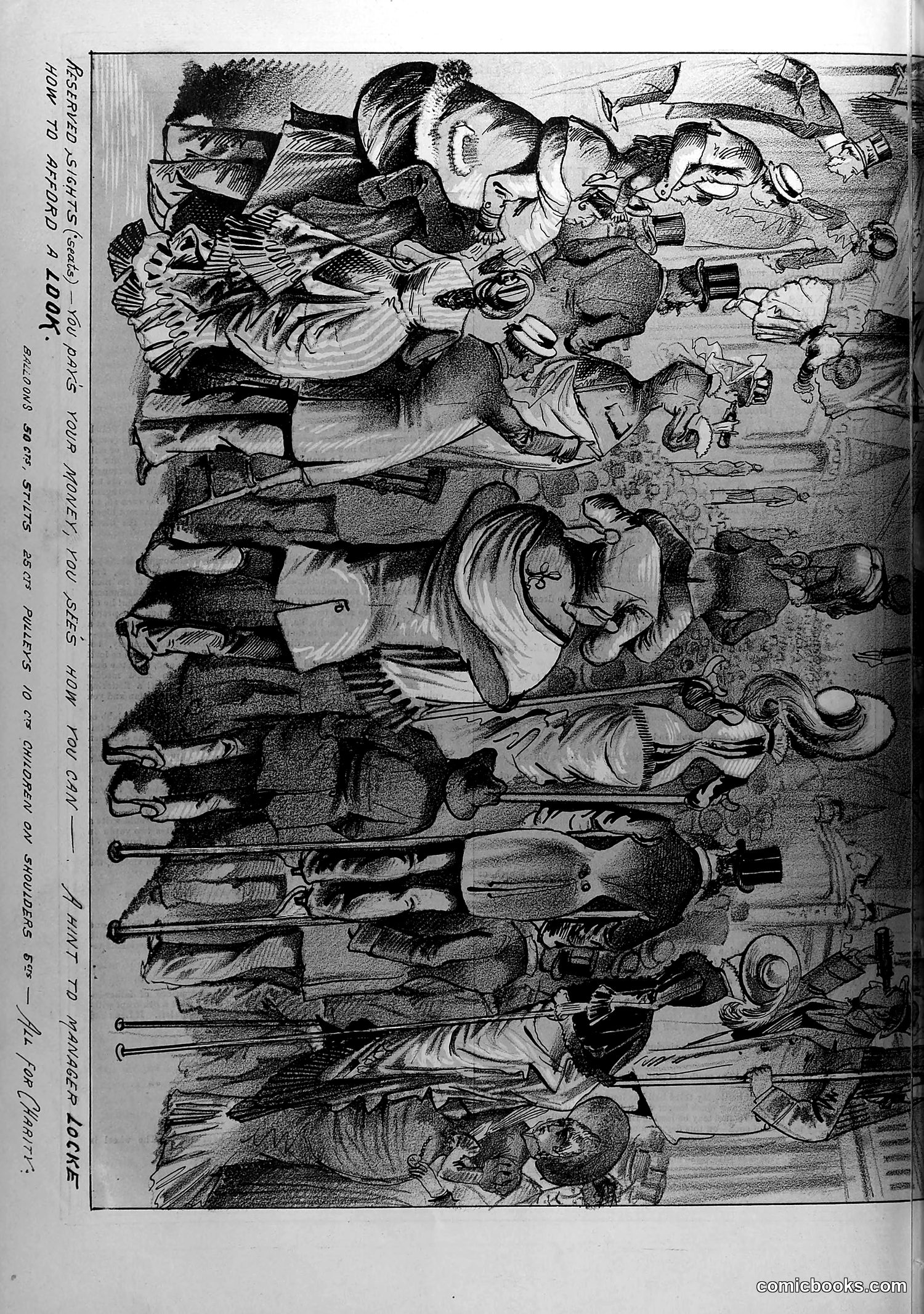
This page appears to be a satirical illustration, though the OCR text is largely illegible. The image shows a crowded scene of figures in 19th-century dress, drawn in a caricatured style typical of political satire. The composition suggests a gathering or procession of various social or political characters, though specific identities are difficult to determine without clearer text. The drawing style—with exaggerated features and detailed cross-hatching—is consistent with American satirical magazines of that era. The crowded arrangement and varied character types suggest social or political commentary on a specific event or group, but without readable text identifying the figures or context, I cannot reliably explain what particular scandal, political situation, or social phenomenon this cartoon addresses.
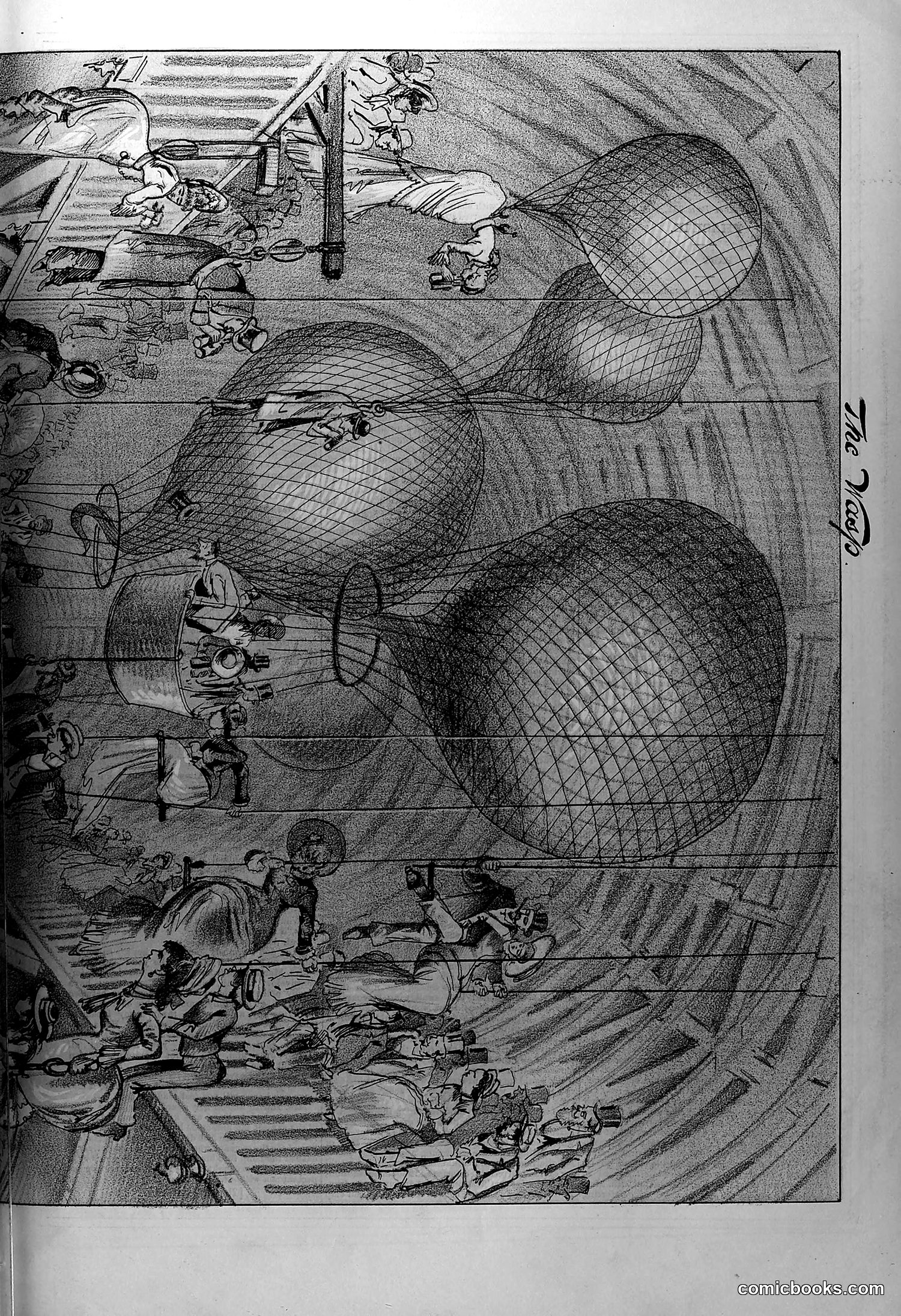
I can see this is a satirical cartoon from *The Wasp* magazine, but the image quality and orientation make it difficult to read the OCR text clearly or identify specific figures with confidence. The illustration shows what appears to be a scene with multiple human figures and large spherical objects with crosshatch shading, suggesting either balloons or domed structures. The artistic style is consistent with late 19th or early 20th-century American political cartooning. Without being able to reliably read the accompanying text or identify the specific caricatured figures, I cannot accurately explain the political or social references this cartoon makes. To provide accurate historical interpretation, I would need either clearer source material or additional context about the publication date and subject matter.
This page from *The Wasp* contains primarily text rather than illustrations—it's a serialized story titled "Phases of History Not Generally Given in Detail," written by Salmi Morse. The narrative appears to be a dramatic domestic tale focusing on a woman named Mrs. Martin and her struggles within marriage and poverty. The content describes Mrs. Martin's difficult circumstances: her husband's failures, their financial distress, and conflicts within their household. The writing employs melodramatic language typical of period fiction, chronicling her perseverance through hardship. This is a literary piece rather than political satire or cartooning. Without accompanying illustrations on this particular page, the satirical commentary—if any exists—remains embedded in the narrative itself rather than in visual form.
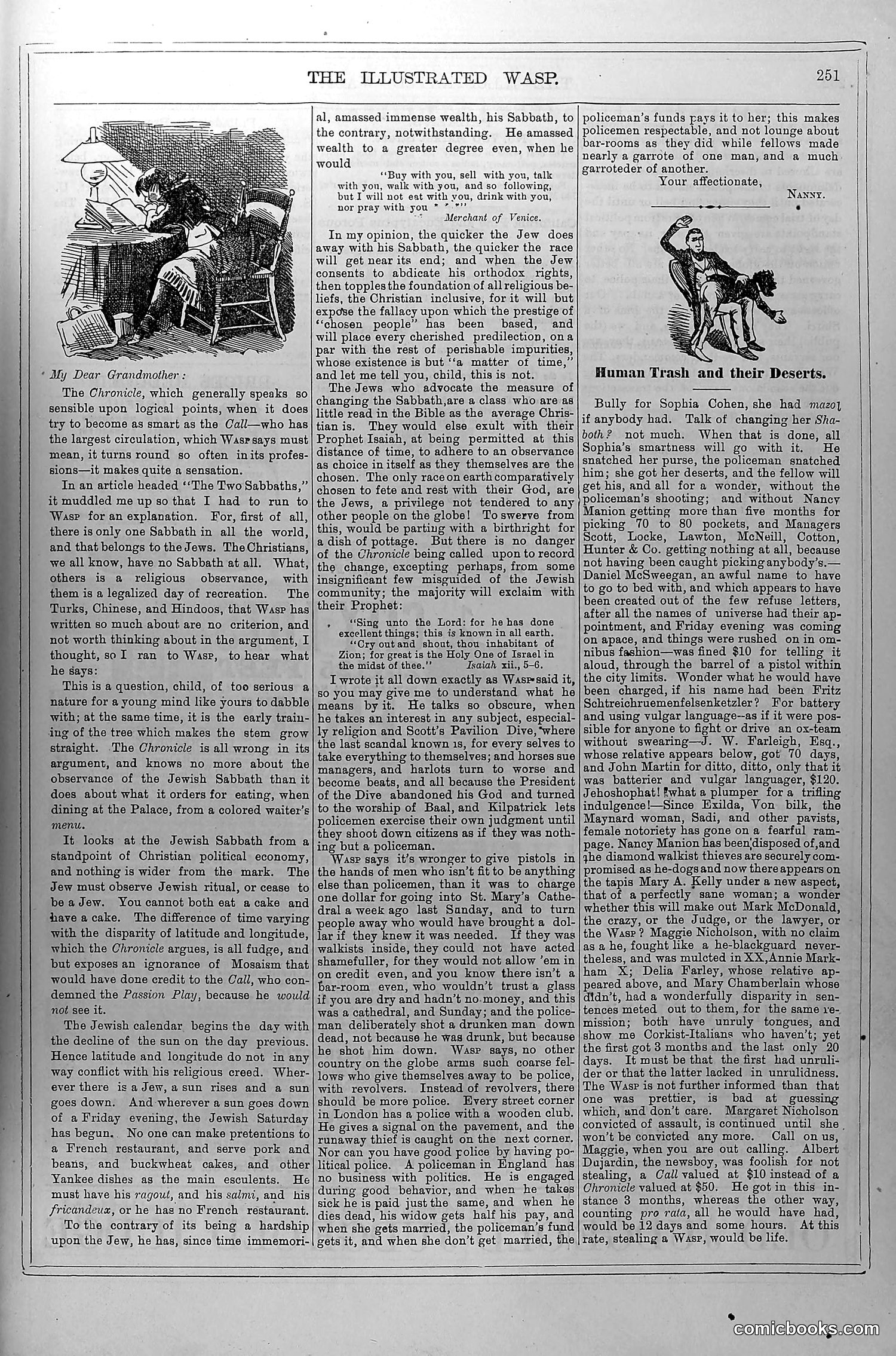
This page contains two distinct pieces: **Left illustration**: Shows a figure (likely a Jewish man, based on period caricature style) in conversation, illustrating the article "The Two Sabbaths" about religious observance practices. **Right illustration and article**: "Human Trash and their Deserts" discusses a character named Bully and Sophia Cohen. The text details various criminal activities—theft, assault, battery—and judicial outcomes. It appears to be a morality tale documenting criminal convictions and punishments. The magazine's satirical approach uses these stories to critique social behaviors and legal consequences, reflecting late 19th-century American attitudes toward crime, punishment, and marginalized communities. The tone is judgmental, presenting crime and its consequences as entertainment for readers.
This page is primarily **advertising and notices** rather than editorial cartoons or satire. The content includes: - **Local business advertisements** (Palmer's glove shop, California Pine and Eucalyptus Porous Plaster, dentists, tobacco) - **Real estate promotion** for Denver city lots offered "FREE" by the Denver Land Company - **Agent recruitment notices** for Bible sales and magazine subscriptions - **Product advertisements** (optical goods, tobacco brands like "Old Judge") The page reflects 1870s-era commercial practices, including aggressive land speculation marketing and testimonial-style endorsements disguised as editorial content. There are **no visible political cartoons or satirical commentary** on this particular page—it represents The Wasp's revenue model of mixing advertising with editorial content.
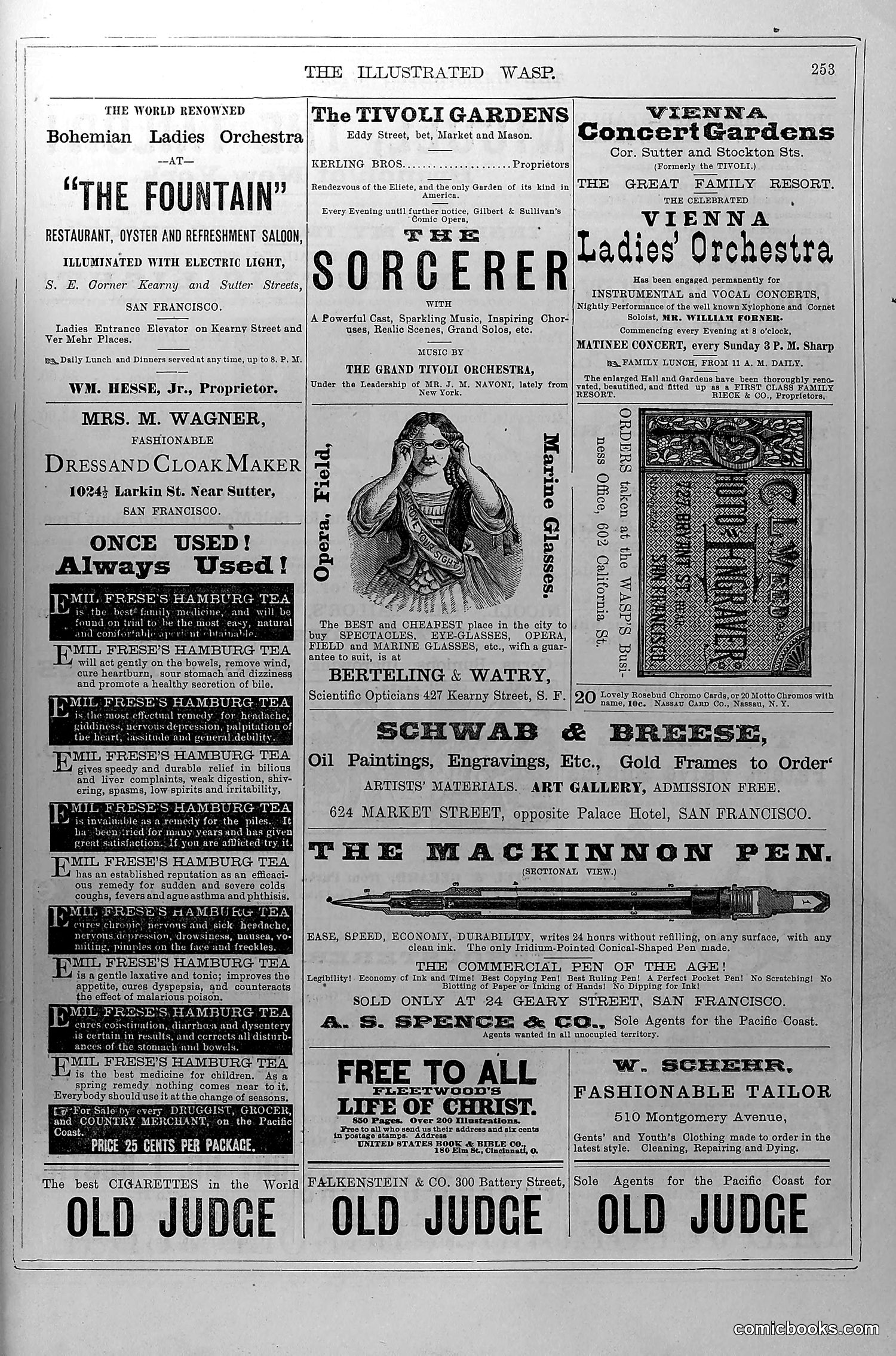
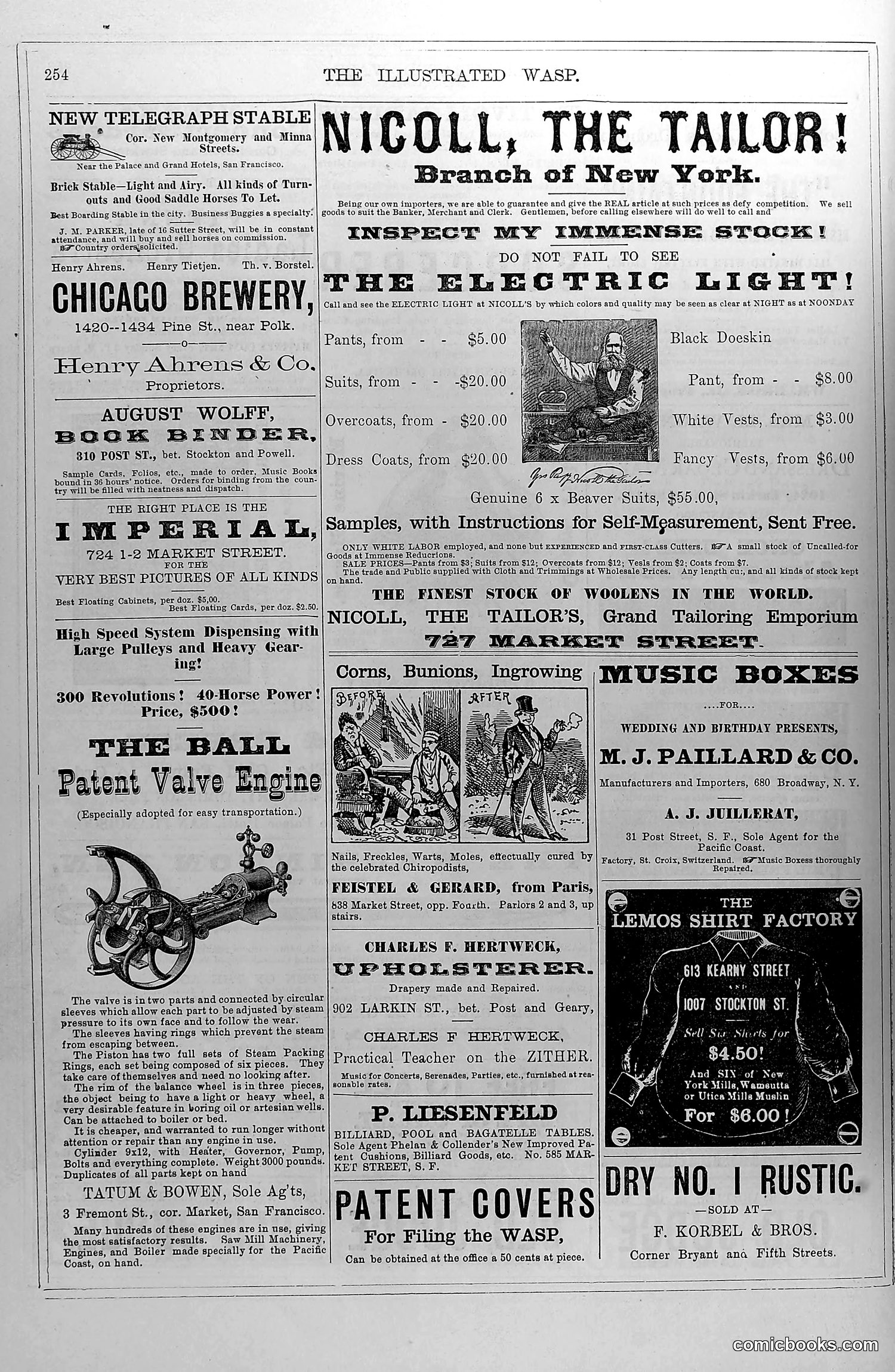
This page is **predominantly advertising** rather than political satire. The masthead "The Illustrated Wasp" appears at top, but the bulk consists of commercial notices for San Francisco Bay Area businesses circa late 1800s. The only illustrated content is a **medical/chiropody advertisement** featuring before-and-after images of foot treatment ("Corns, Bunions, Ingrowing" nails), advertising Dr. L. Gerhard's services. This is straightforward promotional material, not satire. The numerous ads cover tailoring (Nicoll), brewing, engines, bindery services, and music boxes. No political commentary or social satire is evident on this particular page—it represents the magazine's revenue model rather than its satirical content.
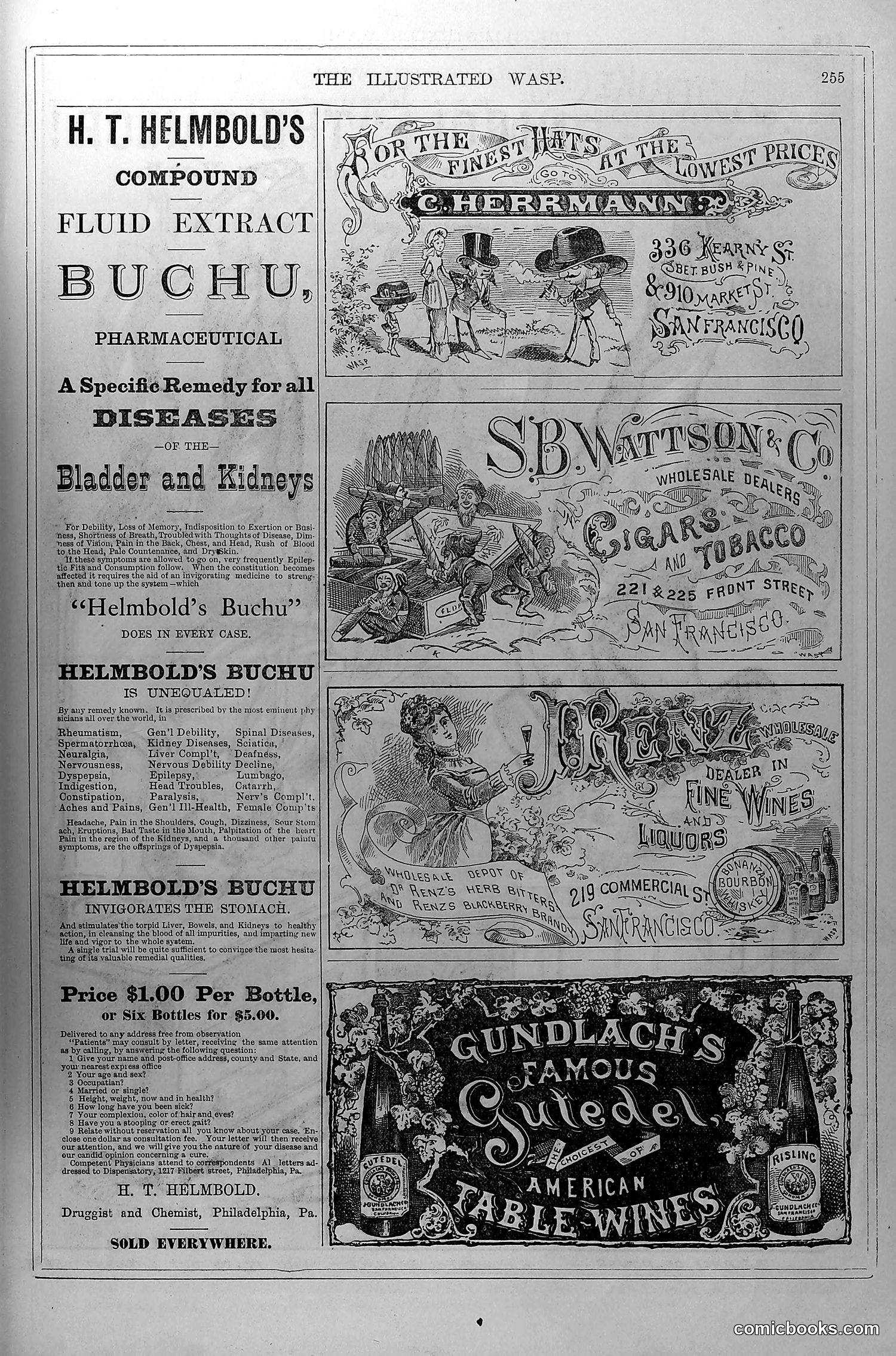
This page is primarily **advertising content**, not political satire. It consists of period advertisements for San Francisco businesses and patent medicines typical of late 19th-century publications. The main advertisement (left) promotes **Helmbold's Buchu**, a pharmaceutical "remedy" claiming to treat bladder and kidney diseases. Such patent medicines were common and often made exaggerated health claims without scientific basis—a frequent target of later consumer protection movements. The remaining space features ads for legitimate San Francisco businesses: Chiedermann & Co. (general merchandise), S.B. Wattson & Co. (cigars/tobacco), Peppel (wines/liquors), and Gundlach's table wines. **No political figures or satire are present** on this particular page. It represents standard commercial content typical of 19th-century magazines, which relied heavily on advertising revenue.
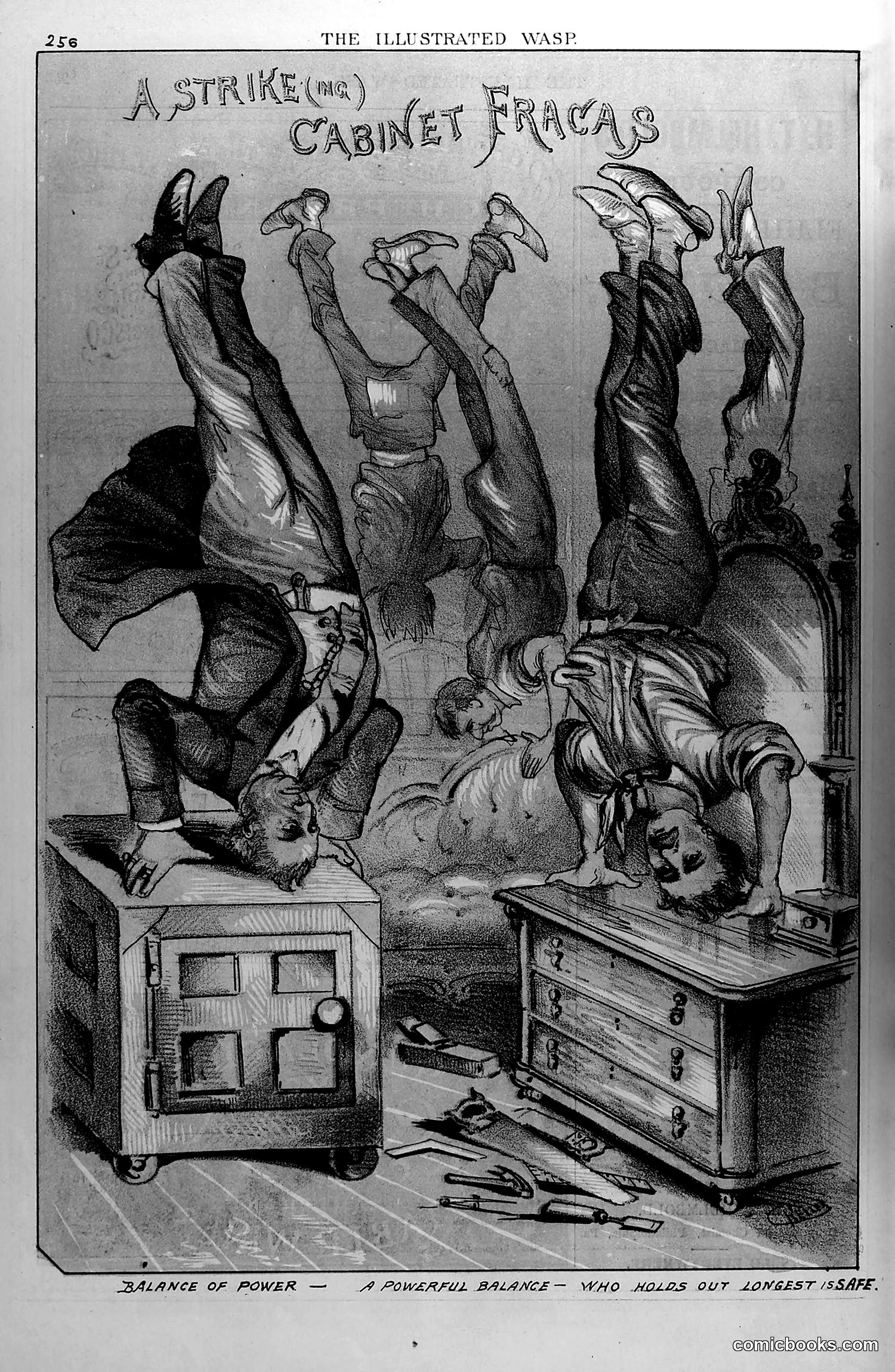
This political cartoon satirizes conflict within a government cabinet, depicting politicians engaged in chaotic physical struggle. The title's wordplay on "strike" (labor action vs. literal striking) frames cabinet members as laborers in internal conflict. The cartoon shows figures performing acrobatic contortions while holding furniture and tools, suggesting governmental instability and loss of control. The caption "Balance of Power—A Powerful Balance—Who Holds Out Longest/Safest" implies the cartoon critiques how political leaders maintain positions through power struggles rather than governing effectively. Without specific attribution or dating, the exact historical moment remains unclear, but the imagery mocks cabinet dysfunction and the precarious nature of political alliances. The chaotic composition emphasizes disorder and incompetence in government leadership.

I can see this is a test/calibration page for document scanning or reproduction, not actual editorial content from *The Wasp* magazine. The page contains: - A grayscale reference chart on the left (showing various gray tones for print quality testing) - A ruler/scale in the center (marked 6-11 inches) - A measurement scale at the bottom This appears to be a technical documentation page used to verify proper image capture, resolution, and tonal reproduction when digitizing archival materials. There is no cartoon, political commentary, or satirical content visible—just calibration tools used in the archival/digitization process itself.