
A complete issue · 18 pages · 1879
The Wasp — August 30, 1879

I can see this is a reference/calibration page from The Wasp magazine, featuring Oregon Rule Co. measurement scales and a grayscale color checker chart - tools used in photographic reproduction and archival documentation rather than an actual cartoon or satirical content. The page appears to be a technical aid used during the scanning or printing process of historical materials, showing standard measurement gradations (0-5 inches) and a grid of gray tones for ensuring accurate image reproduction. This is not editorial content but rather a documentary/archival element. Without visible cartoon imagery, satirical figures, or readable OCR text providing historical context, I cannot identify specific political or social references that would explain the satire to modern readers.
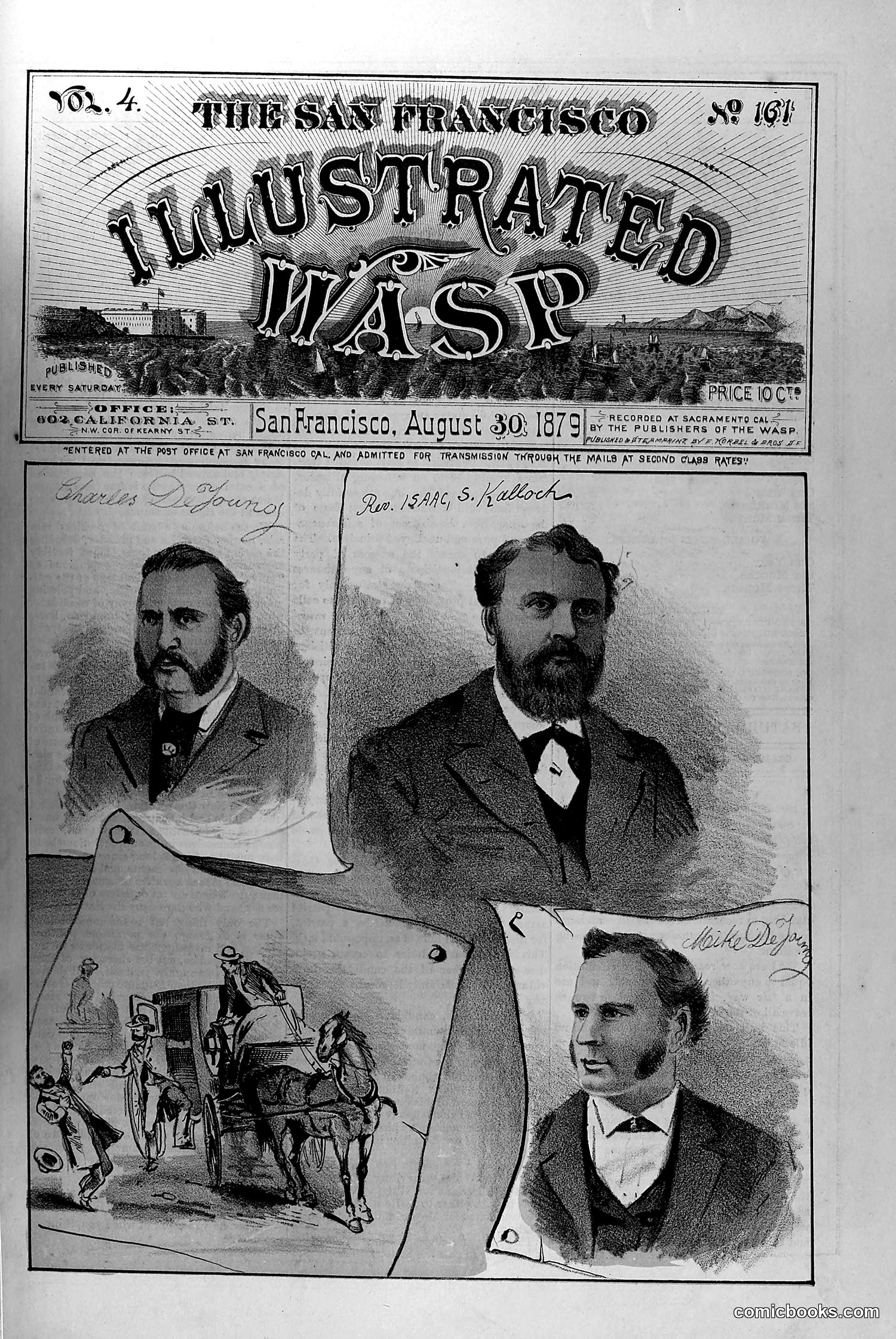
This page features portrait caricatures of three men alongside a sketch of a horse-drawn carriage scene. Based on the handwritten labels visible in the image, the figures appear to be identified as "Charles DeYoung," "Rev. Isaac S. Kalloch," and "Alibe De Jr." (though the third name is unclear). The carriage vignette likely references a specific incident involving these individuals. Given the 1879 date and San Francisco context, this probably relates to a contemporary local scandal or feud. Without clearer text or additional context, the specific satirical point remains unclear, though the juxtaposition of portraits with the dramatic carriage scene suggests ridicule of some public controversy or conflict between these prominent San Francisco figures.
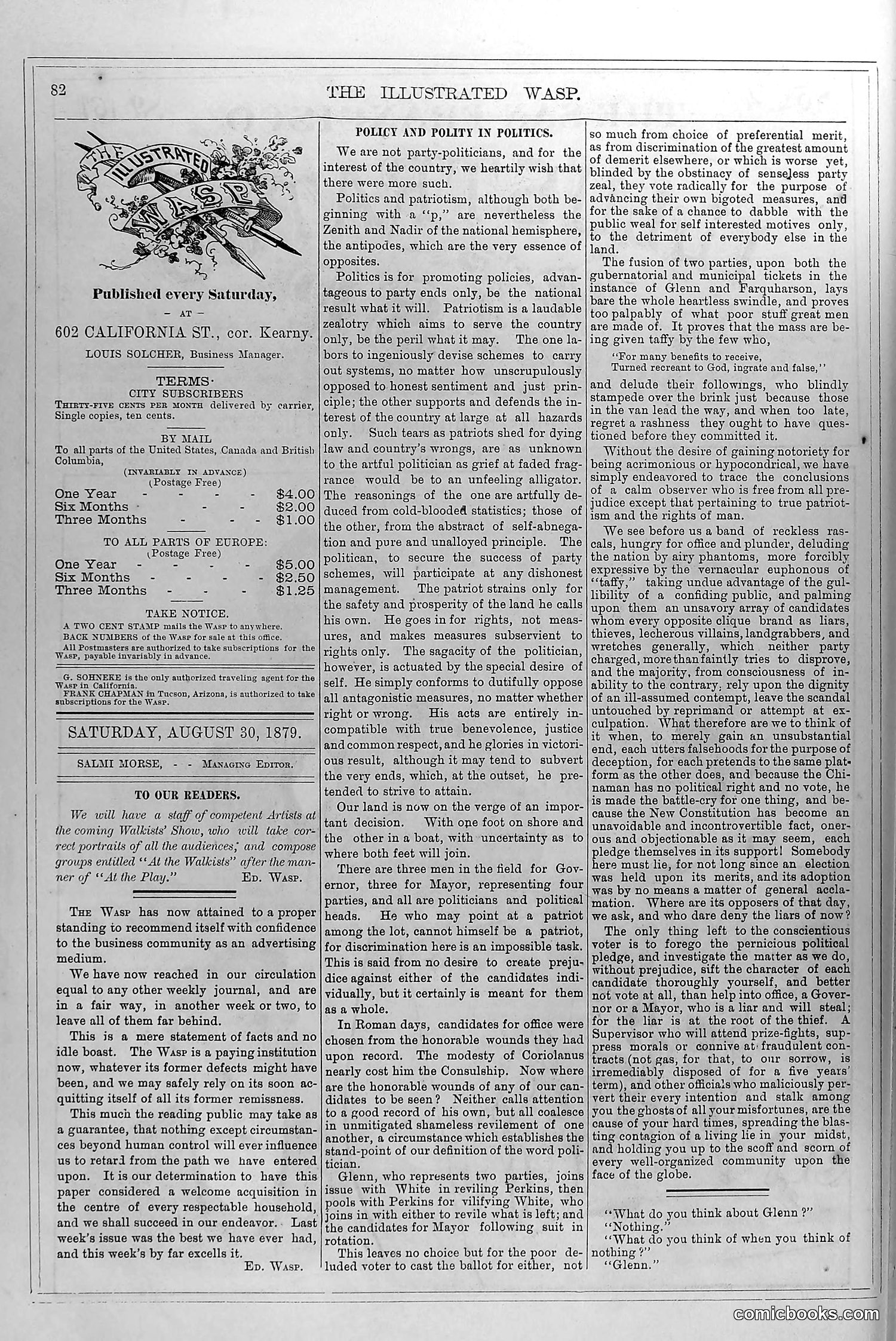
The page is primarily editorial content rather than cartoon. The masthead illustration shows the magazine's wasp logo/mascot. The main article, "Policy and Polity in Politics," discusses California's upcoming gubernatorial election. The text references two candidates: **Glenn** and **Farquharson**, debating which represents better governance for the state. The satire targets the hypocrisy of both major parties and their politicians, who claim patriotism while pursuing self-interest. The editorial argues voters should judge candidates on merit rather than party loyalty. A closing dialogue humorously captures voter apathy: when asked about Glenn, a voter replies "Nothing," suggesting public indifference to electoral choices despite the stakes involved.
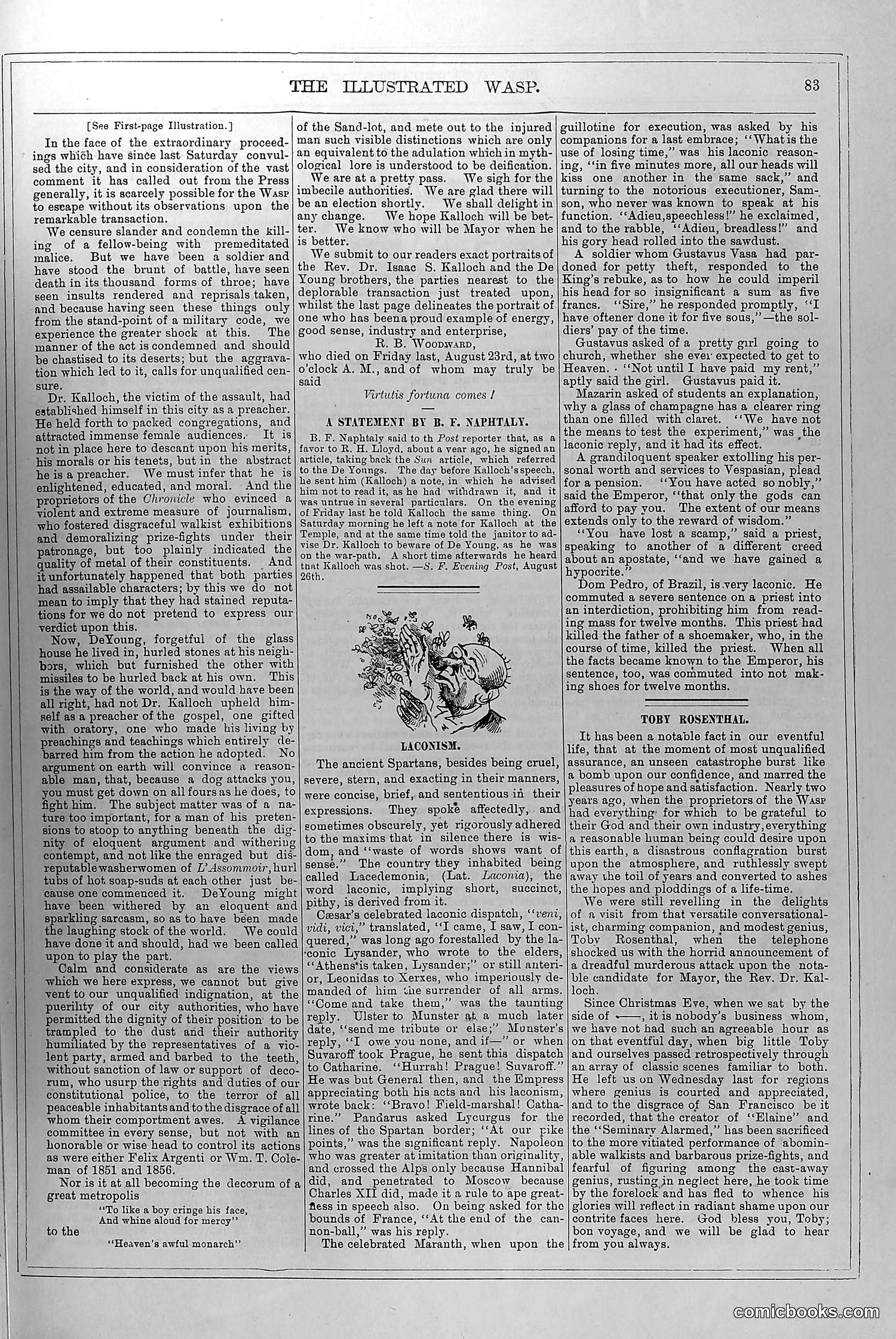
This page consists primarily of **text articles and commentary** rather than political cartoons. The main content includes: 1. **Editorial response** to a recent assault on Dr. Kallosch (the victim), condemning both the violence and the press coverage, particularly criticizing the *Chronicle* newspaper's sensationalism. 2. **A statement by B.F. Naphaly** defending the *Post*'s coverage of an incident involving Isaac S. Kallosch and his brothers. 3. **"Laconiism"** — a brief satirical piece mocking the verbose, flowery language of ancient Spartan rhetoric. 4. **"Toby Rosenthal"** — commentary praising an artist's work. The page contains **one small illustration** (appears to show a cherub or figure) but lacks the prominent political cartoons typical of satirical magazines. The focus is editorial discussion of contemporary San Francisco events and press criticism.
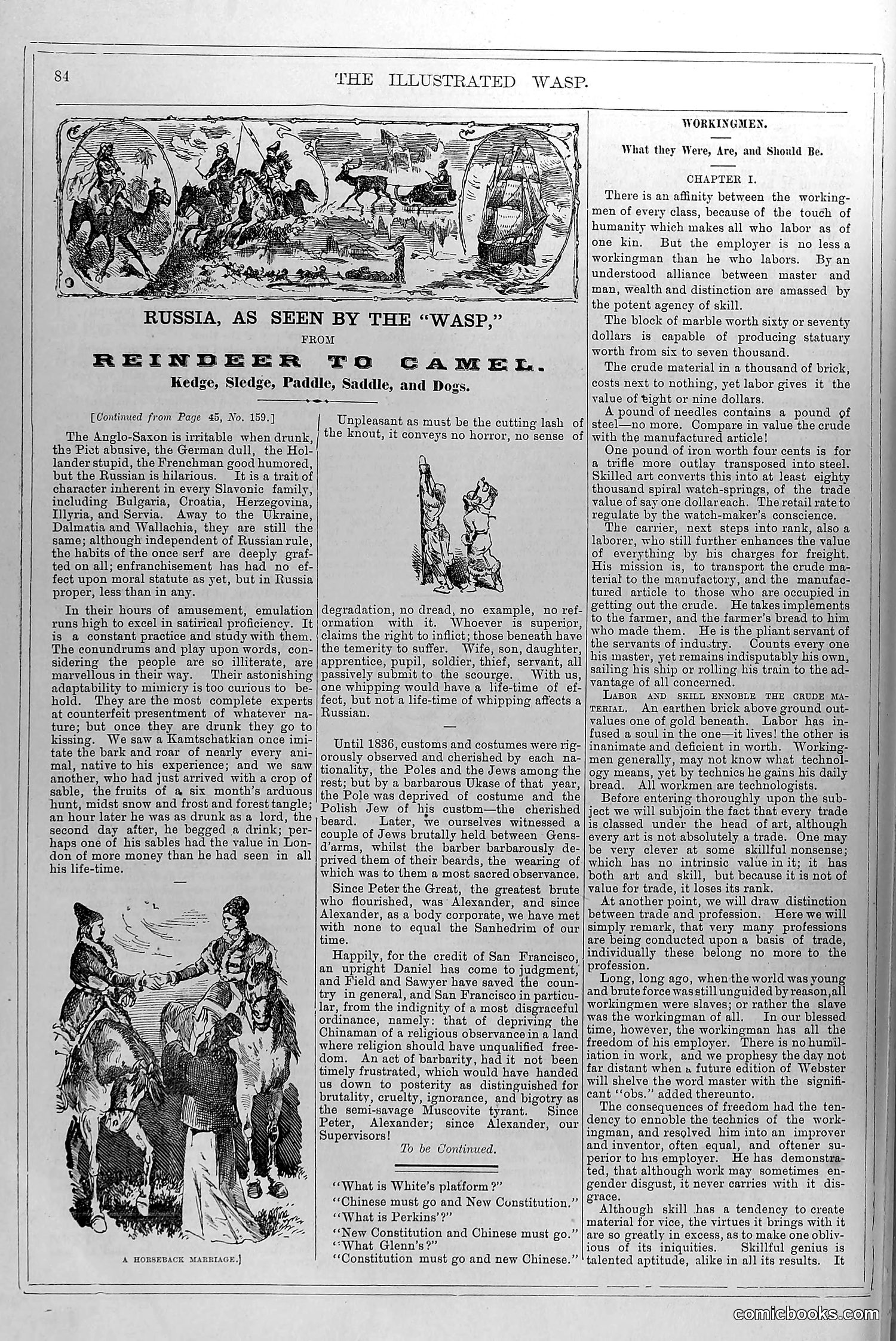
**Main Content:** This page features "Russia, As Seen by the 'Wasp'" - a satirical illustrated article about Russian society, accompanied by two wood-cut illustrations showing Russian figures in traditional dress. **Political Context:** The text critiques Russian character and society, describing Russians as "hilarious," prone to exaggeration, and emotionally volatile. It contrasts Russian behavior with Western (particularly Anglo-Saxon) restraint. **The Cartoons:** Two illustrations depict Russian scenes—one appears to show a marketplace or social gathering, the other "A Horseback Marriage," suggesting commentary on Russian customs and social practices. **Purpose:** This is xenophobic 19th-century satire mocking Russian cultural differences as inferior or ridiculous to American/Anglo standards. The accompanying article "Workingmen" discusses labor and class, suggesting the magazine targeted working-class American readers.
This page is primarily **text-based editorial content** rather than political cartoons. The main article, "The Wonders of the Fair Explained to Our Wondering Fair," discusses the **brilliant illumination at the Mechanics' Pavilion**, likely at a San Francisco fair or exposition. The article explains that the light comes from **gas, candles, and lamps** burning carbon, which heats air and produces light through chemical reactions. It's written in a somewhat condescending, explanatory tone—treating readers as if they need basic science education. The page also includes editorial commentary on labor issues, child welfare, and social reform, characteristic of The Wasp's satirical approach to contemporary social problems. **No specific political figures or caricatures are clearly identifiable** in the visible text or layout of this particular page.
This page contains theatrical criticism and social commentary rather than political cartoons. The main article discusses Shakespeare's *Errors* in performance, critiquing how contemporary actors handle the play's rapid transitions and comedic timing. The writer praises the "talented artists" performing it while noting that proper theatrical execution requires skilled delivery. Below that is an article titled "Stung To Death by Hornets," describing an eagle reporter's visit to a naturalist's home. The piece uses this anecdote to make a broader point about societal indifference to suffering—suggesting that people ignore injustice just as the naturalist dismisses the reporter's hornet sting as trivial. The page concludes with educational and moral commentary, typical of *The Wasp's* satirical approach to American society and institutions.
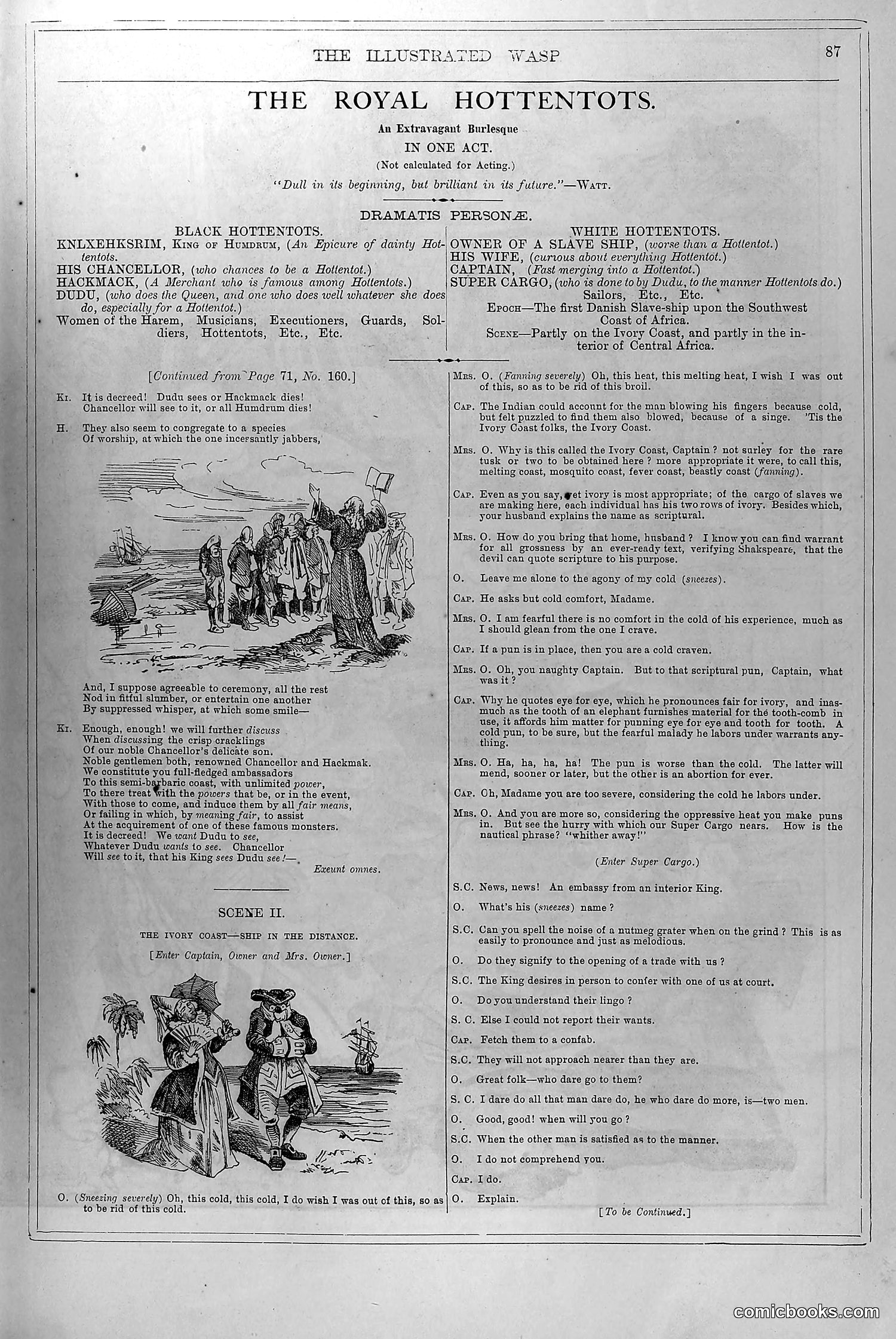
This page presents a Victorian-era theatrical satire subtitled "An Extravagant Burlesque." The play mocks European colonial attitudes by featuring caricatured "Black Hottentots" and "White Hottentots" alongside a slave ship narrative. The satire appears to ridicule both colonial exploitation and European pretension. The dialogue suggests mockery of upper-class European characters encountering African trade and slavery. References to the "Ivory Coast" and slave commerce indicate criticism of contemporary colonial enterprises. The crude racial caricatures and minstrel-style humor reflect Victorian theatrical conventions, though the text's emphasis on European hypocrisy suggests the satire targets wealthy colonizers more than the colonized people themselves—though modern readers will recognize the deeply offensive racial stereotyping throughout.
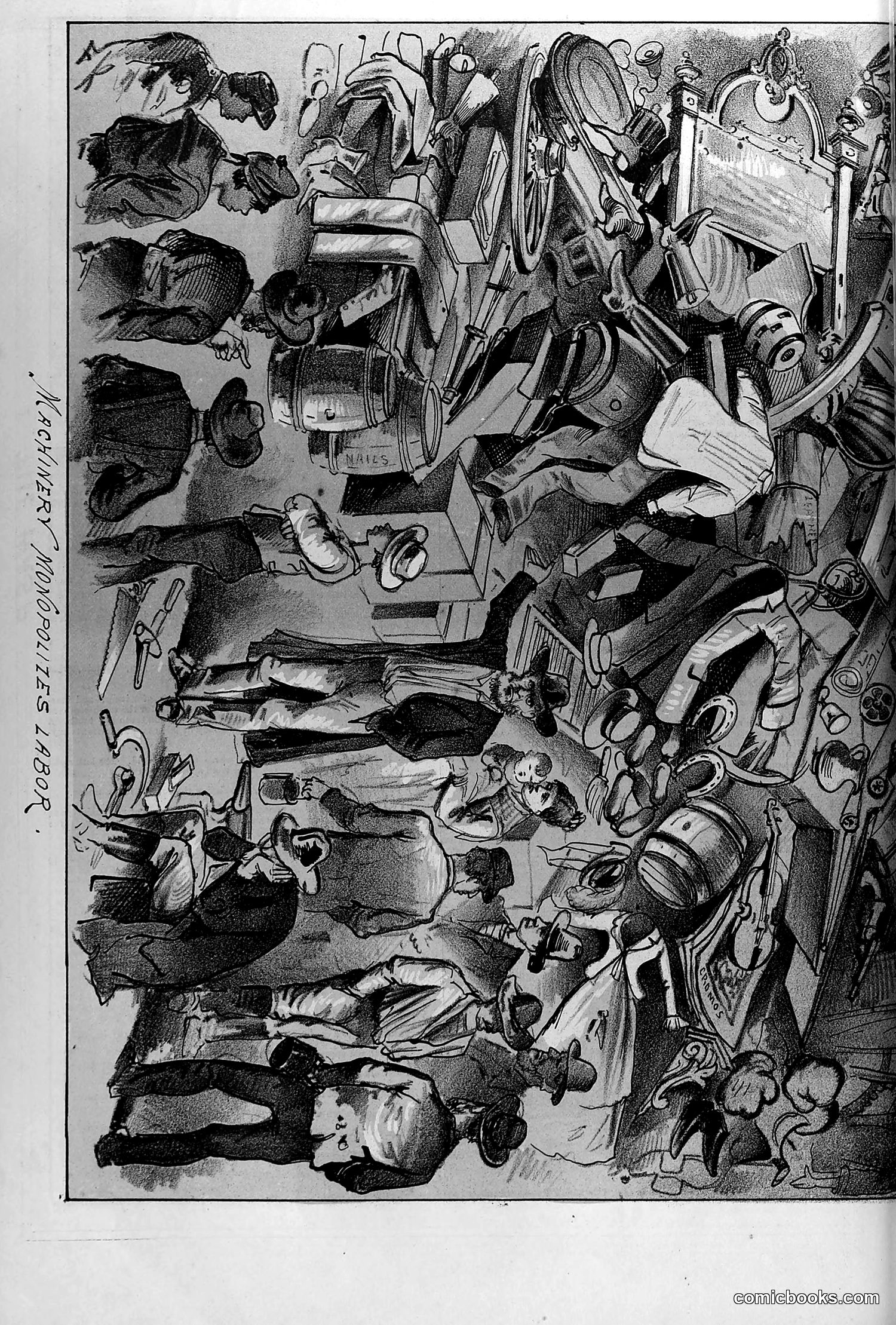
This appears to be a densely packed satirical illustration depicting a chaotic scene with multiple figures, objects, and activities arranged in a crowded composition. The image shows various people in different poses—some reclining, some standing—surrounded by numerous household items, furniture, and miscellaneous objects scattered throughout. The text on the left margin reads "1897 SEPTEMBER" and what appears to be a publication title, indicating this is from The Wasp magazine's September 1897 issue. However, without clearer identification of specific figures or visible captions within the cartoon itself, I cannot definitively explain which political figures or social events are being satirized. The crowded, chaotic arrangement suggests commentary on disorder, excess, or social confusion of the period, but the specific targets remain unclear from this image alone.
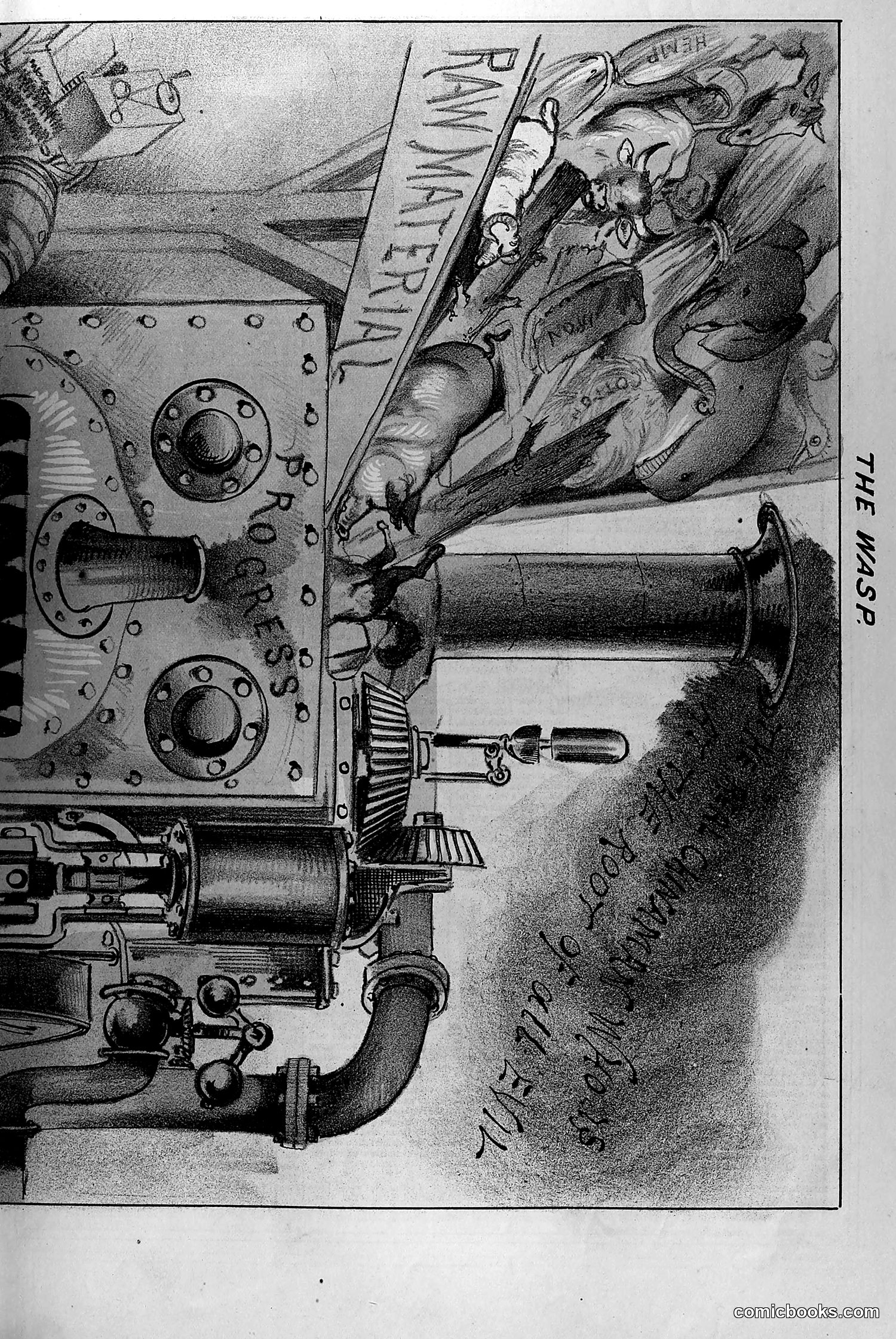
This page shows a technical diagram labeled "THE WASP" - appearing to be a mechanical contraption with gears, cylinders, and various industrial components. The upper portion depicts what looks like figures operating or being processed through the machinery. The satirical point seems to involve the magazine itself as a "machine" - likely commenting on The Wasp's role as a satirical publication that processes or "grinds up" its targets (probably politicians or public figures of the era). The mechanical imagery suggests the systematic, relentless nature of satirical commentary. However, without clearer identification of the specific figures shown or visible text indicating which contemporary political figures or events are referenced, the precise satirical target remains unclear from this image alone.
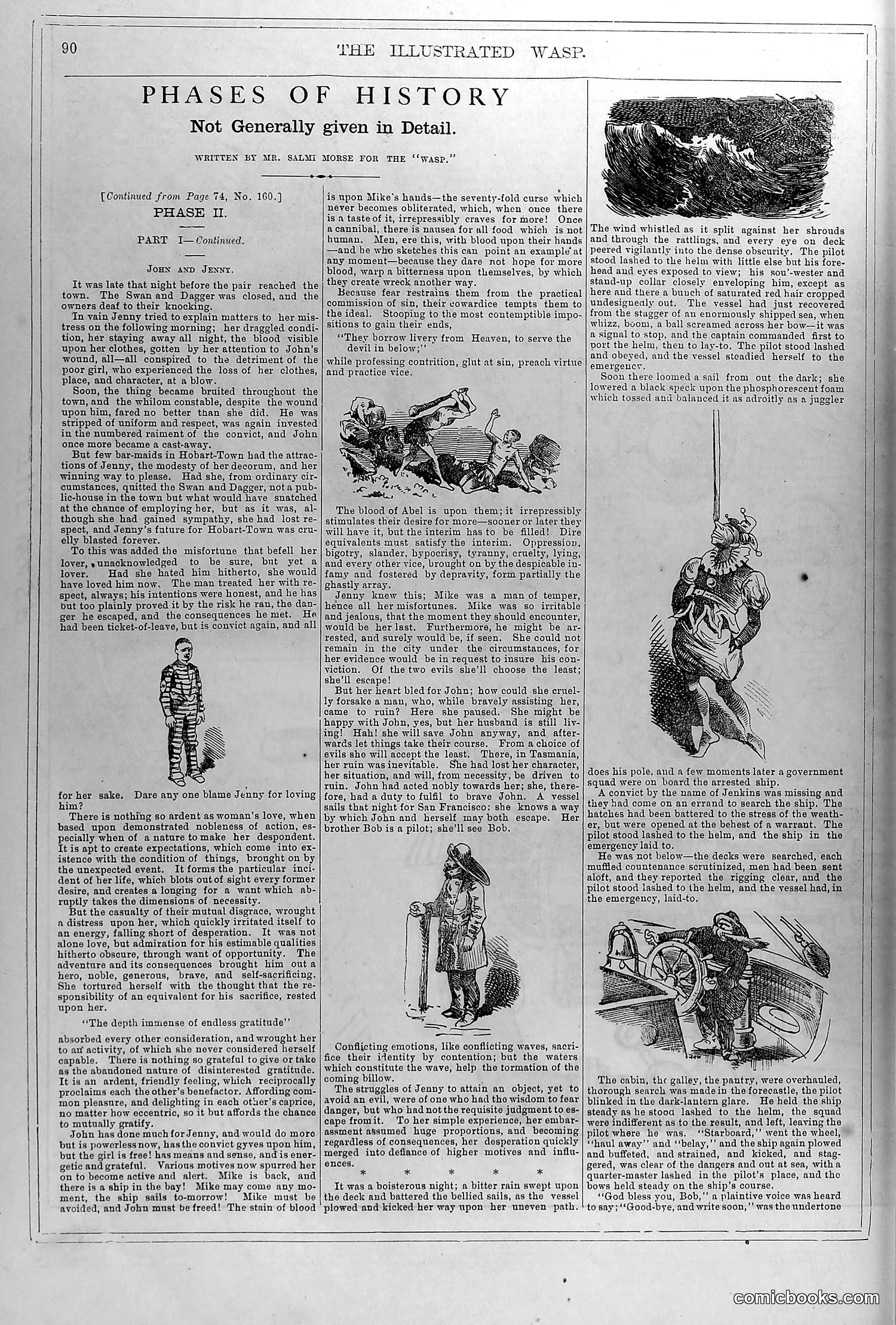
This page continues a serialized story titled "John and Jenny" by Mr. Salmi Morse. The narrative describes a dramatic conflict involving Jenny, a poor girl who has lost her clothing and character through hardship, and John, a convict seeking redemption. The accompanying illustrations depict scenes of desperation and struggle—figures in distress, people in confrontation, and what appears to be maritime scenes involving a ship. The text emphasizes themes of moral degradation, love, sacrifice, and the consequences of poverty and crime in 19th-century urban society. Rather than political satire, this appears to be serialized melodramatic fiction exploring social inequality and personal redemption—typical Wasp content mixing entertainment with implicit social commentary about class and morality.
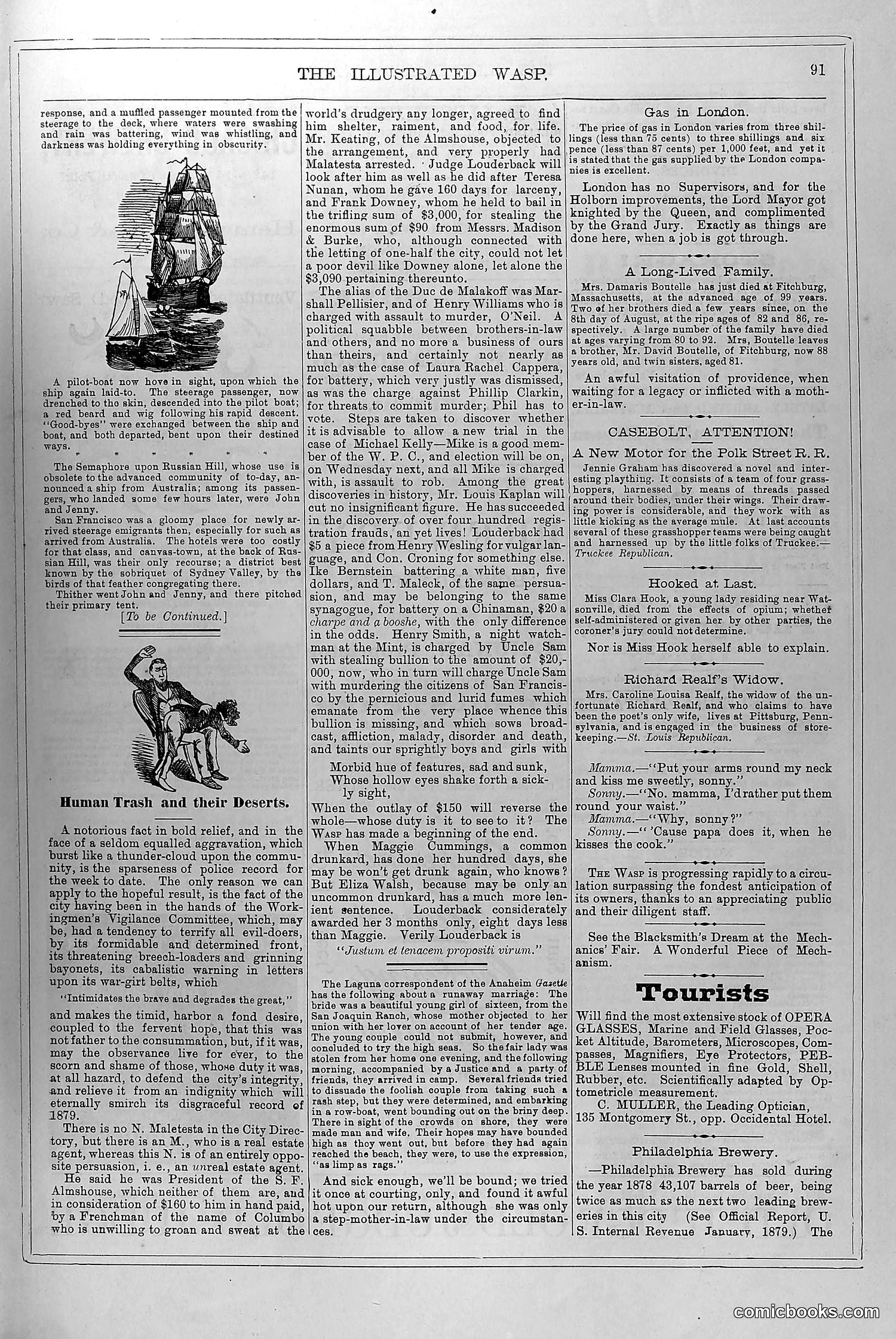
This page is primarily **text-based content with minimal political cartoons**. The visible illustrations are: 1. **A pilot-boat scene** (top): Shows a ship with sailors, illustrating a narrative about maritime activities and rescue operations. 2. **A portrait sketch** (bottom left): Appears to accompany discussion of "Human Trash and their Deserts." The page contains several **satirical news items** mocking contemporary figures and scandals, including references to criminal trials, police record controversies, and social ironies. The writing targets specific individuals involved in theft, murder charges, and moral hypocrisy within San Francisco society. The tone is characteristic of *The Wasp*'s style: **sharp social criticism delivered through anecdotes and brief commentaries** rather than visual cartoons, exposing corruption and dubious behavior among the city's notable residents.
This page is primarily **advertising**, not editorial or satirical content. It consists of commercial advertisements for San Francisco-area businesses from what appears to be the late 19th century, including: - Breweries (Chicago Brewery, Hibernia Brewery) - Photography studios - Stables and transportation services - Music boxes - A shirt factory - Tobacco products The only potentially satirical element is repeated branding for "Old Judge" tobacco at the bottom, but this appears to be standard commercial advertising rather than political commentary. **The page contains no identifiable political cartoons, caricatures, or satirical commentary** that would require historical context to explain. It's a standard advertising section of a magazine.
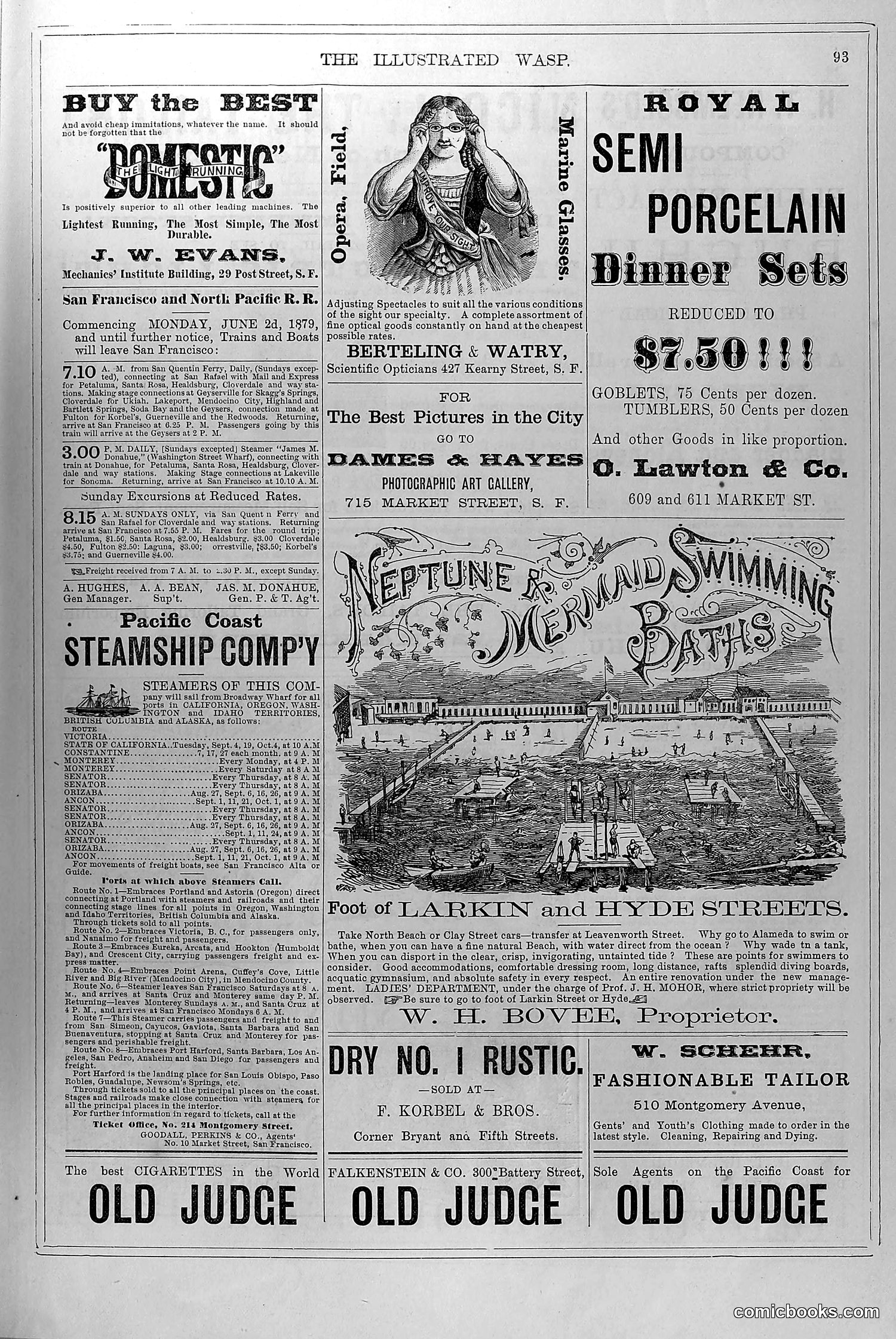
This is primarily an **advertising page** from The Wasp magazine (page 93), dated around June 1879 based on visible railroad schedules. The page contains **no significant political cartoons or satire**. Instead, it features numerous commercial advertisements for San Francisco-area businesses, including: - Domotic sewing machines - Pacific Coast Steamship Company routes - Neptune Mermaid Swimming Baths (illustrated) - O. Lawton & Co. porcelain dinner sets - Dry cleaning and tailoring services - Old Judge cigarettes The single illustrated element—the **Neptune Mermaid Swimming Baths advertisement**—is a decorative commercial drawing rather than editorial satire, depicting a seaside bathing facility at the foot of Larkin and Hyde Streets. This page represents The Wasp's revenue model: advertising subsidized the satirical content found elsewhere in the publication.
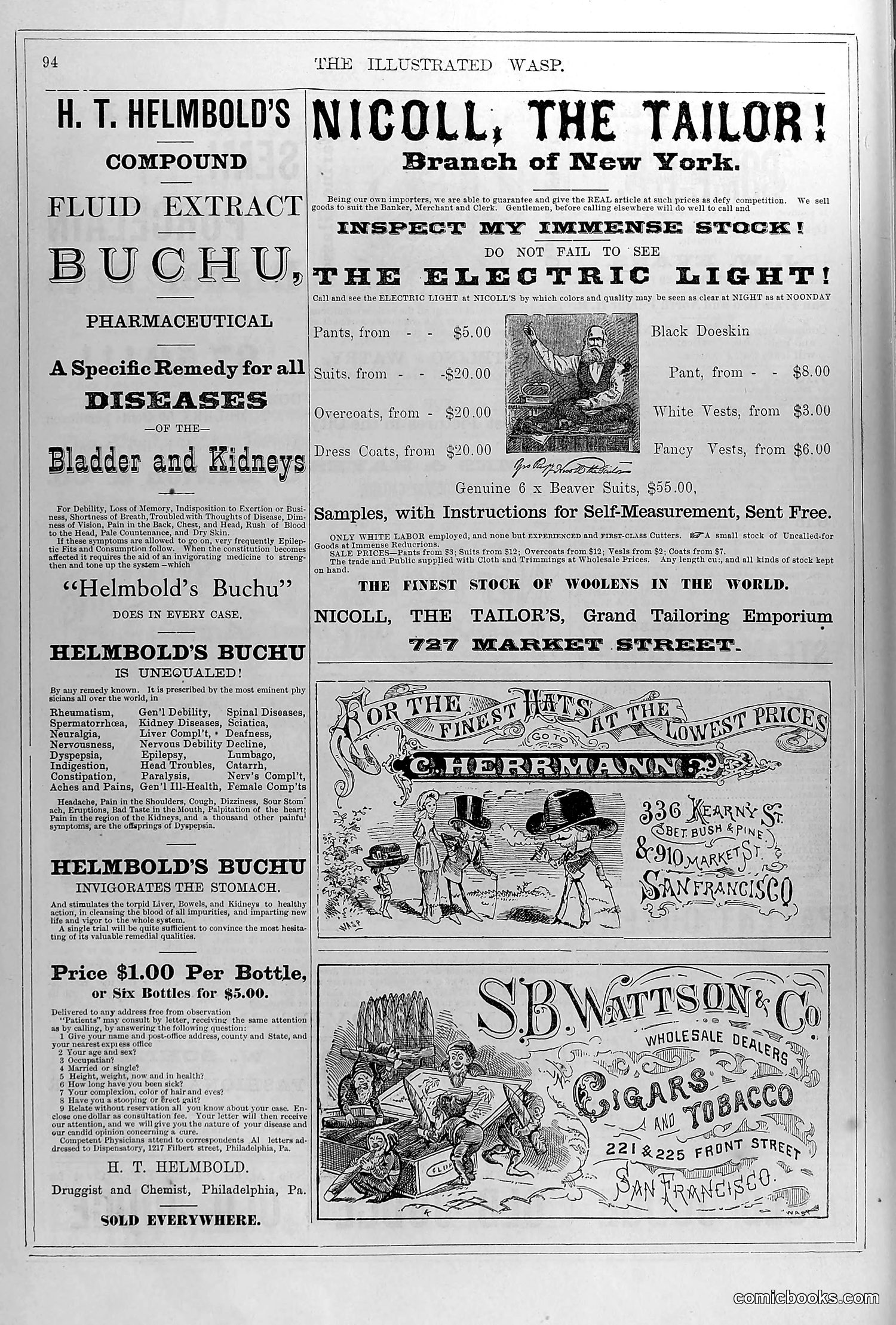
This page is primarily **advertising content** rather than political satire. It features multiple Victorian-era advertisements including: - **Helmhold's Buchu**: A patent medicine claiming to cure bladder, kidney, and various other diseases - **Nicoll, the Tailor**: A San Francisco clothier advertising suits, pants, and overcoats with prices ($5-$55) - **C. Herrmann**: A hat vendor in San Francisco - **S.B. Wattson & Co**: Wholesale cigar and tobacco dealers The decorative illustrations accompanying these ads are generic commercial artwork typical of the period—not satirical cartoons. The page demonstrates how 19th-century magazines funded operations through advertisements, many promoting dubious patent medicines that were common before FDA regulation.
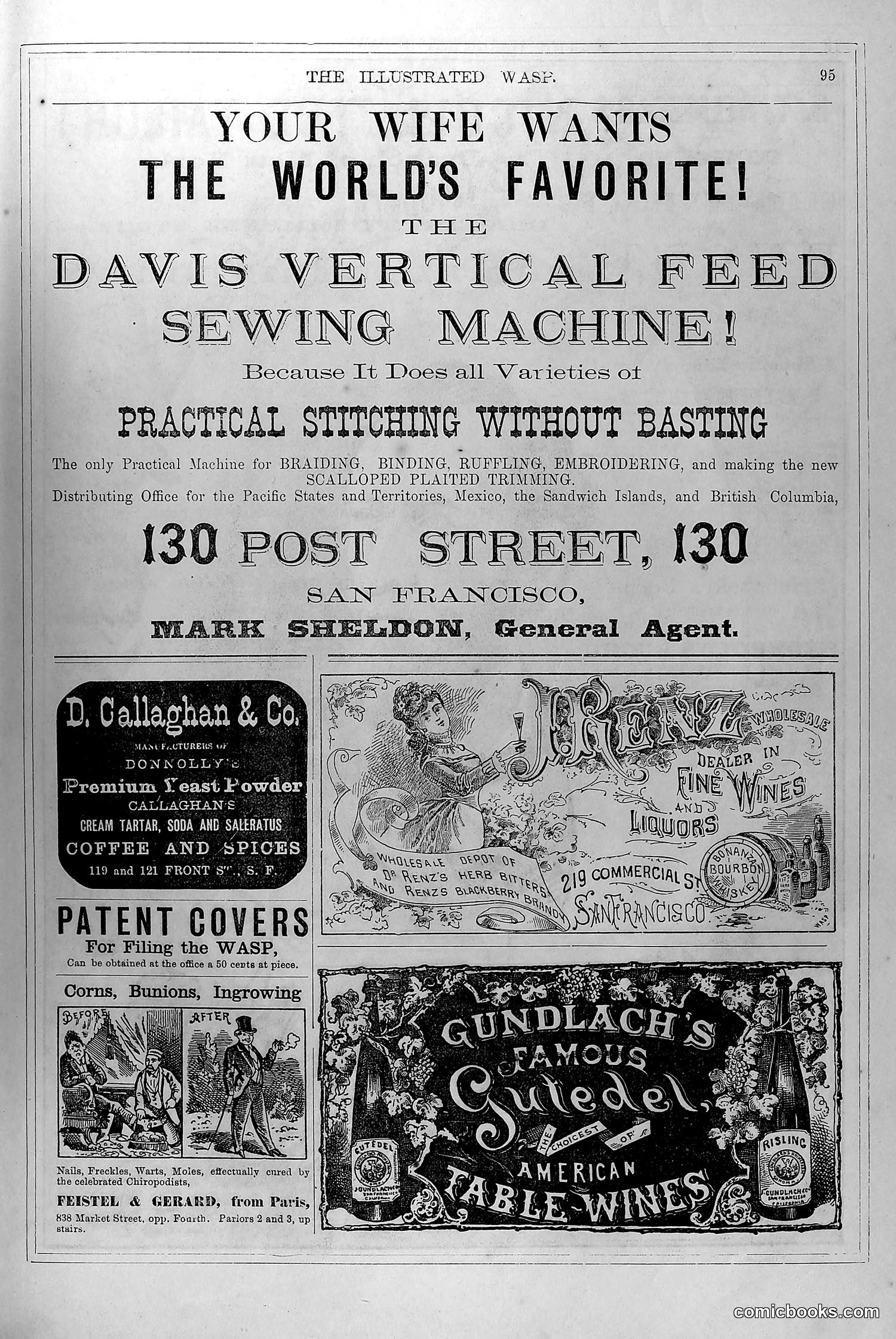
This page is primarily **advertising content**, not political satire. It contains a large advertisement for the Davis Vertical Feed Sewing Machine (top half), followed by smaller period advertisements for various products: D. Callaghan & Co.'s Premium Yeast Powder and spices, patent covers for wasp stings, a chiropodist service (Feistel & Gerard), and liquor/wine dealers (Jurenz and Gundlach's Sauterne). The only potentially satirical element is the headline "YOUR WIFE WANTS THE WORLD'S FAVORITE!" — a common advertising trope of the era that modern readers might find patronizing for its gendered marketing assumption. However, this appears to be genuine advertising copy rather than deliberate satire. The page reflects typical late-19th-century magazine layout mixing editorial content with revenue-generating ads.
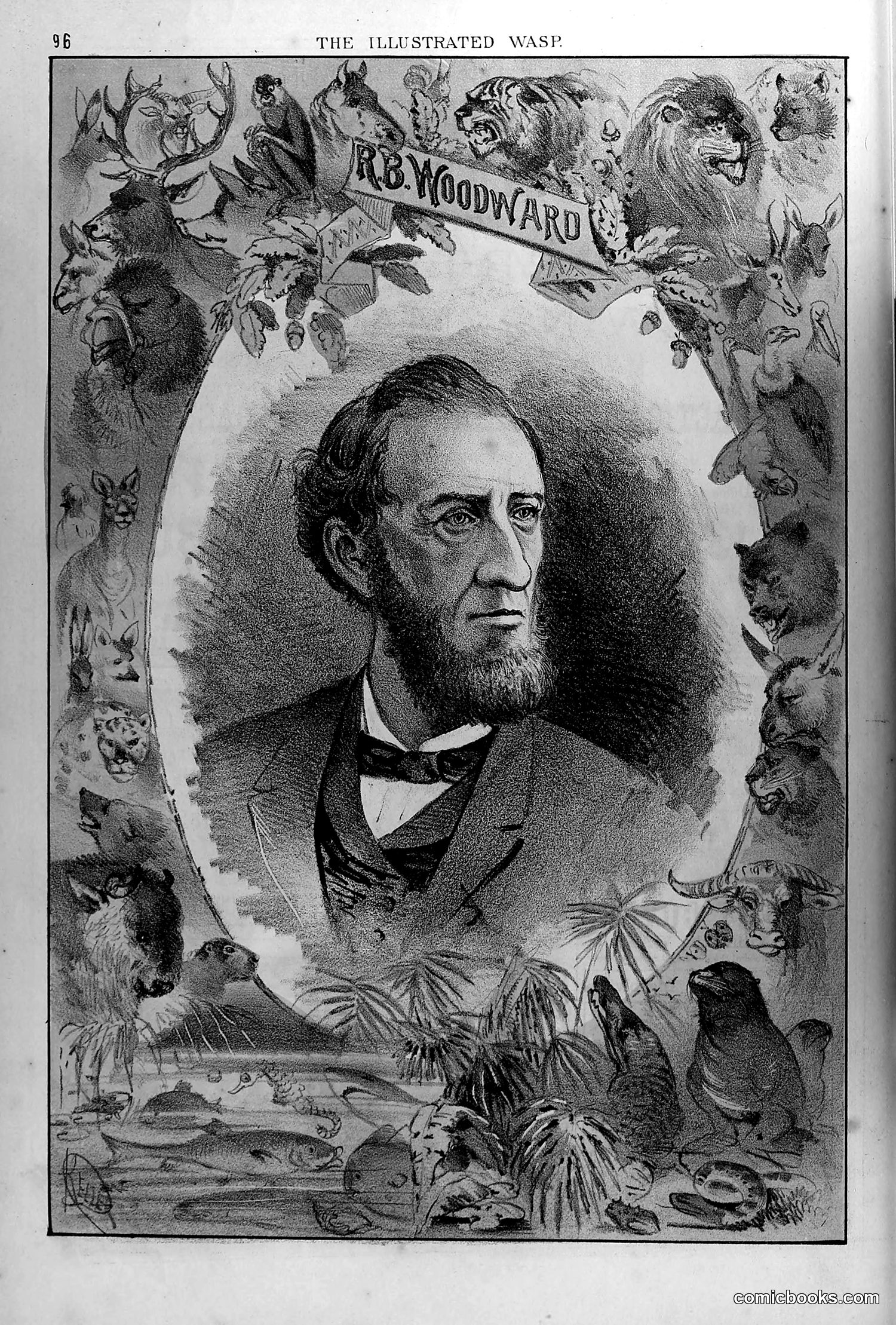
This page features a portrait of **R.B. Woodward** (as labeled on the banner), surrounded by an ornamental border of various animals and natural elements. The illustration appears to be from *The Illustrated Wasp*, a 19th-century American satirical publication. Without additional context, the exact satirical point is unclear. The animal border may suggest Woodward's connection to natural history, wildlife, or possibly his profession or public reputation. The formal portrait treatment could be either celebratory or ironic—*The Wasp* was known for biting social commentary, so this could be mockery disguised as honor. The page number (96) suggests this is from the magazine's interior. More context about Woodward's identity and contemporary prominence would be needed to fully decode the satire's specific target.

I can see this is a test or reference image with a calibration color checker (the grid of gray squares on the left) and measurement scales, rather than a page from The Wasp magazine containing satirical cartoons or text content. The image appears to be a documentary photograph or scan used for color/exposure correction purposes in archival work, not an actual editorial page with political cartoons or satirical commentary. Without visible cartoon illustrations, caricatures, or readable satirical text on this particular page, I cannot identify specific political figures, social references, or explain the intended satire to a modern reader. If you have a different page from The Wasp you'd like analyzed, I'd be happy to help with that instead.