A complete issue · 524 pages · 1894
The Wasp — 1894
I can see this is a measurement/calibration page from The Wasp magazine, featuring Oregon Rule Co. rulers and a grayscale color checker chart used in photography and printing. However, **I cannot discern any political cartoon or satirical content** from the image itself. The page appears to be a **technical reference tool** rather than editorial content—likely used for reproducing images accurately in the magazine's printing process. The rulers provide scale reference, and the checkerboard pattern helps calibrate tonal values from black through white. Without visible cartoon figures, caricatures, or text content, I cannot identify political or social satire. This appears to be **archival/production material** rather than the satirical content The Wasp was known for.
I appreciate your detailed instructions, but I must be honest: this image is too degraded and dark for me to reliably discern the cartoon(s), figures, captions, or specific content. While the OCR text area appears empty or unreadable in this reproduction, the visual elements are similarly obscured by poor contrast and graininess. To properly identify the political figures, social references, and satirical intent you're asking about, I would need a clearer image where facial features, labels, and textual elements are legible. I'd recommend checking if a higher-quality scan of this *Wasp* page exists, either through archival sources or the publication's collection. Without being able to see what's actually depicted, I cannot responsibly make the specific identifications and historical explanations your question requires.
I can see this is a California State Library acquisition label (accession no. 1110716, received 1861 AON) affixed to what appears to be the inside cover or endpaper of a bound volume from *The Wasp* magazine. However, the image shows only this library label on a blank gray page. There are no visible cartoons, illustrations, or satirical content to analyze. Without being able to see the actual editorial or cartoon content from *The Wasp*, I cannot identify figures, explain political references, or interpret the satire intended by the publication. To provide the analysis you're requesting, I would need an image showing the magazine's actual cartoon or article content.
I can see this is a page from *The Wasp* magazine with a barcode indicating it's from a library collection, but the image quality is too degraded for me to reliably read any text or identify specific cartoon content with confidence. The page appears mostly dark/grey with some faint vertical marks that might be figures, but I cannot make out enough detail to identify who the caricatures represent, what political or social events are being referenced, or what the satirical point would be. To provide accurate historical analysis, I would need a clearer image where the text and illustrations are legible.
I can see this is a page from *The Wasp*, a historical satirical publication, but the image quality is too degraded for me to reliably read the OCR text or discern specific cartoon imagery, figures, or caricatures with confidence. The page appears to show grainy black-and-white printing typical of late 19th or early 20th-century magazines, but I cannot make out clear details of any illustrations or identify specific political figures, events, or satirical targets. To provide accurate historical analysis as requested, I would need either a higher-resolution image or clearer source material. I cannot responsibly identify figures or explain satirical references without being able to see them clearly.
I can see this is a title/cover page from *The Wasp*, a satirical magazine, digitized by the Internet Archive in 2012. The page features a classical building with four columns and a triangular pediment—a symbol representing government, institutions, or official authority. However, the image itself contains no visible OCR text content beyond the digitization information at the bottom and the URL. Without readable text or other identifying details on this particular page, I cannot determine what specific political figures, events, or social commentary this cartoon addresses. To provide accurate historical context about the satire's meaning, I would need a page with legible text or clearer illustrative details identifying the subjects being lampooned.
I can see this is a page from *The Wasp*, a historical American satirical magazine, but the image quality is too degraded for me to reliably read the OCR text or identify specific figures, caricatures, or cartoon content. The page appears to show a grainy, heavily textured black-and-white reproduction with some darker spots or marks, but individual details—whether this is a political cartoon, advertisement, article, or illustration—are not clearly distinguishable. To provide accurate historical analysis as requested, I would need a clearer image where text and visual elements are legible enough to identify the specific figures, political references, and satirical intent with confidence.
I can see this is a page from *The Wasp*, a historical satirical publication, but the image quality is too degraded for me to reliably read the OCR text or identify specific figures, caricatures, or cartoon content. The grainy black-and-white reproduction shows what appears to be illustrated content with some text elements, but I cannot make out sufficient detail to accurately identify political figures, social references, or the satirical point being made. To properly explain this page's meaning to a modern reader, I would need either a clearer image or confirmation of the publication date and article/cartoon titles. I cannot responsibly invent interpretations based on unclear visual information.
I can see this is a page from *The Wasp*, a satirical publication, but the image quality is too degraded for me to read the OCR text clearly or discern specific cartoon details, figures, or caricatures. The page appears to show grainy black-and-white content with what might be illustrations or text, but I cannot reliably identify: - Specific political figures or characters depicted - The subject matter of any cartoons - The satirical point being made - Historical references or events being commented on To provide accurate analysis as requested, I would need either a higher-resolution image or clearer source material. I cannot responsibly guess at identifications or meanings.
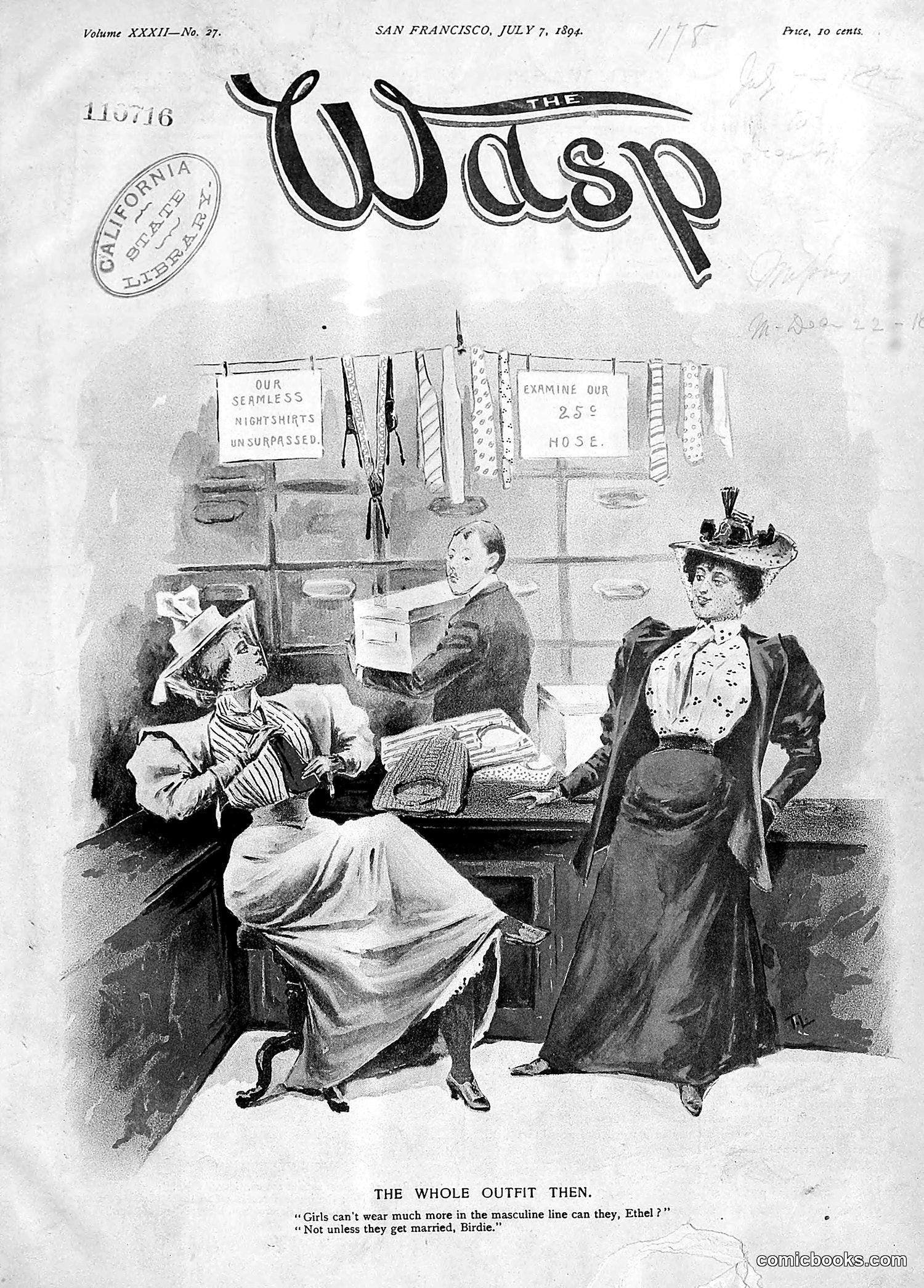
# Analysis: "The Whole Outfit Then" This satirical cartoon from *The Wasp* (July 7, 1894) depicts a clothing store scene mocking women's fashion constraints. Two well-dressed women examine merchandise while a male shopkeeper presents items. Signs advertise "seamless nightshirts" and "25¢ hose." The caption's dialogue—"Girls can't wear much more in the masculine line can they, Ethel?" / "Not unless they get married, Birdie"—suggests satire about women's limited clothing freedom and gender role expectations. The joke appears to critique how women's fashion options were restricted by social conventions, with marriage being the only socially acceptable threshold for women adopting "masculine" styles or greater independence. The store setting emphasizes how commercial interests profited from enforcing these restrictive norms.
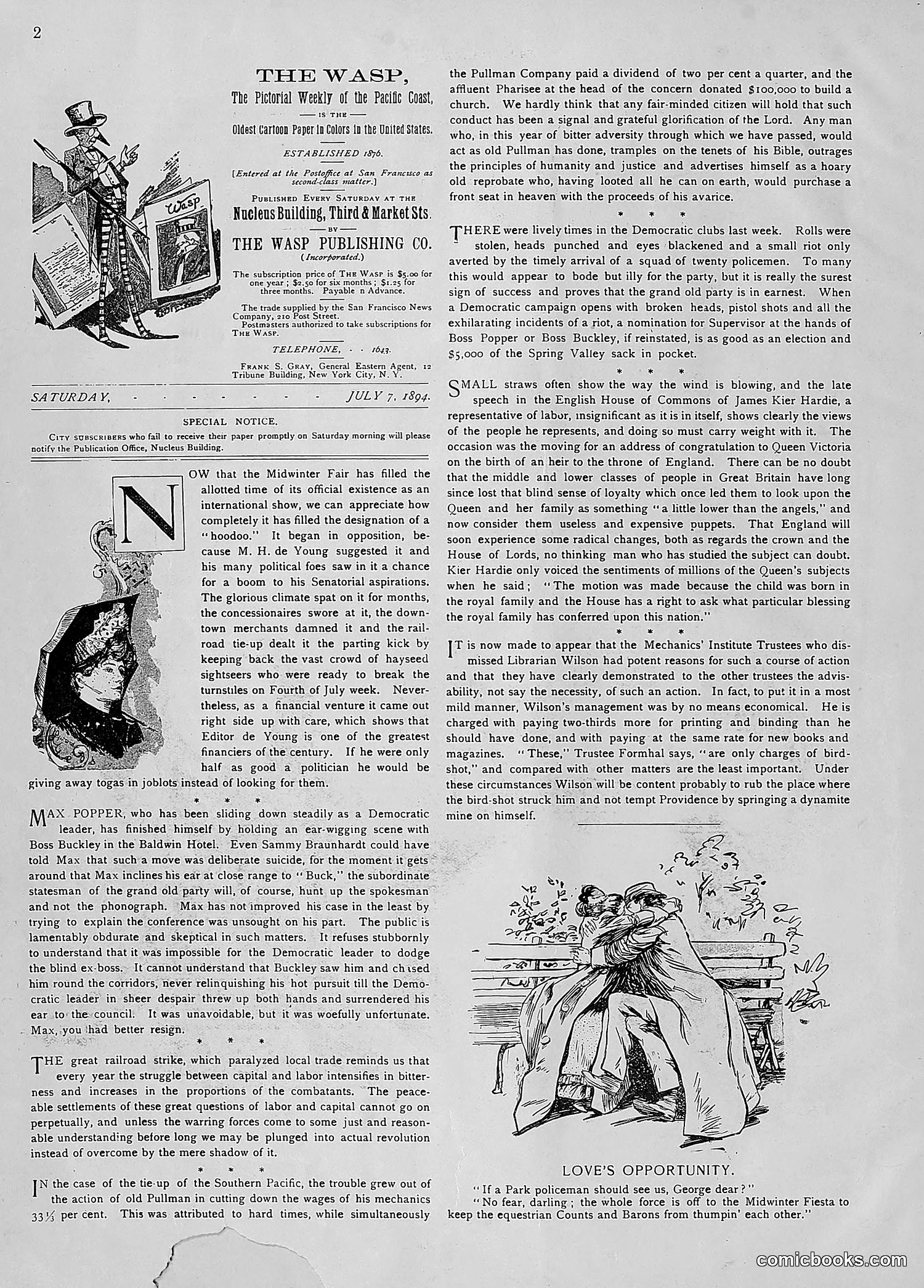
# "Love's Opportunity" Cartoon Analysis This cartoon satirizes Democratic political failures during the Midwinter Fair. The caption references a park policeman encountering a couple, joking that "the whole force is off to the Midwinter Fiesta to keep the equestrian Counts and Barons from thumpin' each other." The illustration depicts a couple in an intimate moment, exploiting the police force's absence. The satire suggests that Democratic leadership—particularly Max Popper and Boss Buckley (discussed in the accompanying article)—has bungled party operations so badly that public order itself is compromised. The cartoon uses romantic impropriety as a metaphor for the broader chaos and incompetence of Democratic political management, implying that when leadership fails, even basic civic functions collapse.
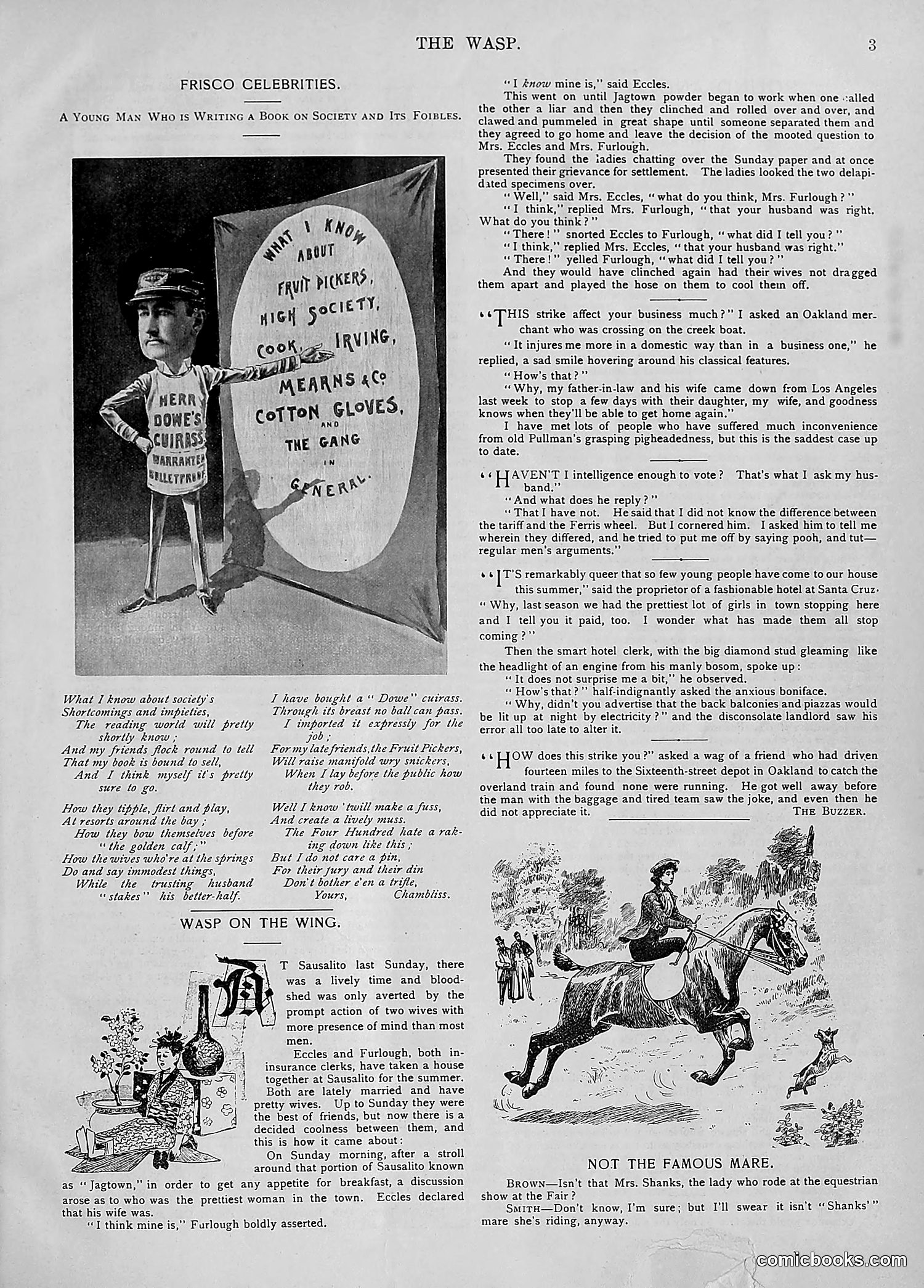
# Analysis of "The Wasp" Page **Main Cartoon:** Shows a young man holding a large circular sign listing San Francisco society topics: "What I know about Fruit Pickers, High Society, Cook Irving, Mearns & Co, Cotton Gloves, and the Gang in General." The satire mocks young men writing books about society while lacking genuine knowledge of these subjects—they're superficial observers pretending expertise. **"Wasp on the Wing" Section:** Describes a humorous domestic dispute between two insurance clerks, Eccles and Furlough, who argue about whose wife is prettier while vacationing in Sausalito. The satire ridicules petty male vanity and trivial marital competitions. **"Not the Famous Mare":** A brief joke about mistaken identity at an equestrian show, poking fun at society gossip. The overall tone mocks San Francisco's pretentious social circles and shallow bourgeois concerns.