A complete issue · 578 pages · 1893
The Wasp — 1893

I appreciate your detailed instructions, but I must be honest: the image quality is too poor for me to read any cartoon content or text clearly. The page appears to be a high-contrast black and white scan where most details are obscured by heavy shadows and grain. While I can see there are measurement scales (Oregon Rule Co.) and what appears to be a color checker chart on the right side, I cannot discern any cartoon illustrations, caricatures, or readable text that would allow me to identify figures, political references, or satirical intent. To provide accurate historical analysis as you've requested, I would need a clearer, higher-resolution scan of The Wasp page. I cannot responsibly speculate about content I cannot actually see.
I appreciate your detailed instructions, but I must be honest: the image is too dark and degraded for me to reliably read any text or identify specific figures, caricatures, or cartoons. The page appears almost entirely black with only faint grainy texture visible and a watermark reading "comicbooks.com" in the lower right corner. Without being able to discern the actual content—whether there are illustrations, who might be depicted, or what the OCR'd text says—I cannot responsibly explain what this page means or identify its political/social references. To help you properly, I'd need either a clearer image or confirmation of the text content you're referencing.
I can see this is a library acquisition label from the California State Library, dated April 1894, with accession number 98805 and class number 1893. However, the actual content of the page—any political cartoons, satirical illustrations, or text from *The Wasp* magazine itself—is not visible in this image. What I'm viewing is essentially a blank page with only the library's cataloging information affixed to it. Without being able to see the actual cartoon(s) or editorial content, I cannot identify figures, explain political references, or describe the satire's point. To provide the analysis you're requesting, I would need an image showing the actual magazine page content beneath this library label.
I can see this is a page from *The Wasp* magazine (indicated by the California State Library barcode), but the image itself is almost entirely blank or heavily faded grayscale. There are faint vertical marks or possibly text near the top-center of the page, but they are too unclear to read or interpret reliably. Without legible text or visible cartoon imagery, I cannot identify specific figures, political references, or the satirical intent of the content. The page appears to be either a blank page, a heavily deteriorated scan, or possibly the back of a printed page with no content. To provide accurate historical analysis as requested, a clearer or higher-contrast image would be necessary.
I can see this is a cover page from The Wasp magazine, showing a classical Greek or Roman building with four columns (suggesting an institution of authority or government). The text indicates this material was digitized by the Internet Archive in 2012 with funding from the California State Library. However, I cannot discern specific cartoon imagery, figures, caricatures, or satirical content clearly enough in this image to identify what political or social references are being made. The page appears to be primarily a title or cover page rather than containing the actual satirical cartoon content. Without being able to read additional OCR text or see clearer details of any figures present, I cannot reliably explain the specific satire or joke to a modern reader.
I can see this is a page from *The Wasp*, a historical satirical magazine, but the image quality is too degraded for me to reliably read the OCR text or identify specific figures in the cartoon(s). The grayscale reproduction shows what appears to be illustrated content with some text elements, but the grain and contrast make it impossible to discern details with confidence. To properly explain this page's satire, political references, and historical context to a modern reader, I would need either a higher-resolution image or clearer source material. I cannot responsibly identify specific figures or events without being able to read the text and see the illustrations clearly enough to verify my interpretation. If you have a clearer version of this page, I'd be happy to provide the analysis you're seeking.
I can see this is a page from *The Wasp*, a satirical publication, but the image quality is too degraded for me to reliably make out specific cartoon details, figures, or text content. The page appears to show a grainy, high-contrast black and white scan with a vertical light strip down the center, but I cannot distinguish individual caricatures, political figures, or satirical commentary with sufficient clarity to accurately identify them. To provide you with a proper historical analysis of the cartoon(s) and their political/social context, I would need either a higher-resolution image or clearer source material. I don't want to guess at identities or meanings and risk giving you inaccurate information.
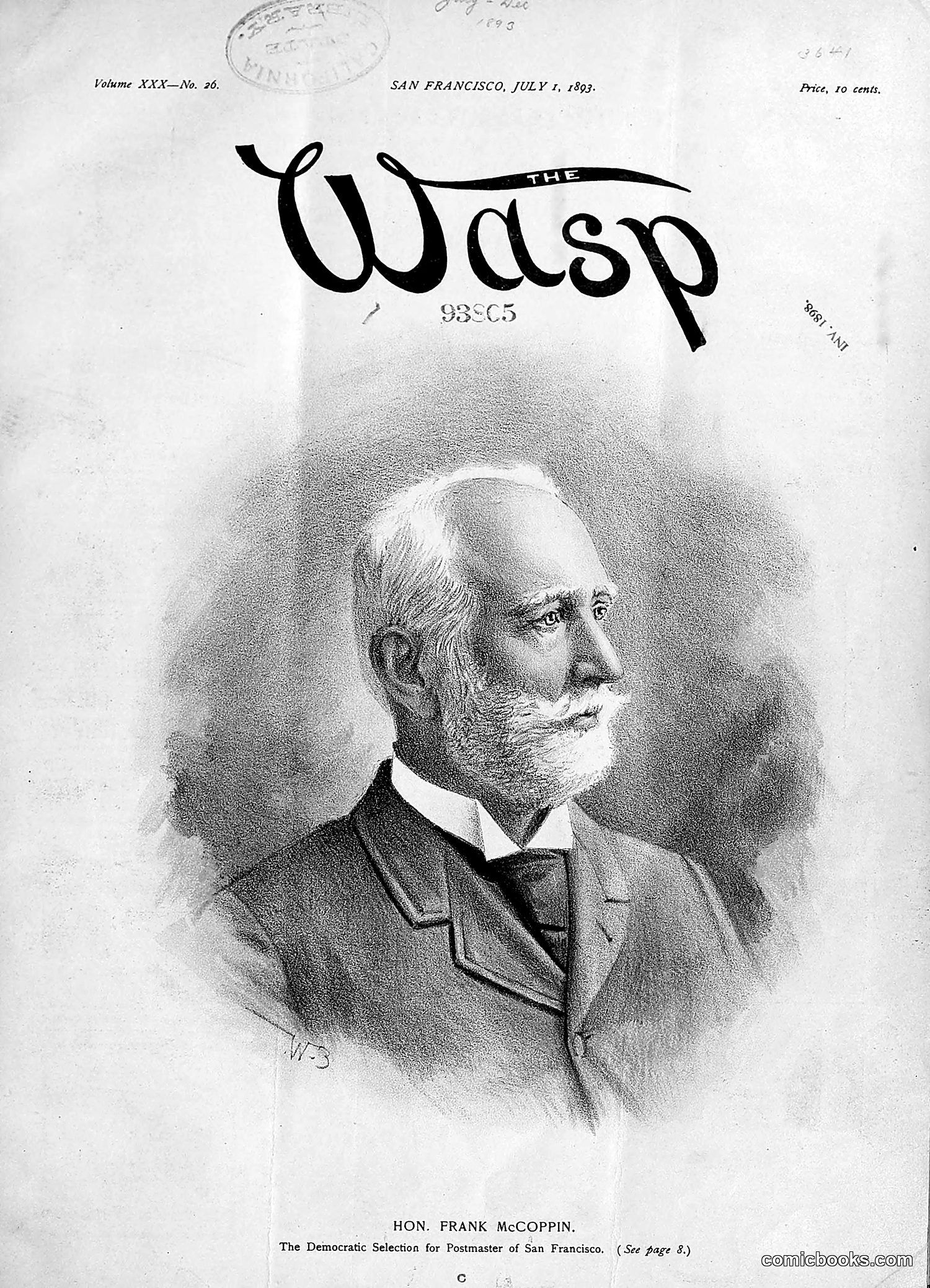
# The Wasp, July 1, 1893 This is a title page featuring a portrait of **Hon. Frank McCoppin**, identified as "The Democratic Selection for Postmaster of San Francisco." The page presents McCoppin as a distinguished elderly gentleman with white hair and beard, wearing formal attire with a bow tie. The satirical context—published in *The Wasp*, a San Francisco-based humor magazine—suggests this was commentary on his Democratic Party nomination for the postmaster position, a significant federal patronage appointment. Without additional context from page 8 (referenced in the caption), the specific satirical angle remains unclear, though the magazine's inclusion suggests either mockery of his candidacy or commentary on Democratic Party politics of 1893.
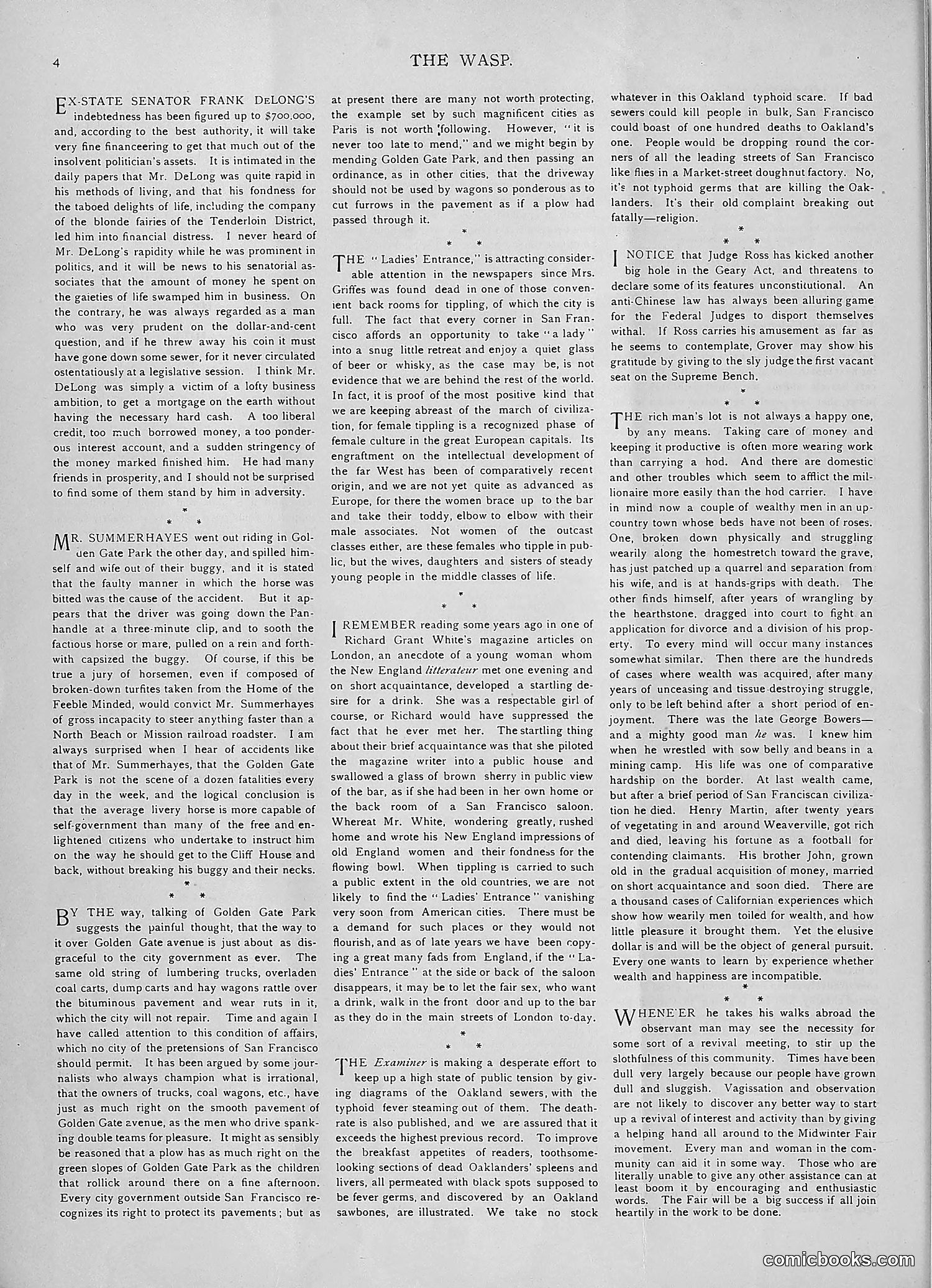
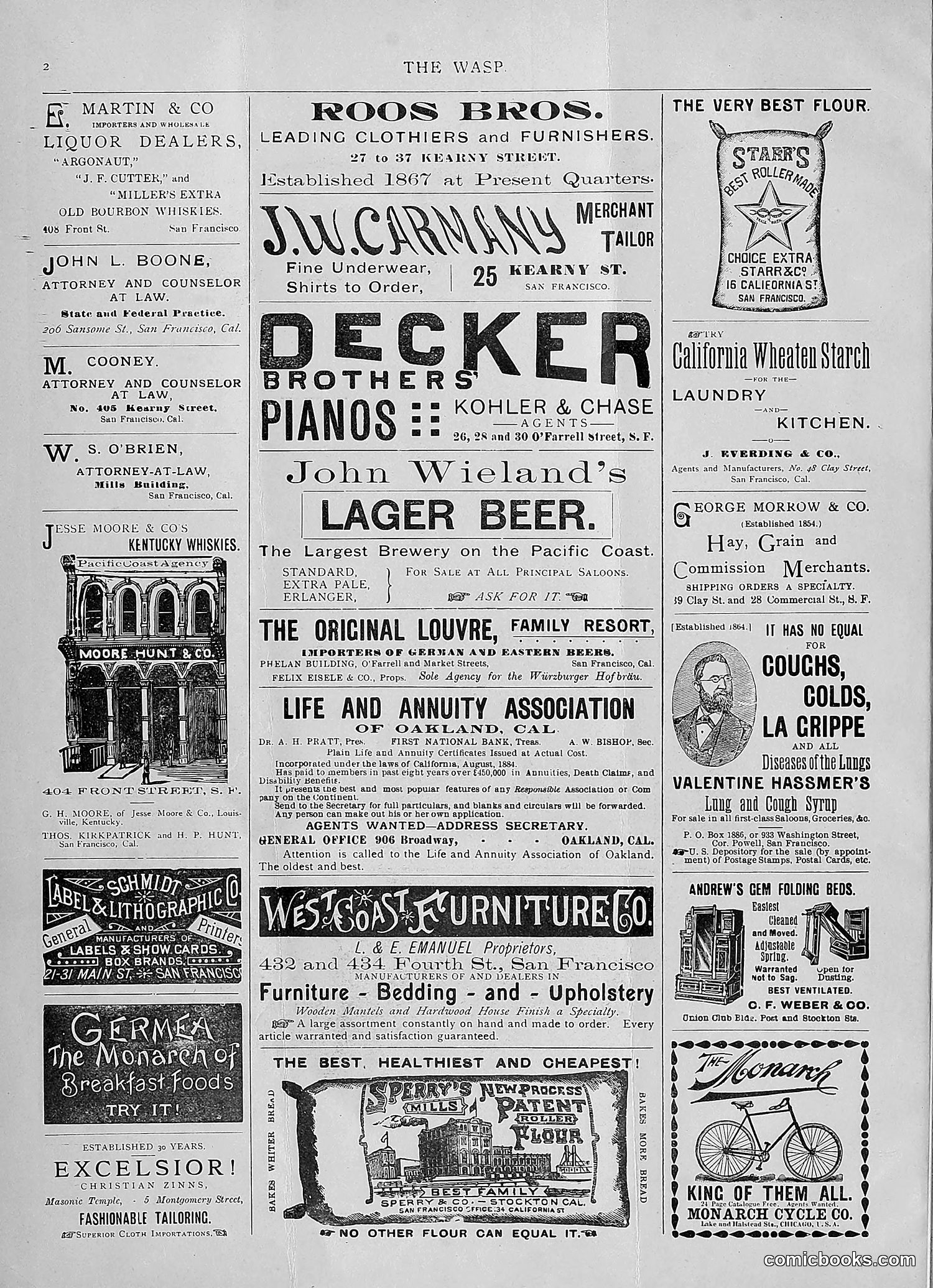
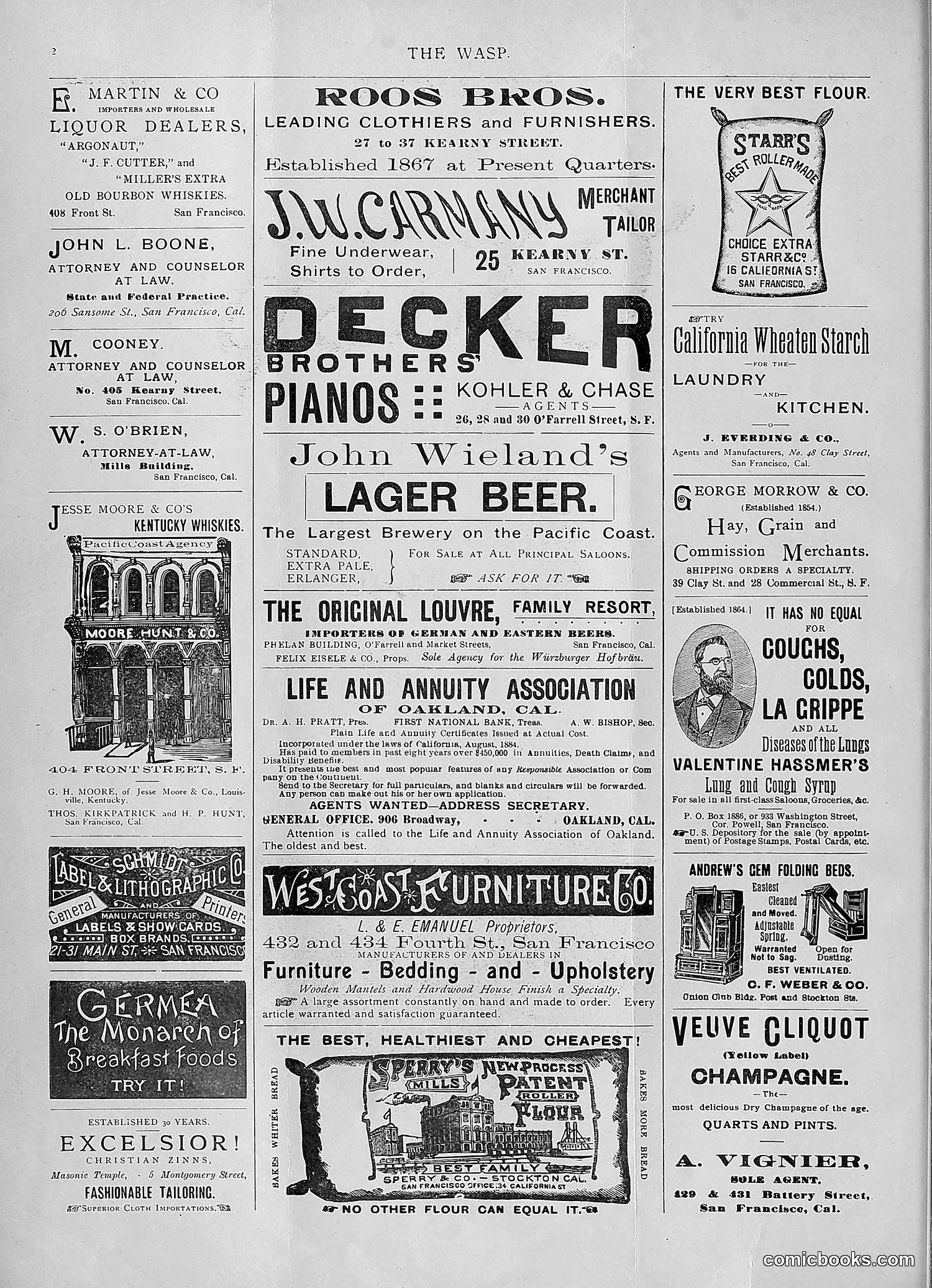
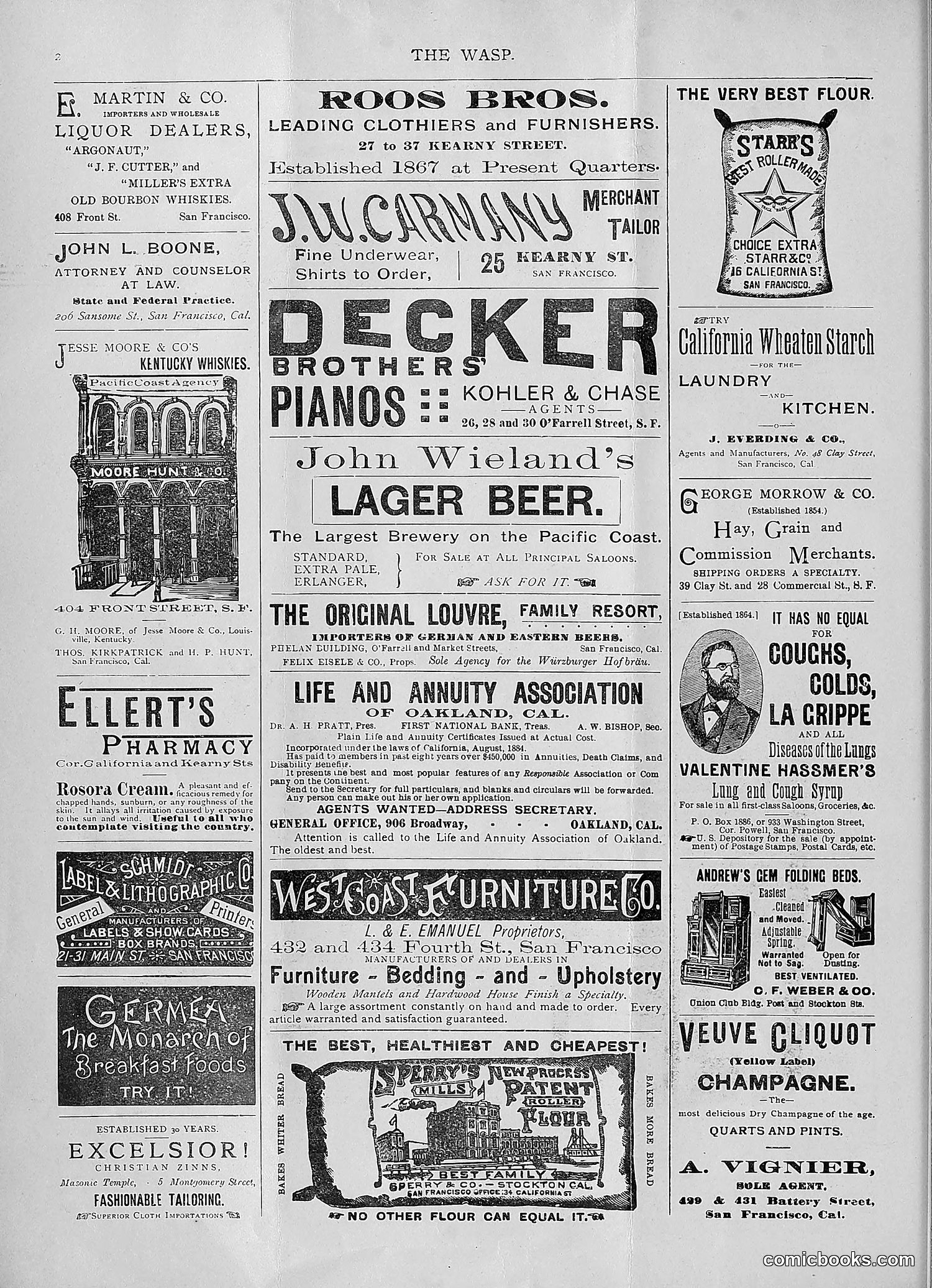
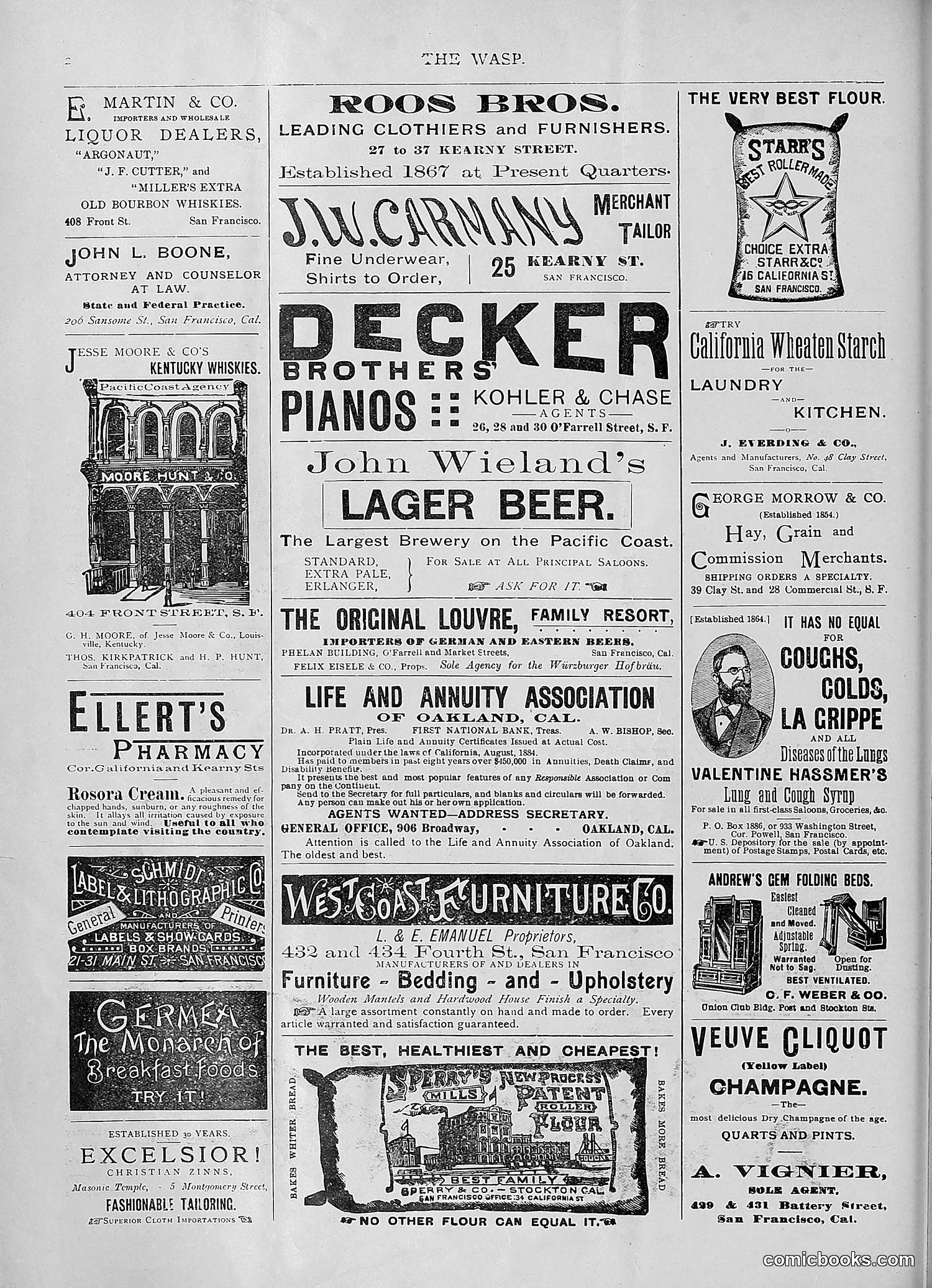
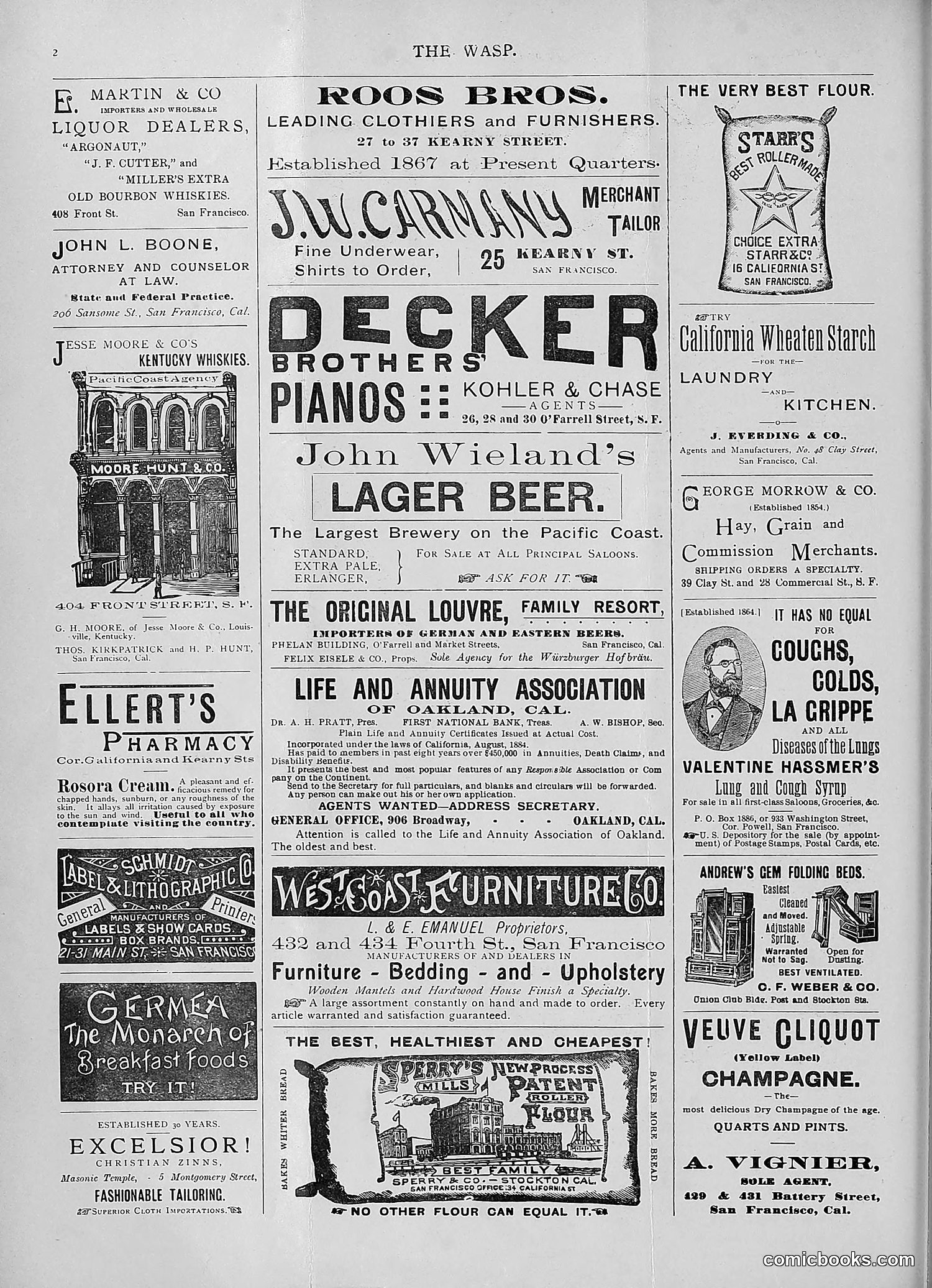
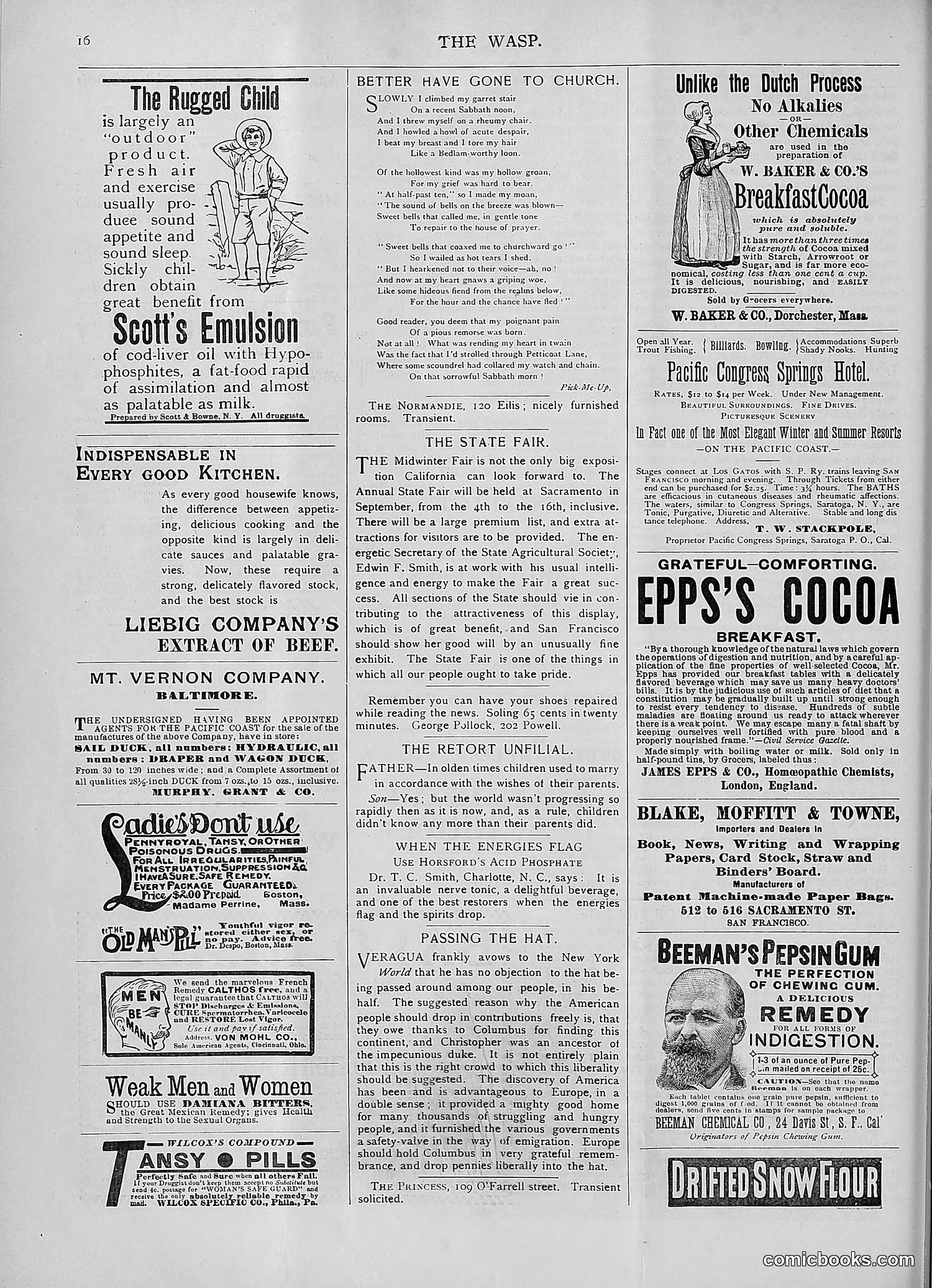
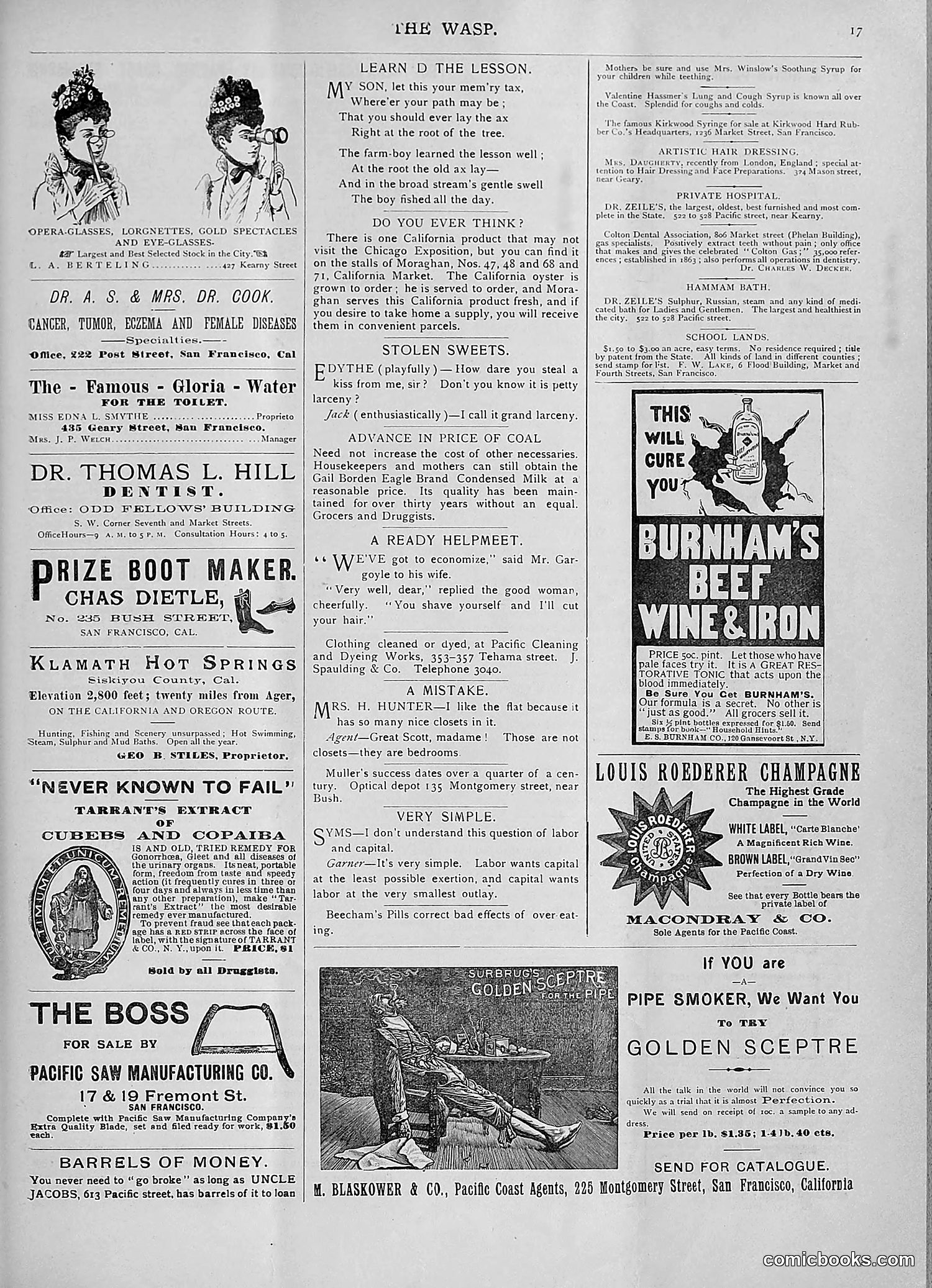
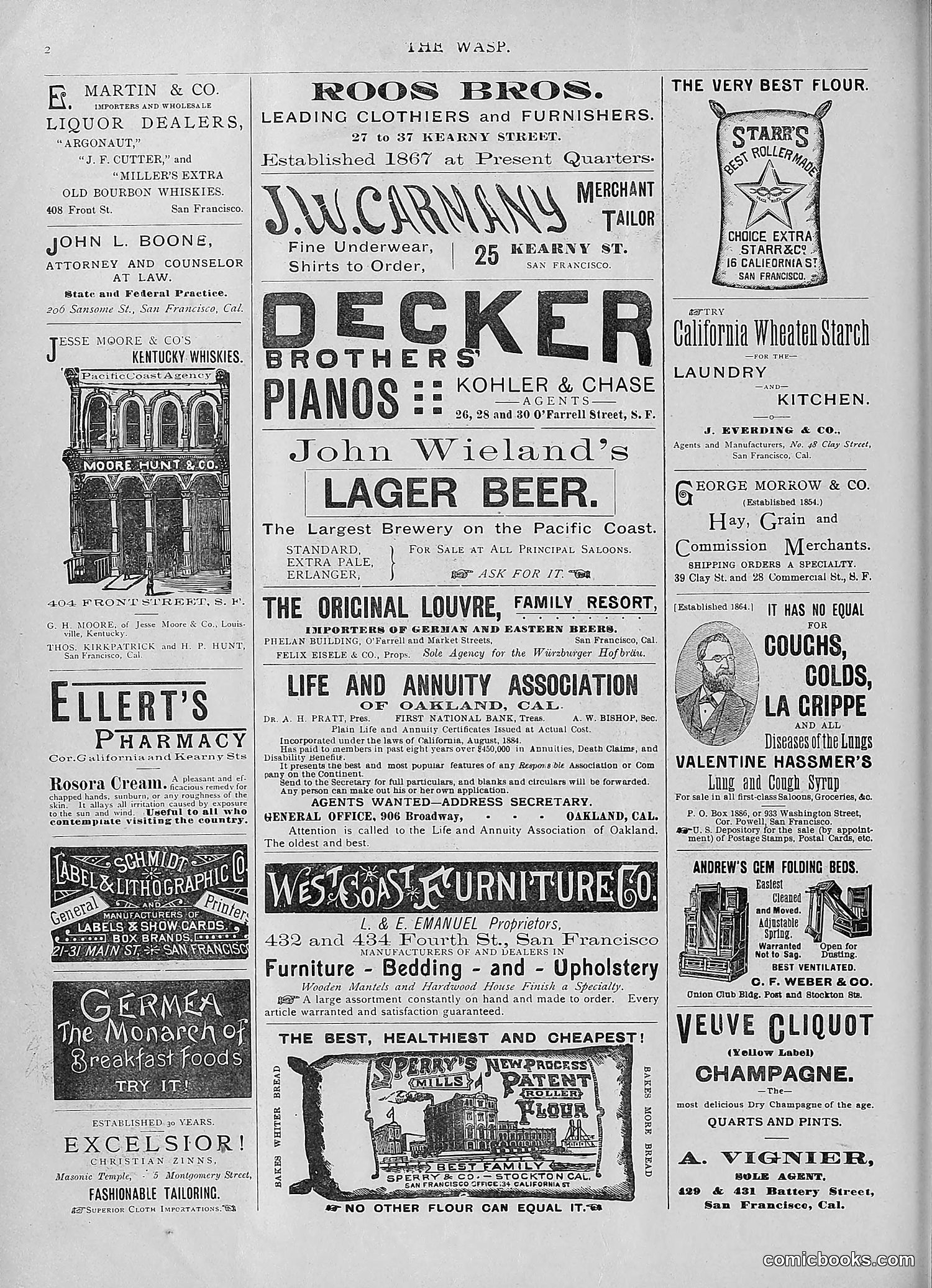
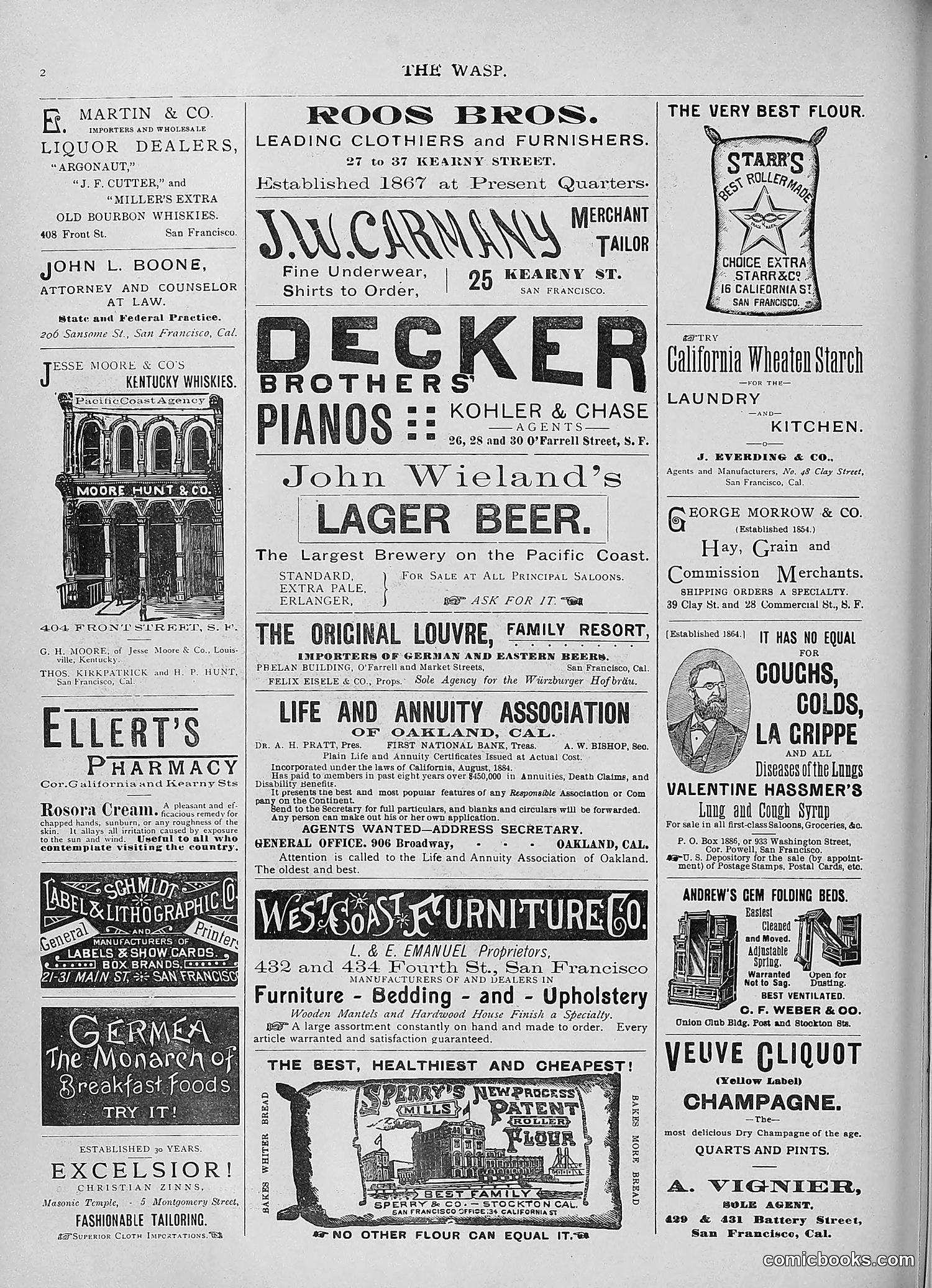
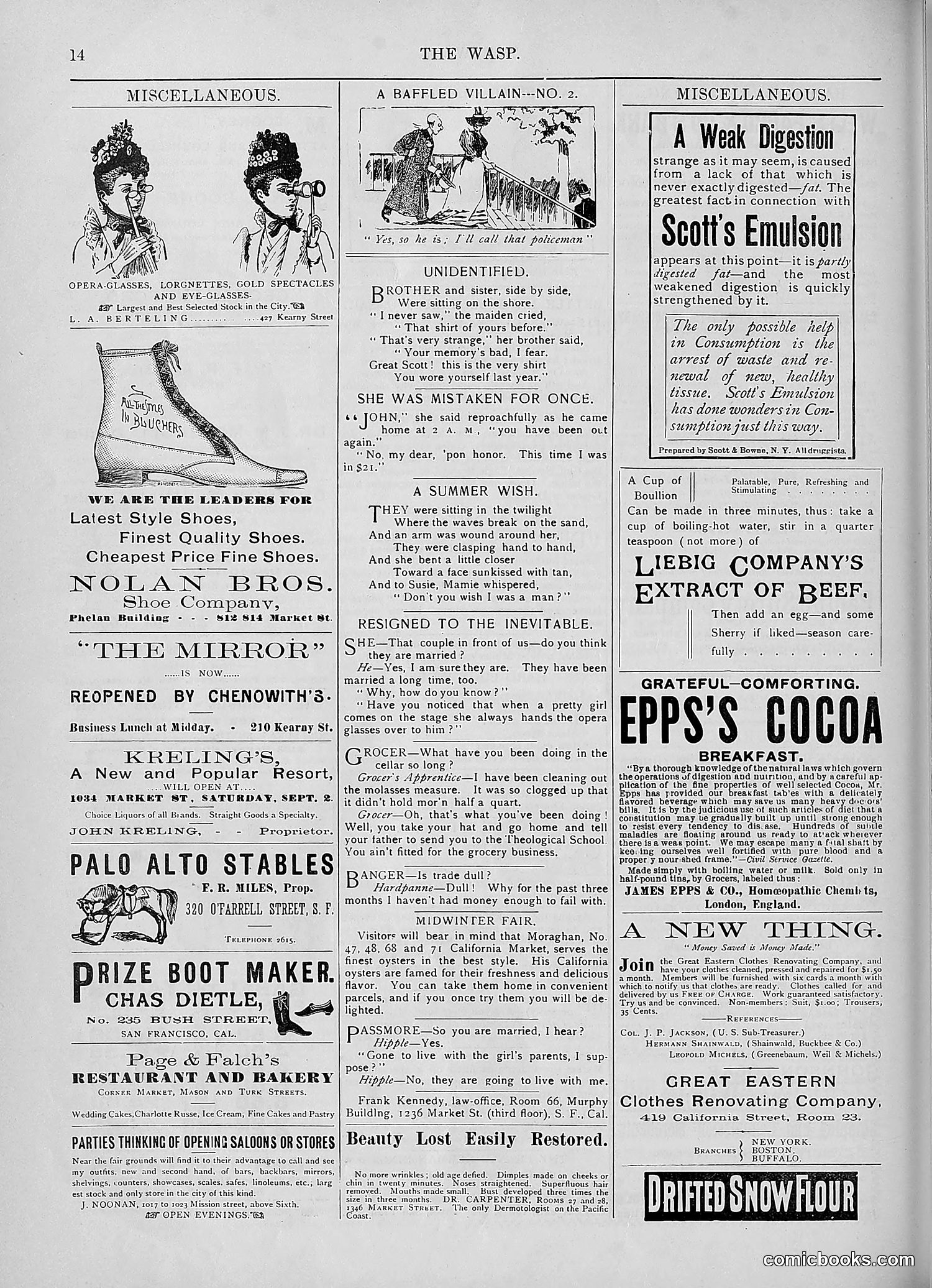
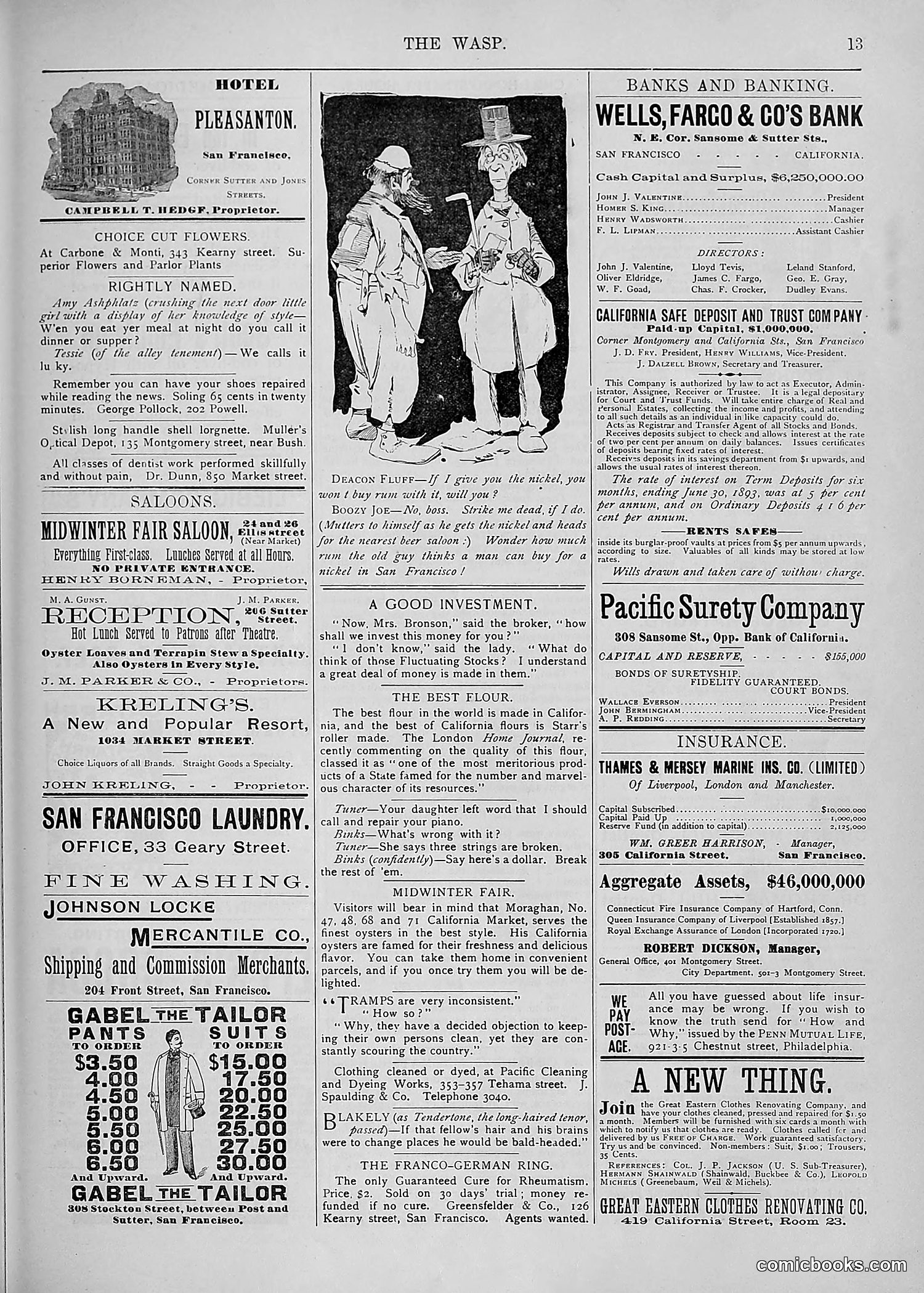
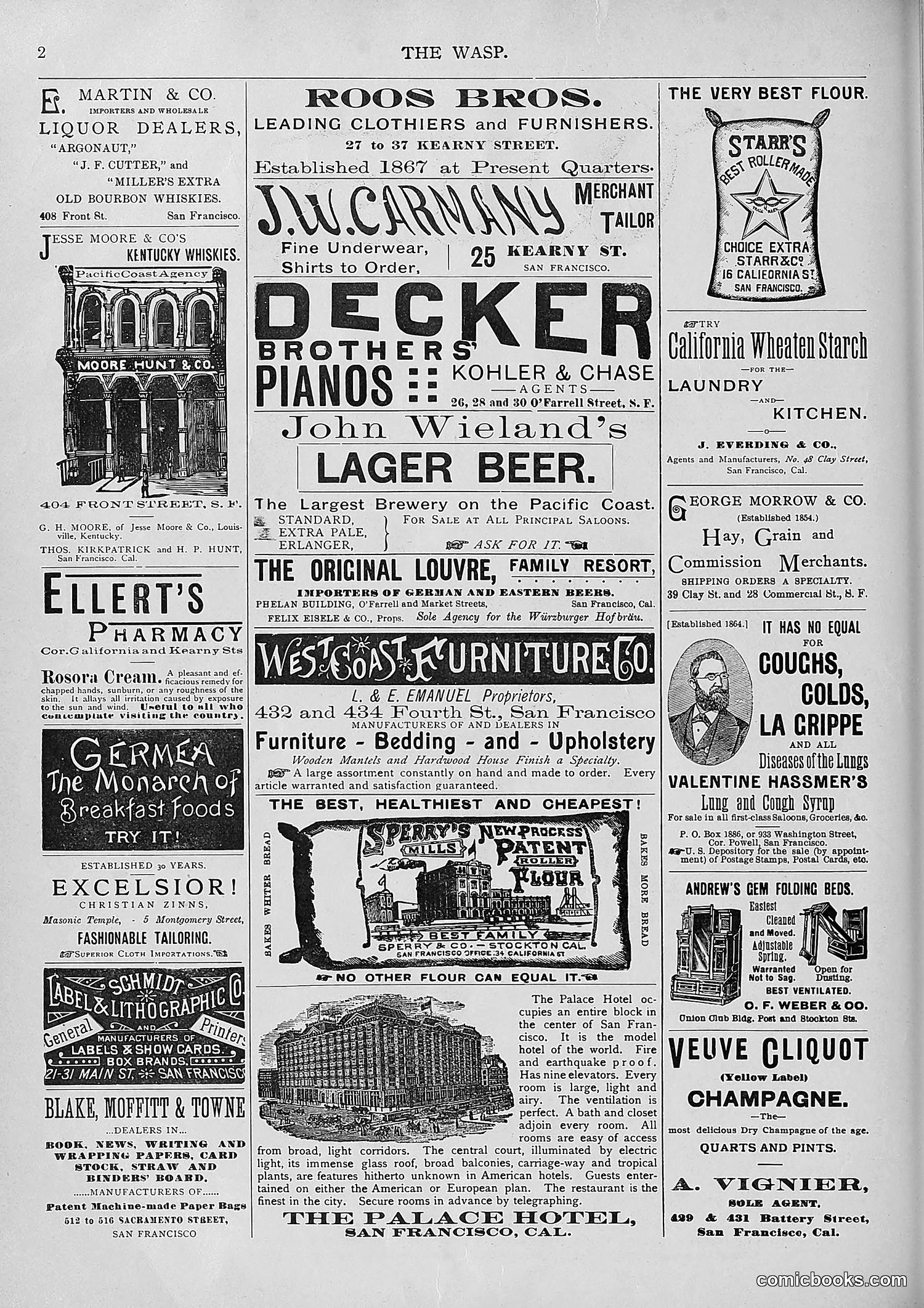
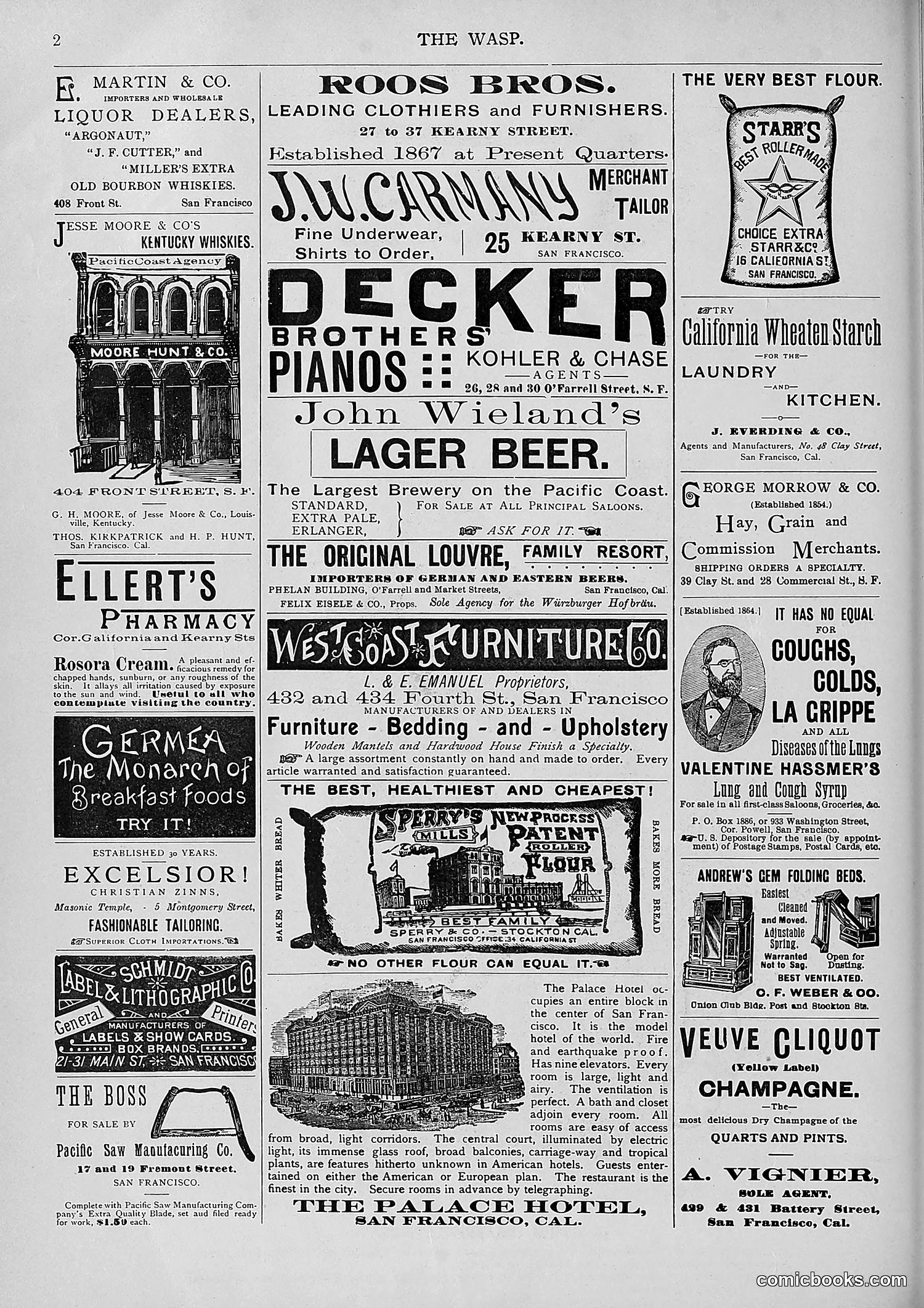
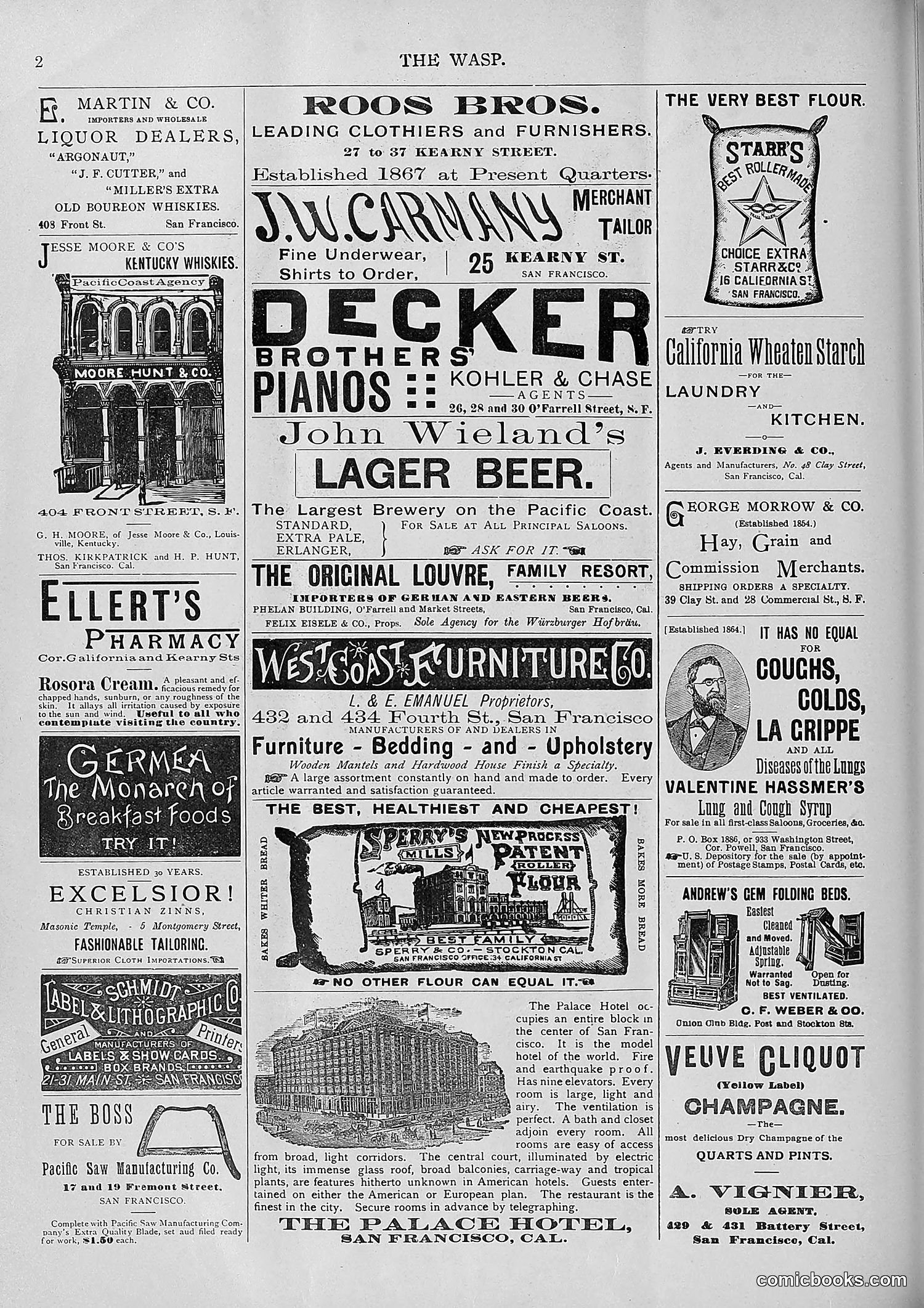
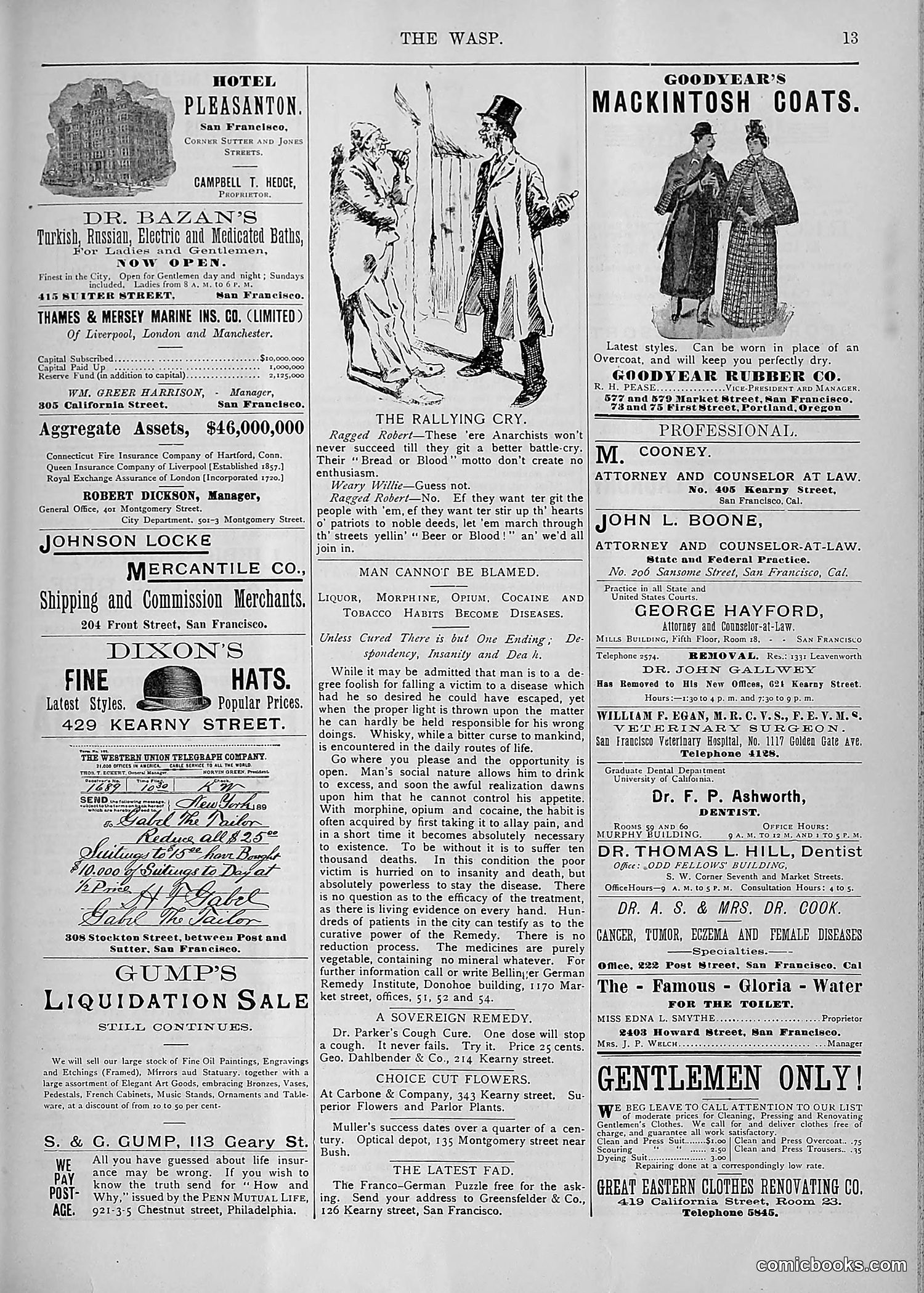
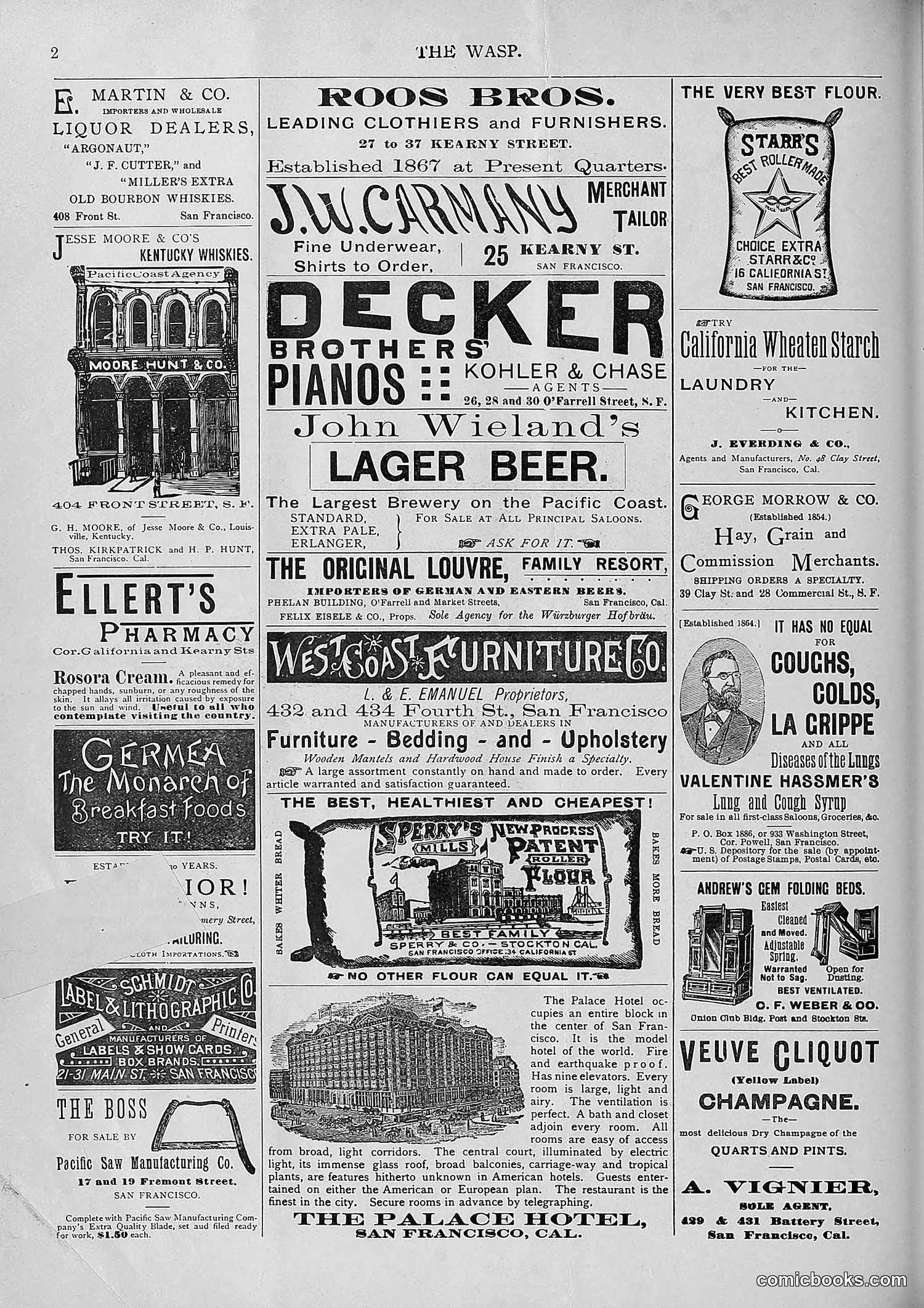
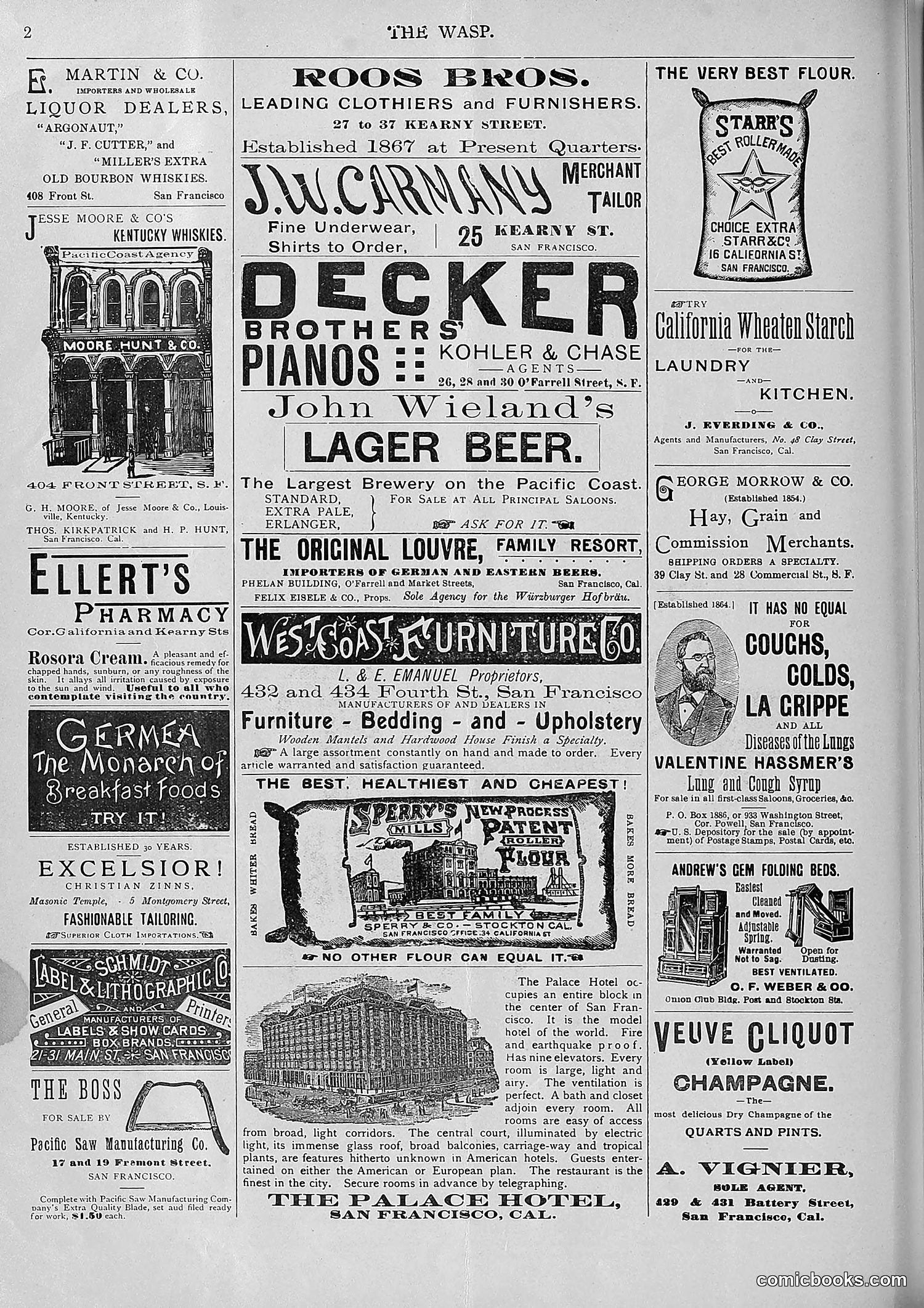
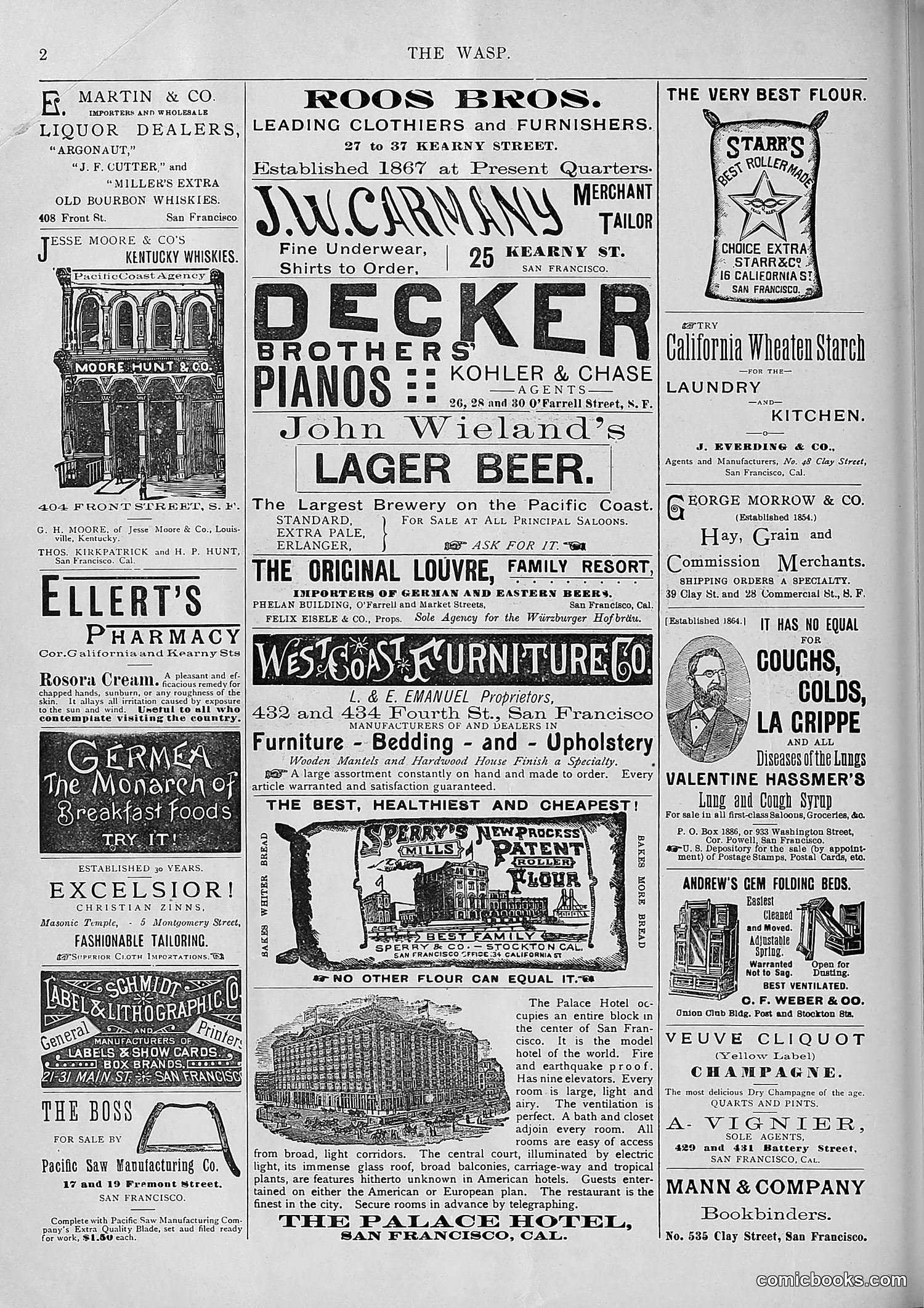
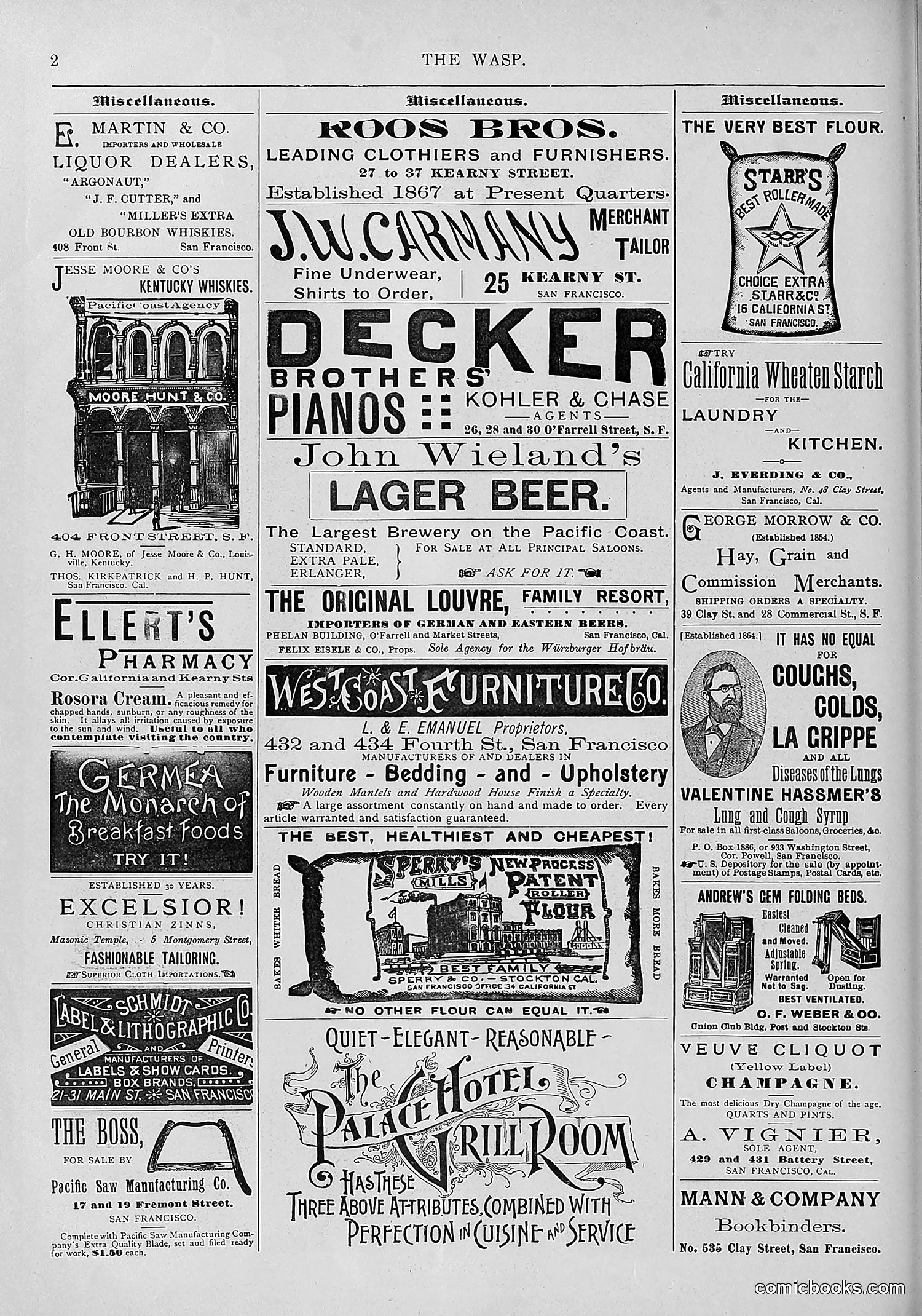
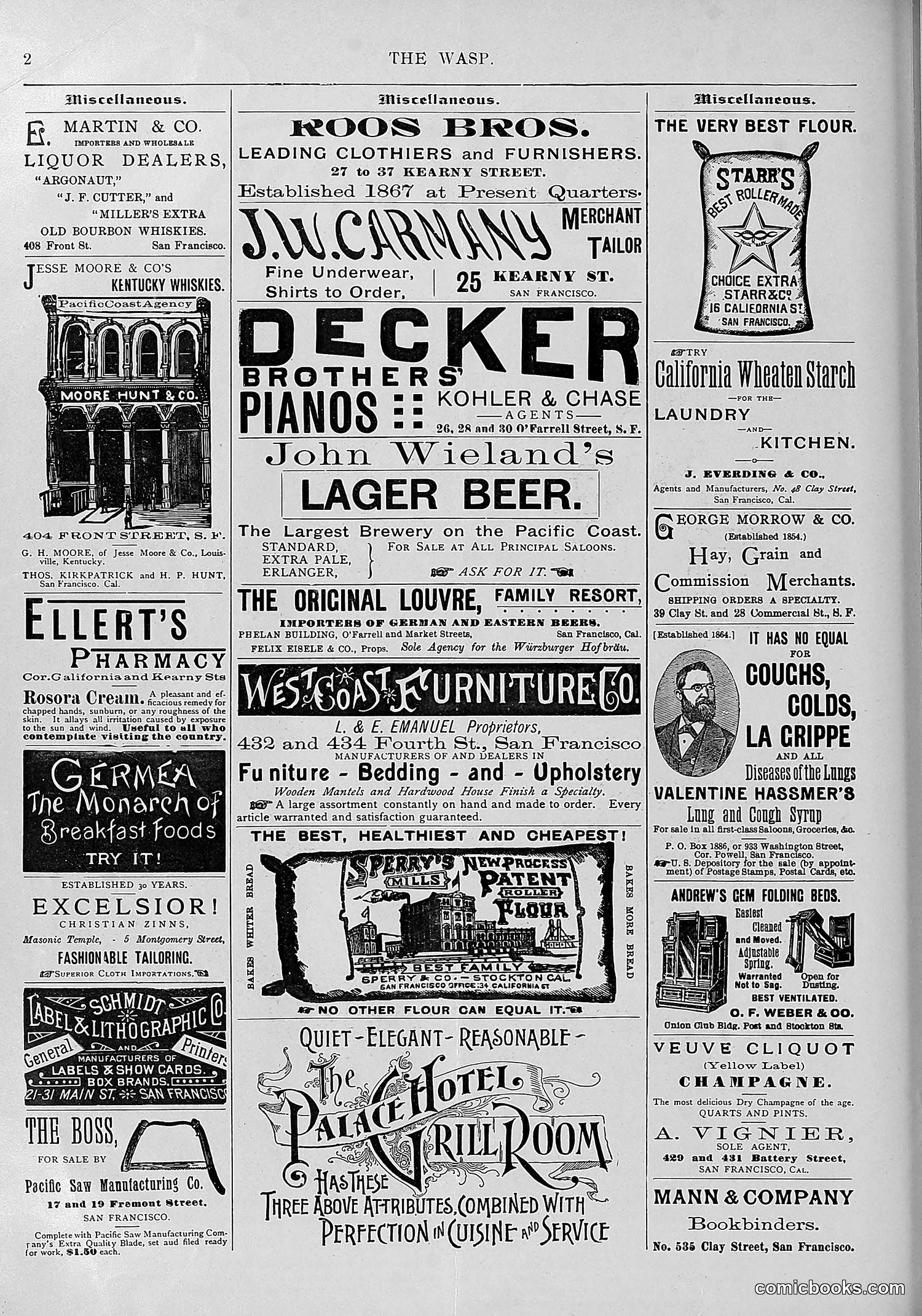
# Analysis This page is primarily **advertising content**, not editorial or satirical material. It contains commercial advertisements for San Francisco-area businesses from what appears to be the late 19th century, including: - Liquor dealers and whiskey distributors - Clothing merchants and tailors - Piano sellers - Breweries (John Wieland's Lager Beer) - Furniture companies - Flour mills - Bicycles - Legal and financial services The only image with potential satirical content is a portrait labeled "VALENTINE HASSMER'S" advertising cough and cold remedies, but no clear political or social satire is evident on this page. This appears to be a standard **advertising section** from *The Wasp* magazine rather than editorial content carrying satirical commentary.
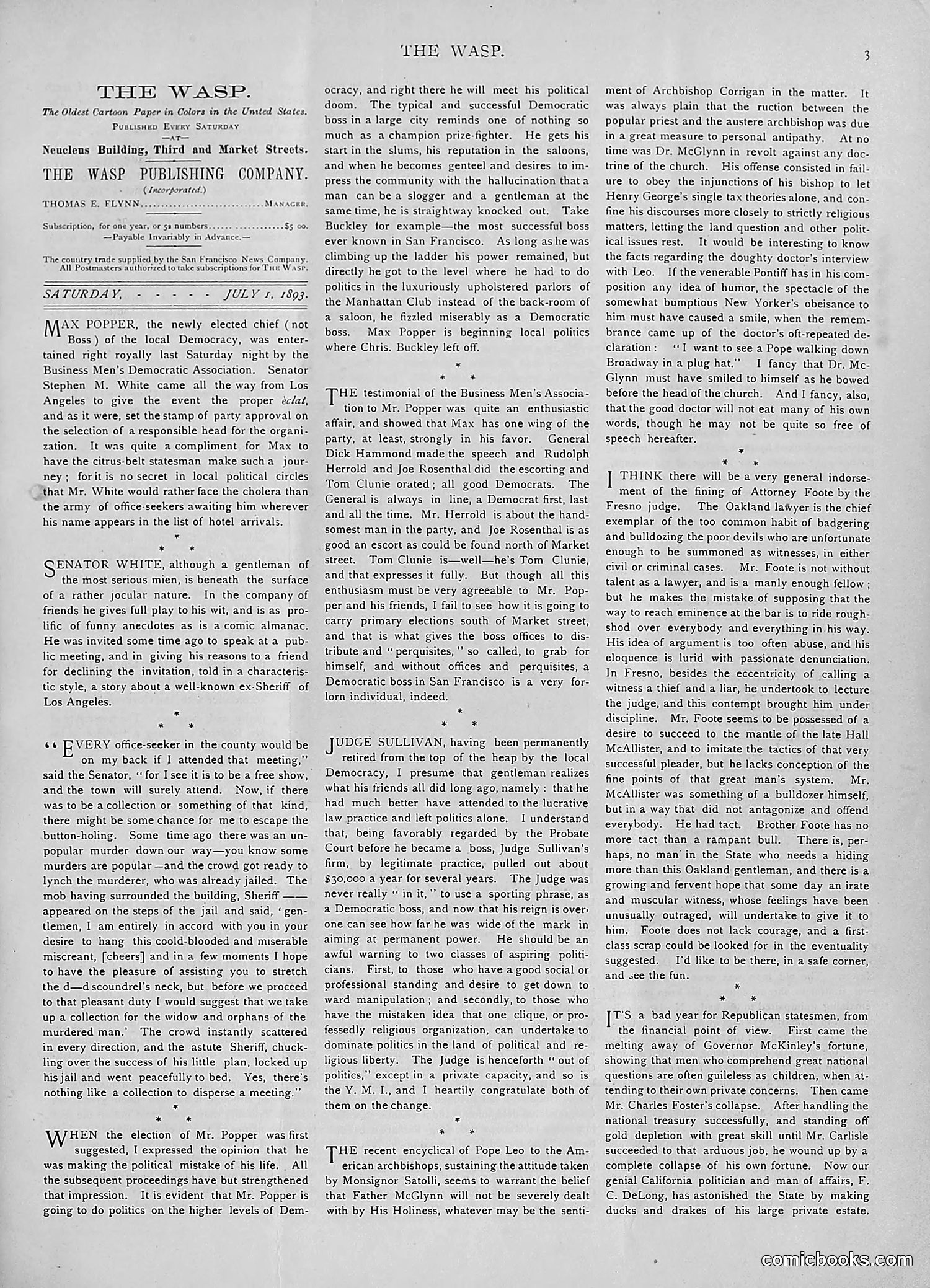
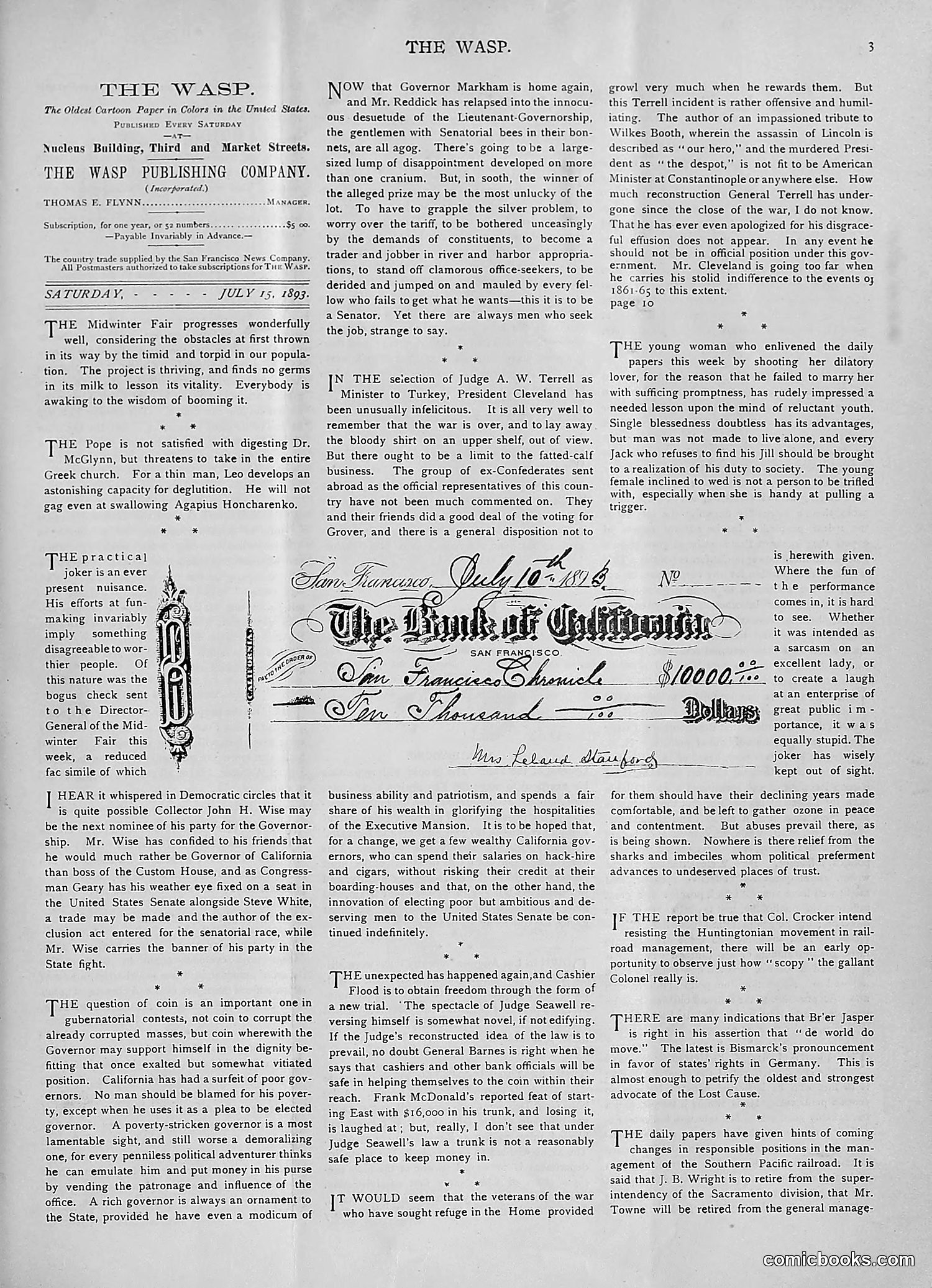
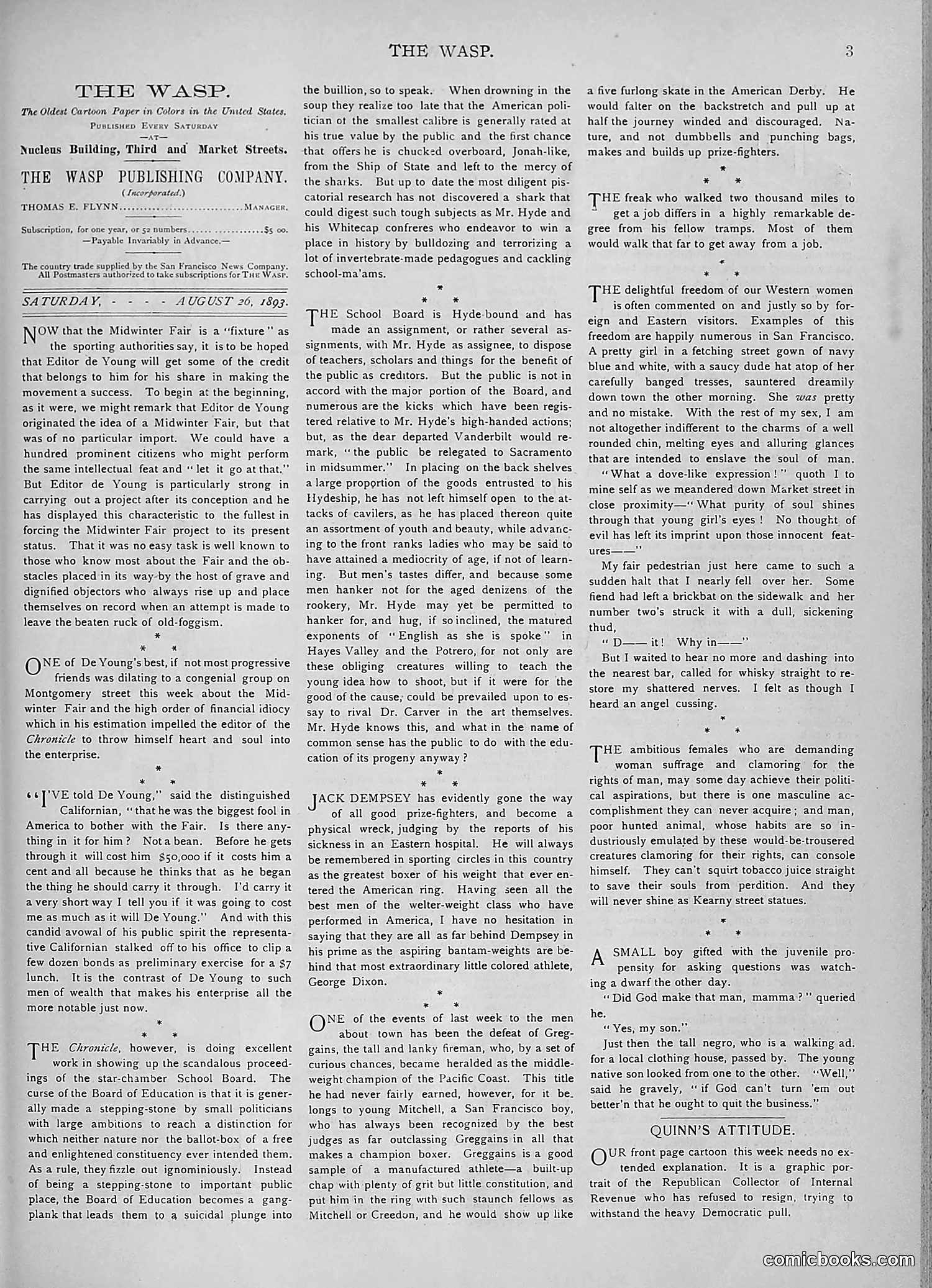
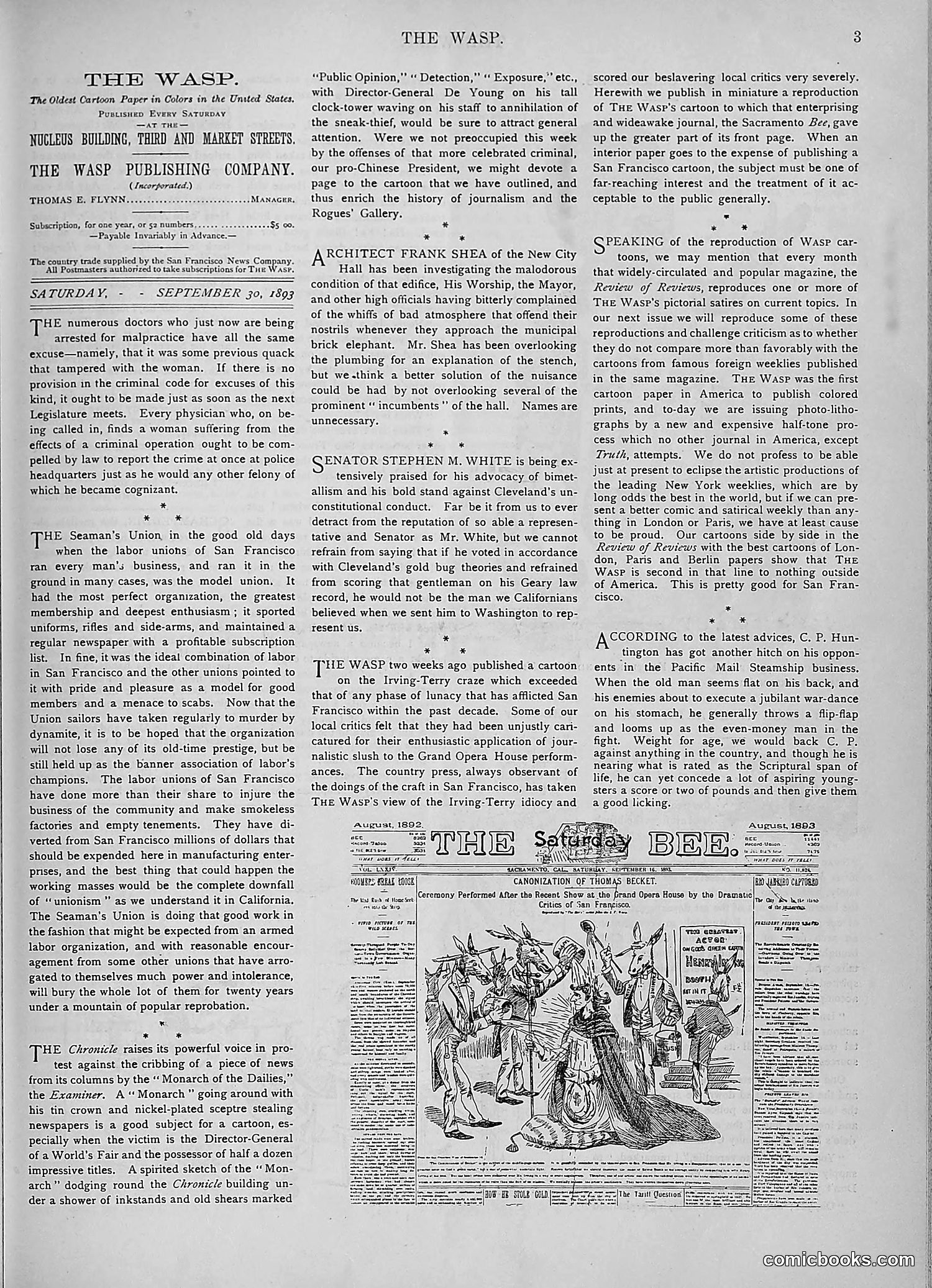
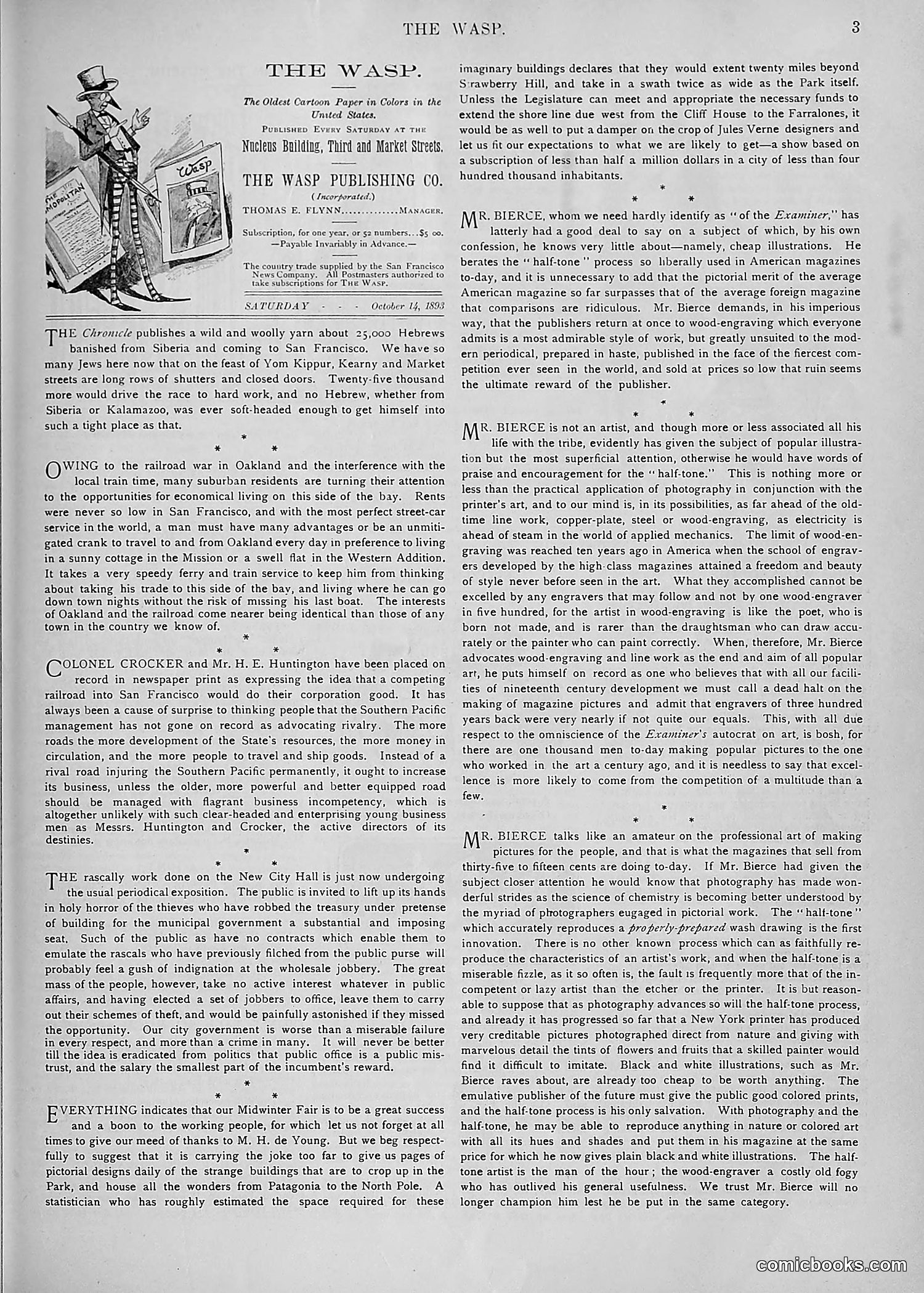
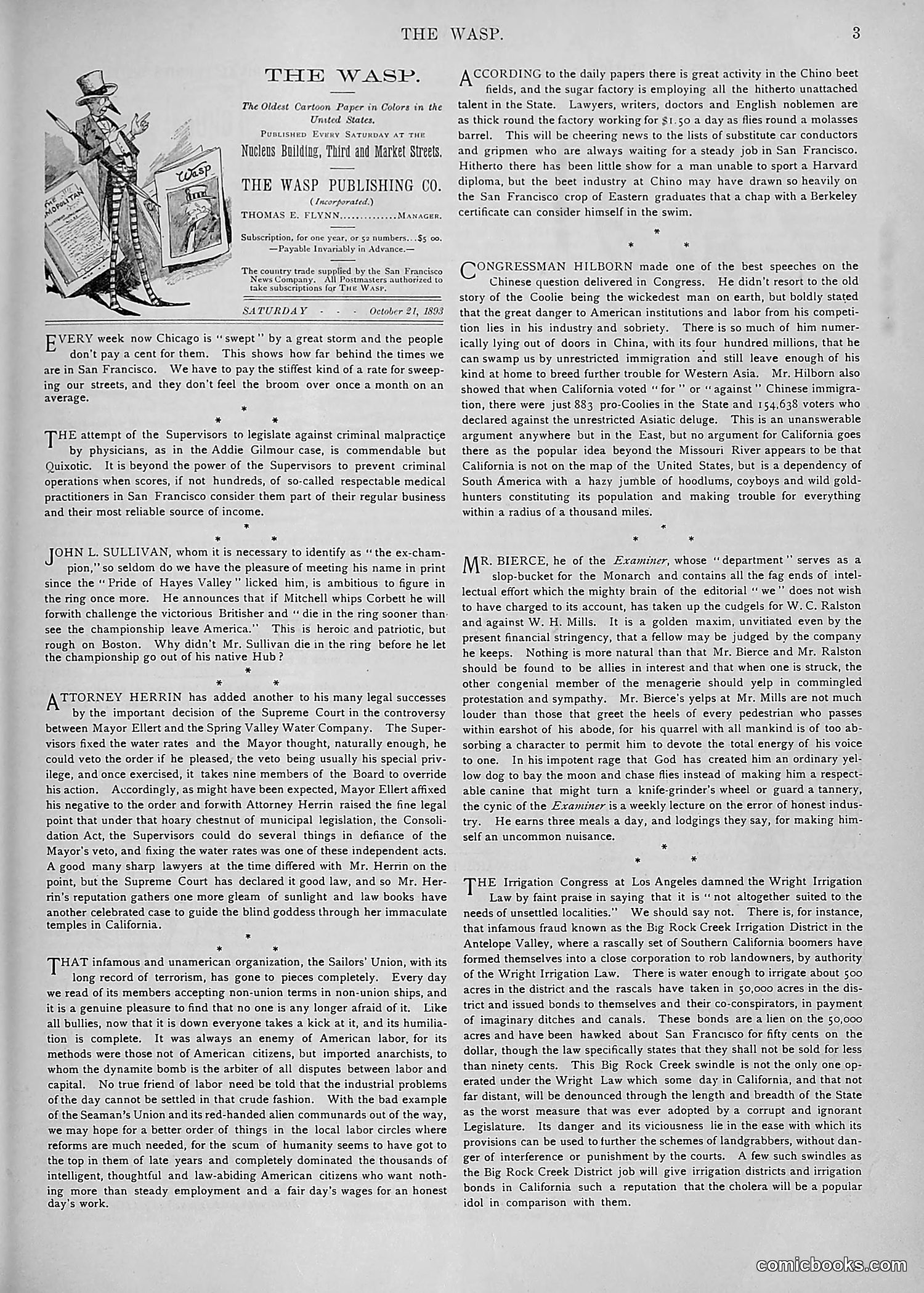
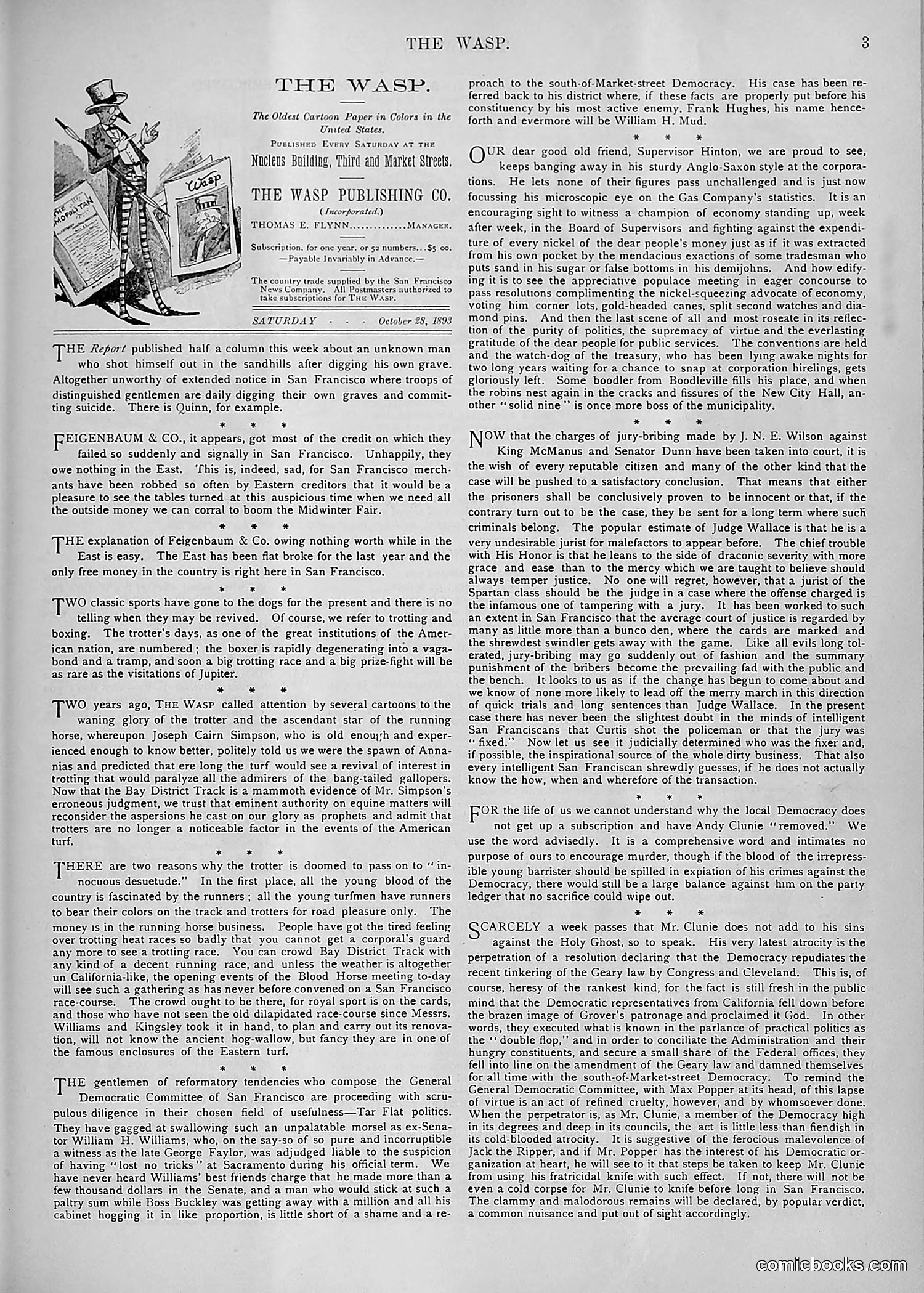
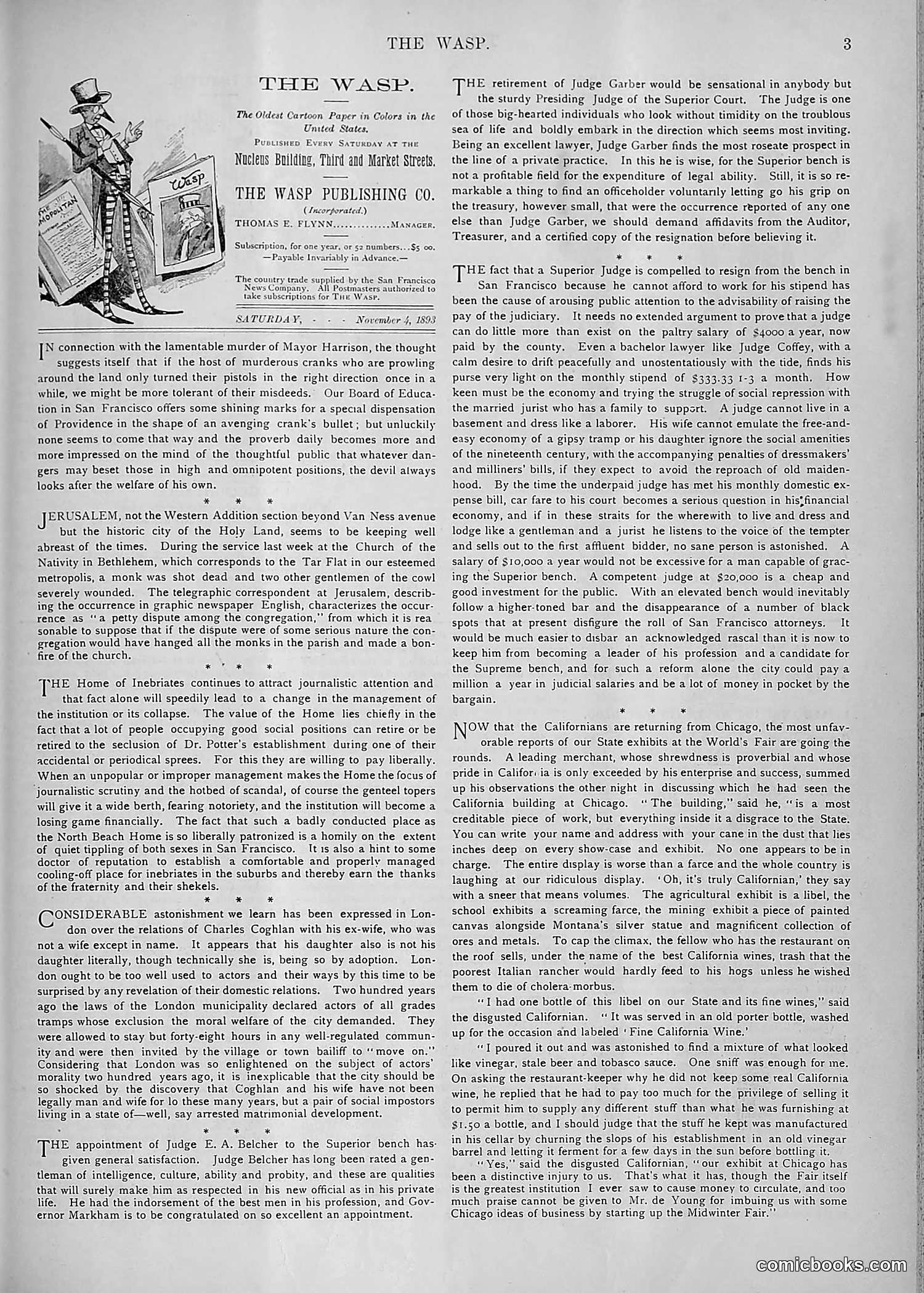
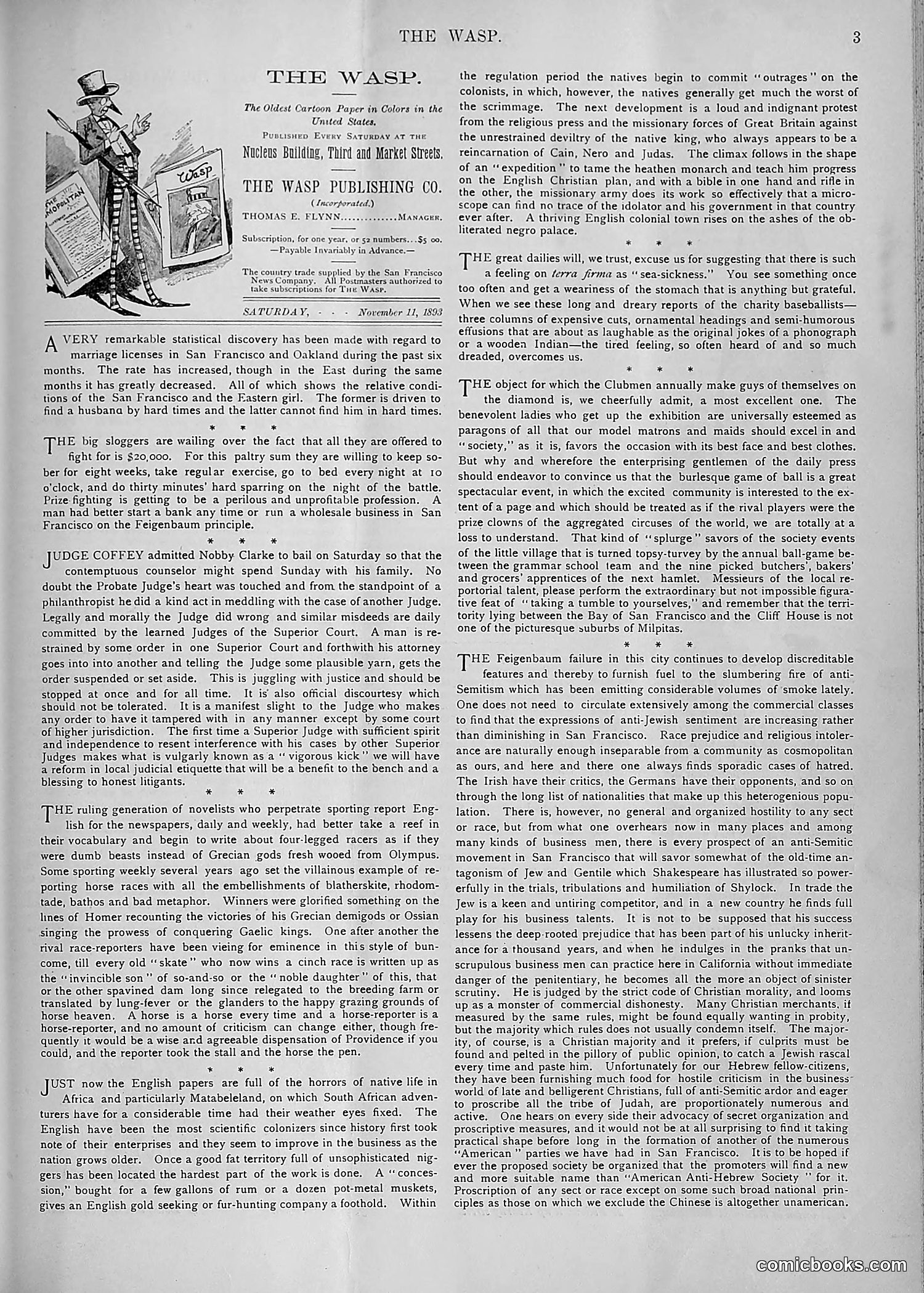
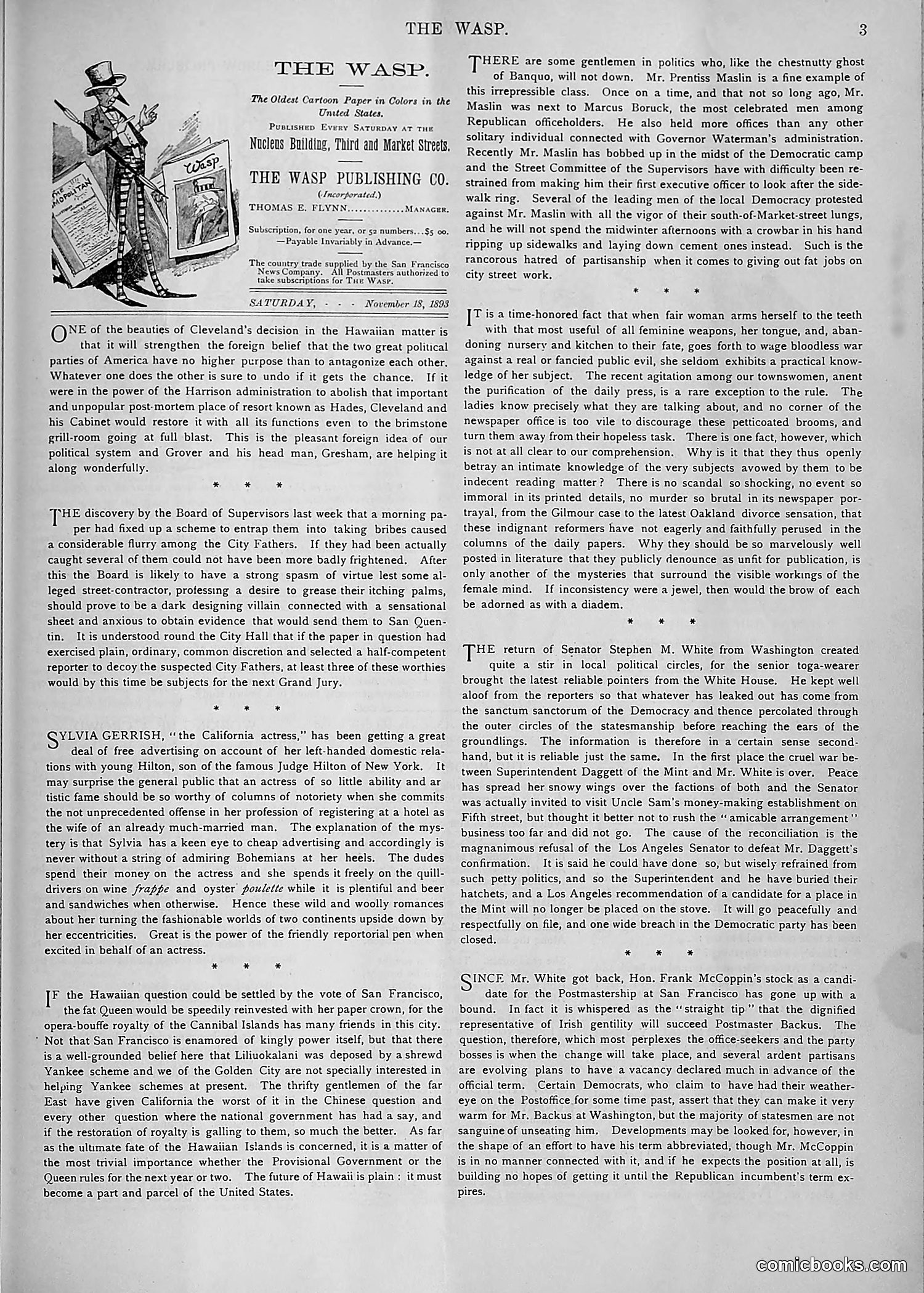
# The Wasp, July 1, 1893 — Political Satire Page This is primarily a **text-based editorial page** rather than a cartoon page. The masthead identifies *The Wasp* as "The Oldest Cartoon Paper in Colors in the United States," published in San Francisco. The content satirizes **local San Francisco Democratic politics**, particularly mocking Max Popper's recent election as Democratic party chief. The editorial ridicules Popper and associates like Senator Stephen M. White, using cutting commentary about their political ambitions and character flaws. The piece also critiques **Judge Sullivan**, **Mayor McAllister**, and comments on **Pope Leo's recent encyclical** regarding American archbishops—mixing local political mockery with broader Catholic Church controversy. The satire's main target: opportunistic Democratic office-seekers and their transparent self-serving ambitions in San Francisco.
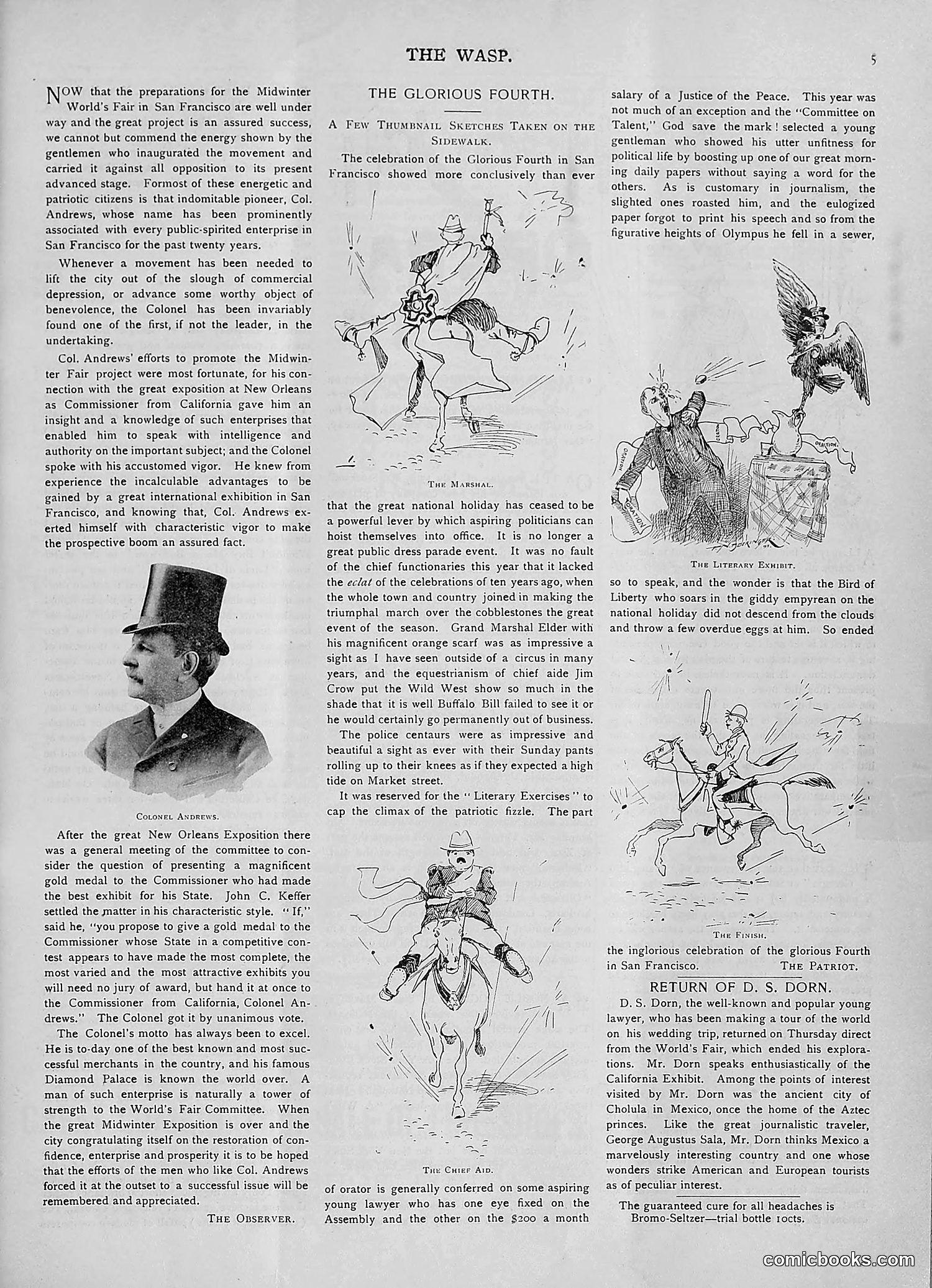
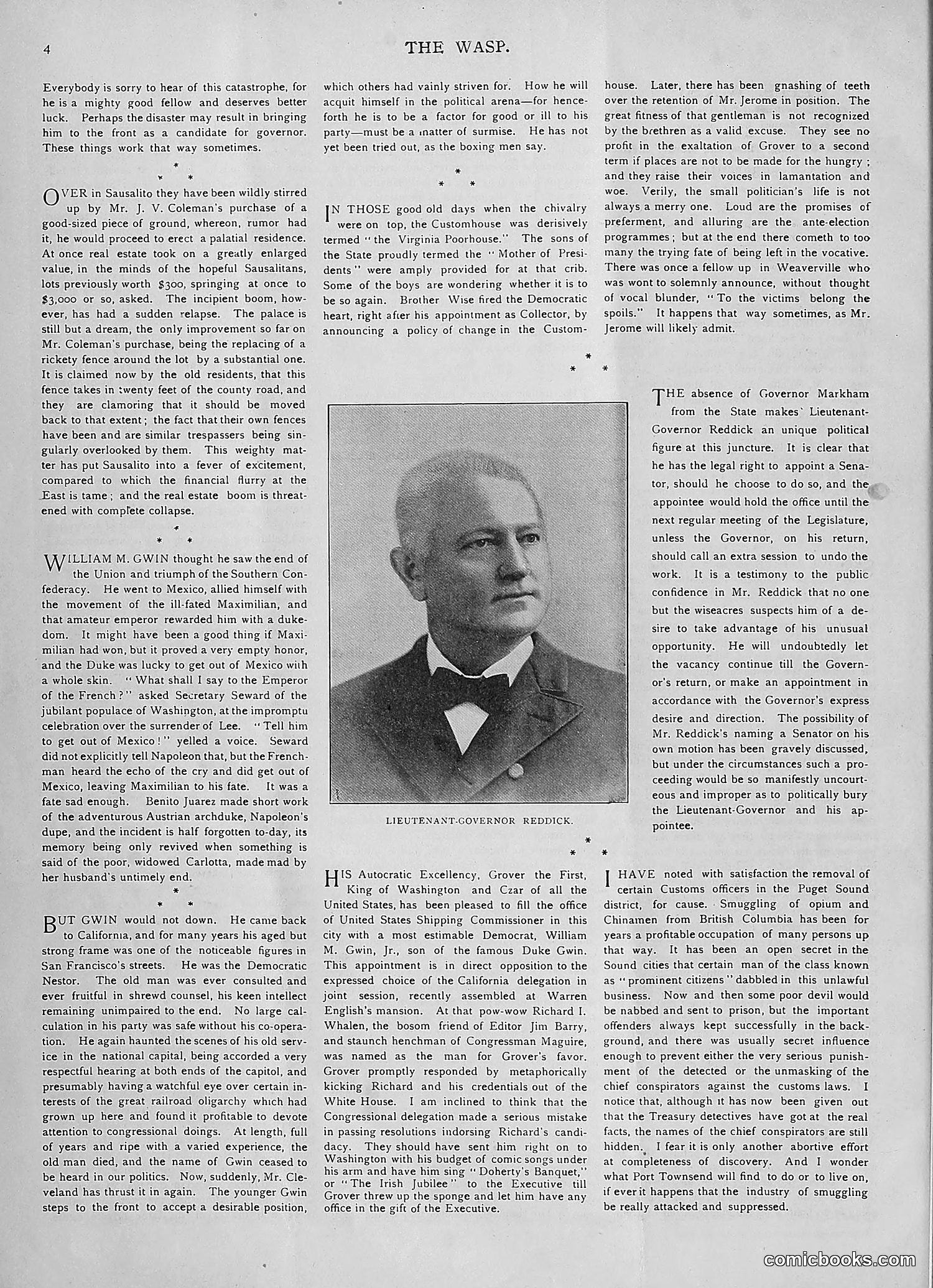
# Analysis of The Wasp Page This page contains several satirical political articles rather than cartoons. The central portrait shows **Lieutenant-Governor Reddick**, who apparently filled in during Governor Markham's absence. The articles mock various California political figures and events: 1. A **Sausalito real estate scandal** involving Mr. Coleman's land purchase and fence disputes 2. **William M. Gwin's** failed attempt to establish a Mexican duchy after the Civil War 3. **Governor Reddick's** unusual political position and the speculation about his potential Senate appointment The satire targets political opportunism, backroom deals, and the questionable judgment of state officials. The writing tone is sardonic, criticizing both the absurdity of Gwin's imperial delusions and Reddick's ambiguous political standing. The magazine appears focused on exposing California's corrupt or incompetent governance during this period.
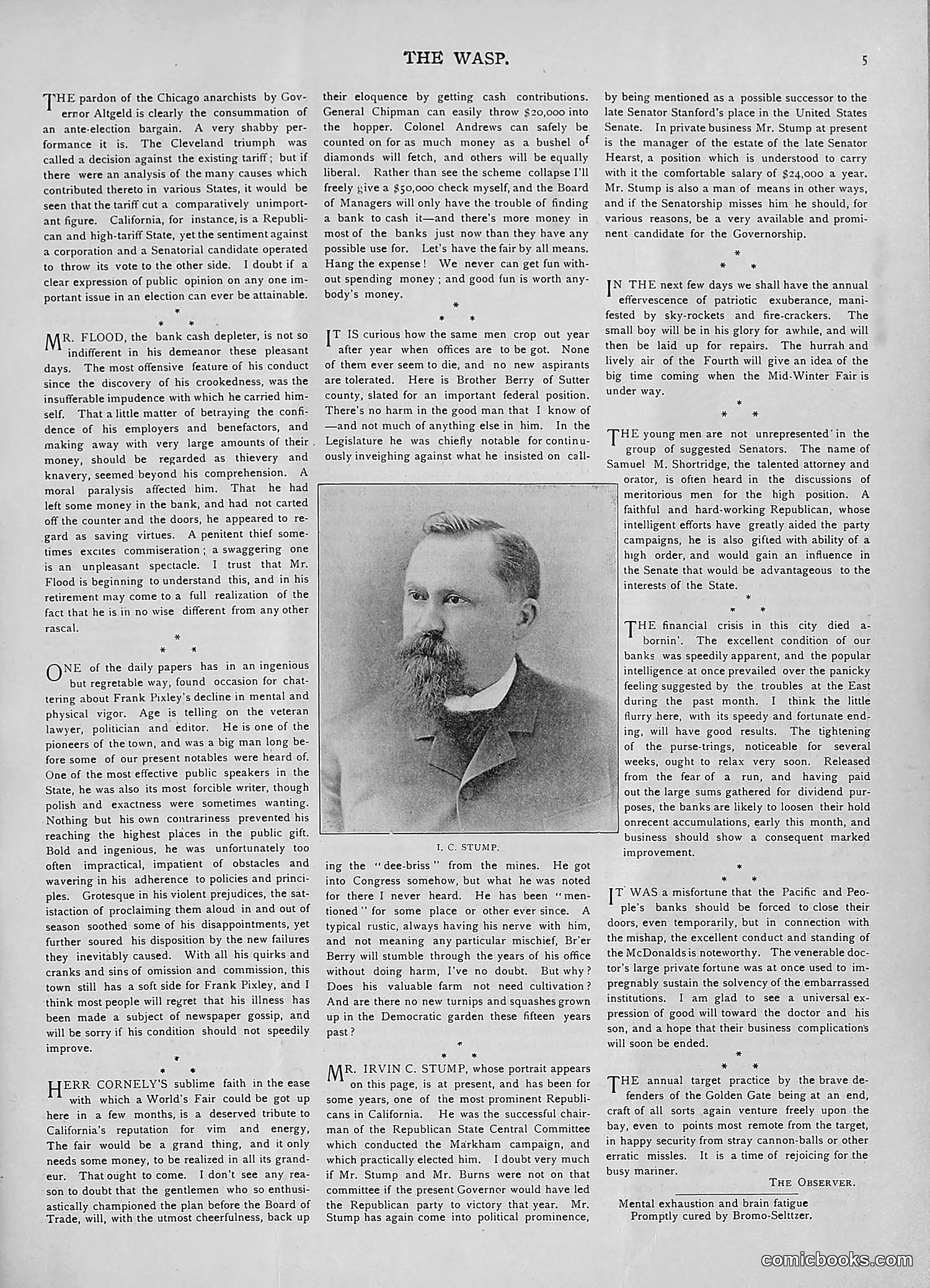
# The Wasp Magazine Page - Political Commentary This page contains satirical political commentary rather than cartoons. The text attacks several California Republican figures of the era, including Governor Altgeld, a bank official named Flood, and I.C. Stump (whose portrait appears on the page). The satire focuses on: - Political corruption and financial impropriety among Republican leaders - A bank cash depletion scandal involving Flood - Criticism of aging politicians like Frank Pixley for declining mental vigor - Commentary on Republican political maneuvering and succession issues The writing style is caustic, using personal attacks and sarcasm to expose what the author views as hypocrisy and moral failure among the state's political establishment. The magazine positions itself as an independent voice challenging Republican power brokers.