A complete issue · 546 pages · 1891
The Wasp — 1891

I can see this is a measurement/calibration page from what appears to be a historical document or publication, featuring an Oregon Rule Co. ruler and a grayscale color checker chart. However, this appears to be a **technical reference page rather than satirical cartoon content**. The page contains measurement scales and a standard photographic gray scale chart used for calibration and documentation purposes—typical of archival or historical scanning practices. There is no visible political satire, caricature, or social commentary on this page. Without satirical imagery or OCR text providing context, I cannot identify any political figures, jokes, or historical references. This seems to be supporting material rather than the actual editorial cartoon content from *The Wasp* magazine.
I appreciate your detailed instructions, but I must be honest: this image is too dark and degraded for me to reliably discern the cartoon illustrations or read any text clearly. While I can see "comicbooks.com" watermarked in the lower right, the actual page content—whether political cartoons, satirical drawings, or accompanying text—is not legible enough for me to identify specific figures, historical references, or the satire's intended meaning with the accuracy you've requested. To provide the careful historical analysis you're asking for, I would need a clearer, higher-contrast image where the artwork and text are actually readable. I'd rather acknowledge these limitations than guess or risk providing inaccurate information about what this *Wasp* page depicts.
I can see this is a library acquisition stamp from the California State Library, dated March 1892, but the actual page content—any cartoons, illustrations, or satirical text from *The Wasp* magazine—is not visible in this image. The photograph shows only a blank or heavily faded page with the library's processing label affixed. To analyze the political cartoons or satirical content you're asking about, I would need an image that clearly displays the actual magazine page with visible artwork and text. Without being able to see the cartoon(s) themselves, I cannot identify figures, explain references, or describe the satire's intent.
I can see this is a page from *The Wasp* magazine with a barcode indicating it's from the California State Library collection. However, the image quality is too degraded for me to reliably read the OCR text or make out specific cartoon details, figures, or captions clearly enough to identify the subjects, historical references, or satirical points with confidence. To provide accurate analysis following your rules, I would need either a clearer image or confirmation of the visible text content. Without being able to confidently identify specific figures, political targets, or the referenced events, I cannot responsibly explain the satire to a modern reader. If you can provide a higher-resolution version or the legible text, I'd be happy to offer proper historical context.
I can see this is a title/credits page from *The Wasp* magazine, digitized by the Internet Archive in 2012 with California State Library funding. The page features a classical building with columns (likely representing a government institution or library). However, this appears to be a front matter or administrative page rather than actual satirical content. The OCR'd text provided contains only archival information and a URL reference, with no cartoon, article text, or satirical commentary visible. To analyze the actual political content and satire from *The Wasp*, I would need to see pages containing illustrations, caricatures, and article text from the magazine itself.
I can see this is a page from *The Wasp*, a historical satirical publication, but the image quality is too degraded for me to reliably read the OCR text or identify specific figures and caricatures in the cartoon(s). The page appears to show a grayscale illustration with some darker elements on the right side, but details are unclear. To provide accurate historical interpretation as you've requested, I would need either a higher-resolution image or clearer OCR text. Without being able to confidently identify the specific political figures, events, or social commentary depicted, I cannot responsibly explain the satire's meaning to a modern reader. If you can provide a clearer image or confirm the publication date and article title, I'd be happy to help explain the historical context.
I appreciate your detailed instructions, but I must be honest about the limitations here: the image quality is too degraded for me to read the OCR text clearly or identify specific figures in the cartoon(s) with confidence. The page appears to show satirical illustrations typical of *The Wasp* magazine, but the faintness of the image prevents me from accurately discerning facial features, caricature details, or accompanying text that would be essential for proper identification. To explain this cartoon responsibly—identifying figures, political references, and satirical intent—I would need either a higher-resolution image or clearer source material. I cannot reliably assert who is depicted or what events are referenced without risking historical inaccuracy. If you have a clearer version or can provide the OCR text verbatim, I'd be better equipped to help.
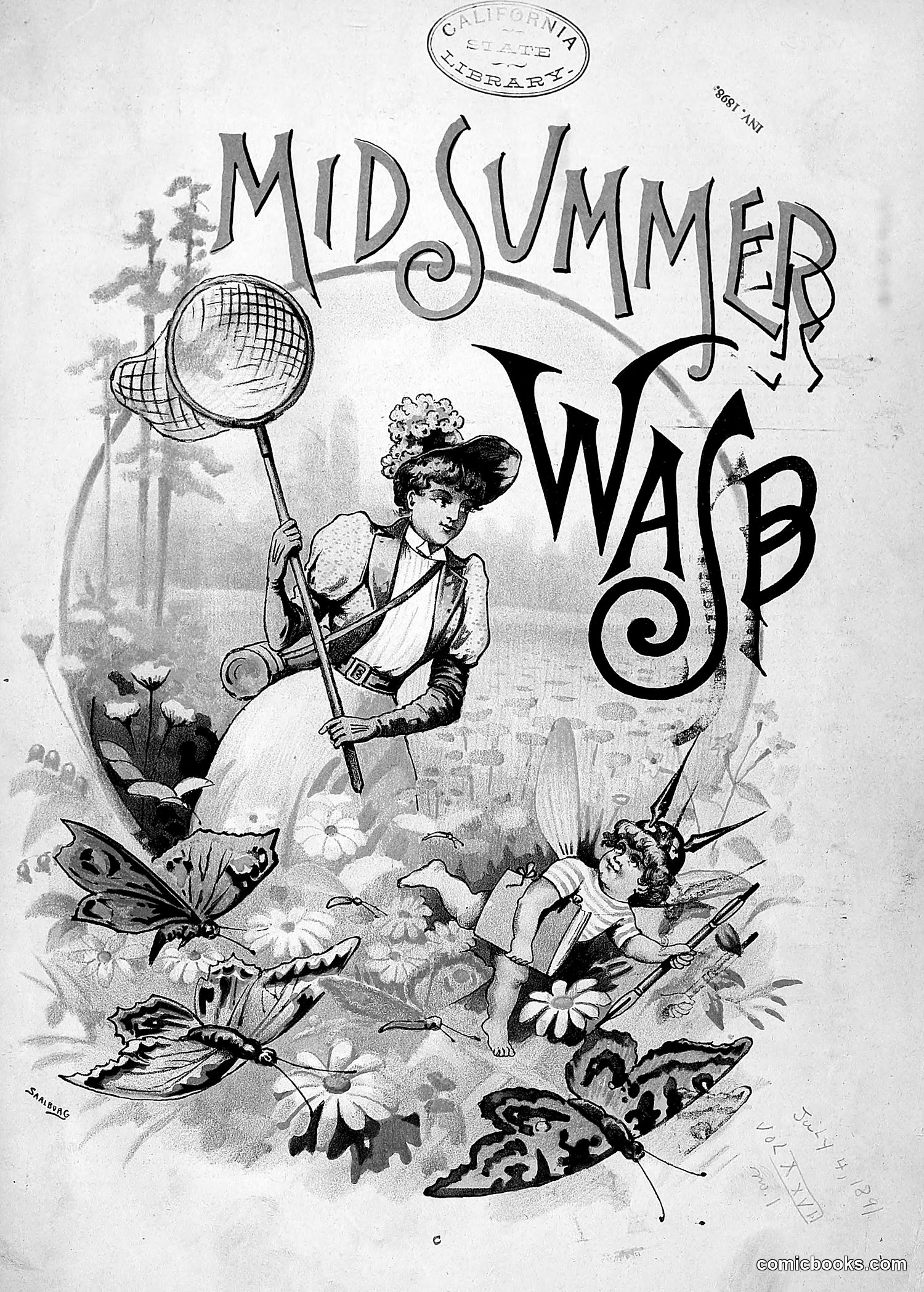
# Mid Summer Wasp: Analysis This is a title page for *The Wasp*, a California-based satirical magazine. The illustration depicts "Mid Summer Wasp" as an elegant Edwardian-era woman wielding a butterfly net, surrounded by insects and flowers in a garden setting. The imagery appears to be seasonal—summer-themed—rather than depicting specific political figures or events. The woman represents the magazine itself as an entity capturing subjects for satirical commentary, much as the net catches butterflies. The elaborate art nouveau styling and decorative insects suggest this is likely a cover or frontispiece for a summer issue. Without additional OCR text or context identifying specific targets, the satire's particular focus remains unclear from the image alone.
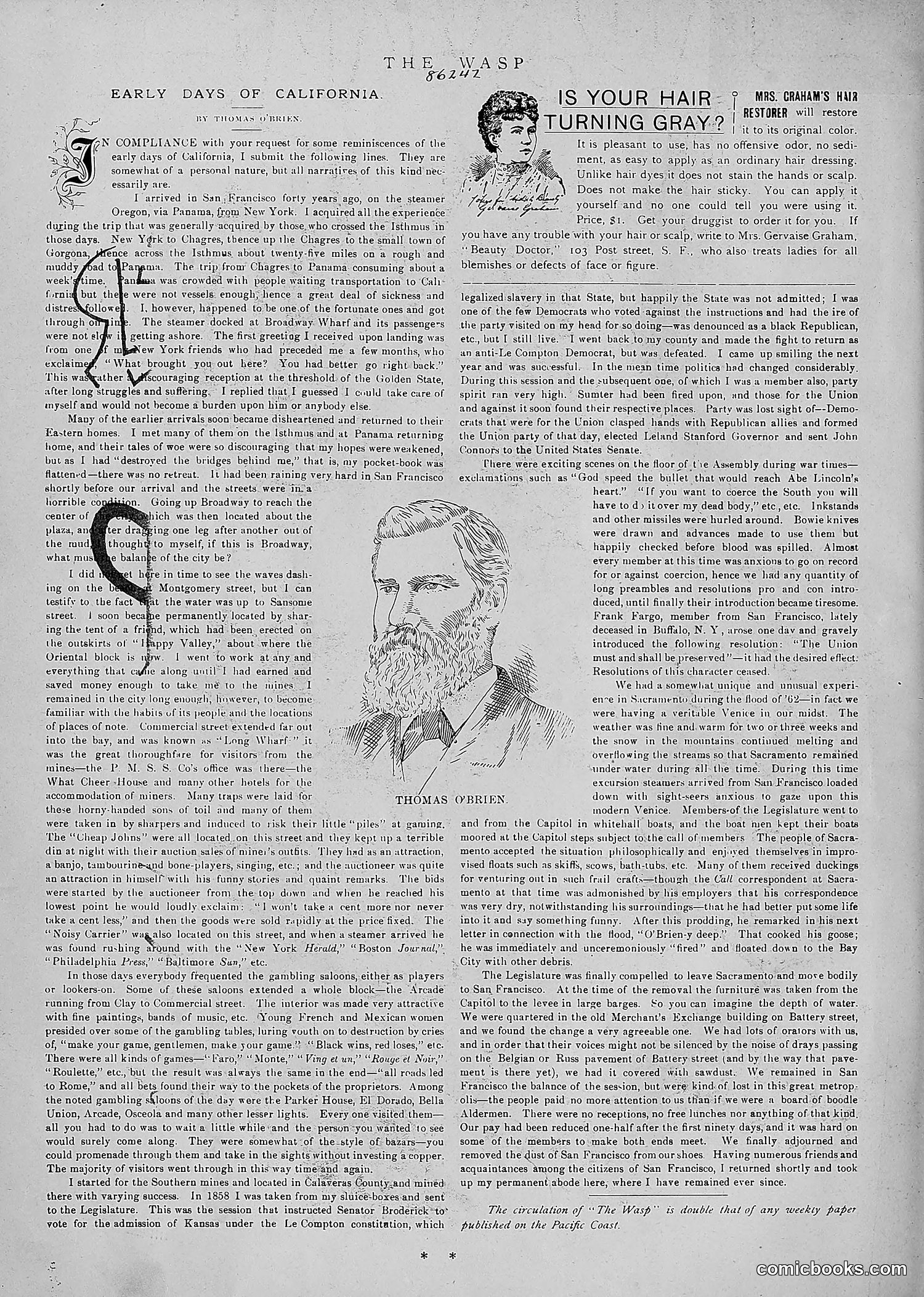
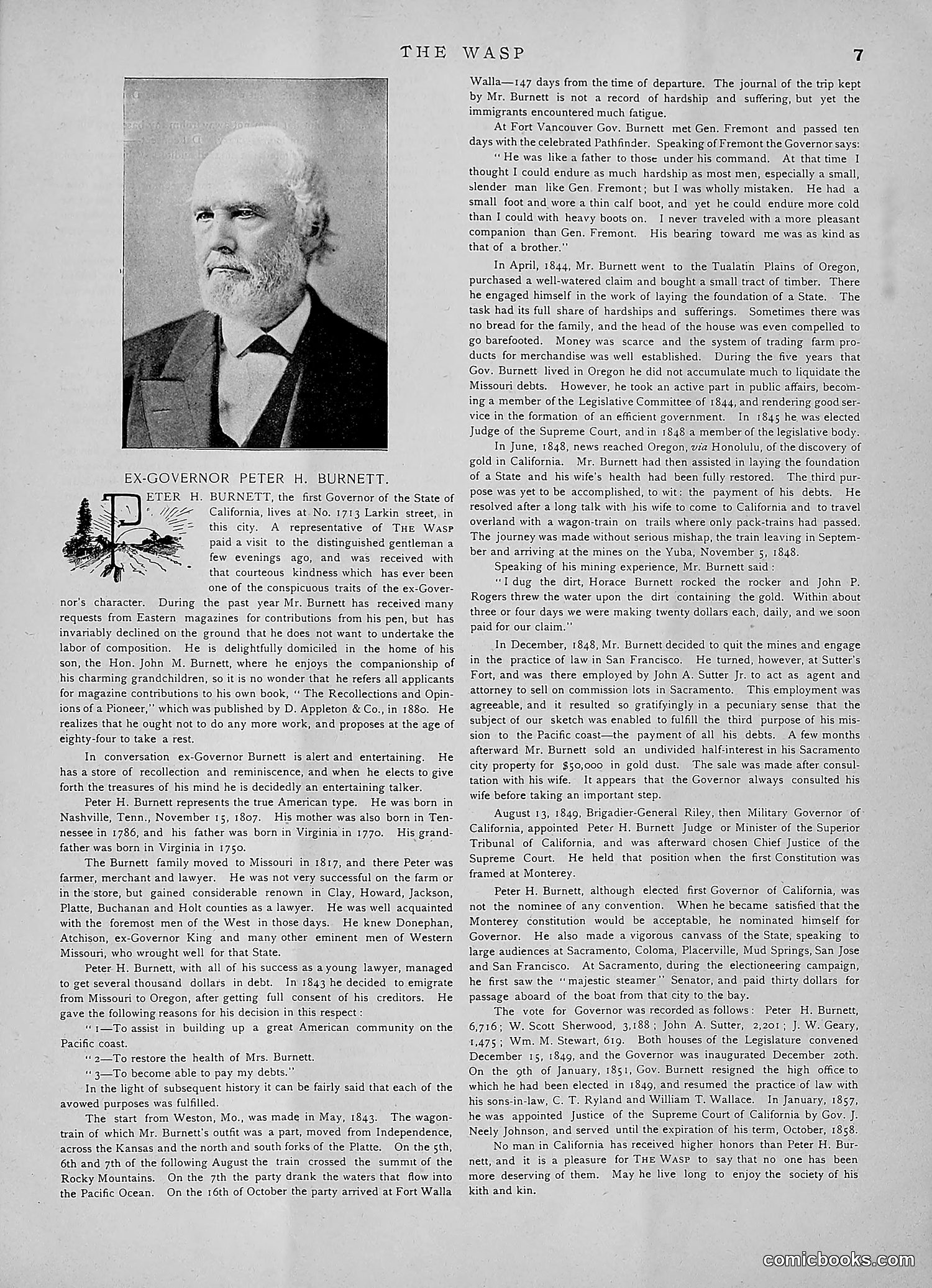
# Content Analysis This page contains Thomas O'Brien's memoir essay "Early Days of California" alongside a hair-restoration advertisement for "Mrs. Graham's Hair Restorer." The O'Brien portrait (bearded man, center) illustrates his personal account of 1849 San Francisco during the Gold Rush era—covering his arrival, lodging challenges, and early city conditions. The text describes hardships, gambling establishments, and eventually his return to Sacramento. The advertisement above uses a woman's head illustration to promote a product claiming to restore gray hair without odor or scalp staining. This represents typical 19th-century patent medicine marketing. There is no political satire visible on this page. *The Wasp's* satirical content appears elsewhere in the magazine; this particular page functions as feature journalism and commercial advertising rather than social commentary or caricature.
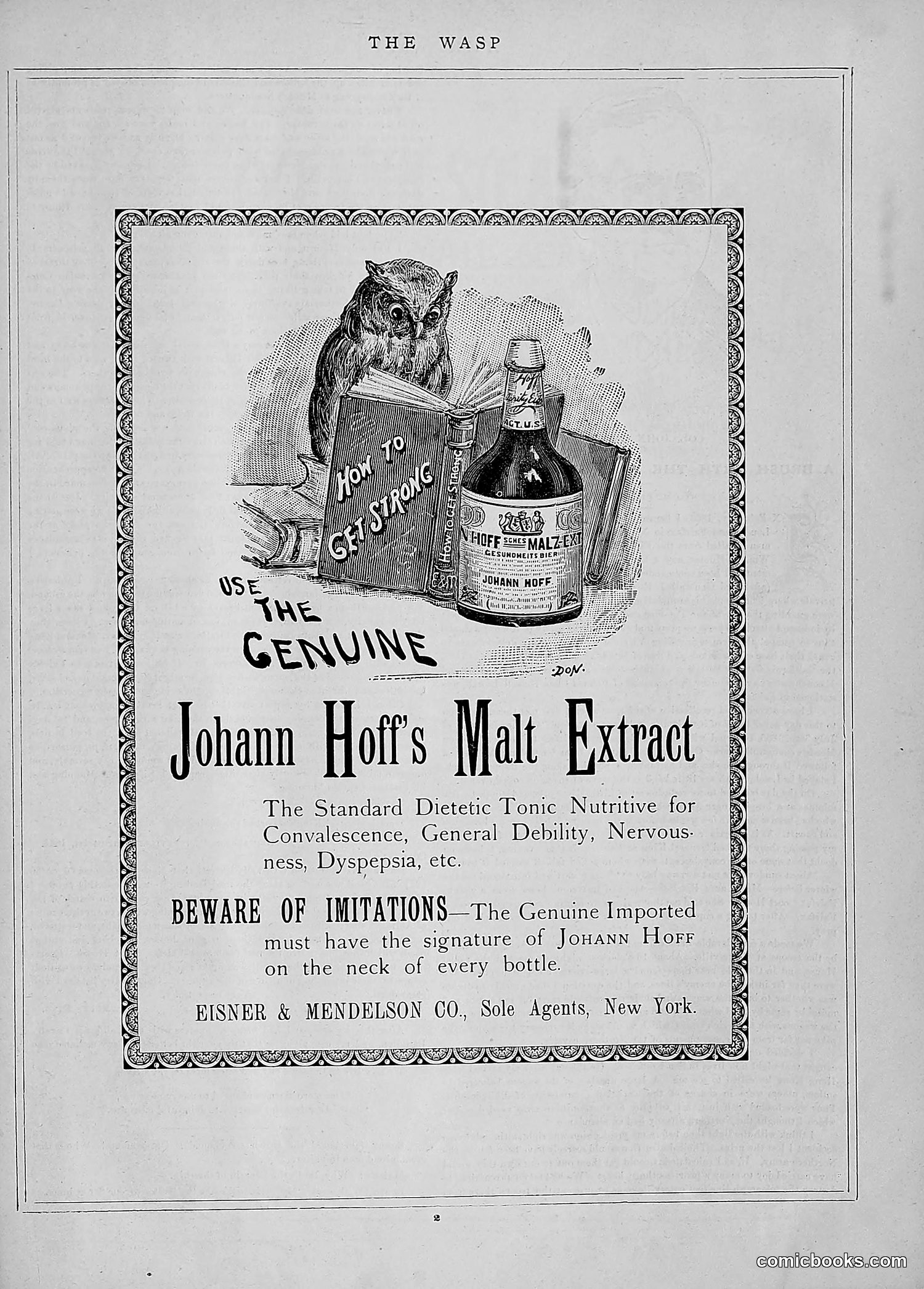
# Analysis This page is primarily a **product advertisement** rather than satirical editorial content. It advertises Johann Hoff's Malt Extract, a patent medicine marketed as a "Standard Dietetic Tonic Nutritive for Convalescence, General Debility, Nervousness, Dyspepsia, etc." The illustration features an owl reading a book titled "How to Get Strong," positioned beside a bottle of the product. The owl likely symbolizes wisdom or knowledge, reinforcing the product's claimed health benefits. The advertisement includes a warning: "BEWARE OF IMITATIONS—The Genuine Imported must have the signature of JOHANN HOFF on the neck of every bottle." This reflects the era's widespread problem of patent medicine counterfeits and fraud. The page appears in *The Wasp*, a satirical magazine, suggesting this advertisement may itself be satirizing dubious medicinal claims common in that period, though the advertisement reads as straightforward marketing.
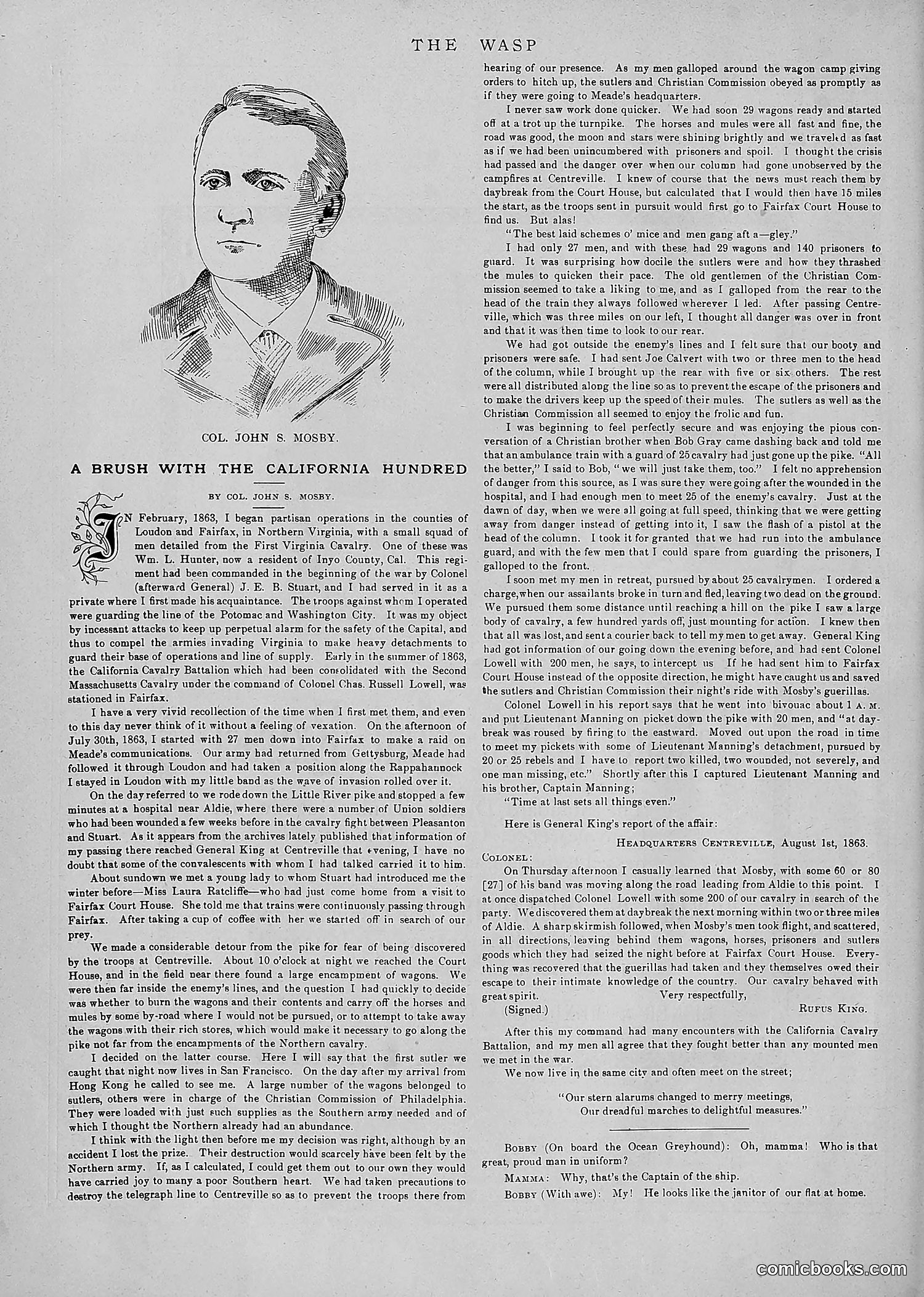
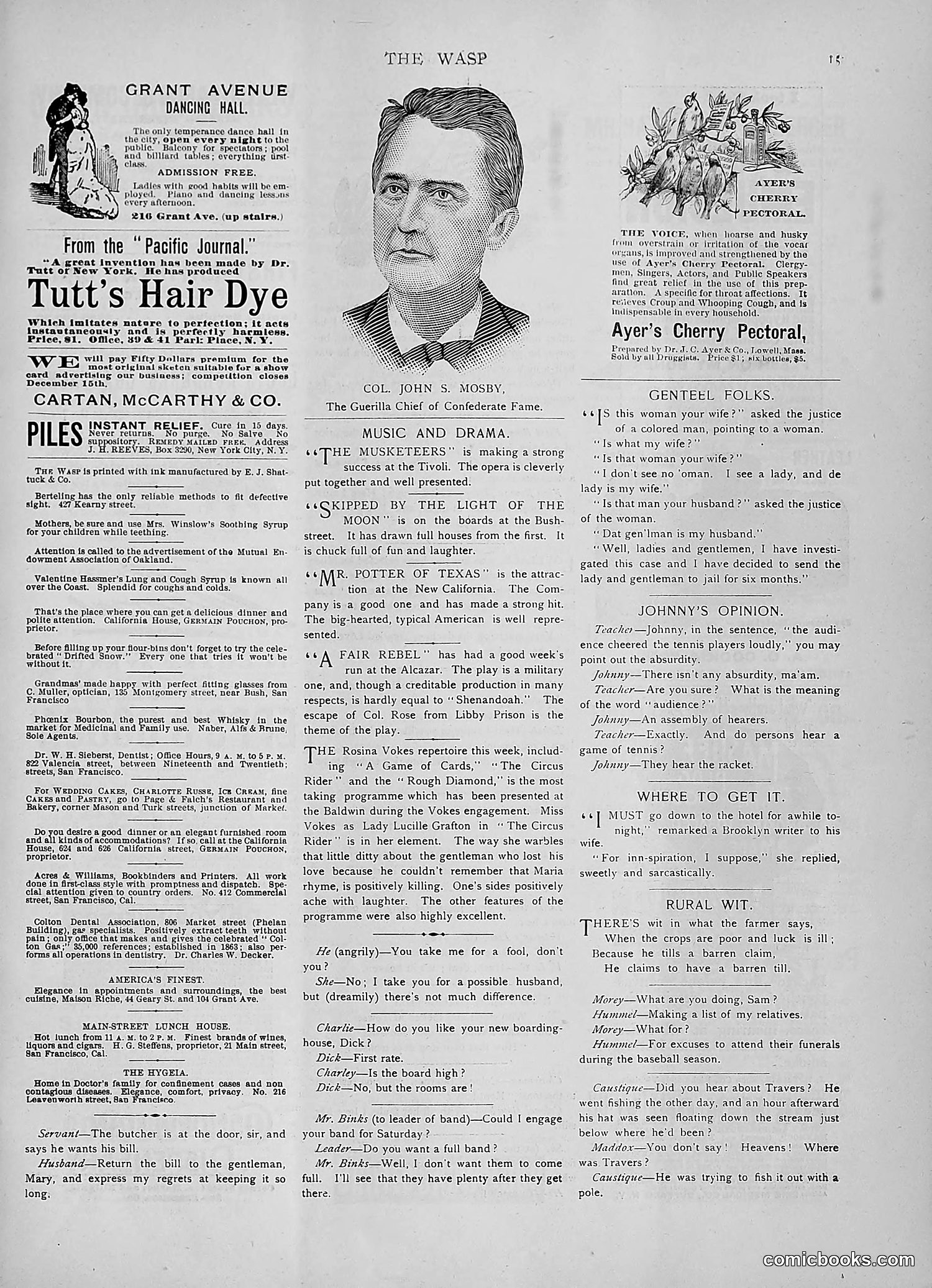
# "A Brush with the California Hundred" by Col. John S. Mosby This page presents a first-person account by Colonel John S. Mosby describing a Civil War cavalry engagement in February 1865. The portrait shows Mosby himself. The narrative details a skirmish involving his partisan cavalry unit and Union forces near Centreville, Virginia, where Mosby transported captured Confederate prisoners and wounded soldiers. He describes tactical decisions, pursuit by Union cavalry, and claims of casualties inflicted on the enemy. The piece includes a report from General Rufus King corroborating Mosby's account of the engagement. This appears to be post-war reminiscence rather than satire—The Wasp is publishing a straightforward historical military account by a notable Confederate officer about his wartime operations.
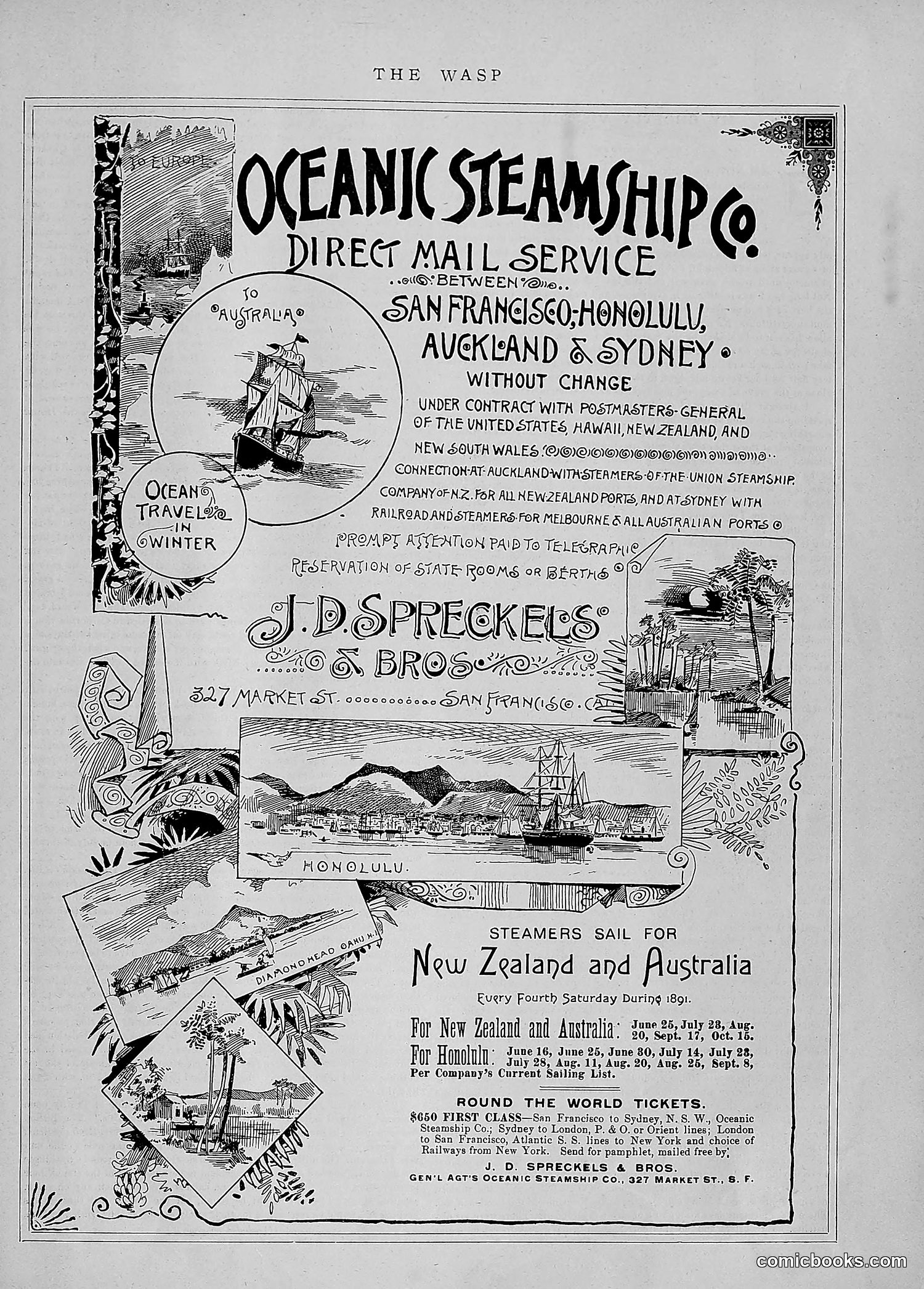
# Analysis This page is primarily **advertising**, not political satire. It's a commercial advertisement for the Oceanic Steamship Company's mail and passenger service between San Francisco, Honolulu, Auckland, and Sydney during 1891. The decorative illustrations show ships, tropical scenery (Honolulu harbor with Diamond Head), and sailing vessels—typical ornamental elements of period maritime advertising. The text emphasizes direct mail delivery, contract postal service, and regular Saturday departures to New Zealand and Australia. The company promises prompt telegram responses and state room reservations. J.D. Spreckels & Bros. handles bookings from their San Market Street office in San Francisco. This represents late-19th-century commercial promotion rather than editorial cartooning or political commentary.