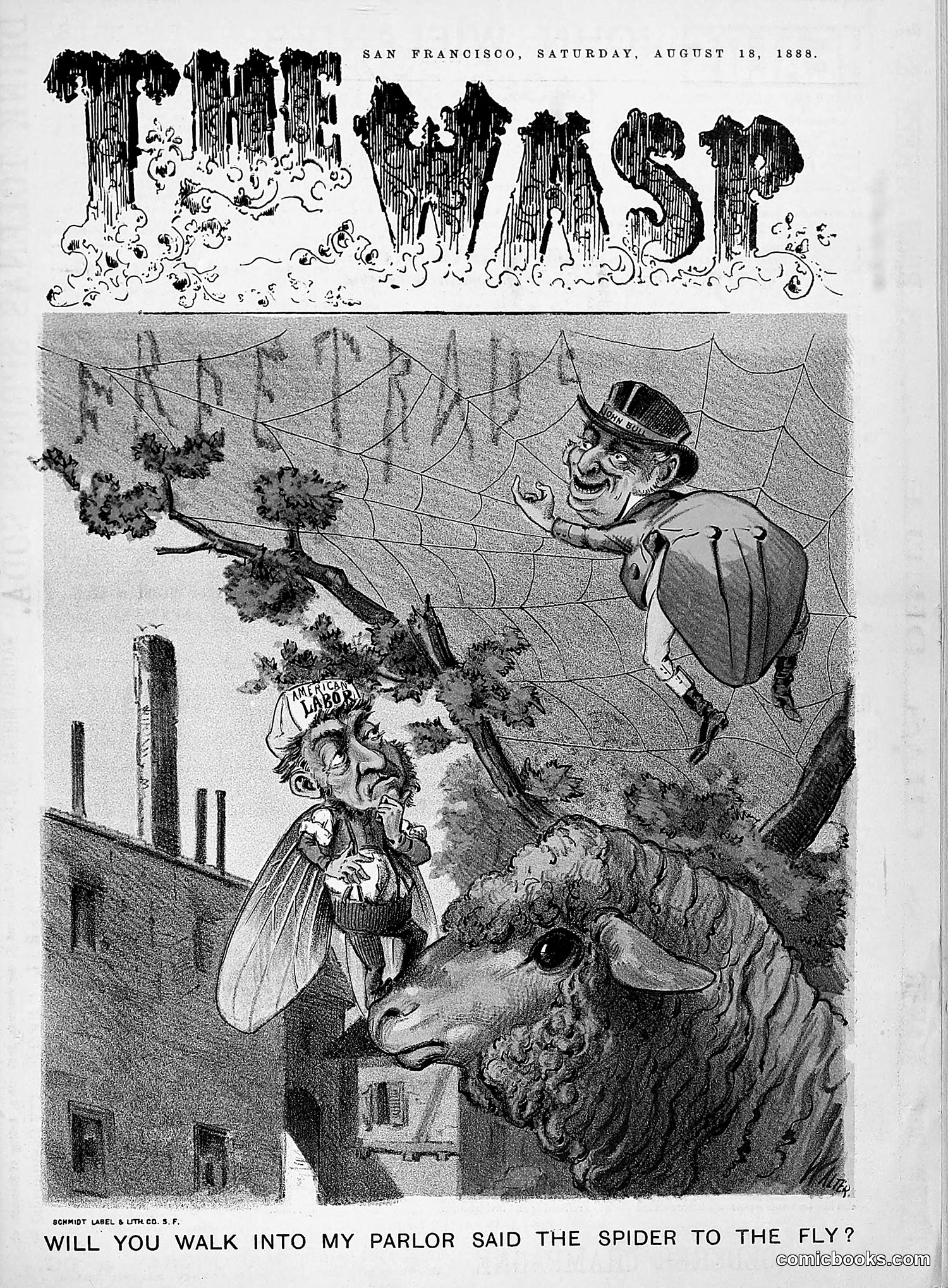
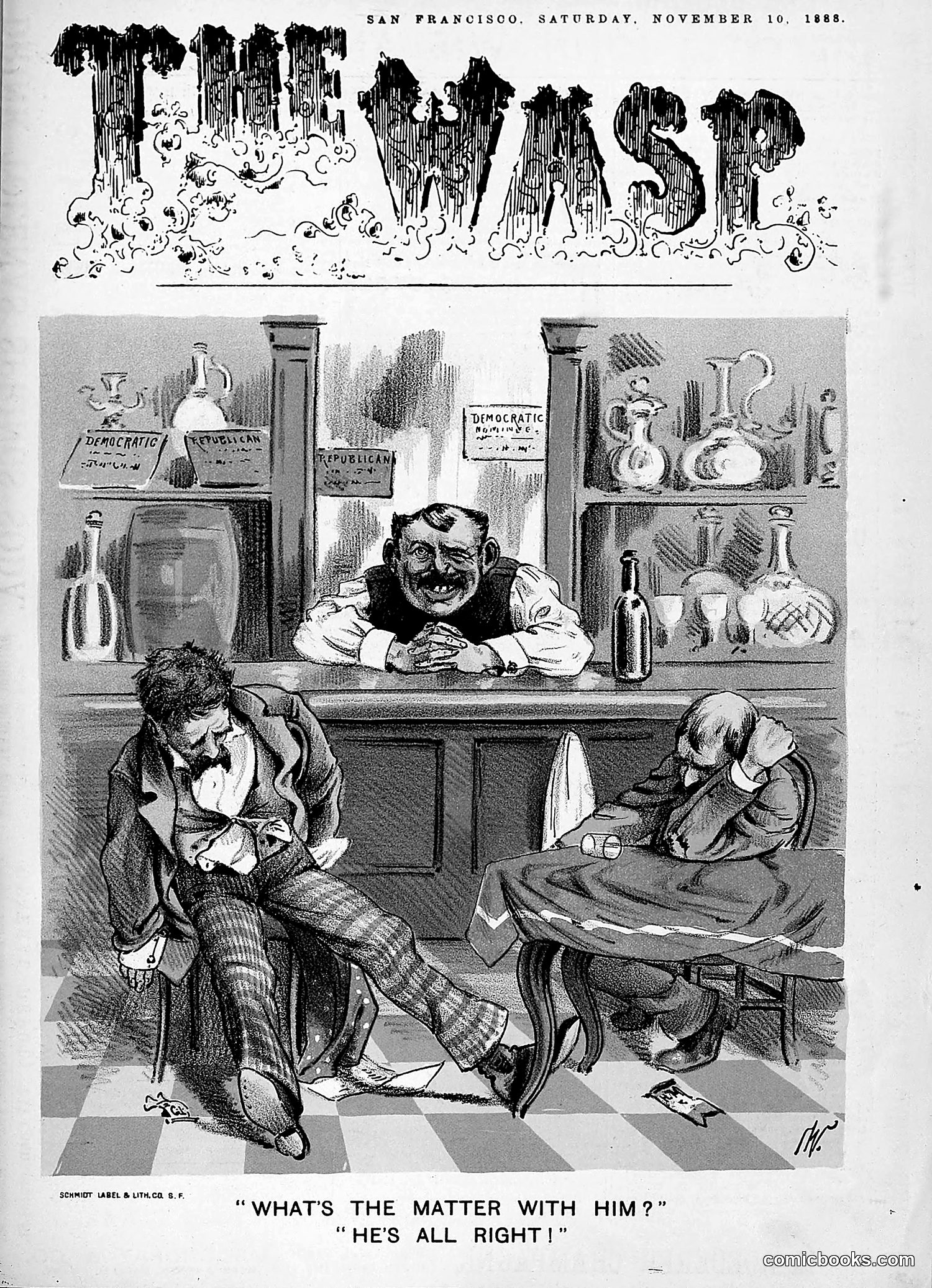
A complete issue · 552 pages · 1888
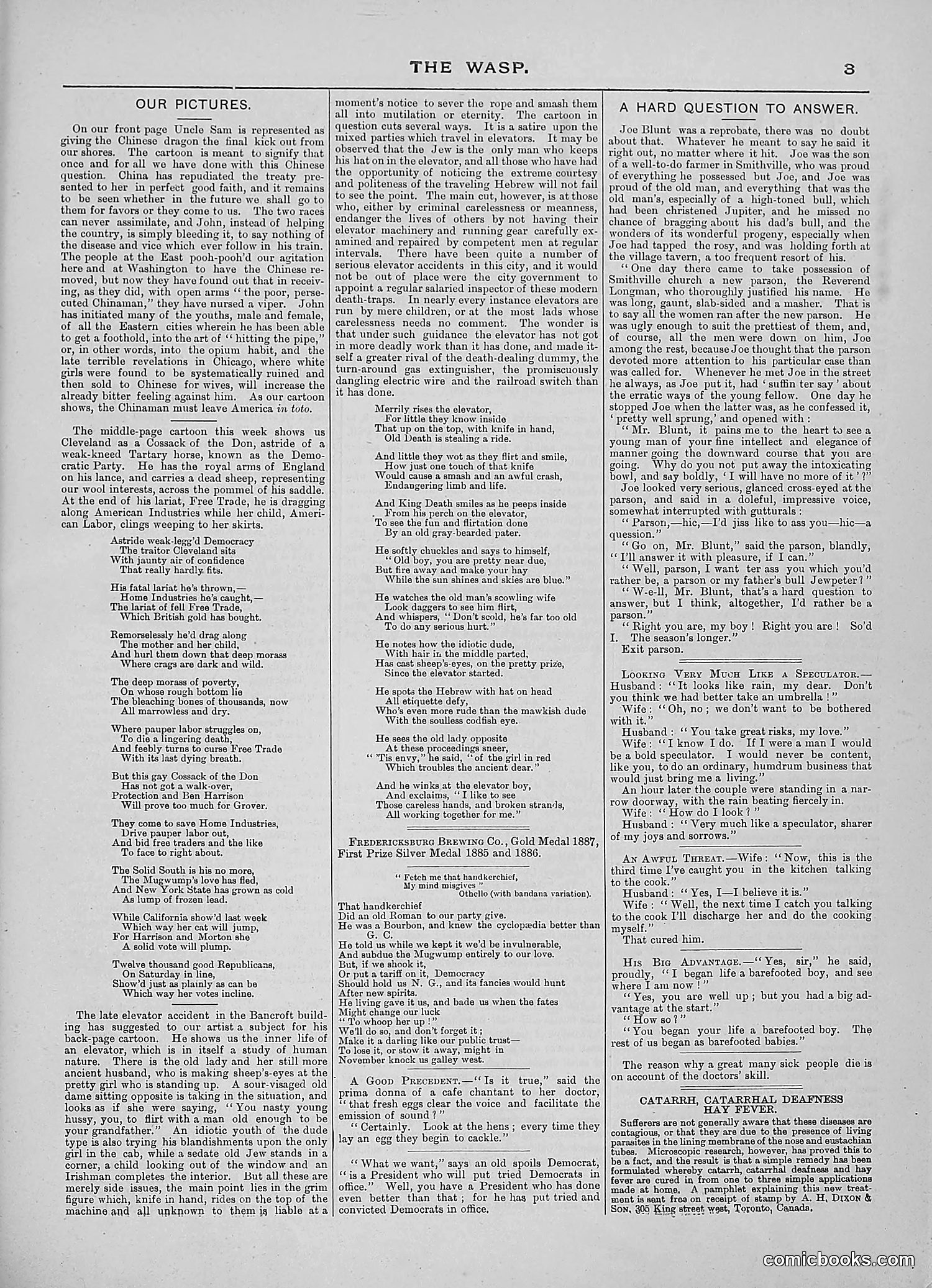
The Wasp — 1888

I can see this is a measurement/calibration page from *The Wasp* magazine, featuring Oregon Rule Co. rulers and a grayscale color chart for photographic documentation. However, the image quality and the nature of this particular page—which appears to be a technical reference sheet rather than editorial content—makes it impossible to identify specific political cartoons, figures, or satirical commentary. This looks like a production or archival page used to standardize measurements and color reproduction in photographing the magazine's contents, rather than a page containing actual satirical editorial material. Without visible cartoon illustrations or readable satirical text content, I cannot identify the historical references or social commentary you're asking about.
I can see this is a page from *The Wasp* magazine with a dark textile or fabric pattern visible, but I cannot discern any clear cartoon imagery, text content, or identifiable figures in the image provided. The image appears to be either heavily degraded, extremely dark, or shows only a background texture without legible cartoon content or readable OCR text that would allow me to identify political figures, historical references, or satirical meaning. To provide accurate analysis per your guidelines, I would need a clearer image where the actual cartoon artwork and text are visible and distinguishable.
I can see this is a California State Library cataloging label (Accession No. 153684, Call No. C&O51 W3) affixed to what appears to be the cover or back cover of a bound volume. The page itself is blank gray material - likely the back cover or endpaper of a bound collection of *The Wasp* magazine. There are no visible cartoons, text content, or illustrations on this particular page to analyze. The image shows only the library label and binding material. To examine the actual satirical content and political cartoons from *The Wasp*, you would need to view interior pages of this volume.
I can see this is a page from *The Wasp*, a satirical publication, but the image quality is too degraded for me to make out specific cartoon illustrations, text details, or identifying features clearly enough to interpret the content with confidence. To properly explain what figures, political references, or satirical points are present, I would need either: - A clearer scan of the page - Legible OCR text (the current text appears to be missing or corrupted) Without being able to reliably read captions, see faces in the illustrations, or identify specific figures and dated events, I cannot responsibly identify who is being caricatured or what the satire targets. I'd rather acknowledge these limits than guess incorrectly about historical figures or events.
I can see this is a grayscale page from *The Wasp* magazine, but the image quality is too degraded for me to reliably read the OCR text or discern specific cartoon content, figures, or caricatures. The page appears to show some kind of textured or grainy surface with possible illustrations, but I cannot make out sufficient detail to identify political figures, social references, or the intended satire with confidence. To provide accurate historical analysis per your rules, I would need either a clearer image or confirmation of the specific date/issue, which would help contextualize what's depicted. I cannot responsibly identify figures or explain political references when the visual evidence is this unclear.
I can see this is a cover page from *The Wasp* magazine (digitized by Internet Archive in 2012), featuring a classical Greek or Roman temple illustration with four columns. However, the OCR text provided contains only the archival metadata and URL information, not the actual satirical content or captions that would typically accompany such an image. Without the original cartoon's text, headlines, or labels identifying the figures, I cannot reliably determine what specific political or social commentary this temple illustration represents. The neoclassical architecture might reference government institutions or civic ideals, but I cannot specify which without supporting textual evidence from the original page. To provide accurate historical analysis, I would need the complete OCR text including any captions or article titles.
I'm unable to reliably make out the specific details of the cartoon(s) or text on this page. The image quality is quite degraded—heavily grayscale with significant grain and deterioration that obscures both the illustrations and any legible text content. While this appears to be a page from *The Wasp* satirical magazine, I cannot confidently identify the figures, political references, or satirical points without being able to read the text or see the imagery clearly enough to analyze them accurately. To provide you with the kind of careful, historically grounded explanation you've requested, I would need a higher-quality image where the content is legible.
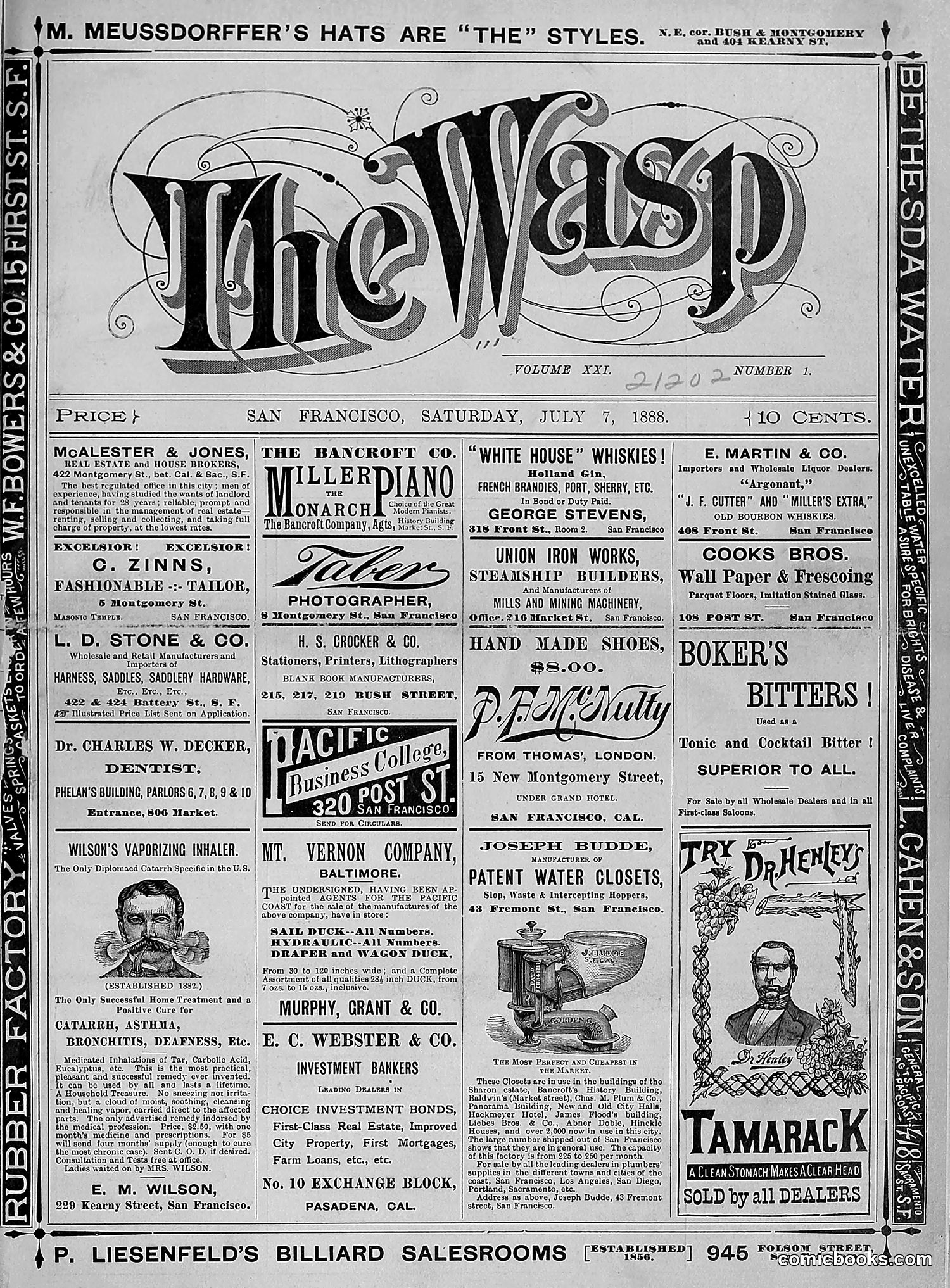
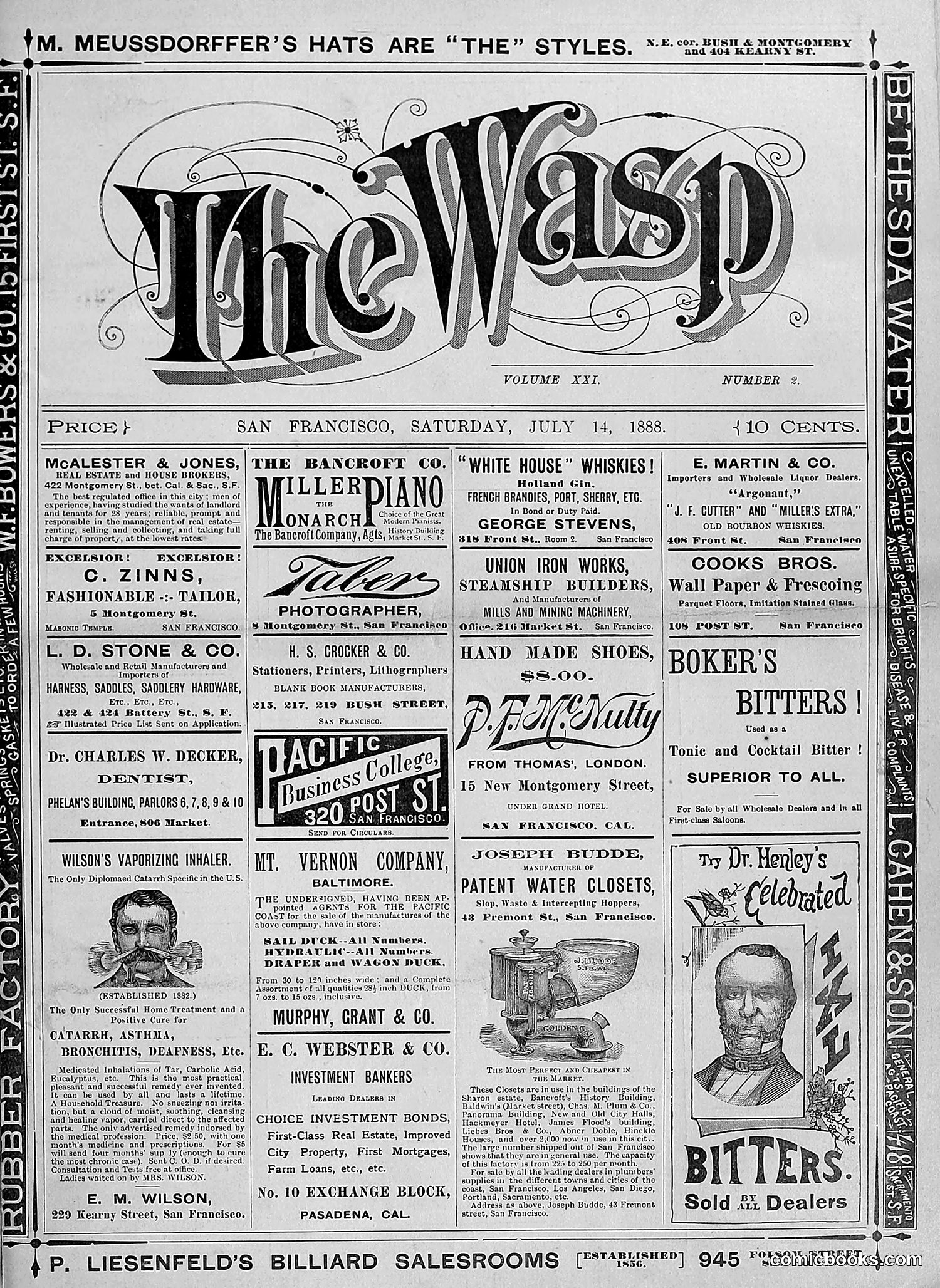
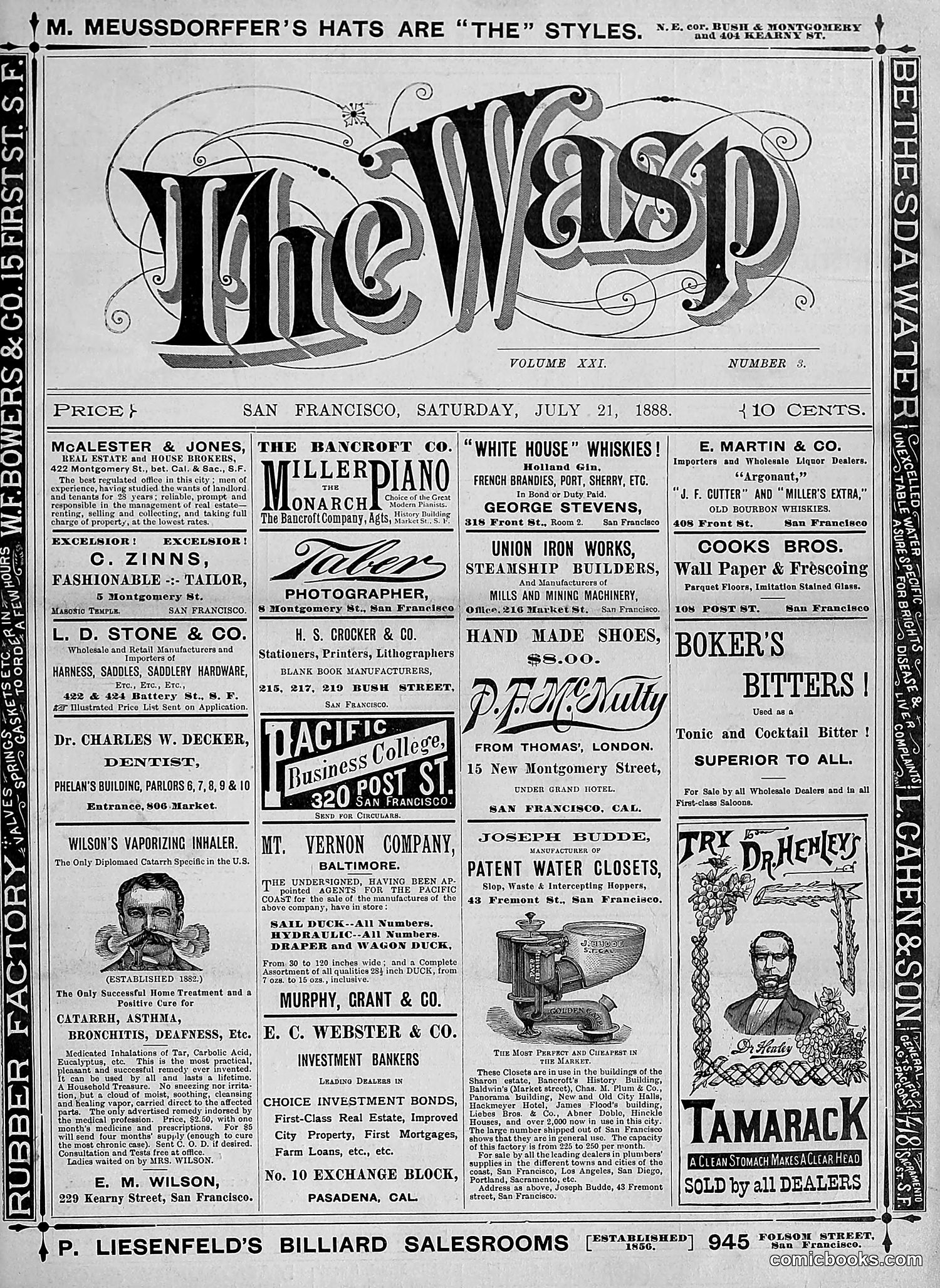
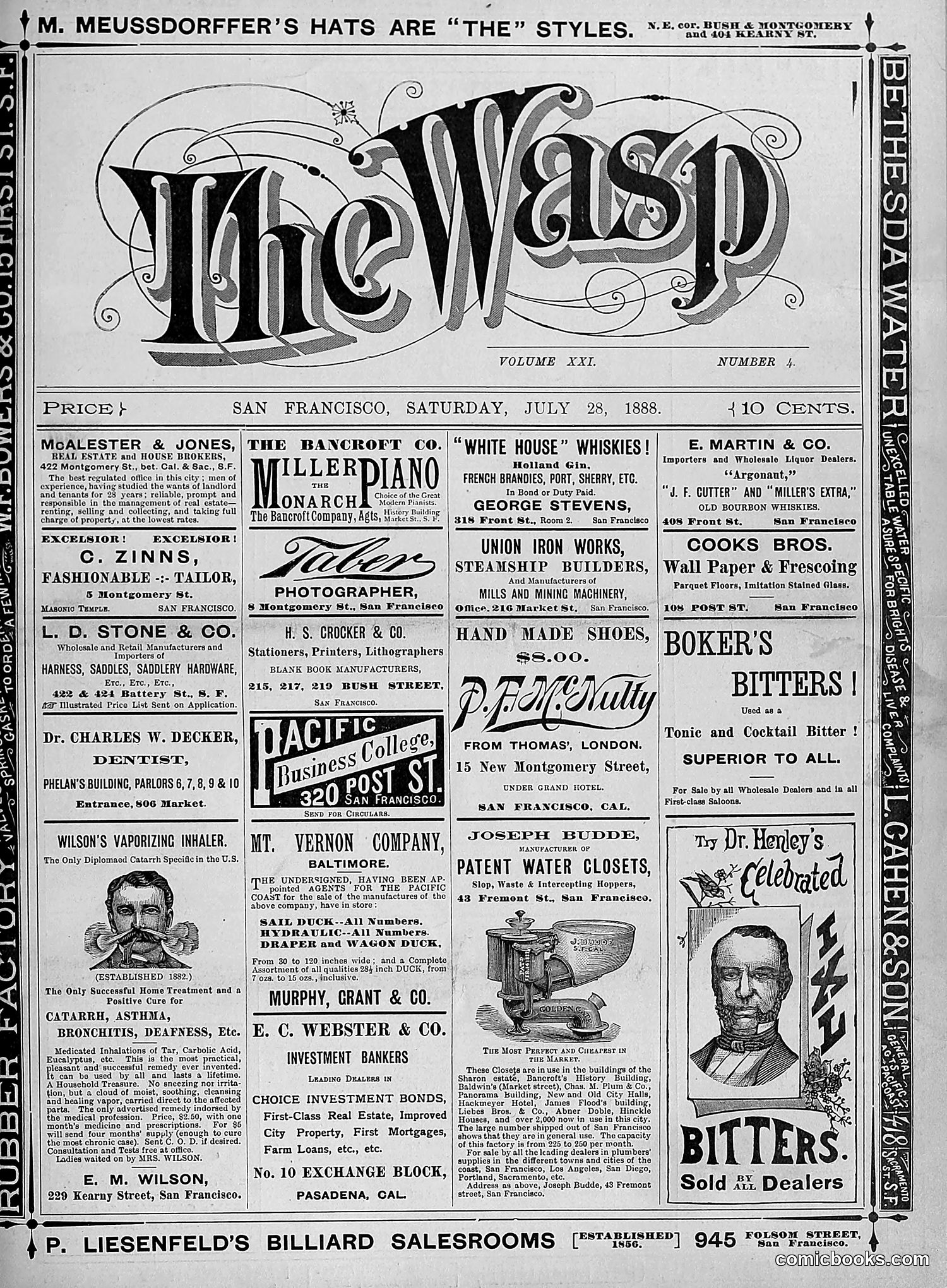
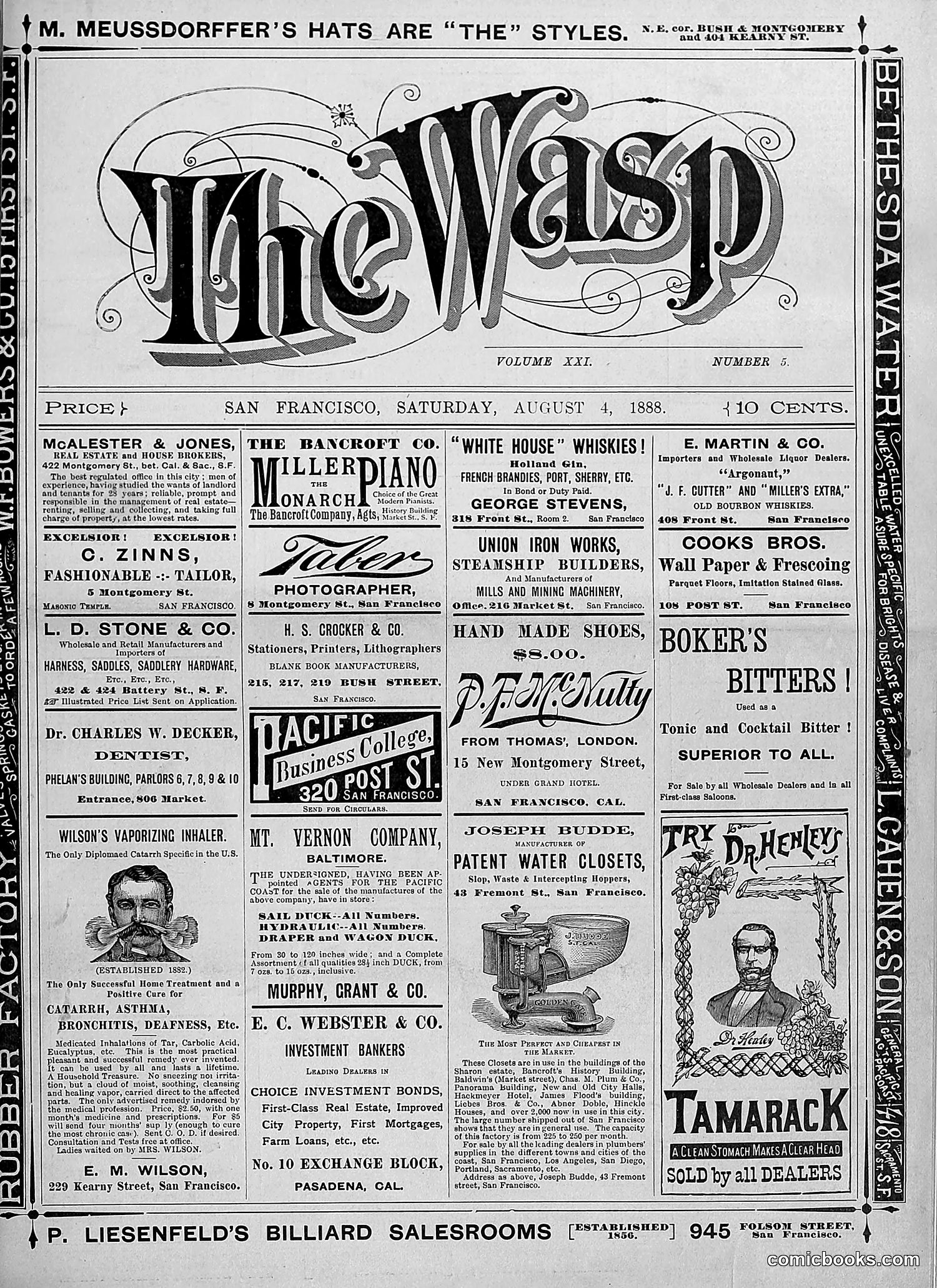
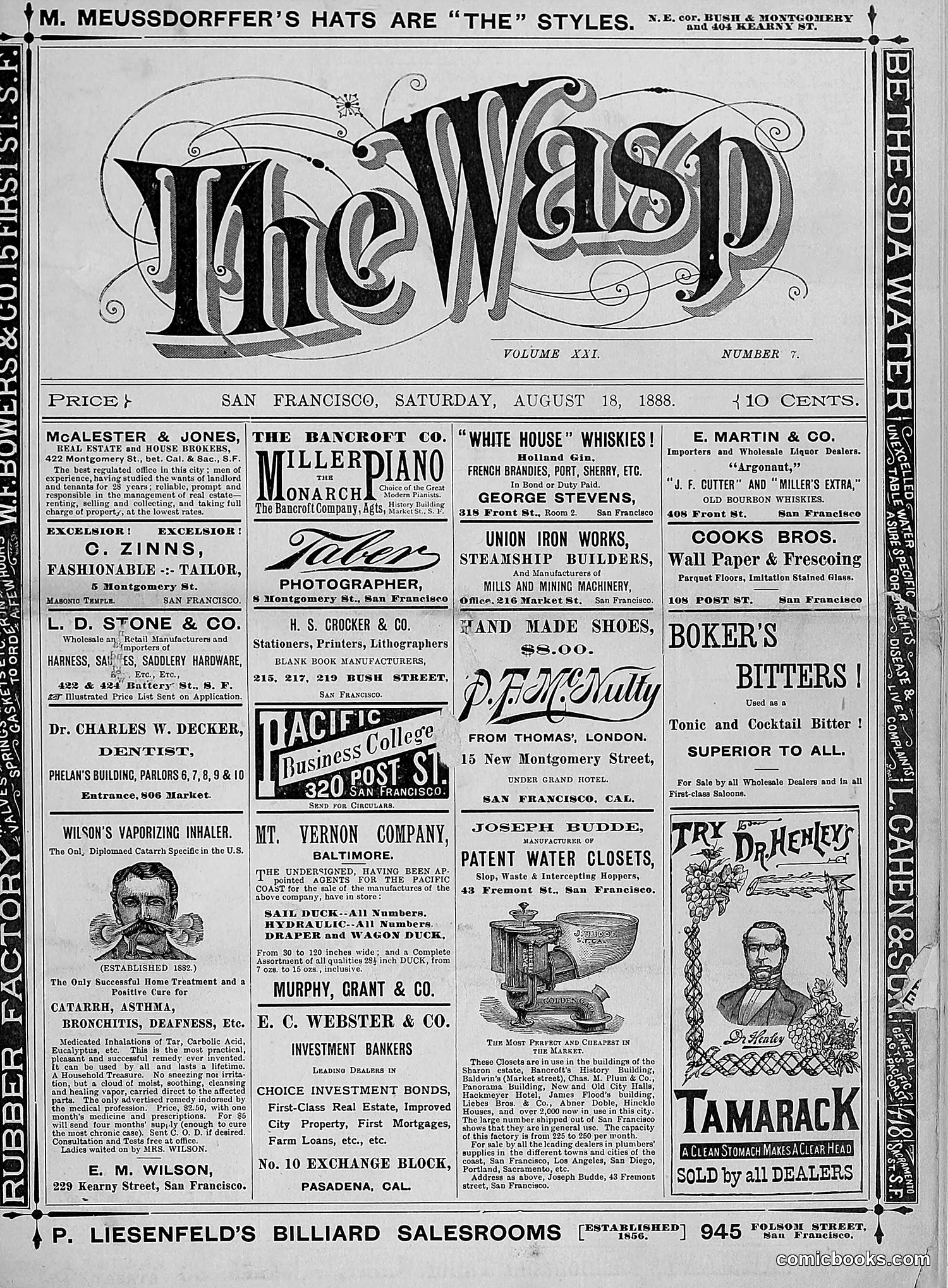
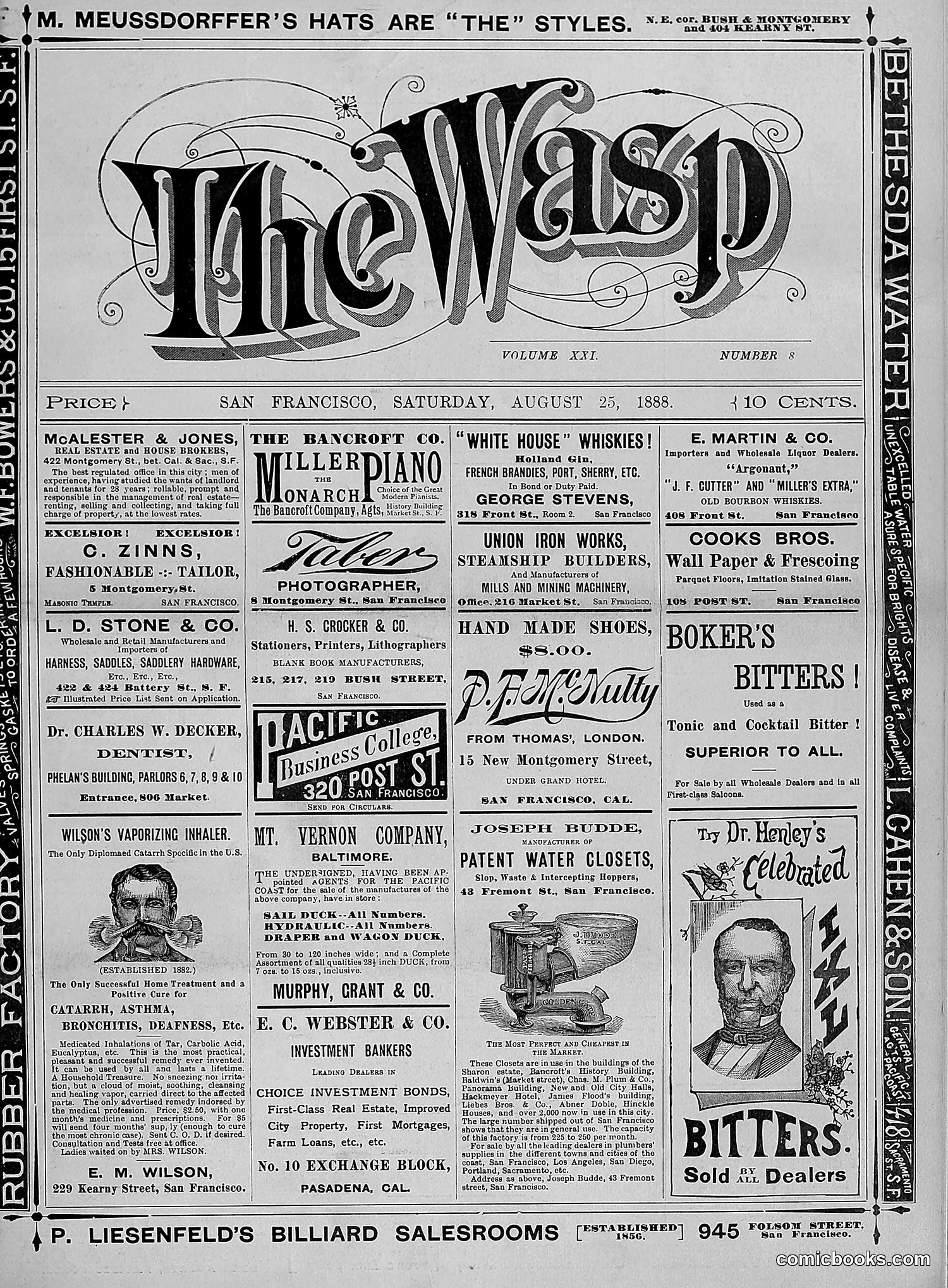
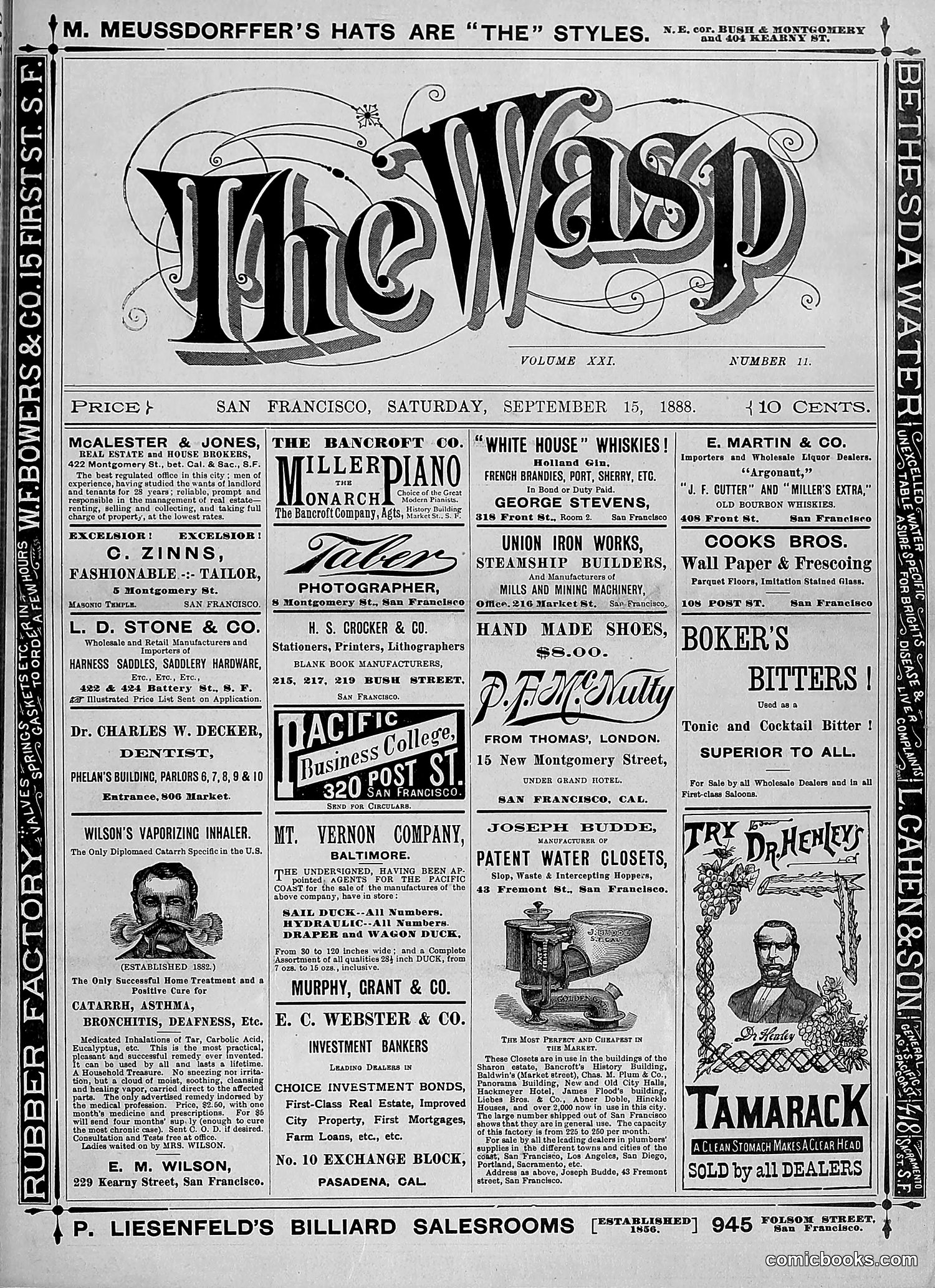
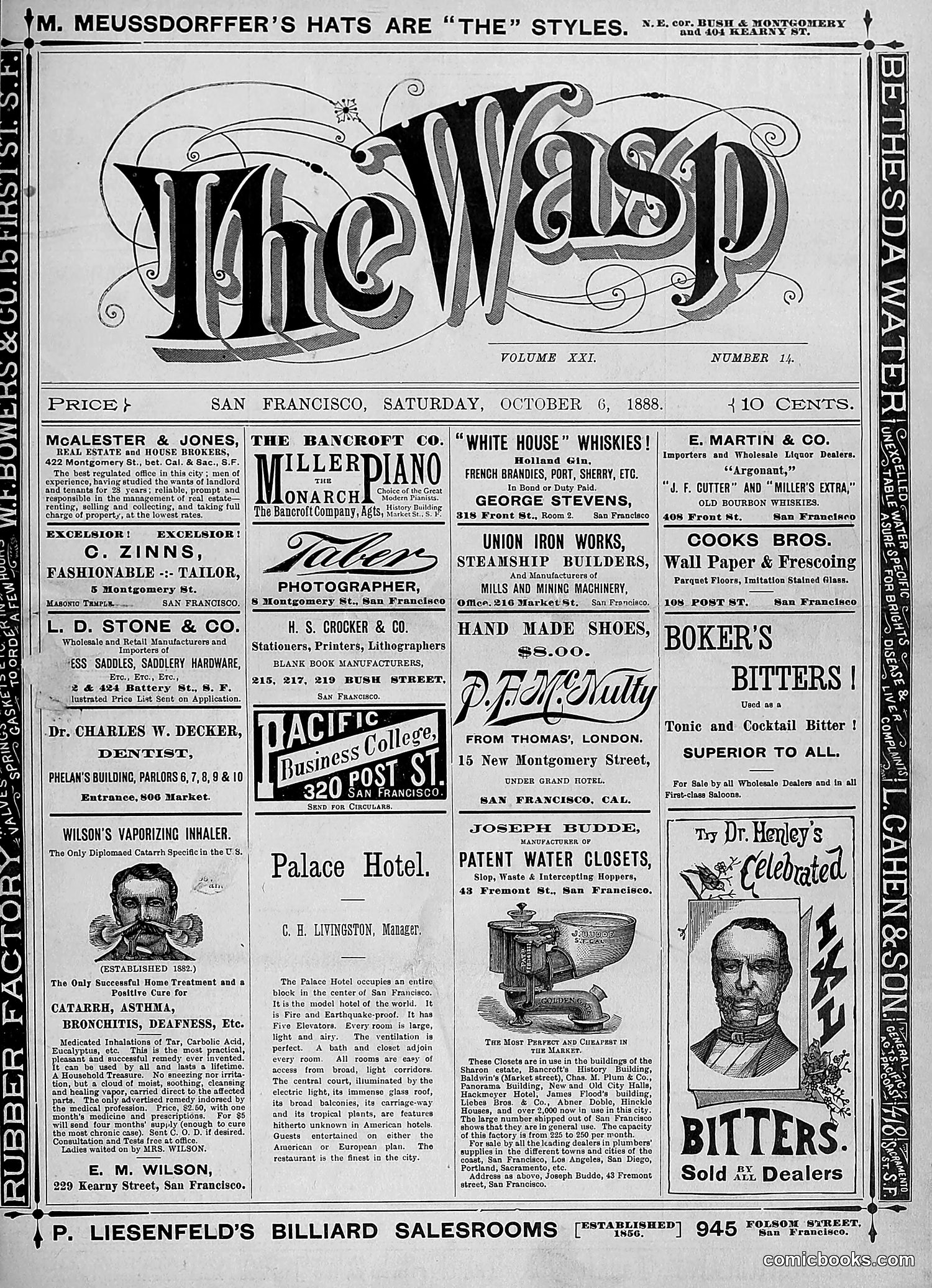
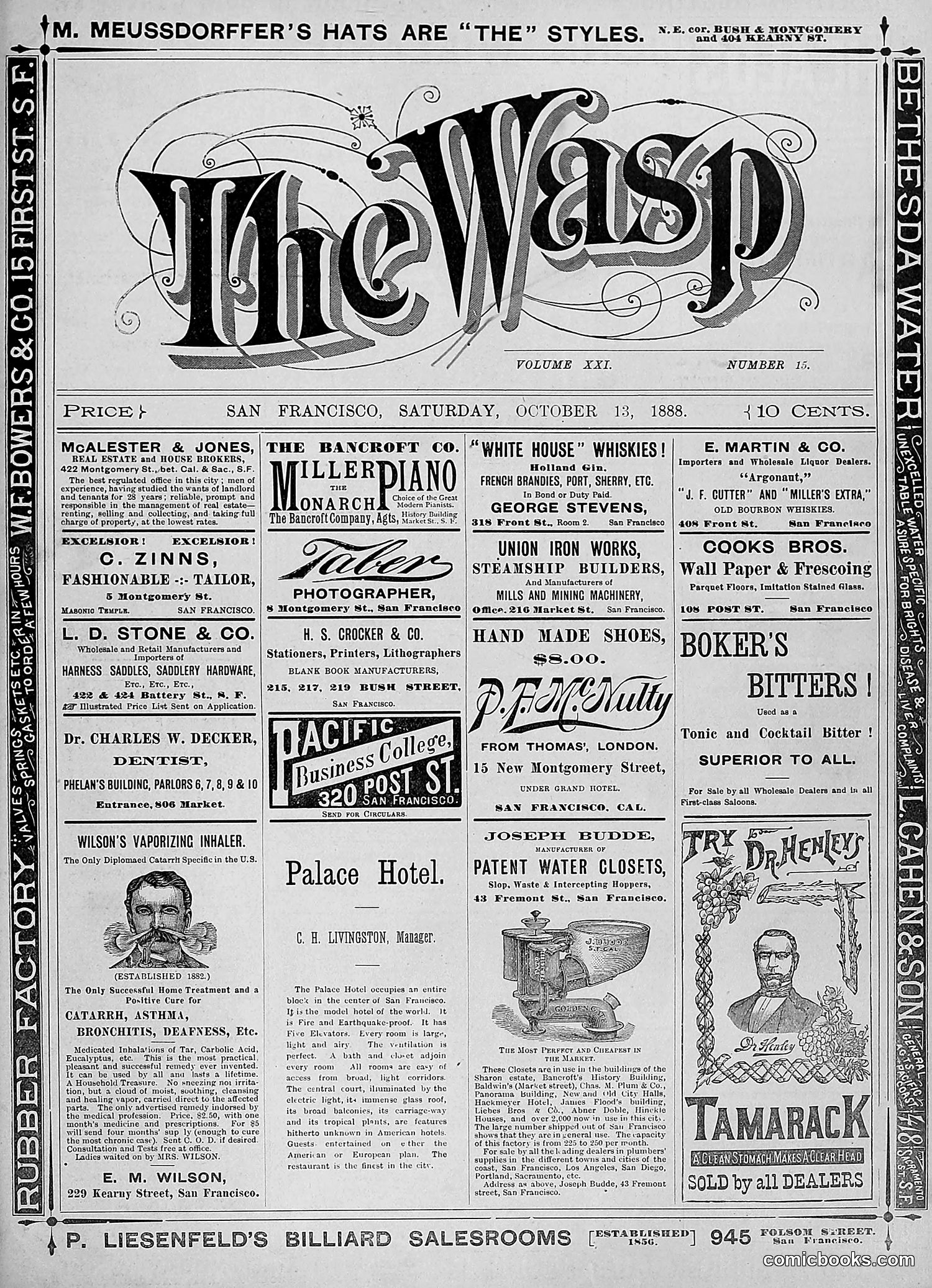
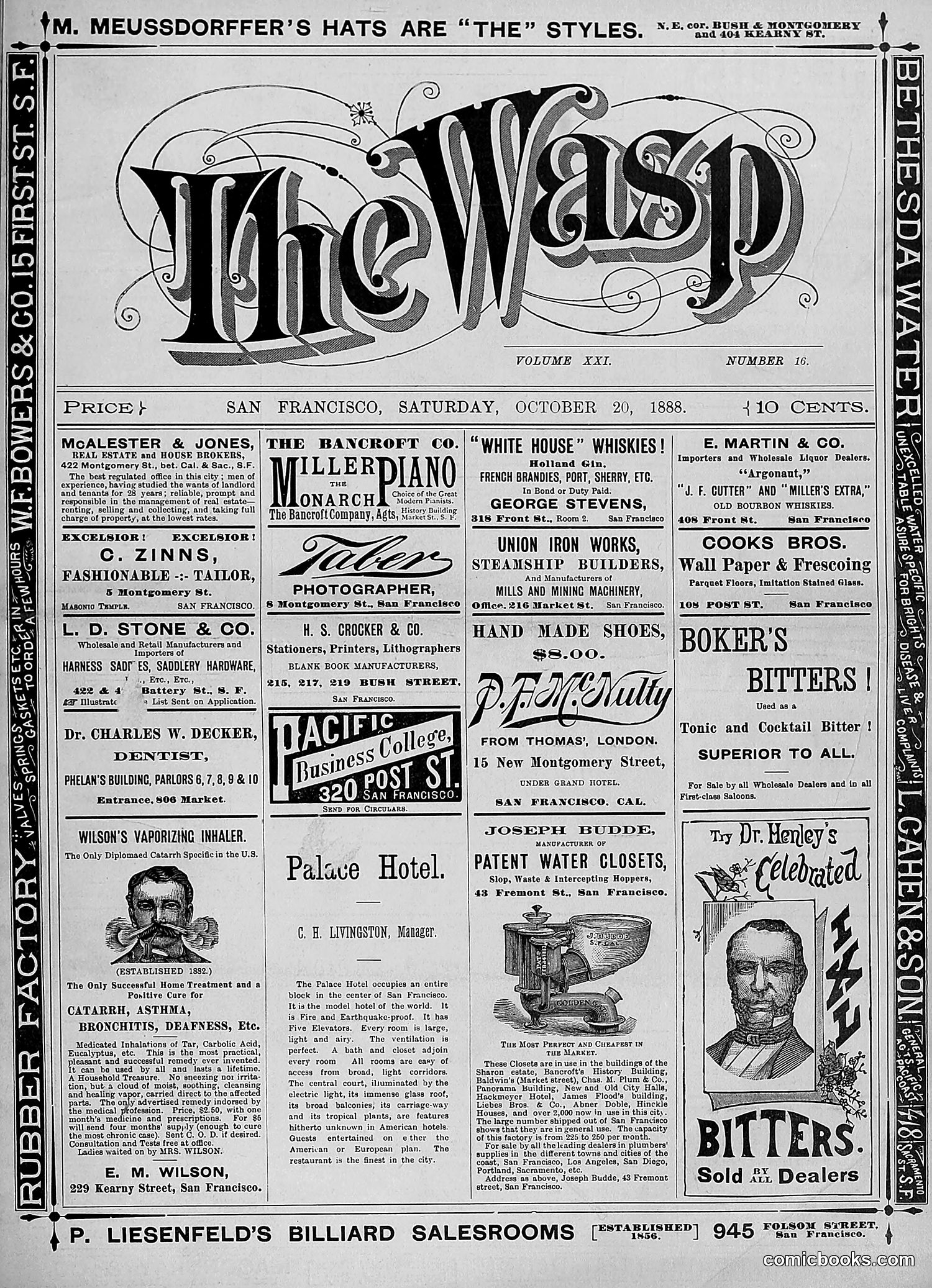
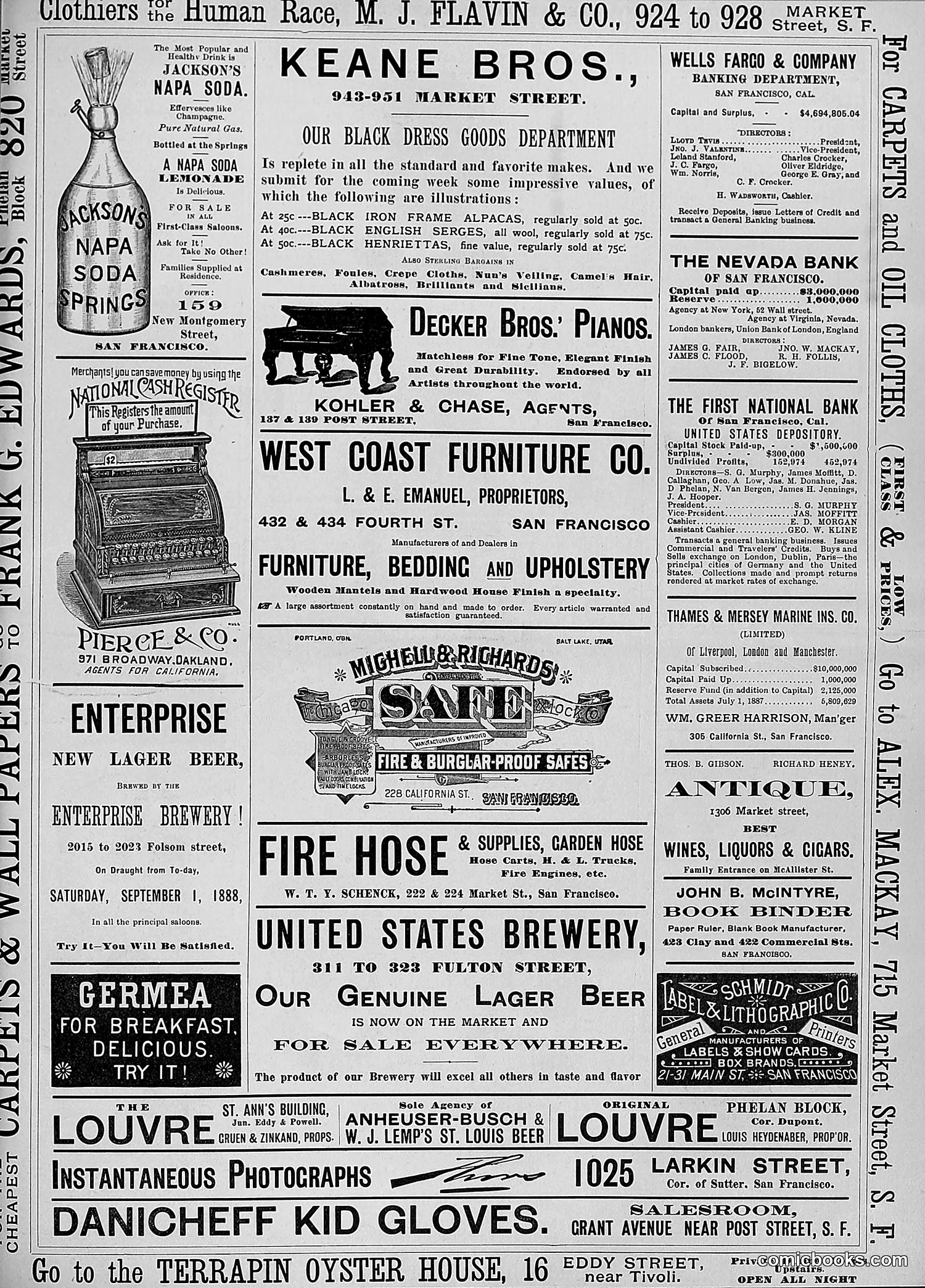
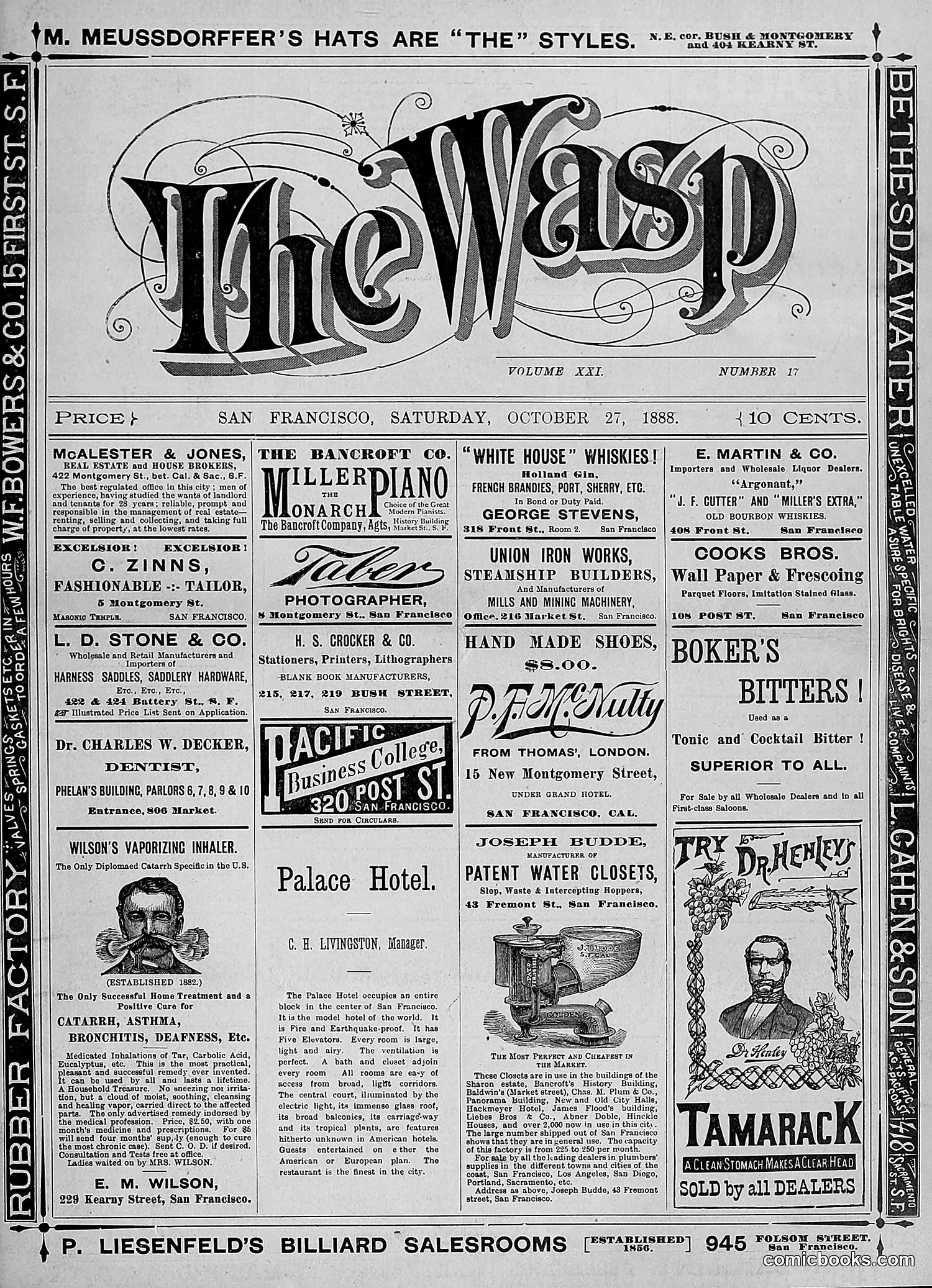
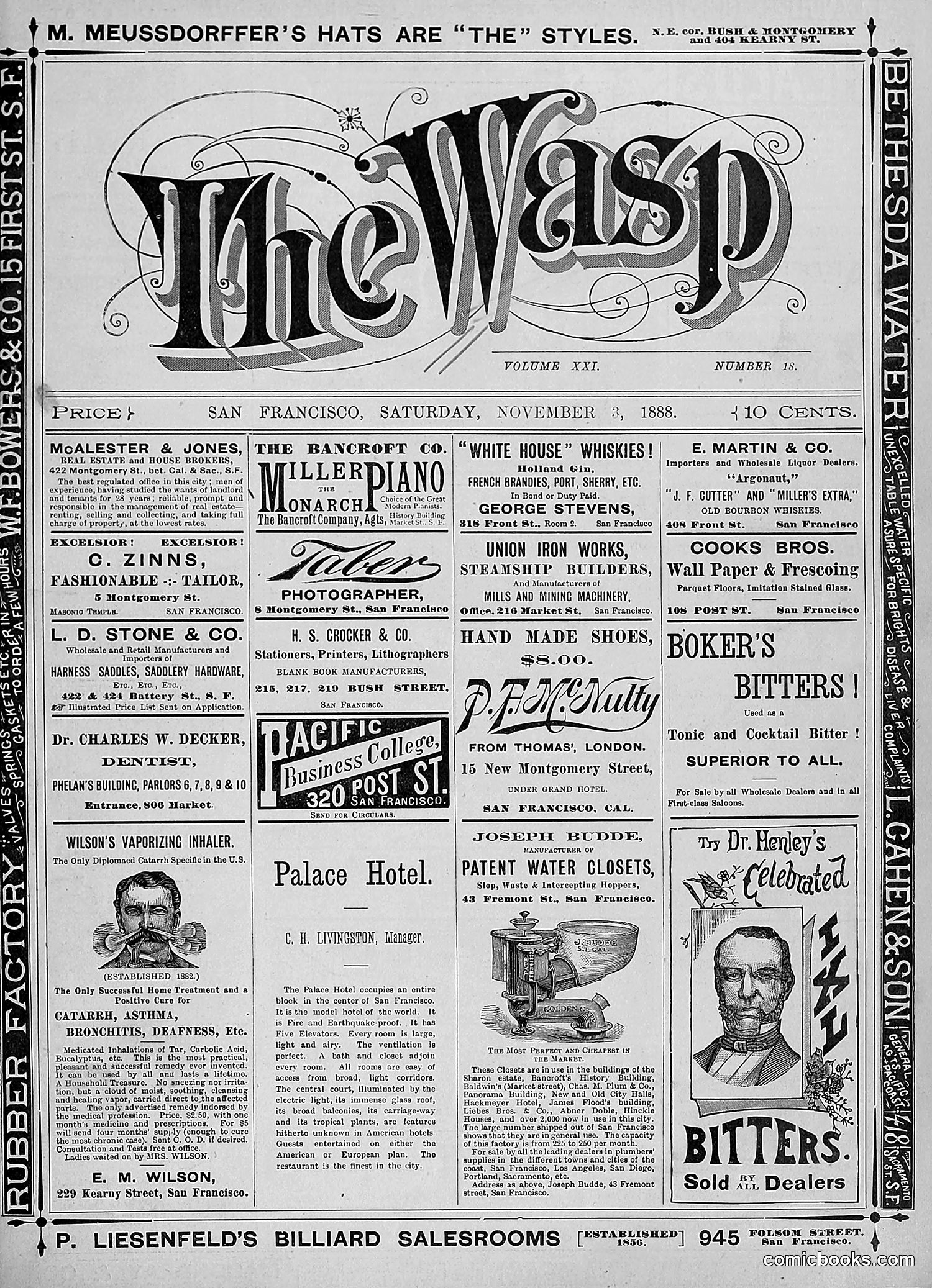
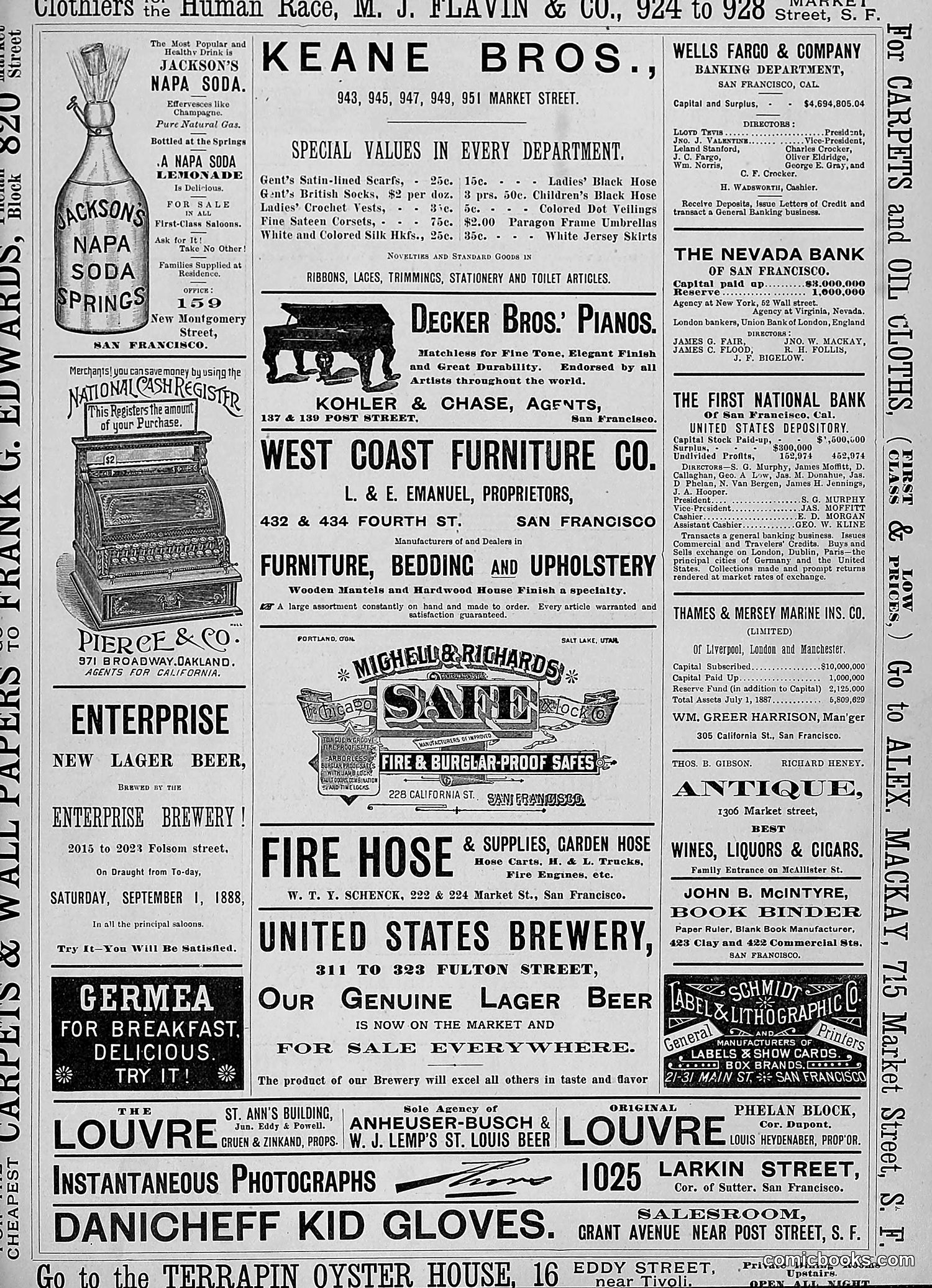
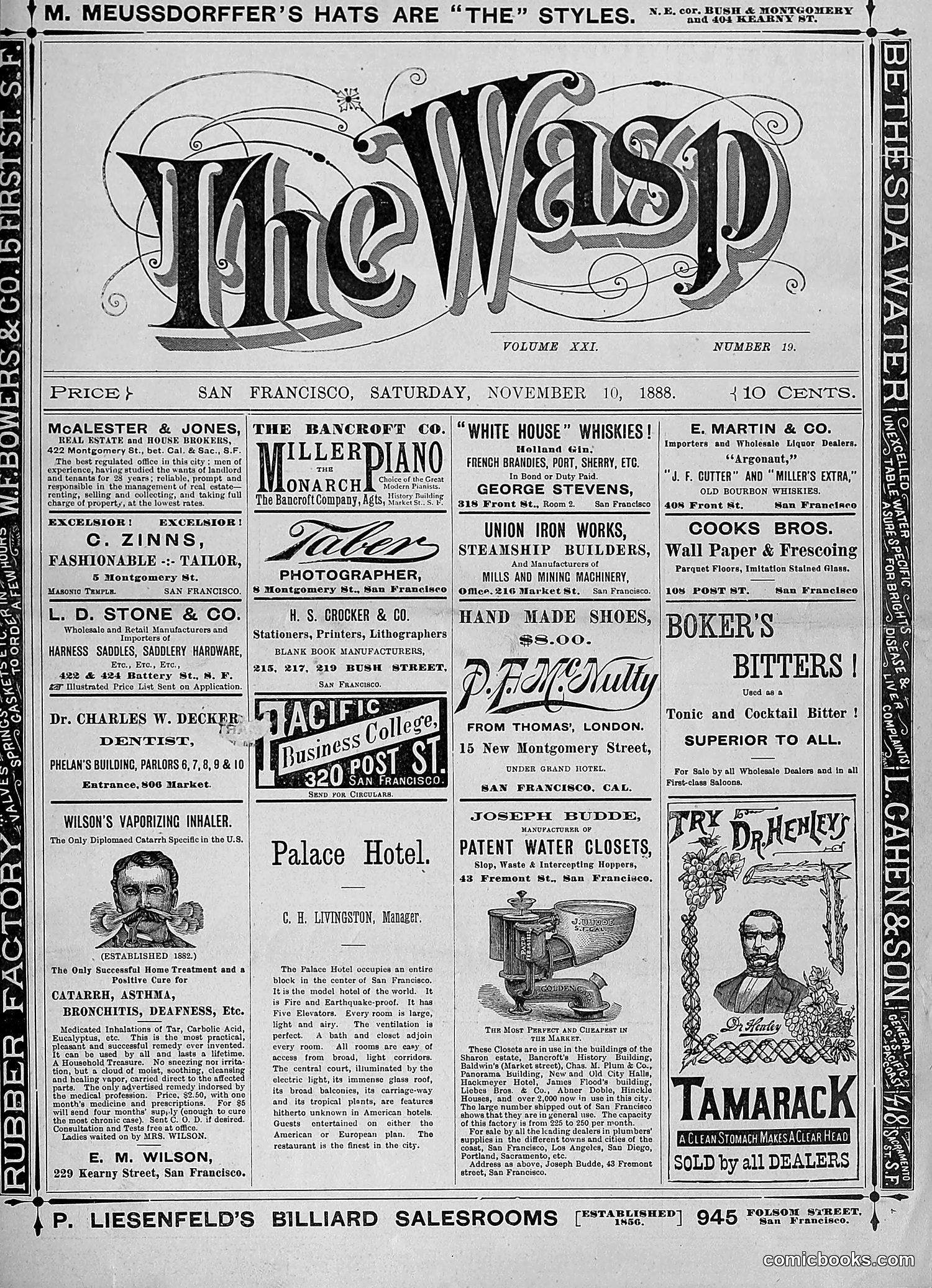
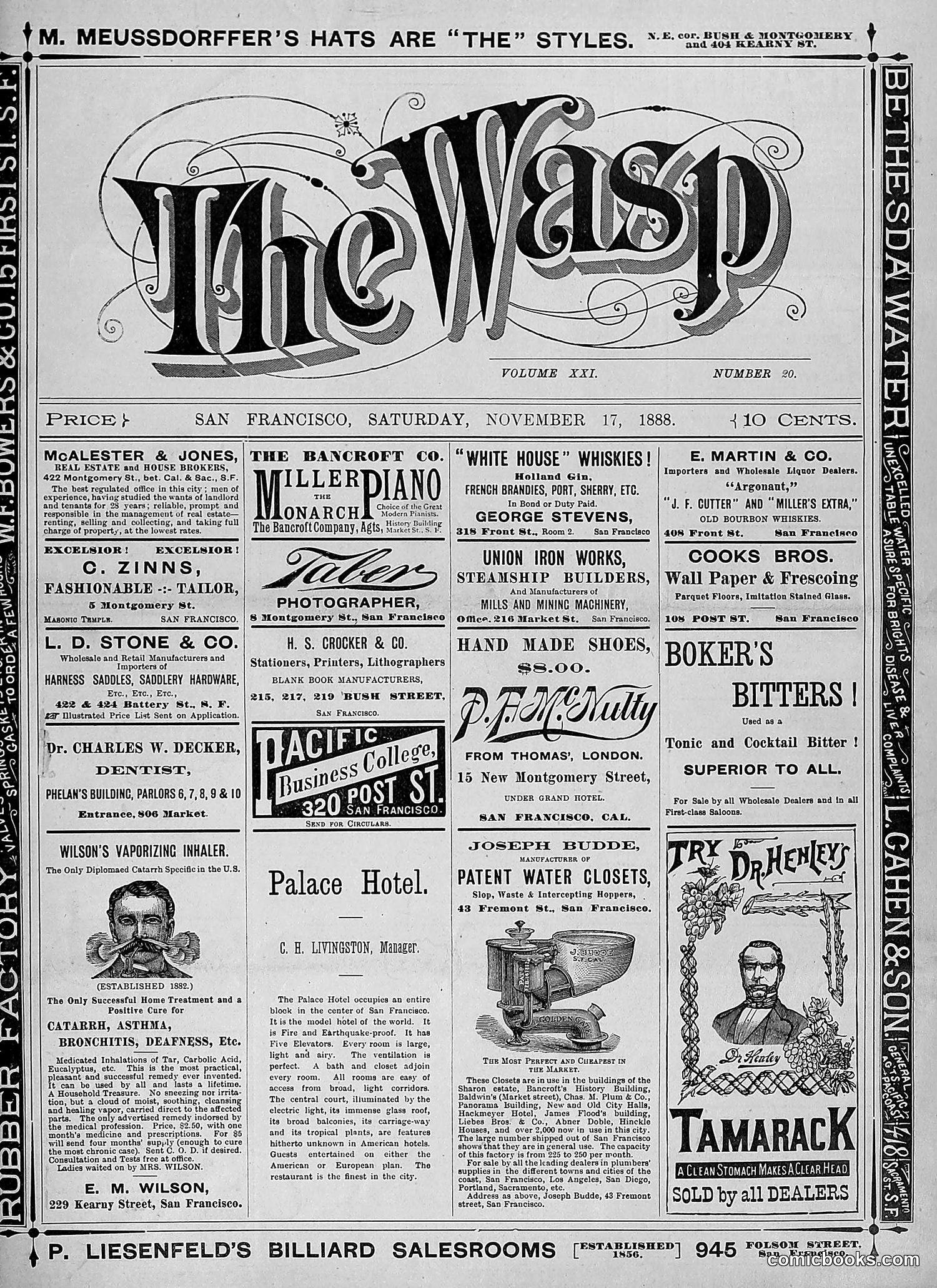
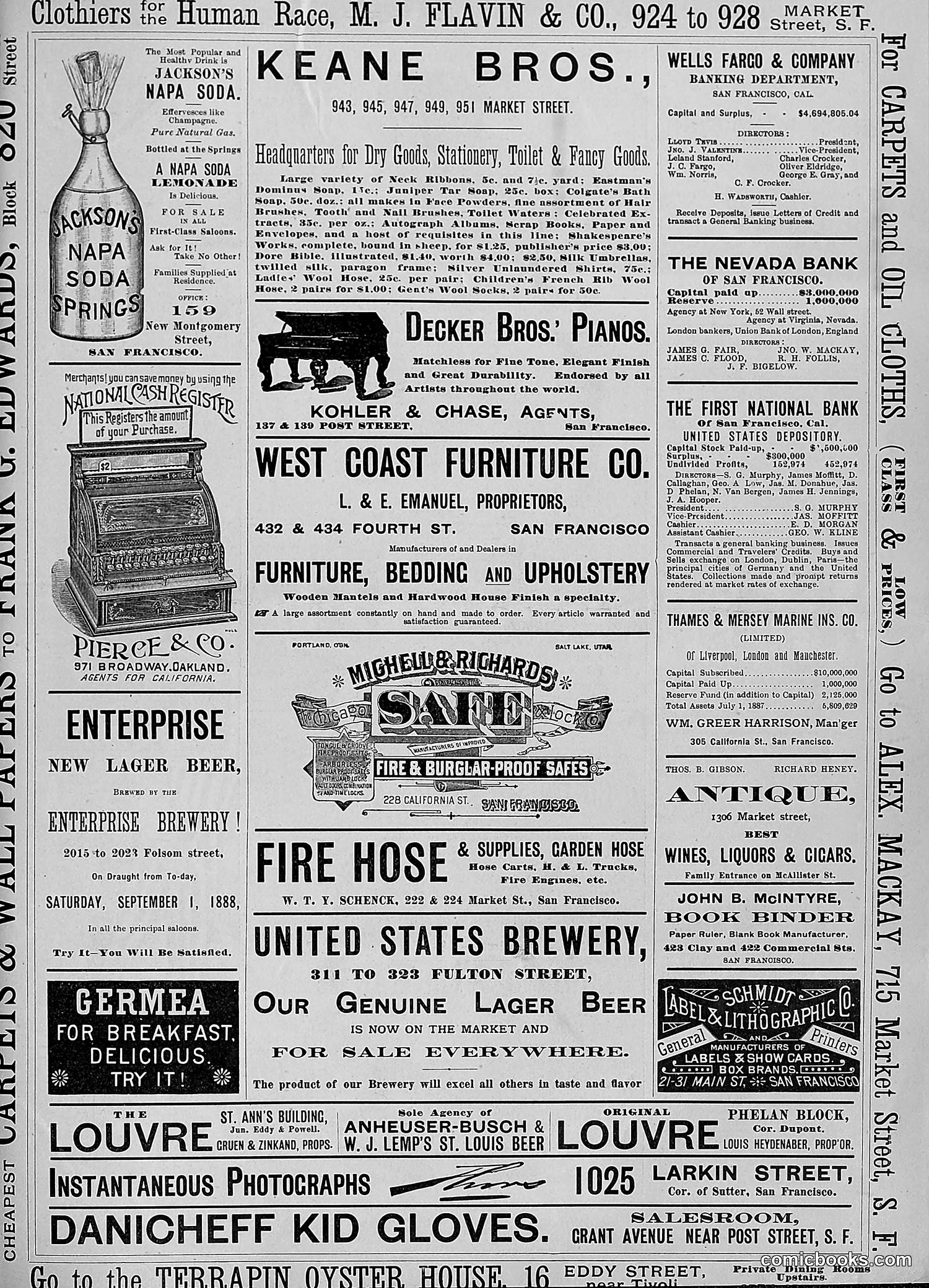
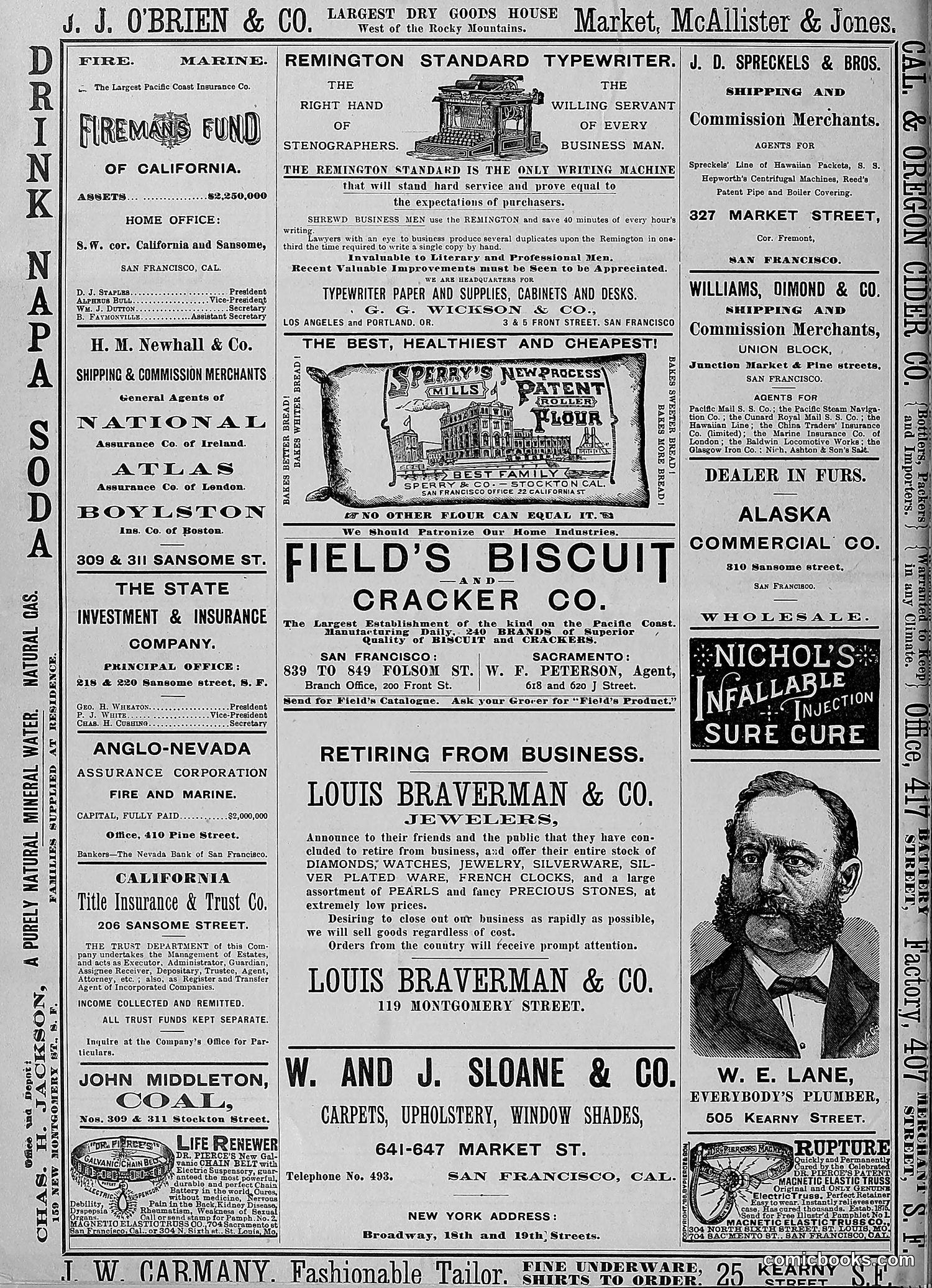
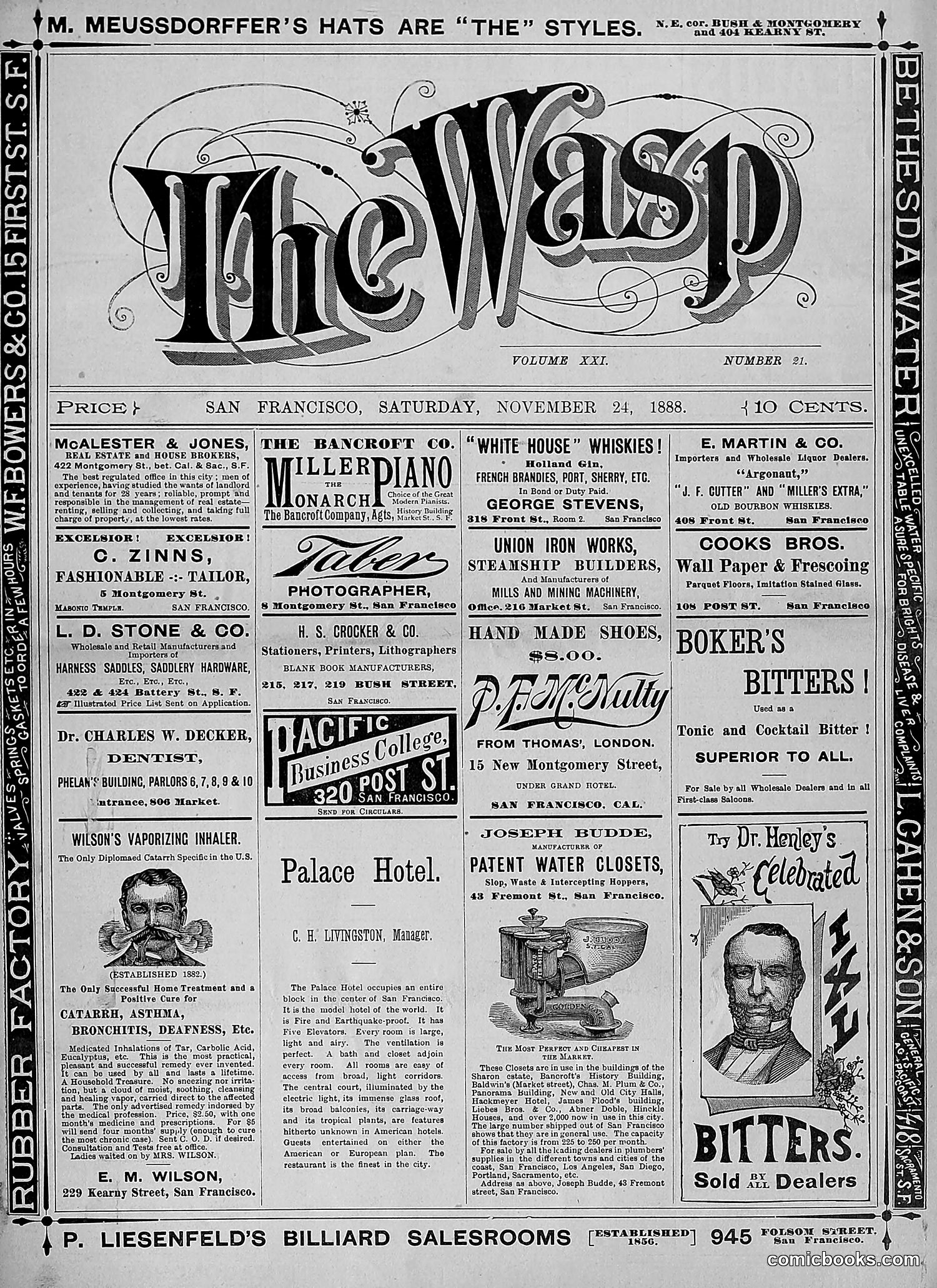
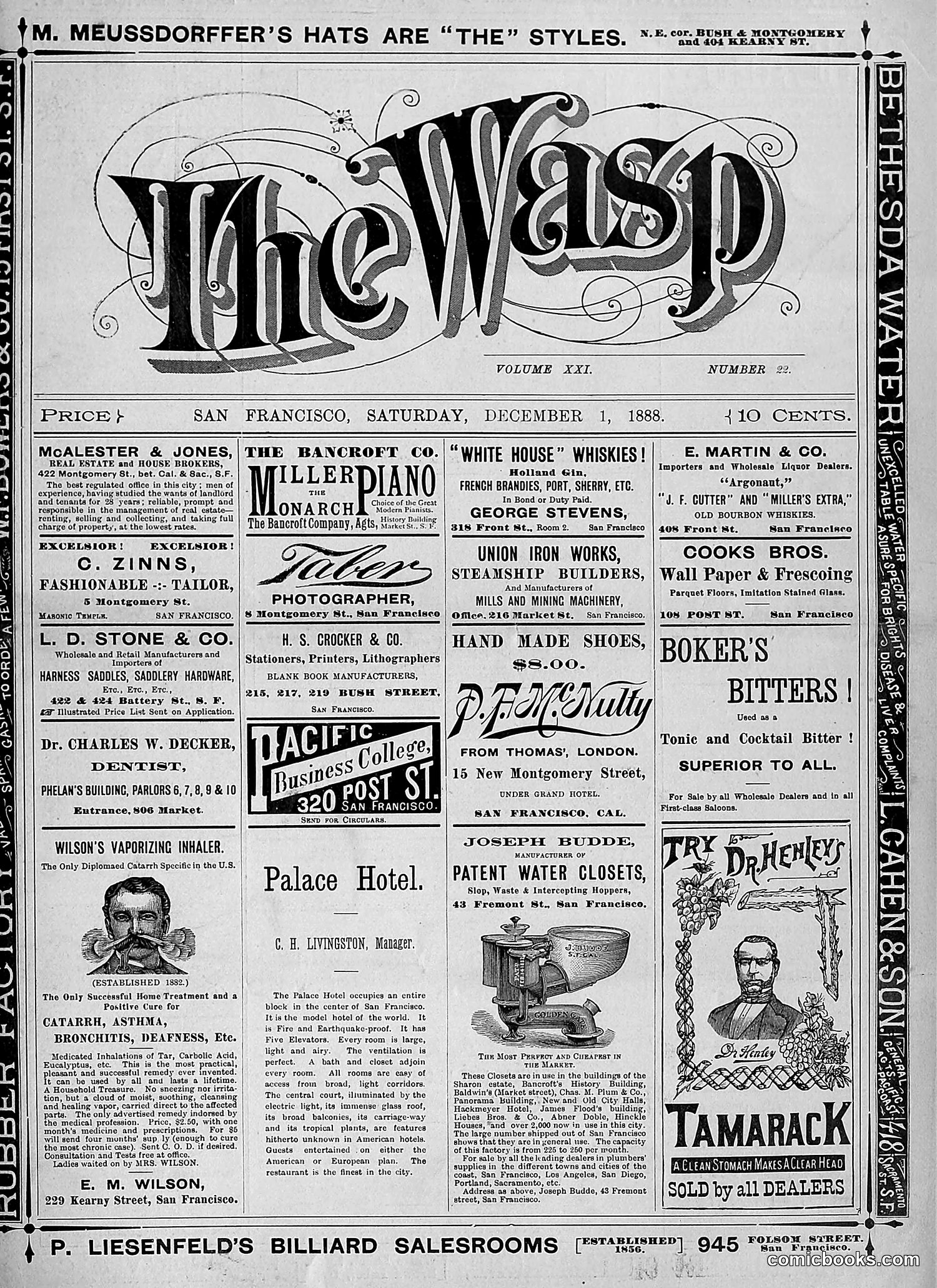
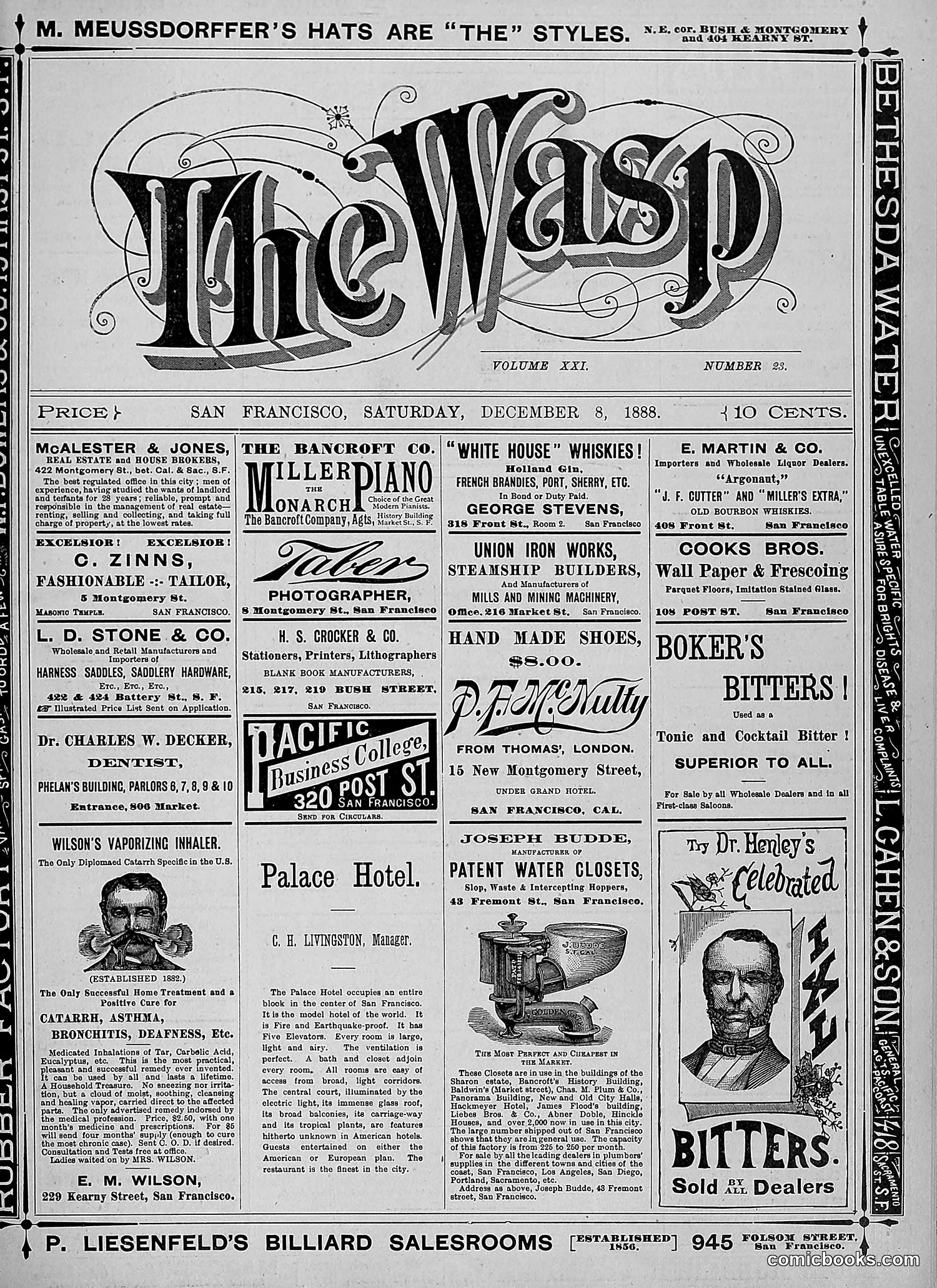
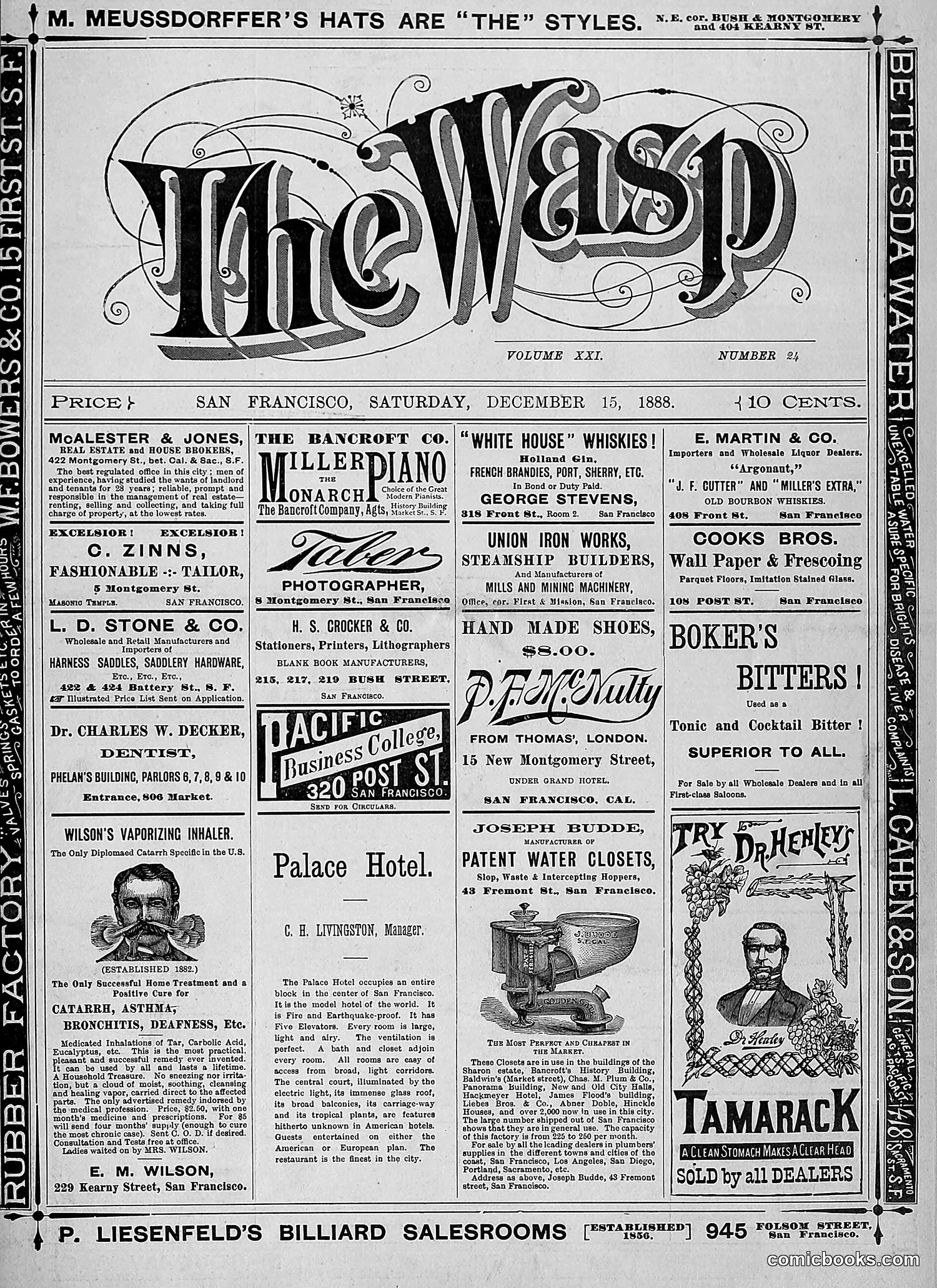
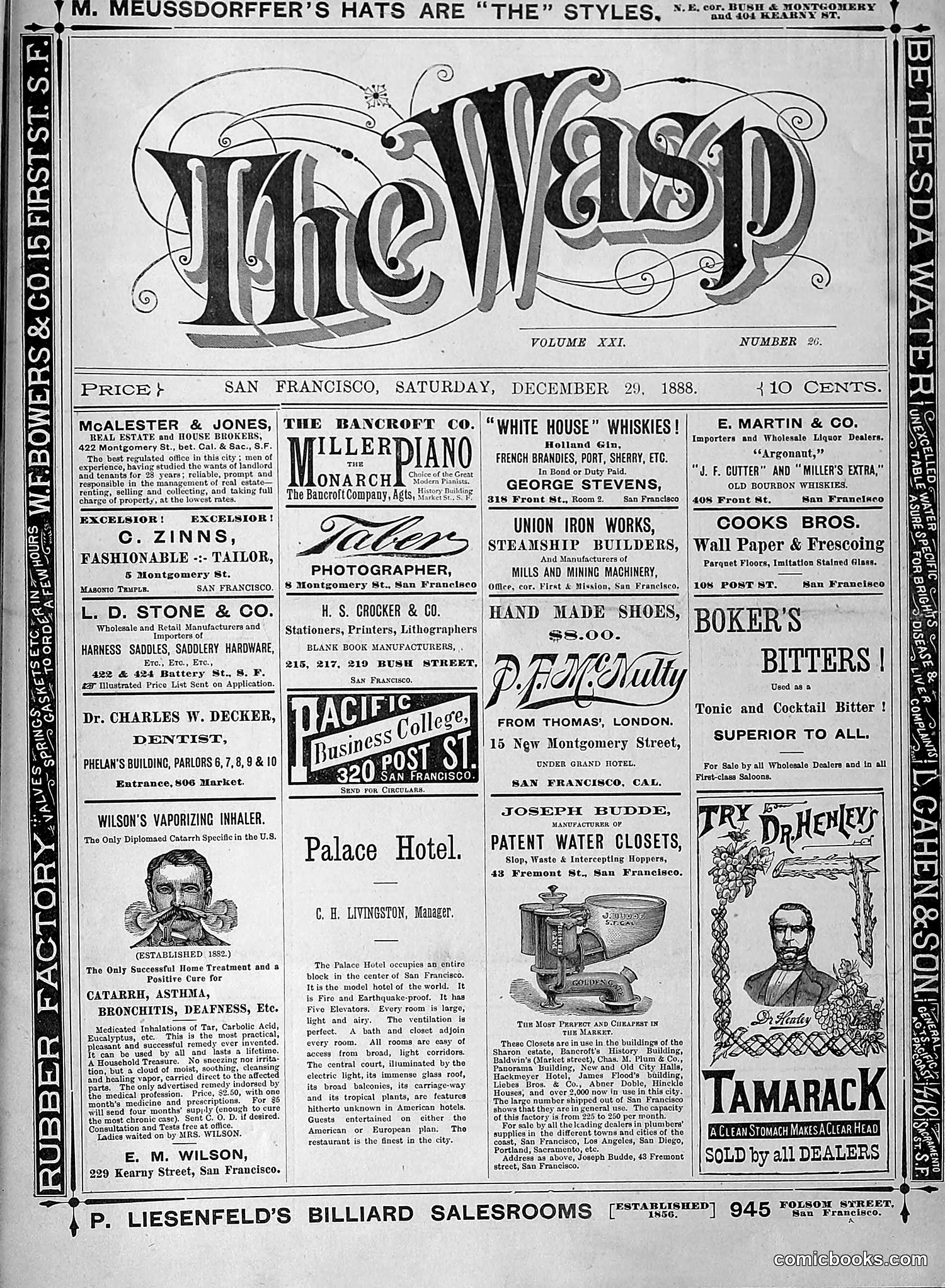
# Analysis This is primarily a **title page and advertising section** of *The Wasp*, a San Francisco satirical weekly, dated July 7, 1888. The elaborate decorative "The Wasp" masthead dominates the upper portion. The page contains **no political cartoons or satirical commentary**—instead it features local San Francisco business advertisements arranged in columns: hat makers, whiskey sellers, dentists, photographers, patent water closets, investment bankers, and other merchants. Two illustrated advertisements appear: Wilson's Vaporizing Inhaler (showing a bearded man's face) and Dr. Henley's Tonic with Tamaracks (showing a bearded man with plants). These are **patent medicine ads**, common in period publications, making medical claims now recognized as dubious. The page's primary function is **commercial revenue generation** rather than editorial satire.
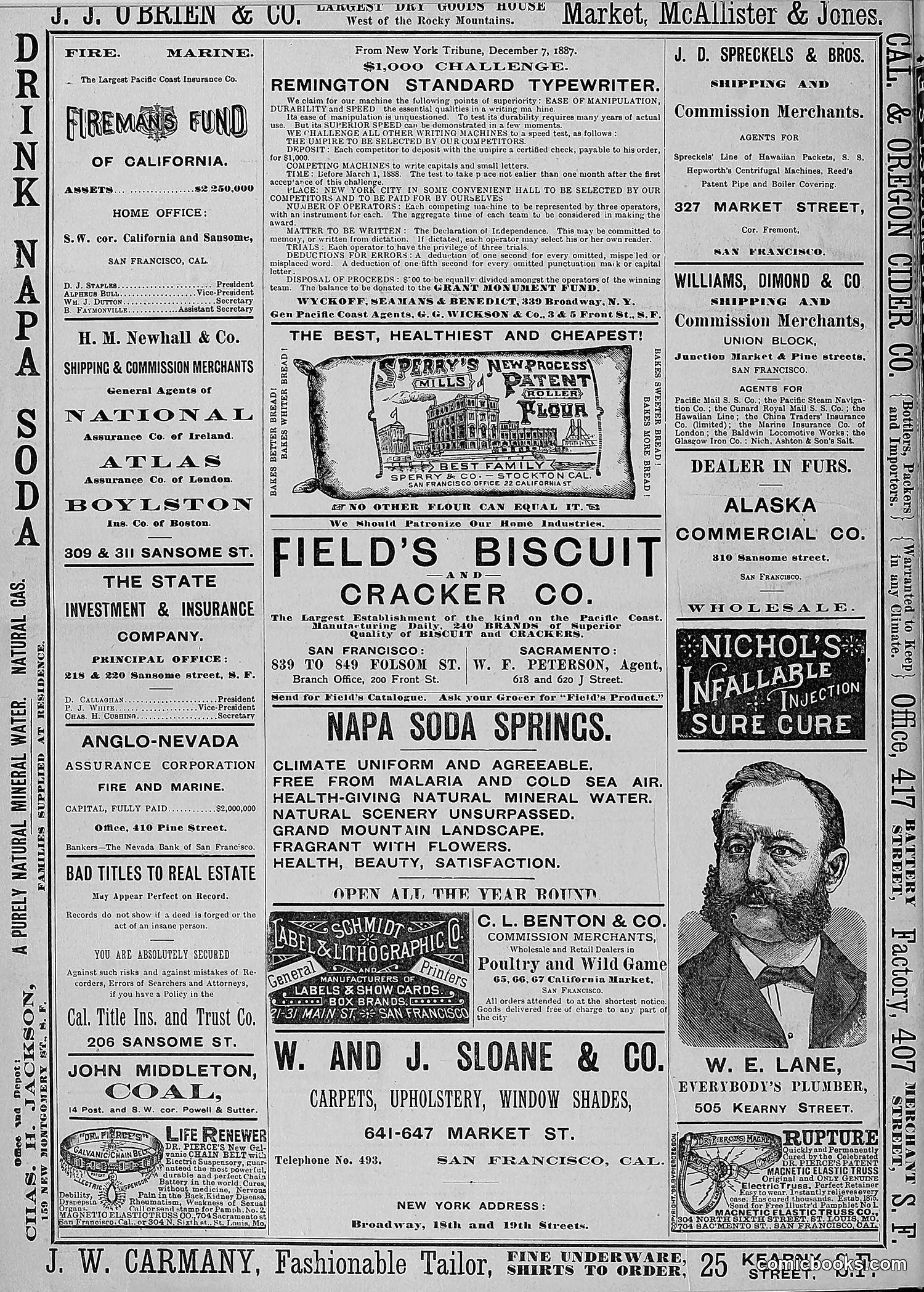
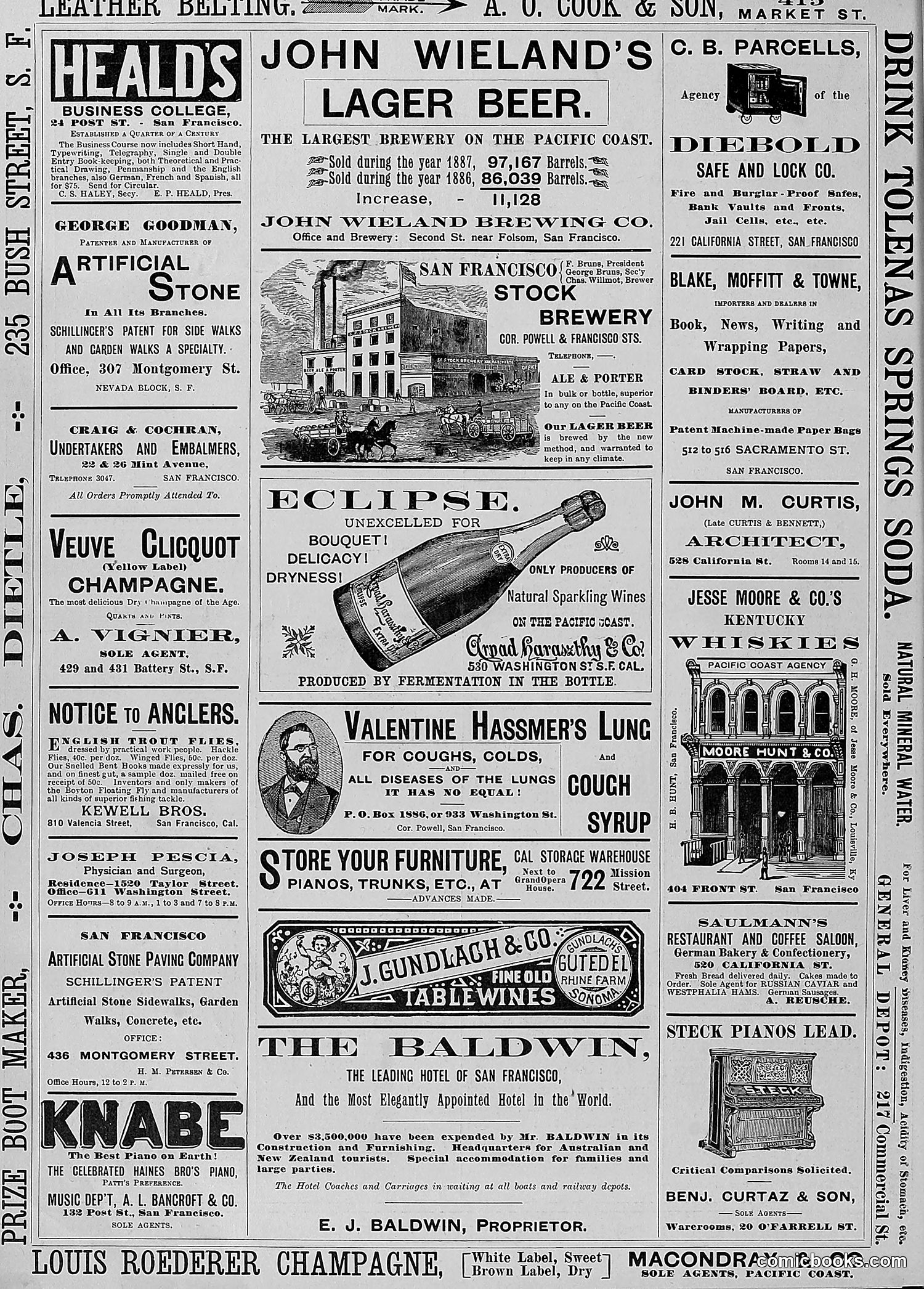
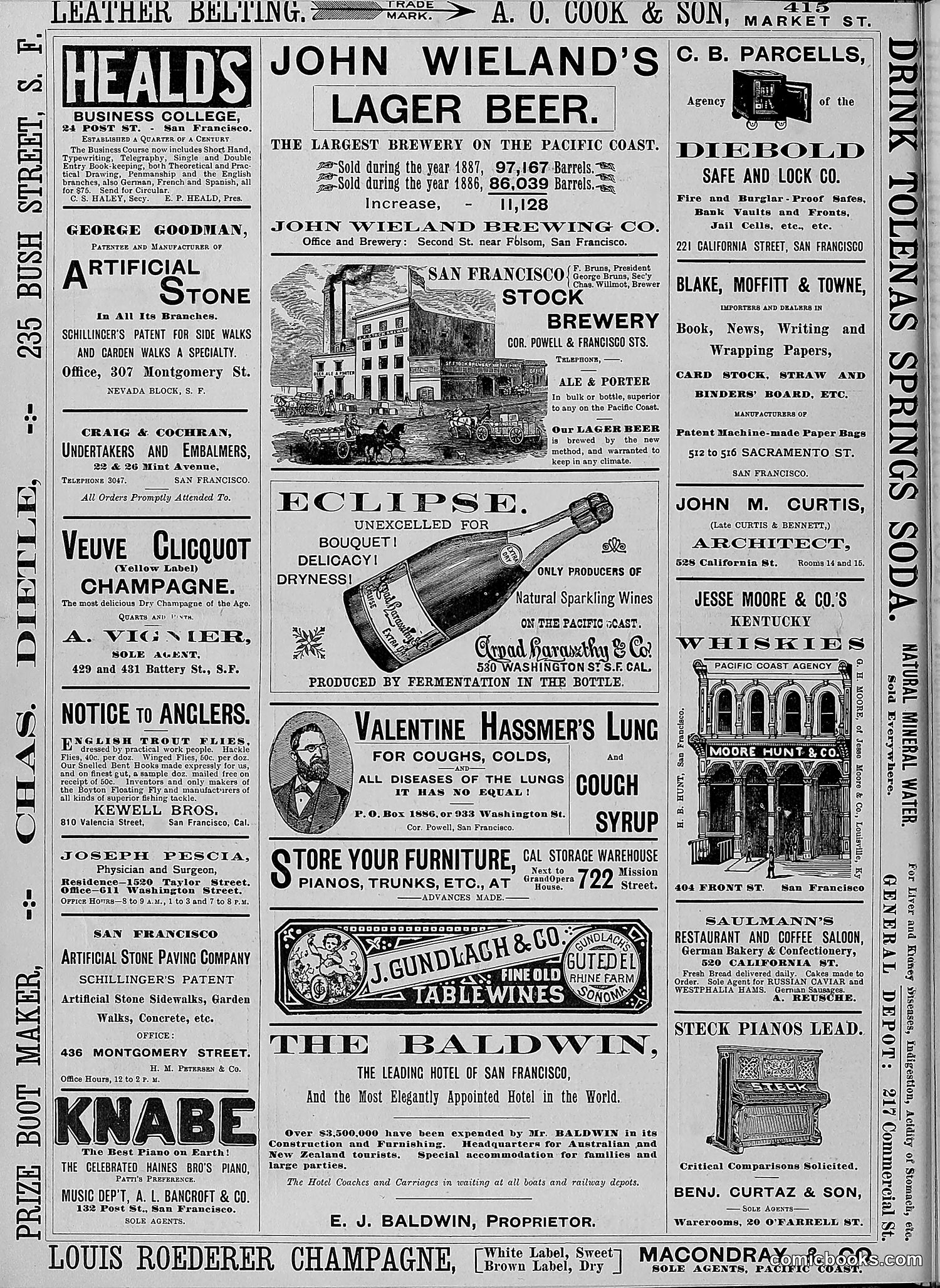
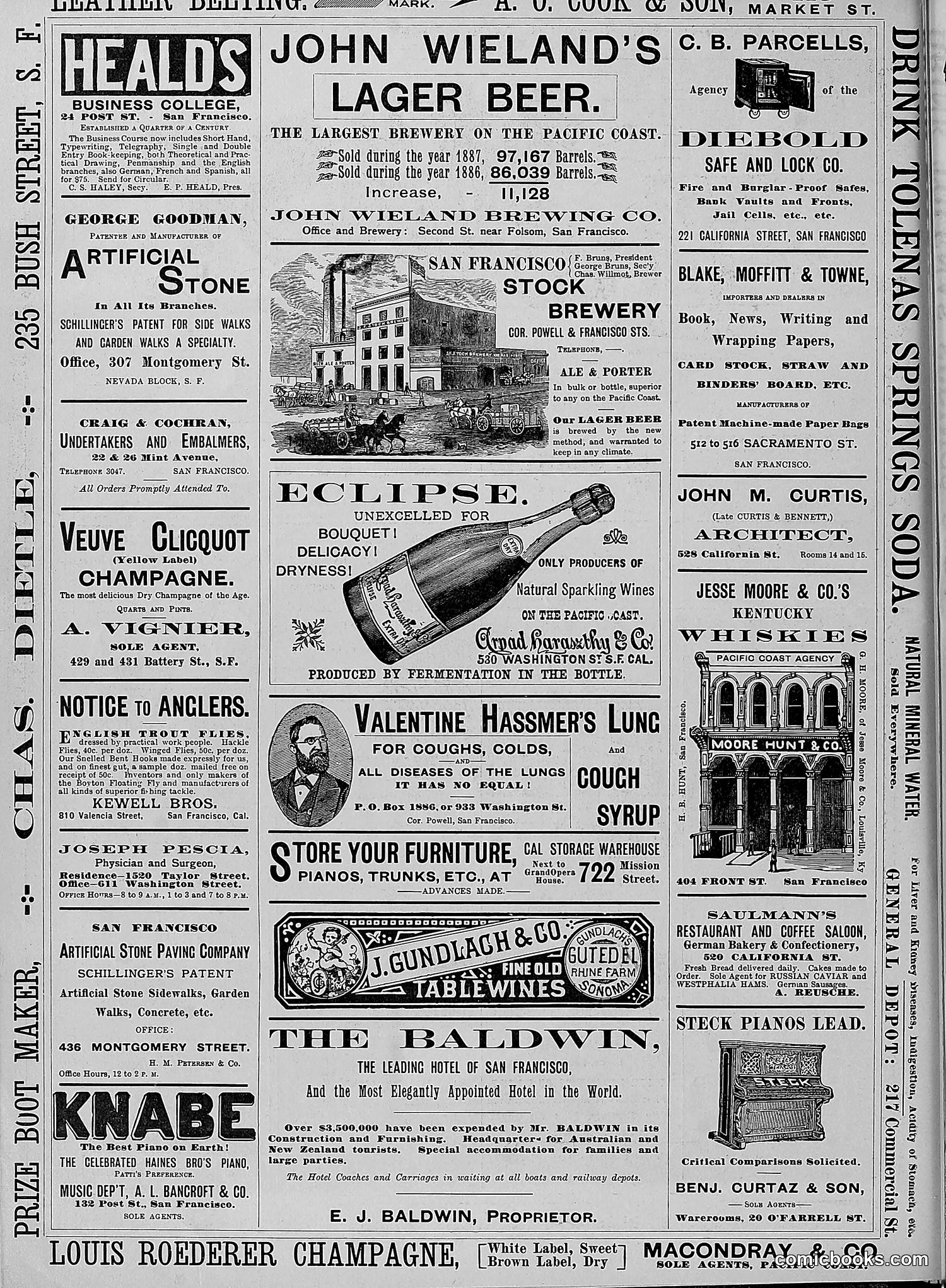
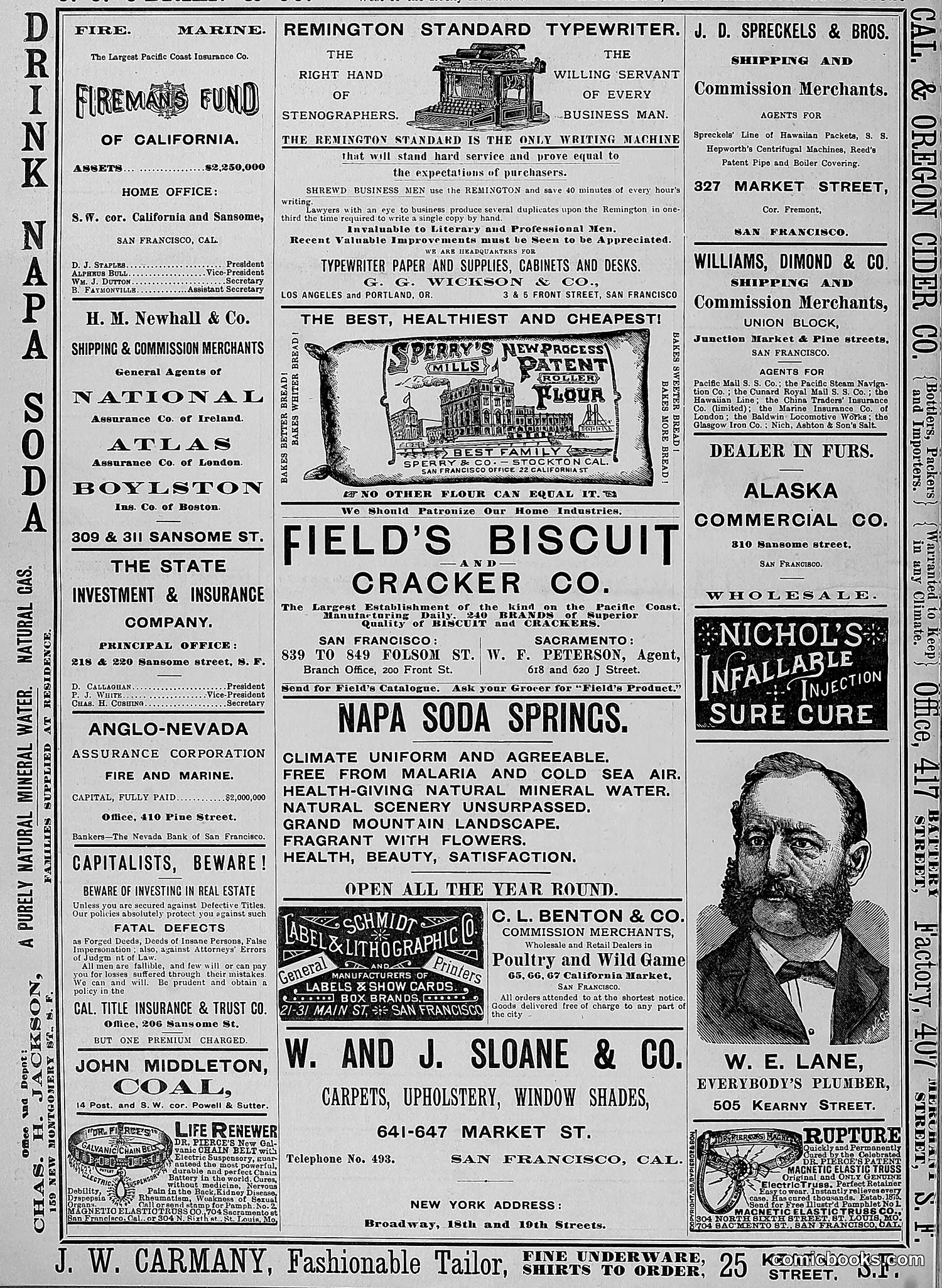
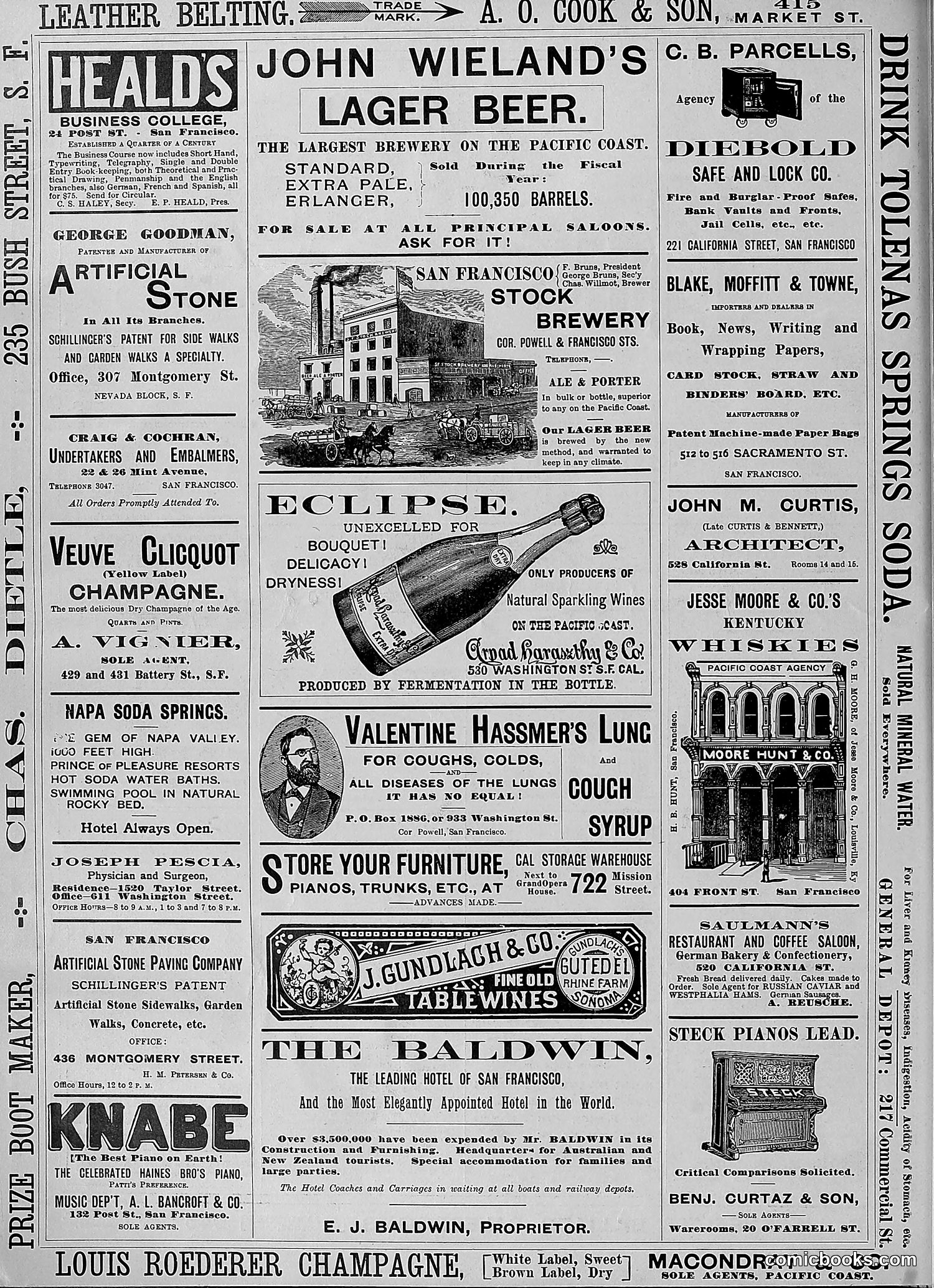
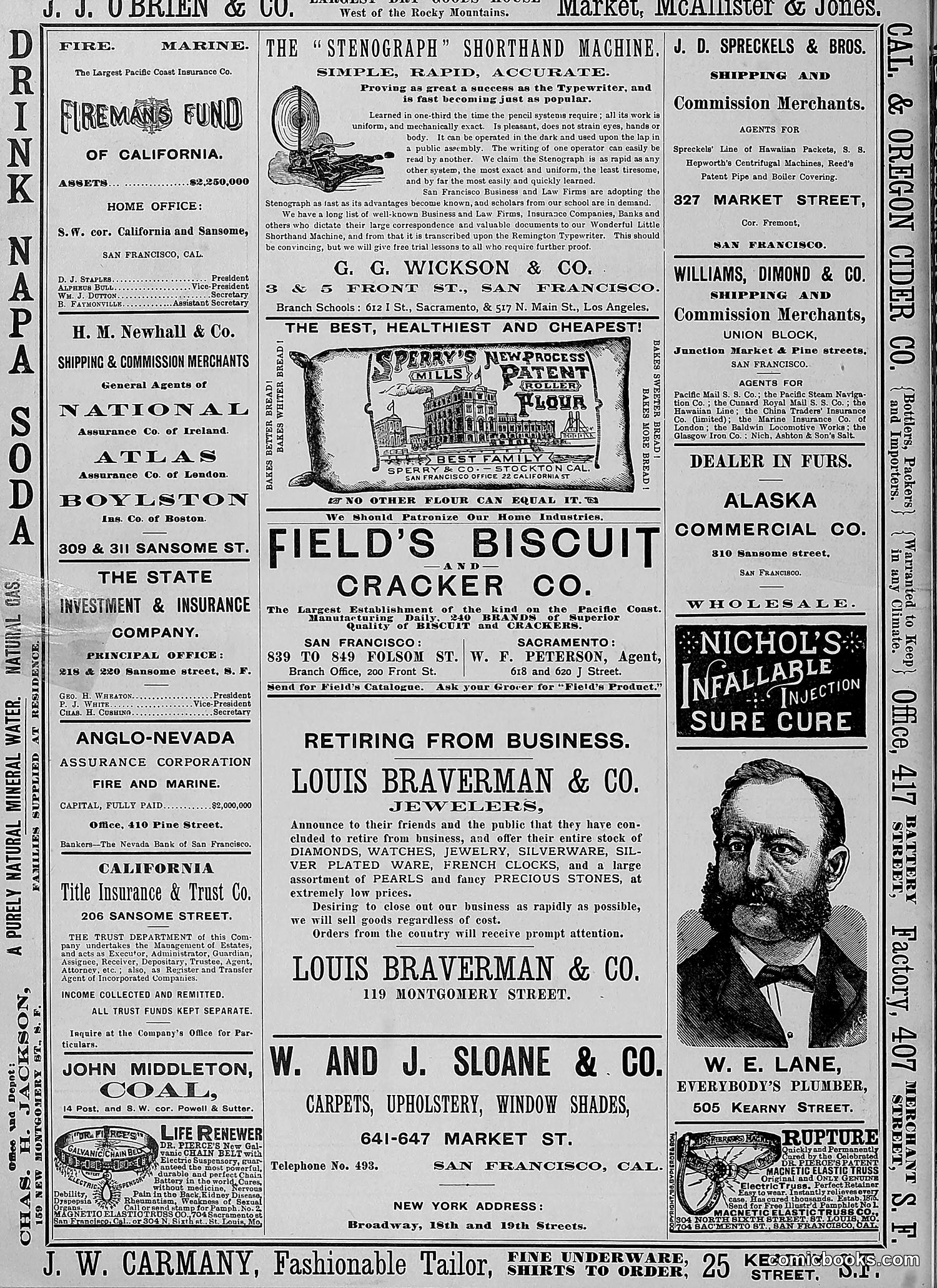
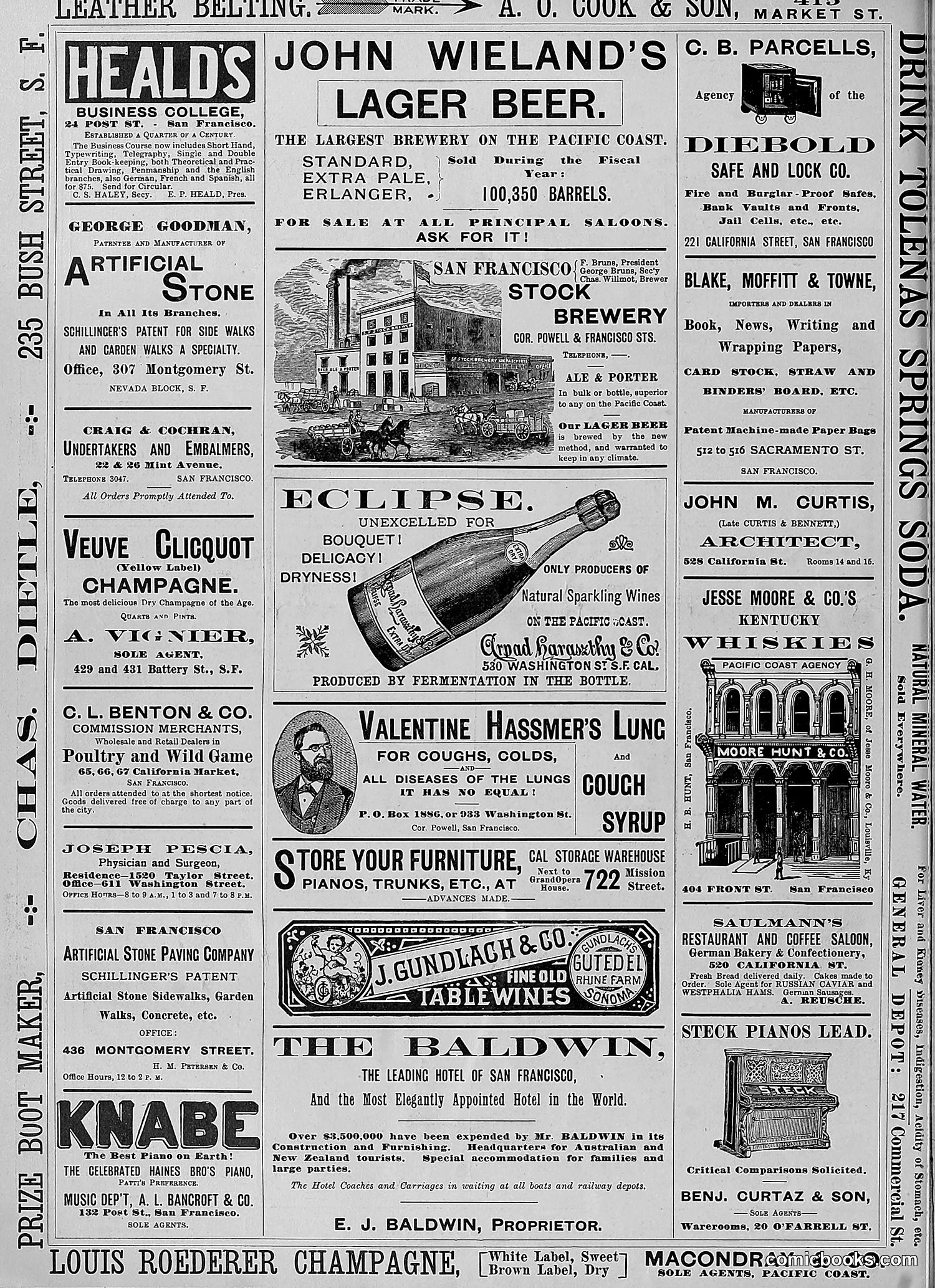
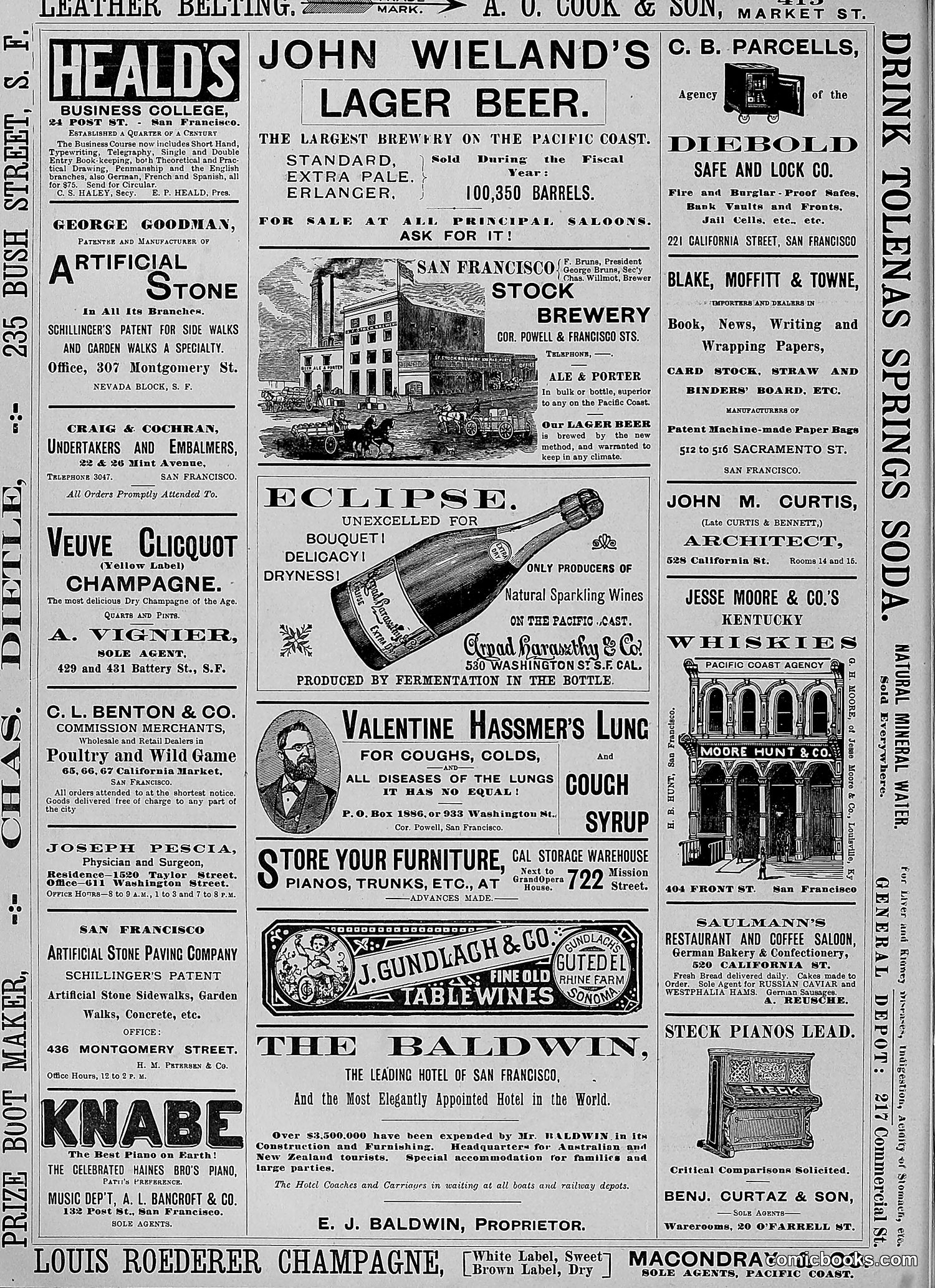
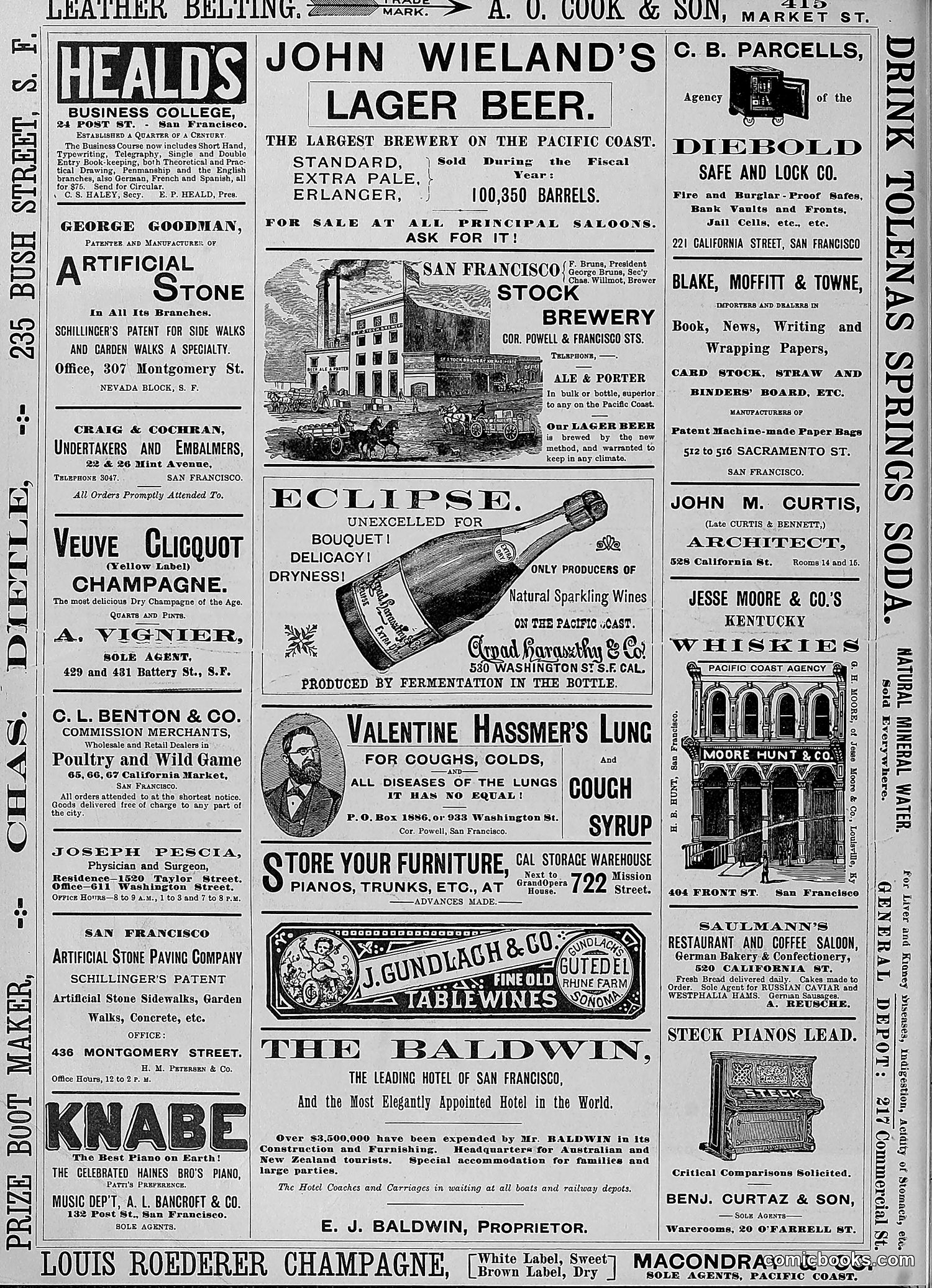
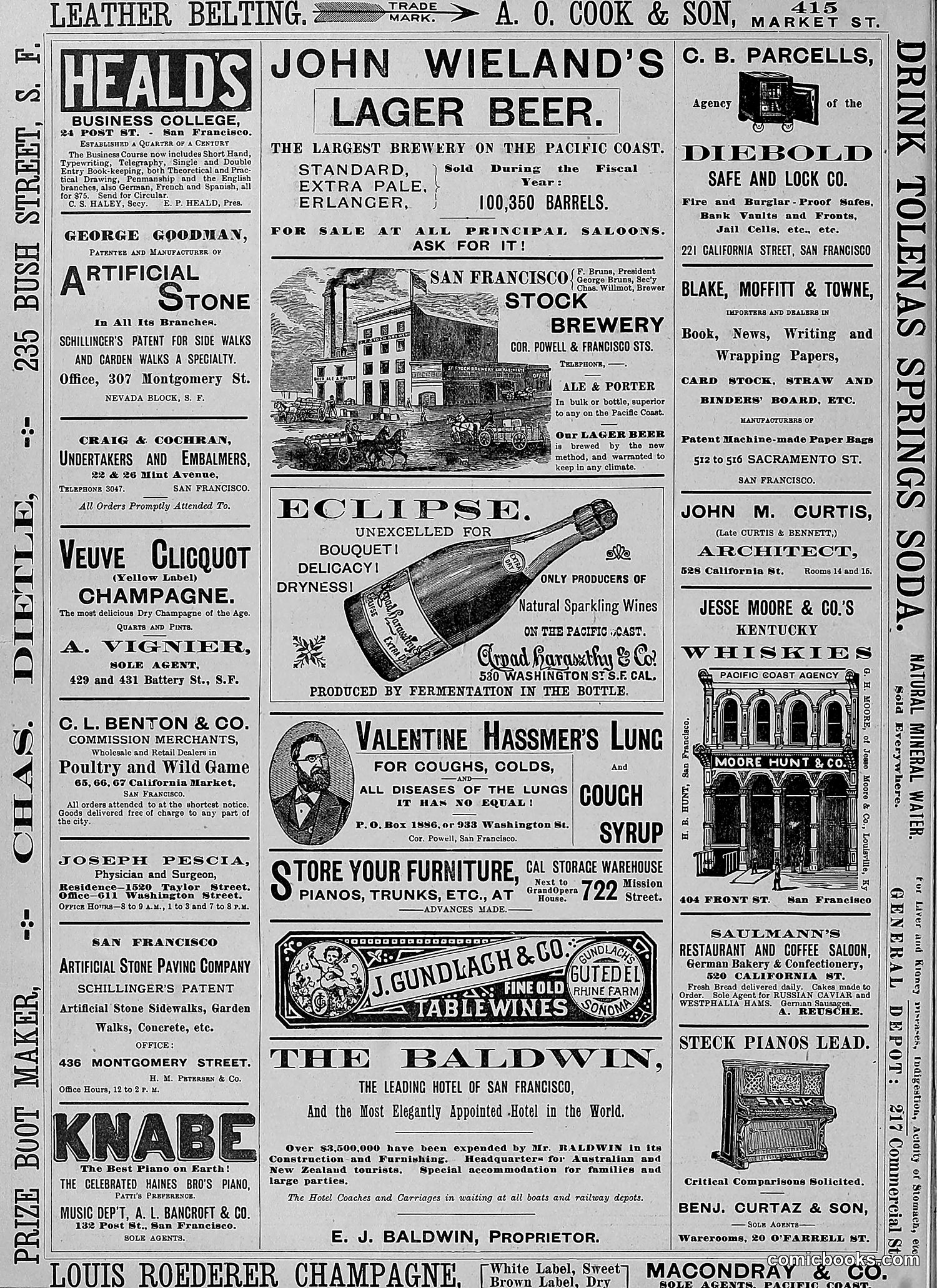
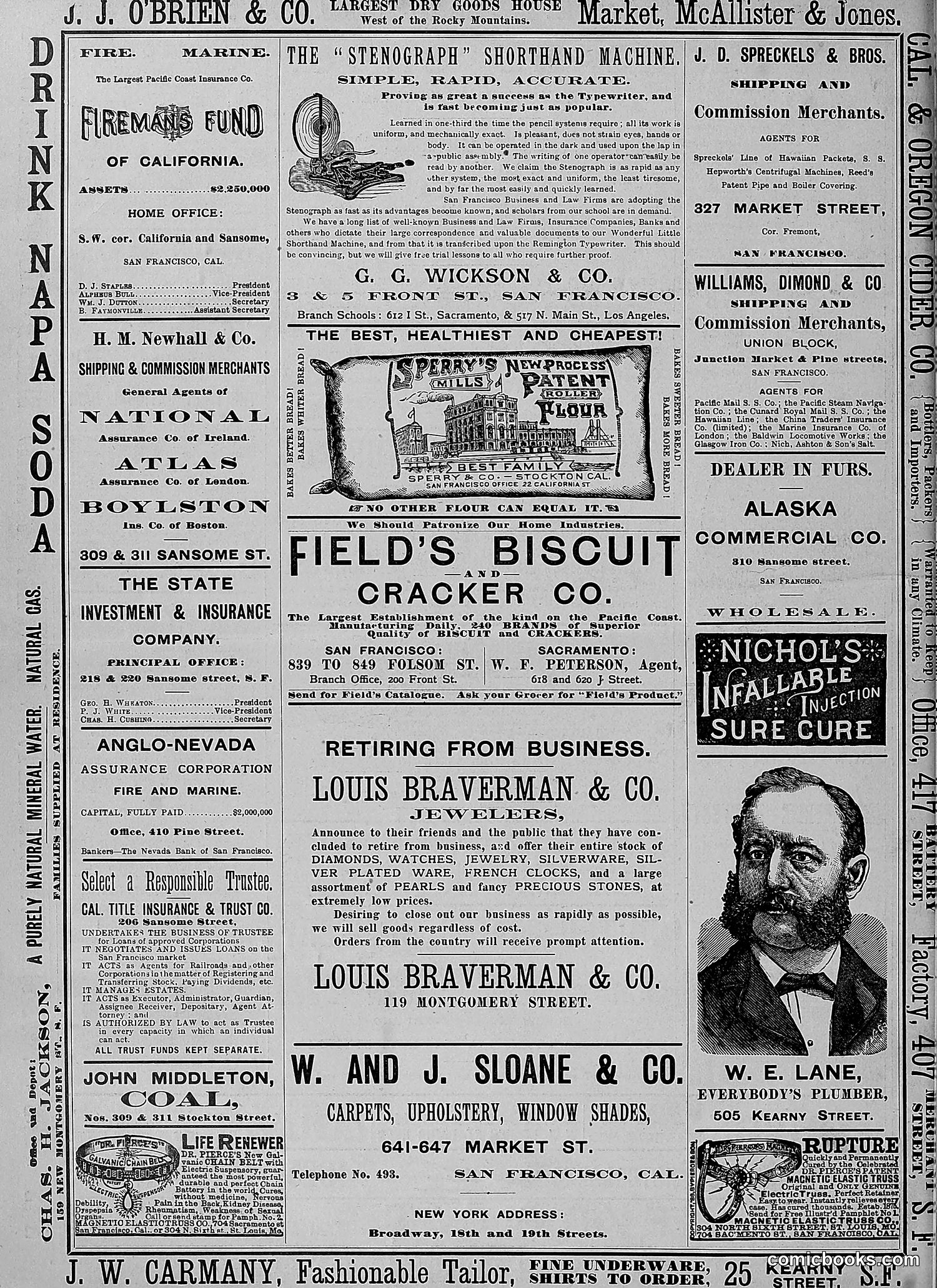
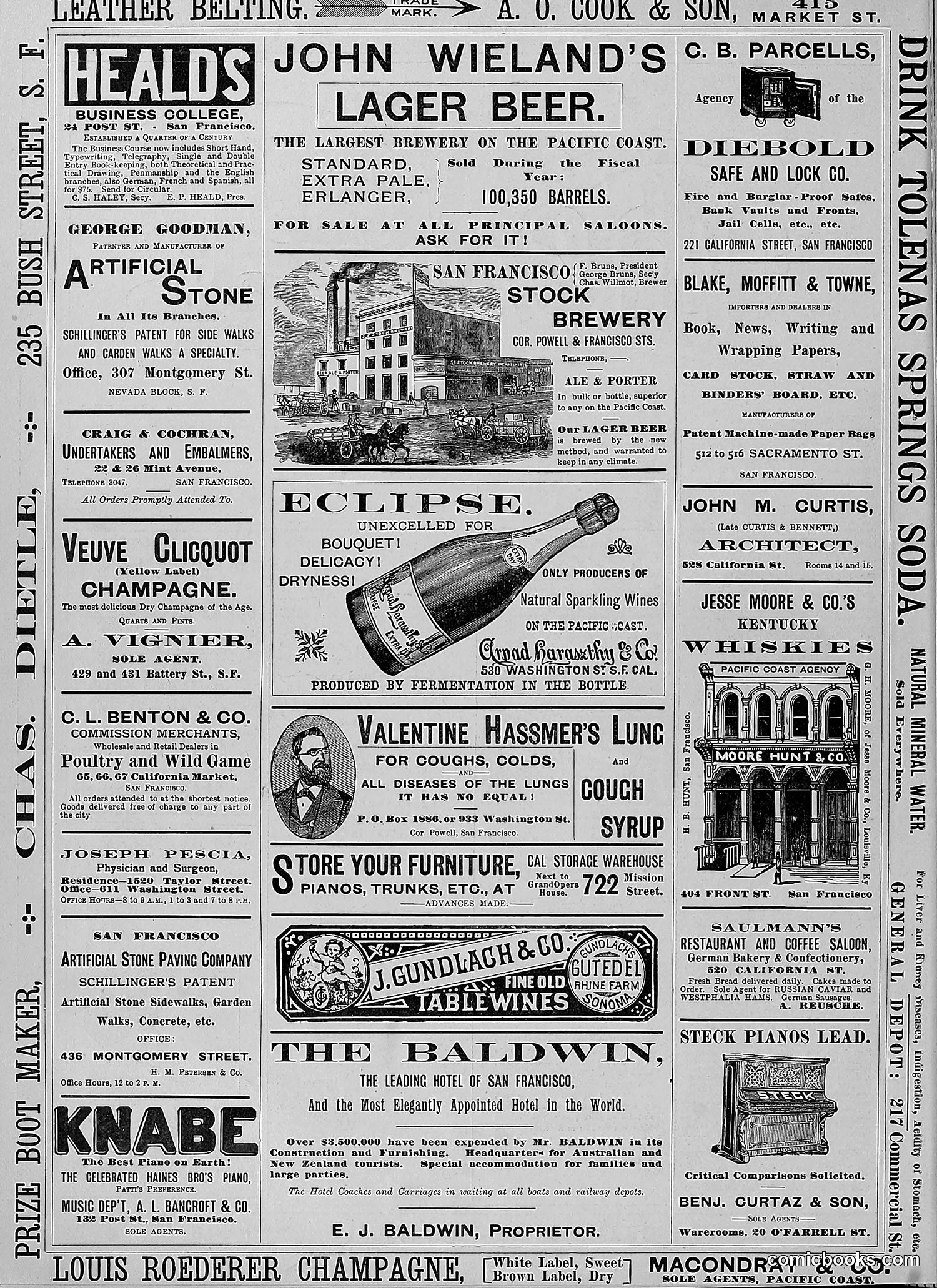
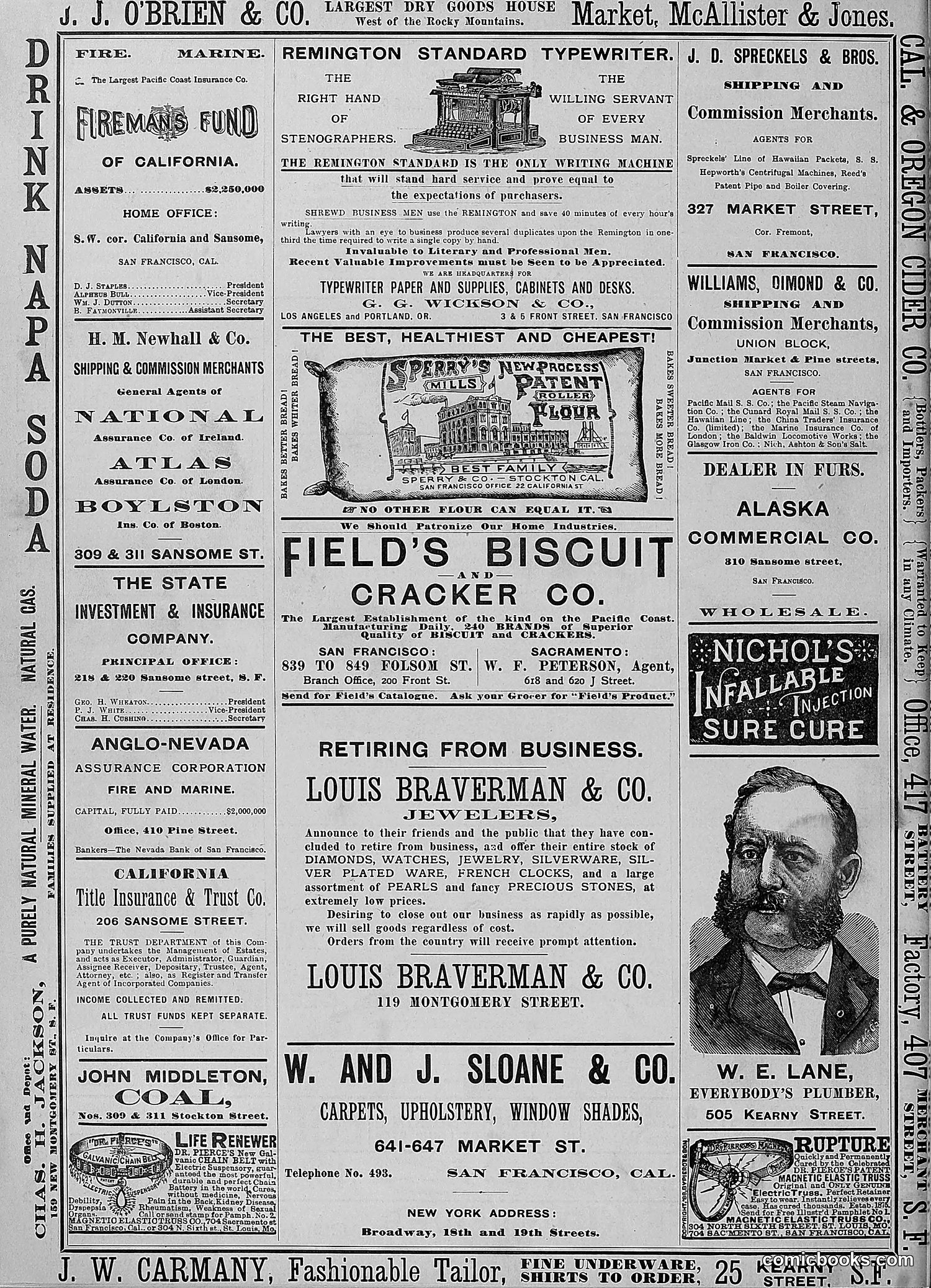
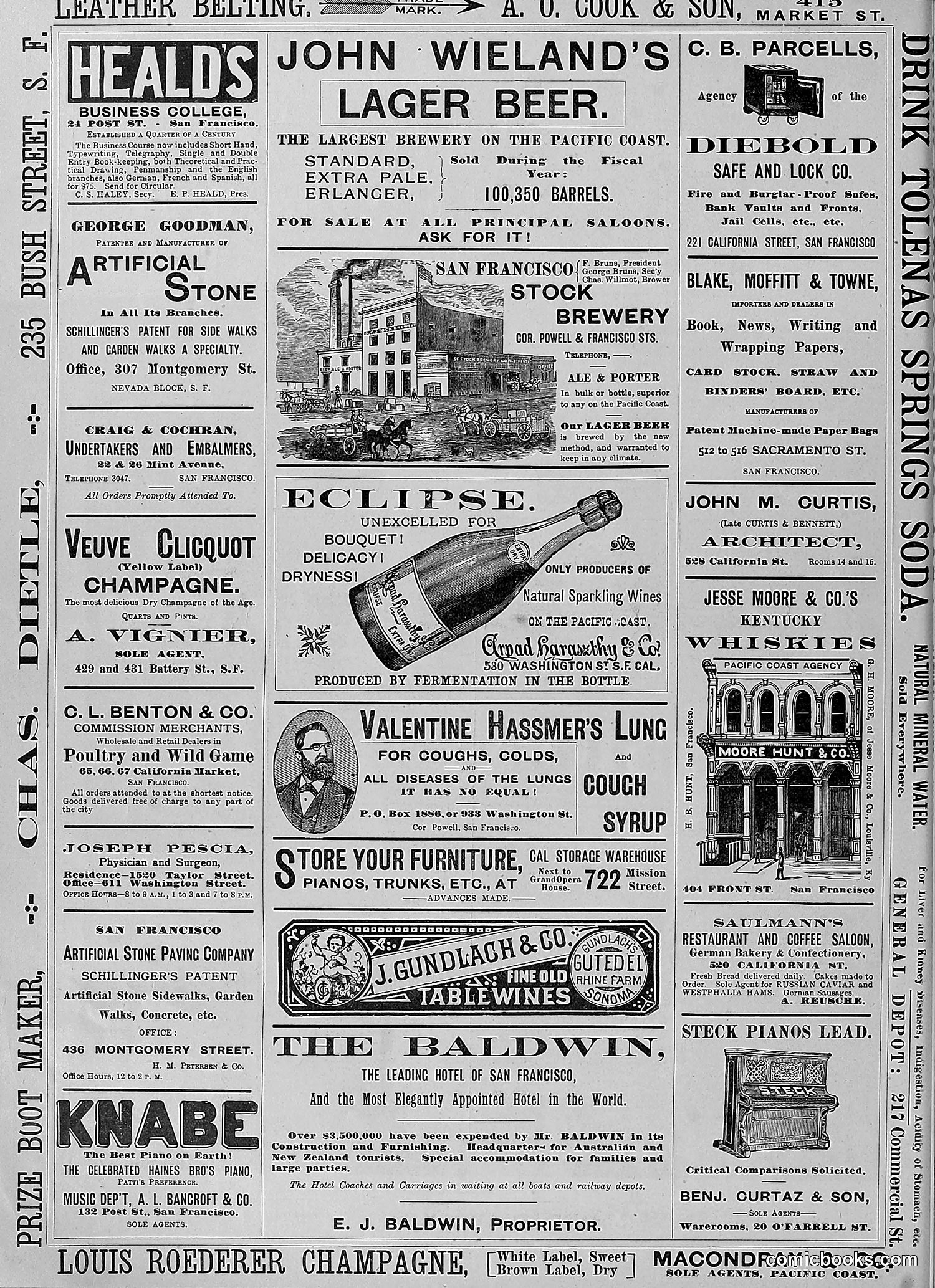
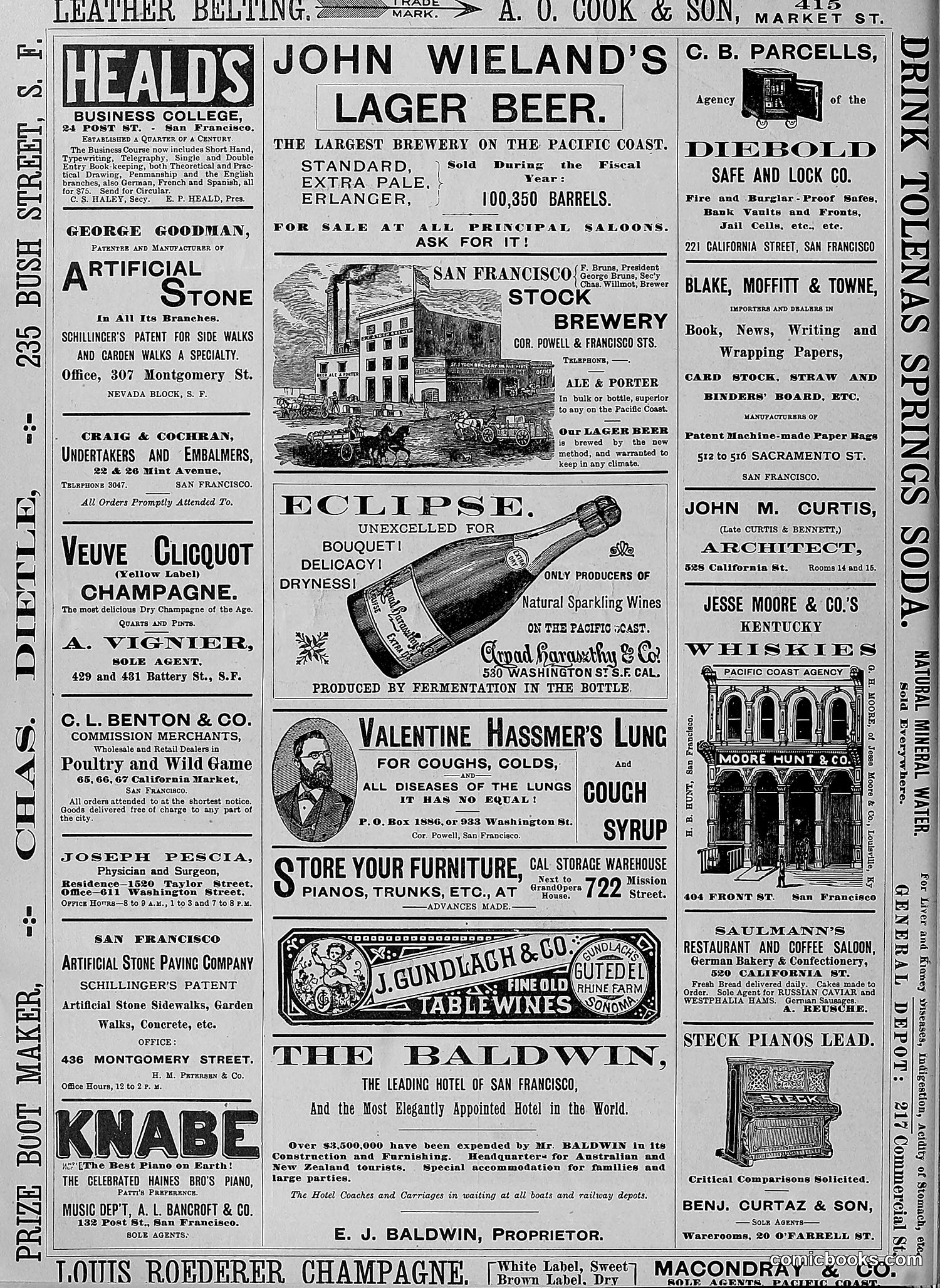
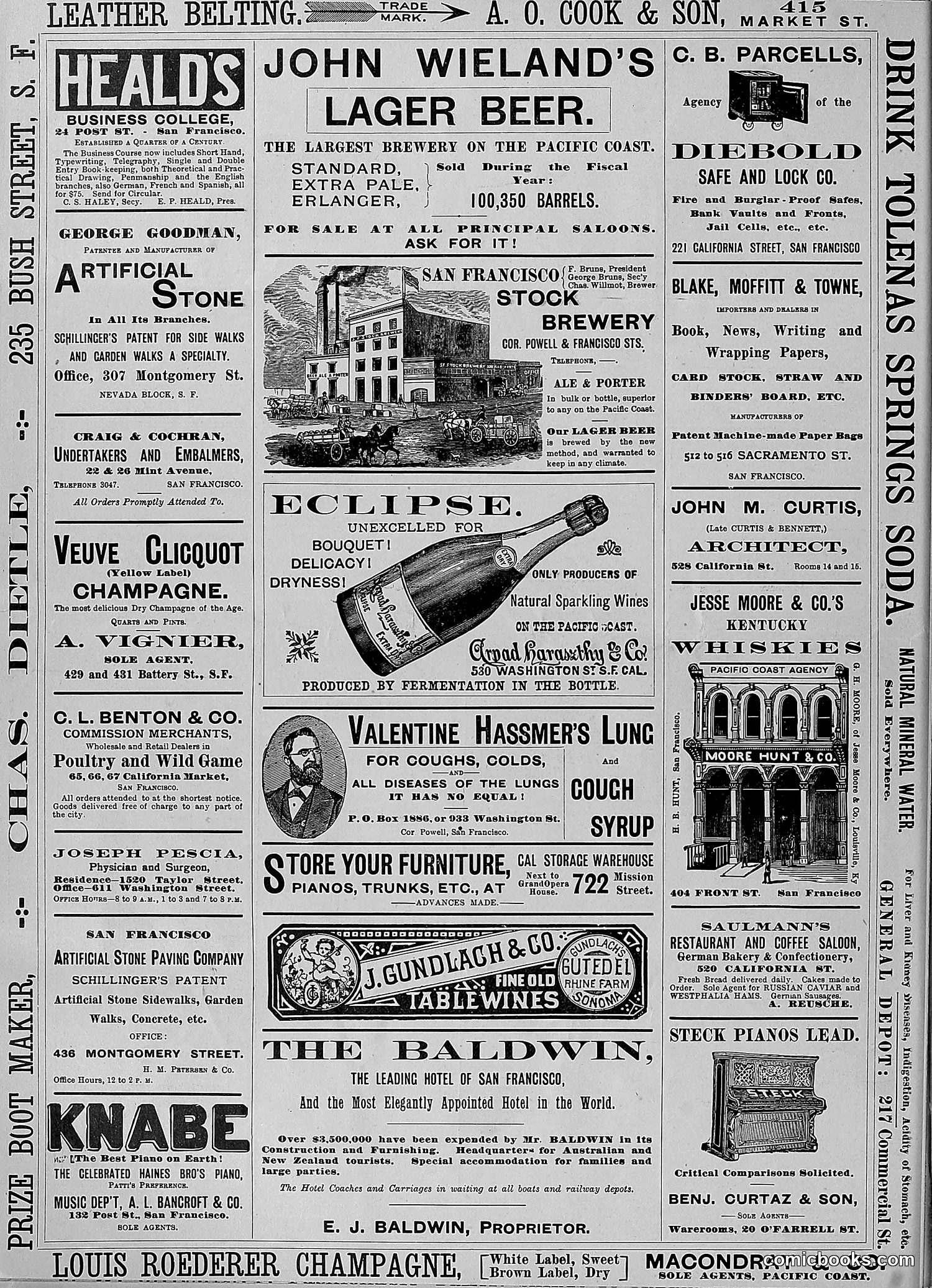
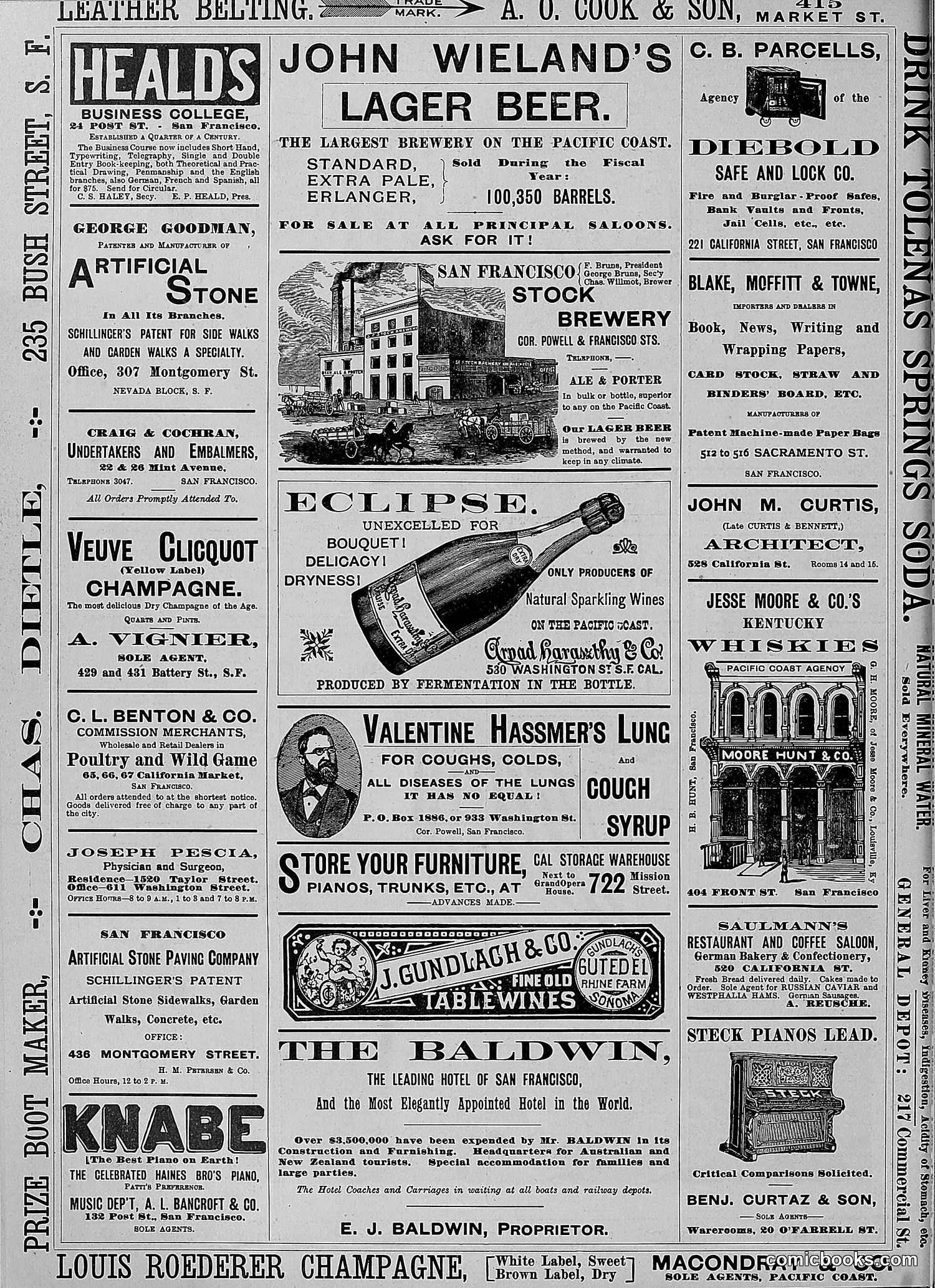
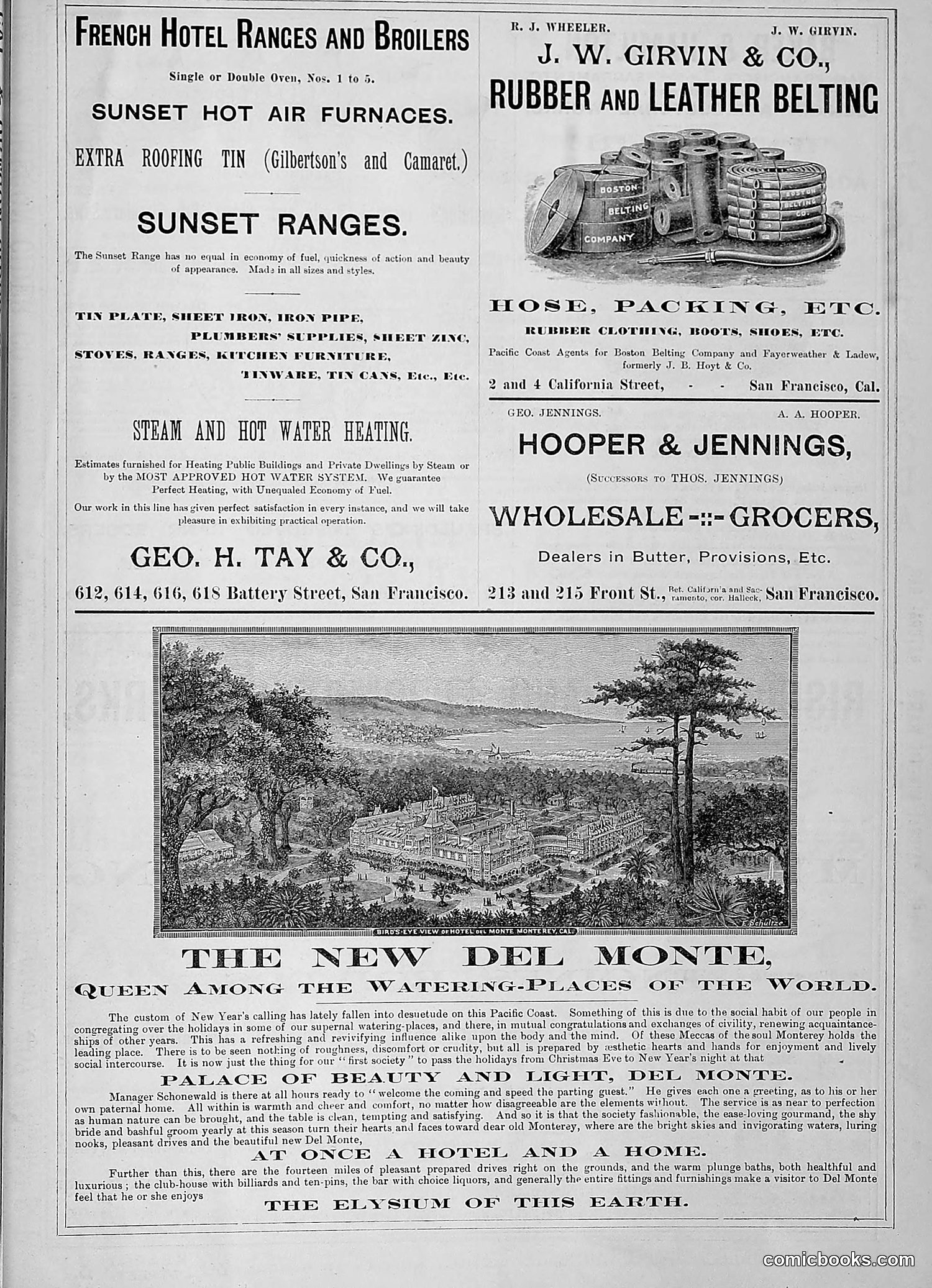
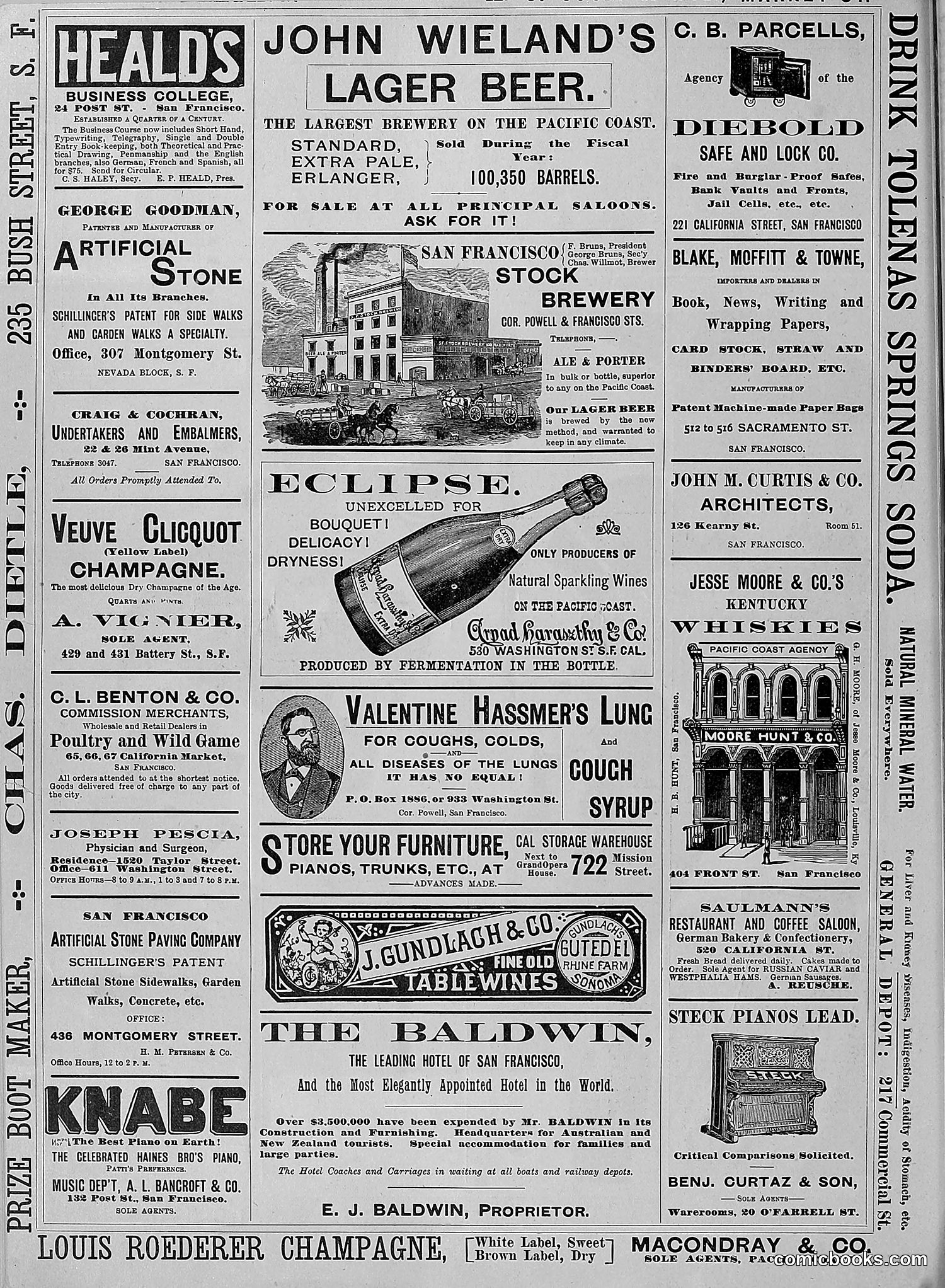
# Analysis This page is **primarily a collection of advertisements** rather than satirical cartoons. It displays commercial notices for San Francisco businesses from what appears to be the late 19th century, including: - Breweries (John Wieland's Lager Beer, San Francisco Stock Brewery) - Beverages (Eclipse champagne, Moxie soft drink, Jesse Moore whiskeys) - Business services (undertakers, artificial stone, furniture storage) - Hotels (The Baldwin) - Patent medicines (Valentine Hassmer's Lung Cough Syrup) The only illustrated figure is a bearded man advertising cough syrup—a common marketing device for patent medicines of the era. **There are no identifiable political cartoons or satirical commentary visible on this page.** It functions as a standard advertisement section, reflecting the commercial interests of The Wasp's readership rather than social or political satire.
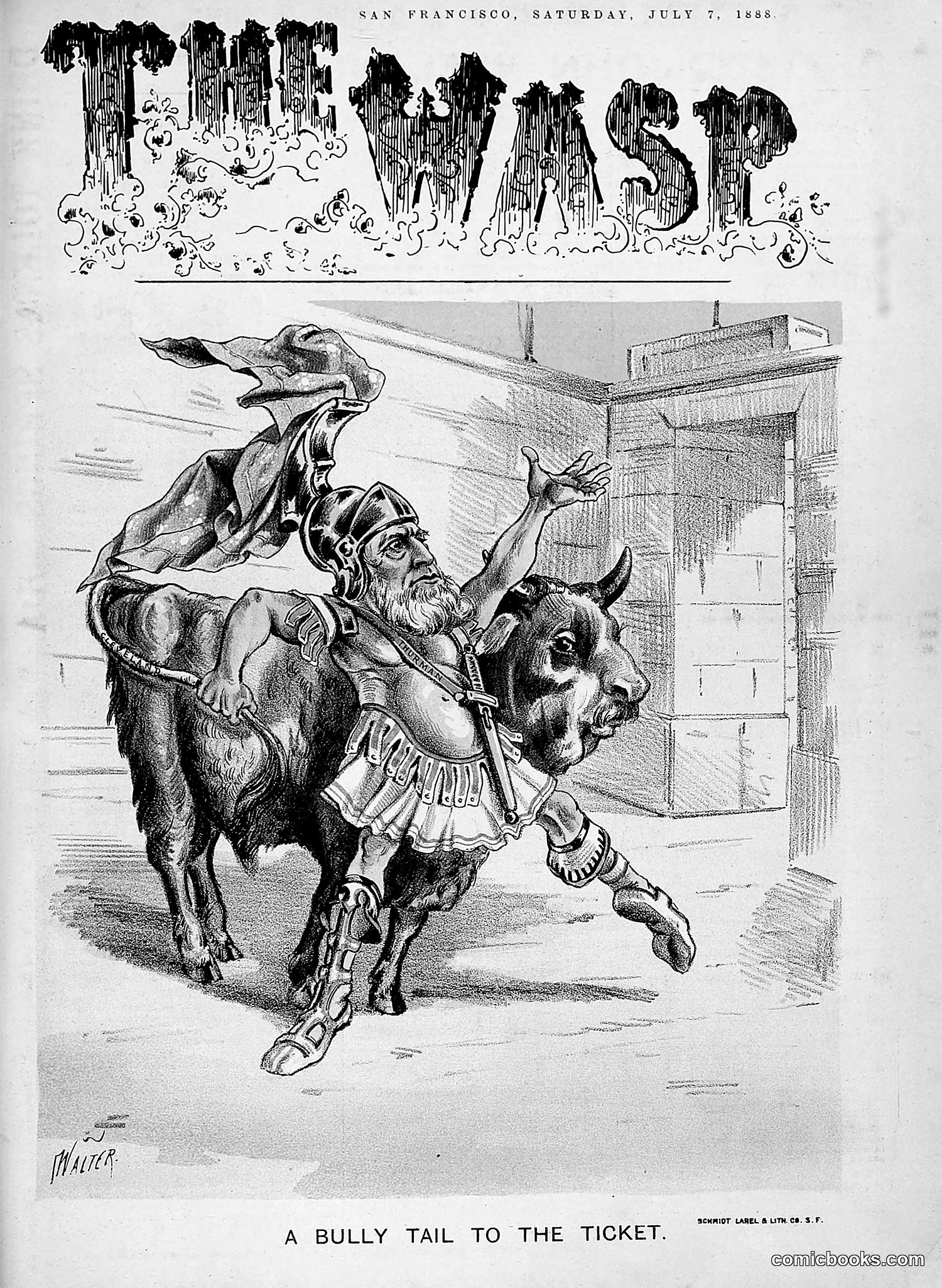
# "A Bully Tail to the Ticket" This political cartoon from *The Wasp* (July 7, 1888) appears to satirize a political candidate or ticket through the figure of a bearded man in classical/mythological warrior attire riding a goat. The title "A Bully Tail to the Ticket" suggests criticism of someone associated with an election slate. The man's elaborate costume—helmet, armor, decorative collar—combined with the absurd choice of mount (a goat rather than a horse) creates a ridiculous, undignified image. This likely mocks the candidate as pretentious, foolish, or unsuitably qualified for office. The classical imagery may reference inflated claims about the candidate's abilities or character. Without identifying the specific 1888 candidate targeted, the cartoon clearly intends to demean through visual absurdity and mockery of martial pretension.
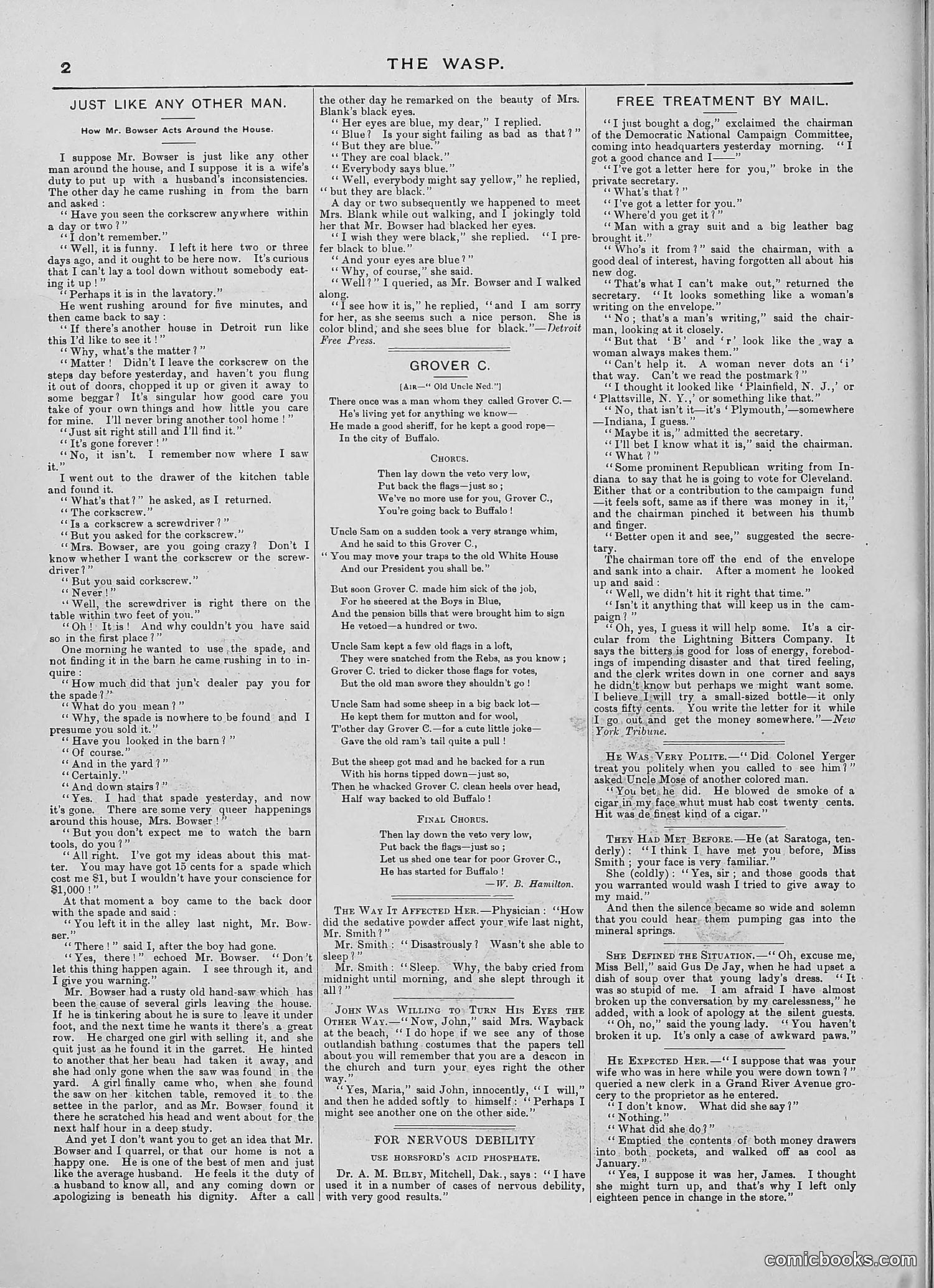
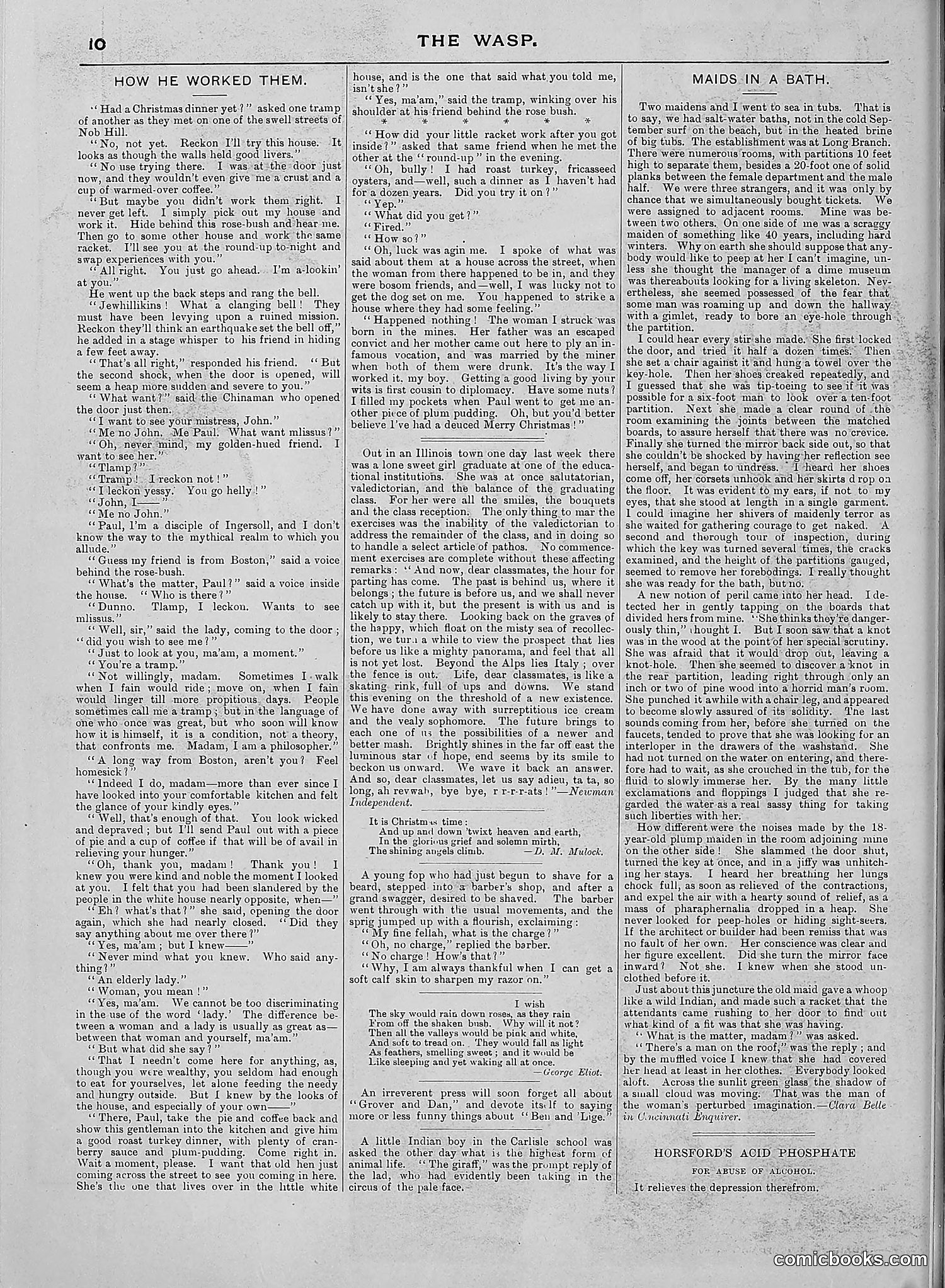
# Page Analysis: The Wasp Magazine This page contains three separate text pieces rather than political cartoons. The main content includes: 1. **"An Allegory"** — A poem about an oak tree and human life's sorrows, seemingly unrelated to satire. 2. **"Old Bill Brown's Brindle Pup and the Widow Harkins"** — A humorous anecdote about domestic life and household help, depicting tensions between employers and hired workers over domestic duties and acceptable behavior. 3. **"Policy and Management"** — A dialogue between Mr. Bowser and his wife about managing hired help, emphasizing proper treatment and respect for employees. 4. **"As a Drink in Fevers"** — An advertisement for Dr. Cusack's acid phosphate as a medicinal tonic. The satirical content targets class relations and employer-employee dynamics of the era, mocking both difficult servants and demanding employers.
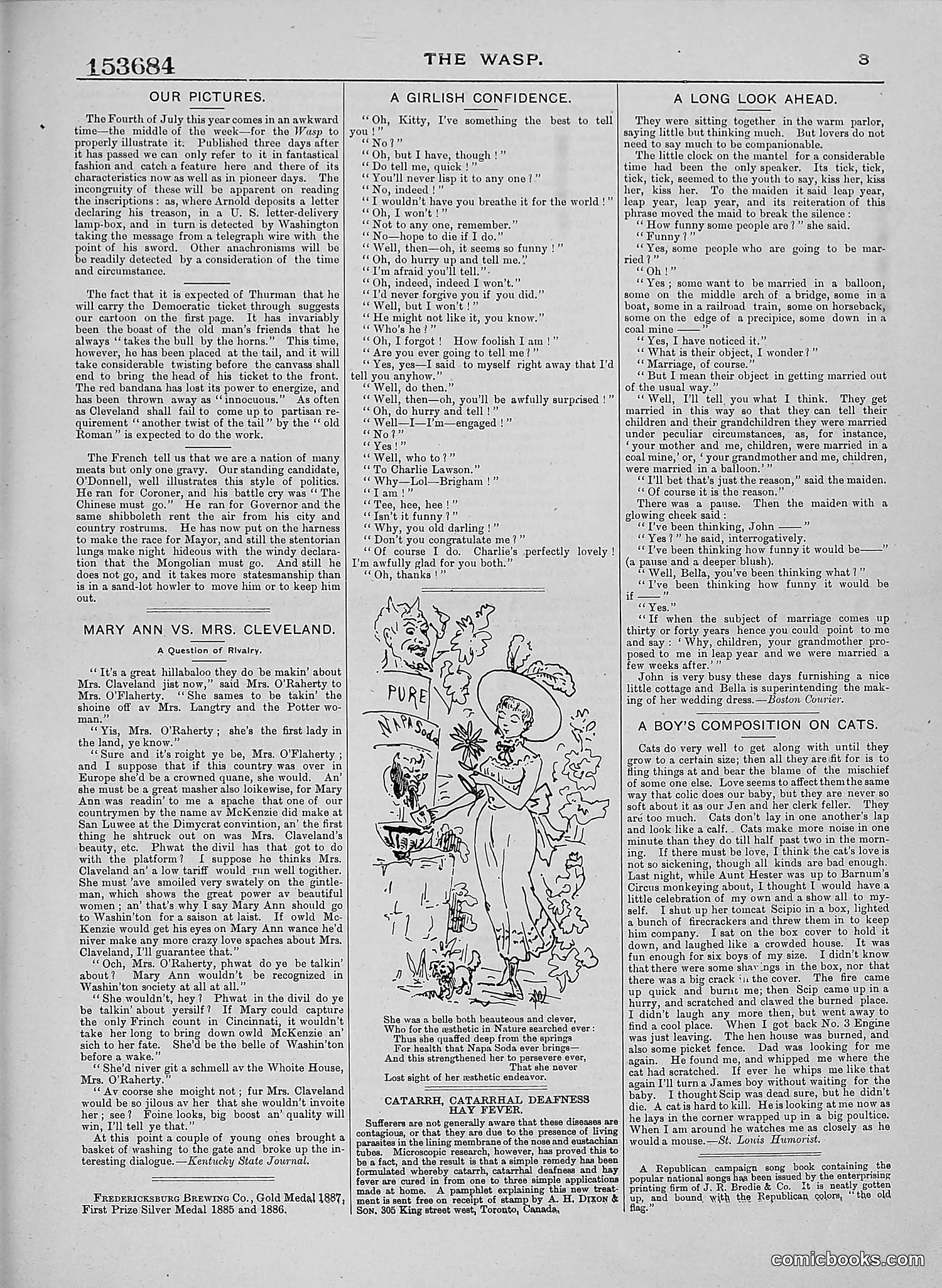
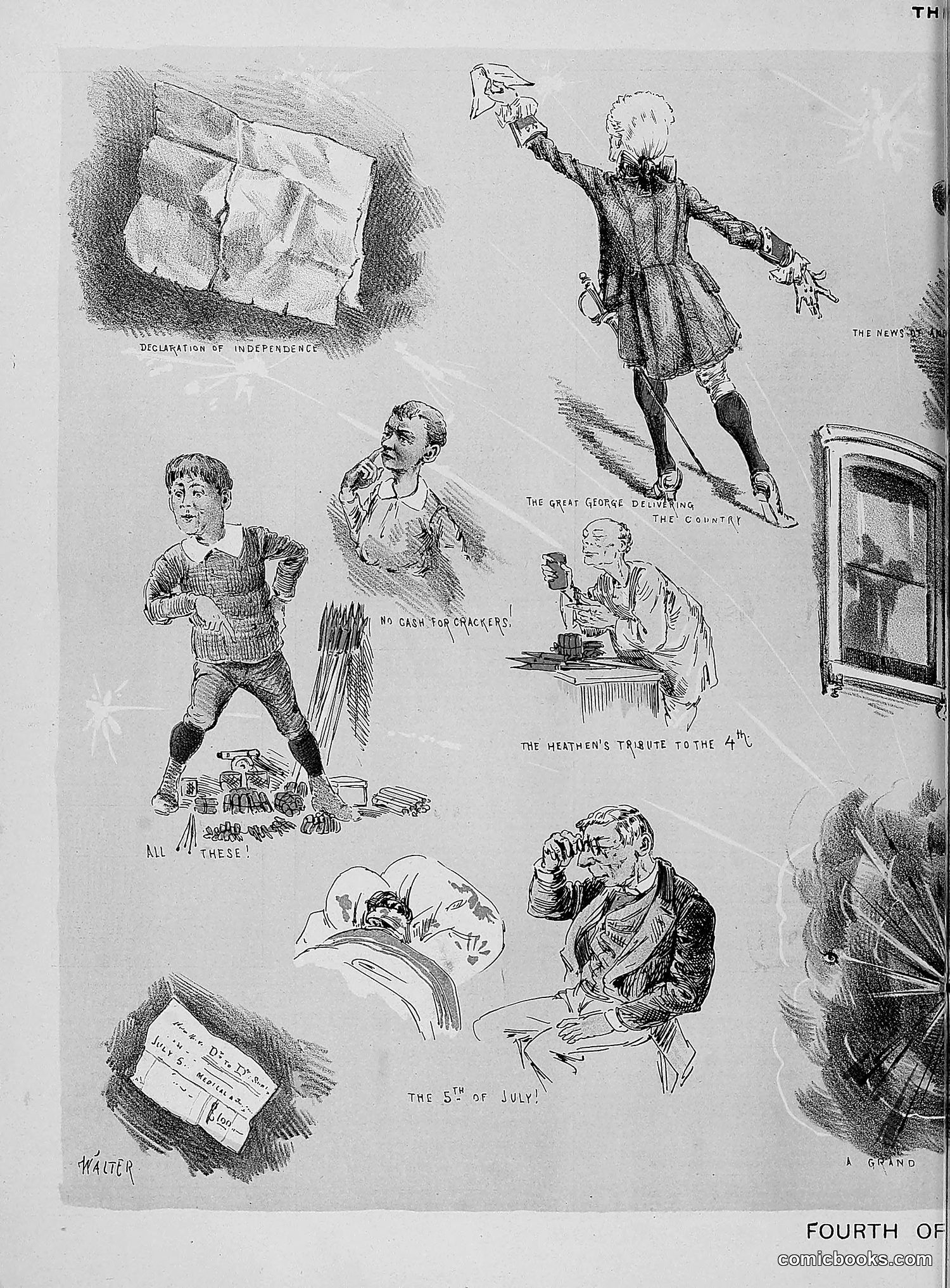
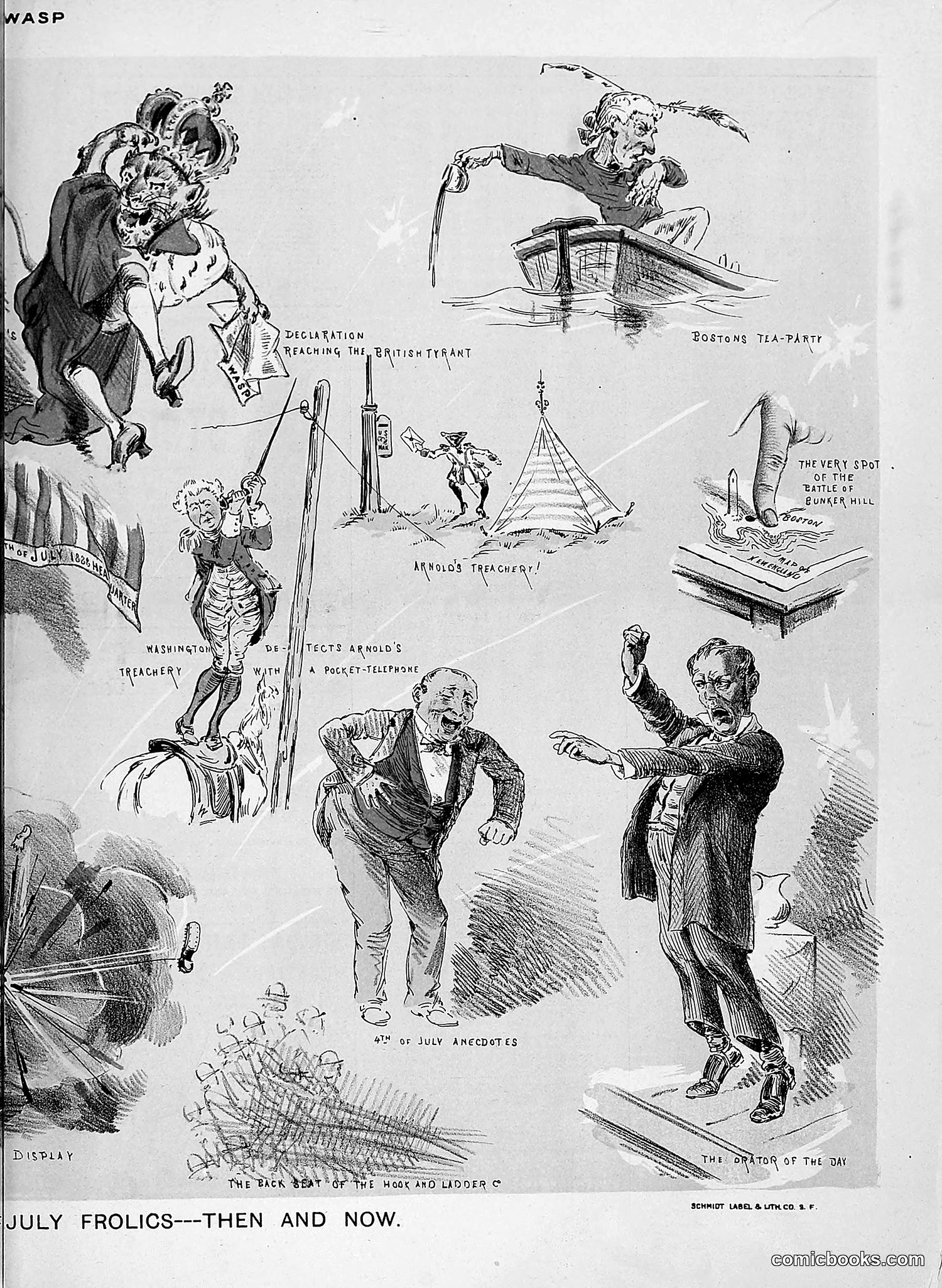
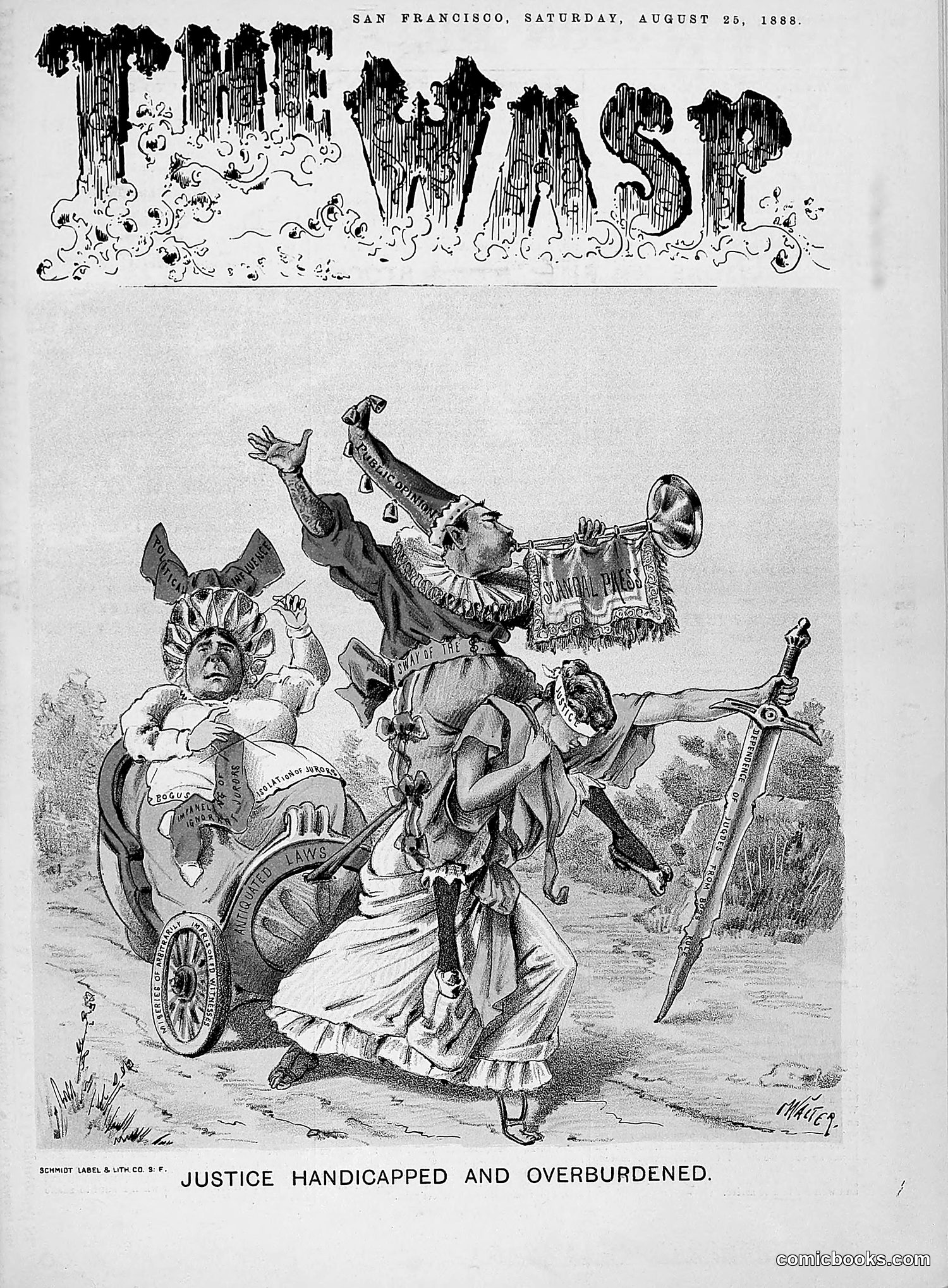
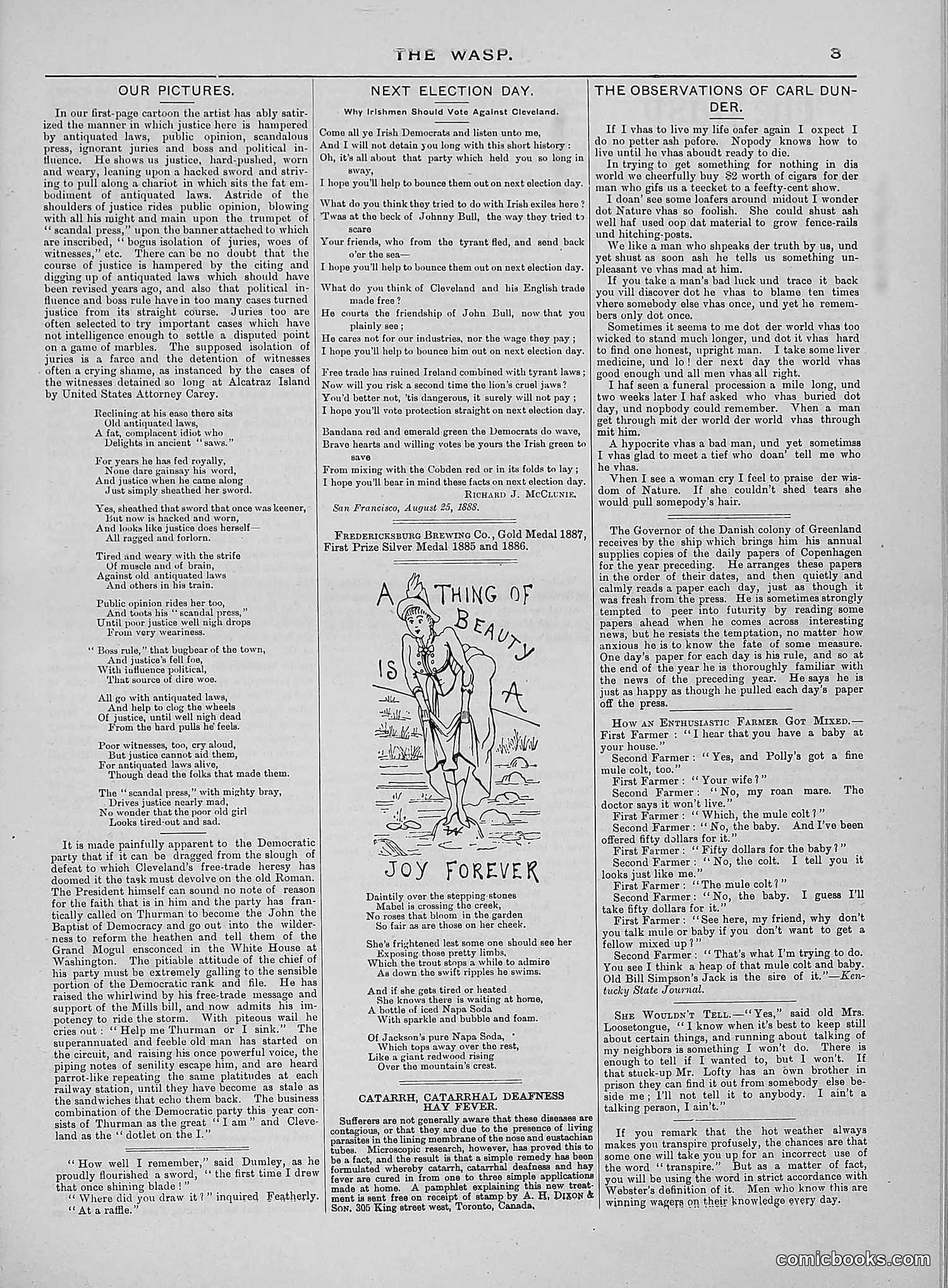
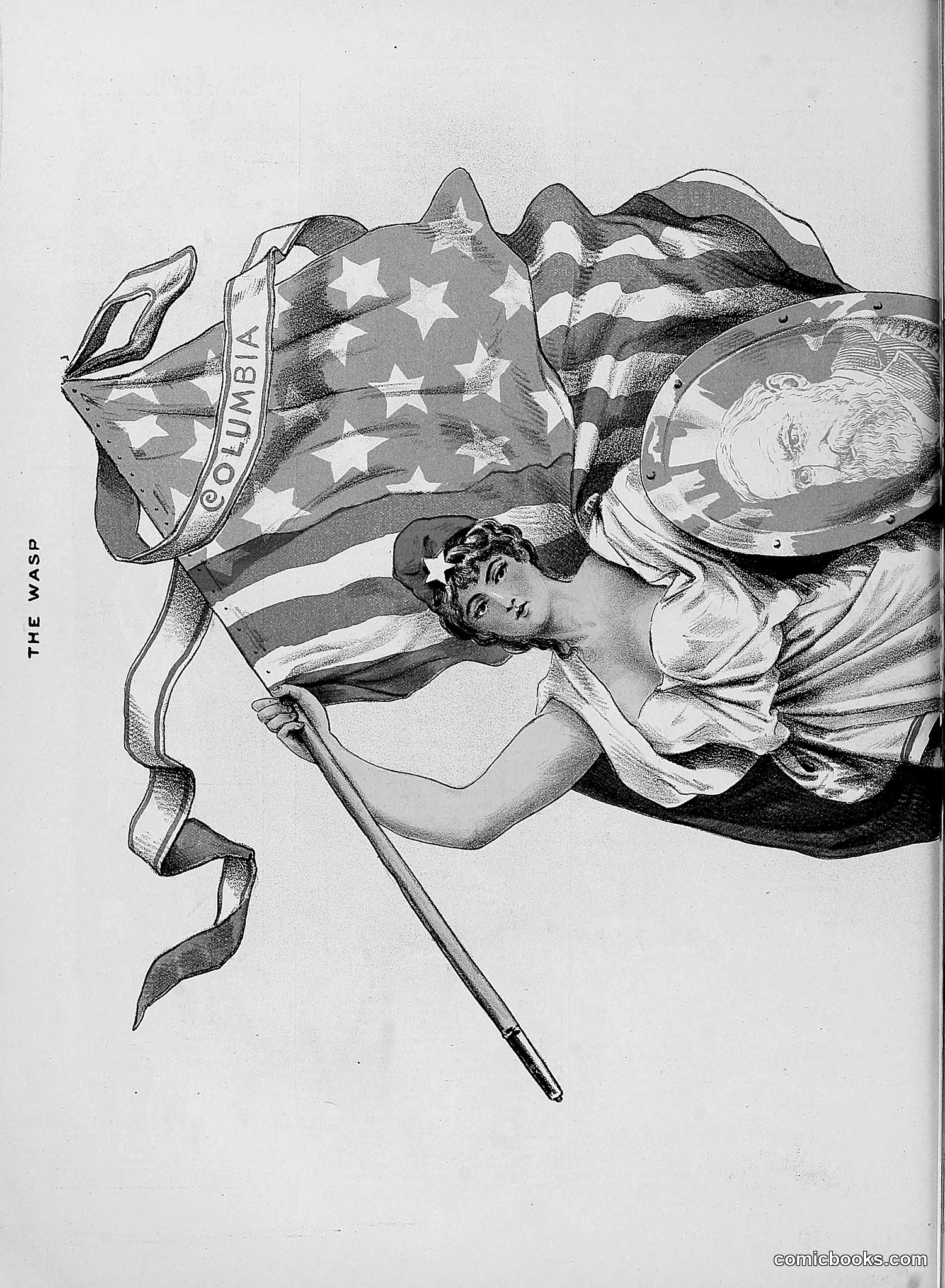
# Analysis of The Wasp Page This page contains three distinct sections: **"Our Pictures"** discusses the Fourth of July illustration, noting it captures period characteristics and pioneer life—typical editorial commentary for a historical image. **"A Girlish Confidence"** is a humorous dialogue between two young women discussing marriage prospects, with one reassuring the other about getting married despite societal pressures. **"Mary Ann vs. Mrs. Cleveland"** is a satirical piece questioning which woman—possibly referencing President Cleveland's wife—should be considered the "first lady." It uses rivalrous language about social status and position. **"A Boy's Composition on Cats"** is a child's humorous essay about cat behavior, presented as comic relief. The page appears primarily **humorous and social commentary** rather than hard political satire, focusing on domestic and gender-related topics typical of 1880s American periodicals.