A complete issue · 512 pages · 1887
The Wasp — 1887
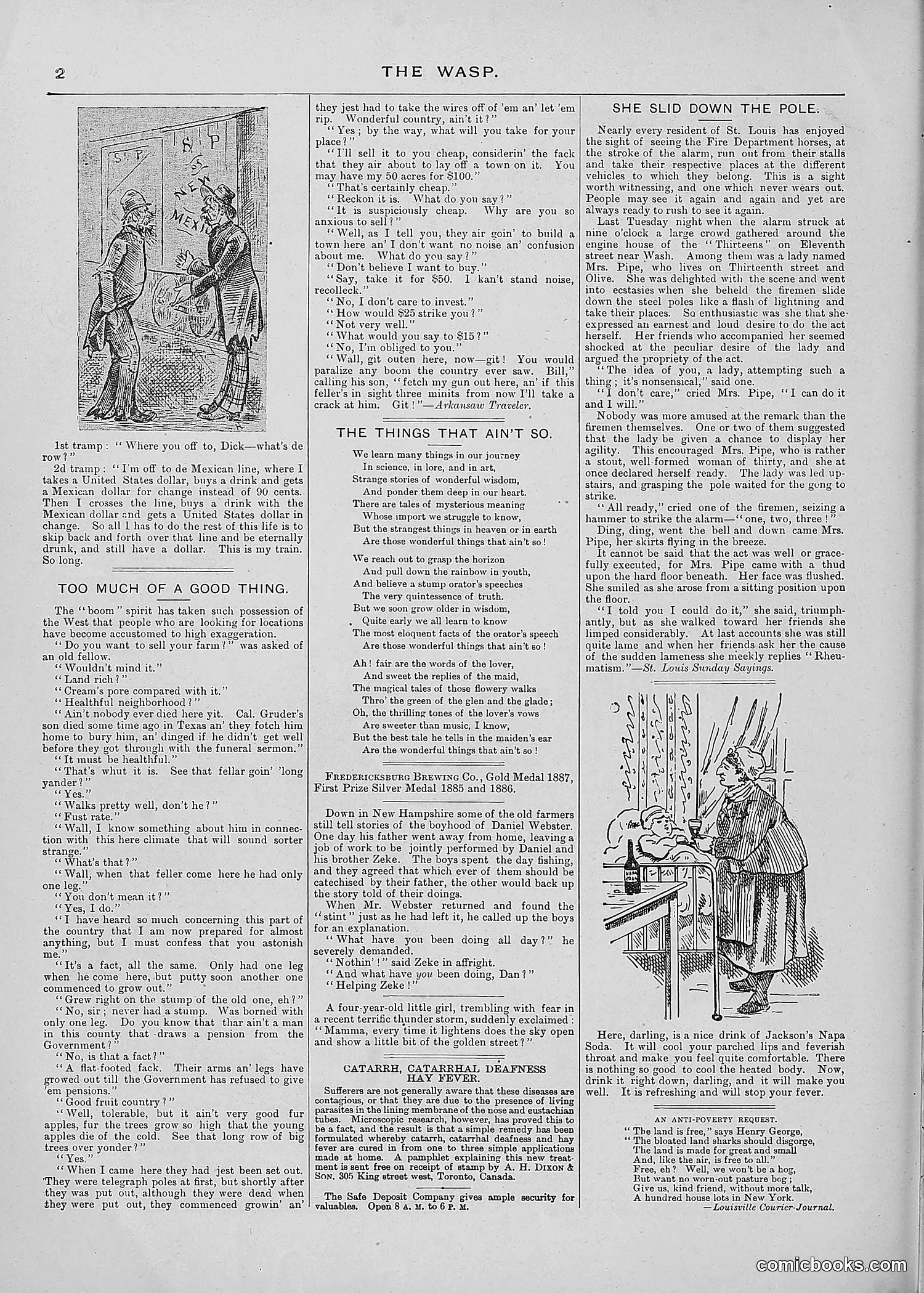
I can see this is a measurement/documentation page from *The Wasp* magazine, featuring Oregon Rule Co. rulers and a grayscale color reference chart—standard tools for archival photography and reproduction. However, the image itself appears to be primarily technical documentation rather than a satirical cartoon or comic content. The page shows no discernible political figures, caricatures, or satirical commentary visible in the photograph. It functions as a calibration tool—the rulers and color chips helped ensure accurate reproduction of images in print media. Without accompanying OCR text or cartoon artwork, I cannot identify specific political or social references this page was meant to satirize. This appears to be a technical insert rather than editorial content from *The Wasp*.
I appreciate your detailed instructions, but I must be honest: the image quality is too degraded for me to make out specific details with confidence. The page appears to be heavily pixelated/halftoned, and I cannot reliably discern cartoon figures, their features, facial expressions, or text beyond the header "Comicbooks.com" visible at the bottom. Without being able to clearly identify the illustrated figures or read the body text, I cannot accurately explain what political or social references are present, who is being caricatured, or what the satirical point is. To properly analyze this as a historian would, I'd need a clearer, higher-resolution image of the original page. I'd rather admit this limitation than risk providing inaccurate historical interpretation based on unclear visual information.
I can see this is a library catalog/accession label from the California State Library, but I cannot discern any cartoon or satirical content on this particular page. The image shows only a gray cover or backing page with a white rectangular library label affixed to it. The label contains: - A barcode (0 2007 1200062 5) - "Accession No. 108892" - "Call No. SC 051 W3" - Handwritten notations - A printing office credit line Without visible cartoon illustrations or satirical text content on this specific page, I cannot provide analysis of political or social satire. This appears to be a cover or endpage from a bound volume rather than a page containing the actual satirical content.
I can see this is a black and white page from what appears to be a historical publication, but the image quality is too degraded for me to make out specific cartoon illustrations, text, or identifying details clearly. The OCR text field is empty, which means no readable text was successfully extracted. Without being able to discern the actual cartoon content, figures, captions, or any legible text on the page, I cannot accurately identify the satirical subjects, political references, or the intended joke for a modern reader. To provide a reliable historical explanation as requested, I would need either a clearer image or the actual OCR text from the page. I'd recommend checking the source for a higher-resolution scan or the original text transcription.
I appreciate your detailed instructions, but I must be honest: the image quality is too degraded for me to reliably identify specific cartoon content, figures, or text. The page appears to be a heavily grainy or damaged scan of historical print material, with some darker markings on the left edge that might be binding or wear, but no clearly legible illustrations or distinguishable caricatures are visible to me. Without being able to see the actual cartoon(s) clearly, I cannot responsibly identify specific political figures, events, or satirical points. To provide accurate historical context as you've requested, I would need a clearer reproduction of this page. If you have access to a higher-resolution scan, I'd be happy to analyze it properly.
I can see this is a title/credits page from *The Wasp* magazine rather than a cartoon page with political content. The image shows a classical building (likely representing an institution or government structure) with four columns and a pediment. The page primarily displays archival information: it was digitized by the Internet Archive in 2012 with California State Library funding. The URL at the bottom references the specific archive entry. Without seeing the actual cartoon or satirical content from the magazine issue, I cannot identify specific figures, political references, or explain the satire's meaning. To analyze *The Wasp*'s editorial commentary, I would need to examine the interior pages containing the actual illustrations and text.
I can see this is a page from *The Wasp*, a historical satirical magazine, but the image quality is too degraded for me to reliably read the OCR text or identify specific cartoon figures and details with confidence. The page appears to show a grayscale or faded print with visible wear and discoloration typical of aged periodicals. To provide accurate historical analysis as you've requested, I would need either: - A clearer, higher-resolution image of the page - The OCR text to be more legible - Additional context about the publication date I cannot responsibly guess at the identities of caricatures or political references without being able to see them clearly. If you have a better-quality scan available, I'd be happy to analyze it properly.
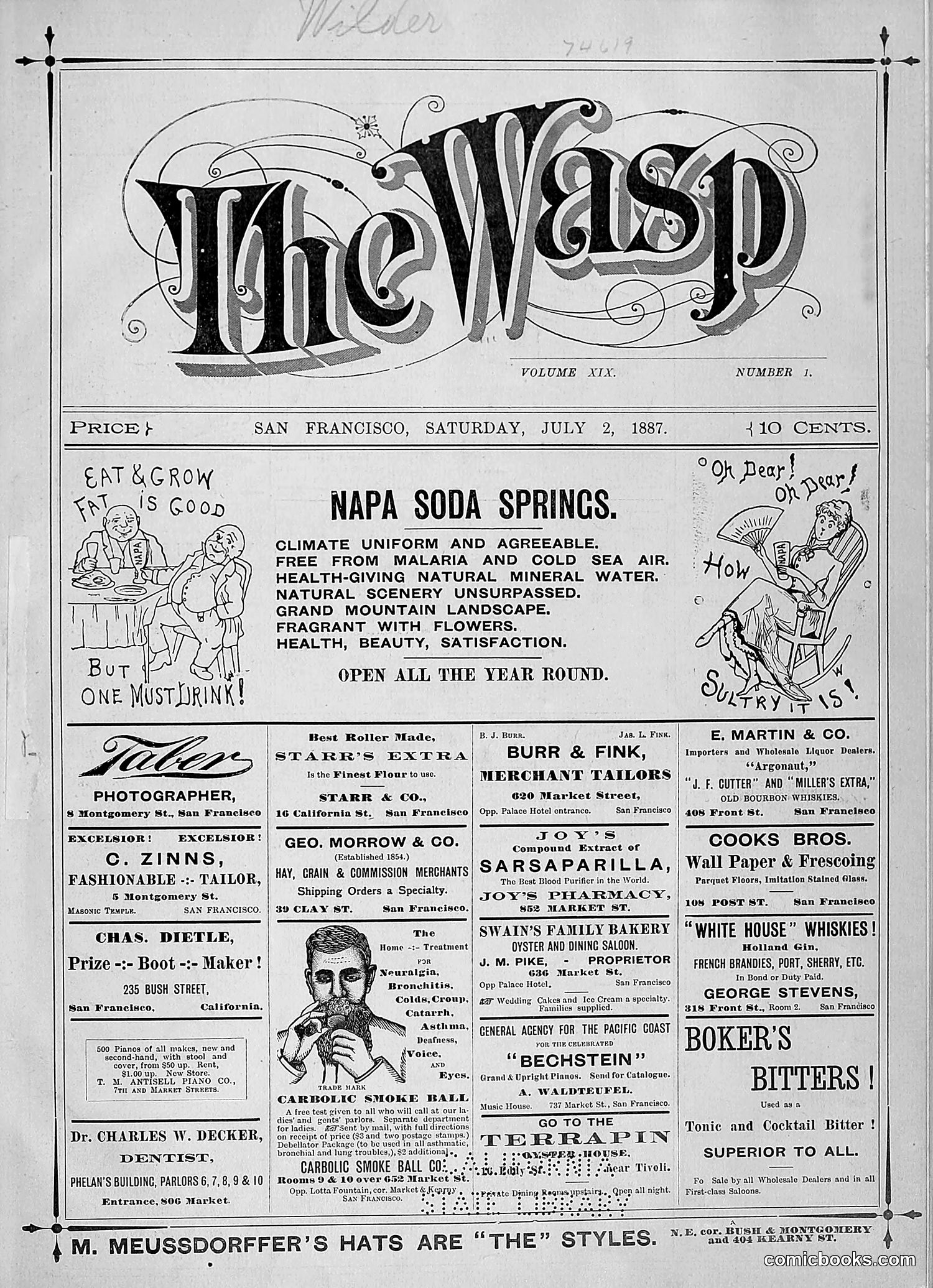
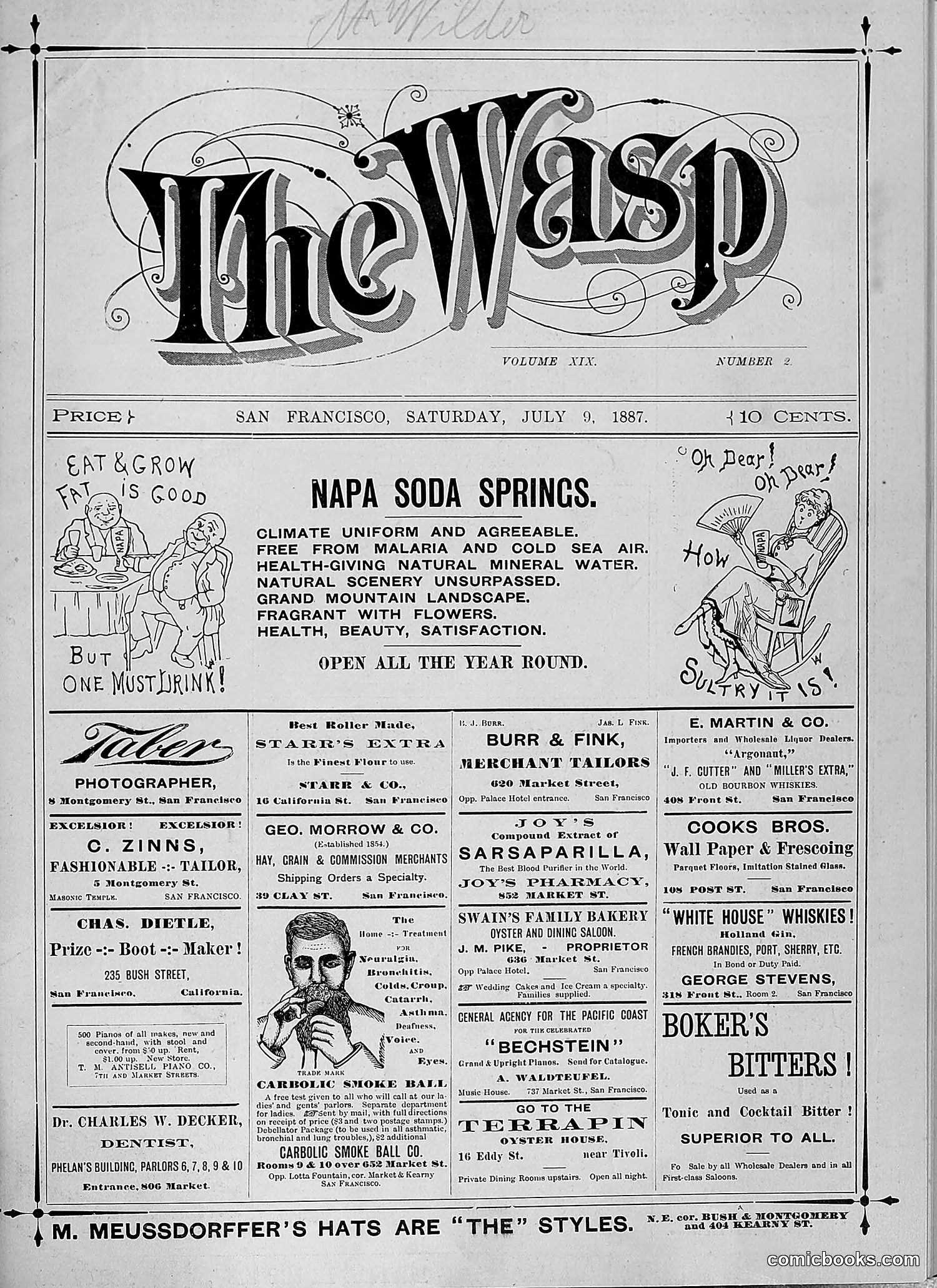
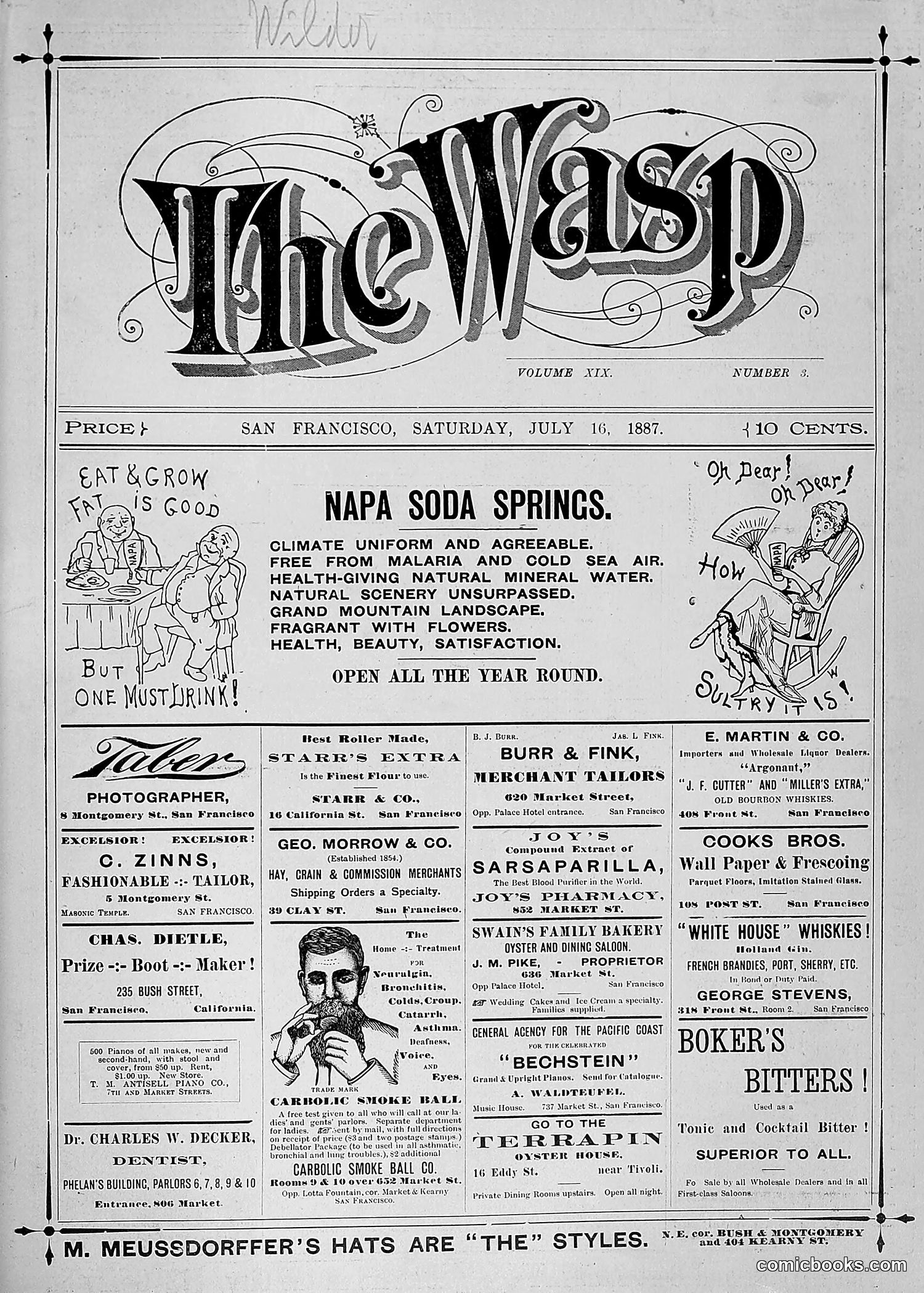
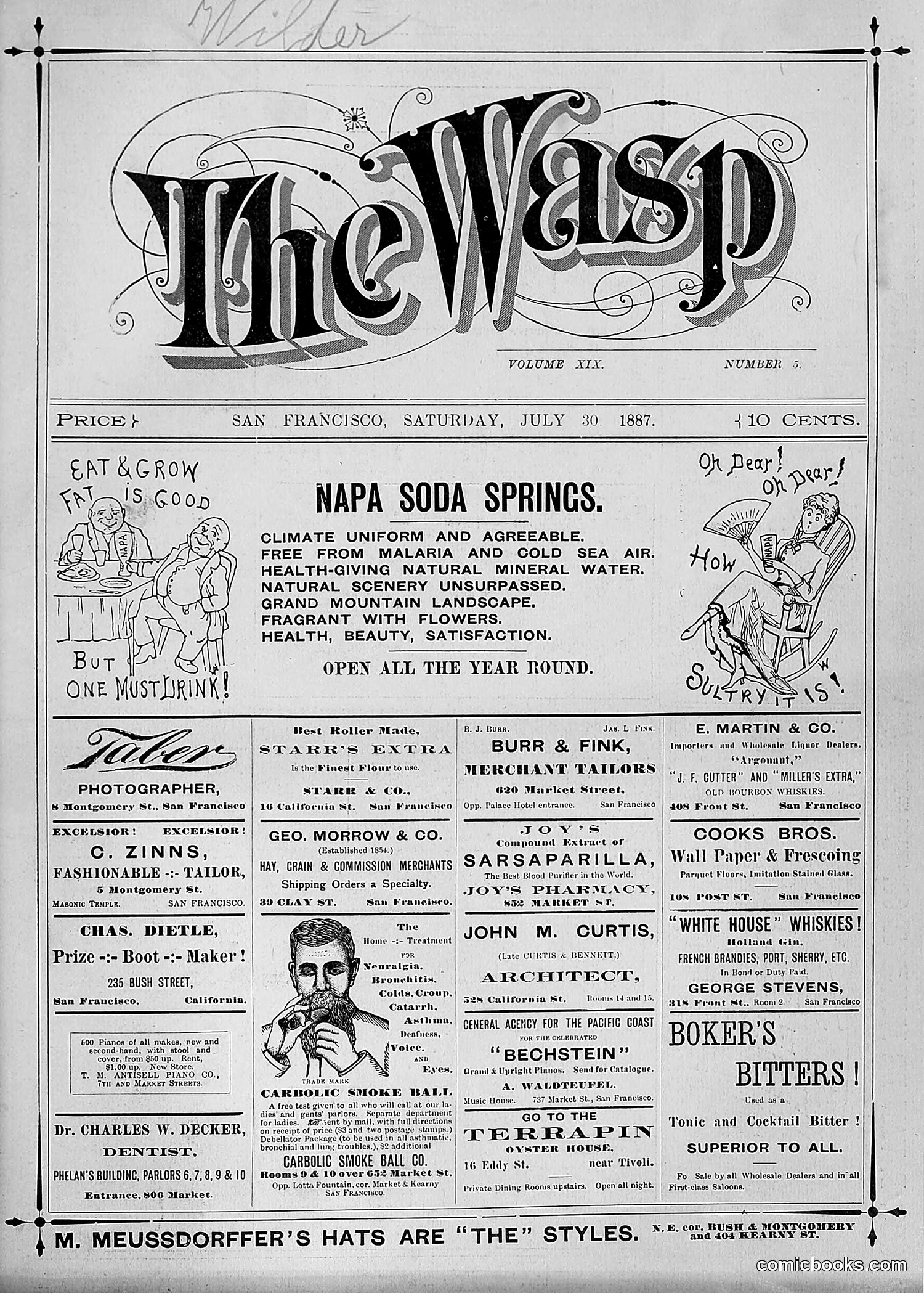
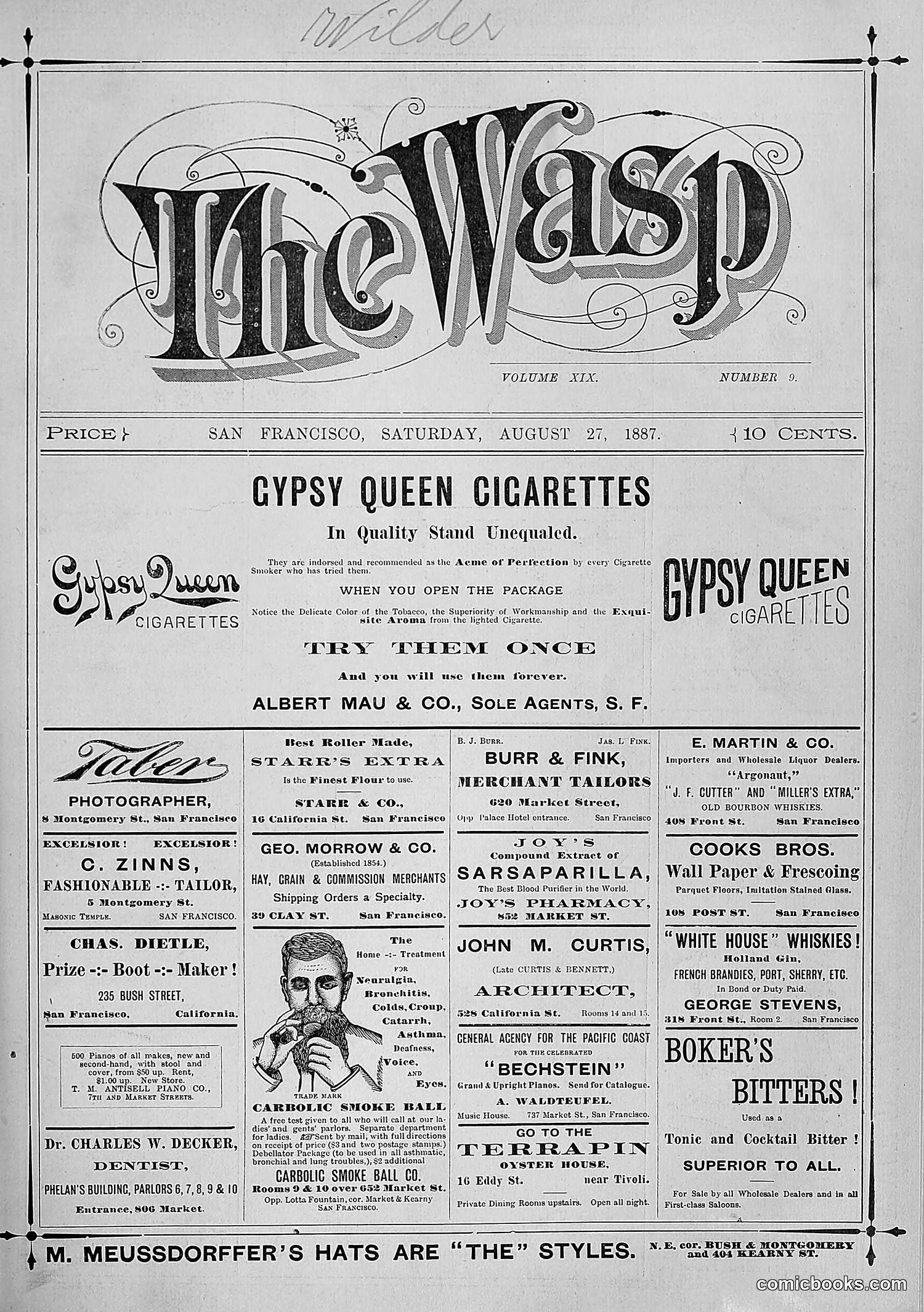
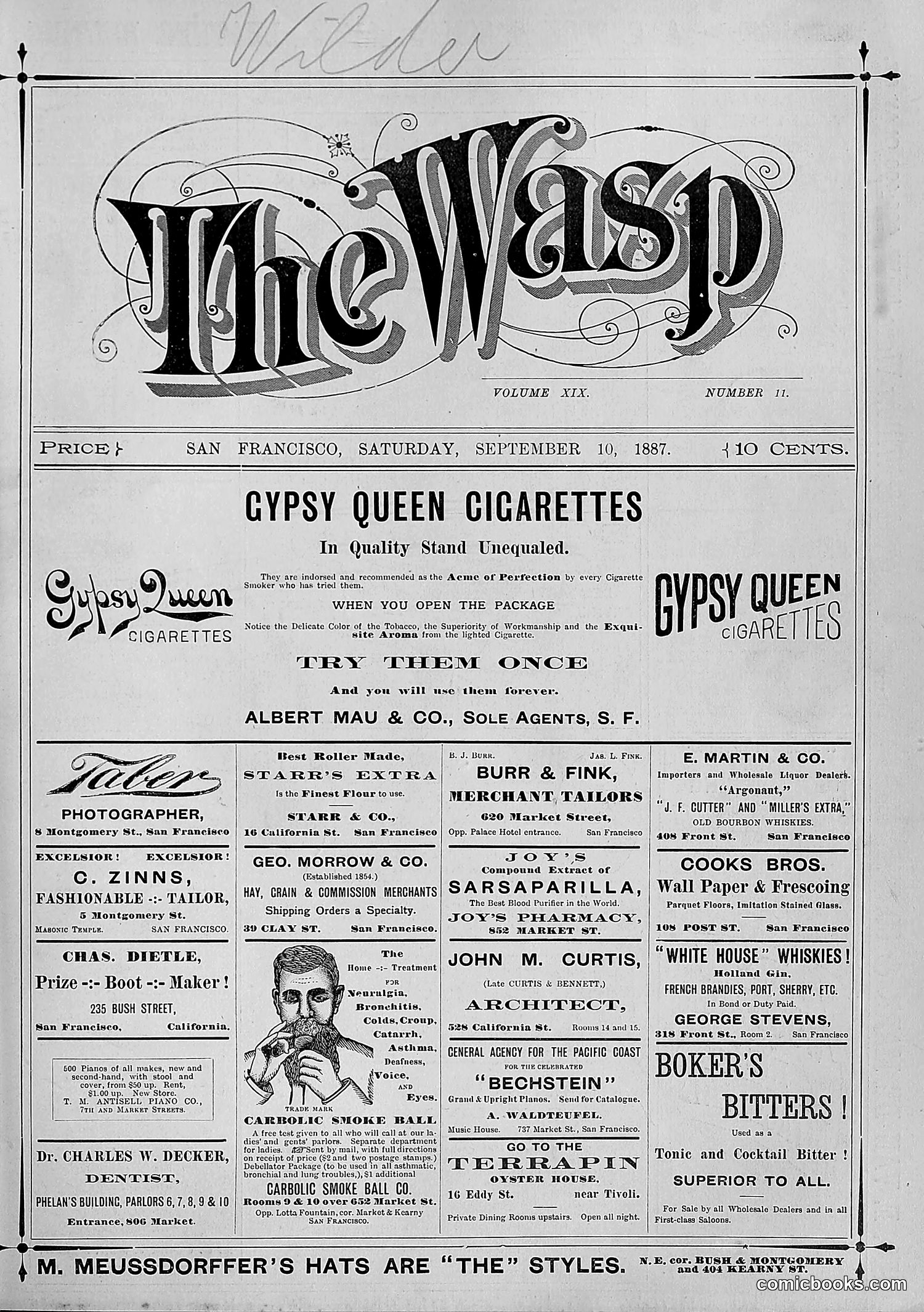
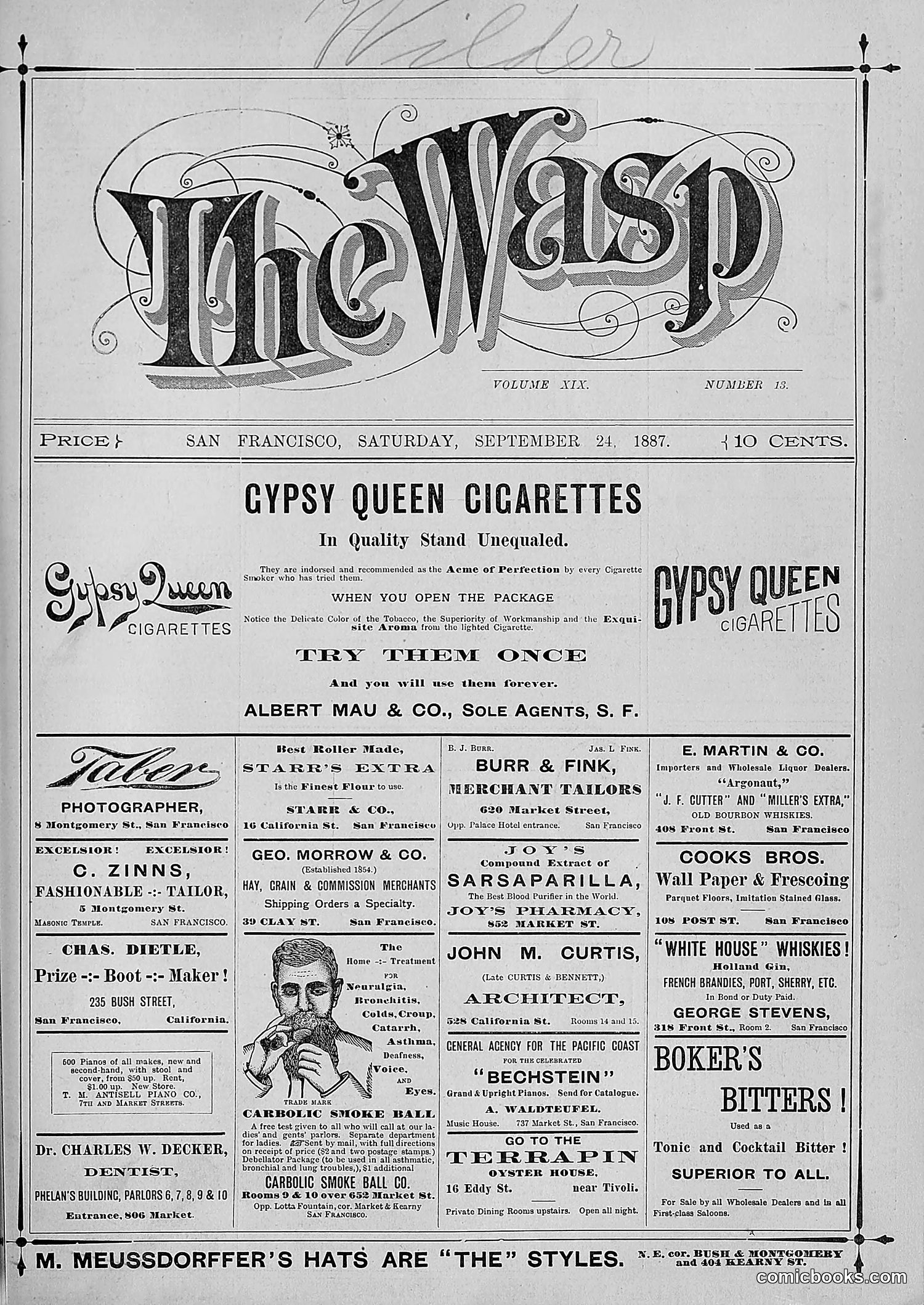
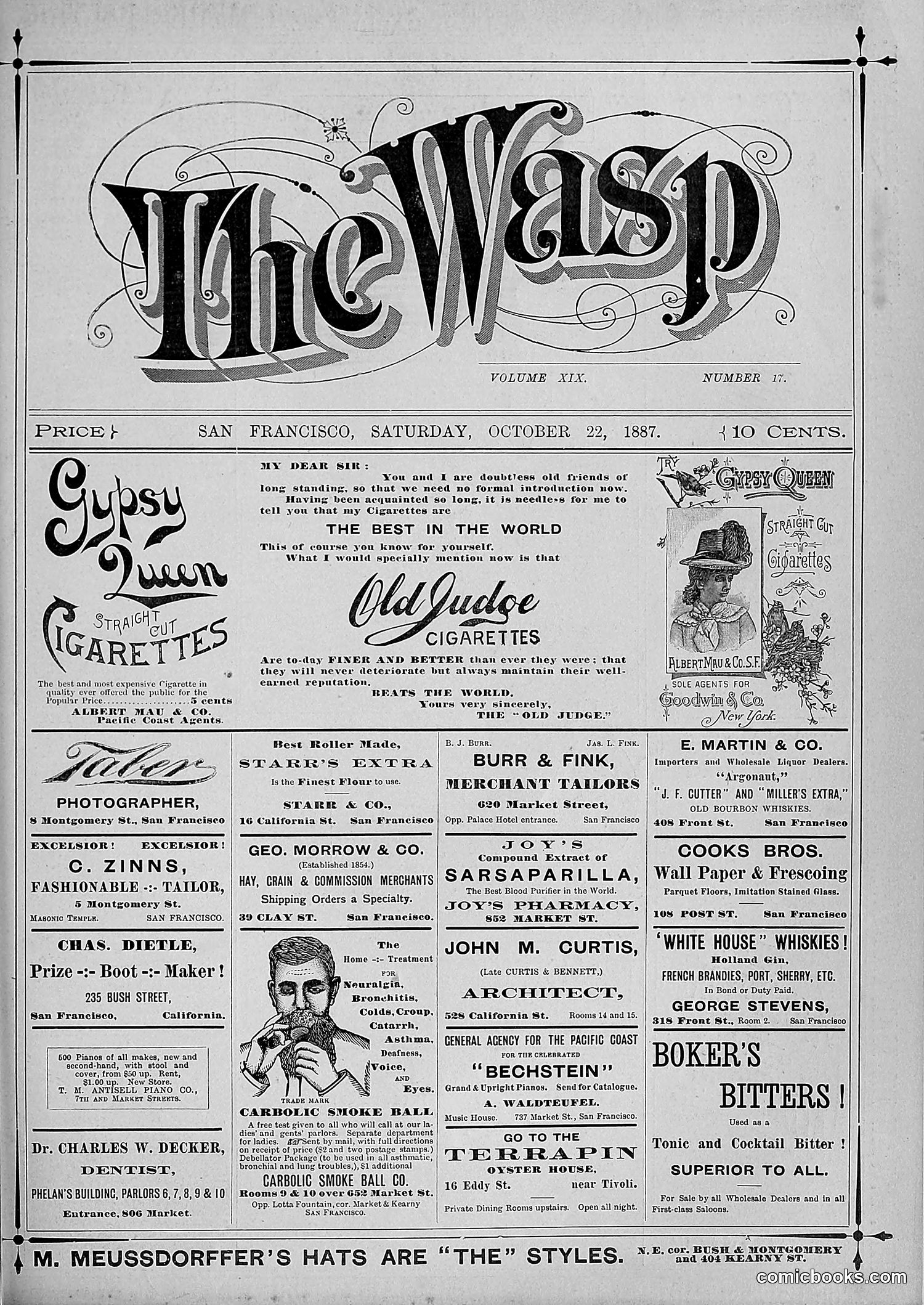
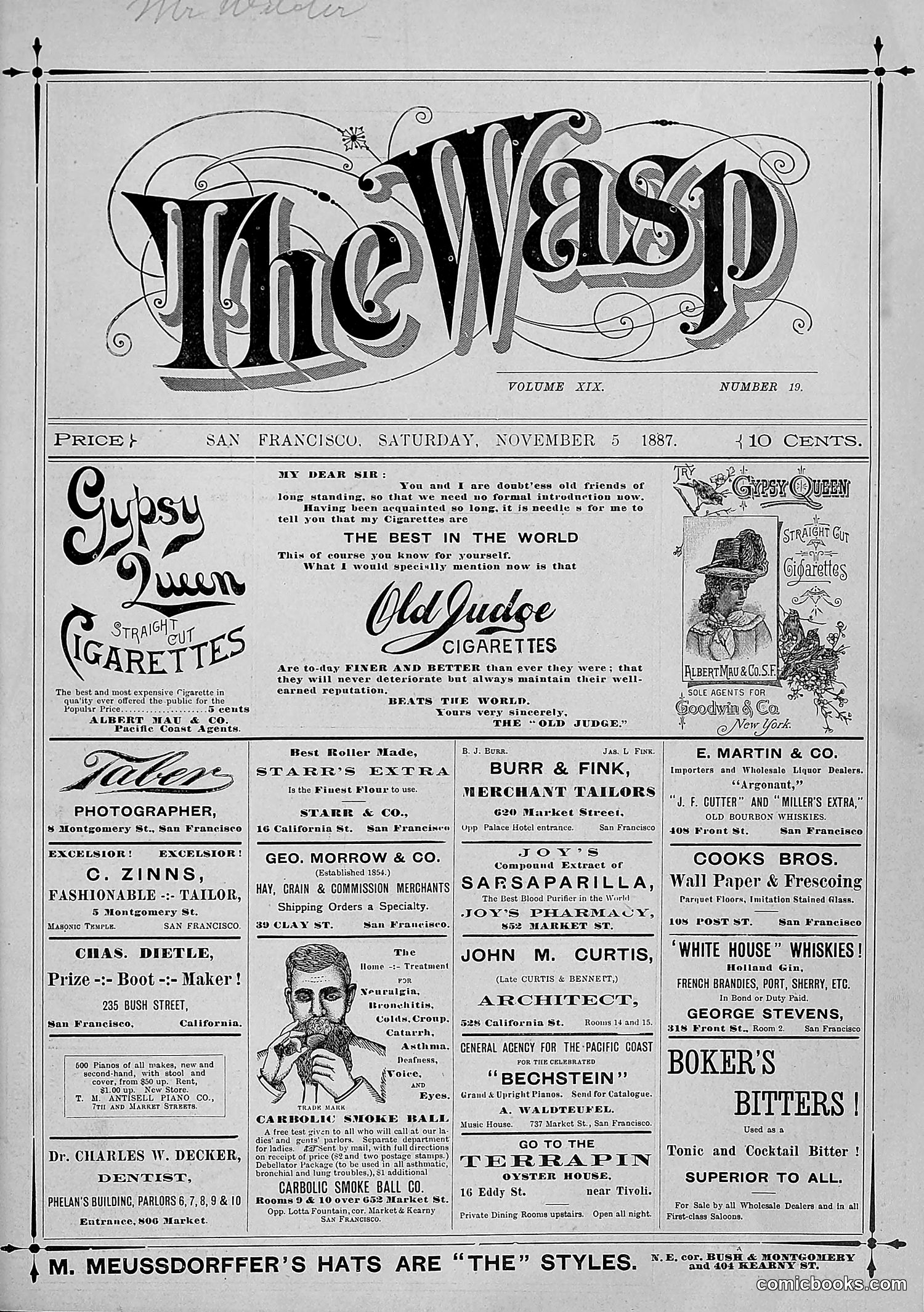
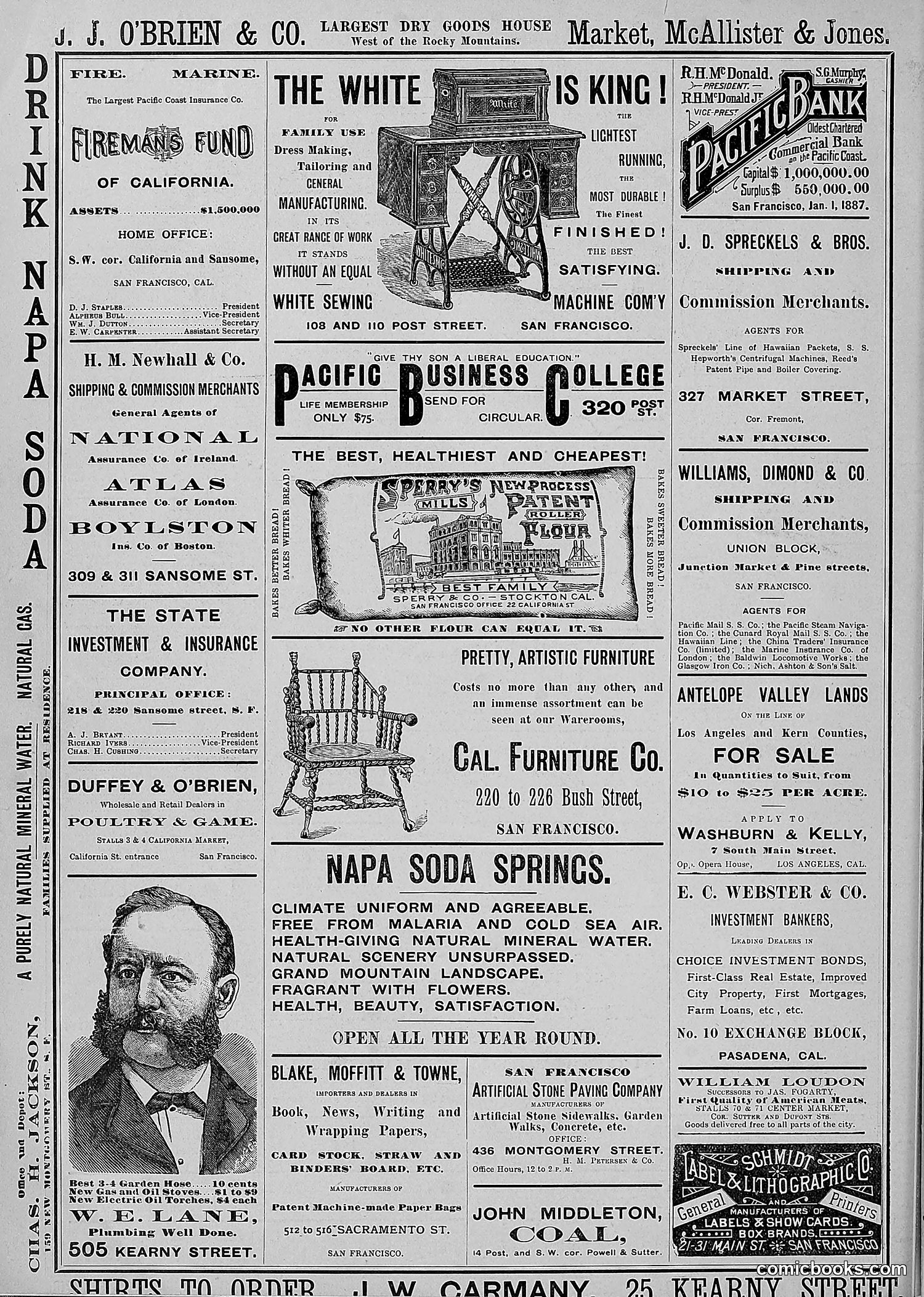
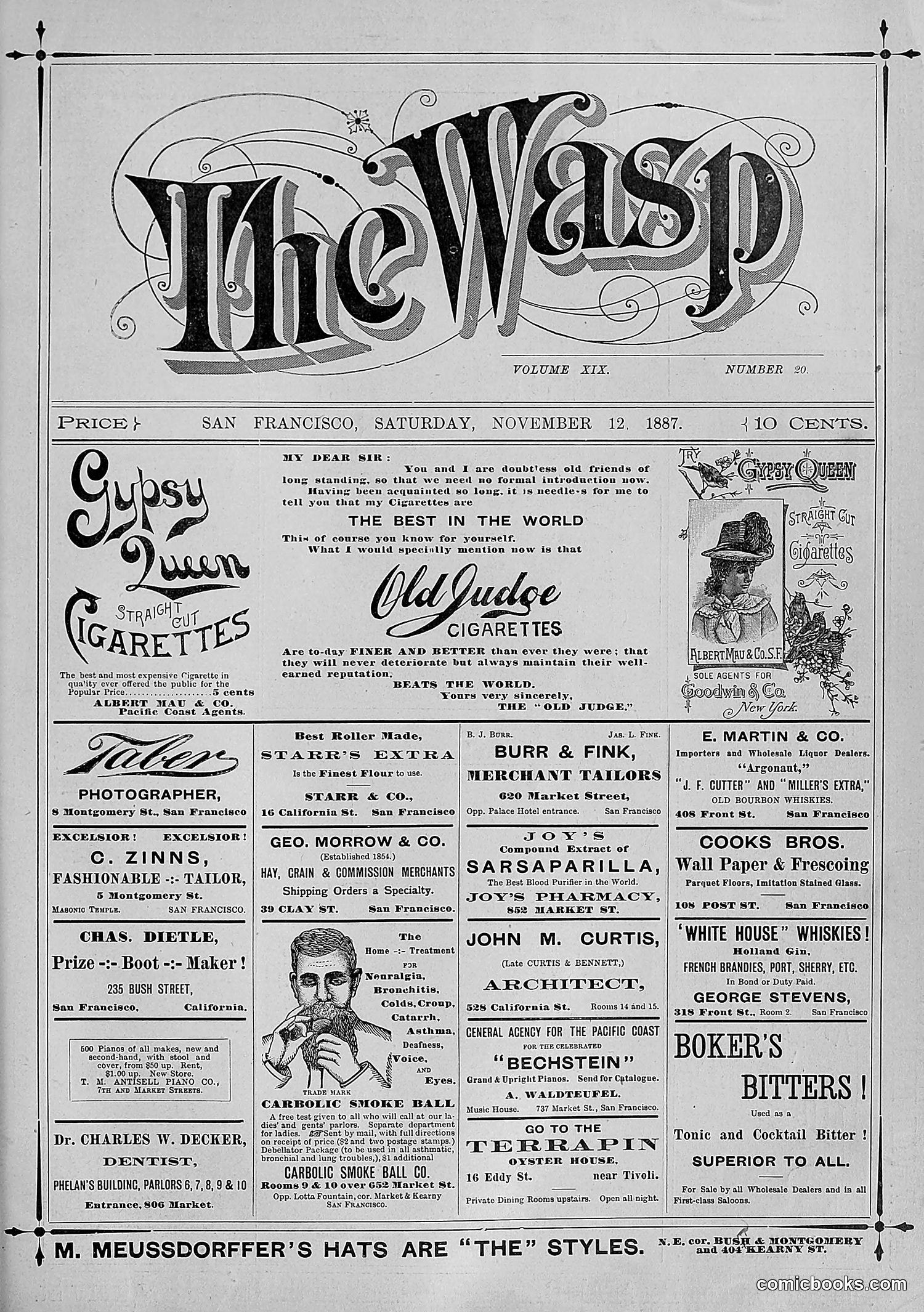
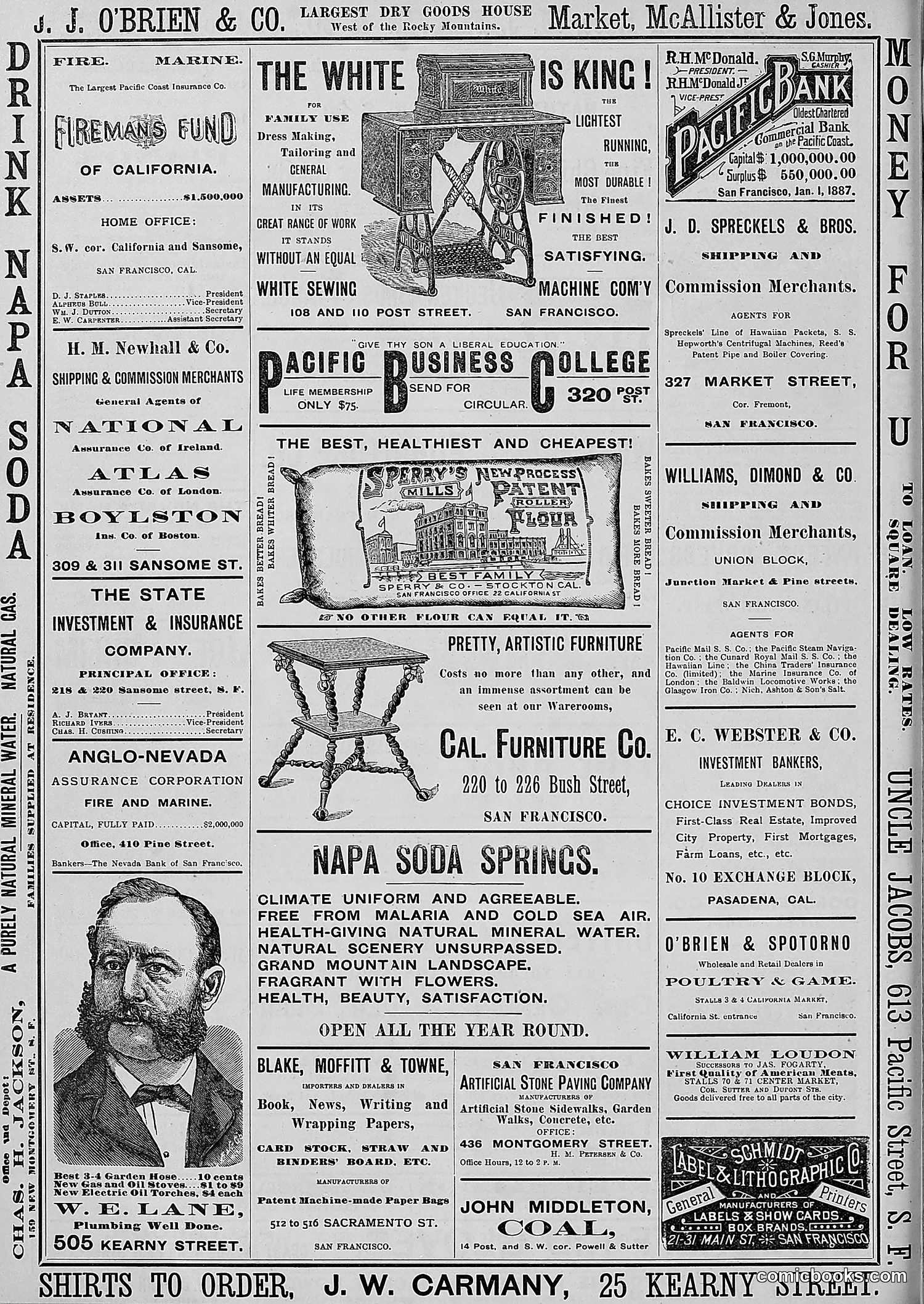
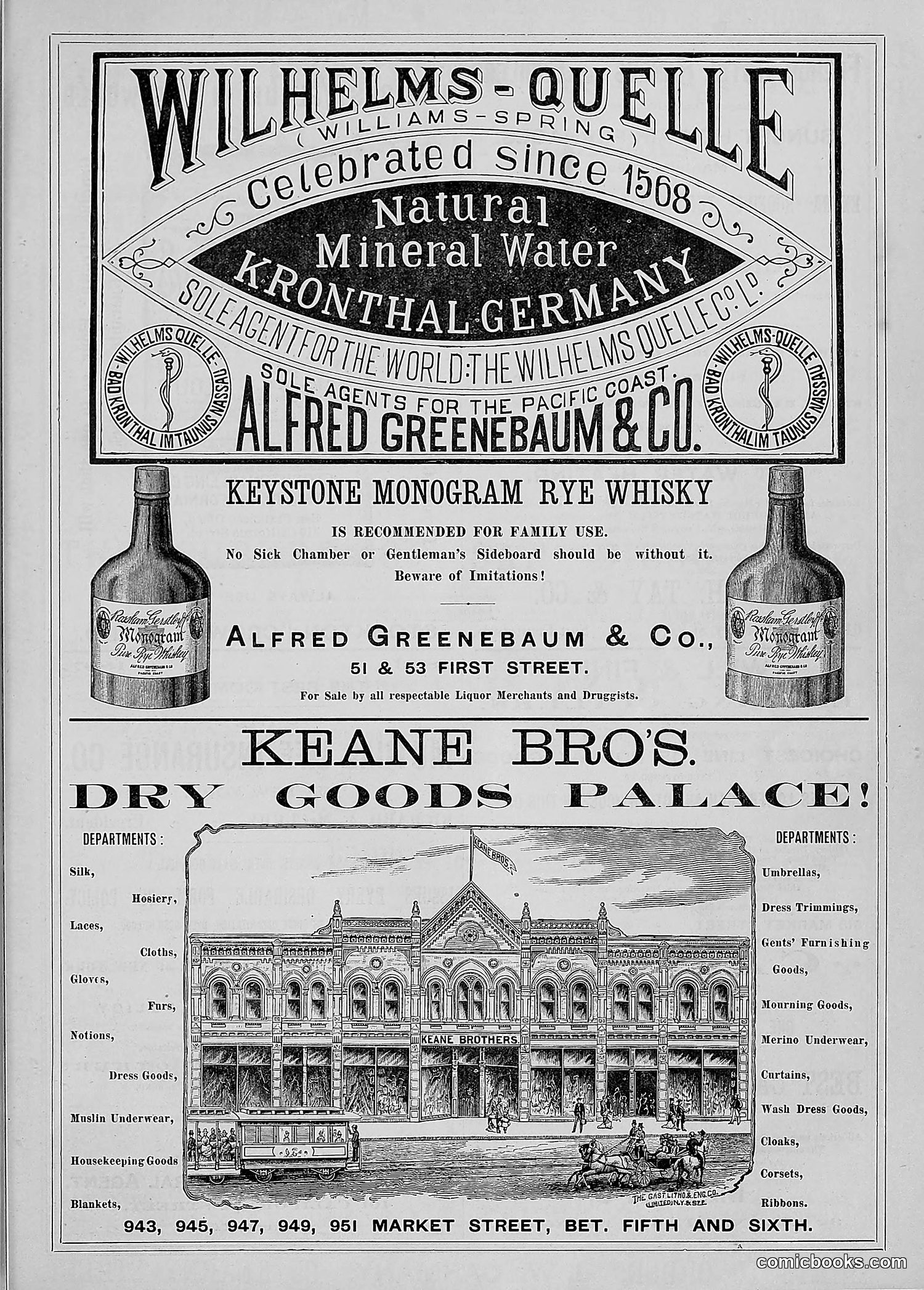
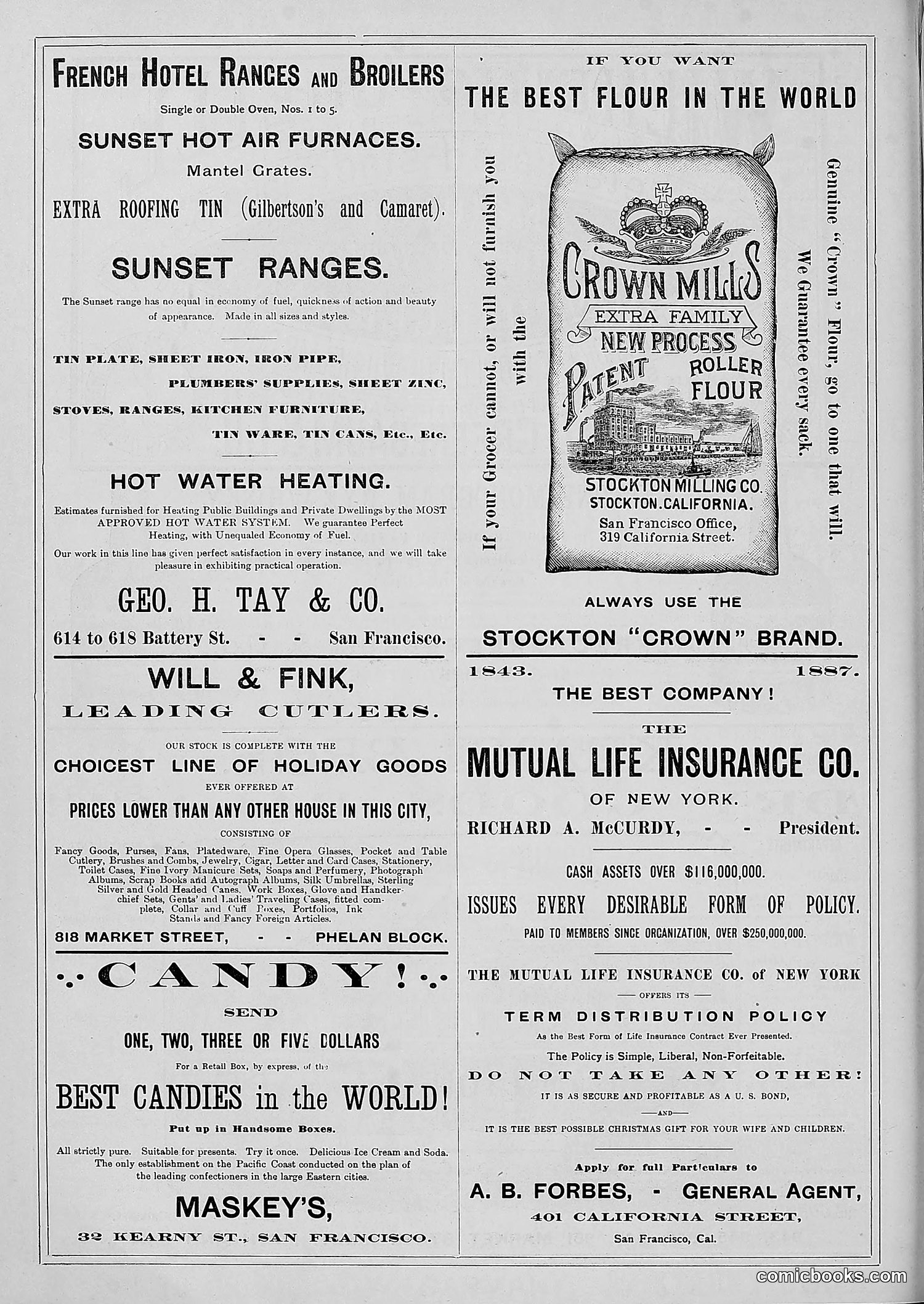
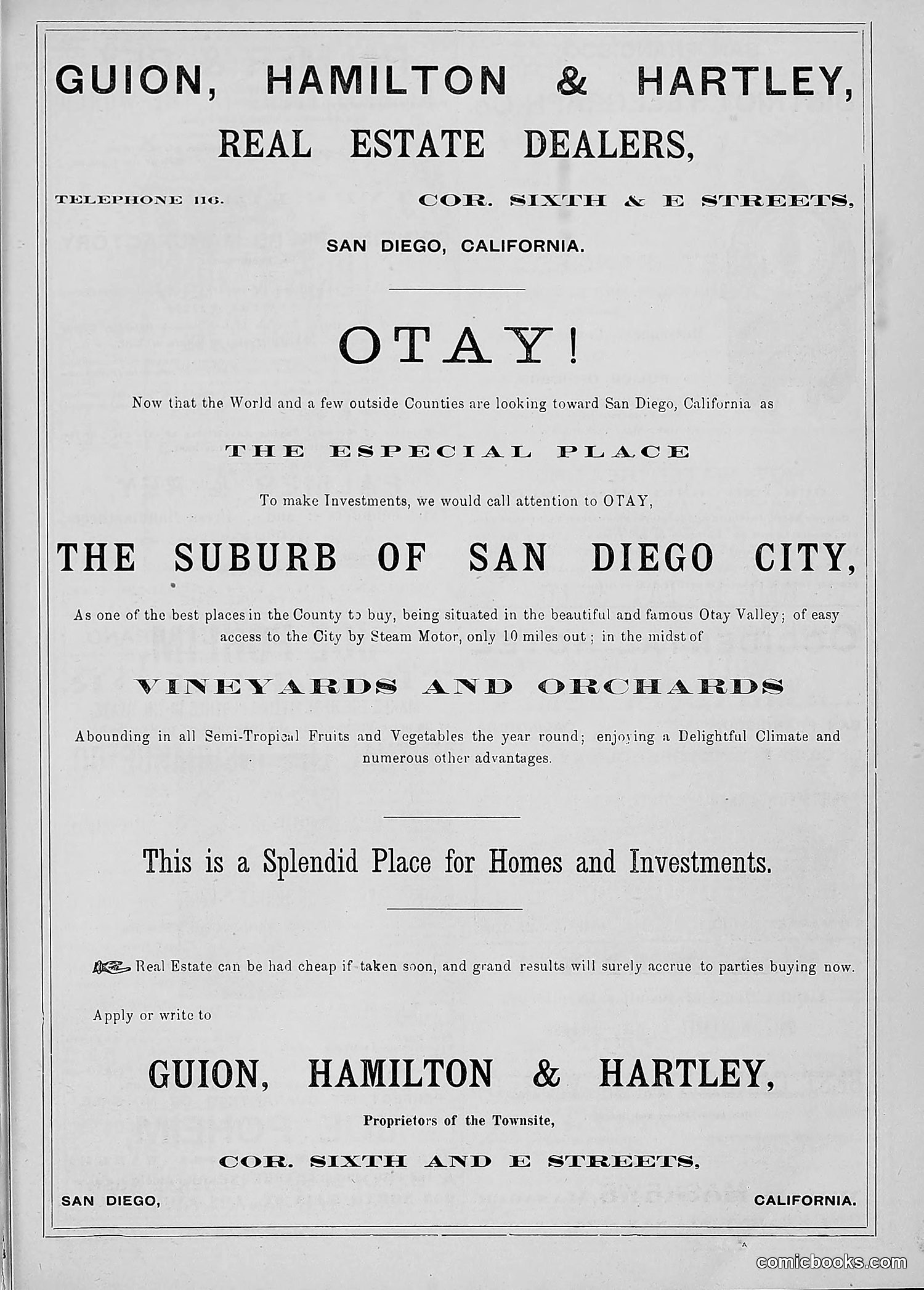
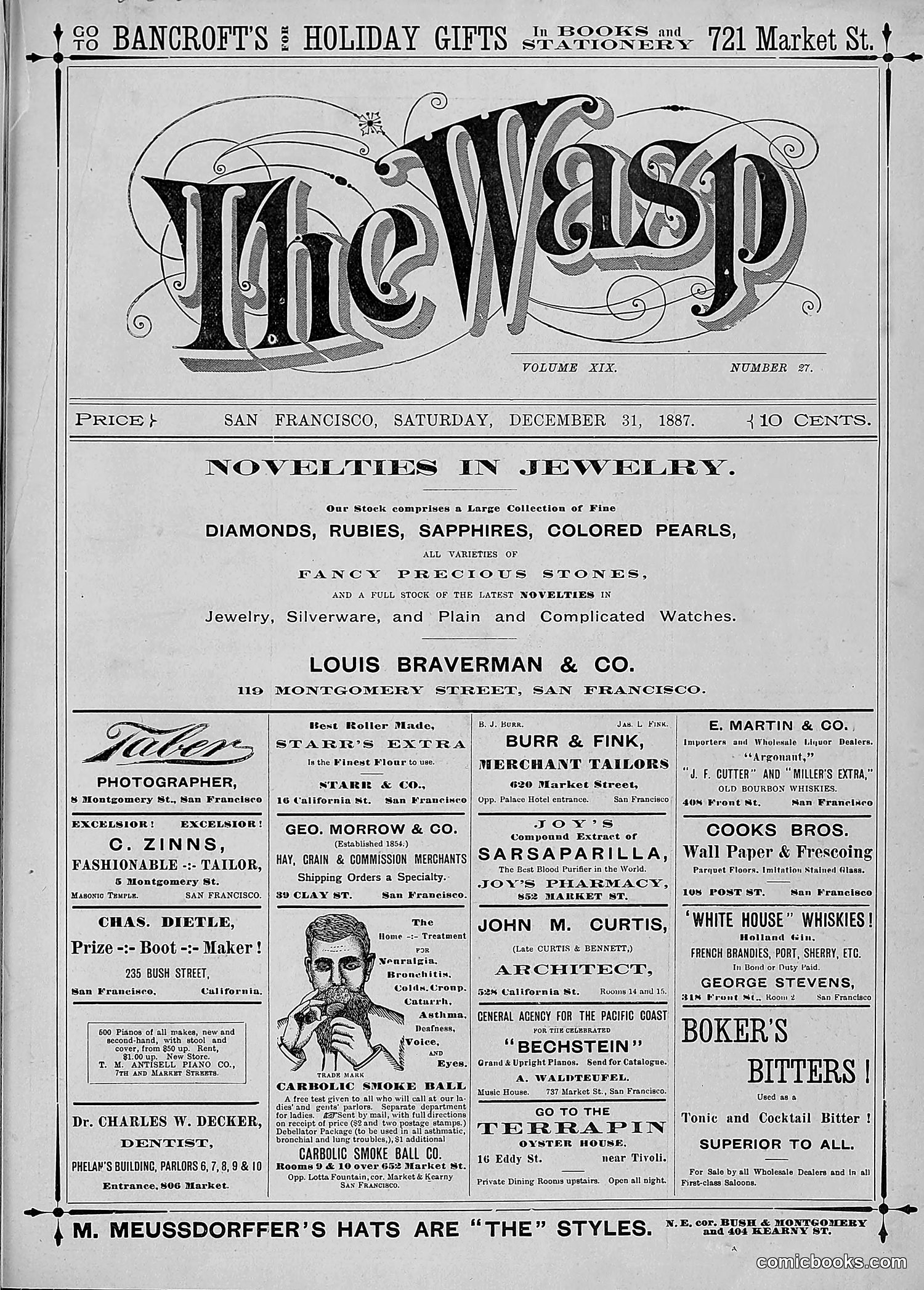
# The Wasp, July 2, 1887 - Page Analysis This is primarily an **advertising page** rather than a satirical cartoon page. The masthead features decorative typography for "The Wasp" (Volume XIX, Number 1), dated San Francisco, July 2, 1887, priced at 10 cents. The page contains small illustrated advertisements and business notices. Two modest cartoon vignettes appear in the upper margins—one showing a rotund man eating (labeled "Eat & Grow Fat, it's Good—But One Must Drink!") and another figure with a fan saying "Oh Dear! How Sulky it is!"—likely promoting Napa Soda Springs as a health tonic. The remainder comprises standard commercial advertisements for local San Francisco businesses: photographers, tailors, pharmacies, bakeries, and whiskey distributors. No significant political satire is evident on this particular page.
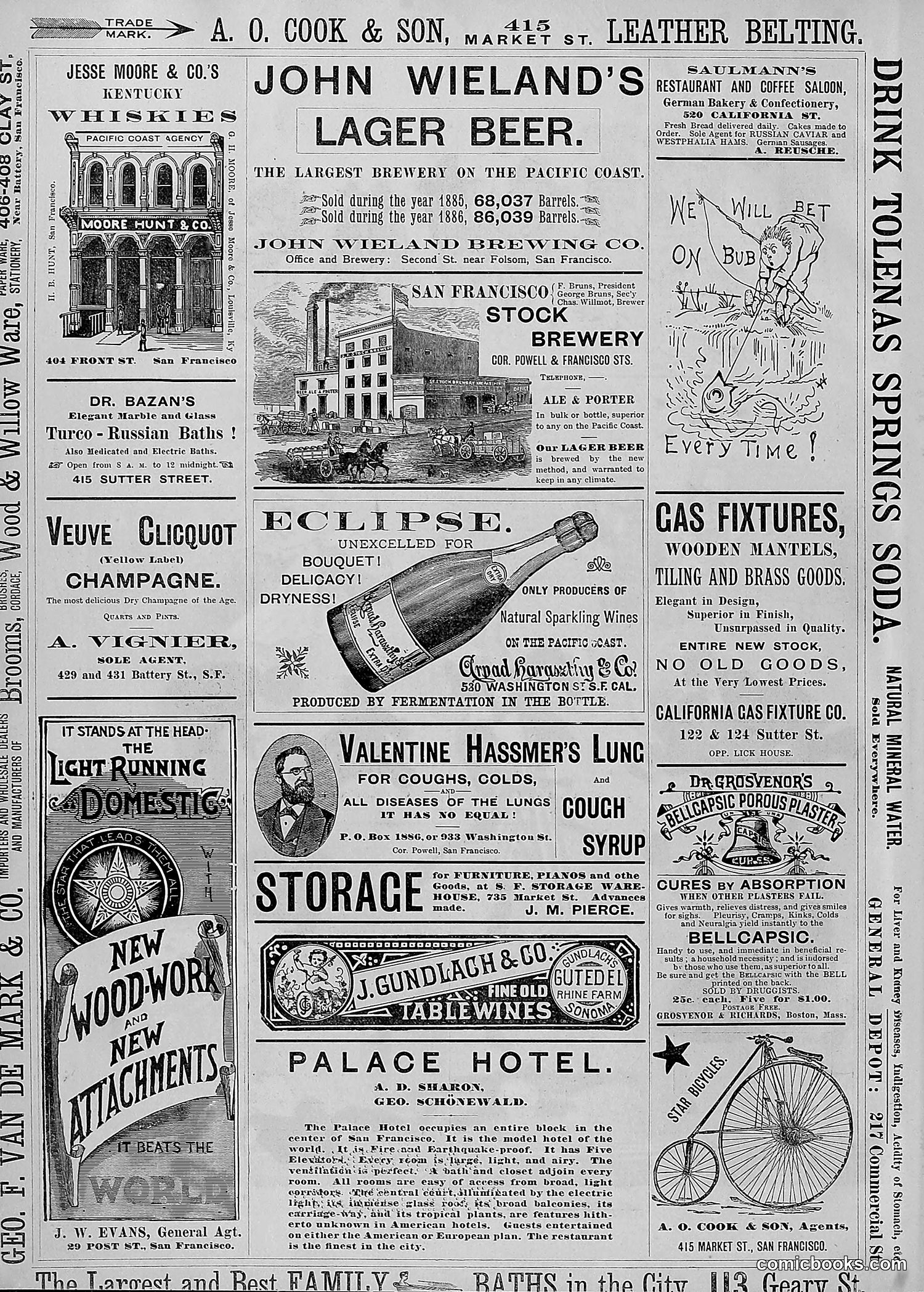
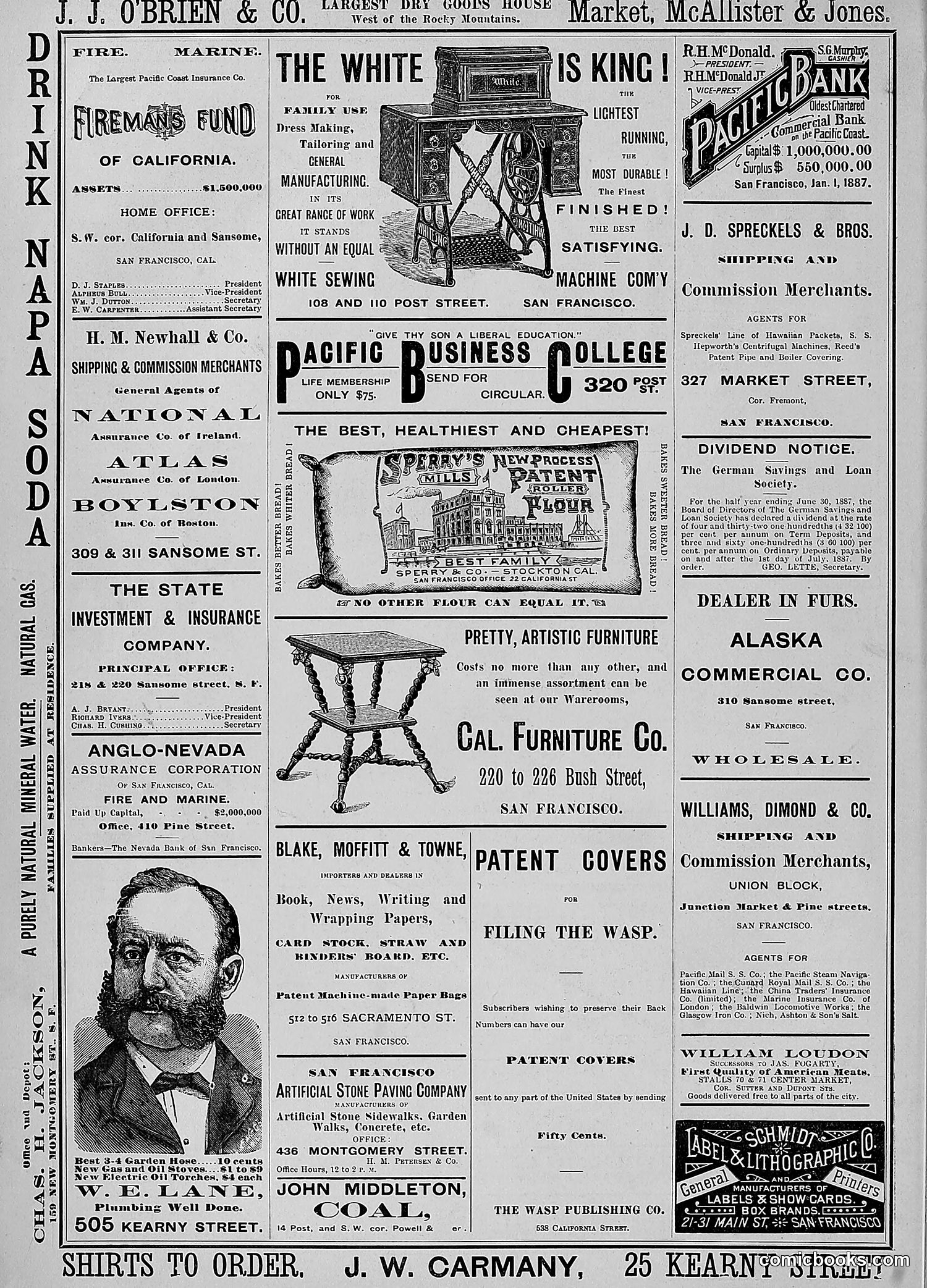
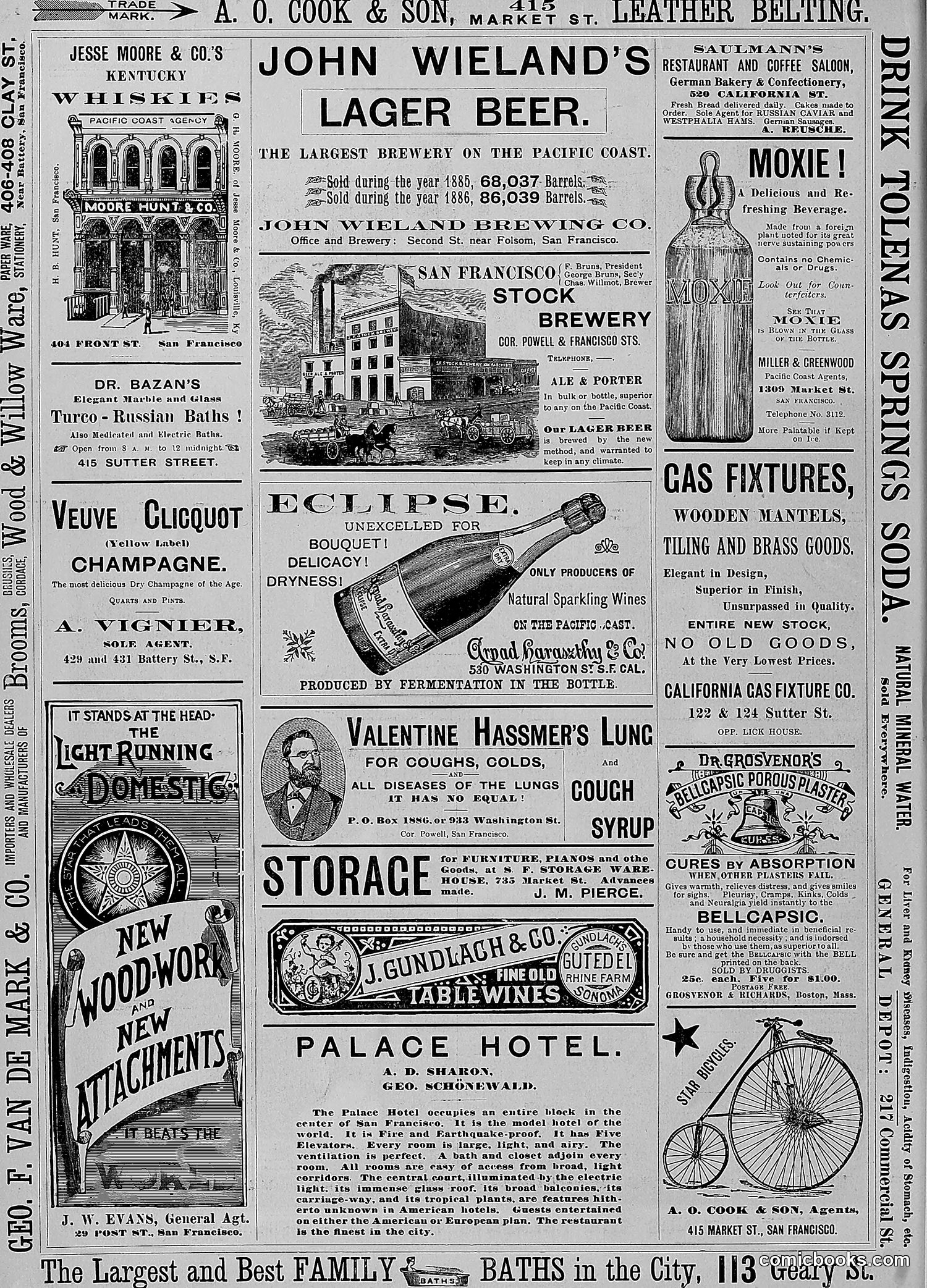
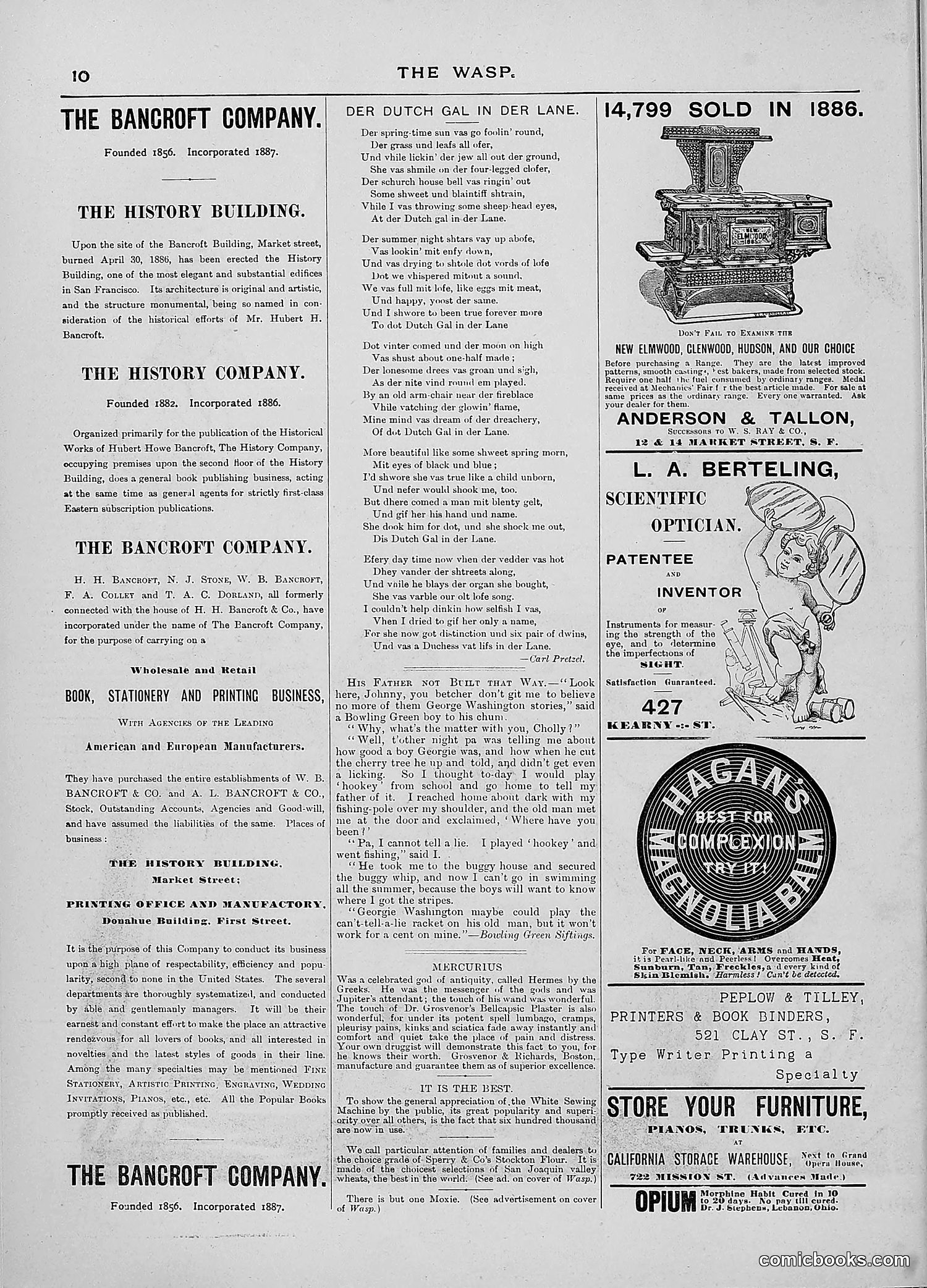
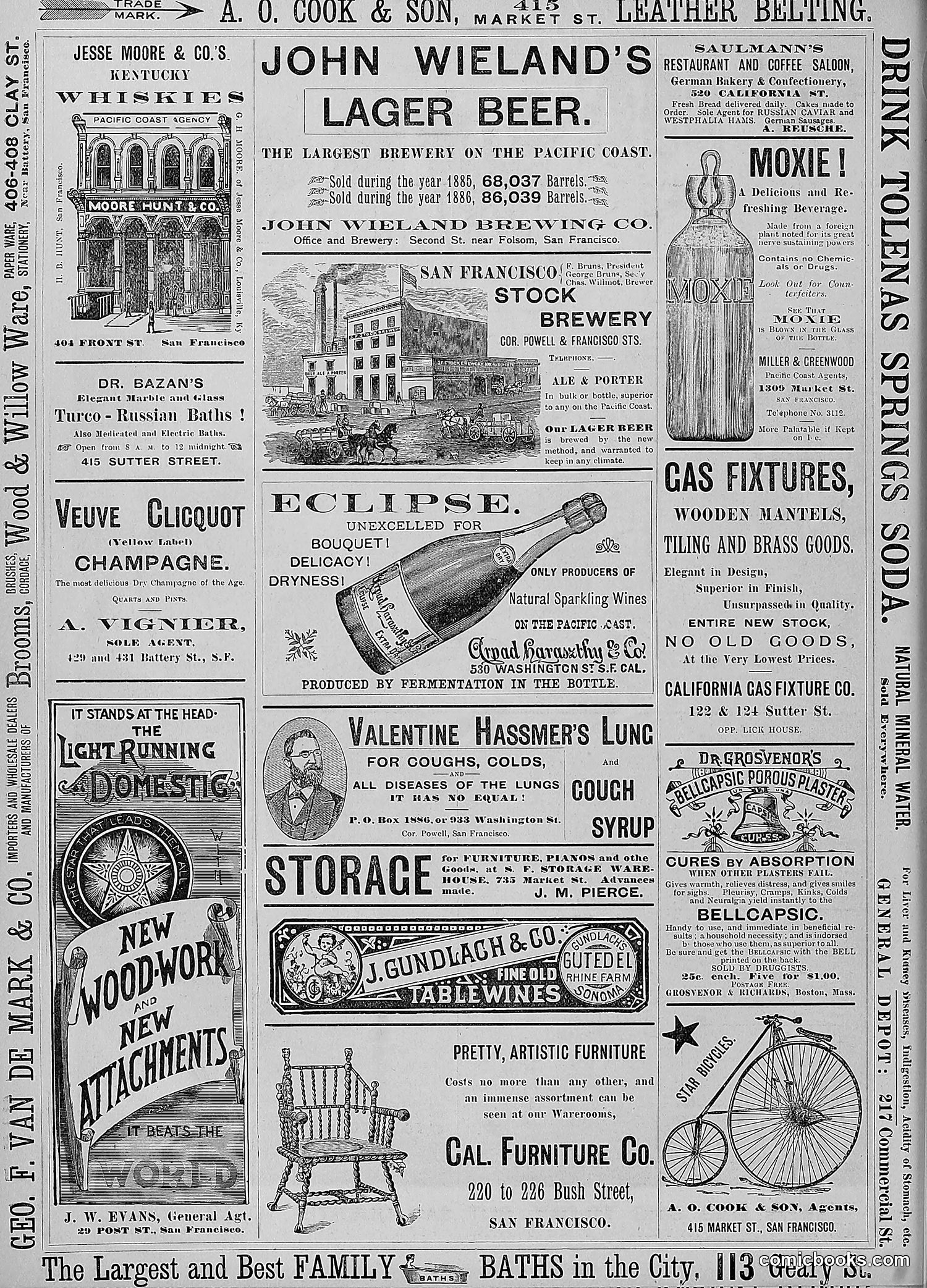
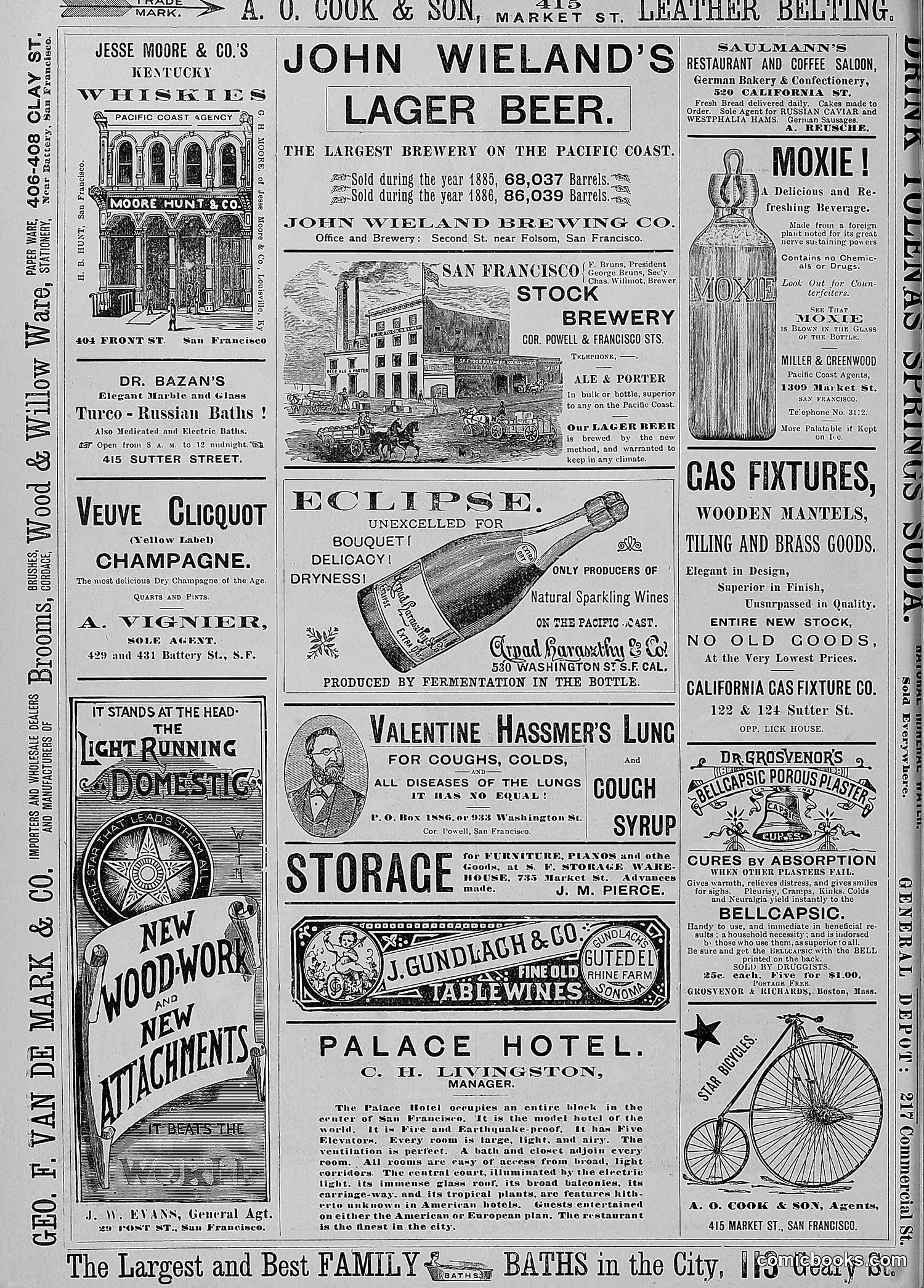
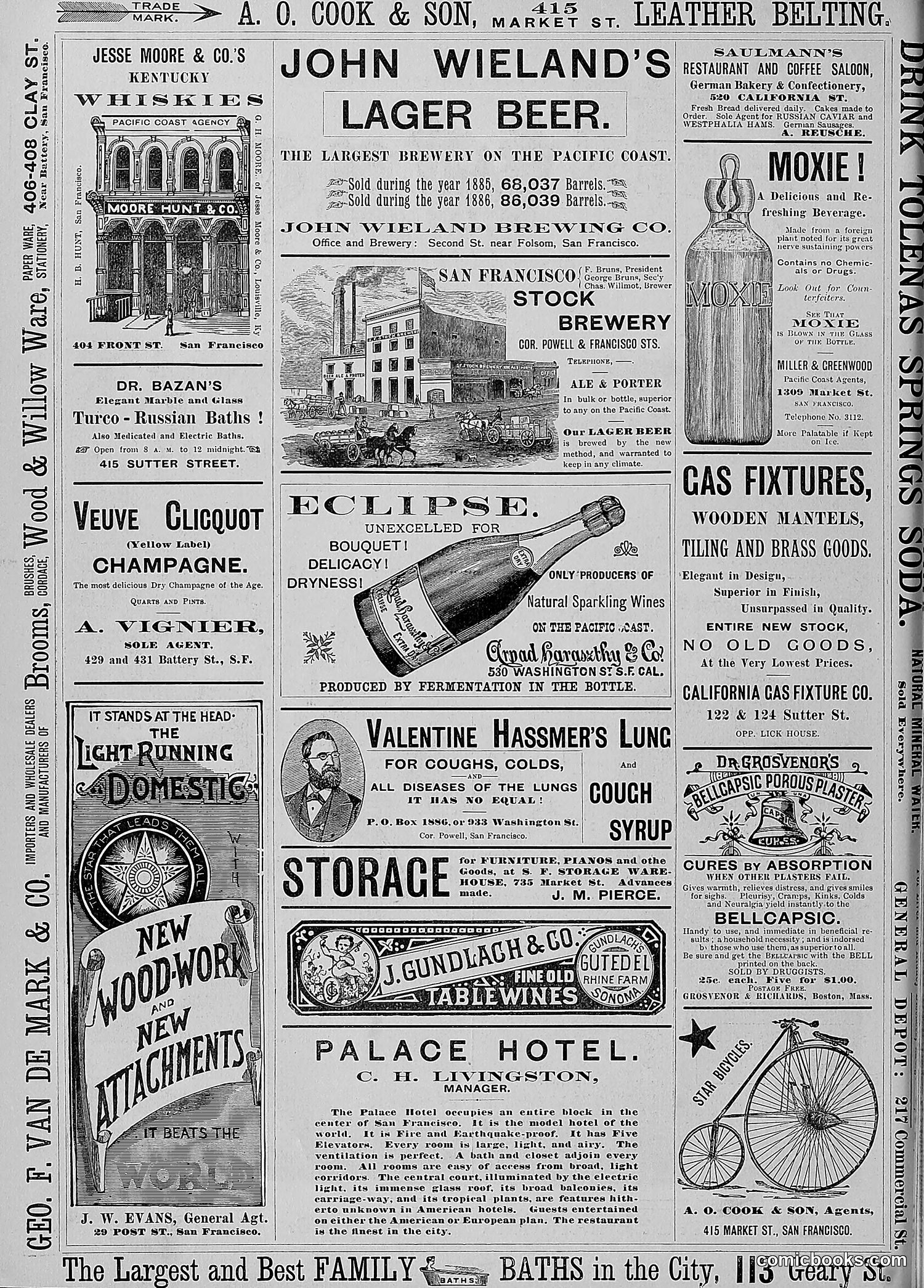
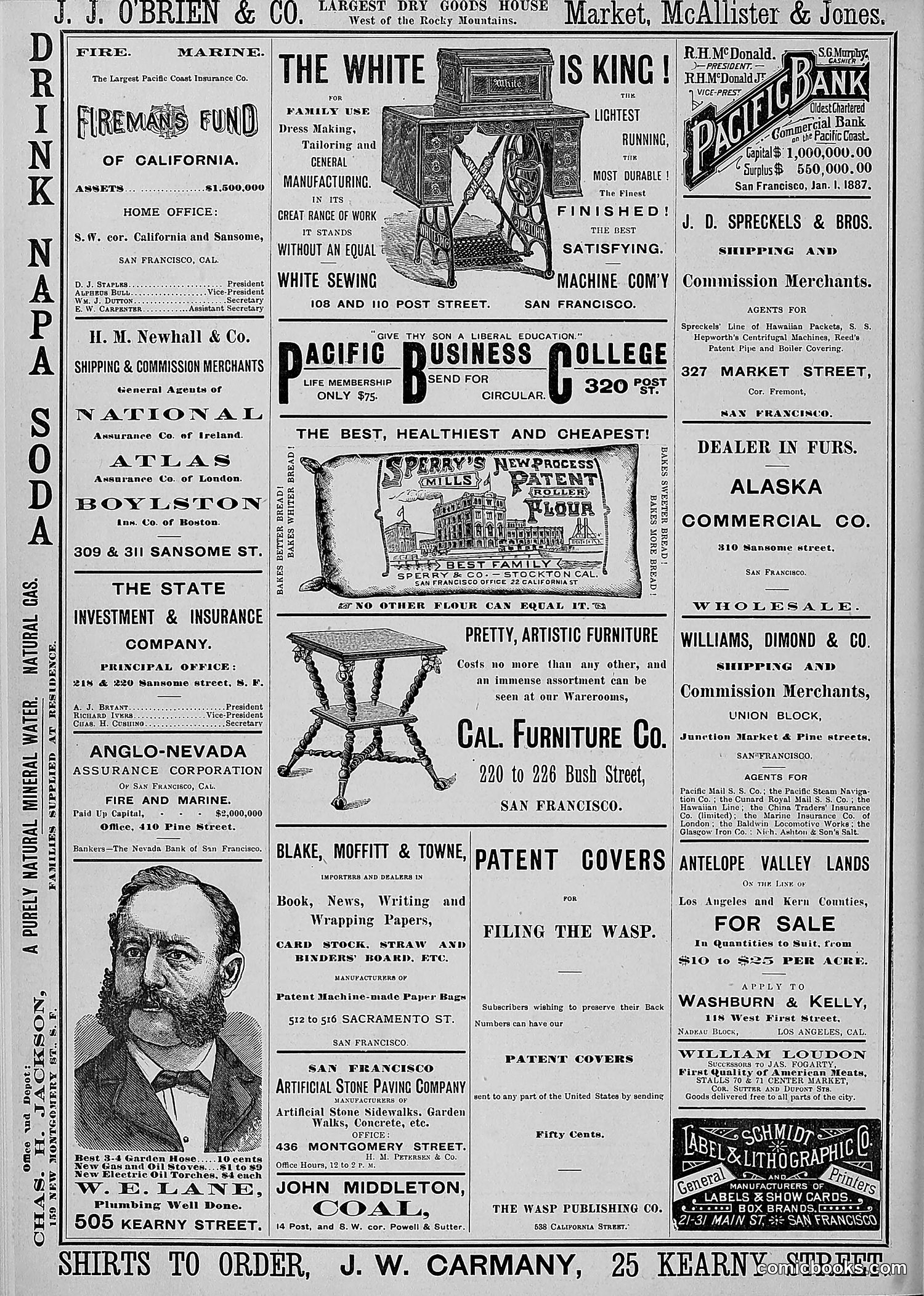
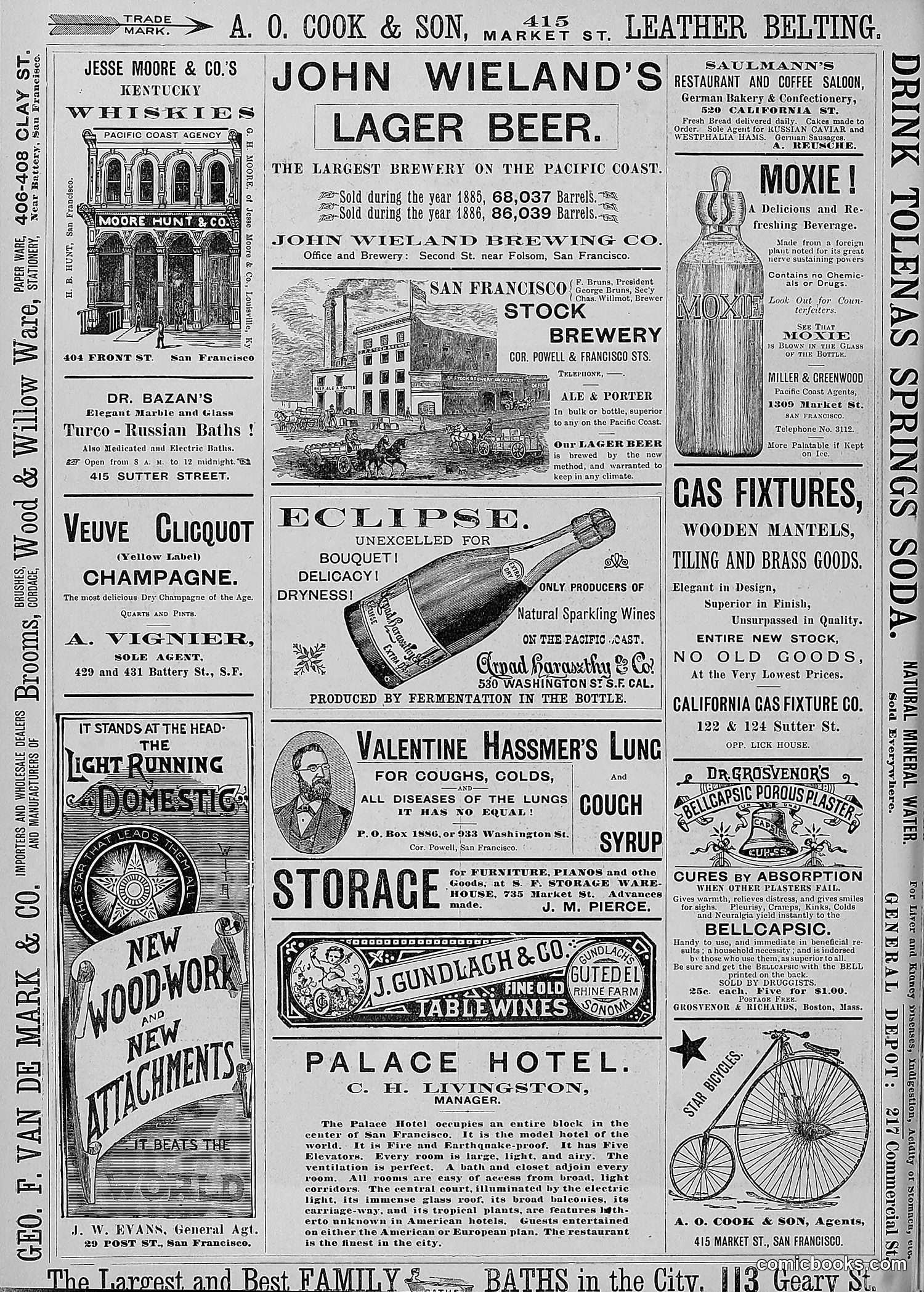
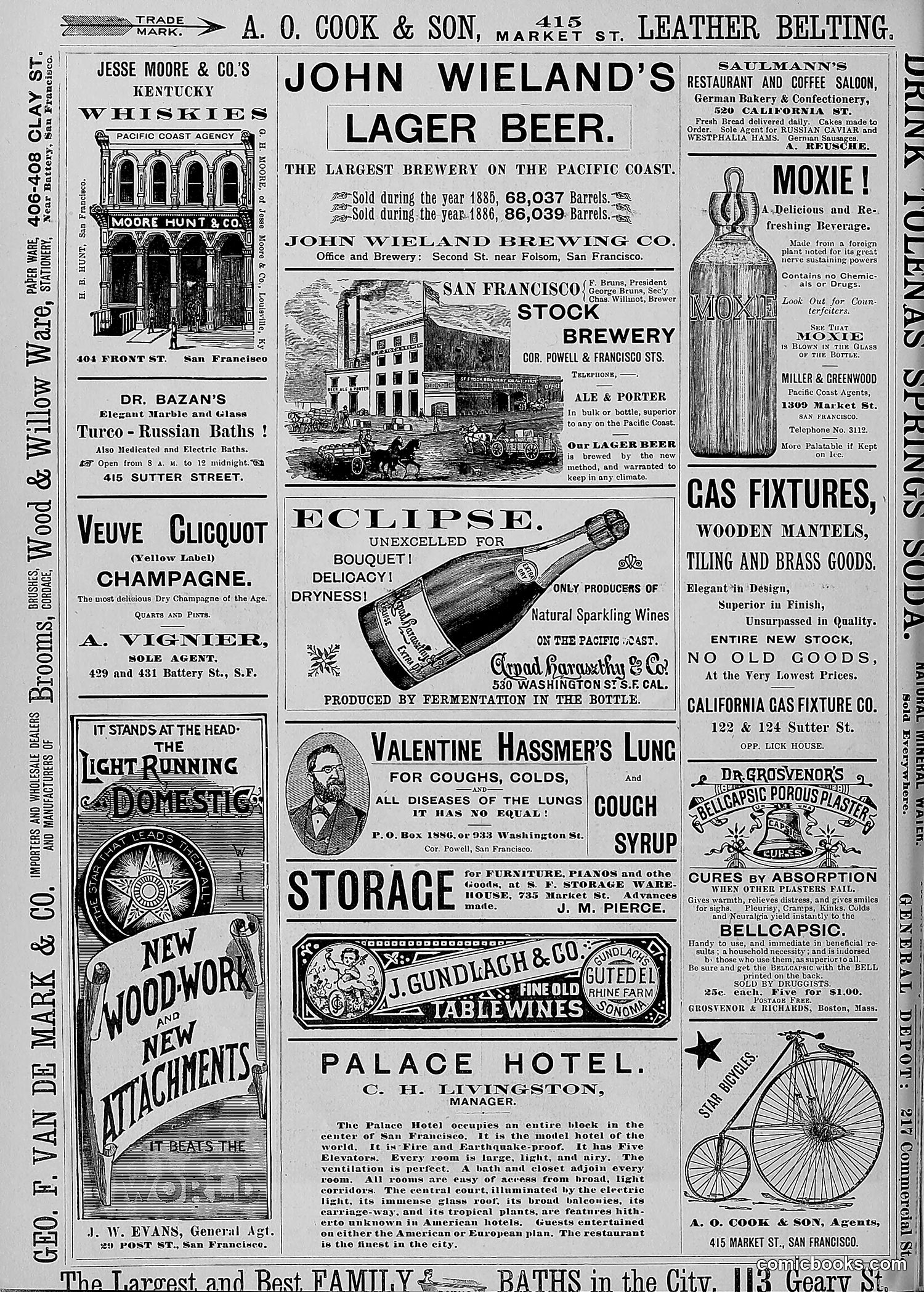
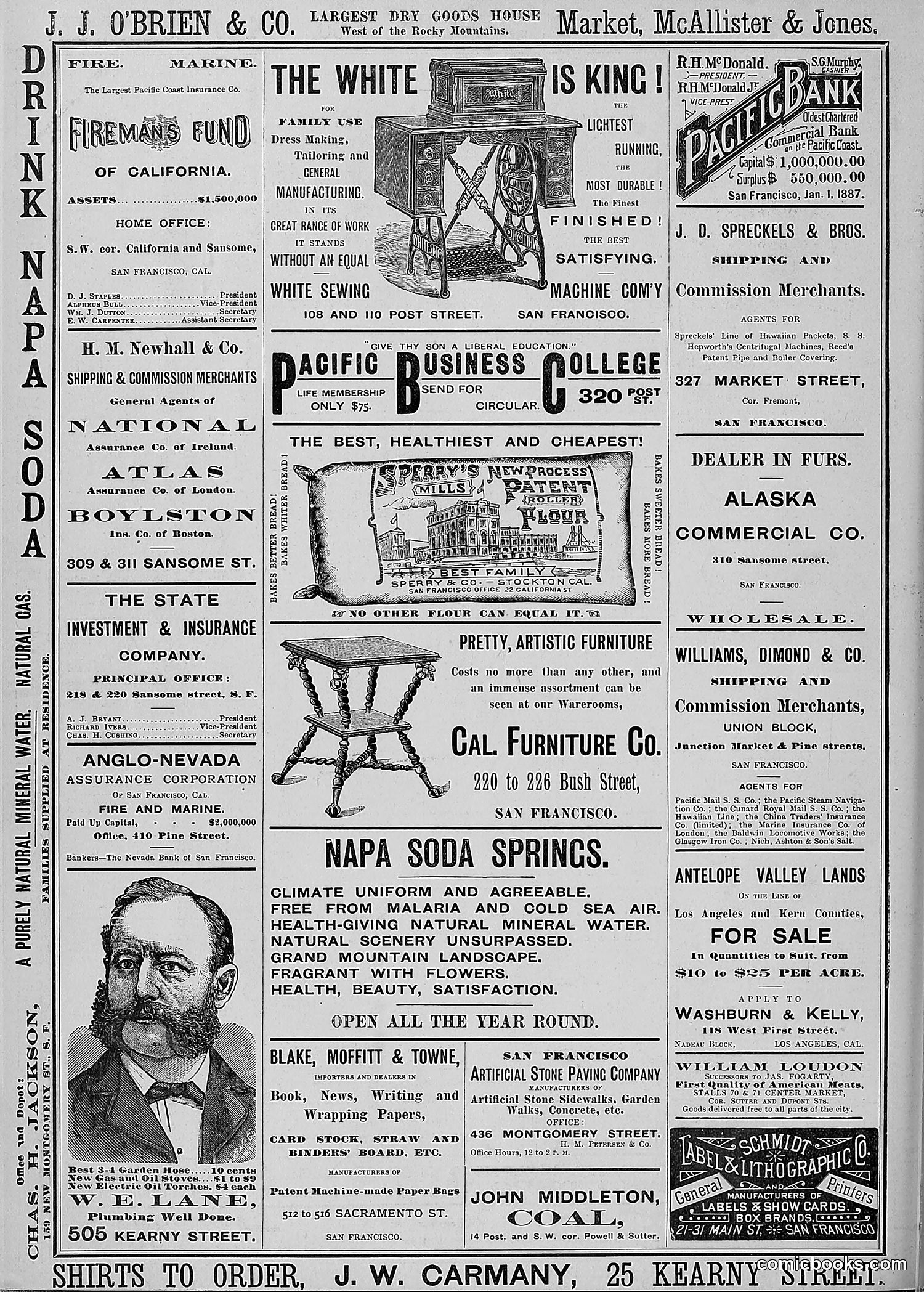
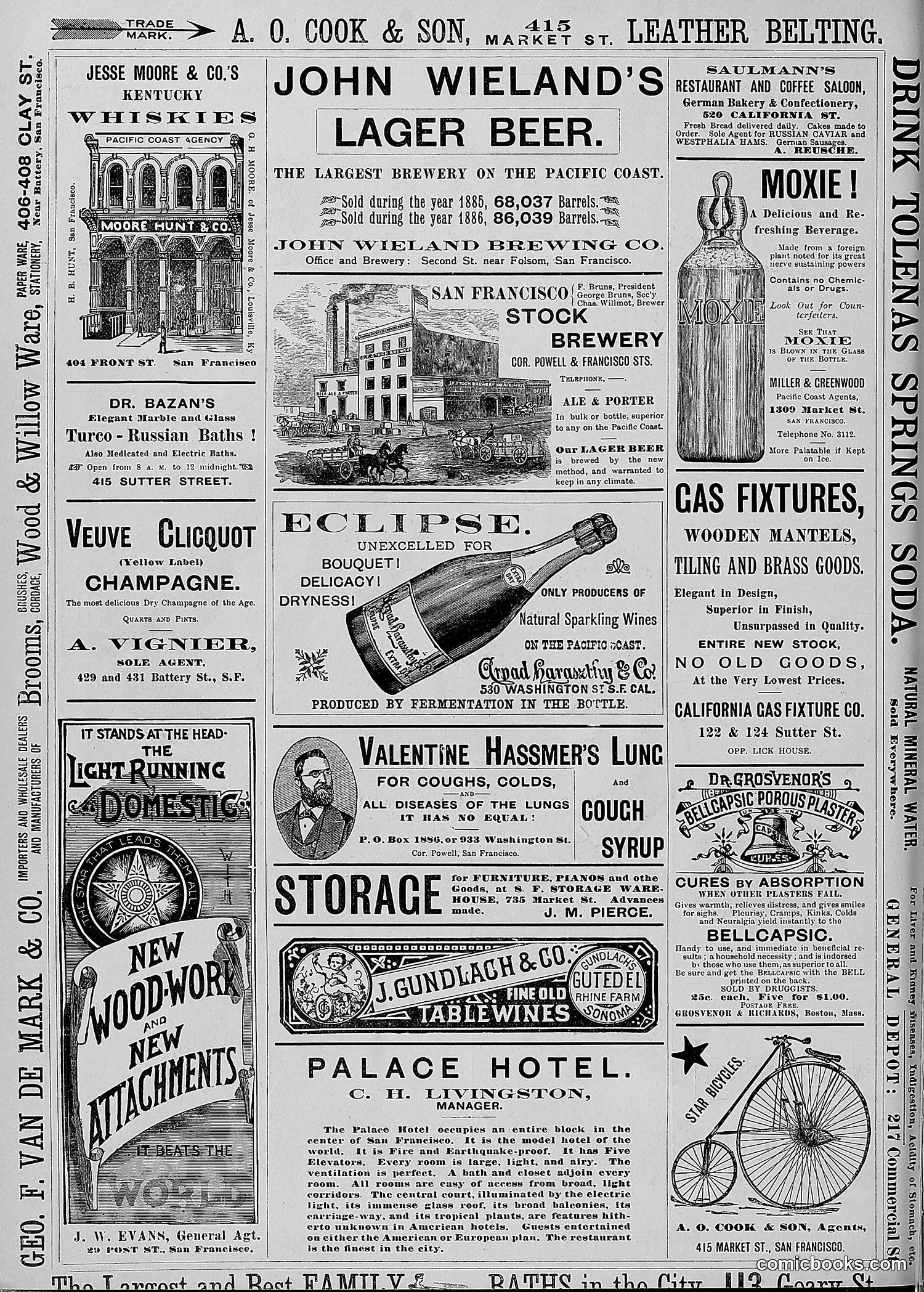
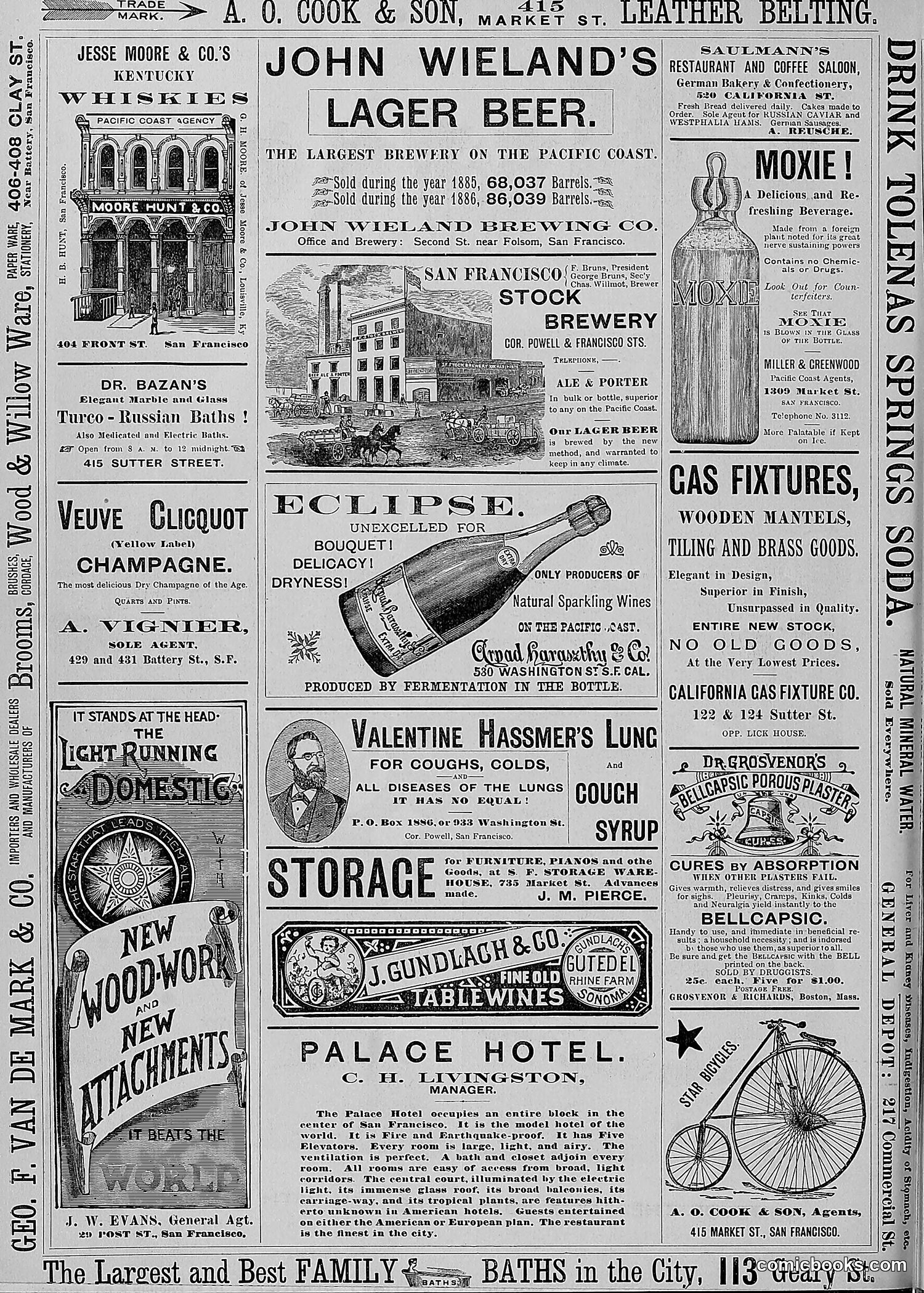
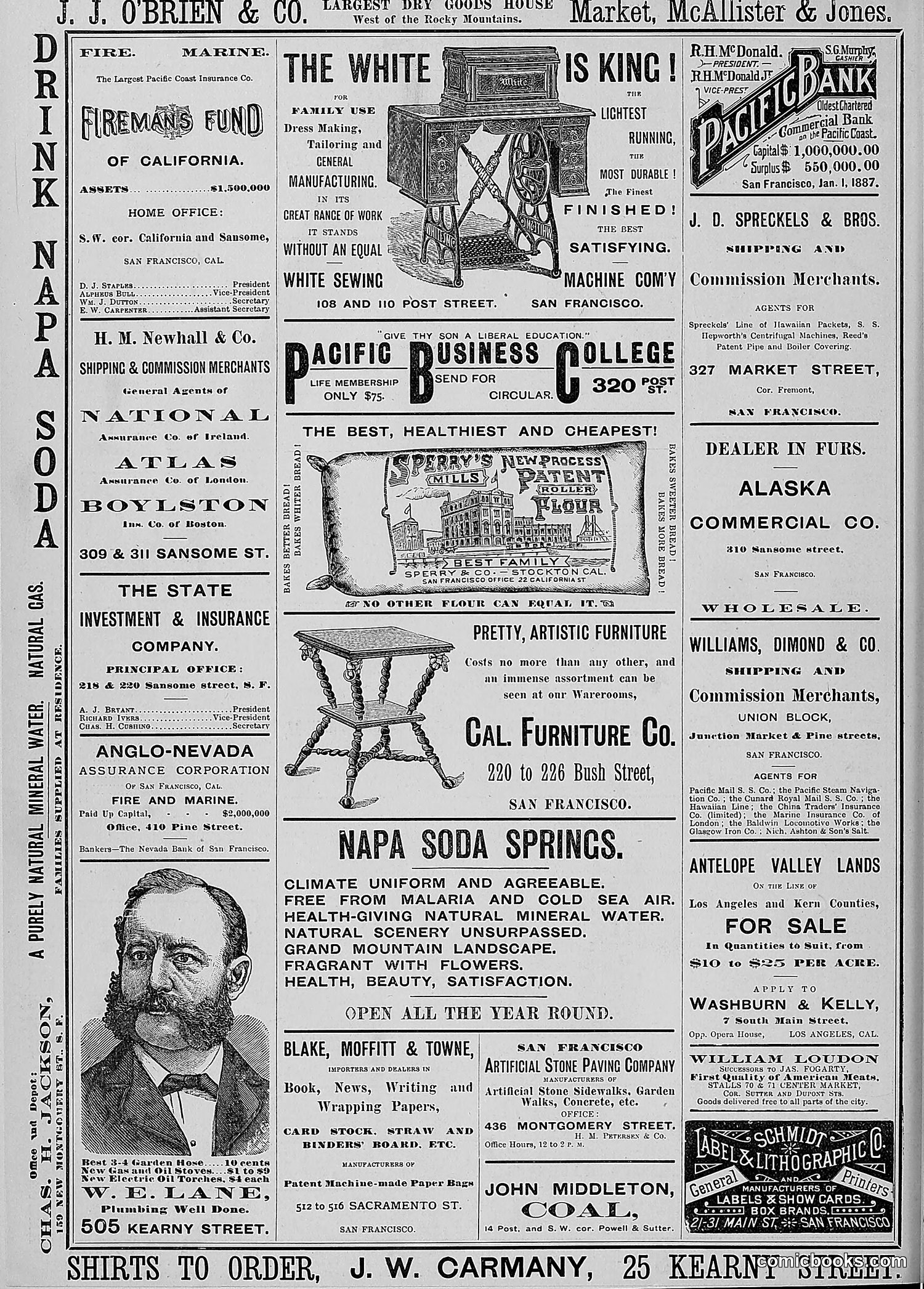
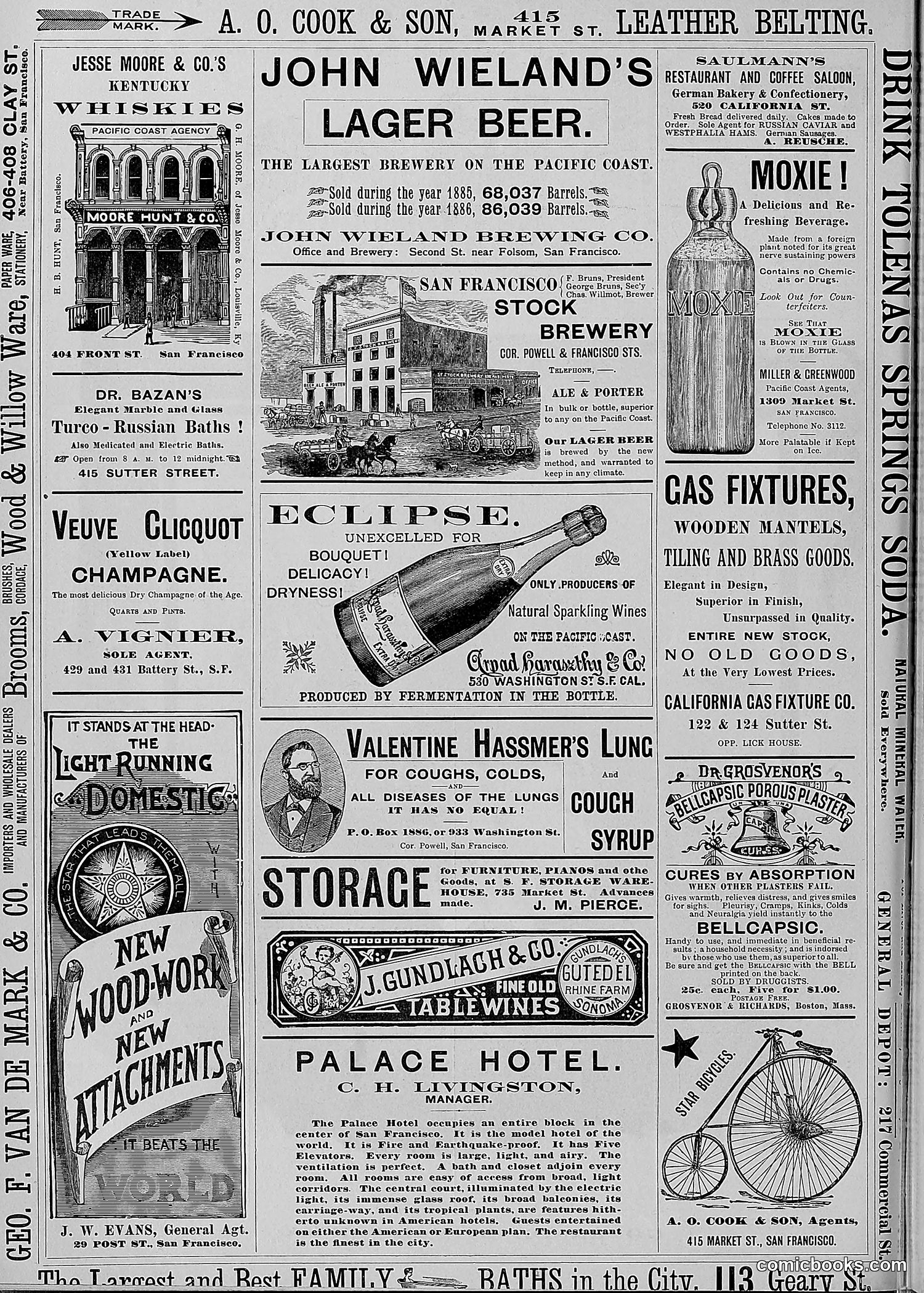
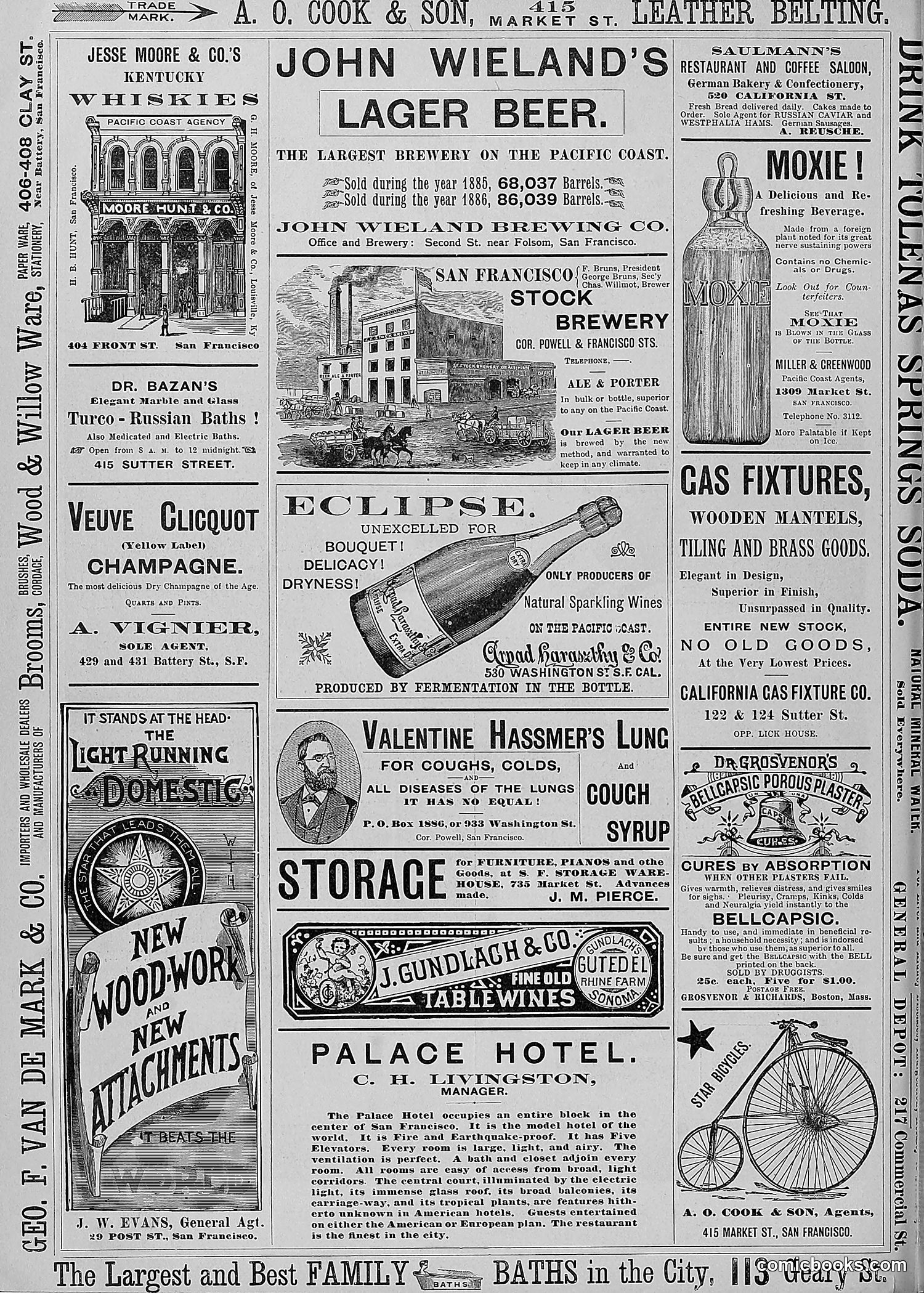
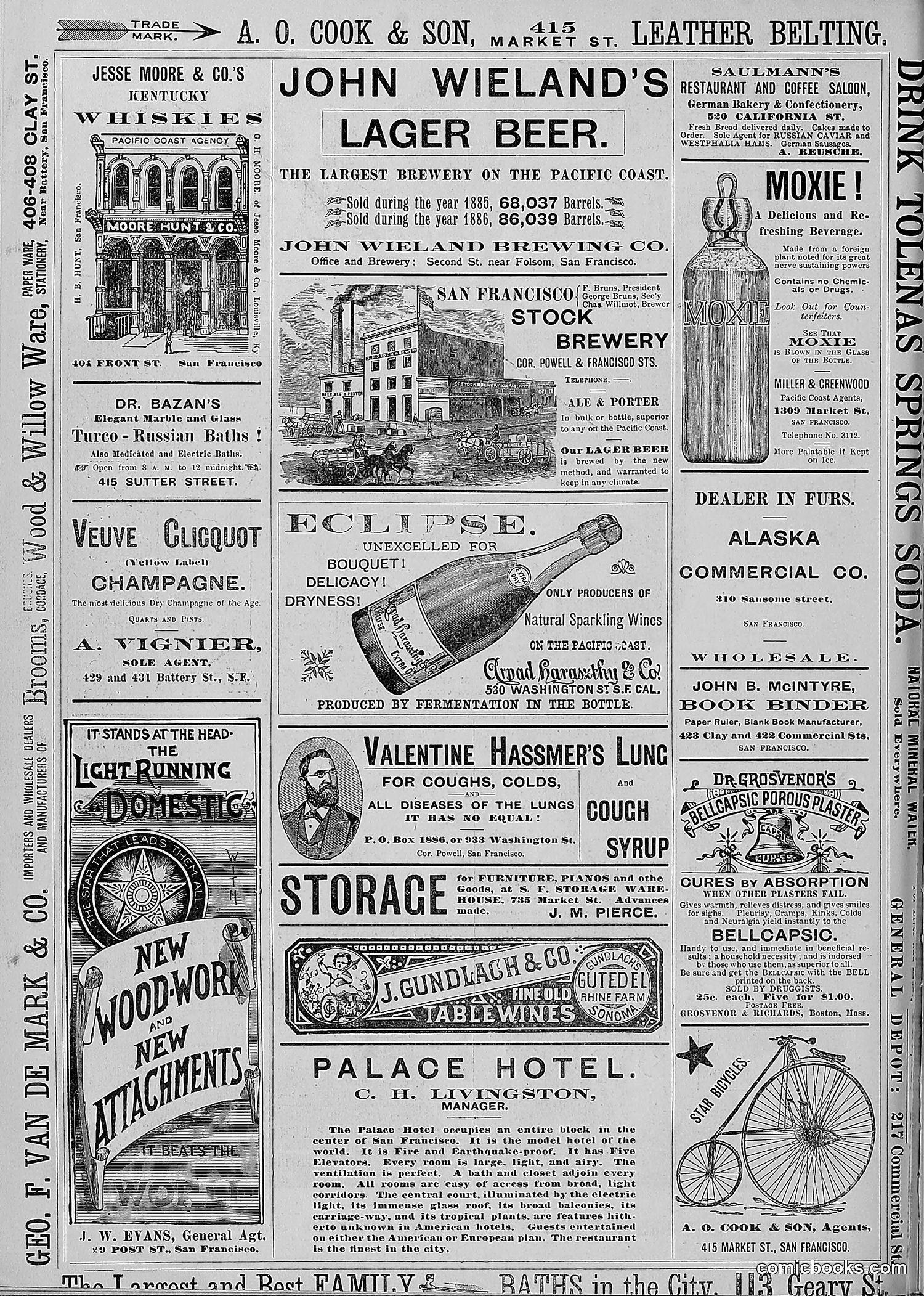
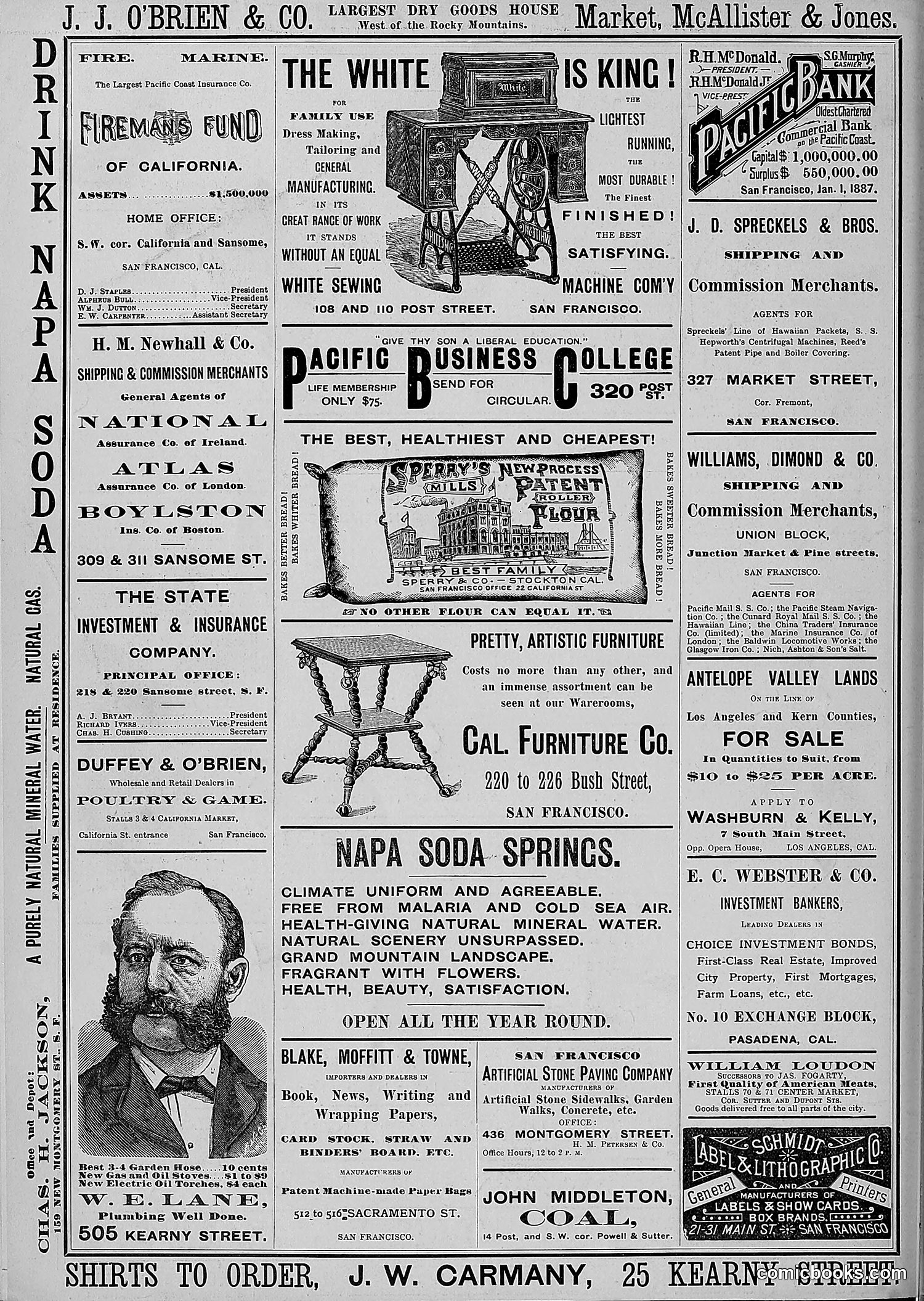
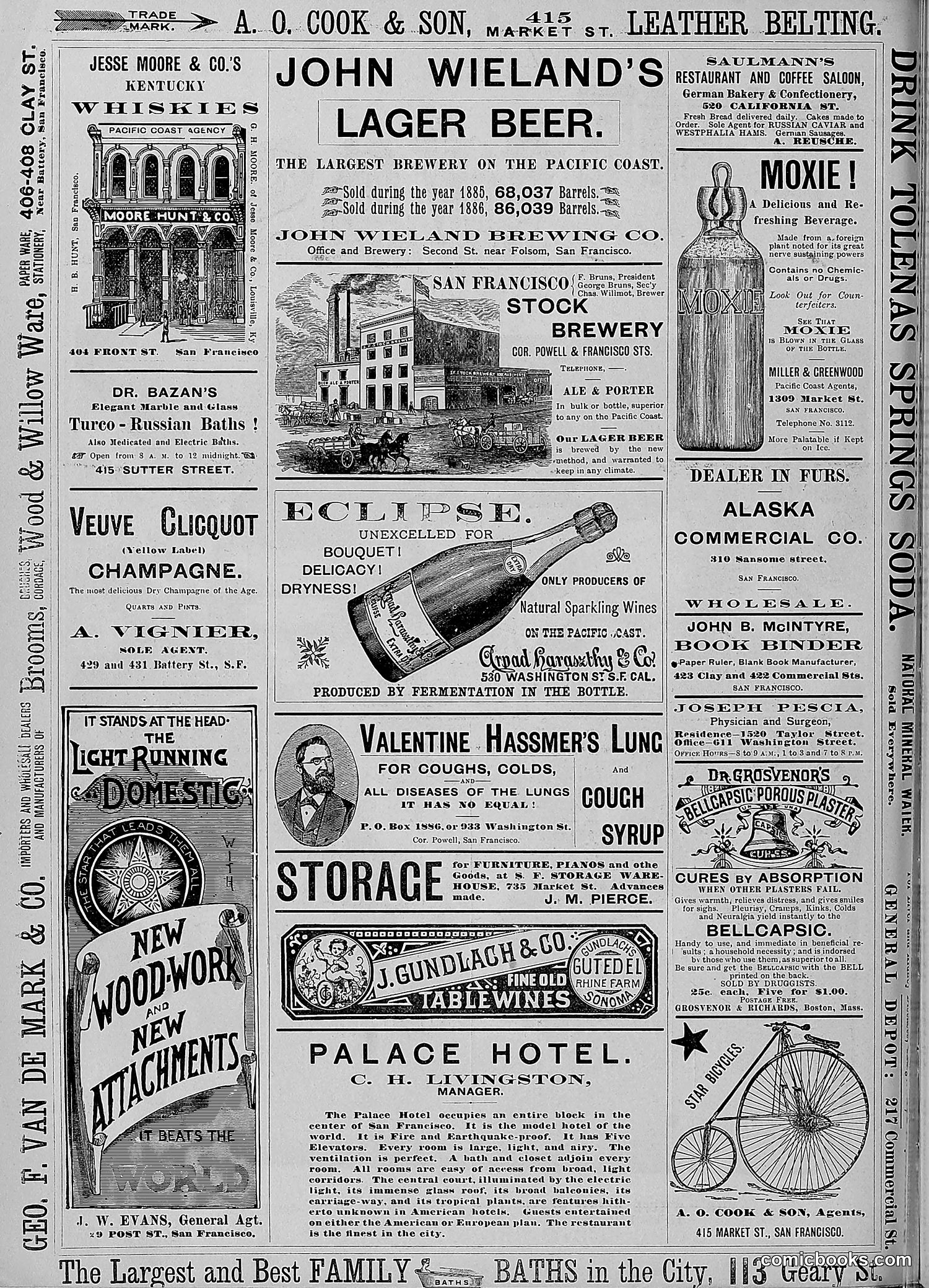
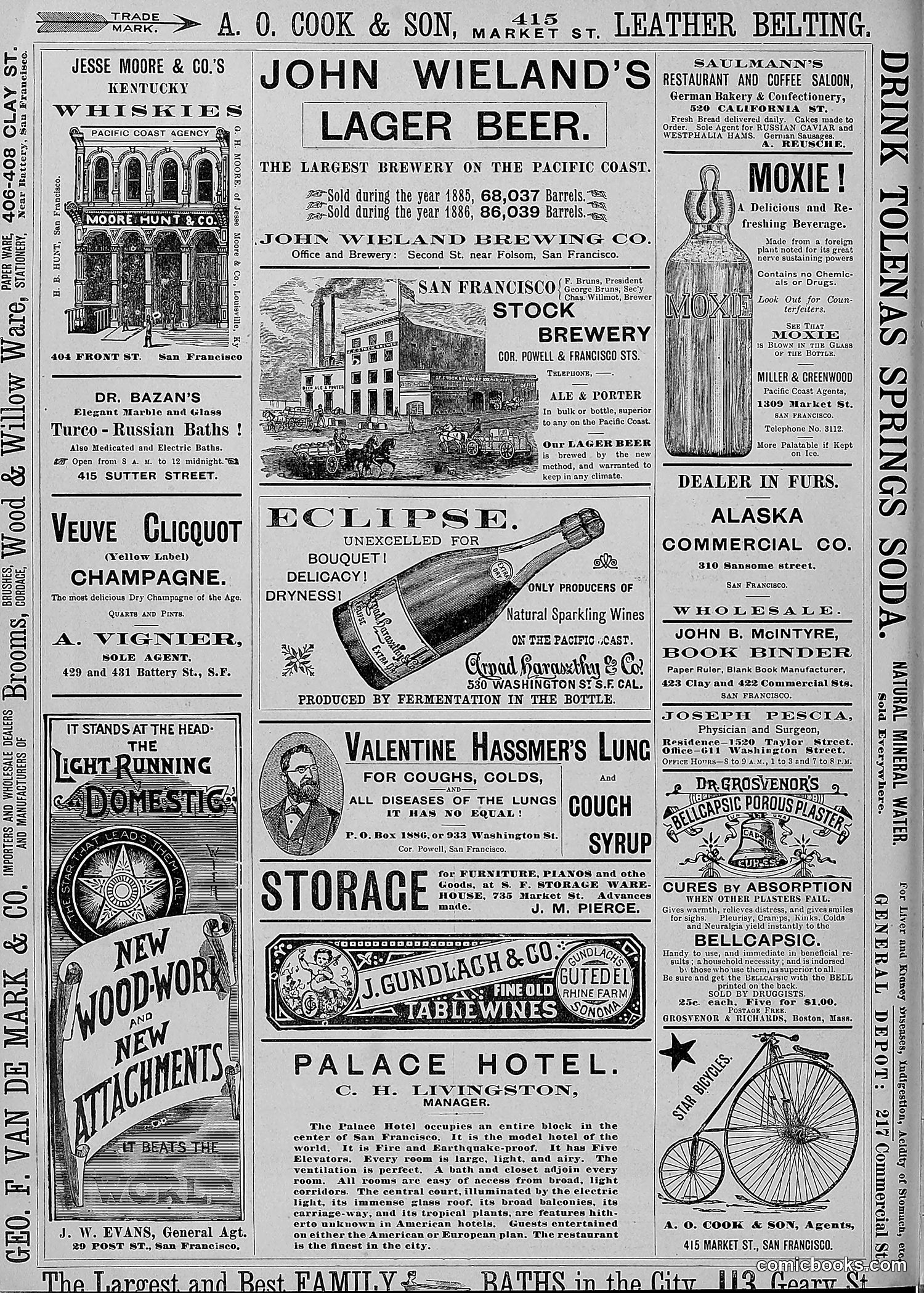
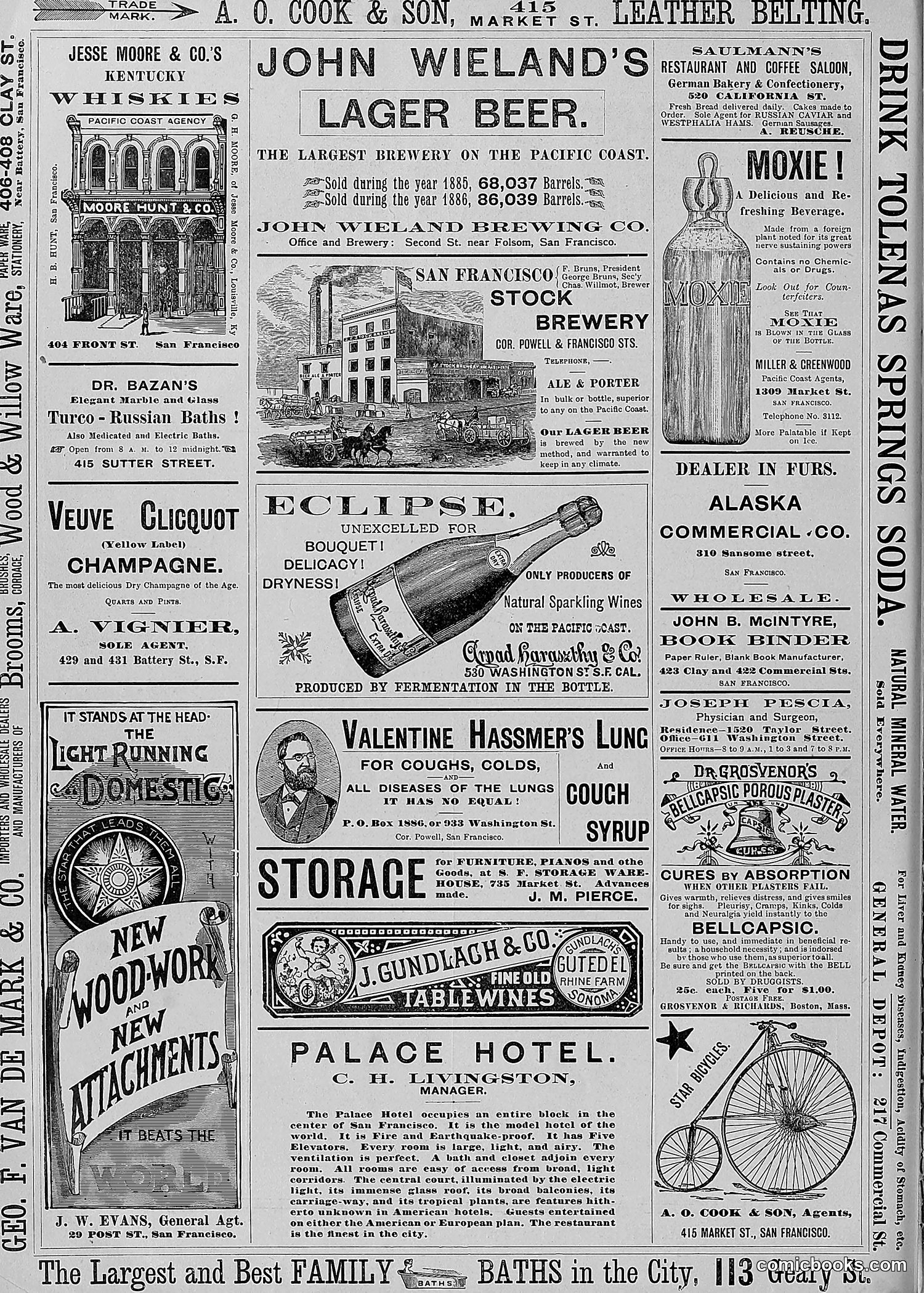
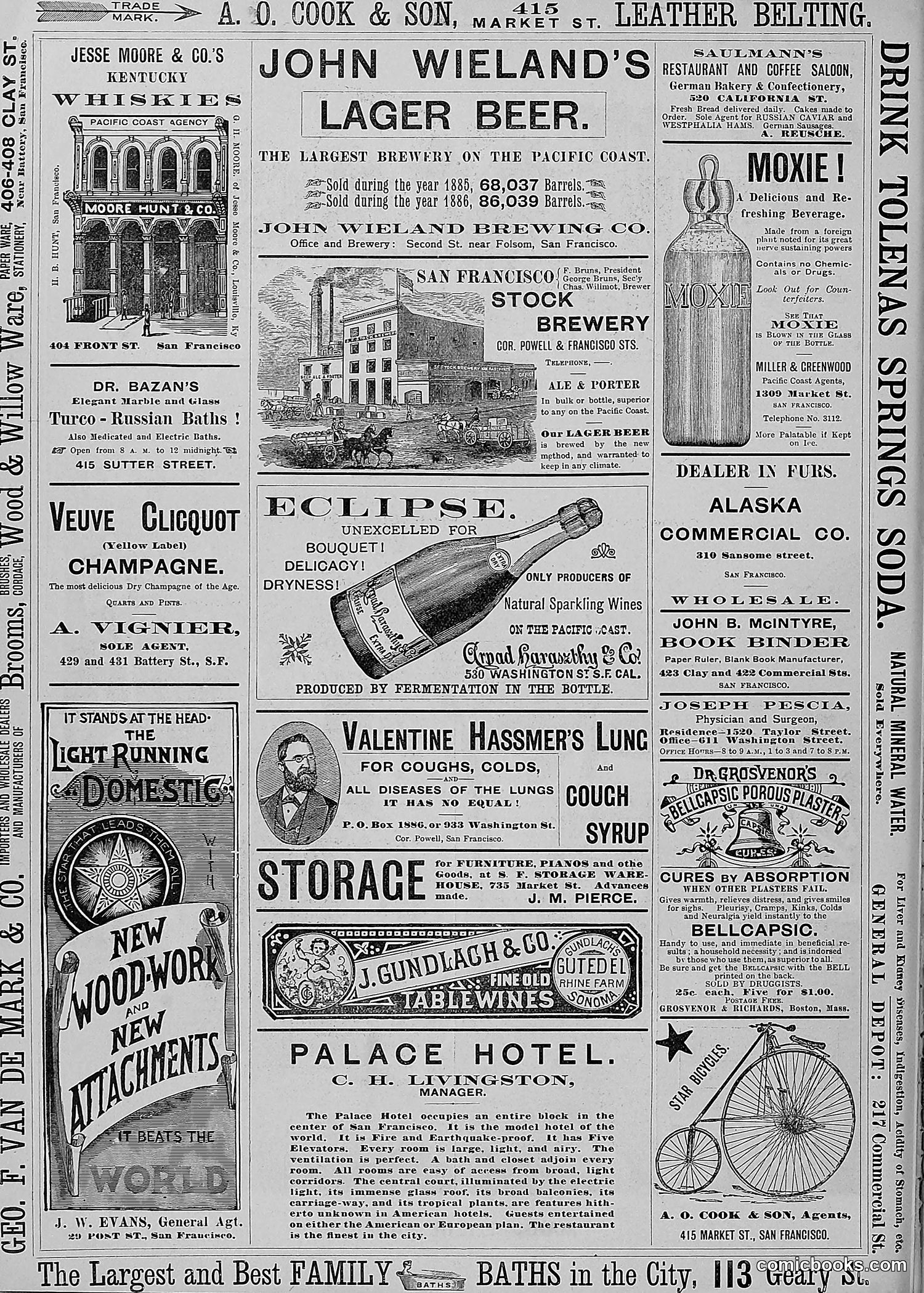
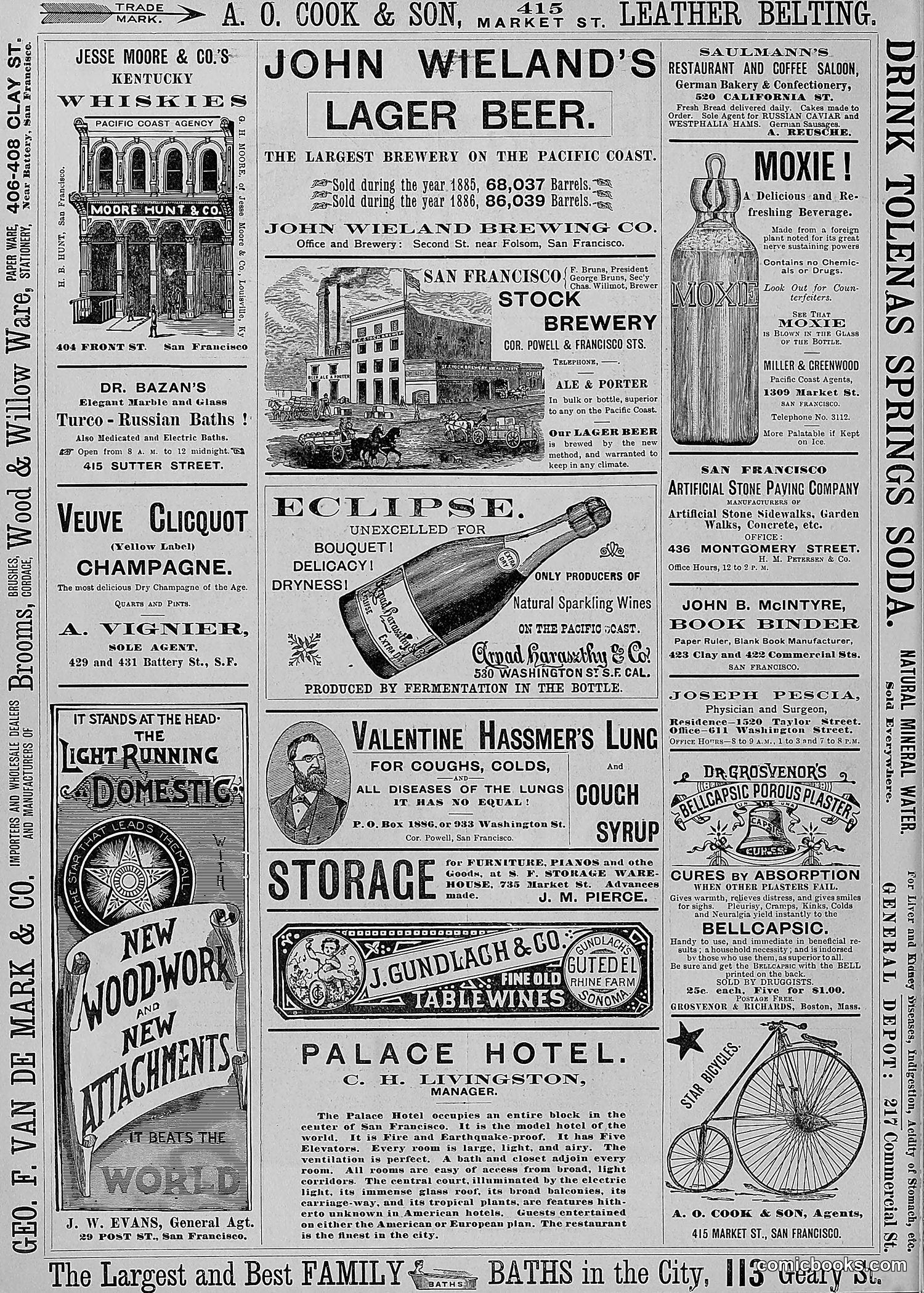
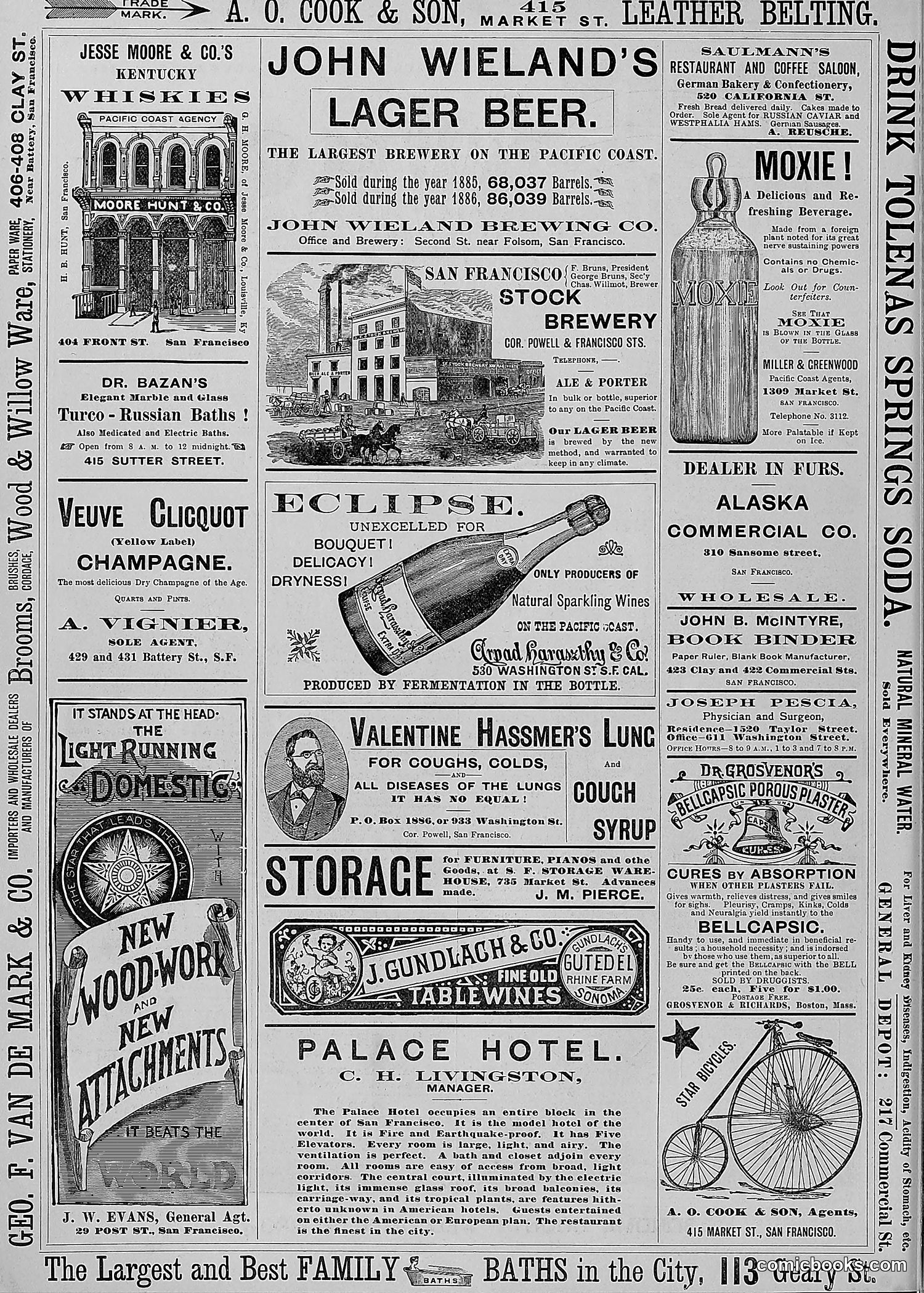
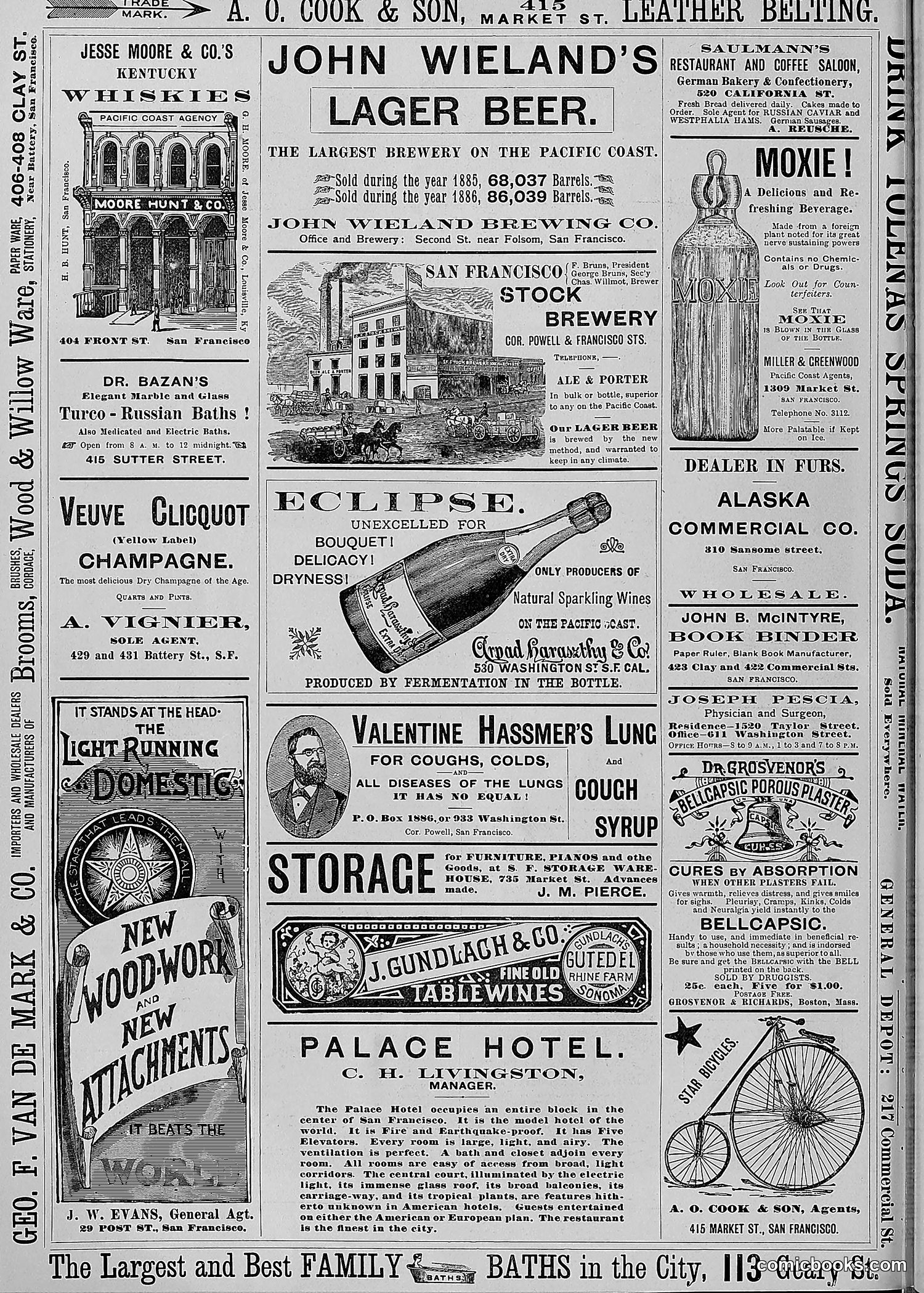
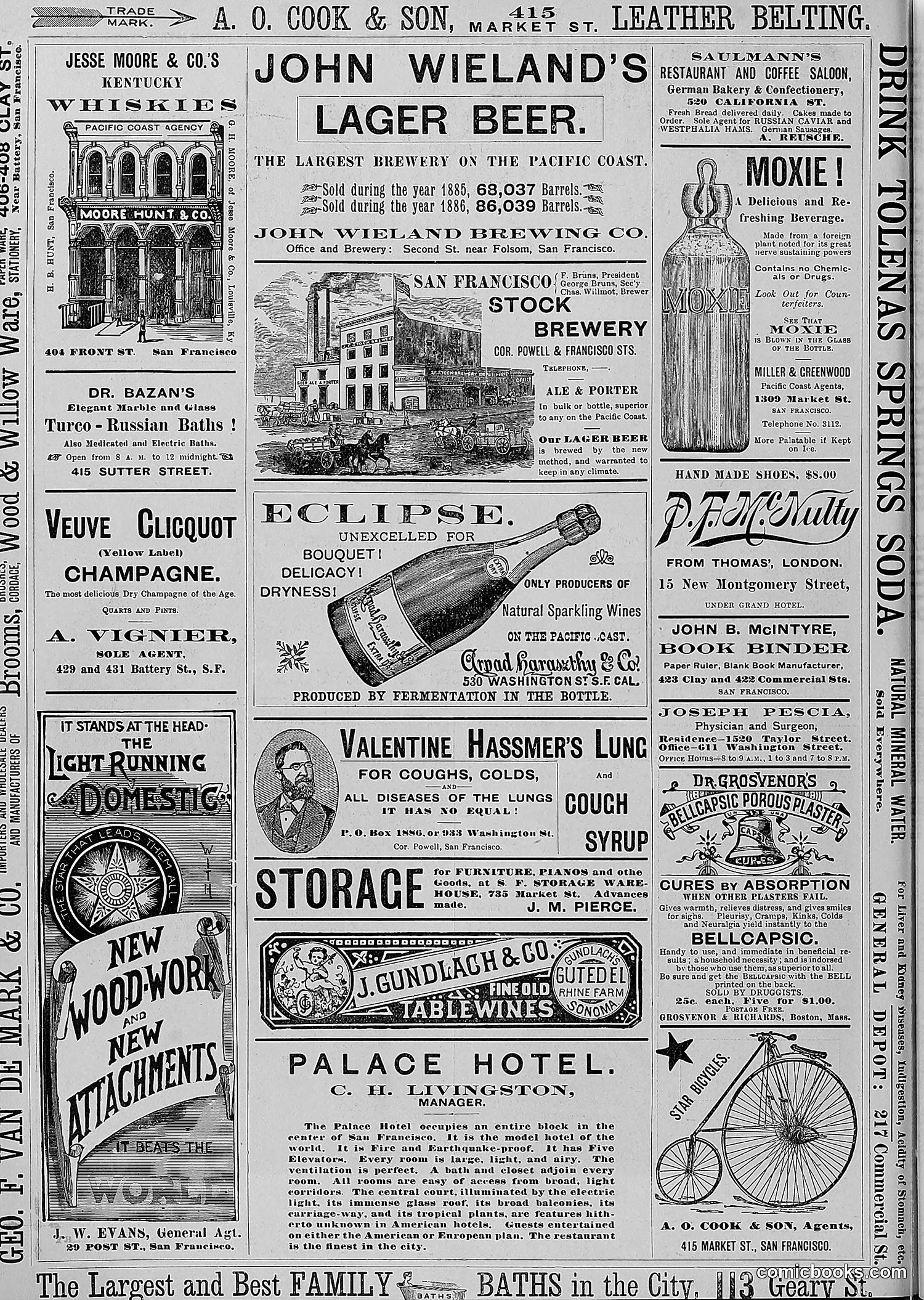
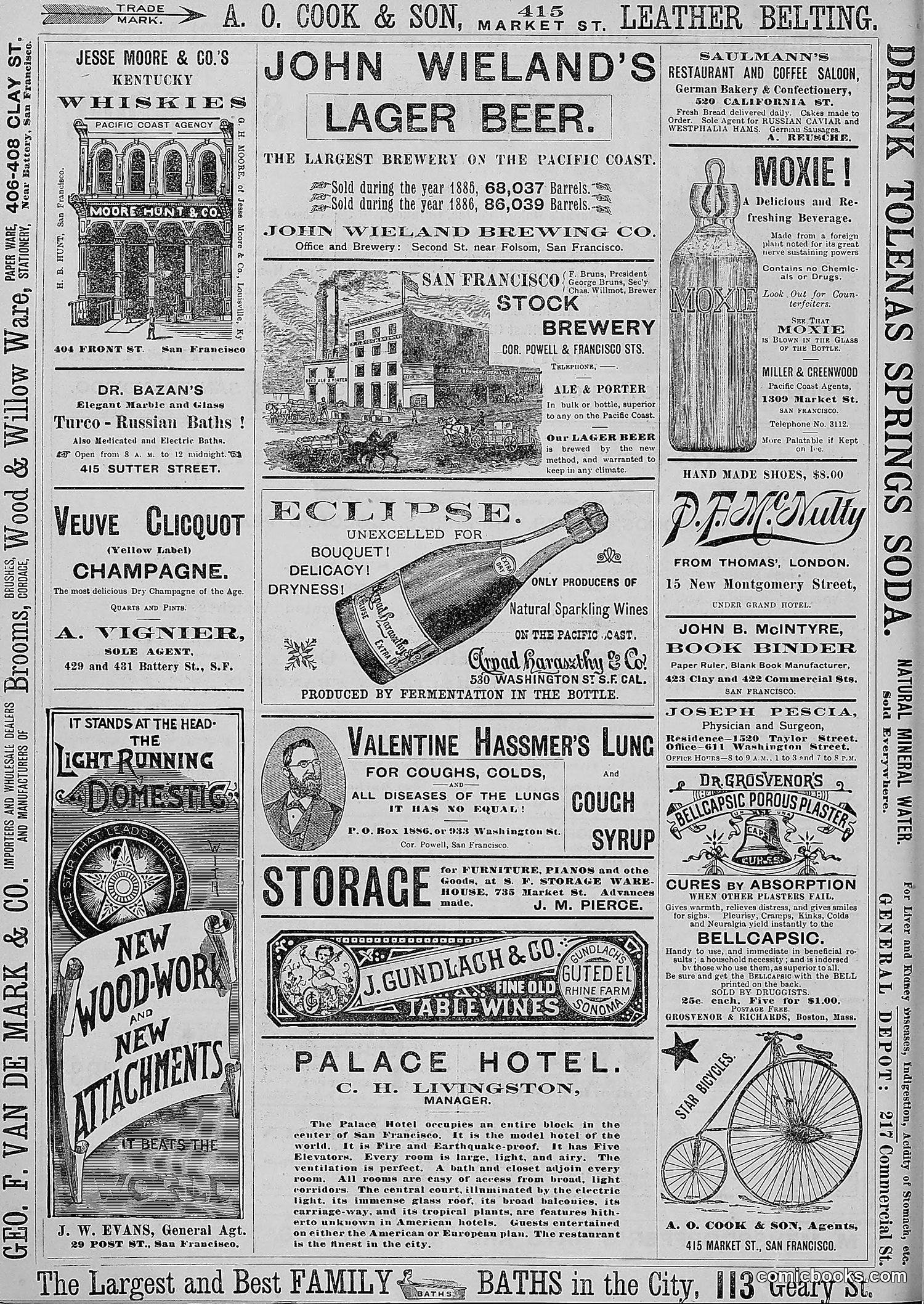
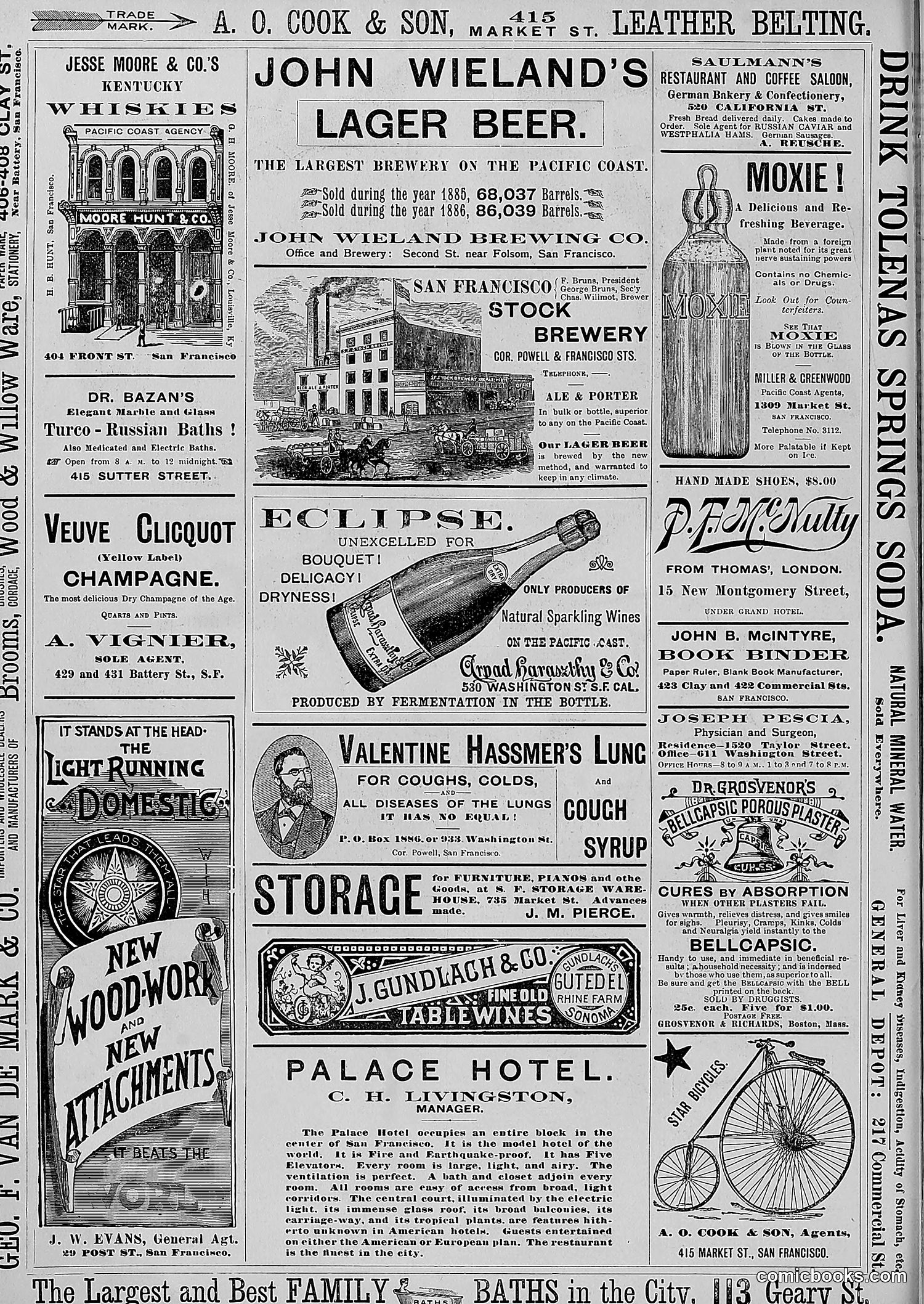
This page is primarily **advertising content** from a San Francisco publication, featuring Victorian-era business promotions rather than political satire or editorial cartoons. The one notable illustration is a small cartoon in the upper right labeled "WE WILL BET ON BUB / EVERY TIME!" depicting a figure with a dog or animal, apparently promoting **Drink For Anas Soda** (a beverage product). The joke appears to be a pun or play on betting/gambling language applied to a soft drink brand, though the exact reference is unclear without additional context. The rest of the page consists of commercial advertisements for San Francisco businesses: breweries (John Wieland's, Stock Brewery), champagne, bathhouses, hotels, and furniture storage. This reflects The Wasp's business model of combining satirical editorial content with paid advertising rather than being purely satirical throughout.
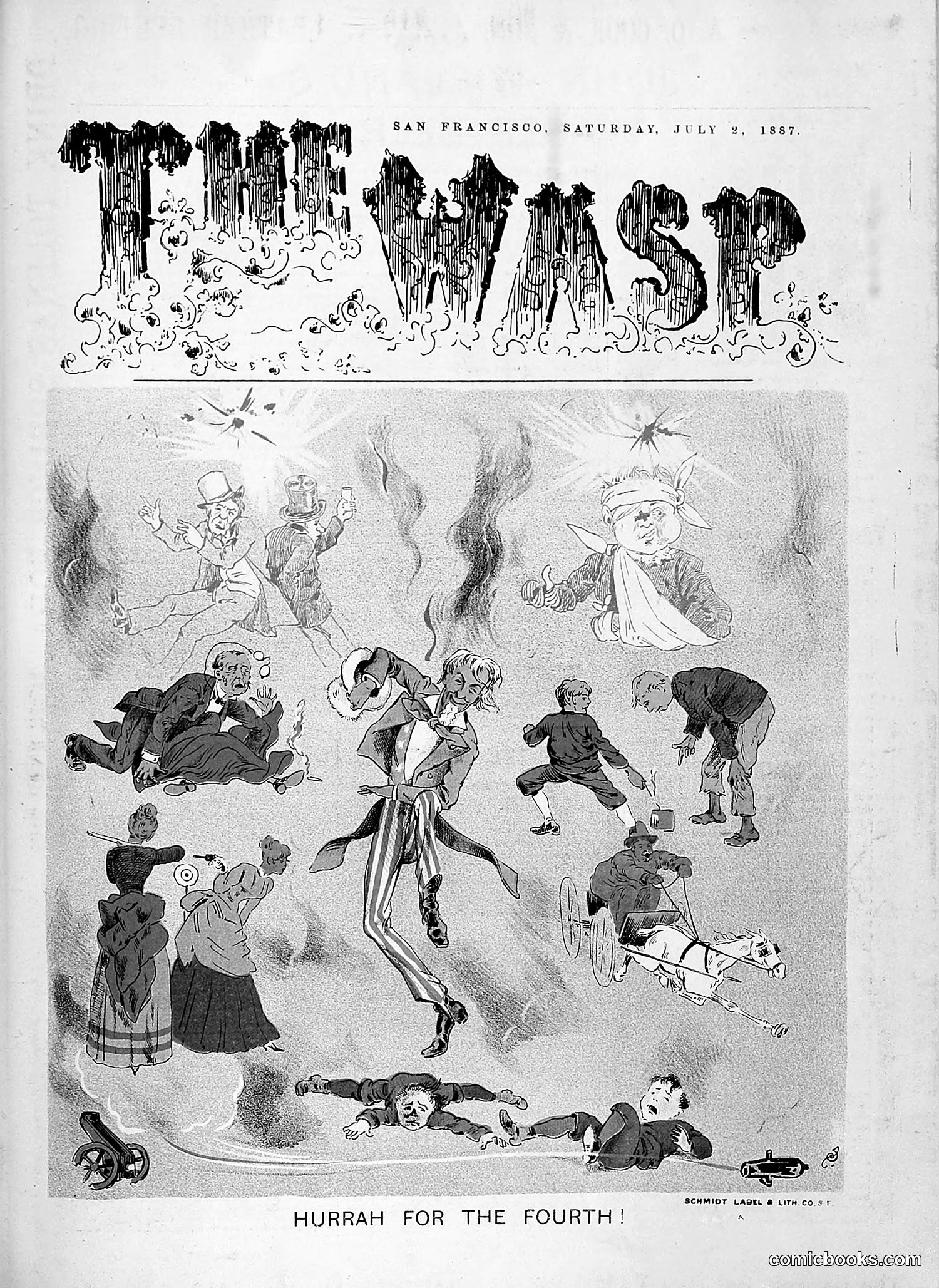
# "Hurrah for the Fourth!" – The Wasp, July 2, 1887 This satirical illustration depicts Fourth of July celebrations gone chaotic. The central figure—a tall man in striped pants and top hat—appears to be a personification of Uncle Sam or American independence, surrounded by celebratory mayhem: people falling, children playing dangerously with fireworks, adults intoxicated and brawling, and various accidents occurring. The satire critiques how Independence Day festivities often devolved into dangerous, drunken disorder rather than dignified patriotic commemoration. The exaggerated chaos—firecrackers exploding, people tumbling—mocks the reckless abandon that characterized many 19th-century Fourth of July celebrations, particularly among the working classes. The cartoon suggests the holiday had become an excuse for public disorder masquerading as patriotism.
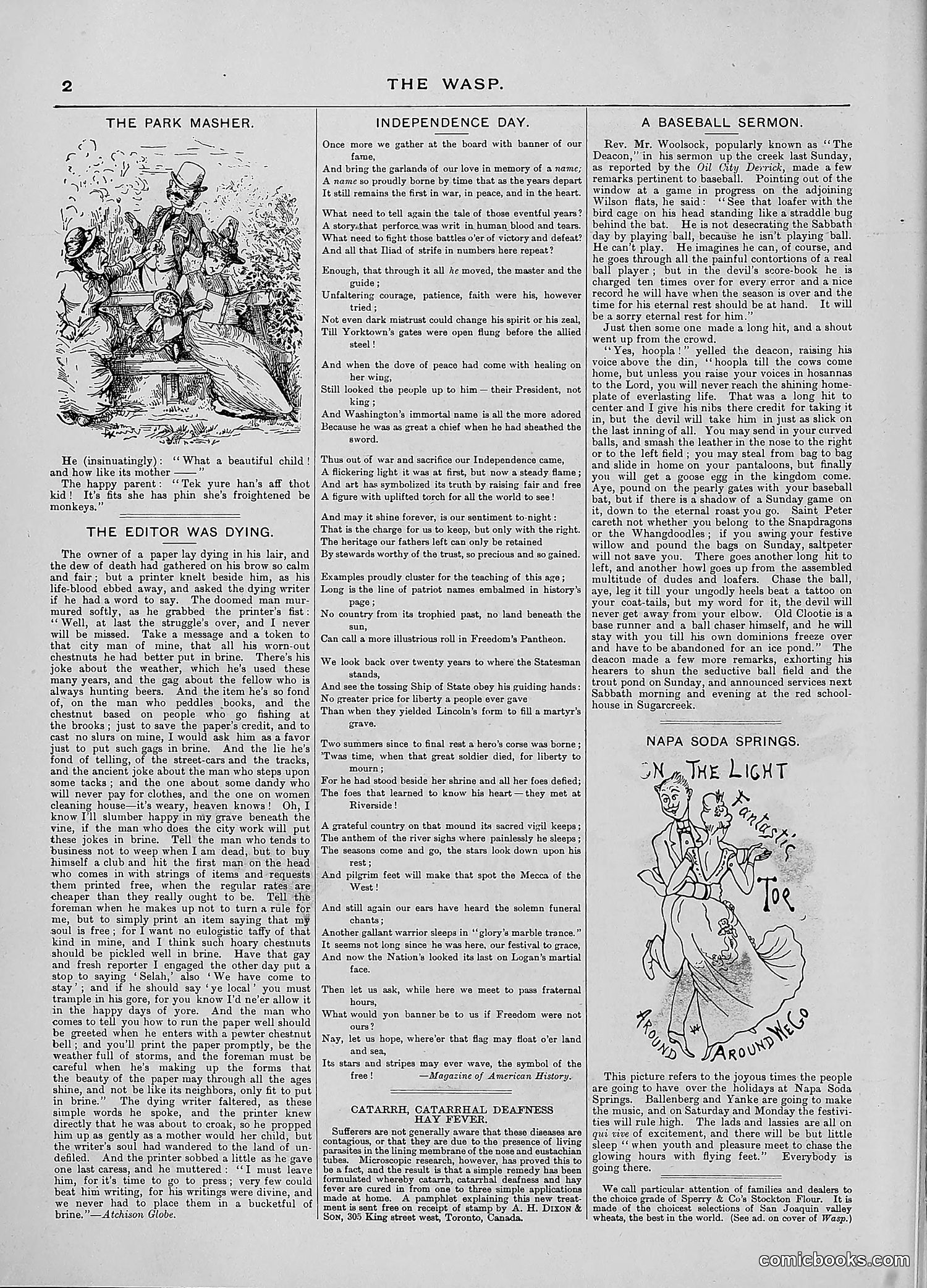
# "The Park Masher" Cartoon Analysis This cartoon satirizes a common urban nuisance of the era: aggressive panhandlers in public parks. The illustration shows a well-dressed man being accosted by a shabby figure demanding money, while the accompanying verse mocks the "masher" (aggressive beggar) who preys on park visitors. The humor targets both the persistent beggar's audacity and the victim's discomfort. The poem suggests the beggar uses manipulation and aggression—describing him as someone who won't take no for an answer, presenting himself as unfortunate while making demands. This reflects late 19th/early 20th-century urban anxieties about poverty, vagrancy, and public safety in city parks, which were increasingly seen as spaces where respectable citizens felt threatened by the poor and marginalized.
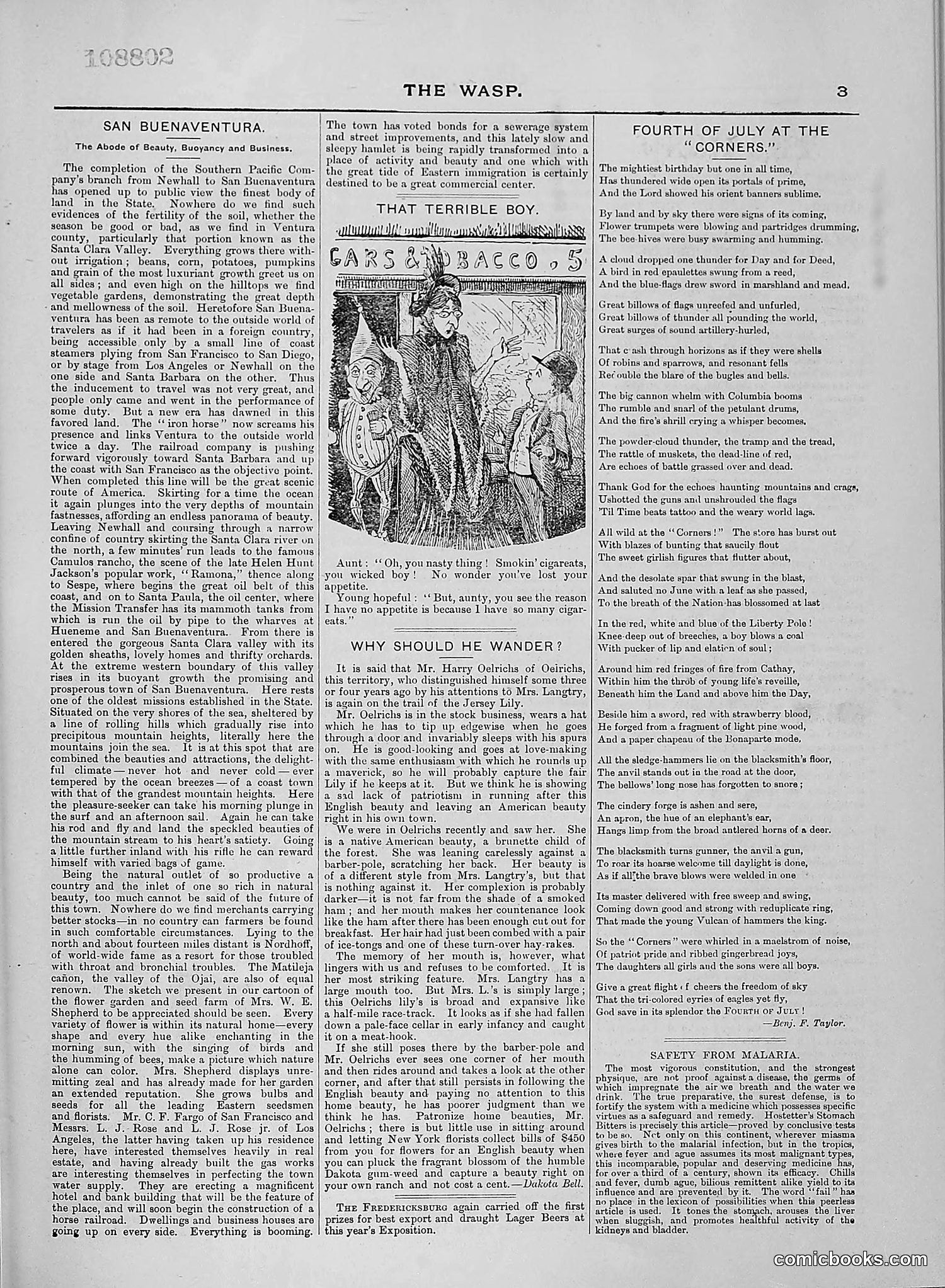
# The Wasp Magazine Page Analysis This page contains two distinct sections: **"San Buenaventura"** (left): A prose article celebrating the town's development, irrigation infrastructure, and railroad connections, positioning it as California's next major commercial center. **"That Terrible Boy"** (center-right): A cartoon illustration showing what appears to be a mischievous young boy causing domestic chaos—possibly breaking items or creating general mayhem in a household setting. The accompanying dialogue suggests an aunt scolding the child for destructive behavior (smoking cigarettes, visiting disreputable places). **"Fourth of July at the Corners"** (right): A poem describing Independence Day celebrations with patriotic imagery—cannons, powder clouds, and military references. The page primarily promotes regional development while using humor to satirize childhood misbehavior and celebrate American patriotic traditions. No specific political figures appear identifiable in the cartoon.