A complete issue · 50 pages · 1934
Life — March 1934
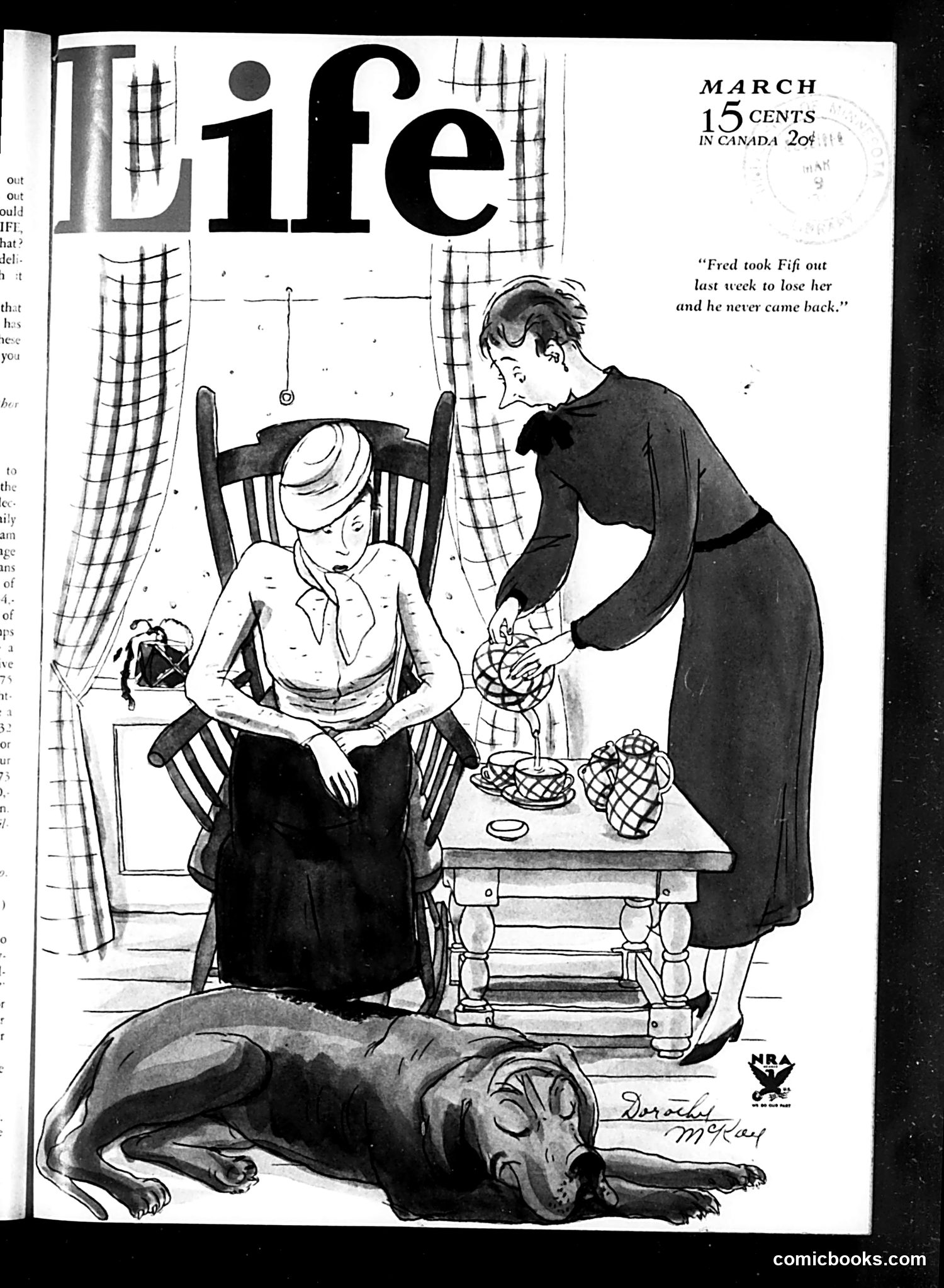
# Life Magazine Cover Analysis (March, circa 1920s) This cover illustration depicts a domestic scene with satirical commentary on infidelity. A woman sits distressed in a chair while another woman stands nearby arranging flowers, appearing to console or confront her. The caption reads: "Fred took Fifi out last week to lose her and he never came back." The joke hinges on a double meaning: "Fifi" appears to be a dog (visible in the lower foreground), but the woman's distressed reaction and the standing woman's gesture suggest ambiguity about whether Fred lost a pet or was unfaithful with another woman named Fifi. The satire targets marital anxiety and infidelity humor common in 1920s popular culture. The illustration is signed by Dorothy McKay.
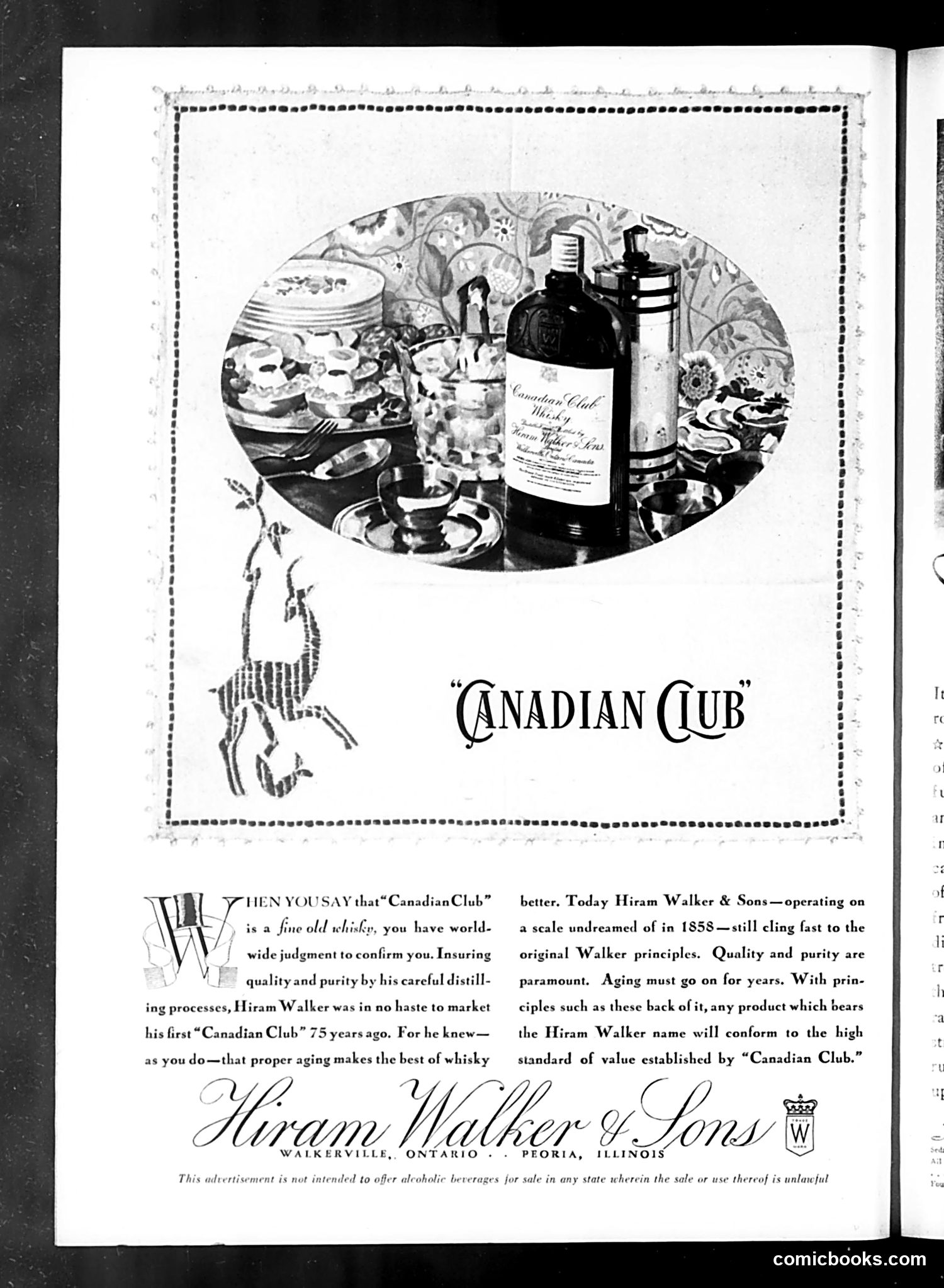
This is a **Canadian Club whiskey advertisement**, not a political cartoon. The page features a stylized photograph of a bottle of Canadian Club whiskey surrounded by dining items (plates, glasses, food) in an oval frame, with a decorative maple leaf design on the left side. The ad text emphasizes the product's heritage and quality—it claims Canadian Club is a "fine old whiskey" with "worldwide judgment" backing it. The copy notes that Hiram Walker & Sons has operated since 1858 using consistent principles of "quality and purity." The advertisement positions the whiskey as an established, trustworthy brand with aging credentials. The disclaimer at bottom notes this is not intended to offer alcoholic beverages for sale where prohibited.
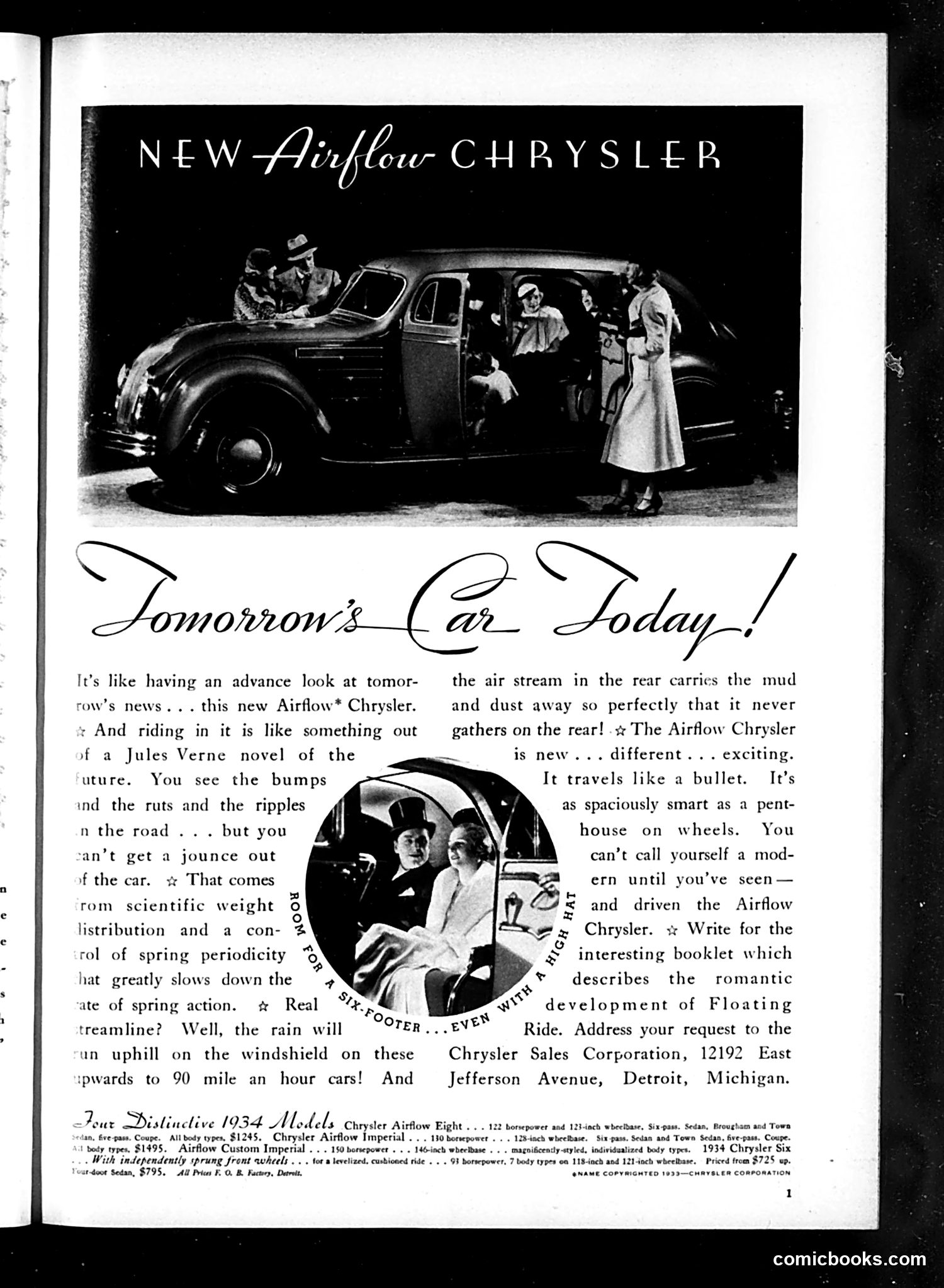
# Analysis This is a **1934 Chrysler automobile advertisement**, not political satire. The page promotes the new "Airflow" Chrysler model, featuring a photograph of the car with passengers and marketing copy. The advertisement uses science-fiction language ("like something out of a Jules Verne novel") to highlight the car's innovative features: streamlined design, improved weight distribution, and spring suspension that provide a smoother ride. The "Airflow" name references aerodynamic engineering—a selling point emphasizing modernity and technological advancement. The circular inset photograph shows the car's spacious interior, positioning it as a luxury vehicle ("a penthouse on wheels"). The bottom lists various 1934 Chrysler models available. This is straightforward product marketing from the Depression era, appealing to consumers' aspirations for modern comfort and innovation.
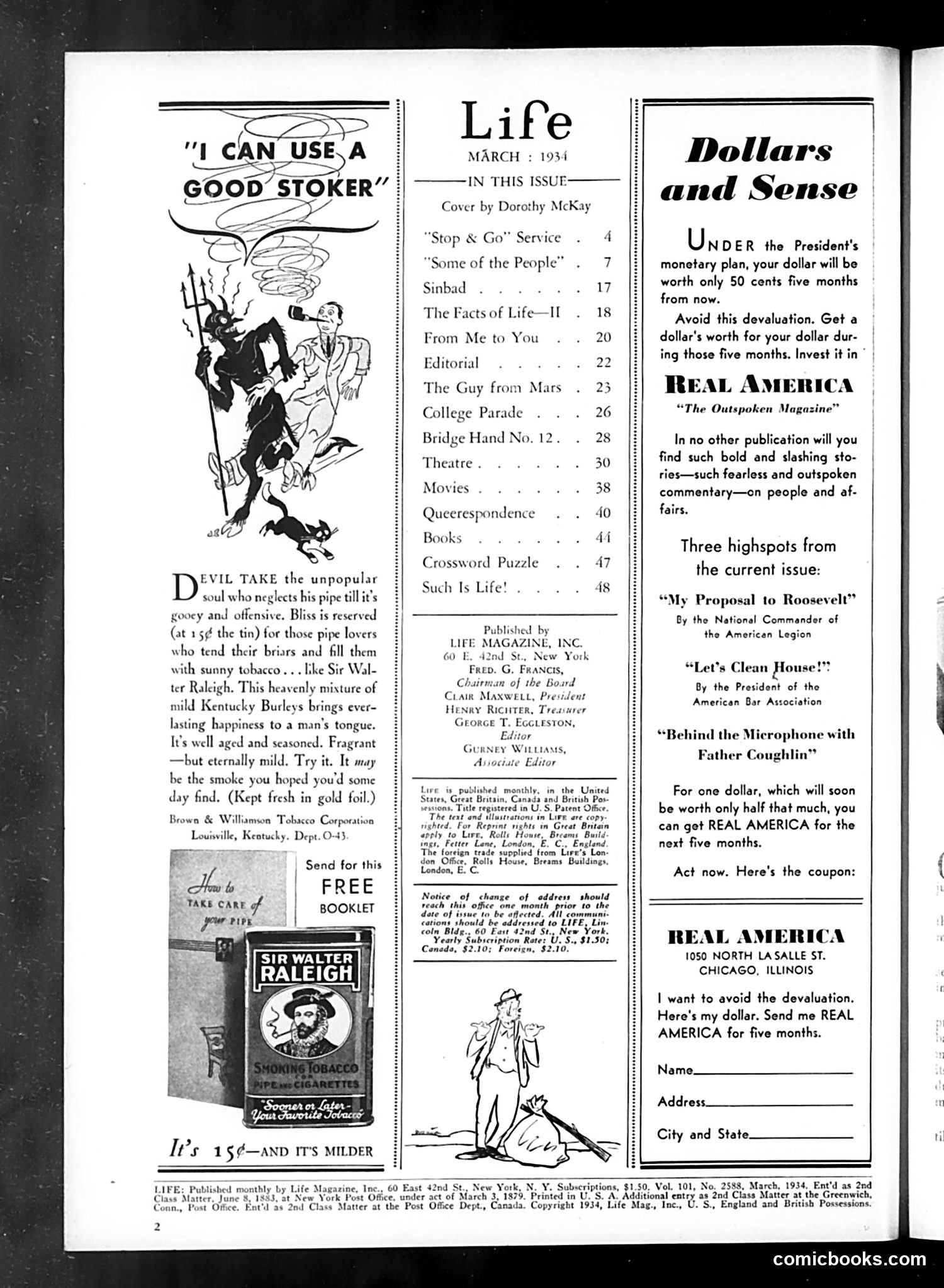
# Life Magazine, March 1934: Political Satire on Currency Devaluation This page mixes advertisements with political commentary on President Franklin D. Roosevelt's monetary policy. The right column's "Dollars and Sense" section attacks the administration's plan to devalue the dollar to 50 cents within five months. It sarcastically warns readers their savings will lose half their value and urges them to subscribe to *Real America* magazine instead—positioning it as the antidote to Roosevelt's economic policies. The advertisement emphasizes *Real America* as "The Outspoken Magazine" offering bold criticism of "people and affairs," suggesting the publication positions itself as anti-New Deal. This reflects the significant political opposition to Roosevelt's early Depression-era monetary experiments among conservative Americans and business interests in 1934.
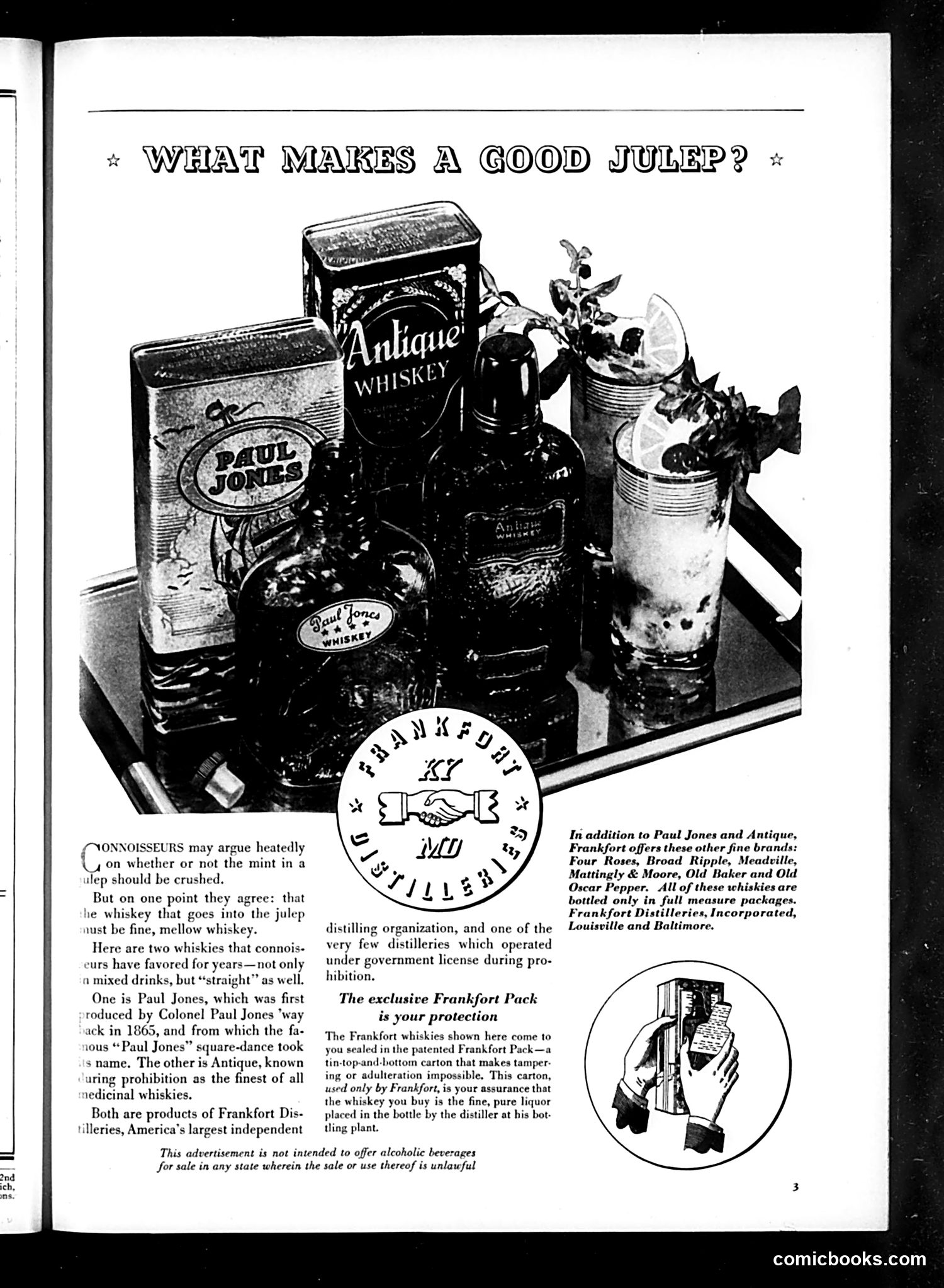
# Advertisement Analysis This is primarily a **whiskey advertisement** for Frankfort Distilleries, not political satire. It promotes Paul Jones and Antique brand whiskeys during the Prohibition era. The page uses humor to argue that good juleps require fine whiskey. The ad emphasizes that Frankfort's whiskeys were among the few distilleries operating legally under government license during Prohibition, positioning them as reliable sources for quality spirits. The "exclusive Frankfort Pack"—a sealed tin carton—is presented as protection against tampering or adulteration, a significant concern when alcohol sales were restricted and black-market liquor was common. The advertisement explicitly notes it's not intended to offer alcoholic beverages where sale or use is unlawful, acknowledging Prohibition's legal constraints while marketing to those seeking legitimate access.
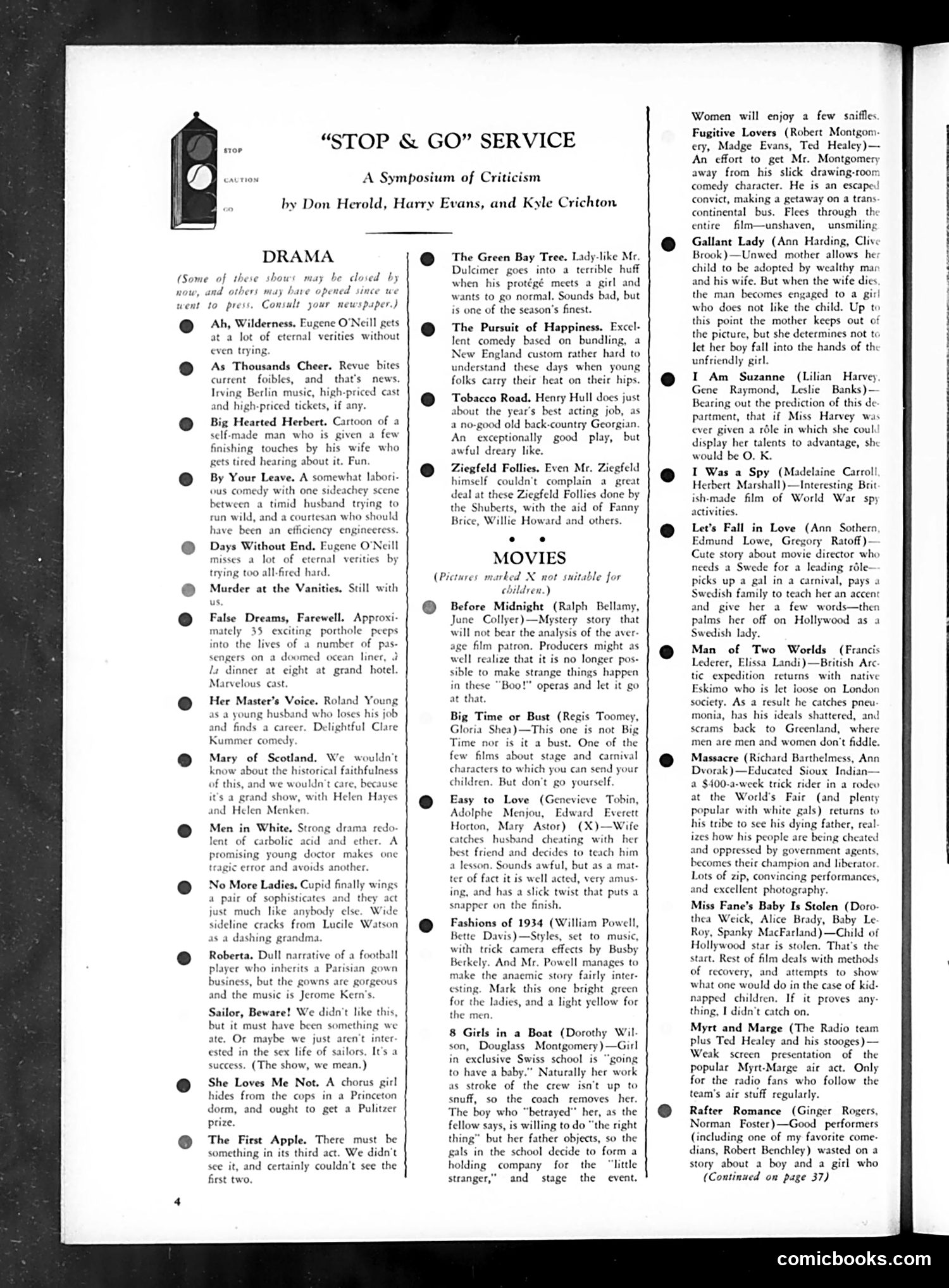
# "Stop & Go" Service: A Symposium of Criticism This page presents theatrical and film reviews from Life magazine's critics (Don Herold, Harry Evans, and Kyle Crichton). The "Stop & Go" traffic light logo signals their approval system: plays and films either get the green light (worth seeing) or red light (avoid). The reviews cover 1934 dramas like *Big Hearted Herbert* and *Mary of Scotland*, and films including *Before Midnight* and *Easy to Love*. Critics offer brief, witty assessments—some praising performances, others mocking plot devices or acting quality. This format exemplifies Life's satirical approach: using modern, accessible imagery (the traffic signal) to deliver quick cultural judgments. The conversational tone and emphasis on entertainment value reflect 1930s magazine criticism aimed at educated, urban readers seeking guidance on what to see.
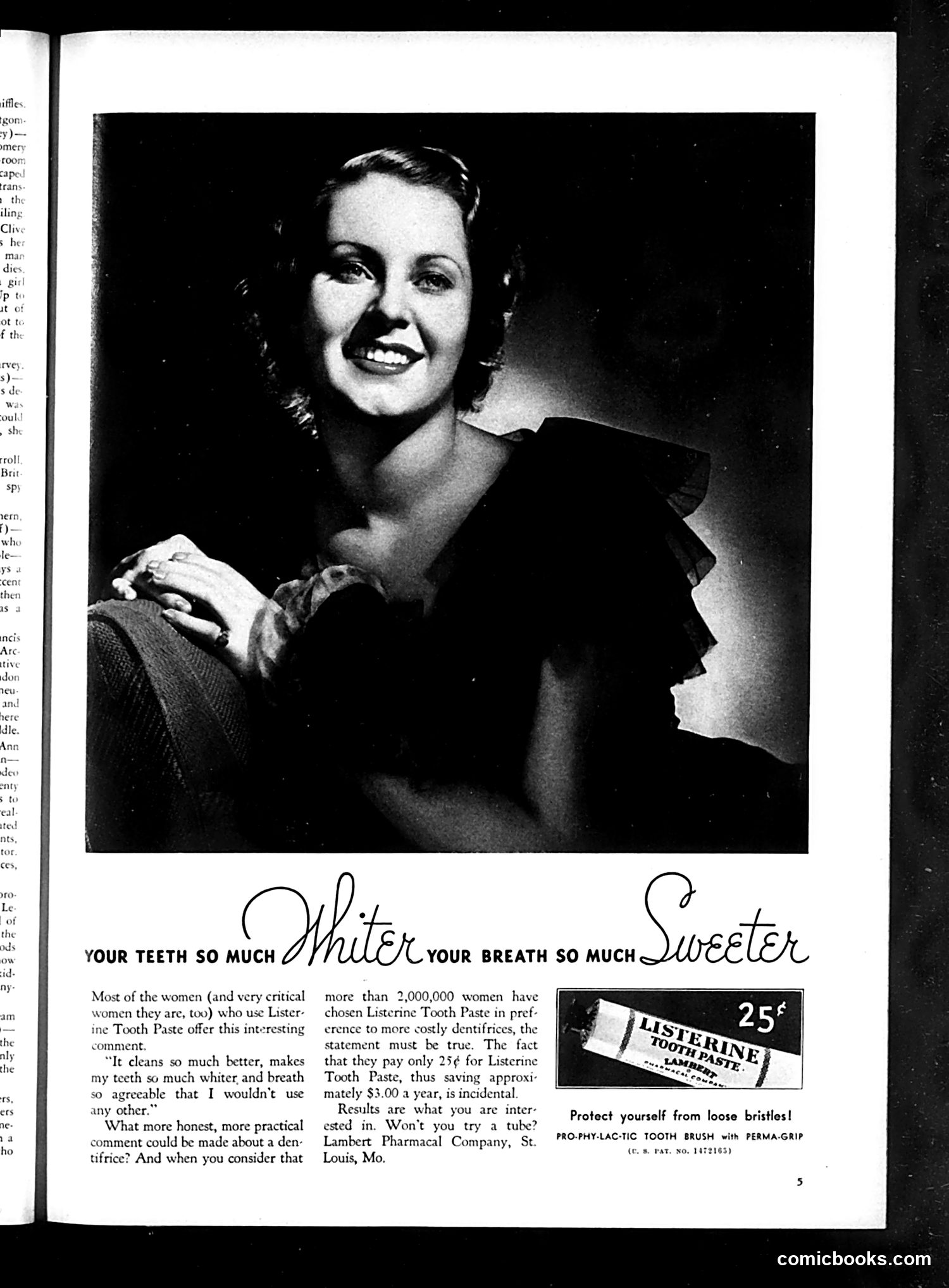
# Analysis This is a **vintage advertisement**, not political satire. It promotes Listerine Tooth Paste and a Pro-Phy-Lac-Tic toothbrush, dated to the mid-20th century based on styling and design. The ad uses a professional headshot of an attractive woman with the slogan "Your Teeth So Much Whiter Your Breath So Much Sweeter"—a common marketing approach of the era that emphasized personal grooming for social/romantic appeal. The text quotes female users praising the product's whitening effects and cost-effectiveness (25¢), claiming over 2,000,000 women preferred it. The Lambert Pharmacal Company (St. Louis, Mo.) manufactured it. This reflects mid-century advertising strategies targeting women's insecurities about appearance and social acceptance through dental hygiene products.
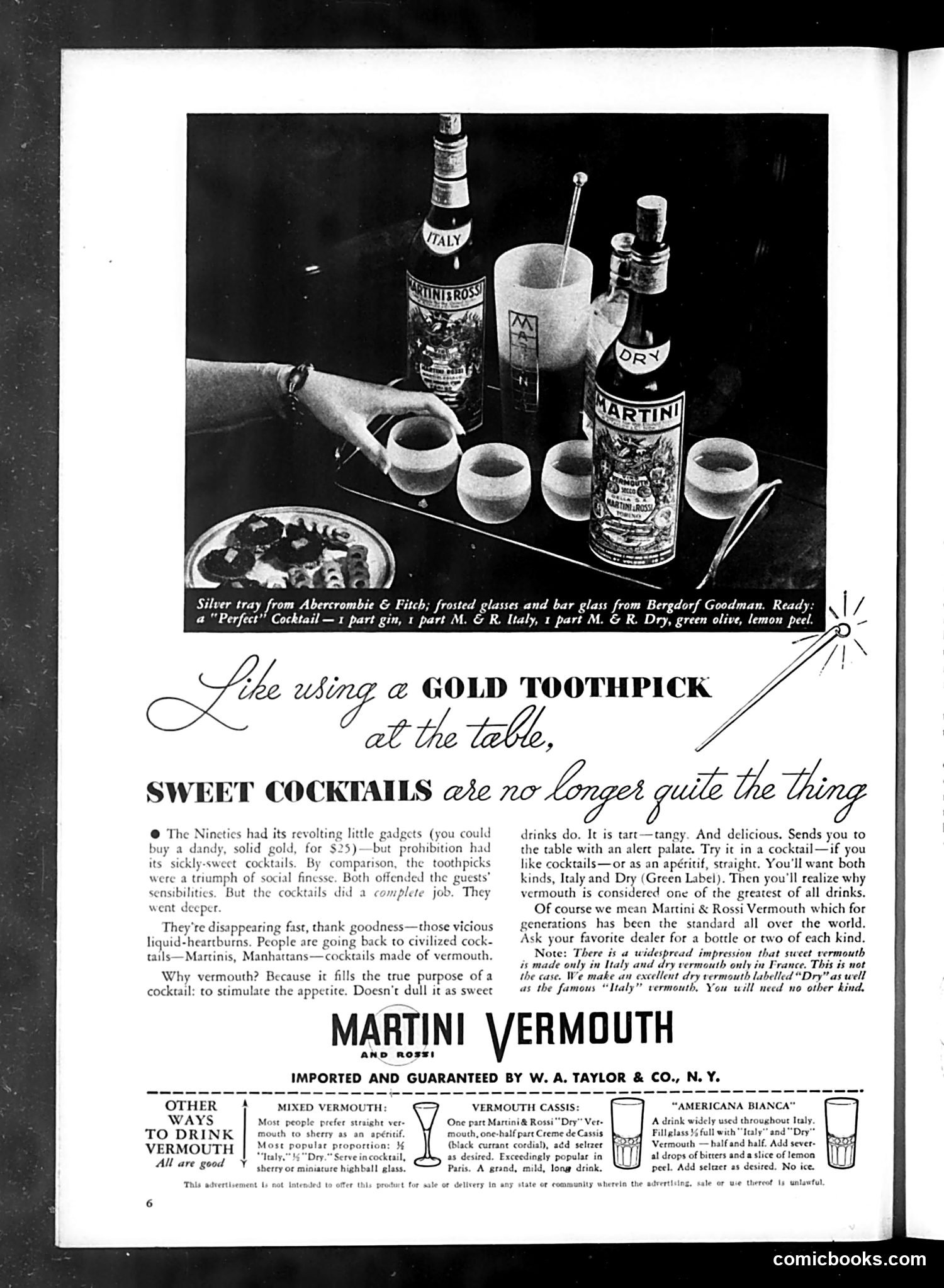
# Analysis This is primarily a **Martini & Rossi vermouth advertisement**, not political satire. The page promotes sweet cocktails using vermouth, positioning them as a modern alternative to Prohibition-era drinking habits. The ad references **Prohibition's end** (implied by "those vicious liquid-inebriants" that are "disappearing fast"), suggesting vermouth cocktails now offer a sophisticated, socially acceptable way to drink. The "gold toothpick" reference positions vermouth drinks as elegant and refined—a contrast to crude speakeasies. The photograph shows an upscale bar setting with professional glassware and Martini & Rossi bottles, emphasizing respectability and class. This targets affluent readers seeking post-Prohibition legitimacy in their drinking habits. The satirical angle—if any—is subtle: promoting vermouth as the sophisticated choice for those wanting to appear cultured and refined.
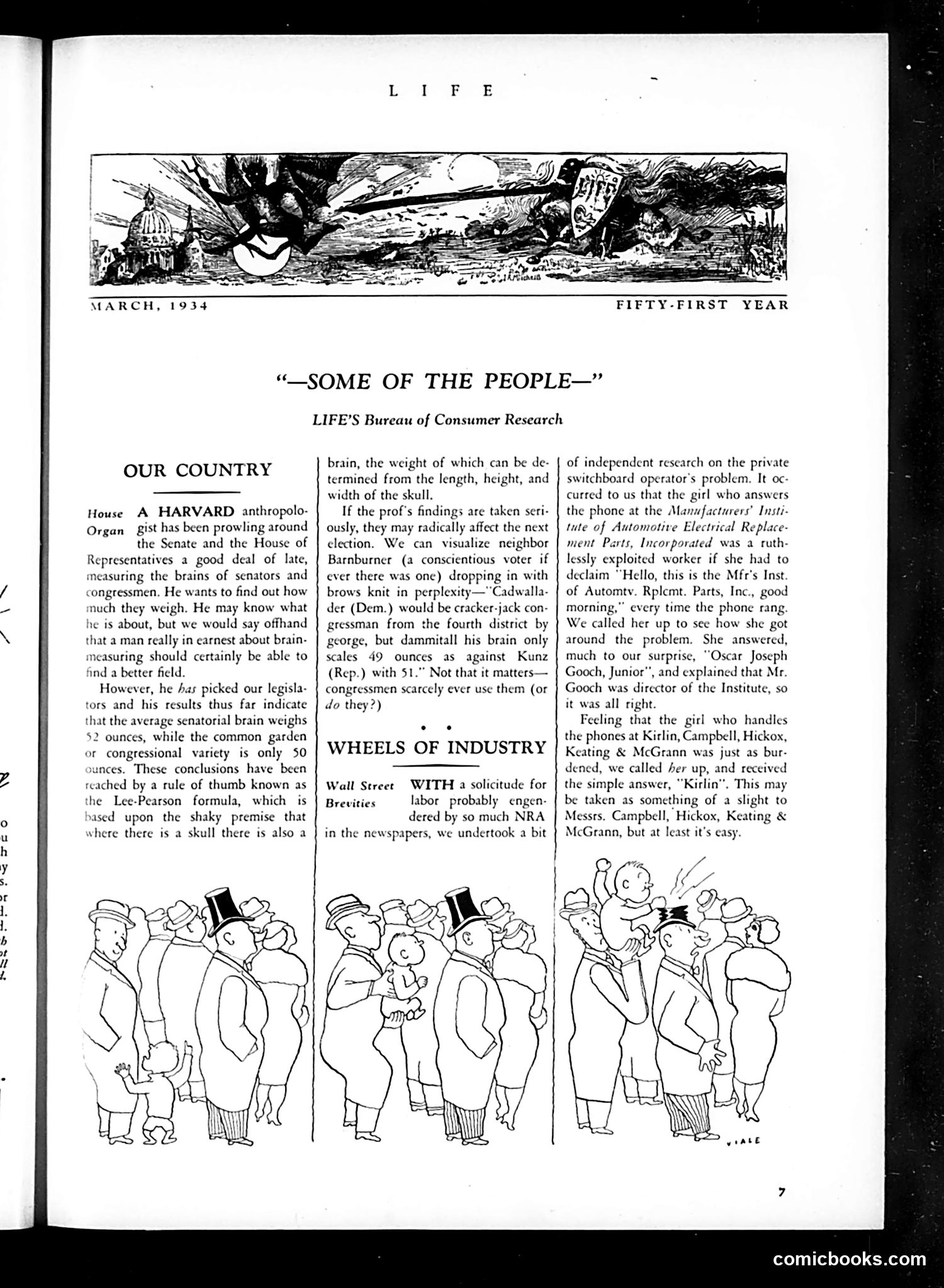
# "Some of the People" - Life Magazine, March 1934 This page contains two distinct sections satirizing American institutions: **"Our Country"** mocks Harvard anthropologist A. Harvard's skull-measuring research on congressmen, suggesting they're examining politicians' brain capacity—a barely-veiled insult to their intelligence. **"Wheels of Industry"** features three cartoon panels about Wall Street brokers during the Great Depression. The text references an NRA (National Recovery Administration) investigation into labor conditions. The cartoons depict businessmen in top hats, likely representing wealthy industrialists or financiers, shown in what appears to be crowded, undignified situations. The overall theme critiques both academic pretension and corporate/financial exploitation during the Depression era, when such satire was common in Life magazine.
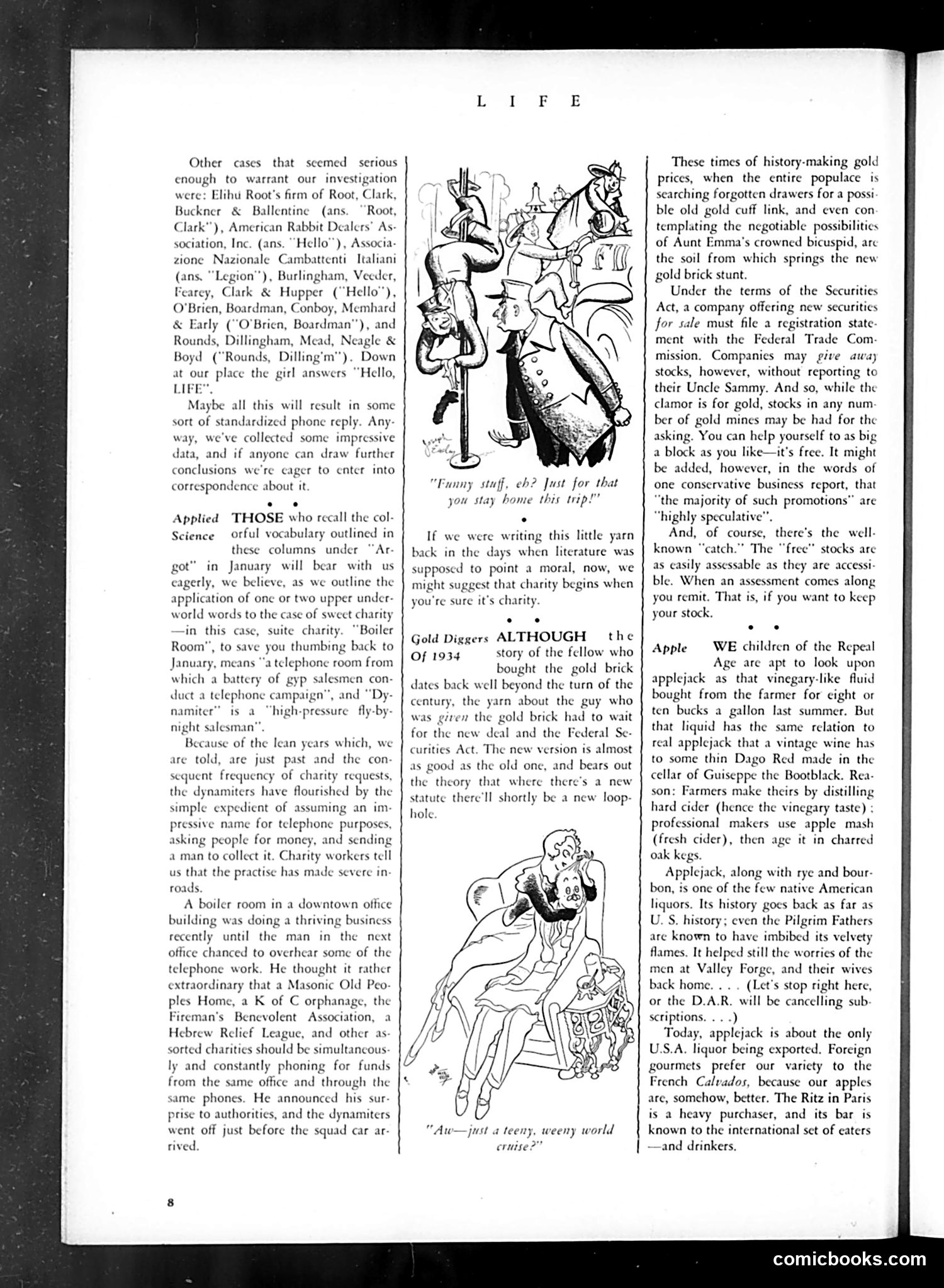
# Analysis of Life Magazine Page This page contains two satirical cartoons addressing 1930s business fraud and commercial schemes. The first cartoon (top) mocks aggressive telephone solicitation tactics, showing a chaotic "boiler room" operation where con artists pressure people for money. The caption "Funny stuff, eh? Just for that you stay home this trip?" suggests victims being manipulated into financial schemes. The second cartoon (bottom) depicts a disheveled figure amid chaos, captioned "Au—just a teeny, weeny world crisis?" This appears to mock the disconnect between ordinary people experiencing economic hardship during the Great Depression and wealthy financiers treating crises as minor inconveniences. The surrounding text discusses gold-mining stock fraud and unregistered securities—reflecting genuine 1930s concerns about unregulated financial schemes preying on desperate Americans seeking quick wealth.
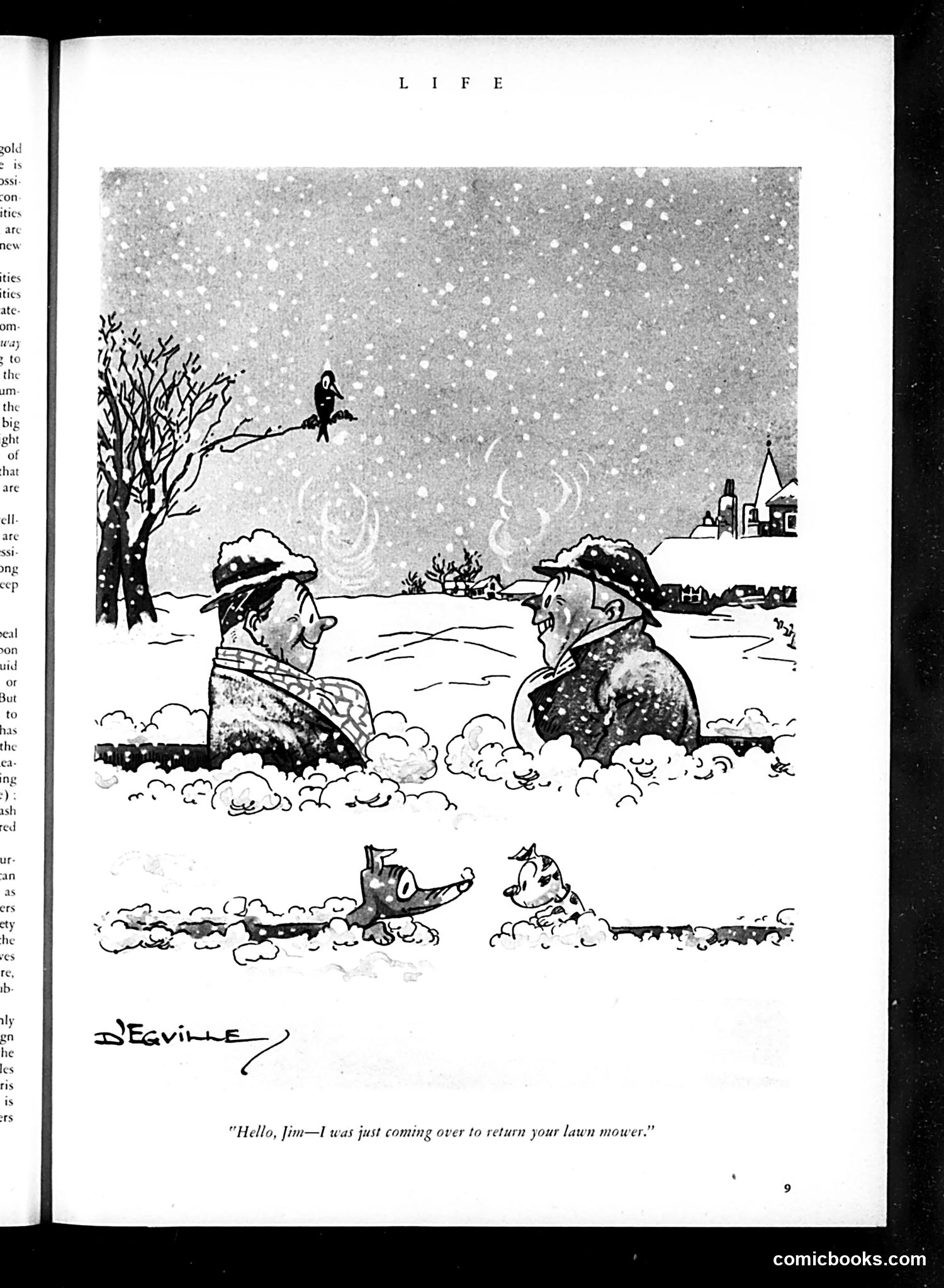
# Analysis This cartoon by Deville depicts a winter scene with two men buried up to their necks in snow, engaged in conversation. One says to the other: "Hello, Jim—I was just coming over to return your lawn mower." The humor relies on an absurd contrast: the speaker is apologizing for borrowing a lawn mower while both men are literally frozen in snow, making lawn mowing completely impossible. This satirizes the social awkwardness of returning borrowed items and suggests that people will use any excuse—even extreme circumstances—to avoid admitting they've kept something that isn't theirs. The joke also plays on the universal experience of neighbors borrowing and keeping garden tools. The winter setting makes the excuse particularly ridiculous and funny.
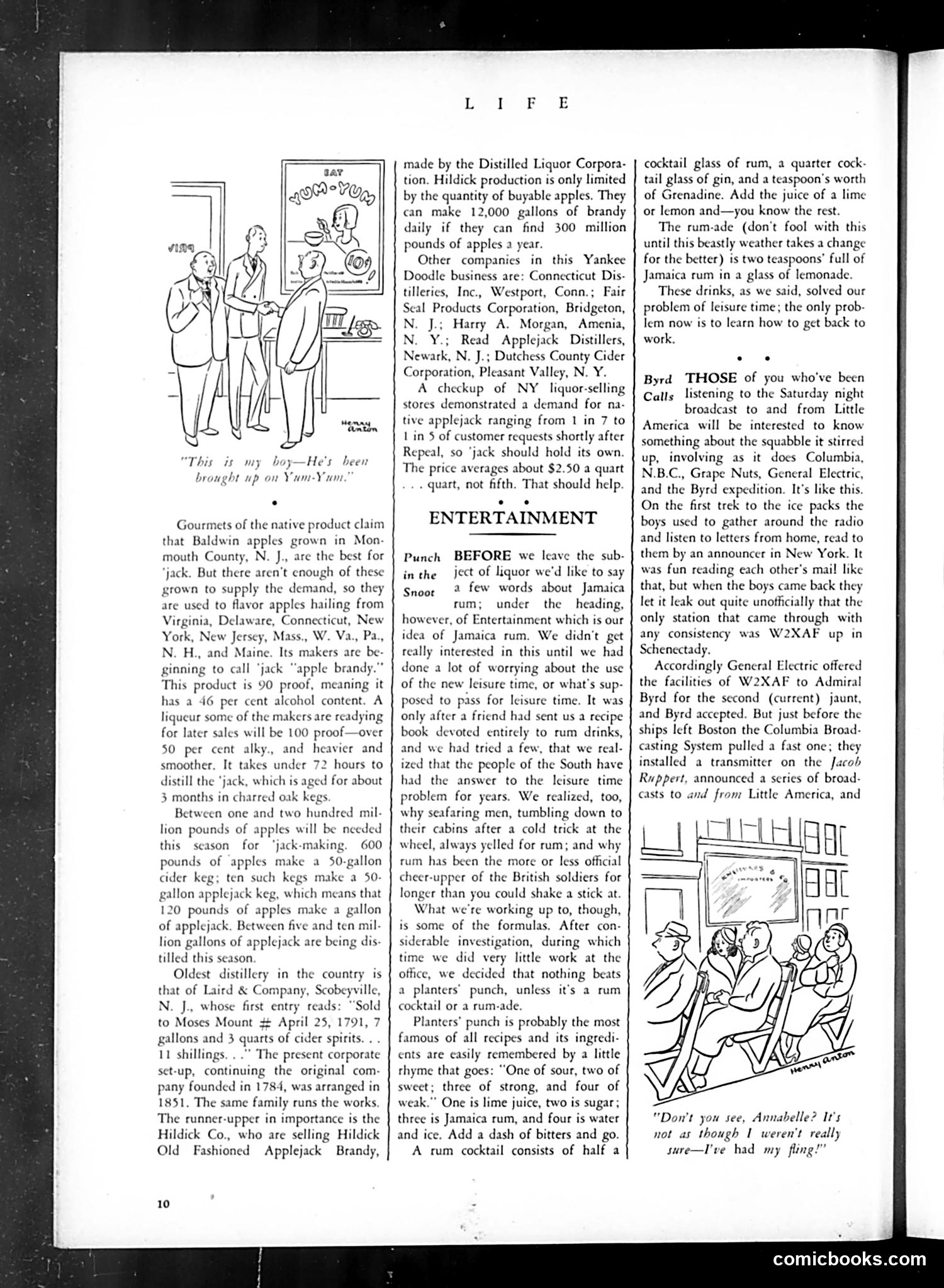
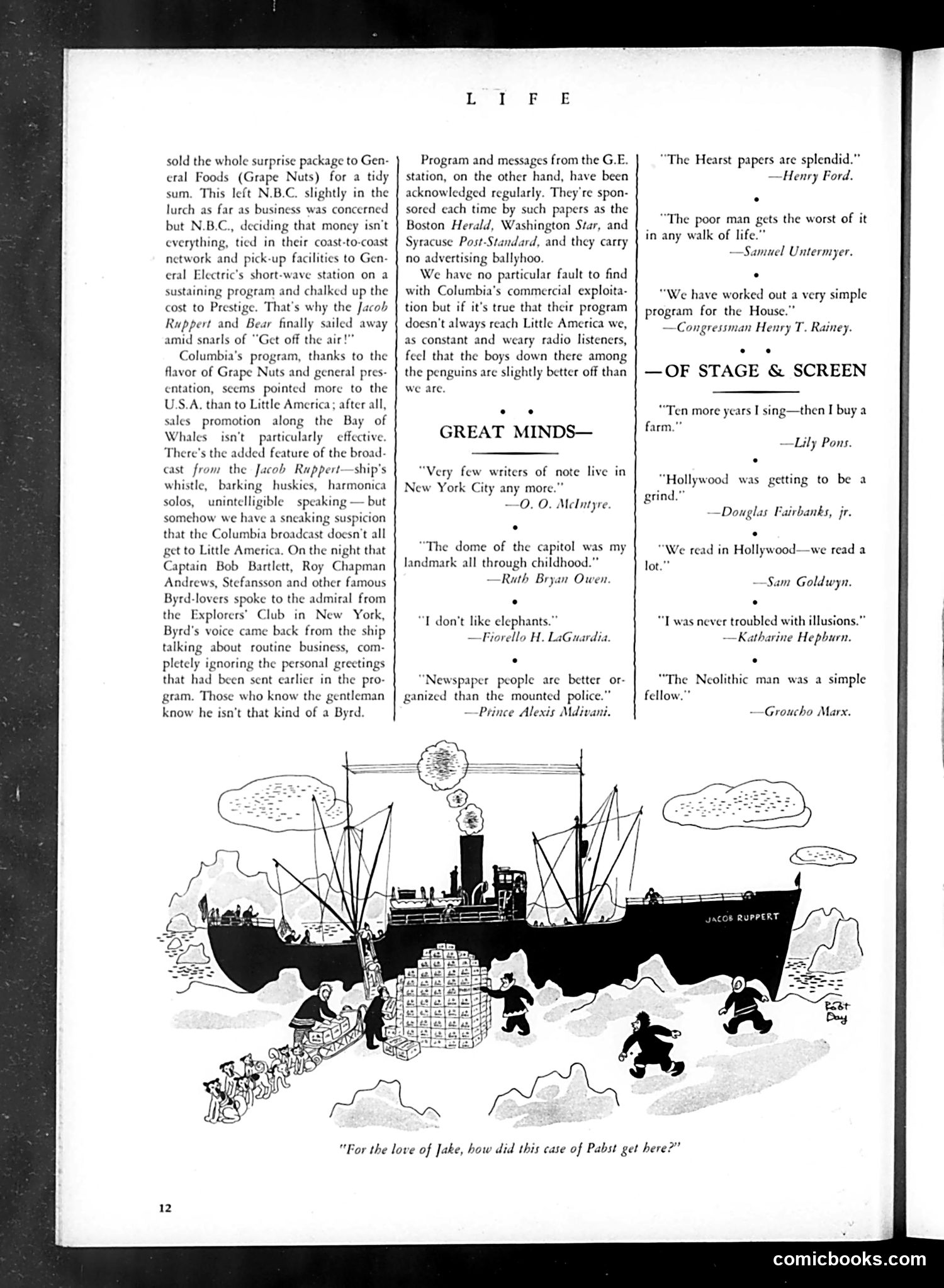
# Analysis of Life Magazine Page This page contains two main sections: **Left Cartoon**: Shows three men in suits discussing applejack liquor. The caption reads "This is my boy—He's been brought up on Yum-Yum," a joke about applejack brandy being used to raise children—satirizing Prohibition-era attitudes toward alcohol. **Right Section ("Entertainment")**: Discusses rum drinks and the "Byrd expedition" broadcasts. The cartoon shows people listening to a radio transmitting from Little America during Admiral Byrd's Antarctic expedition. The caption "Don't you see, Annabelle? It's not as though I weren't really sore—I've had my fling?" suggests people were entertained by the expedition's radio broadcasts as leisure content. Both sections mock 1920s-30s American fascinations with alcohol and novelty entertainment during Prohibition.