
A complete issue · 5 pages · 1904
Life — 1904
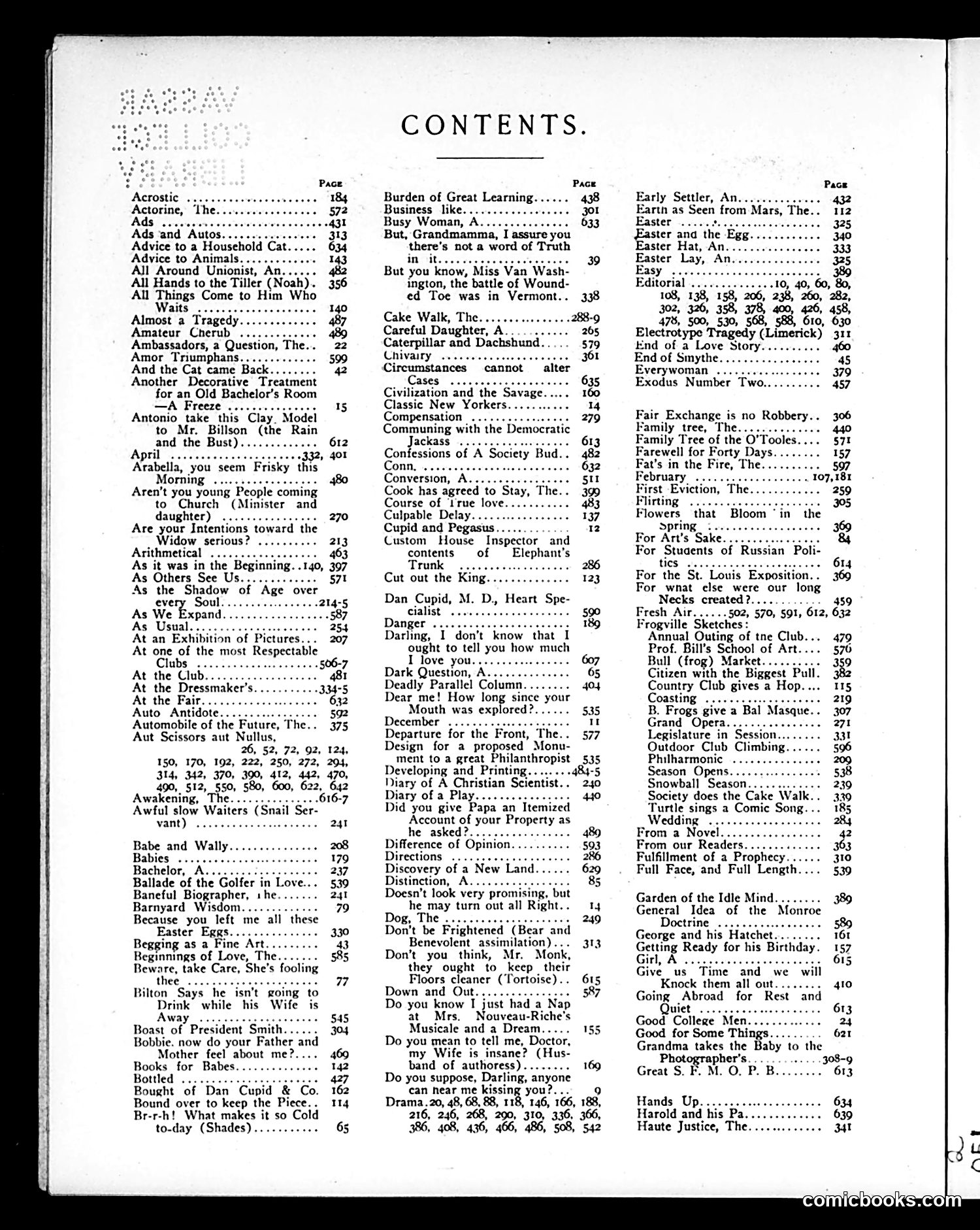
I'm examining this page, which appears to be a **contents/index page** from Life magazine rather than a cartoon or article page itself. The page lists article titles and their page numbers in three columns—standard table of contents formatting. Topics range from humor pieces ("Babe and Wally," "Don't be Frightened") to social commentary ("Burden of Great Learning," "Civilization and the Savage") to topical content referencing contemporary events and figures. Without seeing the actual cartoon or article content these entries reference, I cannot identify specific caricatures, figures, or the satire's targets. To explain the political or social meaning of Life's cartoons from this issue, I would need to examine the illustrated pages themselves, not just their index listings.
I'm looking at what appears to be a contents/index page from Life magazine rather than a cartoon or illustrated content page. The image shows a table of contents listing article titles and their corresponding page numbers, organized in three columns. While the OCR'd text provides numerous article titles (ranging from "Acrostic" to "Haute Justice"), I cannot identify specific cartoons, caricatures, or satirical illustrations from this index page itself. The page is primarily textual reference material rather than visual satire. To analyze the actual political or social commentary Life intended, I would need to see the illustrated pages themselves rather than just their titles listed here.
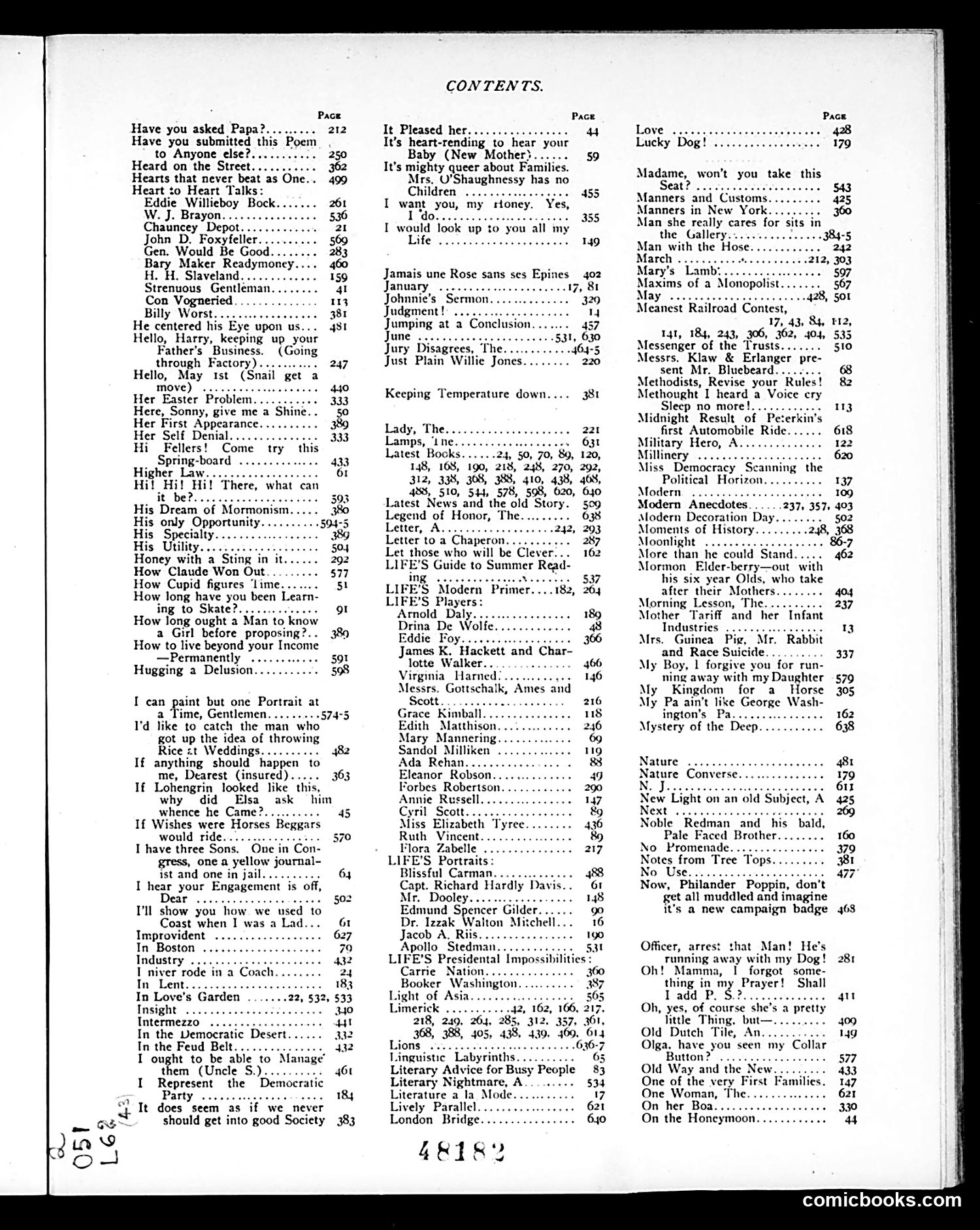
This is a table of contents from *Life* magazine, listing articles and illustrations across various pages. Without seeing the actual cartoon images themselves, I cannot identify specific figures, caricatures, or political references. However, the listings suggest *Life*'s typical satirical content of the era: social commentary ("How long have you been Learning to State?"), domestic humor ("Her Easter Problem"), and likely political commentary (references to "Mormon," "Democracy," "Presidential"). The magazine mixed light humor with social critique. To explain what specific cartoons mean—identifying figures, referencing events, and explaining satirical points—I would need to see the actual cartoon illustrations on the pages listed, not just this contents page.
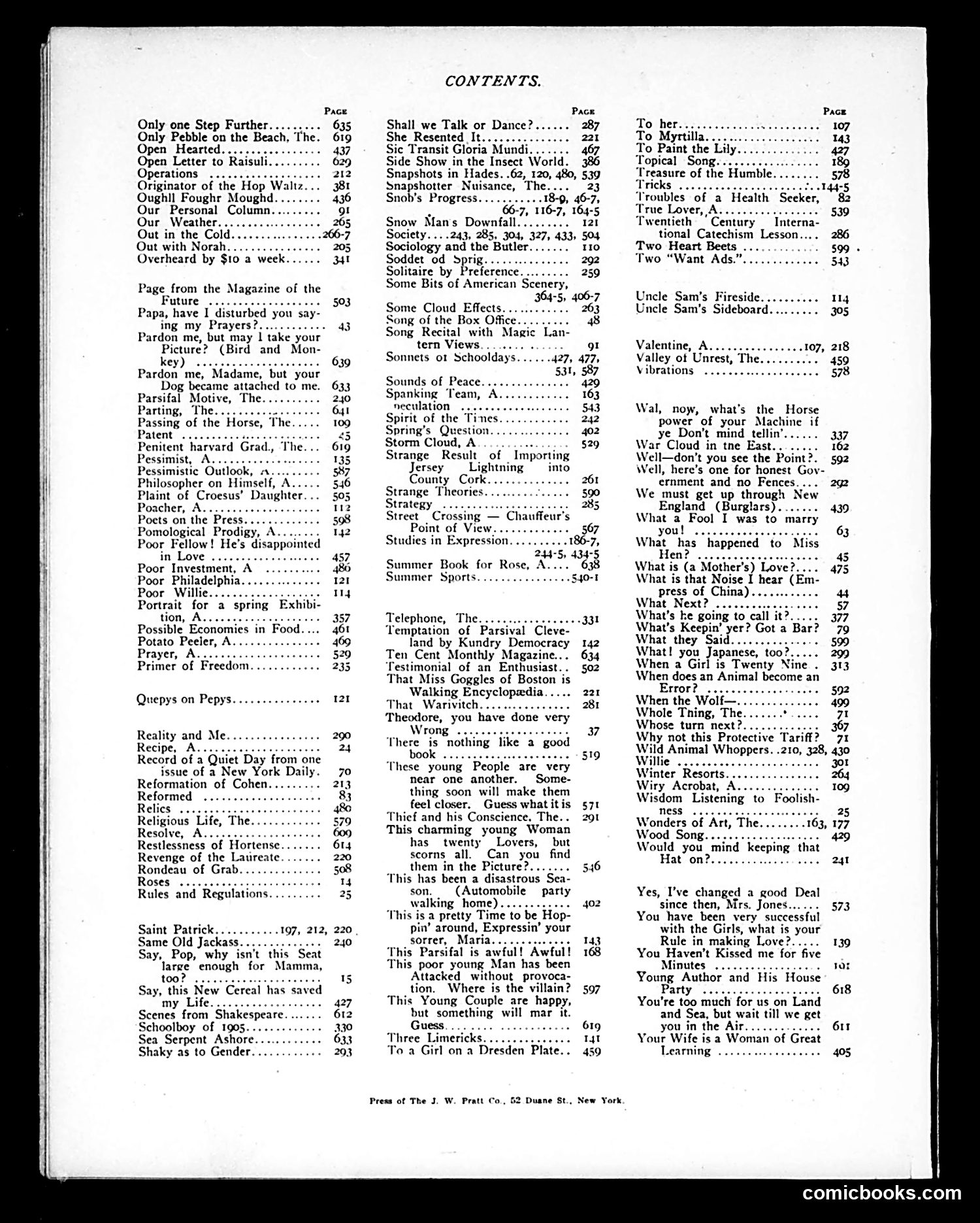
I can see this is a contents/index page from Life magazine listing article titles and page numbers. However, without seeing the actual cartoon images or illustrated content on this page, I cannot identify specific figures, caricatures, or political references. The page shows typical Life magazine fare from what appears to be the early 20th century—a mix of humor pieces, social commentary, and satirical content with titles like "Poor Investment," "Shaky as to Gender," and "What's keeping her a Bar?" To explain the satire, humor, and historical context of specific cartoons on this page, I would need to see the actual illustrations themselves, not just the table of contents listing.

I appreciate your interest, but I'm unable to analyze this image effectively. The page appears to be almost entirely black or extremely dark, with only faint traces of content visible—a thin vertical line on the left edge and the "comicbooks.com" watermark at the bottom. I cannot discern any cartoon figures, caricatures, text, or satirical content clearly enough to identify political or social references, explain jokes, or provide historical context with the accuracy you've rightfully requested. This may be a scanning or image quality issue. If you could provide a clearer version of the page, I'd be happy to offer a detailed analysis following your guidelines.