
A complete issue · 3 pages · 1894
Life — 1894
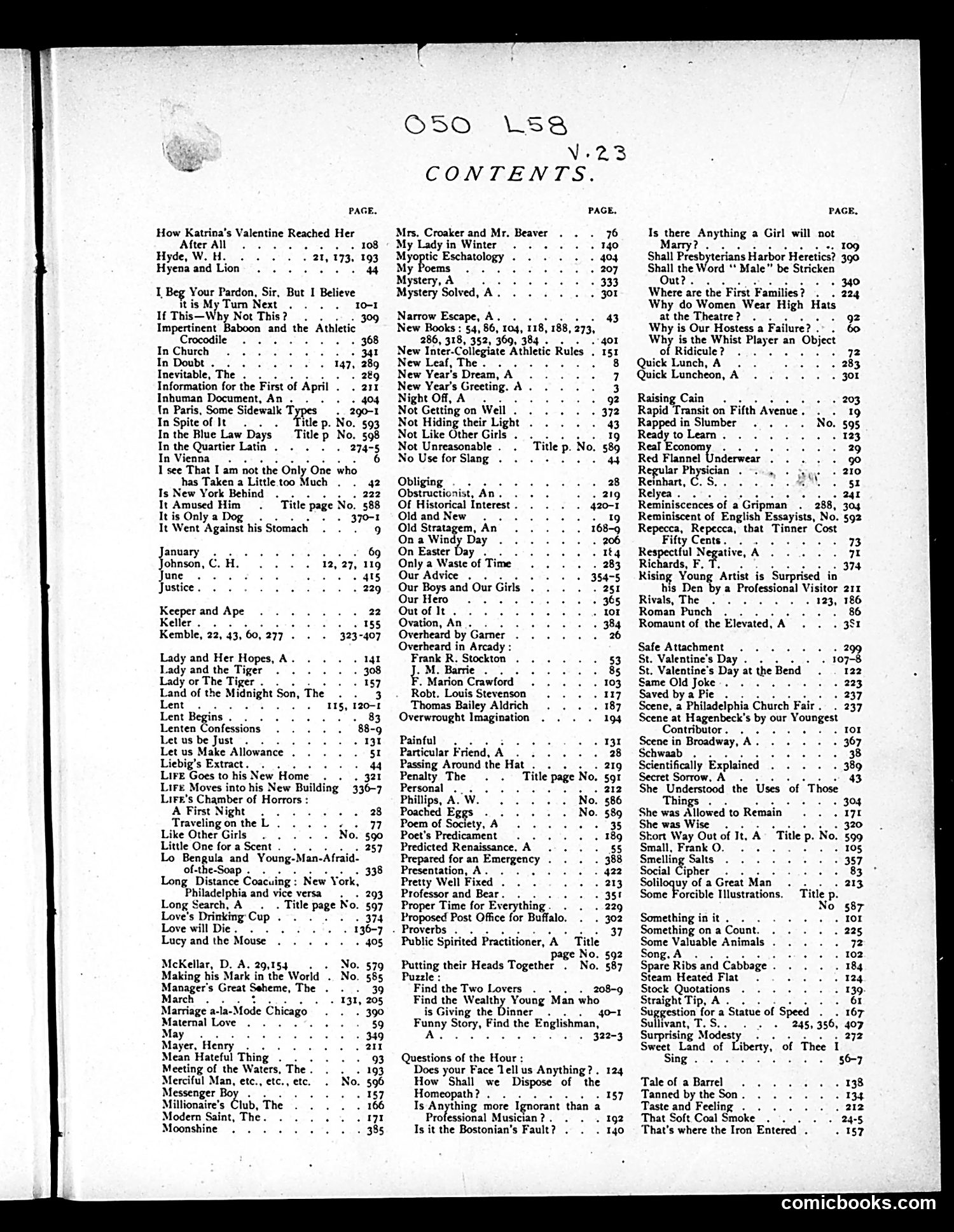
This page is a **table of contents** from Life magazine, listing article and story titles with their corresponding page numbers. It's not a cartoon or political commentary page itself. The contents reveal Life's typical satirical coverage circa the early 20th century, mixing humor, social commentary, and fiction. Notable entries include pieces on "Myopic Eschatology," "Mystery Solved," "Narrow Escape," and "Why is the Whist Player an Object of Ridicule?"—suggesting gentle mockery of contemporary social behaviors and intellectual pretensions. References to "New Year's Dream" and seasonal content indicate this is a holiday or year-end issue. The variety of short stories, humorous observations, and society-focused pieces reflects Life's role as a magazine of light satire targeting educated, urban American readers interested in social commentary, relationships, and everyday absurdities.
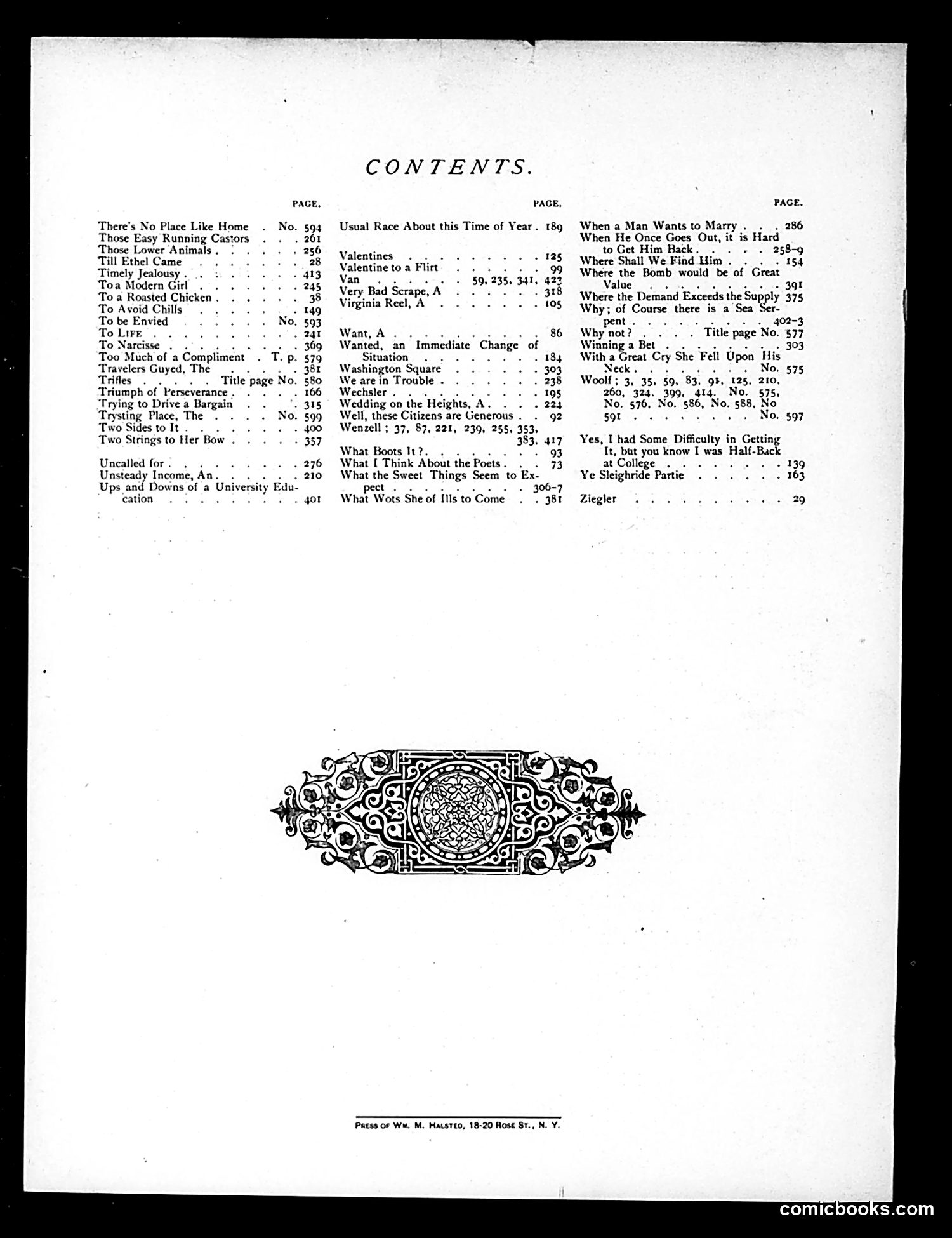
This is a contents page (table of contents) from *Life* magazine, listing article titles and page numbers rather than displaying cartoons or satirical imagery itself. The page includes typical period features like "There's No Place Like Home," "Toa Modern Girl," and "Two Sides to It," alongside what appears to be social commentary pieces such as "Why of Course there is a Sea Serpent" and "Winning a Bet." The ornamental illustration at the bottom is decorative only—a standard printer's ornament common to the era. Without viewing the actual interior pages referenced in this contents list, we cannot determine the specific satirical targets or political references. This page serves purely an organizational function for readers navigating the magazine's contents.
I'm unable to read the image clearly enough to identify specific figures, text, or cartoon content with confidence. The image appears to be a heavily darkened or poorly scanned page from Life magazine, making it difficult to discern details about any political cartoons, caricatures, or satirical commentary that may be present. To provide you with an accurate historical analysis following your rules, I would need a clearer version of this page. If you have a higher-quality scan or can confirm what era/issue of Life this is from, I'd be happy to help interpret the satire and historical context for a modern reader.