
A complete issue · 3 pages · 1893
Life — 1893
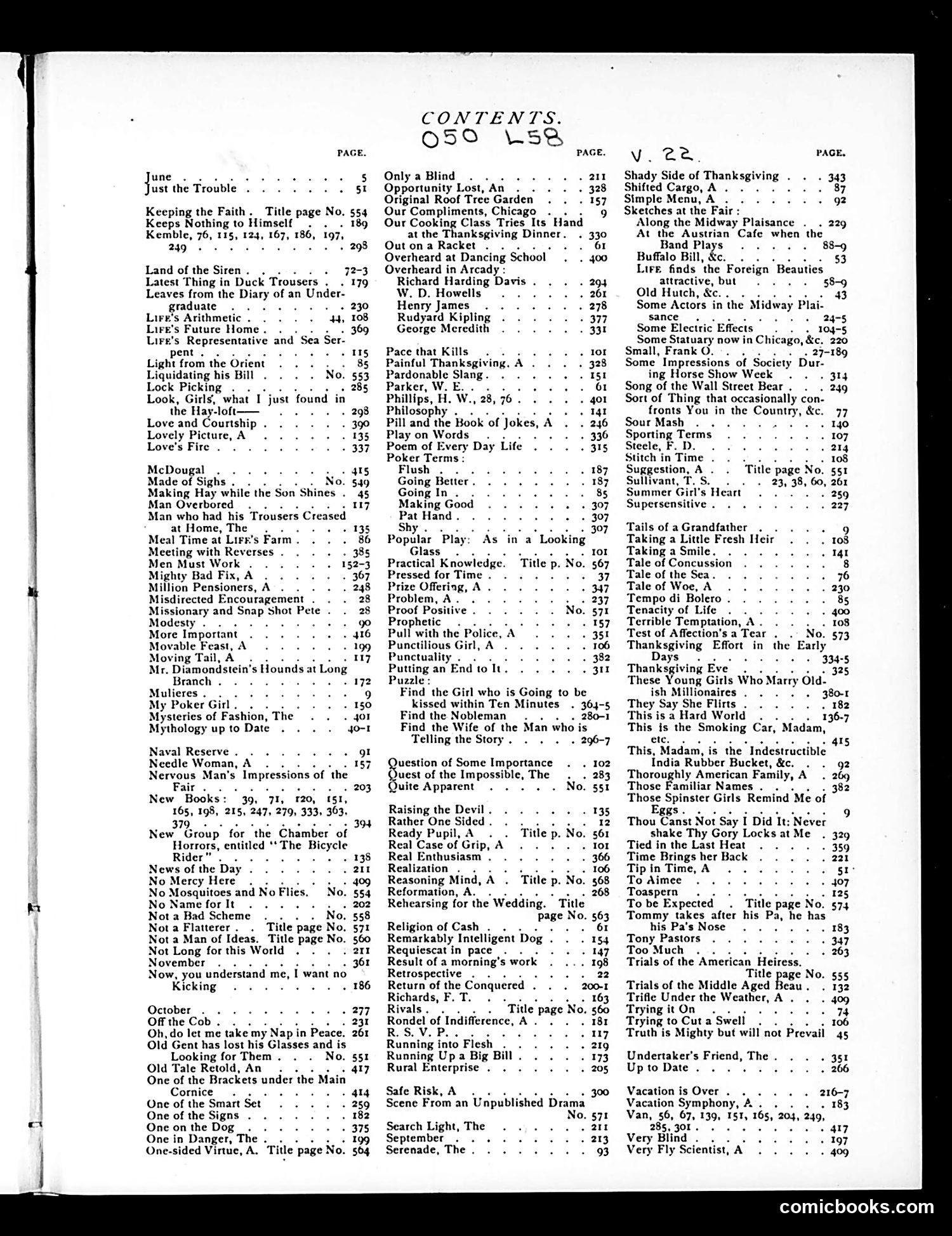
This is a **table of contents** from *Life* magazine, not a cartoon or illustrated article page. It lists story titles, articles, and features with their corresponding page numbers. The entries reflect early 20th-century American concerns: articles on labor ("Men Must Work"), domestic life ("Keeping the Faith"), social commentary ("Making Good"), seasonal humor (Thanksgiving and holiday-themed pieces), and popular entertainment features. Notable are references to "Poker Terms," "Philosophy," and romantic comedies ("Popular Play: As in a Looking Glass"), suggesting the magazine's mix of satire, advice, and light humor for middle-class readers. Without seeing the actual illustrated pages, I cannot identify specific cartoons or their satirical targets.
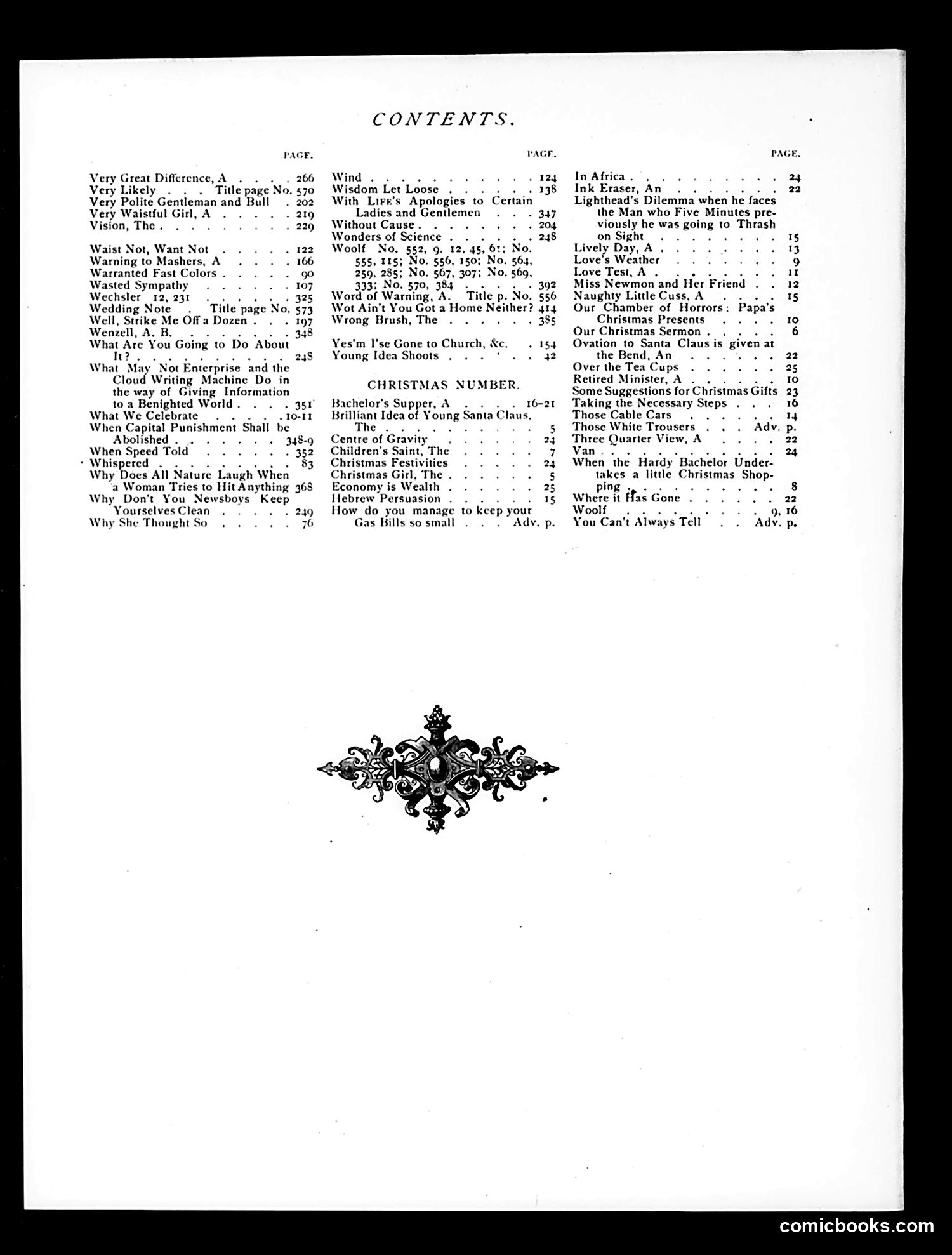
This is a table of contents from *Life* magazine, listing article titles and page numbers. It's not a cartoon or satirical image itself, but rather an index page showing the magazine's contents. The page reveals the publication's editorial focus: social commentary ("Very Great Difference"), domestic humor ("Wedding Jottings"), Christmas-themed content (a dedicated "Christmas Number" section), and advice columns. Titles like "What May Not Enterprise and the Choking of Initiative Do in the way of Giving Information" suggest political-economic critique, while pieces on newsboys, gentlemen, and domestic life indicate social satire typical of *Life's* era. The ornamental divider at the bottom is purely decorative. Without seeing the actual articles, I cannot identify specific figures or references.

I can see this is a page from Life magazine, but the image is almost entirely black or failed to load properly, making it impossible to discern any cartoon illustrations, caricatures, text, or satirical content. The only visible element is the "comicbooks.com" watermark in the bottom right corner and a thin white border on the left edge, suggesting this is a scan of a magazine page. Without being able to see the actual cartoon(s), illustrations, or read the OCR'd text clearly (which appears to be missing or unreadable in this version), I cannot identify the figures, historical references, or explain the satire to a modern reader. A clearer image would be needed for proper analysis.