
A complete issue · 7 pages · 1883
Life — 1883
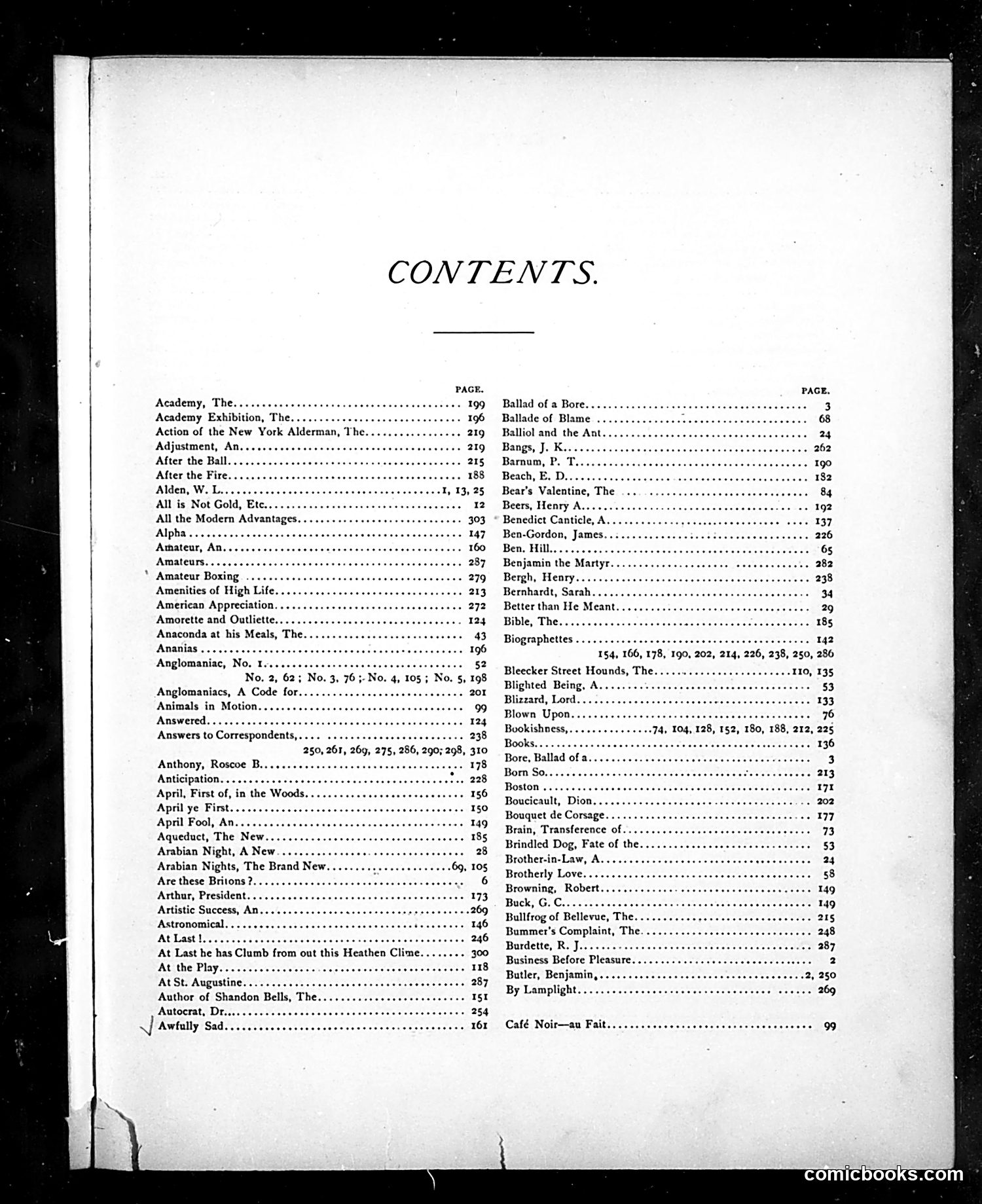
This is a table of contents from Life magazine. The page lists article and cartoon titles alphabetically, with page numbers. It's primarily an index rather than containing actual satirical content itself. Notable entries suggest the magazine's typical 19th-century satirical coverage: "April Fool, An" (p. 149), "Arabian Night, A New" (p. 38), and various biographical or social commentary pieces. References like "Business Before Pleasure" (p. 2) and "By Lamplight" (p. 269) indicate typical genteel humor topics. Without seeing the actual cartoon pages, I cannot identify specific figures, political references, or satire targets. This contents page alone only confirms Life's format as a satirical publication mixing social observation, humor, and commentary typical of American magazines from this era.
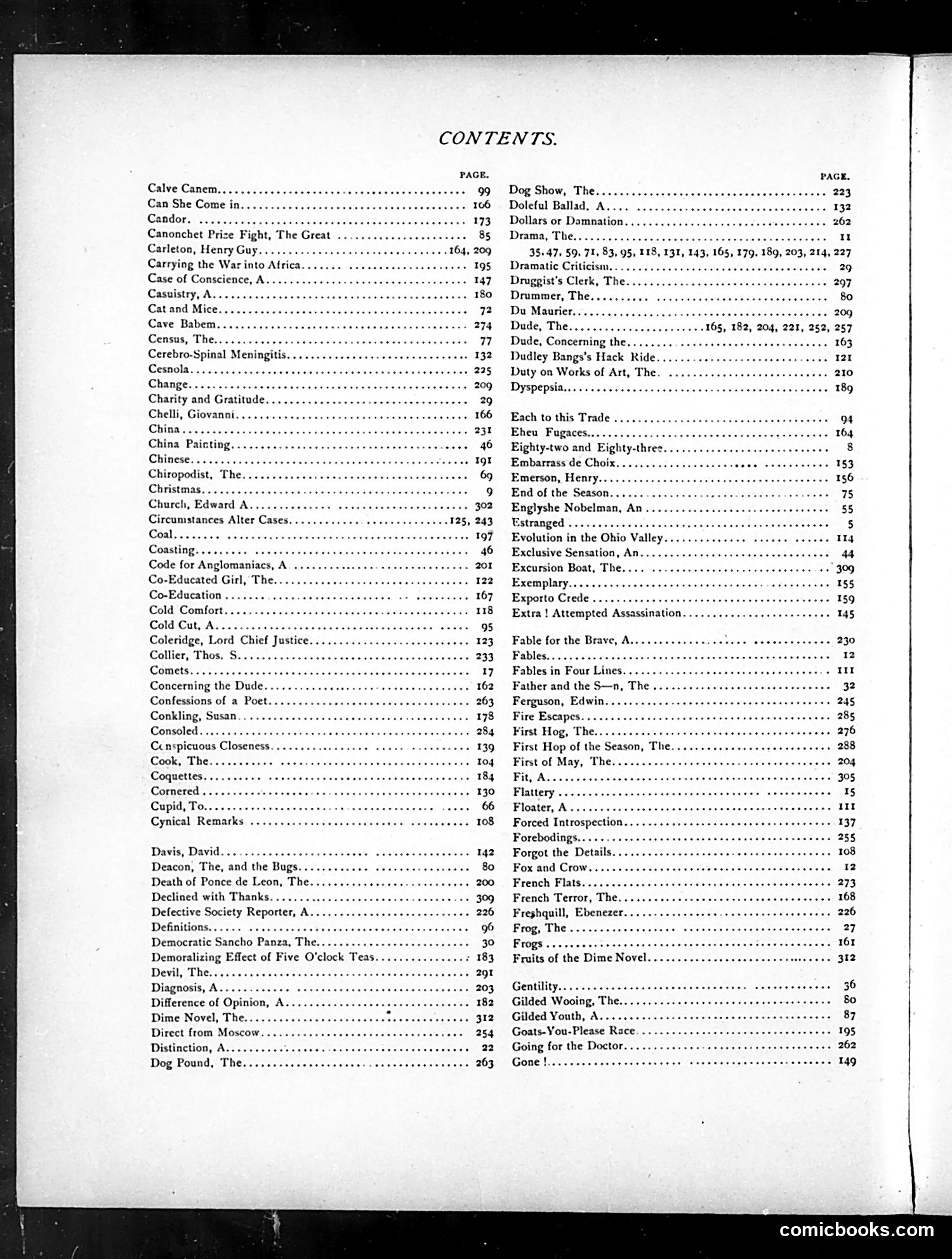
This appears to be a contents page from Life magazine listing article and cartoon titles. Without seeing the actual cartoon images themselves, I cannot identify specific figures, caricatures, or political references depicted on this page. The table of contents shows titles like "Calve Canem," "Carrying the War into Africa," "Case of Conscience," and "Dramatic Criticism"—suggesting a mix of satirical commentary, social observation, and cultural criticism typical of Life's format. To explain what specific cartoons meant to contemporary readers, I would need to see the actual illustrations, as the page titles alone don't convey the visual satire, caricatures, or political allusions that made Life's content meaningful to its audience.
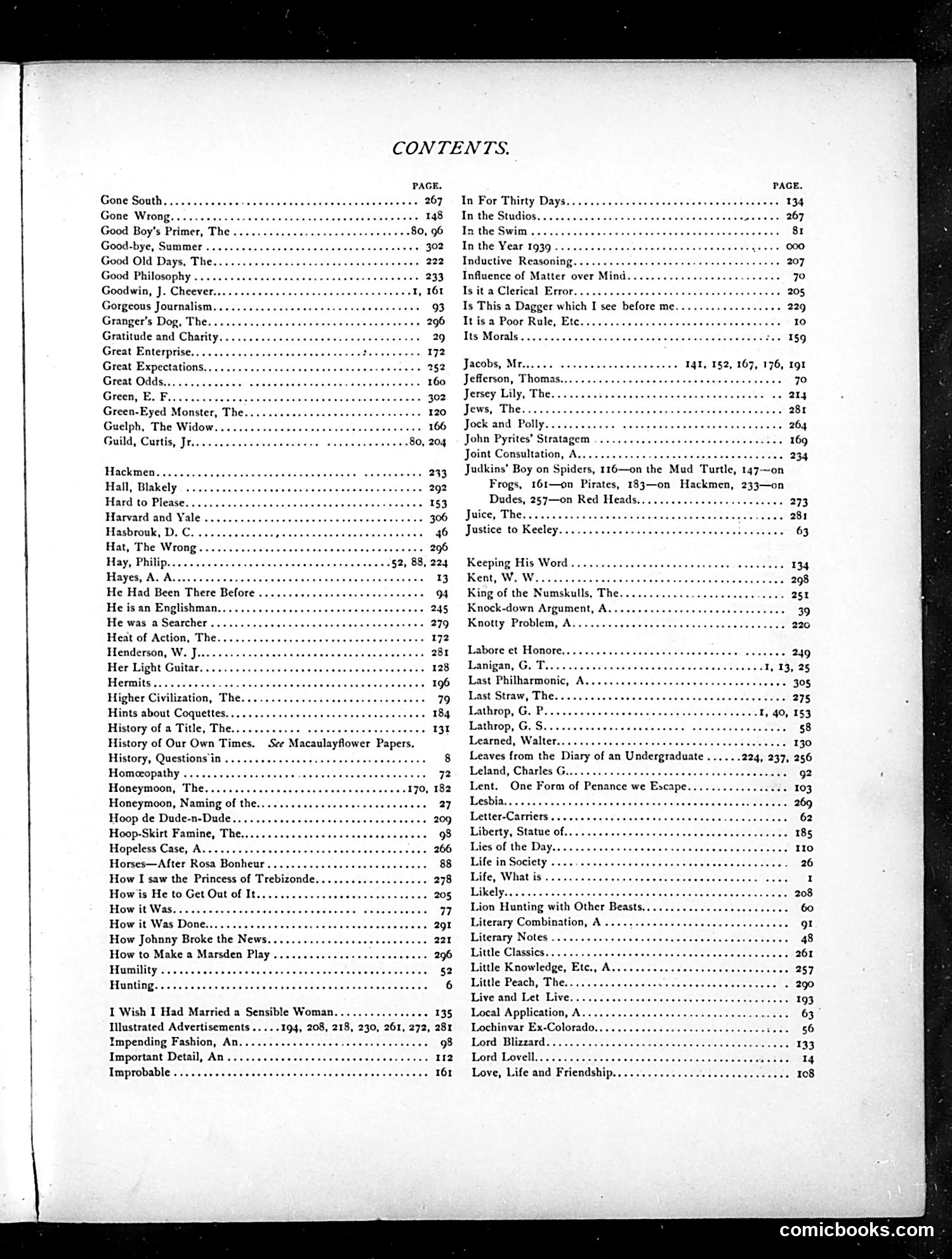
This is a contents page from Life magazine listing article and cartoon titles. I cannot see the actual cartoons or illustrations on this page—only the text index. The page shows Life's typical mix of satirical content from the early-to-mid 20th century, including pieces on social commentary ("Gorgeous Journalism," "Higher Civilization"), literary content ("Literary Notes," "Literary Combination"), and various humorous sketches and stories. Without seeing the actual cartoon images, I cannot identify specific figures, caricatures, or political references. To explain the satire and meaning, I would need to view the illustrated content itself rather than just the contents listing.
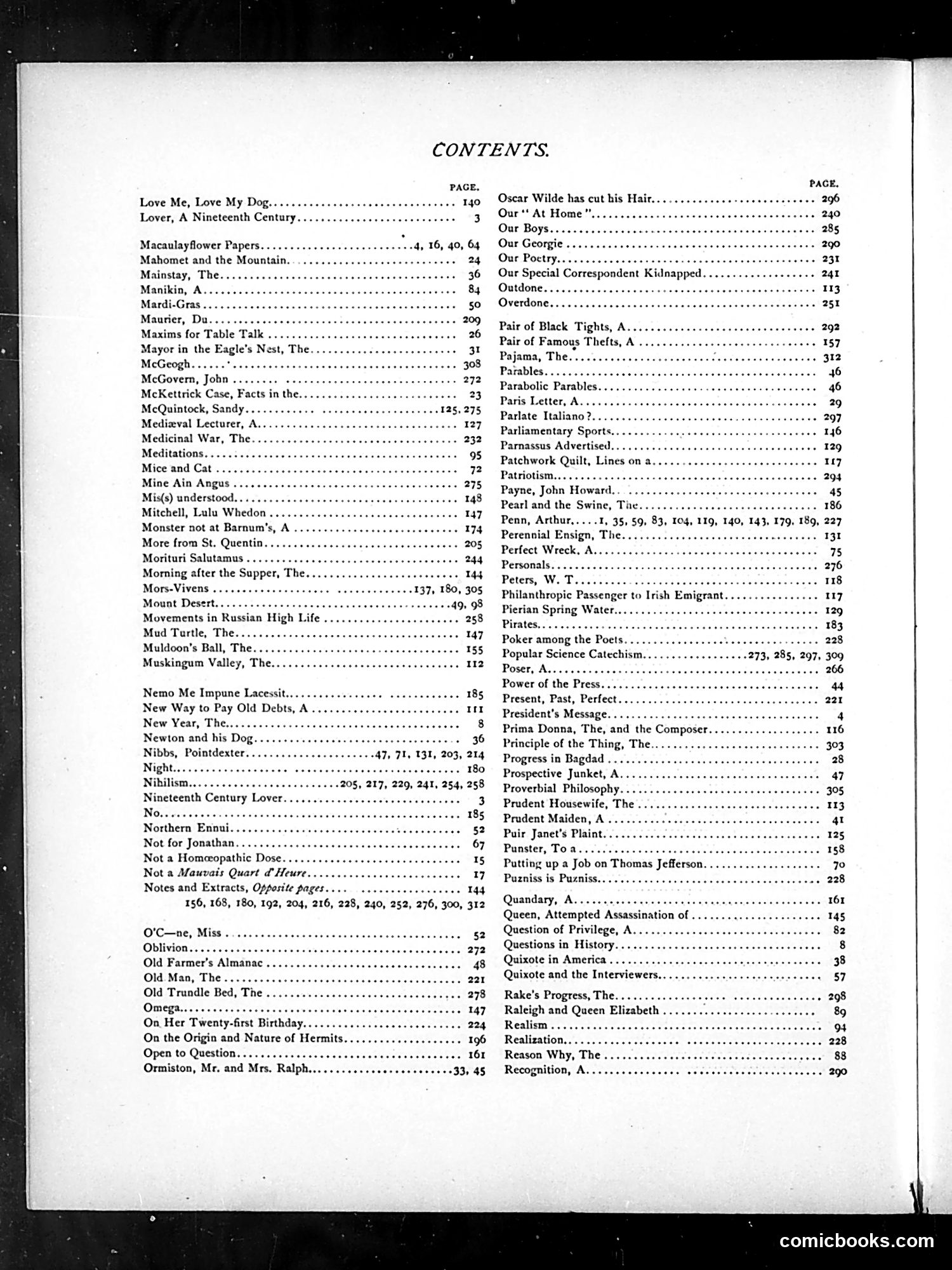
I appreciate your detailed instructions, but I'm unable to see the actual cartoon or content illustrations on this page—I can only see the "CONTENTS" index listing article titles and page numbers from what appears to be a 19th-century issue of *Life* magazine. To explain the satire and political references you're asking about, I would need to see the actual cartoon or illustrated content, not just the table of contents. The text alone (titles like "Nihilism," "Quixote in America," "Realism") hints at social commentary, but without viewing the accompanying images and caricatures, I cannot accurately identify specific figures, events, or the satirical points being made. Could you share the image containing the actual cartoon content?
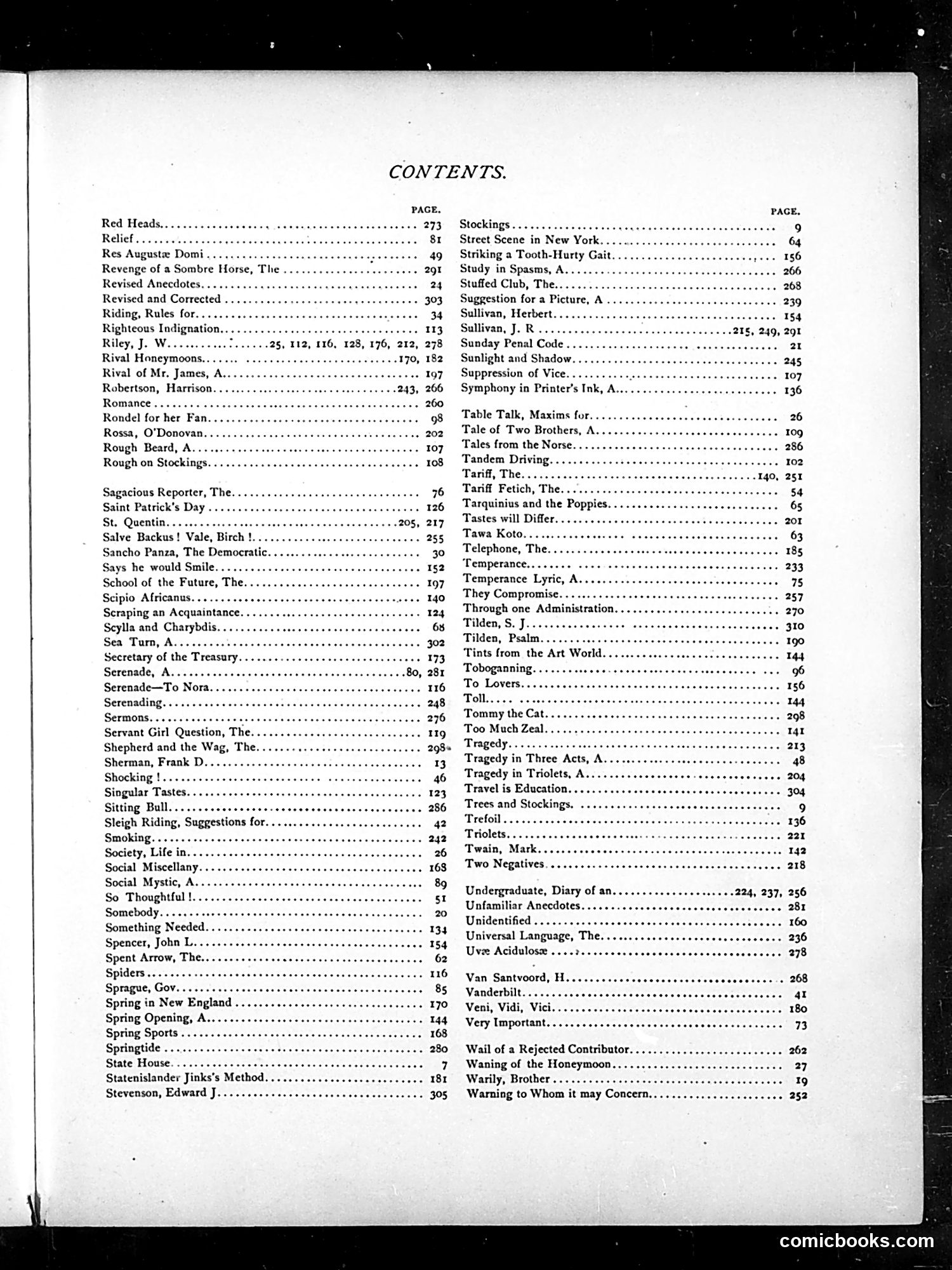
I cannot reliably identify specific cartoons or their satirical content from this page. While this is clearly a **contents/index page from Life magazine** listing article and cartoon titles (like "Red Heads," "Relief," "Res Augustae Domi," etc.), the image shows only text entries without visible cartoon illustrations or captions that would convey satirical meaning. To explain the cartoons' political/social references and humor, I would need to see the actual cartoon artwork itself, not just the contents listing. The page numbers are provided, but without viewing the referenced pages or seeing cartoon illustrations here, I cannot accurately identify figures, caricatures, or explain the satire's context for a modern reader.
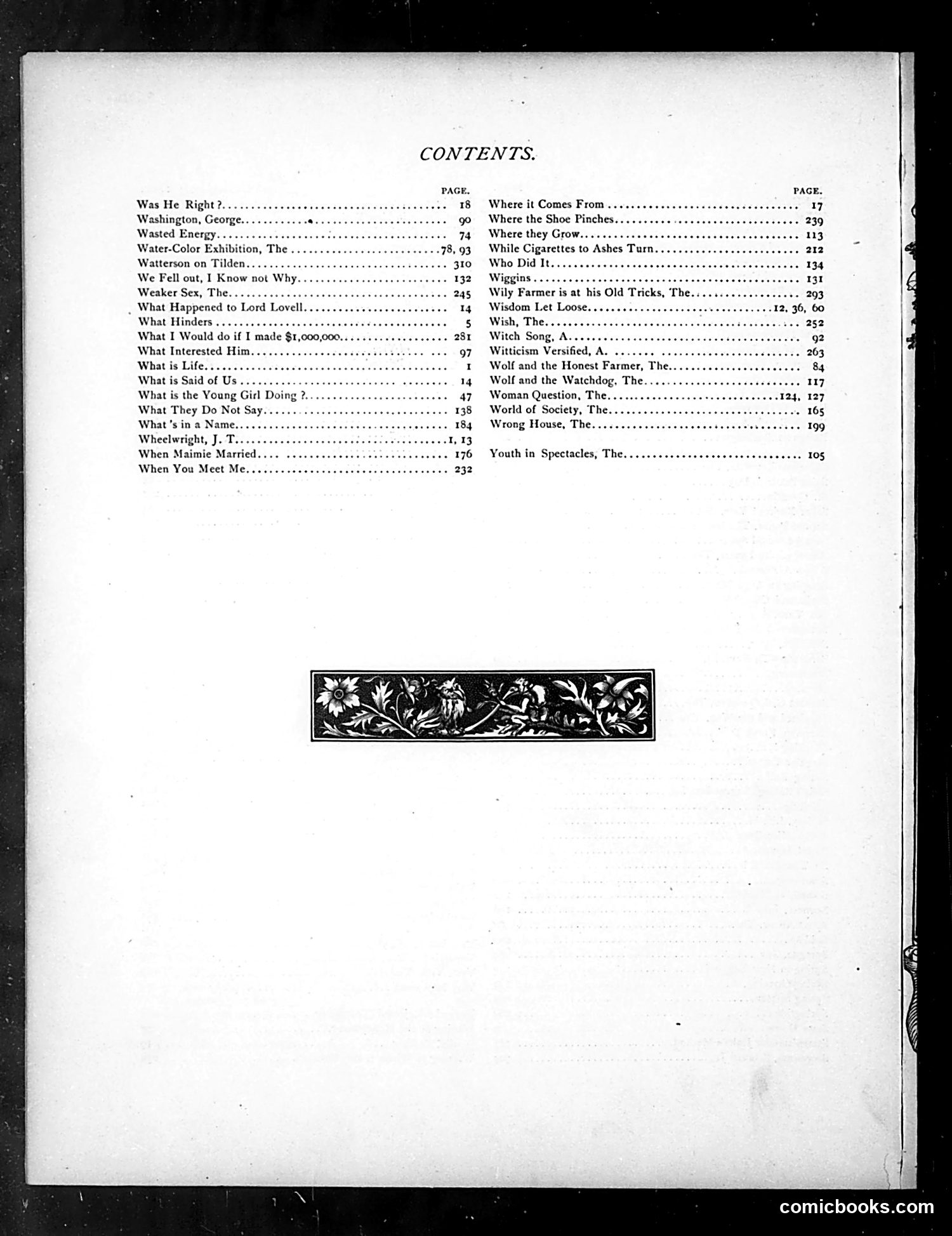
This is a table of contents page from Life magazine, listing article and cartoon titles with their page numbers. The page itself contains no cartoons or satirical images—only an ornamental decorative border at the bottom featuring flowers and classical figures. The titles suggest Life covered typical turn-of-the-century American social commentary: pieces on politics ("Was He Right?"), gender relations ("Woman Question"), labor ("Wily Farmer"), and social pretension ("World of Society," "Youth in Spectacles"). Without seeing the actual cartoon pages referenced, I cannot identify specific figures or explain particular satire. This appears to be a standard contents page establishing the magazine's satirical scope across contemporary American life.

I can see this is a page from *Life* magazine, but the image quality is too dark and degraded for me to reliably read any text or identify specific cartoon content, figures, or caricatures with confidence. The page appears heavily aged with significant contrast loss, making OCR text difficult to verify against visual elements. To accurately explain the political or social satire, I would need either: - A clearer image of the original page - Confirmation of the publication date - Legible text identifying the subject matter I cannot responsibly identify specific figures or explain the joke without being able to see the actual cartoon clearly enough to match it with the context provided.