
A complete issue · 16 pages · 1883
Life — April 19, 1883
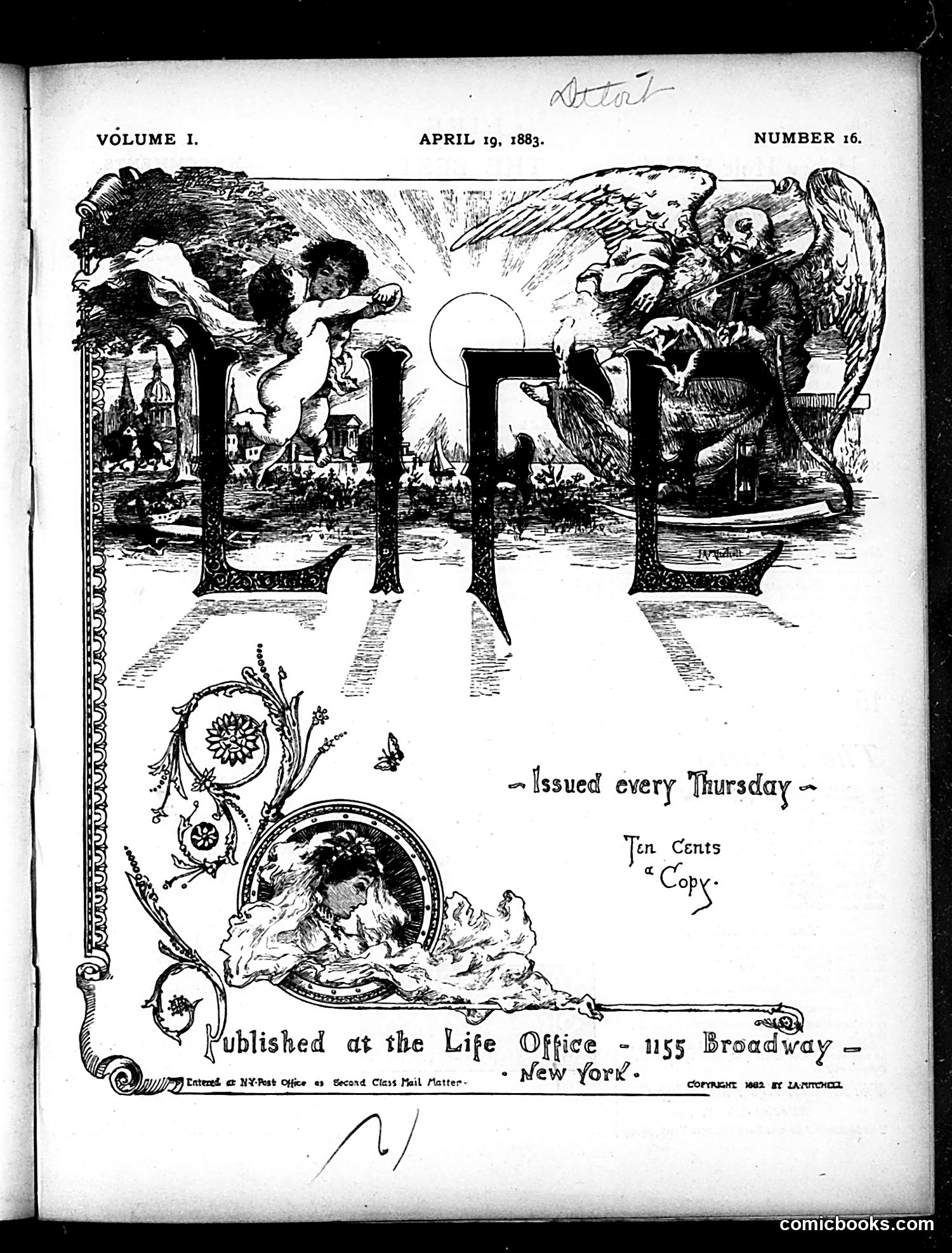
This is the cover page of *Life* magazine, a weekly satirical publication sold for ten cents. The central illustration depicts allegorical figures—cherubs and classical personifications—surrounding large decorative letters spelling "LIFE." The artistic composition emphasizes the publication's identity through ornate Victorian design, with winged figures and a pastoral/celestial scene in the background. A portrait medallion at bottom left suggests either the magazine's founder or a featured subject. The page functions primarily as a masthead/cover design rather than containing specific political satire. It announces publication details (issued Thursdays, Life Office at 1155 Broadway, New York) and establishes the magazine's branding through elaborate decorative typography and classical imagery typical of 1880s American periodical design.
This page is primarily **advertising and editorial content** rather than political cartoons. The main visual element is a large advertisement for **Hartshorn's Shade Rollers**, featuring decorative Victorian-style typography and design. The page showcases various publications, including *The Sanitarian* (a health journal), *The Modern Age*, and *The Californians* magazine. It includes testimonials praising *Life* itself as "a new and very bright humorous paper." The advertisements highlight period products and services: banking firms (William Pollock, A.G. Heminway & Co.), C.F. Gunther's candy, and the Union Hotel in New York City. No significant political satire or cartoon commentary is evident on this page—it's a typical late-19th/early-20th century magazine layout emphasizing commercial promotion alongside publication notices.
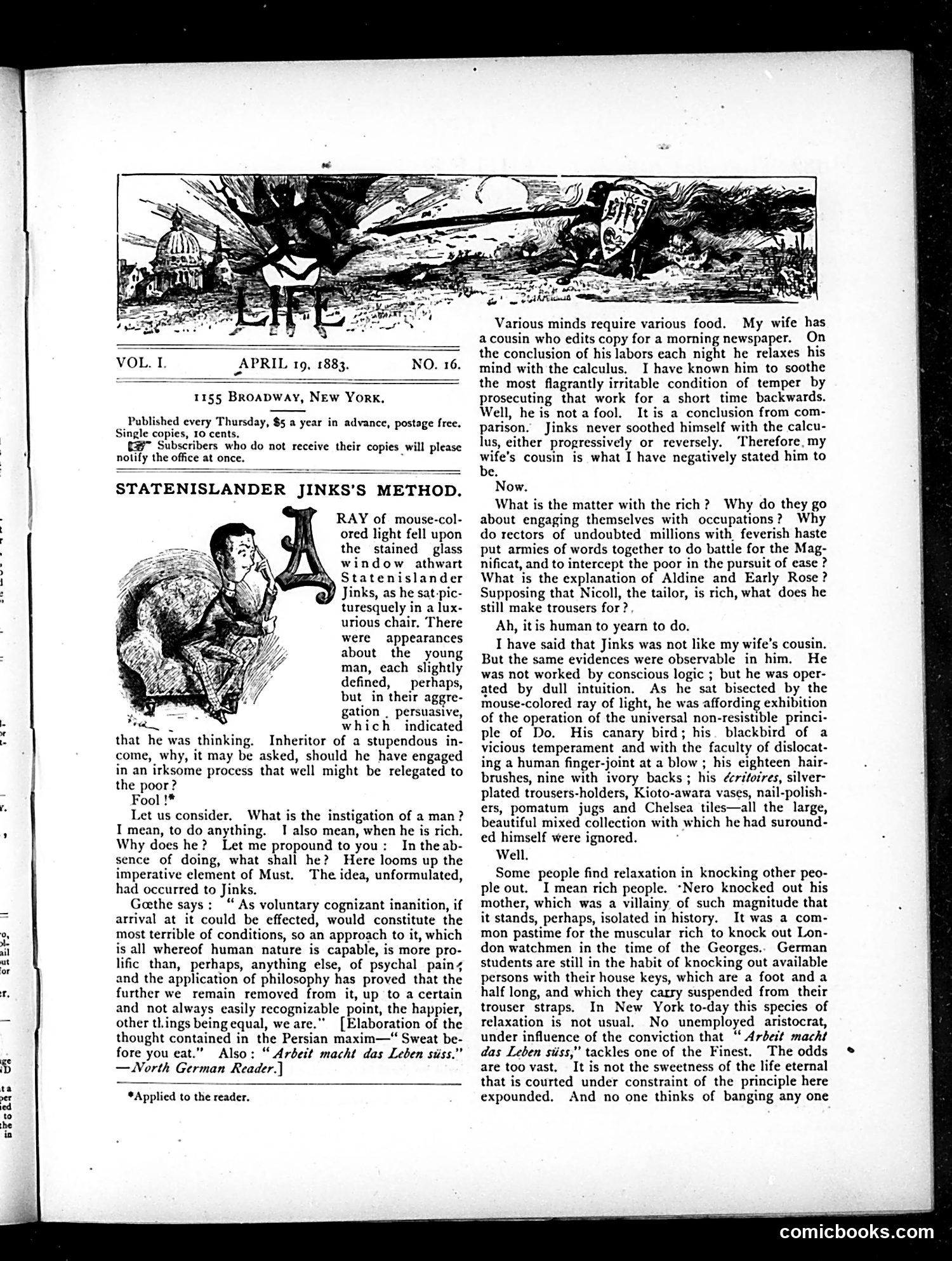
This satirical piece mocks a character named Statenislander Jinks, depicted in the accompanying illustration as a disheveled man in a chair. The text argues that Jinks represents a particular type of human nature—someone driven by "Must" rather than rational thought or genuine need. The satire critiques wealthy individuals who occupy themselves with frivolous pursuits and social climbing despite having no practical need to do so. The broader commentary discusses how the rich engage in meaningless occupations and wasteful behaviors, contrasting sharply with working-class struggles. The piece uses Jinks as an example of how human motivation operates on impulse and social convention rather than logic, suggesting that even educated or wealthy people can act without genuine purpose.
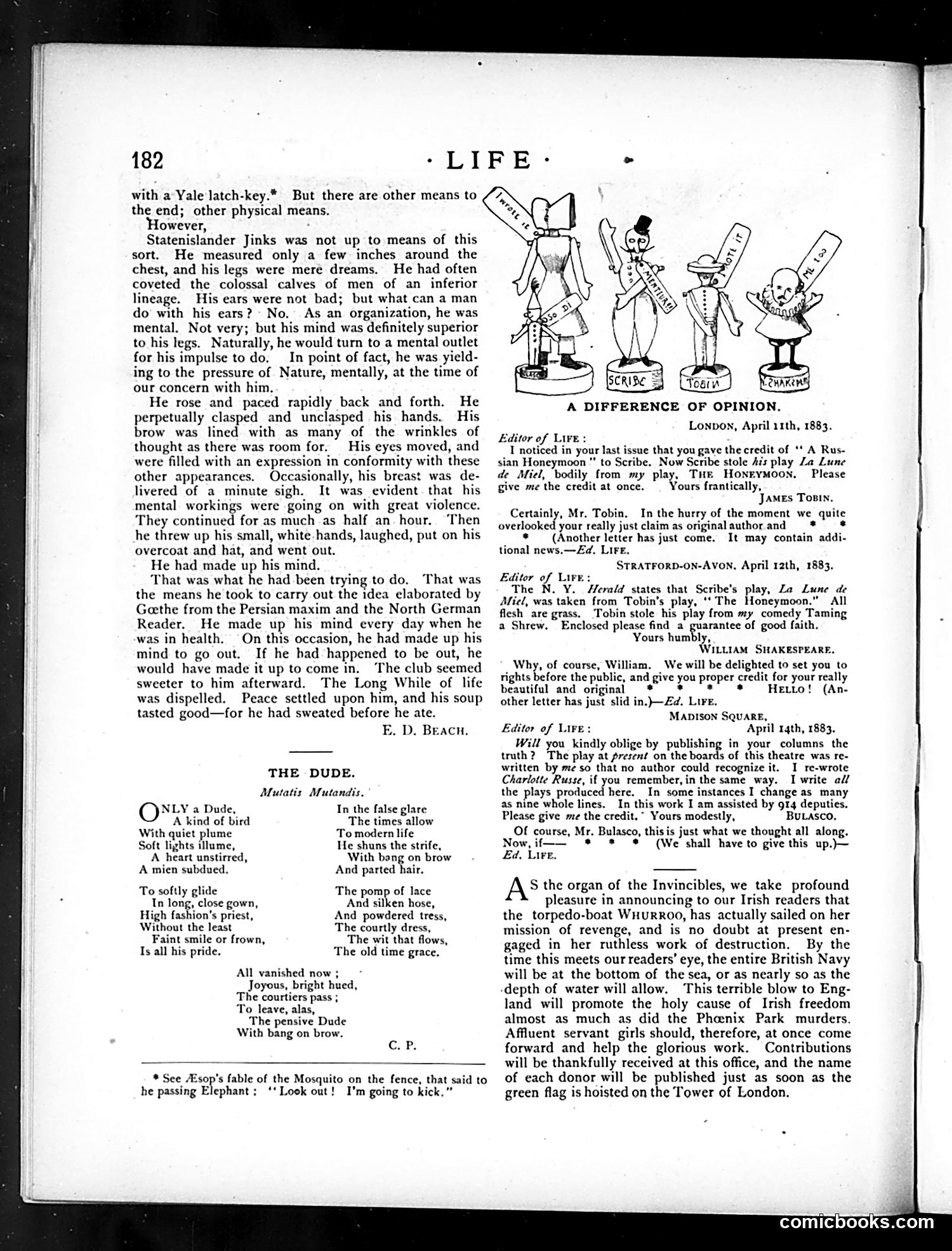
This cartoon satirizes disagreements over theatrical credit and authorship. Four skeletal figures represent different positions in a dispute about who deserves credit for plays. The text references a controversy where *Life* magazine gave credit for "A Russian Honeymoon" to Scribe, but the actual author was someone else. Multiple letters follow from readers—James Tobin, William Shakespeare, and Rulasco—each claiming proper attribution or correcting the record. The skeleton imagery suggests these disputes are petty or "dead" issues. The cartoon's title, "A Difference of Opinion," humorously presents the credits controversy as a fundamental disagreement among theatrical figures about who should receive recognition for dramatic works. This reflects 19th-century tensions over literary and dramatic copyright.
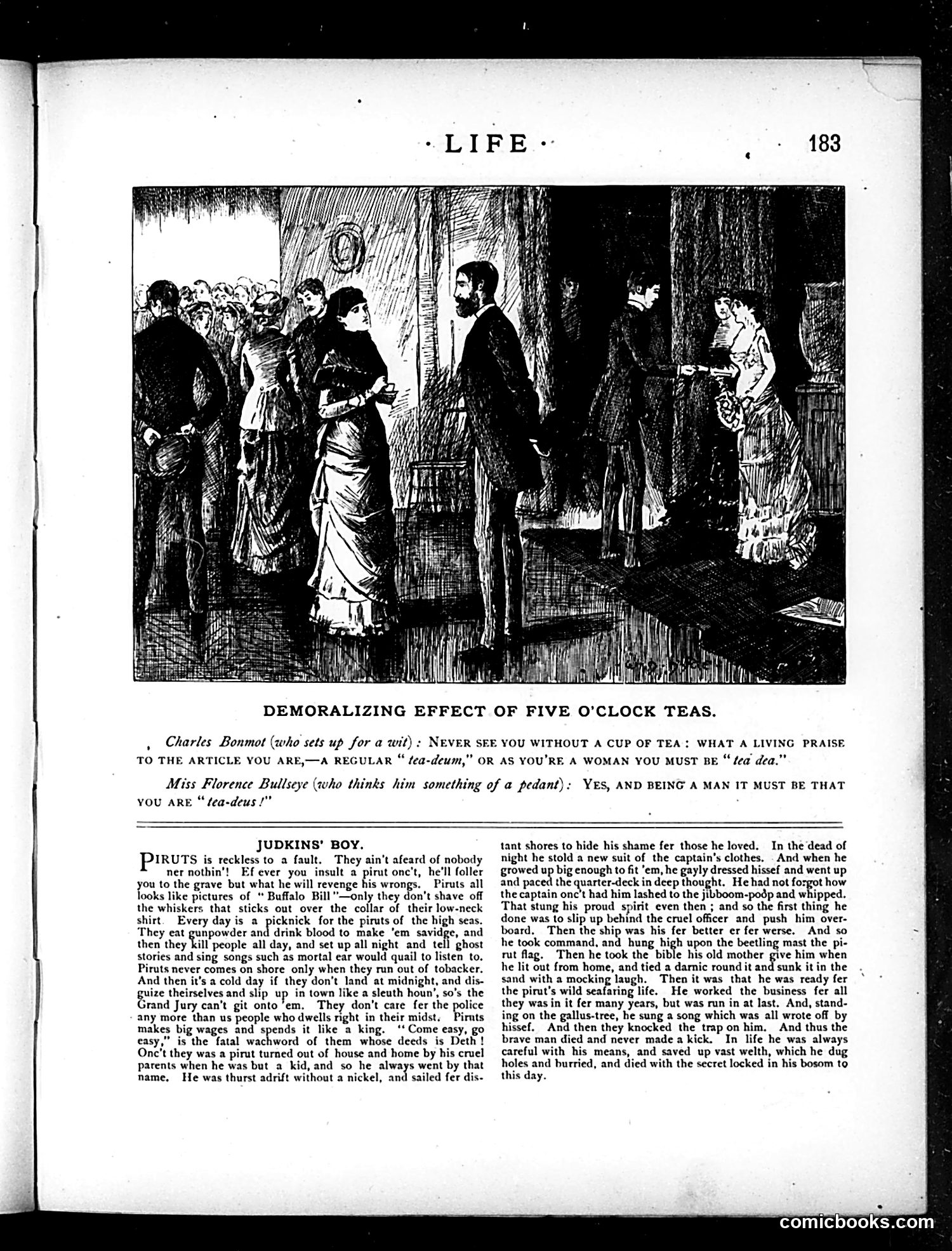
This satirical illustration mocks the social custom of afternoon tea gatherings among the wealthy. The cartoon depicts an elegant tea party where guests converse stiffly in formal dress. The accompanying dialogue between "Charles Bommot" and "Miss Florence Bulleye" ridicules how tea culture has become performative—a required social ritual where attendees must constantly hold teacups and maintain appearances. The satire suggests that participating in such teas is obligatory for respectability, whether you're a man ("tea-daus") or woman ("tea-dea"). The lower story, "Judkins' Boy," shifts to a serious narrative about a working-class pirate's son seeking redemption through honest labor—contrasting sharply with the shallow upper-class tea ceremony above.
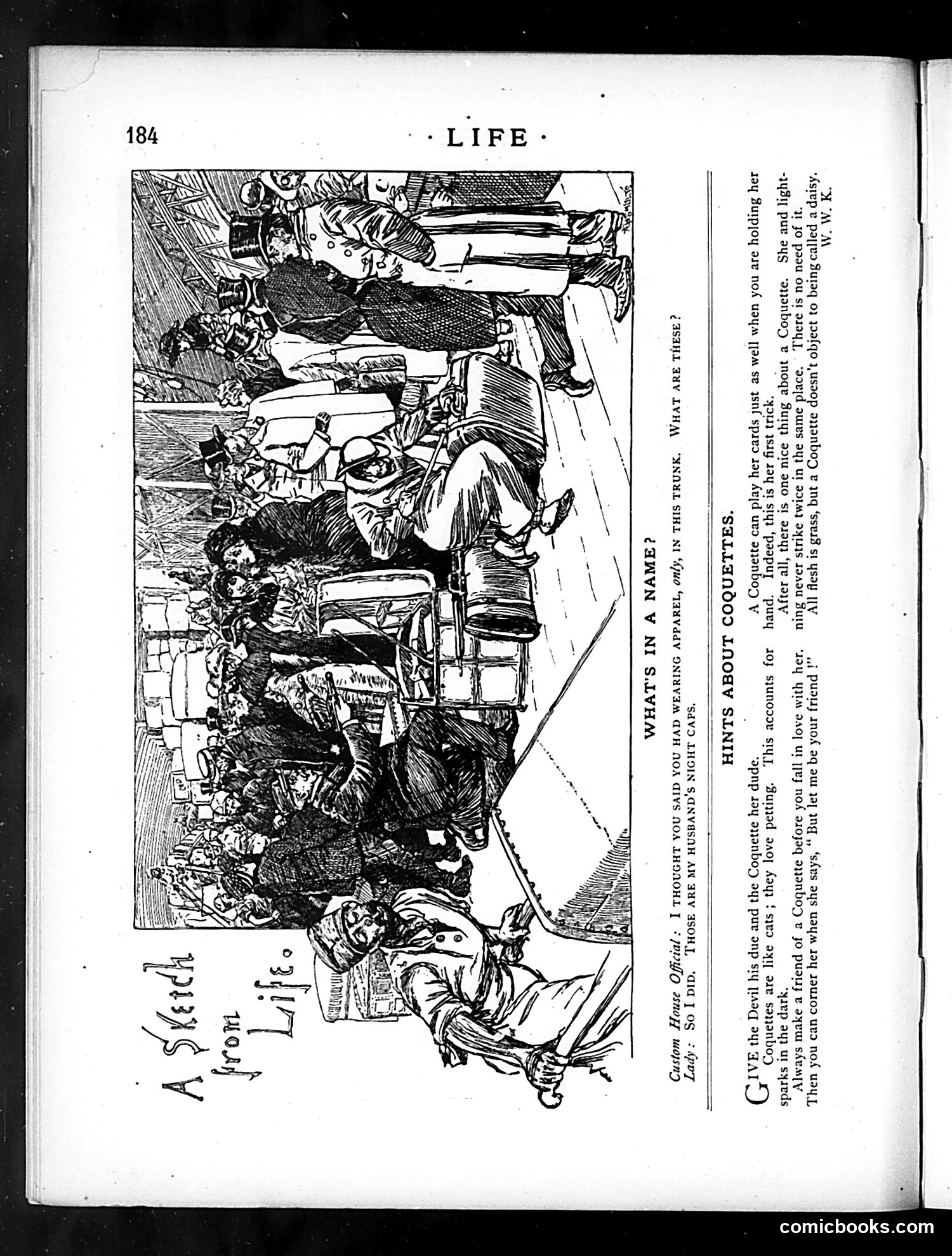
This page contains a satirical illustrated article about female coquetry in courtship. The multiple vignettes depict various scenarios of women employing flirtatious tactics—what the text calls "Coquette" behavior—to manipulate male suitors' affections. The central illustration shows a domestic scene with multiple figures, likely depicting different moments of a woman practicing coquettish behavior: appearing disinterested, employing indirect communication, or feigning emotions to maintain a suitor's interest while keeping him uncertain of her true feelings. The satire mocks both the strategic games women played in courtship and, implicitly, male susceptibility to such manipulation. This reflects late 19th/early 20th-century attitudes about gender relations, where women's limited social agency found expression through calculated romantic behavior, which the magazine treats as simultaneously clever and morally suspect.
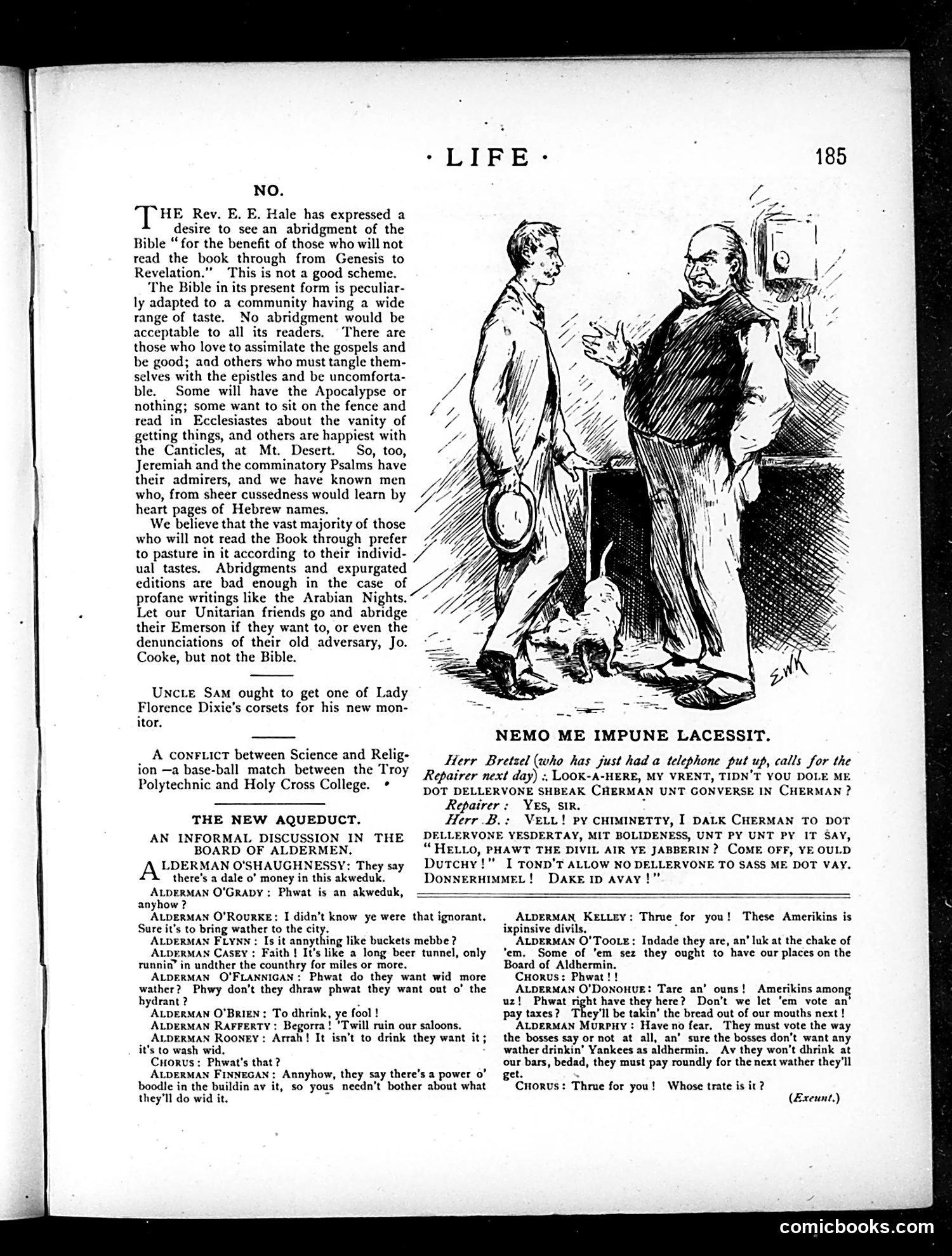
The main illustration depicts two men in what appears to be a confrontational dialogue, labeled "NEMO ME IMPUNE LACESSIT" (Latin: "No one provokes me with impunity"). The cartoon satirizes a dispute between a German character (identified by dialect) and an American character regarding telephone/telegraph communication and repair services. The accompanying dialogue mocks incomprehensible German speech patterns and stereotypes Americans as "impertinent devils." The satire targets both immigrant German-Americans and American attitudes toward them, likely reflecting early 20th-century tensions. The piece also critiques a proposed aqueduct project involving the Aldermen board, suggesting political incompetence in municipal infrastructure planning. The overall tone is comedic ethnic satire typical of the era's humor magazine style.
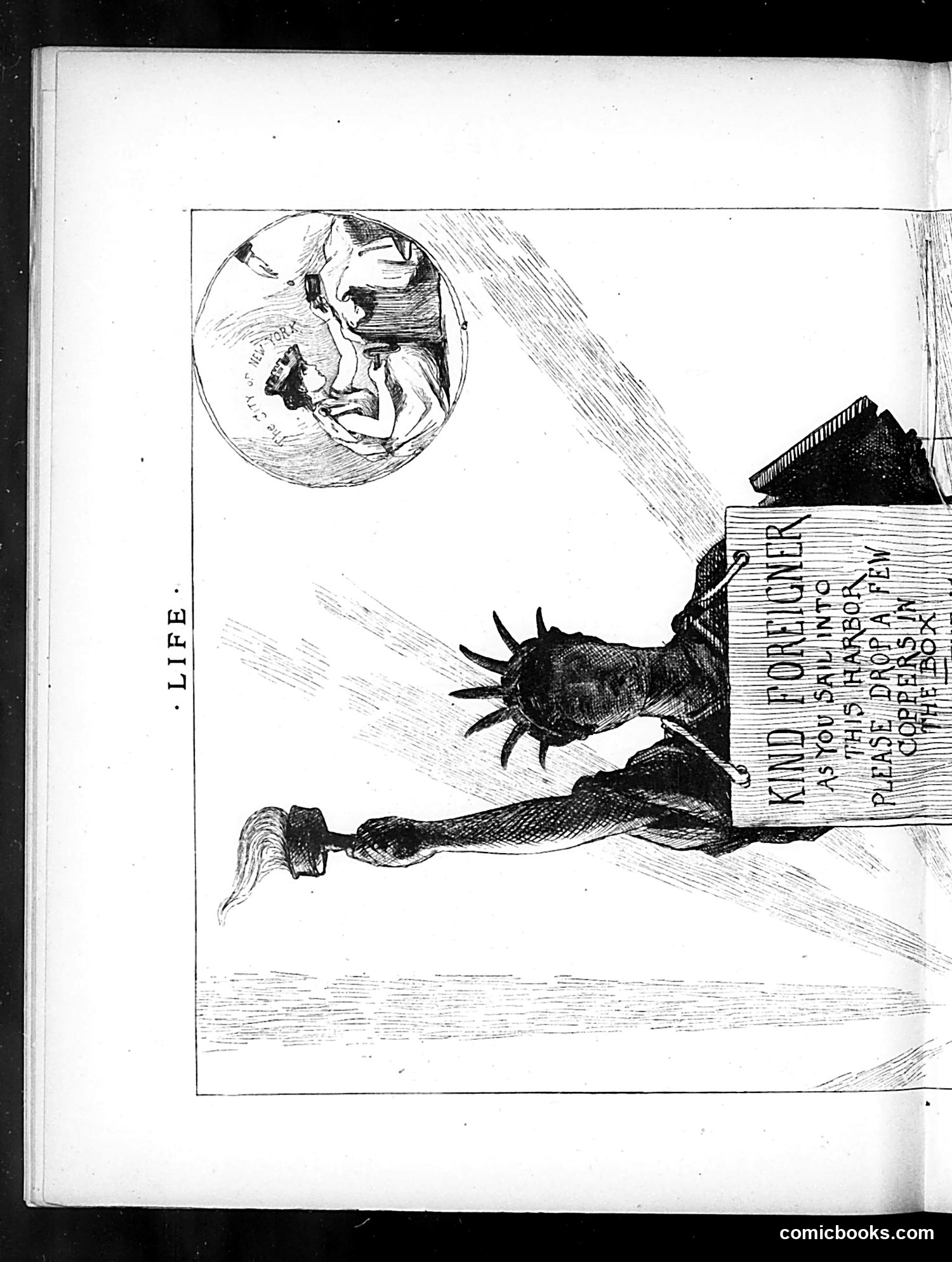
This page from *Life* magazine features a satirical illustration labeled "LIFE" on the left margin. The cartoon depicts a figure being struck or attacked by a large, spiky creature emerging from a wooden crate labeled "KIND PORONER" (likely "KINDPORONER" or similar - the OCR text is unclear). A circular inset at the top shows what appears to be a distressed face, possibly indicating the consequence or reaction to the attack below. **Without clearer text identification or a visible date, I cannot definitively identify the specific political figures or the exact event being satirized.** The spiky creature and the wooden crate suggest this may reference a dangerous import or hidden threat, but the specific historical context remains unclear from this image alone.
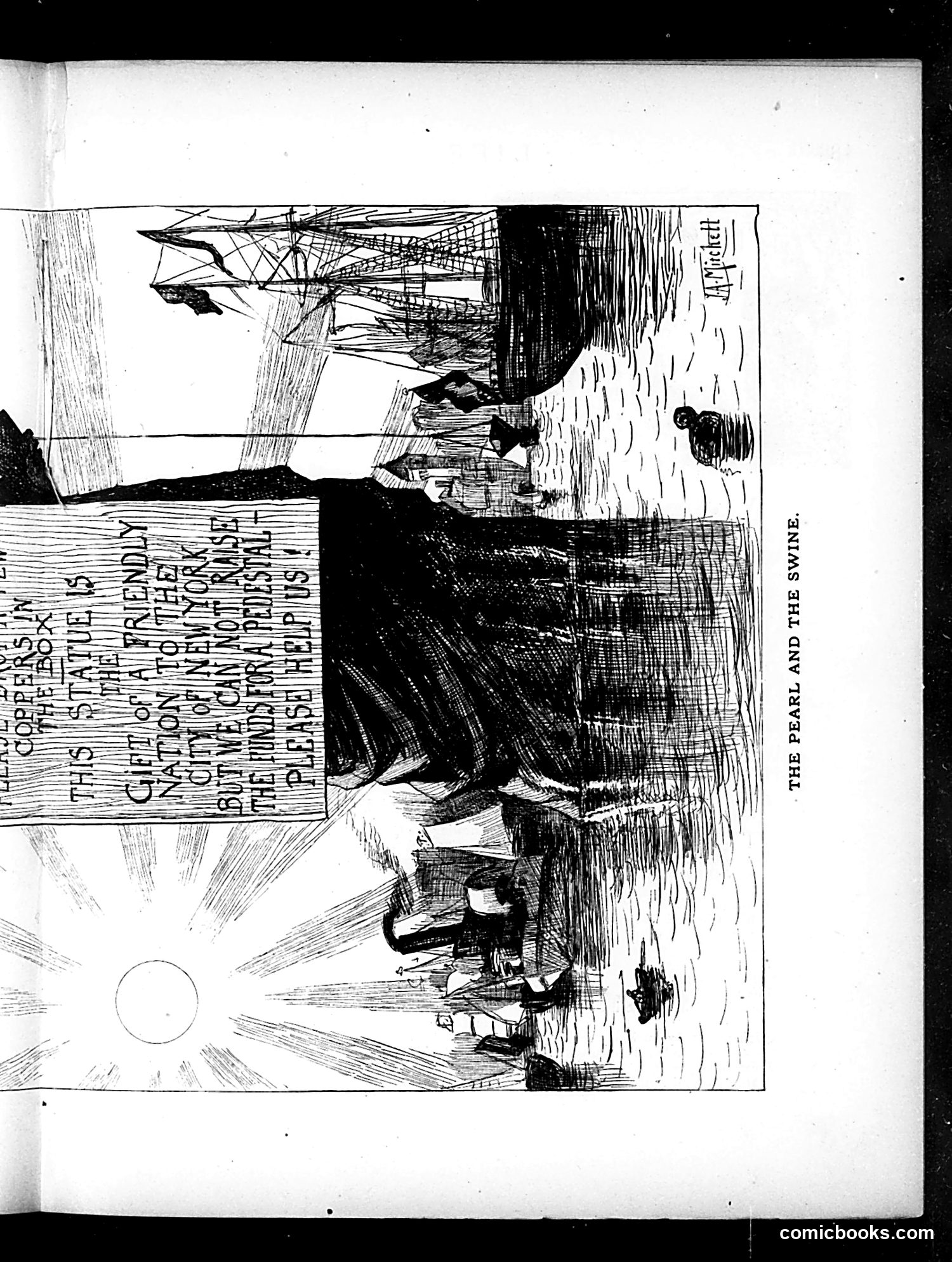
This political cartoon depicts a figure in formal dress (appears to be a wealthy or powerful man) rejecting or turning away from a pearl being offered. The title "THE PEARL AND THE SWINE" references the biblical proverb about casting pearls before swine—suggesting someone of value is being wasted on an unworthy recipient. The accompanying text box (partially legible) contains critical commentary, though the specific OCR'd text is unclear. Based on the visual composition and title, this appears to be satirizing a political or social figure who is dismissing something valuable or important—possibly a proposal, reform, or criticism. The "swine" characterization suggests the cartoon mocks the target as crude or unrefined despite their position of power.
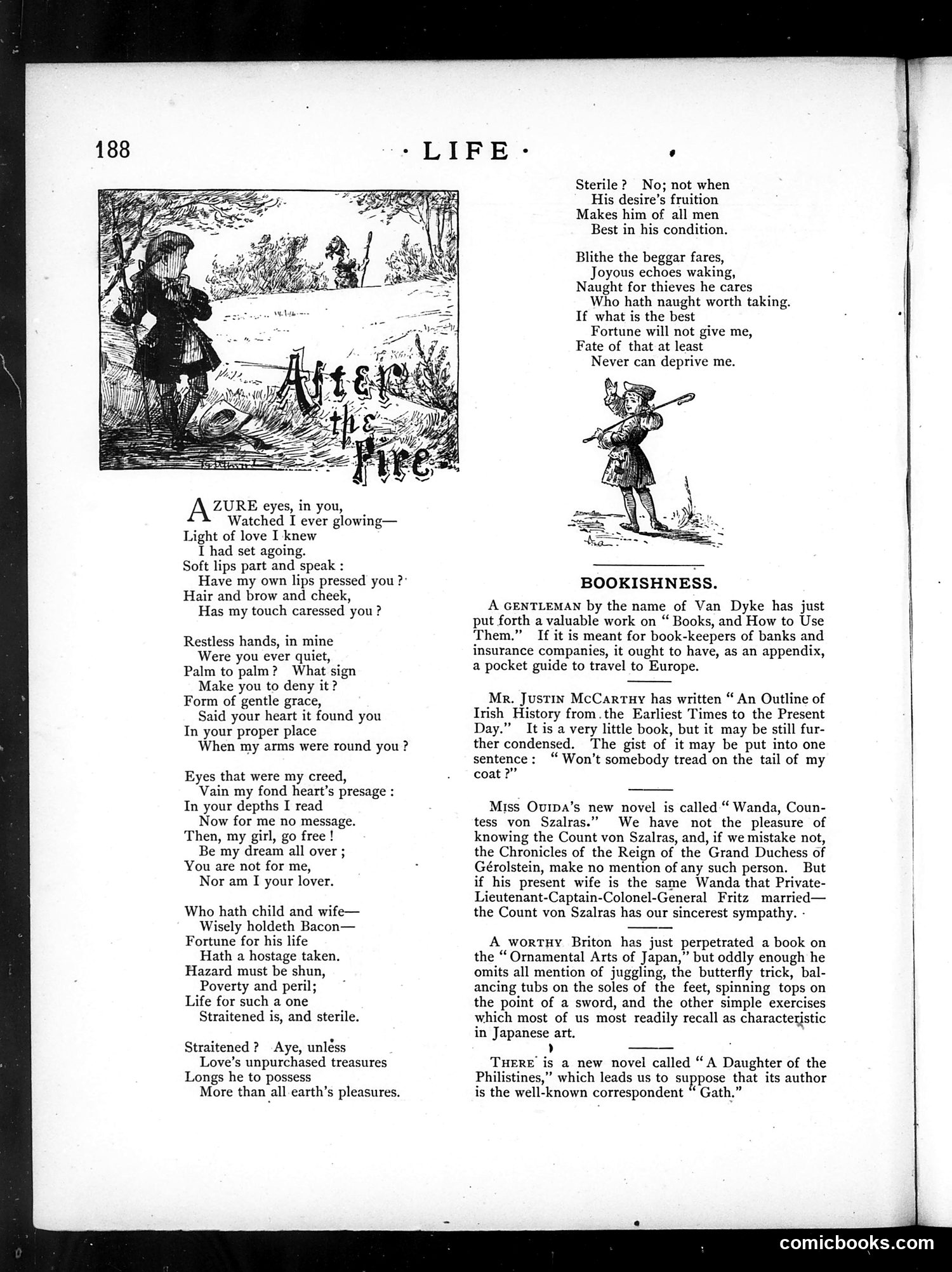
This page combines romantic poetry with satirical book reviews—typical of Life's mixed content format. The left side features a sentimental poem about lost love, illustrated with period engravings of courting couples. The verses lament a romantic relationship that cannot be, philosophically accepting the separation while celebrating love's value even in loss. The right section, "Bookishness," mocks contemporary literary works through fake reviews: - **Van Dyke's book on books** is joked about as needing a "pocket guide to travel to Europe"—implying it's so practical for financial types they'd flee the country - **Justin McCarthy's Irish history** is sarcastically reduced to the single complaint "Won't somebody tread on the tail of my coat?"—mocking Irish grievances as perpetual - **Ouida's novel** about a fictional countess is ridiculed as invented nonsense - **The Japanese arts book** humorously notes the author omits juggling and acrobatics—things Life's readers actually associate with Japan, suggesting the book misses the mark The satire targets both pretentious literature and author self-importance.
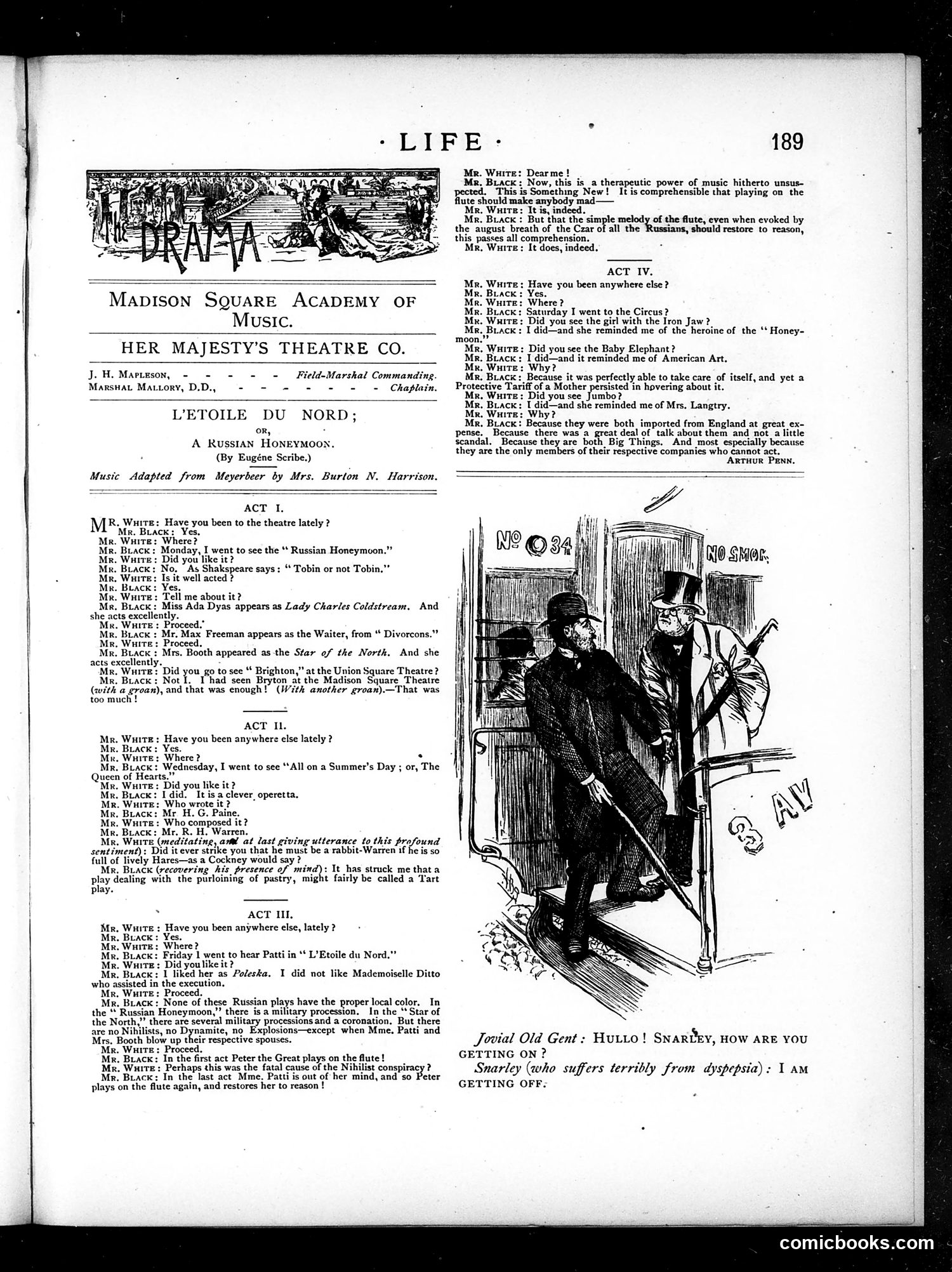
This page satirizes contemporary theater through a dialogue between two characters—Mr. White and Mr. Black—who discuss recent Broadway productions. The main joke is that these elaborate Russian-themed operas and plays (like "The Russian Honeymoon" and "L'Étoile du Nord," featuring the famous soprano Adelina Patti) are dramatically overwrought and nonsensical. The satire peaks in Act III, where Mr. Black ridicules the illogical plot device: Peter the Great's flute-playing drives Mme. Patti's character insane, then—implausibly—the same flute-playing restores her sanity. The humor mocks the absurdity of grand opera conventions. The final Acts add topical jabs: references to "Nihilists" and "Dynamite" allude to contemporary Russian anarchist violence, while a crack about the "Baby Elephant" reminded him of "American Art" suggests Gilded Age excess and patronage. The cartoon (right) shows theater-goers outside a venue, illustrating the theatrical world being discussed.
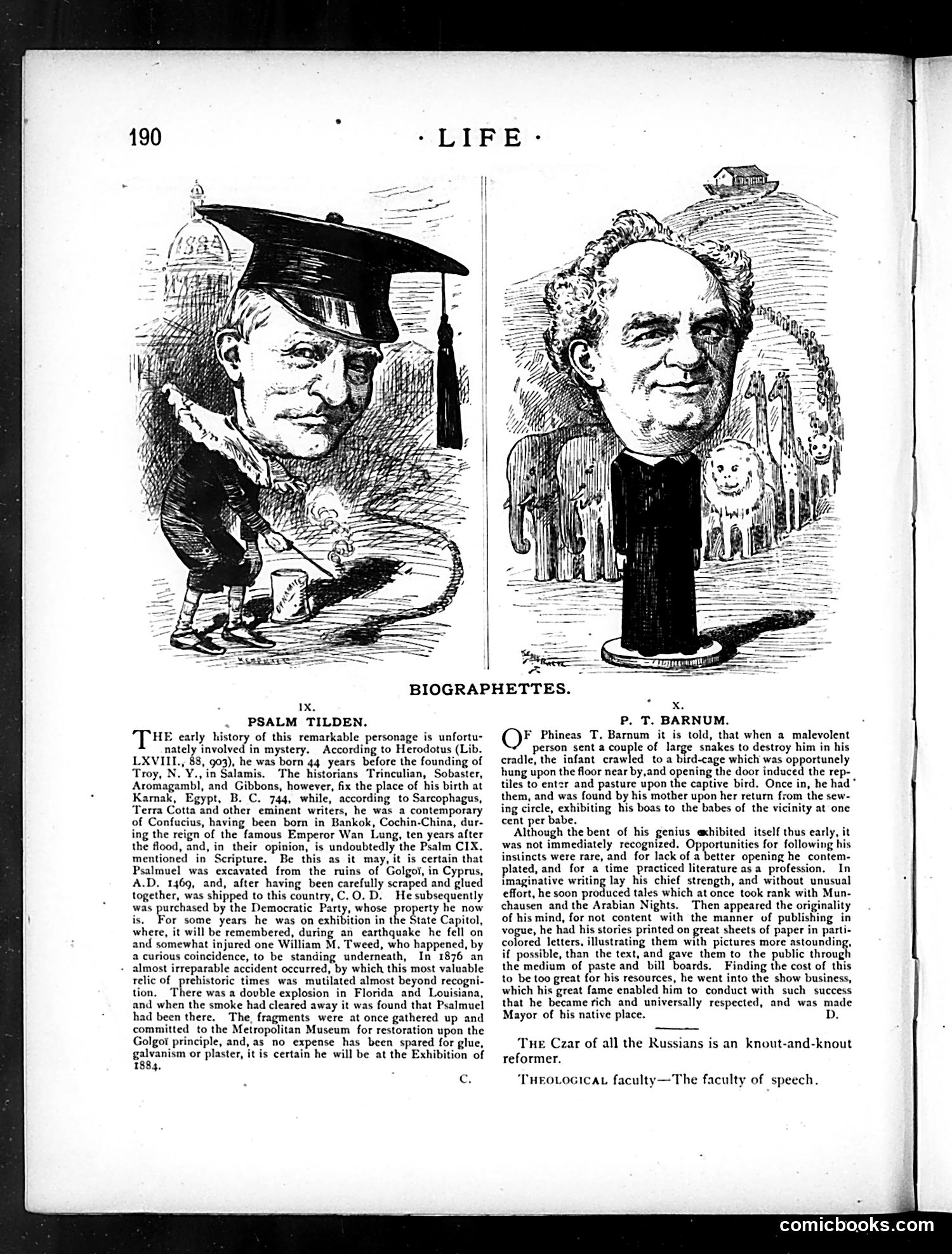
This page from *Life* magazine contains satirical biographical sketches mocking two prominent figures: **"Psalm Tilden"** (left): A caricature of Samuel J. Tilden, the Democratic presidential candidate in 1876. The absurdist biography—claiming he was born in ancient Egypt or China, excavated from ruins like an archaeological artifact, and damaged in "explosions in Florida and Louisiana" in 1876—mocks him as a broken, museum-piece relic. The reference to William M. Tweed (a notorious Tammany Hall politician) suggests Tilden's Democratic Party association with corruption. The satire presents Tilden as literally and figuratively damaged goods. **P.T. Barnum** (right): The famous showman is caricatured as a con artist whose entire career—from fabricating tall tales to promoting them via sensationalist advertising—represents shameless hucksterism. The satire credits his success entirely to shameless self-promotion and deception rather than genuine merit. Both sketches use absurdist humor to deflate these public figures, treating them as frauds and damaged goods unfit for public trust.
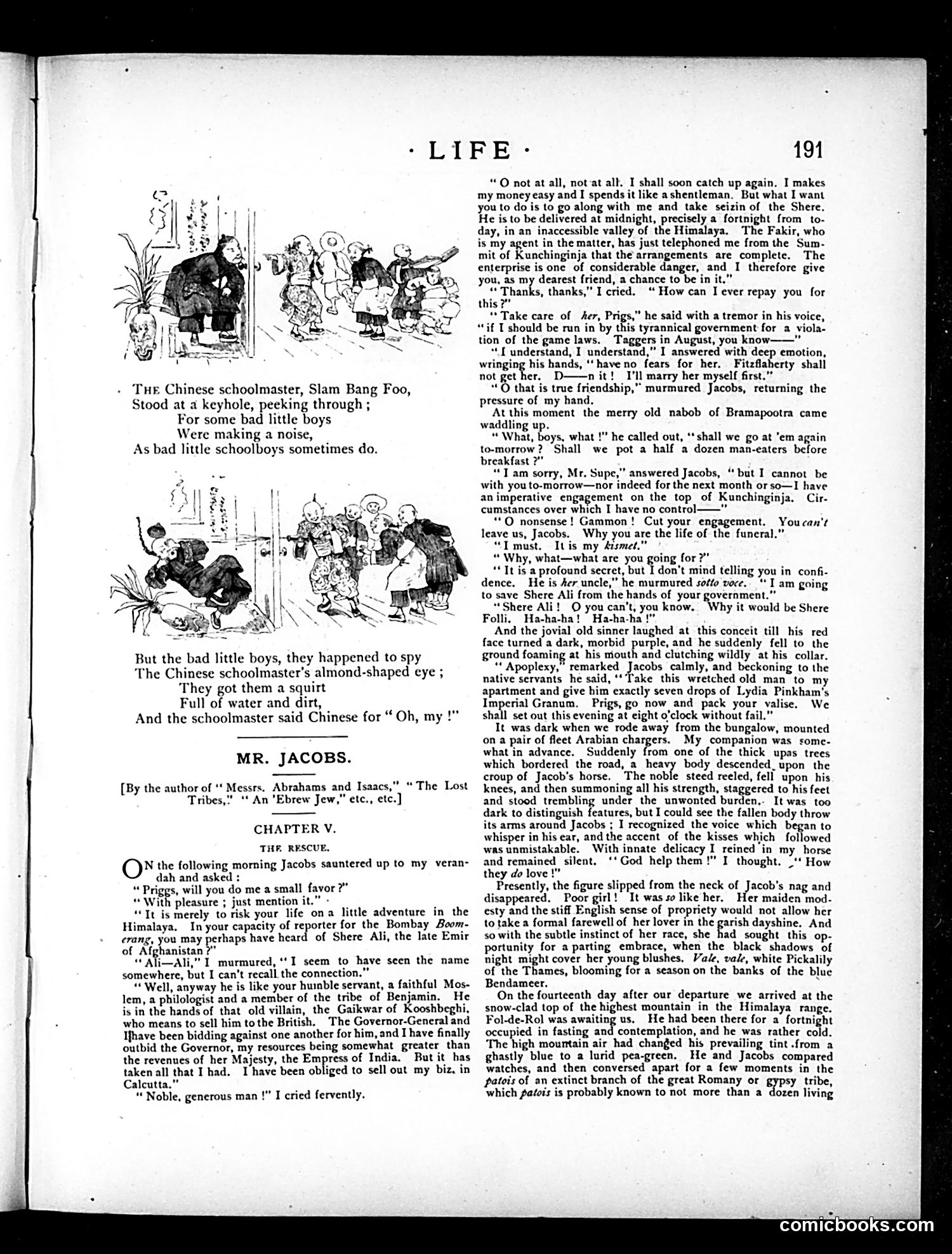
This page contains two distinct pieces of satirical content: **Top Section: "Slam Bang Foo" Poem** A racist caricature mocking Chinese people through dialect humor. The cartoon depicts a Chinese schoolmaster with exaggerated "almond-shaped" eyes being pranked by schoolboys who squirt him with dirty water. The joke relies entirely on ethnic stereotyping and the assumed comedic value of a foreigner's discomfort—typical of late-19th-century American humor that would be considered deeply offensive today. **Main Section: "Mr. Jacobs" Story** A satirical adventure narrative set in India, likely mocking British imperial adventures. The humor involves absurd plot elements: Jacobs claims to be rescuing "Shere Ali" (appears to reference the historical Afghan ruler) from British colonial authorities, while also juggling hunting expeditions. The satire targets Victorian adventure fiction's melodramatic tropes and perhaps imperial pretensions, though the precise historical context is unclear without publication date confirmation. Both pieces exemplify Life magazine's approach: irreverent humor mixing ethnic caricature with parodies of contemporary literature and imperial politics.
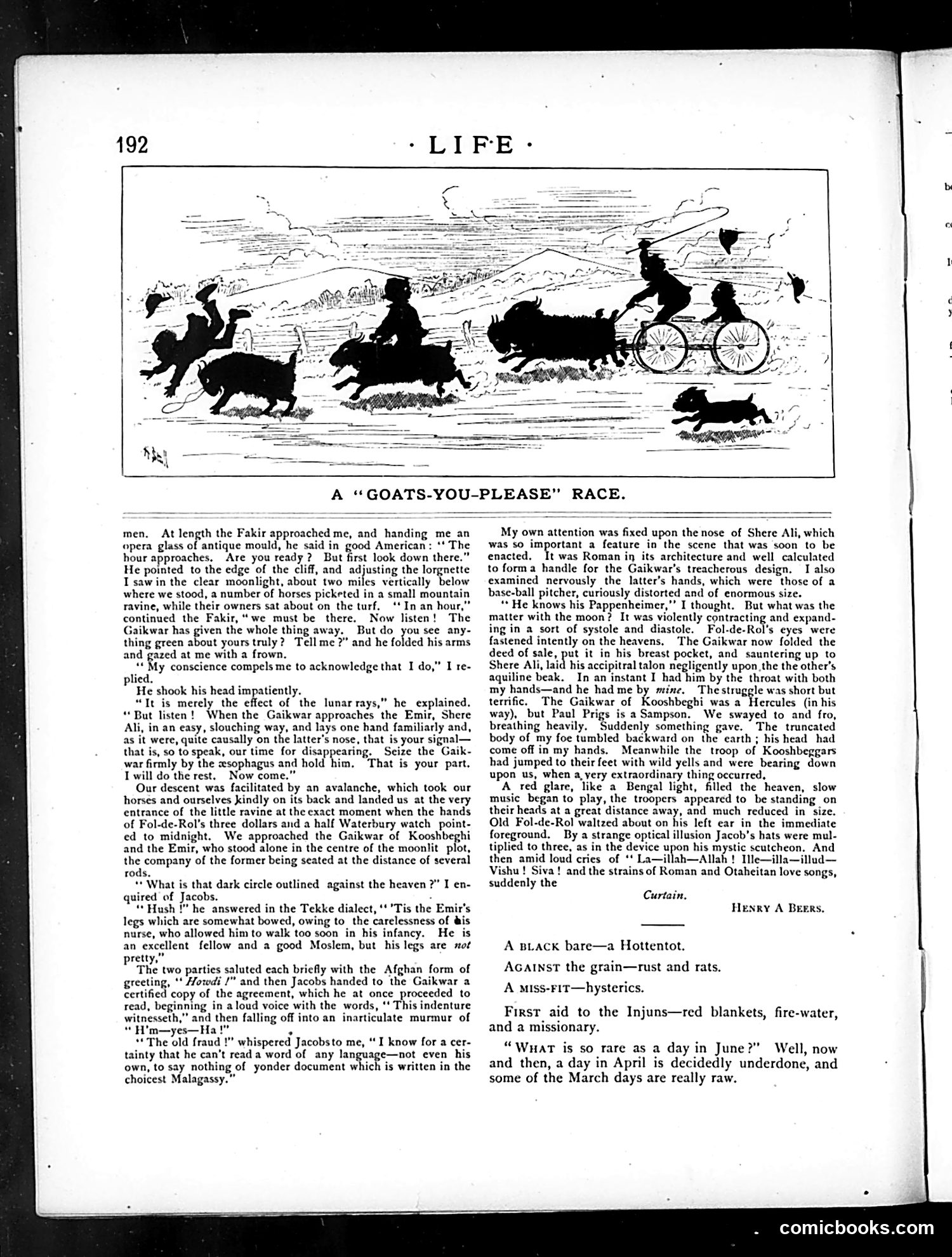
This is a humorous illustrated story (not primarily political satire) about an absurd adventure involving colonial India. The cartoon shows various figures racing chaotically—on horseback, bicycles, and on foot—apparently toward some goal. The text is a tall tale narrated by someone named Paul Prigs, involving a "Fakir" (Hindu holy man), a "Gaikwar" (Indian ruler), and an "Emir." The humor derives from mock-serious orientalism: elaborate descriptions of Indian settings mixed with deliberately ridiculous details (a character's legs "bowed" from early walking; an Emir who cannot read; absurdly large hands "like a base-ball pitcher's"). The "signal" for action is the Gaikwar touching the Emir's nose—leading to an undignified physical struggle. The overall tone satirizes Victorian adventure fiction and romantic depictions of India through exaggeration and bathos. The title suggests a chaotic race with unpredictable participants—fitting the story's absurdist humor.
This is primarily an **advertising and announcements page** from Life magazine, with minimal editorial cartooning. The page consists mostly of: **Content sections:** - "Notes and Extracts": Reprinted humorous quips from other newspapers, featuring light ethnic humor and puns typical of 1880s publications - **Insurance advertisements** for The Equitable Life Assurance Society and Mutual Accident Association - **Theater listings** (Theatre Comique, Brighton, Henderson's Standard Theatre, etc.) - **Product advertisements** (Esterbrook Steel Pens, printing ink, fine arts frames, wine) **Notable items:** - A Bartholdi Statue Fund benefit announcement (the Statue of Liberty was under construction) - General Longstreet reference suggests post-Civil War era - Ethnic dialect humor reflects period conventions **No political satire or caricatures are visible.** This is a business/advertisement page with filler content rather than the satirical editorial cartoons Life was known for.
This is primarily an **advertising and masthead page** from *Life* magazine, not a cartoon page. It showcases the publication itself and various New York City businesses from the 1880s. Key content includes: - **Life's self-promotion**: A prestigious "New Illustrated Weekly" claiming 50,000 readers, published Thursdays at 1155 Broadway - **Notable contributors listed**: Authors like Henry Guy Carleton and J. Cunliffe Goodwin—names likely recognized by contemporary readers - **Advertisements**: Art supplies, hats, wallpaper, merchant tailoring, and architectural services—typical luxury goods for wealthy New Yorkers - **One editorial note**: Charles A. Dana (editor of the competing *Sun* newspaper) purchased one of seven new houses built by architects Chas. Buek & Co., promoted here for superior drainage work The page reflects *Life*'s target audience: affluent Manhattan residents interested in art, fashion, and fine homes. No political cartoons appear on this particular page.