A complete issue · 36 pages · 1934
Judge — August 1934
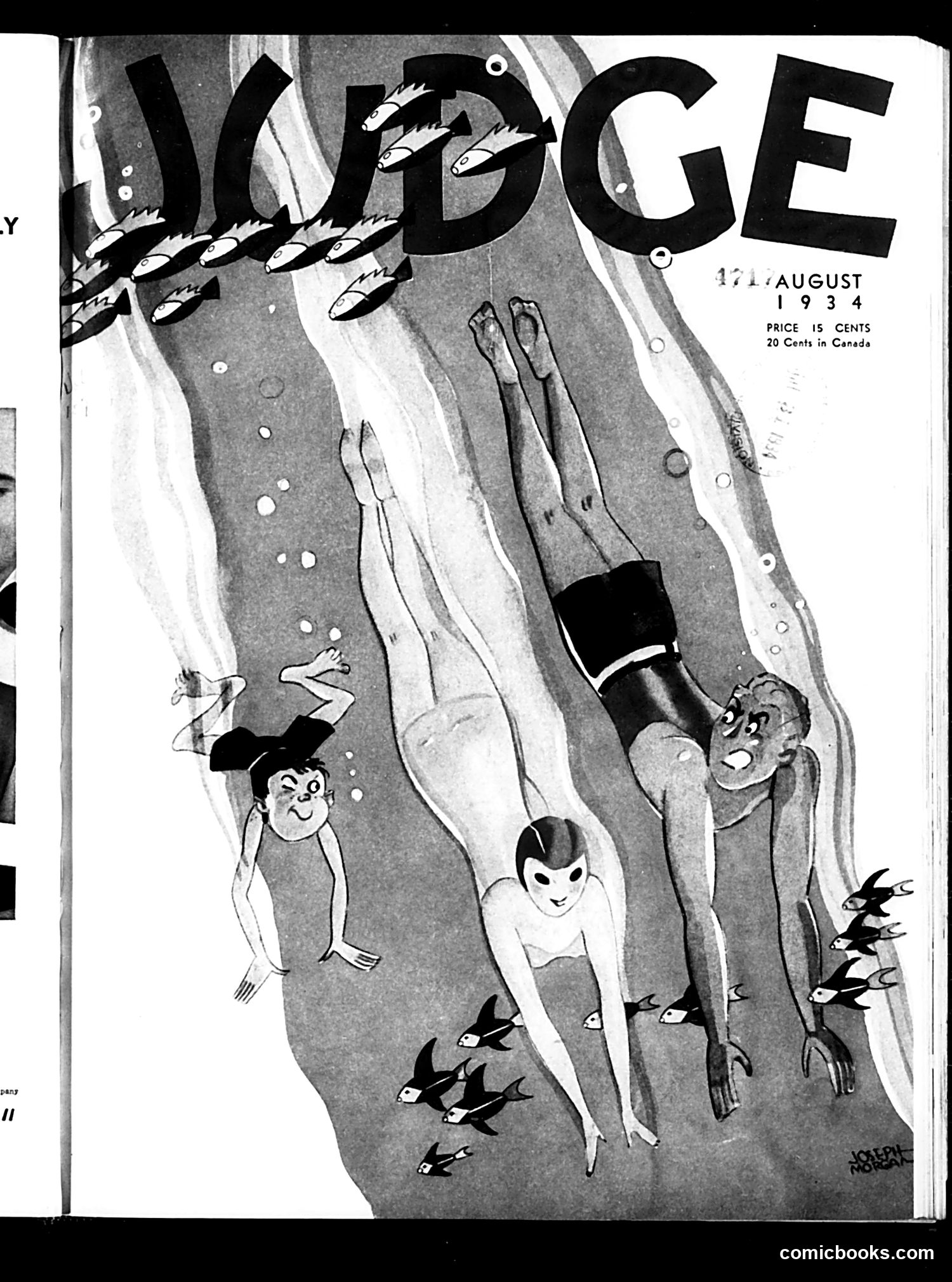
# Judge Magazine Cover Analysis This is the August 1924 cover of *Judge* magazine, depicting an underwater swimming scene. The illustration shows several figures swimming among fish, with the large "JUDGE" text integrated into the composition as a design element. The cover appears to be a lighthearted summer swimming scene rather than political satire. The caricatured swimmers display exaggerated features typical of 1920s cartooning style. Without additional context or legible captions identifying specific figures, the exact satirical target remains unclear—it may reference contemporary swimming fashions, leisure culture, or public figures of that era, but the image alone doesn't reveal the specific reference or joke to a modern viewer unfamiliar with 1924 popular culture.
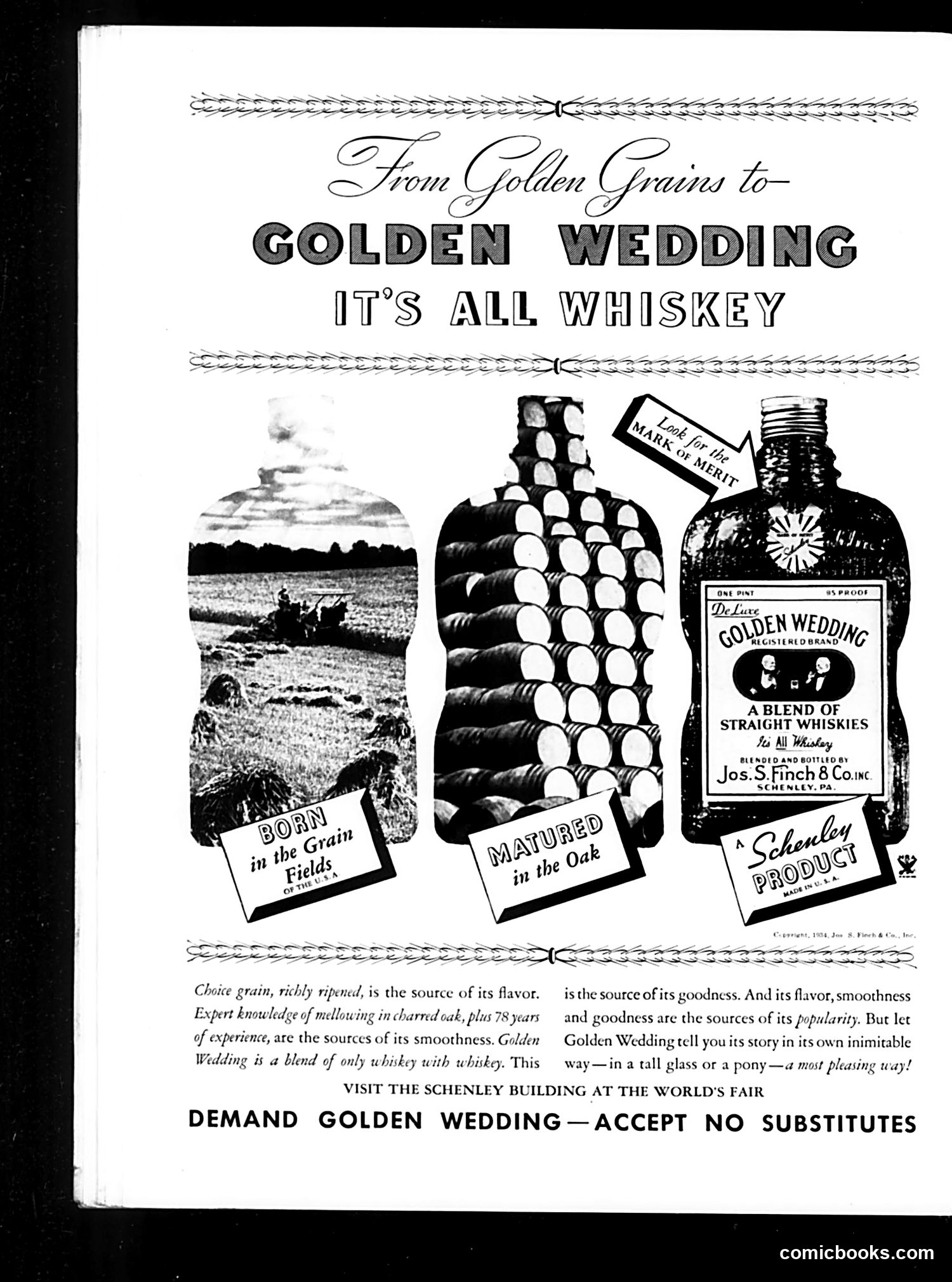
# Analysis This is **not a satirical cartoon** but rather a **whiskey advertisement** for Golden Wedding brand, blended and bottled by Jos. S. Finch & Co. of Schenley, Pennsylvania. The ad uses a metaphorical visual narrative: grain fields → oak barrels → finished bottle, illustrating the production process from raw materials to final product. The tagline "From Golden Grains to Golden Wedding—It's All Whiskey" emphasizes the product's natural origins and quality. The text emphasizes smoothness achieved through "mellowing in charred oak" for 78 years of expertise, positioning Golden Wedding as a premium blend. The ad concludes with an appeal to visit "the Schenley Building at the World's Fair," suggesting this dates to a major exposition period. The final exhortation—"Demand Golden Wedding—Accept No Substitutes"—reflects competitive marketing practices of the era.
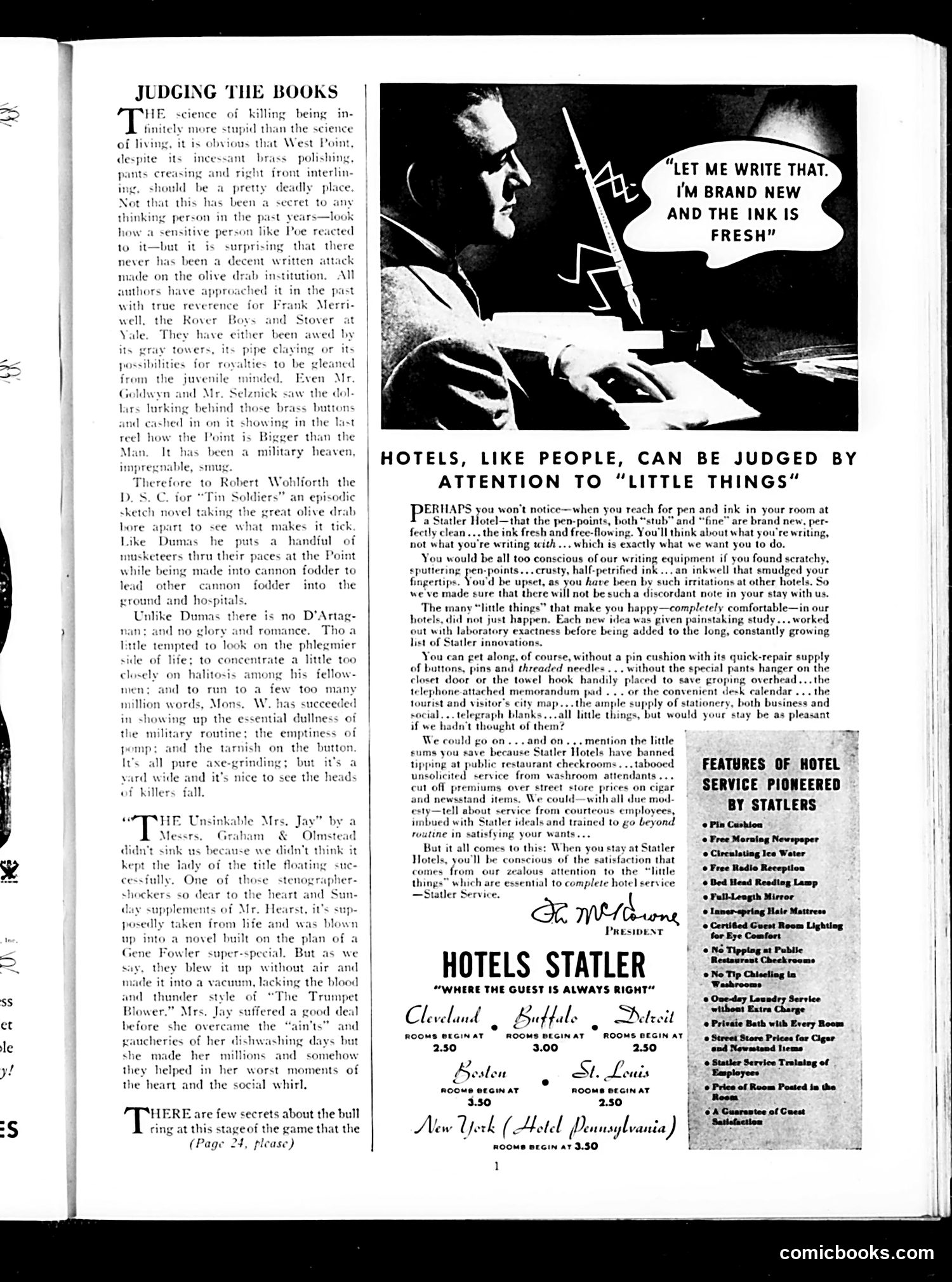
# Analysis of Judge Magazine Page This page is primarily **advertising for Statler Hotels**, not political satire. The main cartoon shows a man at a desk writing, with a speech bubble: "Let me write that. I'm brand new and the ink is fresh." The accompanying text explains that hotels like Statler are "judged by attention to 'little things'"—details like fresh ink in pens, clean pen points, and well-maintained supplies. The advertisement emphasizes Statler Hotels' pioneering attention to guest service through these minor but noticeable details. The left column discusses literary criticism of war novels, but this appears unrelated to the hotel advertisement's main message about service quality and customer satisfaction.
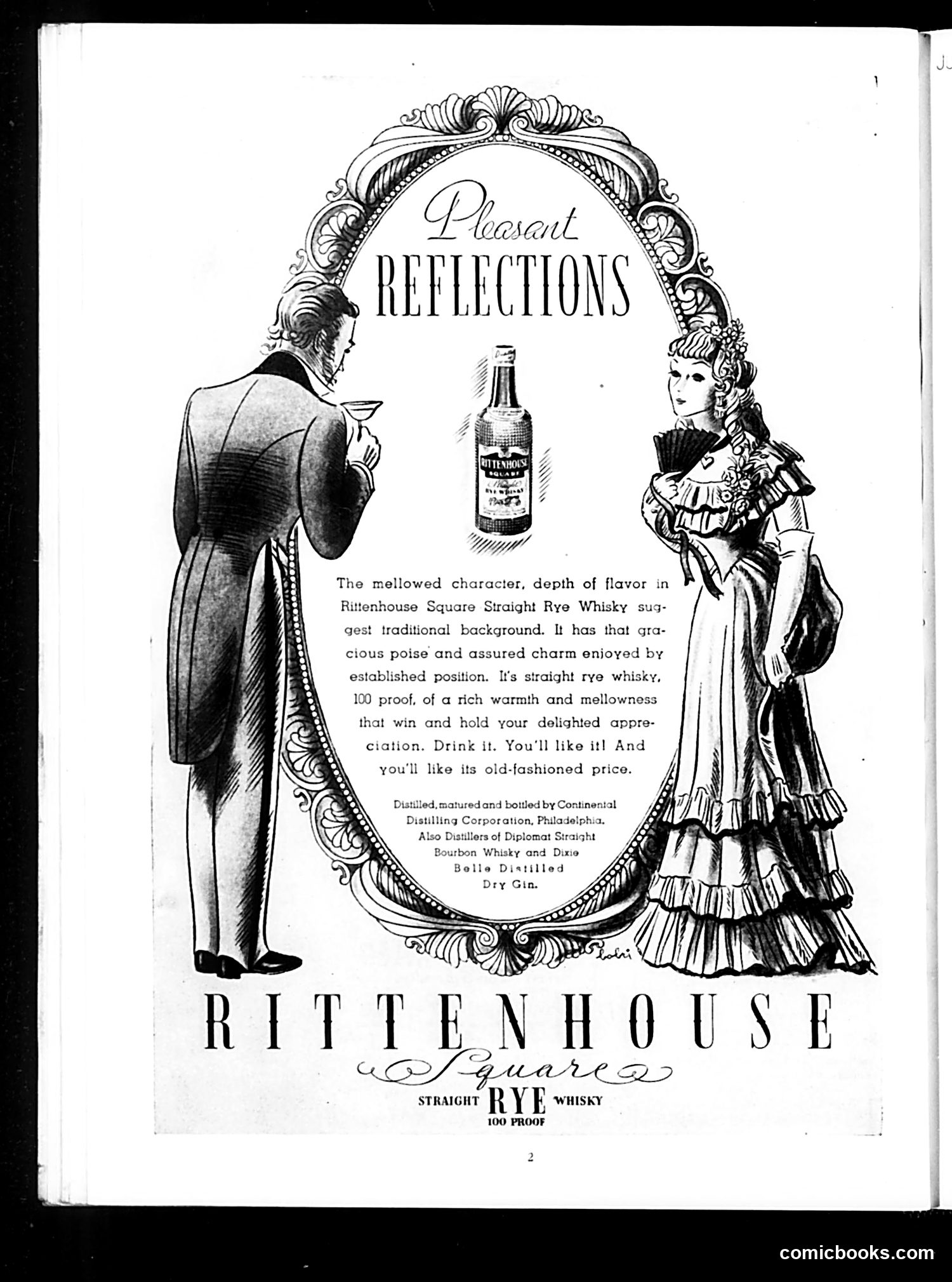
# Analysis This is primarily a **whiskey advertisement**, not political satire. It promotes Rittenhouse Square Straight Rye Whisky (100 proof), distilled by Continental Distilling Corporation in Philadelphia. The ad uses the title "Pleasant Reflections" to depict two elegant figures—a man in formal attire and a woman in period dress—flanking a bottle. The copytext emphasizes the whiskey's "mellowed character," "gracious poise," and "assured charm," targeting upper-class consumers who valued "established position." The satire here is subtle: the advertisement itself satirizes genteel society by suggesting that refined social standing and whiskey consumption are linked. However, this is primarily an advertisement exploiting class aspirations rather than political commentary. Judge magazine, while satirical, frequently published paid advertisements alongside editorial content.
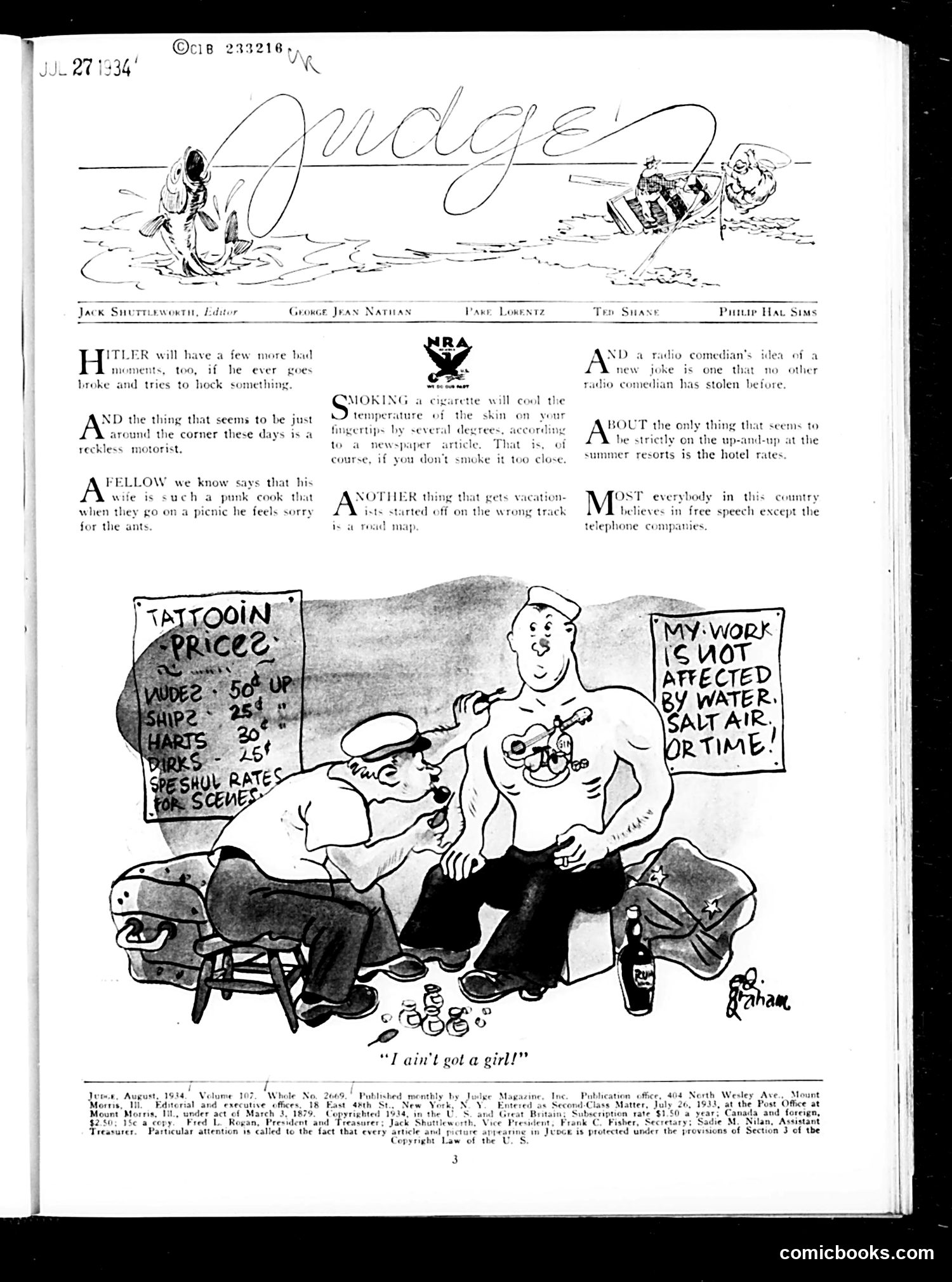
# Analysis of Judge Magazine Page (August 1934) This page contains humorous observations about contemporary life rather than direct political commentary. The main cartoon depicts a sailor at a beach getting a tattoo, with the tattoo artist displaying price list and the sailor insisting "My work is not affected by water, salt air or time!" The upper text contains quips about various subjects: Hitler's potential future troubles, smoking's effects on skin temperature, wives complaining on picnics, vacationers using road maps incorrectly, hotel rates at summer resorts, and belief in free speech except by telephone companies. The satirical humor targets everyday American concerns—consumer prices, leisure activities, and corporate behavior—rather than specific political figures or events. The tone is lighthearted social commentary typical of Judge's general-audience satire.
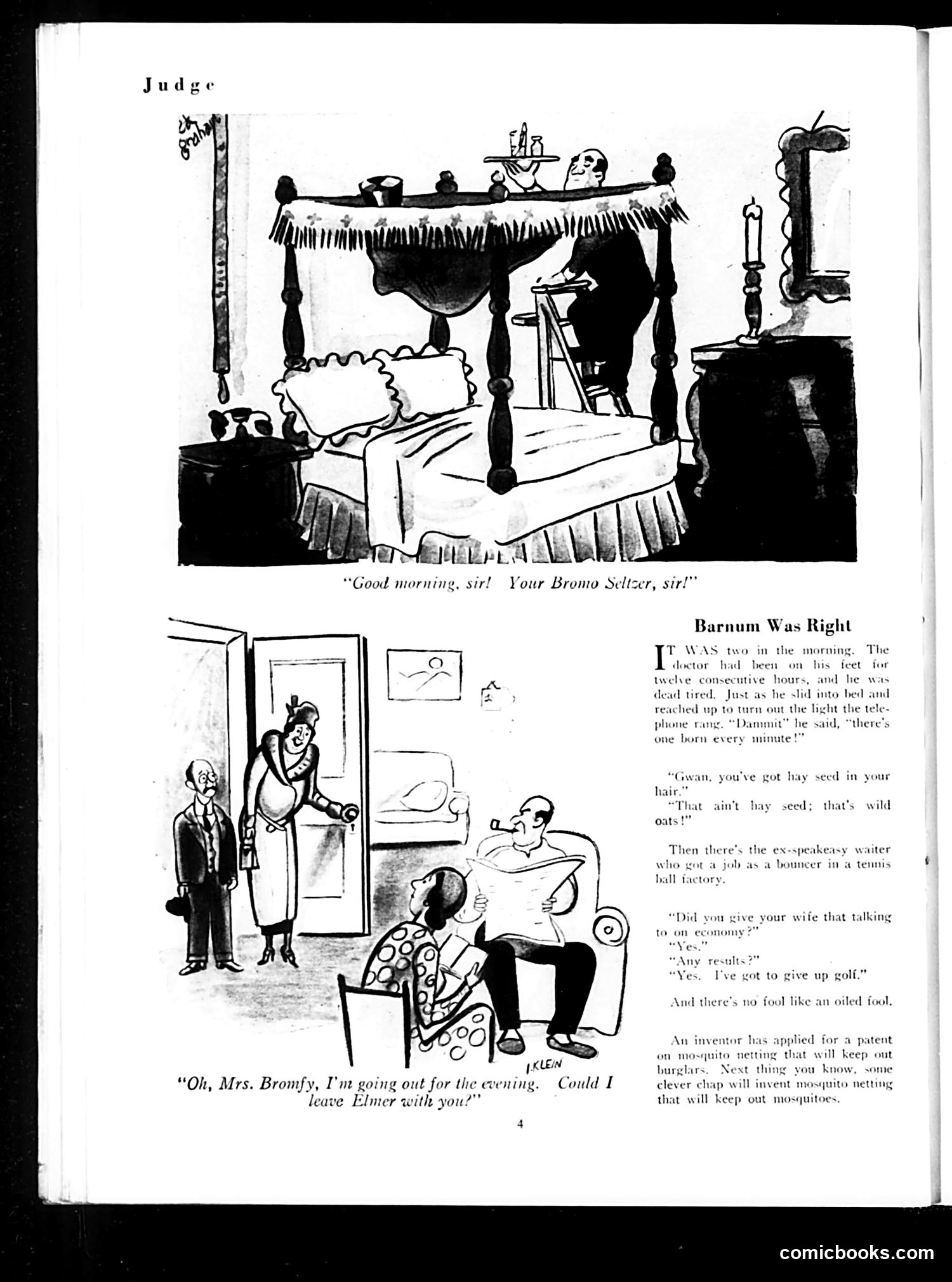
# Analysis of Judge Magazine Page This page contains two distinct cartoons satirizing early 20th-century domestic life. **Top cartoon** ("Good morning, sir! Your Bromo Seltzer, sir!"): Depicts a judge's bedroom with an ornate bed. The servant's greeting references Bromo-Seltzer, a popular antacid/hangover remedy, satirizing the judge's presumed heavy drinking and morning digestive troubles—a common trope mocking judicial indulgence. **Bottom cartoon** ("Oh, Mrs. Bromfy, I'm going out for the evening. Could I leave Elmer with you?"): Shows a domestic scene where a man asks to leave someone named "Elmer" with neighbors. The accompanying article "Barnum Was Right" humorously catalogs the foolishness of modern life—from wives' wasteful economy lectures to absurd patent inventions like mosquito netting. Both pieces use humor to critique social pretension and domestic absurdities of the era.
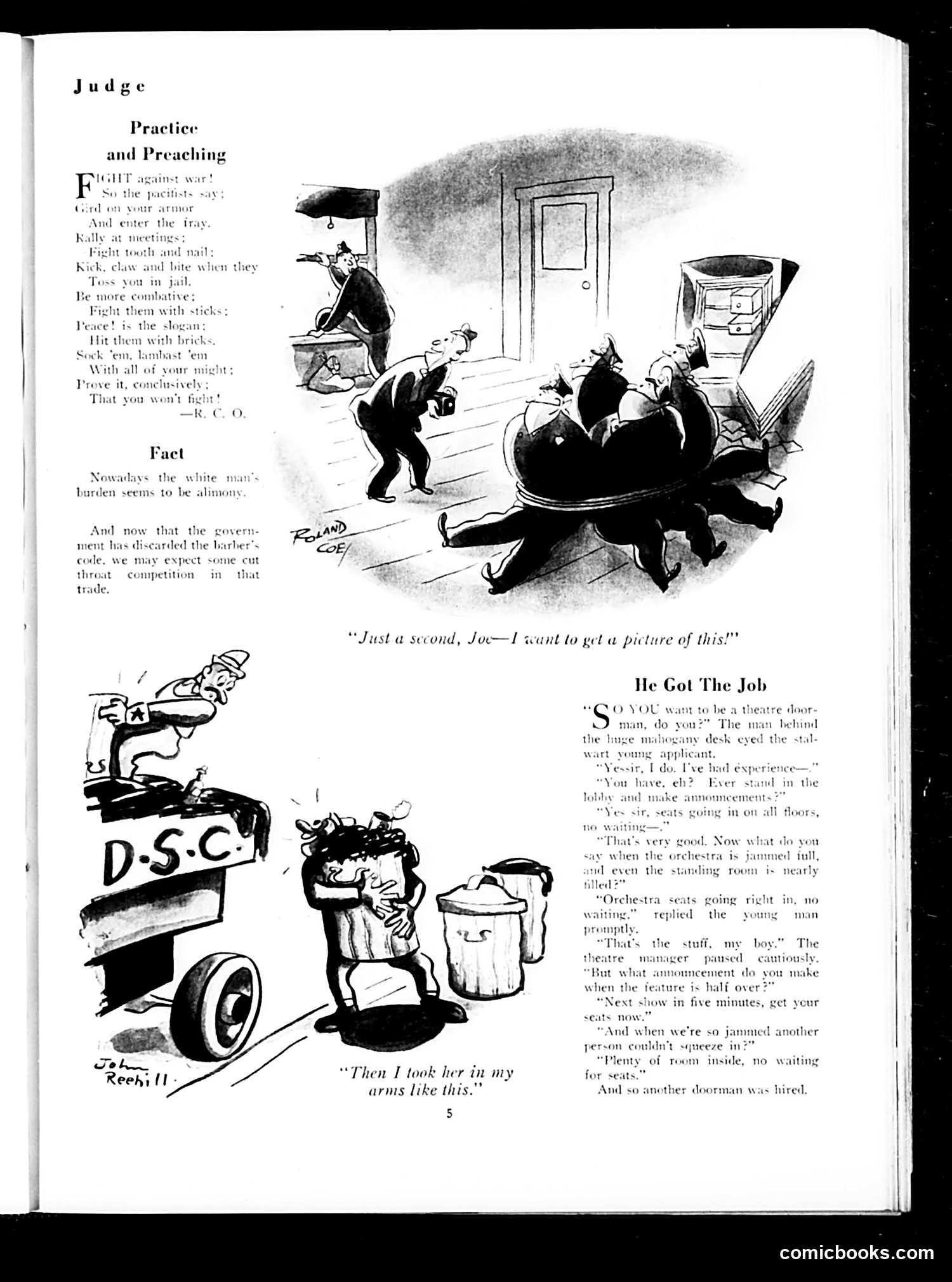
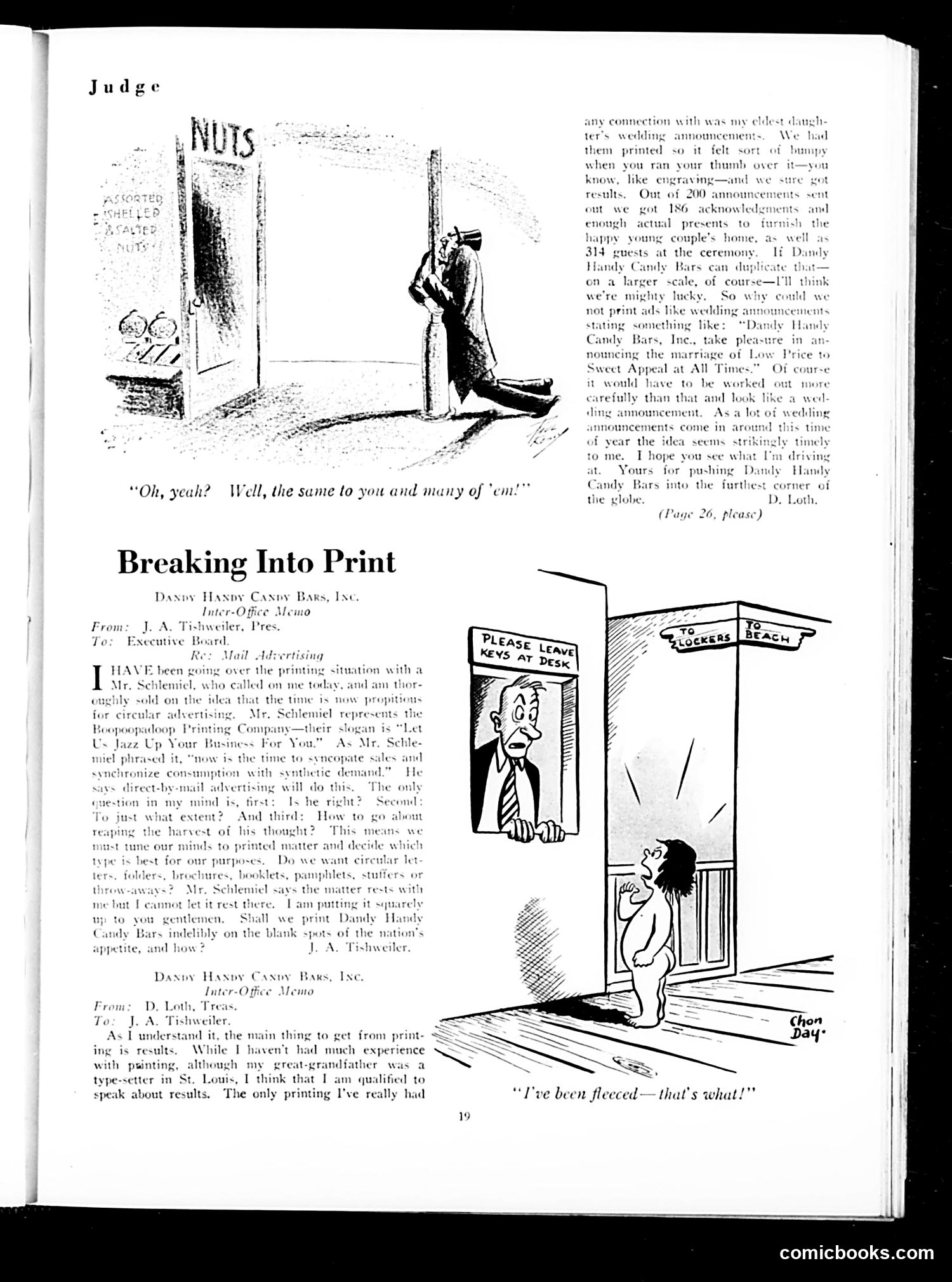
# Analysis This Judge magazine page contains two distinct pieces of satire: **"Practice and Preaching"** (top): A violent cartoon mocking pacifists. The poem advocates fighting ("Fight against war!") while the illustration shows men engaged in physical combat in what appears to be a barber shop or public space. The satire targets the hypocrisy of anti-war advocates who paradoxically resort to violence, possibly referencing debates about pacifism versus militarism during the World War I era. **"He Got The Job"** (bottom): A humorous story about hiring a theatre doorman. The applicant claims experience but admits having no actual background. The manager hires him anyway due to overcrowding—satirizing both workplace desperation and incompetent hiring practices during what appears to be a period of labor shortage or economic upheaval. Both pieces use absurdist humor to critique social contradictions of their era.
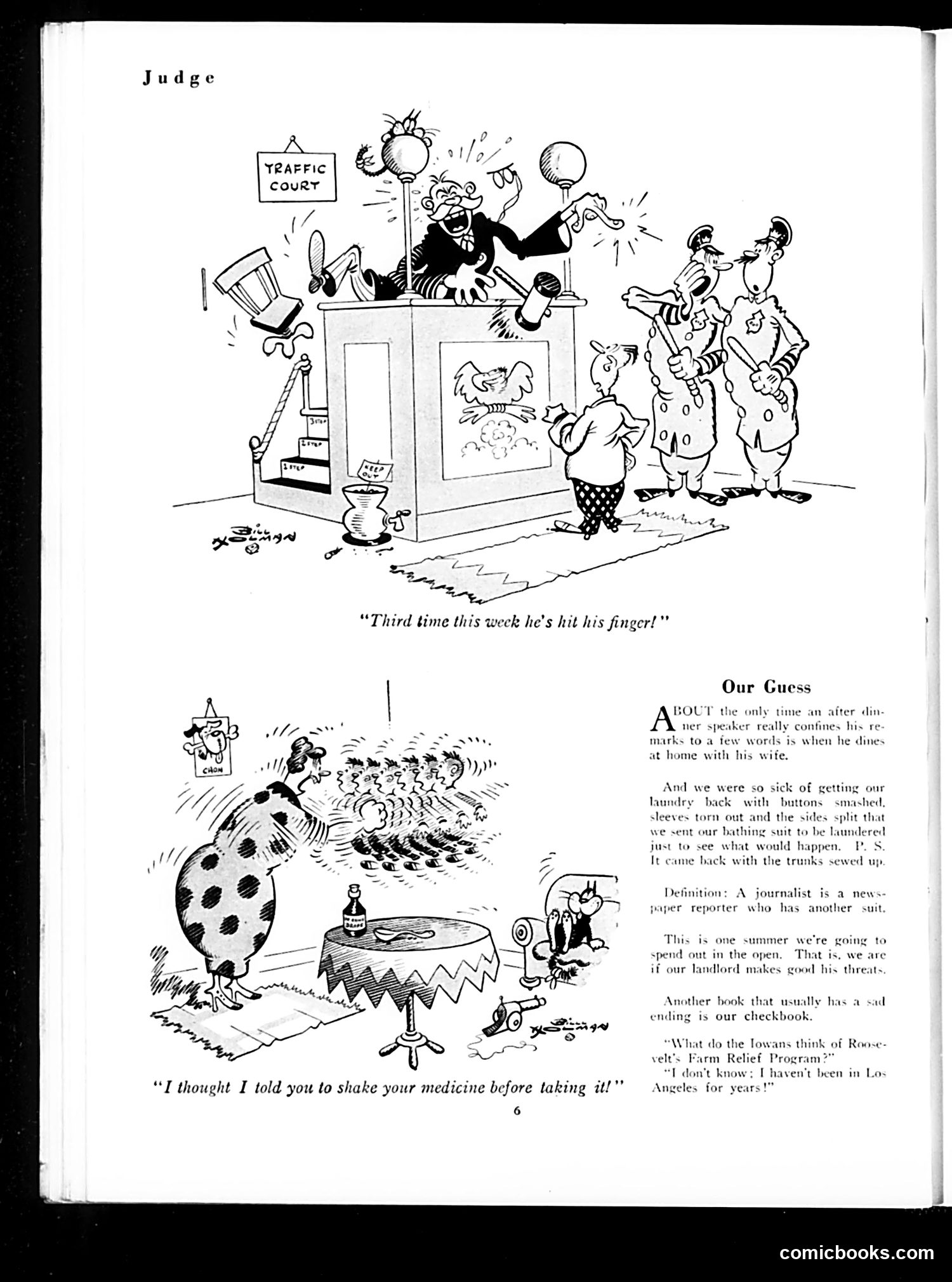
# Judge Magazine Page Analysis **Top Cartoon ("Third time this week he's hit his finger!"):** A chaotic traffic court scene where an angry judge presides over what appears to be repeated traffic violations. The humor satirizes the frequency of traffic accidents and citations, suggesting the same offender keeps appearing with injury (hitting his finger), implying careless or reckless driving habits. **Bottom Cartoon ("I thought I told you to shake your medicine before taking it!"):** A spotted creature (possibly meant to be humorous/exaggerated) has apparently taken medicine without shaking it first, resulting in visible ill effects. This is a straightforward visual gag about failing to follow simple medical instructions. **Right Column ("Our Guess"):** Brief satirical commentary on contemporary topics: after-dinner speakers, laundry problems, summer plans, and Roosevelt's Farm Relief Program, poking gentle fun at 1930s American domestic and political concerns.
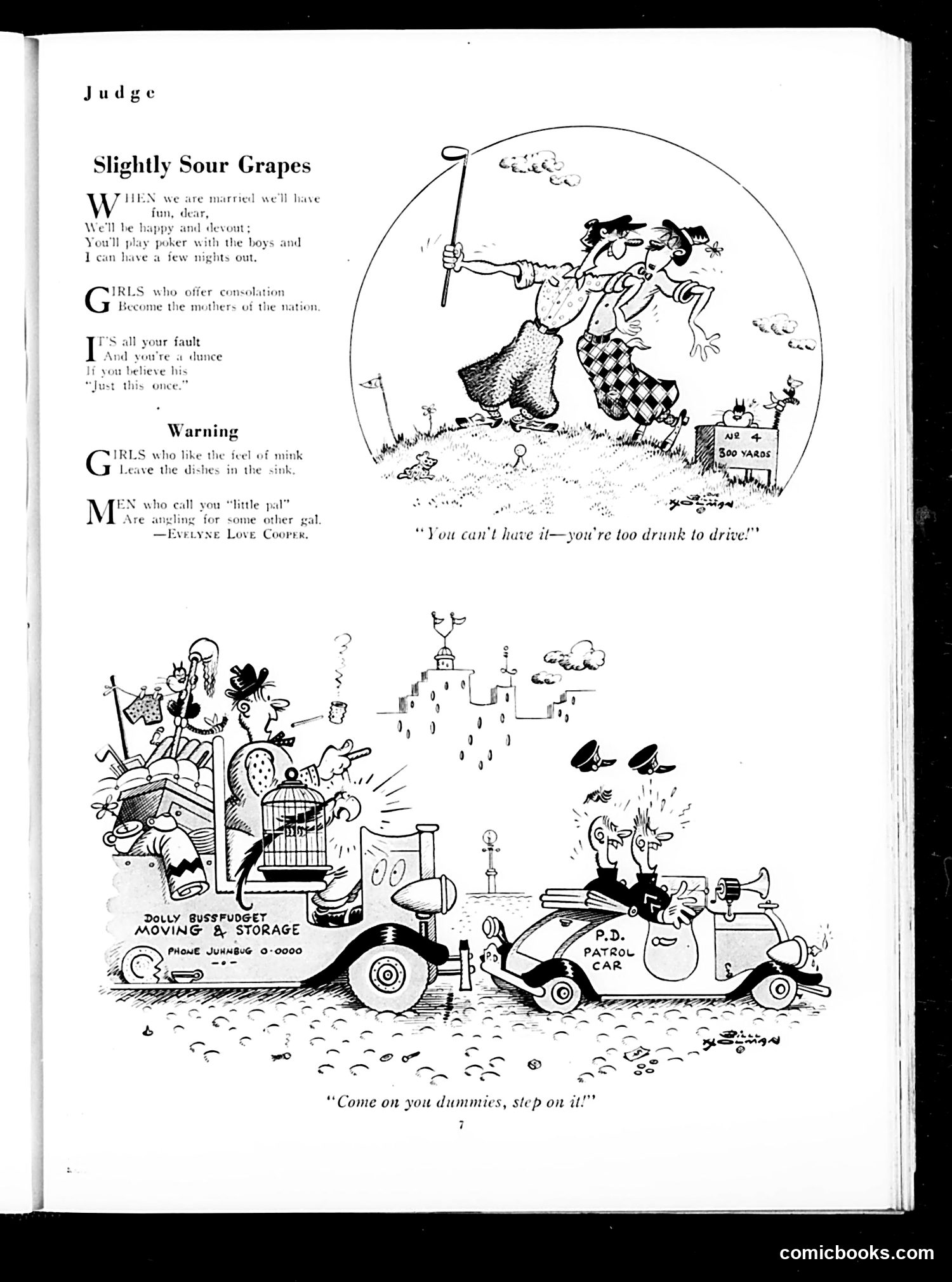
# Analysis for Modern Readers This page from *Judge* magazine contains satirical commentary on gender relations and social behavior circa the early-to-mid 20th century. **"Slightly Sour Grapes"** mocks men's hollow promises before marriage—husbands claim they'll allow wives independence and poker nights, but the sarcastic tone suggests this won't happen. **"Warning"** offers cynical "advice" to women: those who enjoy luxury (mink coats) avoid housework, while men who use terms of false endearment are pursuing other women. It's social commentary on male infidelity and female materialism. **The two cartoons below** satirize domestic chaos: the first shows an intoxicated man being denied a ride ("too drunk to drive"), and the second depicts a comically chaotic moving company collision with a police patrol car. Both mock incompetence and recklessness, likely commenting on Prohibition-era drinking and general social disorder. The overall page critiques marriage, gender dynamics, and working-class mishaps with the satirical tone *Judge* was known for.
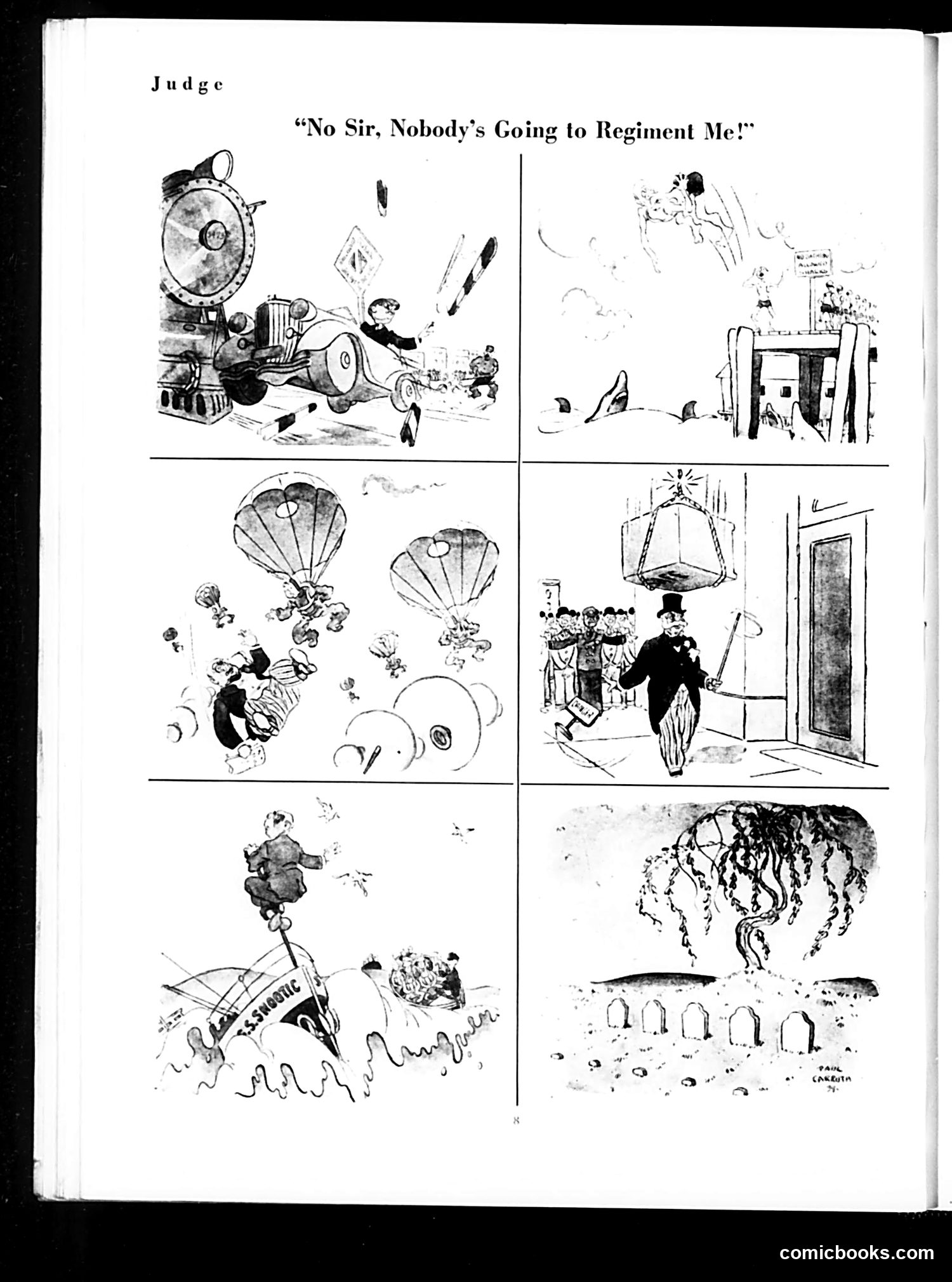
# "No Sir, Nobody's Going to Regiment Me!" This Judge cartoon satirizes resistance to military conscription or mandatory military service. The protagonist declares his refusal to be "regimented"—placed under military discipline and control. The six-panel narrative depicts increasingly absurd consequences: the character is literally attacked by military machinery (top left), launches into the air via parachutes (middle panels), and ultimately ends up dead in a graveyard (bottom right). The progression suggests that defying military authority leads to disaster. The satire likely targets draft resisters or pacifists during a period of military buildup or war (the style suggests early-to-mid 20th century). Judge uses dark humor to mock those who refuse military service, implying their resistance is both foolish and self-destructive. The message supports military compliance and duty.
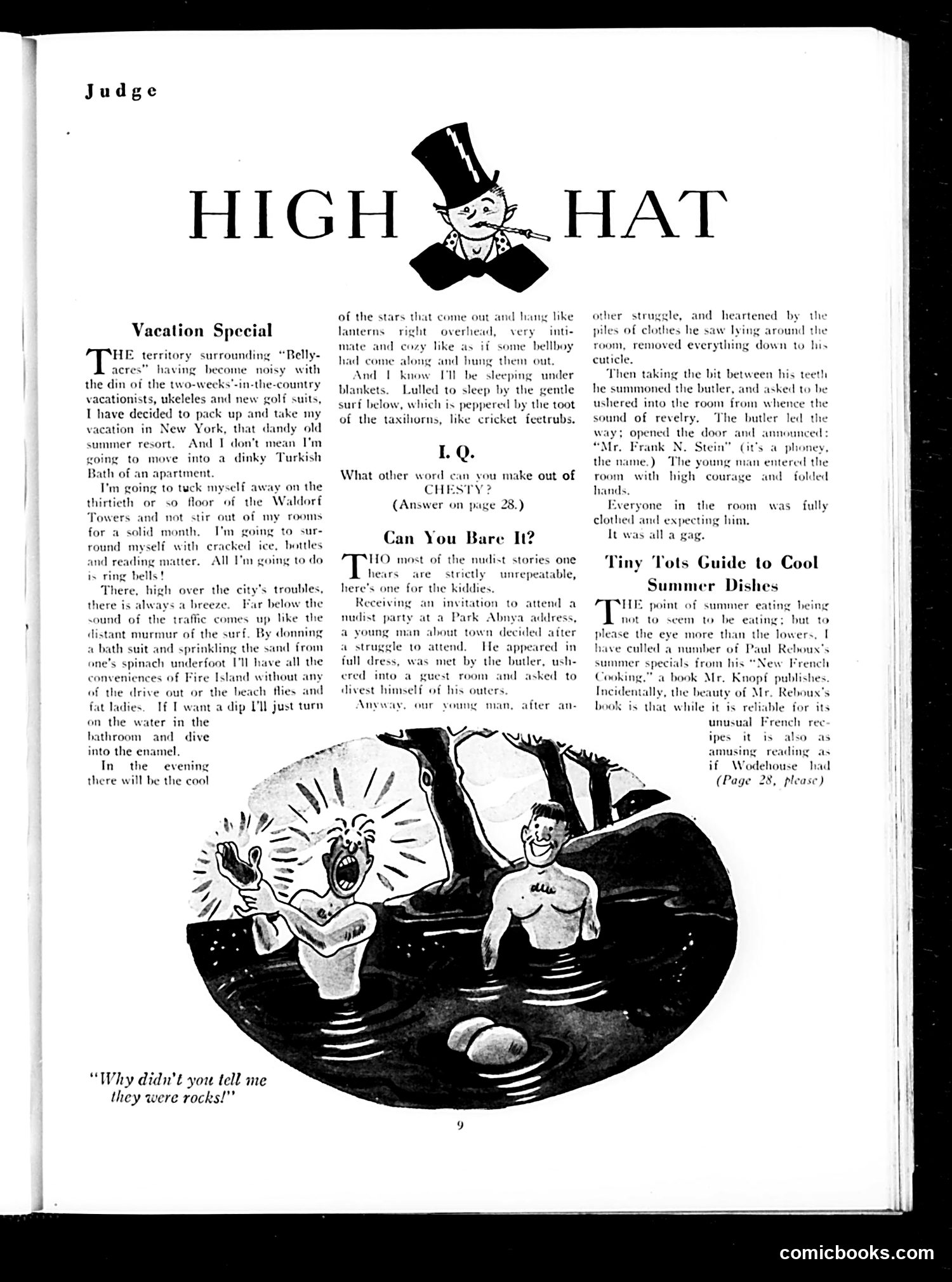
# Judge Magazine Page Analysis This page contains three humorous pieces typical of 1920s-30s satirical magazine content: **"High Hat" (Main Story):** A wealthy urbanite describes escaping summer crowds by retreating to a luxury hotel (the Waldorf Towers) rather than countryside resorts. The satire mocks pretentious wealth—he'll lounge in an apartment high above the city, treating the urban soundscape as romantic ("distant murmur of the surf"), while avoiding the "beach flies and fat ladies" of traditional vacation spots. **"Can You Bare It?"** A crude joke about a young man attending a nudist party. The punchline relies on the shock value of nudism itself (still scandalous/novel in this era), with the butler's announcement of "Mr. Frank N. Stern" apparently creating embarrassment. **Cartoon:** Shows two figures in water with the caption "Why didn't you tell me they were rocks?"—a simple visual gag about mistaking rocks for solid ground while swimming. The page also includes a puzzle ("I.Q.") and an advertisement for a French cooking book. The overall tone reflects Depression-era magazine humor focused on class commentary and mild sexual innuendo.
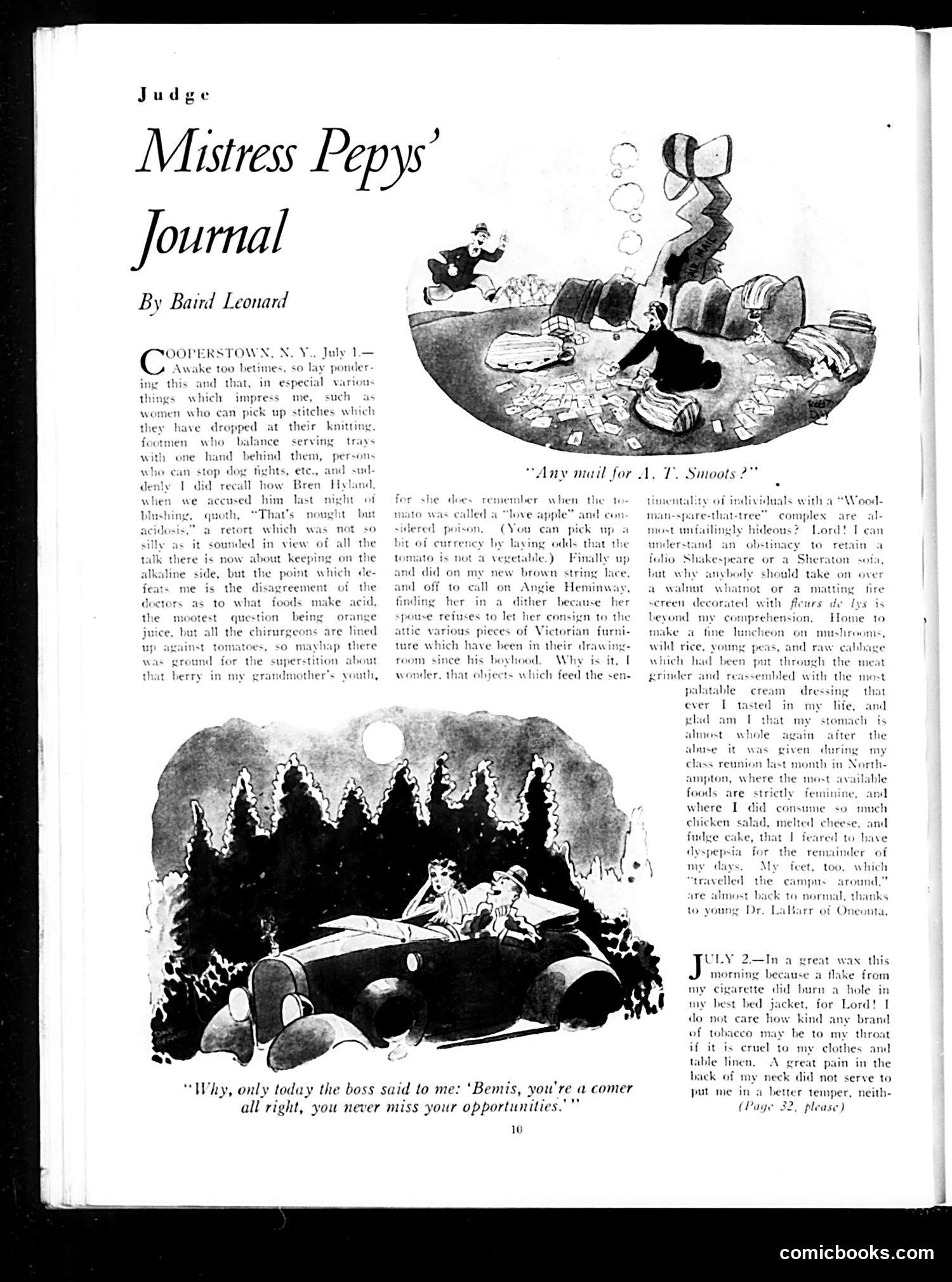
# Judge Magazine: "Mistress Pepys' Journal" This is a humor column by Baird Leonard spoofing Samuel Pepys' famous 17th-century diary. The author presents a female narrator's observations from July 1-2, written in mock-historical style mimicking Pepys' casual, gossipy tone. The satire targets upper-class domestic concerns: women's knitting skills, servants' incompetence, social calls, and Victorian furniture (walnut whatnots, Sheraton sofas). A running joke involves the narrator's digestive troubles and a disastrous class reunion featuring "strictly feminine" foods. The cartoon at bottom shows two figures in a car, illustrating an office anecdote where a boss encourages an employee ("Bemis") not to miss opportunities—comic contrast between workplace ambition and real-life mishaps (cigarette burns, indigestion). The humor relies on period-specific domesticity and gender stereotypes about women's preoccupations with housekeeping minutiae.