A complete issue · 37 pages · 1933
Judge — December 1933
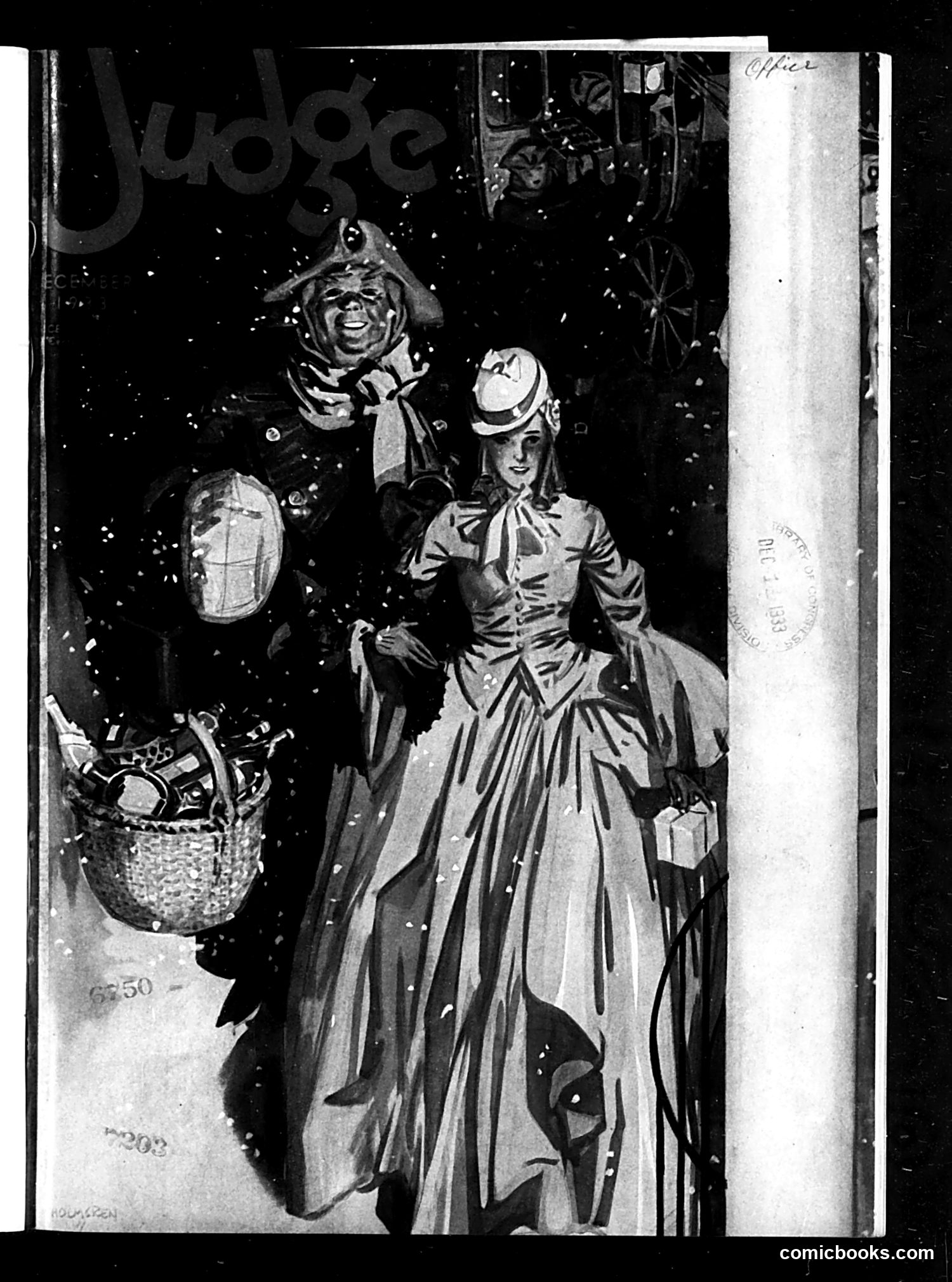
# Judge Magazine Page Analysis This appears to be a holiday-themed illustration from Judge magazine featuring two figures in festive attire. The image shows a woman in an elaborate dress with a decorative hat alongside a figure in a clown or jester costume with an exaggerated painted face. The style and composition suggest this is seasonal entertainment or holiday content rather than political satire. Without clear text visible connecting these figures to specific contemporary political figures or events, the exact satirical target remains unclear. The clown character and formal dress suggest this may mock artificial holiday cheer or contrast between refined society and theatrical entertainment. However, the OCR text provided doesn't clarify the intended meaning. This appears primarily illustrative rather than explicitly political in nature.
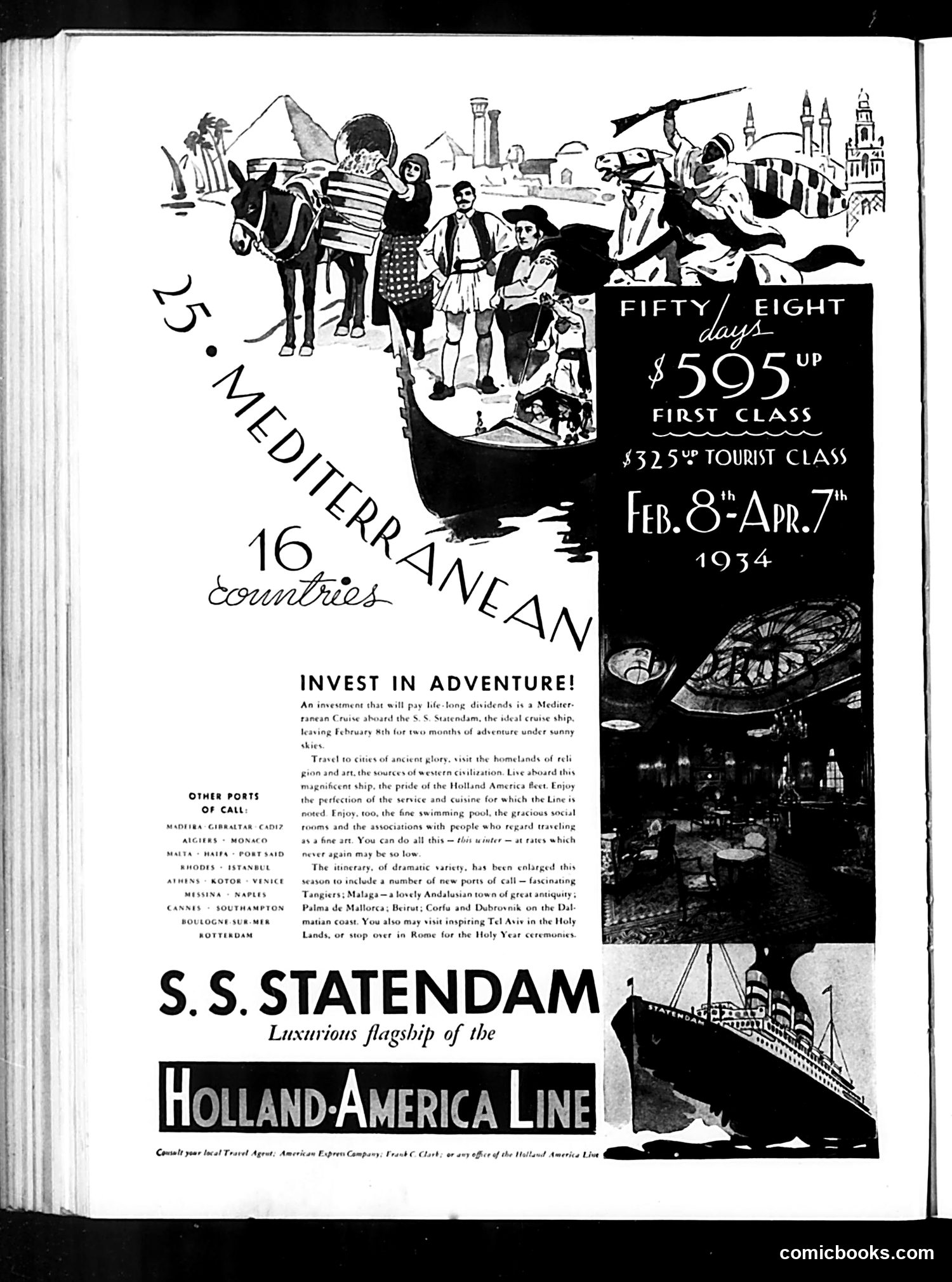
# Analysis of This Judge Magazine Page This page is **primarily a cruise ship advertisement**, not a political cartoon. It advertises the S.S. Statendam of the Holland-America Line, promoting a 58-day Mediterranean cruise departing February 8 - April 7, 1934. The illustrated header depicts tourists visiting various Mediterranean destinations across 16 countries—Egypt, Greece, Italy, and others. The illustration is generic tourist imagery rather than satire: travelers viewing pyramids, mosques, classical architecture, and cultural landmarks. The ad emphasizes luxury ("Invest in Adventure!"), amenities (swimming pool, fine dining), and accessibility across social classes (First Class $505+; Tourist Class $325+). This reflects 1930s leisure marketing to Americans during the Depression era, targeting those wealthy enough to afford extended international travel. No political satire is evident on this page.
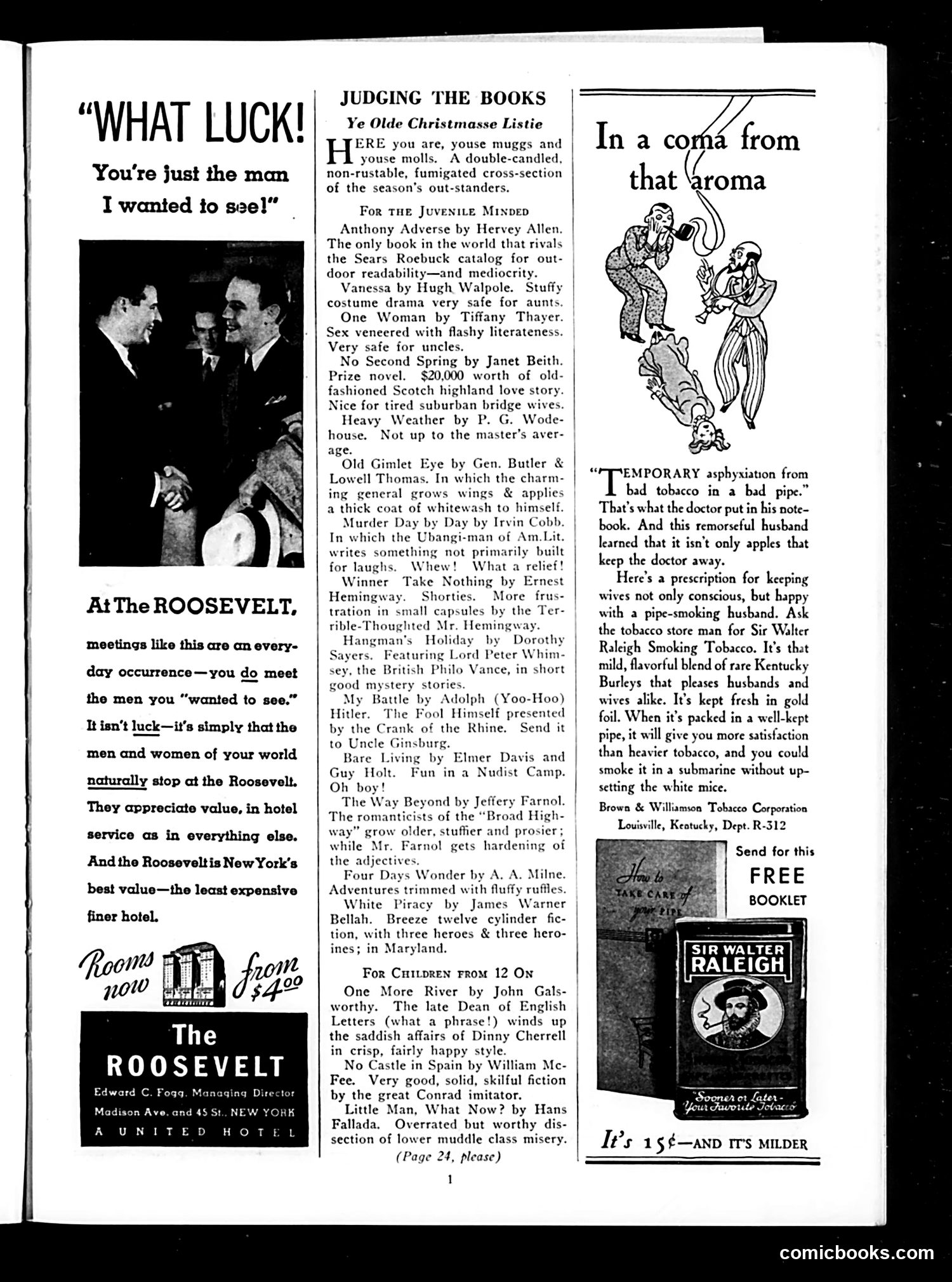
# Analysis This page is primarily **advertising and book reviews** rather than political satire. The dominant content is: 1. **Roosevelt Hotel advertisement** (left side): Promotes the hotel's value and convenience, claiming "meetings like this are an everyday occurrence—you do meet the men you 'wanted to see.'" The accompanying photograph shows three men in conversation, apparently demonstrating this social networking benefit. 2. **"Judging the Books" section** (center): A lengthy book review column recommending various titles for different audiences—juvenile readers, tired suburbanites, uncles, etc. 3. **Sir Walter Raleigh Tobacco advertisement** (right): Features an illustrated couple and promotes smoking as beneficial for marital happiness. The page reflects 1920s-30s consumer culture and advertising rather than political commentary.
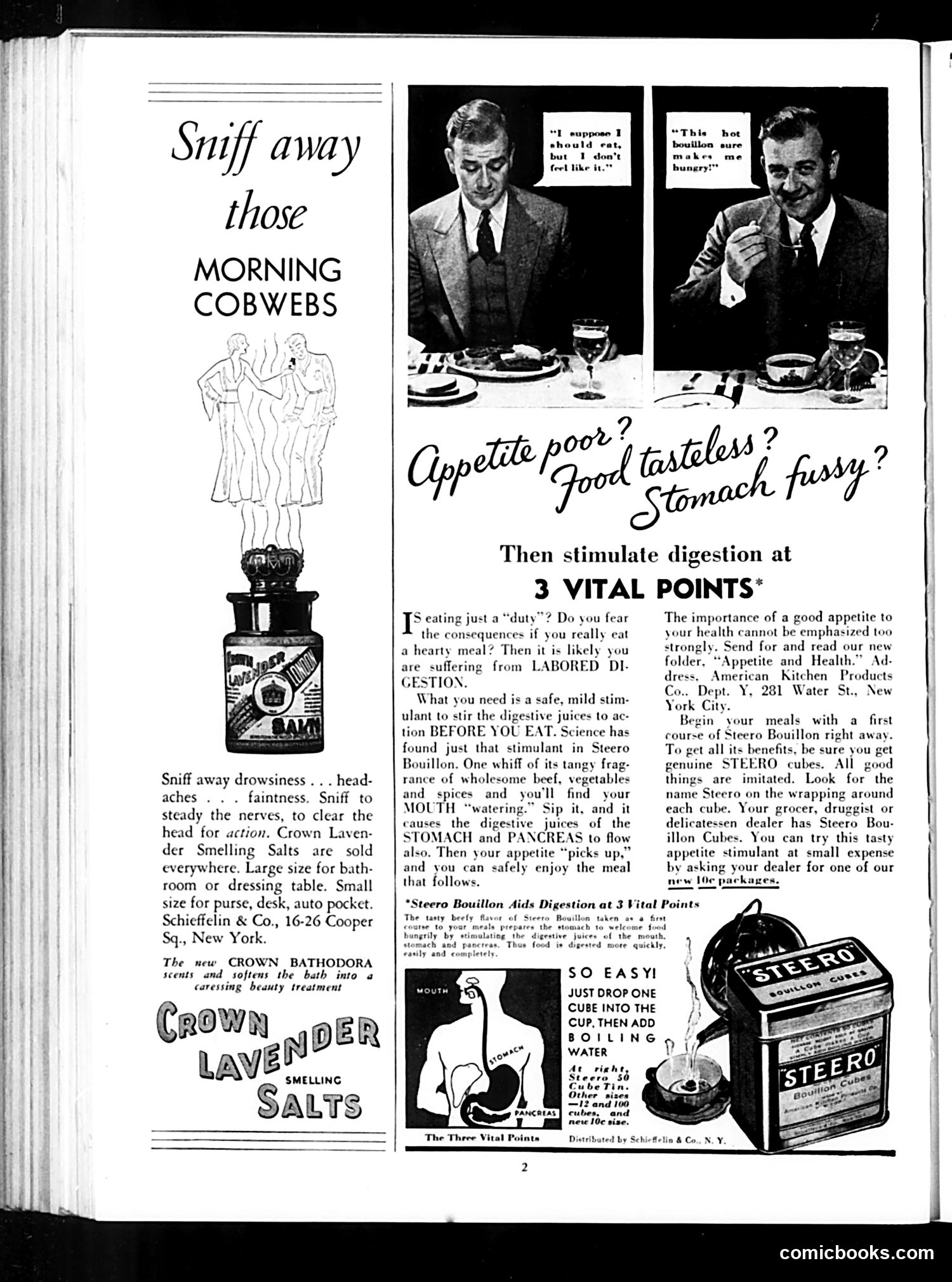
# Analysis This page is primarily **advertising rather than satire or political commentary**. It contains two main advertisements: 1. **Crown Lavender Smelling Salts** (left): Promotes the product for addressing drowsiness, headaches, and "faintness," with an illustration of women inhaling the salts. The ad references "Labored Digestion" as a concern. 2. **Steero Bouillon Cubes** (right): Features two men at meals discussing poor appetite and digestion problems. The ad promotes the bouillon cubes as a digestive aid that stimulates digestion "at 3 vital points" (mouth, stomach, pancreas). Instructions show how to prepare the product. Both advertisements reflect **early 20th-century patent medicine marketing**, promoting dubious health claims common to the era. There is no discernible political cartoon or satire on this page—it's straightforward period advertising.
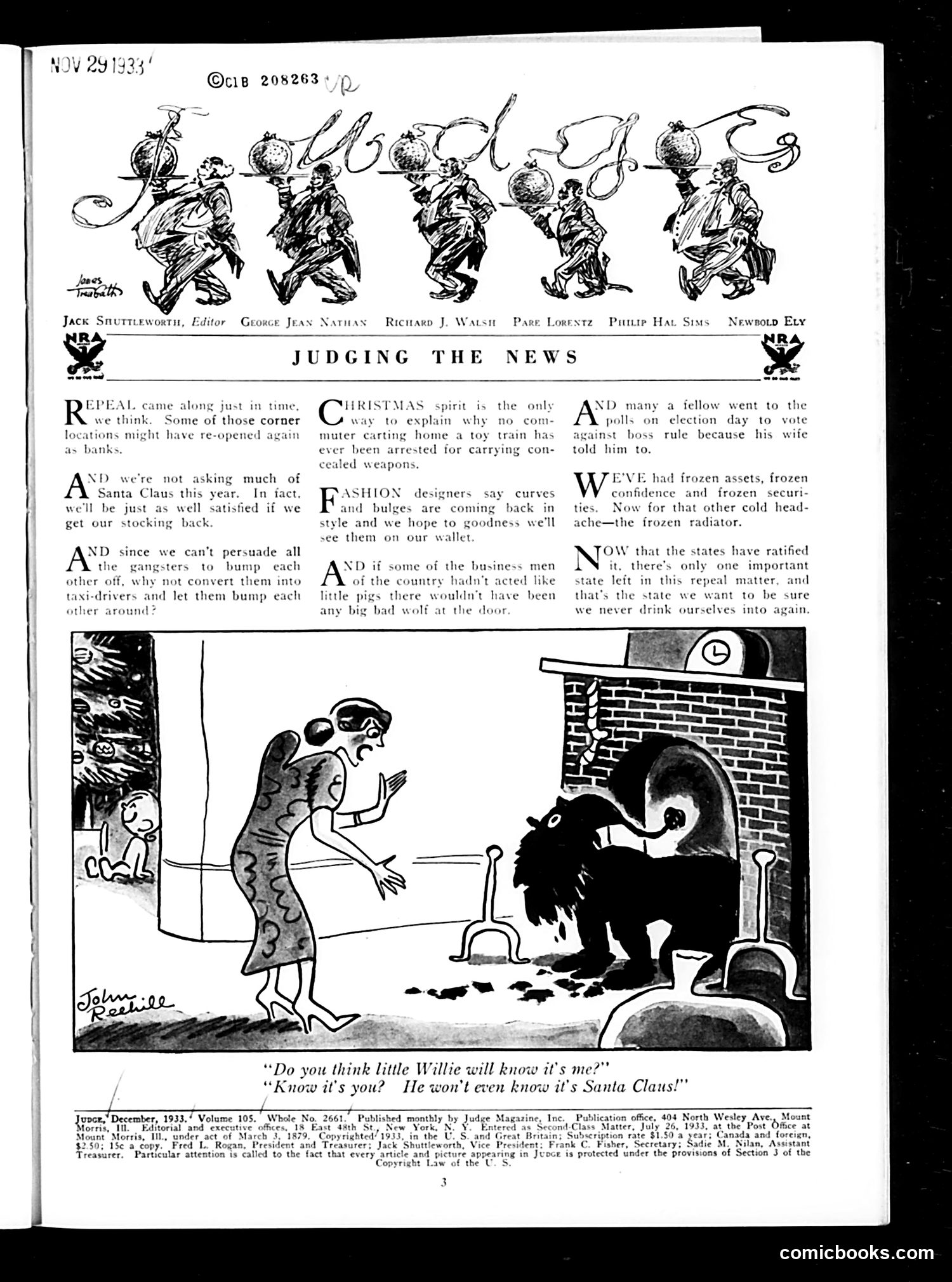
# "Judging the News" - November 29, 1933 This page presents editorial commentary on contemporary events through five caricatured figures juggling globes—likely representing editors or news commentators of the era. The main cartoon depicts a woman discovering a shaggy dog in her fireplace, asking "Do you think little Willie will know it's me?" with the punchline "I know it's you! He won't even know it's Santa Claus!" The commentary text addresses Prohibition's repeal, frozen assets from the Depression, and Prohibition-era bank robberies—topical issues of late 1933. The dog-and-Santa joke appears unrelated, likely a seasonal gag coinciding with Christmas preparation. The overall page mixes political/economic satire with domestic humor typical of Judge magazine's mixed editorial and entertainment content.
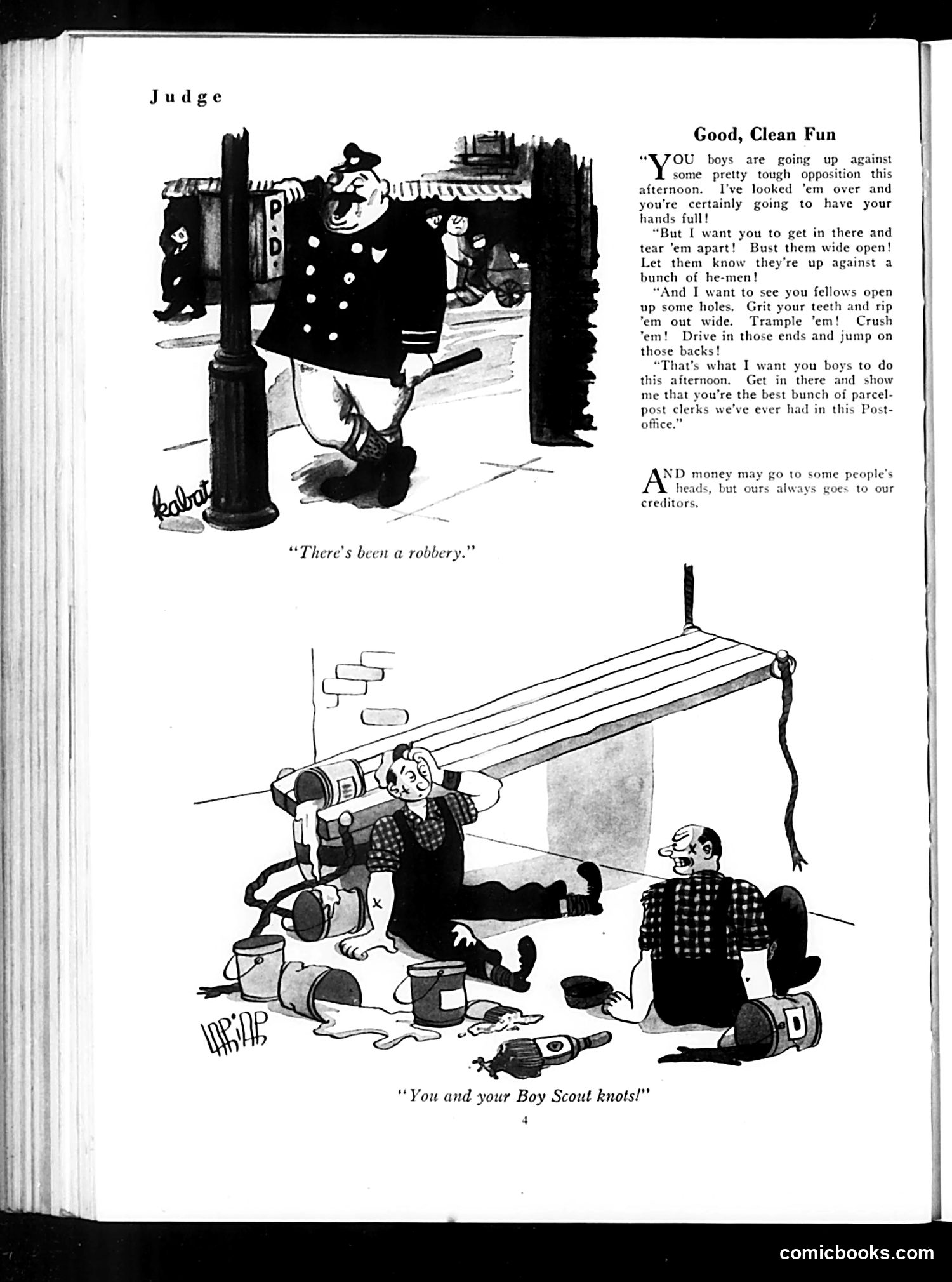
# Analysis of Judge Magazine Page This page contains two cartoons satirizing postal workers and management. **Top cartoon ("There's been a robbery")**: A policeman confronts a mail carrier about a robbery. The accompanying text presents a judge (likely a postal supervisor) giving an aggressive pep talk to mail carriers, urging them to act tough and fight back against criminals. The joke appears to target the postal service's incompetence or the irony of postal workers being blamed for robberies. **Bottom cartoon ("You and your Boy Scout knots!")**: Two postal workers struggle to untie a knot while surrounded by scattered mail. The satire criticizes poor organization or incompetence at the Post Office—the workers' inability to manage basic tasks, humorously attributed to faulty knot-tying skills. Both cartoons mock the postal service's operational failures and worker competence during this era.
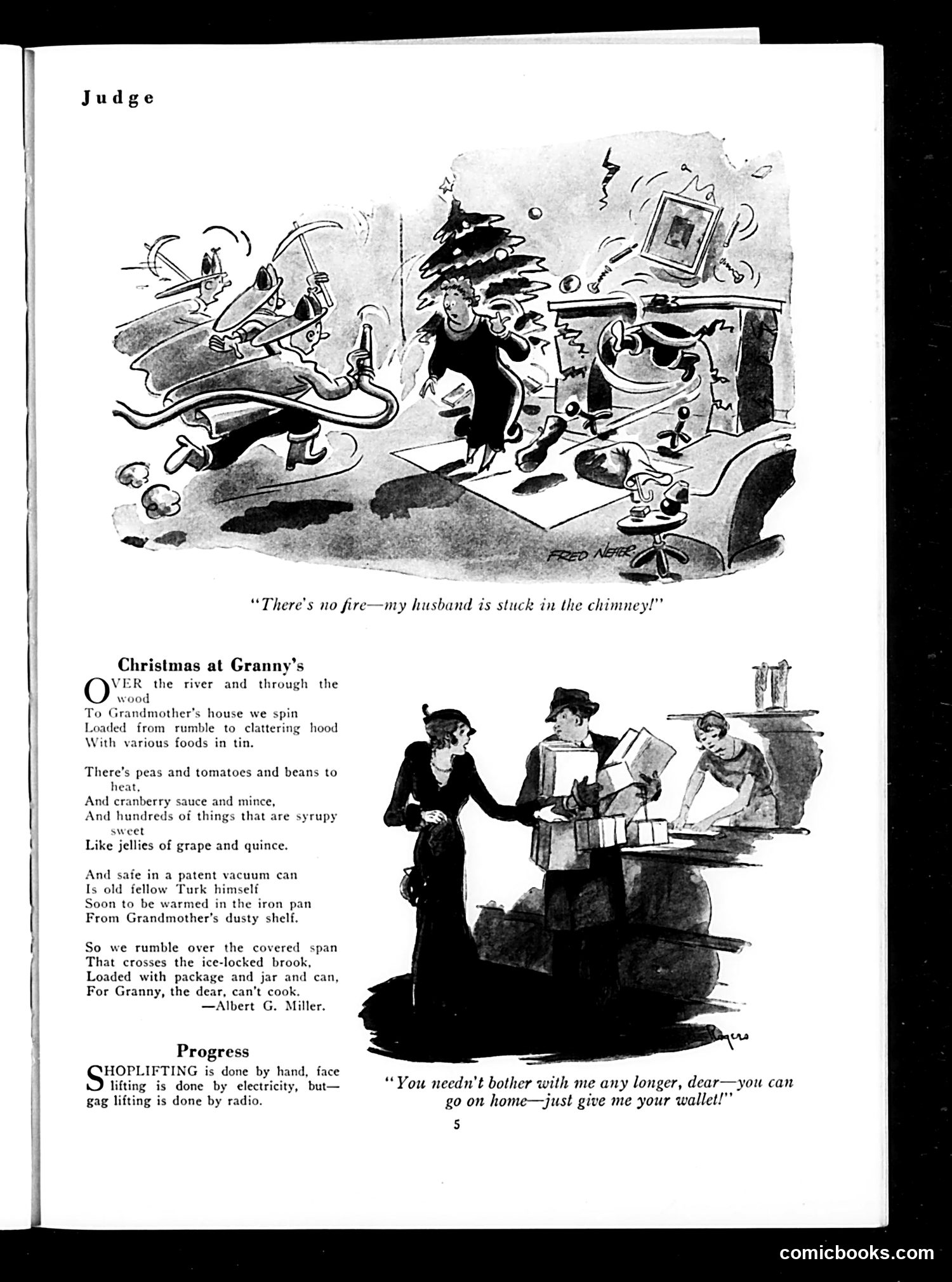
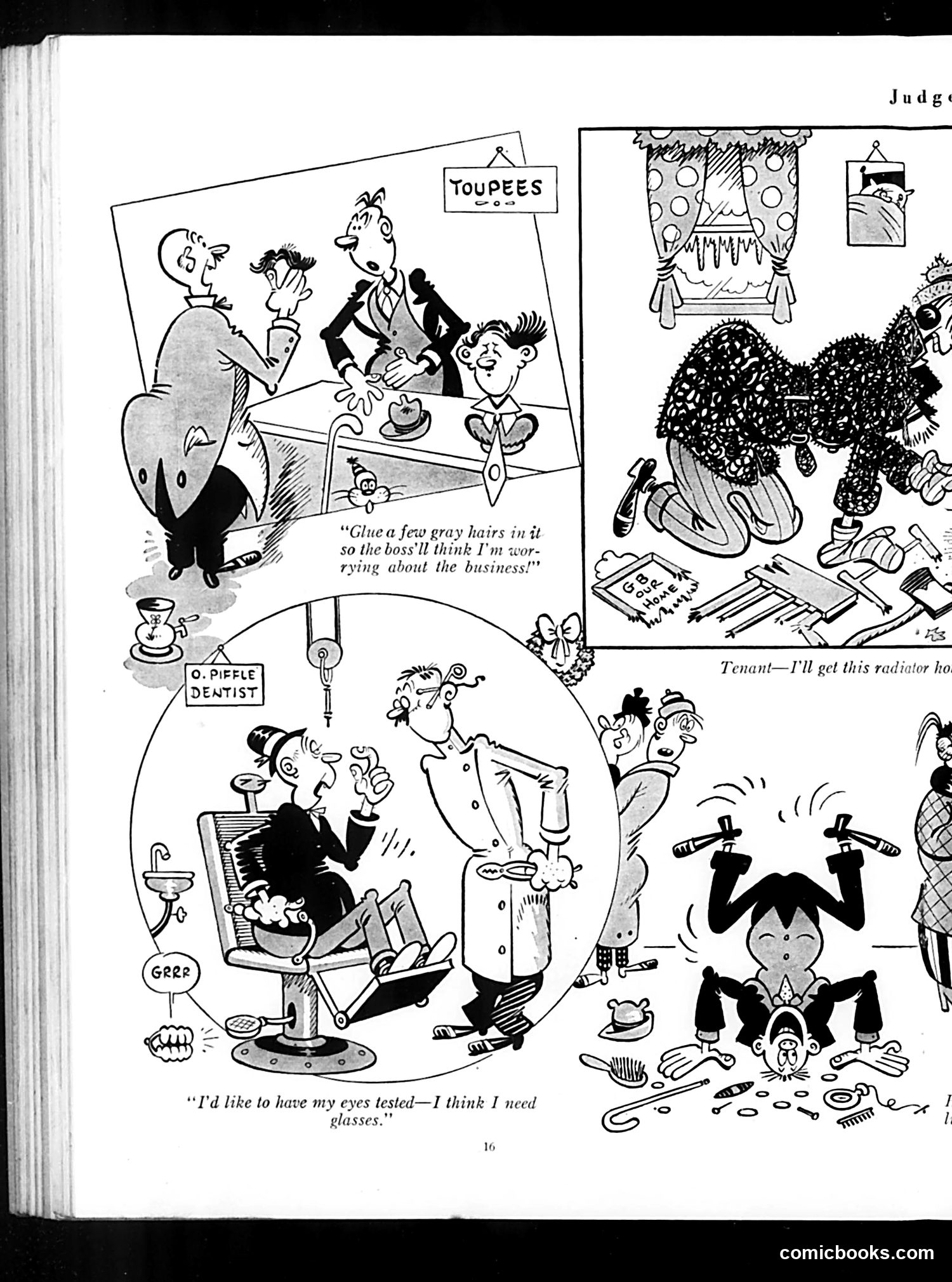
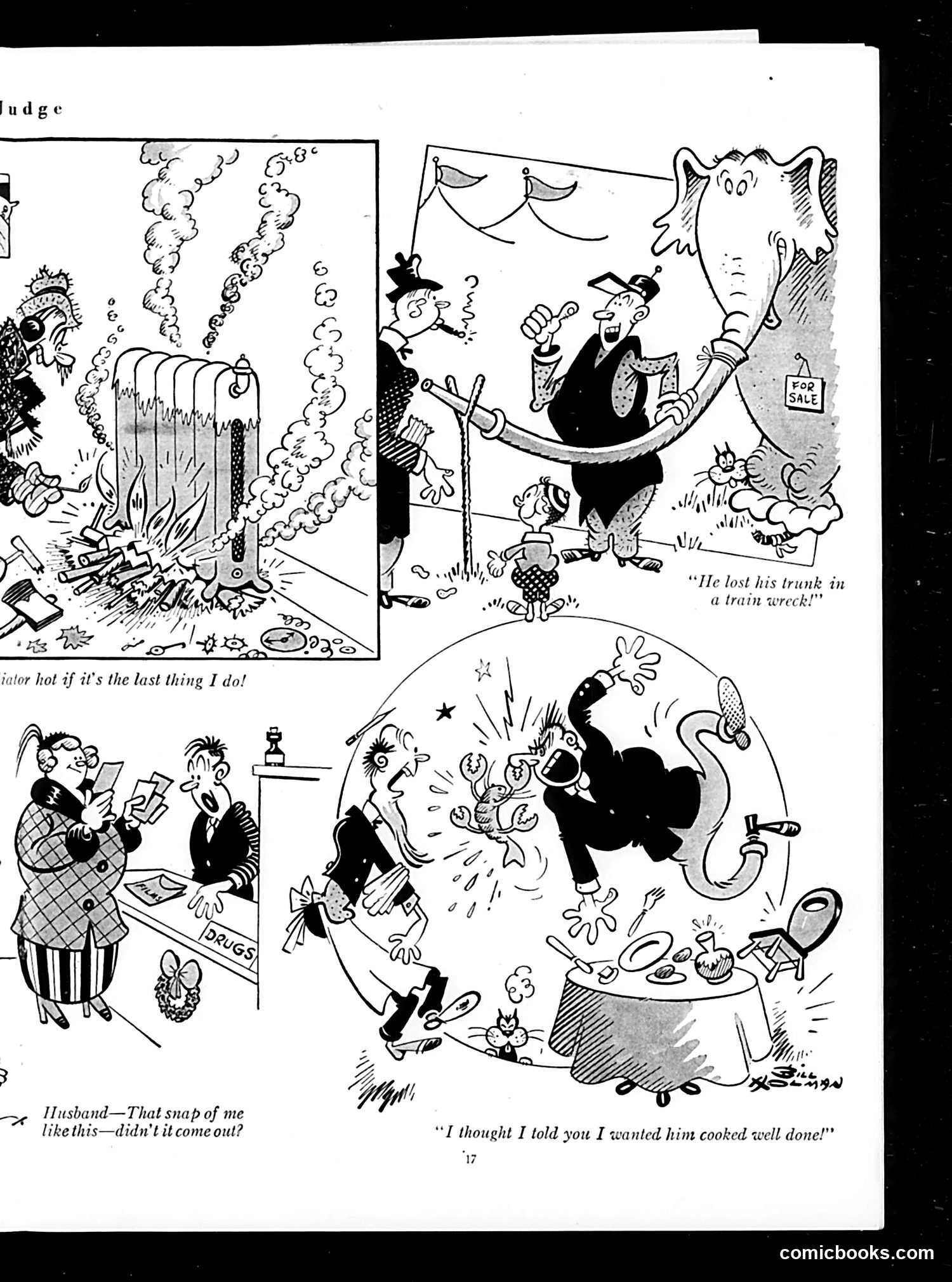
# Analysis of Judge Magazine Page **Top Cartoon ("Judge"):** A chaotic domestic scene shows a woman amid flying furniture and debris, exclaiming "There's no fire—my husband is stuck in the chimney!" This is a slapstick joke about a husband attempting to enter through the chimney (likely inebriated or foolish) and becoming wedged. The humor relies on physical comedy and marital discord. **"Christmas at Granny's":** An illustrated poem by Albert G. Miller depicting a family visiting grandmother's house laden with packages, describing the journey and feast awaiting them. It's sentimental holiday verse. **"Progress":** A brief joke contrasting old shoplifting methods (manual theft) with modern ones (radio-controlled gag lifting)—satirizing technological advancement applied to crime. The page blends humor, holiday sentiment, and social satire typical of early-20th-century Judge magazine.
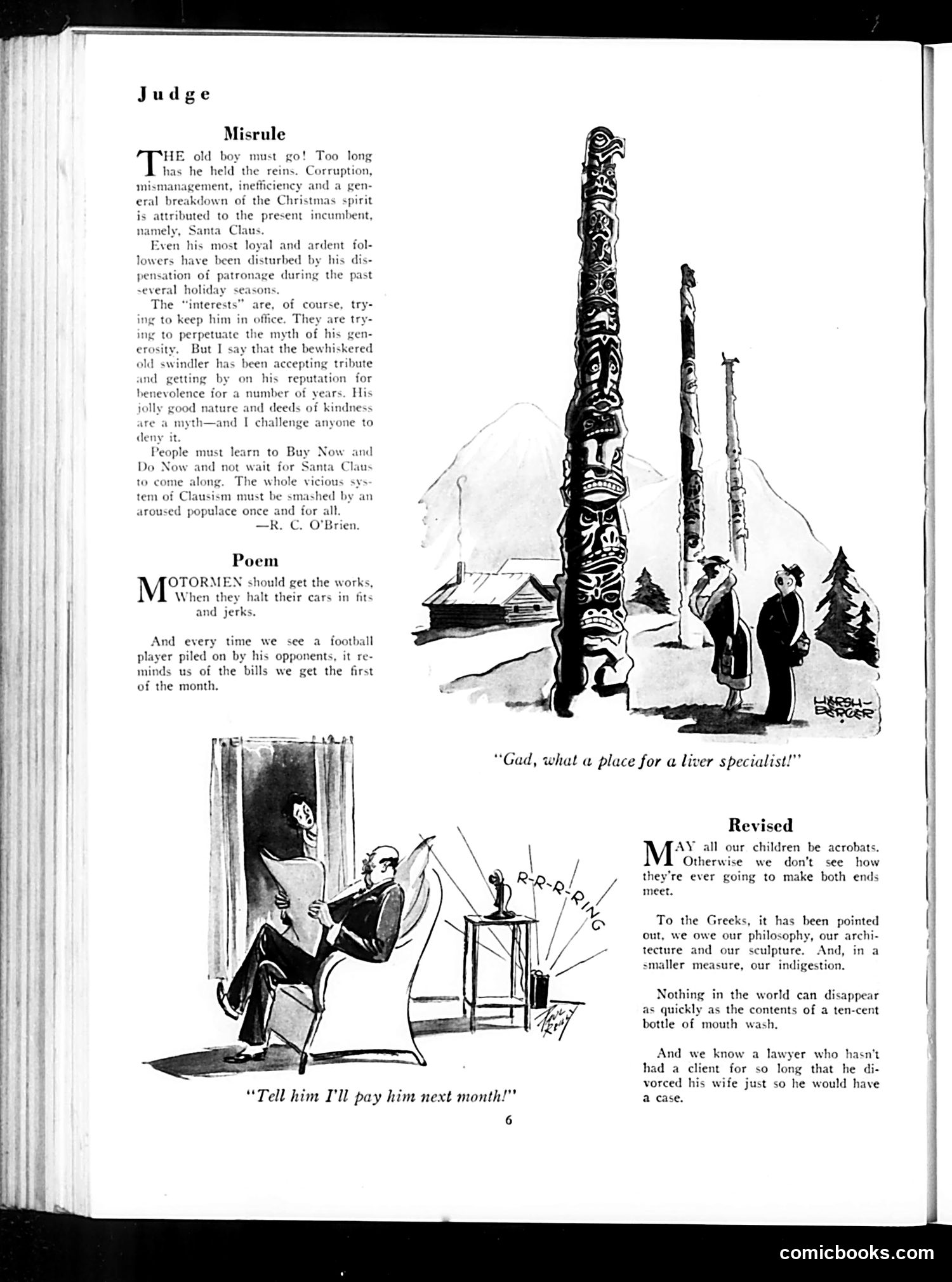
# Analysis of Judge Magazine Page This page contains satirical pieces critiquing American institutions: **"Misrule"** (attributed to R.C. O'Brien) attacks Santa Claus as a symbol of political corruption—arguing the "old boy" has held power too long through false generosity and myth-making. It's a call to reject consumer culture ("Buy Now and Do Now") in favor of immediate reform. **"Poem"** mocks motorists' aggressive driving and bills arriving after accidents. **"Revised"** uses Greek philosophy as a springboard for dark humor about contemporary life: acrobatic children, quick disappearances of resources, and a cynical observation about divorce. The cartoons illustrate these satirical points visually, with sketches showing financial disputes and Native American totem poles (setting unclear but suggesting remote location). The overall tone reflects early-20th-century American social criticism.
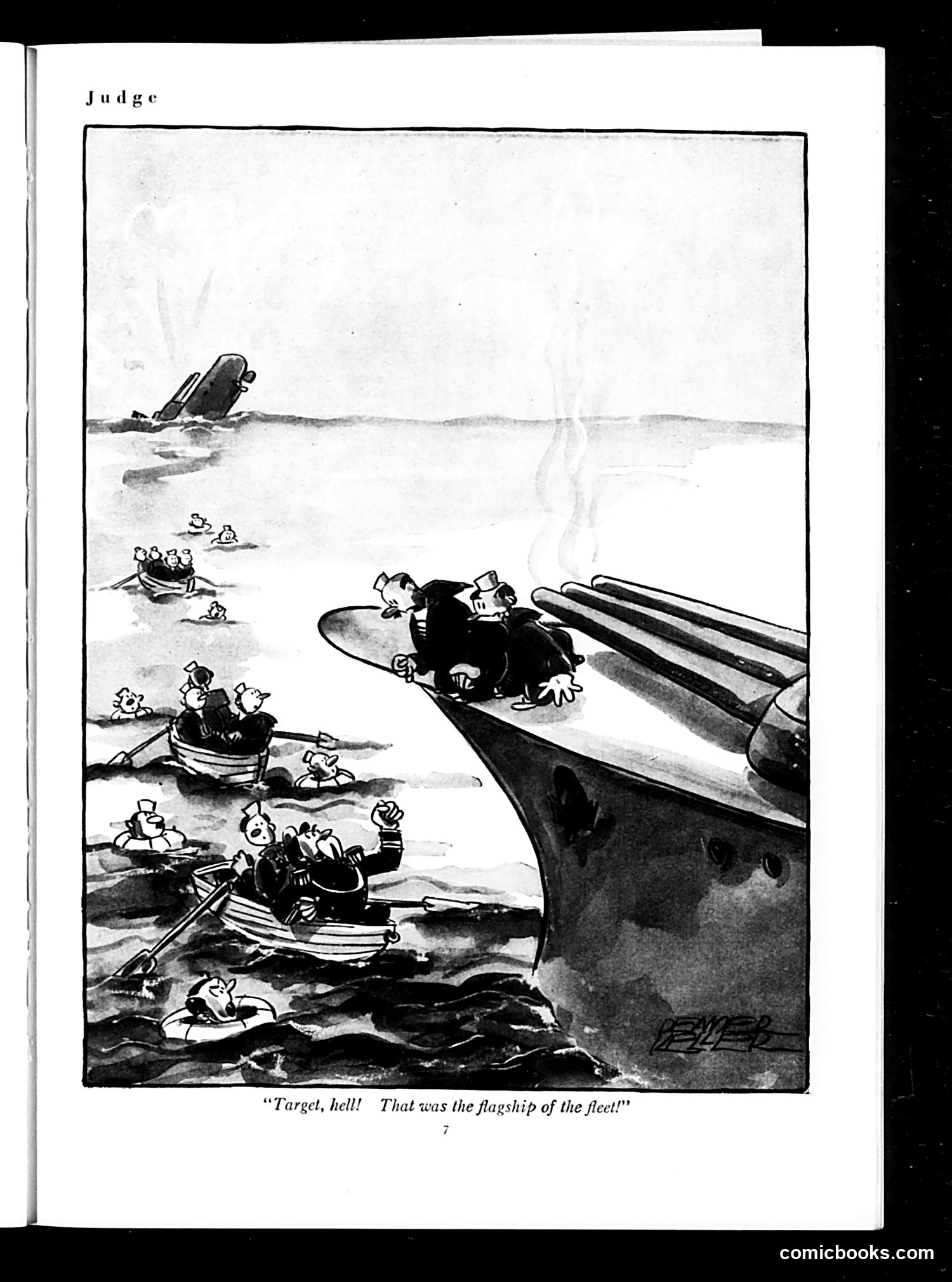
# Analysis This is a satirical cartoon titled "Judge" depicting a naval disaster. The image shows a large warship (right foreground) with small lifeboats and survivors scattered in the water. Two figures on the ship's deck exclaim that they've hit their target—but it turns out to have been "the flagship of the fleet," their own command vessel. The satire criticizes military incompetence or friendly fire incidents. The shocked reaction of the officers suggests the absurdity of destroying one's own flagship while attempting to hit an enemy target. Without additional context or visible dates, the specific historical incident remains unclear, but the cartoon mocks serious naval blunders and the consequences of poor judgment in warfare.
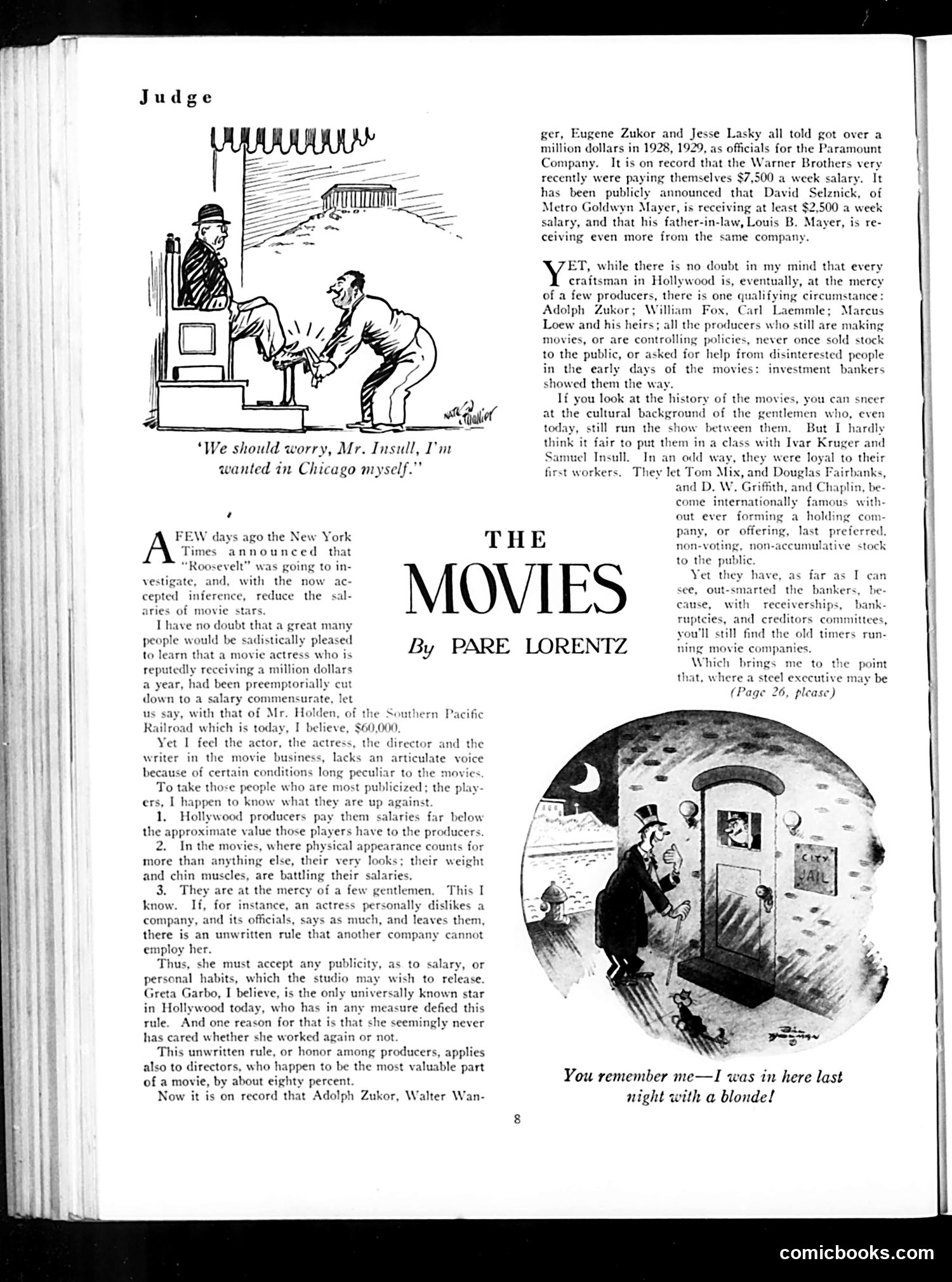
# Explanation for Modern Readers The top cartoon satirizes Samuel Insull, a prominent utilities magnate who faced legal troubles in Chicago (he was indicted in 1932 for fraud). The judge warns a defendant about his salary, and the defendant replies he's also "wanted in Chicago"—equating the defendant's minor legal problem with Insull's major scandal. The main article by Pare Lorentz criticizes Hollywood's power structure. It argues that studio moguls like Adolph Zukor, Louis B. Mayer, and the Warner Brothers pay actors far below their market value, enforce blacklists against difficult employees, and extract enormous personal salaries (millions yearly) while controlling everything. Lorentz defends these moguls slightly—unlike financial swindlers like Insull and Ivar Kruger, they at least didn't defraud the public and helped early stars become famous. Still, the piece exposes the exploitative system where a few executives hold absolute power over performers' careers.
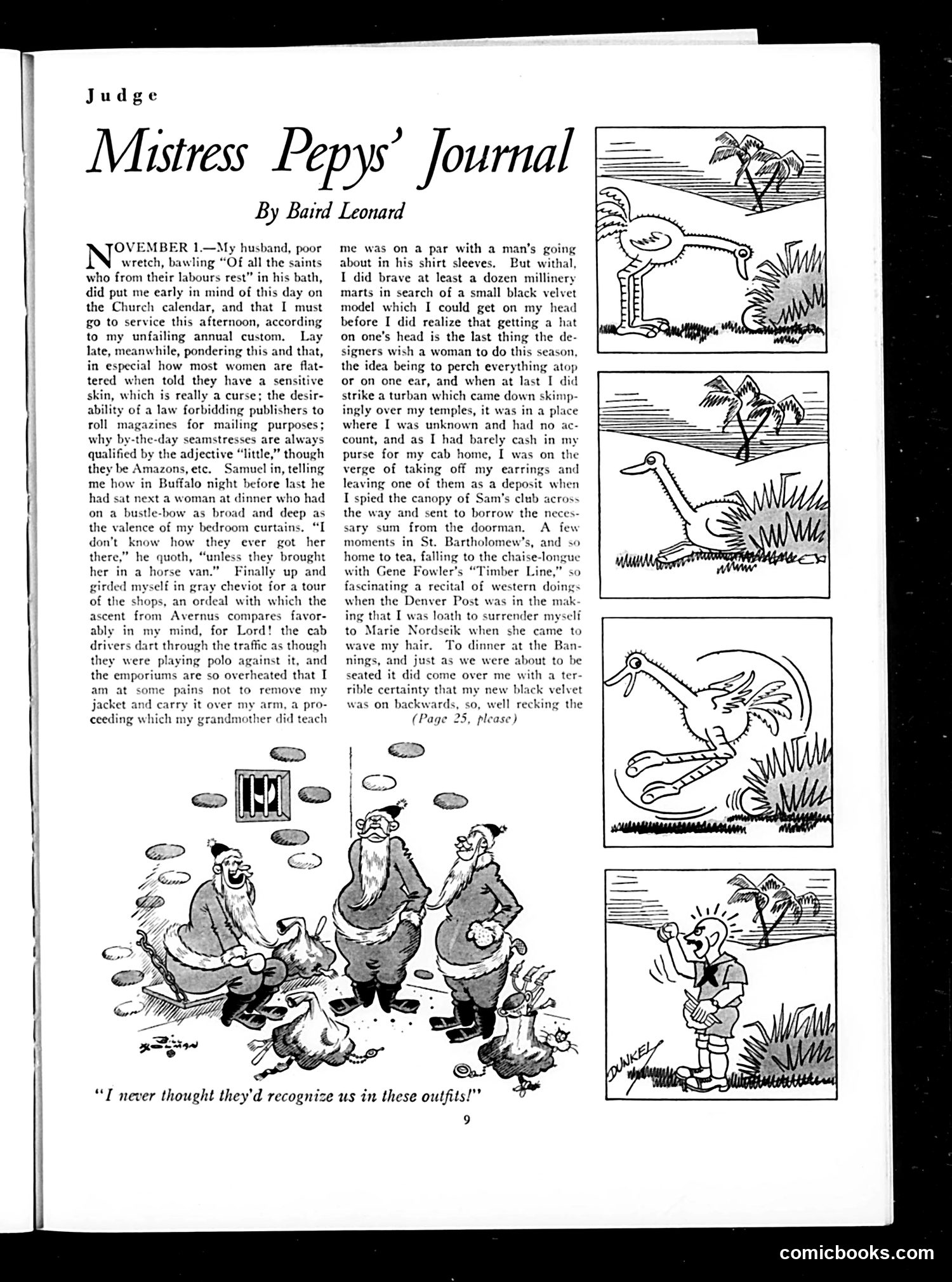
# Mistress Pepys' Journal: A Modern Reader's Guide This is a humorous column mimicking Samuel Pepys' famous 17th-century diary, but set in contemporary (1920s-30s) society. The narrator—a society woman—recounts her November day in comic, self-deprecating fashion. The satire targets women's fashion obsessions: she spends hours shopping for an impossible hat (designers intentionally make hats unwearable), worries about hat placement, and discovers mid-dinner her new velvet dress is on backwards. The column mocks upper-class concerns: sensitive skin vanity, shipping magazines, cab drivers' recklessness, overheated department stores, and social embarrassment. The cartoon below shows three disguised figures at a bonfire with the caption "I never thought they'd recognize us in these outfits!"—a visual punchline about costumes and disguises, likely referencing a Halloween or masquerade context. The piece is genteel satire of privileged women's trivial preoccupations.
# Judge Theatre Column: George Jean Nathan's Critical Survey This is a theatre review column by Judge's drama critic, covering Broadway productions from what appears to be the early 1930s (references to NRA code suggest pre-1935). Nathan humorously complains about attending eight to nine plays weekly, comparing his workload to NRA labor regulations. He reviews several shows: "As Thousands Cheer" (highly praised), the political musical sequel "Let 'Em Eat Cake" by Kaufman and Ryskind (good but overly clever), "The Green Bay Tree" (intelligent English import about "abnormal males"), and several detective plays. Nathan praises strong performances while criticizing weak scripts and overwrought wit. The tone is witty self-deprecation—Nathan positions himself as exhausted yet conscientious, mocking both theatrical mediocrity and his own critical pretensions. This is professional theatre criticism masquerading as casual complaint.