A complete issue · 36 pages · 1932
Judge — May 14, 1932
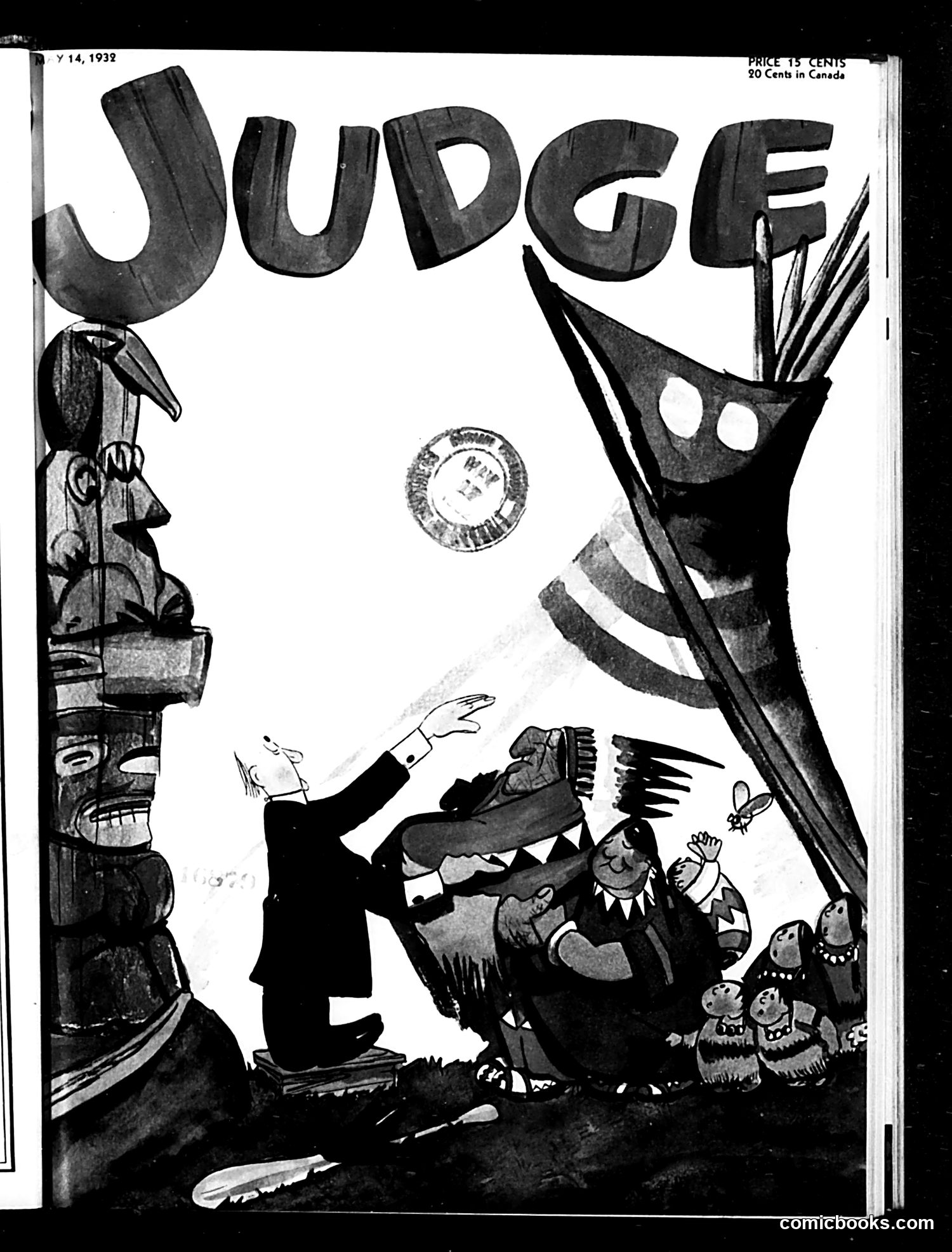
# Judge Magazine Cover Analysis - July 14, 1932 This political cartoon satirizes the **1932 presidential campaign** during the Great Depression. The large "JUDGE" letters dominate the composition, with a tall, menacing figure (likely representing a political opponent or threat) looming over smaller caricatured figures below. The scene depicts chaos and conflict—a man in formal dress appears to be kicking or fighting against others, suggesting political turmoil. The smaller figures likely represent ordinary citizens or political rivals being trampled during this turbulent election period. The totem pole on the left suggests Native American imagery, possibly commenting on American traditions or values under threat. Overall, the cartoon criticizes the violence and disorder characterizing 1932's contentious presidential race between incumbent **Herbert Hoover** and challenger **Franklin D. Roosevelt** amid economic crisis.
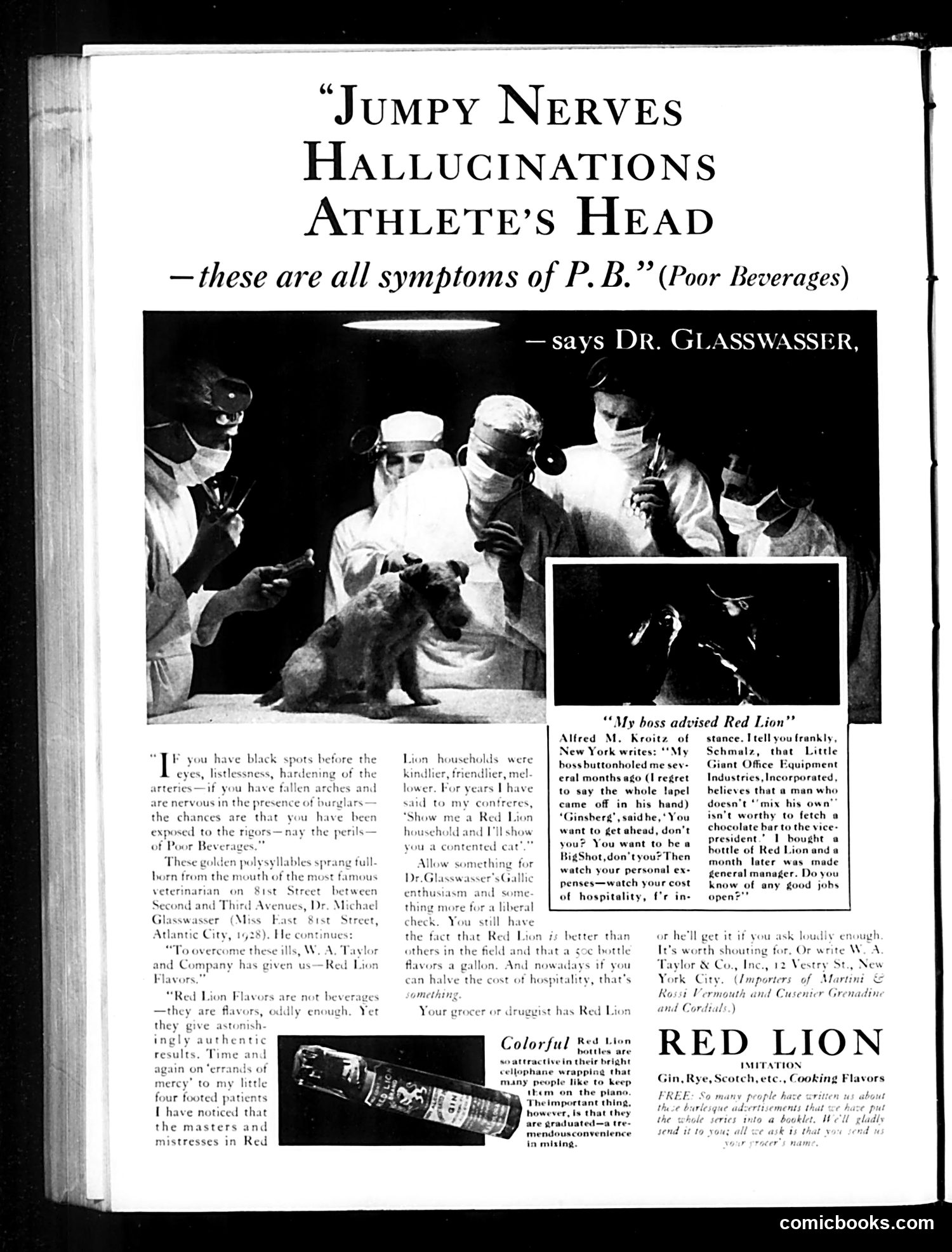
# Analysis This page is primarily **advertising masquerading as editorial content**—a common Judge magazine practice. The headline satirizes "Poor Beverages" (abbreviated "P.B.") by claiming they cause nervousness and hallucinations, attributing this to "Dr. Glasswasser." The main image shows what appears to be a **medical or laboratory demonstration** with people examining a lion, likely parodying pseudo-scientific endorsements. The inset testimonial from "Alfred M. Kroitz" sarcastically describes a boss promoting **Red Lion imitation whiskey/flavoring** as if it were quality liquor—the humor derives from the absurdity of marketing cheap substitutes with dubious health claims. The bottom advertises **Red Lion brand flavoring** (gin, rye, scotch, cooking flavors), using the satire to actually *promote* the product to readers who'd recognize the joke. This reflects early 20th-century attitudes toward alcohol, patent medicines, and aggressive advertising claims.
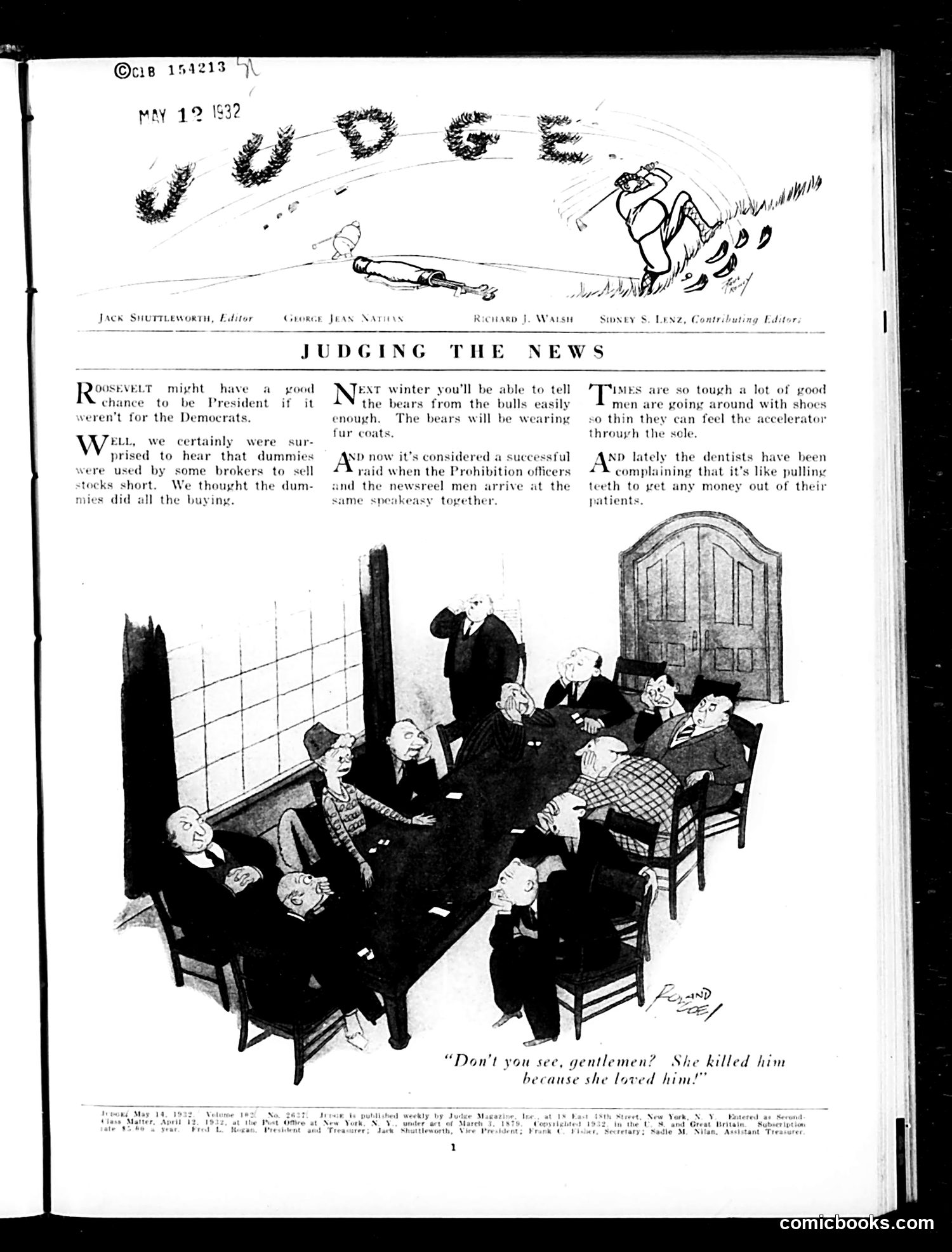
# "Judging the News" - May 12, 1932 This page contains four brief satirical comments on current events, paired with cartoons: 1. **Roosevelt and Democrats**: A joke suggesting Roosevelt might have become President if not for Democratic opposition—likely referencing internal party tensions. 2. **Bears and Prohibition**: A winter forecast quip about bears wearing fur coats while Prohibition officers and "newsy men" meet at speakeasies—satirizing the widespread flouting of Prohibition laws. 3. **Shoe accelerators**: A joke about shoes with built-in accelerators—apparently mocking some fashion trend or advertisement. 4. **Dentists**: A quip about dentists extracting money from patients. The main cartoon depicts a courtroom scene where a woman explains killing someone "because she loved him"—likely referencing a contemporary trial or crime story, though the specific case is unclear from this page alone.
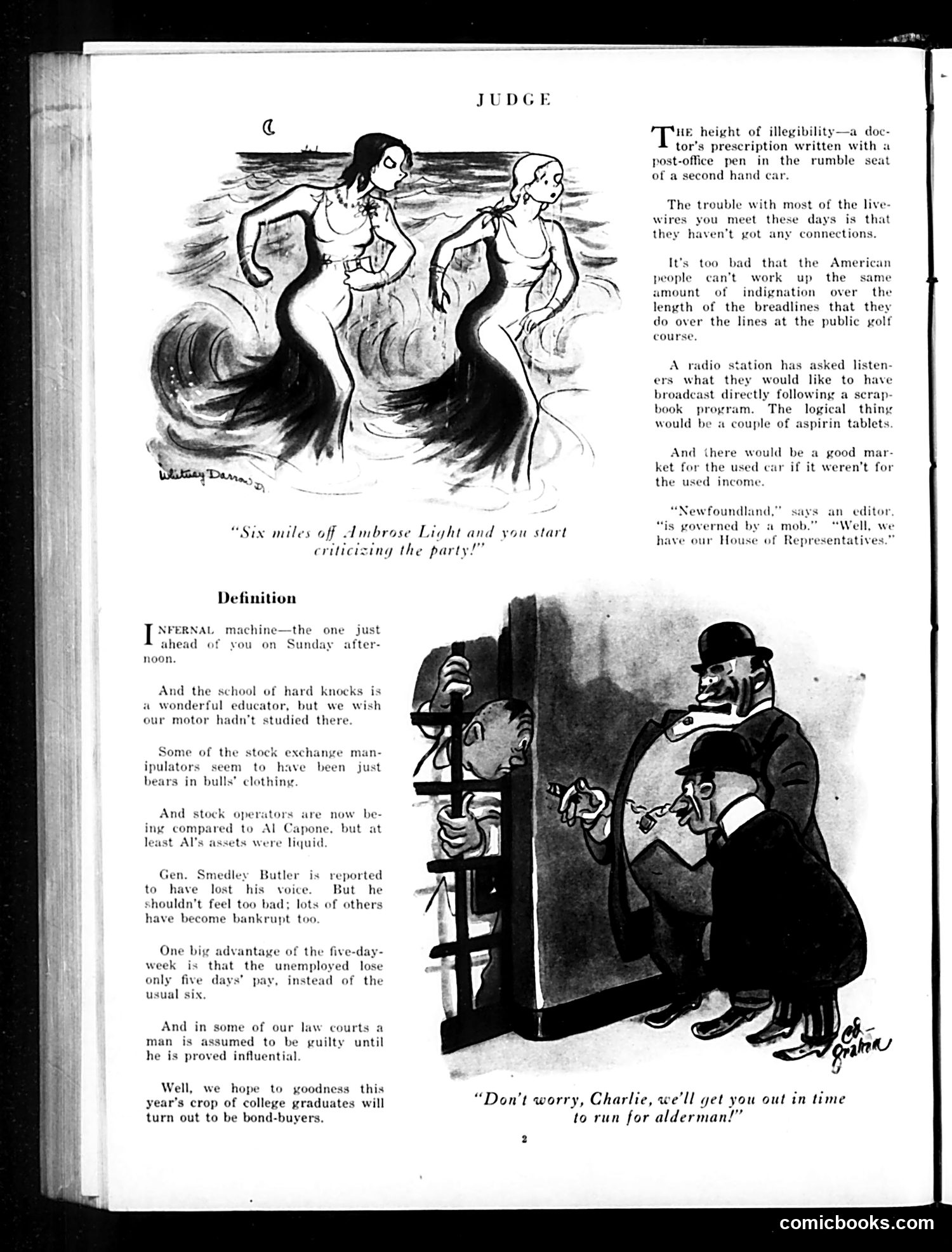
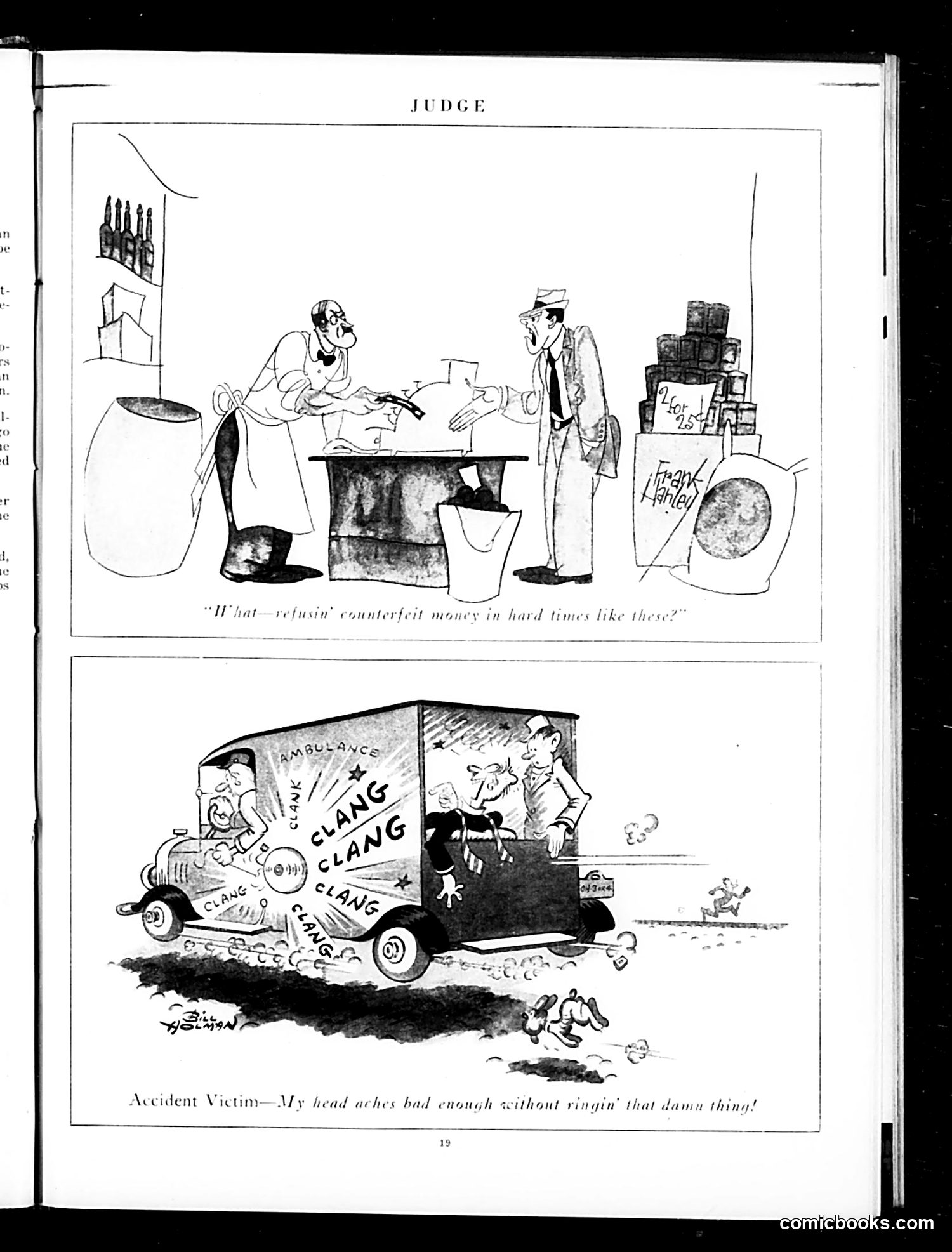
# Analysis of Judge Magazine Page **Top Cartoon ("Judge"):** Two mermaids criticize a party six miles off Ambrose Light (a navigation marker near New York). The satire targets wealthy socialites' frivolous behavior during economically troubled times—the implicit critique being that the leisure class parties carelessly while others suffer. **Bottom Cartoon ("Definition"):** A traffic cop helps a man described as "Charlie" toward a lamppost, saying he'll "get you out in time to run for alderman." This satirizes corrupt urban politics, suggesting that even police involvement in minor infractions could be manipulated for political advancement—a jab at machine politics and the cozy relationship between law enforcement and city government. Both pieces use humor to critique 1920s American excess and political corruption.
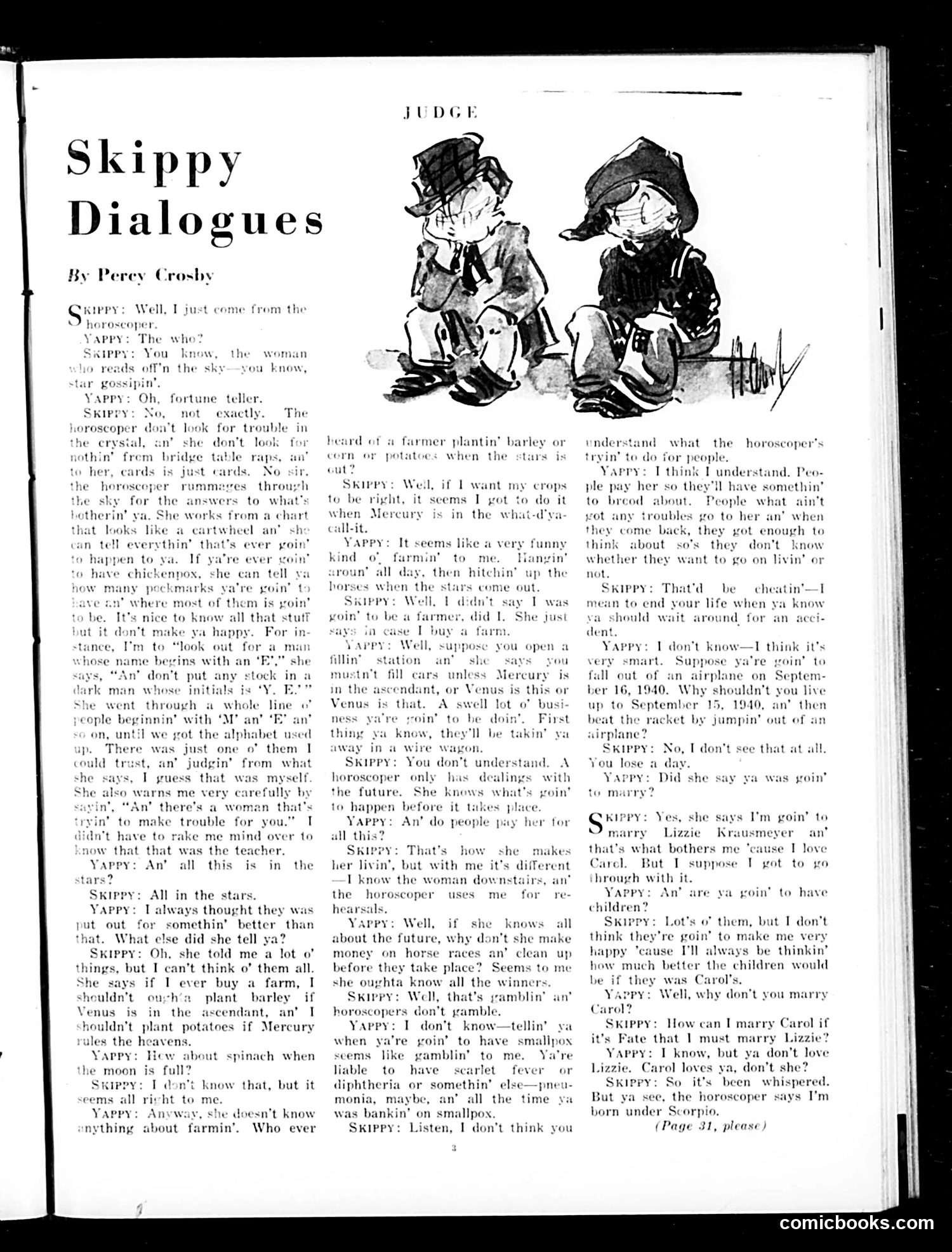
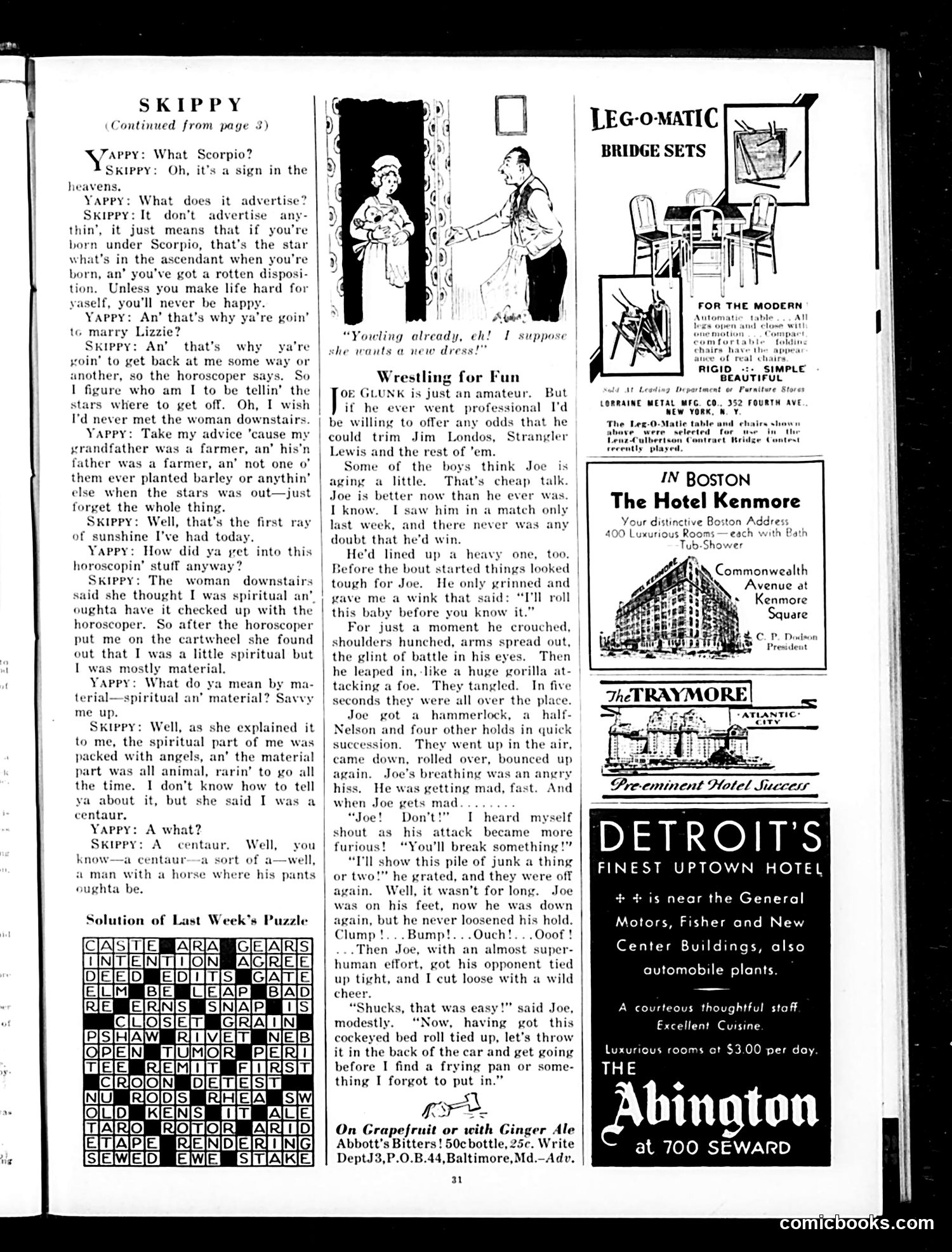
# "Skippy Dialogues" by Percy Crosby This page features a dialogue comic between two young characters—Skippy and Yappy—discussing fortune telling and astrology. The satire targets people's credulity about horoscopes and their influence on everyday decisions. The joke centers on a woman horoscopist who makes her living predicting futures and advising clients on auspicious timing for activities like farming, marriage, and horse racing. Skippy and Yappy mock how people—despite the horoscopist's obvious financial motivation—trust her predictions about "Mercury" and planetary positions to guide major life choices. The cartoon satirizes the popularity of fortune-telling culture, suggesting it preys on gullible believers willing to delay marriage or make other decisions based on celestial superstition rather than reason.
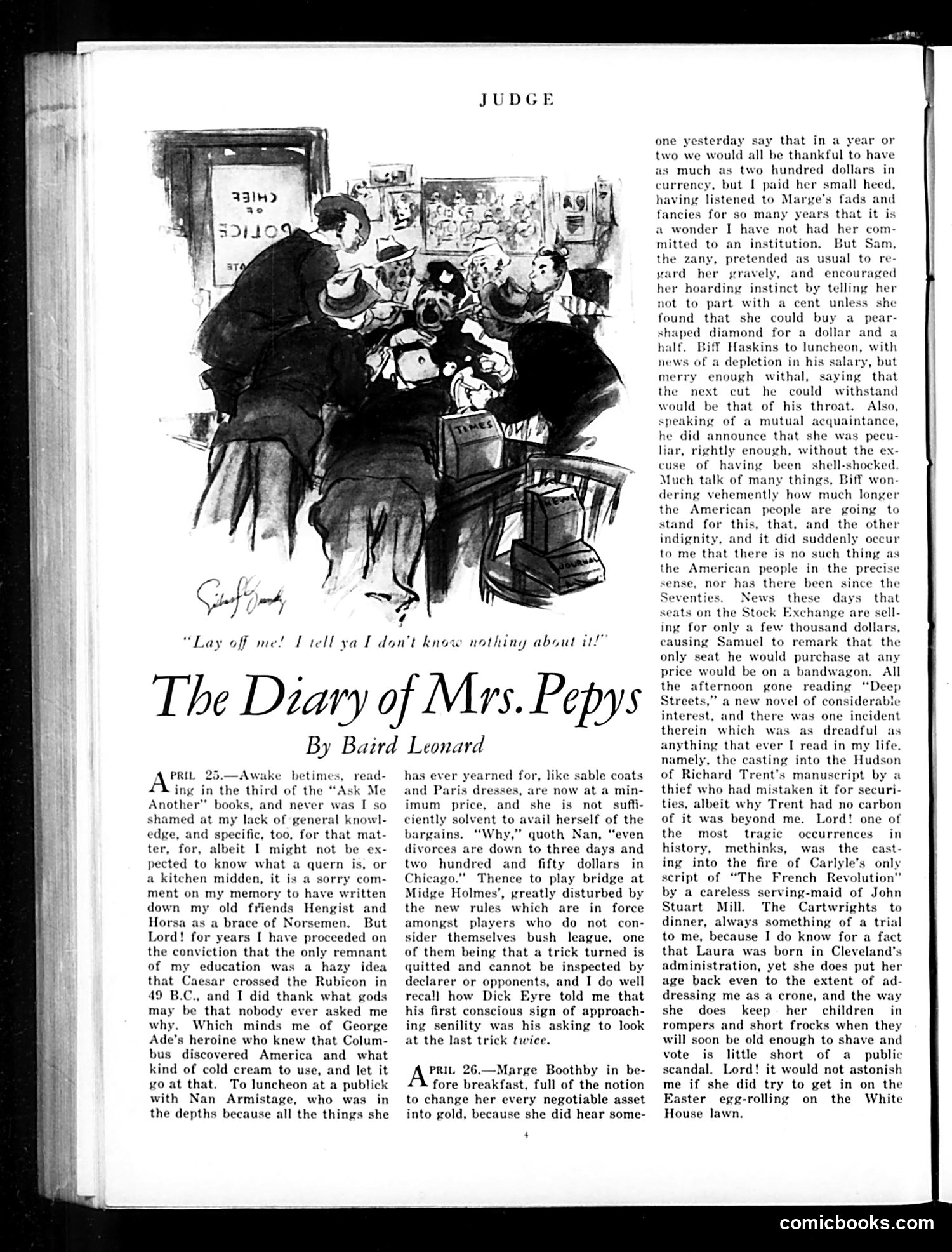
# Analysis of Judge Magazine Page This page contains "The Diary of Mrs. Pepys" by Baird Leonard, a satirical column mimicking Samuel Pepys's famous historical diary. The accompanying sketch depicts a crowded interior scene with multiple figures in apparent conversation or conflict. The diary entries (April 25-26) mock high-society concerns of the era: women's fashion (Paris dresses, sable coats), divorce frequency ("down to three days"), bridge-playing etiquette, and financial anxieties during stock market speculation. References to the Hudson River and Richard Trent's manuscript suggest contemporary New York scandals. The satire targets upper-class preoccupations—materialism, gossip, marital instability, and speculative greed—by presenting them through the lens of 17th-century diary conventions, highlighting how little truly changes in elite social behavior across centuries.
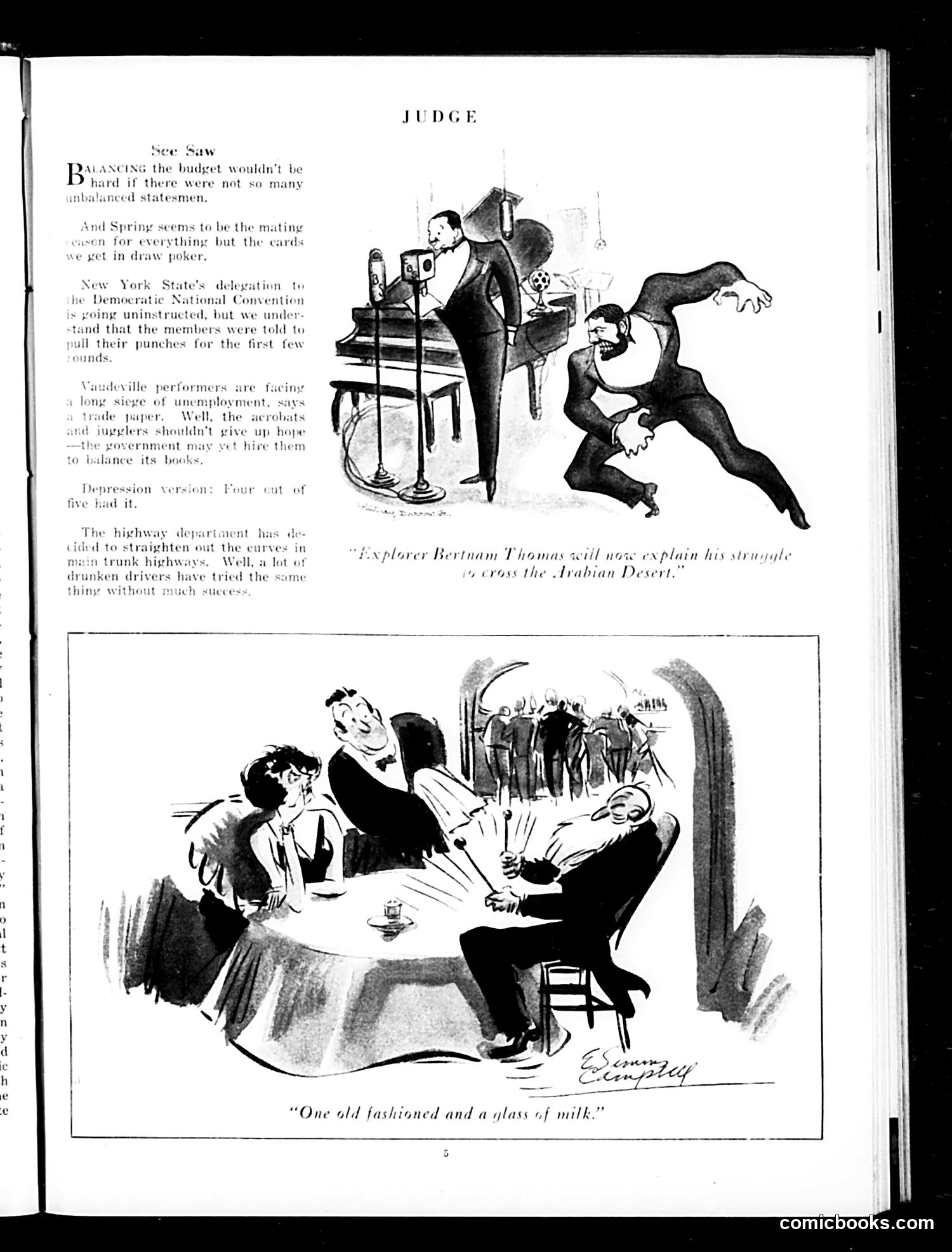
# Judge Magazine Political Satire Page **Top Cartoon:** "Explorer Bertram Thomas will now explain his struggle to cross the Arabian Desert." The cartoon mocks explorer Bertram Thomas by showing him literally struggling against two caricatured figures pulling him in opposite directions—apparently satirizing the difficulty or absurdity of his expedition narrative. **Bottom Cartoon:** "One old fashioned and a glass of milk." This appears to be a social satire about generational differences, showing what seems to be an older gentleman ordering a simple drink while younger figures around a table react with apparent surprise or judgment. The page's text discusses political matters (Democratic National Convention, budget issues, unemployment) and entertainment (vaudeville performers), typical of Judge's satirical commentary on 1920s-30s American politics and culture.
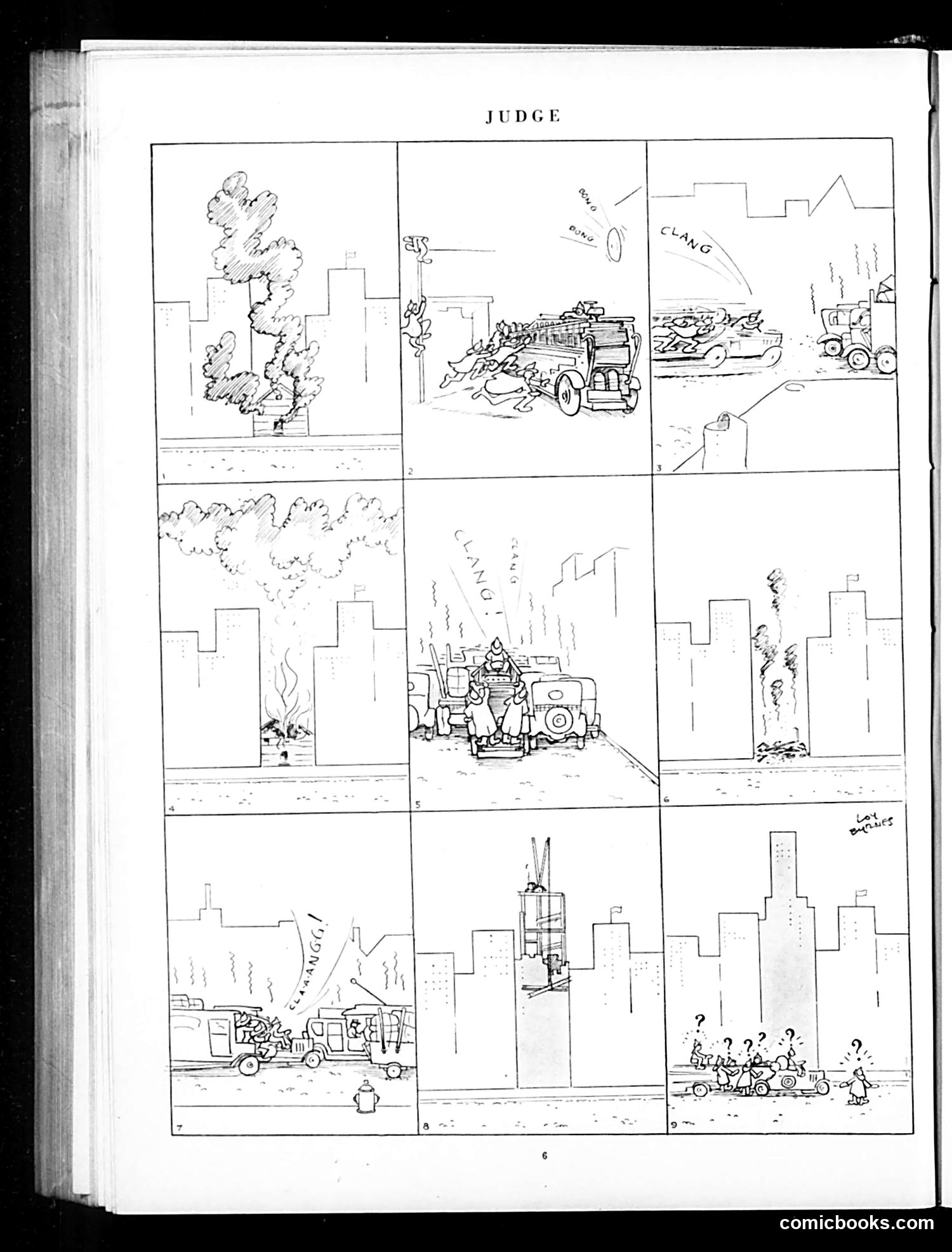
# JUDGE Page Analysis This page titled "JUDGE" appears to be a multi-panel comic strip satirizing urban sanitation and waste management. The narrative follows a garbage truck and its operators through a city environment. The strip depicts the truck collecting refuse, with sound effects like "CLANG" marking the collection process. The repeated appearance of question marks in the final panels suggests confusion or uncertainty about the truck's ultimate destination or purpose. The satire likely critiques municipal waste handling systems—possibly inefficiency, unsanitary conditions, or the disconnect between collection and proper disposal. The exaggerated expressions and slapstick-style action emphasize the chaos of urban refuse management during the early-to-mid twentieth century when such services were less regulated or systematized. The exact political target remains unclear without additional context.
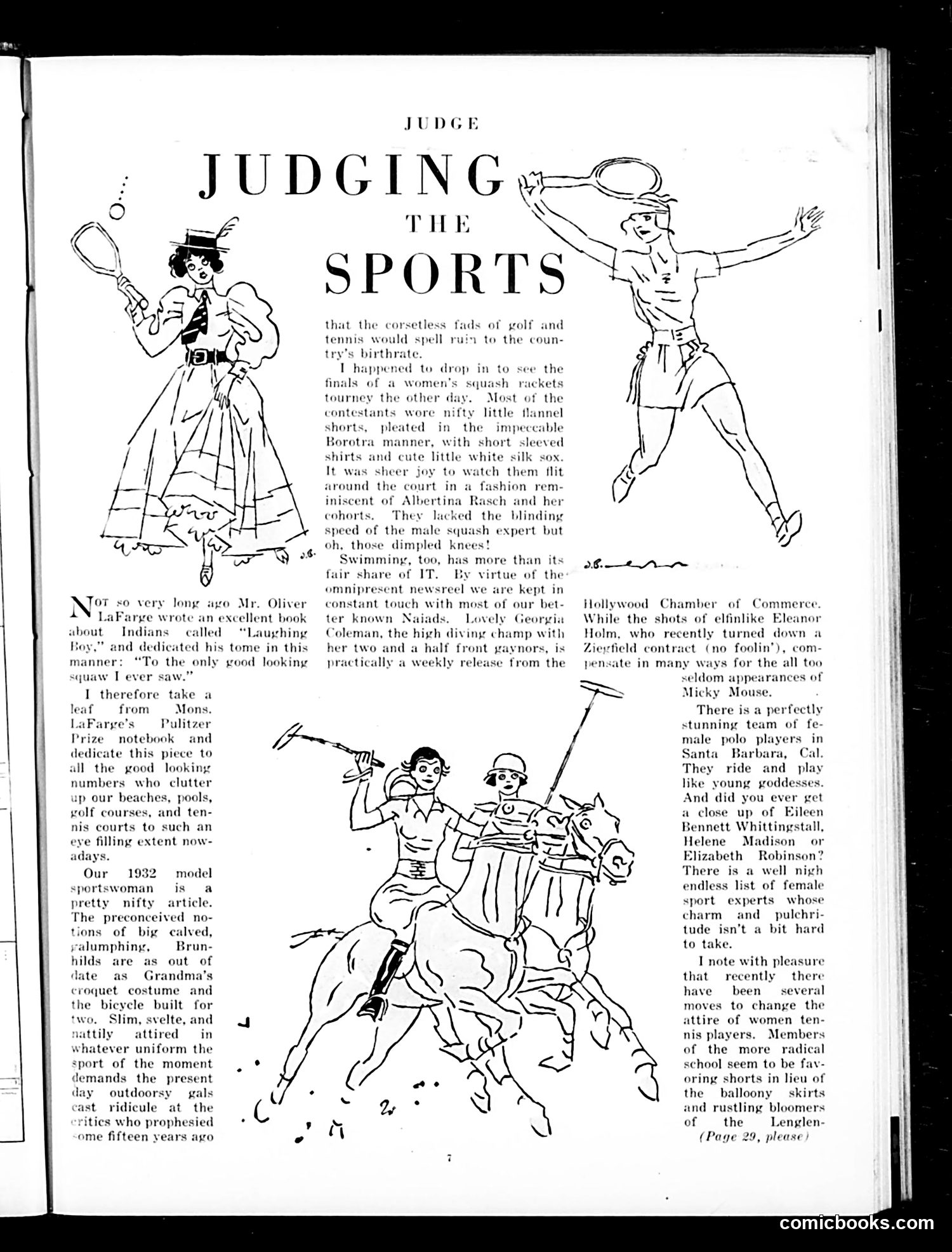
# "Judging the Sports" (Judge Magazine, 1932) This satirical article celebrates the modern 1932 sportswoman, contrasting her with outdated stereotypes. The author mocks earlier critics who predicted that "corsetless" women playing golf and tennis would harm the nation's birthrate—fears that have proven baseless. The piece celebrates athletic women's fashion and appearance: female squash players in elegant pleated shorts, swimmers like diving champion Georgia Coleman and Eleanor Holm, and polo players in Santa Barbara. The author names real sports figures (Eileen Bennett Whittingstall, Helene Madison, Elizabeth Robinson) as examples of charming female athletes. The satire targets old-fashioned moralists who opposed women's athletic participation and revealing sportswear. By praising both women's athletic ability and their physical attractiveness, the article ironically validates the very "corsetless fads" critics had condemned, suggesting modernity has vindicated women's liberation through sports.
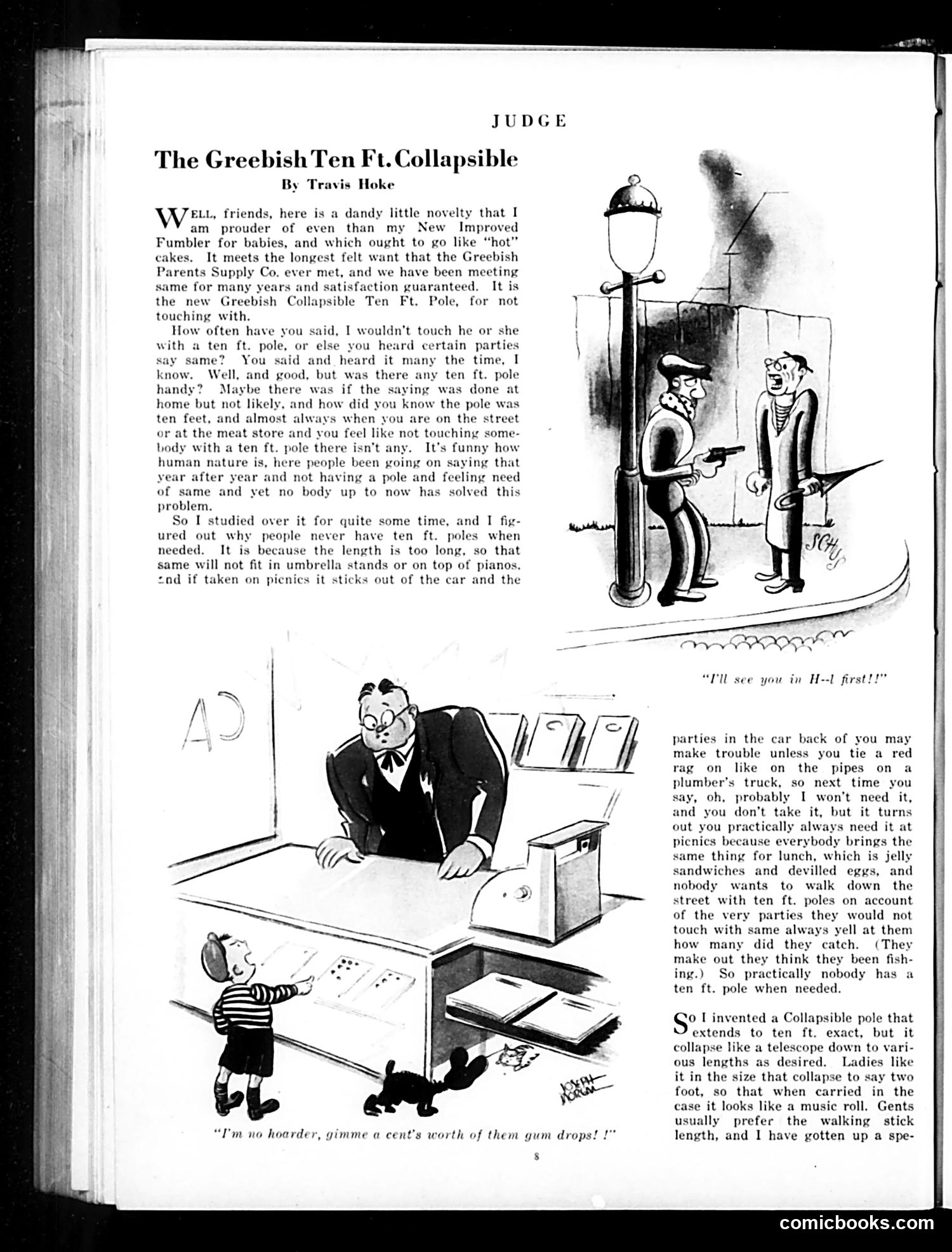
# "The Greebish Ten Ft. Collapsible" – Judge Magazine Satire This is a mock advertisement by Travis Hoke satirizing American consumer culture and dubious product marketing. The "Greebish Parents Supply Co." (fictional) pitches an absurd invention: a collapsible ten-foot pole—supposedly solving the problem of the common saying "I wouldn't touch that with a ten-foot pole." The satire works on multiple levels: it mocks the gap between everyday expressions and practical reality, pokes fun at verbose sales pitches that manufacture "problems" to sell solutions, and ridicules consumer gullibility. The accompanying cartoons illustrate the pole's impracticality (sticking out of cars, being unwieldy in public). For modern readers: this reflects early 20th-century skepticism toward aggressive advertising and novelty products. The humor relies on recognizing how salesmen exploited figurative language to create nonsensical products, targeting desperate or credulous buyers. It's essentially proto-infomercial satire.
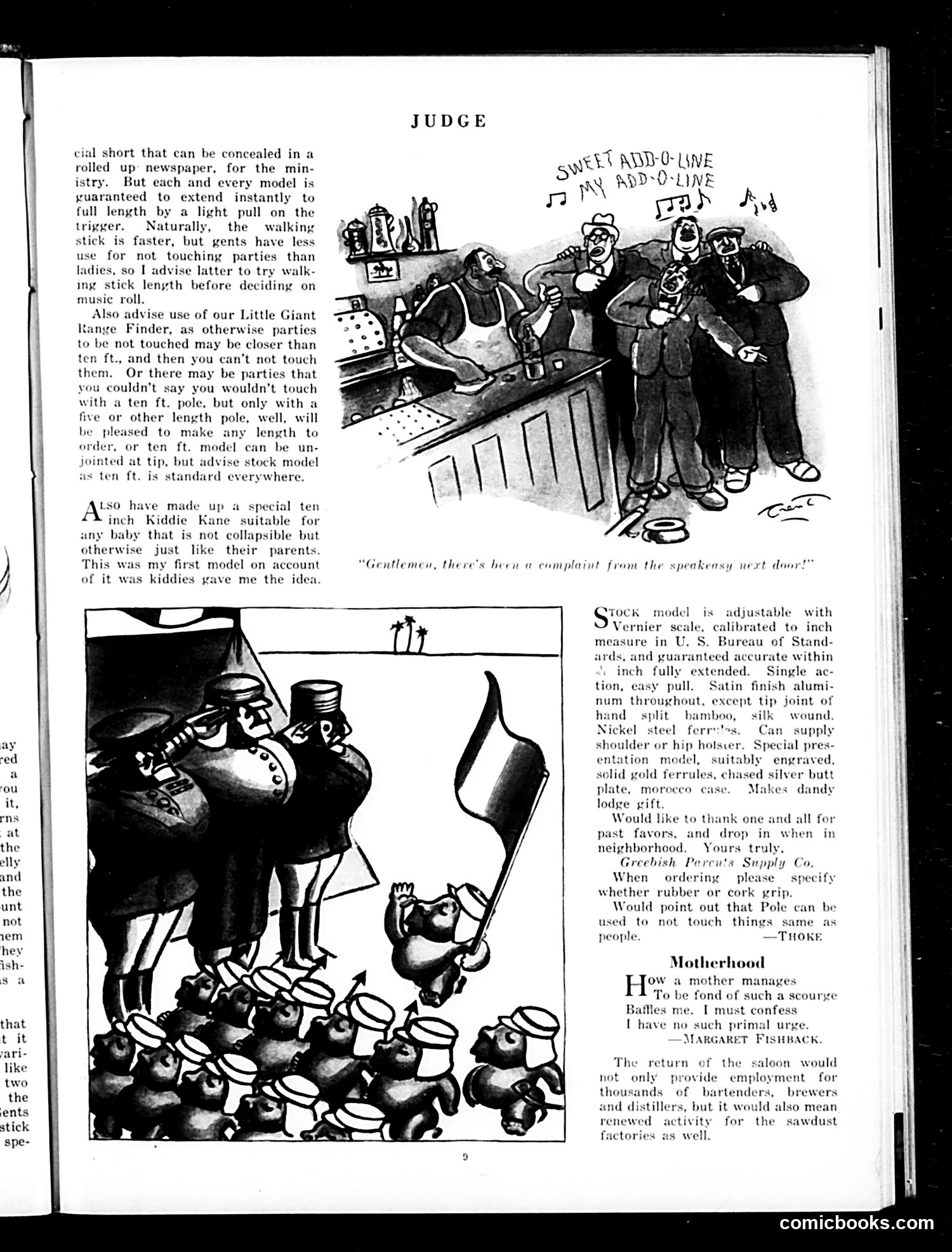
# Judge Magazine Page Analysis This page satirizes Prohibition-era America through absurdist humor. The main cartoon depicts a speakeasy (illegal bar) complaint about noise, with figures singing "Sweet Add-O-Line" — likely a nonsense parody of prohibition-defying music. The dominant text is a humorous advertisement for a "10-foot pole" — a product ostensibly designed so one needn't "touch" certain people or situations. This is a satirical jab at Prohibition hypocrisy: the product's various lengths allow customers to distance themselves from speakeasy patrons and other "undesirables." There's even a "Kiddie Kane" version, suggesting children face the same moral compromises. The closing section mocks prohibition's economic impact: restoring saloons would boost employment for bartenders and brewers while reviving sawdust factories (used in bars). The Margaret Fishback quote about motherhood underscores the era's tension between family values and actual behavior. The satire targets both prohibition's ineffectiveness and the hypocrisy of those claiming moral superiority while secretly enjoying speakeasies.
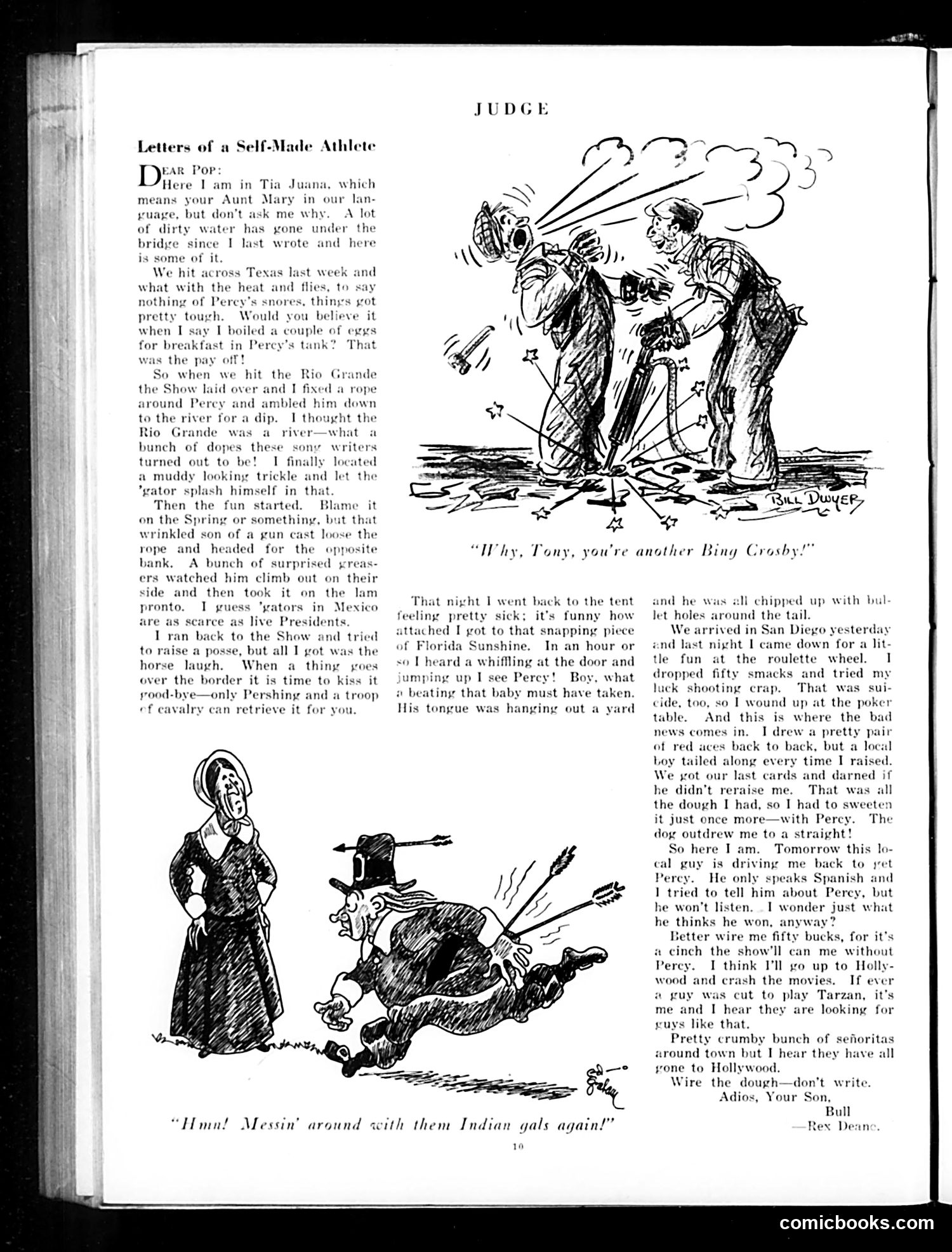
# Explanation for Modern Readers This is a humorous letter from a self-made athlete named Bull to his father, describing misadventures traveling through Texas and Mexico with his dog Percy. The satire mocks both Bull's naïveté and period attitudes about the Southwest. Key satirical points: - Bull's incompetence: he boils eggs in the dog's water tank; loses Percy in the Rio Grande; foolishly bets the dog in a poker game - Stereotyping: references to Mexico as lawless ("when a thing goes over the border...kiss it good-bye"), dismissal of Mexican locals, casual racism about "Indian gals" - The illustrations show Percy escaping after being shot at in Mexico, and Bull's romantic mishaps - The humor relies on Bull's obliviousness—he's actually terrible at everything despite calling himself "self-made" - The closing joke: he's lost his dog gambling and now wants money wired home The piece satirizes cocky American youth, casual attitudes toward other cultures, and get-rich-quick schemes typical of the era.