A complete issue · 36 pages · 1931
Judge — July 25, 1931
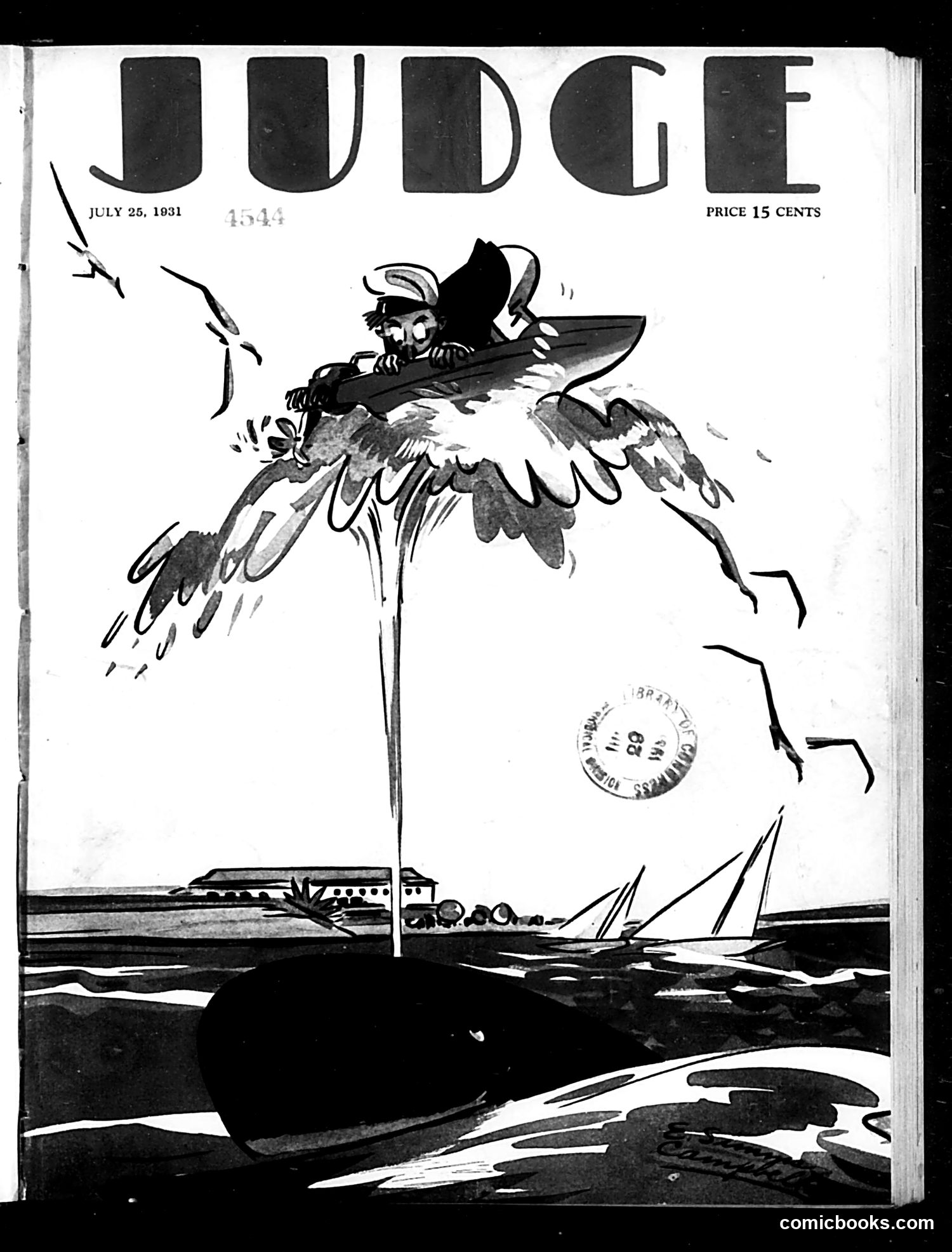
# Judge Magazine Cover - July 25, 1931 This cover depicts a figure in aviator gear riding a giant bird (appears to be an eagle or similar) above a coastal landscape with sailboats and a building below. The bird's wings are rendered dramatically with strong shading. The most likely interpretation: this references aviation achievements or aviation-related news from summer 1931. The aviator figure suggests a famous pilot of the era, though without additional text visible, the specific identity remains unclear. The eagle symbolism combined with flight imagery suggests American achievement or heroism. The coastal setting with boats and buildings grounds the fantastical scene in a real location, possibly referencing a specific historical flight event or landing. The dramatic, triumphant composition celebrates aviation as modern American progress and daring.
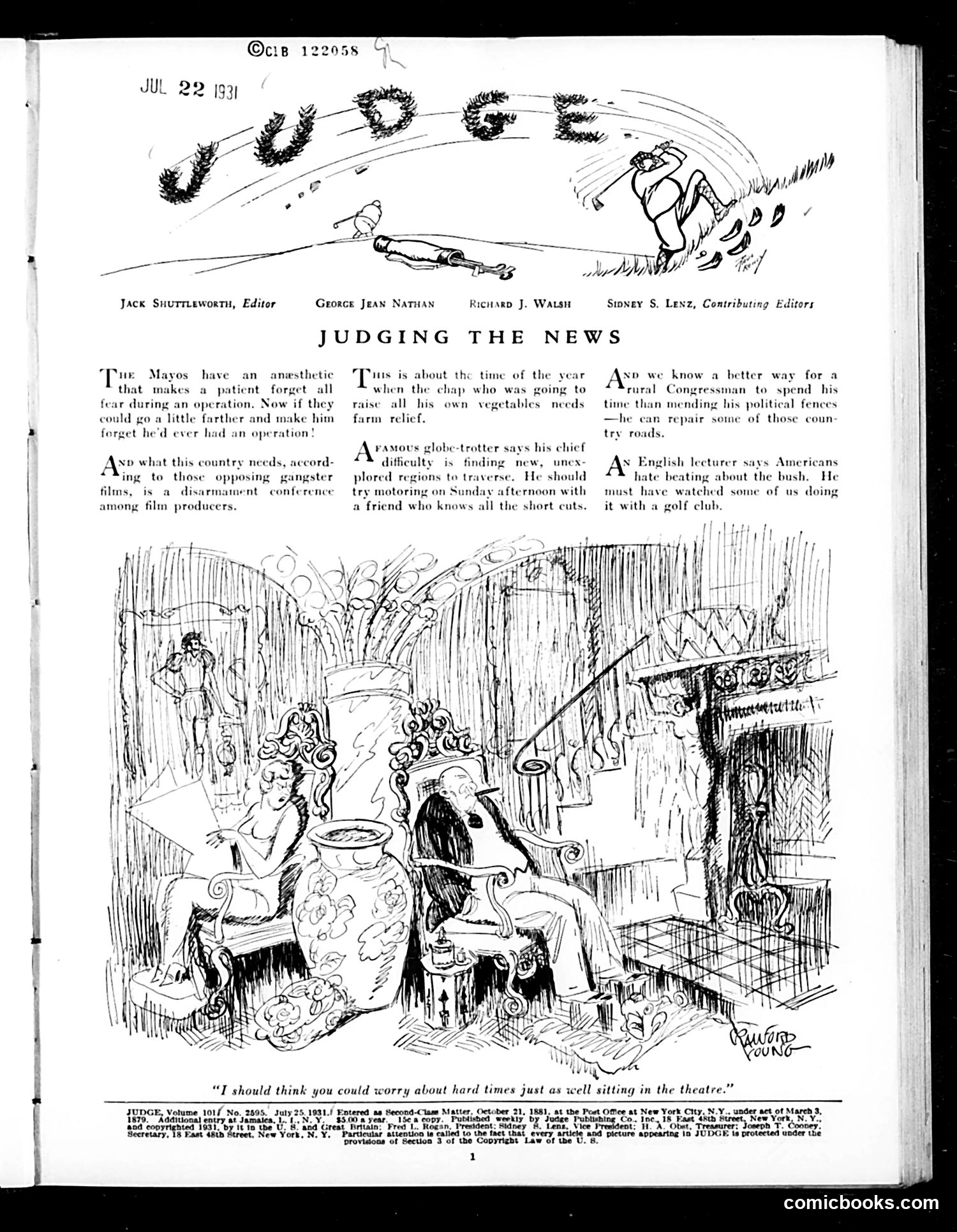
# "Judging the News" - July 22, 1931 This editorial cartoon page satirizes contemporary news items through short commentaries and illustrations. The main cartoon depicts two wealthy individuals relaxing in an ornate interior, with one saying, "I should think you could worry about hard times just as well sitting in the theatre." The satire targets **wealth inequality during the Great Depression** (1931). While ordinary Americans faced economic devastation, the wealthy allegedly remained indifferent, continuing lavish entertainment and leisure activities without concern for national suffering. The accompanying text snippets mock other topics: politicians avoiding infrastructure repair, a Mayan farmer needing relief, and an English lecturer criticizing American leisure activities (golf). The overall message: the affluent elite's disconnect from Depression-era hardship and their continued frivolous spending while others struggled.
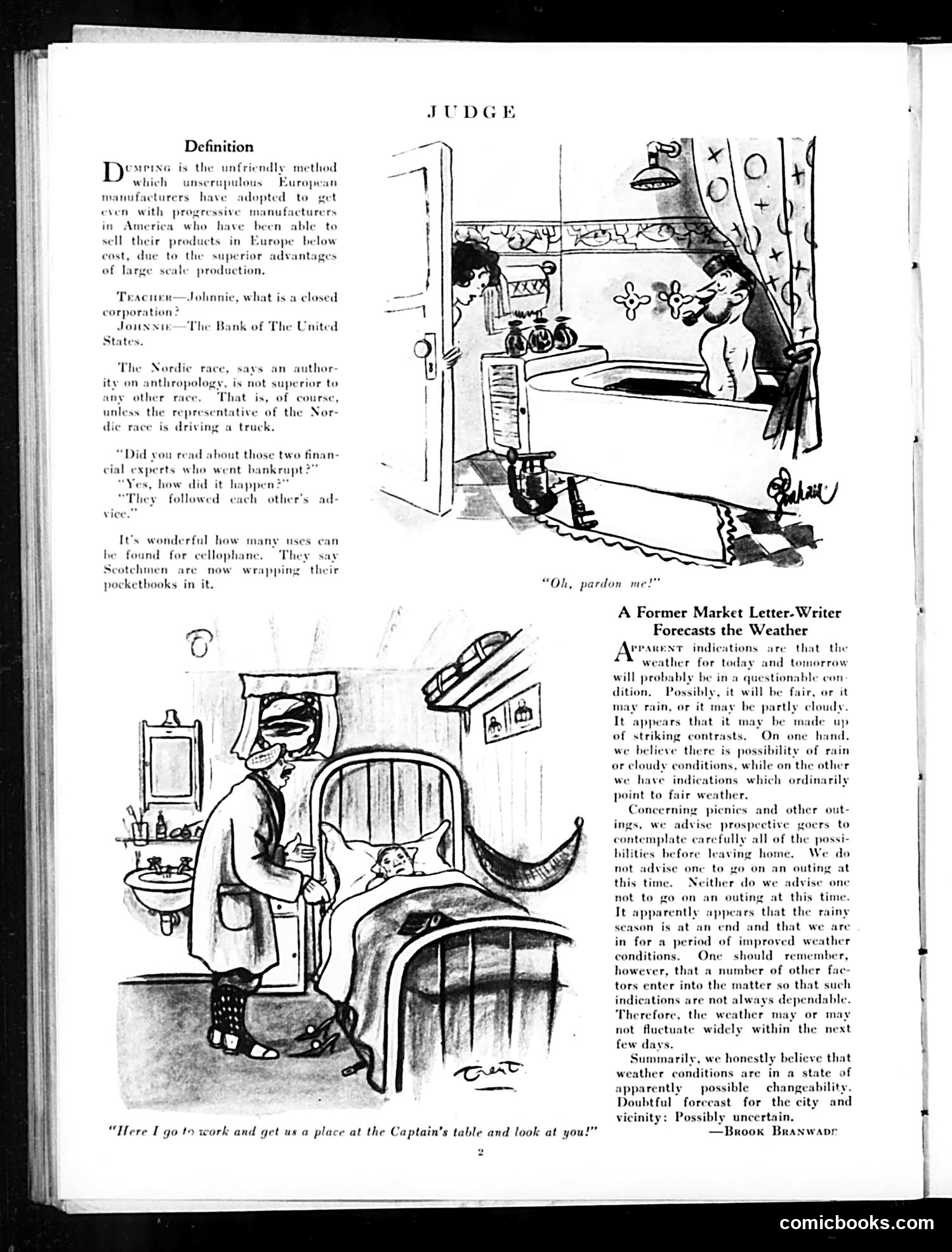
# Content Analysis **Top cartoon ("Oh, pardon me!"):** A heavyset man at a desk appears startled as a woman enters his office. The satire likely mocks workplace dynamics or romantic/social awkwardness of the era—possibly commenting on changing gender roles in offices. **Bottom cartoon ("Here I go to work..."):** A domestic scene shows a woman preparing to leave home while her husband remains in bed. The caption suggests she's going to work to "get us a place at the Captain's table," satirizing either economic hardship (wives forced to work) or social climbing aspirations among the middle class. **Text sections:** Include definitions of "dumping" (trade practice), a teacher-student joke about corporations, commentary on Nordic racial superiority claims, and a humorous weather forecast mocking vague meteorological predictions. The page reflects early 20th-century anxieties about economics, gender roles, and social pretension.
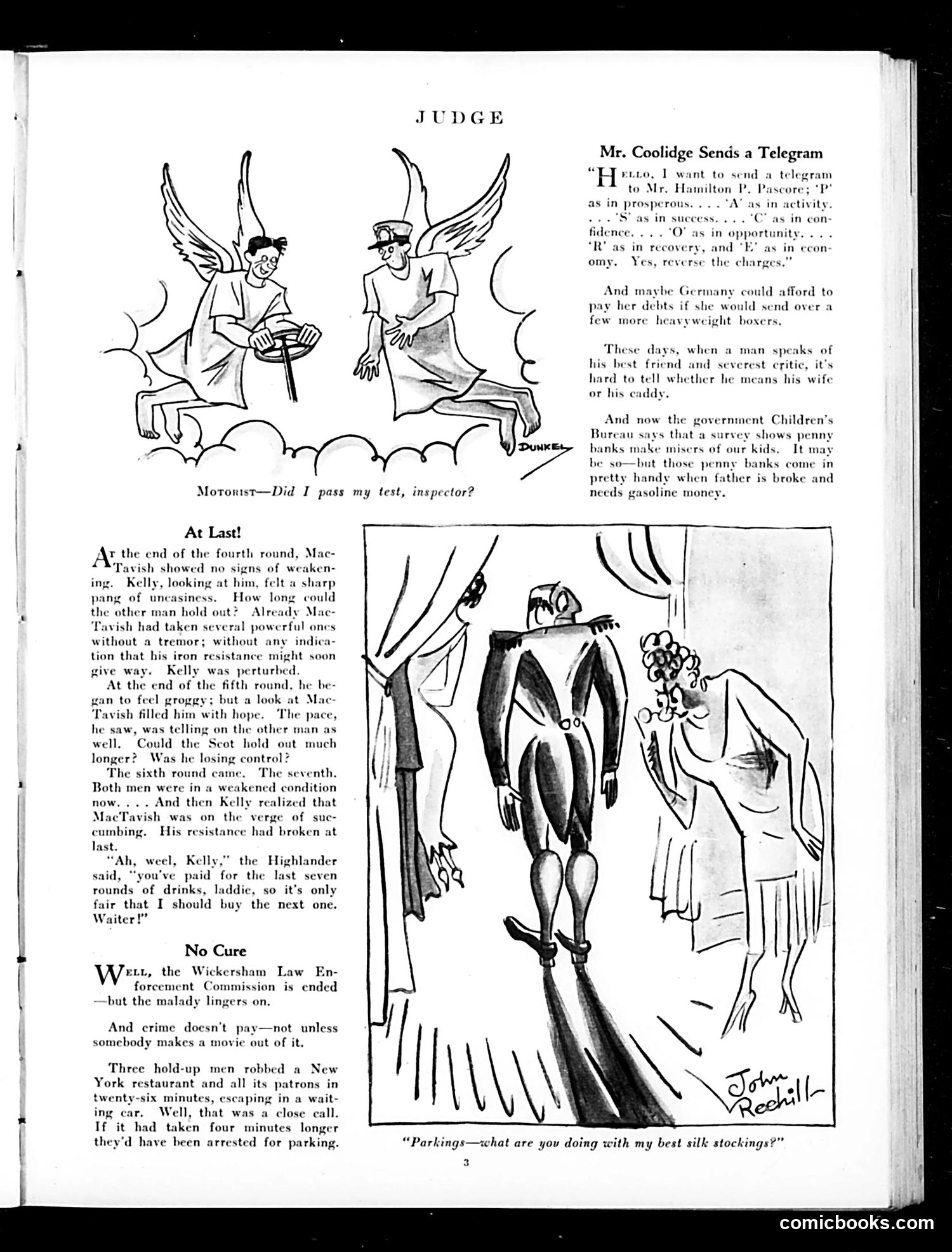
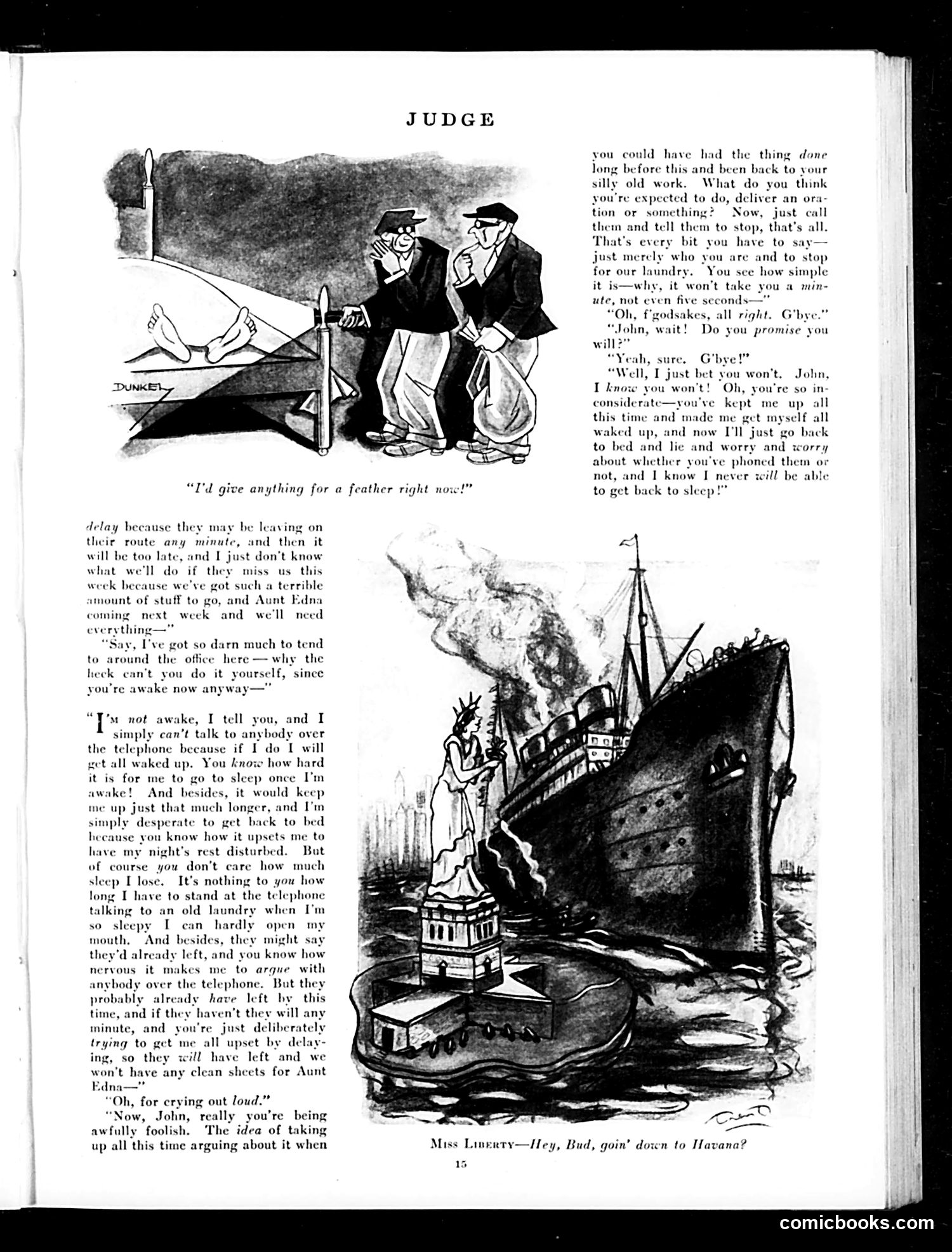
# Analysis of Judge Magazine Page **Top Cartoon ("Motorist—Did I pass my test, inspector?")**: Two winged figures (angels) sit in clouds. One holds what appears to be a clipboard or test document. This satirizes driver's license testing, suggesting that passing a driving test is so difficult that only divine intervention—or luck—helps. The humor relies on the common experience of anxiety about motor vehicle examinations. **Bottom Cartoon ("Partings—what are you doing with my best silk stockings?")**: A man confronts a woman about silk stockings. This likely references 1920s concerns about women's independence and changing social norms—silk stockings were fashionable luxury items, and the cartoon suggests domestic tension over wives' spending or autonomy. The specificity of "silk stockings" suggests Depression-era economic worry.
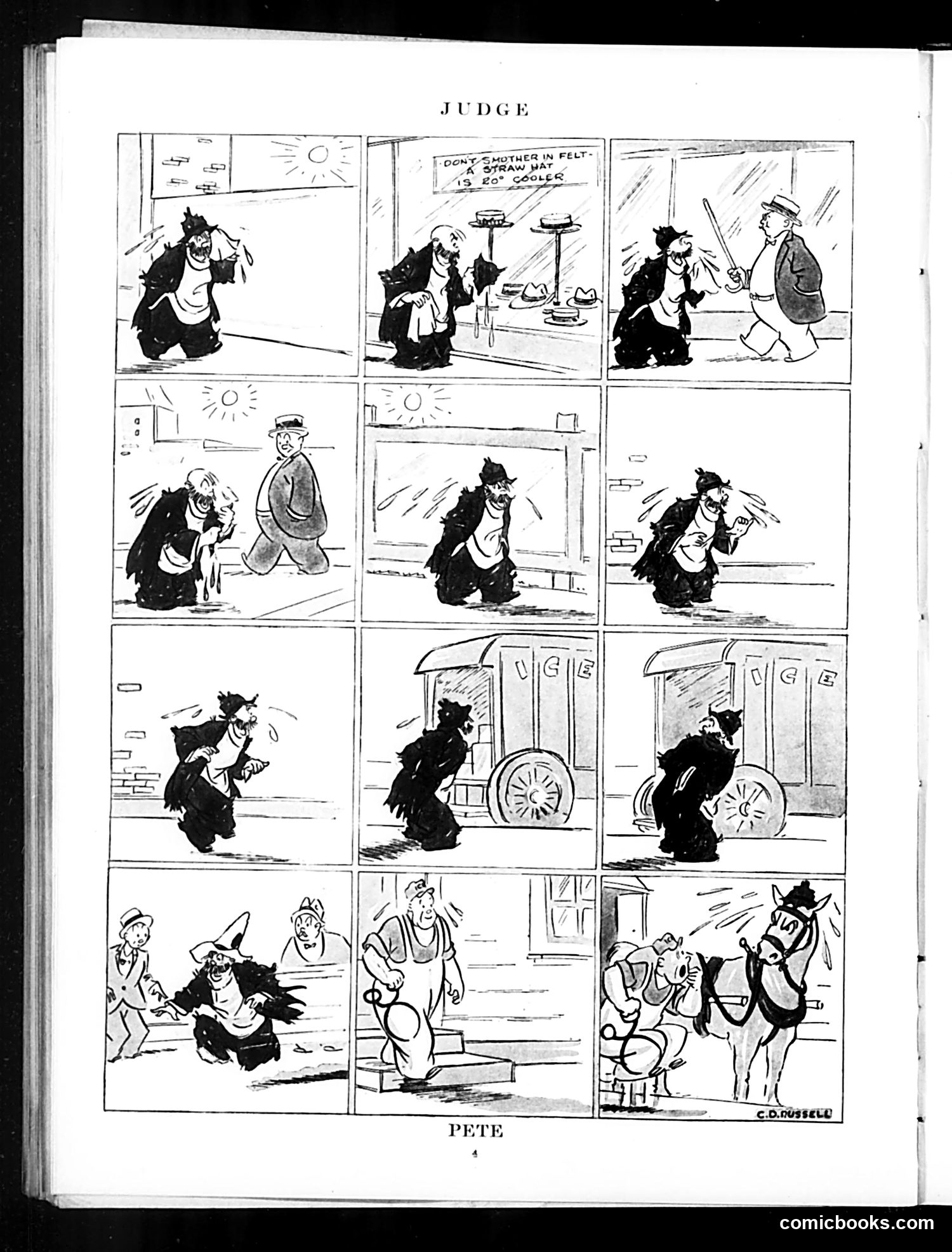
# Analysis of "Judge" Comic Page: "Judge" and "Pete" This appears to be a two-part comic strip. The top section titled "JUDGE" shows a character (likely representing a judge or authority figure) being chased or pursued through various locations—a hat shop, streets, and eventually onto what appears to be a judge's bench or official setting. The repeated pursuit suggests comedic chaos. The bottom section "PETE" depicts a similar character in increasingly frantic situations, culminating in scenes with other people and a horse, suggesting physical comedy and slapstick humor. Without clearer historical context about specific Judge magazine issues or dated references visible in the artwork, I cannot definitively identify which political or social figures these represent. The humor appears rooted in physical comedy rather than specific satirical commentary, though the recurring character suggests an ongoing narrative.
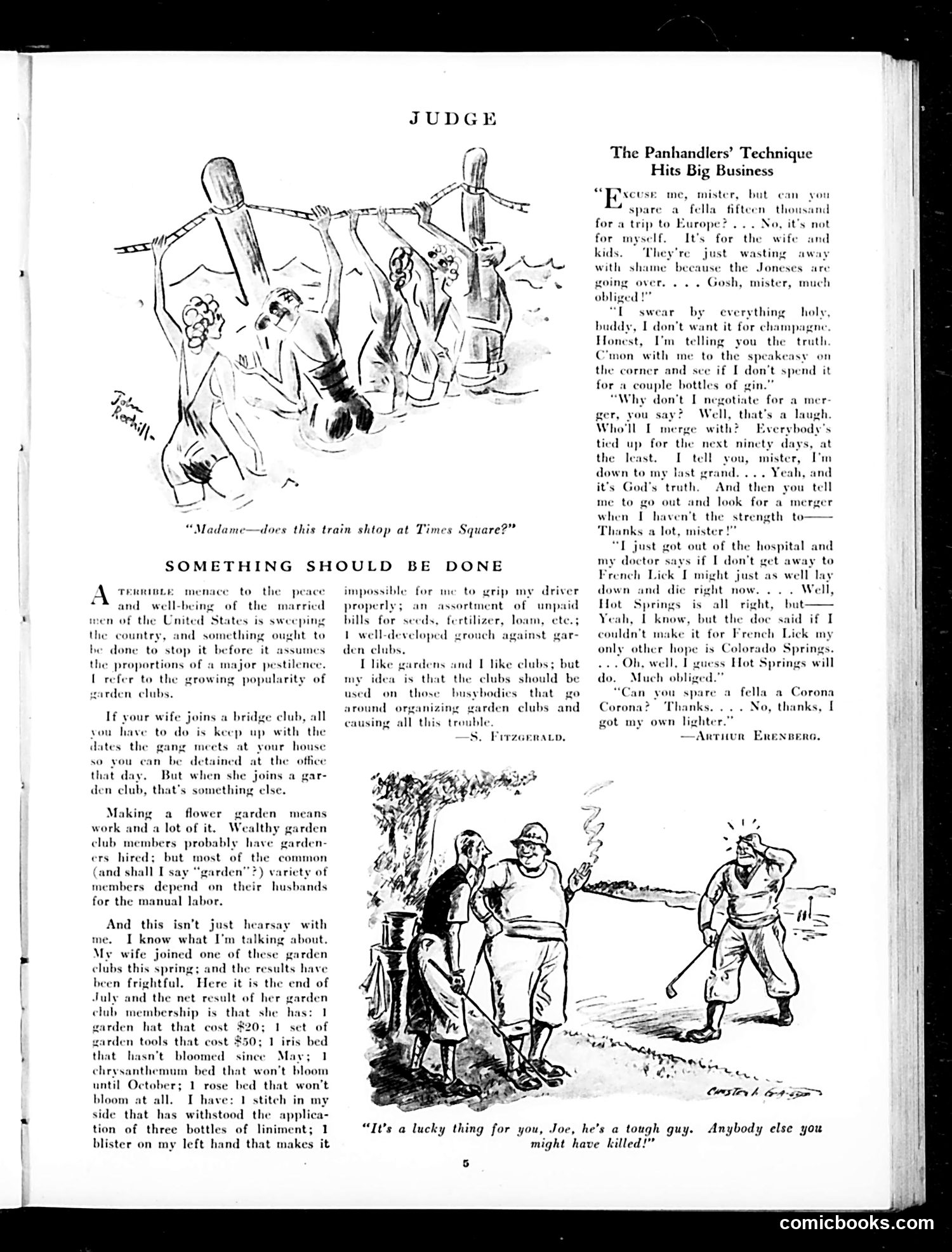
# Page Analysis: Judge Magazine Satire This page contains two distinct pieces of social satire: **"Something Should Be Done"** (left): Criticizes the growing popularity of garden clubs, depicting them as an excessive expense and time commitment for wives. The writer humorously catalogs the financial burden—seeds, fertilizer, tools, and even a chrysanthemum bed that won't bloom. The satire targets the emerging trend of organized garden clubs among middle-class women in what appears to be the early 20th century. **"The Panhandlers' Technique Hits Big Business"** (right): A dialogue satirizing panhandlers' negotiation tactics when soliciting money. The humor contrasts a panhandler's aggressive pitch with a businessman's attempt to deny or minimize the request, reflecting Depression-era or post-war economic anxieties about poverty and aggressive street solicitation. Both pieces mock contemporary social trends through exaggerated complaint and dialogue.
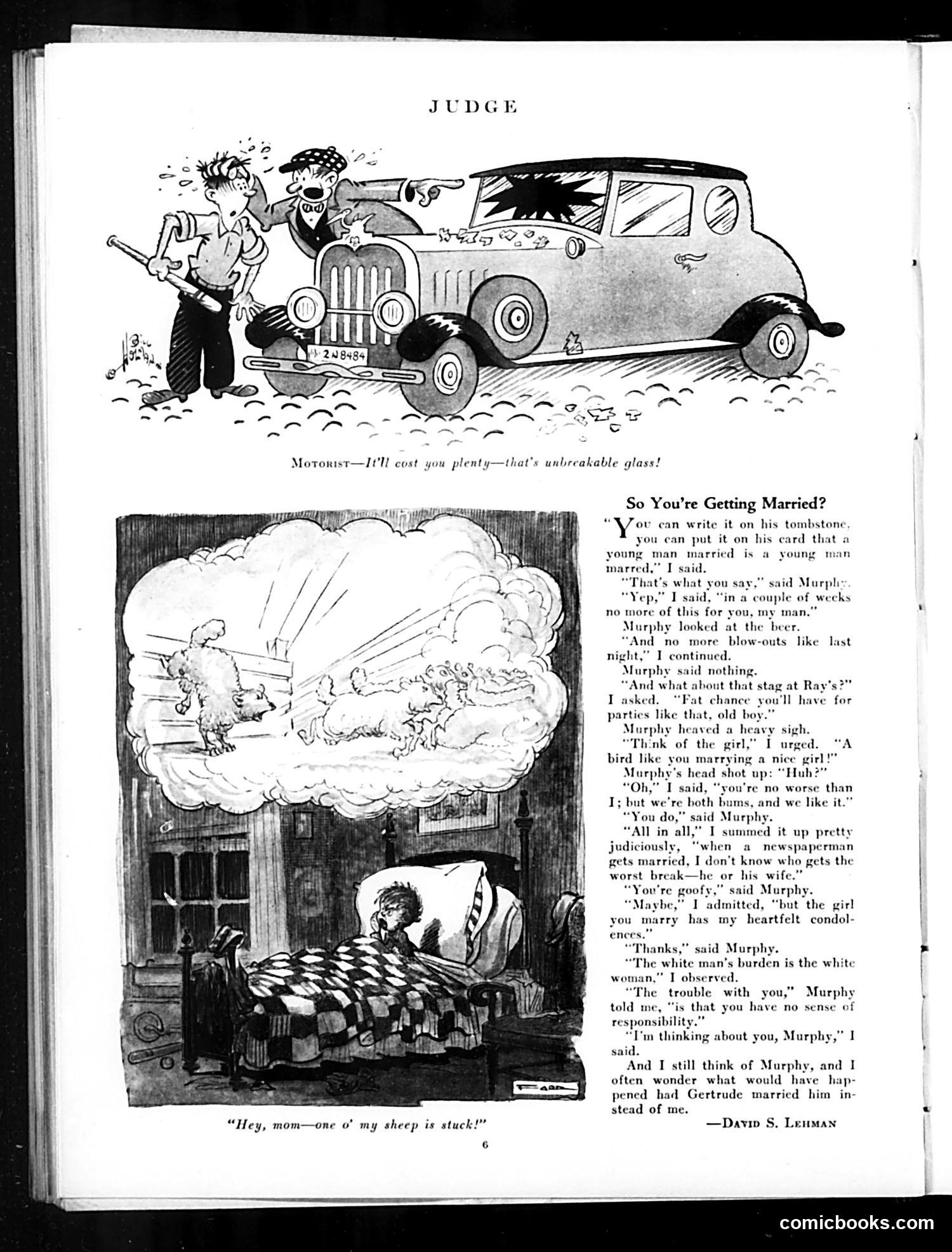
# Analysis of Judge Page **Top Cartoon ("Judge"):** A motorist with a damaged car addresses a judge figure holding a gavel. The joke plays on the double meaning of "unbreakable glass"—the motorist's windshield is shattered, but the judge sarcastically suggests it's the *cost* that's unbreakable. This satirizes judicial decisions or insurance claims following automobile accidents, a growing concern as car ownership increased in early 20th-century America. **Bottom Story ("So You're Getting Married?"):** A narrative about Murphy's impending marriage, featuring his friend's skeptical advice against matrimony. The accompanying illustration shows a crowded domestic scene. The story humorously presents marriage as burdensome, with the narrator reflecting that his friend Murphy escaped marriage while he didn't—typical bachelor-humor satire common in Judge magazine.
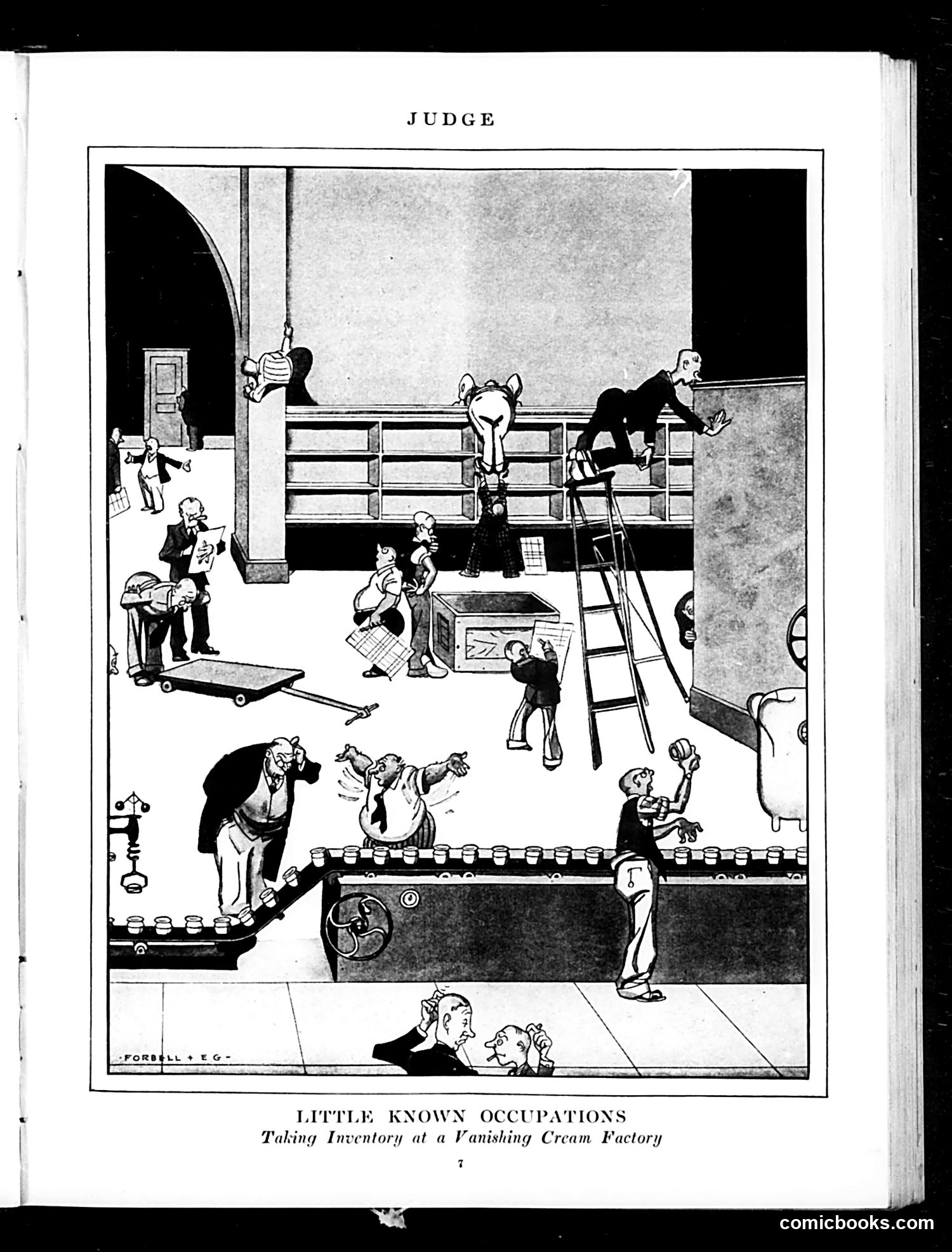
# Analysis of the Cartoon This cartoon satirizes the absurdity of "vanishing cream" — a cosmetic product popular in the early 20th century marketed as making blemishes disappear. The joke is literal: the factory's inventory literally *vanishes*. The comic depicts workers attempting to count stock at the factory, but the cream products keep disappearing before their eyes. Men with clipboards, on ladders, and crouching down frantically try to document inventory that won't stay put. Two figures converse at the bottom, likely discussing the impossibility of the task. The satire mocks both the product's exaggerated advertising claims and the absurdity of trying to maintain business operations when your merchandise vanishes. It's a visual pun on the product name, playing on consumer skepticism toward beauty product marketing.
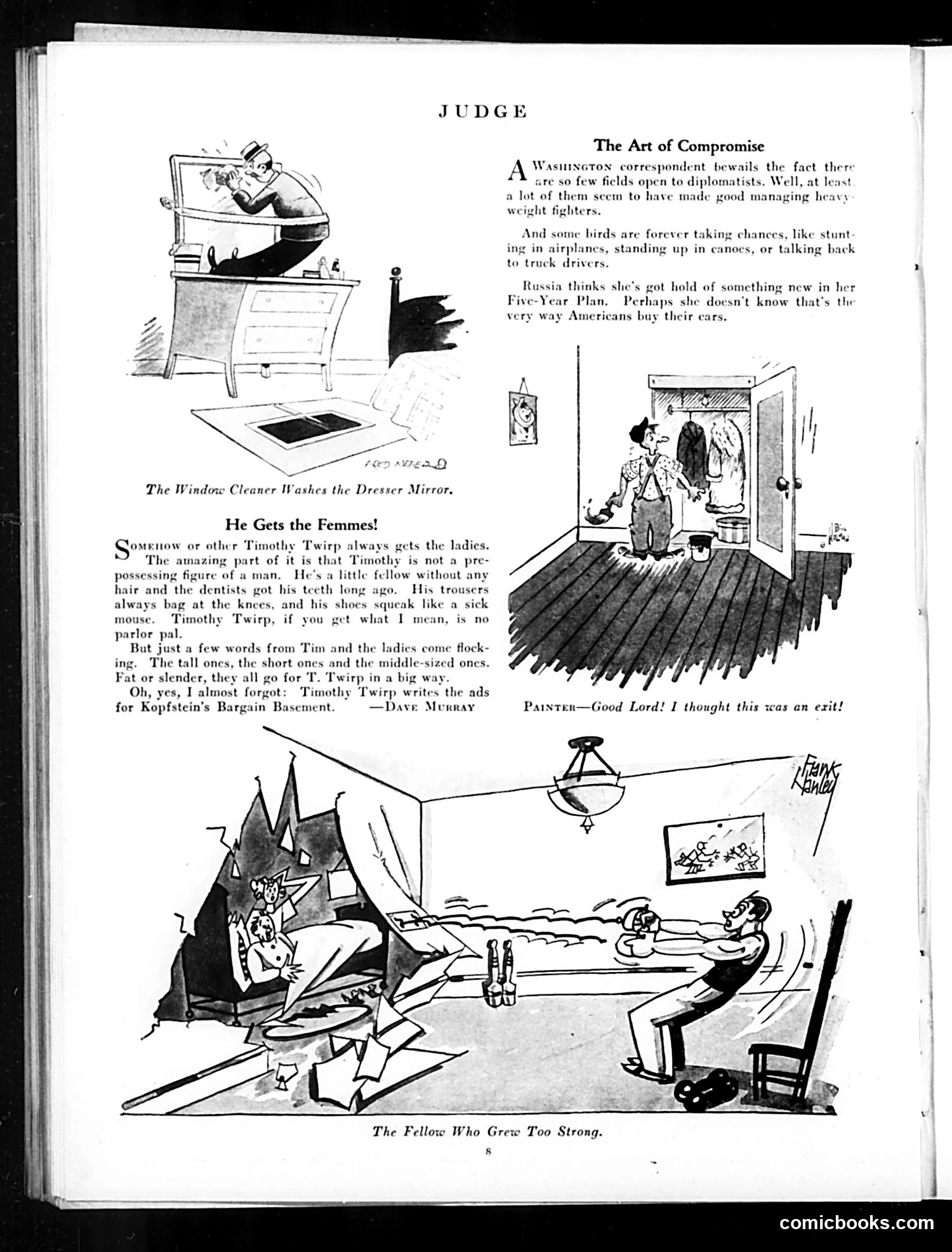
# Judge Magazine Page Analysis This page contains three satirical pieces typical of 1920s-30s American humor: **"The Art of Compromise"** presents brief political jabs: diplomats apparently excel at boxing rather than negotiation; Russia's Five-Year Plan mirrors American car-buying practices (installment purchases); and various risky behaviors are mocked. **"He Gets the Femmes!"** satirizes Timothy Twirp, an unattractive, balding man with bad teeth and ill-fitting clothes who nonetheless attracts women—because he writes advertising copy for Kopfstein's Bargain Basement. The joke targets advertising's perceived manipulative power over (particularly female) consumers. **"The Fellow Who Grew Too Strong"** (illustrated) appears to depict someone whose strength or ambition has spiraled out of control, resulting in chaos—likely satirizing overreach or unchecked ego, though the specific reference is unclear. The page exemplifies Judge's satirical approach: political commentary, consumer culture critique, and character-based humor aimed at educated American readers.
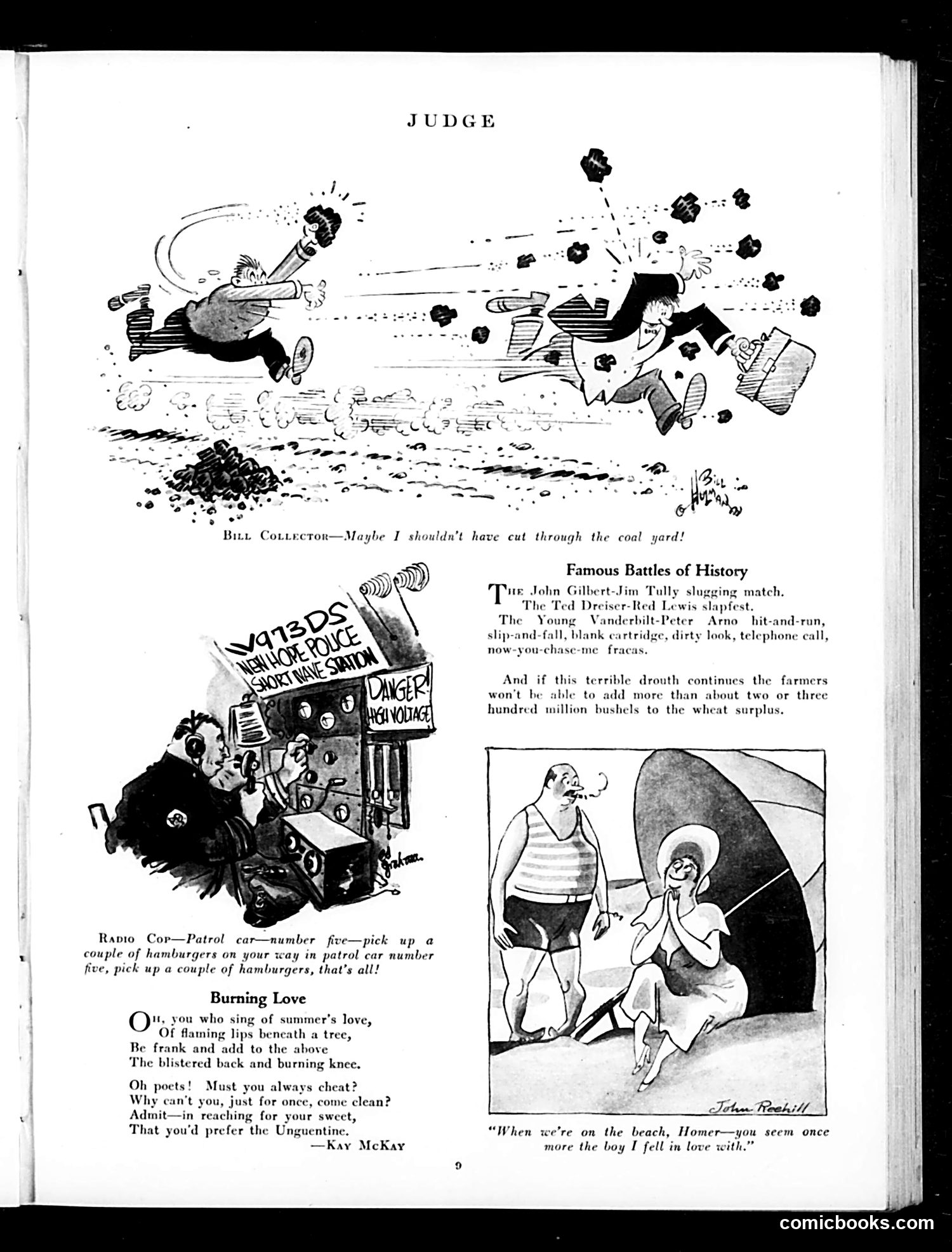
# Judge Magazine Page Analysis This page contains three distinct satirical pieces: **Top cartoon ("Bill Collector"):** A slapstick scene of a bill collector being violently ejected, satirizing the uncomfortable confrontations between debt collectors and debtors—a common anxiety during economic hardship. **"Famous Battles of History":** Mockery of recent celebrity/literary feuds (Gilbert vs. Tully, Dreiser vs. Lewis, Vanderbilt vs. Arno are apparent references), presented as absurd "battles." The wheat surplus joke suggests farming crisis concerns of the era. **"Radio Cop" gag:** Satirizes radio patrol cars and dispatch communication, poking fun at the mundane (ordering hamburgers) amid serious-sounding police procedure. **"Burning Love" poem:** Kay McKay's verse mocks romantic poetry's sanitization of physical reality—poets ignore sunburned backs and knees while romanticizing summer love. The final cartoon illustration reinforces this: an aging couple on the beach, with the wife's nostalgic comment suggesting faded romance. The page reflects 1920s-30s concerns: economic hardship, emerging technology (radio patrol), and debunking sentimental idealism.
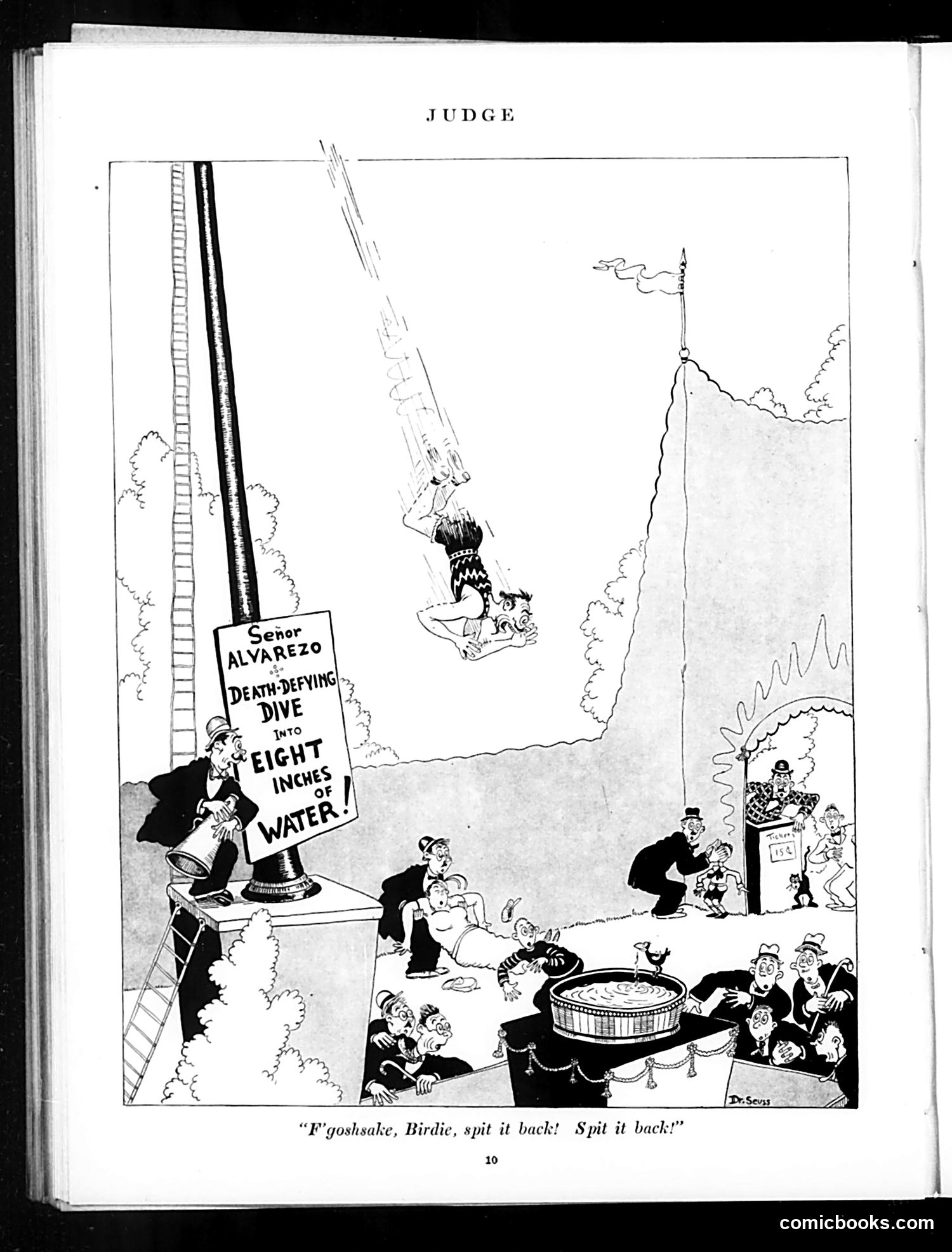
# Analysis of "Judge" Cartoon Page This Dr. Seuss-illustrated cartoon satirizes a dangerous stunt performer, "Señor Alvarezo," who advertises a "death-defying dive into eight inches of water." The humor derives from the absurd contrast between the grand theatrical presentation—with crowds, elaborate staging, and dramatic signage—and the trivial, laughably shallow target pool. The cartoon mocks both the performer's audacity in marketing such a ridiculous feat and the public's gullible appetite for sensational entertainment. The spectators, drawn as eager audience members, represent society's enthusiasm for dubious spectacles. The caption's exclamation—"F'goshsake, Birdie, spit it back!"—suggests someone has swallowed water from this shallow pool, adding crude humor to the satire. This reflects early-to-mid 20th-century American fascination with carnival stunts and daredevil acts, while mocking both performers and audiences.