A complete issue · 36 pages · 1931
Judge — June 6, 1931
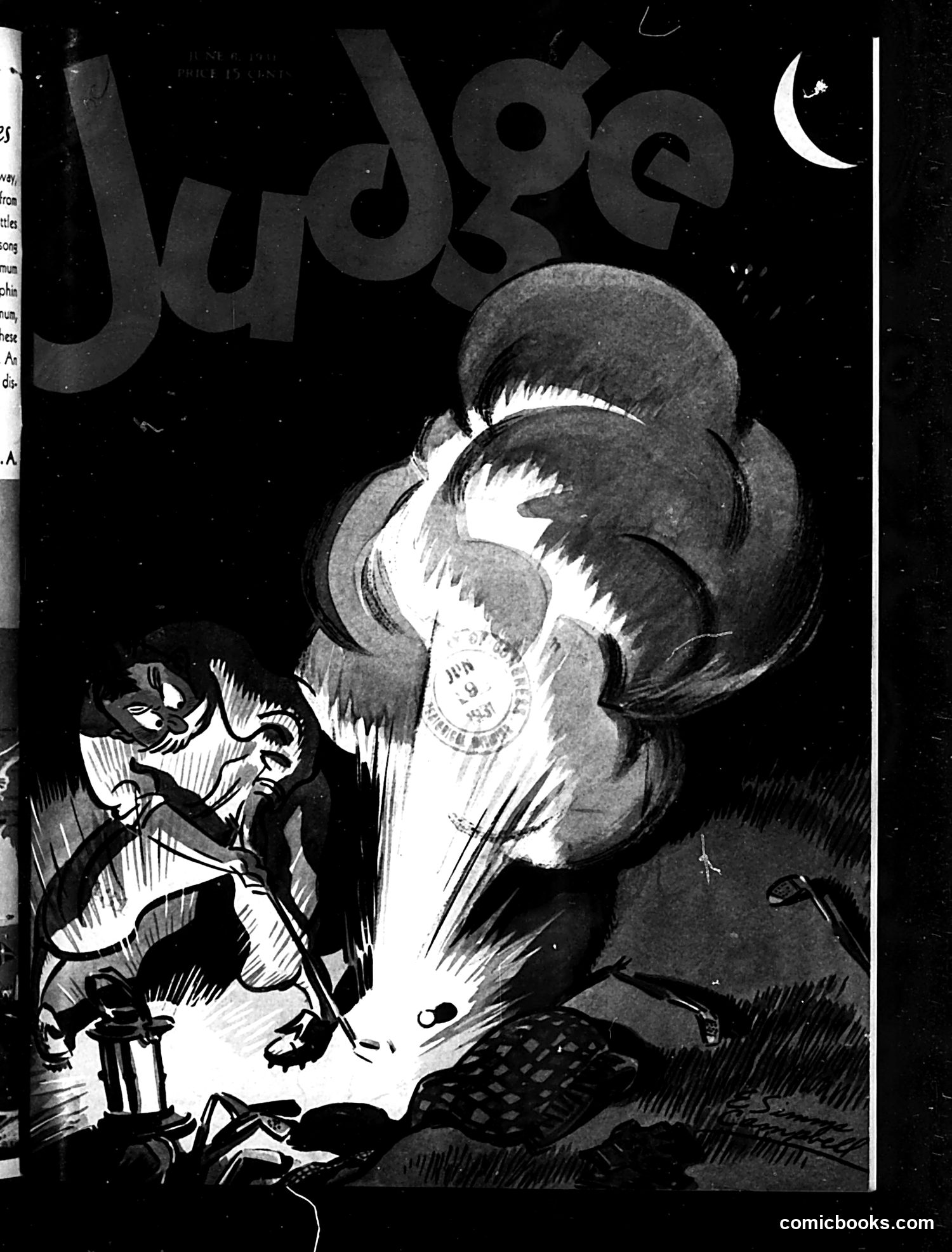
# Analysis of Judge Magazine Page This appears to be a cover or major illustration from *Judge* magazine featuring the title "Judge" at top. The image depicts a large, menacing figure with exaggerated features looming over smaller characters below. The artistic style—with dramatic chiaroscuro shading and expressive linework—is typical of early-to-mid 20th century satirical cartooning. The composition suggests social or political commentary, with the massive figure dominating the composition in a threatening manner. However, **without additional context or visible text identifying the specific figures, I cannot reliably determine which political figures or events are being satirized**. The nighttime setting (crescent moon visible) and dramatic lighting emphasize the ominous tone, suggesting criticism of some threatening force or entity.
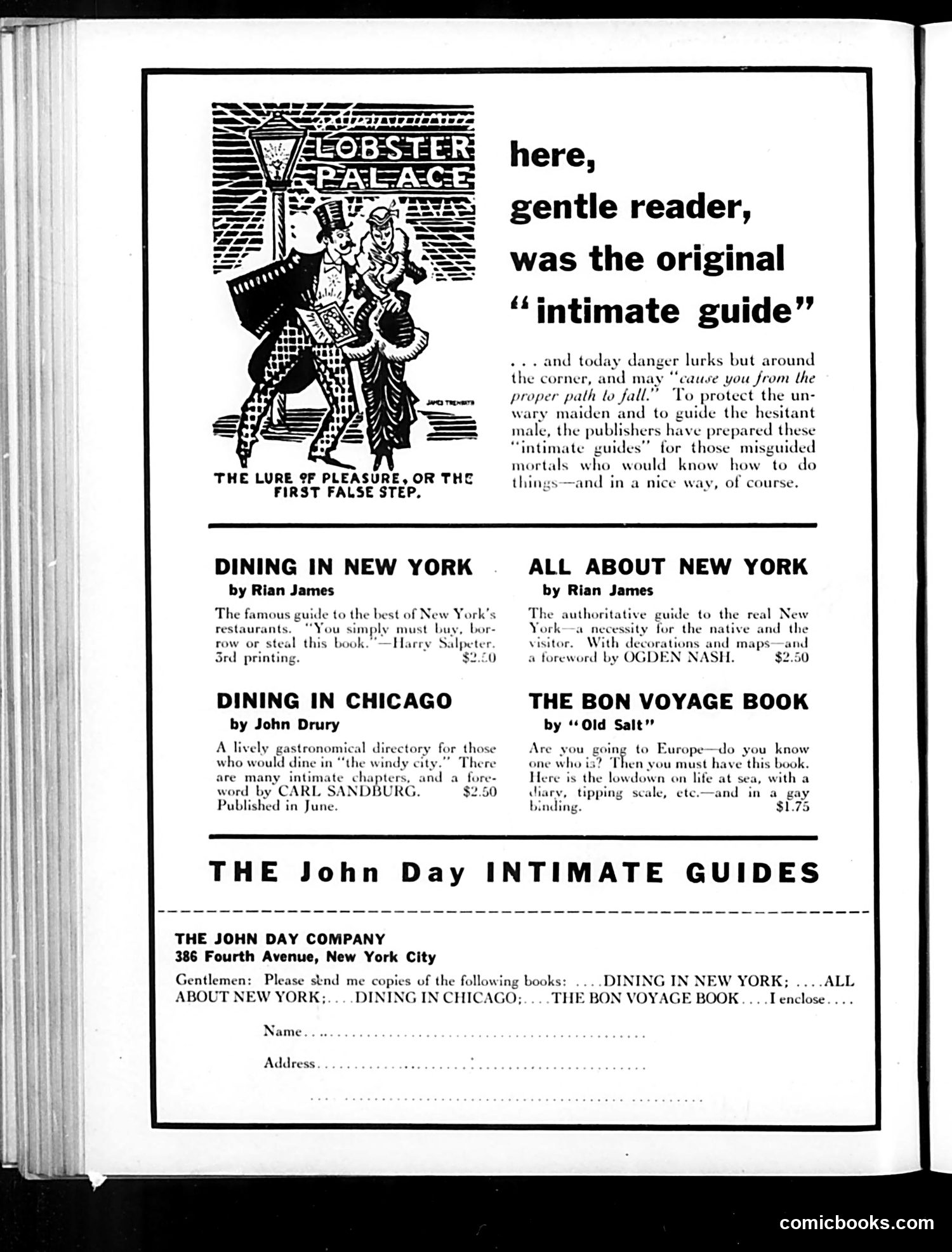
# Analysis This page is primarily **advertising**, not satire or political commentary. The top section features a woodcut illustration titled "The Lure of Pleasure, or The First False Step," depicting figures outside the Lobster Palace. The accompanying text frames these "intimate guides" as protective resources for "unwary maidens" and "hesitant male[s]" navigating urban dangers. Below are advertisements for four books published by the John Day Company: dining guides for New York and Chicago, and "The Bon Voyage Book" for ocean travelers. The advertising copy uses period euphemisms—references to "proper path" and "fall"—that hint at moral concerns about urban temptation and vice, reflecting early 20th-century anxieties about city life.
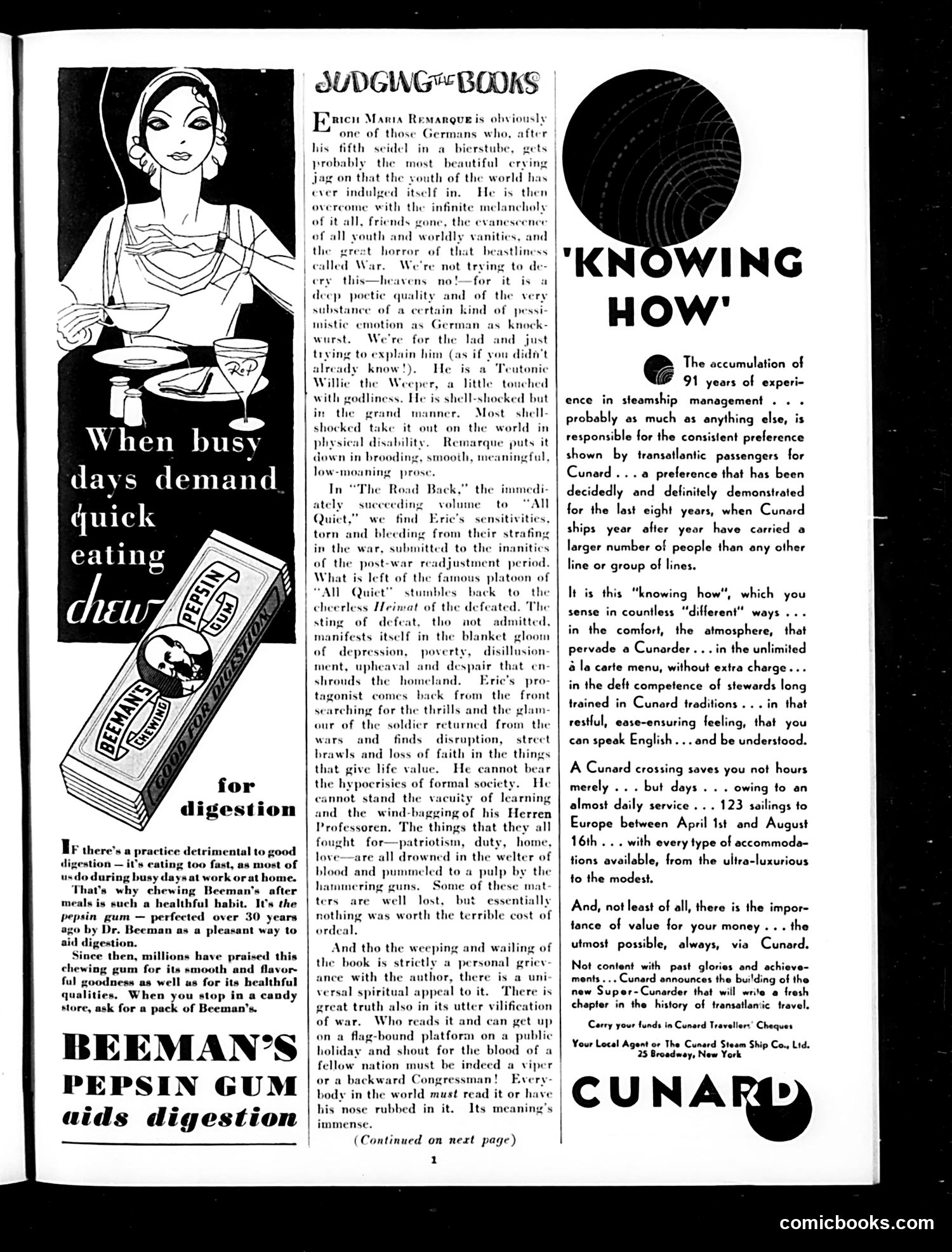
# Analysis This page is primarily **advertising**, not political satire. It contains: 1. **Beeman's Pepsin Gum ad** (left): A digestive aid advertisement from the era when gum was marketed for health benefits, not just flavor. The copy emphasizes its supposed digestive properties. 2. **"Judging the Books" column** (center): A book review of Erich Maria Remarque's *"The Road Back,"* discussing its post-WWI themes of disillusionment and lost youth. The reviewer praises it as essential reading about war's psychological costs. 3. **Cunard shipping line ad** (right): Marketing transatlantic cruises, emphasizing luxury service and value. The page reflects 1930s consumer culture and advertising strategies, with the literary review providing context about interwar German literature's exploration of war trauma.
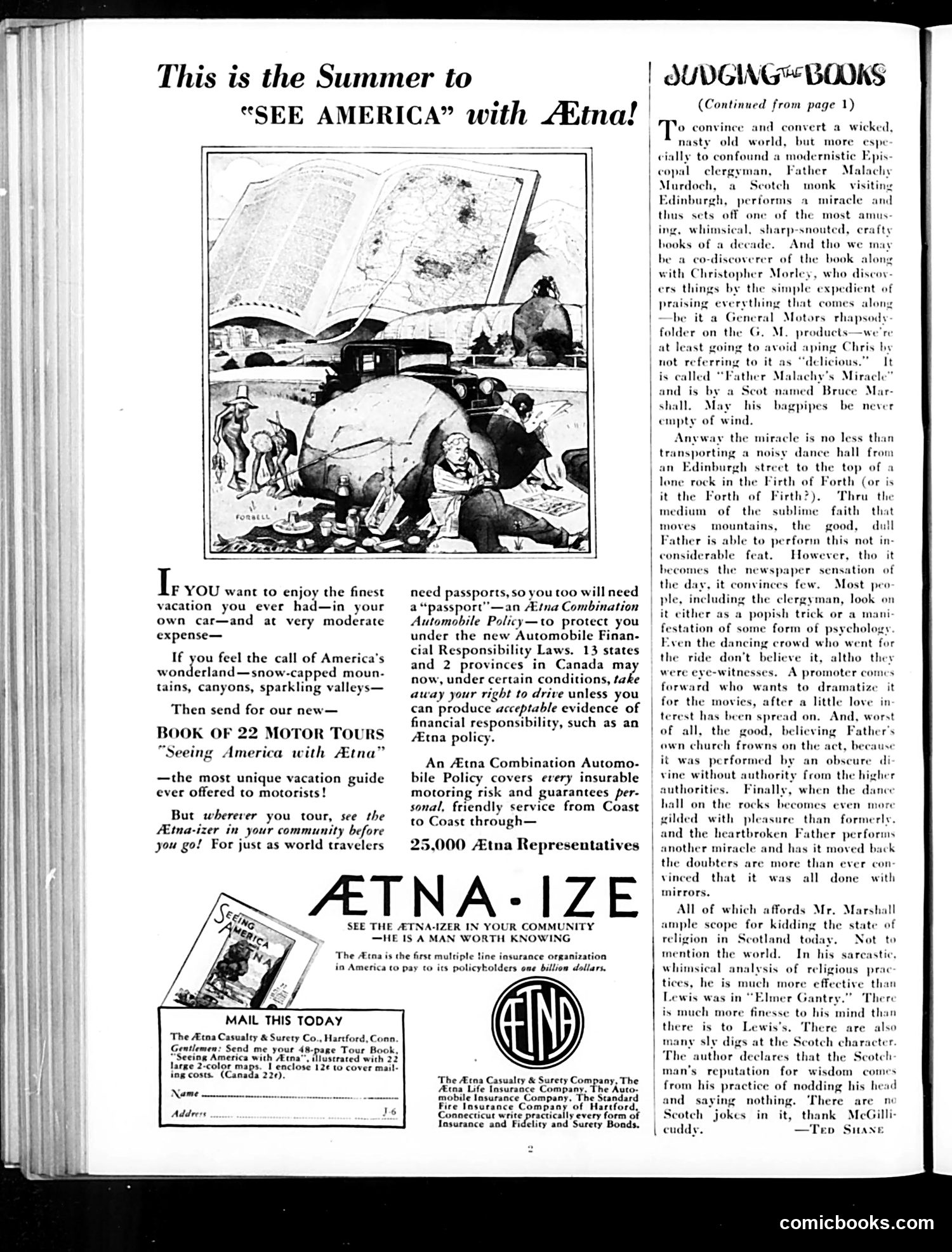
# Page Analysis This page is primarily **advertising**, not satire or political commentary. The dominant content is a large Ætna insurance advertisement promoting motor tours and vacation travel across America. The cartoon illustration shows tourists camping and consulting a map, illustrating the "See America with Ætna" campaign. The right column contains a book review (titled "Judging the Books") discussing a Scottish novel featuring Father Malachi Murdoch and featuring commentary on religious satire. The review is unrelated to the advertisement. The page reflects 1920s-era consumer culture promoting automobile tourism and insurance products, with the cartoon serving primarily as promotional imagery rather than political satire.
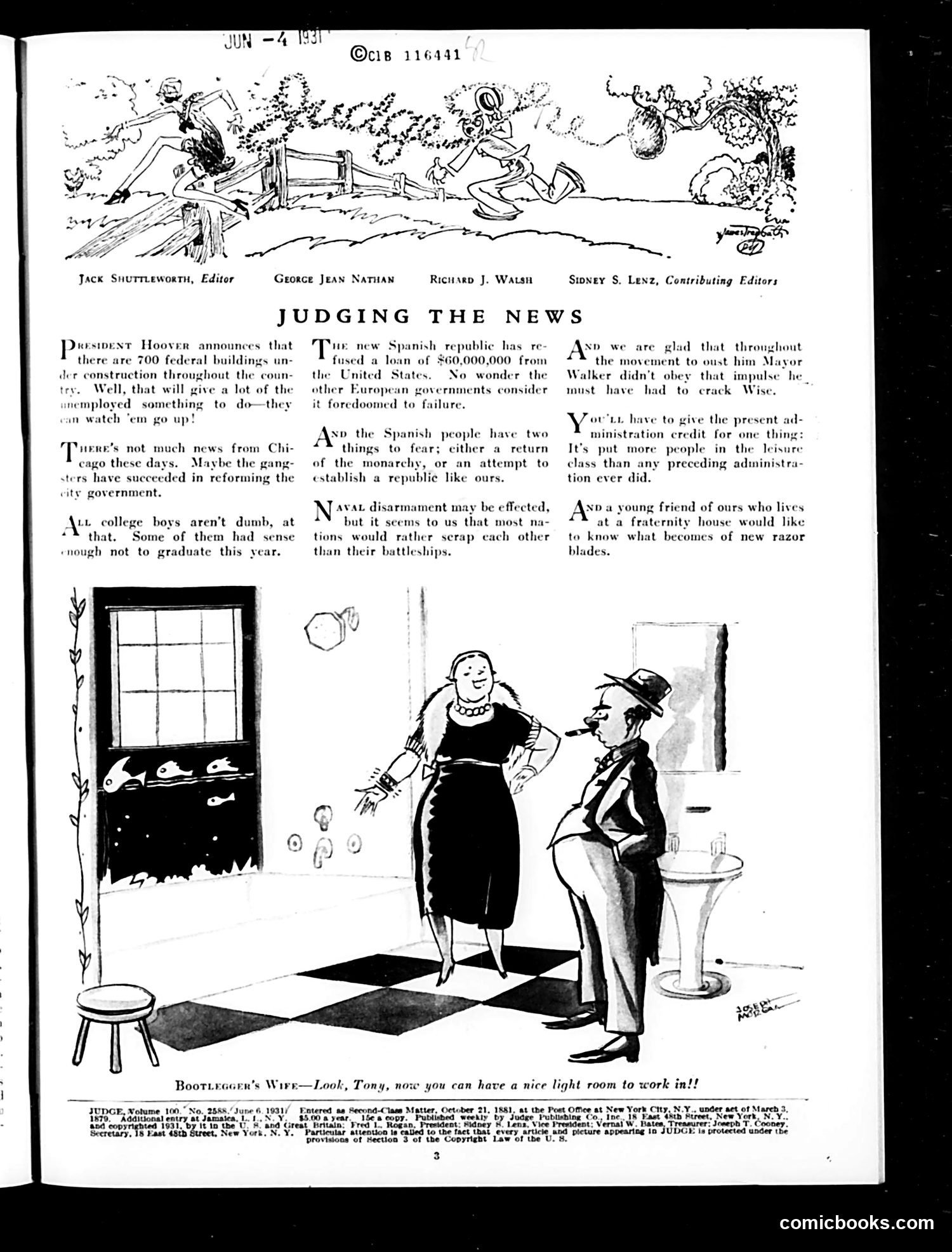
# Judge Magazine Commentary, June 4, 1931 This page contains editorial commentary on current events rather than traditional cartoons. The "Judging the News" section offers satirical takes on: **President Hoover's announcement** of 500 federal building projects—criticized as insufficient economic stimulus during the Great Depression. **Chicago gangsters** praised for reforming city government more effectively than legitimate officials. **College boys** who wisely avoided graduating into the Depression economy. **Spanish politics**—the new republic's stability concerns European governments. **Naval disarmament** proposals, mocked as nations preferring battleship scrapping to actual peace. The bottom cartoon depicts a bootlegger's wife showing her husband a well-lit room, sarcastically suggesting Prohibition enforcement has improved their living conditions—dark satire on organized crime's prosperity during the alcohol ban era.
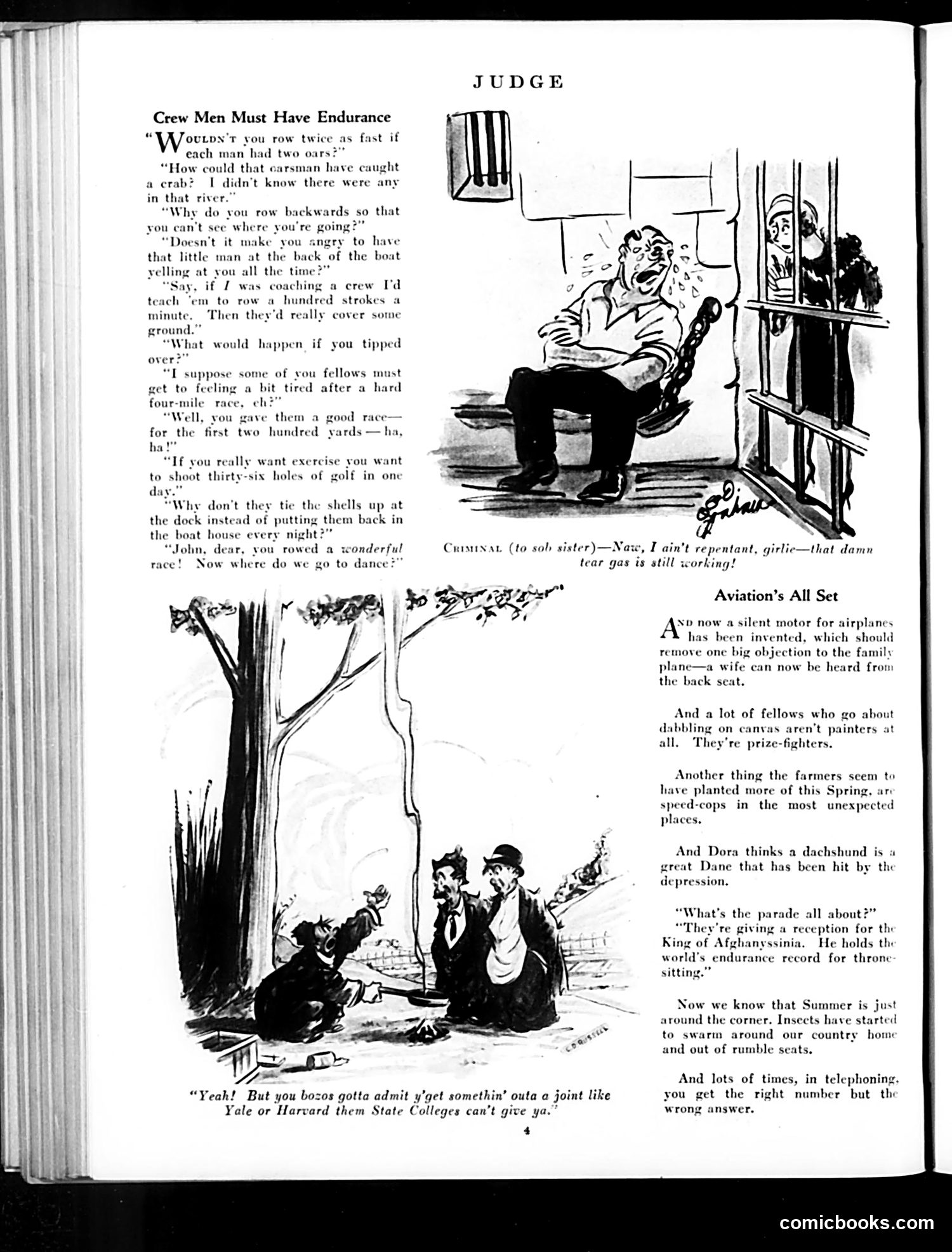
# Judge Magazine Page Analysis This page contains humor pieces rather than political cartoons. The top section, "Crew Men Must Have Endurance," presents a dialogue about rowing, mocking the physical toll and absurdity of competitive crew racing—a popular elite sport at the time. The main cartoon below depicts two men discovering a dead body hanging from a tree, with the caption about admitting "you bozos gotta get somethin' outa a joint like Yale or Harvard"—satirizing the pretensions of Ivy League education. The right column, "Aviation's All Set," offers brief social observations about new airplane silent motors, amateur painters, unseasonable crops, and a dachshund owner. These are light topical gags rather than serious satire, reflecting early-20th-century American middle-class concerns and humor conventions typical of Judge's entertainment-focused content.
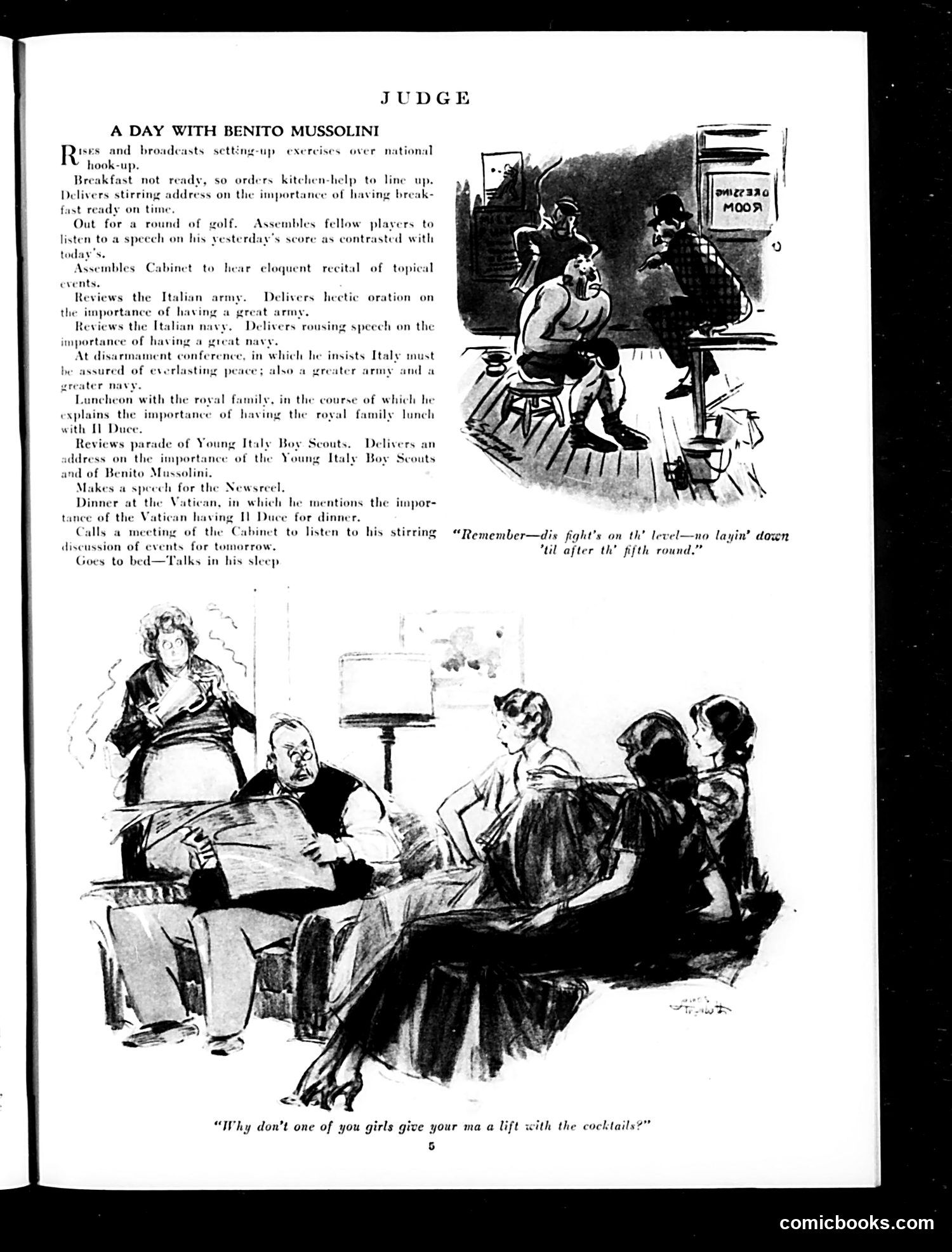
# "A Day with Benito Mussolini" This satirical piece mocks Mussolini's daily activities during the fascist era. The text catalogs his schedule with deadpan humor: breakfast briefings on "importance of having breakfast on time," speeches about the military, lunches emphasizing "the importance of having the royal family lunch," and evening discussions at the Vatican about diplomatic dinners. The cartoons depict Mussolini conducting theatrical, propagandistic activities—addressing various groups while maintaining bombastic rhetoric about Italian power and prestige. The bottom illustration shows him relaxing at home with women, captioned with a crude joke about cocktails. The satire targets Mussolini's self-aggrandizing performative leadership style and the constant nationalist messaging that characterized Italian fascism in the interwar period.
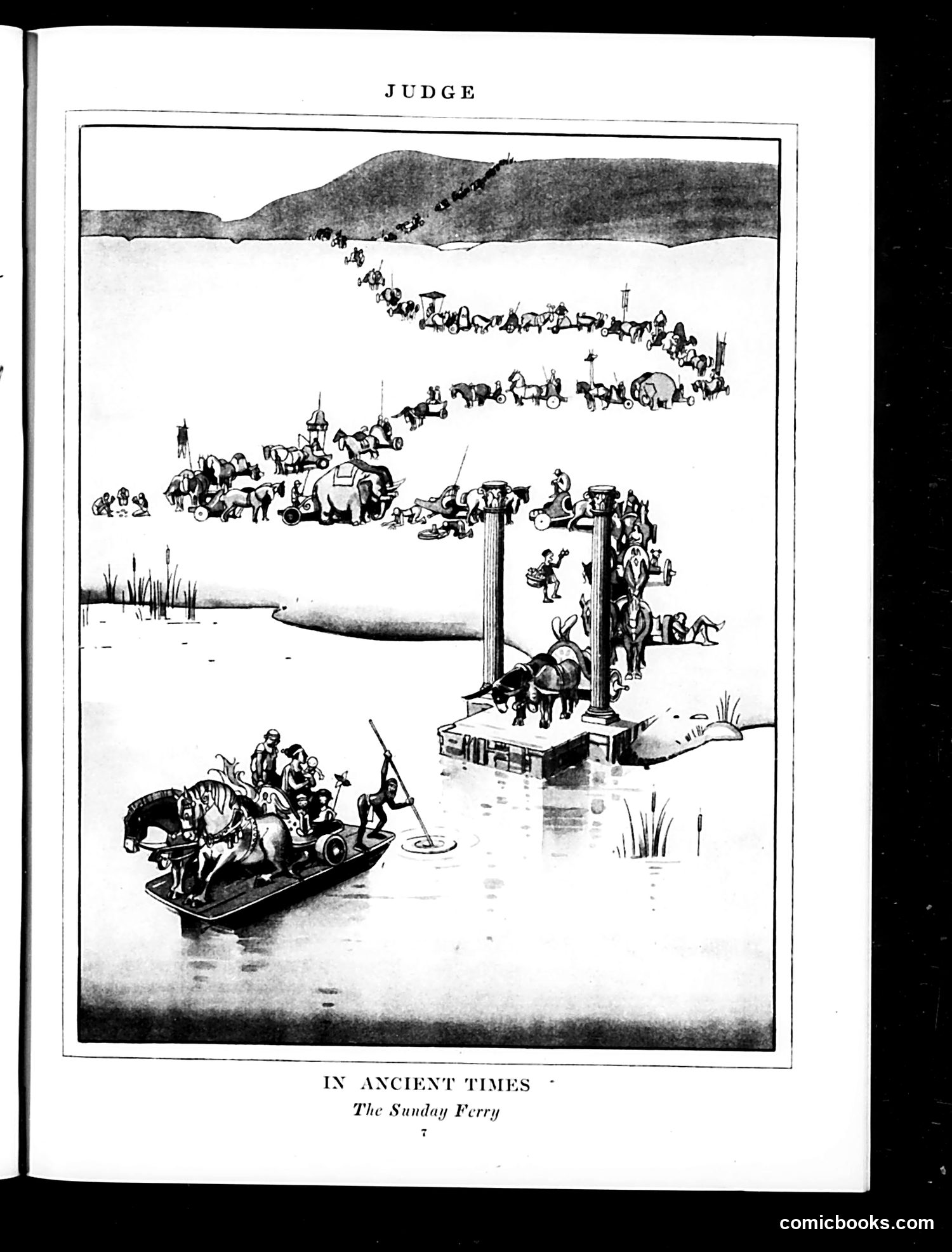
# "The Sunday Ferry" - Judge Magazine Satire This cartoon satirizes the chaos of Sunday ferry service in what appears to be early 20th-century America. The illustration shows a massive, disorganized crowd attempting to board a ferry, with people, horses, carriages, and wagons piling up in complete pandemonium. A judge-like figure stands on an elevated platform presiding over the scene. The satire likely mocks the inadequate infrastructure and management of public transportation on weekends, when recreational travel surged. The "ancient times" title suggests ironic commentary—presenting the chaotic ferry system as primitive or outdated despite being contemporary. The central authority figure watching helplessly over the disorder implies critique of municipal governance's failure to manage public services effectively. The humor derives from exaggerating the actual conditions passengers experienced.
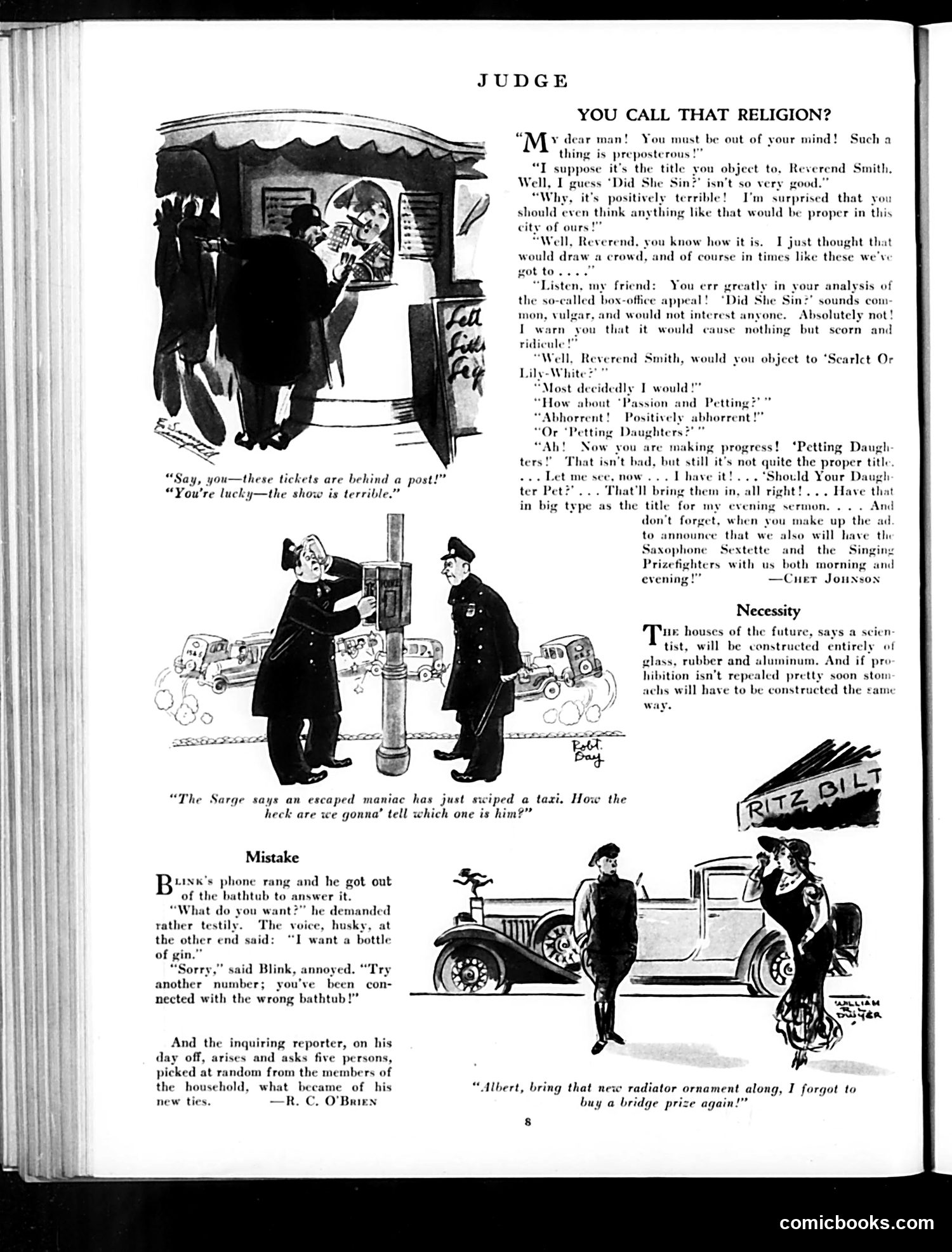
# Judge Magazine Page Analysis This page contains three satirical pieces typical of 1920s American humor: **"You Call That Religion?"** depicts a clergyman objecting to theatrical titles like "Did She Sin?" and "Scarlet O-Lily-White" as scandalous, while the theater manager suggests increasingly risqué alternatives ("Petting Daughters"). The satire mocks religious hypocrisy—the reverend eventually accepts "Should Your Daughter Pet?" if properly framed as a sermon. This reflects 1920s culture wars over morality in entertainment and the "Jazz Age" tension between conservative and modern values. **"Mistake"** jokes about a wrong-number call to a bathtub instead of a gin supplier, likely referencing Prohibition (1920-1933), when alcohol was illegal and obtaining it required covert channels. **"Necessity"** satirizes scientific predictions about future glass houses while cynically noting that if Prohibition continues, stomachs will need reinforced construction—another Prohibition-era gag suggesting the drinking culture's resilience despite legal restrictions.
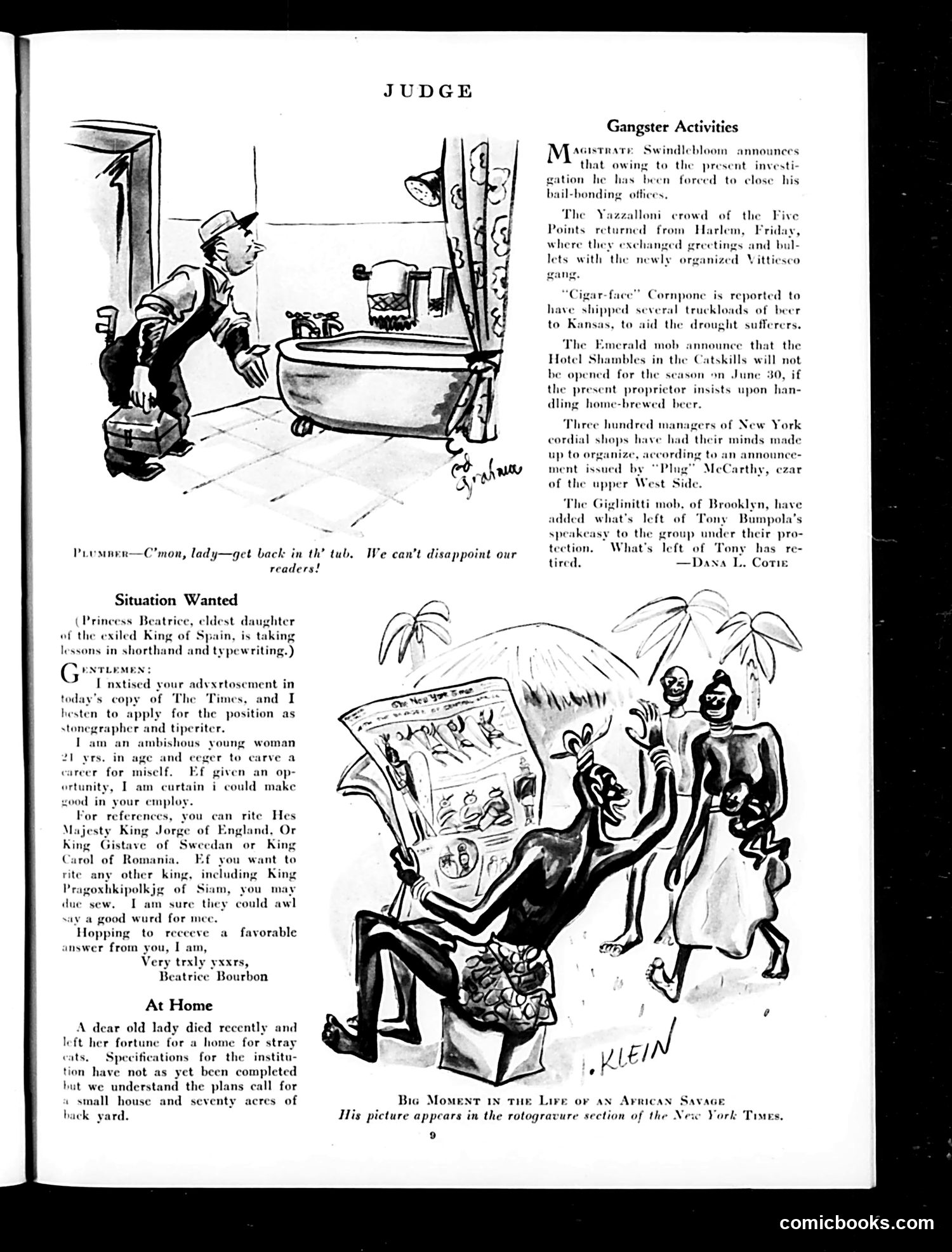
# Judge Magazine Page Analysis This page contains three satirical pieces: **"Gangster Activities"** mocks Prohibition-era organized crime through fake "news" of various mob operations—gang violence, illegal beer smuggling, and protection rackets involving speakeasies. The humor relies on treating gangster activity as mundane gossip, with invented characters like "Cigar-face Cornpone" and mob bosses operating openly. **"Plumber" cartoon** shows a man in a bathtub, with the caption joking that he must stay in the tub to avoid disappointing readers—likely mocking serialized fiction's predictable plots and reader expectations. **"Situation Wanted"** satirizes Princess Beatrice of Spain (exiled royalty) applying for a stenographer job. The humor comes from her incompetent application riddled with misspellings, and her absurdly prestigious "references" (European kings), mocking both fallen nobility and overqualified applicants. **"Big Moment in the Life of an African Savage"** appears to be a Klein illustration satirizing photojournalism's exoticizing depiction of non-Western peoples in newspapers.
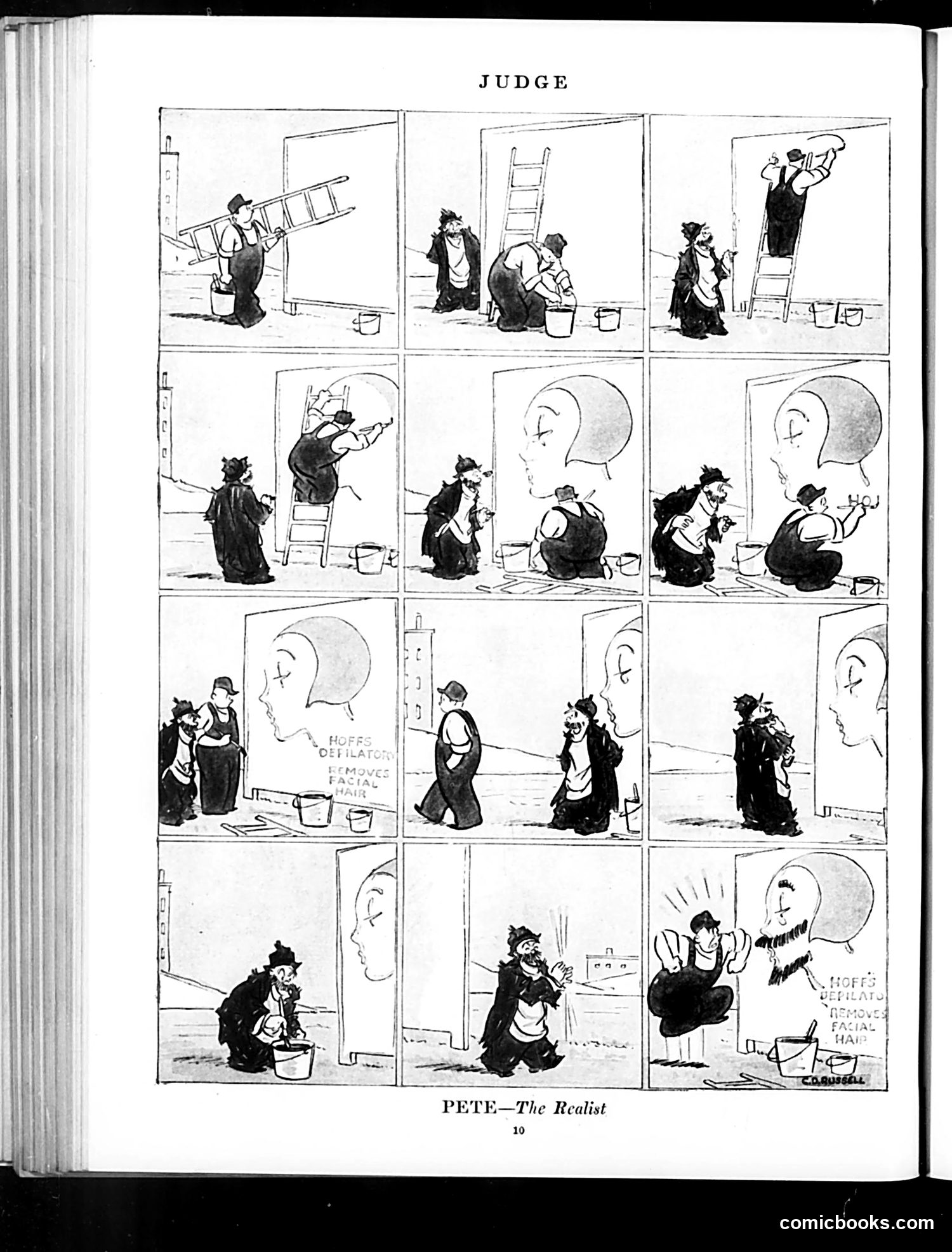
# Analysis: "PETE—The Realist" This is a multi-panel satirical comic showing a figure painting a large portrait head. The narrative depicts the artist's pragmatic approach to his work. The joke appears to center on **commercial realism**: the artist begins by carefully painting facial features, but as panels progress, he becomes increasingly impatient. By the final panels, he's scrubbing away at the portrait with visible frustration, seemingly abandoning artistic detail for expedience. Text visible in lower panels reads "HOFFS DEPILATOY REMOVES FACIAL HAIR"—suggesting this may be an **advertisement disguised as comedy**, where the portrait serves as a display surface for product messaging rather than genuine art. The satire likely mocks either commercial artists who prioritize profit over craft, or advertisers who use any medium to promote products. "The Realist" title implies the artist cynically accepts compromising his work for practical gain.