
A complete issue · 16 pages · 1909
Judge — February 27, 1909
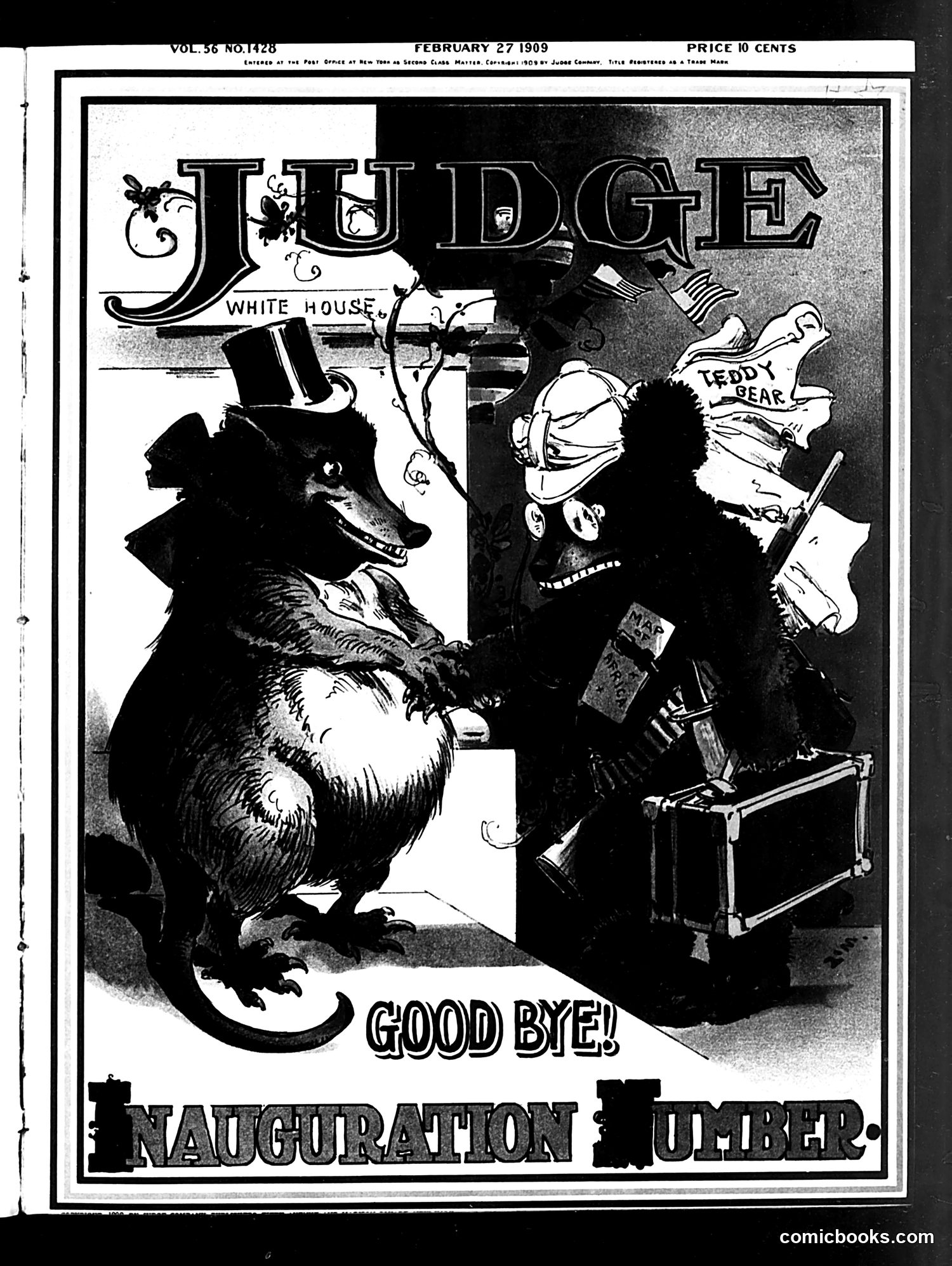
This is a satirical cover depicting President Theodore Roosevelt's departure from office. The anthropomorphized bear wearing a top hat—representing Roosevelt—says "Good Bye!" while shaking hands with a figure labeled "Teddy Bear" (a stuffed toy). The White House appears in the background, and the scene is titled "Inauguration Lumber." The satire references Roosevelt's decision not to seek another term, with his successor William Howard Taft taking office. The "lumber" reference likely alludes to Roosevelt's conservation efforts or western policies. The teddy bear imagery plays on the popular "Teddy Bear" toy named after Roosevelt himself, creating a visual pun about his departure and the end of an era. The overall tone is one of farewell to a distinctive presidency.
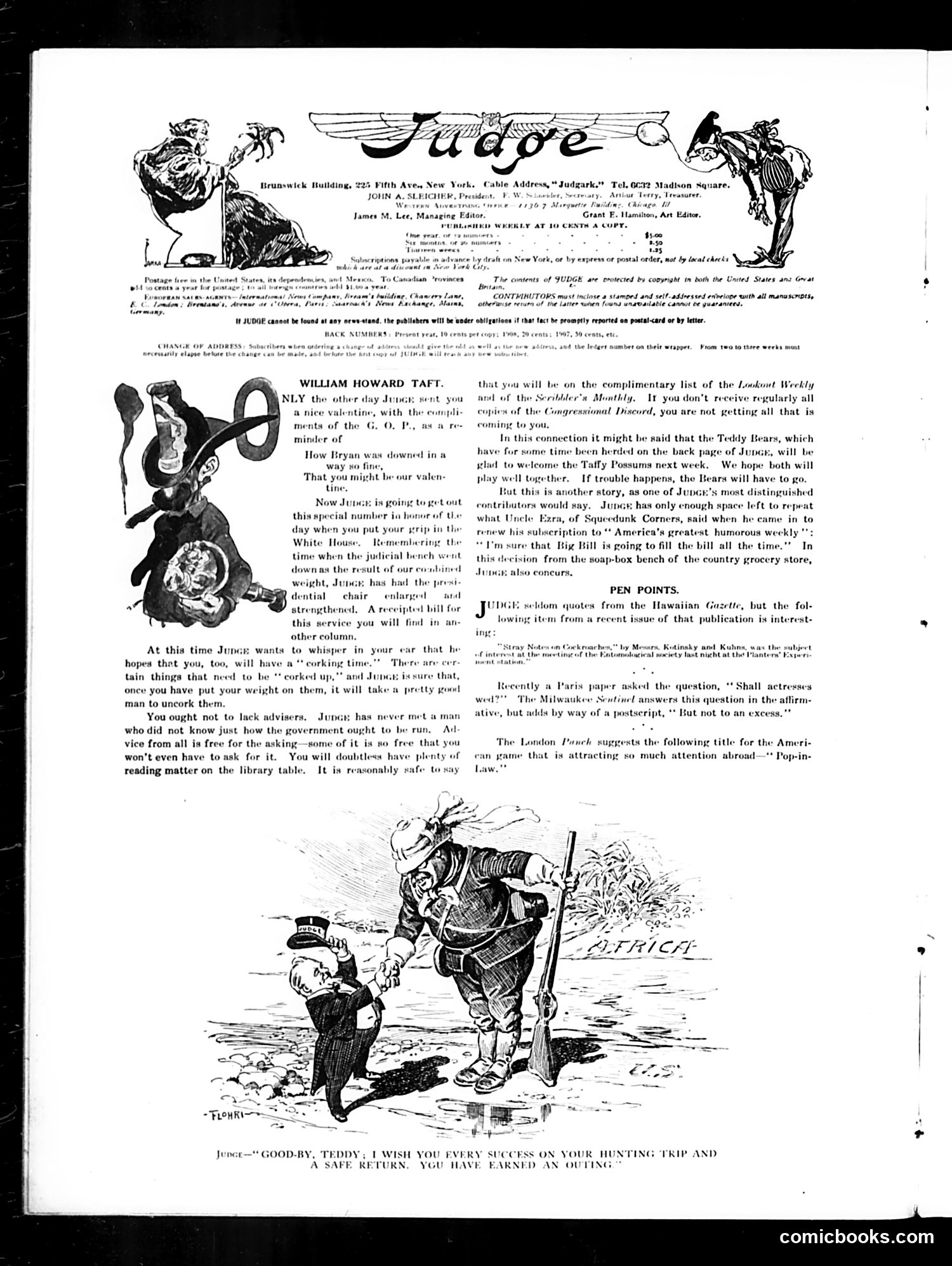
This page features an article titled "William Howard Taft" alongside a political cartoon. The text discusses President Taft in a lighthearted manner, mentioning Bryan (likely William Jennings Bryan) and referencing the G.O.P., the presidential chair, and Taft's role in government. The bottom cartoon depicts a large figure (likely representing Taft, given the article) with an exaggerated physique, standing beside a much smaller figure labeled "TEDDY" (Theodore Roosevelt). The caption reads: "GOOD-BY, TEDDY. I WISH YOU EVERY SUCCESS ON YOUR HUNTING TRIP AND A SAFE RETURN. YOU HAVE EARNED AN OUTING." This appears to satirize Taft succeeding Roosevelt as president and Roosevelt's subsequent African hunting expedition, a real event after his presidency ended.
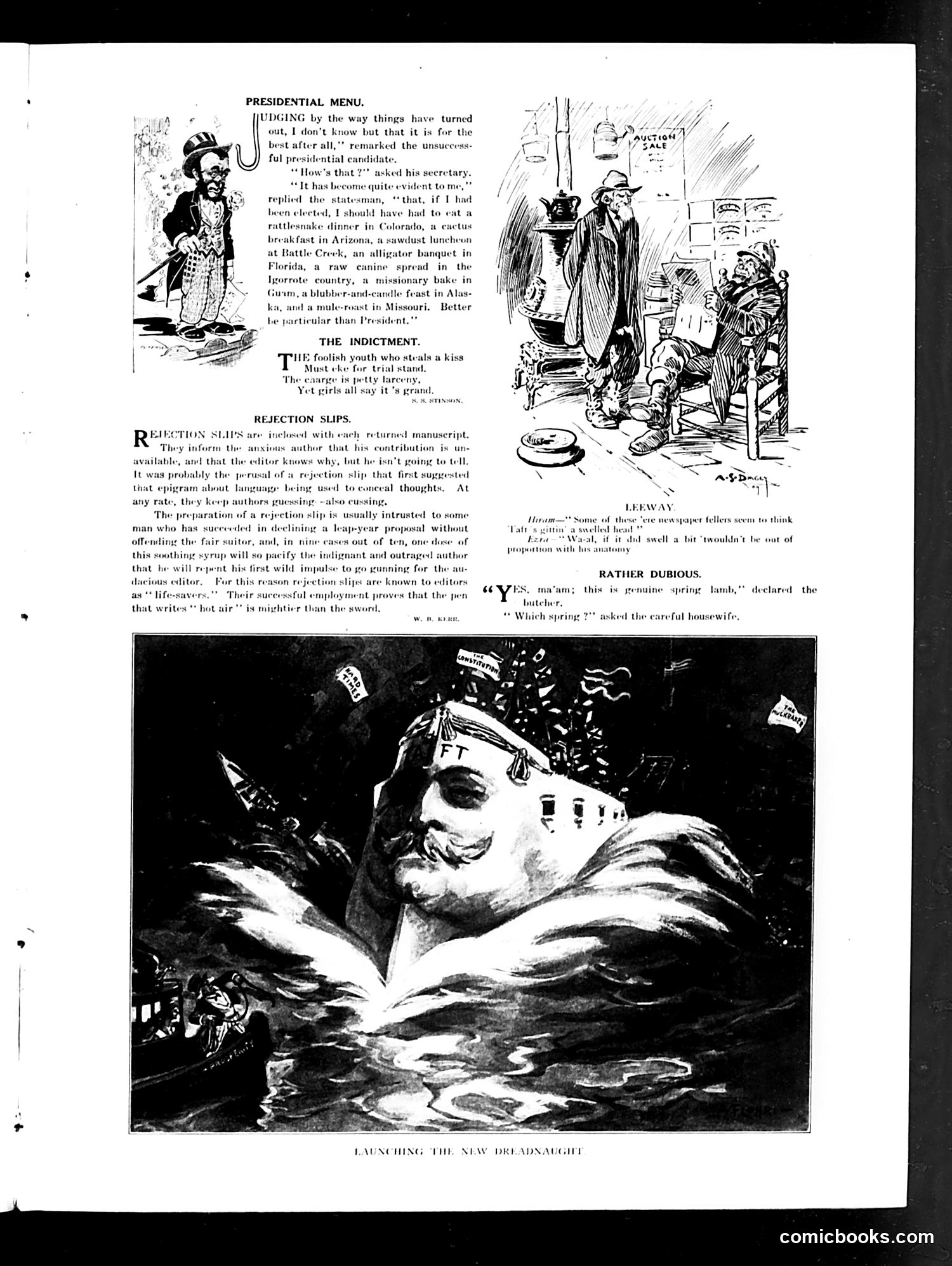
This page satirizes the 1884 U.S. presidential election. The top section, "Presidential Menu," mocks an unsuccessful candidate's excuses for losing, claiming he should have won had he dined on exotic foods (rattlesnake in Colorado, alligator in Florida, etc.)—absurd logic suggesting the candidate is delusional about his defeat. The middle section includes literary items ("The Indictment," "Rejection Slips") and a sketch titled "Leeway" showing newspaper editors. The large bottom illustration, "Launching the New Dreadnaught," depicts a caricatured military/political figure emerging from water, likely mocking a specific public figure's ambitions or return to politics. The exact identity remains unclear without additional context, but the cartoon ridicules political pretension and overreach.
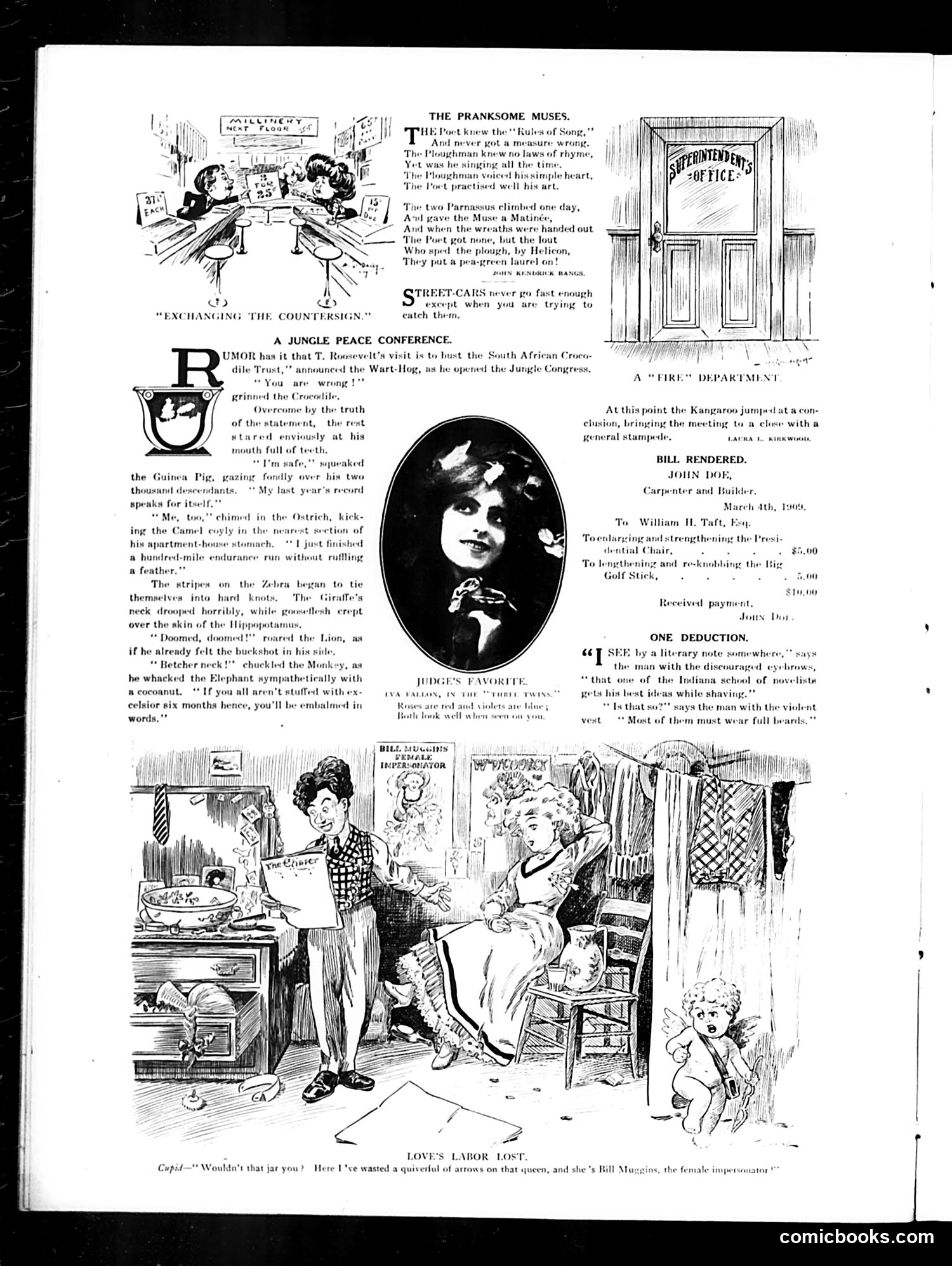
This page contains several unrelated satirical pieces typical of Judge magazine's format. **"The Pranksome Muses"** mocks poets and their pretensions about artistic inspiration versus practical labor. **"A Jungle Peace Conference"** references Theodore Roosevelt's efforts to mediate the South African Boer War, portraying him as the "War-Hog" convening a "Jungle Congress." The animals (Guinea Pig, Ostrich, Camel, Zebra, Hippopotamus) represent various parties, satirizing diplomatic efforts through absurdist animal characterizations. **"Bill Rendered"** is an invoice joke about repairs to the Presidential Chair and golf stick—likely mocking Roosevelt's vigorous, active presidency. **"One Deduction"** jokes about literary criticism and the Indiana school of novelists. **"Love's Labor Lost"** is a domestic humor cartoon about a man frustrated with his wife's housekeeping. The central portrait appears to be "Judge's Favorite"—likely a contemporary public figure, though unclear from context alone.
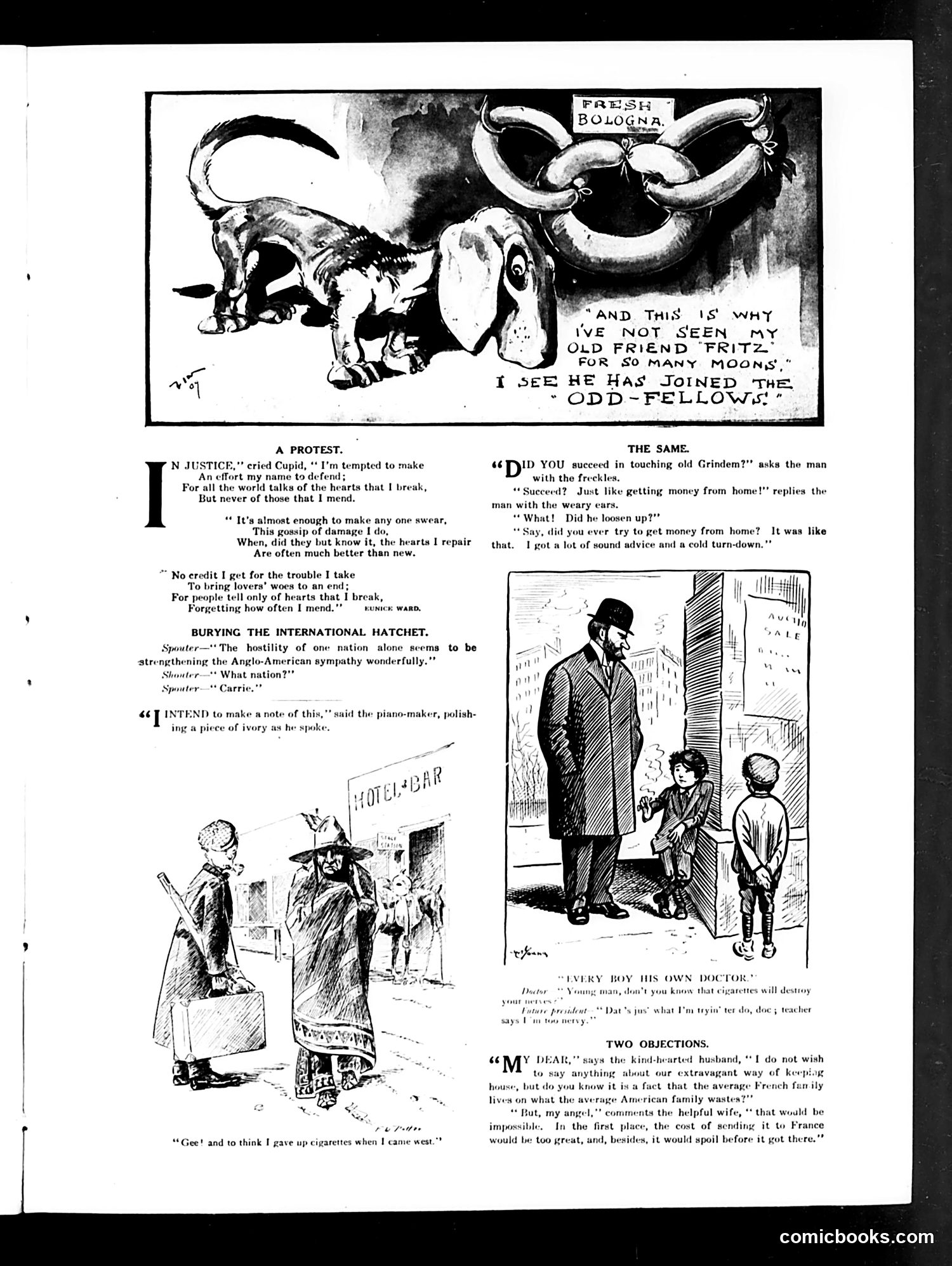
**Top Cartoon ("A Protest"):** A dachshund (visually associated with Germany) protests to its owner about not visiting "old friend Fritz" in months, explaining it has joined "the Odd-Fellows" (a fraternal organization). This is anti-German satire, likely from WWI era, mocking German-American solidarity and suggesting Germans were joining American organizations to disguise their nationality or loyalty. **Middle Section ("Burying the International Hatchet"):** Shows dialogue about Anglo-American sympathy, appearing to reference post-conflict reconciliation efforts. **Bottom Cartoons:** "Every Boy His Own Doctor" and "Two Objections" satirize American family practices and French attitudes toward waste, suggesting cultural superiority debates common in early 20th-century American humor. The page overall reflects xenophobic attitudes typical of Judge magazine's era.
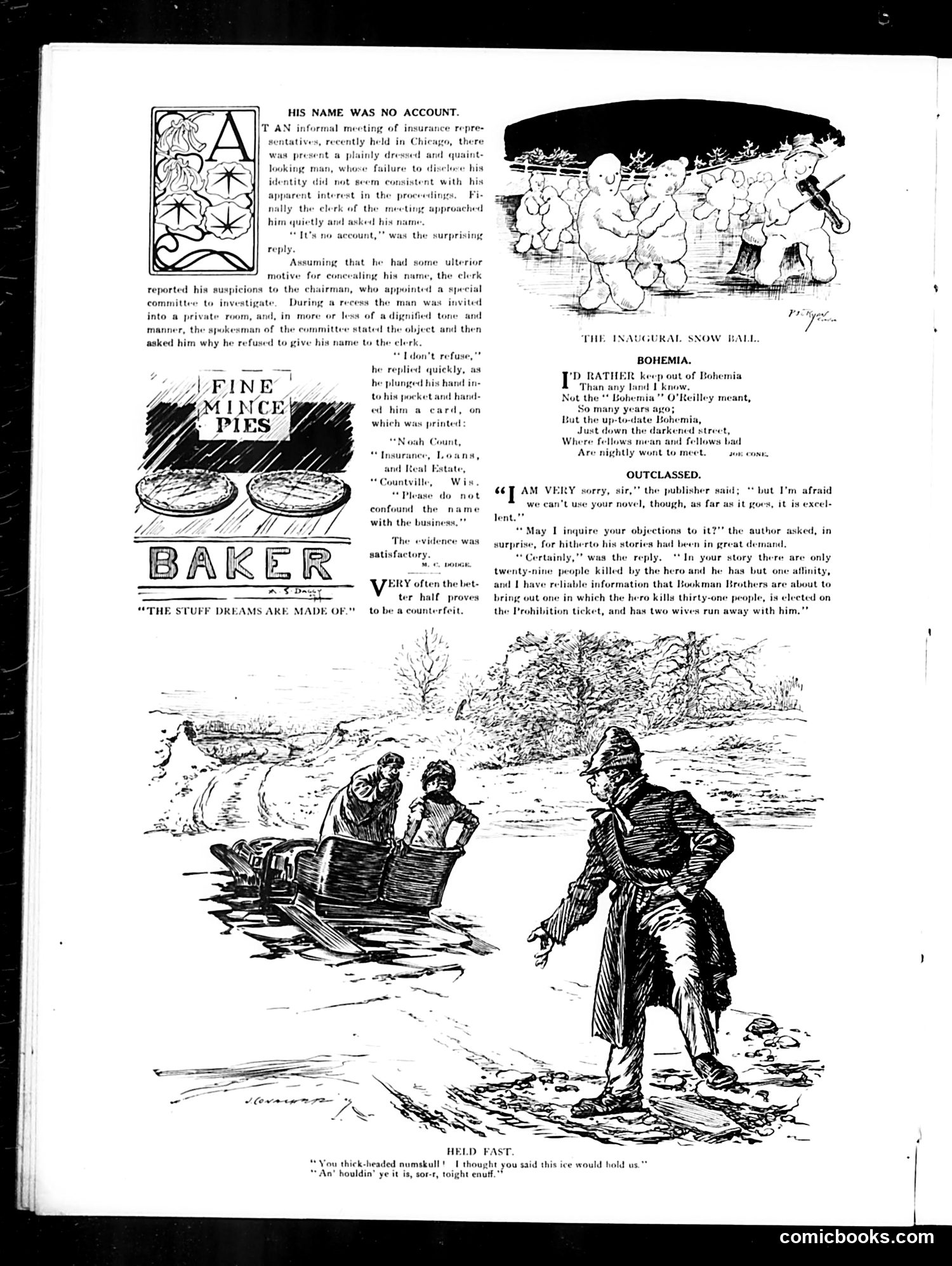
This page contains three separate satirical pieces: **"His Name Was No Account"** mocks an insurance industry meeting where a plainly dressed attendee refuses to identify himself. The joke plays on the literal phrase "no account"—he claims his name is literally "No Account," frustrating officials trying to investigate his suspicious behavior. It satirizes bureaucratic paranoia and the absurdity that can result from it. **"Bohemia"** and **"Outclassed"** are short literary pieces criticizing bohemian culture and publishing standards, respectively. The latter depicts a publisher rejecting an author's manuscript because it contains only twenty-nine murders and lacks literary merit—satirizing sensationalist popular fiction. **"Held Fast"** shows two men on thin ice; one blames the other for breaking through, receiving the Irish-accented reply that the ice is indeed "holding" him. It's a visual pun about literal versus figurative meaning. The page also includes period advertisements (Fine Mince Pies Baker).
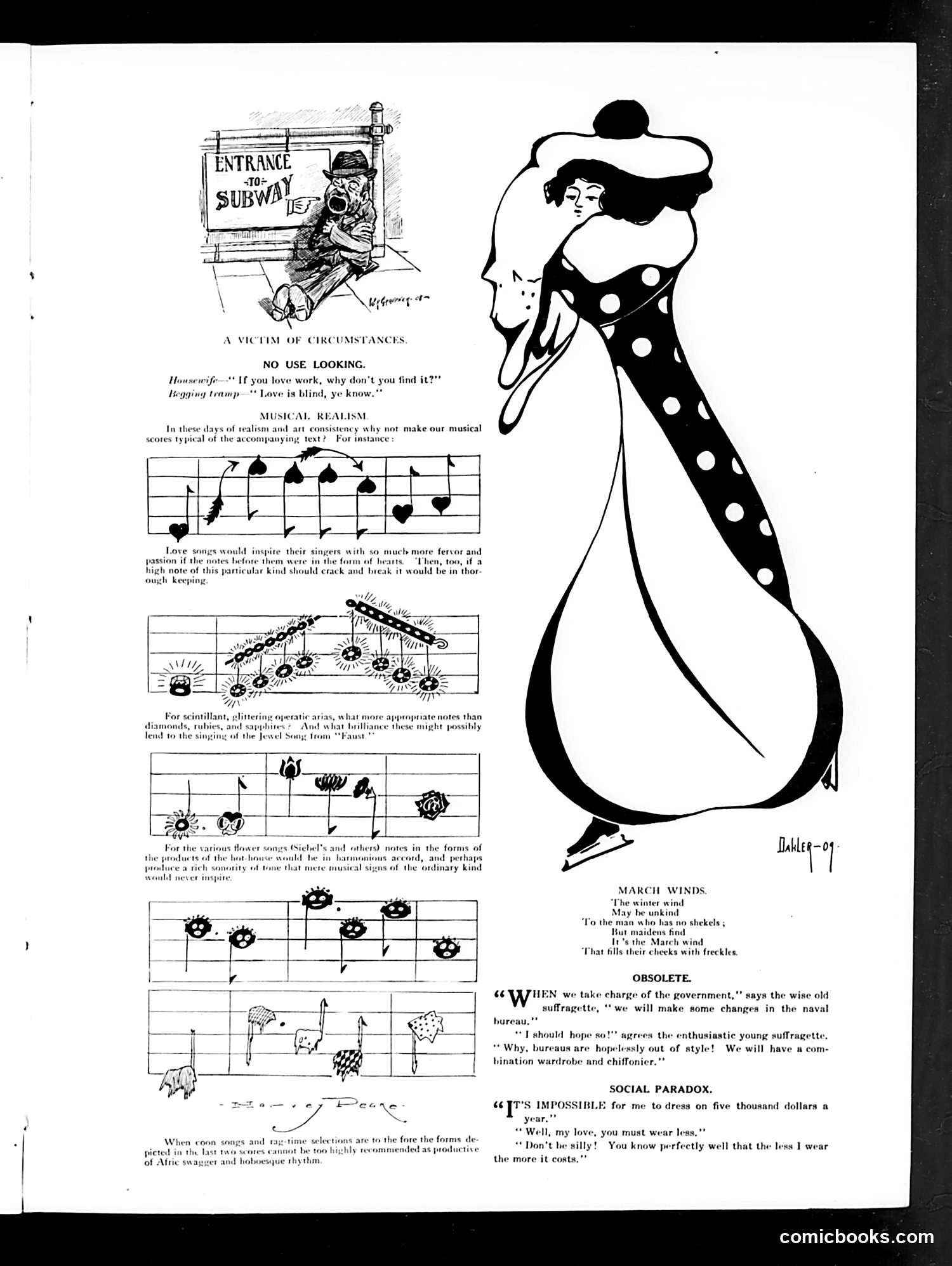
This page contains several satirical pieces targeting early 20th-century social issues: **"A Victim of Circumstances"** mocks homelessness, showing a tramp unable to find work despite effort. **"Musical Realism"** critiques operatic conventions, suggesting composers should use heart-shaped notes in love songs for greater emotional authenticity—absurdist humor about artistic pretension. **"March Winds"** is a light seasonal poem. **"Obsolete"** satirizes suffragettes (women's voting rights activists) through a conversation where a suffragette claims she'll modernize naval bureaus by replacing them with "combination wardrobes and chiffoniers"—mocking women's suffrage advocates as frivolous and fashion-obsessed rather than serious about governance. **"Social Paradox"** ridicules wealthy women's fashion logic: a woman claims she cannot dress on $5,000 yearly because "the less I wear, the more it costs"—satirizing both wealth inequality and the contradiction of expensive minimal clothing. The page reflects Judge magazine's conservative stance opposing women's suffrage and labor rights while mocking upper-class excess.
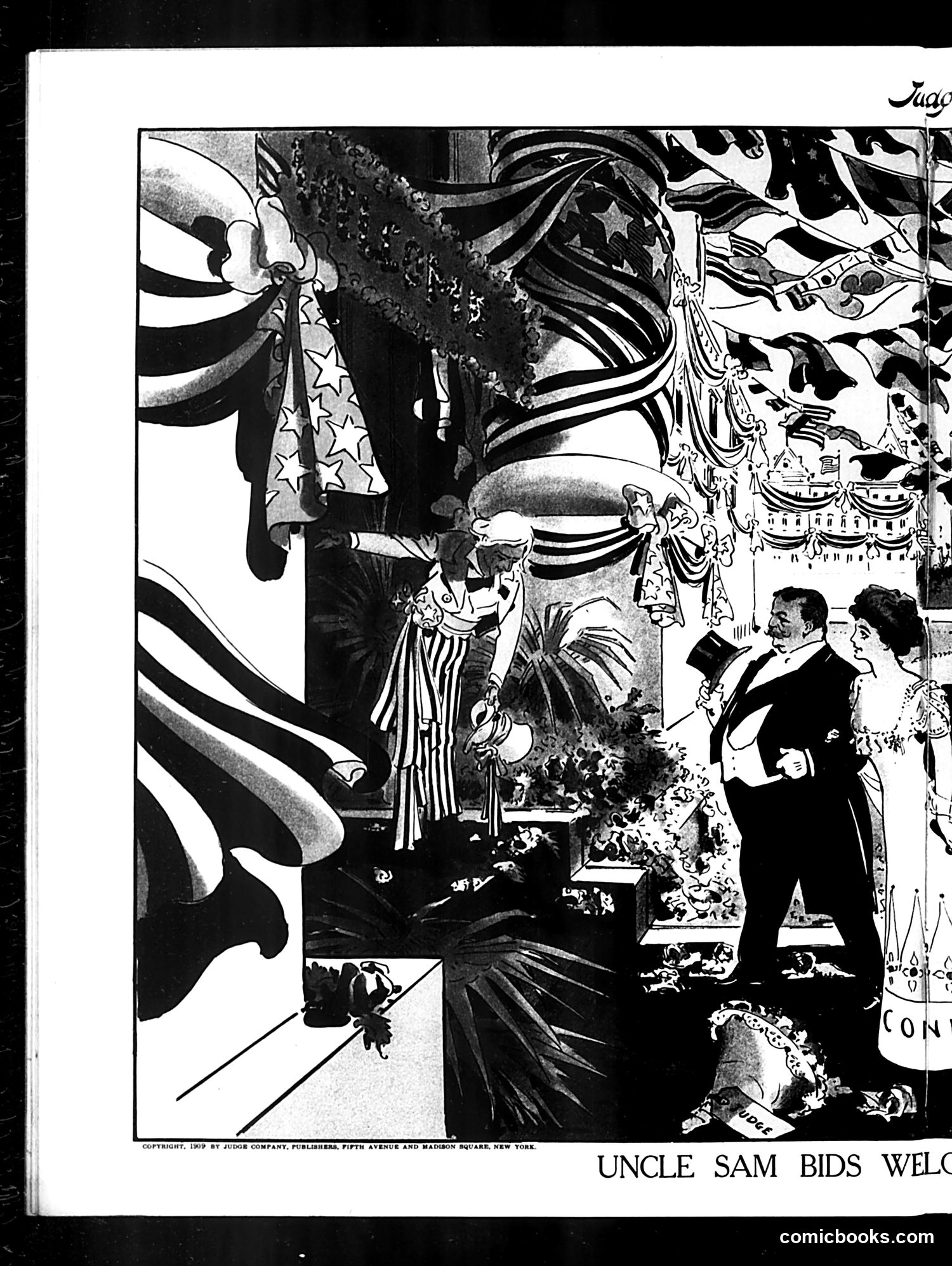
This political cartoon depicts **Uncle Sam** (personified America, identifiable by his distinctive striped pants and top hat visible on the left) welcoming immigrants or newcomers. The scene shows elaborate decorative banners, flags, and ornamental displays—suggesting a formal reception or celebration. On the right, well-dressed figures (appearing to represent established American society) observe the welcome ceremony. The elaborate patriotic imagery and formal setting suggest this satirizes America's **immigration policy or national identity**. The exact satirical point remains unclear without the full caption, but it likely comments on either the warmth of American welcome to newcomers or, conversely, the gap between America's idealized welcome and actual treatment of immigrants—a recurring theme in early 20th-century *Judge* magazine satire.
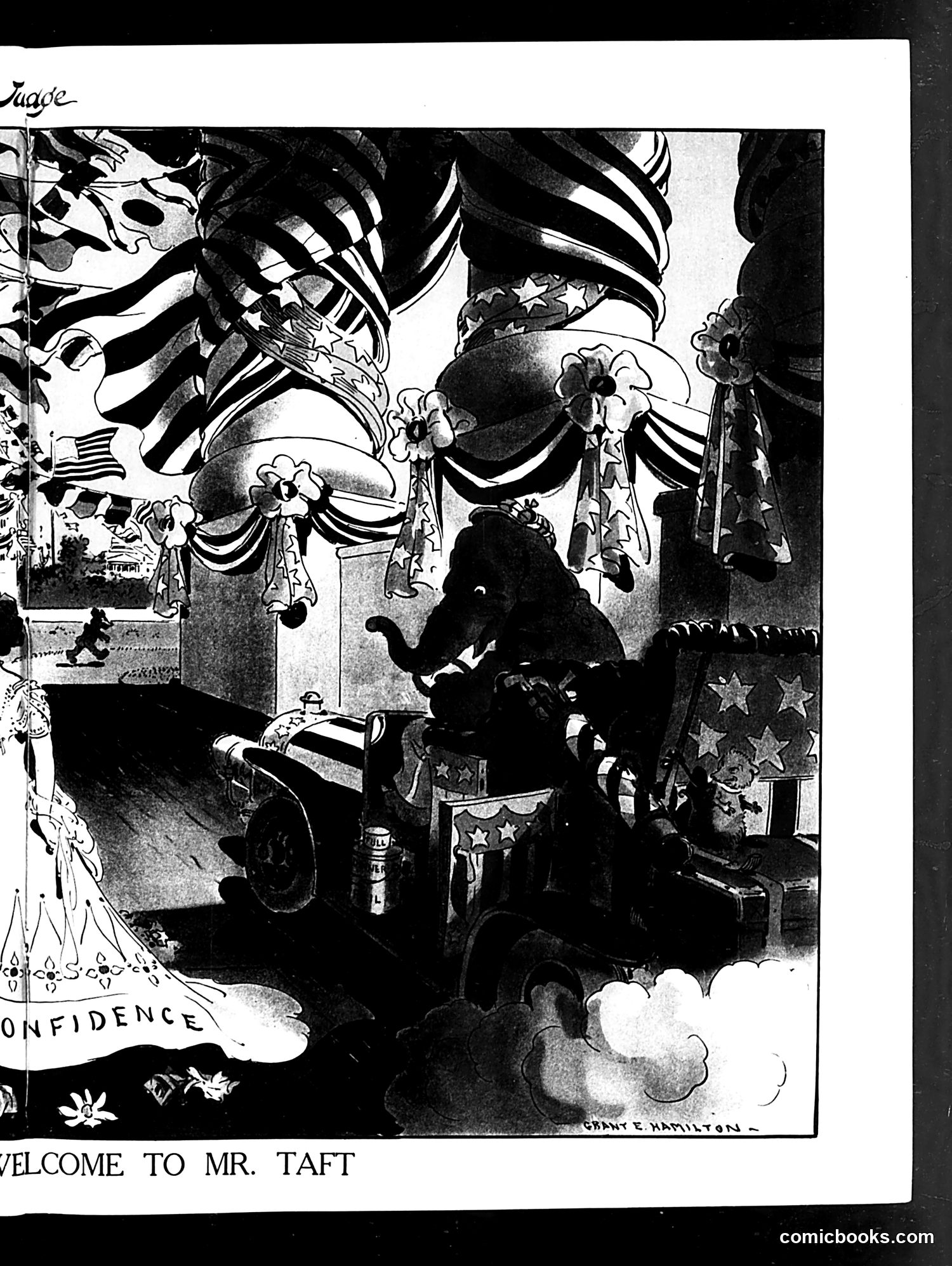
This appears to be a political cartoon welcoming William Howard Taft, likely upon his presidency or arrival at office. The image shows an elephant (the Republican Party symbol) in an ornate, patriotic setting decorated with American flags, ribbons, and stars. The elephant appears jovial and welcoming. The cartoon's tone seems congratulatory and optimistic about Taft's arrival to power. The word "CONFIDENCE" is visible, suggesting public faith in the new administration. The elaborate ceremonial decorations—flags, ribbons, and formal staging—emphasize the significance of the moment. The satirical edge likely relates to contemporary political expectations or Taft's transition, though without additional context, the specific critique remains unclear. The cartoon celebrates rather than attacks, making this a favorable greeting to the incoming leader.
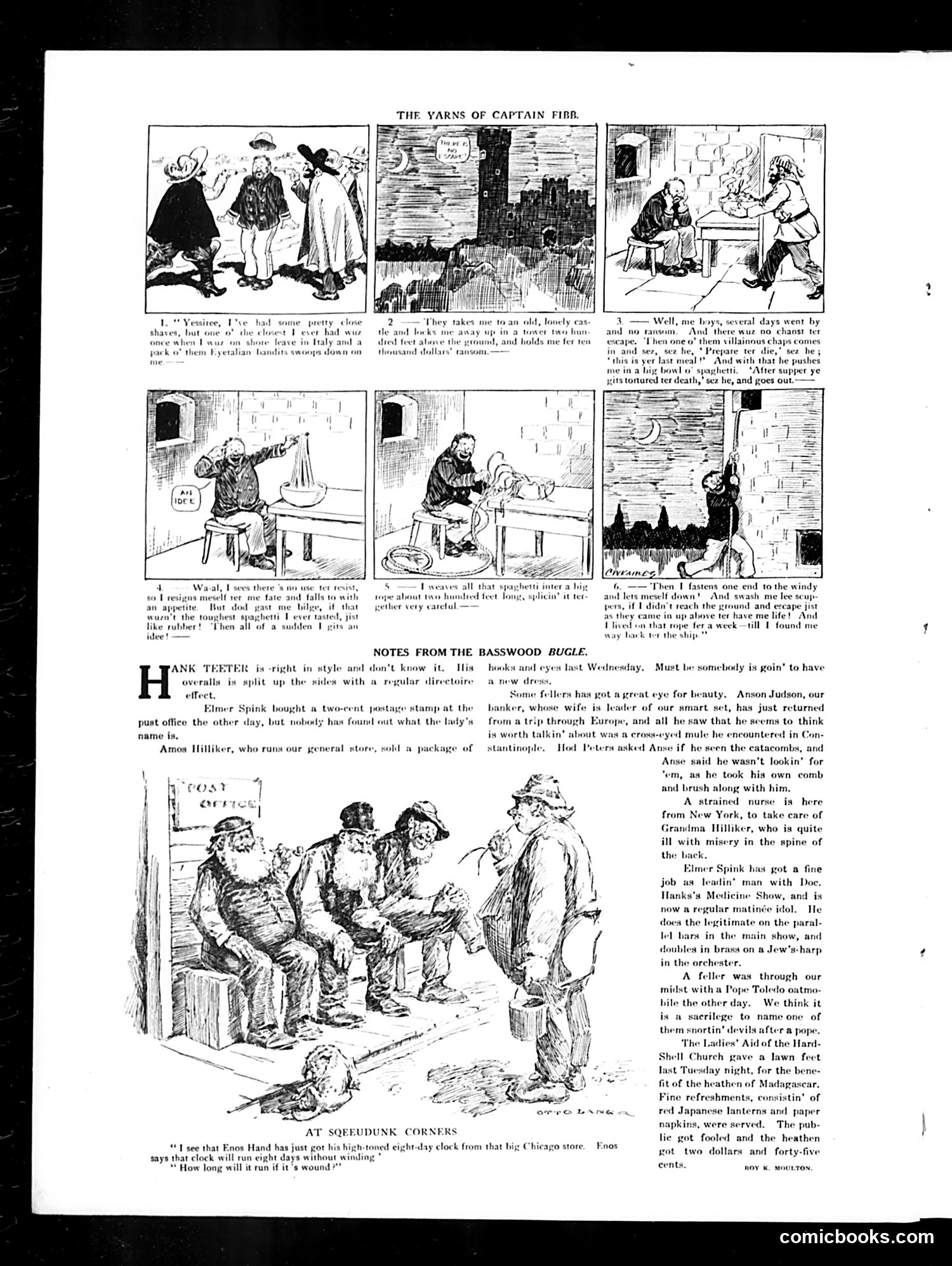
This page contains humorous rural storytelling ("yarns") in the tradition of tall tales. The main comic strip shows Captain Fibre recounting exaggerated adventures to listeners—classic frontier humor where the narrator spins increasingly absurd stories (being held for ransom in a castle, forced to eat spaghetti, etc.). The "Notes from the Basswood Bugle" section parodies small-town gossip columns, featuring local characters like Hank Teeter, Elmer Spink, and Amos Hilliker. The humor targets rural life: fashion ignorance, merchants' schemes, traveling performers, and small-town eccentricities. The "Squeudunk Corners" vignette at bottom satirizes rural reasoning—a man buys a clock advertised to run "eight days without winding" but doesn't understand the mechanism, prompting the deadpan joke about how long it runs *if* wound. Overall, the page mocks rural American speech patterns, naiveté, and provincial attitudes—common Judge magazine fare poking fun at "backwards" country folk for urban readers.
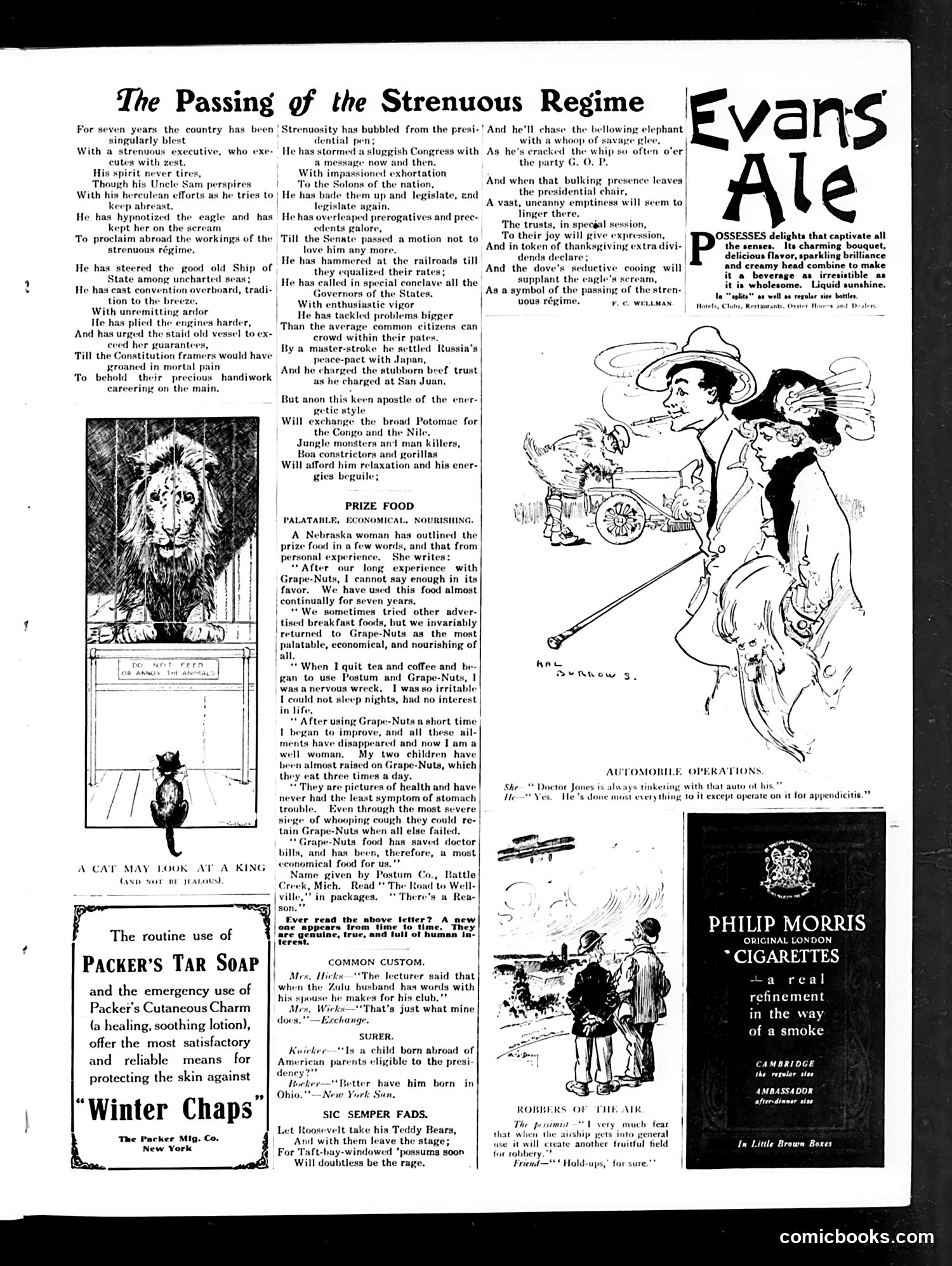
This page from *Judge* magazine satirizes President Theodore Roosevelt's aggressive executive style, titled "The Passing of the Strenuous Regime." The lengthy poem mocks Roosevelt's relentless activism—"hammering at railroads," charging the beef trust "as he charged at San Juan," pushing Congress beyond constitutional limits, and generally exhausting the nation with his hyperactive governing. The satire predicts Roosevelt's departure will leave an "uncanny emptiness," with trusts celebrating his absence and Congress finally able to breathe. The joke is that Roosevelt's successor—Taft (referenced in "Sic Semper Fads")—will be so passive that teddy bear fads will replace the strenuous regime's chaos. The page also contains period advertisements (Grape-Nuts, Packer's Tar Soap) and unrelated humor, typical of *Judge*'s mixed-content format.
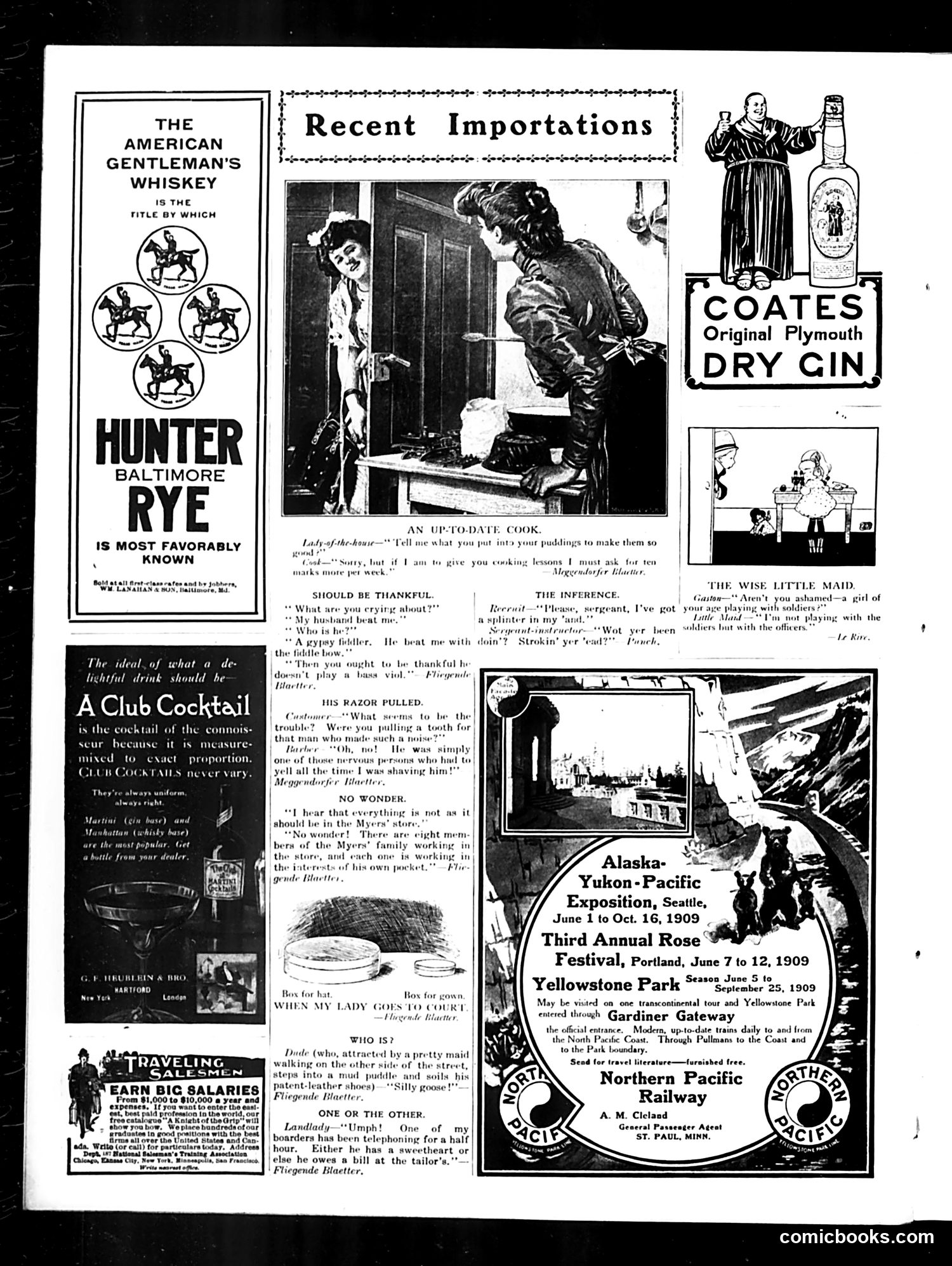
This page is primarily **advertising with humor pieces**, typical of Judge magazine's format. The main satirical content includes short, captioned comic scenarios—mostly reprinted from *Fliegende Blätter*, a German humor publication—depicting domestic and social mishaps. The jokes rely on early 1900s conventions: a cook demanding payment for lessons, a woman with a splinter, a man stepping in mud while distracted by a pretty woman, and confusion about a boarder's phone calls. These are gentle situational humor rather than political satire. The **advertisements dominate**: Hunter Rye whiskey, Coates Dry Gin, and Club Cocktails promote liquor brands with slogans about quality and proportion. A travel section advertises the **Alaska-Yukon-Pacific Exposition (1909)**, the Rose Festival, and Yellowstone Park via Northern Pacific Railway—reflecting contemporary tourism and industrial expansion. The page shows Judge functioning as both satirical magazine and advertising vehicle, with imported German humor filling space between liquor and travel promotions.
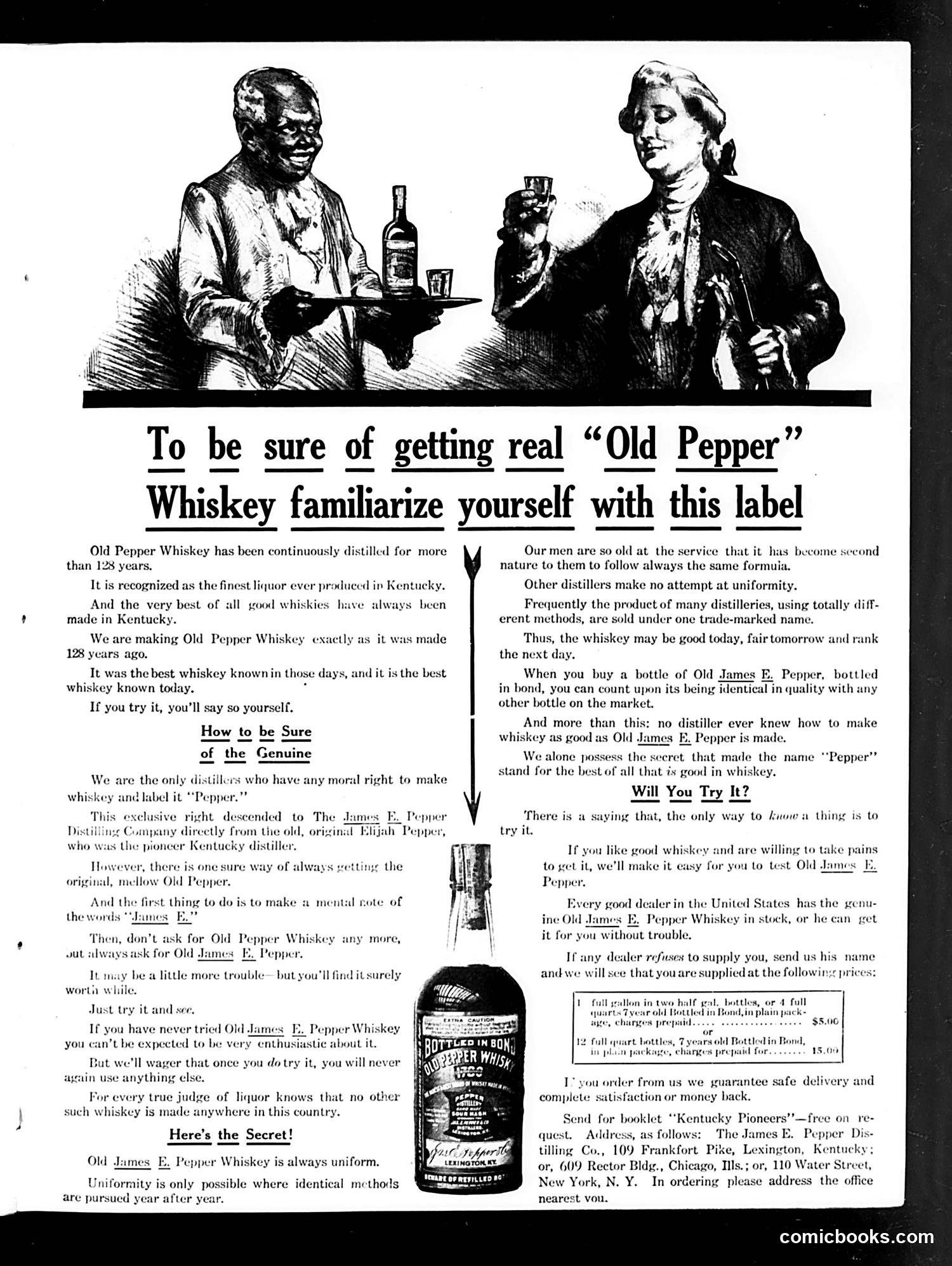
This is primarily a **whiskey advertisement**, not satirical content. It appeared in Judge magazine, which published both humor and ads. The page shows a gentleman server presenting a bottle to a well-dressed client—a straightforward sales pitch. The "cartoon" element is minimal; the illustration simply depicts a service scenario to establish brand prestige. **The actual message**: The ad emphasizes that only the James E. Pepper Distilling Company has the right to use the "Pepper" name, claiming 128 years of continuous production and exclusive secret methods. It warns consumers about counterfeit whiskeys sold under similar names by competitors using "totally different methods." This reflects **early 20th-century brand anxiety**—before modern trademark enforcement, counterfeiters and imitators regularly exploited popular brand names, making consumers vulnerable to inferior products. The ad's repeated emphasis on asking specifically for "Old James E. Pepper" and checking the label addressed this genuine marketplace problem. It's a commercial document, not editorial satire.
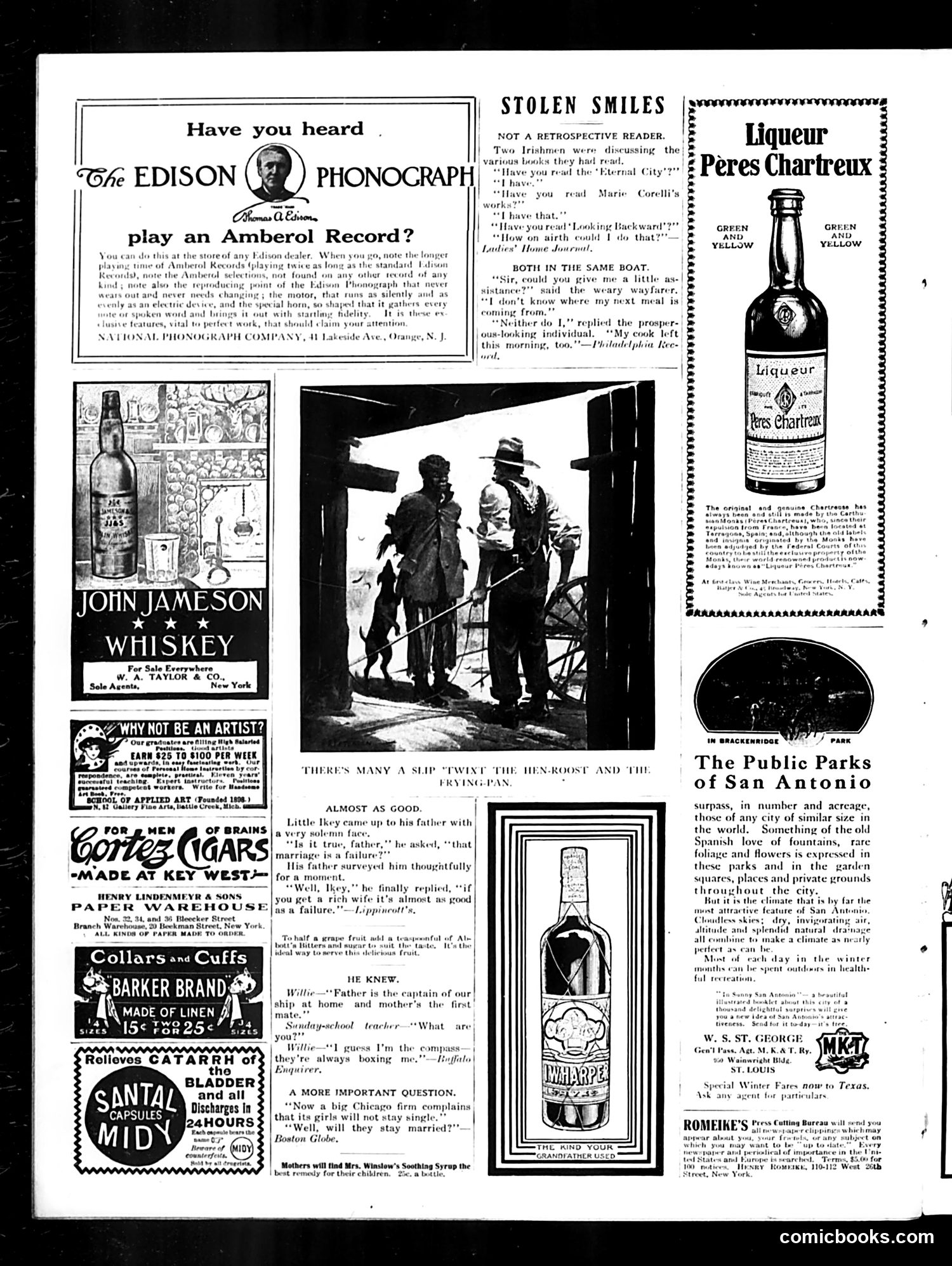
This is primarily an **advertising page** from Judge magazine, not a satirical cartoon spread. The page contains multiple product advertisements interspersed with brief humorous anecdotes—a common magazine format of the era. ## The Humor/Content: The scattered jokes employ ethnic stereotyping typical of early 20th-century American humor. An anecdote features "two Irishmen" discussing books they've read, playing on period stereotypes about Irish immigrants and literacy. Another brief joke involves a wealthy man and a cook both unable to find meals—a class-based humor about domestic service disruptions. Other jokes address domestic life and marriage, with no specific political content. ## The Advertisements: The page primarily promotes products: Edison Phonographs, John Jameson Whiskey, Cortes Cigars, Barker Brand Collars, Santal Capsules, and liqueur—typical consumer goods advertising. The right side features San Antonio's public parks and tourist information, suggesting this may be a regional edition of Judge. **No significant political satire or caricature appears present.**
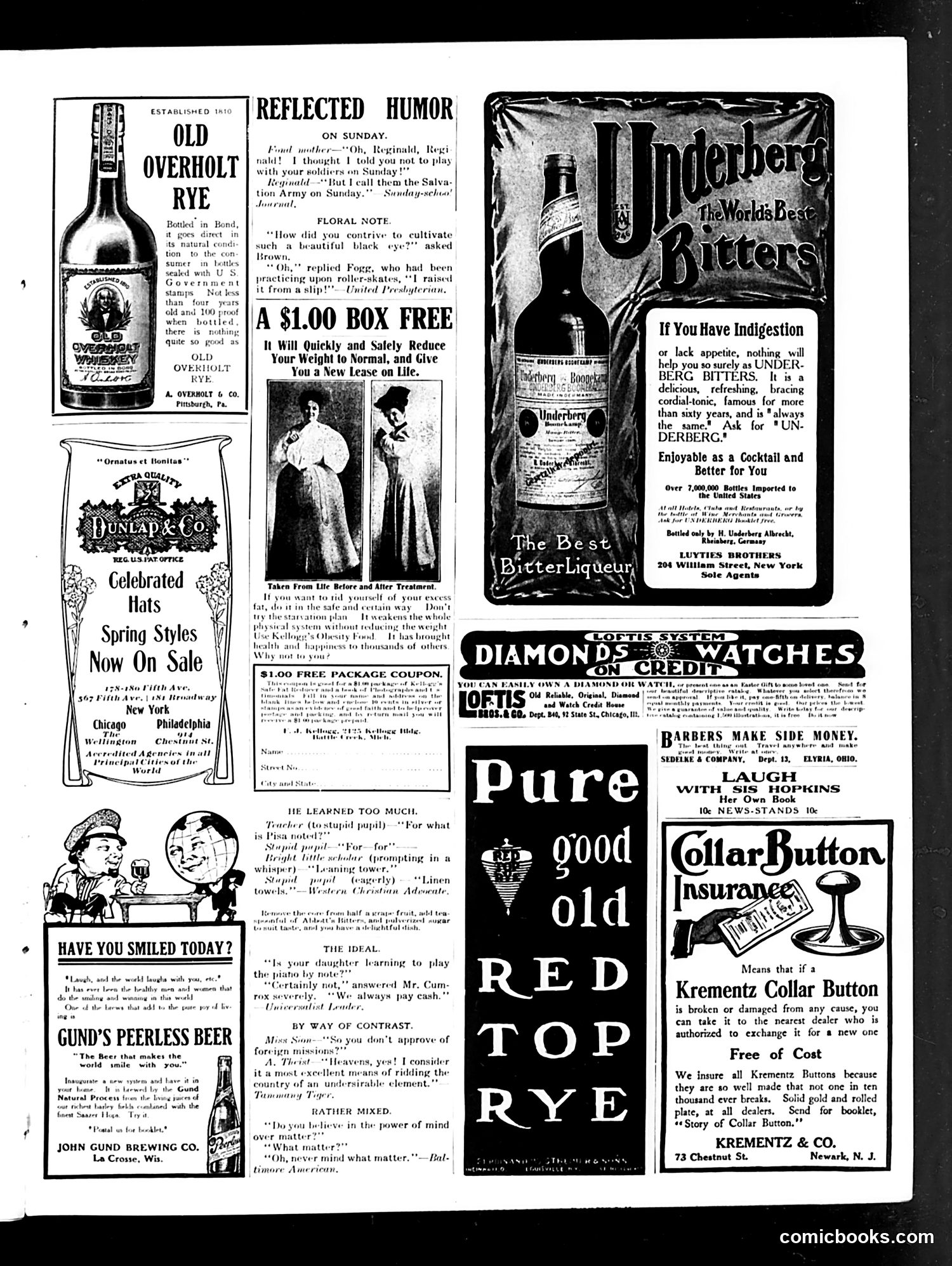
This page is primarily **advertising**, with small humorous filler content typical of early 20th-century magazines. ## The Humor Sections "**Reflected Humor on Sunday**" contains brief, genteel jokes: - A child's wordplay about calling toy soldiers the "Salvation Army" on Sundays - A pratfall joke about roller-skating causing a black eye - Classroom humor about a "stupid pupil" These represent mild, family-friendly Victorian/Edwardian-era humor with no political content—just gentle domestic and school-based comedy. ## The Advertisements The page showcases period products: Old Overholt Rye whiskey, Underberg Bitters (marketed for digestion), Gund's beer, Krementz collar buttons, and various other goods. Several ads employ now-dated marketing tropes (weight-loss boxes, "barbers make side money" schemes). The page reflects **early 1900s consumer culture** and advertising standards rather than political satire. Judge magazine's satirical edge isn't evident here—this is a typical advertising-heavy page with light comic relief.
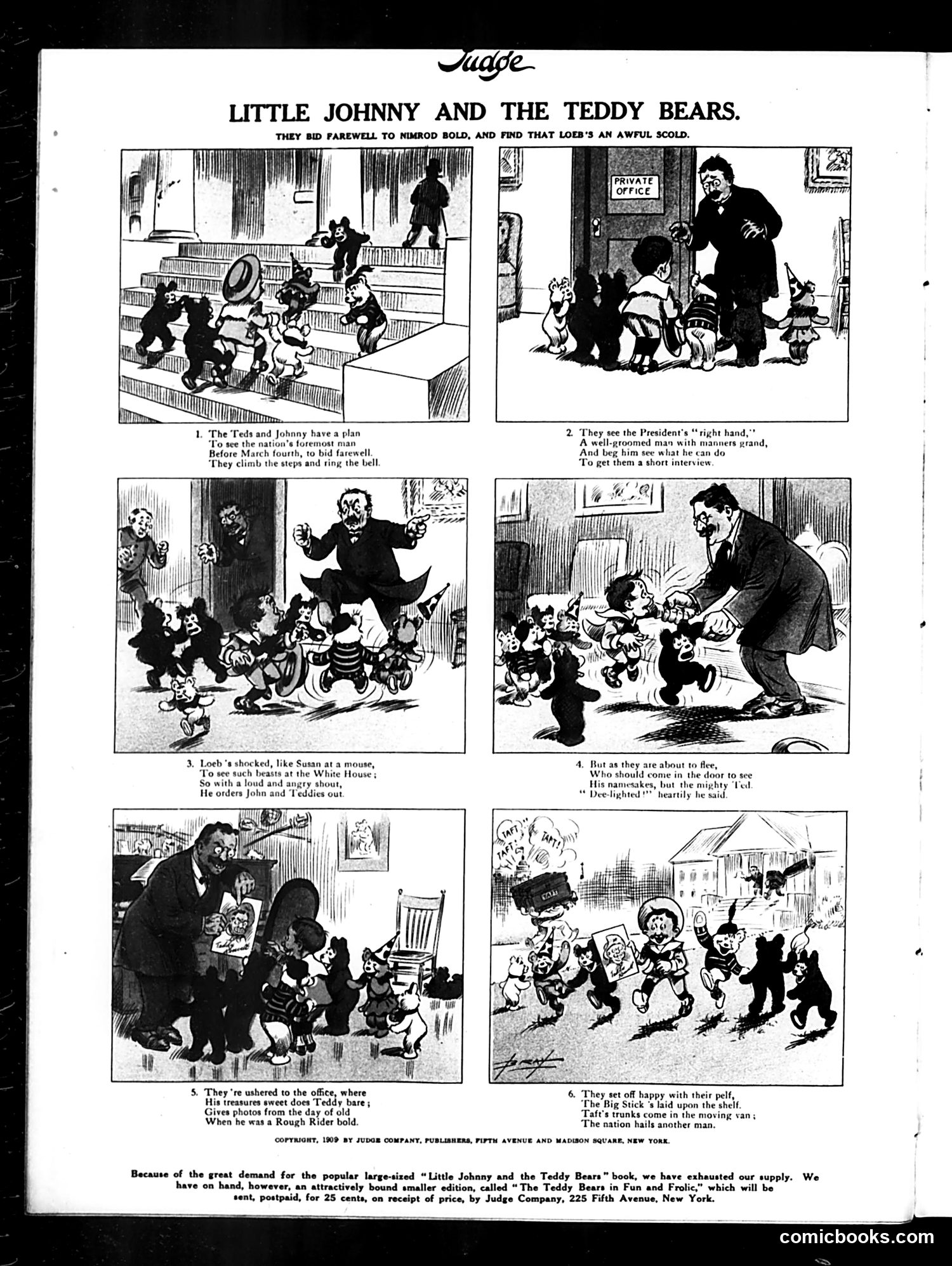
This comic satirizes the presidential transition from Theodore Roosevelt to William Howard Taft in 1909. "Teddy Bears" reference Roosevelt's famous association with the toy (named after him). The narrative follows children attempting to meet the President's "right hand"—likely William Loeb Jr., Roosevelt's secretary, depicted as shocked and angry at their intrusion. The satire's point: Roosevelt ("Nimrod," a hunter) is departing office, taking his vigor and "Big Stick" (his famous phrase for forceful diplomacy) with him. Panel 6 mocks the transfer of power to Taft, suggesting the incoming administration lacks Roosevelt's dynamic energy—Taft's "trunks" are arriving while Roosevelt's decisive character departs. The "nation hails another man" implies lukewarm acceptance of the weaker replacement. Judge magazine ridicules what it saw as Taft's inferior leadership compared to the energetic Roosevelt.