
A complete issue · 16 pages · 1908
Judge — February 15, 1908
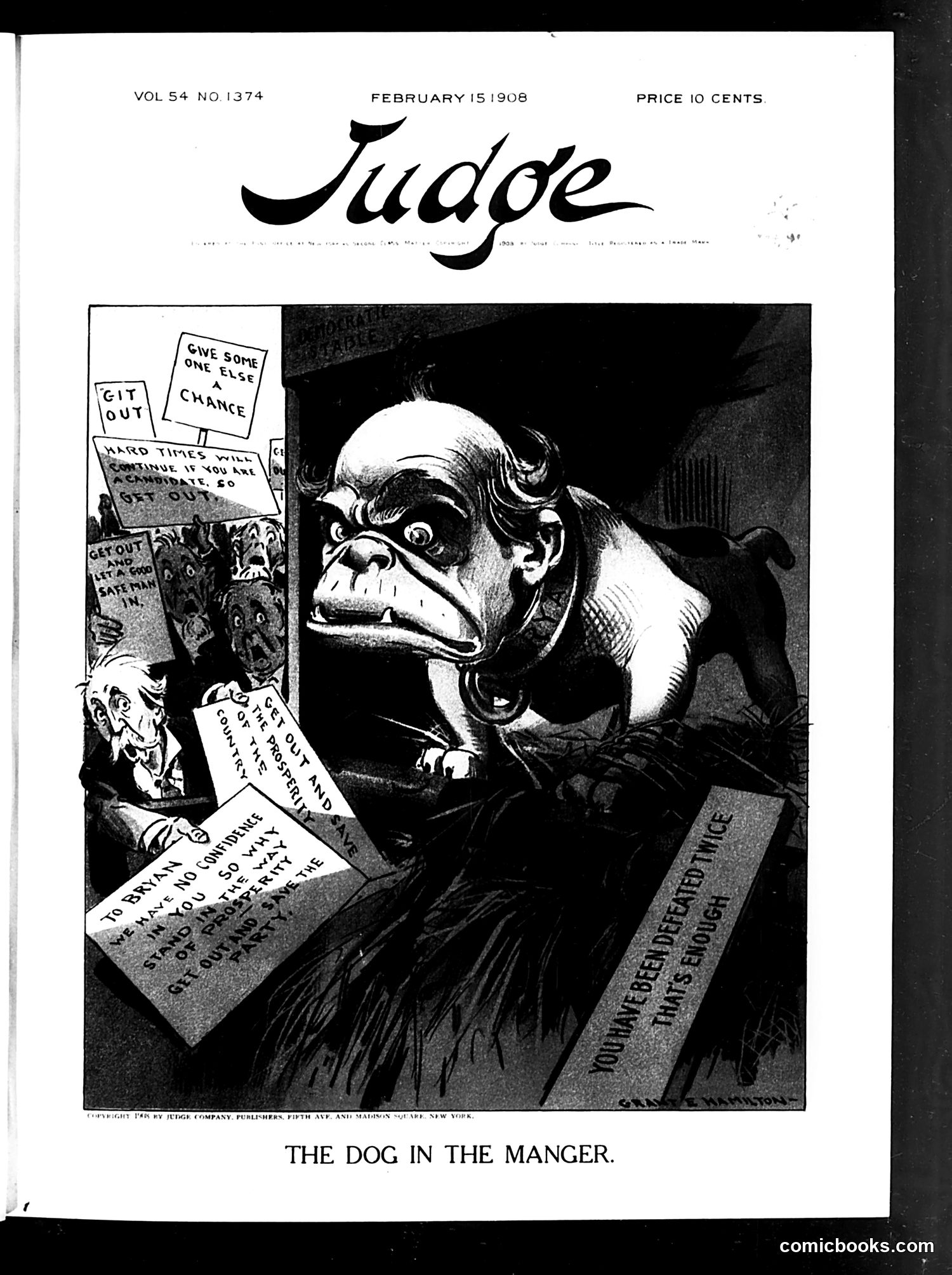
This political cartoon depicts a large dog-faced figure (likely representing a political opponent or obstructionist) surrounded by signs reading "GET OUT," "GIVE SOME ONE ELSE A CHANCE," and "HARD TIMES WILL CONTINUE IF YOU BE A CANDIDATE." The references to "NO INSURANCE," banking/financial terms, and "PLUNDERED DEFAULTING" suggest this addresses economic crisis or financial scandal. The "dog in the manger" allusion (unable to use something but preventing others from using it) criticizes someone blocking progress or refusing to step aside during difficult times. The specific political figures and events remain unclear without additional context, but the cartoon attacks an incumbent or powerful figure for selfishly clinging to power while the nation suffers economically.
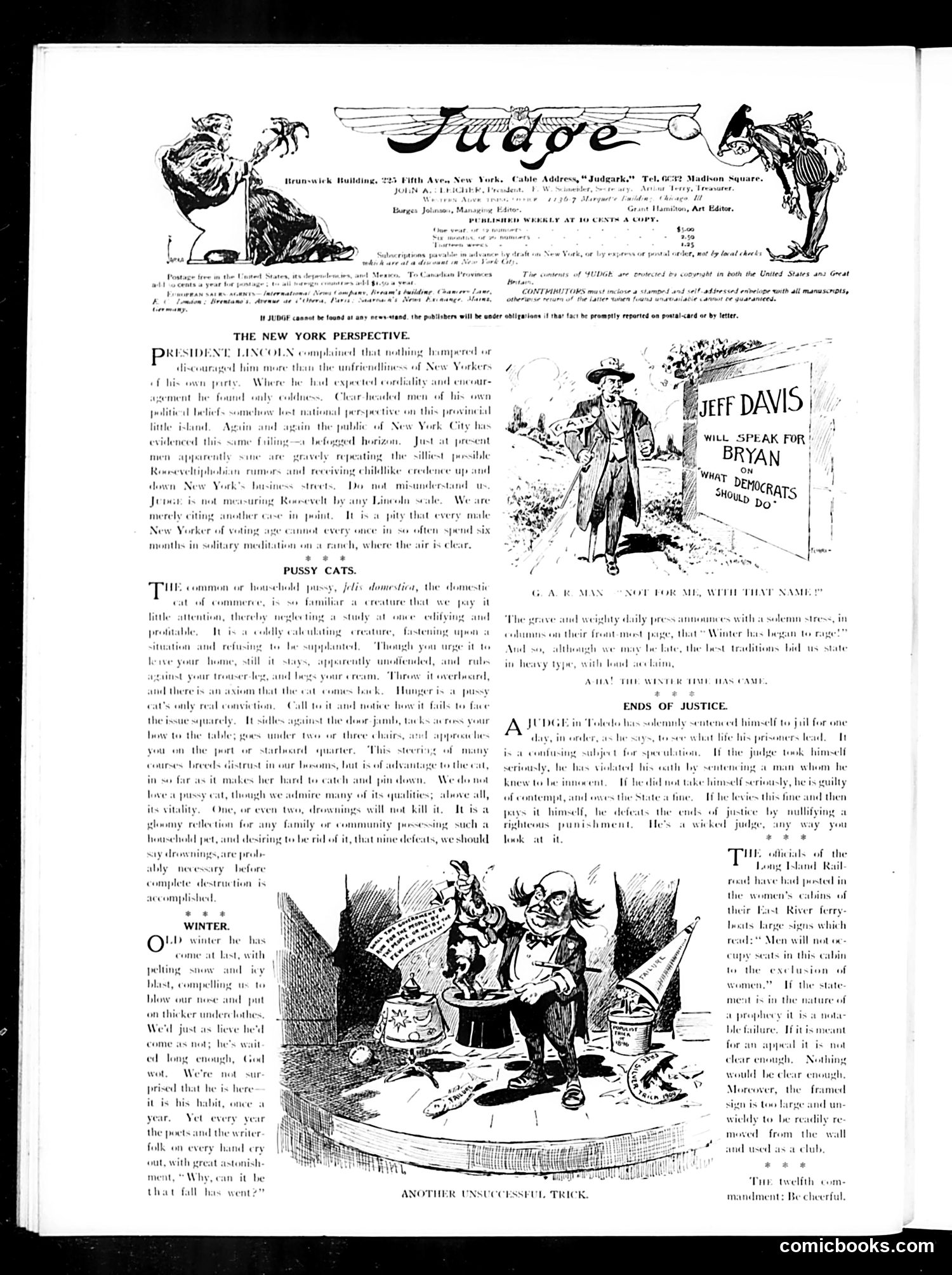
This page satirizes early 1900s American urban life and politics. "The New York Perspective" mocks New Yorkers' self-importance and their tendency to view their city as the world's center. The "Jeff Davis" illustration references Jefferson Davis (likely the Confederate president) and Bryan—probably William Jennings Bryan, the populist Democratic candidate. The cartoon appears to mock Democratic positions by having Davis speak "for Bryan on what Democrats should do." "Pussy Cats" humorously addresses household cat behavior and their indifference to human concerns. "Ends of Justice" depicts a judge releasing a prisoner, satirizing judicial leniency or corruption. The cartoons blend political commentary with social observation typical of Judge's satirical approach to turn-of-the-century American society.
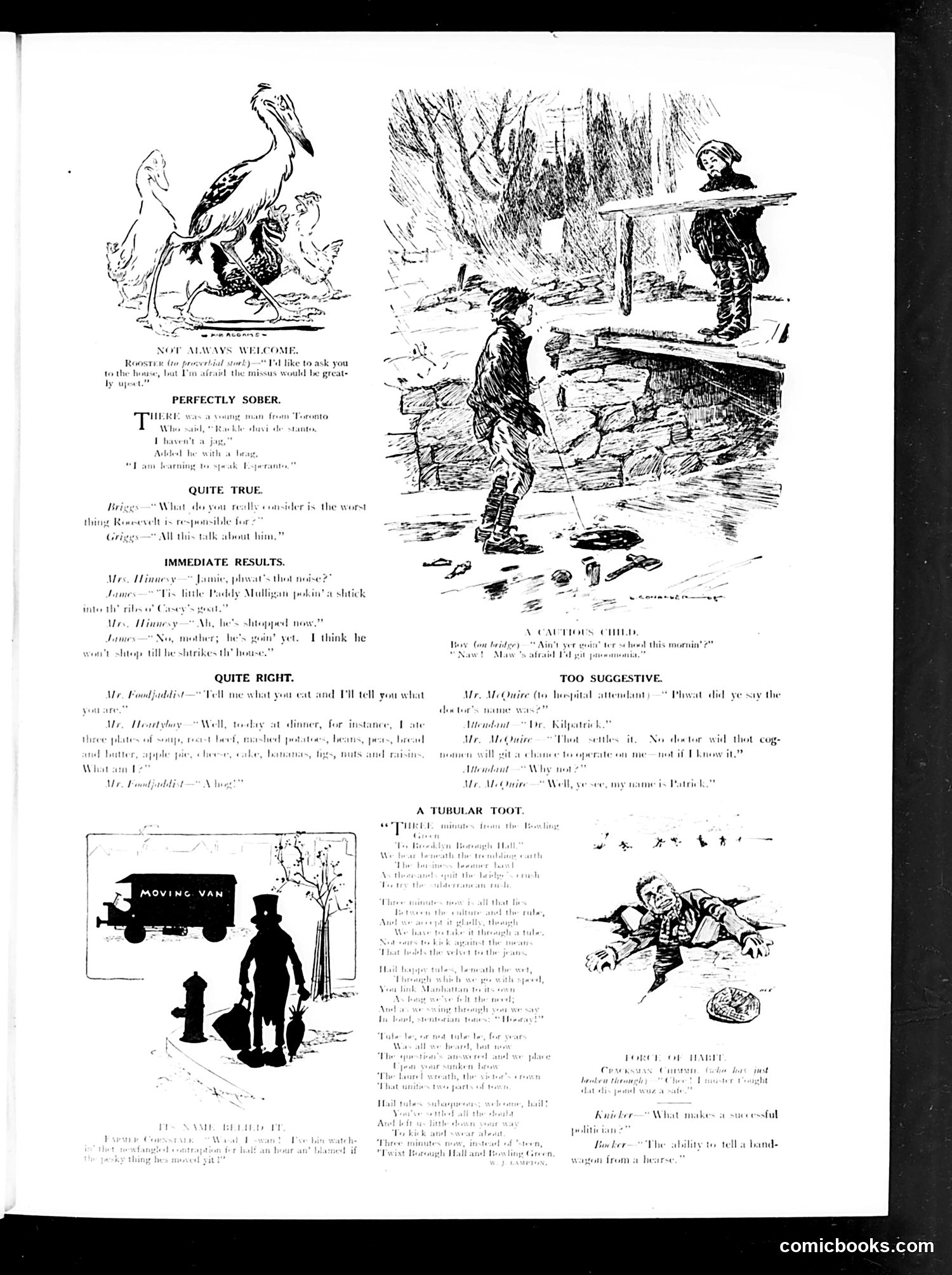
This page contains several short humorous anecdotes and illustrations rather than cohesive political cartoons. The sketches appear to be domestic comedy pieces about everyday situations—a man being scolded by his wife about inviting ducks to their home, children causing mischief, and a moving van scene. One illustration titled "A CAUTIOUS CHILD" shows concern about a doctor's credentials. Another, "FORCE OF HABIT," depicts someone crawling, suggesting absent-minded behavior patterns. "A TUBULAR TOOL" appears to be a lengthy poem about a tube or pipe. Without clear identification of specific contemporary figures or dated references, these read as general-audience humor rather than targeted political satire. The content reflects early 20th-century domestic life and social conventions, but the specific satirical targets remain unclear from the image alone.
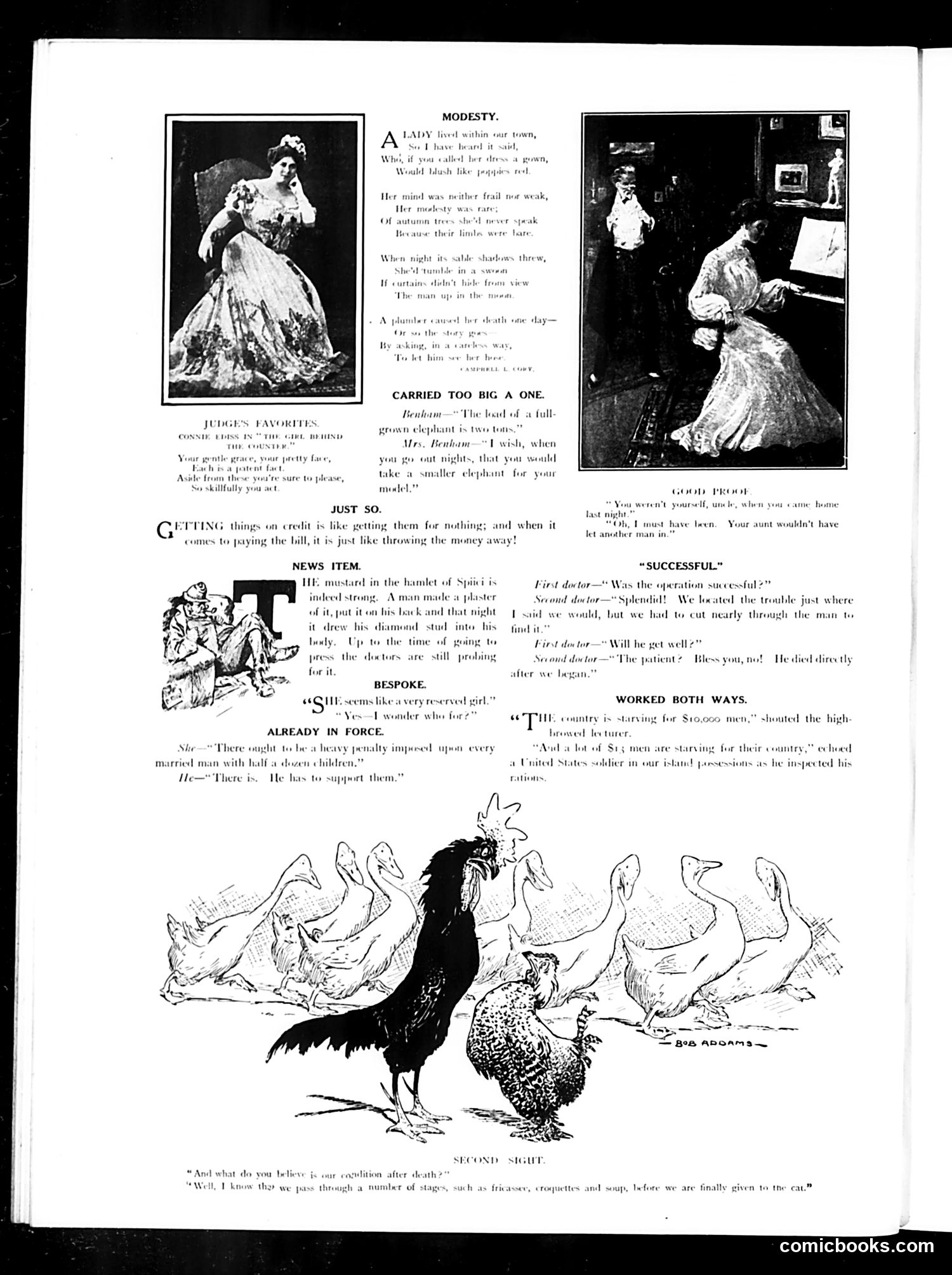
This page contains several short humor pieces typical of early 20th-century Judge magazine: **"Modesty"** - A poem about a modest woman whose character contradicts her appearance, illustrated with a theatrical portrait. **"Judge's Favorites"** and **"Just So"** - Brief witty observations about social behavior and credit. **"News Item"** and subsequent jokes - Quick satirical snippets mocking everyday situations: a man with plaster on his head, marriage penalties, and military rations. **"Second Sight"** - A cartoon showing a rooster among hens with dialogue about "combination after death," likely a spiritualism joke—a popular contemporary target of satire. The humor relies on period social conventions, gender stereotypes, and topical references (possibly WWI military references in "Worked Both Ways"). These are general social satires rather than specific political commentary.
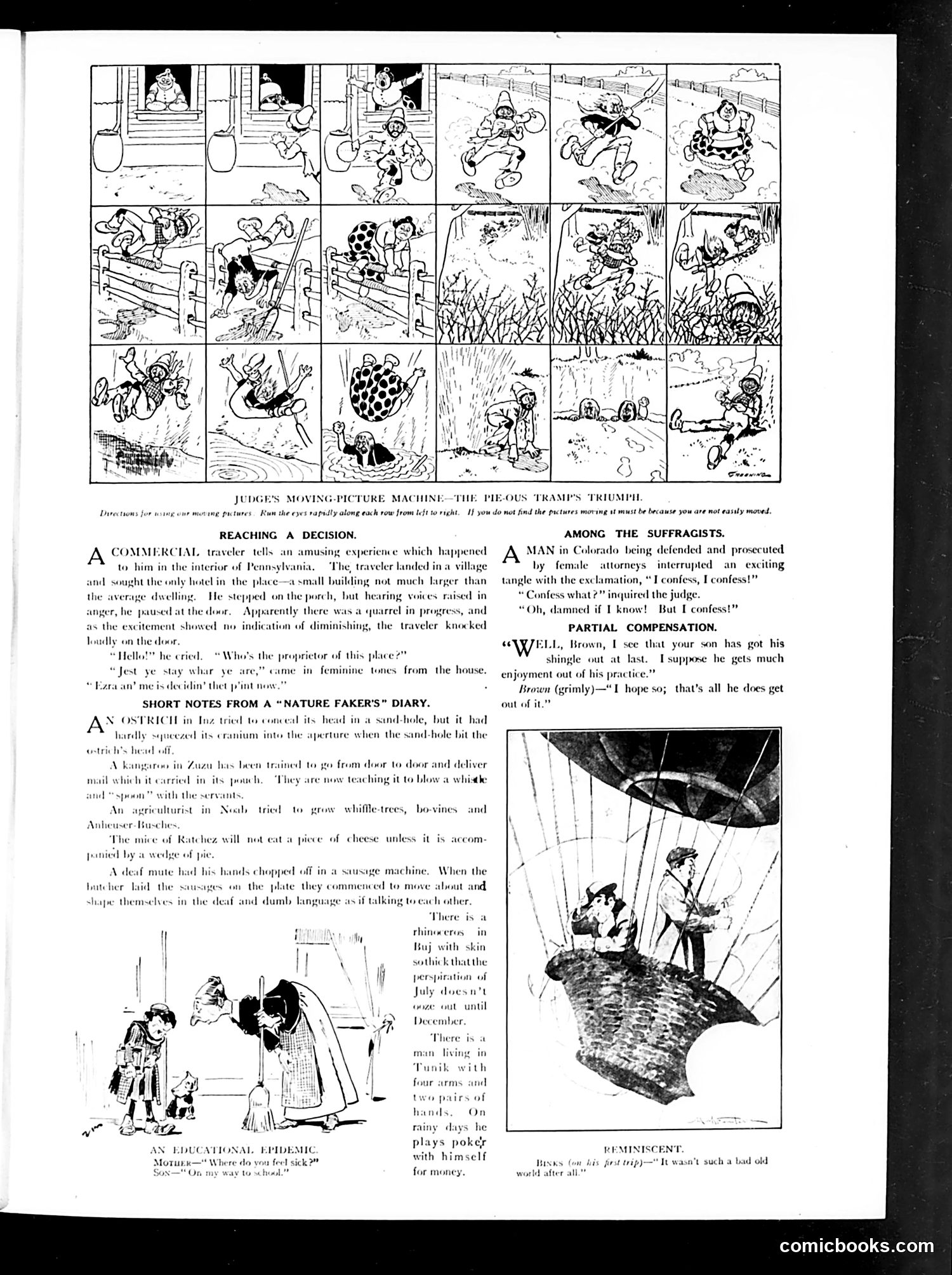
This page contains three distinct sections: 1. **Top strip** ("Judge's Moving Picture Machine"): A sequential cartoon showing characters in slapstick situations—people falling, running, and causing chaos. It's entertainment humor with no apparent political content. 2. **"Reaching a Decision"**: A brief anecdote about a commercial traveler (salesman) arriving at a Pennsylvania village inn where a quarrel is occurring. The humor relies on a simple misunderstanding and dialectal speech. 3. **"Among the Suffragists"**: A satirical piece mocking female suffrage advocates, depicting a woman interrupting court proceedings with "confess what?" The cartoon suggests suffragists as disruptive and unreasonable. 4. **Additional items**: Various short humorous notes and illustrations typical of Judge's miscellaneous humor content. The page reflects early 20th-century American satirical attitudes, particularly skepticism toward women's suffrage activism.
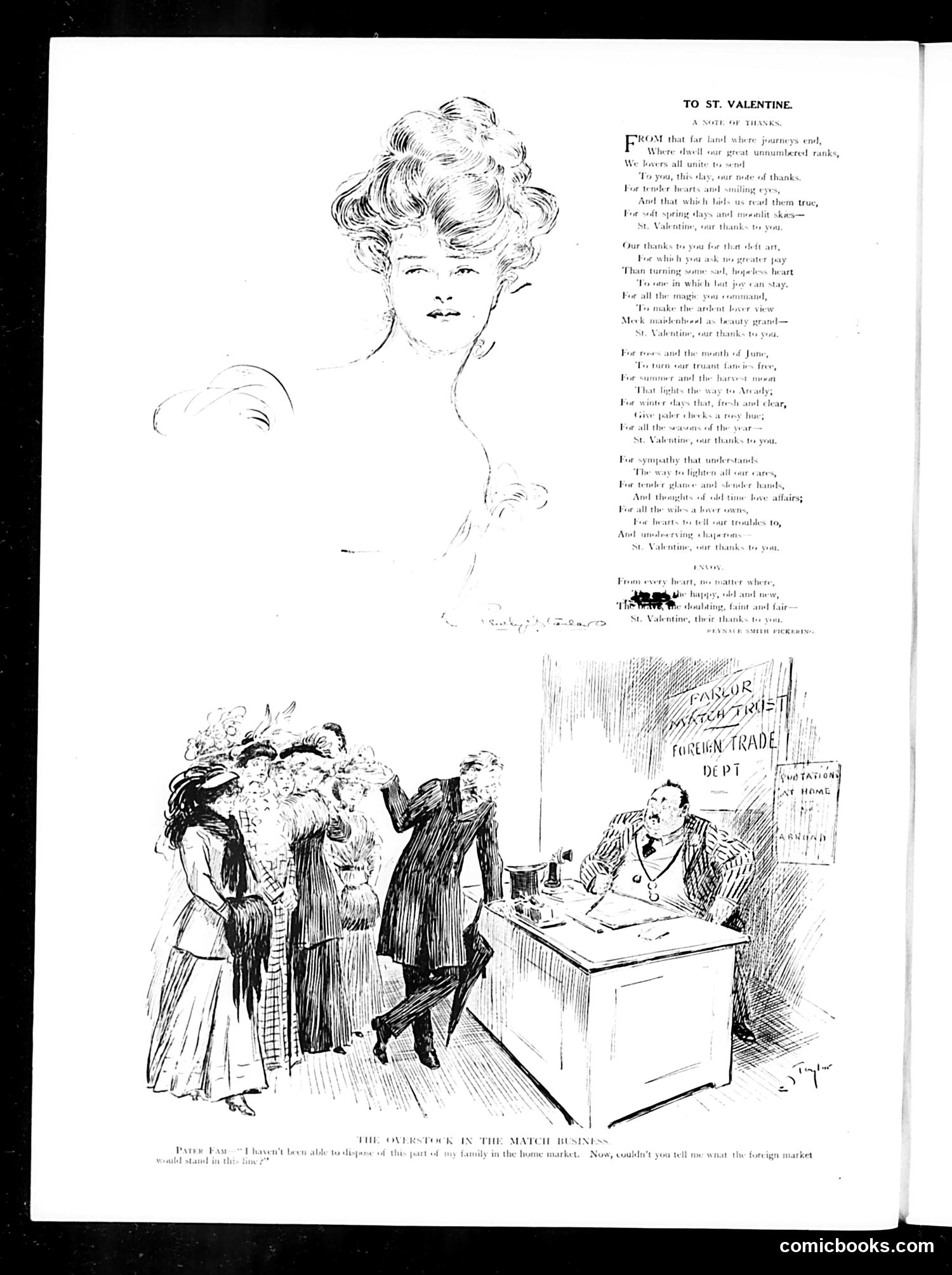
This page contains a Valentine's Day poem to St. Valentine (top) and a political cartoon below titled "The Overstock in the Match Business." The cartoon satirizes trade protectionism and tariff policy. A woman and children visit a government "Foreign Trade Dept" official, seeking help. The caption indicates they're struggling economically—the father claims he "haven't been able to dispose of this part of my family in the home market" and asks if the official can help place them in the foreign market. The satire equates children with unsold merchandise ("overstock"), mocking how protectionist policies supposedly benefit families while actually making them economically desperate. The "match business" likely references matchmaking or marriage markets, suggesting families are treated as commercial goods when trade restrictions limit legitimate economic opportunity. This appears critical of isolationist trade policy's unintended consequences on working families.
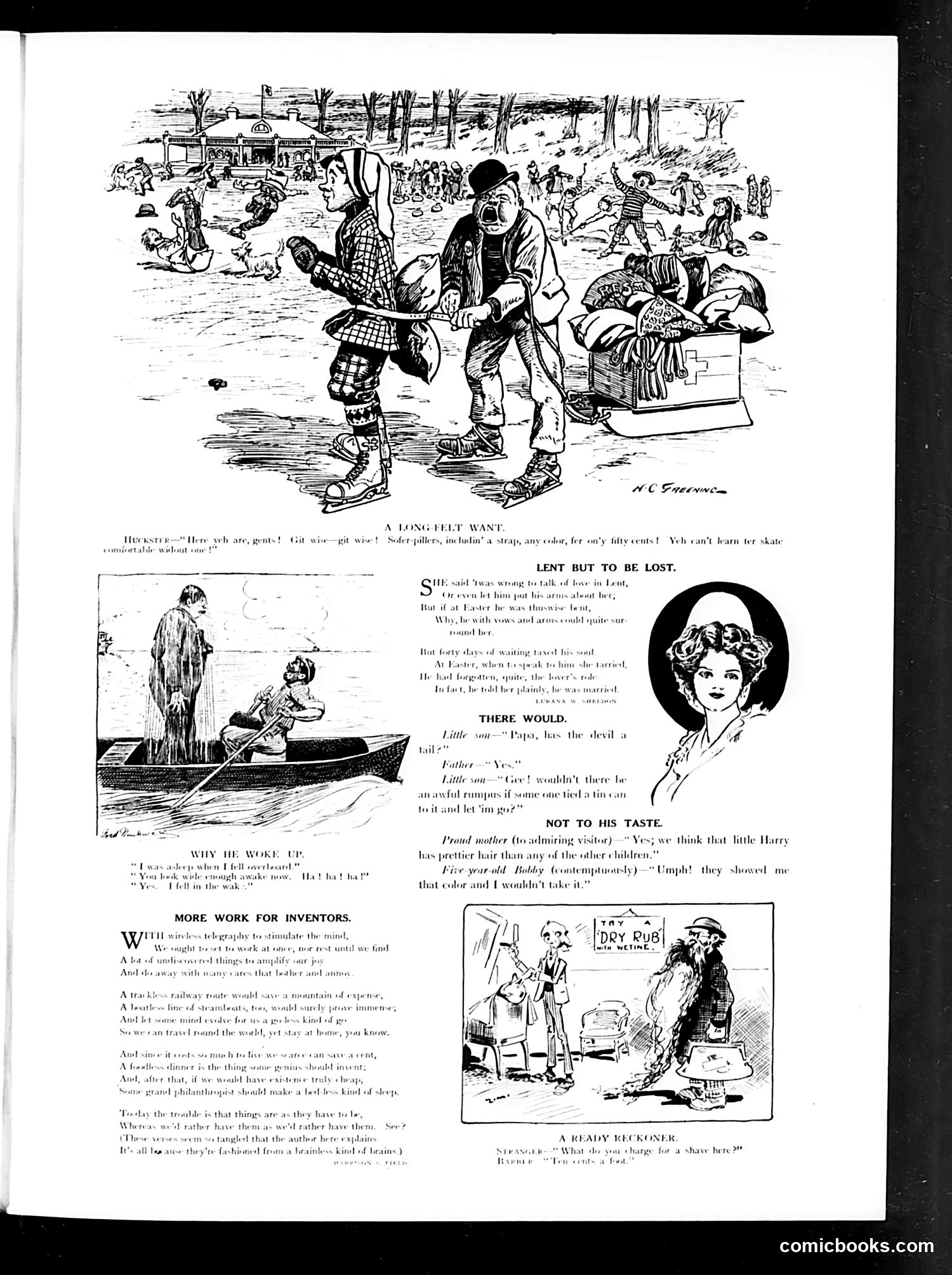
This page contains several short comic vignettes typical of early 20th-century American humor magazines: **"A Long-Felt Want"** depicts a street vendor hawking roller skates at a beach or park—satirizing commercialized leisure and the era's skating craze. **"Lent But to Be Lost"** appears to reference Easter and religious observance, likely mocking inconsistent faith or forgotten promises. **The dialogue pieces** ("There Would," "Not to His Taste") are genteel domestic humor about children's behavior and appearance—standard family comedy of the period. **"More Work for Inventors"** satirizes the obsession with technological progress by suggesting absurd inventions could solve trivial problems, mocking both inventors' ambitions and consumer culture. **"A Ready Reckoner"** shows a barber-shop scene, likely joking about pricing or haggling. Overall, this represents *Judge*'s typical format: light social satire targeting middle-class attitudes, consumer trends, family life, and technological mania—rather than hard political commentary.
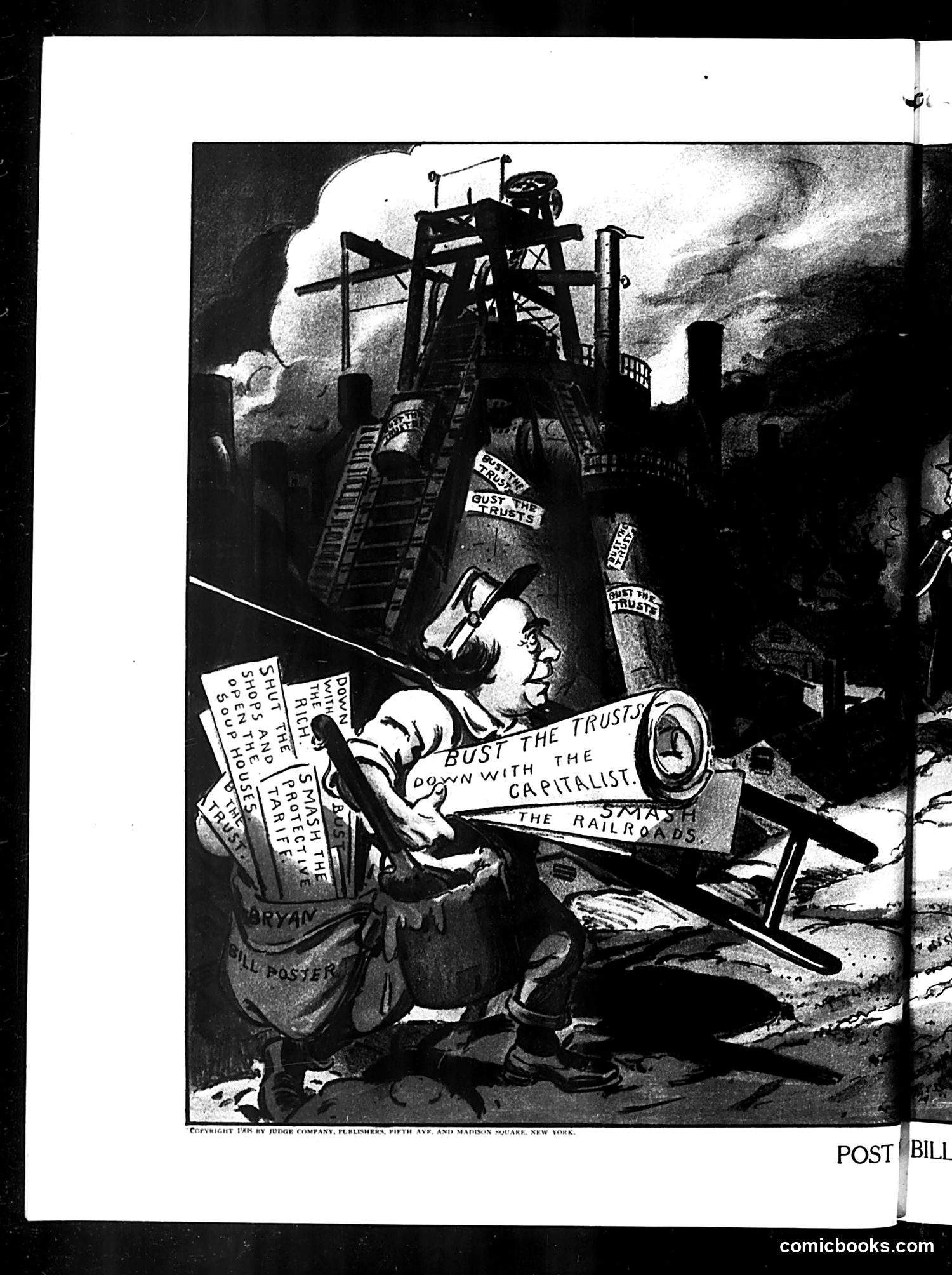
This is a **progressive-era political cartoon** criticizing monopolistic capitalism. A caricatured figure (appearing to represent a wealthy industrialist or capitalist) sits crushed beneath an enormous industrial structure—likely representing a coal mine or factory tower with pulleys and mining equipment. The labels on the figure read "BUST THE TRUSTS," "SMASH THE RAILROADS," and similar anti-monopoly slogans, suggesting he's being literally flattened by the very industrial trusts and corporate systems he represents or controls. The scattered papers beneath him appear to be business documents or stock certificates. The cartoon sarcastically illustrates the contradiction: while reformers demanded the breakup of monopolies, the capitalist system itself remained dominant and destructive.
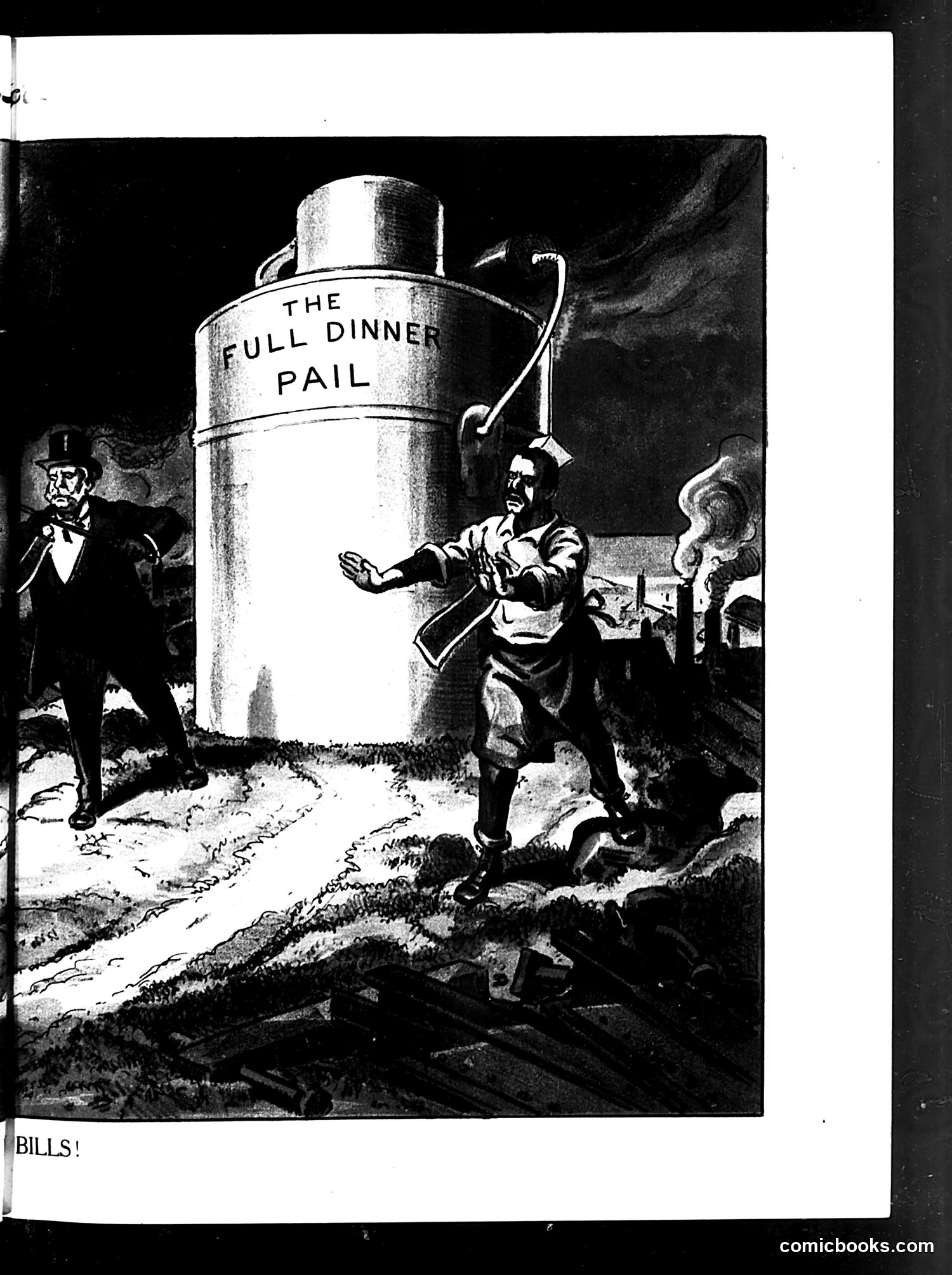
This satirical illustration depicts three figures around an enormous dinner pail labeled "THE FULL DINNER PAIL." The cartoon likely references a famous Republican campaign slogan from William McKinley's 1900 presidential campaign, which promised American workers prosperity and full employment symbolized by a "full dinner pail." The figures appear to be political caricatures—likely representing different social classes or political positions—debating or competing over access to the pail's contents. The dramatic, theatrical staging suggests Judge magazine is mocking political promises about worker prosperity, implying the "full dinner pail" was a hollow campaign promise rather than achievable reality. The word "BILLS!" at bottom suggests commentary on financial hardship or debt despite such rhetoric.
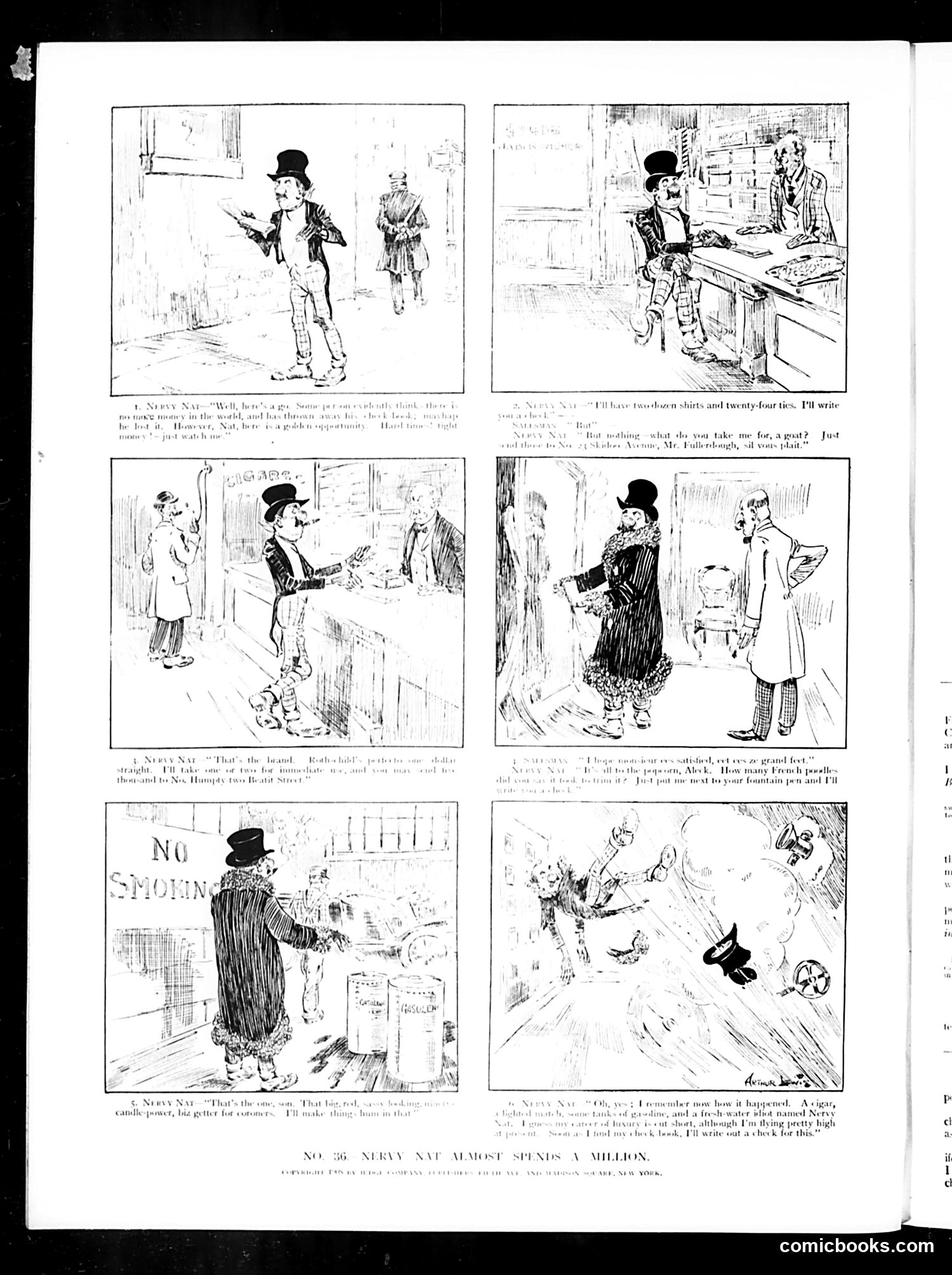
This page contains a **six-panel comic strip** following a character called "Nervy Nat" through various encounters. The strip appears to be satirizing **social climbing and petty fraud** in urban settings. The recurring joke involves Nat attempting to deceive shopkeepers and authorities through various schemes—requesting credit, claiming to need custom tailoring, and manipulating transactions. Each panel shows him being caught or thwarted in his attempts. The title "No. 50: Nervy Nat Almost Spends a Million" suggests the strip's running theme: Nat's grandiose schemes that never materialize. The satire targets **con artists and hustlers** in American urban life, mocking both their audacity and their inevitable failure. The comic strips were common Judge features aimed at middle-class readers who enjoyed seeing would-be cheaters exposed or defeated.
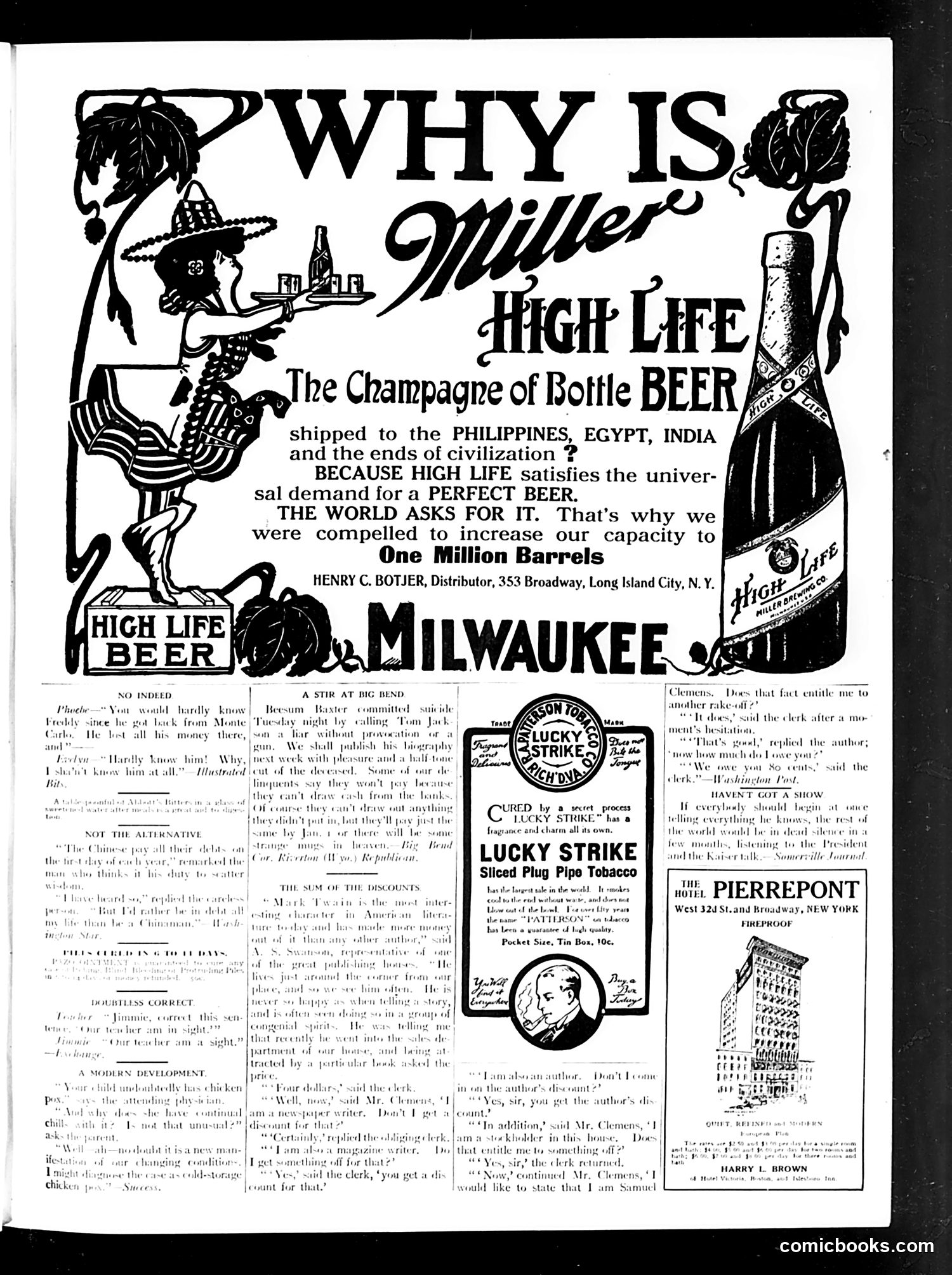
This page is primarily **advertising and humor vignettes**, not political cartoons. The dominant content is a **Miller High Life beer advertisement** featuring a stylized figure in Mexican dress, positioned as premium "champagne of bottle beer" exported globally. The ad emphasizes increased production capacity to one million barrels, reflecting early 20th-century American industrial confidence. The page includes several **short comic sketches** with titles like "No Indeed," "A Stir at Big Bend," and "Doubtless Correct"—brief jokes about everyday situations (a man losing money abroad, suicide, discounts, teaching). These showcase Judge's typical humor format: mild domestic and social satire. A **Lucky Strike tobacco advertisement** also appears, featuring a circular portrait. The hotel advertisement for the Pierrepont rounds out commercial content. Overall, this represents Judge's mixed format: national brand advertising interspersed with light, accessible humor aimed at general readers rather than pointed political satire.
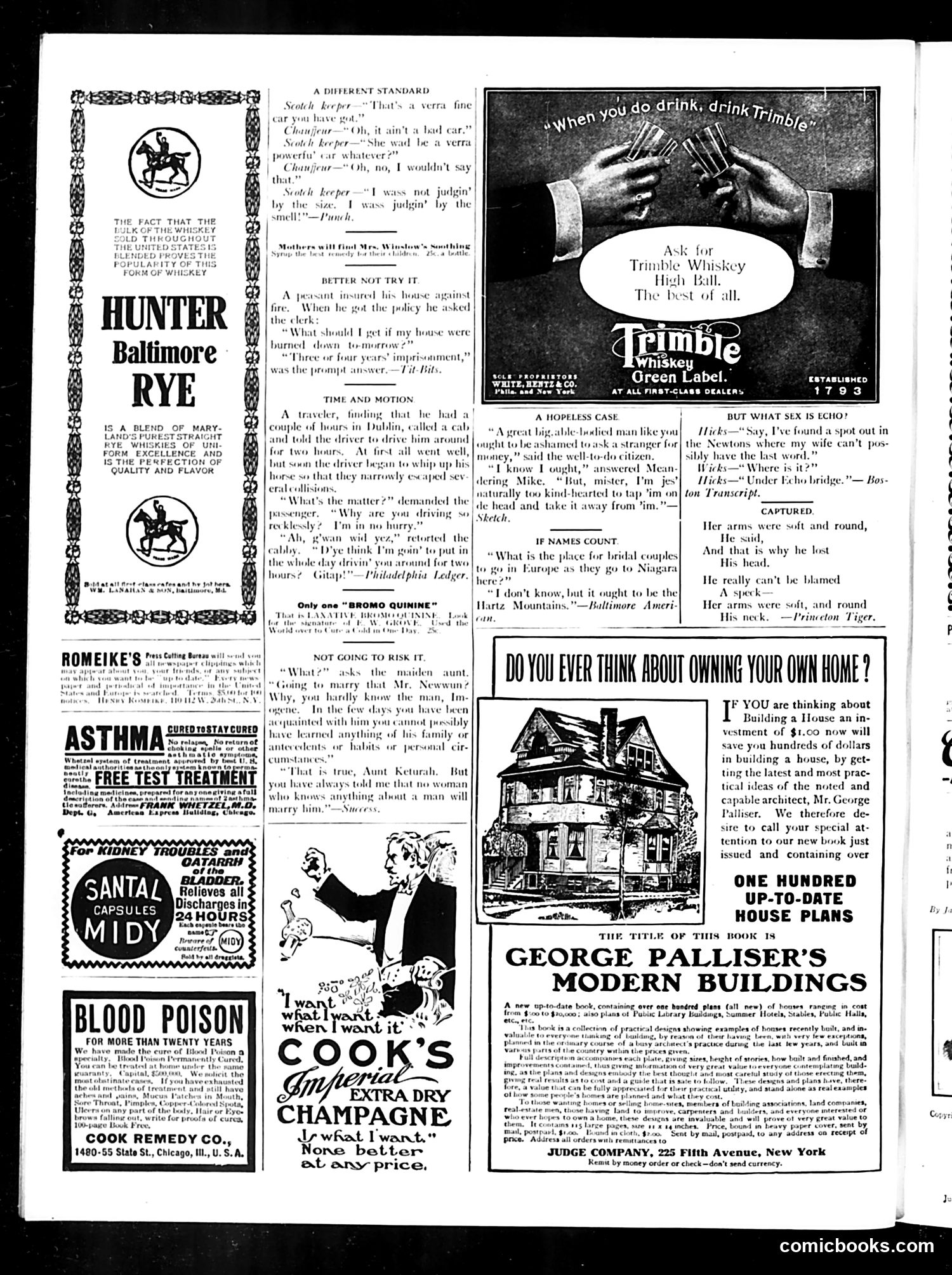
This page is primarily **advertisements and reprinted humor**, typical of Judge magazine's format. The **cartoons and jokes** include: - A Scottish taxi driver dialogue about judging cars by smell rather than size—gentle ethnic humor about Scottish frugality - A peasant insurance scam joke - A Dublin cab driver's complaint about a tourist's unclear time requests - An aunt warning against marrying a stranger (social commentary on courtship norms) - "Echo" joke: a husband finds the one place his wife can't have the last word—**domestic humor** about nagging wives, a common trope of the era - A panhandler too "kind-hearted" to rob someone—ironic underworld humor **Advertisements dominate**, including remedies for blood poison and asthma (typical of the period's dubious medical claims), Santa capsules, Cook's champagne, Hunter Baltimore Rye, Trimble Whiskey, and George Palliser's house-plan book. The content reflects early 20th-century concerns: marriage dynamics, immigration stereotypes, and patent medicine promotion.
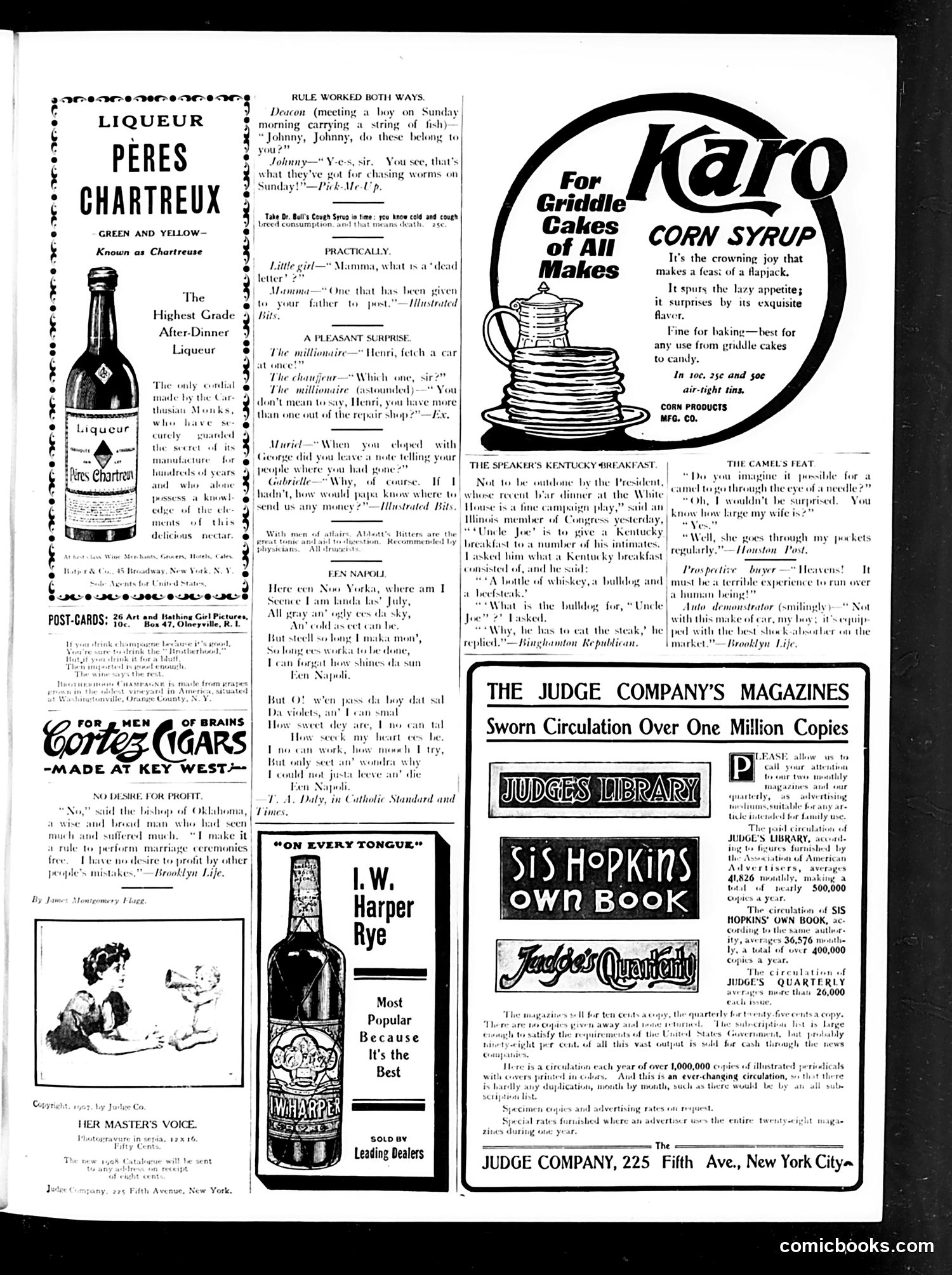
This page is primarily **advertising and filler content** rather than editorial satire. It contains several unrelated elements: **Cartoons/Humor**: Brief comedic anecdotes including: - "Rule Worked Both Ways": A deacon catches a boy fishing on Sunday; the boy notes the deacon chases worms on Sunday too—a mild hypocrisy joke - "Her Master's Voice": A domestic humor piece about a wife's command over her husband **Advertisements**: Multiple product ads (Péres Chartreux liqueur, Cortex cigars, I.W. Harper Rye whiskey, Karo Corn Syrup) typical of early 20th-century magazines **Notable Content**: A brief Kentucky breakfast joke about Uncle Joe serving whiskey, a beefsteak, and a bulldog (to eat the steak)—crude humor playing on regional stereotypes **Publisher Info**: The Judge Company's magazines boasted over one million sworn circulation copies across multiple titles (Judge's Library, Sis Hopkins' Own Book, Judge's Quarterly) The page reflects *Judge* magazine's mixed approach: light satirical humor alongside commercial advertising, with no apparent political commentary.
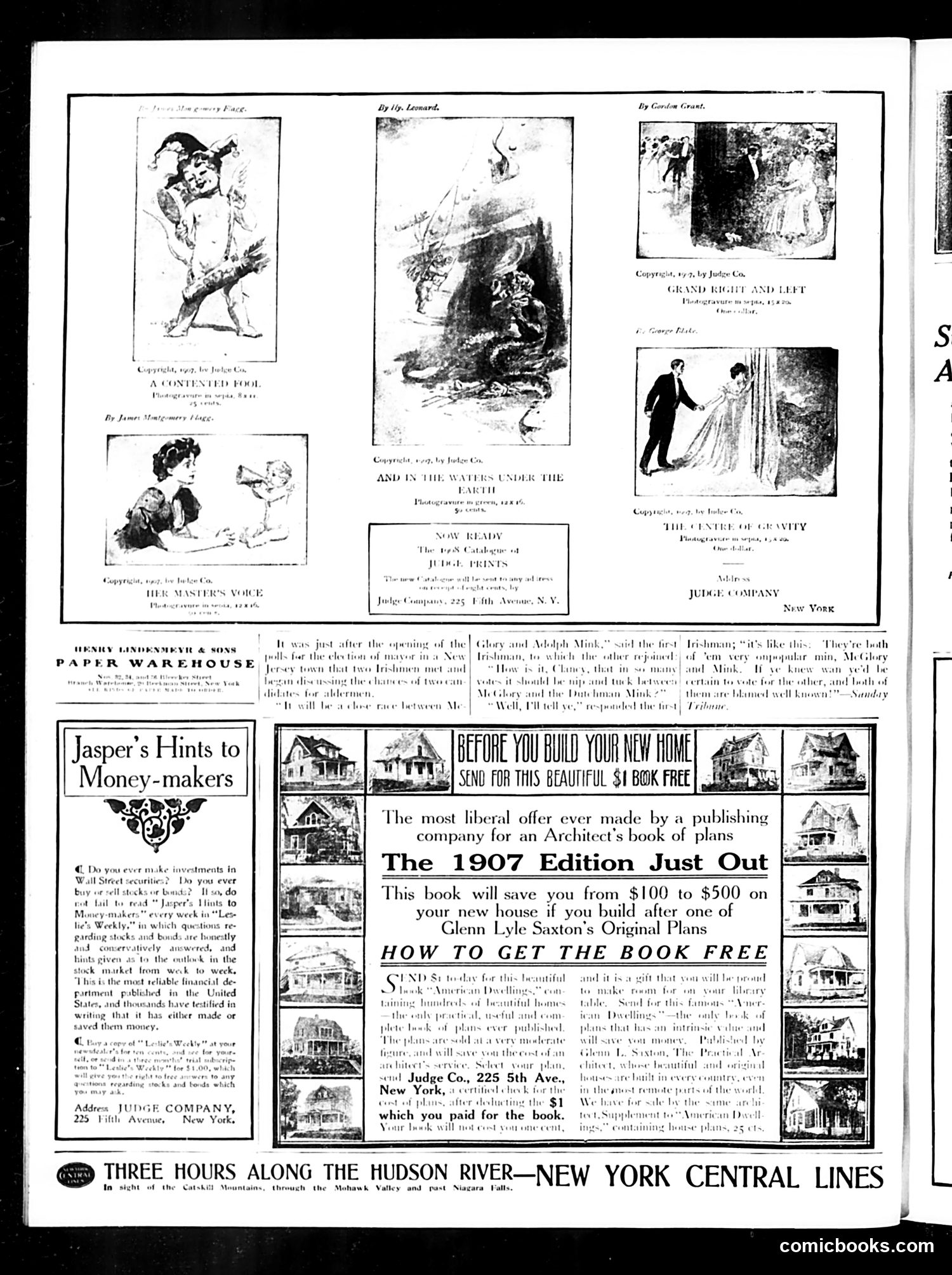
This page is primarily **advertising and miscellaneous content** rather than cohesive satirical cartoons. The upper portion contains several small illustrations with captions by various artists (Leonard, Craik, etc.), depicting domestic or social scenarios, but the OCR text is too corrupted to determine their specific satirical points. The main readable content is an **Irish-American political joke** (visible in the text fragments): two Irishmen—"McGlory" and "the Dutchman Mink"—are discussing an aldermanic election where votes will be "nip and tuck" between the candidates. This reflects **turn-of-century urban machine politics** and ethnic tensions in New York City. The bulk of the page consists of **period advertisements**: Jasper's money-making tips, a free architecture book offer (Glenn Lyle Saxton's dwelling plans from 1907), and a New York Central Lines railroad ad. These are commercial rather than satirical content, typical of Judge's revenue model.
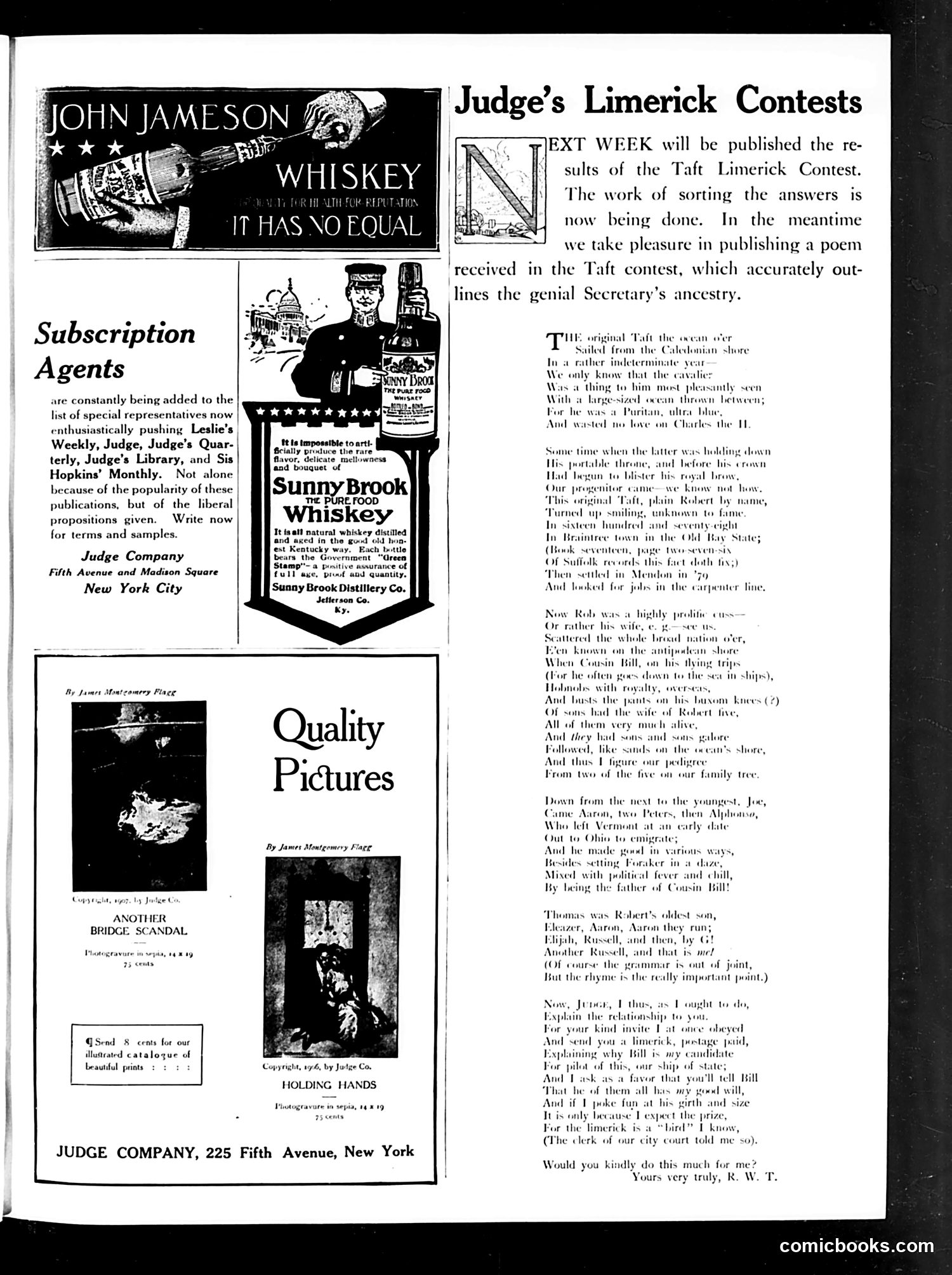
This page announces Judge magazine's "Taft Limerick Contest" results and publishes a lengthy submitted poem about William Howard Taft's ancestry. The poem, signed "R.W.T.," humorously traces Taft's genealogy back to an ancestor who sailed from Scotland, through Massachusetts colonial history, to Ohio, emphasizing the Secretary's (likely William Howard Taft, who served as Secretary of War) family lineage and connections. The satire works on multiple levels: the absurdly detailed and meandering genealogy parodies Victorian genealogical obsession, while the poem's awkward rhymes and forced meter mock both ambitious amateur poetry and the pretensions of public figures. The contributor explicitly hopes this flattering ancestry poem will help secure Taft as a political candidate, making the satire simultaneously a commentary on political patronage and self-interested praise. The magazine presents this as entertainment while subtly mocking both Taft and the contest participant.
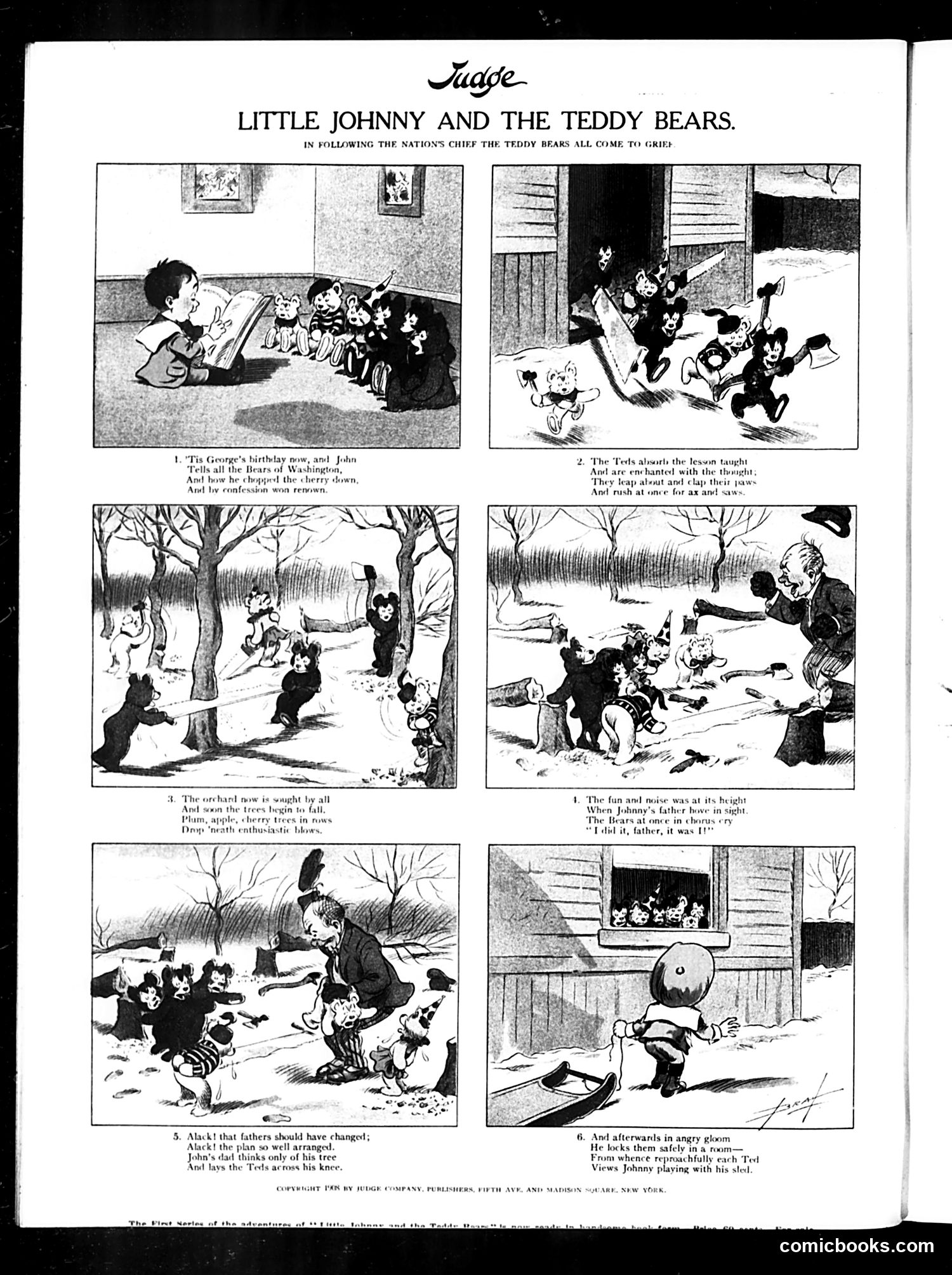
This is a satirical six-panel story in *Judge* magazine that uses teddy bears as political allegory. "Little Johnny" appears to represent a political figure (likely President Theodore Roosevelt, given the "Teddy Bears" reference), while the bears themselves represent his followers or political allies. The narrative arc satirizes blind party loyalty: Johnny initially entertains the bears, teaches them, and plays with them. But when they become boisterous and destructive during outdoor activities, Johnny locks them away—suggesting the leader's frustration with his own supporters' uncontrollable behavior. The satire critiques how political followers mindlessly mimic their leader's actions and become liabilities rather than assets. The bears' descent from obedient pupils to unruly chaos mirrors contemporary concerns about mob politics and the dangers of personality-driven political movements.