
A complete issue · 16 pages · 1905
Judge — June 10, 1905
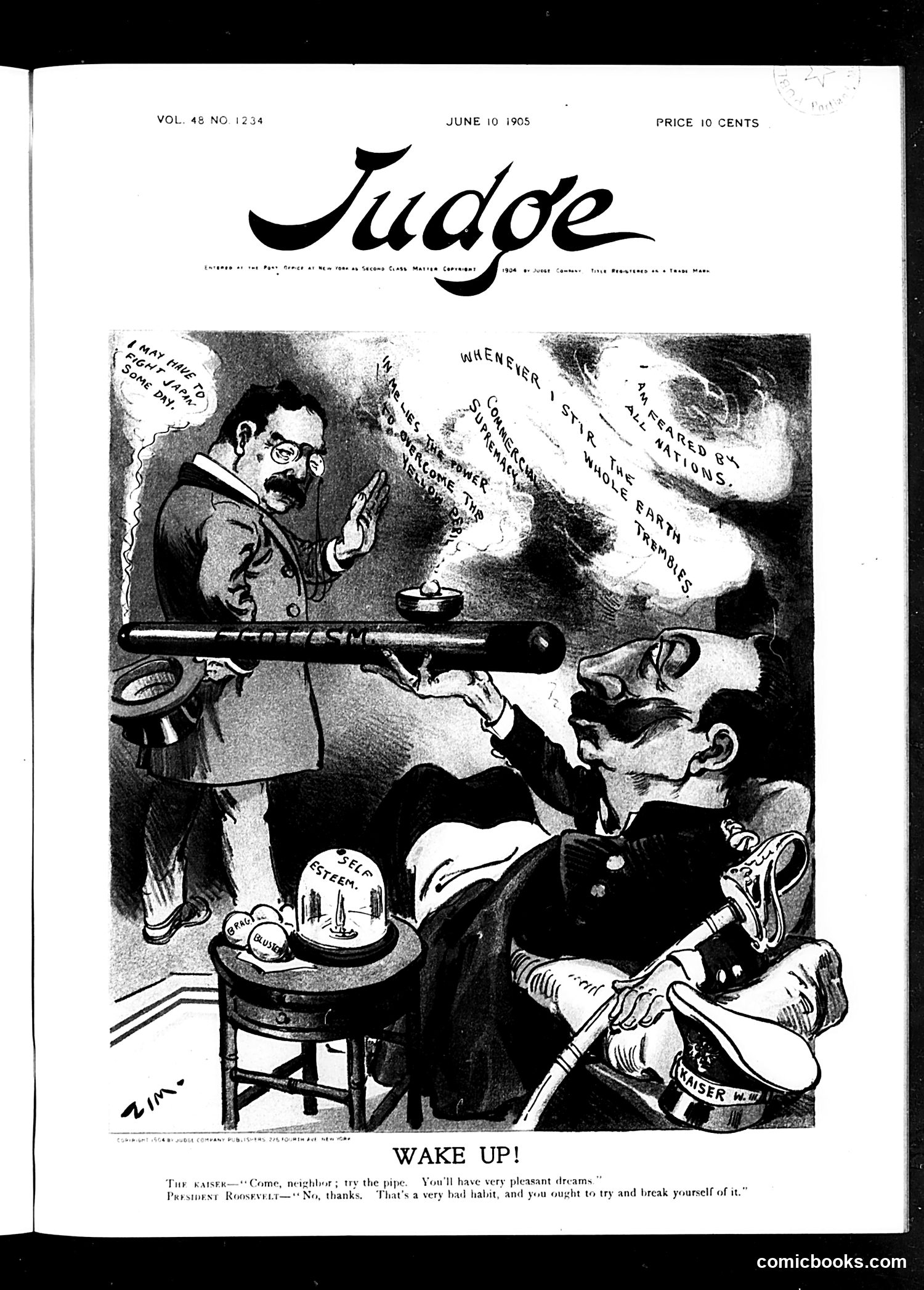
This cartoon depicts **President Theodore Roosevelt** (identifiable by his distinctive mustache and glasses) as the Kaiser, smoking a long pipe and holding a rifle aimed at a sleeping figure labeled **President Roosevelt**. The sleeping figure wears a hat marked "Esteem" and shoes labeled "Anger." The smoke from the Kaiser's pipe contains text reading "Whenever I stir, I am scared by nations" and other phrases suggesting international tensions. The cartoon satirizes Roosevelt's foreign policy and imperial ambitions, suggesting he may be sleepwalking into dangerous international conflicts. The "Wake Up!" caption warns of unintended consequences of aggressive militarism. The dual Roosevelt imagery emphasizes the contradiction between his domestic and foreign personas during the height of American imperialism.
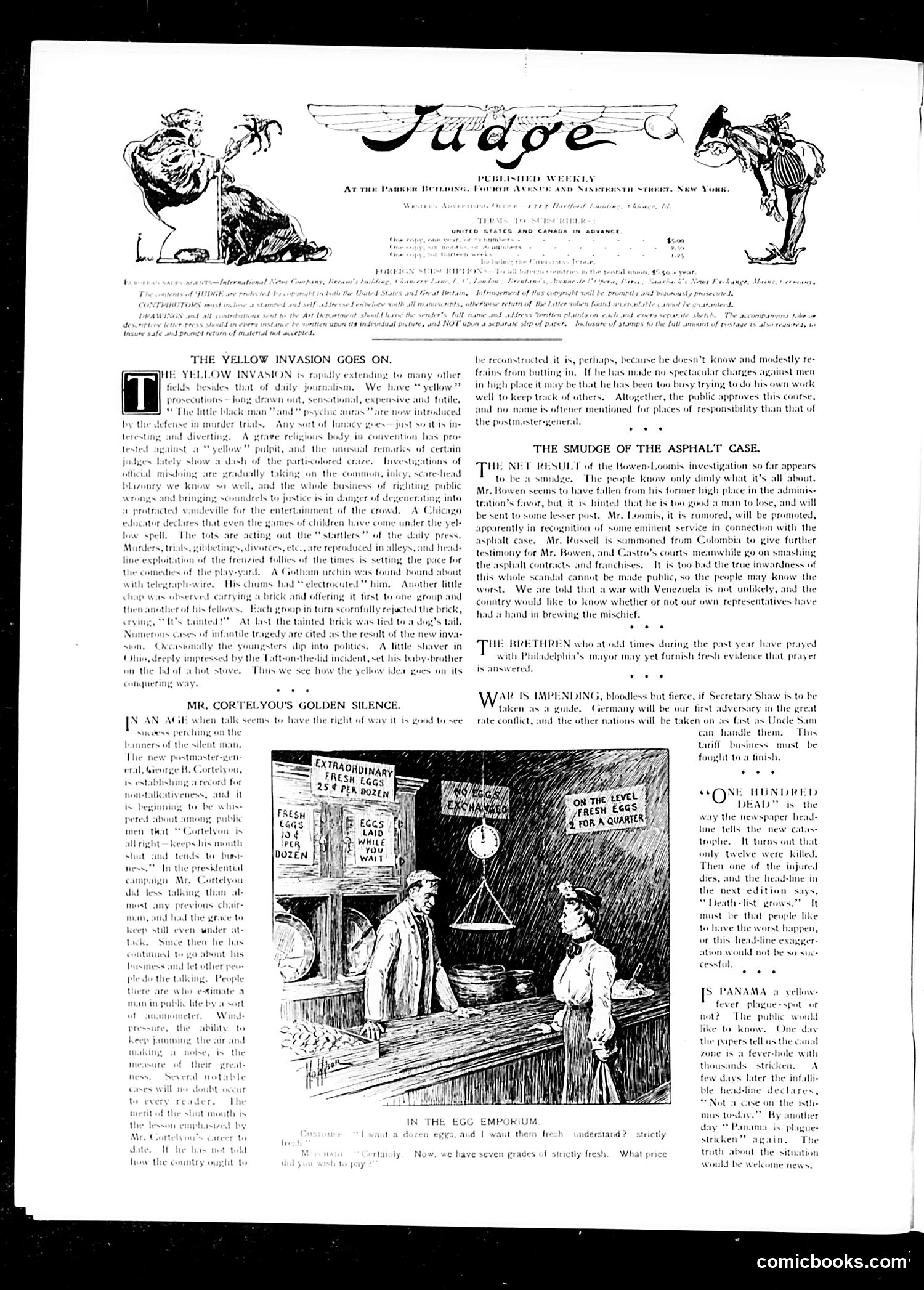
This page contains several satirical pieces about early 1900s American politics and social issues. "The Yellow Invasion Goes On" mocks anxieties about Asian immigration, sarcastically defending "yellow" stereotypes while critiquing xenophobic hysteria. "Mr. Cortelyou's Golden Silence" appears to address a political figure's refusal to comment publicly on issues—likely Secretary Shaw mentioned later—suggesting his silence is strategically calculated rather than principled. "The Smudge of the Asphalt Case" references a scandal, possibly involving contracts or public works corruption. The central cartoon "In the Egg Emporium" depicts a merchant transaction, appearing to satirize commercial disputes or fraud. The exact historical context and specific figures require additional research, but the overall tone criticizes political evasion, xenophobia, and commercial dishonesty.
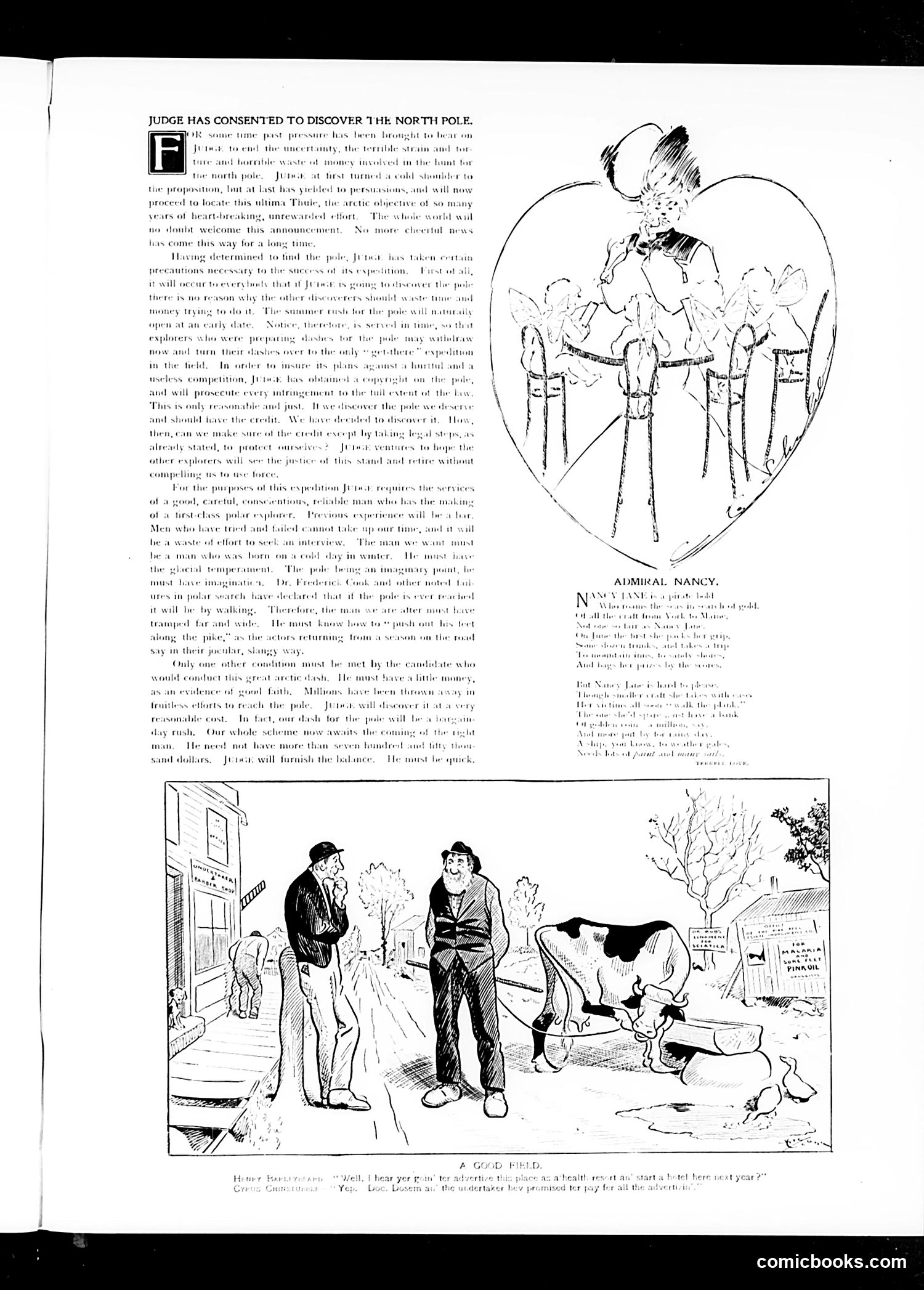
The page contains two separate items: **Upper section**: An article titled "Judge Has Consented to Discover the North Pole" discusses an Arctic expedition. It explains preparations needed for polar exploration, including proper equipment, supplies, and personnel selection. The text emphasizes the expedition's difficulty and the need for experienced leadership. **"Admiral Nancy" illustration**: A humorous poem accompanies a drawing of a rotund figure in Arctic gear commanding sled dogs. The satire appears to mock someone named Nancy Lane attempting to lead a polar expedition—treating it as absurd that this person would undertake such a dangerous venture. **"A Good Field" cartoon (bottom)**: Shows two men conversing near farm animals. The caption references someone's job performance or advertising claims, though the specific political reference is unclear without additional context. The overall tone suggests satirizing contemporary expeditions or public figures attempting ambitious Arctic ventures.
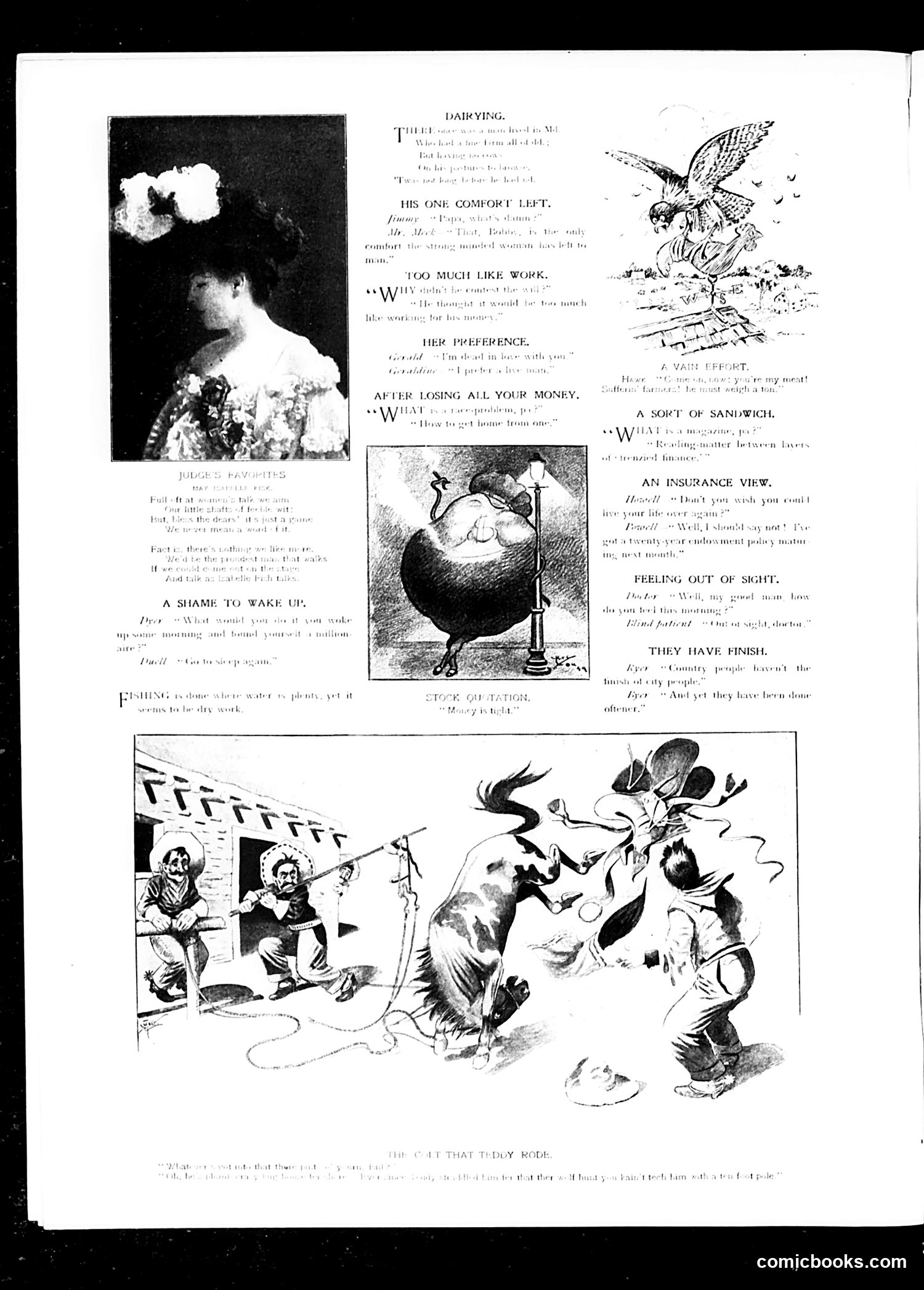
This page presents a series of satirical vignettes mocking domestic life and gender relations, likely from the early 20th century. The sketches humorously depict various marital and romantic scenarios: - "Dairying" and "His One Comfort Left" mock married men's diminished independence - "Too Much Like Work" jokes about avoiding labor - "After Losing All Your Money" satirizes financial desperation - "A Sort of Sandwich" appears to reference infidelity or romantic complications - The bottom cartoon "The Calf That They Rode" shows slapstick domestic chaos The magazine uses exaggerated caricatures and physical comedy to satirize contemporary anxieties about marriage, money, and social obligation. The overall tone suggests Judge was targeting male readers with humor about the perceived frustrations of domesticated life and economic pressures of the era.
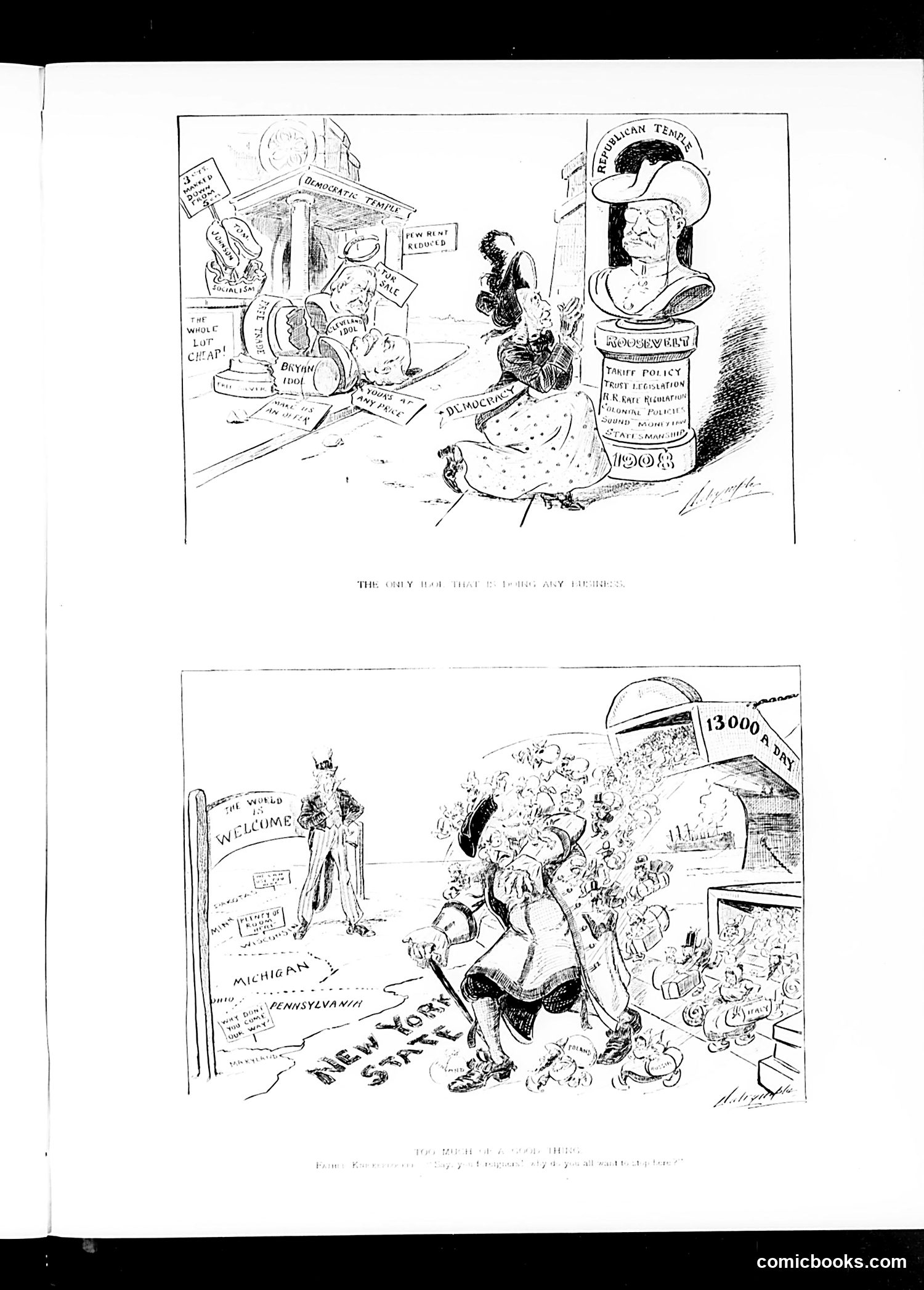
These two satirical cartoons from *Judge* magazine appear to critique early 20th-century American politics and immigration policy, though specific dates aren't clearly visible. The **top cartoon** depicts a complex political machine with various labeled components representing political interests, tariffs, and policies. A figure operates or confronts this machinery while other caricatured figures observe—likely satirizing how political systems function or how certain groups manipulate government. The **bottom cartoon** shows a figure labeled "New York" being overwhelmed by what appears to be massive immigration ("13,000 a day" marked on the image). A welcoming figure stands at the gate, while states like Michigan and Pennsylvania are labeled. The satire criticizes either inadequate immigration processing or the strain large-scale immigration places on receiving cities and states. Both cartoons use exaggeration and caricature typical of *Judge's* style to critique political inefficiency and policy challenges.
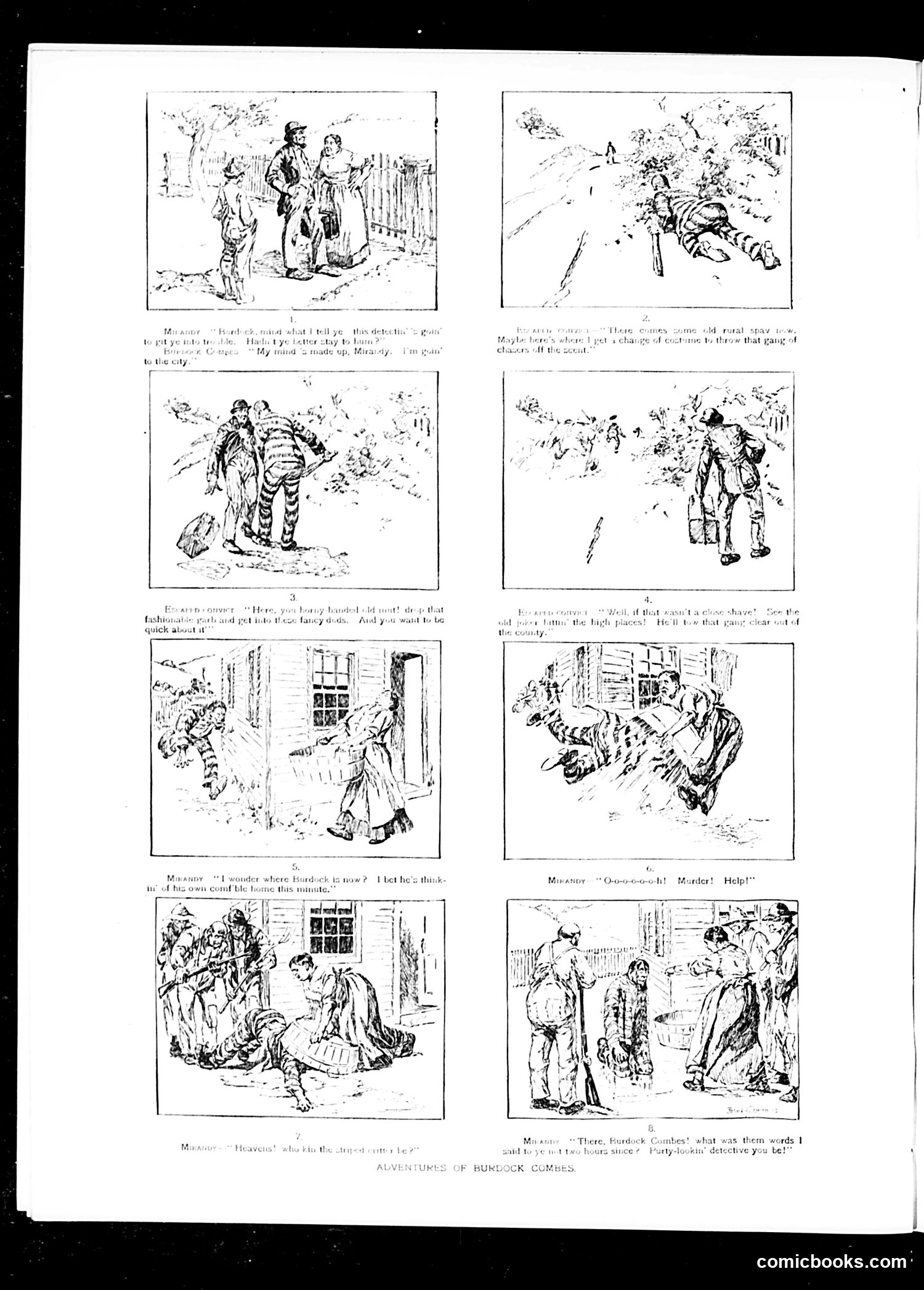
This page presents a sequential comic strip titled "Adventures of Murdock Combes" featuring eight panels that tell a humorous story. The OCR text is too fragmentary to fully parse the dialogue, but the visual narrative appears to follow a character named Murdock through various misadventures—beginning outdoors, moving through domestic scenes, and culminating in what seems to be a chaotic indoor situation with multiple figures. The strip's humor relies on physical comedy and situational mishaps typical of early 20th-century Judge magazine humor. Without clearer text, the specific satirical or social commentary target remains unclear, though the character's name and repeated appearances suggest this was an ongoing satirical series meant to entertain readers through slapstick predicaments.
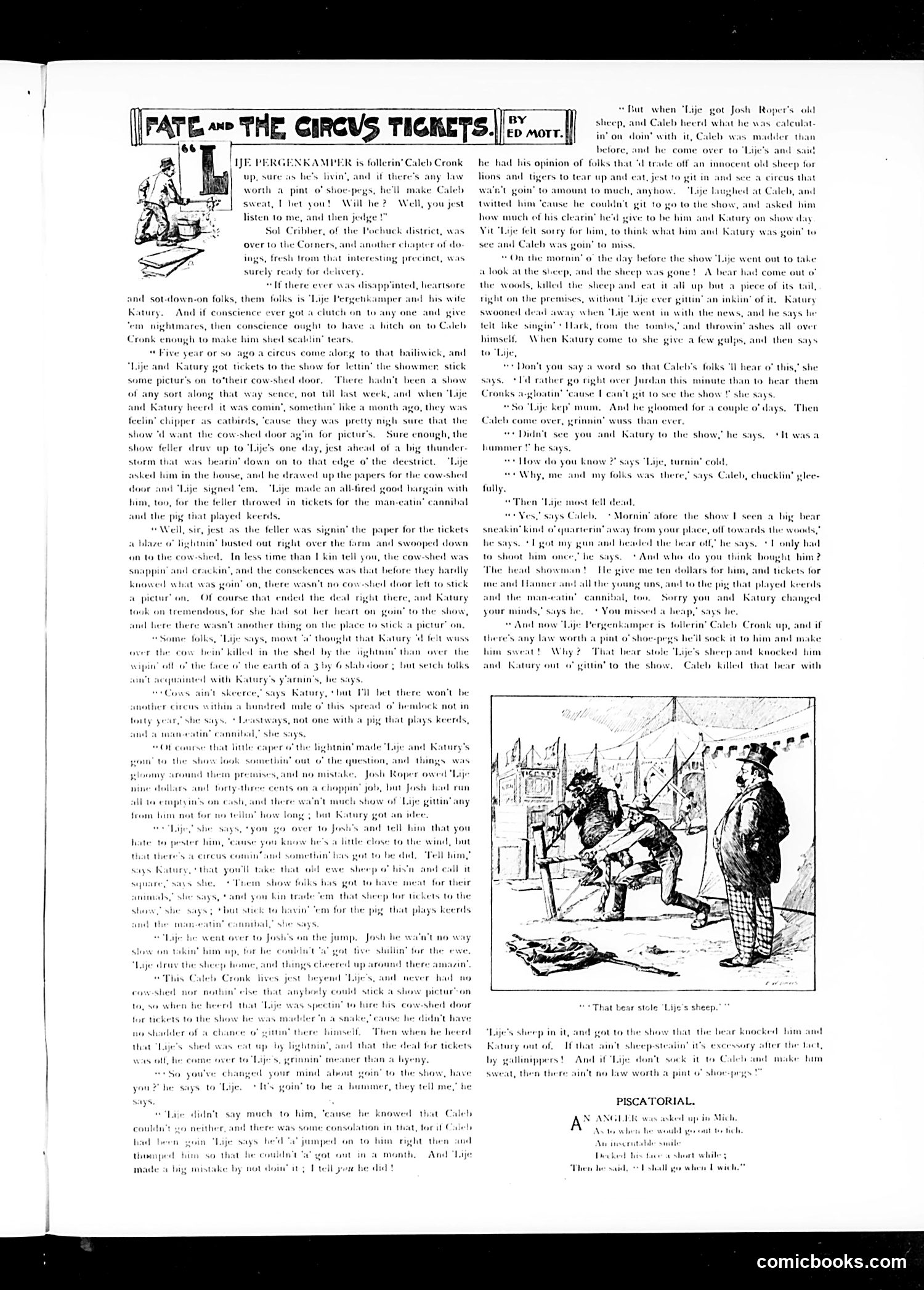
This is a humorous rural story by Ed Mott about backwoods characters. The plot involves 'Lije and his wife Katury, who obtain circus tickets by allowing the showman to paint advertisements on their cow shed. When lightning destroys the shed before the circus arrives, they lose their collateral—and their tickets seem forfeit. Katury schemes to recover them: she convinces 'Lije to trade their neighbor Josh Roper's sheep to Caleb Cronk (a man with a grudge against 'Lije) for new tickets. The satire mocks rustic deception and desperation, poking fun at rural folk willing to commit petty fraud over entertainment. The accompanying illustration shows circus performers confronting 'Lije about the missing advertisement space. Judge magazine used such dialect stories to entertain urban readers through exaggerated portrayals of country life and vernacular speech.
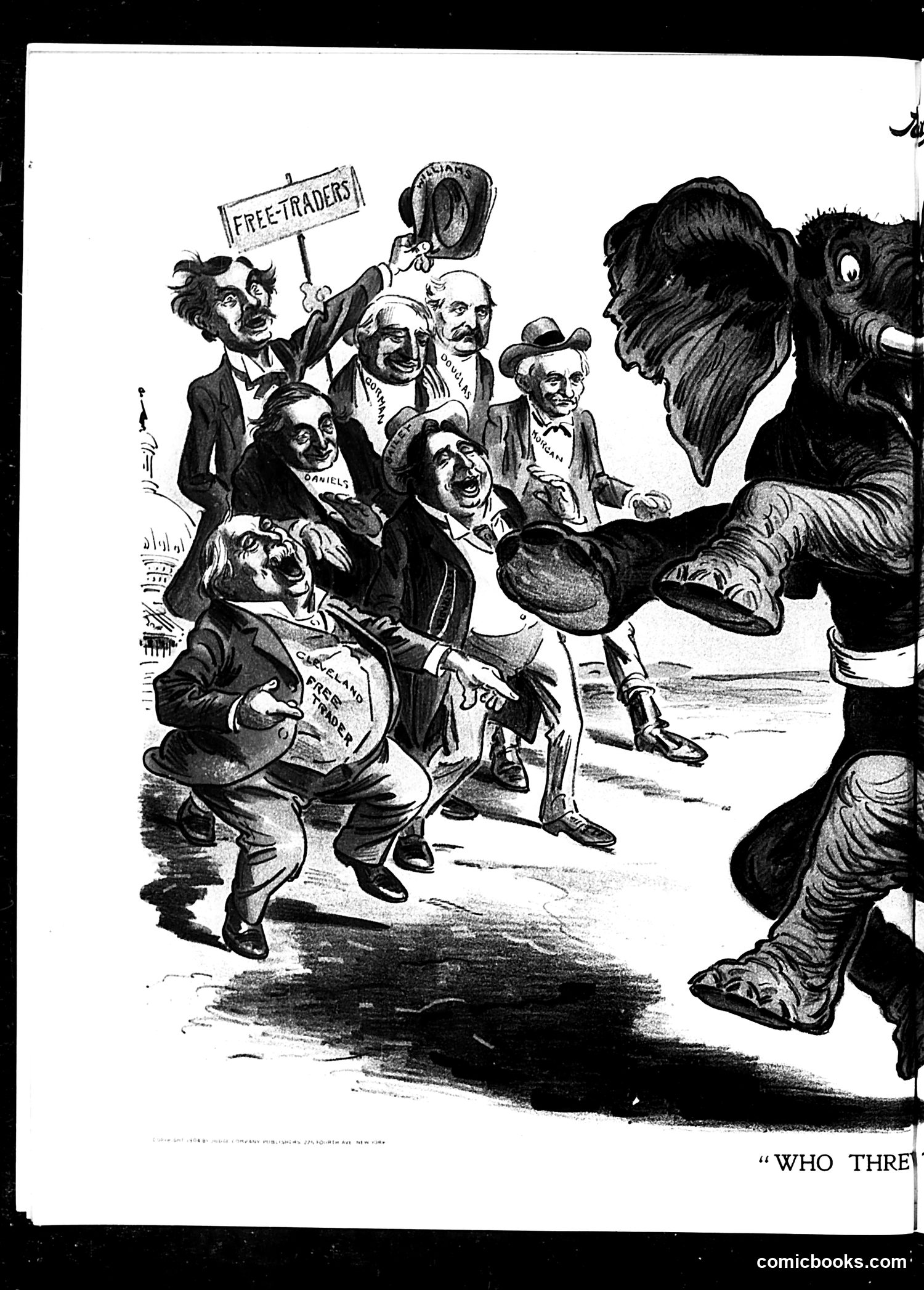
This **Judge magazine** satirical cartoon depicts a confrontation between caricatured businessmen (depicted with exaggerated ape-like features on the left) and what appears to be a large elephant or similar creature (right). The businessmen hold a sign reading "FREE-TRADERS" and wear labels including "DANIELS" and "CLEVELAND." The cartoon likely critiques **free trade advocates** during the Cleveland administration, using dehumanizing caricature—a regrettable common practice in period political satire. The "who threw" text (partially visible) suggests the cartoon depicts conflict or blame-assignment regarding trade policy. Without seeing the complete caption and date, the exact political context remains unclear, though this appears connected to 19th-century American tariff debates.
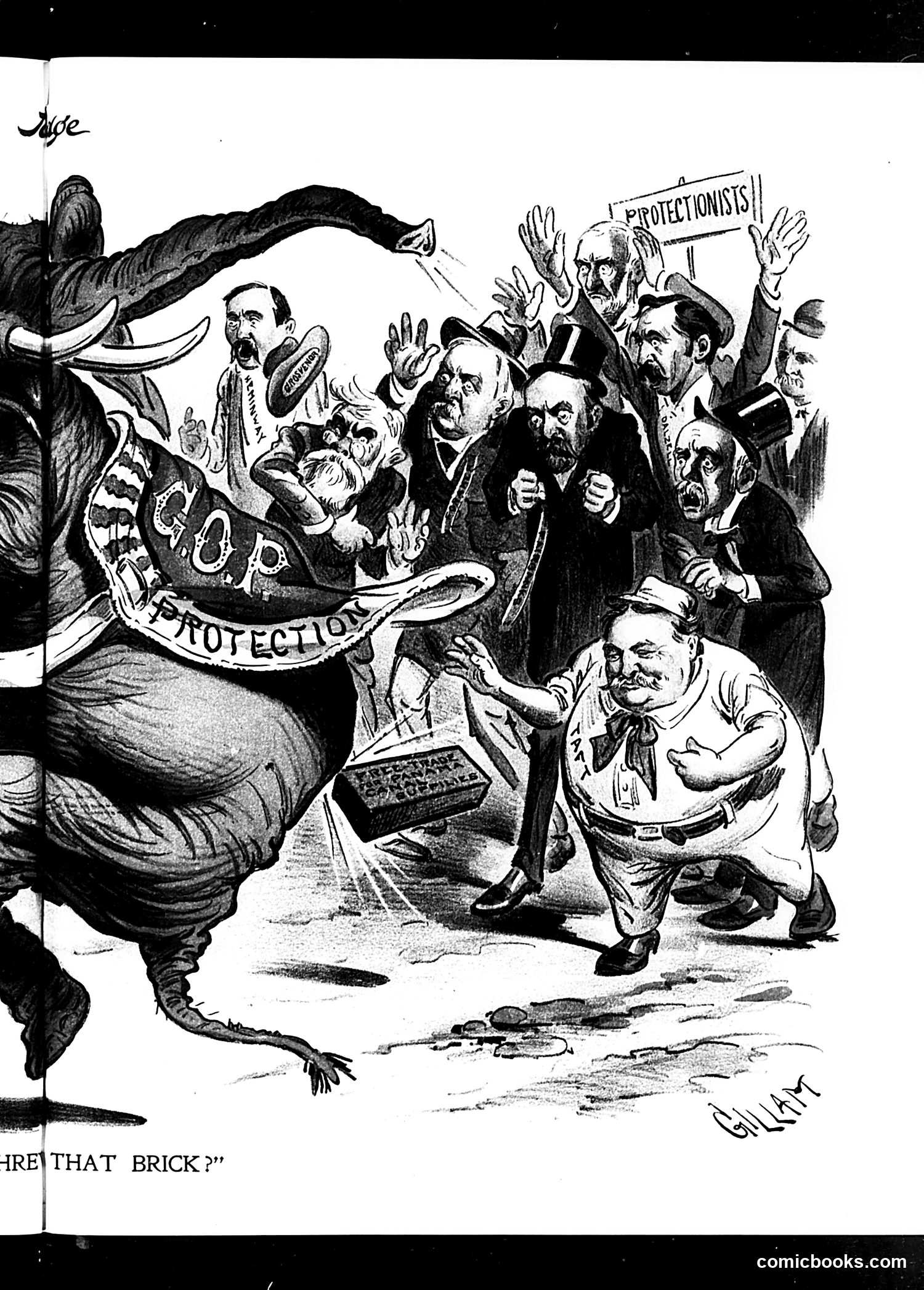
This appears to be a satirical cartoon from *Judge* magazine depicting a group of men confronting a large elephant labeled "PROTECTION." One figure holds a sign reading "PROTECTIONISTS," while another character (lower right, appearing portly) asks "WHERE THAT BRICK?" The elephant represents protectionist trade policies. The diverse group of men—rendered with exaggerated features typical of period satire—appear to be various political or business interests quarreling over the issue. The "brick" reference suggests someone wants to attack or undermine protective tariffs. Without a visible date or clearer context, this likely comments on late 19th or early 20th-century American debates over tariff policy, where protectionists advocated for import duties while others opposed them. The chaos depicted satirizes the fractious political disagreement surrounding trade protection.
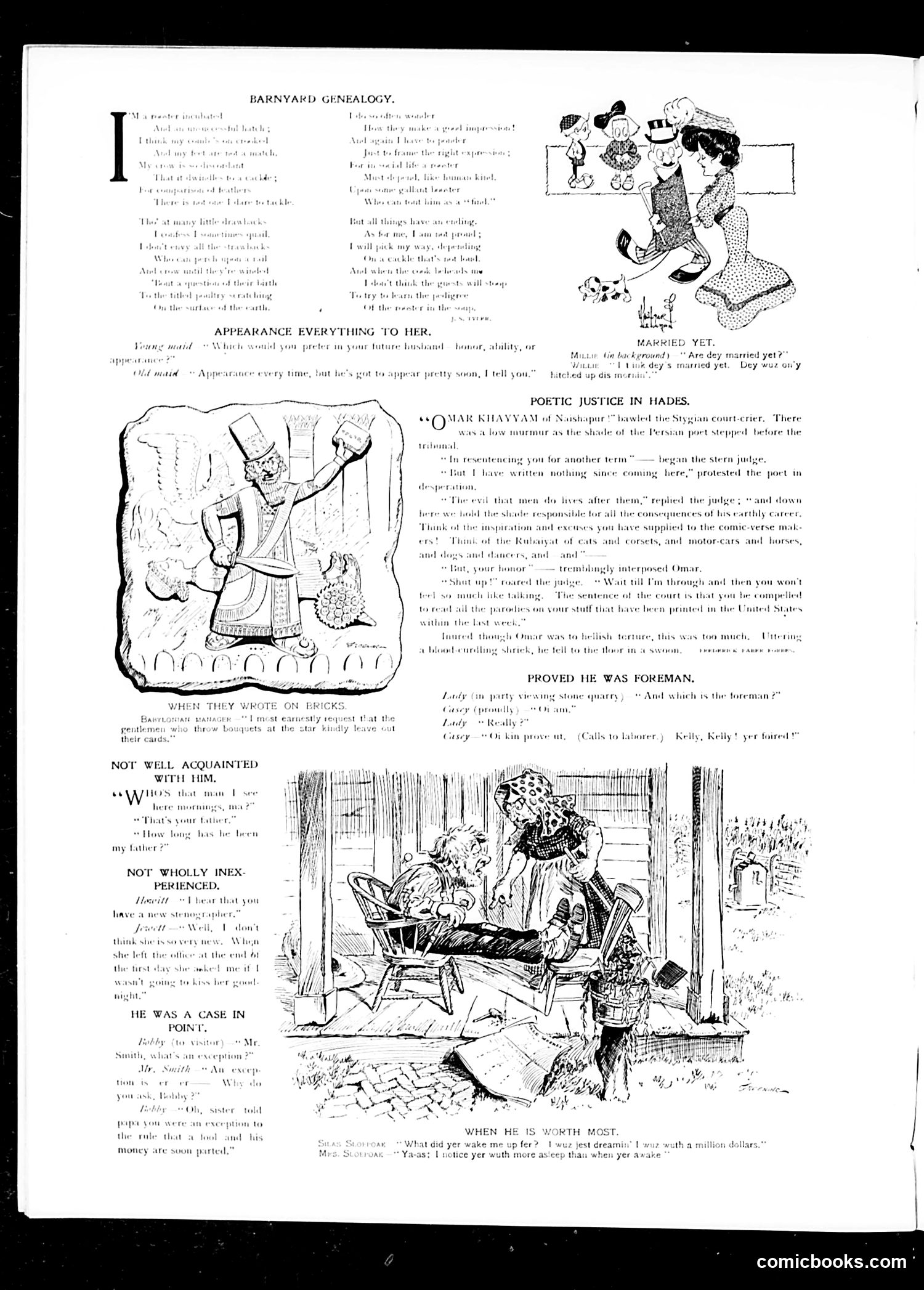
This page contains several humor pieces typical of early 20th-century satirical comics: **"Barnyard Genealogy"** and **"Married Yet?"** are brief domestic jokes about courtship and marriage preferences—standard humor about wives valuing social status. **"Poetic Justice in Hades"** satirizes Omar Khayyam, the Persian poet, being tried in the afterlife. The judge accuses him of writing nothing substantial since his famous *Rubaiyat*. This mocks both the historical Khayyam and contemporary literary pretension—suggesting even great poets face judgment for unproductive later work. **"When They Wrote on Bricks"** and **"Not Wholly Inexperienced"** are brief office/workplace jokes about stenographers and employee turnover. **"He Was a Case in Point"** and **"Proved He Was Foreman"** are working-class humor featuring dialogue between laborers about wages and foremen. **"When He Is Worth Most"** concludes with a foreman joking that a sleeping worker is "worth more asleep than when yer awake"—typical working-class satire about labor productivity and management attitudes. The overall tone reflects Judge's mix of literary satire, domestic comedy, and class-based humor.
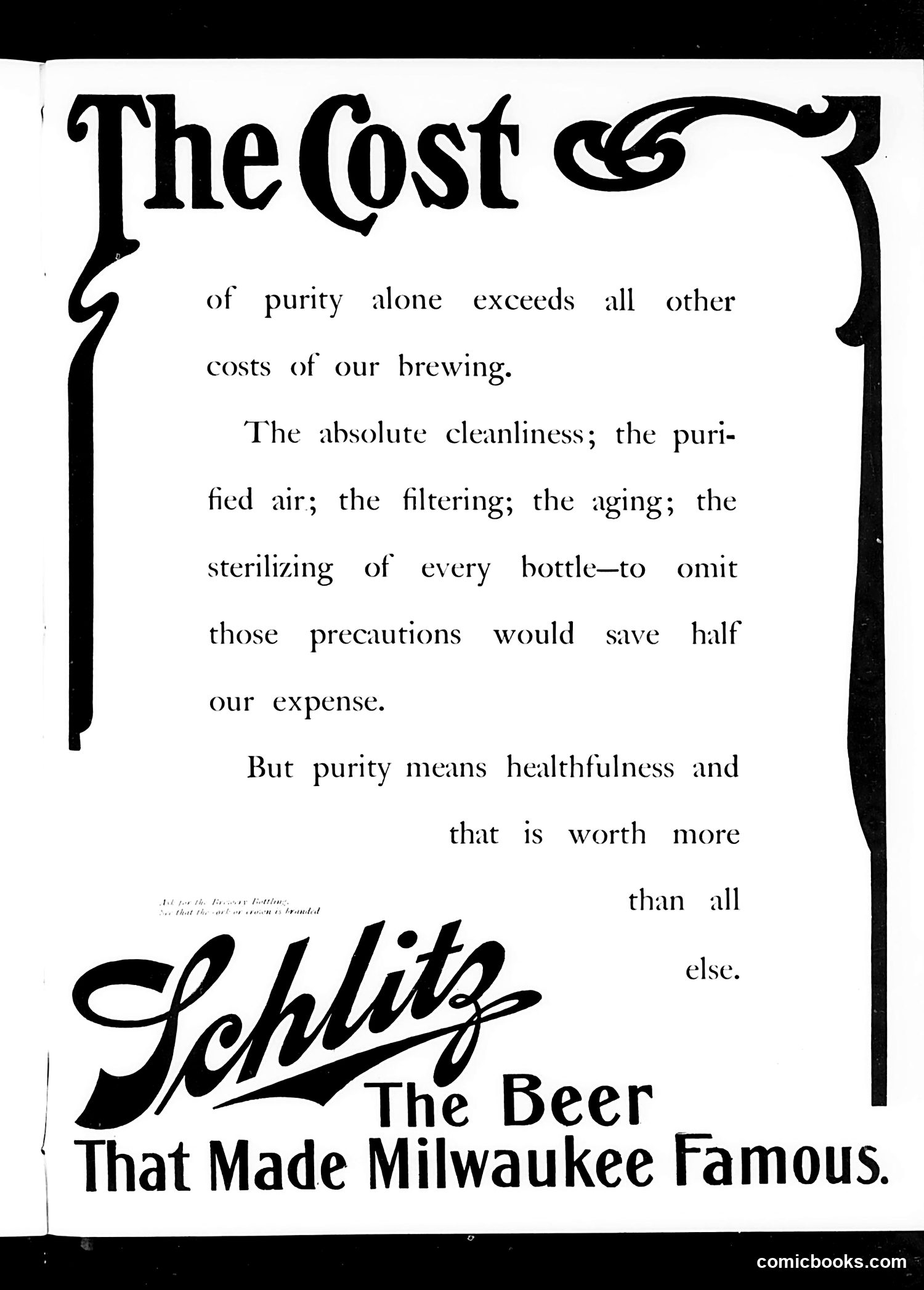
This is a **Schlitz beer advertisement**, not political satire. The page promotes Schlitz's brewing practices to a modern audience by emphasizing quality over cost-cutting. The ad's argument: Schlitz spends heavily on purity measures—sterilization, filtering, aging, air purification—that competitors might skip to save money. The company frames this as a moral choice: "purity means healthfulness and that is worth more than all else." The tagline "The Beer That Made Milwaukee Famous" references Milwaukee's historical dominance in American brewing. The ornamental border and serif typeface reflect early 20th-century advertising aesthetics. **For modern readers**: This is essentially a premium-positioning strategy—Schlitz justifies higher prices by claiming superior safety and quality standards, appealing to health-conscious consumers during an era when food/beverage safety was increasingly a public concern.
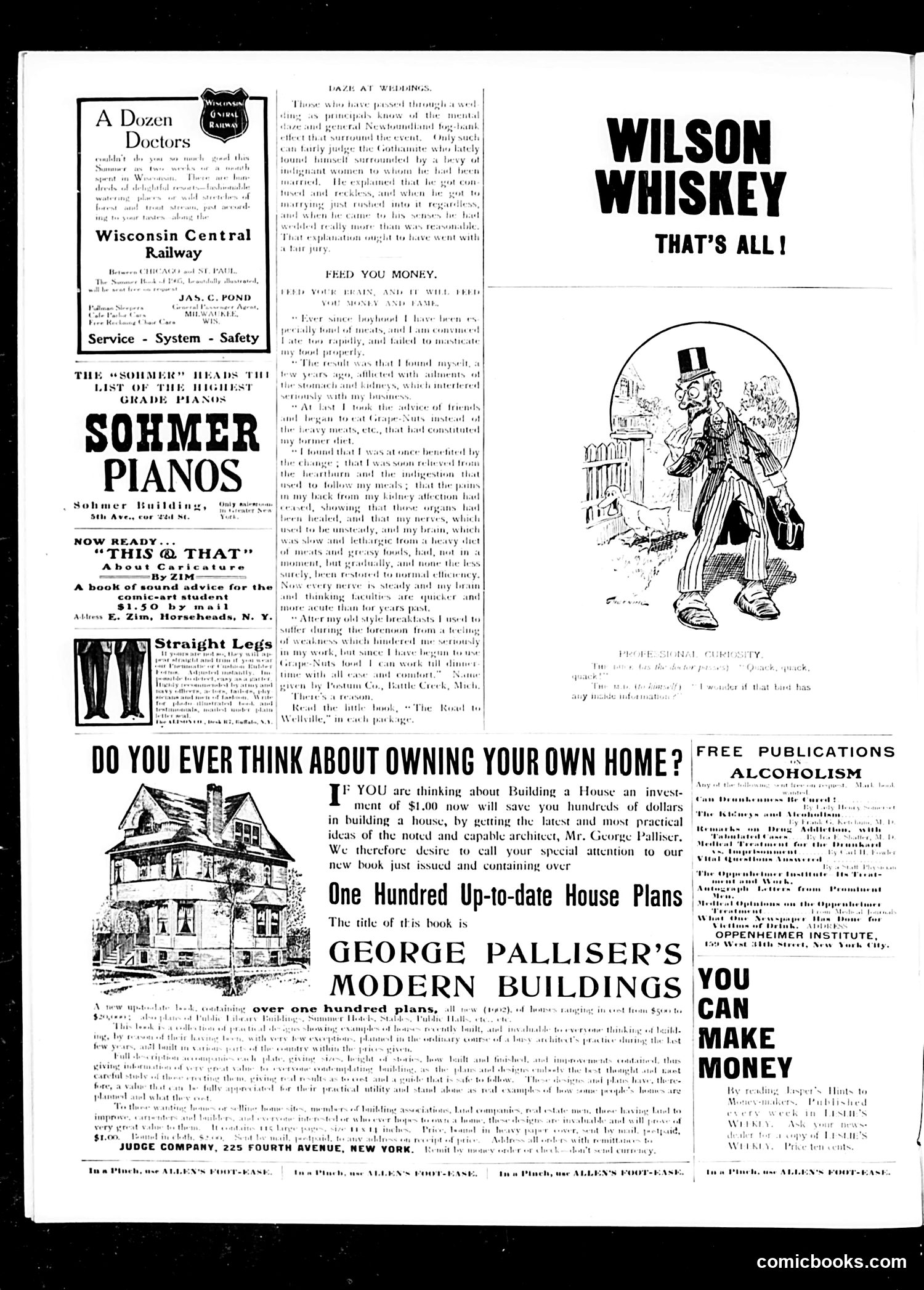
This is primarily an **advertising page** rather than satirical content. The dominant features are commercial advertisements for: - Wilson Whiskey ("That's All!") - Sohmer Pianos - George Palliser's Modern Buildings (house plans) - Various patent medicines and self-help books - Allen's Foot-Ease The page includes one illustrated cartoon labeled "MORBID CURIOSITY" showing a well-dressed man with a top hat observing something, though the specific satirical meaning is unclear from the visible context. The text includes testimonials about digestive/health issues and Postam (a cereal drink), reflecting early 1900s marketing tactics using personal health narratives. **For modern readers**: This reflects an era when magazines funded themselves through dense advertising, often featuring dubious health claims and patent remedies. The juxtaposition of whiskey ads alongside "health" products is notable—standards around advertising regulation were virtually nonexistent.
This Judge magazine page is primarily **advertising with one humorous sidebar**. The main satire appears in "A Toothpick Town," which mocks Indianapolis's alleged obsession with toothpicks. An unnamed newspaper correspondent describes the city as so consumed by toothpick use that they literally cover public spaces—the building balls are "sown with toothpicks," women leaving public places chew them, and restaurants serve them alongside meals like condiments. The satire targets both the city's perceived unsophistication and contemporary newspaper sensationalism through exaggerated reportage. The remaining content is straightforward advertising for insurance (Prudential), whiskey (Trimble), soap (Glenn's), medical treatments, hotels, and cocktails—typical of Judge's commercial revenue model. The "Why We Taste" article appears to be pseudo-scientific humor explaining taste sensation, though context is unclear from the fragmented OCR text.
This page from *Judge* magazine is primarily **advertising and promotional content** rather than political cartoons. The brief comic snippets at the top are light humor pieces ("Tornado at Play," "Necromancy," "Getting Up in the World") presenting mild domestic and social jokes typical of the era—wordplay, absurd situations, and gentle mockery of everyday life. The dominant content is **commercial advertising** for products including Miller Beer, O.F.C. Rye whiskey, and other goods, alongside a meta-advertisement promoting *Judge* itself to potential advertisers in barber shops. One notable element: a brief mention of **Grover Cleveland** in a humorous anecdote about a woman who "rocked" him as a baby—lighthearted nostalgia rather than political satire. The "Lake Shore Limited" railway notice at bottom promotes train service between New York and Chicago. This appears to be a **revenue-focused page** where editorial content serves primarily to frame lucrative advertisements.
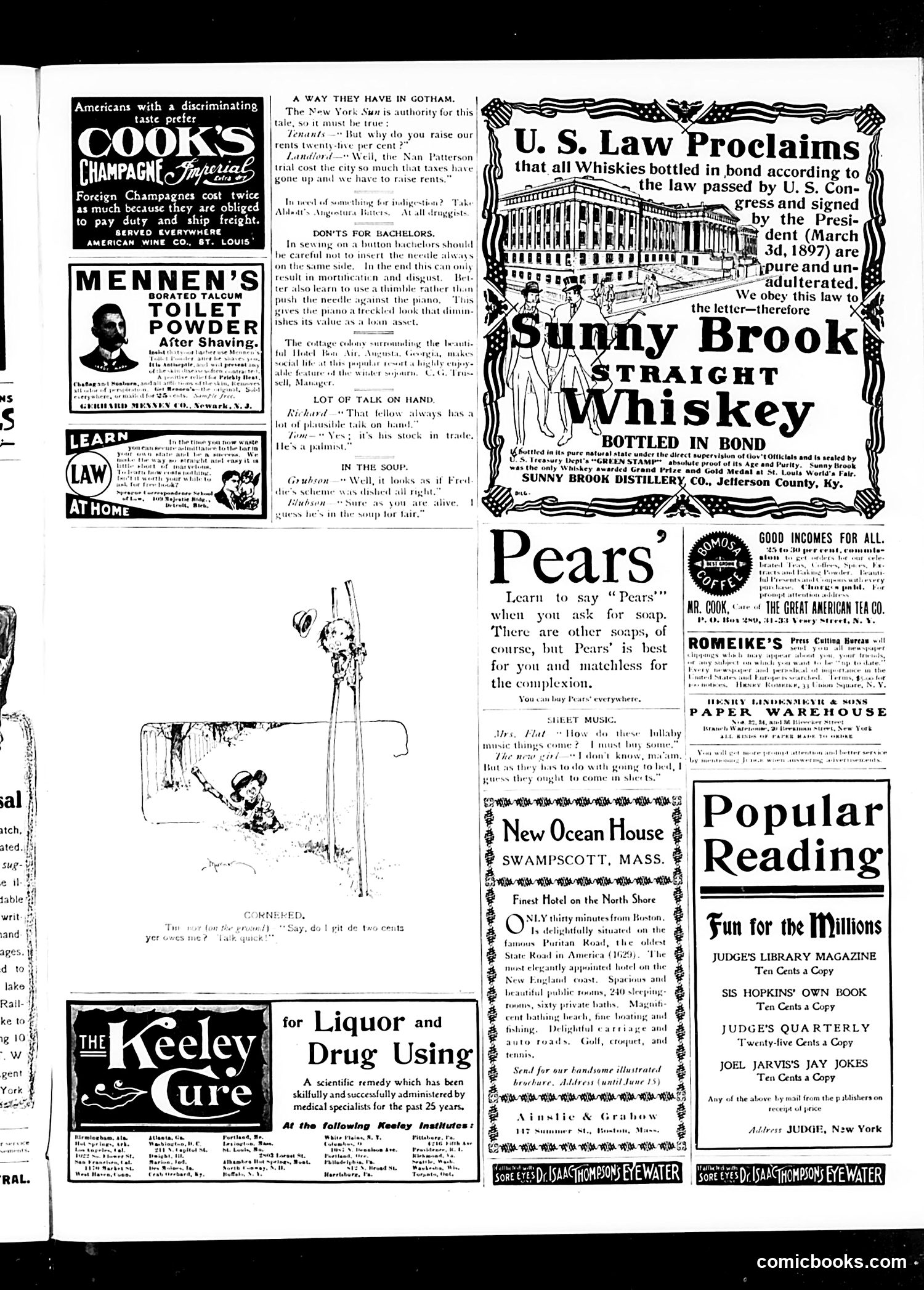
This page is primarily **advertising**, not editorial content or political cartoons. It showcases various turn-of-the-century American consumer products and services circa 1897. Notable ads include: - **Sunny Brook Whiskey**: Emphasizes federal certification under an 1897 law guaranteeing purity—a selling point when food/drug safety was unregulated and adulteration common. - **The Keeley Cure**: Advertises a "scientific remedy" for liquor and drug addiction, reflecting the era's emerging substance-abuse treatment industry. - **Pears' Soap**: Positions itself as superior for complexion care. - **Mennen's Talcum Powder** and other toiletries reflect growing consumer markets for personal grooming products. The small "Don'ts for Bachelors" and brief jokes (about sewing, piano repair, soup) are filler humor typical of Judge magazine. The page represents commercialism and marketing appeals of the Gilded Age more than satire or political commentary.
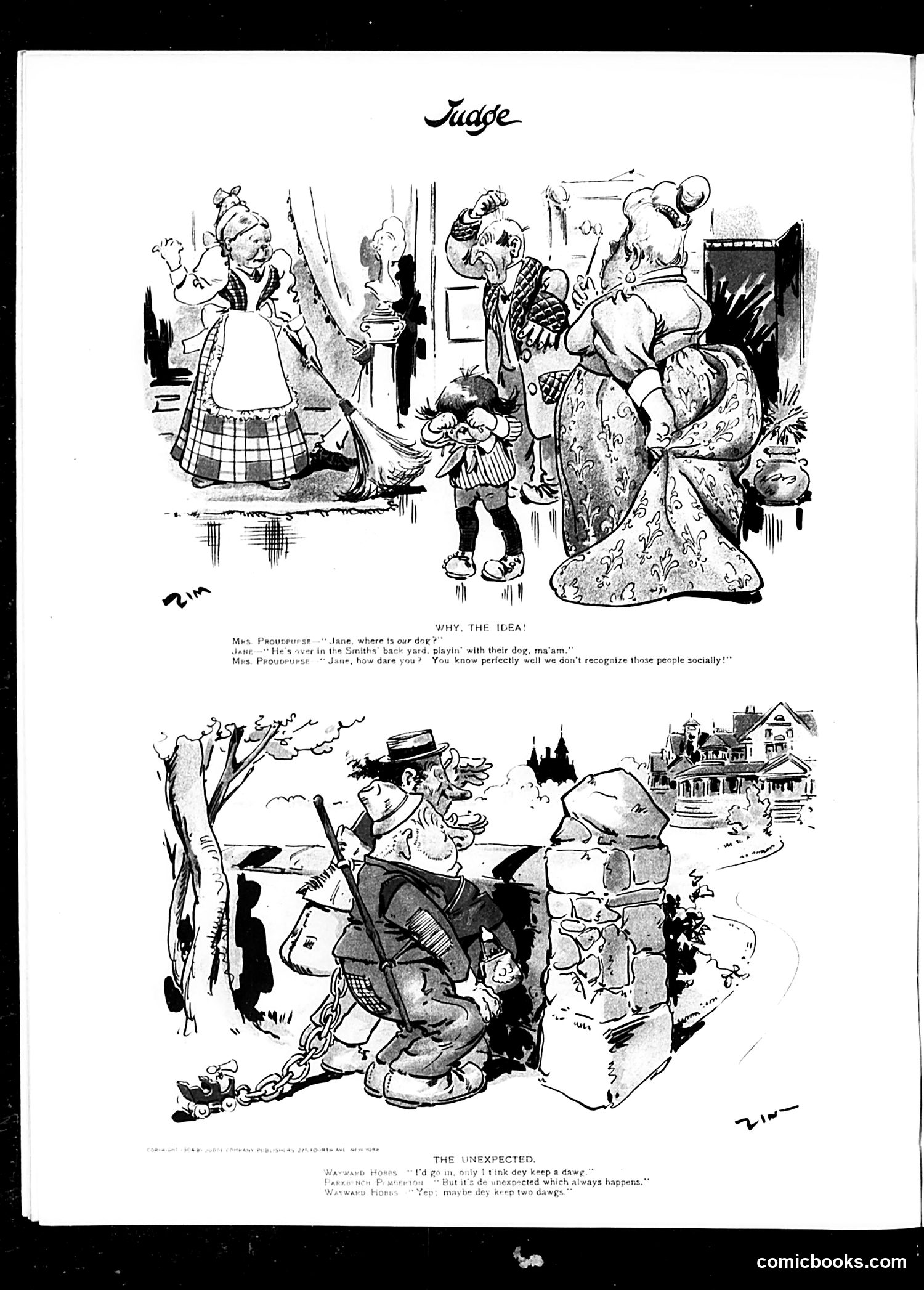
This page contains two satirical cartoons about social class and propriety. **Top cartoon ("Why the Idea!"):** Mrs. Prendergast is scandalized when Jane explains she was playing in the Smiths' backyard with their dog. Mrs. Prendergast protests that the Smiths are not socially recognized—implying they're beneath her class. The satire mocks rigid class consciousness: respectable families should only associate with "proper" social circles, making casual neighborly play with working-class families scandalous. **Bottom cartoon ("The Unexpected"):** A well-dressed man appears trapped or constrained by circumstance (depicted literally chained). The dialogue suggests his assumption that only one unexpected event could occur has been upended—life's unpredictability defies social expectations. Both cartoons ridicule excessive concern with social status and predictability among the upper classes, themes common to Judge's satirical commentary on American society.