
A complete issue · 16 pages · 1905
Judge — February 25, 1905
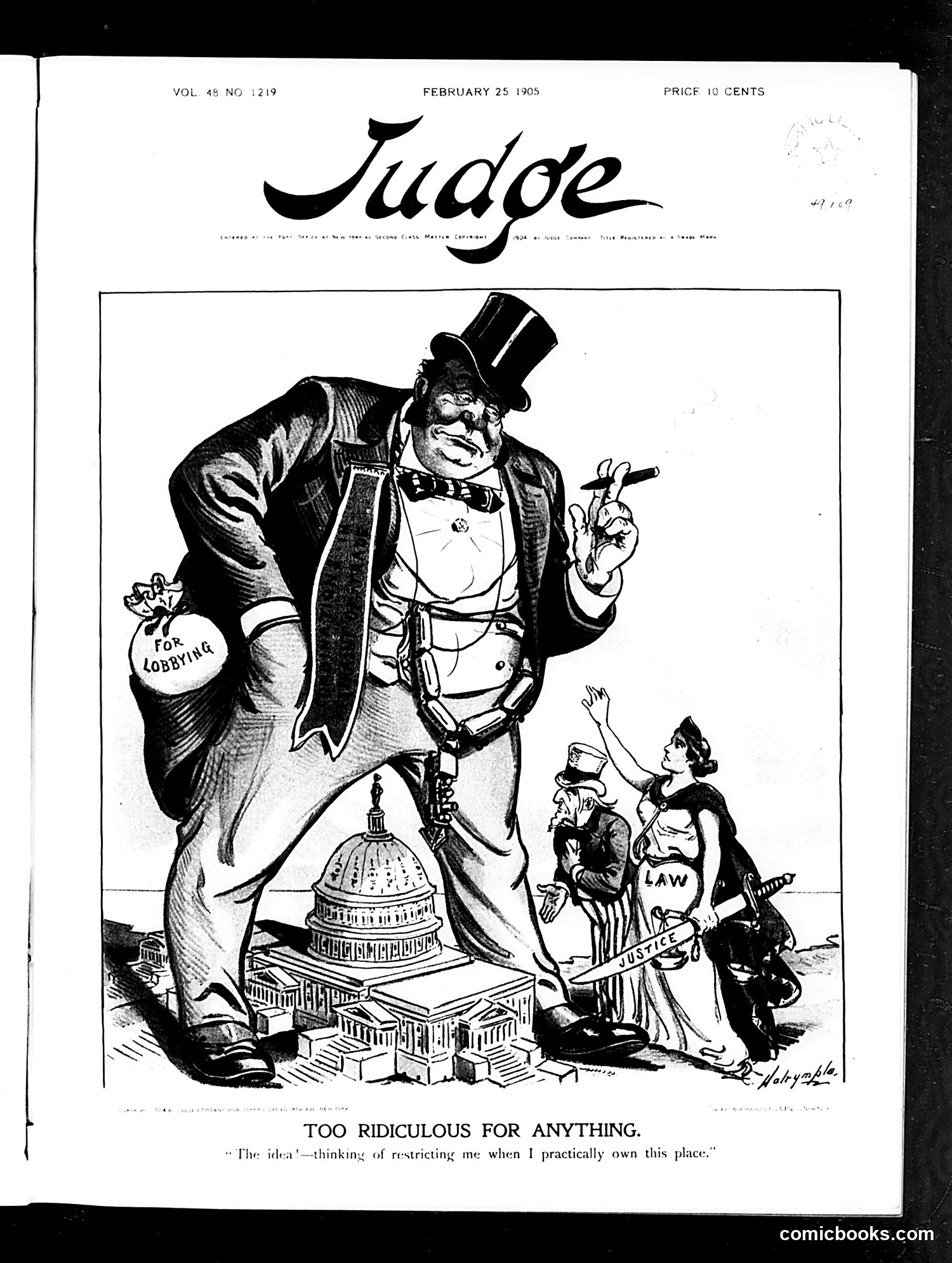
This 1905 Judge cartoon satirizes political corruption and corporate influence over government. A grotesquely caricatured fat plutocrat (likely representing a wealthy industrialist or politician) stands astride the Capitol building, holding a "For Lobbying" sign and a cigar. He dominates three smaller figures representing Law, Justice, and what appears to be the People or common citizens, who look up helplessly. The caption—"The idea of thinking of restricting me when I practically own this place"—exposes the cartoon's central critique: wealthy special interests literally own Congress through lobbying and corruption. The artist argues this influence is so blatant and pervasive that attempting to regulate it seems absurd to those in power. This reflects Progressive Era anxieties about corporate control of American democracy.
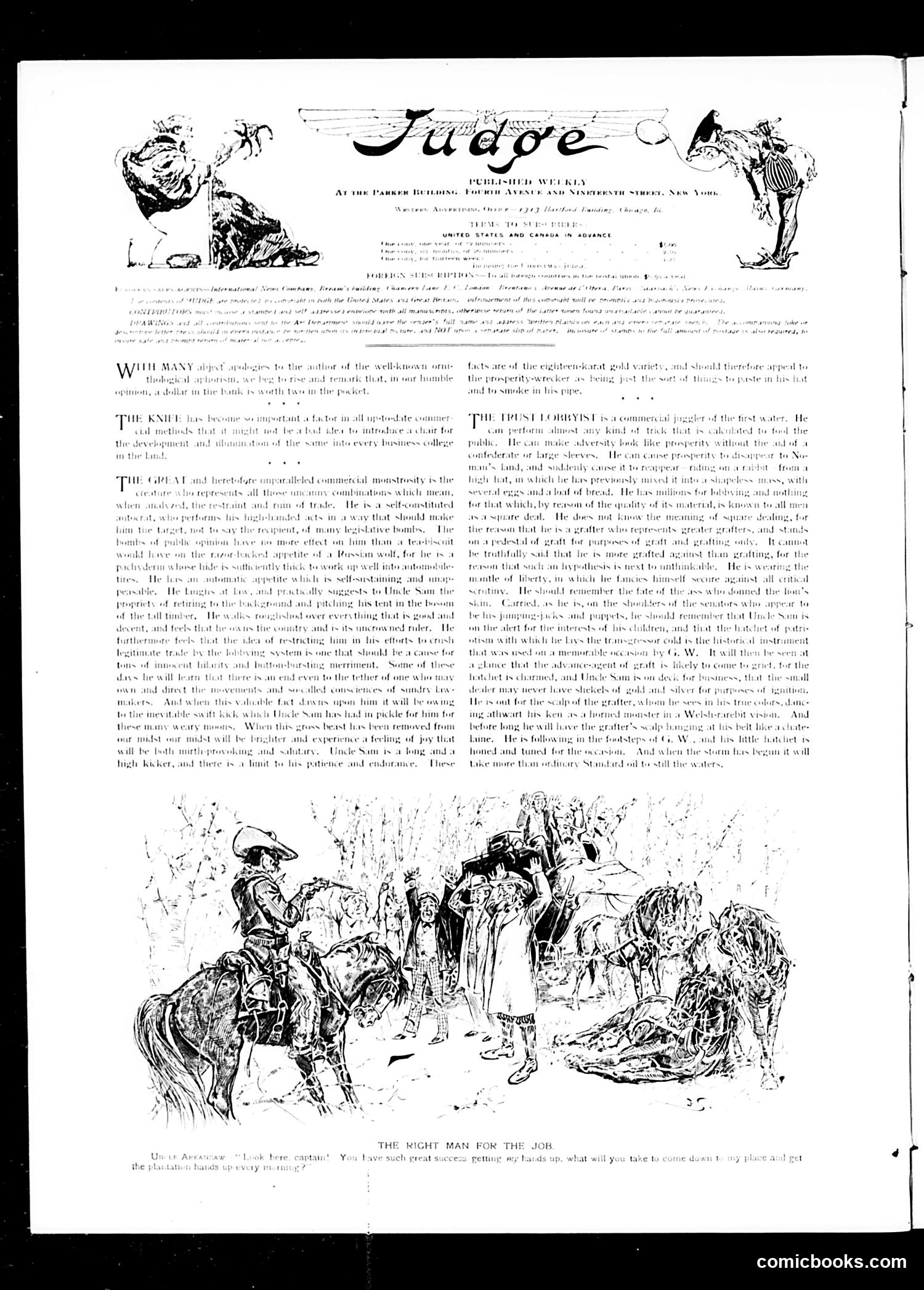
This page from *Judge* magazine features satirical commentary on financial schemes and con artists. The article discusses various fraudulent business practices—including dubious investment schemes, fake gold varieties, and confidence men exploiting the public. The main illustration titled "THE MIGHT MAN FOR THE JOB" depicts what appears to be a Western scene with a mounted figure confronting a group of people, likely satirizing the capture or exposure of a con artist or swindler. The text criticizes specific fraudulent methods: worthless stock schemes, fake trading systems, and operators who prey on ordinary citizens. The satire targets both the criminals themselves and the public's gullibility in falling for such schemes. Without seeing clearer publication details, the specific historical con being referenced remains unclear, though the critique of financial fraud and charlatanism is evident.
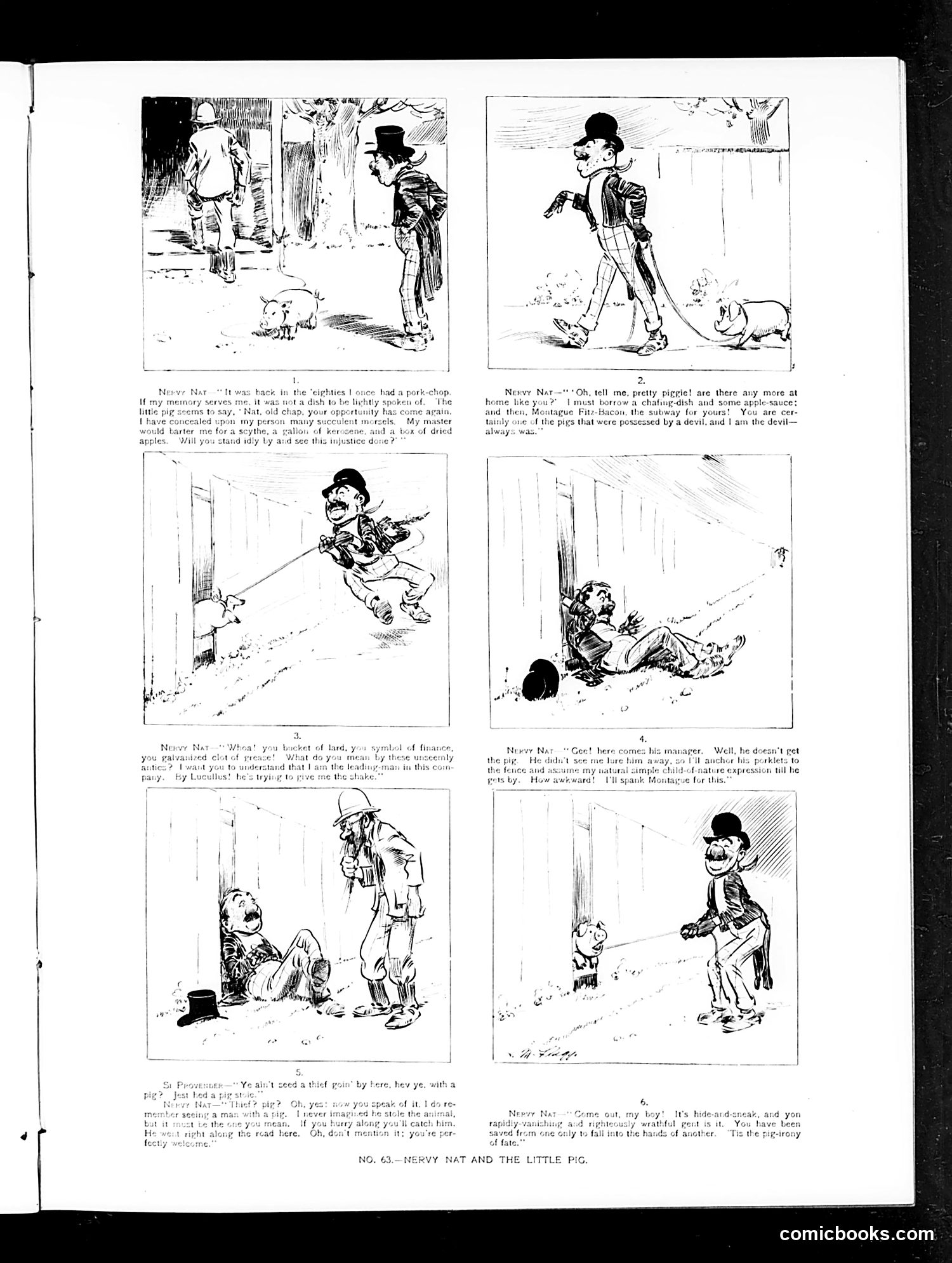
This appears to be a humorous comic strip from *Judge* magazine featuring a character named "Henry Nat" (likely a play on a real person's name, though unclear who specifically). The narrative follows Henry Nat's misadventures with a pig—apparently acquired through questionable means ("a thief's pony by here, hey ye, with a pig"). The strip mocks the character's increasingly desperate attempts to manage the pig's misbehavior and his eventual comeuppance. The satire targets common themes: financial schemes gone wrong, stolen property creating problems, and comeuppance for dishonest dealings. Without clearer historical context about who "Henry Nat" references, the specific political target remains unclear, though the general theme—consequences for financial or moral transgressions—was common satirical fare in early 20th-century *Judge*.
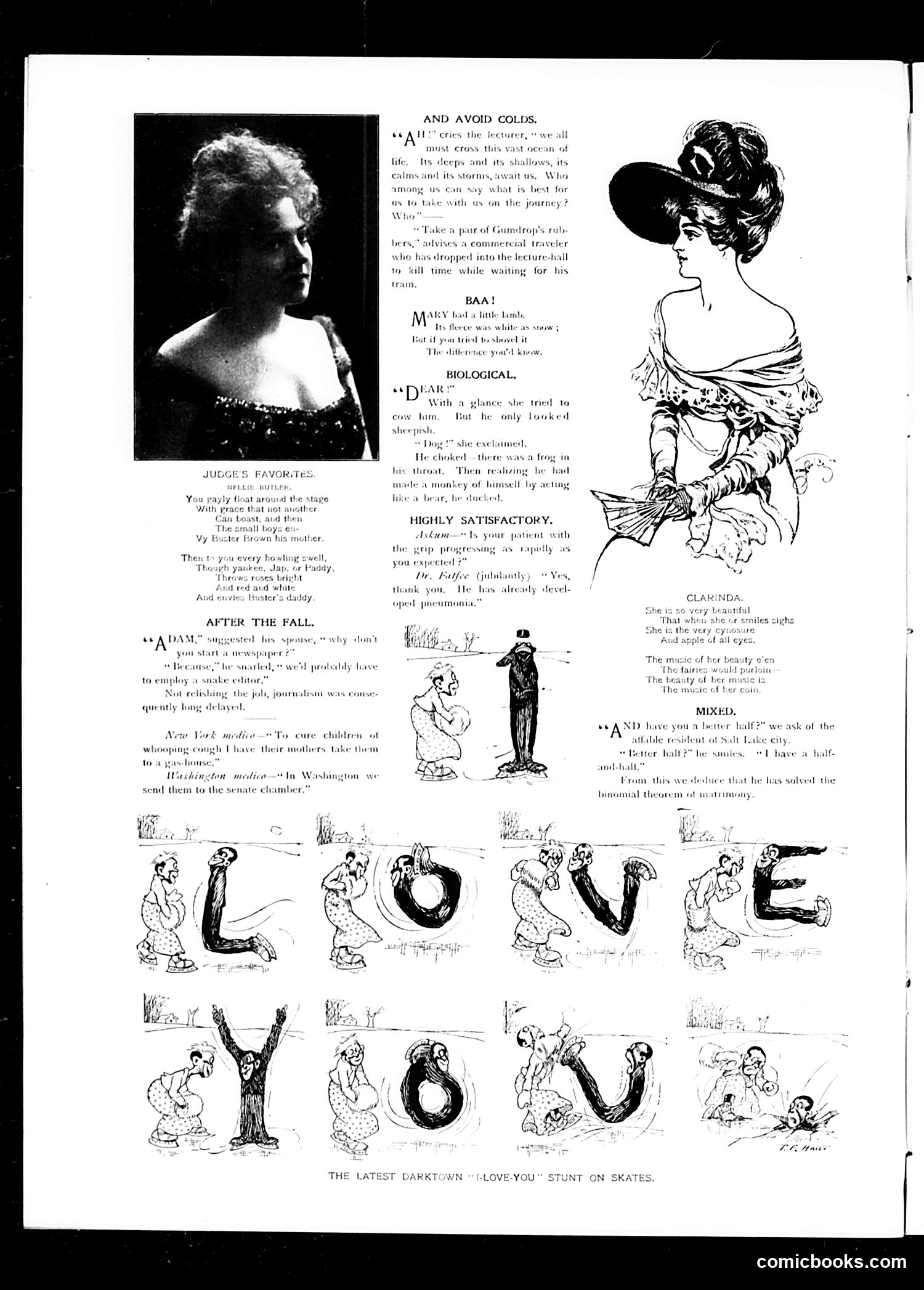
This page combines theatrical humor with visual gags. The top features "Judge's Favorites" - photographs and sketches of stage performers from the early 1900s, including "Clarinda," described as beautiful with an enchanting smile. The main content presents humorous anecdotes about theater and medicine, with jokes about newspaper editors, newspaper cures for children, and medical procedures. The bottom section shows "The Latest Darktown 'I Love You' Stunt on Skates" - a sequential visual gag using letter-shaped skating poses to spell "I LOVE YOU." This reflects the period's "Darktown" comic tradition, which used caricatured Black figures for comedic effect - content considered deeply offensive today. The overall page blends theatrical celebrity coverage with period humor reflecting early 1900s entertainment magazines.
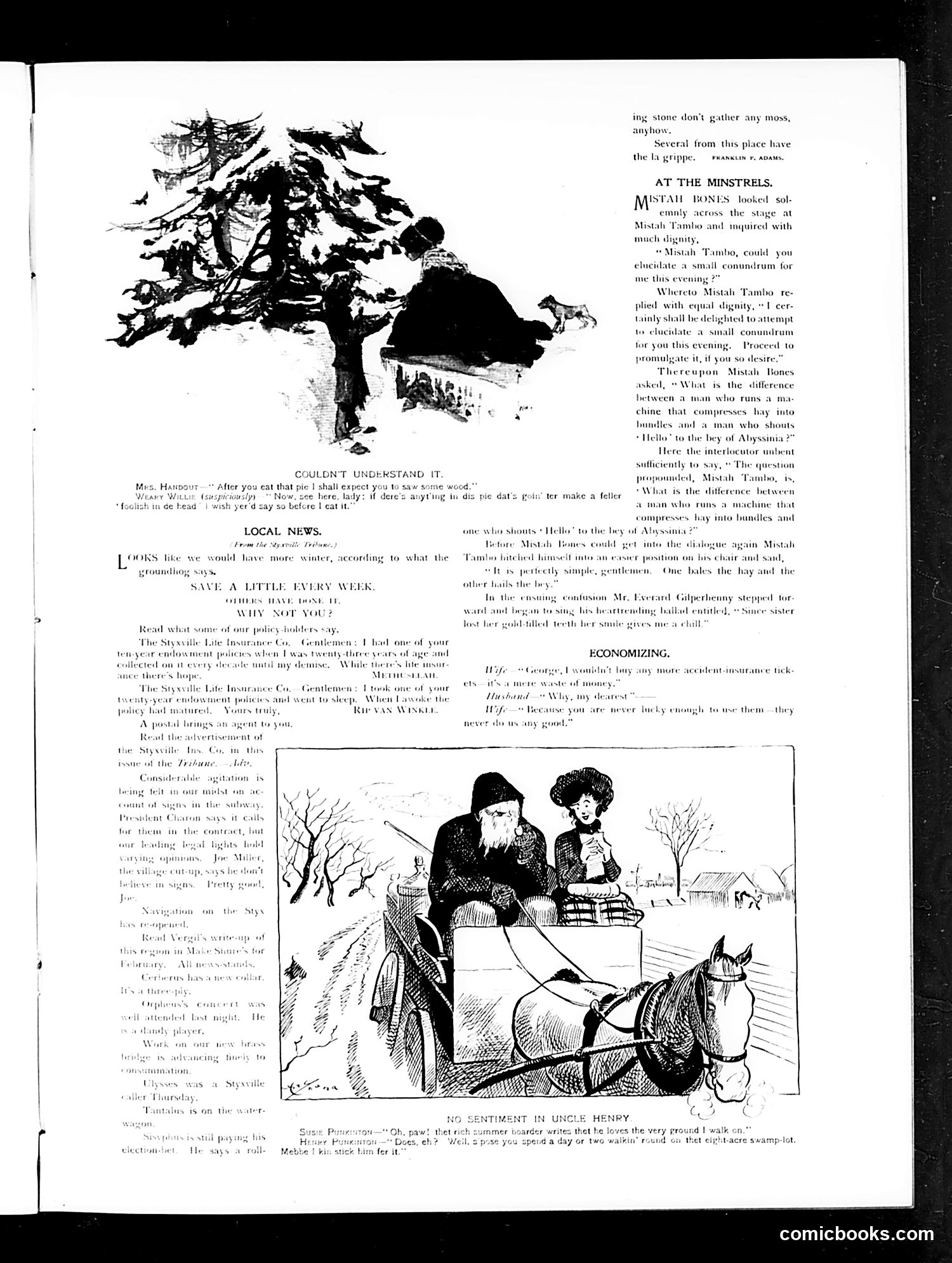
This page contains three distinct items: a brief comedic exchange about pie, insurance company testimonials, and minstrel show humor. **Top cartoon**: Mrs. Handout serves pie to a "Weary Wit," who jokes he'll expect her to say something witty. The humor is gentle domestic comedy. **Center content**: Testimonials praising the Styxville Life Insurance Company's endowment policies. These are fictionalized endorsements meant to encourage readers to buy insurance—essentially advertising dressed as editorial content, common in period magazines. **Bottom section**: "At the Minstrels" depicts a blackface minstrel show (then mainstream entertainment). Mistah Bones poses a riddle to Mistah Tambo about the difference between someone compressing hay into bundles versus shouting "Hello" to the Abyssinian ruler. The punchline appears to involve wordplay. This reflects early 20th-century minstrelsy, now recognized as deeply racist entertainment that perpetuated harmful stereotypes. The page blends humor, advertising, and period entertainment norms without modern awareness of their problematic nature.
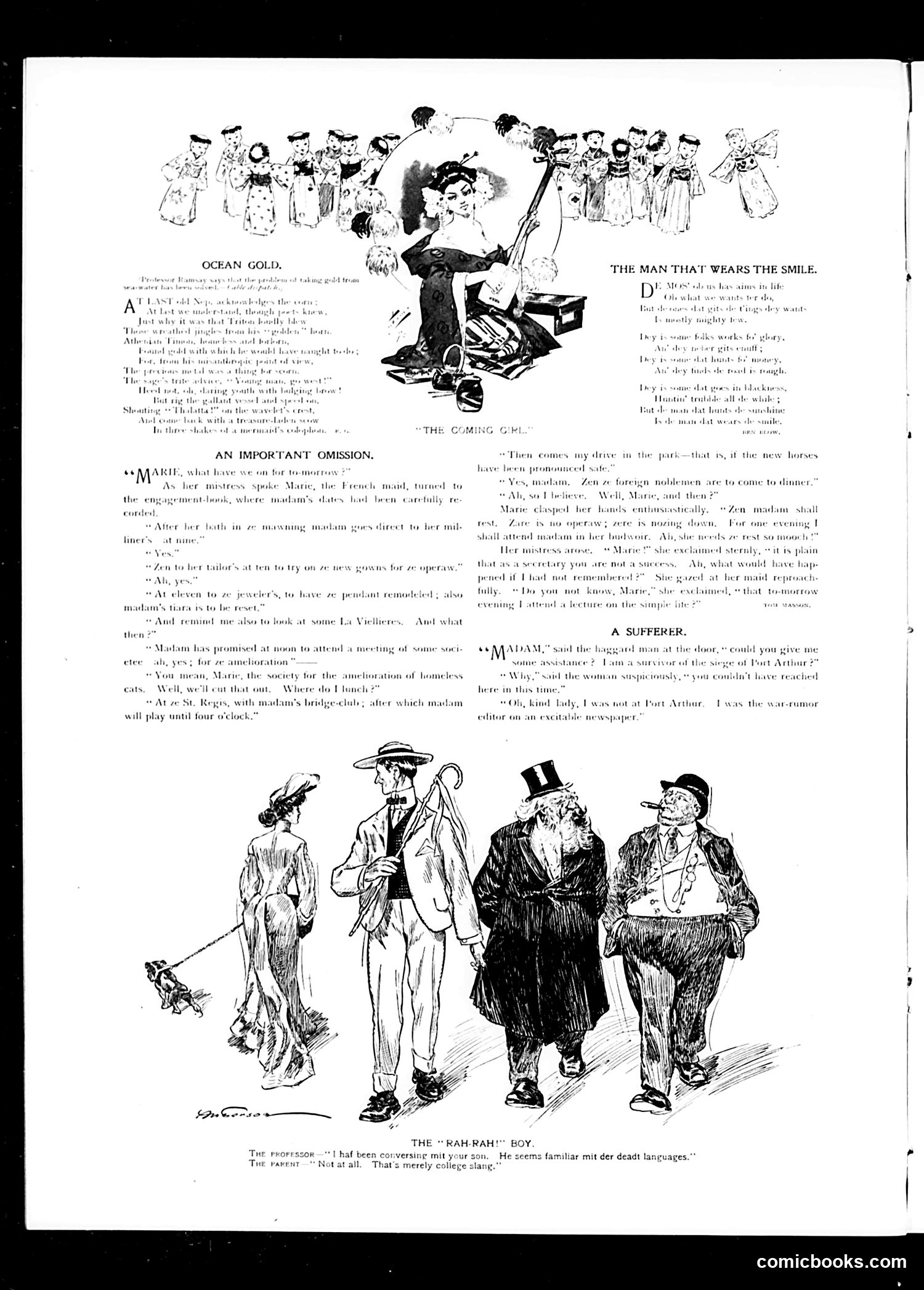
This page contains three satirical pieces mocking upper-class pretension and social absurdity: **"The Man That Wears the Smile"** depicts a man who maintains composure despite financial ruin—a commentary on performative respectability among the wealthy. **"An Important Omission"** satirizes a wealthy woman's trivial concerns: her maid Marie catalogs endless social obligations (opera gowns, bridge club, jewelry repairs) while the mistress plans to attend a lecture on helping homeless cats—oblivious to the irony of her priorities. **"A Sufferer"** mocks a man claiming he can't be reached because he was "the war-rumor editor on an excitable newspaper"—likely referencing sensationalist journalism during a contemporary conflict (possibly the Russo-Japanese War, early 1900s based on "Port Arthur" reference). **"The 'Rah-Rah' Boy"** shows a parent puzzled that college slang sounds like "dead languages"—gentle mockery of generational disconnect. All target privilege, superficiality, and social pretense typical of Judge's satirical approach.
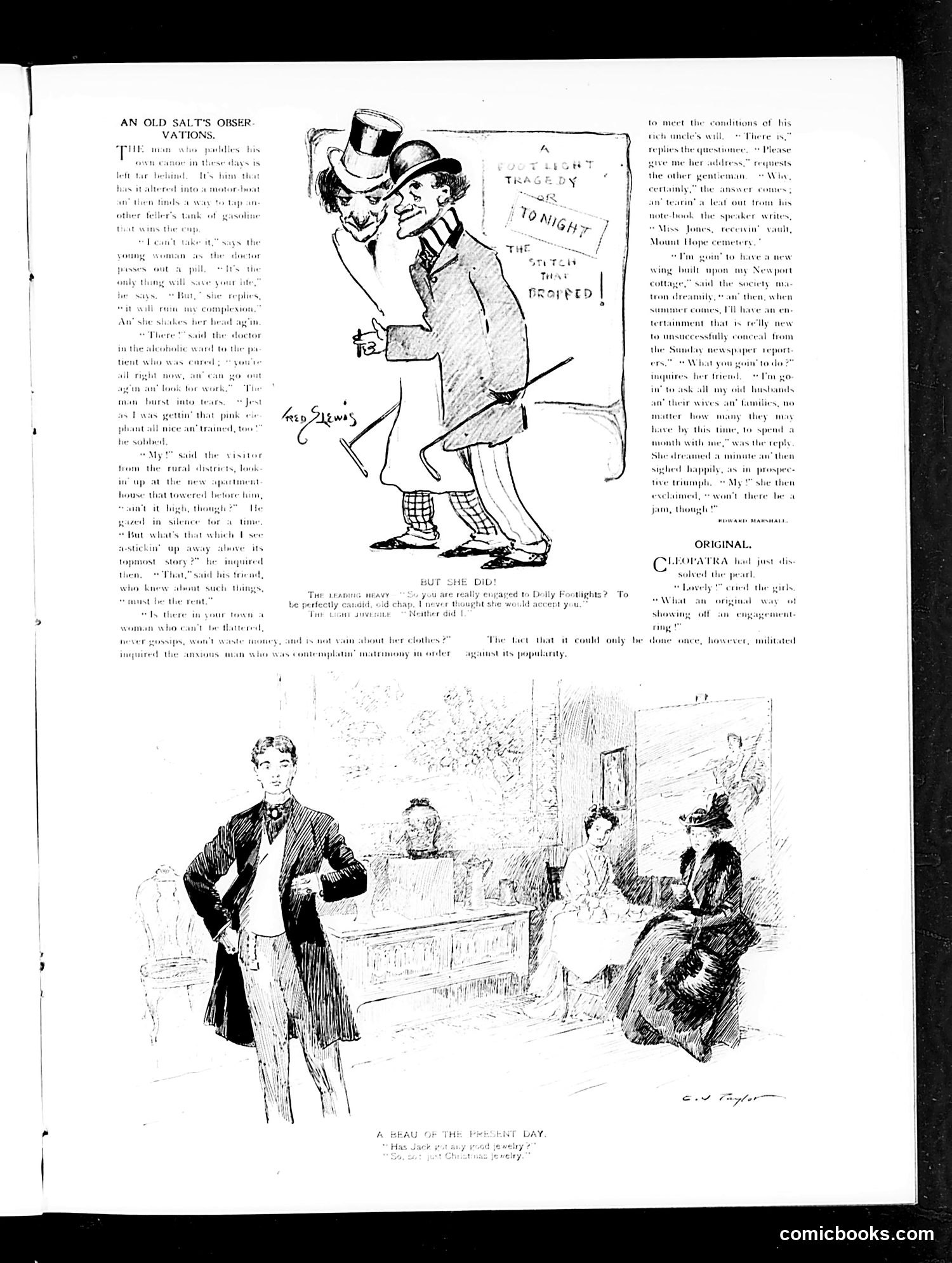
**Top Cartoon**: A sailor encounters a fashionable woman, likely referencing early 20th-century social pretension. The sailor's plain speech contrasts with the woman's affected manner—a common Judge theme mocking nouveau riche or society types who adopted exaggerated airs. The "old salt" represents honest, unadorned common sense versus urban artificiality. **Bottom Section**: "Original: Cleopatra" appears to be a brief comedic piece. The reference to "Dolly Footlights" (theatrical slang for actresses) suggests satire about theatrical divas or performers claiming historical authenticity or uniqueness. The joke seems to mock vanity—even Cleopatra couldn't be truly "original" if she cared about her appearance. Both pieces reflect Judge's recurring satirical targets: social climbing, theatrical pretension, and the gap between authentic working-class values and affected upper-class manners. The humor relies on readers' familiarity with Gilded Age social hierarchies and theatrical culture.
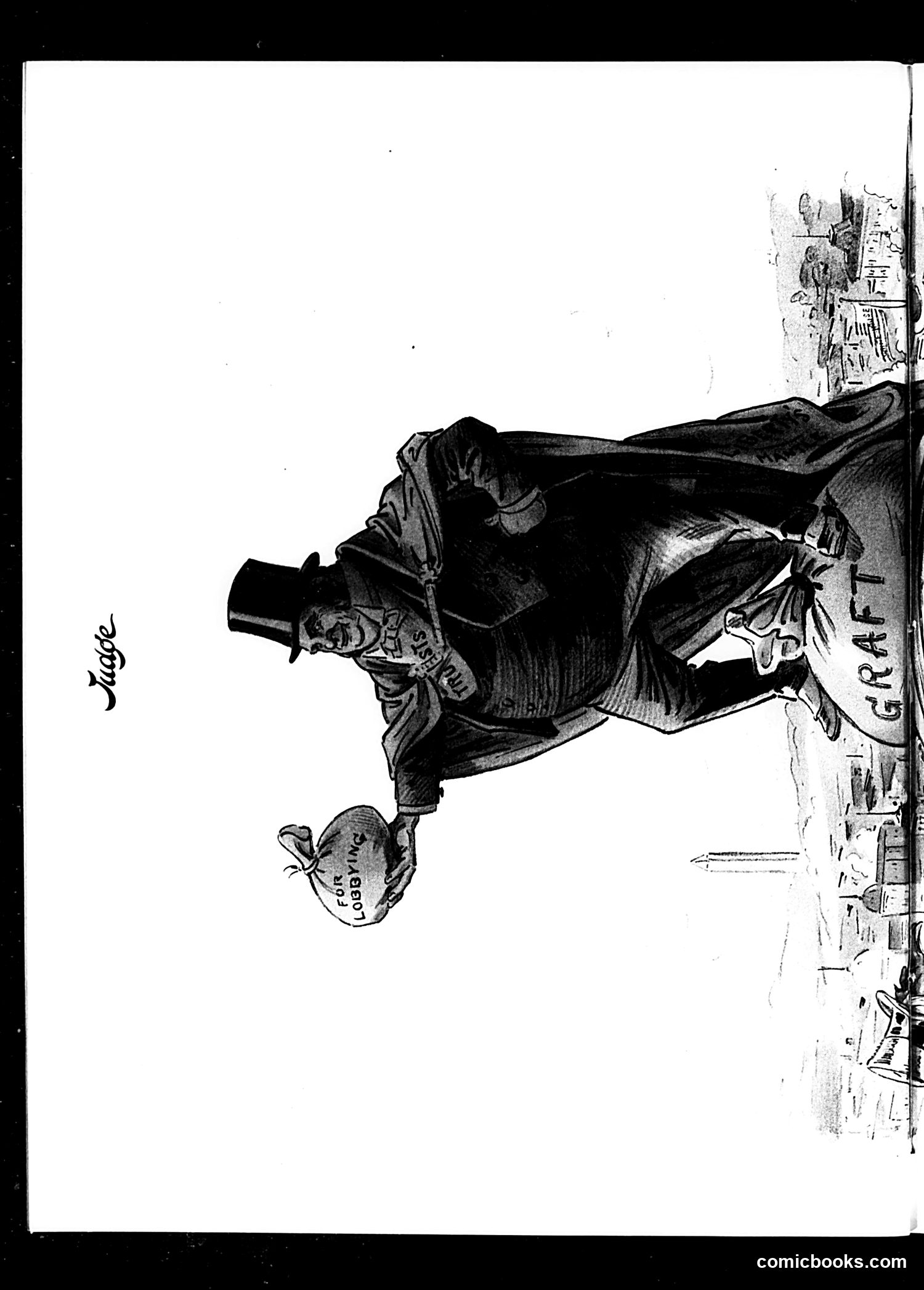
This appears to be a political cartoon from *Judge* magazine, though the OCR text provides no substantive content beyond the source attribution. The illustration shows a well-dressed man in formal attire (top hat and coat) standing upright, with what appears to be a small round object labeled "FUDGE LOBBY" at his feet. The figure on the right side shows text reading "GRAFT," suggesting the cartoon is satirizing corruption or improper influence. Without clearer visible text or additional context, I cannot definitively identify the specific political figure or historical moment being lampooned. However, the general theme appears to critique the lobbying industry's corrupting influence on political figures during the Gilded Age or Progressive Era, when *Judge* frequently targeted such issues.
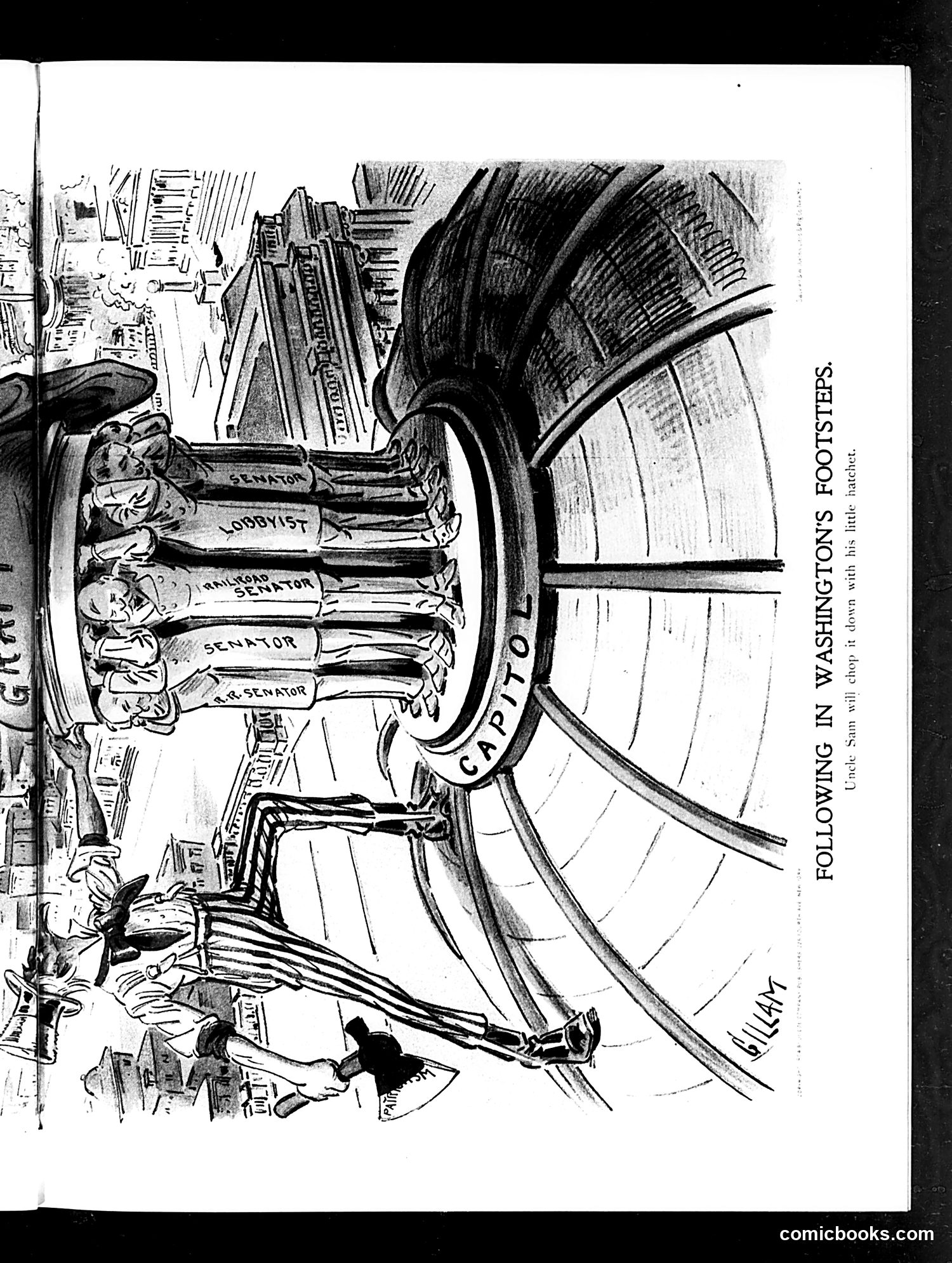
This cartoon depicts **Uncle Sam** following in the footsteps of **George Washington**, shown as a large boot print. Inside the Capitol building, multiple **senators** are stacked like logs or firewood, labeled with their titles. The imagery suggests senators are being used as fuel or expendable material—"following" Washington's legacy by burning through political figures. The satire appears to criticize how contemporary senators are treated as disposable in Washington politics, or possibly mocks the Capitol's inefficiency and waste of political talent. The "hatchet" reference in the OCR text may allude to Washington's famous cherry tree legend, creating ironic contrast between the founding father's integrity and current political practices. The exact historical context and targeted senators remain unclear without a publication date.
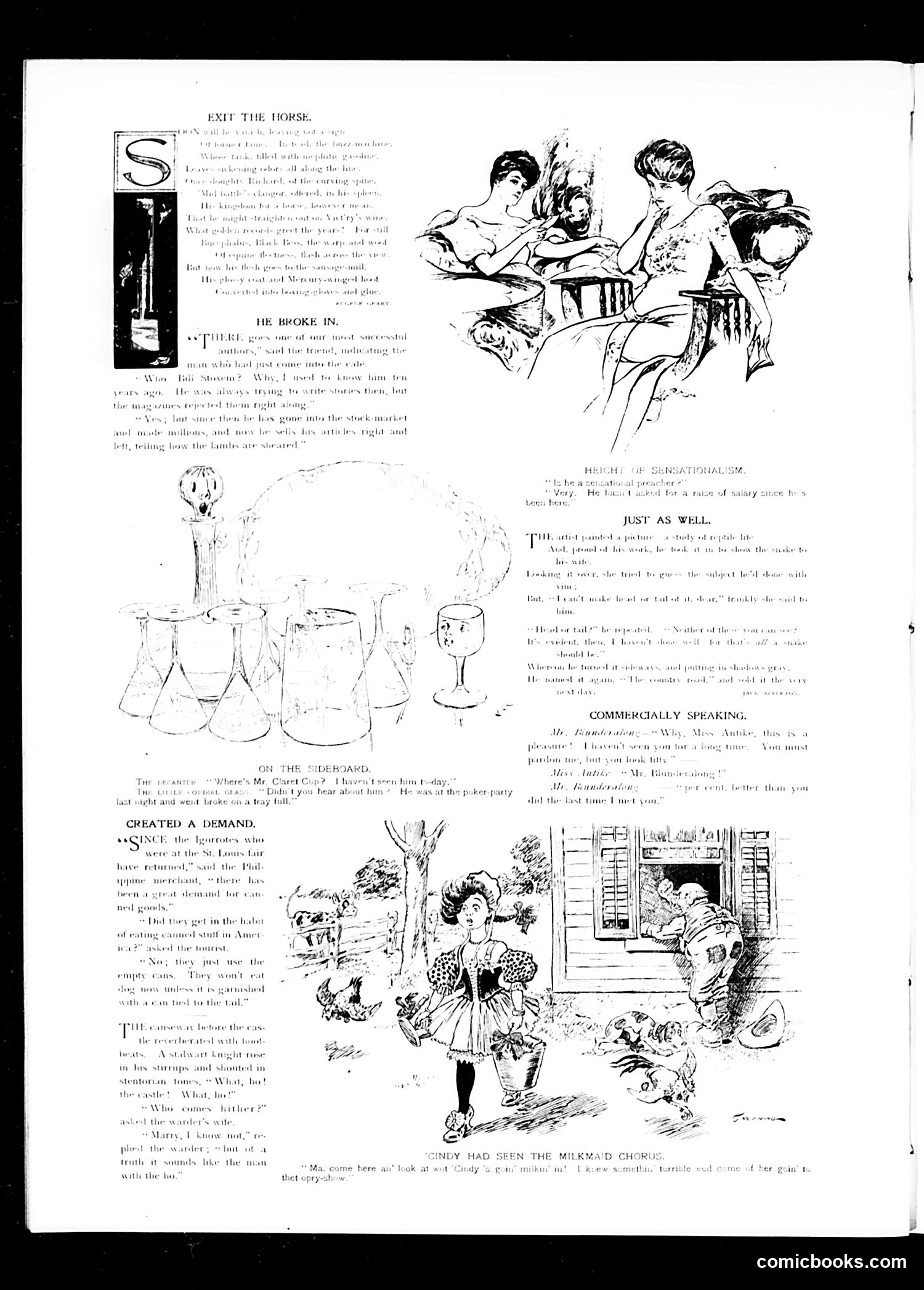
This page contains several disconnected satirical sketches typical of early Judge magazine: **"Exit the Horse"** mocks the stock market's volatility and speculation, suggesting financial instruments are replacing traditional commerce—the "horse" likely represents old-fashioned business practices being displaced by modern speculation. **"On the Sideboard"** jokes about a man named "Mr. Claret Cup" who went broke at a poker party "on a tray full"—a drinking/gambling humor piece about social excess among gentlemen. **"Created a Demand"** satirizes American imperialism and tourism in the Philippines. It mocks how US tourists in the Philippines consume canned goods rather than local food, creating artificial demand for American products. The joke is that Filipino merchants stock American canned goods for tourists who won't eat local cuisine—a critique of American cultural dominance and colonial attitudes. The illustrations are typical Judge pen-and-ink work with period dress and social settings reflecting early-20th-century leisure-class life.
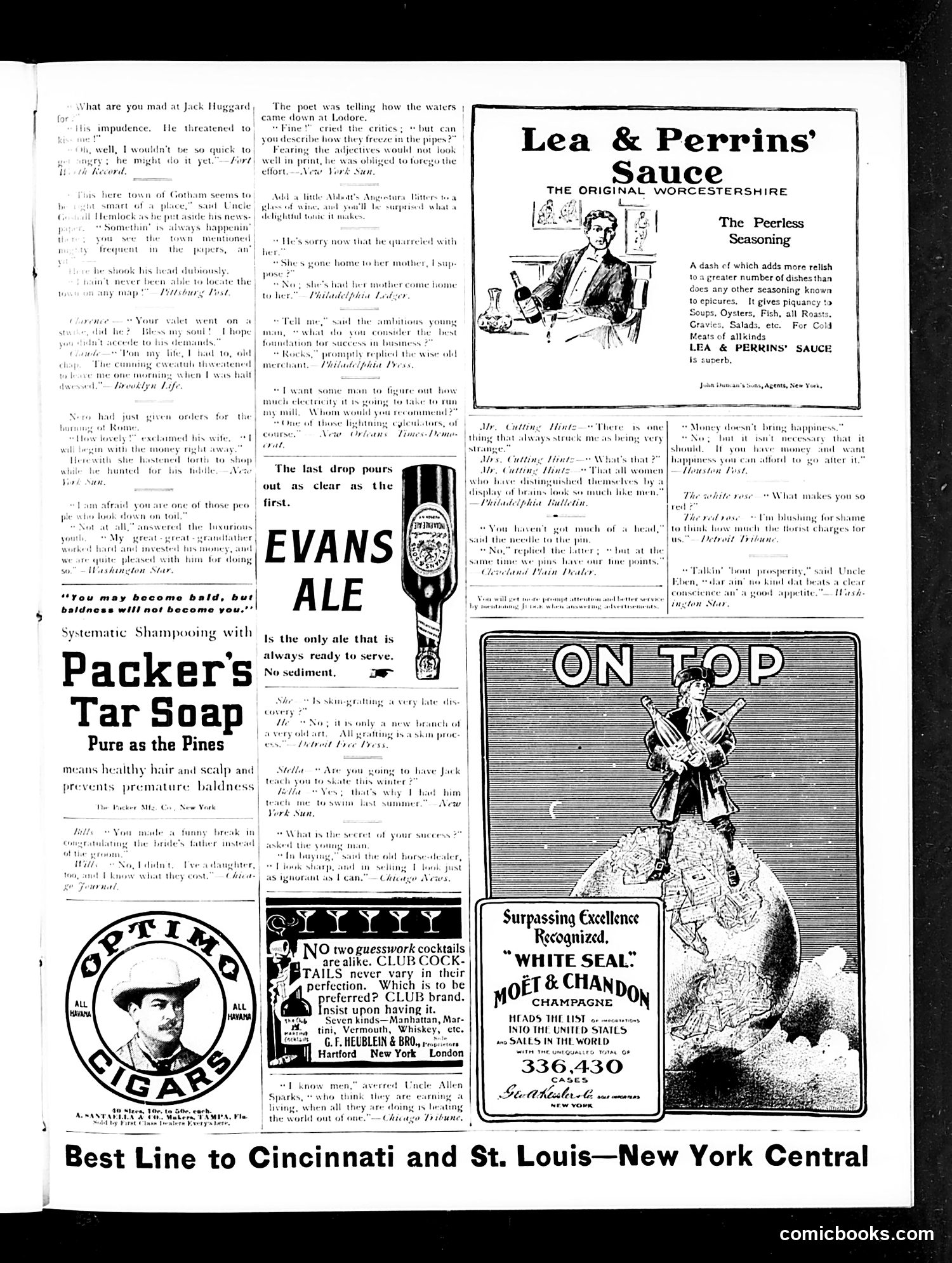
This page is primarily **advertising**, with small comic snippets interspersed. The main satirical content appears in brief, captioned vignettes rather than developed cartoons. The visible jokes mock domestic life and social pretension: - A husband quarrels with his wife over poetry criticism; she leaves to her mother's house—a commentary on marital discord - A young man seeks business advice; the response "Rocks" suggests cynical worldliness - A man contemplates "how much electricity" is needed, implying obsession with modern technology - Cutting Hints exchanges joke about money and happiness, suggesting materialism doesn't guarantee contentment The advertisements dominate: Evans Ale, Lea & Perrins Sauce, Packer's Tar Soap, Moët & Chandon Champagne, and railroad service. These ads reflect upper-middle-class consumer culture of the era (likely early 1900s based on style). The cartoons satirize contemporary American anxieties—marital friction, social climbing, and modern technology—through brief, somewhat crude humor typical of Judge's satirical approach.
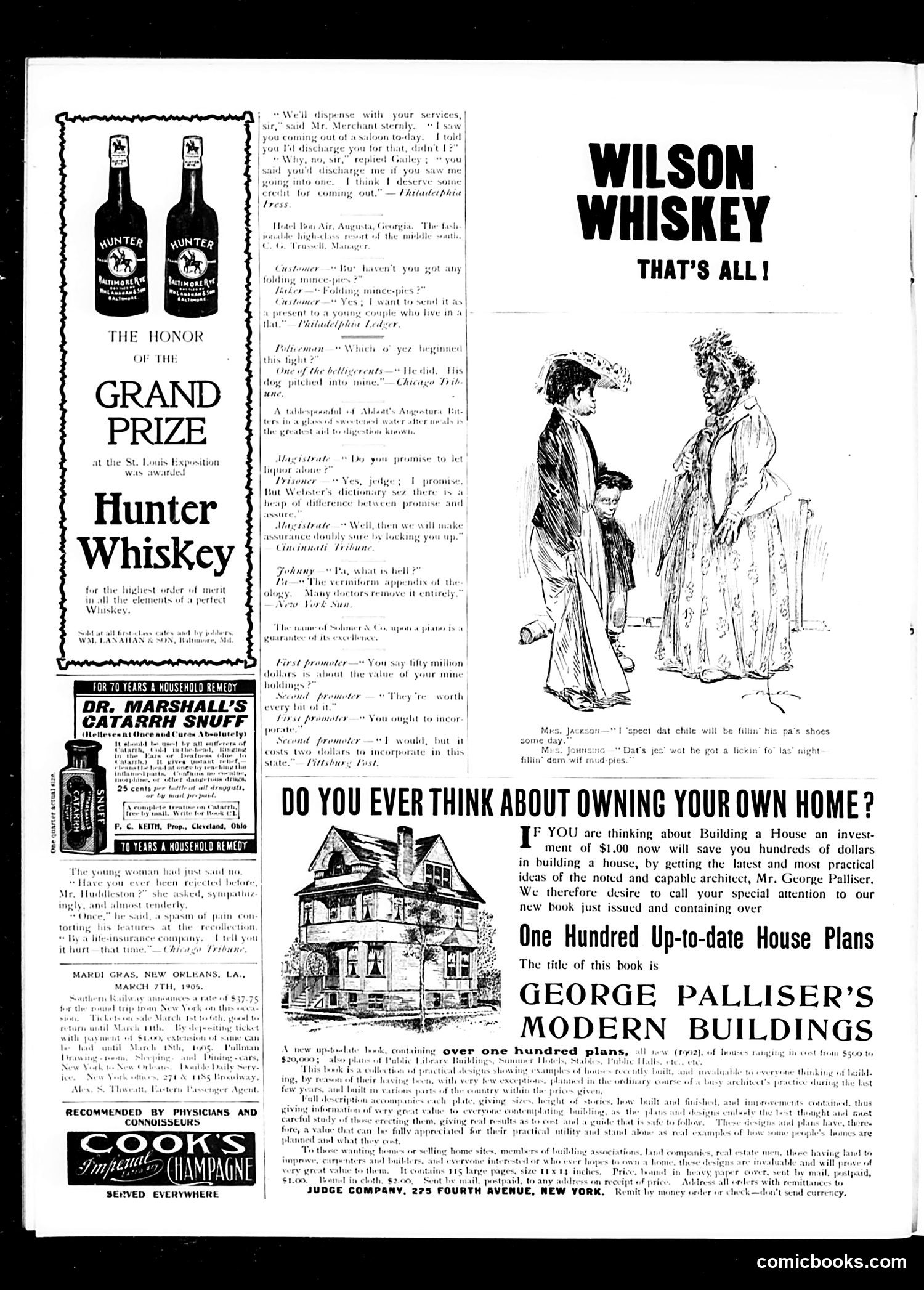
This page from Judge (circa 1905) is primarily **advertising and miscellaneous content** rather than a unified satirical cartoon. The visible humor pieces are brief jokes typical of the era's magazine format: - **Workplace rejection scene**: A merchant fires an employee for being seen entering a saloon, reflecting early 20th-century employer moralism about workers' conduct. - **Police court dialogue**: A magistrate extracts a promise from a drunk to stop drinking, using wordplay about "promise" versus legal "assurance"—typical Judge-style pun humor. - **Mining scheme joke**: Two promoters discuss inflating a mine's value, satirizing dubious investment schemes common in that period. - **Domestic dialect humor**: A brief exchange using African American vernacular (standard for Judge's era, though offensive by modern standards) about a child tracking mud. The page is dominated by **advertisements**: Hunter Whiskey's grand prize claim, Dr. Marshall's Catarrh Snuff, and George Palliser's house plan book. These ads reveal what Judge's affluent readers purchased and valued.
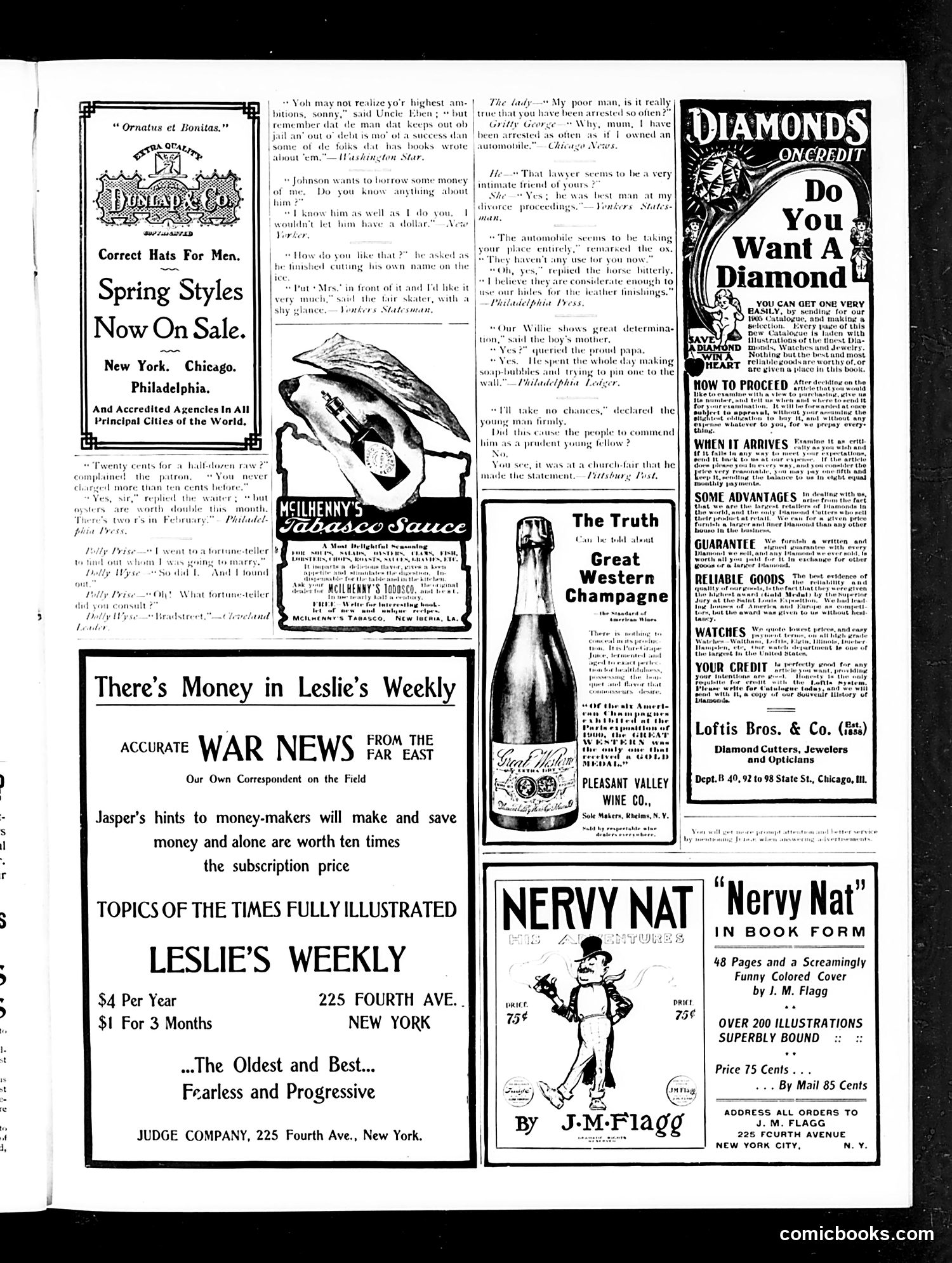
This page is **primarily advertising** with brief humorous snippets scattered throughout. The main content includes: **Short Comic Anecdotes:** - A dialogue about lending money, playing on the phrase "I know him as well as I do you"—implying both are equally unreliable - A lady asking a poor man about arrests; he reveals his lawyer was "best man at my divorce proceedings"—satirizing how frequently he's needed legal representation for marital troubles - A reference to someone named Willie showing "great determination," though context is unclear **The Satire's Point:** These brief jokes mock working-class struggles (poverty, legal troubles, failed marriages) and the absurdity of social pretense. The humor relies on recognizing the desperation behind the punchlines. **Advertisements:** The page is dominated by ads for hats, diamonds, Leslie's Weekly (a competing magazine), champagne, and a "Nervy Nat" book by J.M. Flagg. The war news advertised for Leslie's Weekly suggests this is from the WWI era, though the page itself contains no war-related content.
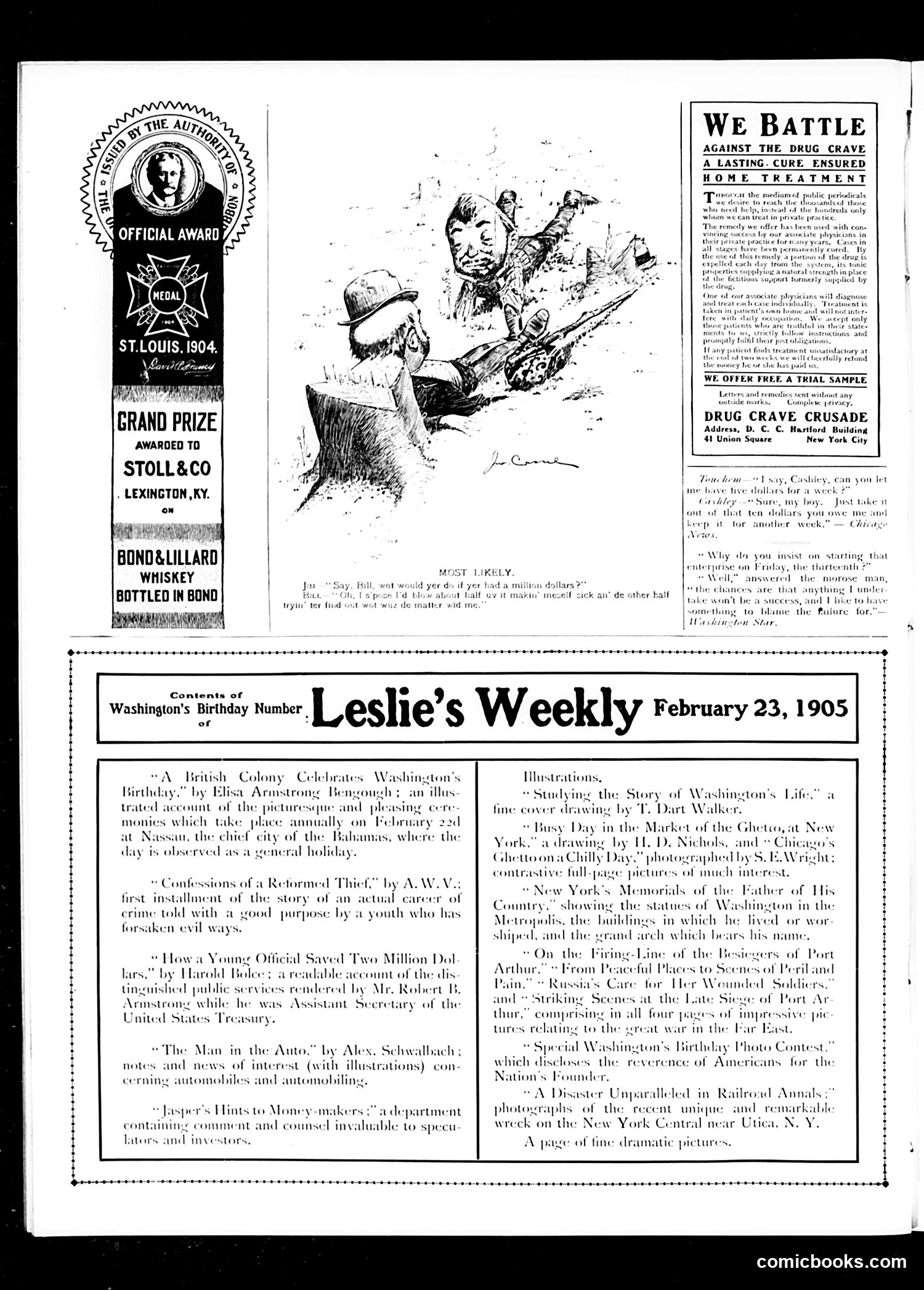
This is primarily a **contents/title page** for Leslie's Weekly magazine, with the main visual element being a cartoon illustration of two figures engaged in what appears to be a physical struggle or fight, signed by the artist. The page announces Washington's Birthday-themed content (the issue date is February 23, 1905, just after Washington's birthday on February 22). Featured articles include pieces on how the Bahamas celebrates Washington's Birthday, and "New York's Memorials of the Father of His Country." A prominent sidebar advertisement promotes the "Drug Crave Crusade," a treatment for drug addiction offering a "lasting cure ensured" through home treatment—typical of early 1900s medical advertising making dubious claims about addiction remedies. The cartoon's specific meaning is **unclear without additional context**, though the rough, sketchy style and apparent conflict suggests social or political commentary typical of Judge magazine's satirical approach. The figures' identities cannot be determined from the image alone.
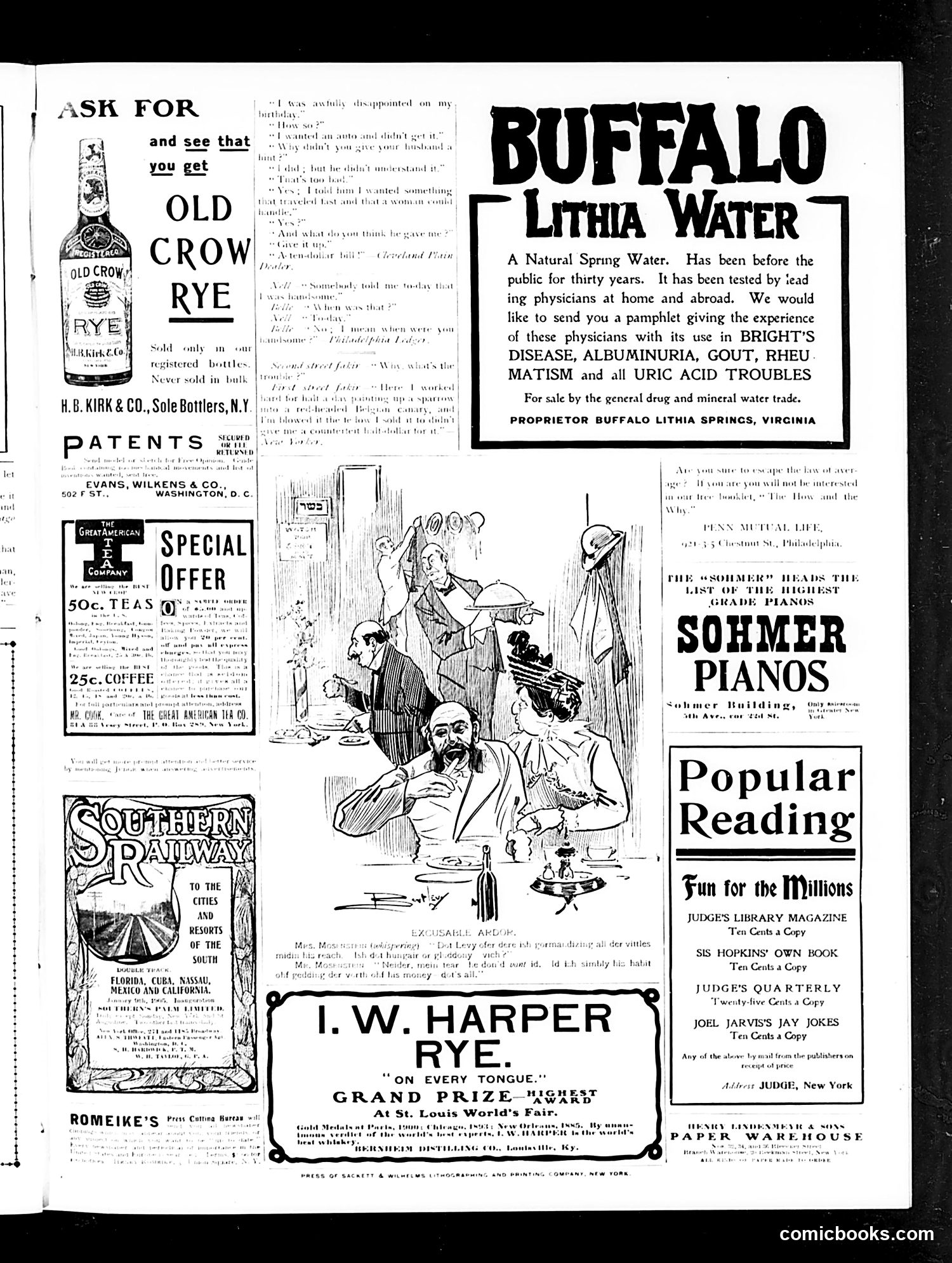
This page is primarily **advertising**, not editorial content or political satire. The central illustration—showing men in what appears to be a chaotic domestic or social scene—accompanies an ad for **I.W. Harper Rye whiskey**, emphasizing the product is "on every tongue" and won a "Grand Prize" at the St. Louis World's Fair. The surrounding ads promote patent medicines (Buffalo Lithia Water for gout and kidney ailments), railway travel, pianos, and Judge's own publications. The humor appears implicit in the Harper whiskey ad's image: the raucous scene suggests the social consequences or boisterous behavior associated with drinking. The page reflects **early 1900s advertising conventions**, where medicinal claims were unregulated and whiskey was marketed alongside legitimate health tonics. No specific political figures or events are referenced—this is commercial content typical of Judge magazine's revenue model.
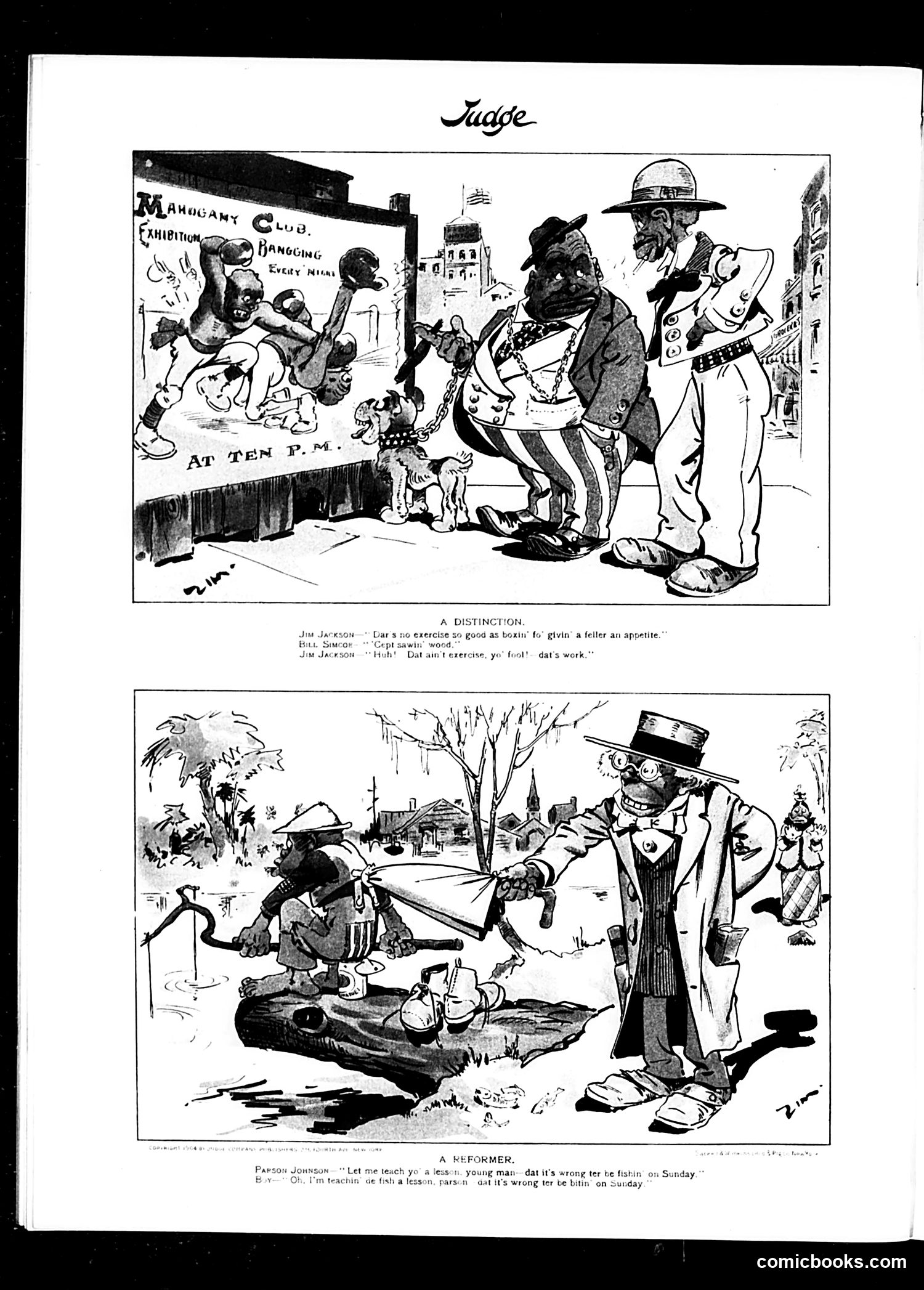
**Top cartoon ("A Distinction"):** A uniformed official (appears to be police or military) examines a poster for "Mahogany Club—Exhibition Banging Every Night" while addressing two figures. The dialogue contrasts "exercise" with improper conduct, suggesting the club advertises boxing or fighting under the guise of fitness. **Bottom cartoon ("A Reformer"):** Parson Johnson instructs a young man about proper Sunday behavior—fishing and baseball are acceptable, but not on Sundays. The reformer enforces strict religious observance of the Sabbath, a common late-19th/early-20th-century social issue. Both cartoons satirize authority figures (law enforcement and clergy) enforcing arbitrary or hypocritical distinctions in conduct and morality, reflecting contemporary tensions between modernizing leisure activities and traditional moral constraints.