
A complete issue · 16 pages · 1900
Judge — December 1, 1900
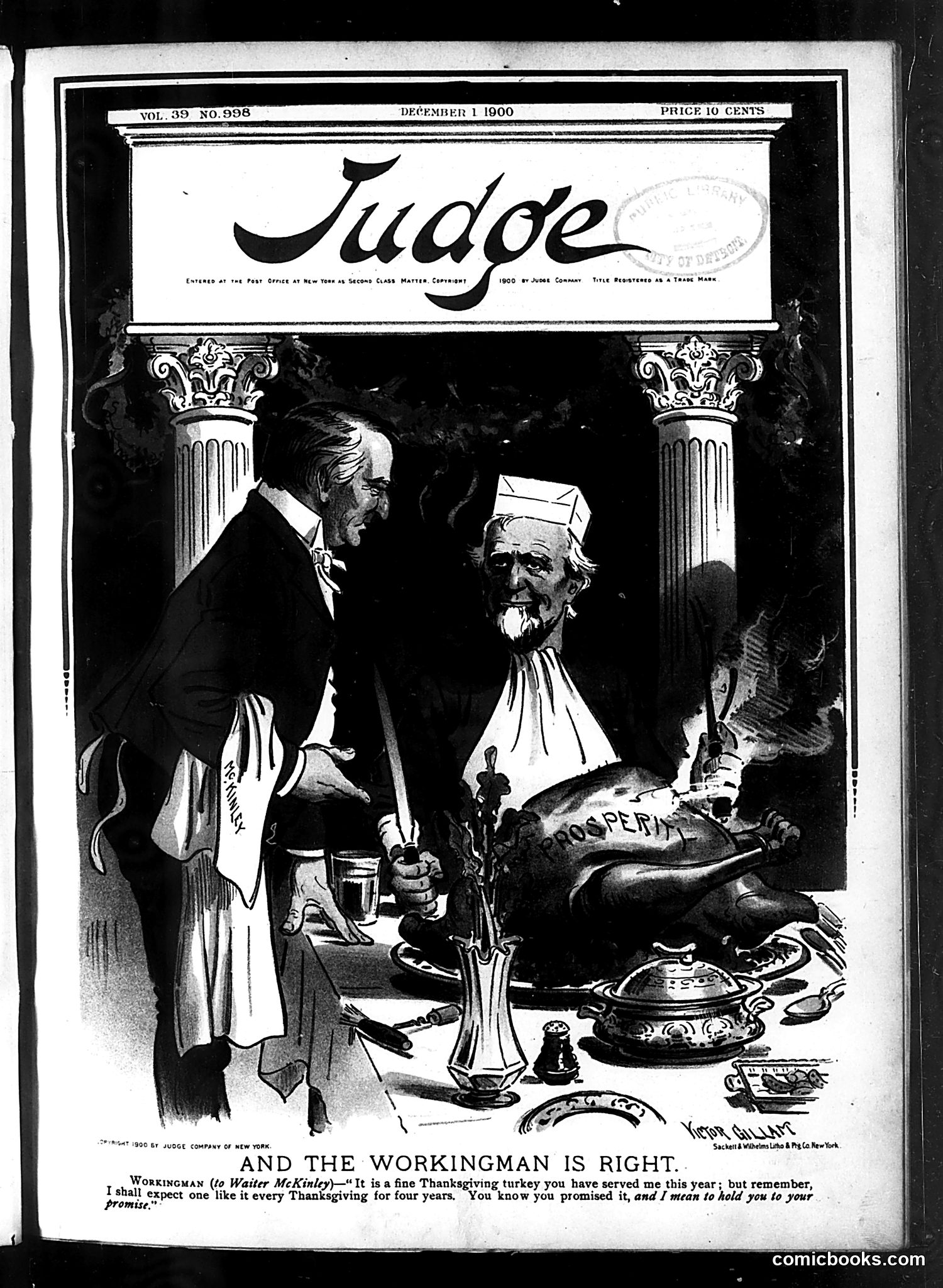
This political cartoon satirizes labor negotiations during the McKinley administration. The caption "AND THE WORKINGMAN IS RIGHT" presents a dialogue between a wealthy industrialist (left) and a worker named Walter McKinley (identified in the speech bubble). The workingman complains that despite receiving a fine turkey annually, he was promised better wages "for four years" and demands the employer fulfill that commitment. The cartoon critiques President McKinley's perceived failure to protect workers' interests despite campaign promises. The ornate courtroom setting with classical columns evokes judicial authority, suggesting the dispute requires legal arbitration. The overall message: American workers deserved better economic treatment than symbolic gestures, and the administration had broken faith with its labor constituency.
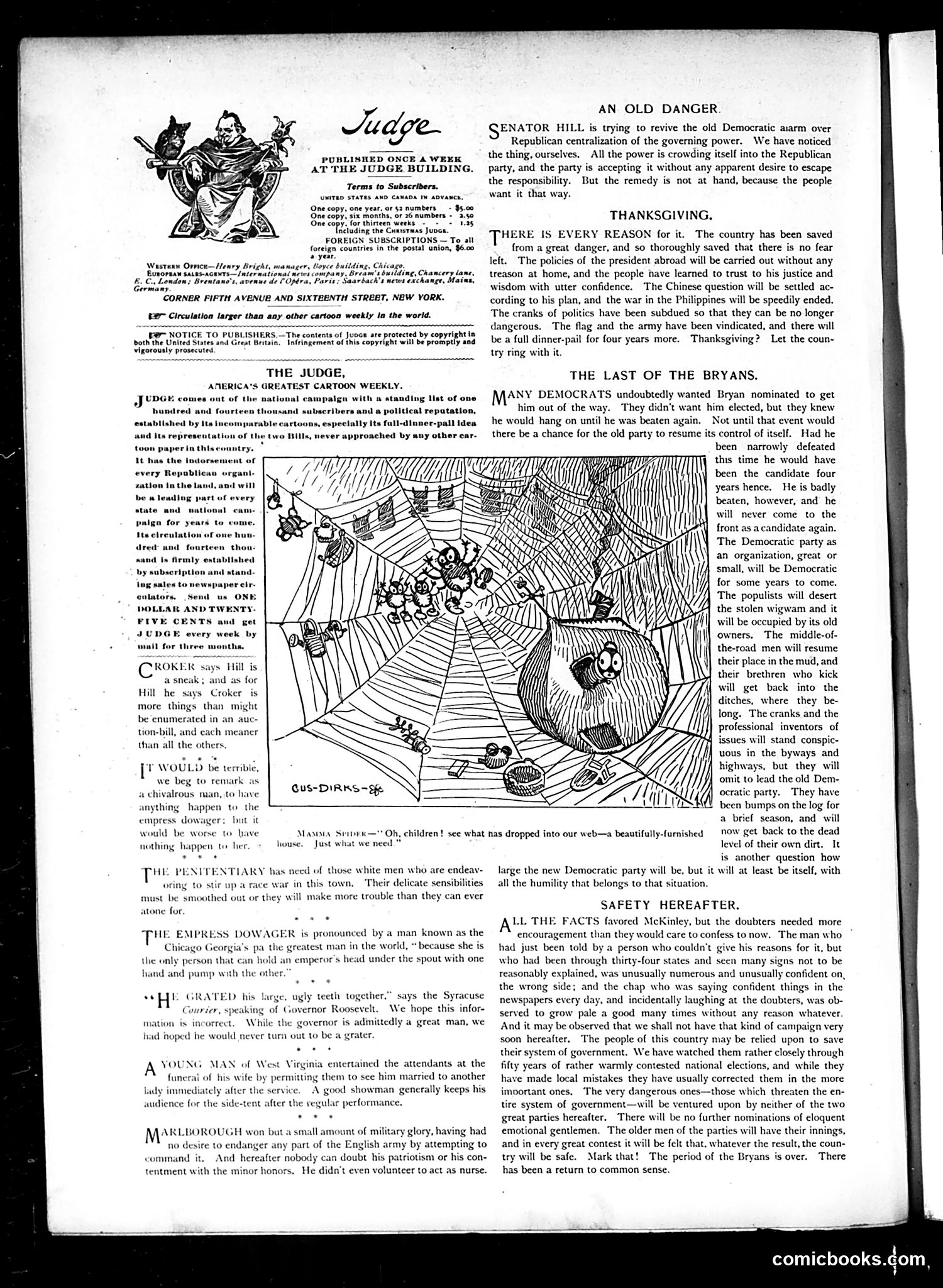
The main cartoon, titled "GUS-DIRKS," depicts figures trapped in a large spider web, with the caption quoting "Mamma Spider": "Oh, children! see what has dropped into our web—a beautifully-furnished house. Just what we need." This appears to be satirizing the Democratic Party's predicament following William Jennings Bryan's defeat. The text "The Last of the Bryans" discusses how Bryan's loss has left the Democratic party weakened and vulnerable—trapped like insects in a predator's web. The "spider" likely represents Republican political dominance or the new Republican administration. The satire suggests Democrats have become helpless prey to Republican power consolidation, presenting their political situation as inescapable decline rather than temporary setback.
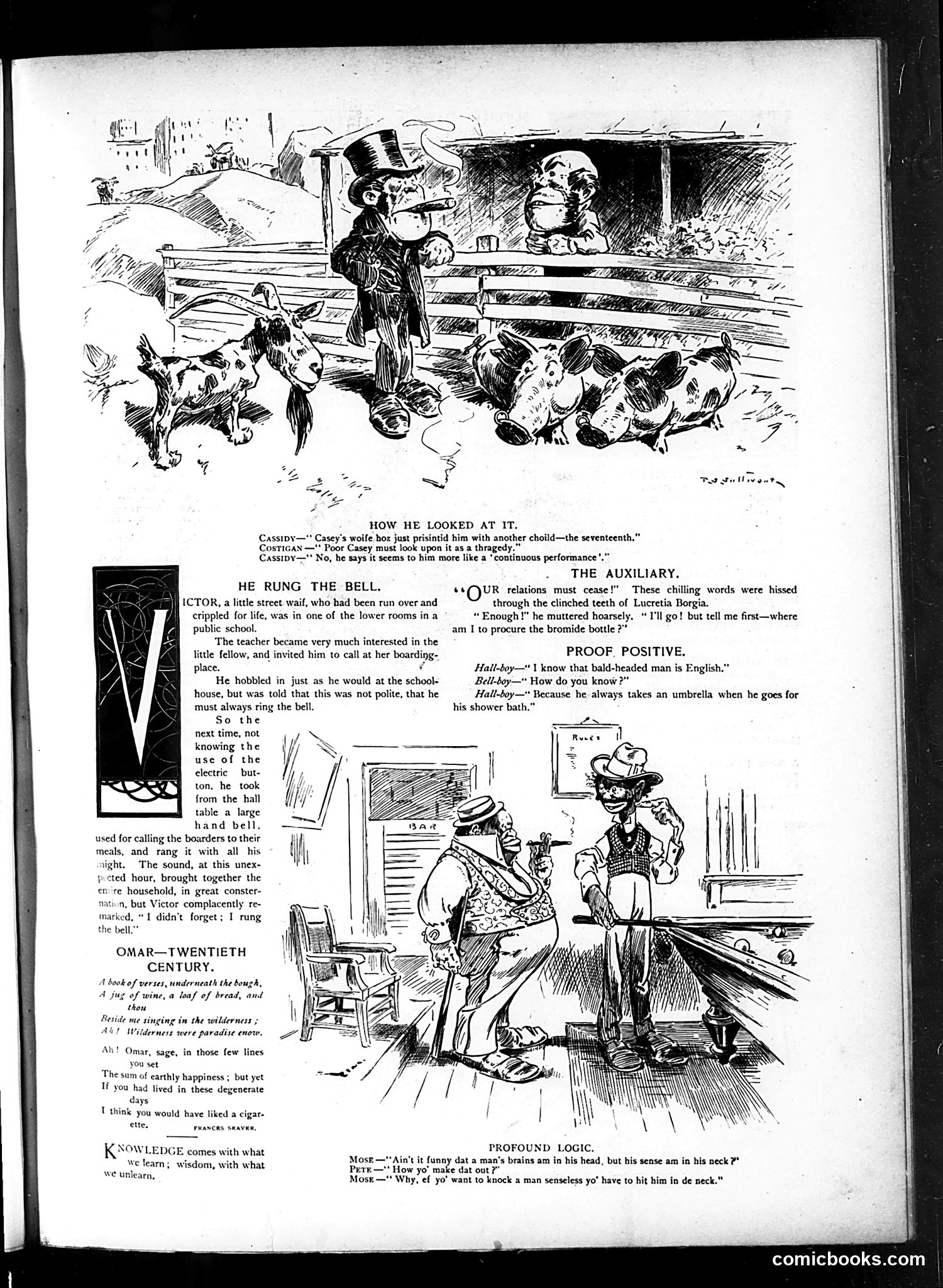
This page contains multiple humor pieces rather than political cartoons. **"How He Looked At It"** (top): Shows a man with a top hat observing Casey's wife with a child—the seventeenth. The joke plays on different interpretations of the situation: Cassidy sees it as a tragedy, but Casey views it as a "continuous performance," suggesting working-class Catholic families' reputation for having many children. **"He Rung The Bell"** and other pieces are brief anecdotal jokes about domestic life and social situations. **"Proof Positive"** and **"Profound Logic"** are quick-hit joke formats typical of Judge's humor. The page reflects turn-of-the-century American satire targeting class stereotypes, family life, and everyday absurdities, rather than specific political events.
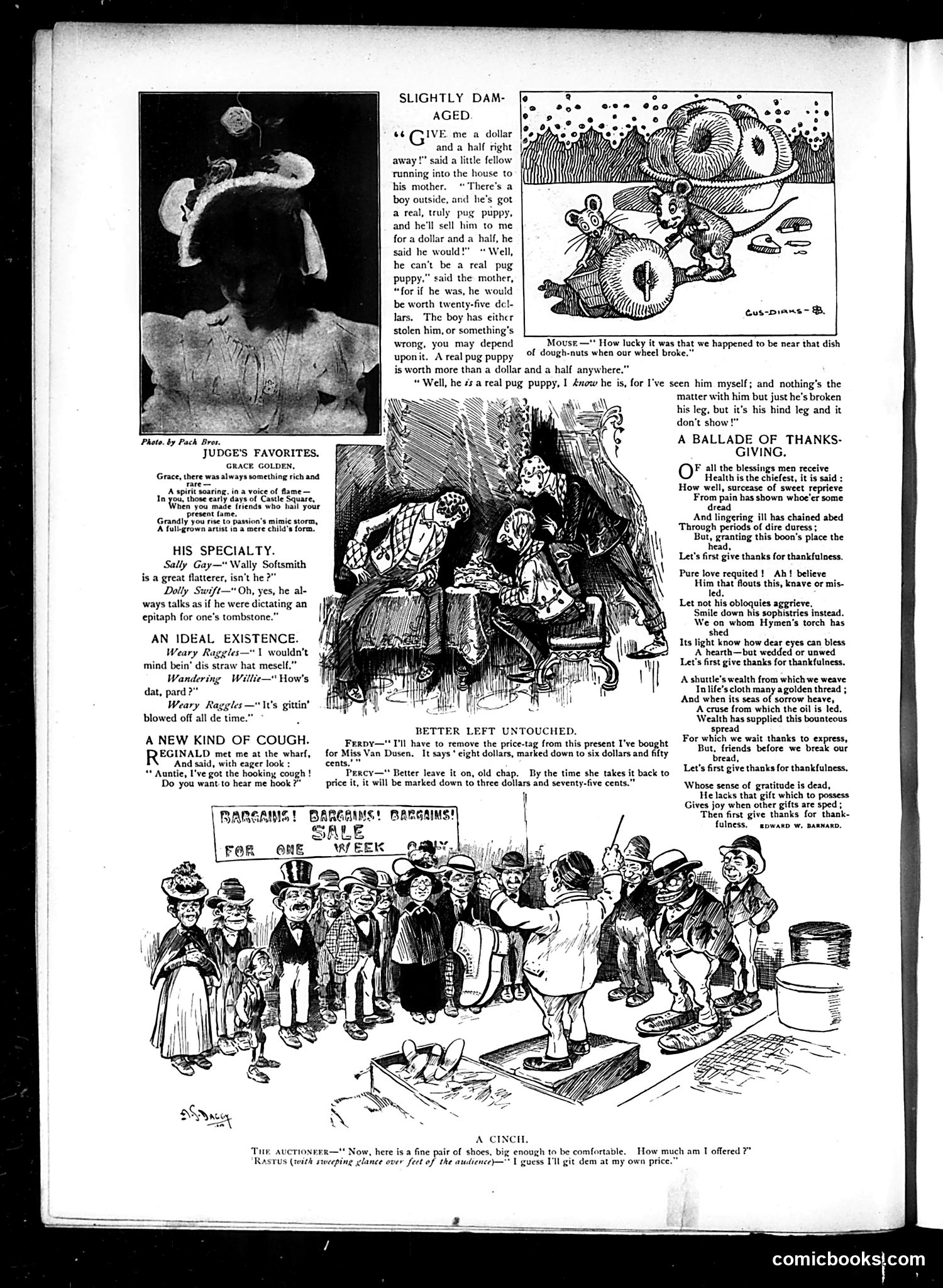
This page contains several distinct pieces: **"Slightly Damaged"** (top left): A humorous anecdote about a boy selling a "real, truly pug puppy" for a dollar and a half, though it's actually a broken-legged dog. The joke plays on exaggerated sales claims and buyer gullibility. **"A Ballad of Thanksgiving"** (right): A sentimental poem about gratitude, listing blessings like health and love. **"A Cincil" (bottom)**: A cartoon depicting an auction scene with a crowd of working-class people. An auctioneer hawks shoes as a bargain sale. The humor appears to mock both aggressive sales tactics and public eagerness for deals, with the caption suggesting negotiation over stated prices. The page blends humorous social commentary with sentiment typical of early 20th-century American satirical magazines.
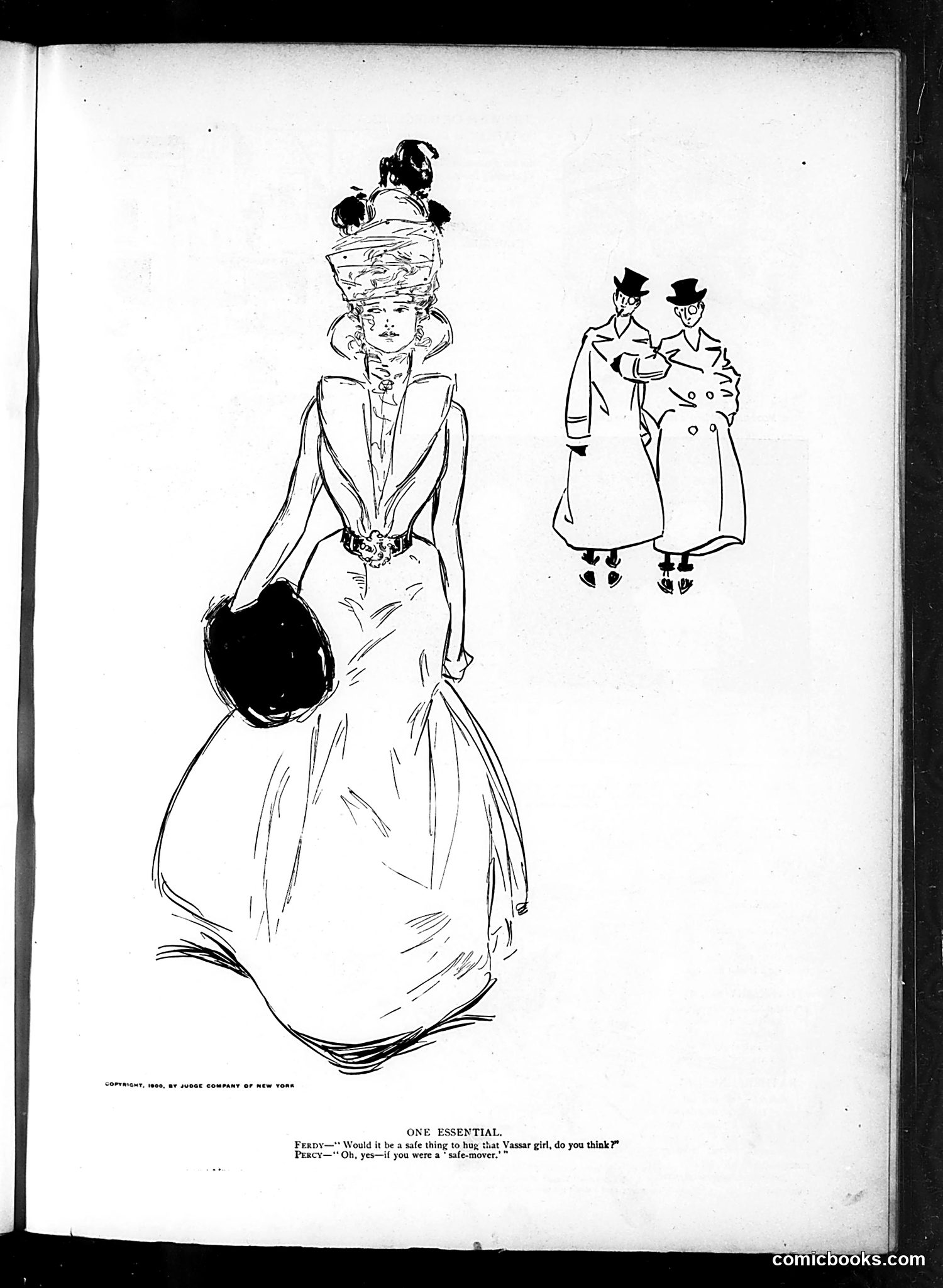
This cartoon satirizes upper-class social anxiety about hiring domestic servants. The caption reads: "Would it be a safe thing to hire that Vassar girl, do you think?" / "Oh, yes—if you were a 'safe-mover.'" The humor targets wealthy employers concerned about hiring educated women (specifically a Vassar College graduate—an elite women's institution) as household staff. The joke implies such educated women are unreliable servants unless the employer is a "safe-mover" (possibly meaning financially secure or careful). The cartoon reflects early 20th-century class tensions: college-educated women entering domestic service was considered unusual and potentially problematic for maintaining household hierarchy. The satire mocks employers' snobbish anxieties about social status and proper servant qualifications, while also poking fun at educated women's limited employment options.
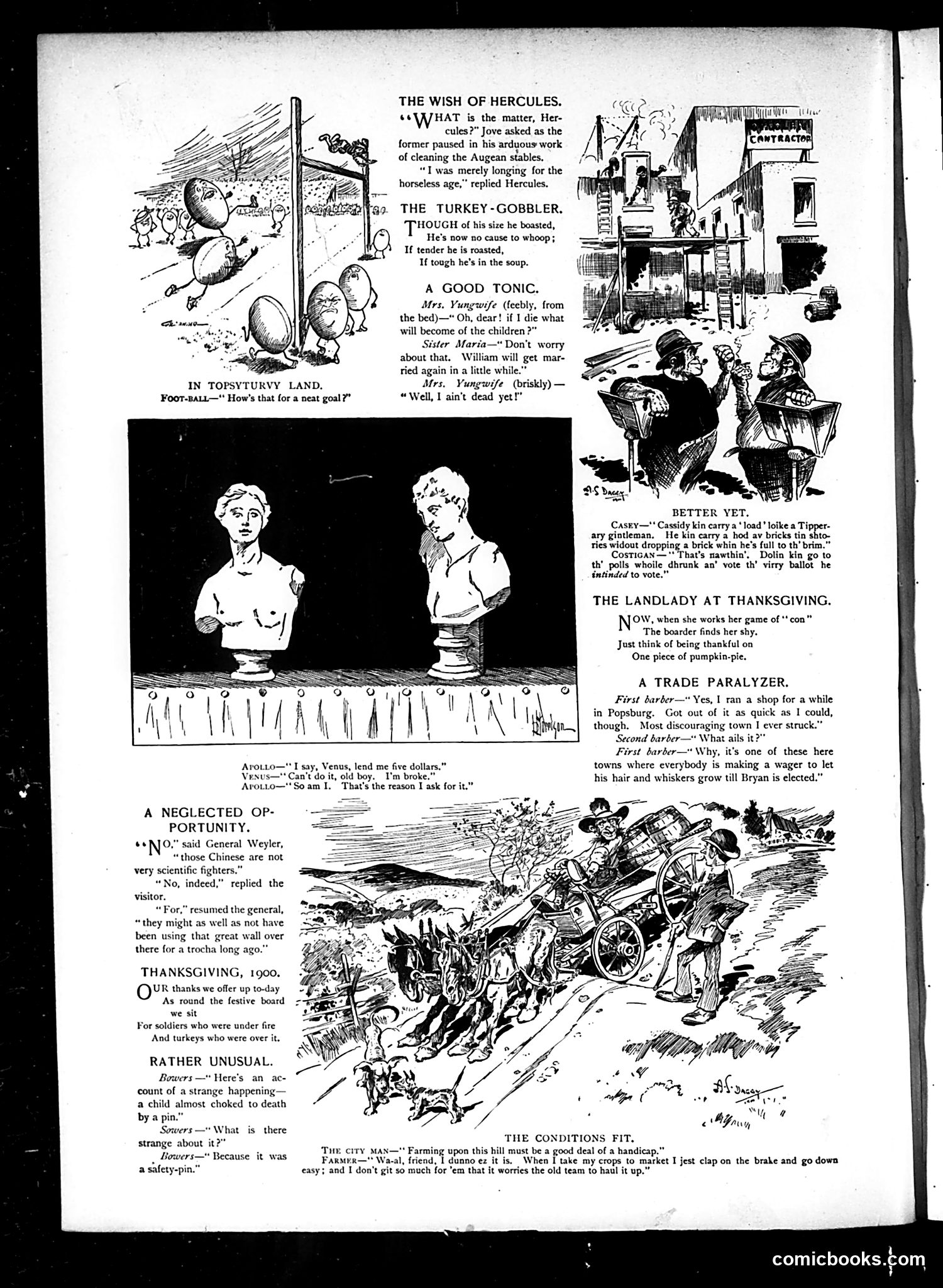
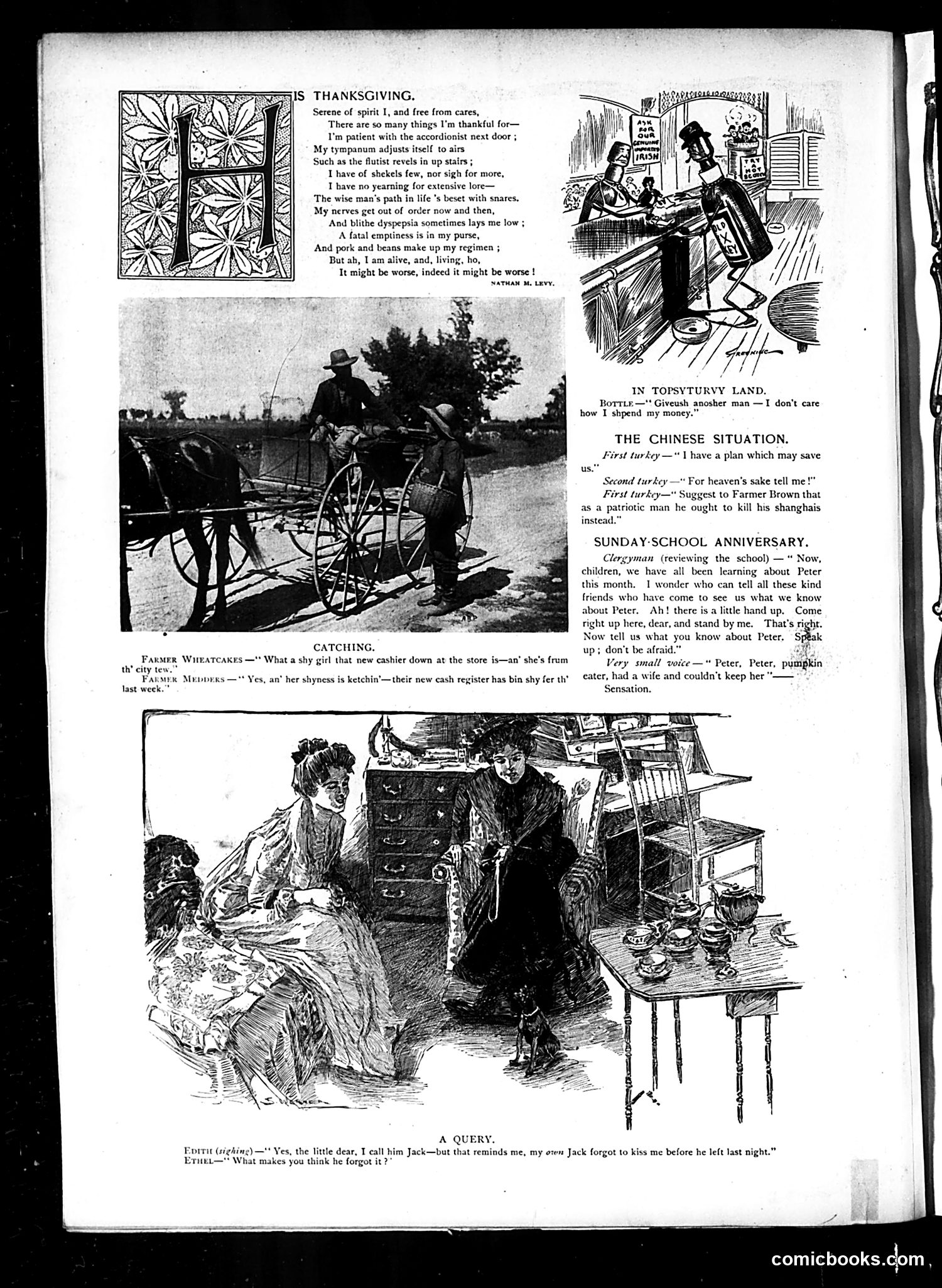
This page from Judge (circa 1900, based on the "Thanksgiving, 1900" reference) contains multiple brief satirical jokes and cartoons typical of the magazine's format. Key items include: **"The Wish of Hercules"**: A classical reference joke—Hercules, legendary for his labors, wishes for the "horseless age," satirizing contemporary obsession with automobiles. **Political content**: "A Trade Paralyzer" jokes about a town where people are wagering "till Bryan is elected"—referencing William Jennings Bryan's 1900 presidential campaign, suggesting his potential election would harm business. **"General Weyler" cartoon**: References the Spanish general fighting in Cuba (pre-1898 Spanish-American War context), satirizing military tactics. **Thanksgiving 1900**: Celebrates soldiers in the recent Spanish-American War and Philippine-American conflict alongside traditional holiday imagery. **Ethnic humor**: Several jokes employ Irish and working-class dialect ("gintleman," "polls whoile dhrunk"), typical of Judge's era but reflecting period prejudices. The page is primarily humor and social commentary rather than hard political satire, targeting contemporary figures, technology adoption, and political campaigns.
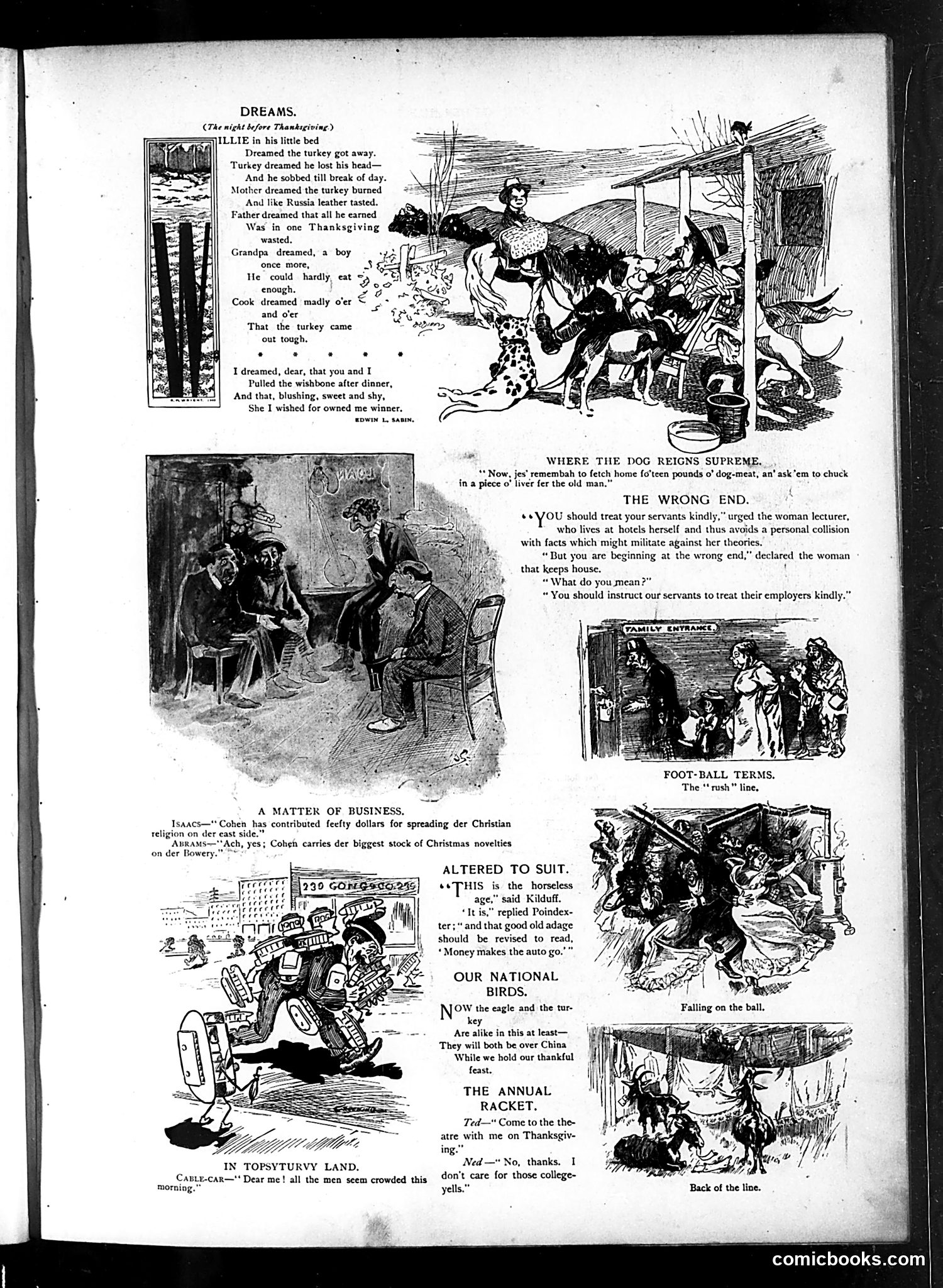
This Thanksgiving-themed page from Judge magazine contains multiple satirical sketches mocking contemporary American society: **"Dreams"** imagines various people's pre-Thanksgiving anxieties—the turkey escaping, burning, or turning tough; family financial worries. It's gentle domestic humor. **"Where the Dog Reigns Supreme"** uses dialect humor to mock racial stereotypes, depicting African Americans prioritizing dog meat over proper food—a crude, offensive caricature typical of the era. **"The Wrong End"** satirizes sanctimonious female lecturers advocating servant kindness while avoiding practical household experience. A housewife retorts that servants should treat *employers* kindly instead—flipping the reformer's logic. **"A Matter of Business"** mocks charitable pretense: a man donates to Christian missions while simply moving inventory from his novelty shop. **"Football Terms"** and other sketches offer mild wordplay and social observation about modern life and fads. The page reflects Judge's typical mix of class-conscious satire, ethnic humor (offensive by modern standards), and gentle mockery of hypocrisy among the educated elite.
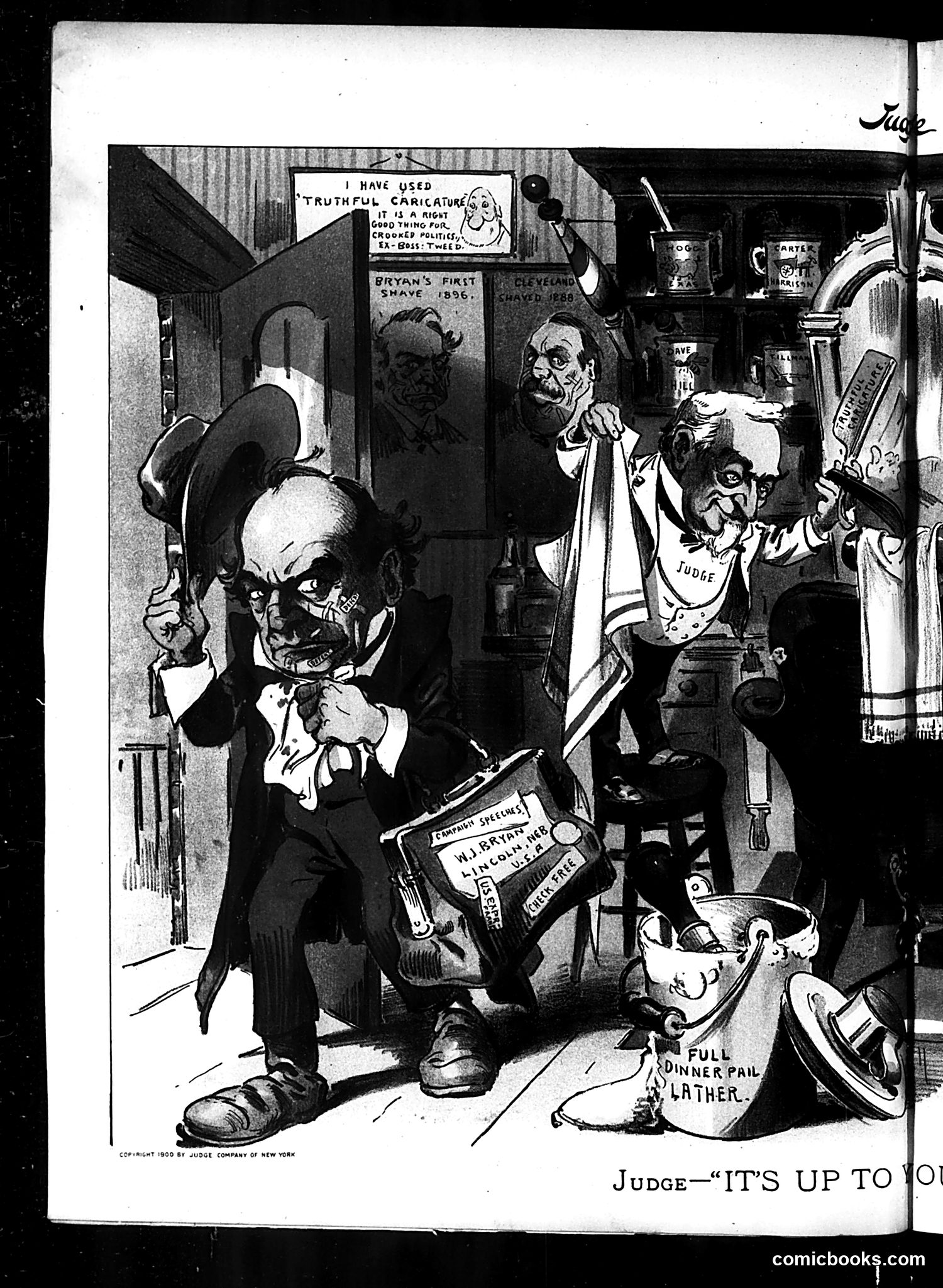
This Judge magazine cartoon satirizes William Jennings Bryan's 1896 presidential campaign. The central figure, depicted with exaggerated caricatured features, represents Bryan being "shaved" by Republican opponents—a metaphor for being defeated or stripped of power before even taking office. The barbershop setting, complete with various grooming implements labeled with political references, suggests Bryan is getting a harsh political trimming. The caricatured figures around him appear to be political rivals or establishment figures working against him. The "dinner pail" reference likely alludes to the Republican "full dinner pail" campaign slogan promising prosperity. This cartoon reflects the intense partisan mockery Bryan faced from Republican publications during his 1896 presidential challenge to William McKinley. The grotesque facial caricatures reflect the era's crude satirical style.
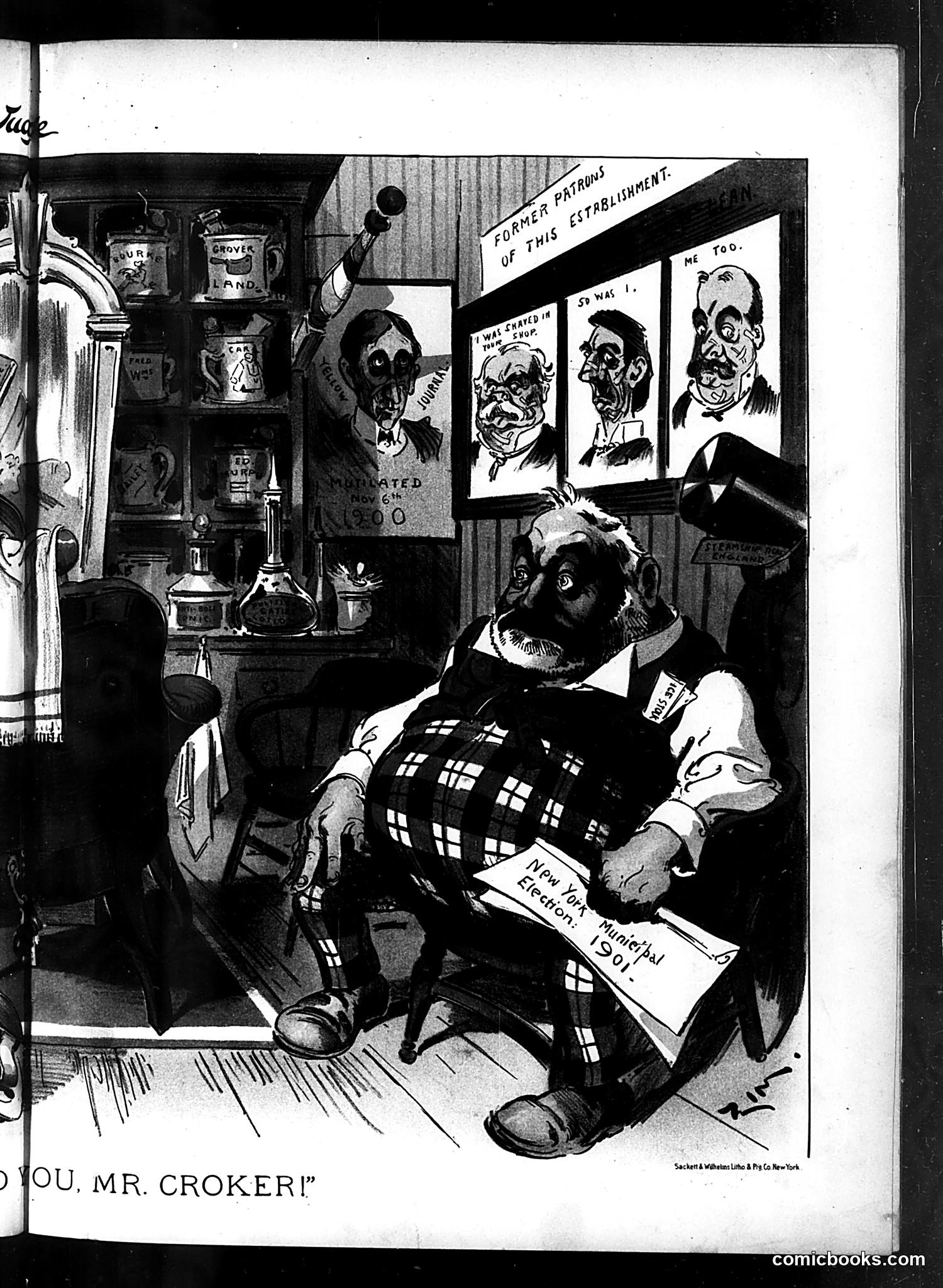
This Judge magazine cartoon satirizes someone identified as "Mr. Croker" (likely Richard Croker, Tammany Hall's political boss). The main figure sits in what appears to be a corrupt politician's office, surrounded by bottles and goods, reviewing "former patrons of this establishment" — three caricatured faces displayed above showing past political figures or associates. The satire targets political patronage and corruption: the office setup suggests a criminal enterprise or protection racket rather than legitimate governance. The "former patrons" display implies these previous associates have been discredited or removed. The cartoon mocks Croker's role in New York machine politics, suggesting his operation cynically cycles through corrupt officials and hangers-on. The title fragment "YOU, MR. CROKER!" indicates accusatory commentary on his continued political influence.
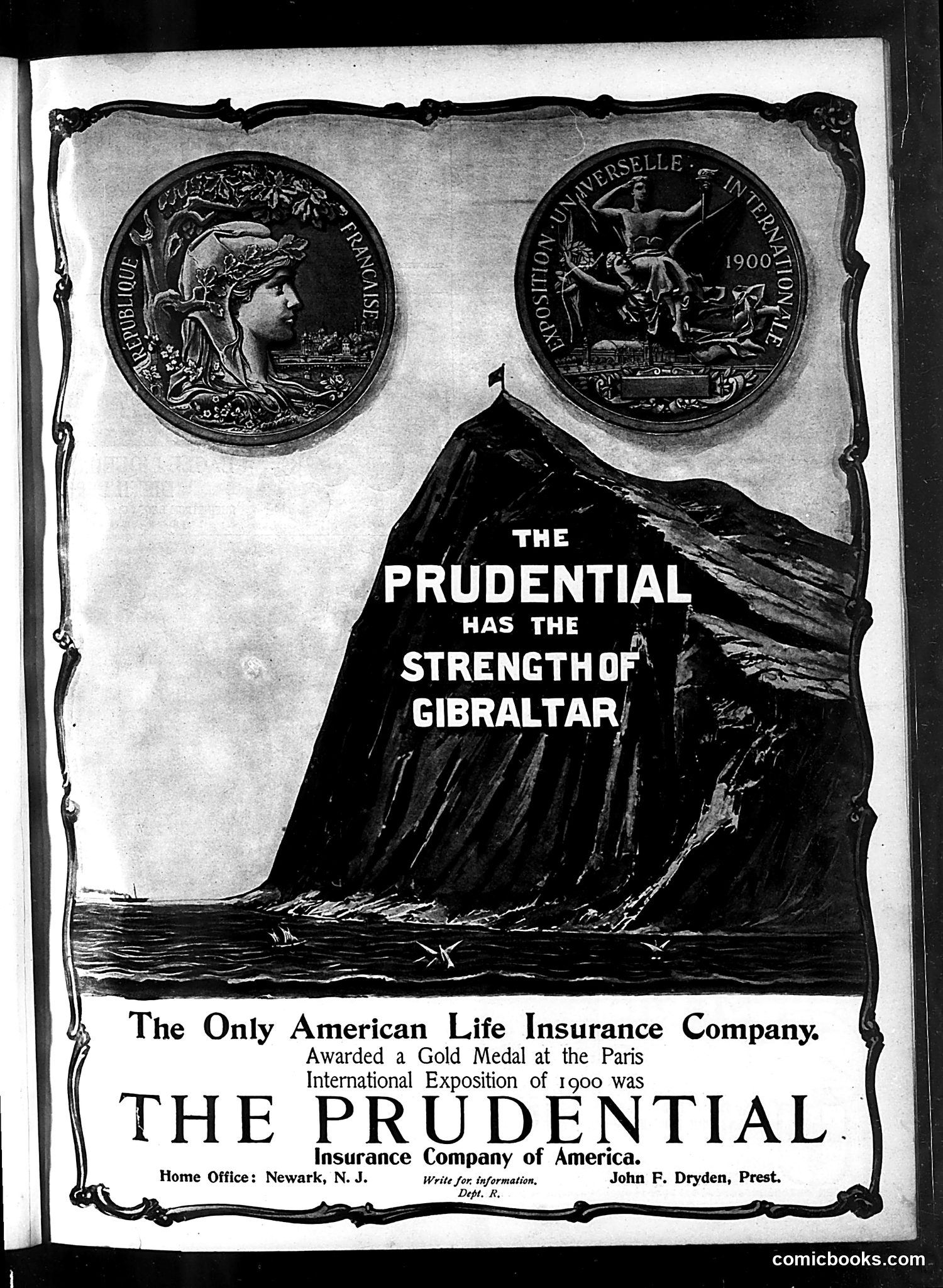
This is primarily an **advertisement**, not political satire. The Prudential Insurance Company is marketing itself by claiming to be "the only American life insurance company" awarded a gold medal at the 1900 Paris International Exposition. The visual metaphor uses **Gibraltar**—the famous rock fortress—to represent strength and stability. Two medals appear at the top (likely depicting the award), while the dramatic image of the Rock of Gibraltar dominates the composition, implying Prudential's unshakeable financial security. The tagline "The Prudential has the strength of Gibraltar" is an advertising slogan emphasizing reliability to potential customers. This appears designed to reassure early 20th-century Americans about entrusting their life insurance to this company.
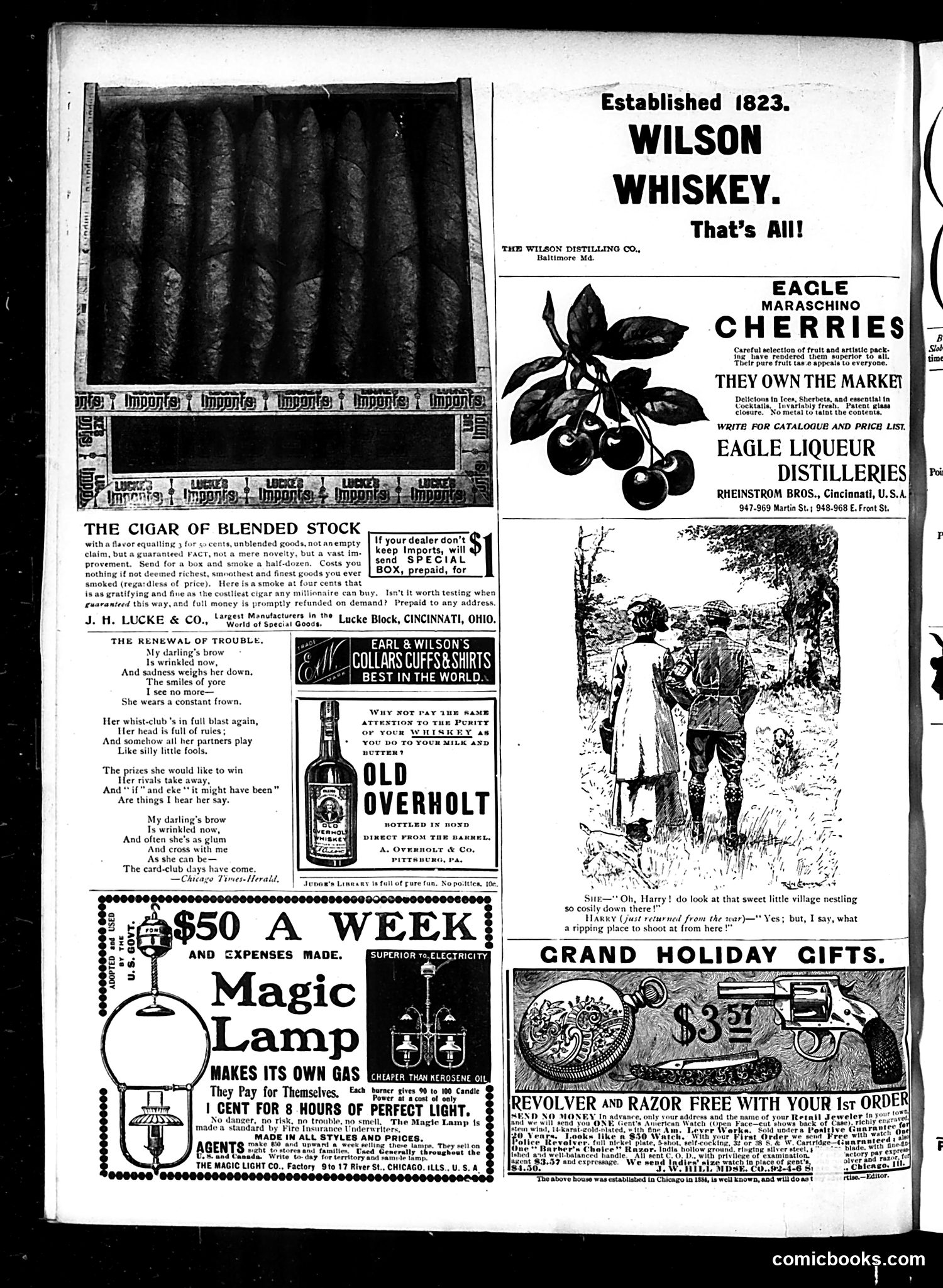
This is primarily an **advertising page** from Judge magazine, not a satirical cartoon spread. The page contains multiple product advertisements typical of early 1900s publications. Notable content includes: **Advertisements**: Wilson Whiskey, Eagle Maraschino Cherries and Liqueur, J.H. Lucke cigars, Earl & Wilson collars/cuffs, Old Overholt whiskey, Magic Lamp (gas generator), and a "Grand Holiday Gifts" promotion offering a revolver and razor. **Prose/Poetry Section**: "The Renewal of Trouble" depicts a domestic situation where a wife's whist card club activities cause marital tension—a light social commentary on women's social clubs and their impact on home life. **Single Cartoon**: A brief exchange between Harry and his companion returning from war (likely WWI), where Harry makes a dark joke about a peaceful village being ideal for shooting practice—satirizing a soldier's desensitization to violence. The page reflects period attitudes toward alcohol, gender roles, and post-war psychology, but mostly serves commercial rather than satirical purposes.
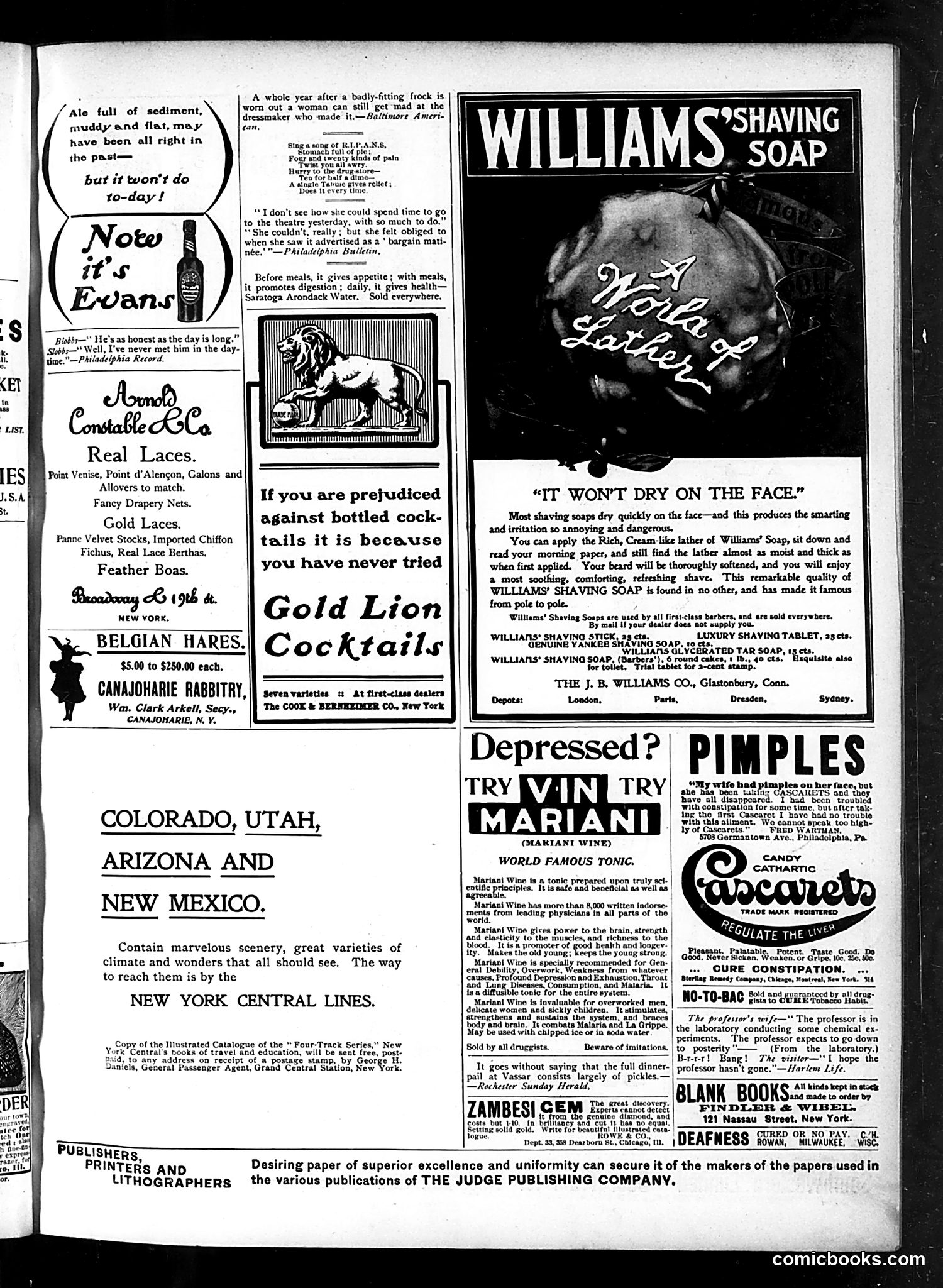
This is primarily an **advertising page** from Judge magazine, not a political cartoon. The dominant content consists of period advertisements (circa 1910s-1920s based on styling) for various products: Williams' Shaving Soap, Mariani Wine (marketed as a tonic for depression and various ailments), Cascarets laxative, and other remedies. The top-left contains a brief **humorous dialogue** about using Evans products for digestive issues—typical of the era's advertising humor. The bottom includes a travel advertisement for the **New York Central Lines** promoting tourism to Colorado, Utah, Arizona, and New Mexico. The page reflects early 20th-century advertising practices: medicinal tonics marketed for broad health claims, patent remedies, and commercial railroad promotion. There is **no significant political satire** on this particular page.
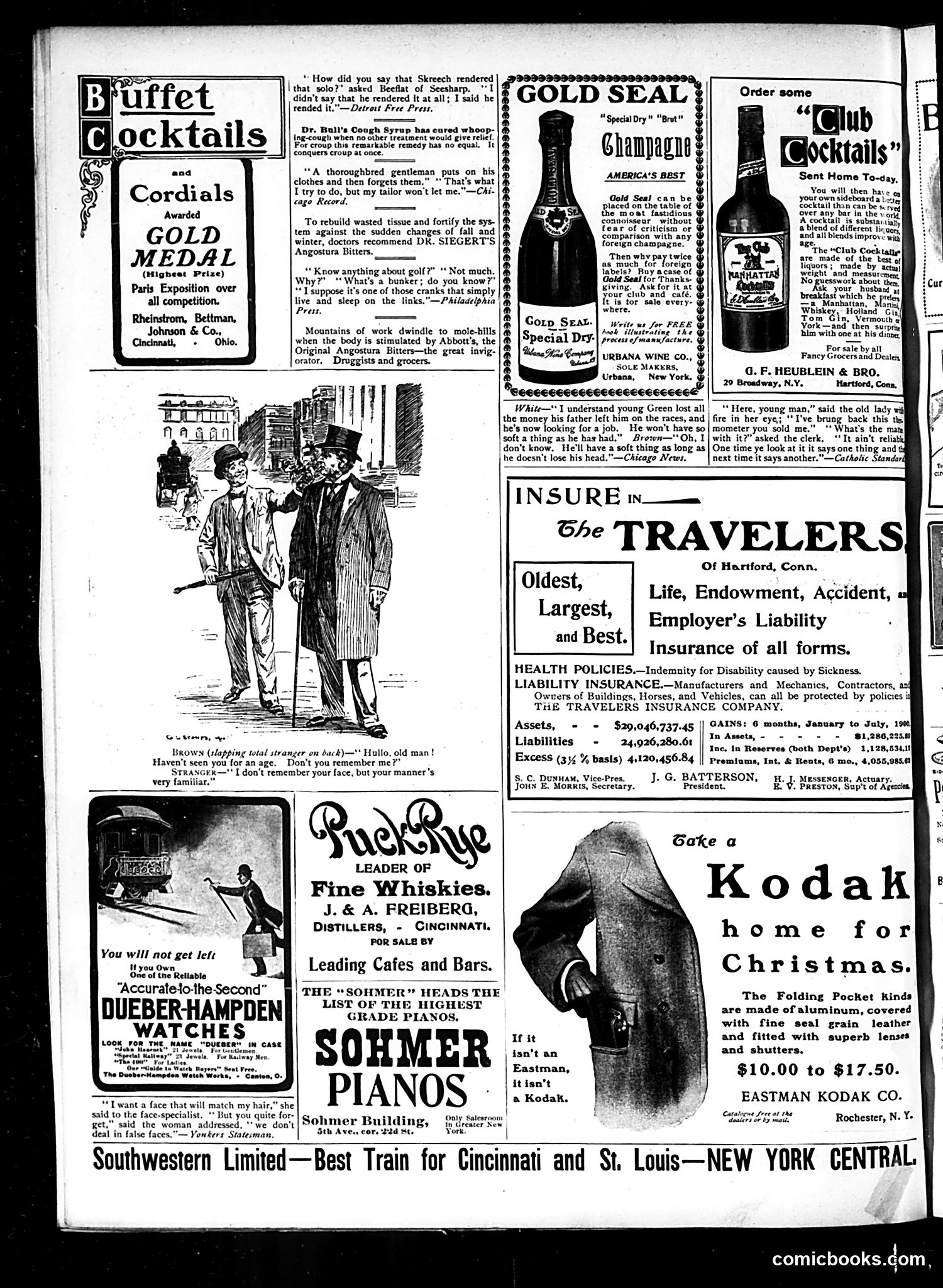
This page is primarily **advertisements and brief humor spots** rather than political satire. The content includes: **Advertisements:** For liquor (Gold Seal Champagne, Buck Rye whiskey, Dr. Bull's Cough Syrup, Abbott's Bitters), pianos (Sohmer), photography (Dueber-Hampden), Kodak cameras, insurance (The Travelers), and cocktail delivery services. **Humor Spots:** Short jokes emphasizing wordplay and social observation—a musician who "rended" (tore apart) rather than "rendered" a solo; a golfer confused about what a "bunker" is; a man whose familiar manner betrays him despite being forgotten; a thermometer that gives inconsistent readings. The jokes reflect **turn-of-century middle-class concerns**: etiquette, golf as a fashionable pursuit, personal hygiene, and consumer goods. The cartoon illustration shows a stranger reunion, satirizing the awkwardness of forgotten acquaintances relying on familiar mannerisms. There is **no overt political content**—this appears to be a typical Judge issue mixing commercial advertisements with lightweight social humor.
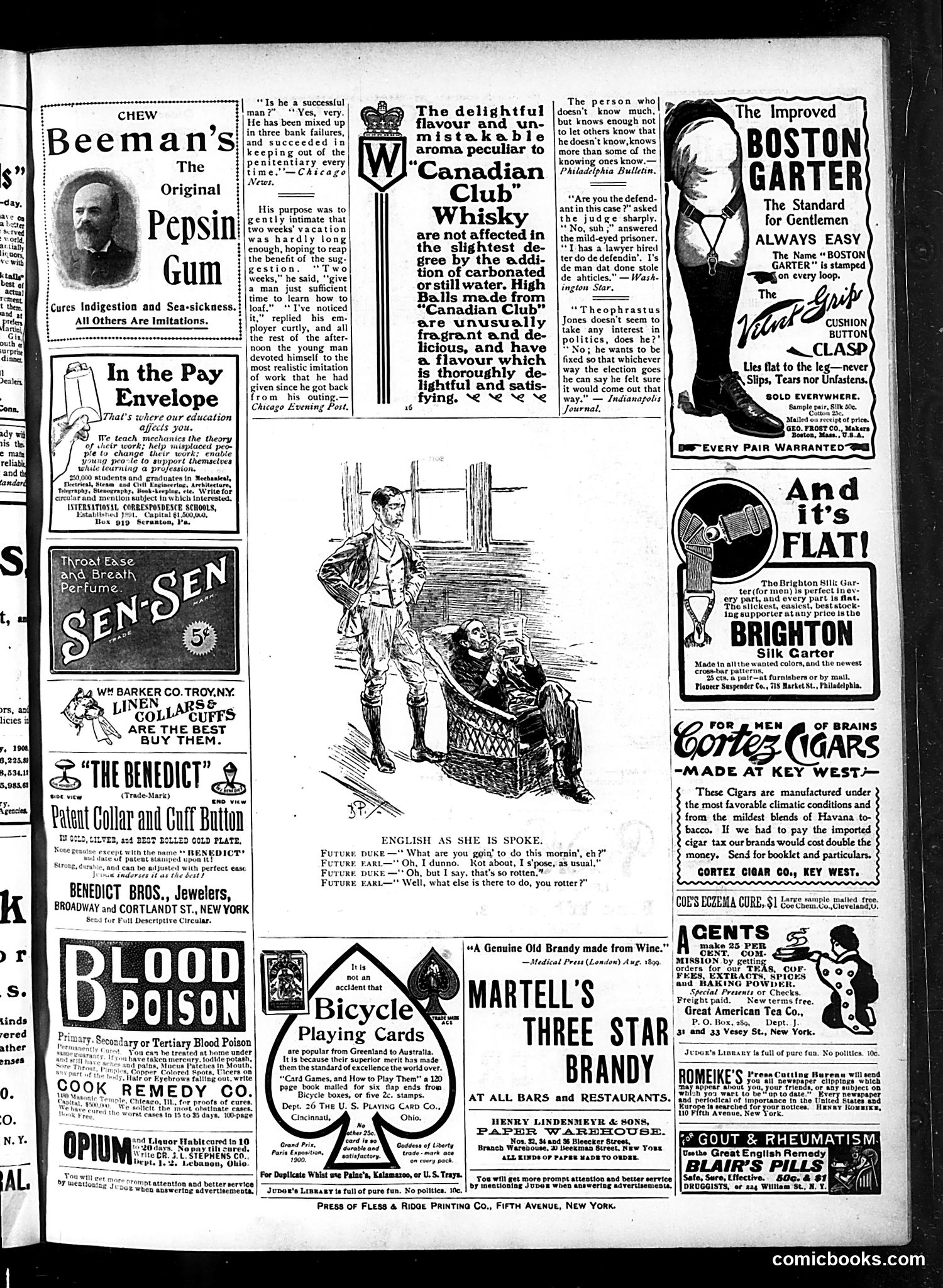
This page is primarily **advertising**, typical of early 20th-century magazine layout. However, it contains one notable cartoon titled "ENGLISH AS SHE IS SPOKE" depicting a class dialogue between a "Future Duke" and "Future Earl." ## The Cartoon's Meaning The sketch satirizes **upper-class British speech affectations and pretension**. The "Future Duke" speaks in exaggerated, affected English ("goin'," "s'pose," "rotten"), while the "Future Earl" responds with similarly poor grammar ("Vell, what else is there to do, you rotter?"). The joke appears to mock the idea that British nobility—despite their social position—speak poorly and without refinement, contradicting the stereotype of aristocratic sophistication. It's a class-based satire suggesting that breeding doesn't guarantee proper English. The remainder of the page consists of period advertisements for patent medicines (blood tonics, eczema cures, opium remedies), grooming products, and luxury goods—typical Judge content reflecting early 1900s consumer culture and dubious medical claims.
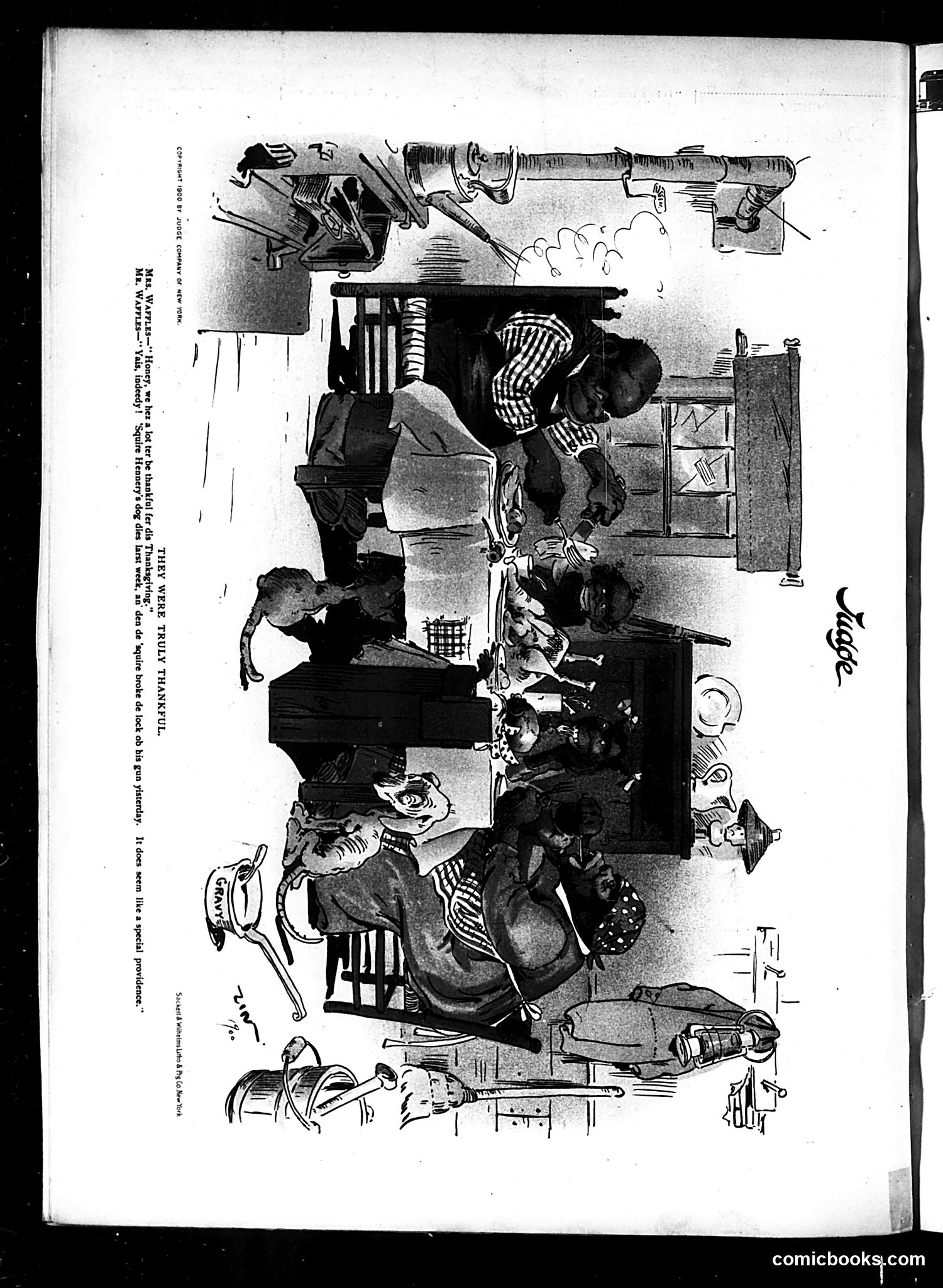
This is a racist caricature depicting African American characters ("Mrs. Waffles" and "Mr. Waffles") expressing gratitude for two events: the death of their white employer's dog and the employer breaking his gun lock. The "joke" relies on a deeply offensive stereotype—that formerly enslaved or marginalized Black people would be thankful for circumstances that incapacitate their white "master's" ability to harm them. The dialect and names reinforce dehumanizing portrayals common in late 19th/early 20th-century American humor. The "special providence" reference invokes religious language mockingly. This reflects Judge magazine's casual racism, where such caricatures were considered acceptable satire. Modern readers should understand this as evidence of systemic prejudice normalized in mainstream American publications.