
Pulp Fiction, 1920 · page 71 of 132
The Black Mask — page 71: what you’re looking at
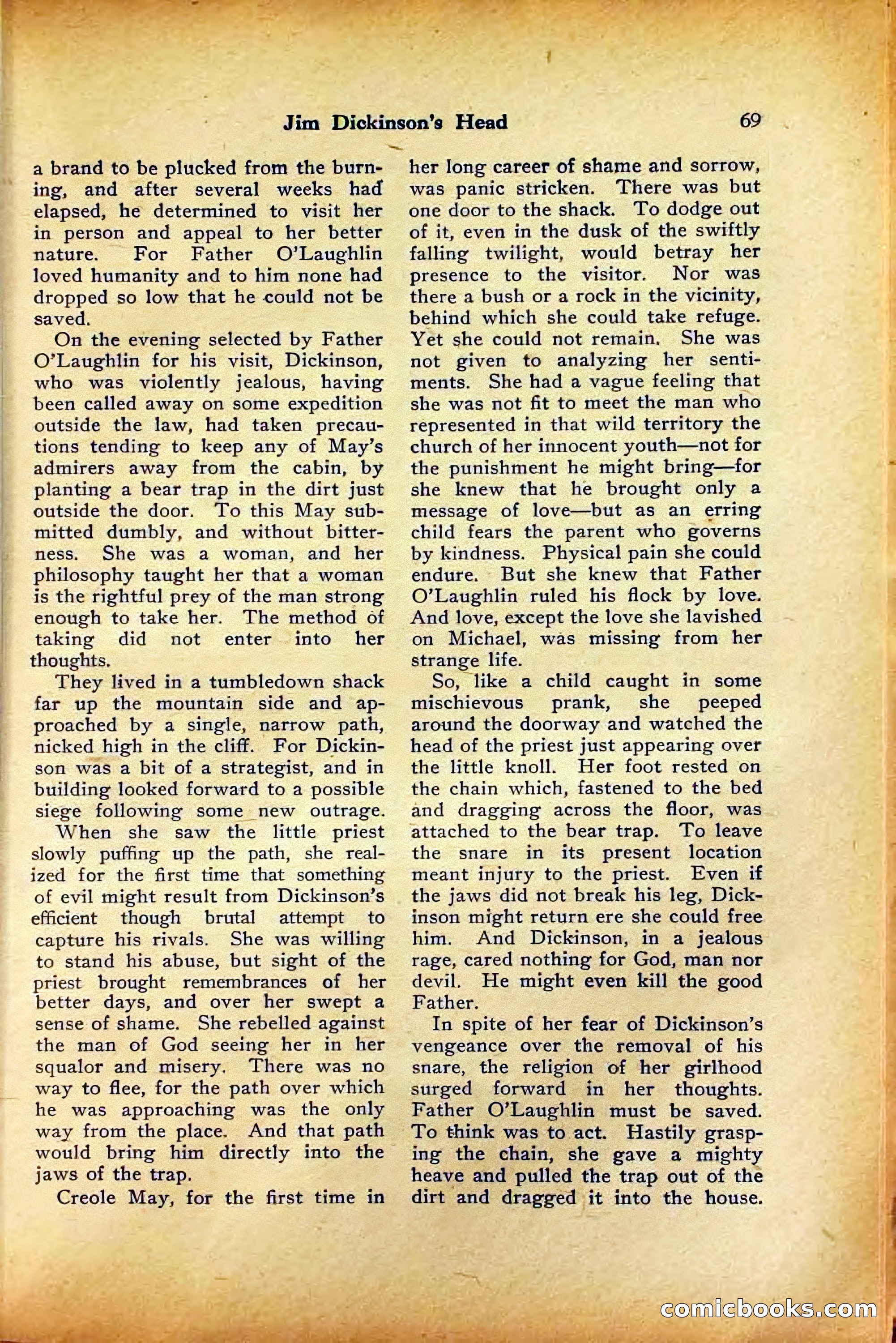
A restored page from Pulp Fiction, 1920. Page through the whole issue in the reader above.
📄 Transcribed text from this page (OCR, searchable)
Machine-transcribed from the original scan — historical spelling and the odd misread are preserved.
Jim Dickinson’s Head 69 a brand to be plucked from the burn- ing, and after several weeks had elapsed, he determined to visit her in person and appeal to her better nature. For Father O’Laughlin loved humanity and to him none had dropped so low that he could not be saved. On the evening selected by Father O’Laughlin for his visit, Dickinson, who was violently jealous, having been called away on some expedition outside the law, had taken precau- tions tending to keep any of May’s admirers away from the cabin, by planting a bear trap in the dirt just outside the door. To this May sub- mitted dumbly, and without bitter- ness. She was a woman, and her philosophy taught her that a woman is the rightful prey of the man strong enough to take her. The method of taking did not enter into her thoughts, They lived in a tumbledown shack far up the mountain side and ap- proached by a single, narrow path, nicked high in the cliff. For Dickin- son was a bit of a strategist, and in building looked forward to a possible siege following some new outrage. When she saw the little priest slowly puffing up the path, she real- ized for the first time that something of evil might result from Dickinson’s efficient though brutal attempt to capture his rivals. She was willing to stand his abuse, but sight of the priest brought remembrances of her better days, and over her swept a sense of shame. She rebelled against the man of God seeing her in her squalor and misery, There was no way to flee, for the path over which he was approaching was the only way from the place. And that path — would bring him directly into the jaws of the trap. Creole May, for the first time in her Jong career of shame and sorrow, was panic stricken. There was but one door to the shack. To dodge out of it, even in the dusk of the swiftly falling twilight, would betray her presence to the visitor. Nor was there a bush or a rock in the vicinity, behind which she could take refuge. Yet she could not remain. She was not given to analyzing her senti- ments. She had a vague feeling that she was not fit to meet the man who represented in that wild territory the church of her innocent youth—not for the punishment he might bring—for she knew that he brought only a message of love—but as an erring child fears the parent who governs by kindness. Physical pain she could endure. But she knew that Father O’Laughlin ruled his flock by love. And love, except the love she lavished on Michael, was missing from her strange life. So, like a child caught in some mischievous prank, she peeped around the doorway and watched the head of the priest just appearing over the little knoll. Her foot rested on the chain which, fastened to the bed and dragging across the floor, was attached to the bear trap. To leave the snare in its present location meant injury to the priest. Even if the jaws did not break his leg, Dick- inson might return ere she could free him. And Dickinson, in a jealous rage, cared nothing for God, man nor devil. He might even kill the good Father. In spite of her fear of Dickinson’s vengeance over the removal of his snare, the religion of her girlhood surged forward in her thoughts. Father O’Laughlin must be saved. To think was to act. Hastily grasp- ing the chain, she gave a might heave and pulled the trap out of the dirt and dragged it into the house.