
Pulp Fiction, 1920 · page 7 of 132
The Black Mask — page 7: what you’re looking at
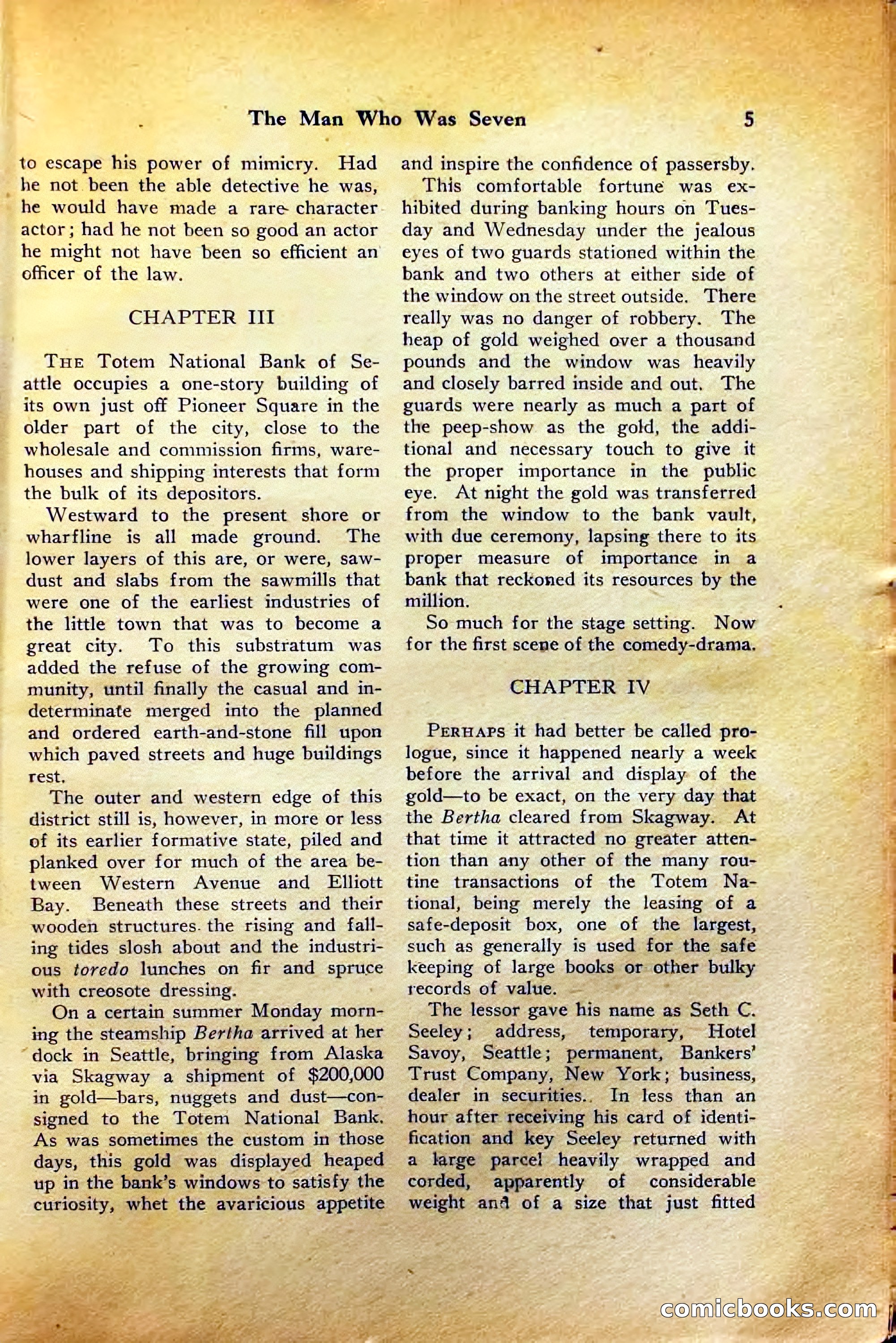
A restored page from Pulp Fiction, 1920. Page through the whole issue in the reader above.
📄 Transcribed text from this page (OCR, searchable)
Machine-transcribed from the original scan — historical spelling and the odd misread are preserved.
~ a - The Man Who Was Seven _ to escape his power of mimicry. Had _ he not been the able detective he was, ‘ he would have made a rare character actor; had he not been so good an actor he might not have been so efficient an’ officer of the law. CHAPTER III Tue Totem National Bank of Se- attle occupies a one-story building of its own just off Pioneer Square in the older part of the city, close to the wholesale and commission firms, wate- houses and shipping interests that form the bulk of its depositors. Westward to the present shore or wharfline is all made ground. The lower layers of this are, or were, saw- dust and slabs from the sawmills that were one of the earliest industries of the little town that was to become a great city. To this substratum was added the refuse of the growing com- munity, until finally the casual and in- determinate merged into the planned and ordered earth-and-stone fill upon which paved streets and huge buildings rest, The outer and western edge of this district still is, however, in more or less of its earlier formative state, piled and planked over for much of the area be- tween Western Avenue and Elliott Bay. Beneath these streets and their wooden structures. the rising and fall- ing tides slosh about and the industri- ous toredo lunches on fir and spois with creosote dressing. On a certain summer Monday morn- ing the steamship Bertha arrived at her “dock in Seattle, bringing from Alaska via Skagway a shipment of $200,000 in gold—bars, nuggets and dust—con- otem National Banke he and inspire the confidence of passersby. This comfortable fortune was ex- hibited during banking hours on Tues- day and Wednesday under the jealous eyes of two guards stationed within the bank and two others at either side of the window on the street outside. There really was no danger of robbery. The heap of gold weighed over a thousand pounds and the window was heavily and closely barred inside and out. The guards were nearly as much a part of the peep-show as the gold, the addi- tional and necessary touch to give it the proper importance in the public eye. At night the gold was transferred from the window to the bank vault, with due ceremony, lapsing there to its proper measure of importance in a bank that reckoned its resources by the million. So much for the stage setting. Now for the first scene of the comedy-drama. str,” CHAPTERIV. Preruaprs it had better be called pro- logue, since it happened nearly a week before the arrival and display of the gold—to be exact, on the very day that the Bertha cleared from Skagway. At that time it attracted no greater atten- tion than any other of the many rou- tine transactions of the Totem Na- tional, being merely the leasing of a safe-deposit box, one of the largest, such as generally is used for the safe keeping of large books | ) or other bulky records of value. — The lessor gave his name as Seth C. Seeley; address, temporary, Hotel Savoy, Seattle; ent, Bankers’ ork; business, avily wrapped and of considerable