
Pulp Fiction, 1884 · page 79 of 100
Beadle's New Dime Novels: The Specter Chief — page 79: what you’re looking at
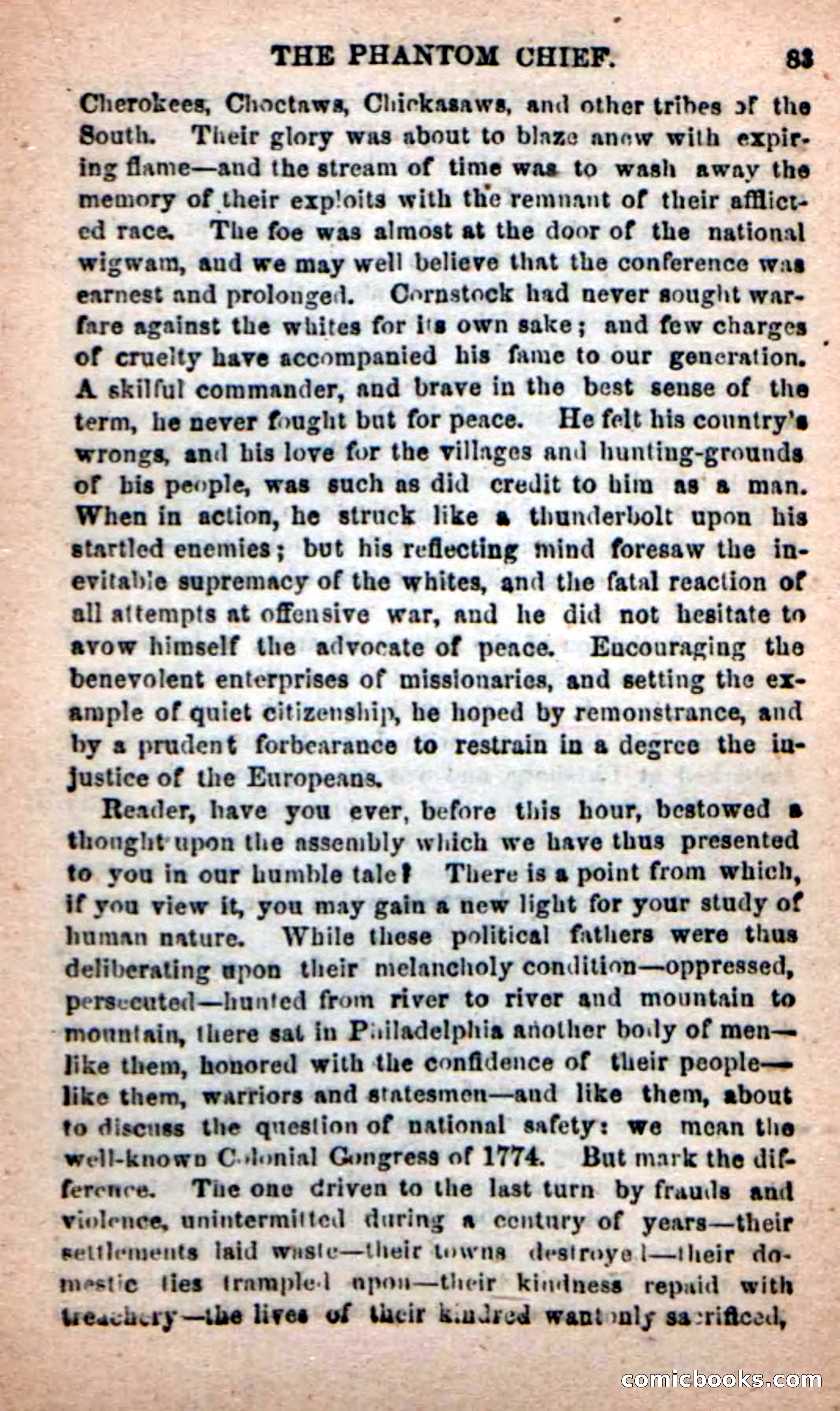
A restored page from Pulp Fiction, 1884. Page through the whole issue in the reader above.
📄 Transcribed text from this page (OCR, searchable)
Machine-transcribed from the original scan — historical spelling and the odd misread are preserved.
THE PHANTOM CHIEF. 83 Cherokees, Choctaws, Chickasaws, and other tribes of the South. Their glory was about to blaze anew with expir- ing flame—and the stream of time was to wash away the memory of their exp!oits with the remnant of their afflict ed race. The foe was almost at the door of the national wigwam, and we may well believe that the conference was earnest and prolonged. Oernstock had never sought war- fare against the whites for its own sake; and few charges — of cruelty have accompanied his fame to our gencration, A skilful commander, and brave in the best sense of the term, he never fought but for peace. He felt his country’s wrongs, and his love for the villages and hunting-grounds of bis people, was such as did credit to him as a man. When in action, he struck like a thunderbolt upon his startled enemies; but his reflecting mind foresaw the in- evitabie supremacy of the whites, and the fatal reaction of all attempts at offensive war, and he did not hesitate to avow himself the advocate of peace. Encouraging the benevolent enterprises of missionaries, and setting the ex- ample of quiet citizenship, he hoped by remonstrance, and by a prudent forbearance to restrain in a degree the iu- justice of the Europeans, Reader, have you ever, before this hour, bestowed s thonght upon the assembly which we have thus presented to you in our humble tale? There is a point from which, if you view it, you may gain a new light for your study of human nature. While these political fathers were thus deliberating upon their melancholy condition—oppressed, perseeuted—hunted from river to river and mountain to -mountain, there sat in Piiladelphia another body of men— like them, honored with the confidence of their people like them, wartiors and statesmen—and like them, about to discuss the question of national safety: we mean the well-known C.lonial Gongress of 1774. But mark the dif- ference. The one Criven to the last turn by frauds and violence, unintermitted during a ccntury of years—their settlements laid waste—their towns destroye |—their da- mestic ties trample] apou—their kindness repaid with Wweachcry —the lives of thcir kiudved wantonly sacrificed, EComicbooks:¢om >