
Pulp Fiction, 1884 · page 71 of 100
Beadle's New Dime Novels: The Specter Chief — page 71: what you’re looking at
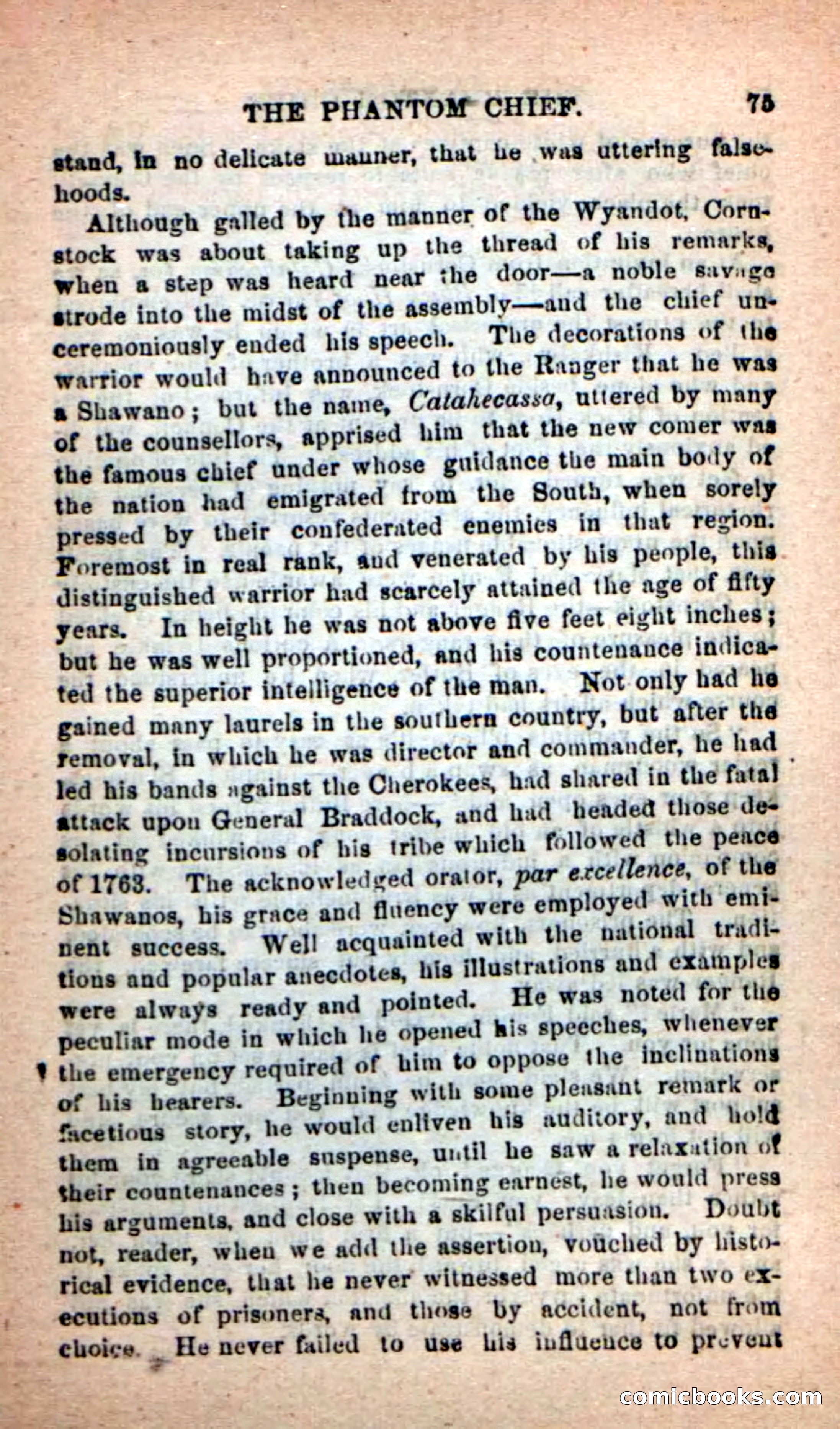
A restored page from Pulp Fiction, 1884. Page through the whole issue in the reader above.
📄 Transcribed text from this page (OCR, searchable)
Machine-transcribed from the original scan — historical spelling and the odd misread are preserved.
e ~ /._ = -> - > mx - — > “ — 4 = a cael a a : <= > THE PHANTOM CHIEF. 75 stand, In no delicate wauner, that be was uttering false- hoods. Although galled by fhe manner of the Wyandot, Corn- stock was about taking up the thread of his remarks, when a step was heard near the door—a noble savage strode into the midst of the assembly—and the chief un-+ ceremoniously ended his speech. The decorations of the warrior would have announced to the Ranger that he was a Shawano; but the name, Catahecassa, uttered by many of the counsellors, apprised him that the new comer was the famous chief under whose guidance the main body of the nation had emigrated from the South, when sorely pressed by their confederated enemies in that region. Foremost in real rank, and venerated by his people, this. distinguished warrior had scarcely attained the age of fifty years. In height he was not above five feet eight inches; but he was well proportioned, and his countenance indica- ted the superior intelligence of the man. Not only had he gained many laurels in the southern country, but after the - Yemoval, in which he was director and commander, he had led his bands against the Cherokees, had shared in the fatal” attack upon General Braddock, and had headed those des solating incursions of his tribe which followed the peace of 1768. The acknowledged orator, par excellence, of the Shawanos, his grace and fluency were employed with emi- ‘gent success, Well acquainted with the national tradi- tions and popular anecdotes, his illustrations and exainples were always ready and pointed. He was noted for the peculiar mode in which he opened kis speeches, whenever ¥ the emergency required of him to oppose the inclinations of his bearers. Beginning with some pleasant remark or facetious story, he would enliven his auditory, and hold them in agreeable suspense, until he saw a relaxation of their countenances ; then becoming earnest, he would press his arguments, and close with a skilful persuasion. Doubt not, reader, when we add the assertion, votiched by histo- _ Fieal evidence, that he never witnessed more than two ex- . ecutions of prisoners, and those by accident, not from __ choice. . He never failed to use his influence to prevent ae : “o Comichooks:com