
Pulp Fiction, 1884 · page 50 of 100
Beadle's New Dime Novels: The Specter Chief — page 50: what you’re looking at
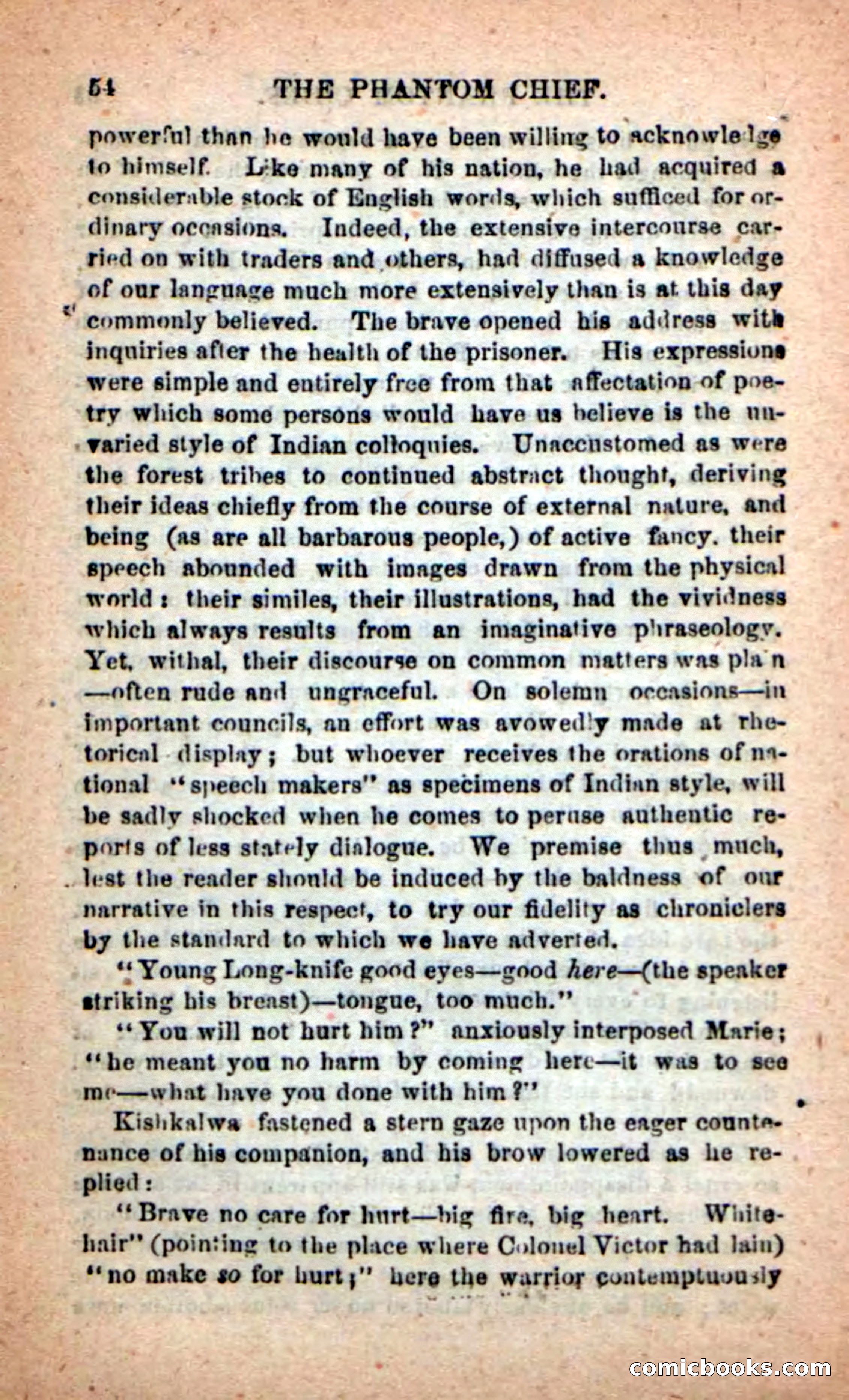
A restored page from Pulp Fiction, 1884. Page through the whole issue in the reader above.
📄 Transcribed text from this page (OCR, searchable)
Machine-transcribed from the original scan — historical spelling and the odd misread are preserved.
2 > ; - : ws —_ 2 . ' — * . = ‘ x wa . * a ~ Bit ges - THE PHANTOM CHIEF. : power'n] than he would haye been willing to acknowlelge mn to himself. Like many of his nation, he had acquired a considerable stock of English words, which sufficed for or- dinary occasions. Indeed, the extensive intercourse car- ried on with traders and others, had diffused a knowledge of our language much more extensively than is at this day * commonly believed. The brave opened his address with inquiries after the health of the prisoner. His expressiune were simple and entirely free from that affectation of poe- try which some persons would have us believe is the un- » varied style of Indian coltoquies. Unaccnstomed as were the forest tribes to continued abstract thought, deriving their ideas chiefly from the course of external nature, and being (as are all barbarous people, ) of active fancy. their speech abounded with images drawn from the physical world: their similes, their illustrations, had the vividness which always results from an imaginative p!raseology. Yet, withal, their discourse on common matters was plan —often rude and ungraceful. On solemn occasions—in important councils, an effort was avowed!y made at rhe- ; _ torical. display; but whoever receives the orations of na- tional ‘*speech makers’’ as specimens of Indian style, will be sadly shocked when he comes to perase authentic re- - ports of less stately dialogue. We premise thus much, . lest the reader should be induced by the baldness of our ‘narrative in this respect, to try our fidelity as chroniclers by the standard to which we have adverted. “Young Long-knife good eyes—good here—(the speaker striking his breast)—tongue, too much.” ** You will not hurt him?” anxiously interposed Marie; , .**he meant you no harm by coming herc—it was to see “me—what have you done with him ?’ i Kishkalwa fastened a stern gaze upon the eager counte- Bs, nuance of his companion, and his brow lowered as he re- ef x ‘** Brave no care for hurt—big fire, big heart. White- “hair” (pointing to the place where Colonel Victor had Iain) - “no make so for burt;"" here the warrior contemptuvu sly i =< . .. -) ‘comicbooks.com