
Pulp Fiction, 1866 · page 7 of 96
Beadle's Dime Novels No. 98 — page 7: what you’re looking at
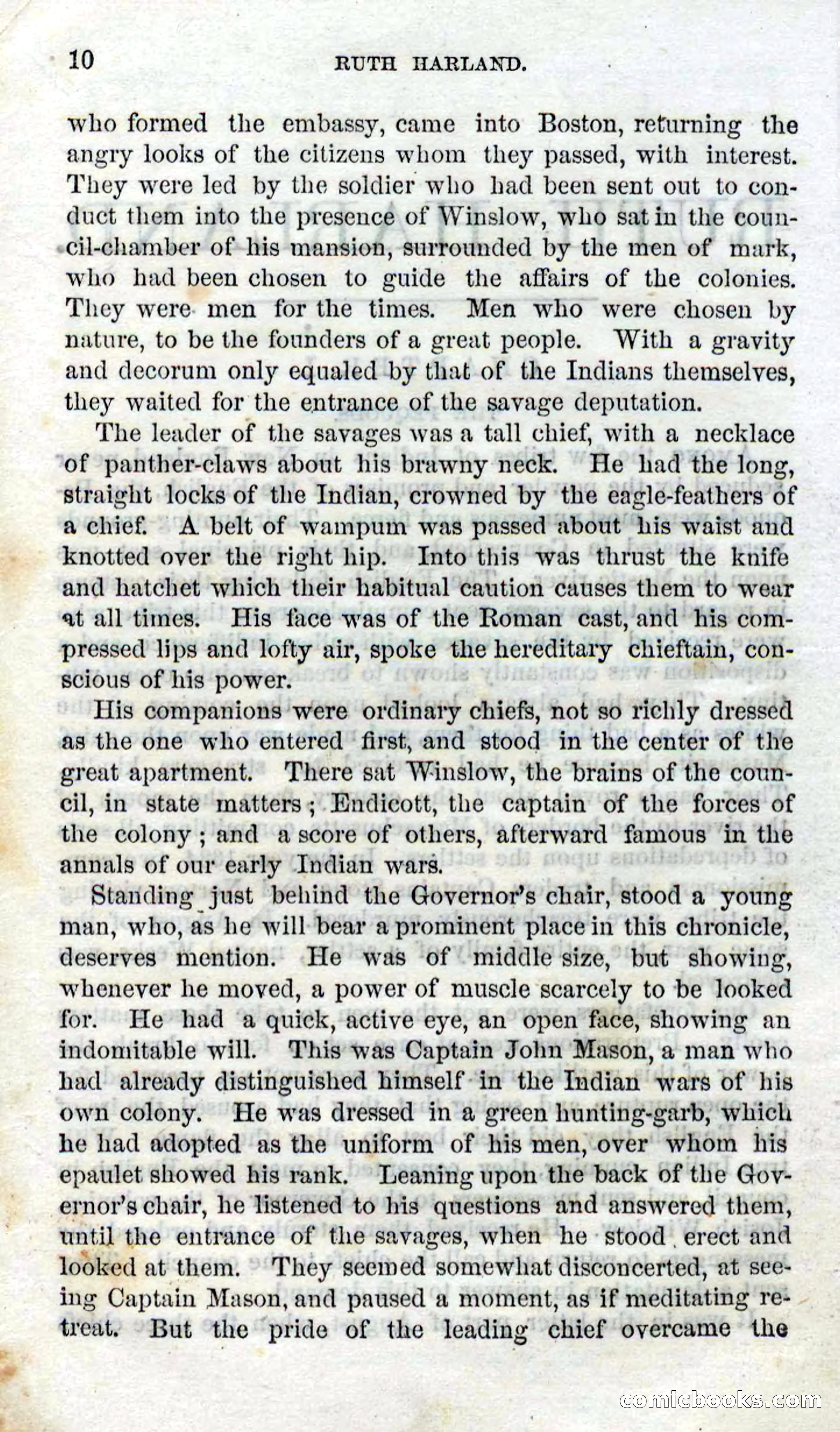
A restored page from Pulp Fiction, 1866. Page through the whole issue in the reader above.
📄 Transcribed text from this page (OCR, searchable)
Machine-transcribed from the original scan — historical spelling and the odd misread are preserved.
=” 10 RUTH HARLAND. who formed the embassy, came into Boston, returning the angry looks of the citizens whom they passed, with interest. They were led by the soldier who had been sent out to con- duct them into the presence of Winslow, who satin the coun- -cil-chamber of his mansion, surrounded by the men of mark, who had been chosen to guide the affairs of the colonies. They were. men for the times. Men who were chosen by nature, to be the founders of a great people. With a gravity and decorum only equaled by that of the Indians themselves, they waited for the entrance of the savage deputation. The leader of the savages was a tall chief, with a necklace of panther-claws about his brawny neck. He had the long, straight locks of the Indian, crowned by the eagle-feathers of a chief. A belt of wampum was passed about his waist and knotted over the right hip. Into this was thrust the knife and hatchet which their habitual caution causes them to wear at all times. His face was of the Roman cast, and his com- pressed lips and lofty air, spoke the hereditary chieftain, con- scious of his power. His companions were ordinary chiefs, not so richly dressed as the one who entered first, and stood in the center of the great apartment. There sat Winslow, the brains of the coun- cil, in state matters; Endicott, the captain of the forces of the colony ; and ascore of others, afterward famous in the annals of our early Indian wars. Standing just behind the Governor’s chair, stood a young man, who, as he will bear a prominent place in this chronicle, deserves mention. He was of middle size, but showing, whenever he moved, a power of muscle scarcely to be looked for. He had ‘a quick, active eye, an open face, showing an indomitable will. This was Captain John Mason, a man who had already distinguished himself-in the Indian wars of his own colony. He was dressed in @ green hunting-garb, which he had adopted as the uniform of his men, over whom his epaulet showed his rank. Leaning upon the back of the Gov- ernor’s chair, he listened to his questions and answered them, until the entrance of the savages, when he stood , erect and looked at them. They seemed somewhat disconcerted, at see- ing Captain Mason, and paused a moment, as if meditating re- treat. But the pride of the leading chief overcame the comicbooks.conn