
Pulp Fiction, 1866 · page 8 of 97
Beadle's Dime Novels No. 96: Little Moccasin — page 8: what you’re looking at
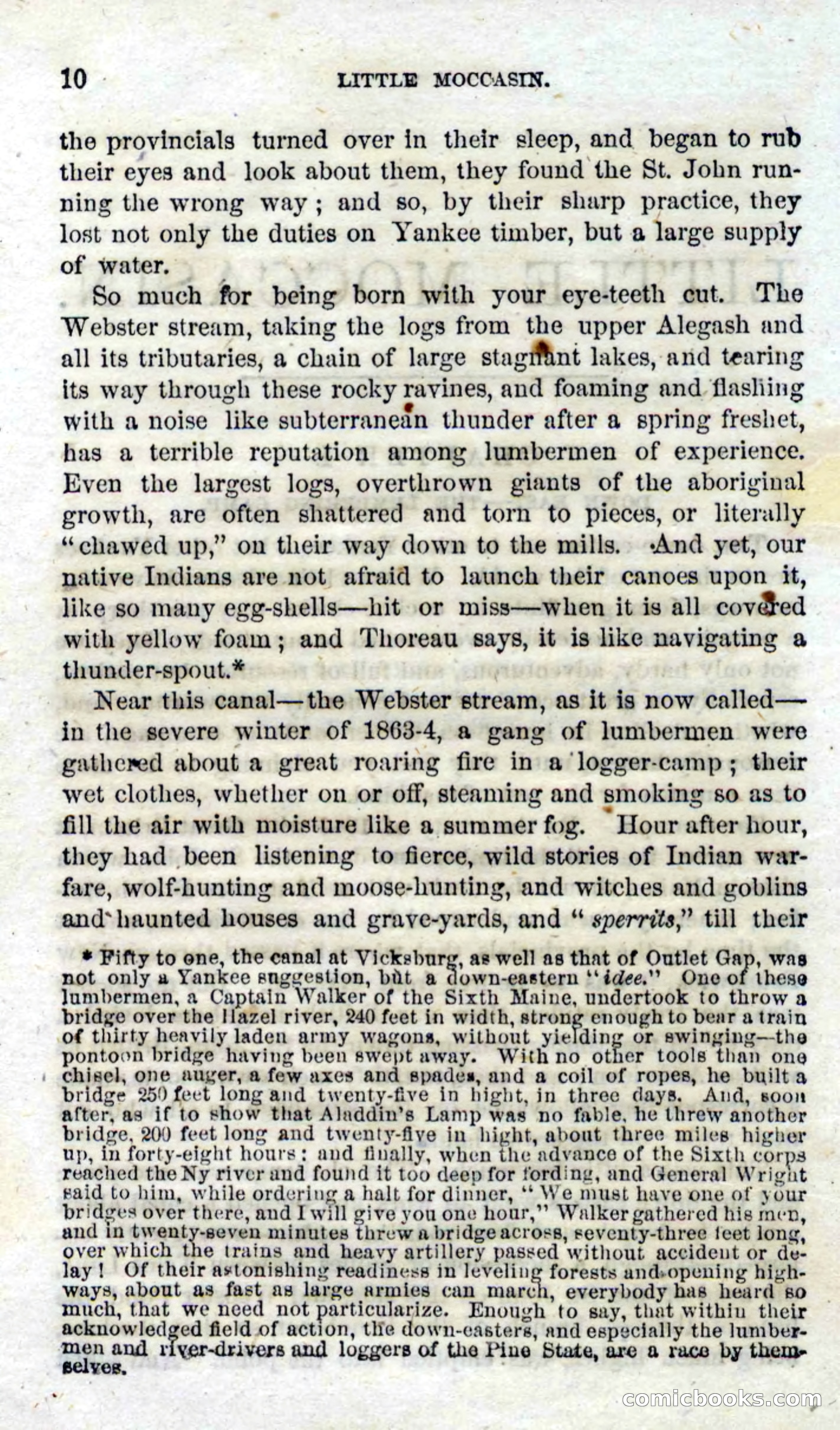
A restored page from Pulp Fiction, 1866. Page through the whole issue in the reader above.
📄 Transcribed text from this page (OCR, searchable)
Machine-transcribed from the original scan — historical spelling and the odd misread are preserved.
10 LITTLE MOCCASIN. the provincials turned over in their sleep, and began to rub their eyes and look about them, they found the St. John run- ning the wrong way; and so, by their sharp practice, they lost not only the duties on Yankee timber, but a large supply of water. = So much for being born with your eye-teeth cut. The Webster stream, taking the logs from the upper Alegash and all its tributaries, a chain of large stagifint lakes, and tearing its way through these rocky ravines, and foaming and _flasliing with a noise like subterranedn thunder after a spring freshet, has a terrible reputation among lumbermen of experience. Even the largest logs, overthrown giants of the aboriginal growth, are often shattered and torn to pieces, or literally “chawed up,” on their way down to the mills. And yet, our native Indians are not afraid to launch their canoes upon it, like so many egg-shells—hit or miss—when it is all covdted with yellow foam; and Thoreau says, it is like navigating a thunder-spout.* | | Near this canal—the Webster stream, as it is now called— in the severe winter of 1863-4, a gang of lumbermen were gathered about a great roaring fire in a ‘logger-camp ; their wet clothes, whether on or off, steaming and smoking so as to fill the air with moisture like a summer fog. Hour after hour, they had been listening to fierce, wild stories of Indian war- fare, wolf-hunting and moose-hunting, and witches and goblins and* haunted houses and grave-yards, and “ sperrdts,” till their * Fifty to one, the canal at Vicksburg, as well as that of Outlet Gap, was not only a Yankee suggestion, bit a down-eastern ‘‘idee.’’ One of these lumbermen, a Captain Walker of the Sixth Maine, undertook to throw a bridge over the Hazel river, 240 feet in width, nee enough to bear a train of thirty heavily laden army wagons, without yielding or swinging—the pontoon bridge having been swept away. With no other tools than one | Chisel, one auger, a few axes and spades, and a coil of ropes, he built a bridge 250 feet long and twenty-five in hight, in three days. And, soon after, as if to show that Aladdin’s Lamp was no fable, he threw another bridge, 200 feet long and twenty-five in hight, about three miles higher up, in forty-eight hours: and finally, when the advance of the Sixth corps reached the Ny river and found it too deep for fording, and General Wrigit said to him, while ordering a halt for dinner, ‘‘ We must have one of your bridges over there, and I will give you one hour,”” Walker gathered his men, and in twenty-seven minutes threw a bridge across, seventy-three feet long, over which the trains and heavy artillery passed without accident or de- lay! Of their astonishing readiness in leveling forests and-opening high- ways, about as fast as large armies can march, everybody has heard so much, that we need not particularize. Enough to say, that withiu their acknowledged field of action, tlie down-easters, and especially the lumber- page snd riyer-drivers and loggers of the Pine State, are a race by them- B. ; | ComilcbookS.COmp