
Pulp Fiction, 1866 · page 94 of 102
Beadle's Dime Novels No. 95 — page 94: what you’re looking at
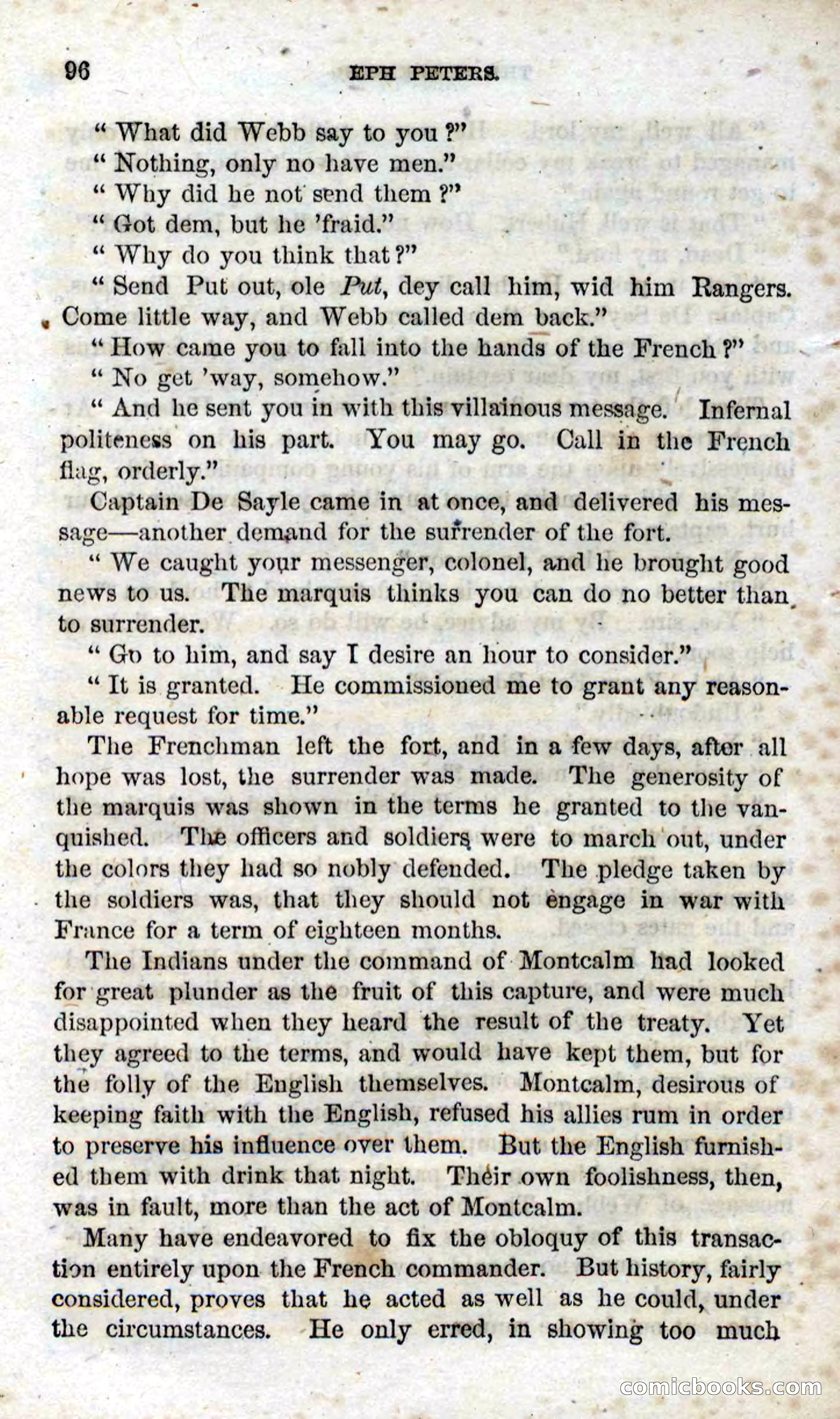
A restored page from Pulp Fiction, 1866. Page through the whole issue in the reader above.
📄 Transcribed text from this page (OCR, searchable)
Machine-transcribed from the original scan — historical spelling and the odd misread are preserved.
96 | 3 EPH PETERS. “ What did Webb say to you ?” “ Nothing, only no have men.” | “ Why did he not send them ?” ~ “Got dem, but he ’fraid.” , “Why do you think that?” “Send Put out, ole Put, dey call him, wid him Rangers. Come little way, and Webb called dem back.” “How came you to fall into the hands of the French ?” “No get ’way, somehow.” | “ And he sent you in with this’villainous message. Infernal . politeness on his part. You may go. Call in the French flag, orderly.” Captain De Sayle came in at once, and ddivetea his mes- sage—another demand for the sufrender of the fort. “ We caught your messenger, colonel, and he brought good news to us. The marquis thinks you can do no better than. to surrender. ) “Go to him, and say I desire an hour to consider.” “Tt is granted. He commissioned me to amen any reason- able request for time.” The Frenchman left the fort, and in a few days, after all hope was lost, the surrender was made. The generosity of the marquis was shown in the terms he granted to the van- - quished. The officers and soldierg were to march out, under the colors they had so nobly defended. The pledge taken by . the soldiers was, that they should not engage in war with France for a term of eighteen months. The Indians under the command of Montcalm had looked for great plunder as the fruit of this capture, and were much disappointed when they heard the result of the treaty. Yet they agreed to the terms, and would have kept them, but for the folly of the English themselves. Montcalm, desirous of keeping faith with the English, refused his allies rum in order to preserve his influence over them. But the English furnish- ed them with drink that night. Théir own foolishness, then, was in fault, more than the act of Montcalm. Many have endeavored to fix the obloquy of this transac- tion entirely upon the French commander. But history, fairly — considered, proves that he acted as well as he could, under the circumstances. ~He only erred, in showing too much COMICMOOokKSs. Con