
Pulp Fiction, 1866 · page 27 of 98
Beadle's Dime Novels No. 92: The Twin Scouts — page 27: what you’re looking at
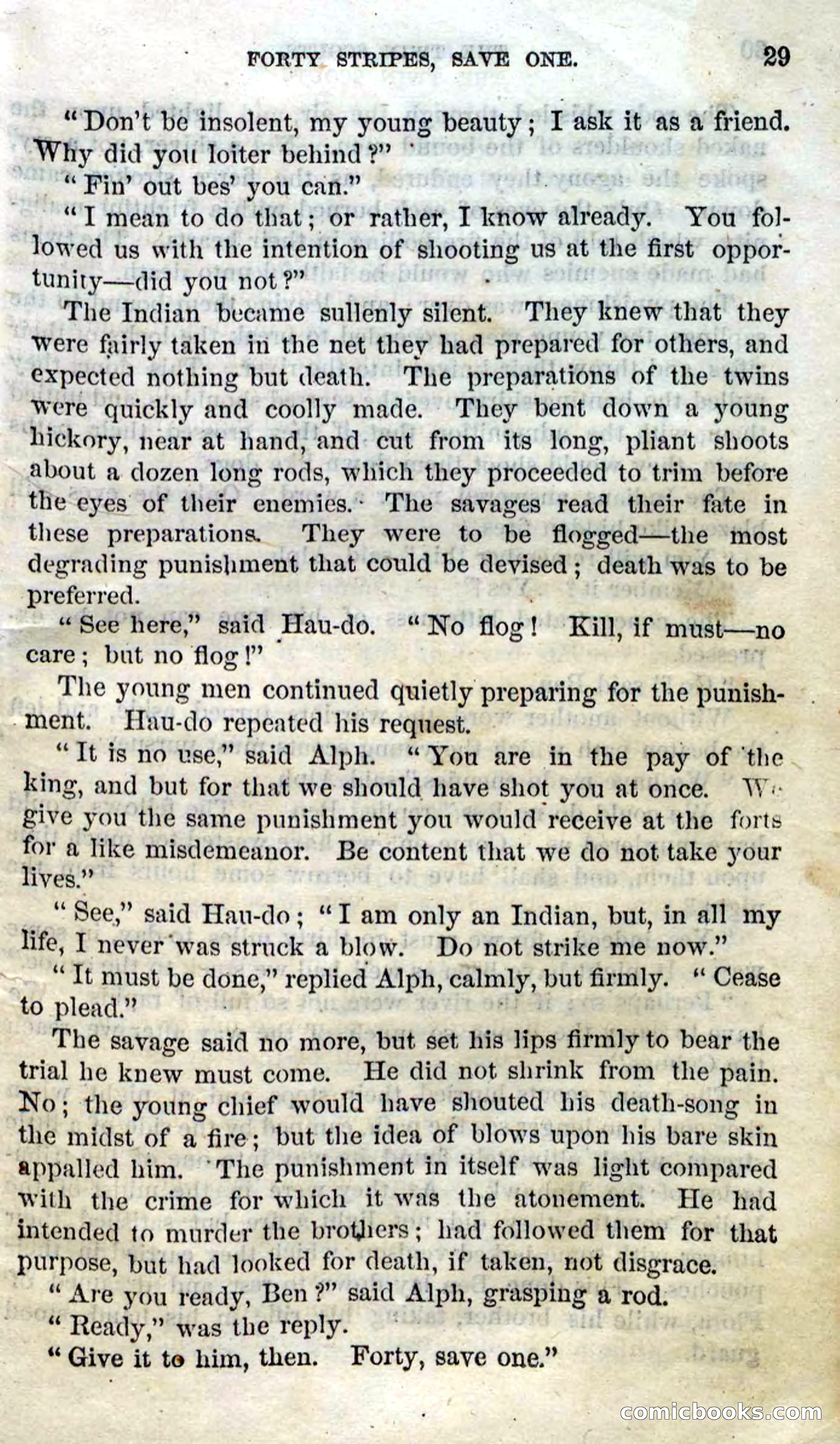
A restored page from Pulp Fiction, 1866. Page through the whole issue in the reader above.
📄 Transcribed text from this page (OCR, searchable)
Machine-transcribed from the original scan — historical spelling and the odd misread are preserved.
FORTY STRIPES, SAVE ONE. ae “Don’t be insolent, my young beauty ; I i it as a friend. Why did you loiter behind ”” “ Fin’ out bes’ you can.” | “IT mean to do that; or rather, I oe already. You fol- lowed us with the intention of srt us at the first oppor- tunity—did you not ?” The Indian became sullenly silent. They knew that they Were fairly taken in the net they had prepared for others, and expected nothing but death. The preparations of the twins were quickly and coolly made. They bent down a young hickory, near at hand, and cut from its long, pliant ‘shoots about a dozen long rods, which they proceeded to trim before the eyes of their enemies.: The savages read their fate in these preparations. They were to be flogged—the most degrading punishment that could be devised ; death’ was to be preferred. “See here,” said Hau-do. “No flog! ‘Kill, if mms —no care; but no flog!” if The young men continued quietly preparing for the punish- -ment. Hau-do repeated his request. - “It is no use,” said Alph. “You are in the pay of ‘the. king, and but for that we should have shot you at once. W: give you the same punishment you would receive at the forts for a like misdemeanor. Be content that we do not take roa lives.” “See,” said Hav- do; “I am only an Indian, but, in cis my life, I never ‘was styack a blow. Do not strike me now.’ “Tt must be Gone, ” replied Alph, calmly, 1 but firmly. “ Cease to plead.” The savage said no more, but set his lips firmly to bear the trial he knew must come. He did not shrink from the pain. No; the young chief would have shouted his death-song in the midst of a fire; but the idea of blows upon his bare skin appalled him. “The punishment in itself was light compared with the crime for which it was the atonement. He had intended to murder the brothers; had followed them for that purpose, but had looked for death, if taken, not disgrace. “Are you ready, Ben ?” said Aiph, grasping a Tod. ~“ Ready,” was the reply. EES “ Give it te him, then. Forty, save one.” ae cOniclboolx<s.conn) ~