
Pulp Fiction, 1865 · page 16 of 100
Beadle's Dime Novels No. 85: The Fugitives — page 16: what you’re looking at
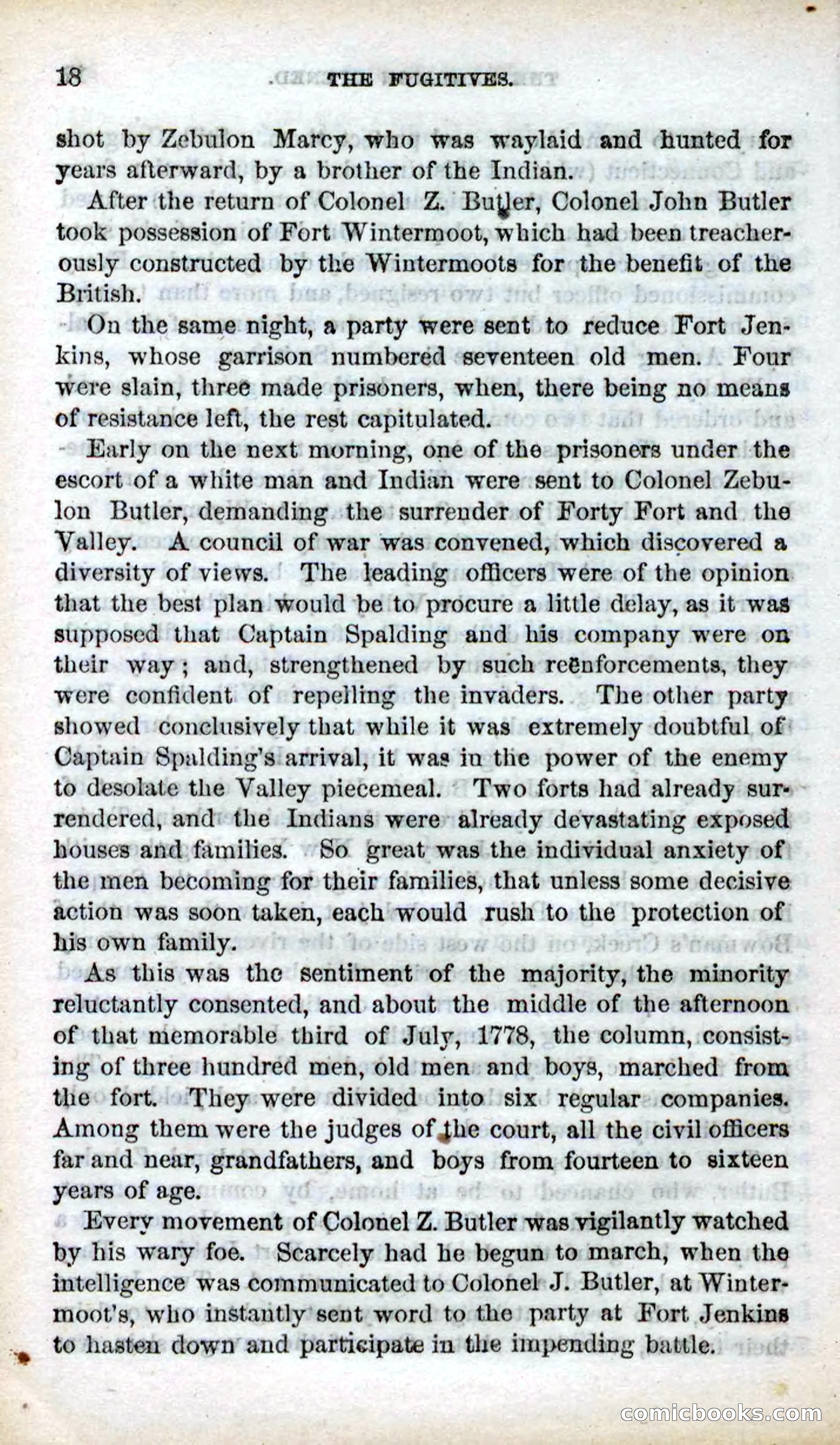
A restored page from Pulp Fiction, 1865. Page through the whole issue in the reader above.
📄 Transcribed text from this page (OCR, searchable)
Machine-transcribed from the original scan — historical spelling and the odd misread are preserved.
18 THE FUGITIVES. shot by Zebulon Marcy, who was waylaid and hunted for years afterward, by a brother of the Indian. After the return of Colonel Z. Bujer, Colonel John Butler took possession of Fort Wintermoot, which had been treacher- ously constructed by the Wintermoots for the benefit. of the British. - On the same night, a party were sent to reduce Fort Jen- kins, whose garrison numbered ‘seventeen old «men. . Four were slain, threé made prisoners, when, there being no means of resistance left, the rest capitulated. ~ Early on the next morning, one of the prisoners under the escort of a white man and Indian were sent to Colonel Zebu- lon Butler, demanding. the surrender of Forty Fort and the Valley. A council of war was convened, which discovered a diversity of views. The leading officers were of the opinion that the best plan would be to procure a little delay, as it was supposed that Captain Spalding and his company were on their way; and, strengthened by such reénforcements, they were confident of repelling the invaders. The other party showed conclusively that while it was extremely doubtful of: Captain Spalding’s arrival, it was in the power of the enemy to desolate the Valley piecemeal. Two forts had already sur- rendered, and the Indians were» already devastating exposed houses and families. So great) was the individual anxiety of) the men becoming for their families, that unless some decisive action was soon taken, each would rush to the protection of his own family. | As this was the sentiment of the majority, the minority reluctantly consented, and about the middle of the afternoon of that memorable third of July, 1778, the column, consist- ing of three hundred men, old men: and boys, marched from the fort. They were divided into six regular companies. Among them were the judges of the court, all the civil officers far and near, grandfathers, and boys from fourteen to sixteen years of age. Every movement of Colonel Z. Butler was vigilantly watched by his wary foe. Scarcely had he begun to march, when the intelligence was communicated to Colonel J. Butler, at Winter- moot’s, who instantly’ sent word to the party at Fort Jenkins » to hasten down’ and participate in the impending battle. connicloooks.com