
Pulp Fiction, 1862 · page 22 of 100
Beadle's Dime Novels No. 47: Tim Bumble's Charge — page 22: what you’re looking at
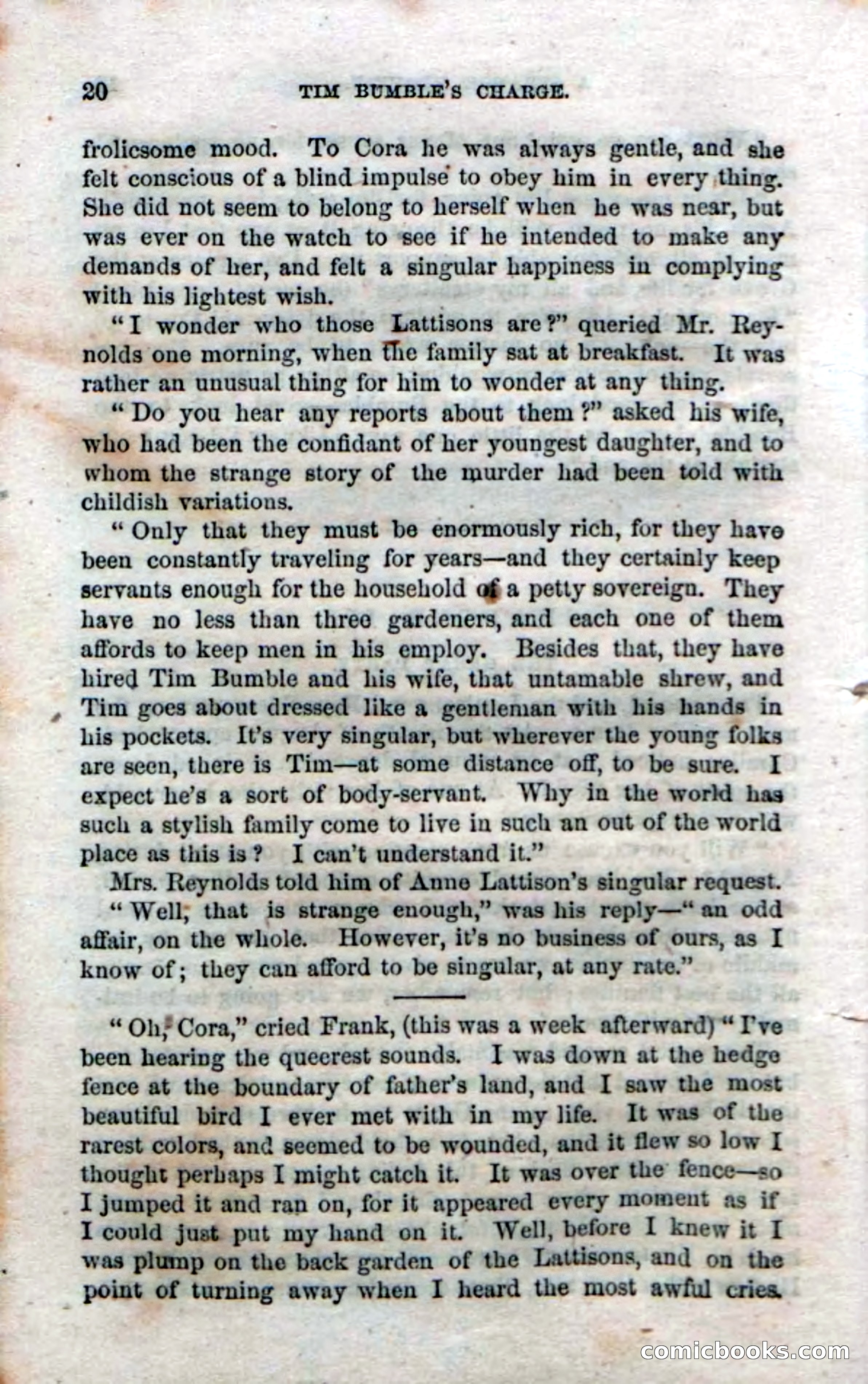
A restored page from Pulp Fiction, 1862. Page through the whole issue in the reader above.
📄 Transcribed text from this page (OCR, searchable)
Machine-transcribed from the original scan — historical spelling and the odd misread are preserved.
20° TIM BUMBLE’S CHARGE. frolicsome mood. To Cora he was always gentle, and she felt conscious of a blind impulsé to obey him in every thing. She did not seem to belong to herself when he was near, but was ever on the watch to see if he intended to make any demands of her, and felt a singular happiness in complying with his lightest wish. : “TI wonder who those Lattisons are?” queried Mr. Rey- nolds one morning, when fhe family sat at breakfast. It was rather an unusual thing for him to wonder at any thing. “Do you hear any reports about them ?” asked his wife, who had been the confidant of her youngest daughter, and to whom the strange story of the murder had been told with childish variations, “Only that they must be enormously rich, for they have been constantly traveling for years—and they certainly keep servants enough for the household a§a petty sovereign. They have no less than three gardeners, and each one of them affords to keep men in his employ. Besides that, they have hired Tim Bumble and his wife, that untamable shrew, and Tim goes about dressed like a gentleman with his hands in his pockets. It’s very singular, but wherever the young folks are seen, there is Tim—at some distance off, to be sure. [ expect he’s a sort of body-servant. Why in the world has such a stylish family come to live in such an out of the world place as this is? I can’t understand it.” Mrs. Reynolds told him of Anne Lattison’s singular request. “Well; that is strange enough,” was his reply—‘“ an odd affair, on the whole. However, it’s no business of ours, as I know of; they can afford to be singular, at any rate.” “ Oh? Cora,” cried Frank, (this was a week afterward)“ I’ve a been hearing the queerest sounds. I was down at the hedge fence at the boundary of father’s land, and I saw the most beautiful bird I ever met with in my life. It was of the rarest colors, and seemed to be wounded, and it flew so low I thought perbaps I might catch it. It was over the fence—so _ I jumped it and ran on, for it appeared every moment as if I could just put my hand on it. Well, before I knew it I was plump on the back garden of the Lattisons, and on the _ point of turning away when I heard the most awful cries commiclooOoks.comn