
Pulp Fiction, 1862 · page 9 of 134
The Land Claim — page 9: what you’re looking at
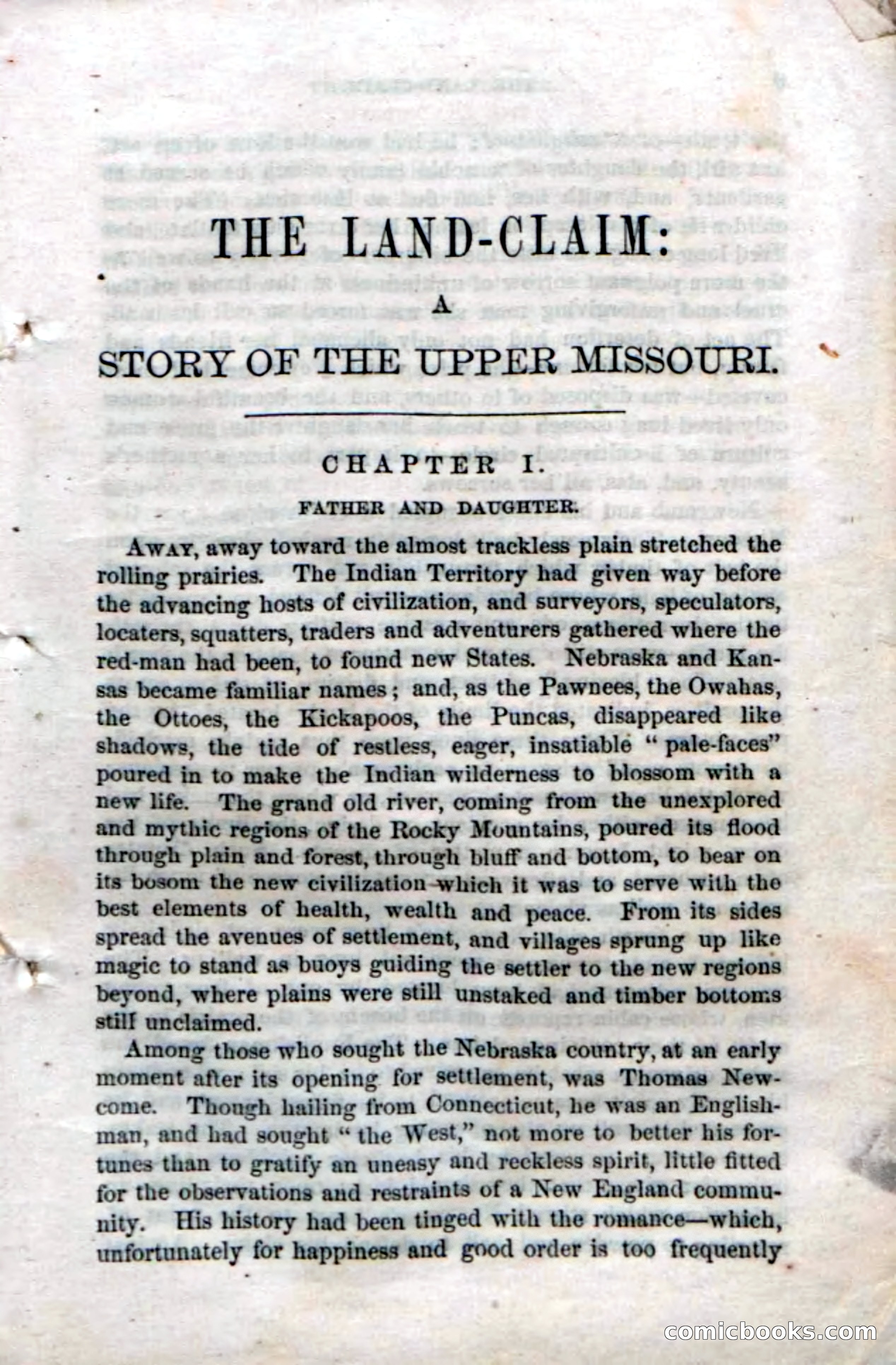
A restored page from Pulp Fiction, 1862. Page through the whole issue in the reader above.
📄 Transcribed text from this page (OCR, searchable)
Machine-transcribed from the original scan — historical spelling and the odd misread are preserved.
THE LAND-CLAIM: A STORY OF THE UPPER MISSOURI CHAPTER I. FATHER AND DAUGHTER. Away, away toward the almost trackless plain stretched the rolling prairies. The Indian Territory had given way before the advancing hosts of civilization, and surveyors, speculators, locaters, squatters, traders and adventurers gathered where the red-man had been, to found new States. Nebraska and Kan- sas became familiar names; and, as the Pawnees, the Owahas, the Ottoes, the Kickapoos, the Puncas, disappeared like shadows, the tide of restless, eager, insatiable “ pale-faces” poured in to make the Indian wilderness to blossom with a new life. The grand old river, coming from the unexplored and mythic regions of the Rocky Mountains, poured its flood through plain and forest, through bluff and bottom, to bear on its bosom the new civilization-which it was to serve with the best elements of health, wealth and peace. From its sides spread the avenues of settlement, and villages sprung up like _ magic to stand as buoys guiding the settler to the new regions cain where plains were still unstaked and timber bottoms still unclaimed. Among those who sought the Nebraska country, at an early moment after its opening for settlement, was Thomas New- come. Though hailing from Connecticut, he was an English- man, and had sought “the West,” not more to better his for- tunes than to gratify an uneasy and reckless spirit, little fitted for the observations and restraints of a New England commu- nity. His history had been tinged with the romance—whieh, unfortunately for happiness and good order is too frequently id CoOmmcooolks.Ccomnn)