
Pulp Fiction, 1862 · page 59 of 134
The Land Claim — page 59: what you’re looking at
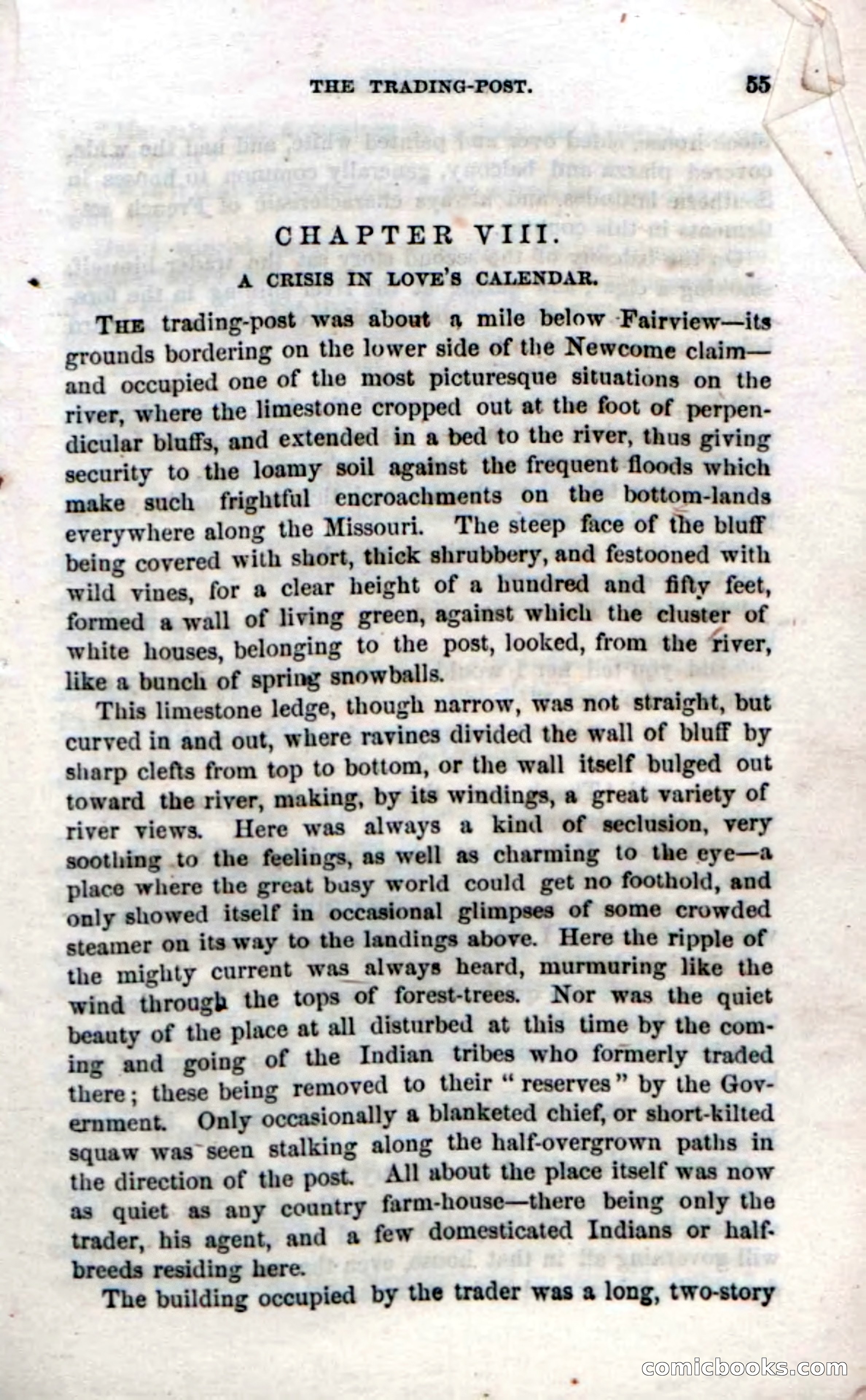
A restored page from Pulp Fiction, 1862. Page through the whole issue in the reader above.
📄 Transcribed text from this page (OCR, searchable)
Machine-transcribed from the original scan — historical spelling and the odd misread are preserved.
THE TRADING-POST. 55 CHAPTER VIII. A CRISIS IN LOVE’S CALENDAR. : Tue trading-post was about 4 mile below Fairview—its grounds bordering on the lower side of the Newcome claim— and occupied one of the most picturesque situations on the river, where the limestone cropped out at the foot of perpen- dicular bluffs, and extended in a bed to the river, thus giving security to the loamy soil against the frequent floods which make such frightful encroachments on the bottom-lands everywhere along the Missouri. The steep face of the bluff being covered with short, thick shrubbery, and festooned with wild vines, for a clear height of a hundred and fifty feet, formed a wall of living green, against which the cluster of white houses, belonging to the post, looked, from the ‘iver, like a bunch of spring snowballs. This limestone ledge, though narrow, was not straight, but curved in and out, where ravines divided the wall of bluff by sharp clefts from top to bottom, or the wall itself bulged out toward the river, making, by its windings, a great variety of river views. Here was always a kind of seclusion, very soothing .to the feelings, as well as charming to the eye—a place where the great busy world could get no foothold, and only showed itself in occasional glimpses of some crowded steamer on its way to the landings above. Here the ripple of the mighty current was always heard, murmuring like the wind through the tops of forest-trees. Nor was the quiet beauty of the place at all disturbed at this time by the com- ing and going of the Indian tribes who formerly traded there; these being removed to their “ reserves” by the Gov- ernment. Only occasionally a blanketed chief, or short-kilted squaw was seen stalking along the half-overgrown paths in the direction of the post. All about the place itself was now as quiet as any country farm-house—there being only the trader, his agent, and a few domesticated Indians or half- breeds residing here. The building occupied by the trader was a long, two-story commiclbooks.corn -