
Pulp Fiction, 1862 · page 105 of 134
The Land Claim — page 105: what you’re looking at
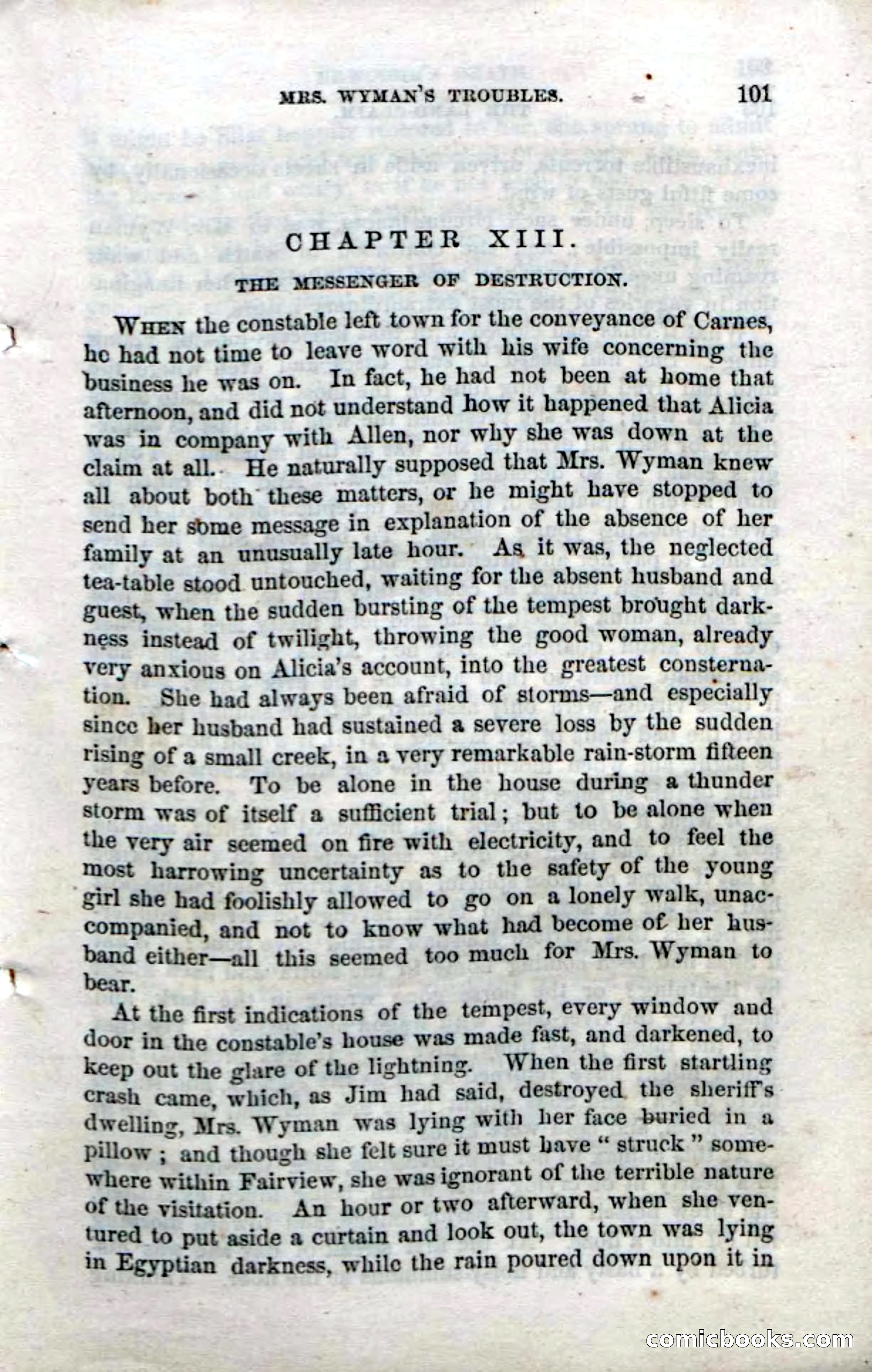
A restored page from Pulp Fiction, 1862. Page through the whole issue in the reader above.
📄 Transcribed text from this page (OCR, searchable)
Machine-transcribed from the original scan — historical spelling and the odd misread are preserved.
MES. WYMAN'S TROUBLES. ‘ 101 CHAPTER XIII. THE MESSENGER OF DESTRUCTION. Wuex the constable left town for the conveyance of Carnes, he had not time to leave word with his wife concerning the business he was on. In fact, he had not been at home that afternoon, and did not understand how it happened that Alicia was in company with Allen, nor why she was down at the claim at all.. He naturally supposed that Mrs. Wyman knew all about both’ these matters, or he might have stopped to send her sbme message in explanation of the absence of her family at an unusually late hour. As it was, the neglected tea-table stood untouched, waiting for the absent husband and guest, when the sudden bursting of the tempest brought dark- ness instead of twilight, throwing the good woman, already very anxious on Alicia’s account, into the greatest consterna- tion. She had always been afraid of storms—and especially since her husband had sustained a severe loss by the sudden rising of a small creek, in a very remarkable rain-storm fifteen years before. To be alone in the house during a thunder storm was of itself a sufficient trial; but to be alone when the very air seemed on fire with electricity, and to feel the ‘Most harrowing uncertainty as to the safety of the young girl she had foolishly allowed to go on a lonely walk, unac- companied, and not to know what had become of her hus- band either—all this seemed too much for Mrs. Wyman to bear. At the first indications of the tempest, every window and door in the constable’s house was made fast, and darkened, to keep out the glare of the lightning. When the first startling Crash came, which, as Jim had said, destroyed the sheriff's dwelling, Mrs, Wyman was lying with her face buried in a pillow ; and though she felt sure it must have “ struck ” somre- where within Fairview, she was ignorant of the terrible nature of the visitation. An hour or two afterward, when she ven- tured to put aside a curtain and look out, the town was lying in Egyptian darkness, while the rain poured down upon it in commicoooks.corn —