
Pulp Fiction, 1862 · page 87 of 120
Beadle's Dime Novels No. 38: The Wrong Man — page 87: what you’re looking at
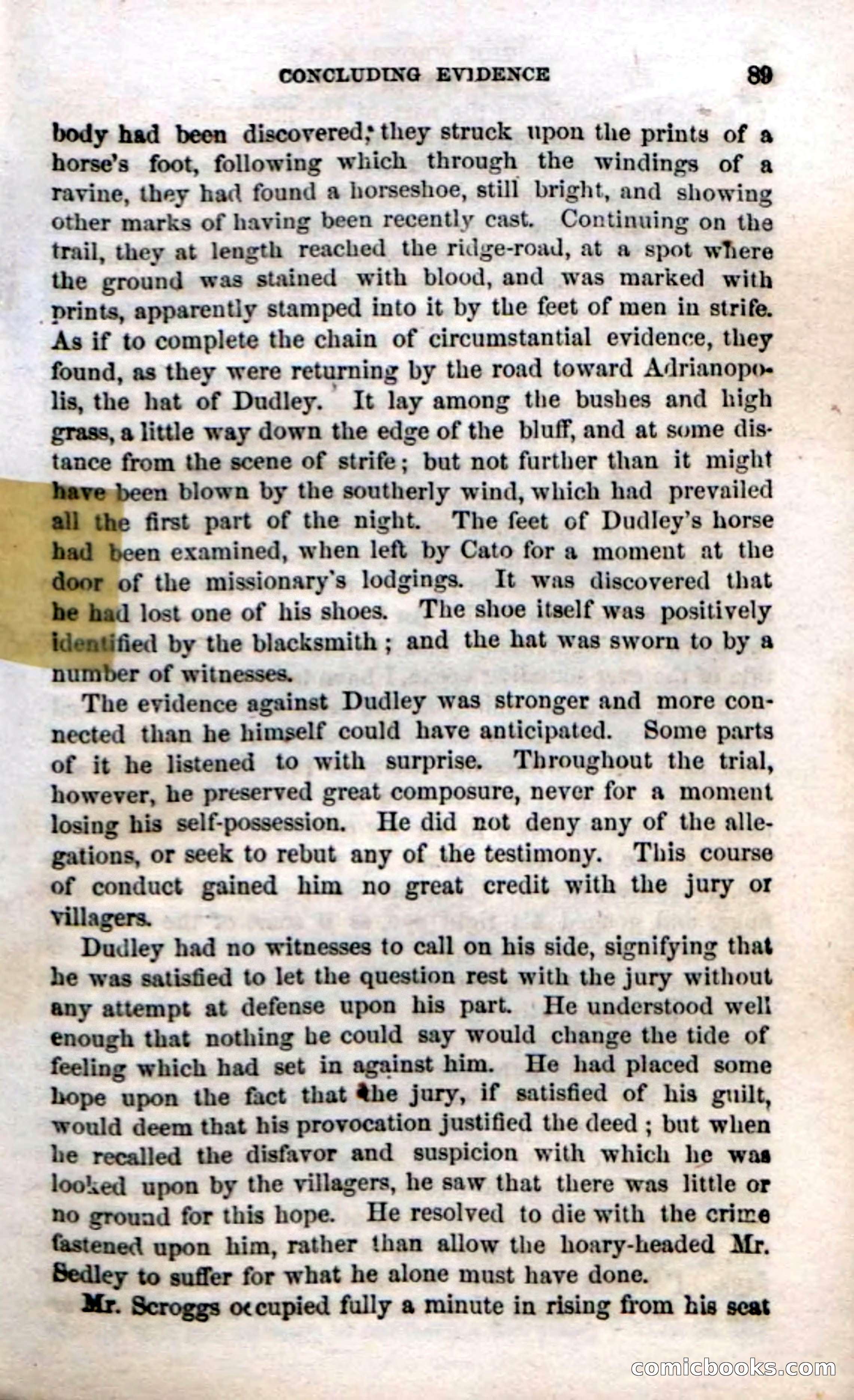
A restored page from Pulp Fiction, 1862. Page through the whole issue in the reader above.
📄 Transcribed text from this page (OCR, searchable)
Machine-transcribed from the original scan — historical spelling and the odd misread are preserved.
CONCLUDING EVIDENCE 89 body had been discovered; they struck upon the prints of a horse’s foot, following which through the windings of a ravine, they had found a horseshoe, still bright, and showing other marks of having been recently cast. Continuing on the trail, they at length reached the ridge-road, at a spot where the ground was stained with blood, and was marked with prints, apparently stamped into it by the feet of men in strife. As if to complete the chain of circumstantial evidence, they found, as they were returning by the road toward Adrianopo- lis, the hat of Dudley. It lay among the bushes and high grass, a little way down the edge of the bluff, and at some dis- tance from the scene of strife; but not further than it might blown by the southerly wind, which had prevailed first part of the night. The feet of Dudley’s horse n examined, when left by Cato for a moment at the f the missionary’s lodgings. It was discovered that lost one of his shoes. The shoe itself was positively by the blacksmith ; and the hat was sworn to by a of witnesses. The evidence against Dudley was stronger and more con- nected than he himself could have anticipated. Some parts of it he listened to with surprise. Throughout the trial, however, he preserved great composure, never for a moment losing his self-possession. He did not deny any of the alle- gations, or seek to rebut any of the testimony. This course of conduct gained him no great credit with the jury or Dudley had no witnesses to call on his side, signifying that he was satisfied to let the question rest with the jury without any attempt at defense upon his part. He understood well enough that nothing he could say would change the tide of feeling which had set in against him. He had placed some hope upon the fact that @he jury, if satisfied of his guilt, would deem that his provocation justified the deed ; but when he recalled the disfavor and suspicion with which he was looked upon by the villagers, he saw that there was little or no ground for this hope. He resolved to die with the crime fastened upon him, rather than allow the hoary-headed Mr. Sedley to suffer for what he alone must have done. Mr. Scroggs occupied fully a minute in rising from his seat comcbooks.com