
Pulp Fiction, 1862 · page 68 of 120
Beadle's Dime Novels No. 38: The Wrong Man — page 68: what you’re looking at
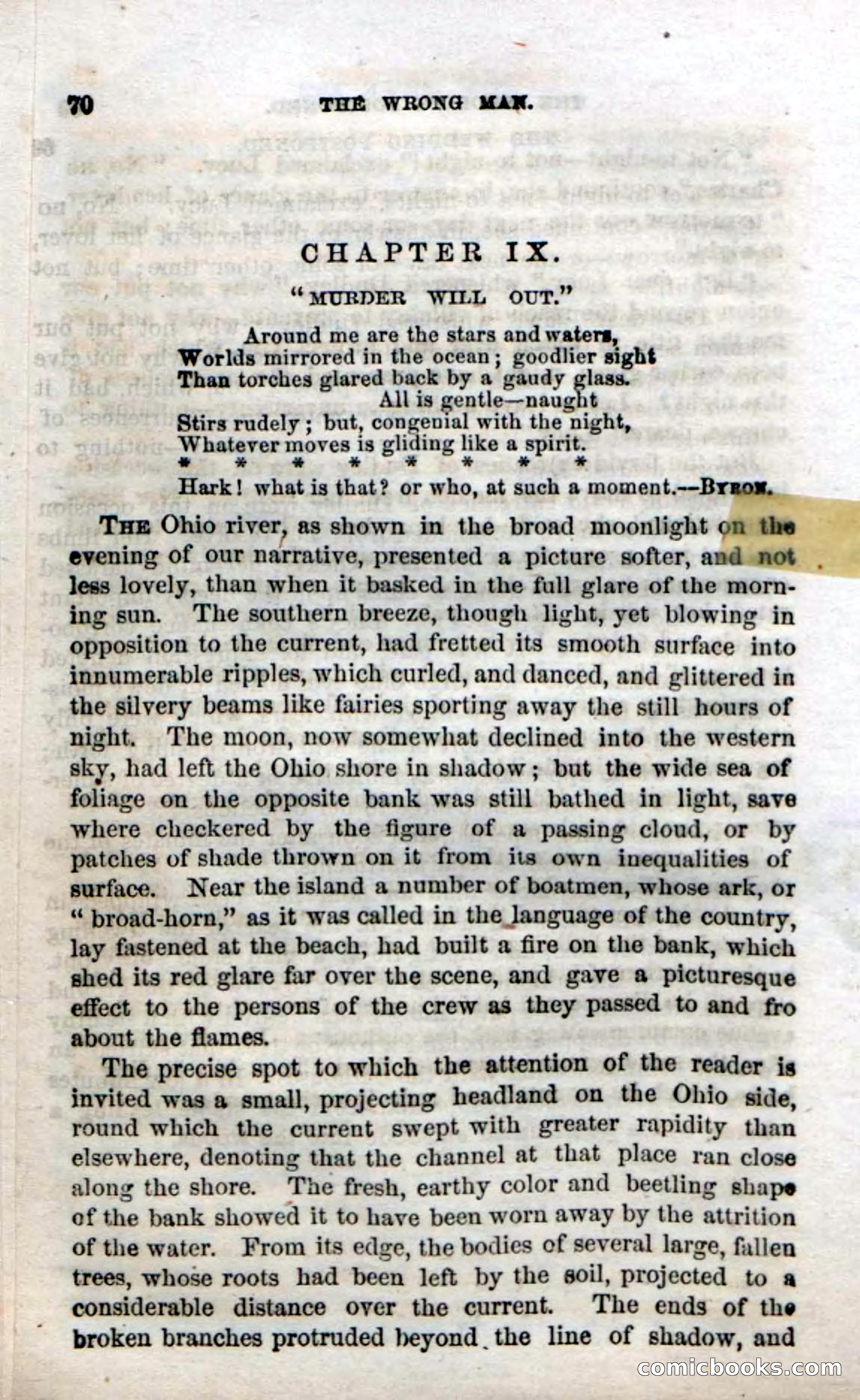
A restored page from Pulp Fiction, 1862. Page through the whole issue in the reader above.
📄 Transcribed text from this page (OCR, searchable)
Machine-transcribed from the original scan — historical spelling and the odd misread are preserved.
7 THE WRONG MAK. CHAPTER IX. “MURDER WILL oOvT.” Around me are the stars and tgs Worlds mirrored in the ocean; goodlier sight Than torches glared back by a gaudy 00g All is gentle—naught Stirs rudely ; but, congenial with the night, Whatever moves is gliding like a spirit. * * * * * * * * Hark! what is that? or who, at such a moment.--B Tue Ohio river, as shown in the broad moonlight evening of our narrative, presented a picture softer, a less lovely, than when it basked in the full glare of the morn- ing sun. The southern breeze, though light, yet blowing in opposition to the current, had fretted its smooth surface into innumerable ripples, which curled, and danced, and glittered in the silvery beams like fairies sporting away the still hours of night. The moon, now somewhat declined into the western sky, had left the Ohio shore in shadow; but the wide sea of foliage on the opposite bank was still bathed in light, save where checkered by the figure of a passing cloud, or by patches of shade thrown on it from its own inequalities of surface. Near the island a number of boatmen, whose ark, or “ broad-horn,” as it was called in the language of the country, lay fastened at the beach, had built a fire on the bank, which shed its red glare far over the scene, and gave @ picturesque effect to the persons of the crew as they passed to and fro about the flames. The precise spot to which the attention of the reader is invited was a small, projecting headland on the Ohio side, round which the current swept with greater rapidity than elsewhere, denoting that the channel at that place ran close along the shore. The fresh, earthy color and beetling shape of the bank showed it to have been worn away by the attrition of the water. From its edge, the bodies of several large, fallen trees, whose roots had been left by the soil, projected to a considerable distance over the current. The ends of the broken branches protruded beyond the line of shadow, and Comicbooksieom