
Pulp Fiction, 1862 · page 114 of 120
Beadle's Dime Novels No. 38: The Wrong Man — page 114: what you’re looking at
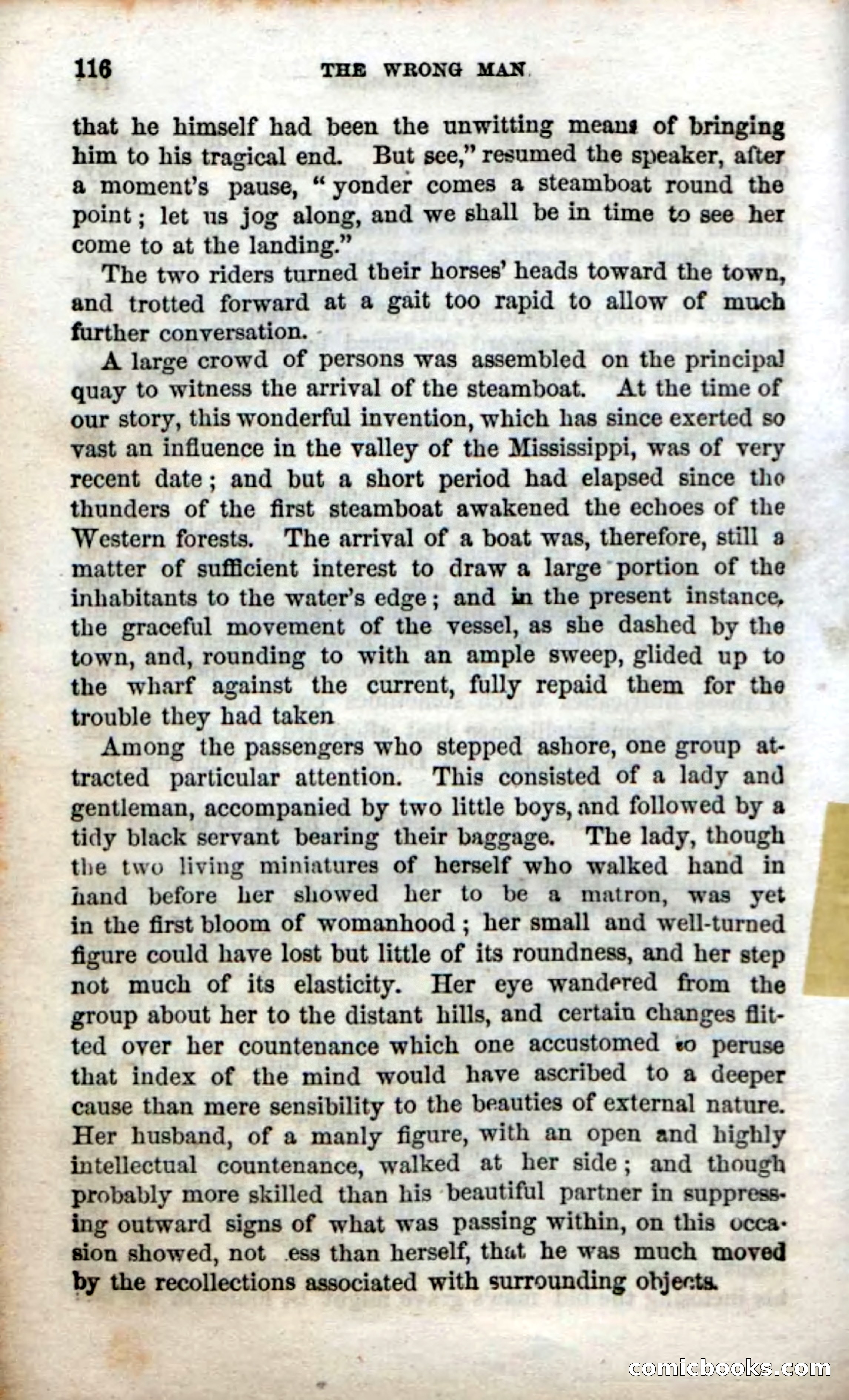
A restored page from Pulp Fiction, 1862. Page through the whole issue in the reader above.
📄 Transcribed text from this page (OCR, searchable)
Machine-transcribed from the original scan — historical spelling and the odd misread are preserved.
116 THE WRONG MAN. that he himself had been the unwitting means of bringing him to his tragical end. But see,” resumed the speaker, after & moment’s pause, “ yonder comes a steamboat round the point; let us jog along, and we shall be in time to see her come to at the landing.” The two riders turned their horses’ heads toward the town, and trotted forward at a gait too rapid to allow of much further conversation. - A large crowd of persons was assembled on the principal quay to witness the arrival of the steamboat. At the time of our story, this wonderful invention, which has since exerted so vast an influence in the valley of the Mississippi, was of very recent date; and but a short period had elapsed since the thunders of the first steamboat awakened the echoes of the Western forests. The arrival of a boat was, therefore, still a matter of sufficient interest to draw a large portion of the inhabitants to the water’s edge; and in the present instance, ) the graceful movement of the vessel, as she dashed by the town, and, rounding to with an ample sweep, glided up to the wharf against the current, fully repaid them for the trouble they had taken Among the passengers who stepped ashore, one group at- tracted particular attention. This consisted of a lady and gentleman, accompanied by two little boys, and followed by a . tidy black servant bearing their baggage. The lady, though x the two living miniatures of herself who walked hand in hand before her showed her to be a matron, was yet in the first bloom of womanhood; her small and well-turned figure could have lost but little of its roundness, and her step not much of its elasticity. Her eye wandered from the group about her to the distant hills, and certain changes flit- ted over her countenance which one accustomed to peruse that index of the mind would have ascribed to a deeper cause than mere sensibility to the beauties of external nature. Her husband, of a manly figure, with an open and highly intellectual countenance, walked at her side; and though probably more skilled than his beautiful partner in suppress- | ing outward signs of what was passing within, on this occa- sion showed, not ess than herself, that he was much moved by the recollections associated with surrounding objects. = a : commcloooks.comnn