
Pulp Fiction, 1862 · page 70 of 114
Beadle's Dime Novels No. 35: East and West — page 70: what you’re looking at
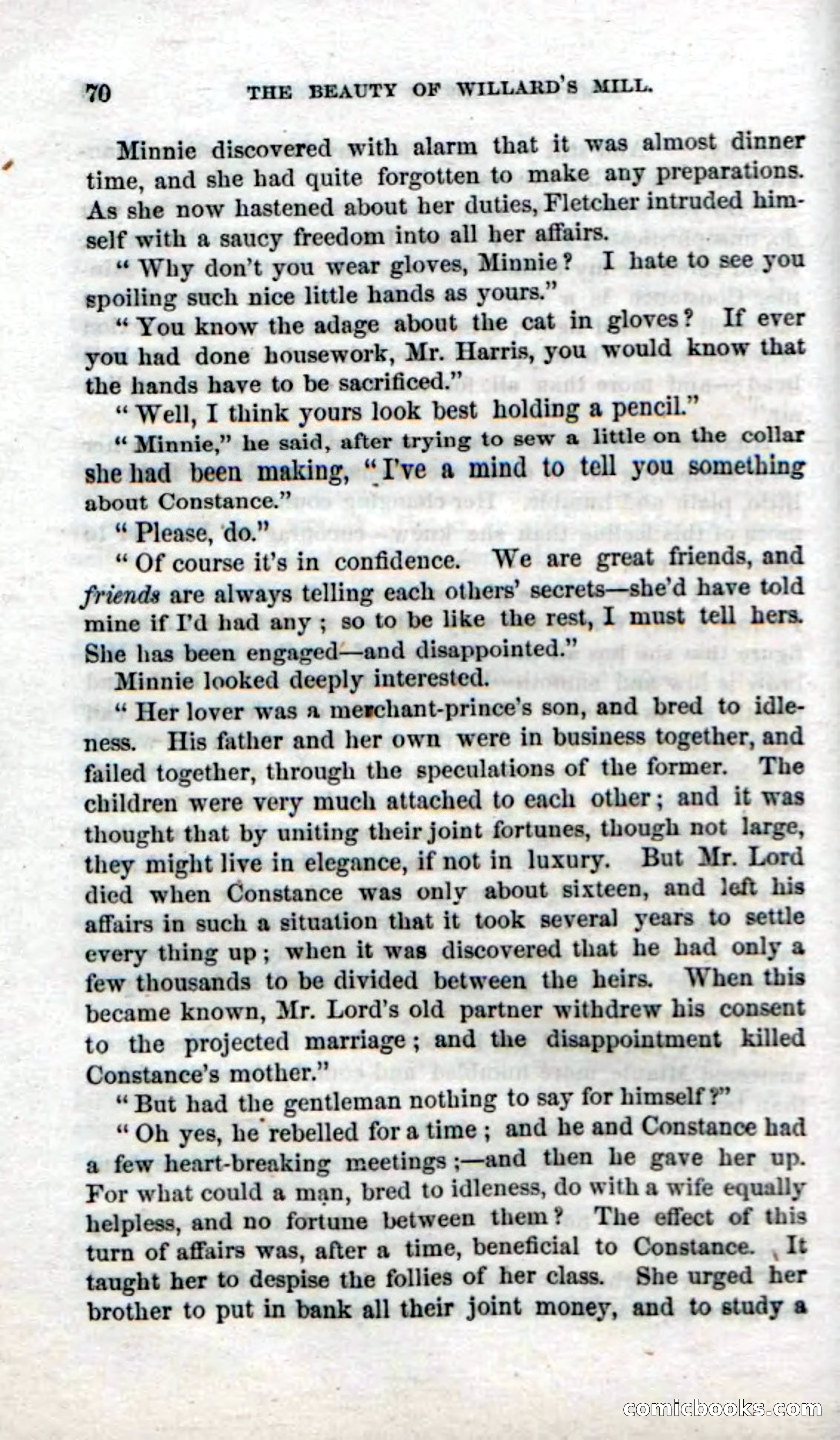
A restored page from Pulp Fiction, 1862. Page through the whole issue in the reader above.
📄 Transcribed text from this page (OCR, searchable)
Machine-transcribed from the original scan — historical spelling and the odd misread are preserved.
70 THE BEAUTY OF WILLARD’S MILL. Minnie discovered with alarm that it was almost dinner time, and she had quite forgotten to make any preparations. As she now hastened about her duties, Fletcher intruded him- self with a saucy freedom into all her affairs. “ Why don’t you wear gloves, Minnie? I hate to see you spoiling such nice little hands as yours.” “ You know the adage about the cat in gloves? If ever you had done housework, Mr. Harris, you would know that the hands have to be sacrificed.” “Well, I think yours look best holding a pencil.” “ Minnie,” he said, after trying to sew a little on the collar she had been making, “I've a mind to tell you something about Constance.” “ Please, do.” “ Of course it’s in confidence. We are great friends, and Friends are always telling each others’ secrets—she’d have told mine if I’d had any ; so to be like the rest, I must tell hers. She has been engaged—and disappointed.” Minnie looked deeply interested. “ Her lover was 2 merchant-prince’s son, and bred to idle- ness. His father and her own were in business together, and failed together, through the speculations of the former. The children were very much attached to each other ; and it was thought that by uniting their joint fortunes, though not large, they might live in elegance, if not in luxury. But Mr. Lord died when Gonstance was only about sixteen, and left his affairs in such a situation that it took several years to settle every thing up; when it was discovered that he had only a few thousands to be divided between the heirs. When this became known, Mr. Lord’s old partner withdrew his consent to the projected marriage; and the disappointment killed Constance’s mother.” “But had the gentleman nothing to say for himself?” “Oh yes, he rebelled for a time ; and he and Constance had a few heart-breaking meetings ;—and then he gave her up. For what could a man, bred to idleness, do with a wife equally helpless, and no fortune between them? The effect of this turn of affairs was, after a time, beneficial to Constance. , It taught her to despise the follies of her class. She urged her brother to put in bank all their joint money, and to study a conmicldbooks.com