
Pulp Fiction, 1862 · page 46 of 114
Beadle's Dime Novels No. 35: East and West — page 46: what you’re looking at
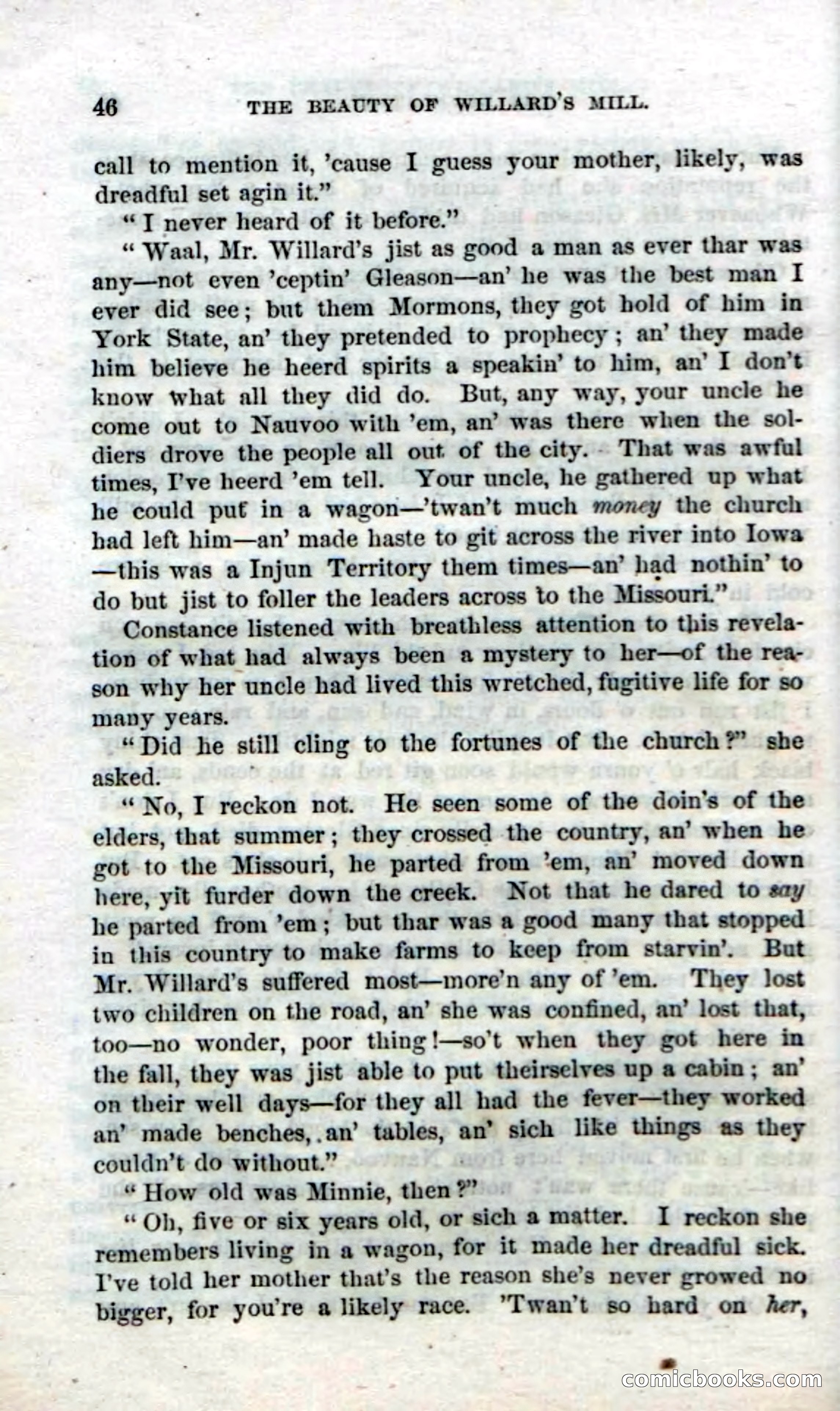
A restored page from Pulp Fiction, 1862. Page through the whole issue in the reader above.
📄 Transcribed text from this page (OCR, searchable)
Machine-transcribed from the original scan — historical spelling and the odd misread are preserved.
46 THE BEAUTY OF WILLARD’S MILL. call to mention it, cause I guess your mother, likely, was dreadful set agin it.” “T never heard of it before.” “ Waal, Mr. Willard’s jist as good a man as ever thar was any—not even ’ceptin’ Gleason—an’ he was the best man I ever did see; but them Mormons, they got hold of him in York State, an’ they pretended to prophecy; an’ they made him believe he heerd spirits a speakin’ to him, an’ I don’t know what all they did do. But, any way, your uncle he come out to Nauvoo with ’em, an’ was there when the sol- diers drove the people all out of the city.- That was awful times, I’ve heerd ’em tell. Your uncle, he gathered up what he could puf in a wagon—’twan’t much money the church had left him—an’ made haste to git across the river into lowa —this was a Injun Territory them times—an’ had nothin’ to do but jist to foller the leaders across to the Missouri.” Constance listened with breathless attention to this revela- tion of what had always been a mystery to her—of the rea- son why her uncle had lived this wretched, fagitive life for so many years. “Did he still cling to the fortunes of the church?’ she asked. “No, I reckon not. He seen some of the doin’s of the elders, that summer; they crossed the country, an’ when he got to the Missouri, he parted from *em, an’ moved down here, yit furder down the creek. Not that he dared to say he parted from ’em; but thar was a good many that stopped in this country to make farms to keep from starvin’. But Mr. Willard’s suffered most—more’n any of ’em. They lost two children on the road, an’ she was confined, an’ lost that, too—no wonder, poor thing!—so’t when they got here in the fall, they was jist able to put theirselves up a cabin; an’ on their well days—for they all had the fever—they worked an’ made benches,.an’ tables, an’ sich like things as they couldn’t do without.” ; “ How old was Minnie, then?” — “ Oh, five or six years old, or sich a matter. I reckon she remembers living in a wagon, for it made her dreadful sick. I’ve told her mother that’s the reason she’s never growed no bigger, for you're a likely race. *"Twan’t so hard on her, * conmicbooks.com